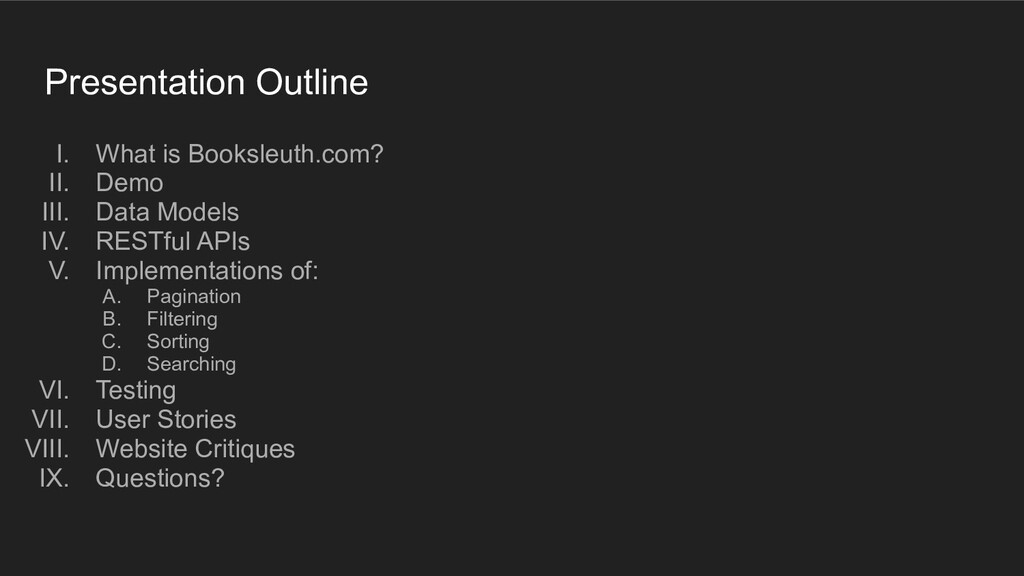
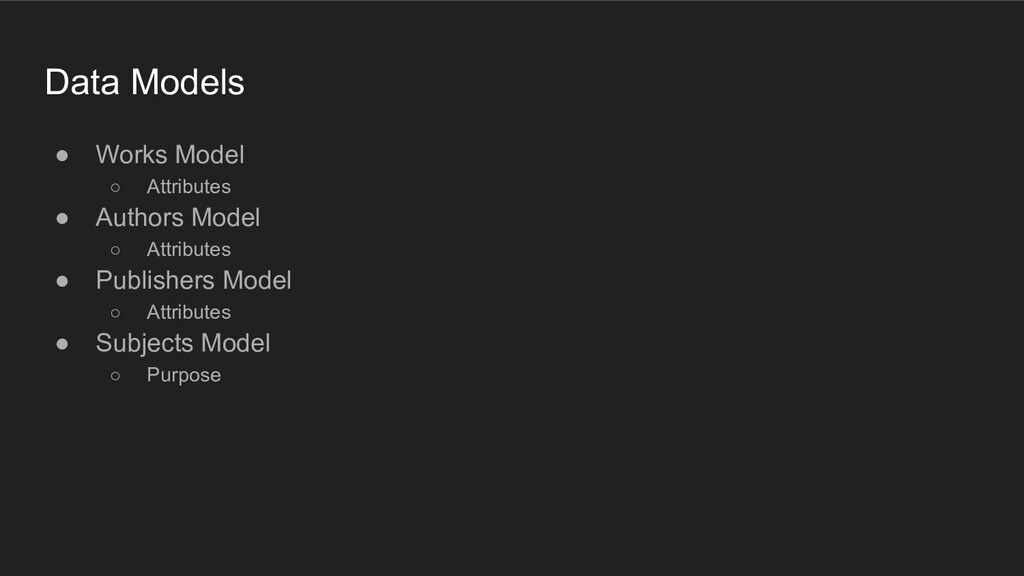
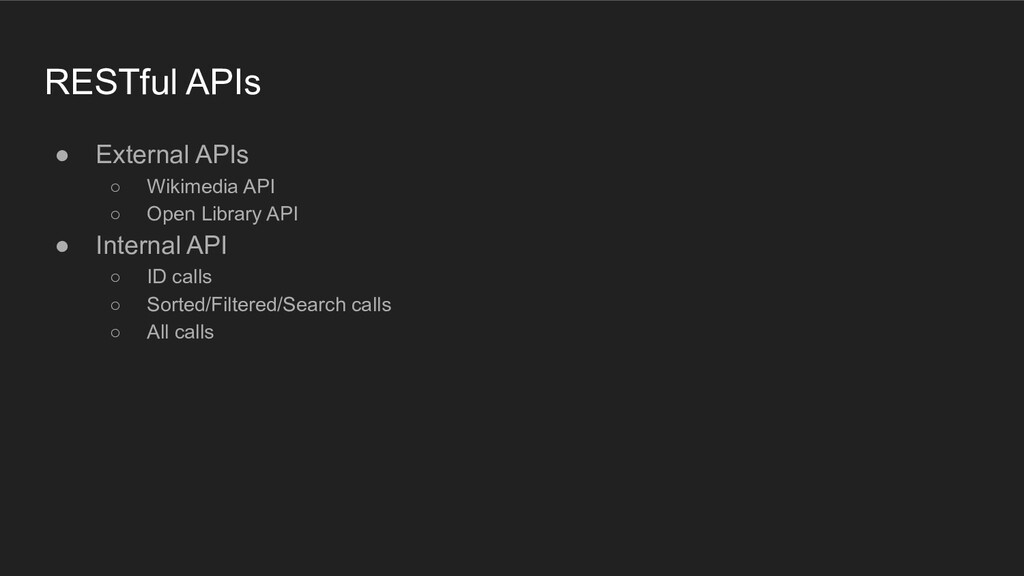
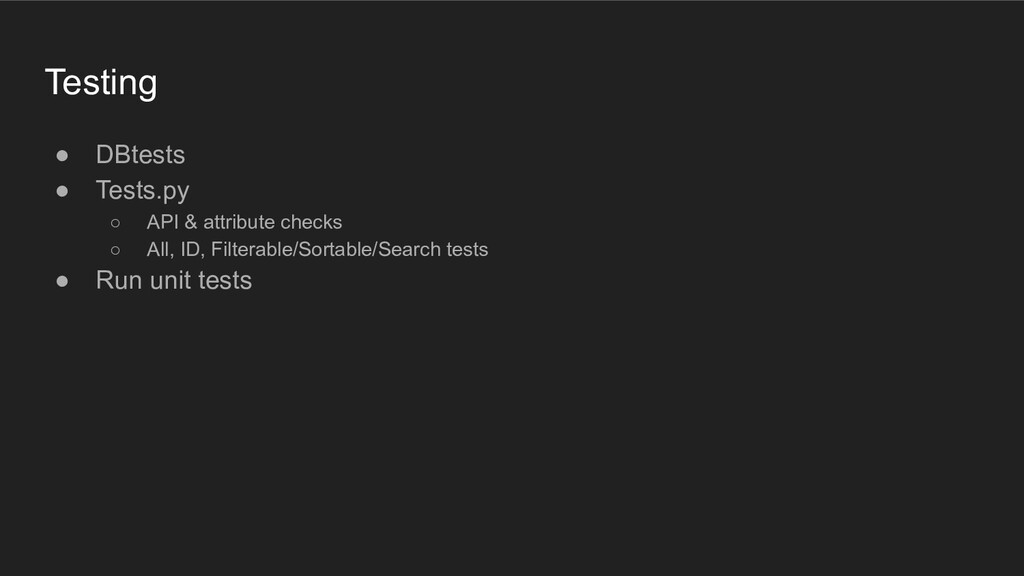
Models IV. RESTful APIs V. Implementations of: A. Pagination B. Filtering C. Sorting D. Searching VI. Testing VII. User Stories VIII. Website Critiques IX. Questions?
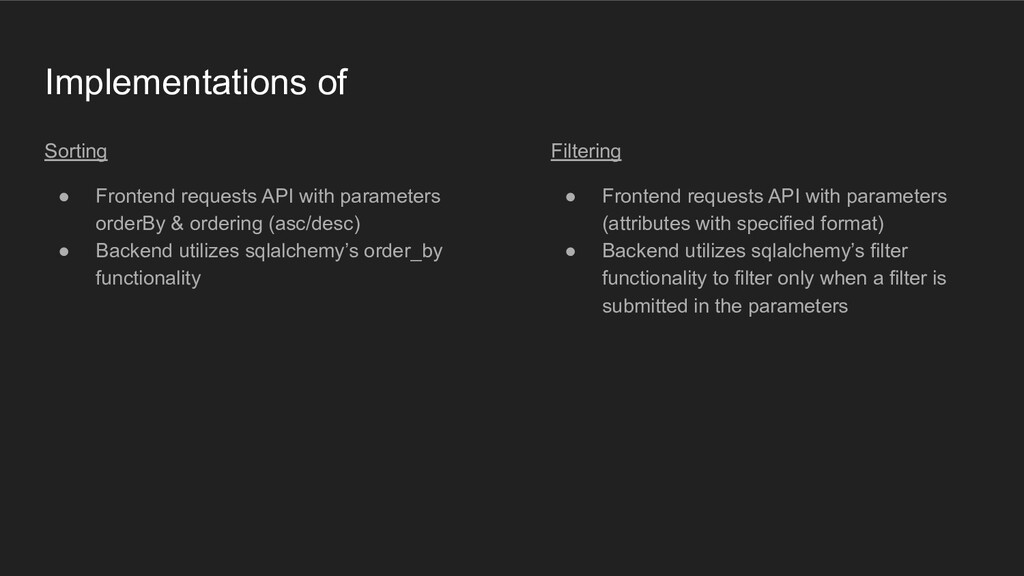
& ordering (asc/desc) • Backend utilizes sqlalchemy’s order_by functionality Filtering • Frontend requests API with parameters (attributes with specified format) • Backend utilizes sqlalchemy’s filter functionality to filter only when a filter is submitted in the parameters
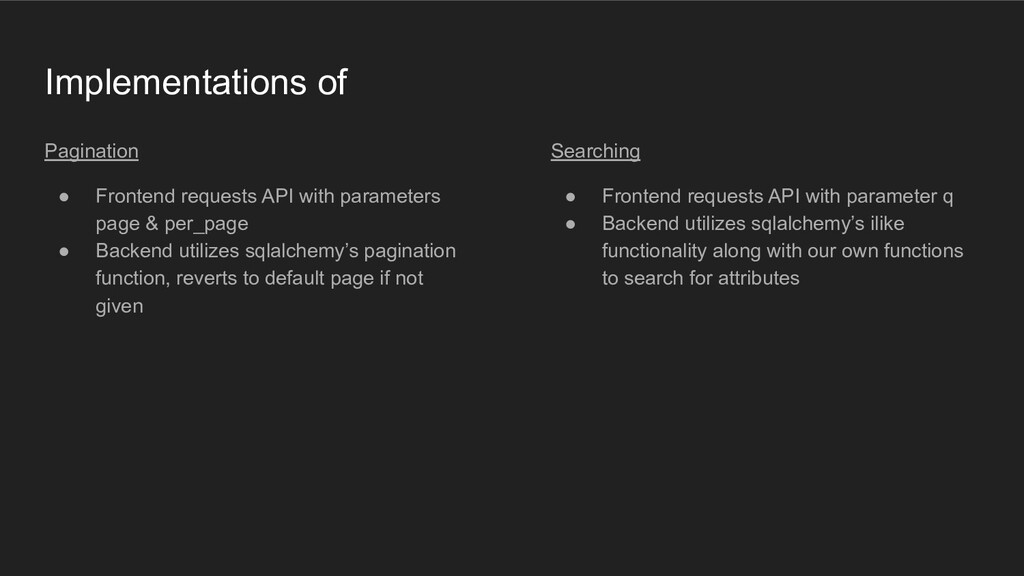
& per_page • Backend utilizes sqlalchemy’s pagination function, reverts to default page if not given Searching • Frontend requests API with parameter q • Backend utilizes sqlalchemy’s ilike functionality along with our own functions to search for attributes
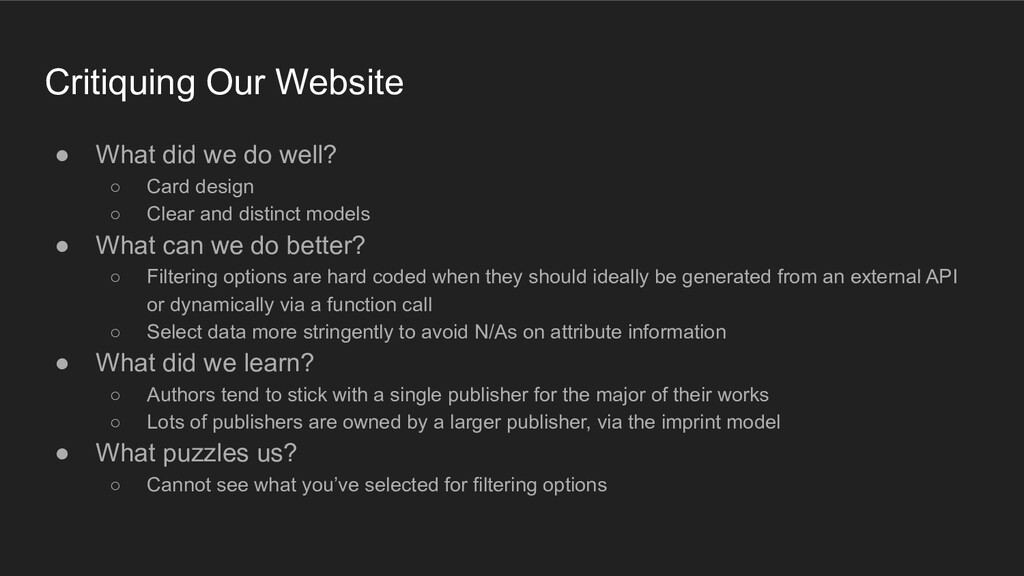
Card design ◦ Clear and distinct models • What can we do better? ◦ Filtering options are hard coded when they should ideally be generated from an external API or dynamically via a function call ◦ Select data more stringently to avoid N/As on attribute information • What did we learn? ◦ Authors tend to stick with a single publisher for the major of their works ◦ Lots of publishers are owned by a larger publisher, via the imprint model • What puzzles us? ◦ Cannot see what you’ve selected for filtering options
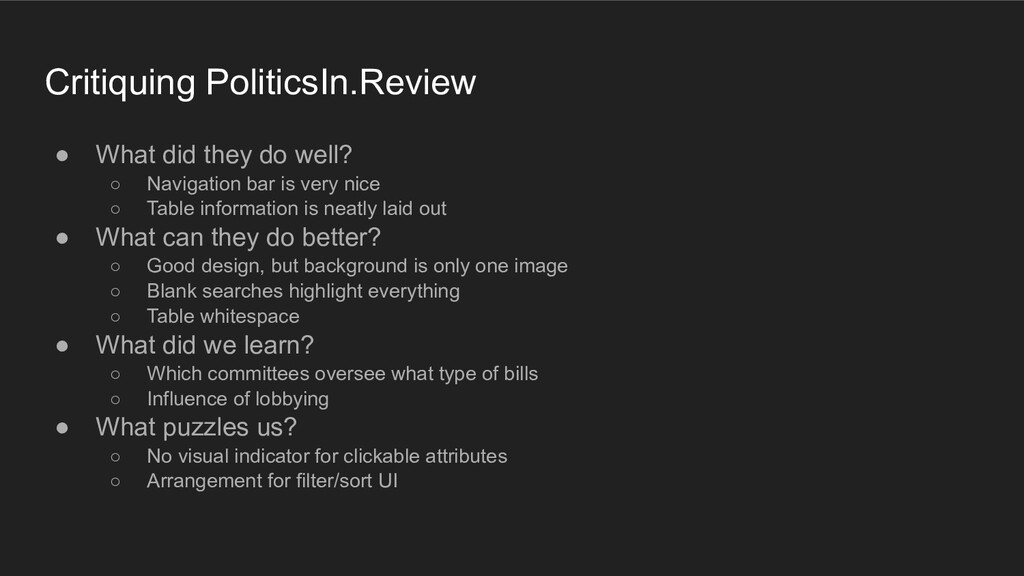
bar is very nice ◦ Table information is neatly laid out • What can they do better? ◦ Good design, but background is only one image ◦ Blank searches highlight everything ◦ Table whitespace • What did we learn? ◦ Which committees oversee what type of bills ◦ Influence of lobbying • What puzzles us? ◦ No visual indicator for clickable attributes ◦ Arrangement for filter/sort UI


 hiola
hiola
 tasusu
 terazawa
 bvr7352
 drpoonamkc
 signer
 kentaroy47
 ainischool
 uranoken
 ssmedikasda
 addyosmani
 mfonobong
 charlesmeaden
 baasie
 letsgokoyo
 mclloyd
 marktimemedia
 lauravandoore
 malarkey
 axbom
axbom
 bkeepers