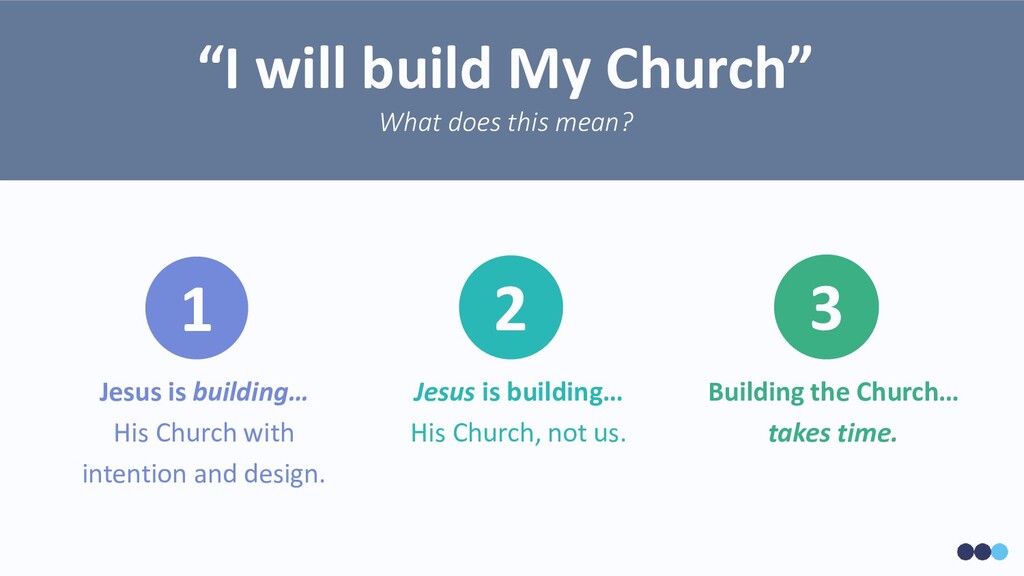
say that I am?” Simon Peter replied, “You are the Christ, the Son of the living God.” And Jesus answered him, “Blessed are you, Simon Bar-Jonah! For flesh and blood has not revealed this to you, but My Father who is in heaven. And I tell you, you are Peter, and on this rock I will build My Church, and the gates of Hades shall not prevail against it.”
the Father, from whom every family in heaven and on earth is named, that according to the riches of His glory He may grant you to be strengthened with power through His Spirit in your inner being, so that Christ may dwell in your hearts through faith – that you, being rooted and grounded in love, may have strength to comprehend with all the saints what is the breadth and length and height and depth, and to know the love of Christ that surpasses knowledge, that you may be filled with all the fullness of God.”
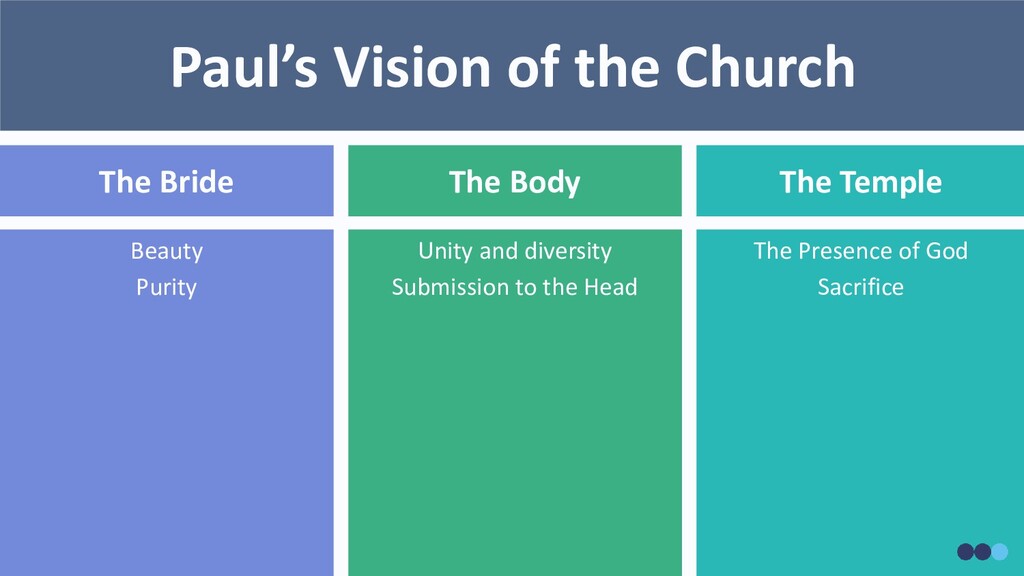
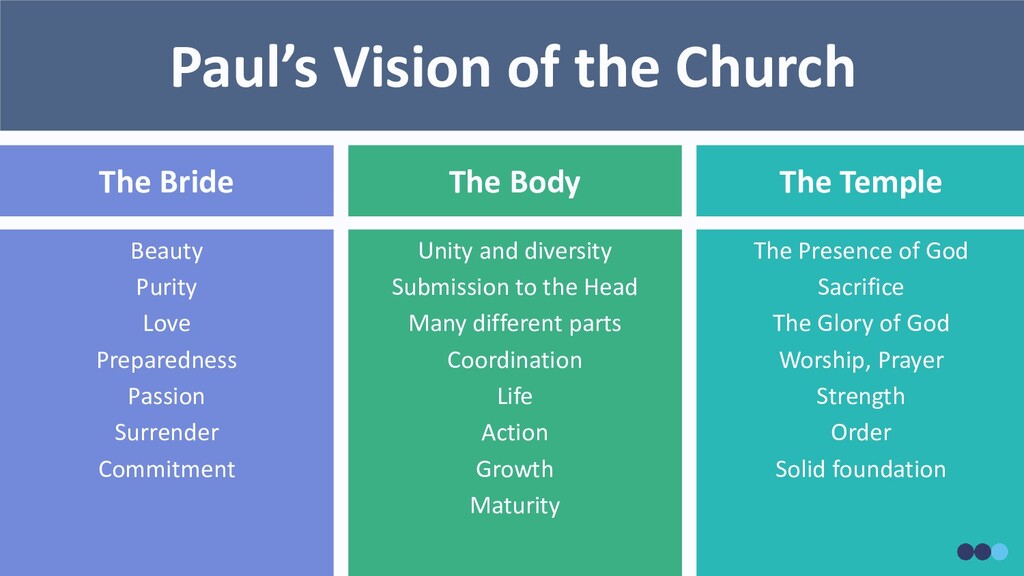
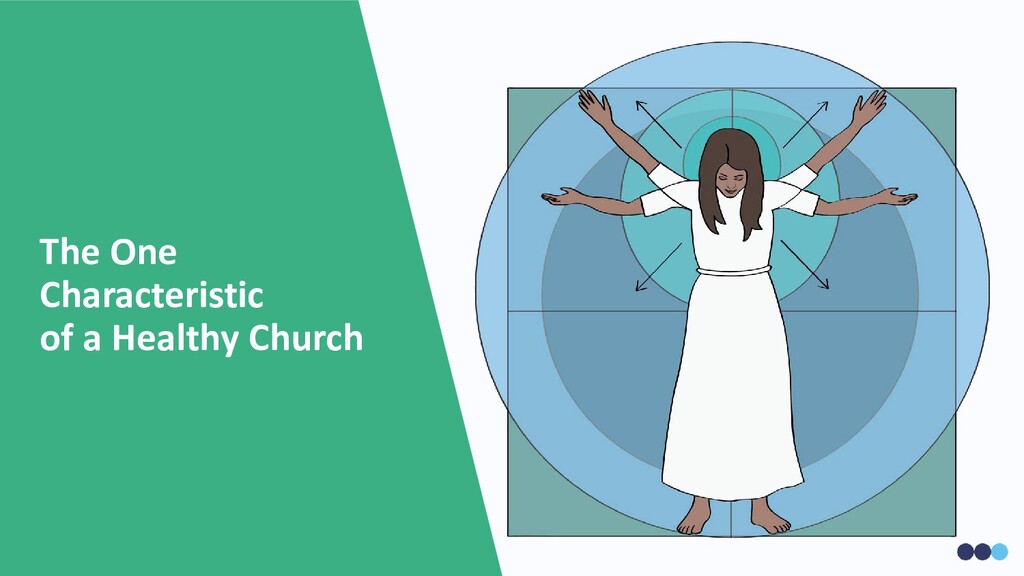
Surrender Commitment The Presence of God Sacrifice The Glory of God Worship, Prayer Strength Order Solid foundation Unity and diversity Submission to the Head Many different parts Coordination Life Action Growth Maturity The Bride The Temple The Body
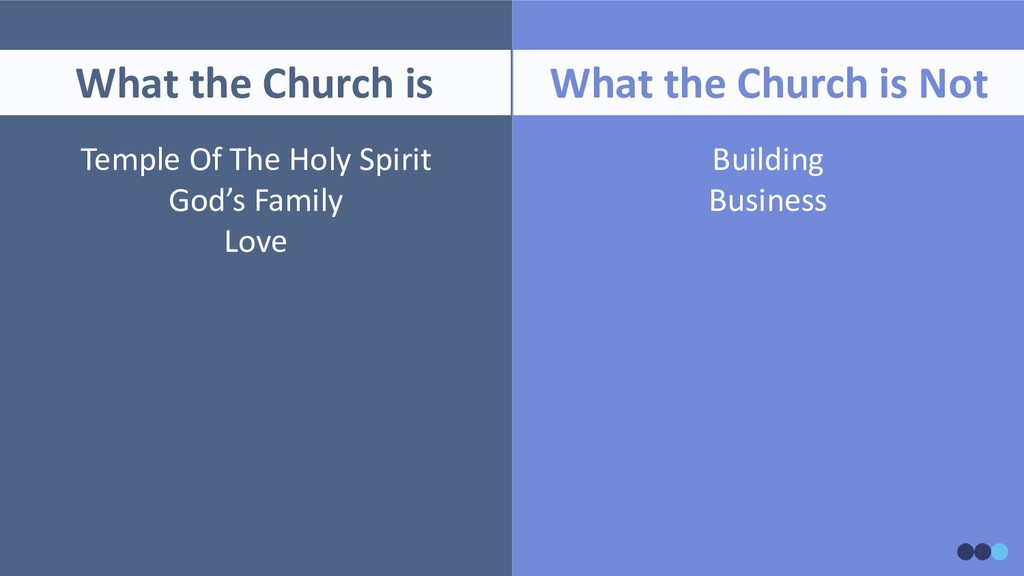
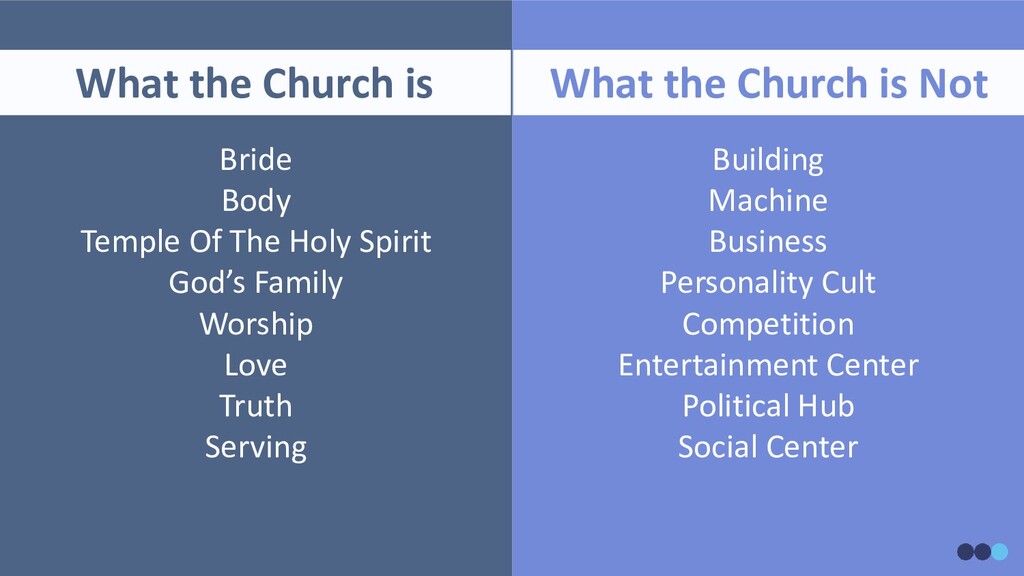
Love Truth Serving Building Machine Business Personality Cult Competition Entertainment Center Political Hub Social Center What the Church is What the Church is Not
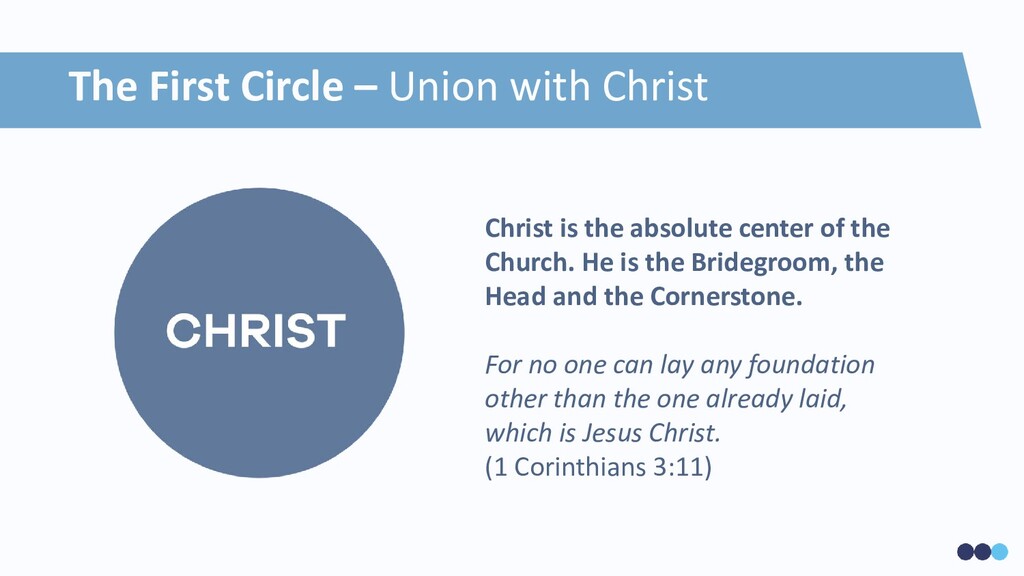
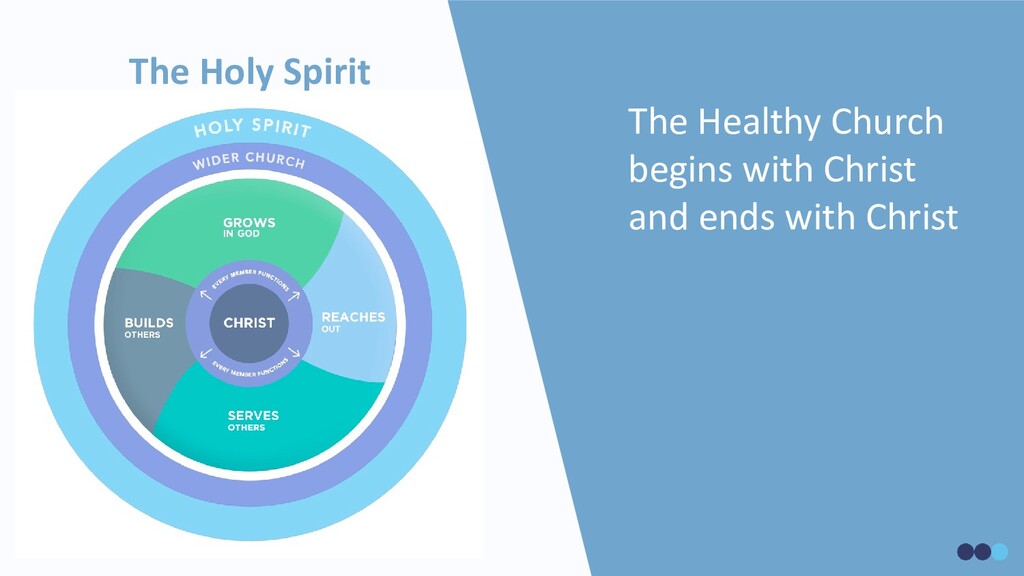
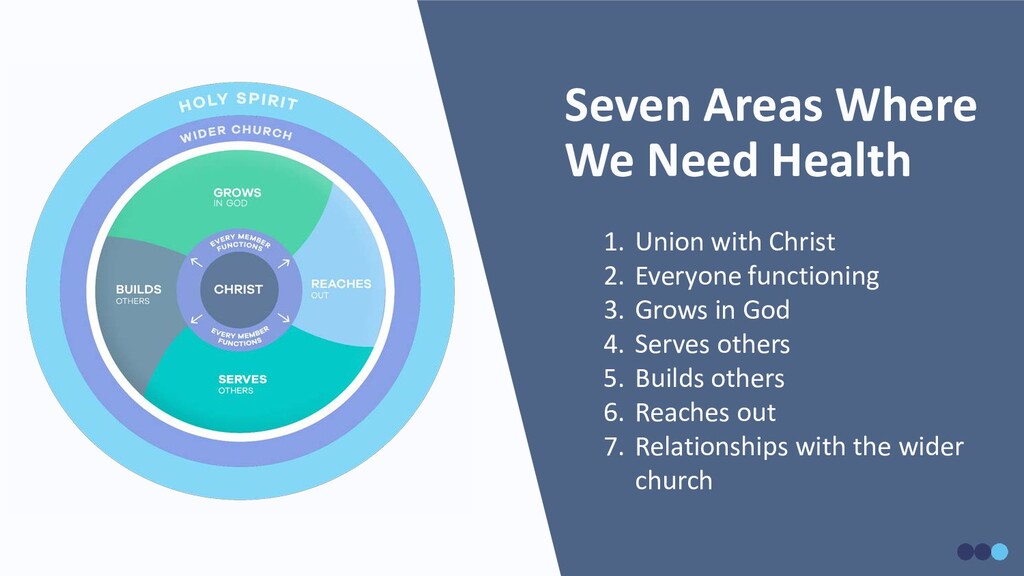
the Bridegroom, the Head and the Cornerstone. For no one can lay any foundation other than the one already laid, which is Jesus Christ. (1 Corinthians 3:11) The First Circle – Union with Christ
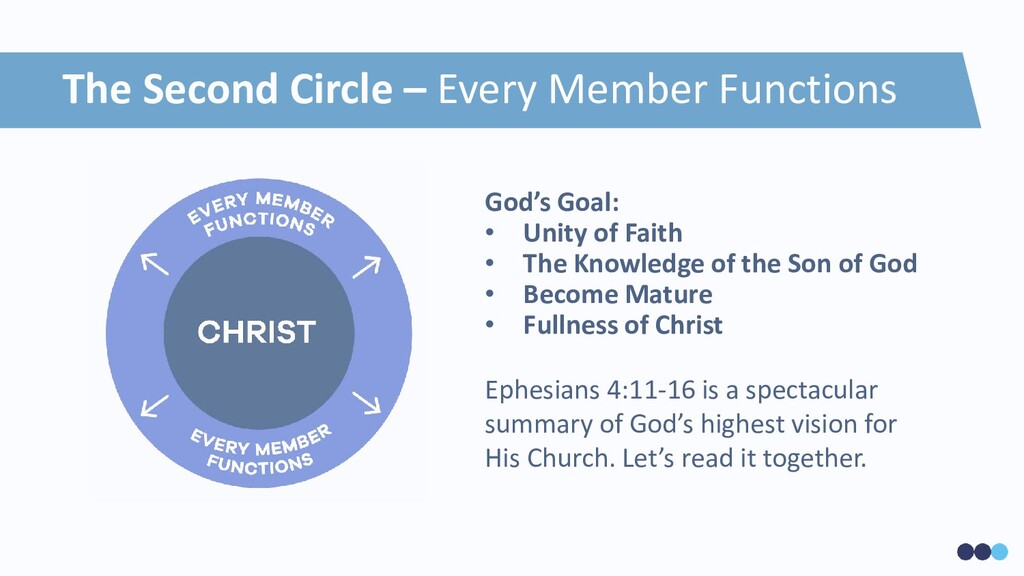
the Son of God • Become Mature • Fullness of Christ Ephesians 4:11-16 is a spectacular summary of God’s highest vision for His Church. Let’s read it together. The Second Circle – Every Member Functions
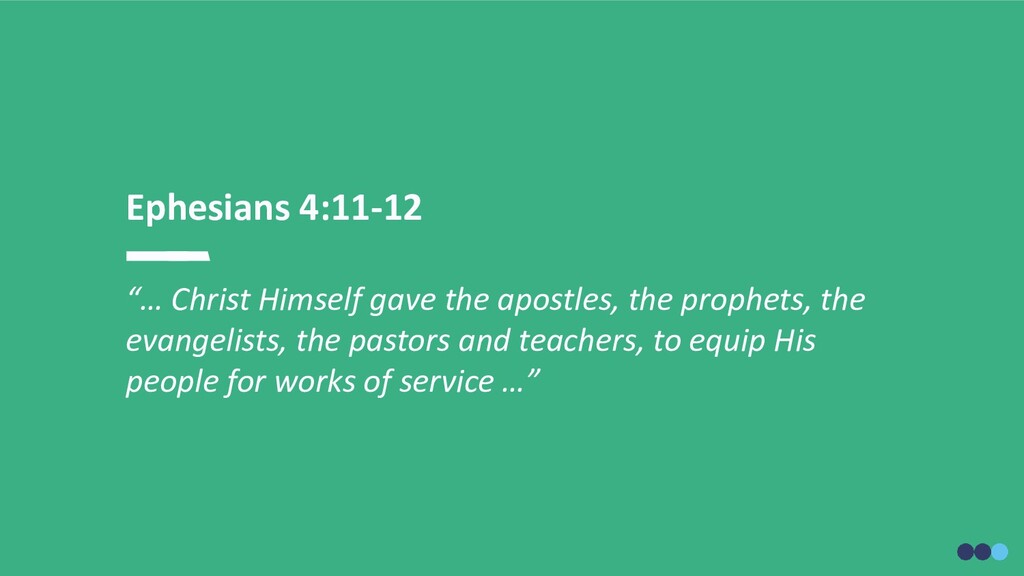
evangelists, the shepherds and teachers, to equip the saints for the work of ministry, for building up the Body of Christ, until we all attain to the unity of the faith and of the knowledge of the Son of God, and become mature, to the measure of the stature of the fullness of Christ …”
to grow up in every way into Him who is the Head, into Christ, from whom the whole Body, joined and held together by every joint with which it is equipped, when each part is working properly, makes the Body grow so that it builds itself up in love.”
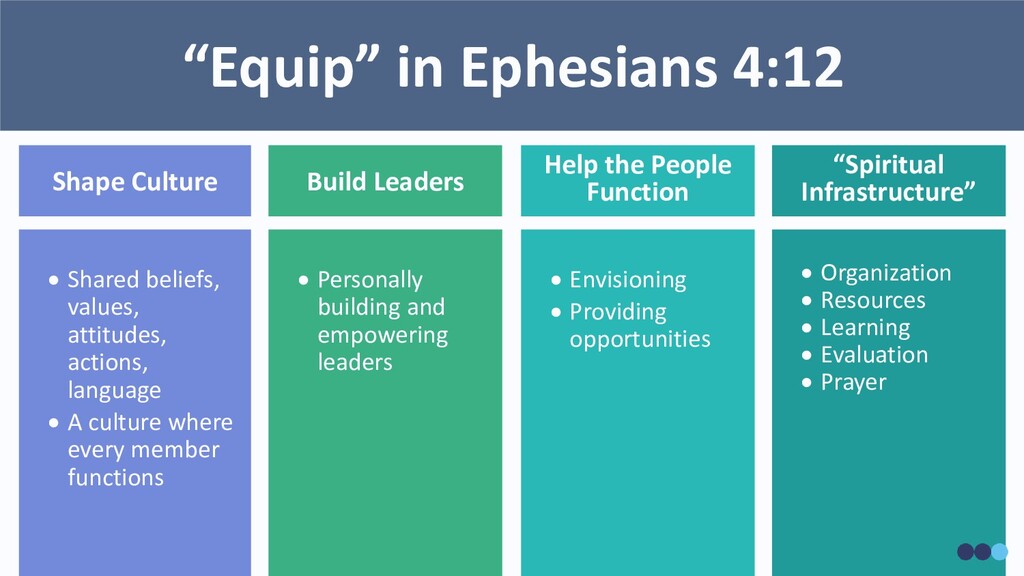
language • A culture where every member functions • Envisioning • Providing opportunities • Personally building and empowering leaders Shape Culture Help the People Function Build Leaders • Organization • Resources • Learning • Evaluation • Prayer “Spiritual Infrastructure”
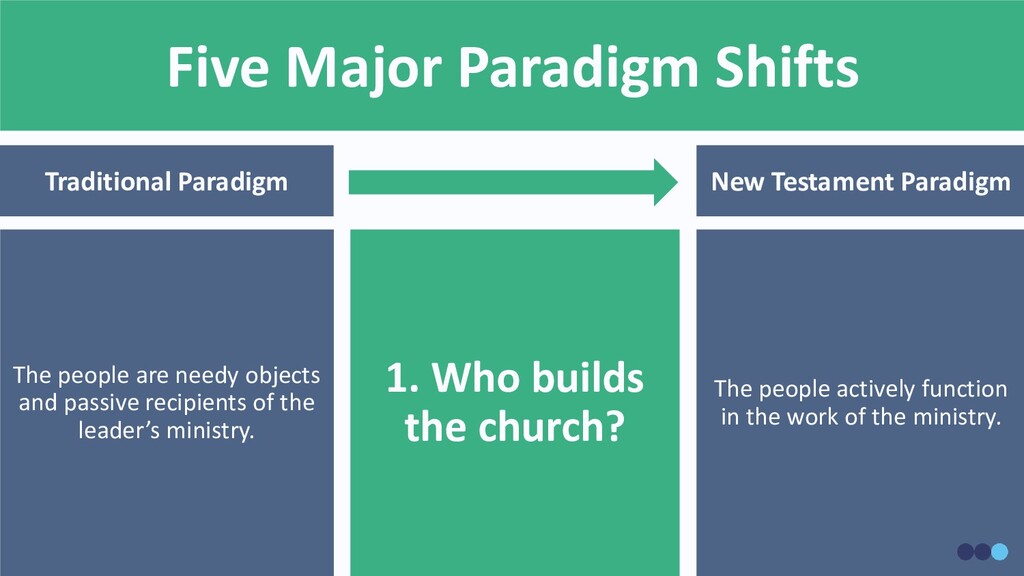
people are needy objects and passive recipients of the leader’s ministry. Traditional Paradigm New Testament Paradigm The people actively function in the work of the ministry.
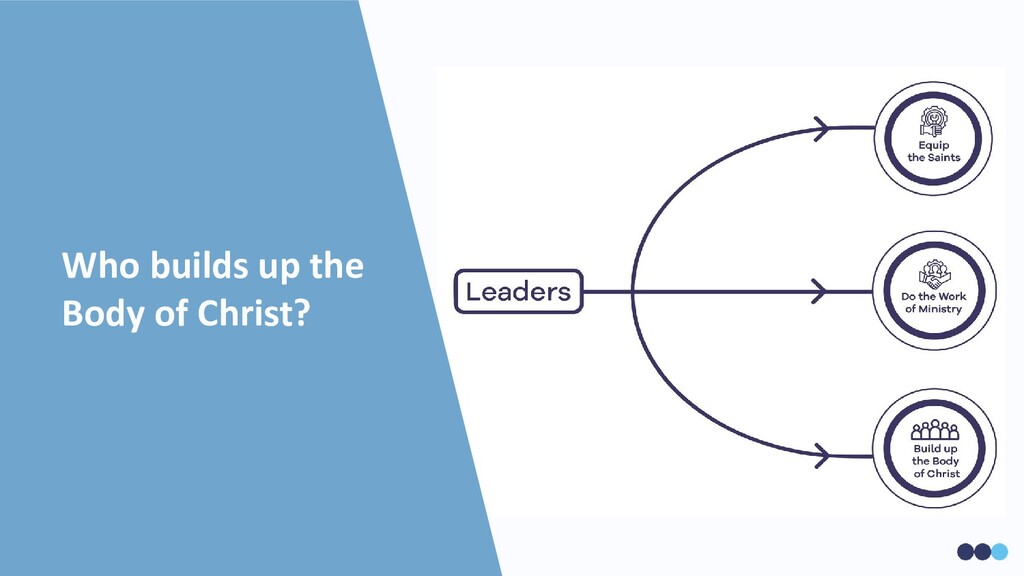
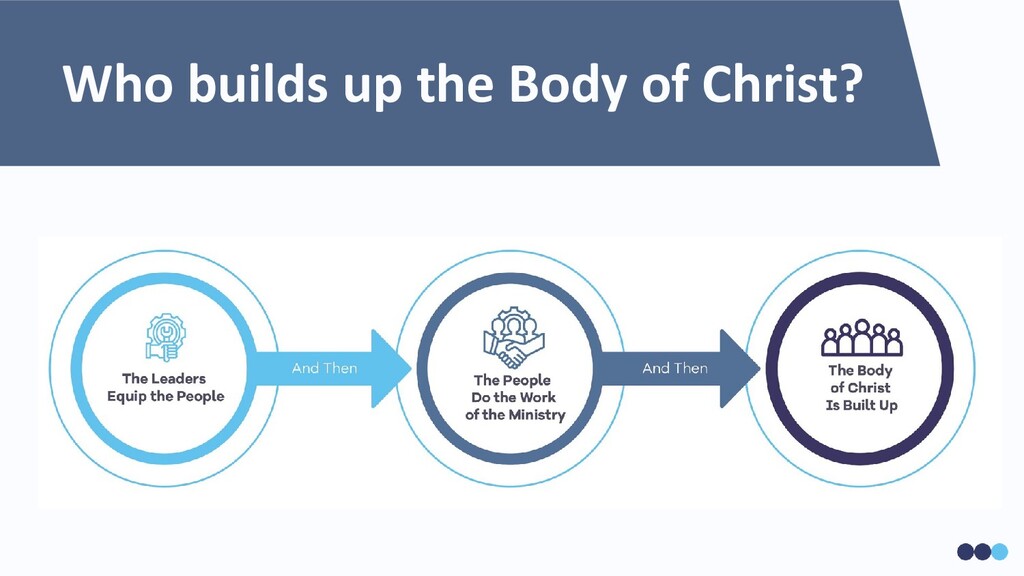
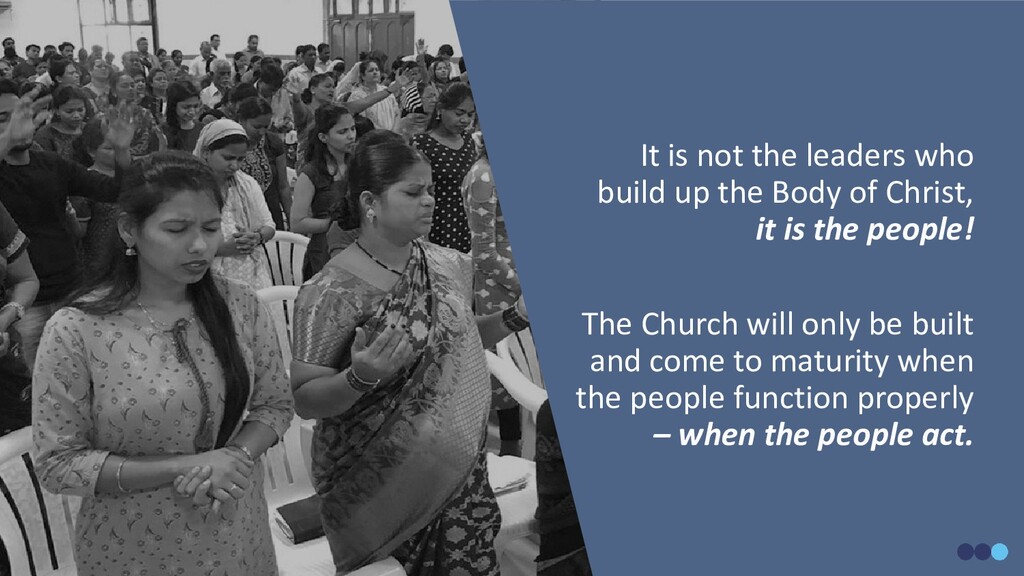
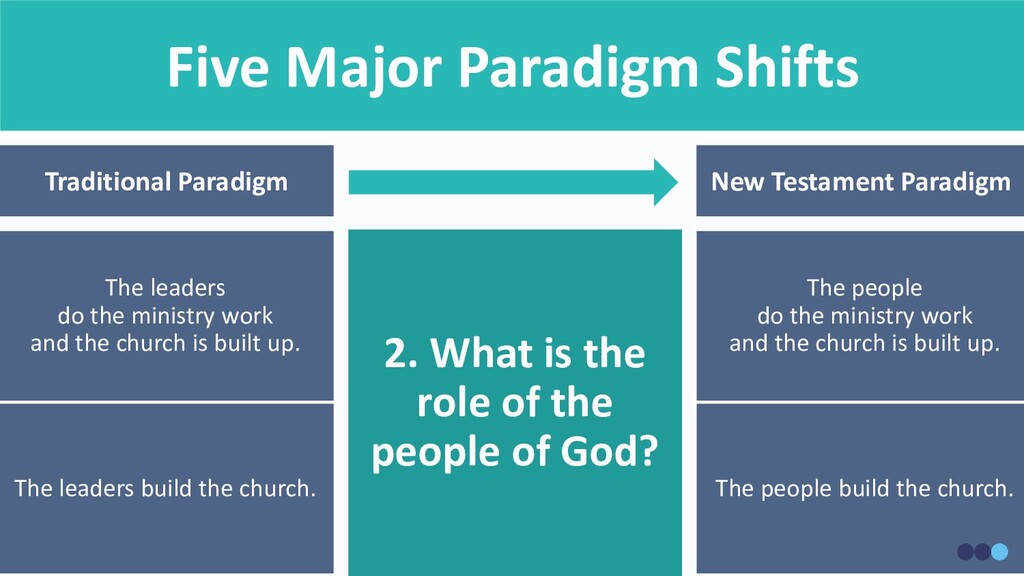
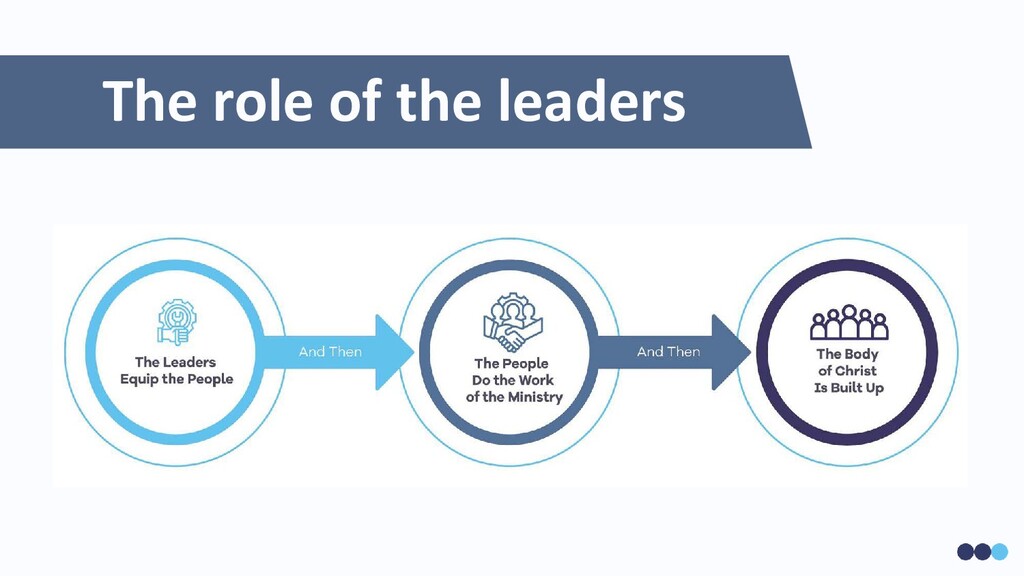
and the church is built up. 2. What is the role of the people of God? Traditional Paradigm New Testament Paradigm The leaders build the church. The people do the ministry work and the church is built up. The people build the church.
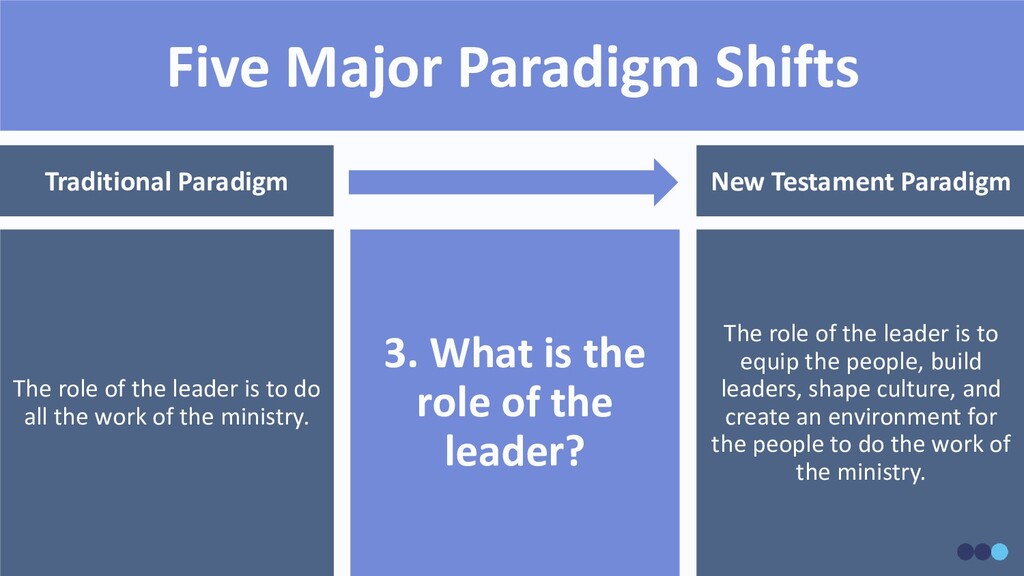
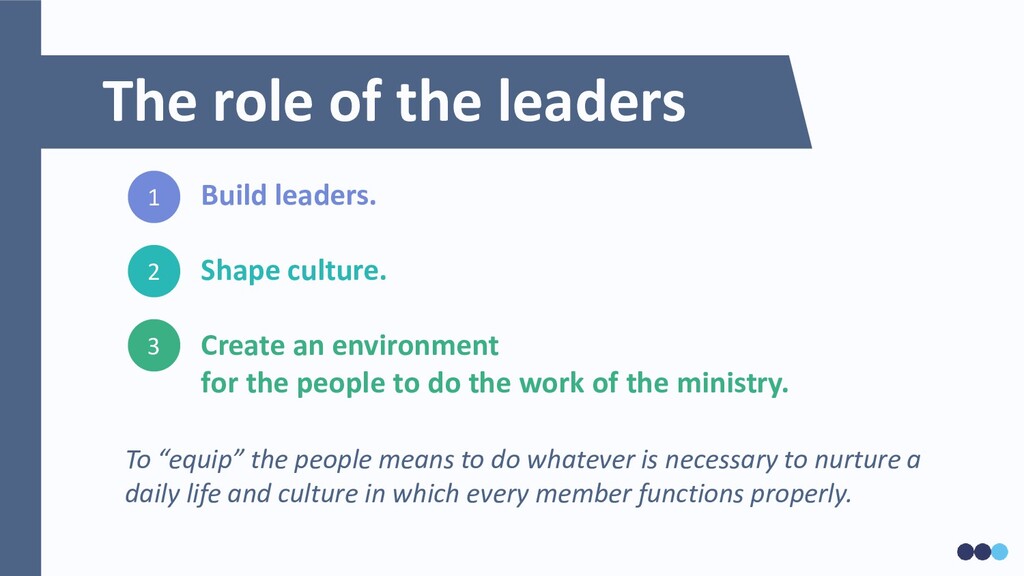
Paradigm Shifts The role of the leader is to do all the work of the ministry. Traditional Paradigm New Testament Paradigm The role of the leader is to equip the people, build leaders, shape culture, and create an environment for the people to do the work of the ministry.
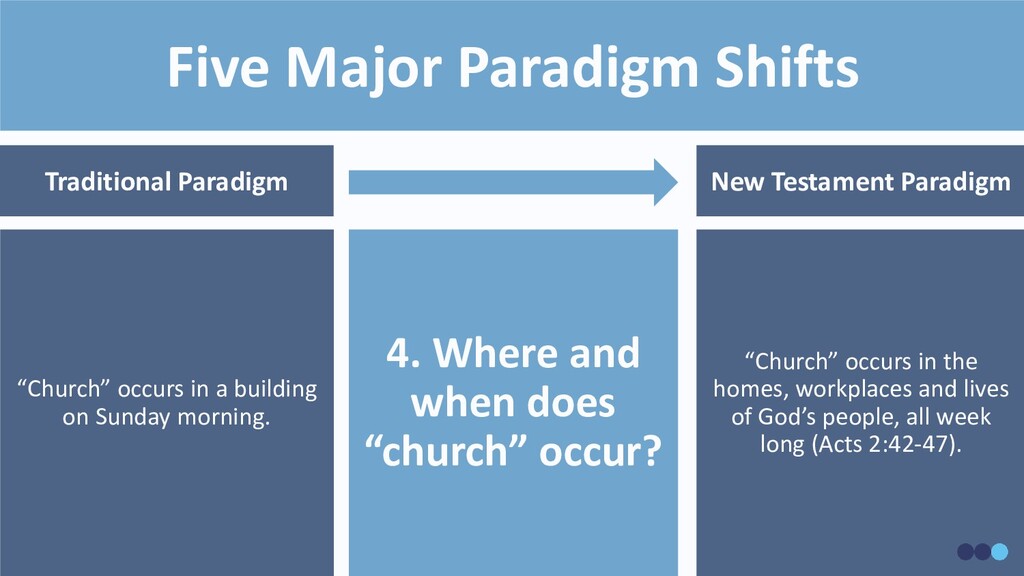
Shifts “Church” occurs in a building on Sunday morning. Traditional Paradigm New Testament Paradigm “Church” occurs in the homes, workplaces and lives of God’s people, all week long (Acts 2:42-47).
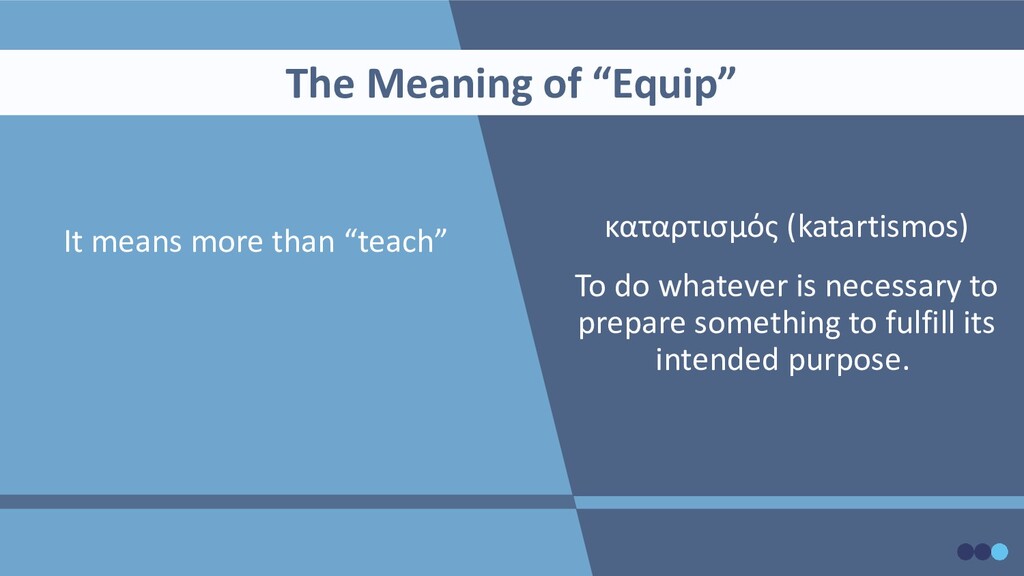
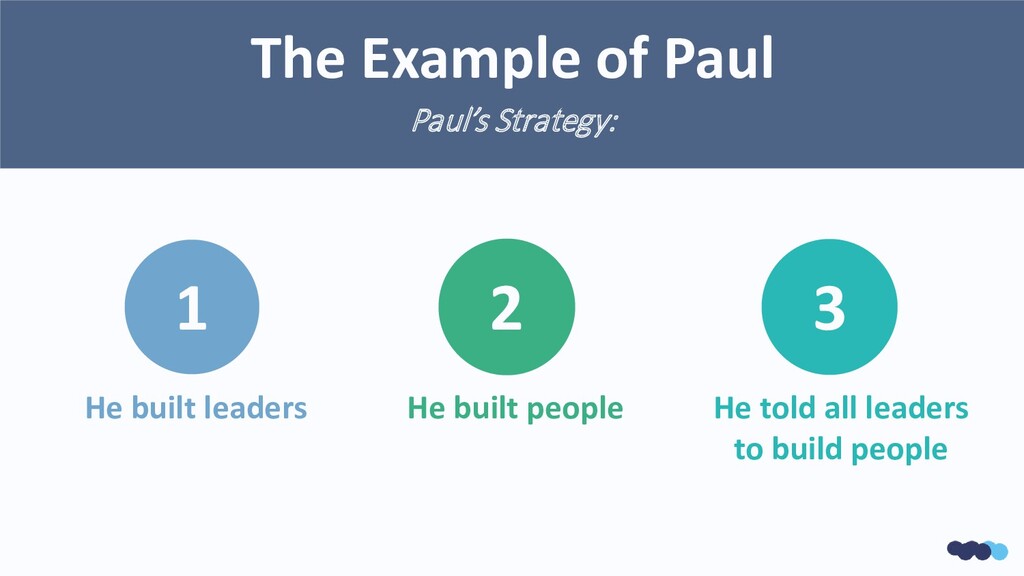
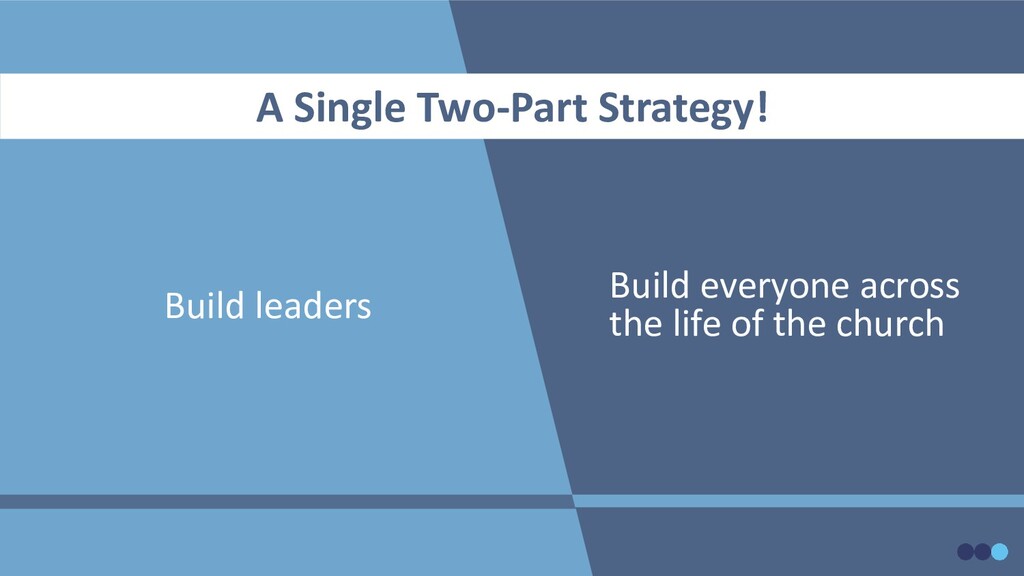
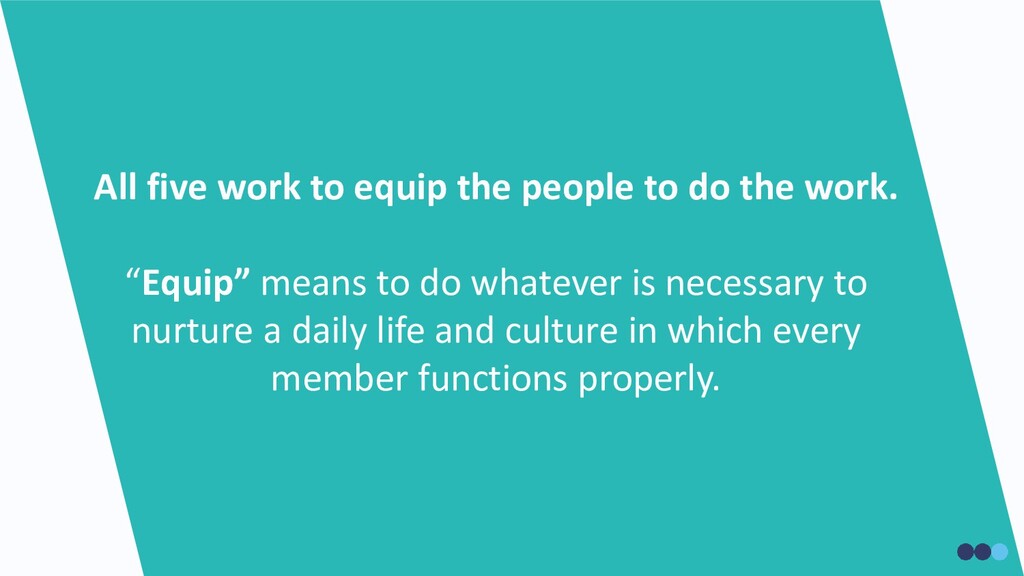
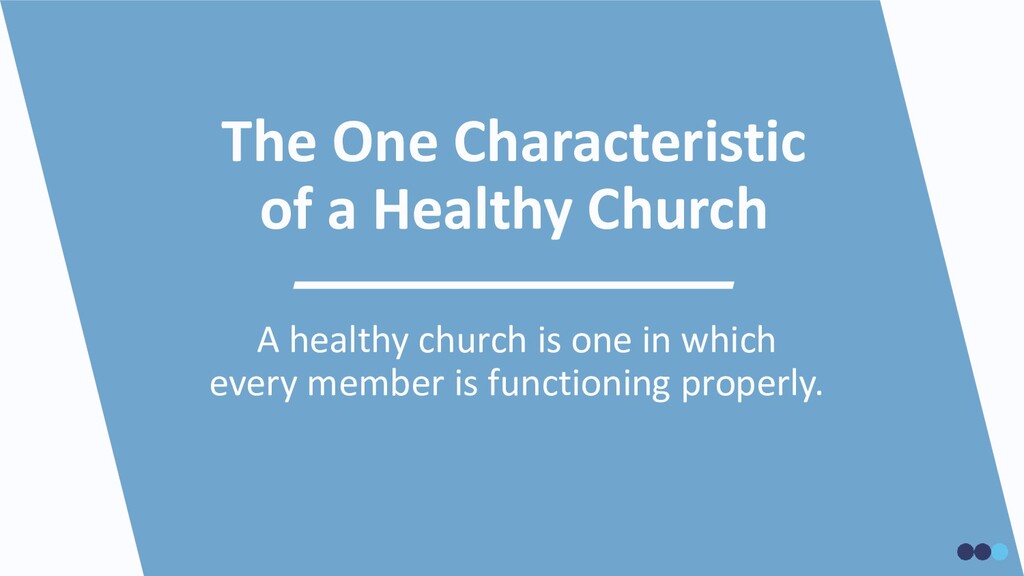
culture. • Create an environment for the people to do the work of the ministry. To “equip” the people means to do whatever is necessary to nurture a daily life and culture in which every member functions properly. 1 2 3
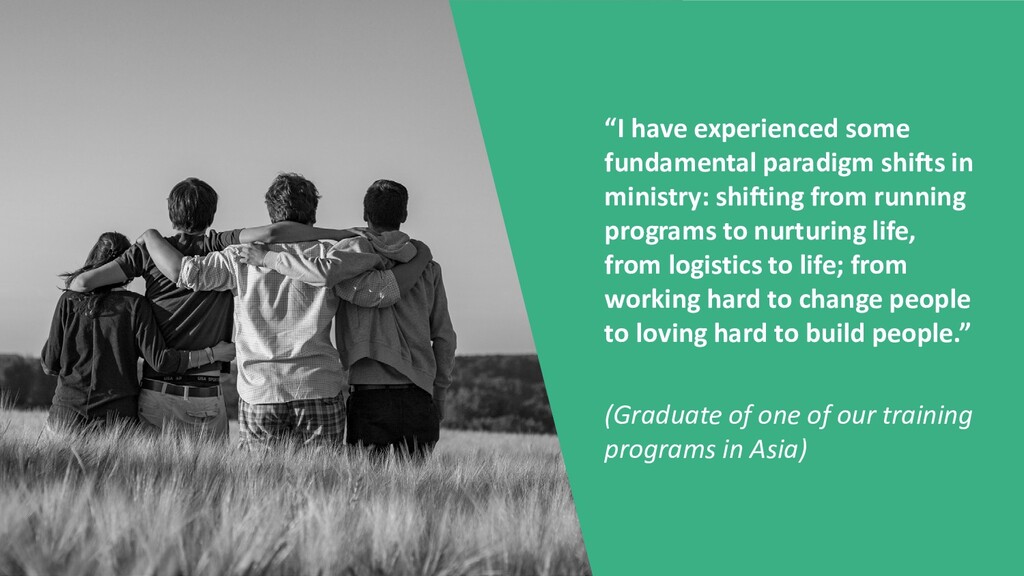
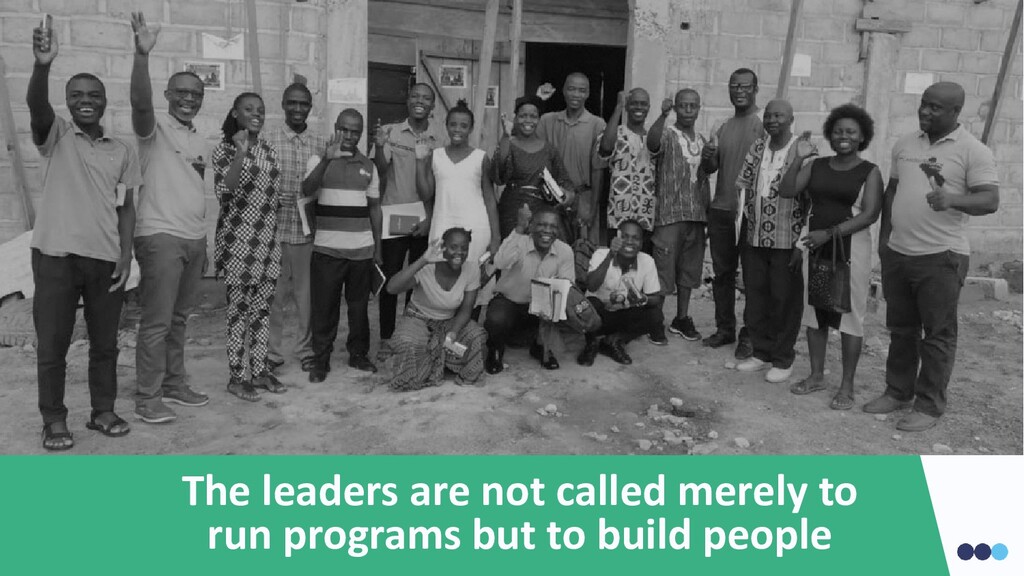
from running programs to nurturing life, from logistics to life; from working hard to change people to loving hard to build people.” (Graduate of one of our training programs in Asia)
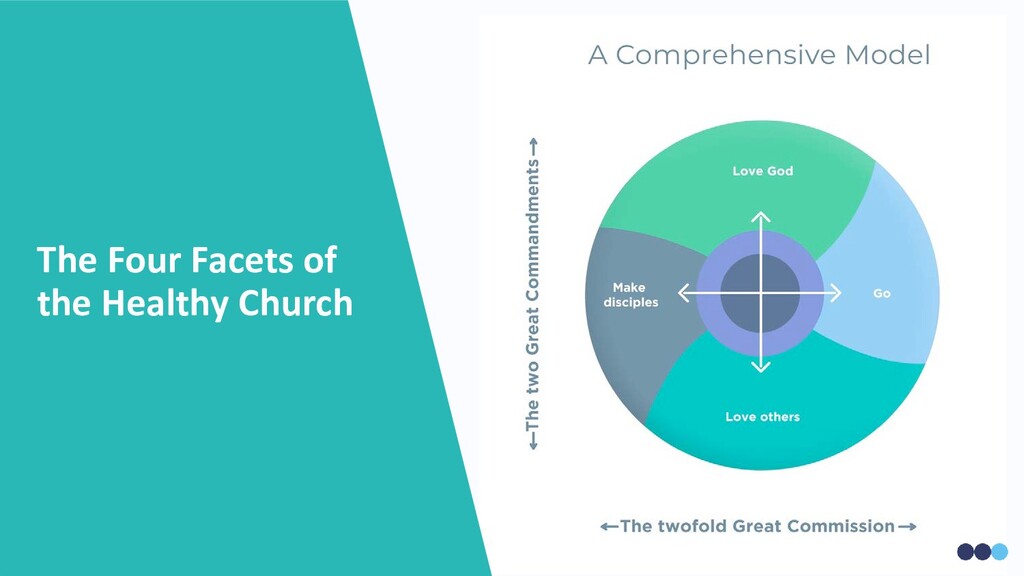
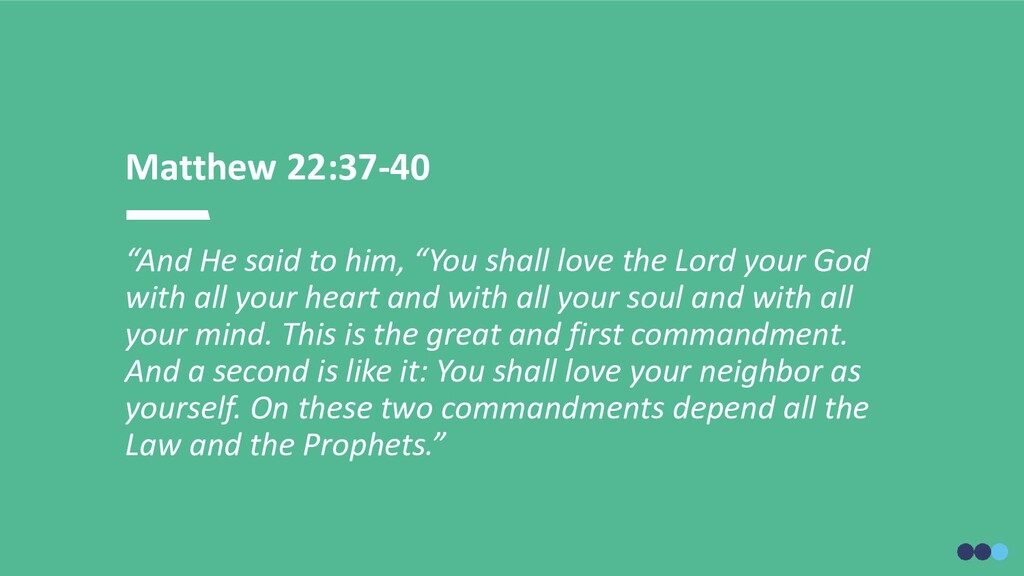
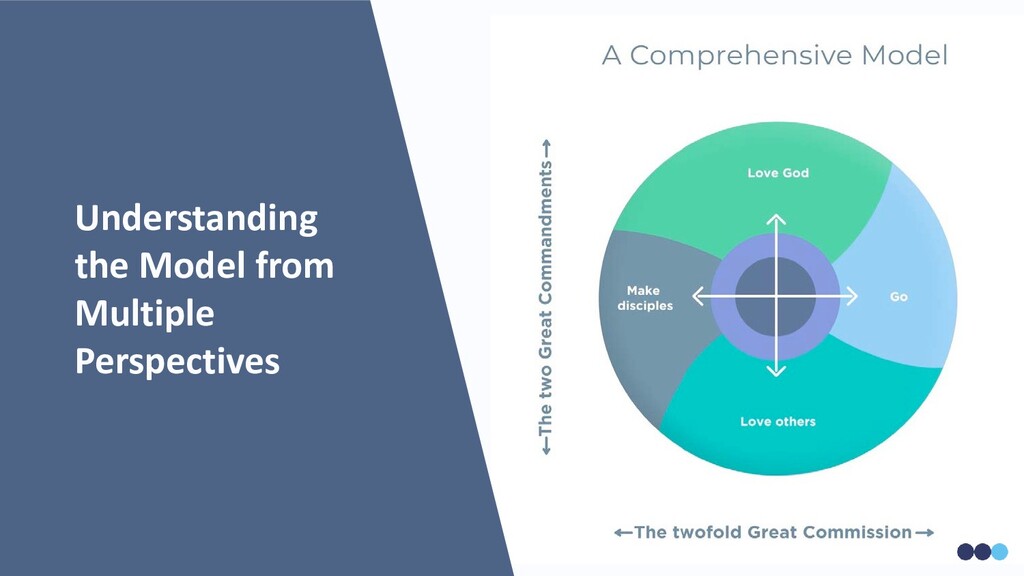
the Lord your God with all your heart and with all your soul and with all your mind. This is the great and first commandment. And a second is like it: You shall love your neighbor as yourself. On these two commandments depend all the Law and the Prophets.”
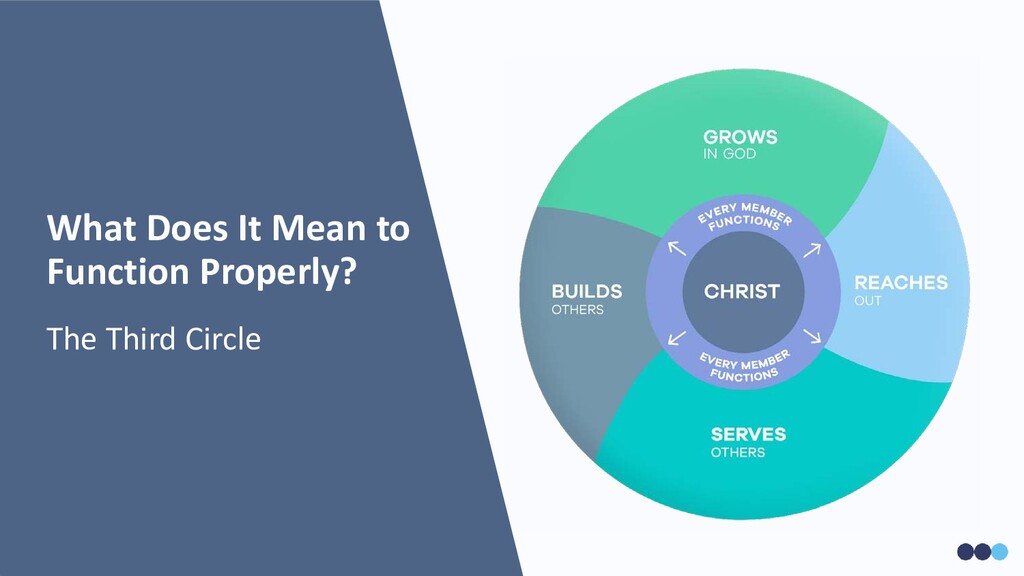
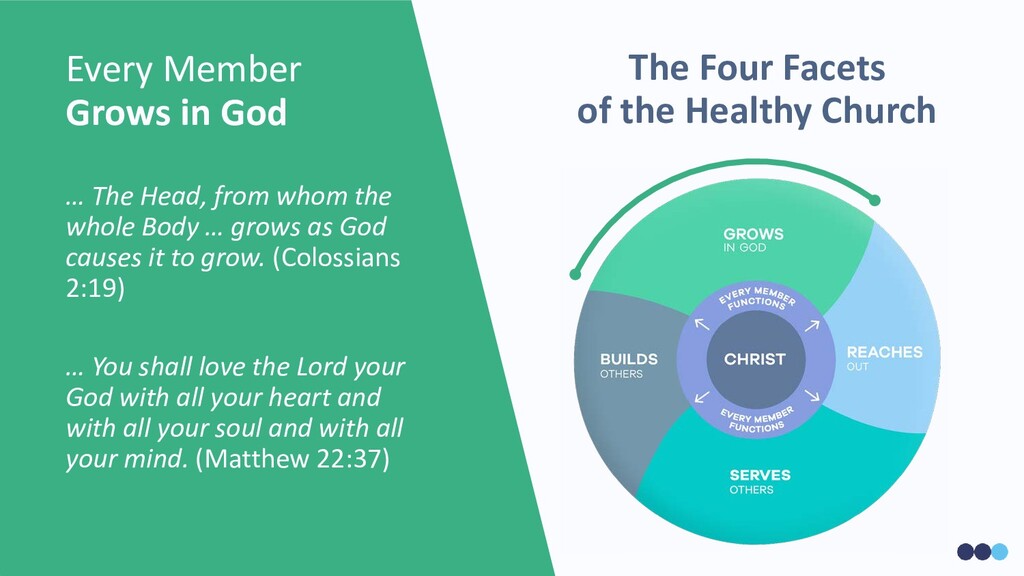
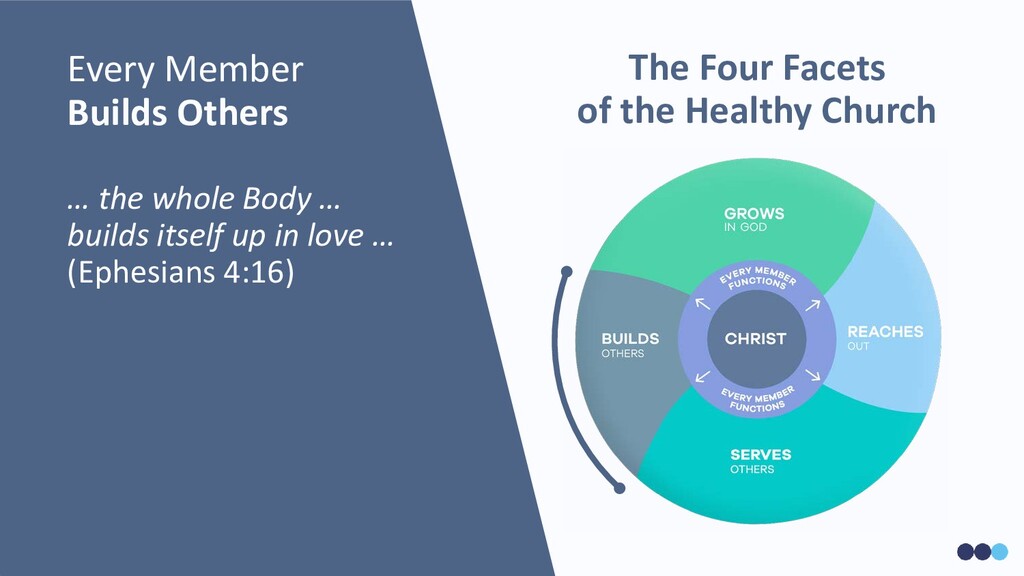
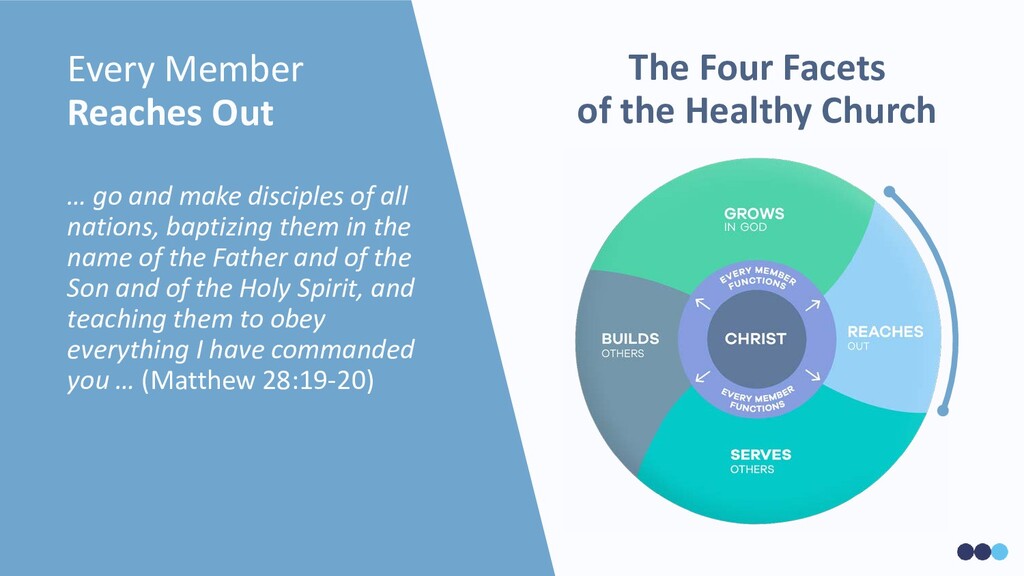
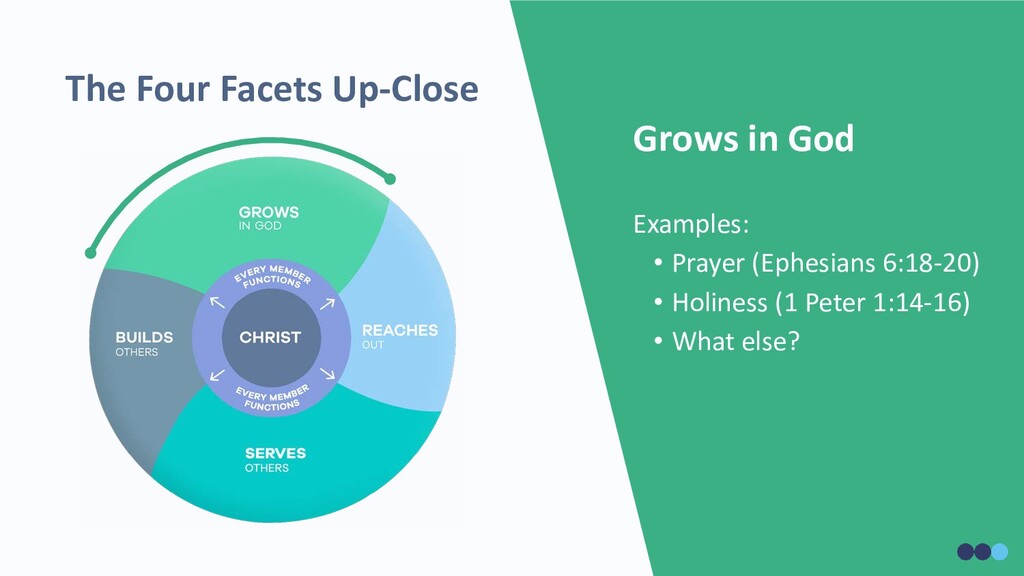
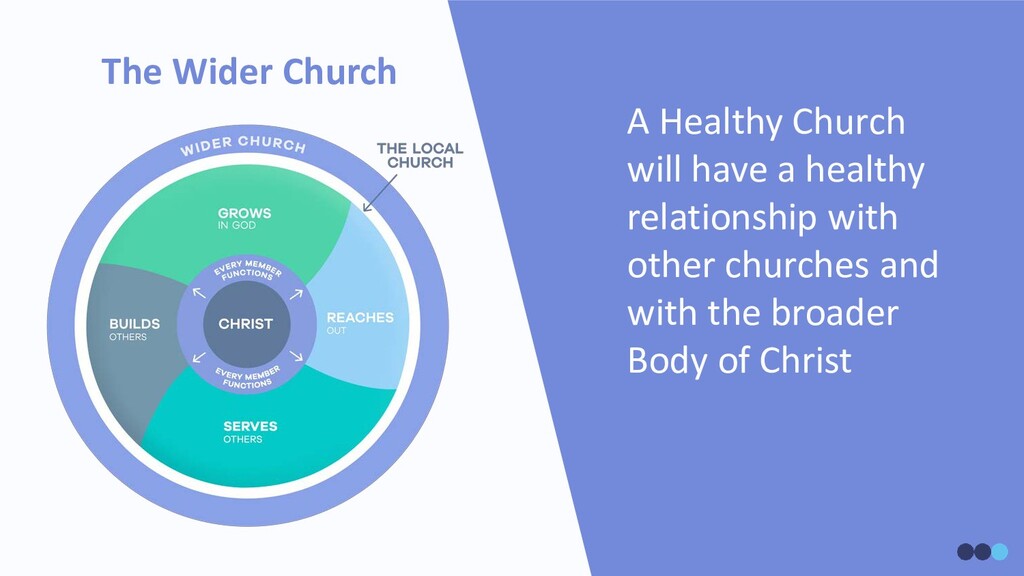
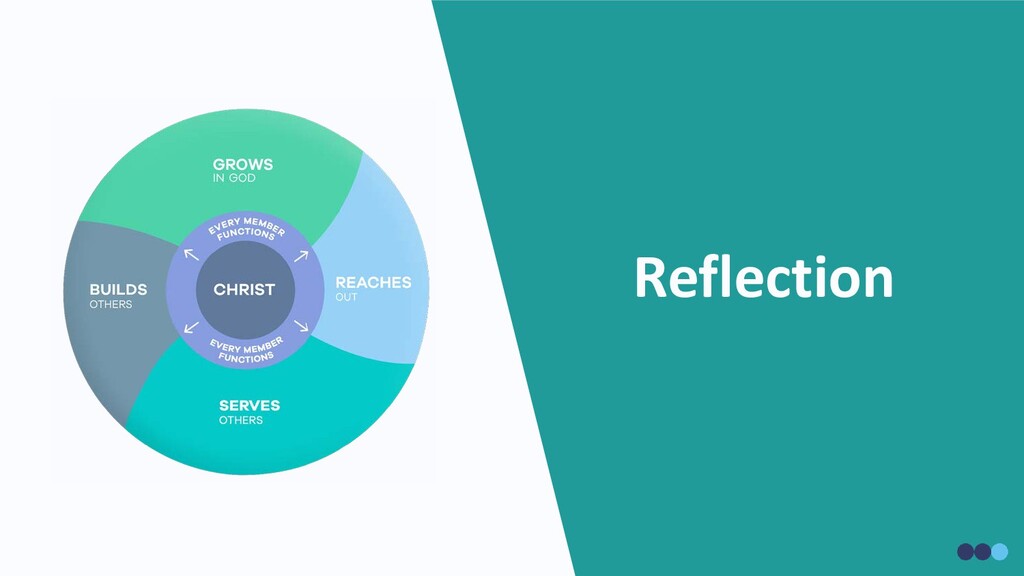
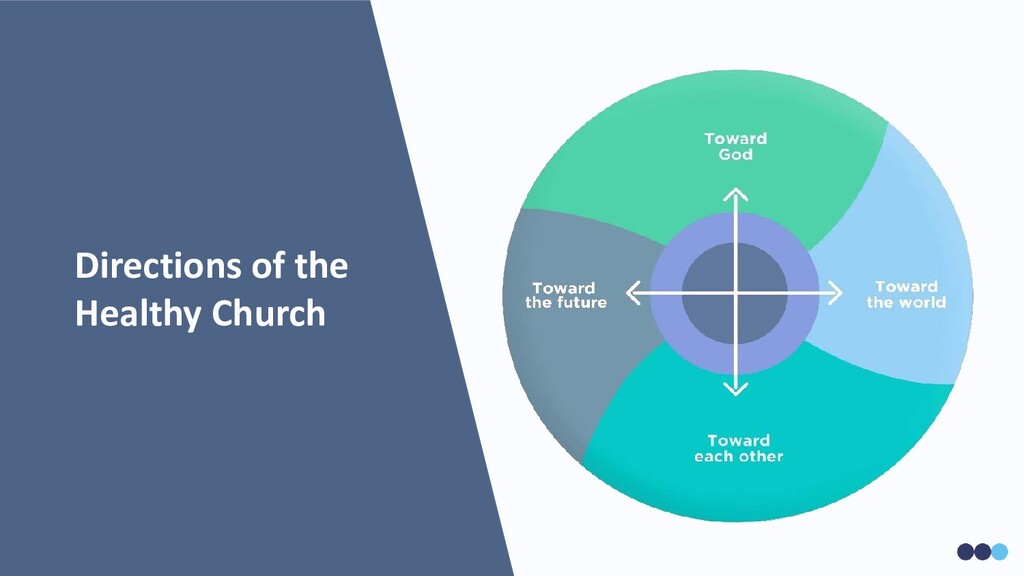
in God … The Head, from whom the whole Body … grows as God causes it to grow. (Colossians 2:19) … You shall love the Lord your God with all your heart and with all your soul and with all your mind. (Matthew 22:37)
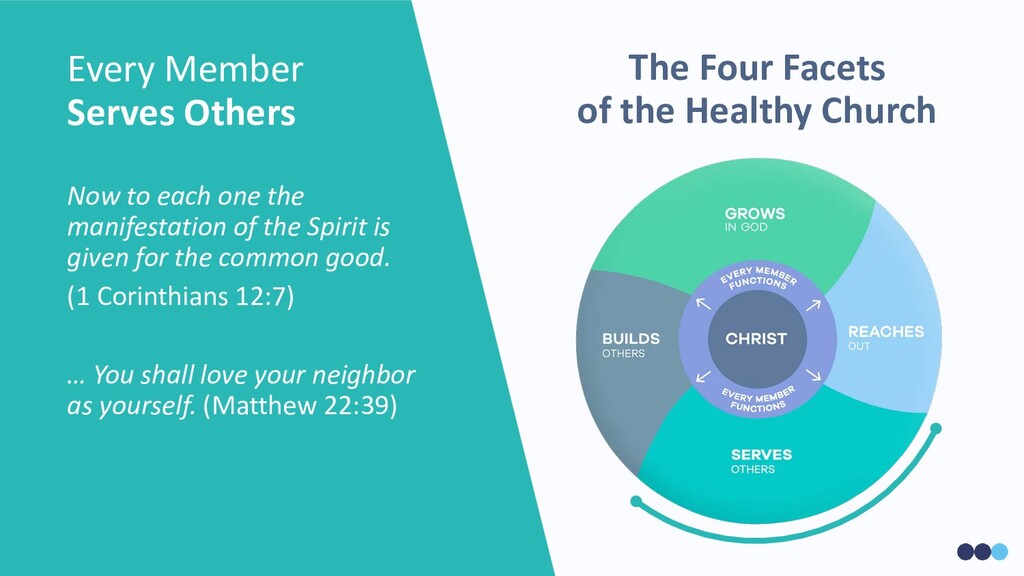
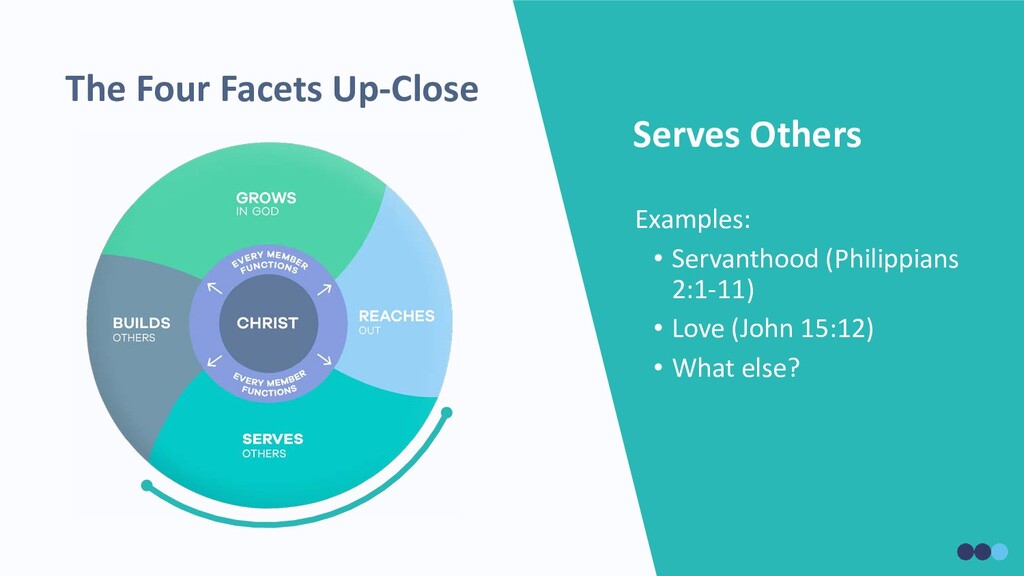
Others Now to each one the manifestation of the Spirit is given for the common good. (1 Corinthians 12:7) … You shall love your neighbor as yourself. (Matthew 22:39)
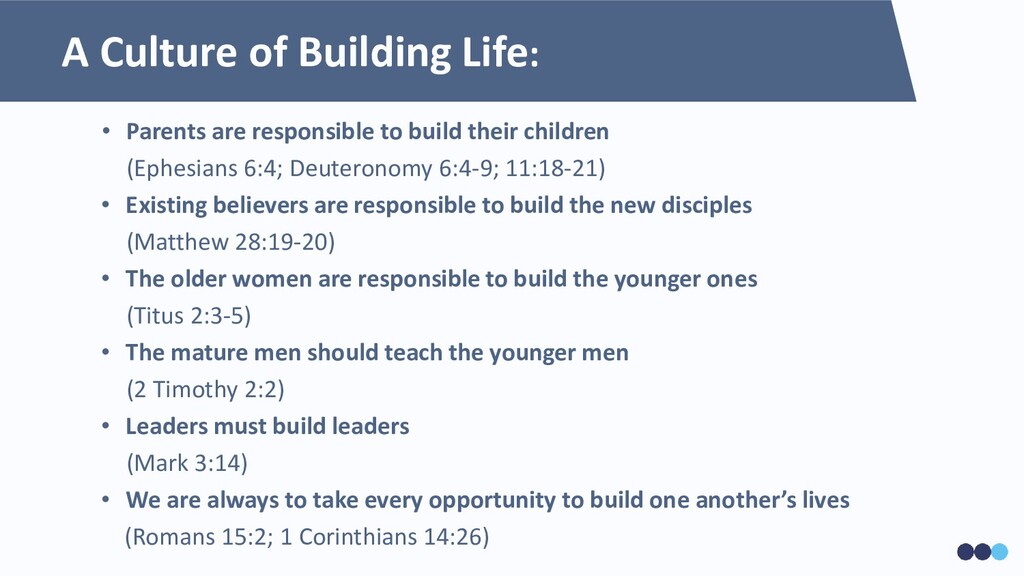
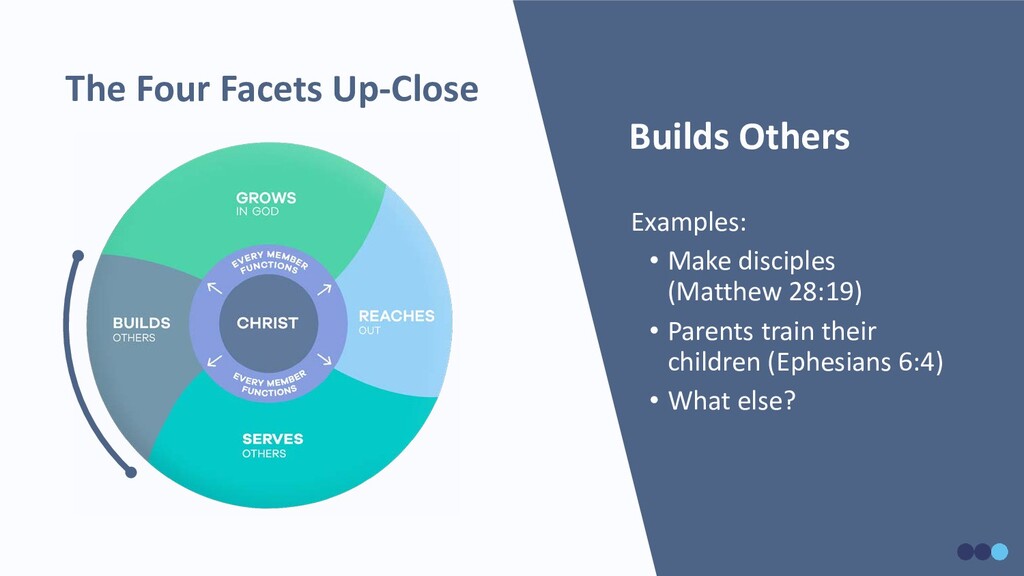
build their children (Ephesians 6:4; Deuteronomy 6:4-9; 11:18-21) • Existing believers are responsible to build the new disciples (Matthew 28:19-20) • The older women are responsible to build the younger ones (Titus 2:3-5) • The mature men should teach the younger men (2 Timothy 2:2) • Leaders must build leaders (Mark 3:14) • We are always to take every opportunity to build one another’s lives (Romans 15:2; 1 Corinthians 14:26)
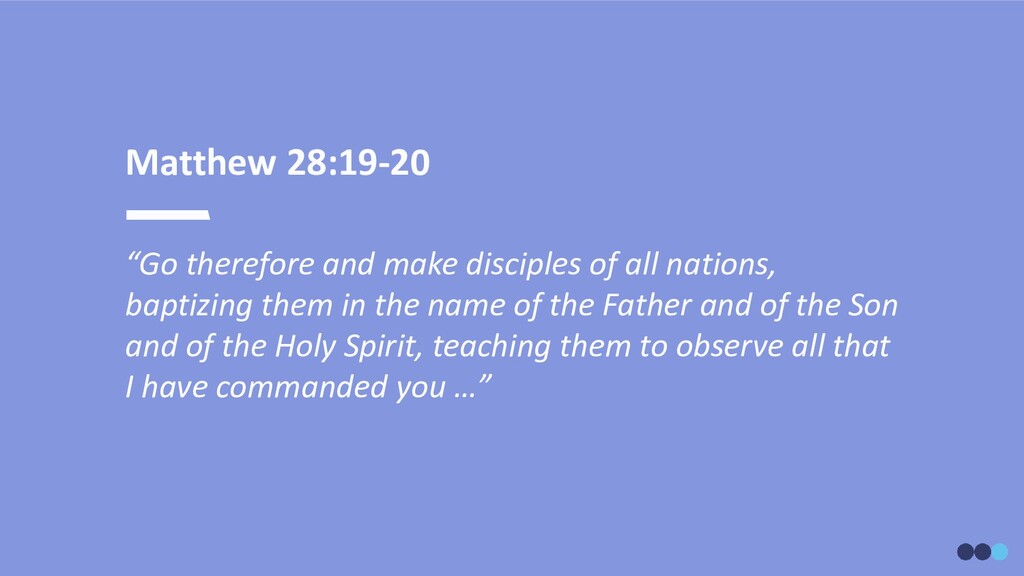
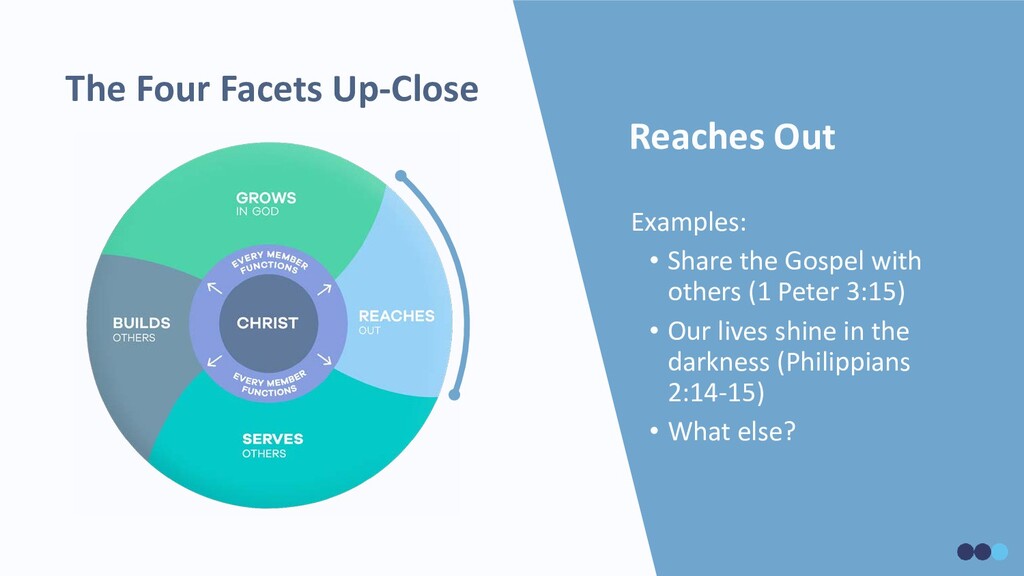
Out … go and make disciples of all nations, baptizing them in the name of the Father and of the Son and of the Holy Spirit, and teaching them to obey everything I have commanded you … (Matthew 28:19-20)
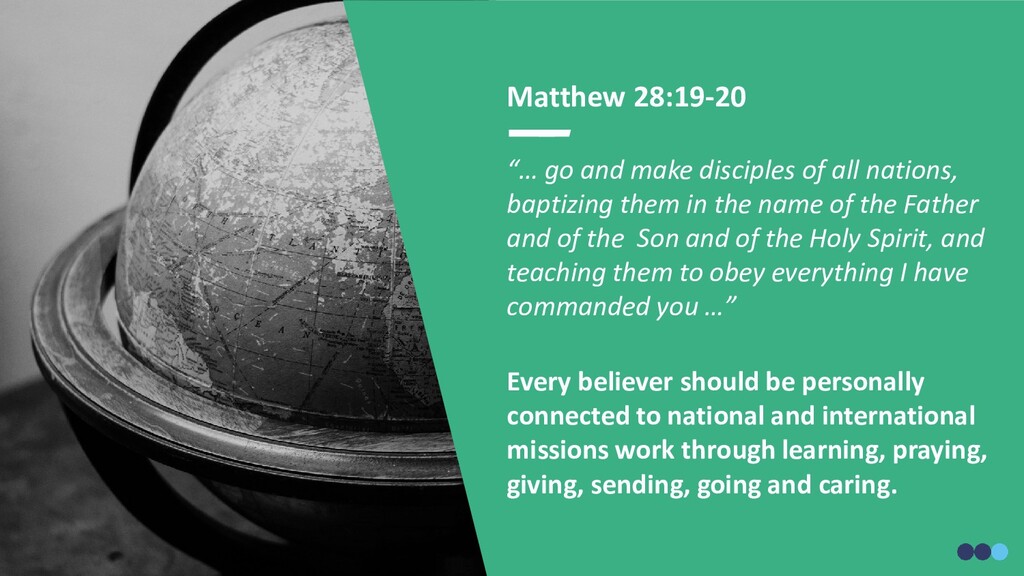
baptizing them in the name of the Father and of the Son and of the Holy Spirit, and teaching them to obey everything I have commanded you …” Every believer should be personally connected to national and international missions work through learning, praying, giving, sending, going and caring.
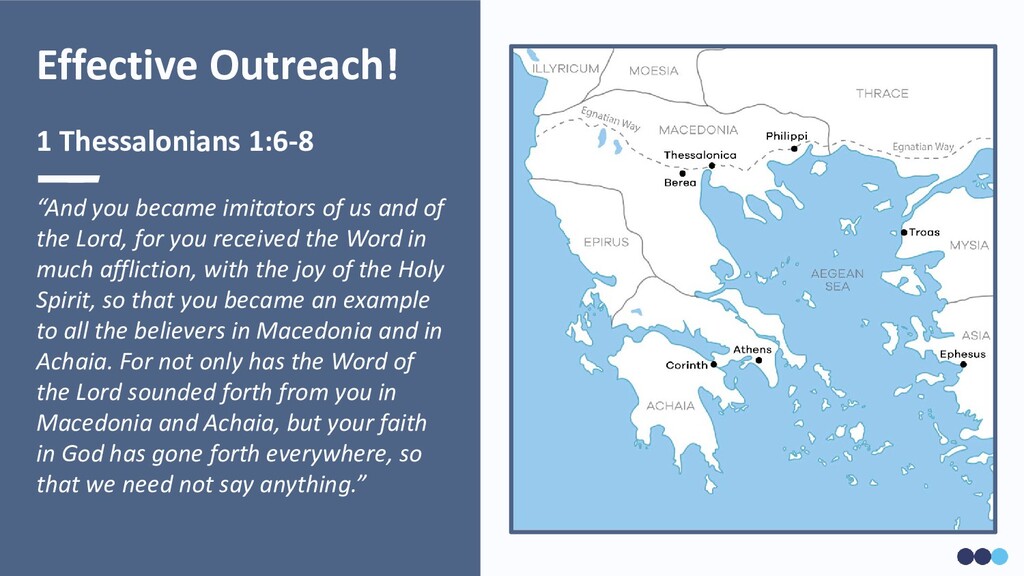
us and of the Lord, for you received the Word in much affliction, with the joy of the Holy Spirit, so that you became an example to all the believers in Macedonia and in Achaia. For not only has the Word of the Lord sounded forth from you in Macedonia and Achaia, but your faith in God has gone forth everywhere, so that we need not say anything.”
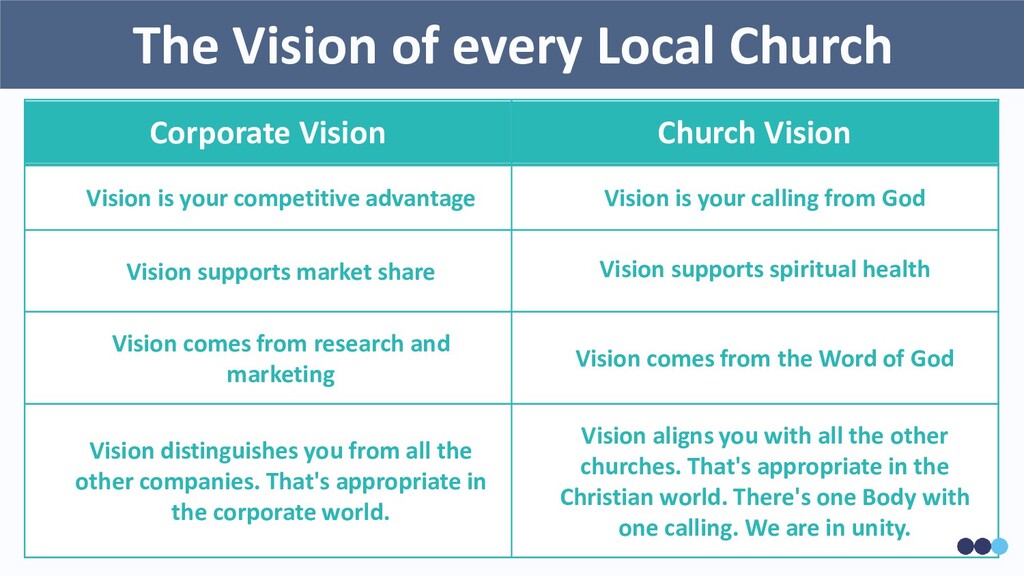
God Vision supports market share Vision supports spiritual health Vision comes from research and marketing Vision comes from the Word of God Vision distinguishes you from all the other companies. That's appropriate in the corporate world. Vision aligns you with all the other churches. That's appropriate in the Christian world. There's one Body with one calling. We are in unity. Corporate Vision Church Vision The Vision of every Local Church
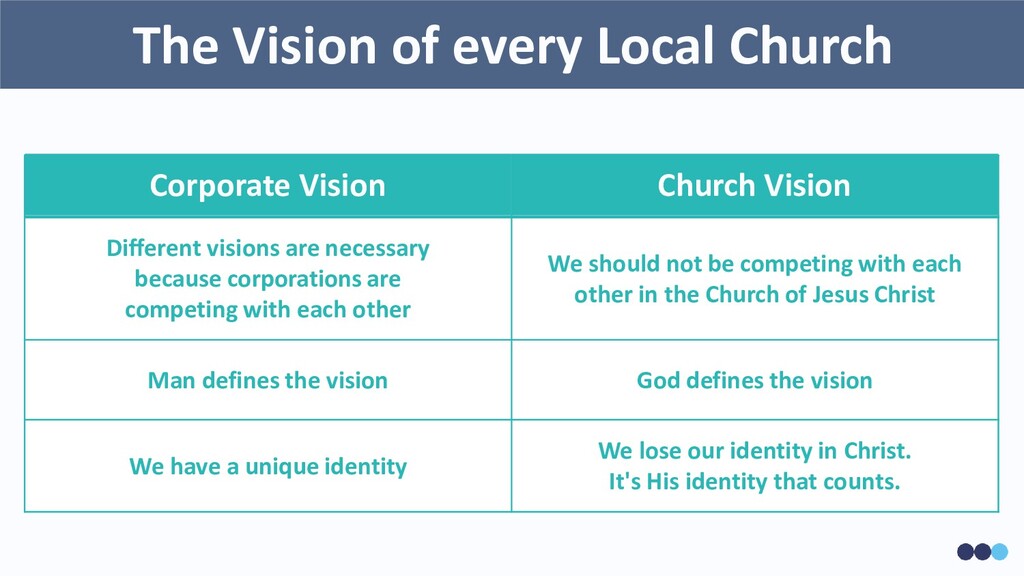
because corporations are competing with each other We should not be competing with each other in the Church of Jesus Christ Man defines the vision God defines the vision We have a unique identity We lose our identity in Christ. It's His identity that counts. Corporate Vision Church Vision
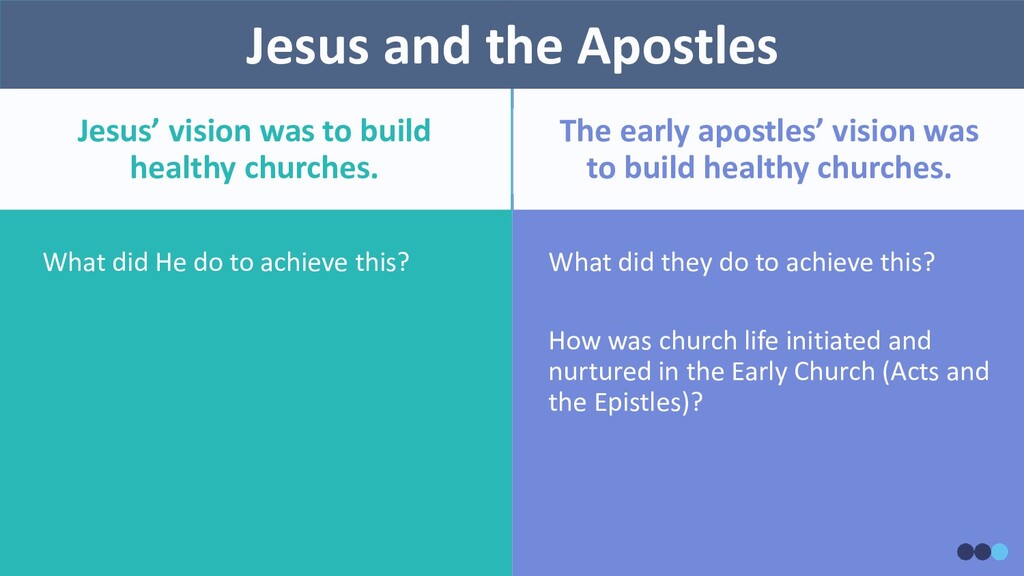
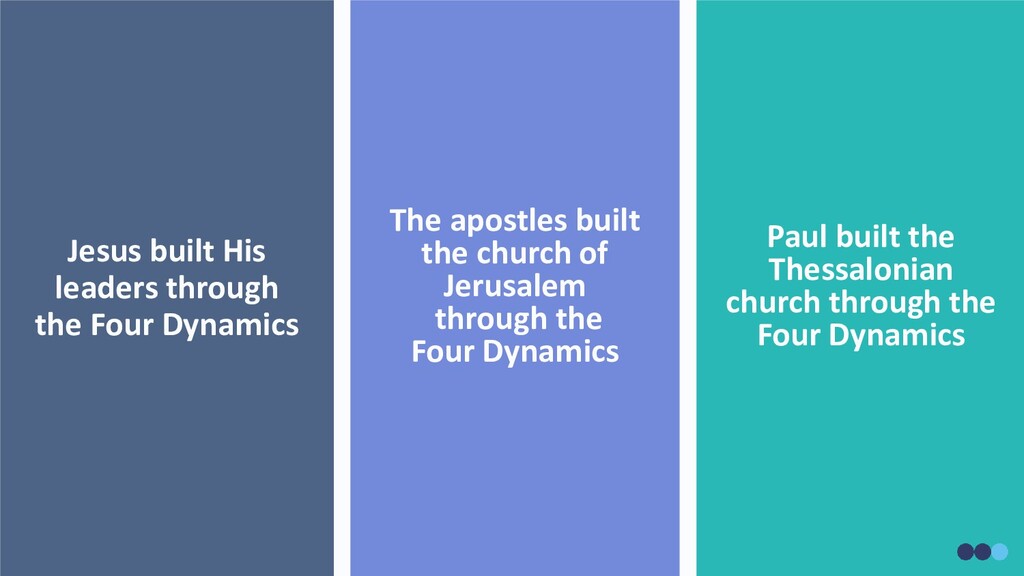
do to achieve this? How was church life initiated and nurtured in the Early Church (Acts and the Epistles)? Jesus’ vision was to build healthy churches. The early apostles’ vision was to build healthy churches. Jesus and the Apostles
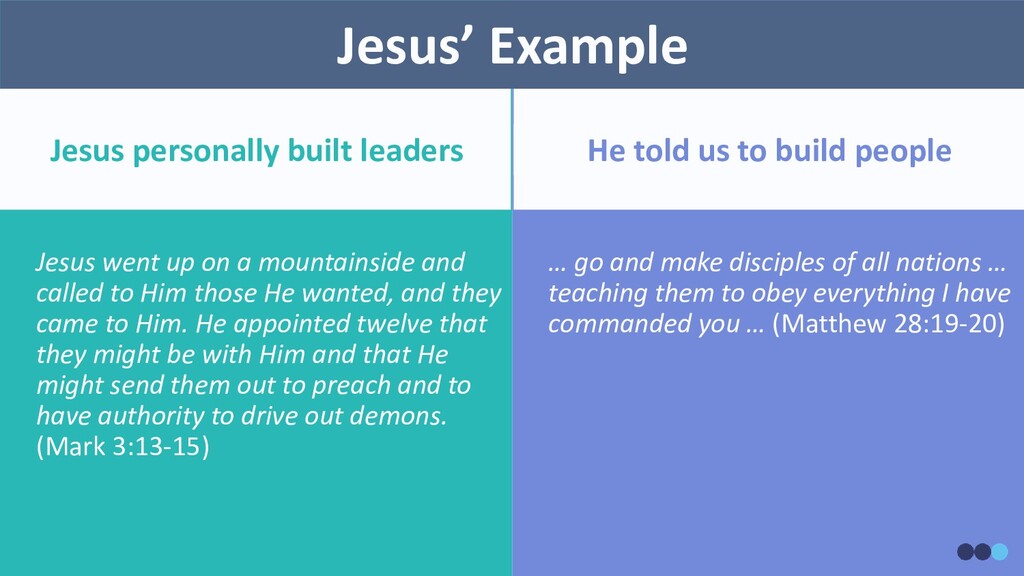
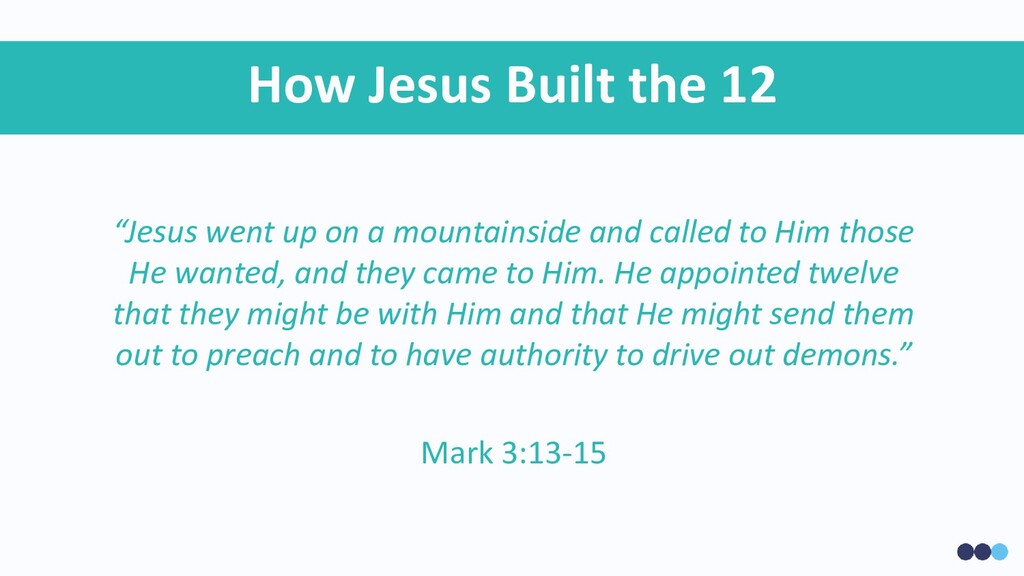
those He wanted, and they came to Him. He appointed twelve that they might be with Him and that He might send them out to preach and to have authority to drive out demons. (Mark 3:13-15) … go and make disciples of all nations … teaching them to obey everything I have commanded you … (Matthew 28:19-20) Jesus personally built leaders He told us to build people Jesus’ Example
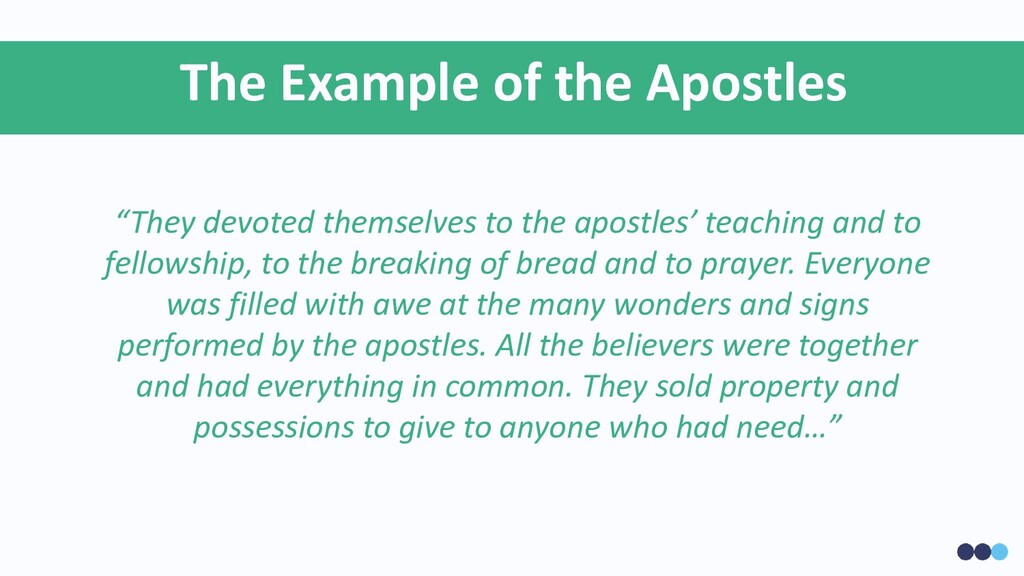
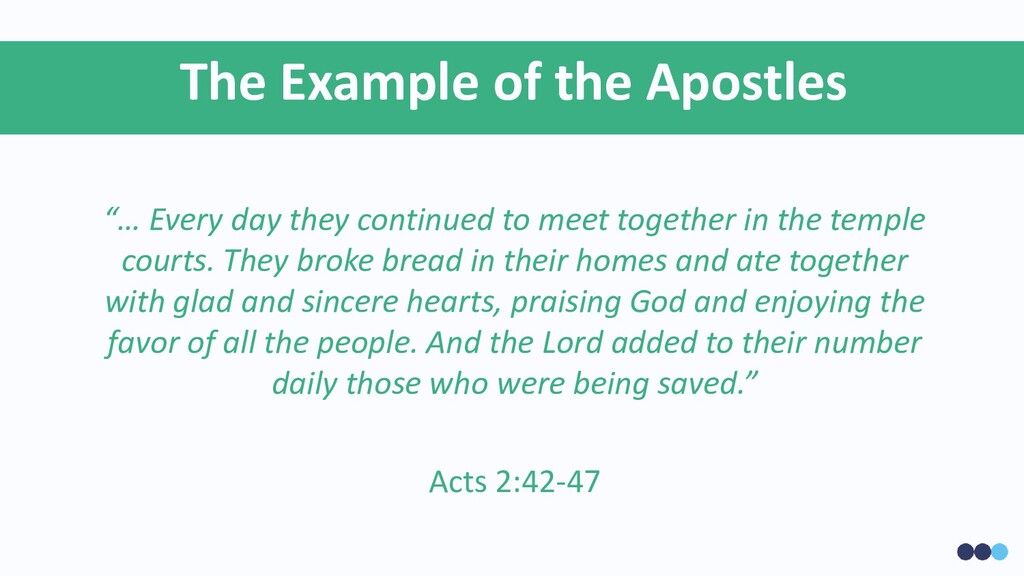
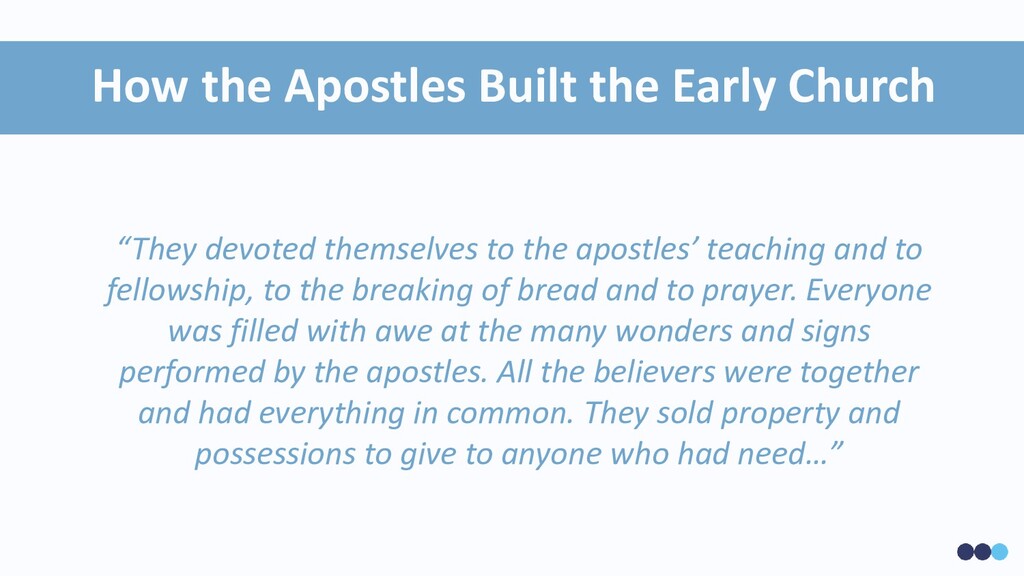
to the breaking of bread and to prayer. Everyone was filled with awe at the many wonders and signs performed by the apostles. All the believers were together and had everything in common. They sold property and possessions to give to anyone who had need…” The Example of the Apostles
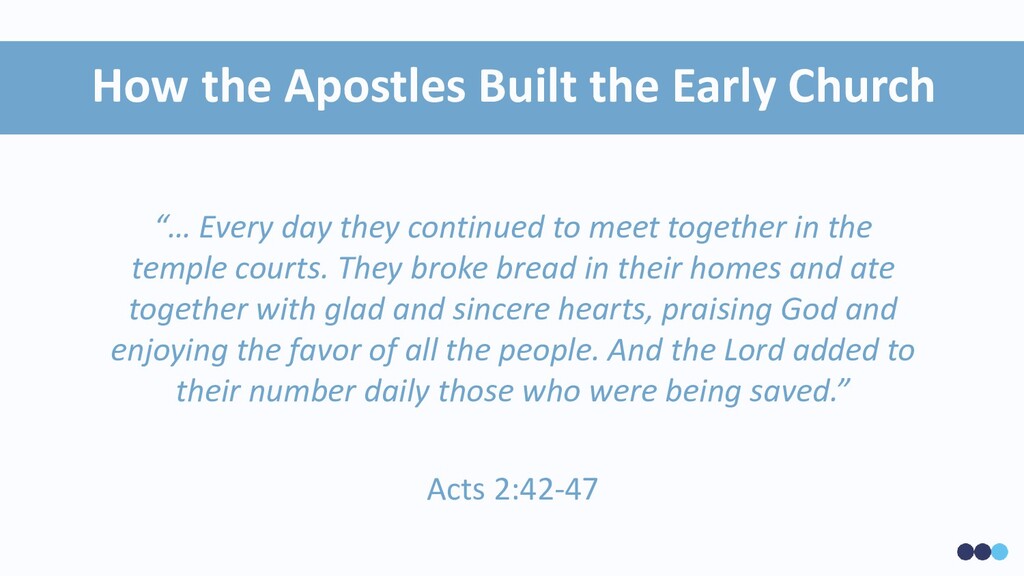
temple courts. They broke bread in their homes and ate together with glad and sincere hearts, praising God and enjoying the favor of all the people. And the Lord added to their number daily those who were being saved.” Acts 2:42-47 The Example of the Apostles
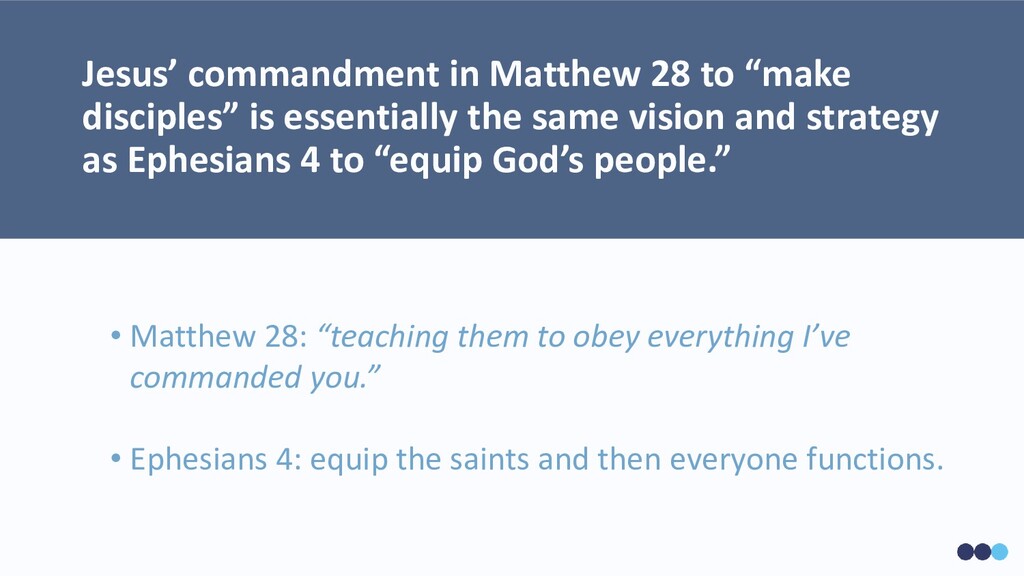
you.” • Ephesians 4: equip the saints and then everyone functions. Jesus’ commandment in Matthew 28 to “make disciples” is essentially the same vision and strategy as Ephesians 4 to “equip God’s people.”
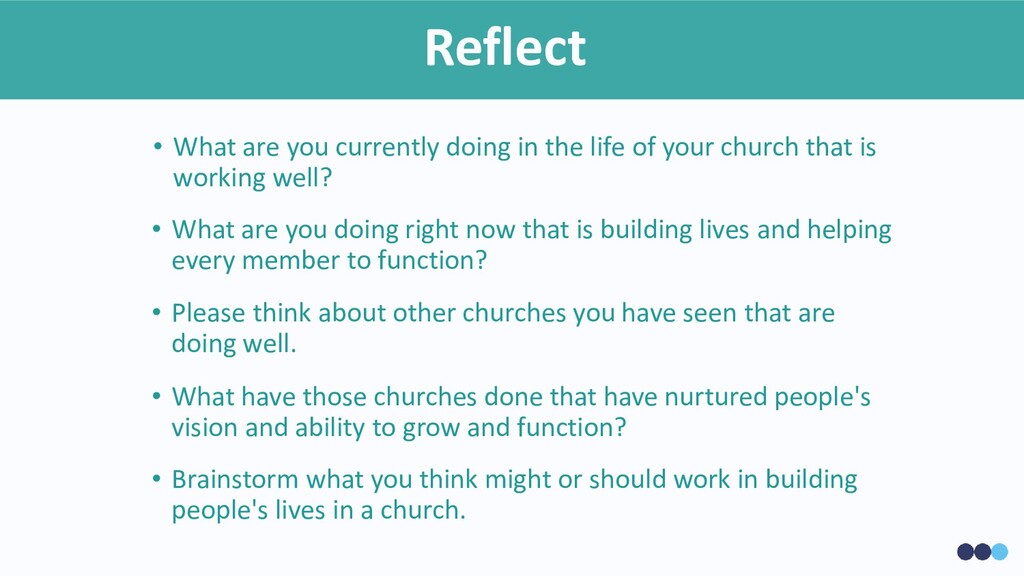
your church that is working well? • What are you doing right now that is building lives and helping every member to function? • Please think about other churches you have seen that are doing well. • What have those churches done that have nurtured people's vision and ability to grow and function? • Brainstorm what you think might or should work in building people's lives in a church. Reflect
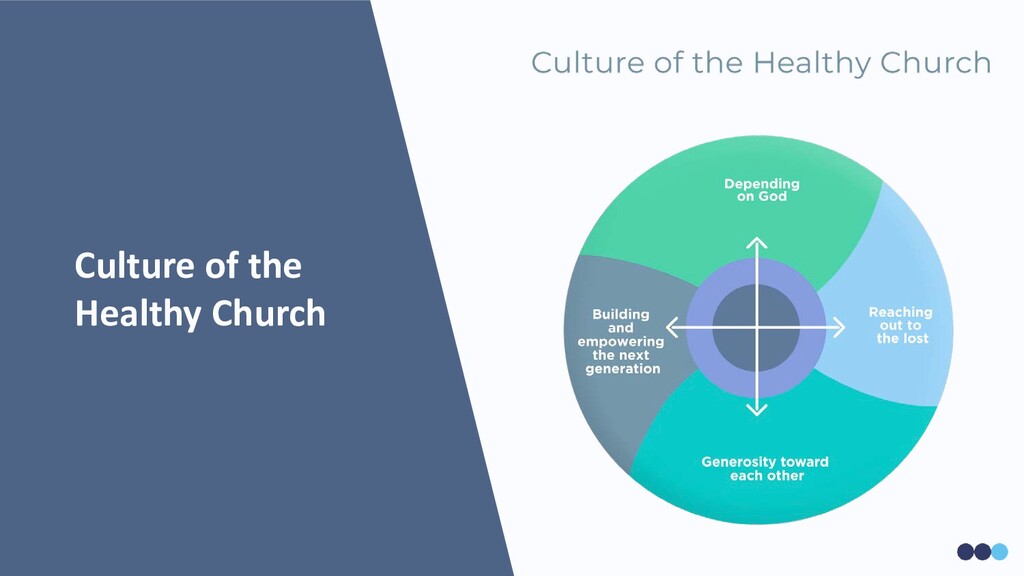
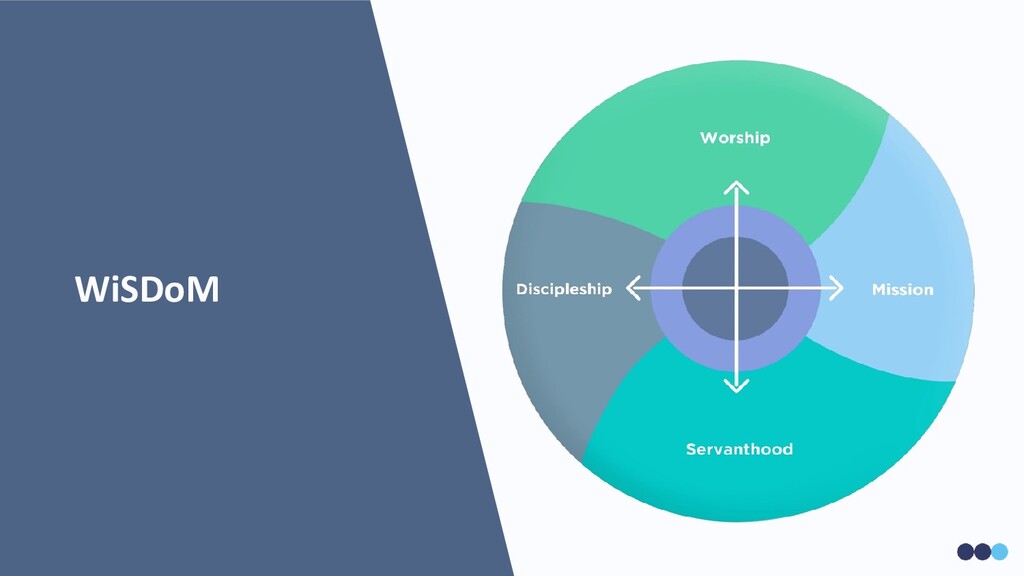
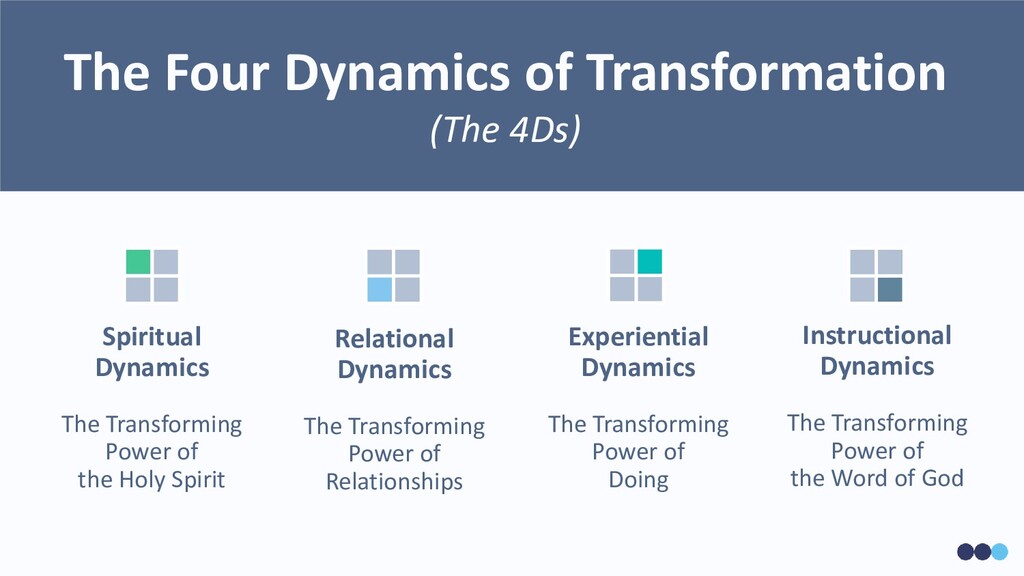
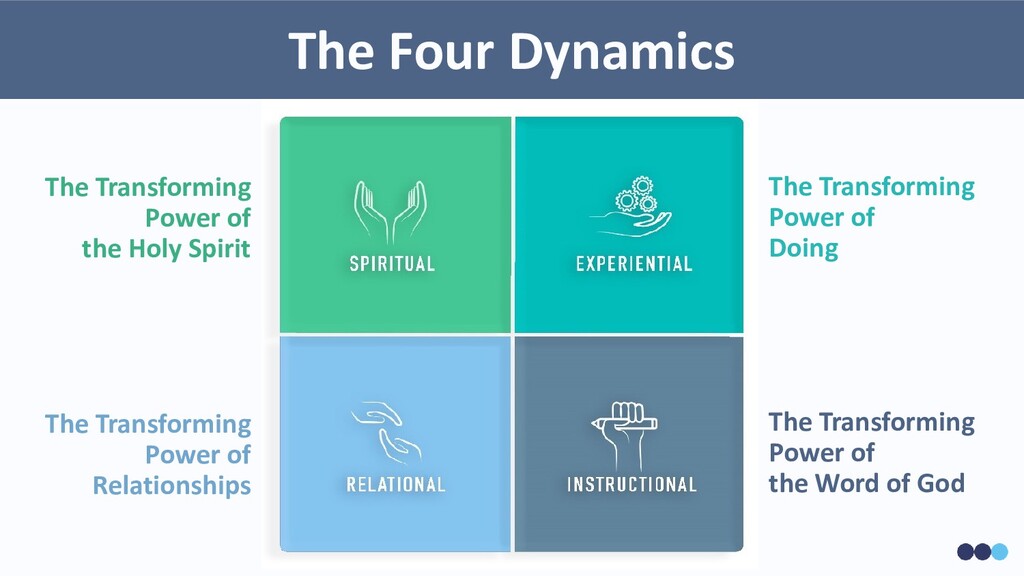
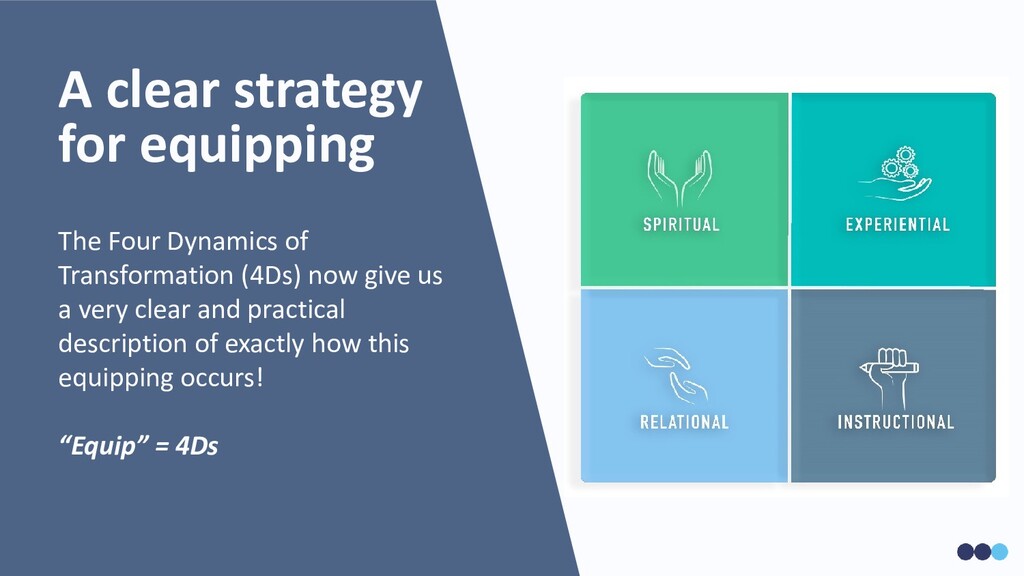
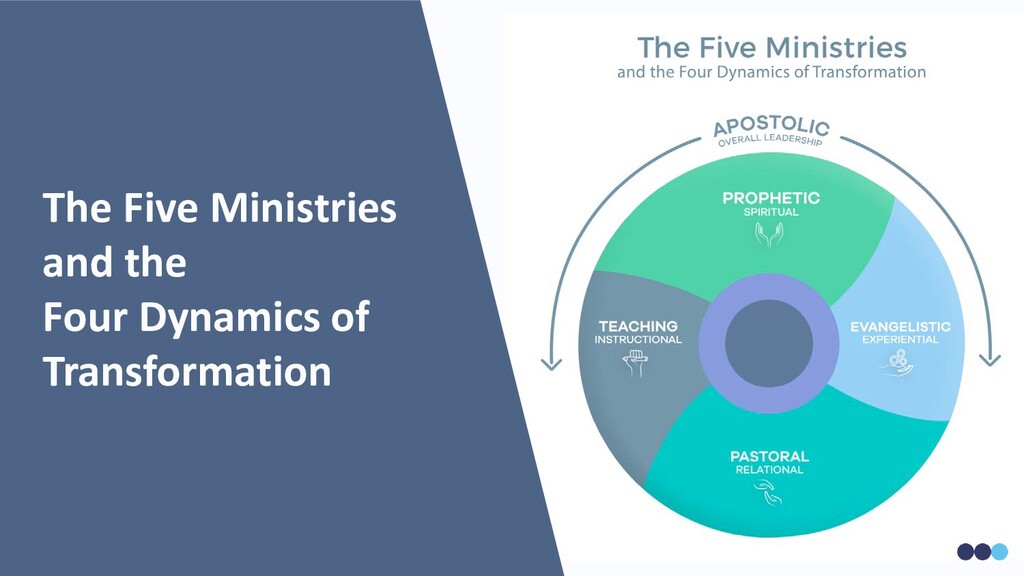
Transforming Power of the Holy Spirit Relational Dynamics The Transforming Power of Relationships Experiential Dynamics The Transforming Power of Doing Instructional Dynamics The Transforming Power of the Word of God
those He wanted, and they came to Him. He appointed twelve that they might be with Him and that He might send them out to preach and to have authority to drive out demons.” Mark 3:13-15 How Jesus Built the 12
to the breaking of bread and to prayer. Everyone was filled with awe at the many wonders and signs performed by the apostles. All the believers were together and had everything in common. They sold property and possessions to give to anyone who had need…” How the Apostles Built the Early Church
temple courts. They broke bread in their homes and ate together with glad and sincere hearts, praising God and enjoying the favor of all the people. And the Lord added to their number daily those who were being saved.” Acts 2:42-47 How the Apostles Built the Early Church
but also with power, with the Holy Spirit and deep conviction. You know how we lived among you for your sake. You became imitators of us and of the Lord, for you welcomed the message in the midst of severe suffering with the joy given by the Holy Spirit…” How Paul Built Churches
believers in Macedonia and Achaia. The Lord’s message rang out from you not only in Macedonia and Achaia ‒ your faith in God has become known everywhere …” 1 Thessalonians 1:5-8 How Paul Built Churches
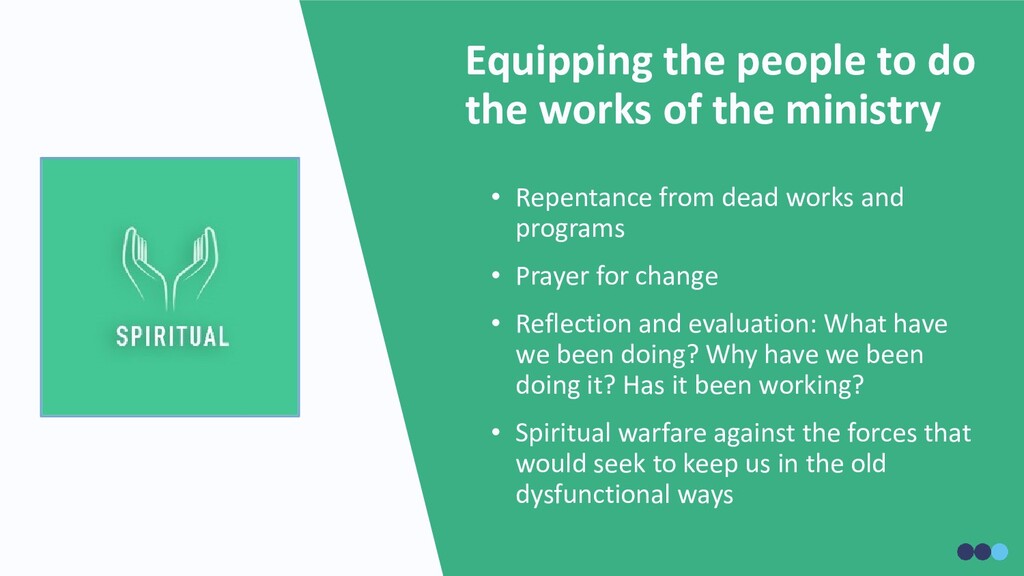
• Repentance from dead works and programs • Prayer for change • Reflection and evaluation: What have we been doing? Why have we been doing it? Has it been working? • Spiritual warfare against the forces that would seek to keep us in the old dysfunctional ways
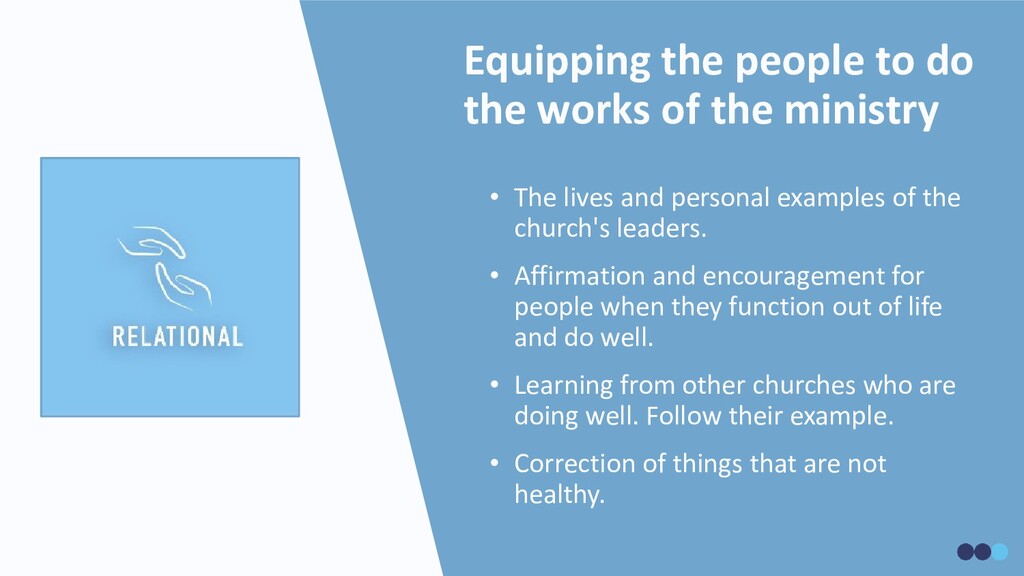
• The lives and personal examples of the church's leaders. • Affirmation and encouragement for people when they function out of life and do well. • Learning from other churches who are doing well. Follow their example. • Correction of things that are not healthy.
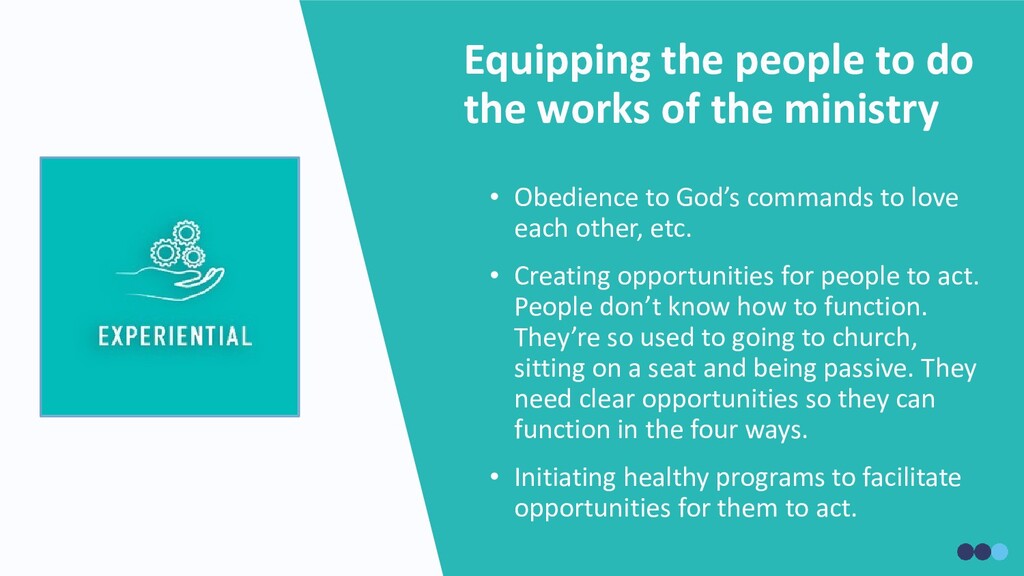
• Obedience to God’s commands to love each other, etc. • Creating opportunities for people to act. People don’t know how to function. They’re so used to going to church, sitting on a seat and being passive. They need clear opportunities so they can function in the four ways. • Initiating healthy programs to facilitate opportunities for them to act.
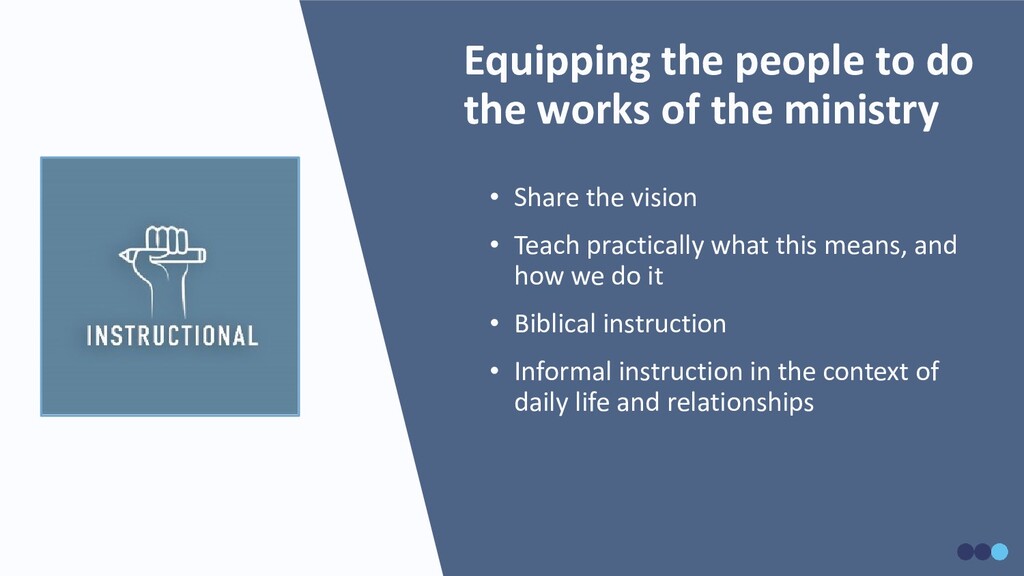
• Share the vision • Teach practically what this means, and how we do it • Biblical instruction • Informal instruction in the context of daily life and relationships
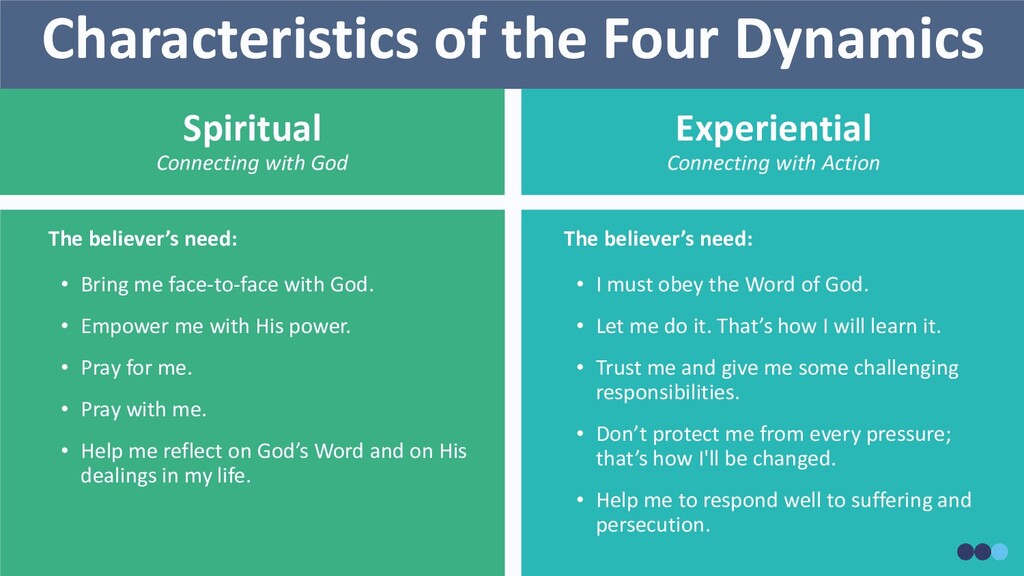
me face-to-face with God. • Empower me with His power. • Pray for me. • Pray with me. • Help me reflect on God’s Word and on His dealings in my life. Spiritual Connecting with God Experiential Connecting with Action The believer’s need: • I must obey the Word of God. • Let me do it. That’s how I will learn it. • Trust me and give me some challenging responsibilities. • Don’t protect me from every pressure; that’s how I'll be changed. • Help me to respond well to suffering and persecution.
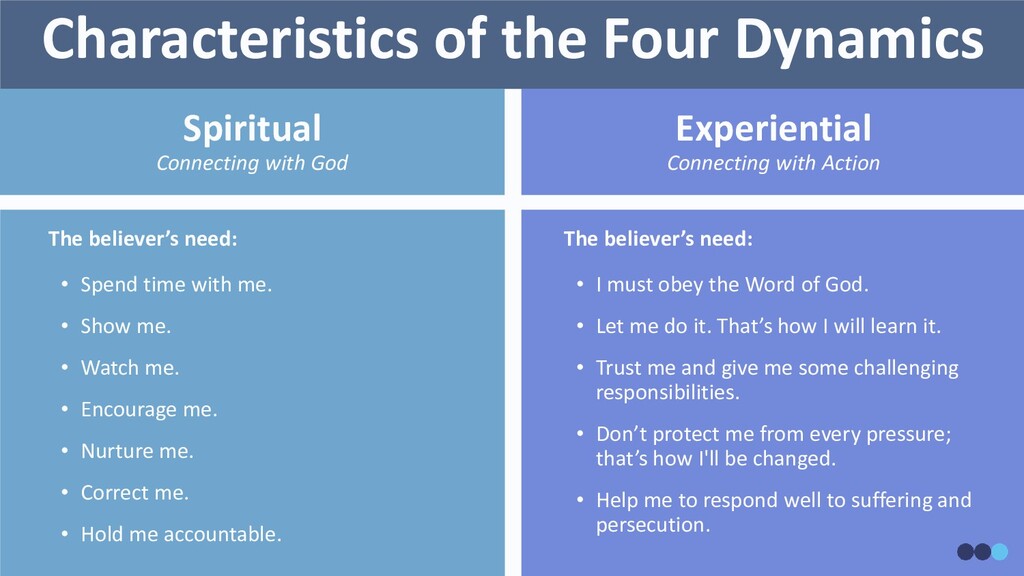
time with me. • Show me. • Watch me. • Encourage me. • Nurture me. • Correct me. • Hold me accountable. Spiritual Connecting with God Experiential Connecting with Action The believer’s need: • I must obey the Word of God. • Let me do it. That’s how I will learn it. • Trust me and give me some challenging responsibilities. • Don’t protect me from every pressure; that’s how I'll be changed. • Help me to respond well to suffering and persecution.
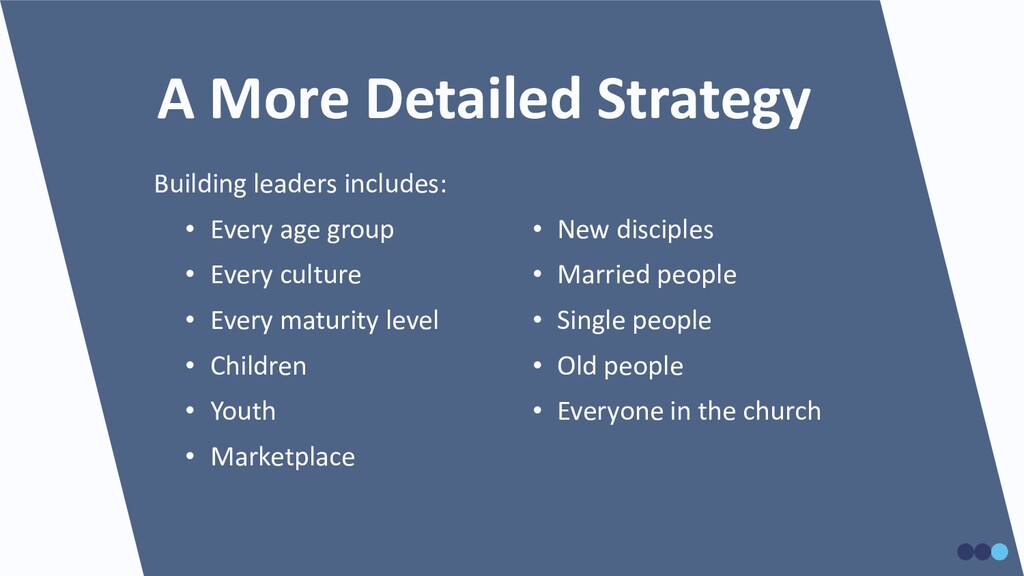
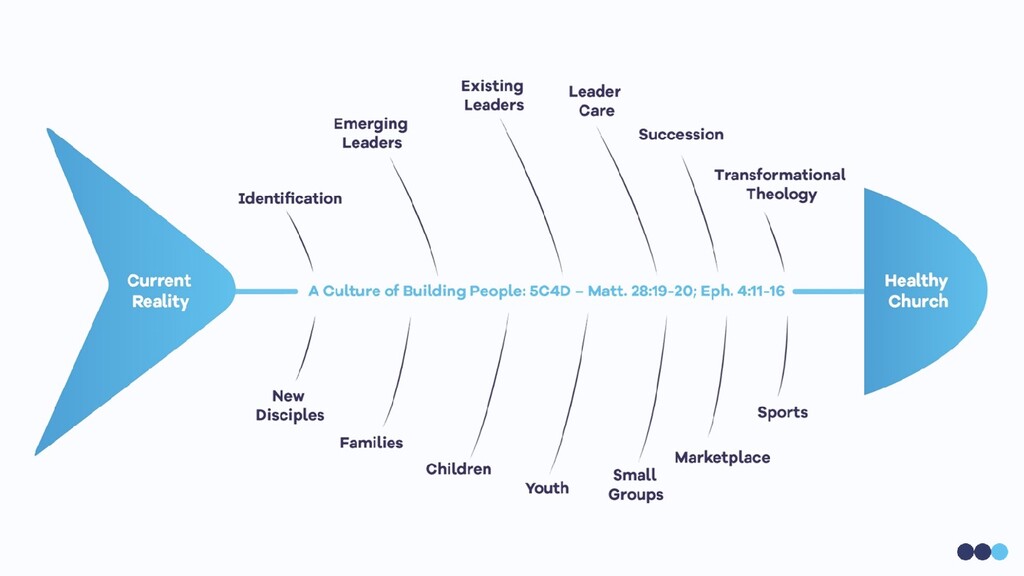
group • Every culture • Every maturity level • Children • Youth • Marketplace • New disciples • Married people • Single people • Old people • Everyone in the church
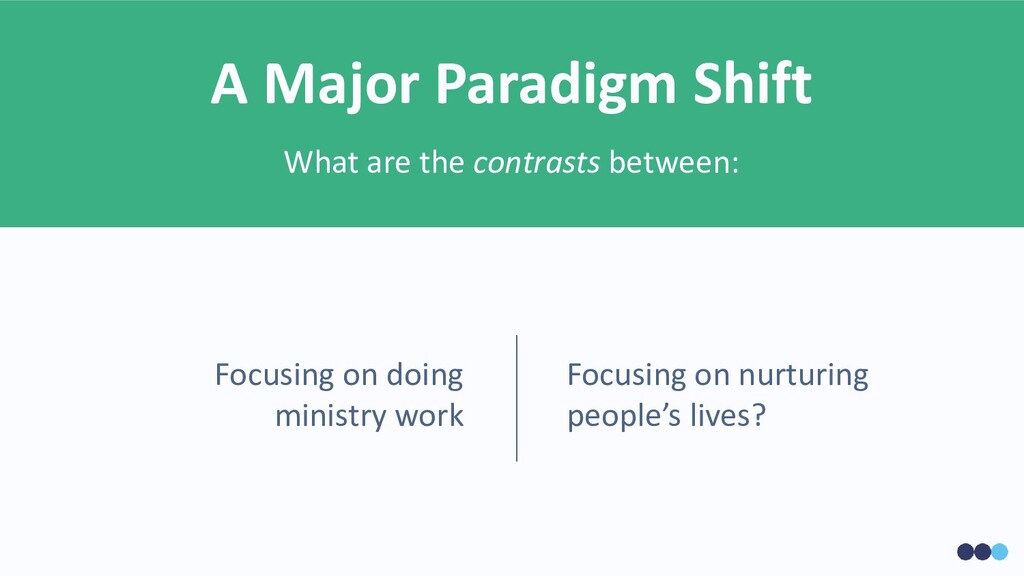
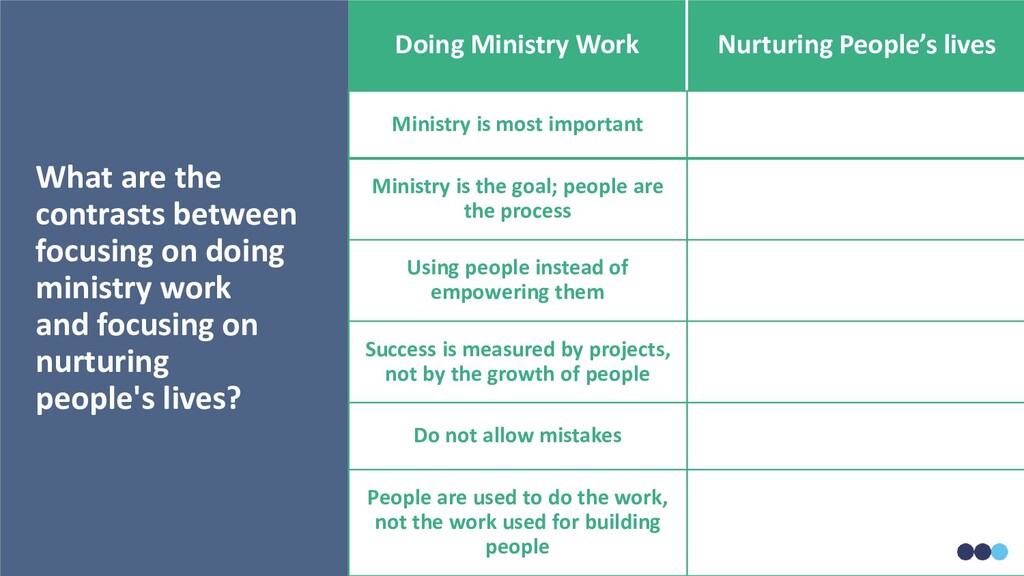
and focusing on nurturing people's lives? Ministry is most important Ministry is the goal; people are the process Using people instead of empowering them Success is measured by projects, not by the growth of people Do not allow mistakes People are used to do the work, not the work used for building people Doing Ministry Work Nurturing People’s lives
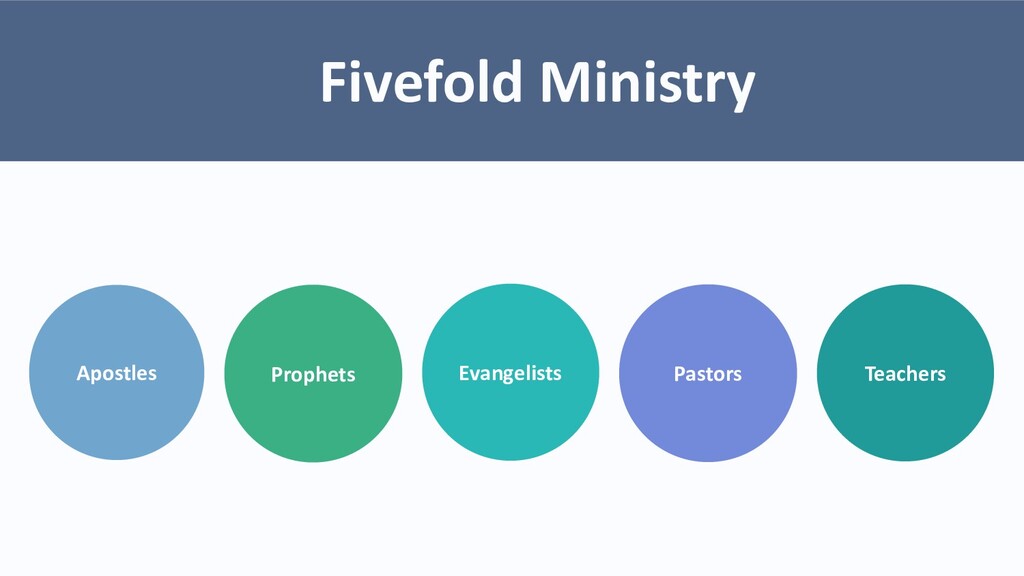
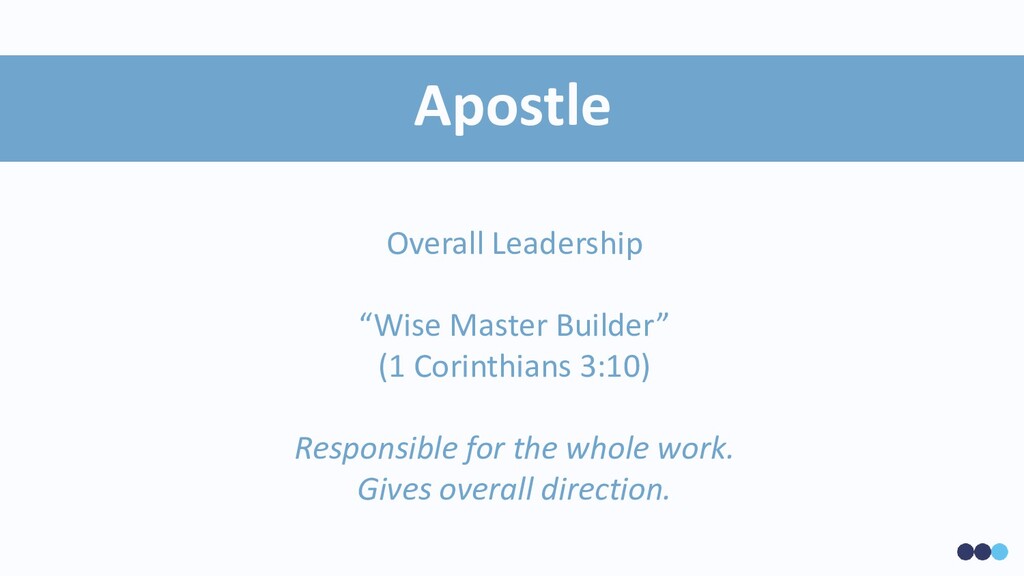
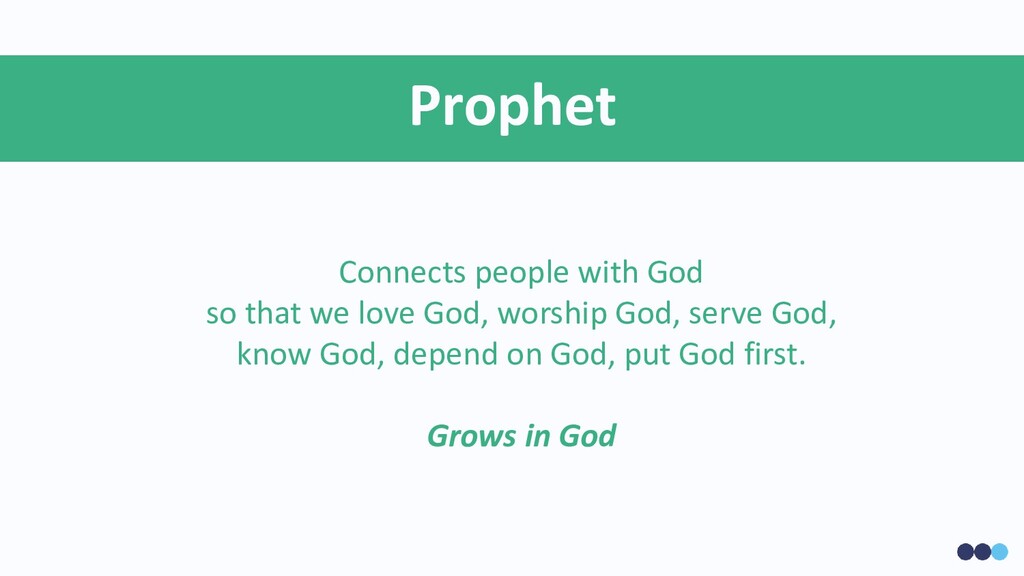
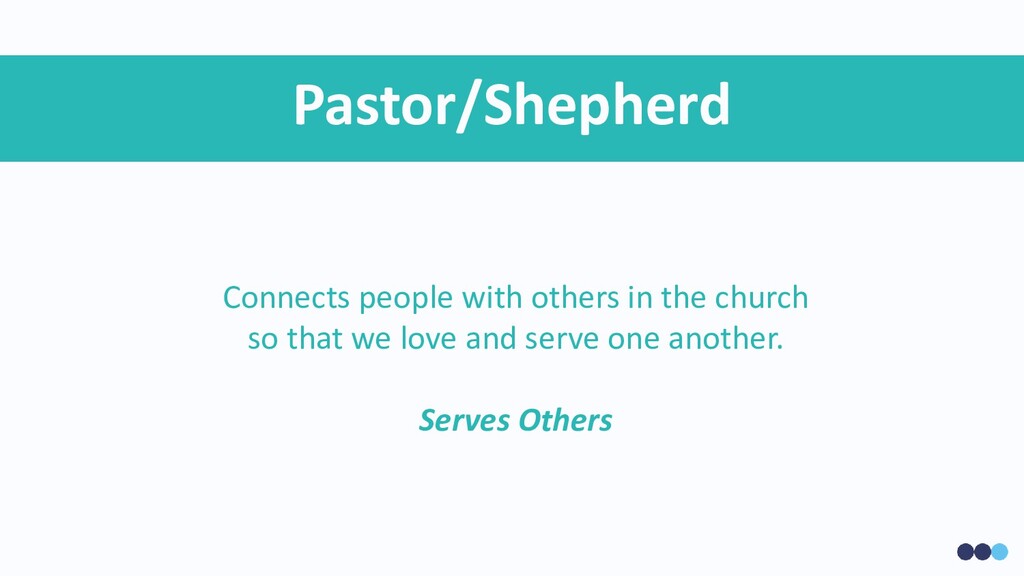
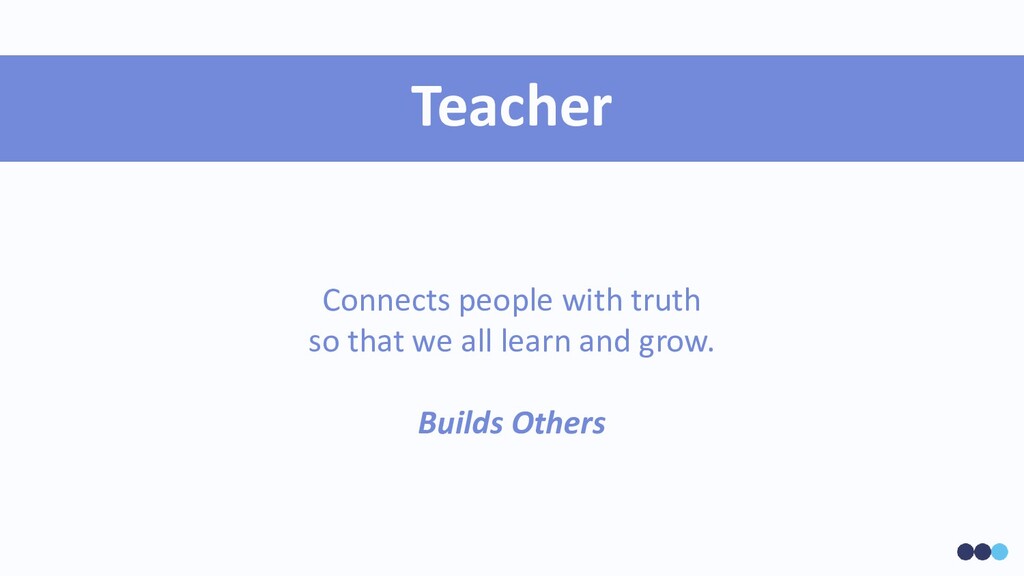
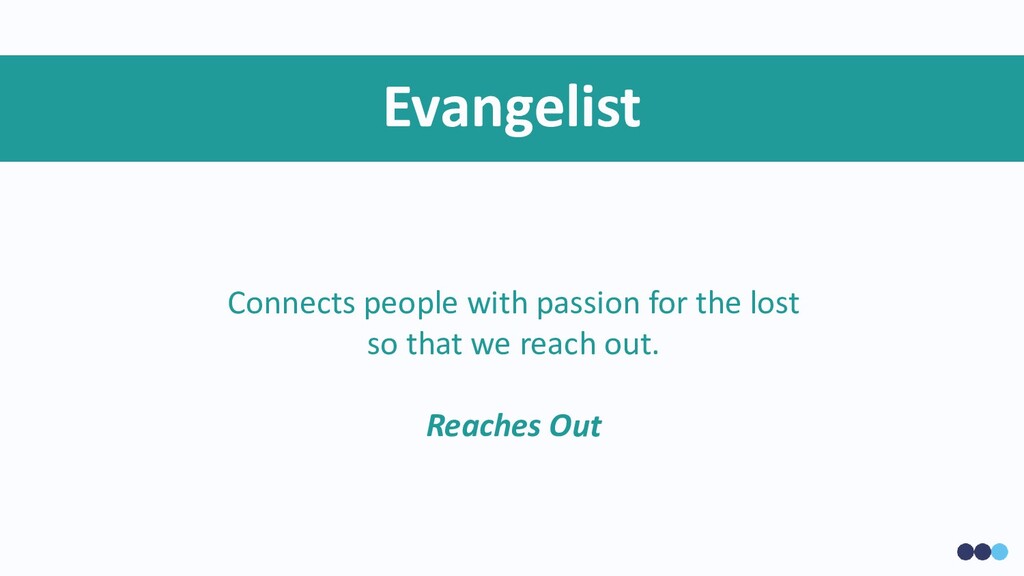
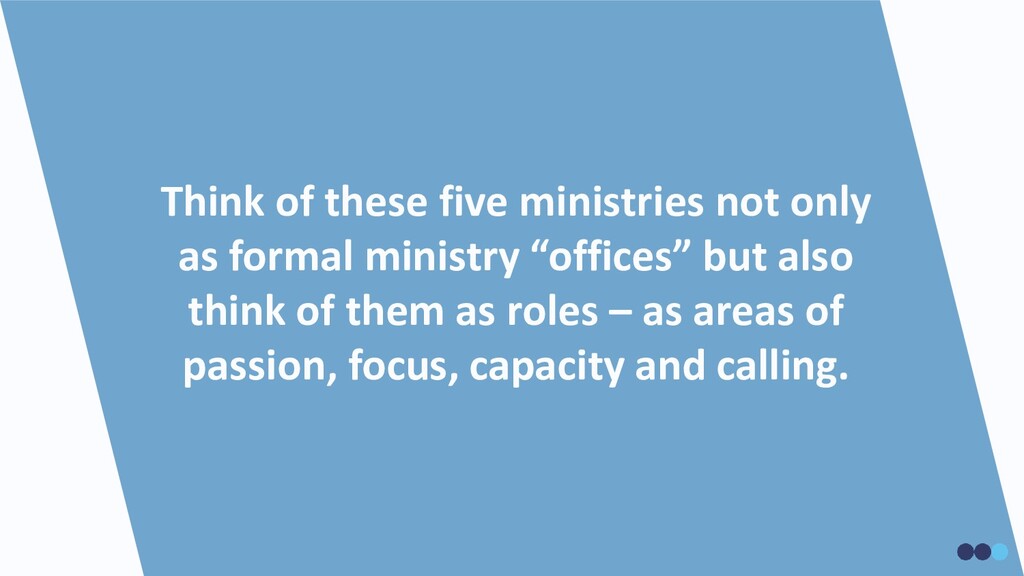
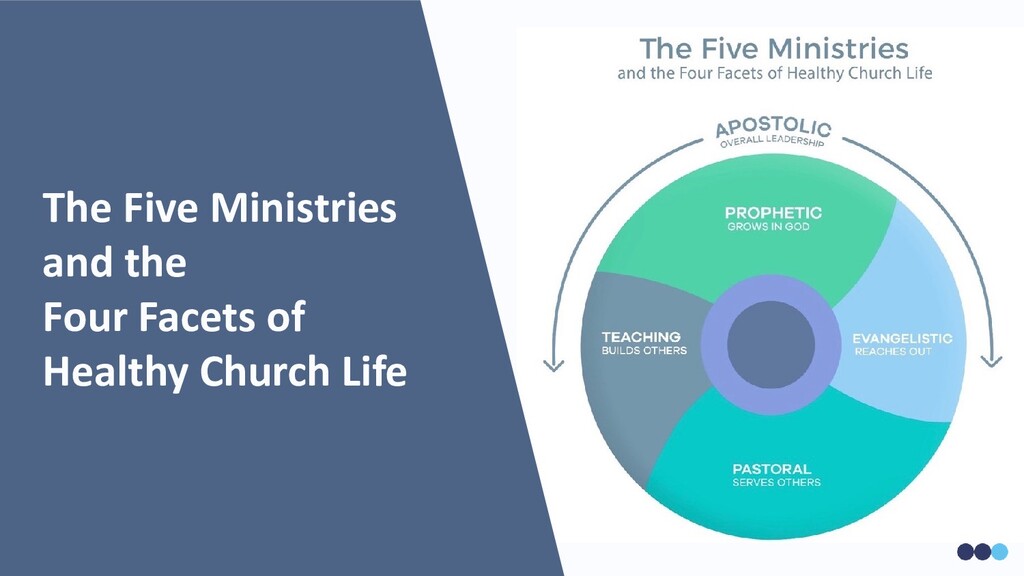
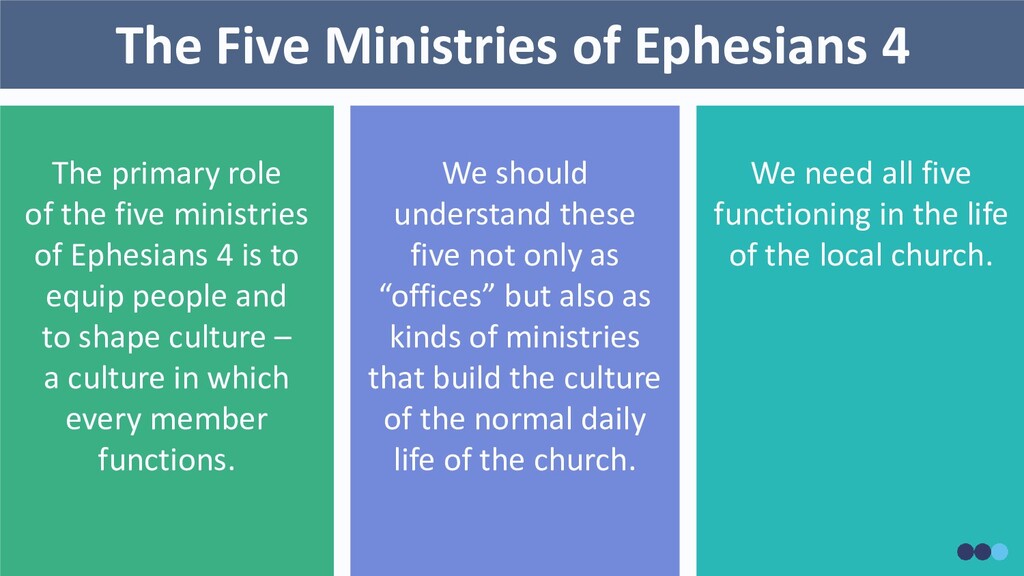
also as kinds of ministries that build the culture of the normal daily life of the church. The primary role of the five ministries of Ephesians 4 is to equip people and to shape culture – a culture in which every member functions. We need all five functioning in the life of the local church. The Five Ministries of Ephesians 4
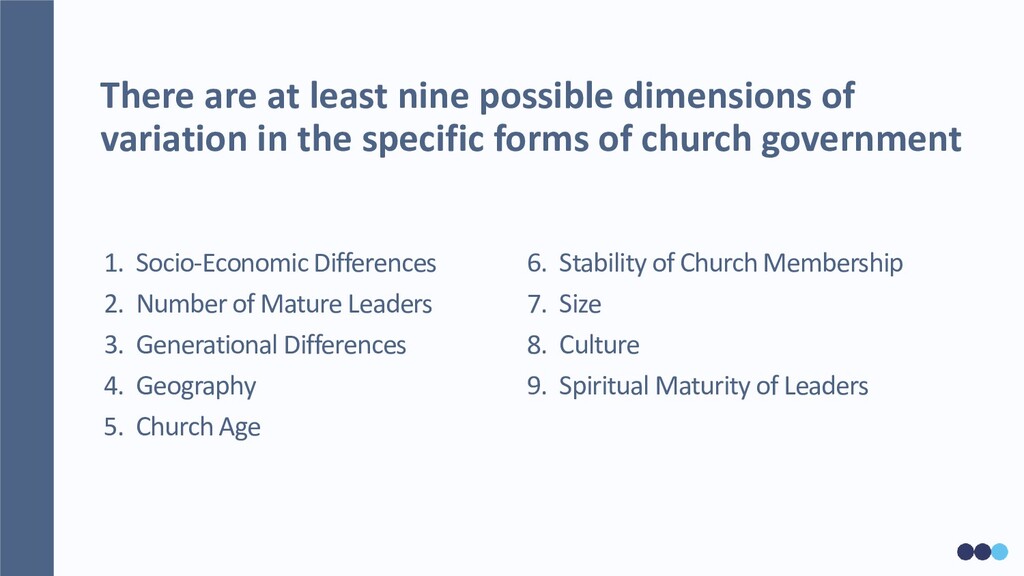
the specific forms of church government 1. Socio-Economic Differences 2. Number of Mature Leaders 3. Generational Differences 4. Geography 5. Church Age 6. Stability of Church Membership 7. Size 8. Culture 9. Spiritual Maturity of Leaders
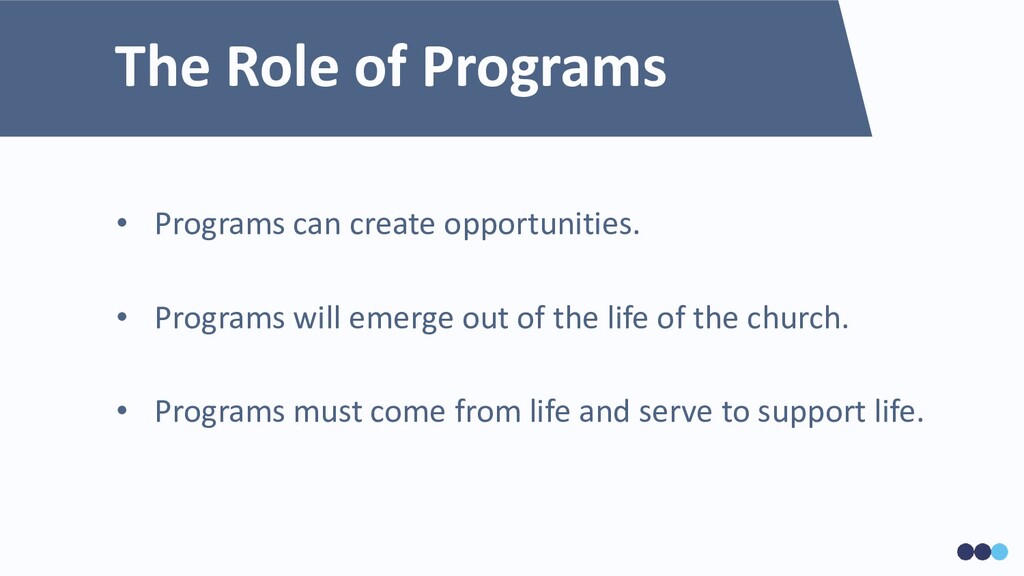
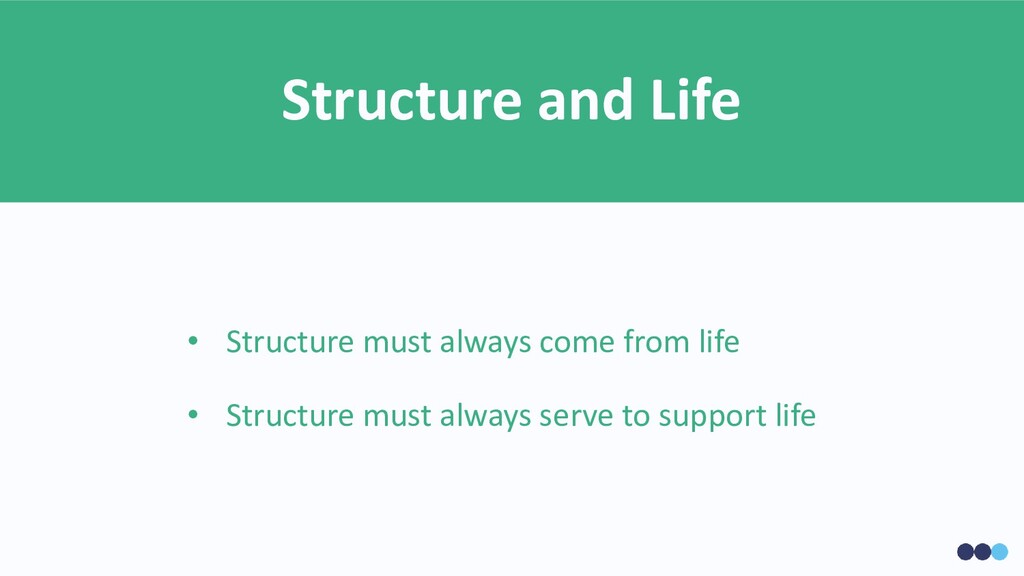
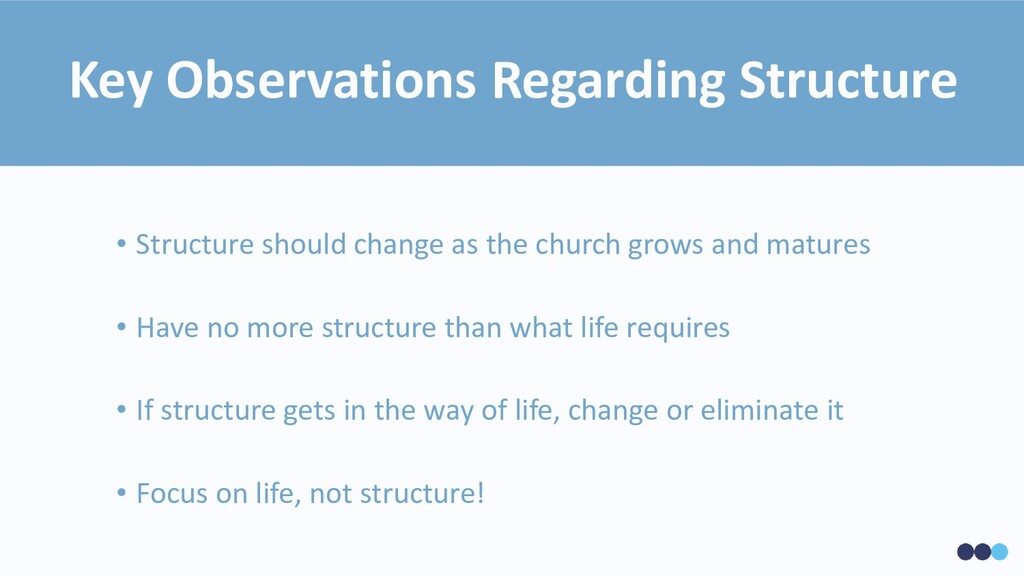
church grows and matures • Have no more structure than what life requires • If structure gets in the way of life, change or eliminate it • Focus on life, not structure!
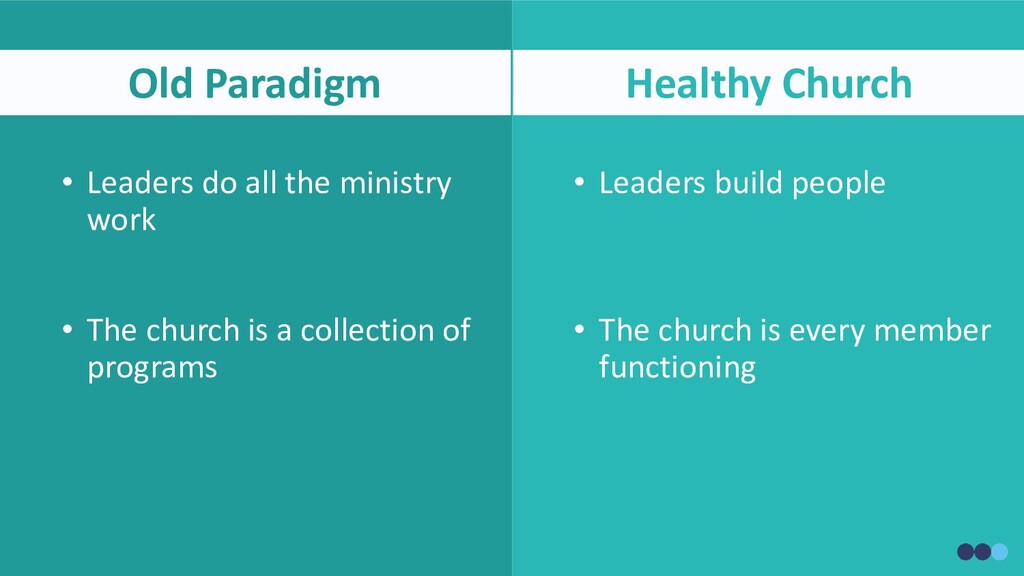
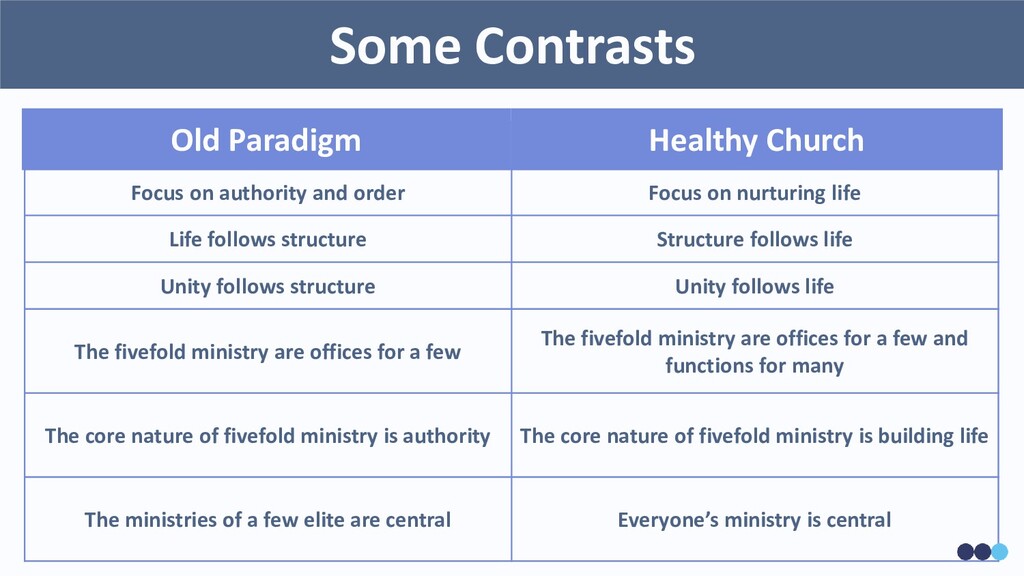
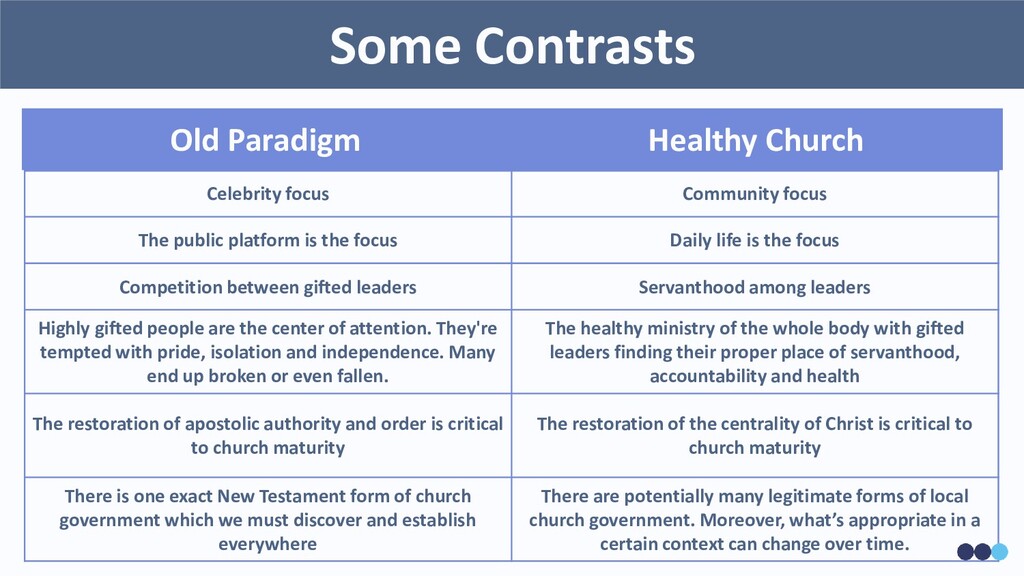
life Life follows structure Structure follows life Unity follows structure Unity follows life The fivefold ministry are offices for a few The fivefold ministry are offices for a few and functions for many The core nature of fivefold ministry is authority The core nature of fivefold ministry is building life The ministries of a few elite are central Everyone’s ministry is central Old Paradigm Healthy Church
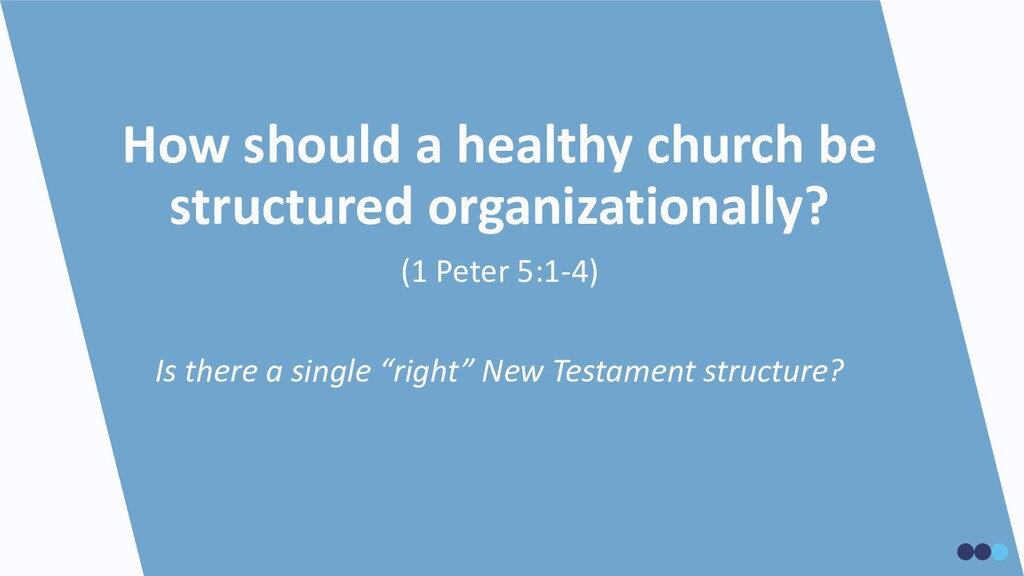
the focus Daily life is the focus Competition between gifted leaders Servanthood among leaders Highly gifted people are the center of attention. They're tempted with pride, isolation and independence. Many end up broken or even fallen. The healthy ministry of the whole body with gifted leaders finding their proper place of servanthood, accountability and health The restoration of apostolic authority and order is critical to church maturity The restoration of the centrality of Christ is critical to church maturity There is one exact New Testament form of church government which we must discover and establish everywhere There are potentially many legitimate forms of local church government. Moreover, what’s appropriate in a certain context can change over time. Old Paradigm Healthy Church
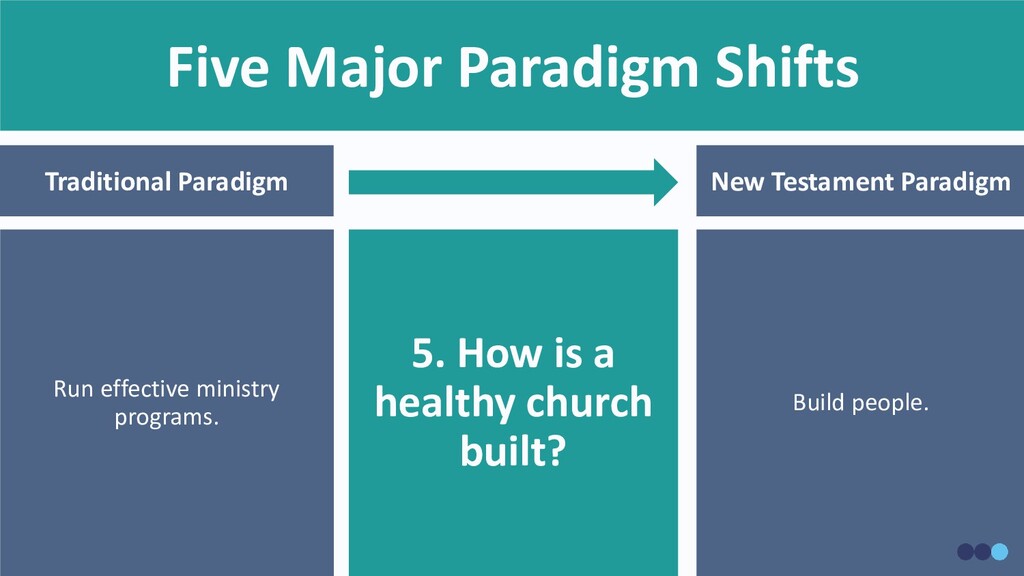
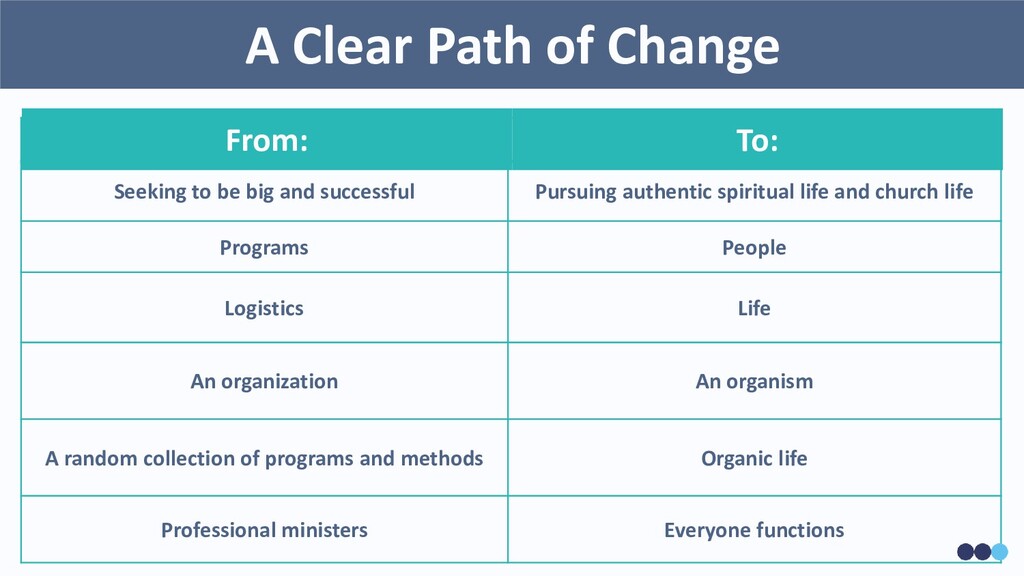
successful Pursuing authentic spiritual life and church life Programs People Logistics Life An organization An organism A random collection of programs and methods Organic life Professional ministers Everyone functions From: To:
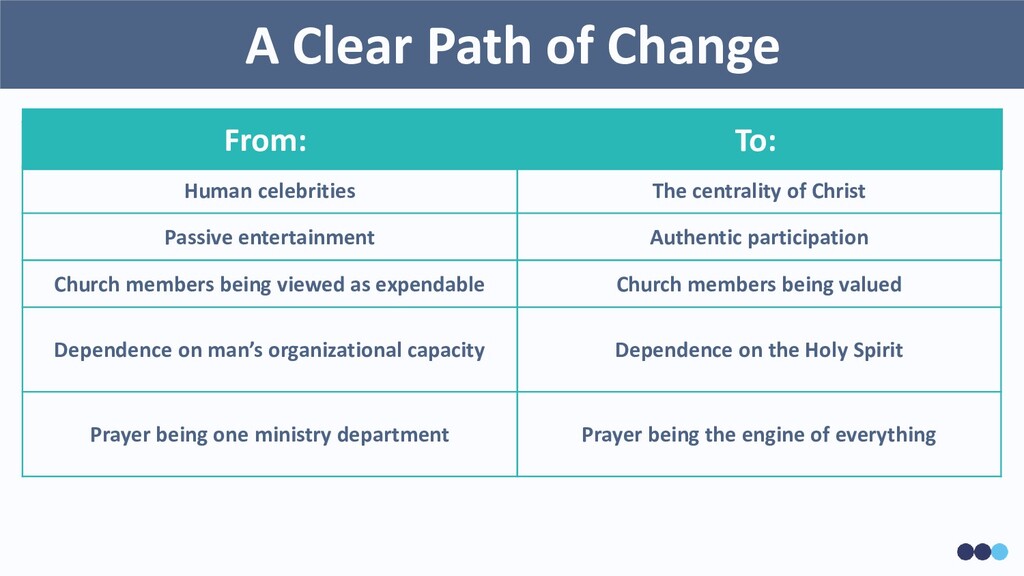
Christ Passive entertainment Authentic participation Church members being viewed as expendable Church members being valued Dependence on man’s organizational capacity Dependence on the Holy Spirit Prayer being one ministry department Prayer being the engine of everything From: To:
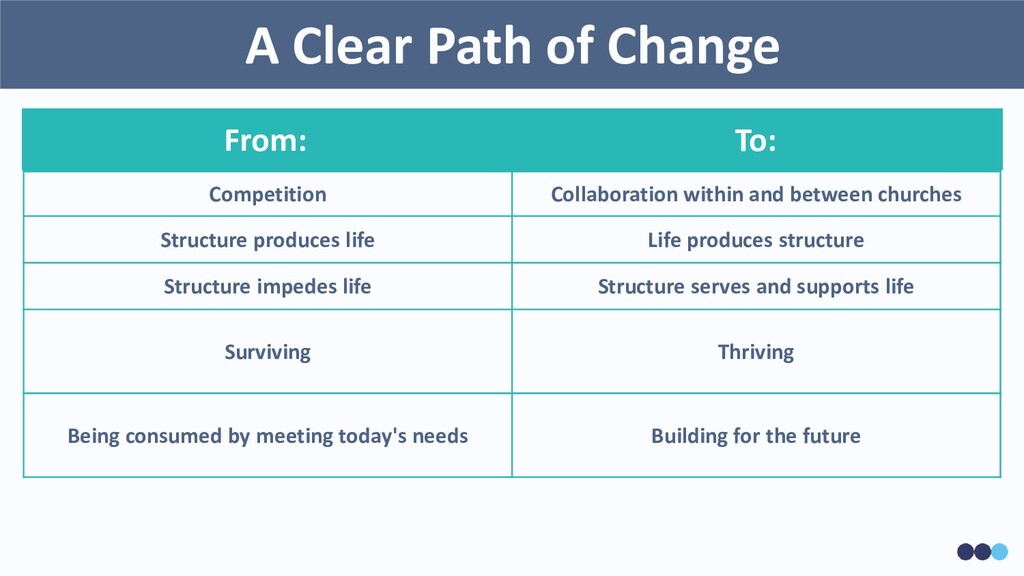
churches Structure produces life Life produces structure Structure impedes life Structure serves and supports life Surviving Thriving Being consumed by meeting today's needs Building for the future From: To:


 cbtlibrary
 signer
 fmarot
 sciencetokyo
 pawan_pharm
 yatabe
 kentaroy47
 hiola
hiola
 camel_404
 terasawat
 akiraasano
 rabernat
 eileencodes
 mayunak
 skipperchong
 szymonslowik
 davidcarrasco
 mongodb
 cassininazir
 popppiees
 kristinabergwall1
 jonrohan
![Matthew 16:15-18 “[Jesus] said to them, “But who do you](https://files.speakerdeck.com/presentations/2d1cfb463a9441558a625bd6a9f5d8f8/slide_2.jpg)


![Ephesians 4:16 From Him [Christ] the whole Body, joined and](https://files.speakerdeck.com/presentations/2d1cfb463a9441558a625bd6a9f5d8f8/slide_23.jpg)