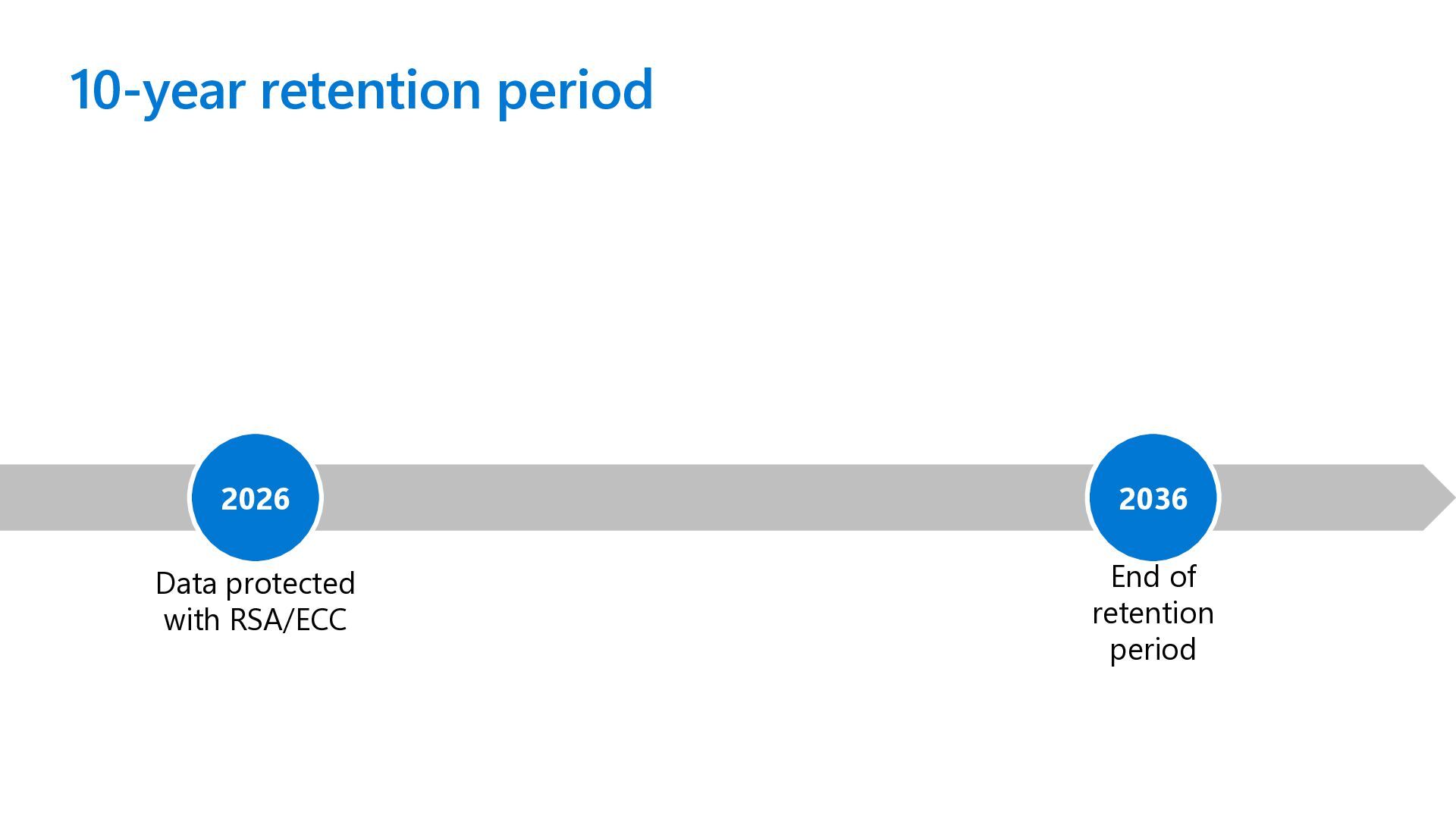
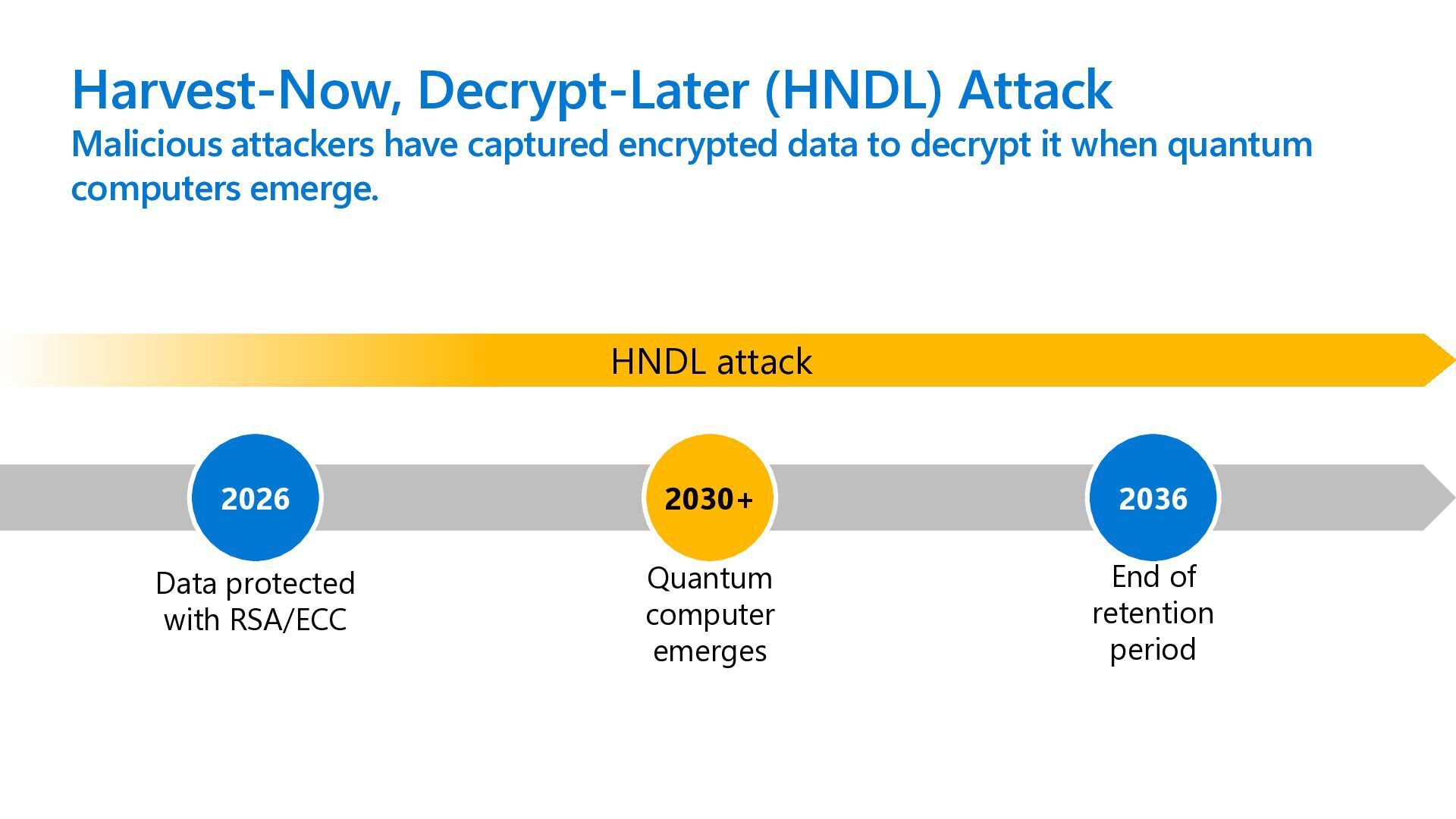
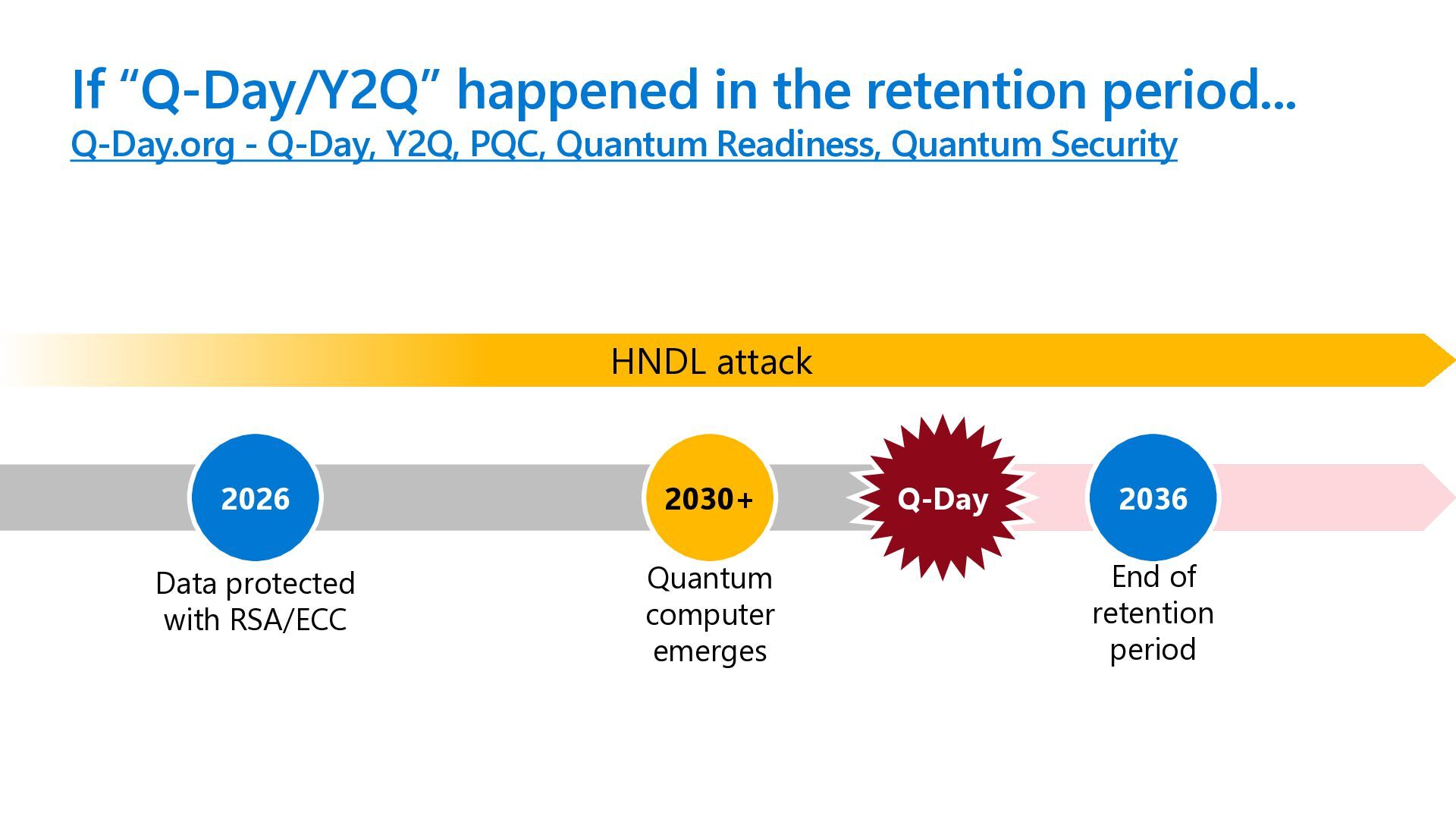
Y2Q, PQC, Quantum Readiness, Quantum Security 2030+ Quantum computer emerges 2036 End of retention period Q-Day HNDL attack 2026 Data protected with RSA/ECC
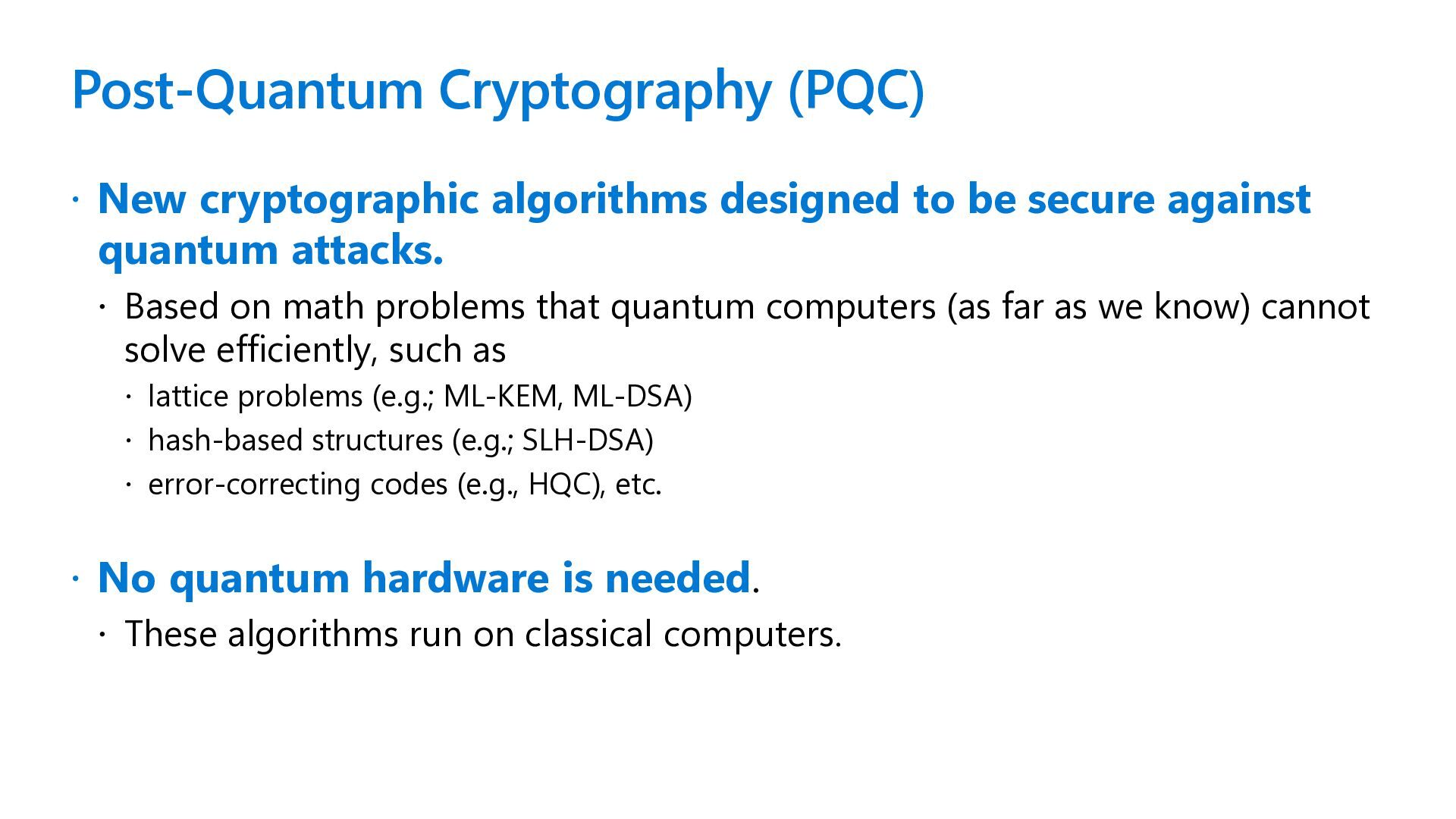
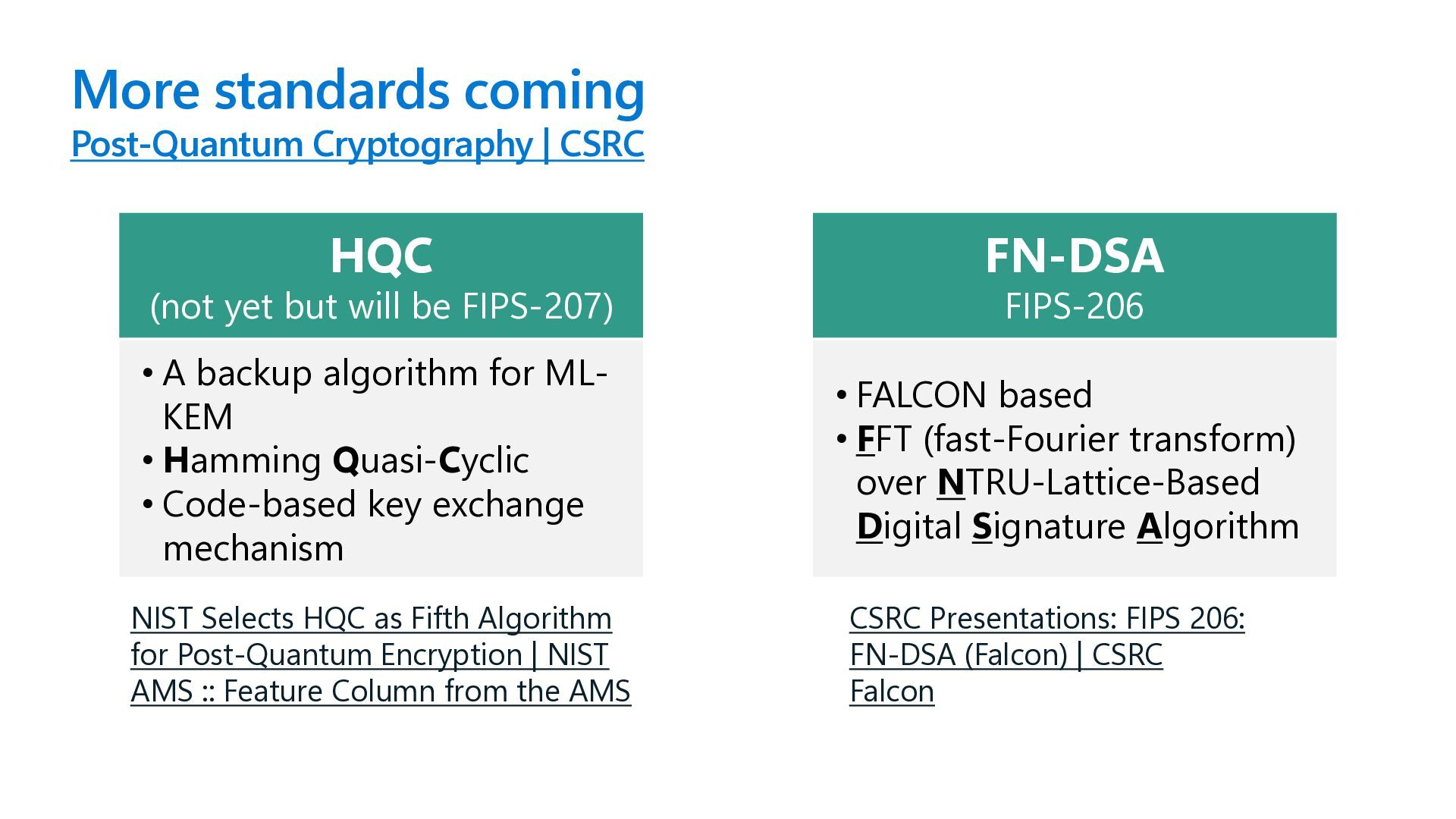
secure against quantum attacks. Based on mathematical problems that quantum computers (as far as we know) cannot solve efficiently, such as lattice problems (e.g.; ML-KEM, ML-DSA) hash-based structures (e.g.; SLH-DSA) error-correcting codes (e.g., HQC), etc. No quantum hardware is needed. These algorithms run on classical computers.
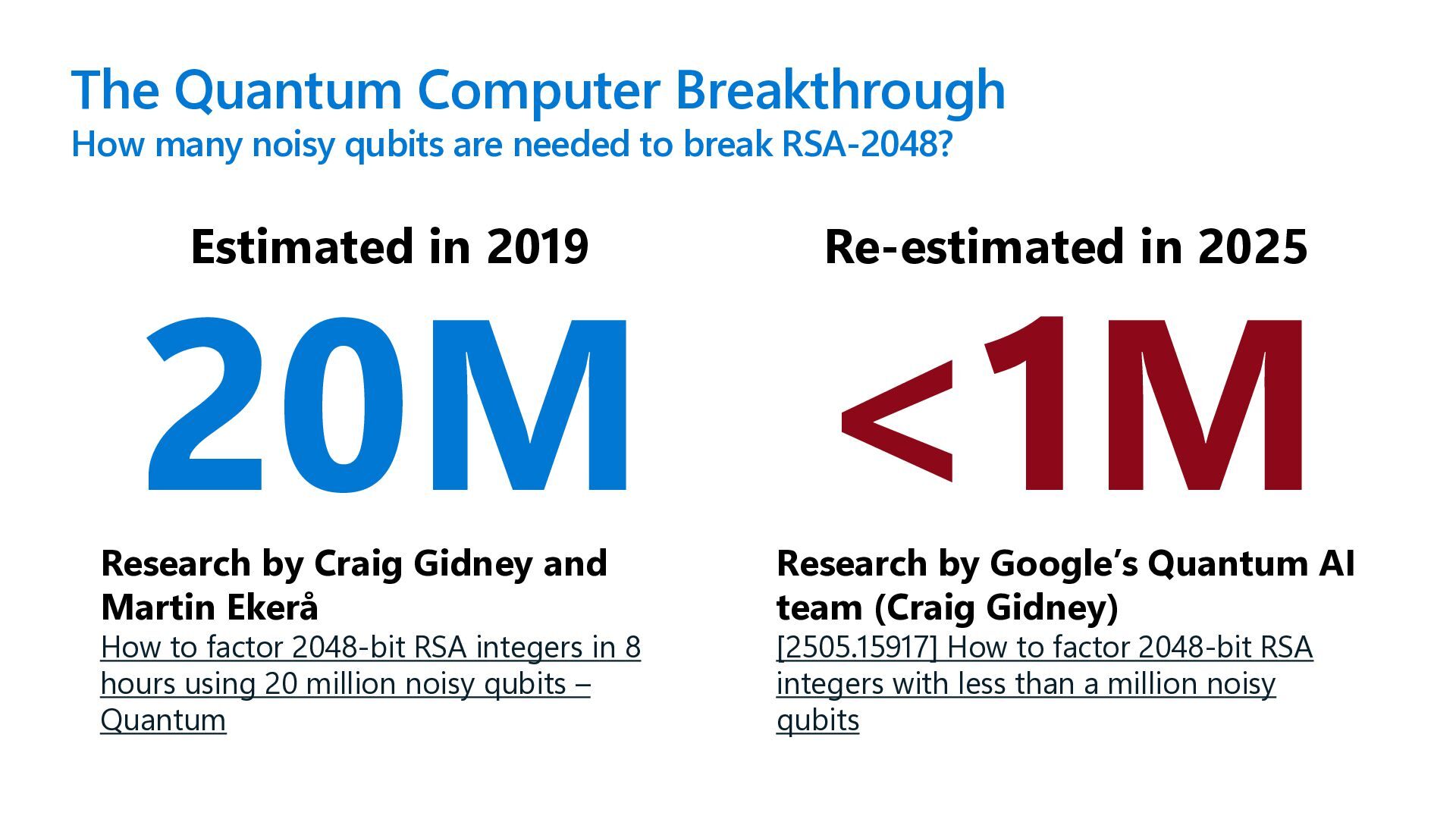
to break RSA-2048? Research by Craig Gidney and Martin Ekerå How to factor 2048-bit RSA integers in 8 hours using 20 million noisy qubits – Quantum In 2019 20M In 2025 <1M Research by Google’s Quantum AI team (Craig Gidney) [2505.15917] How to factor 2048-bit RSA integers with less than a million noisy qubits
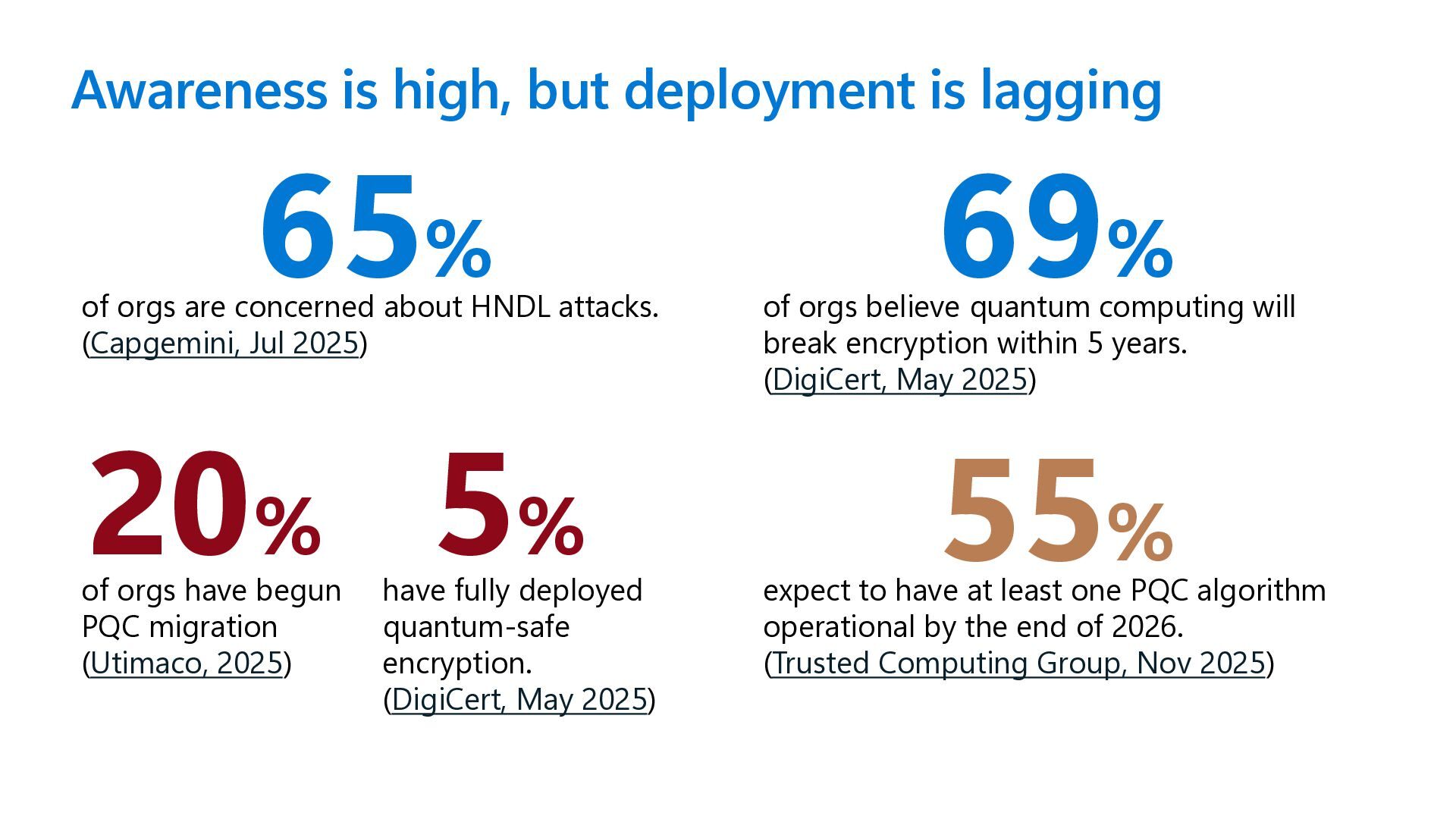
are concerned about HNDL attacks. (Capgemini, Jul 2025) 69% of orgs believe quantum computing will break encryption within 5 years. (DigiCert, May 2025) expect to have at least one PQC algorithm operational by the end of 2026. (Trusted Computing Group, Nov 2025) 20% 5% 55% of orgs have begun PQC migration (Utimaco, 2025) have fully deployed quantum-safe encryption. (DigiCert, May 2025)
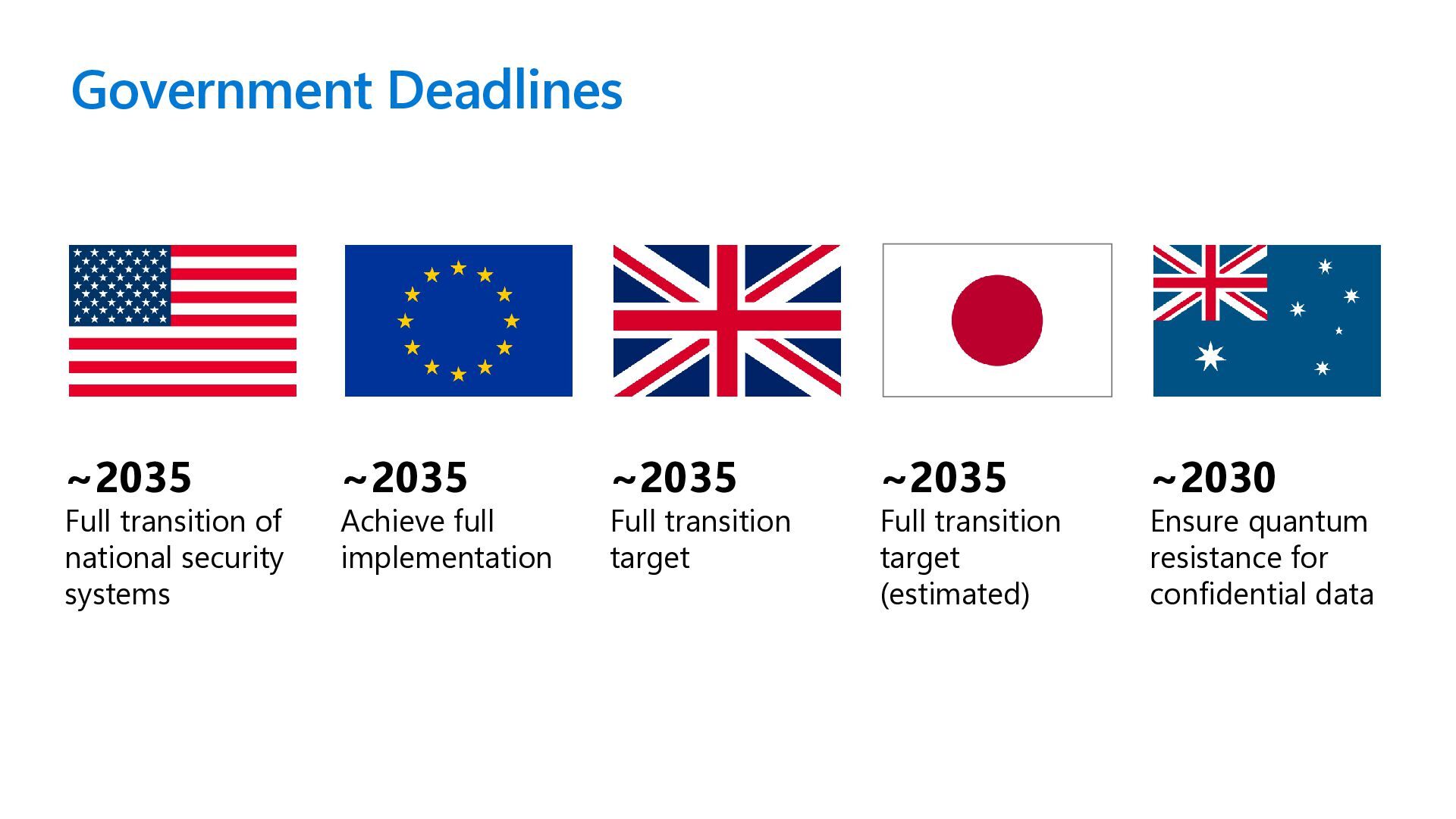
Achieve full implementation ~2035 Full transition target ~2035 Full transition target (estimated) ~2030 Ensure quantum resistance for confidential data
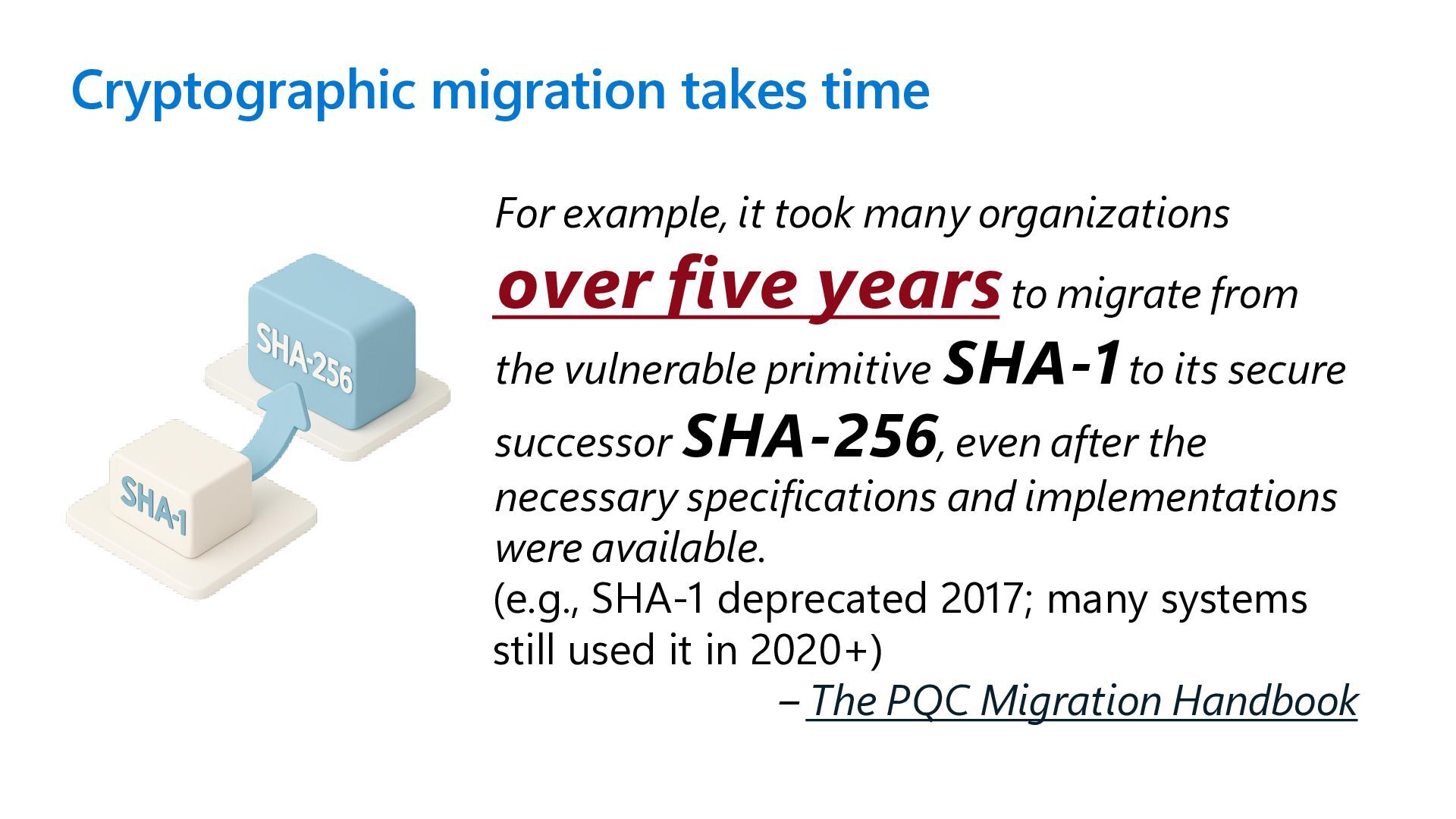
migrate from the vulnerable primitive SHA-1 to its secure successor SHA-256, even after the necessary specifications and implementations were available. (e.g., SHA-1 deprecated 2017; many systems still used it in 2020+) – The PQC Migration Handbook Cryptographic migration takes time
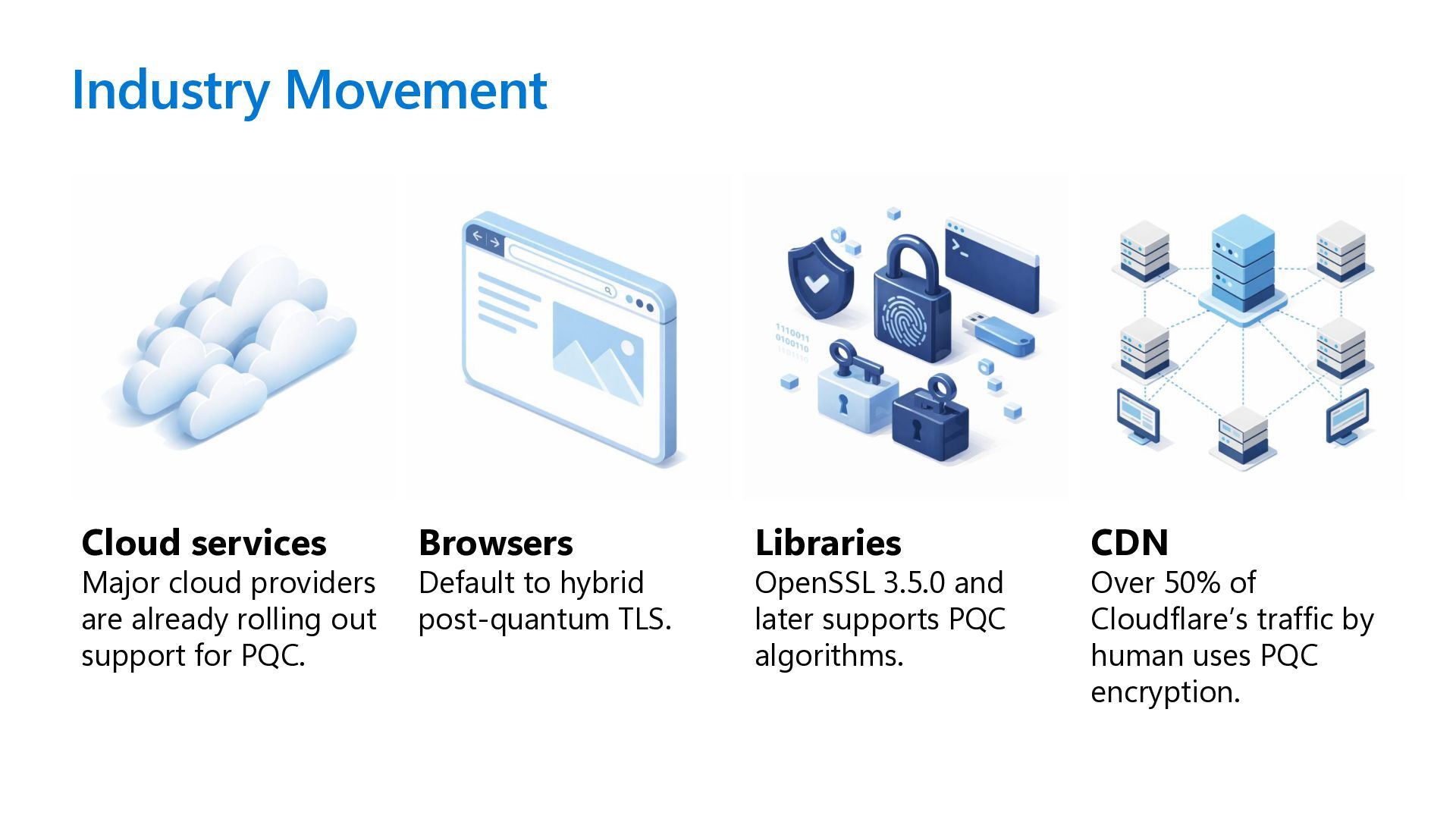
out support for PQC. Browsers Default to hybrid post-quantum TLS. Libraries OpenSSL 3.5.0 and later supports PQC algorithms. CDN Over 60% of Cloudflare’s traffic by human uses PQC encryption.
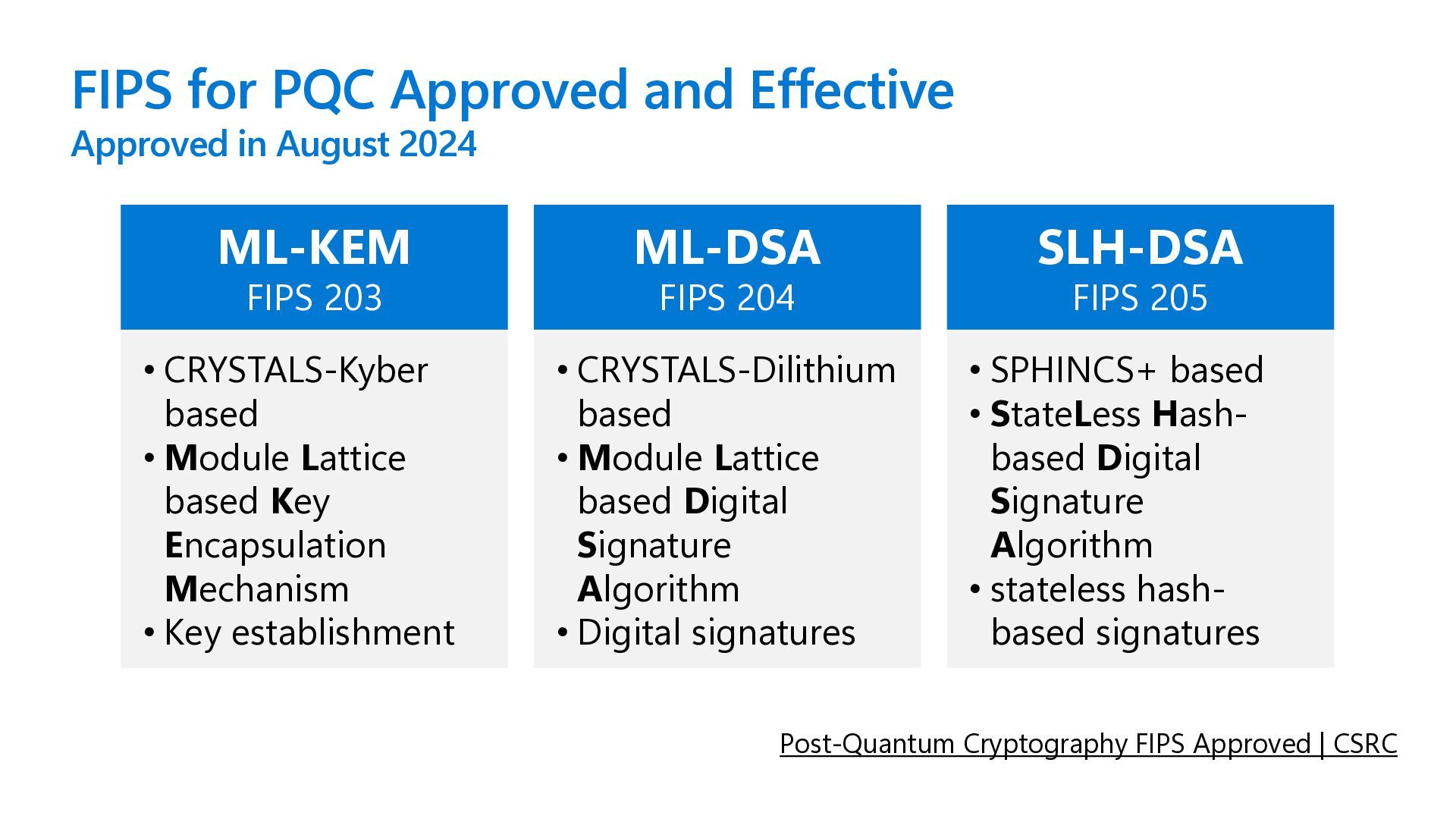
ML-KEM FIPS 203 ML-DSA FIPS 204 SLH-DSA FIPS 205 • CRYSTALS-Kyber based • Module Lattice based Key Encapsulation Mechanism • Key establishment • CRYSTALS-Dilithium based • Module Lattice based Digital Signature Algorithm • Digital signatures • SPHINCS+ based • StateLess Hash- based Digital Signature Algorithm • stateless hash- based signatures Post-Quantum Cryptography FIPS Approved | CSRC
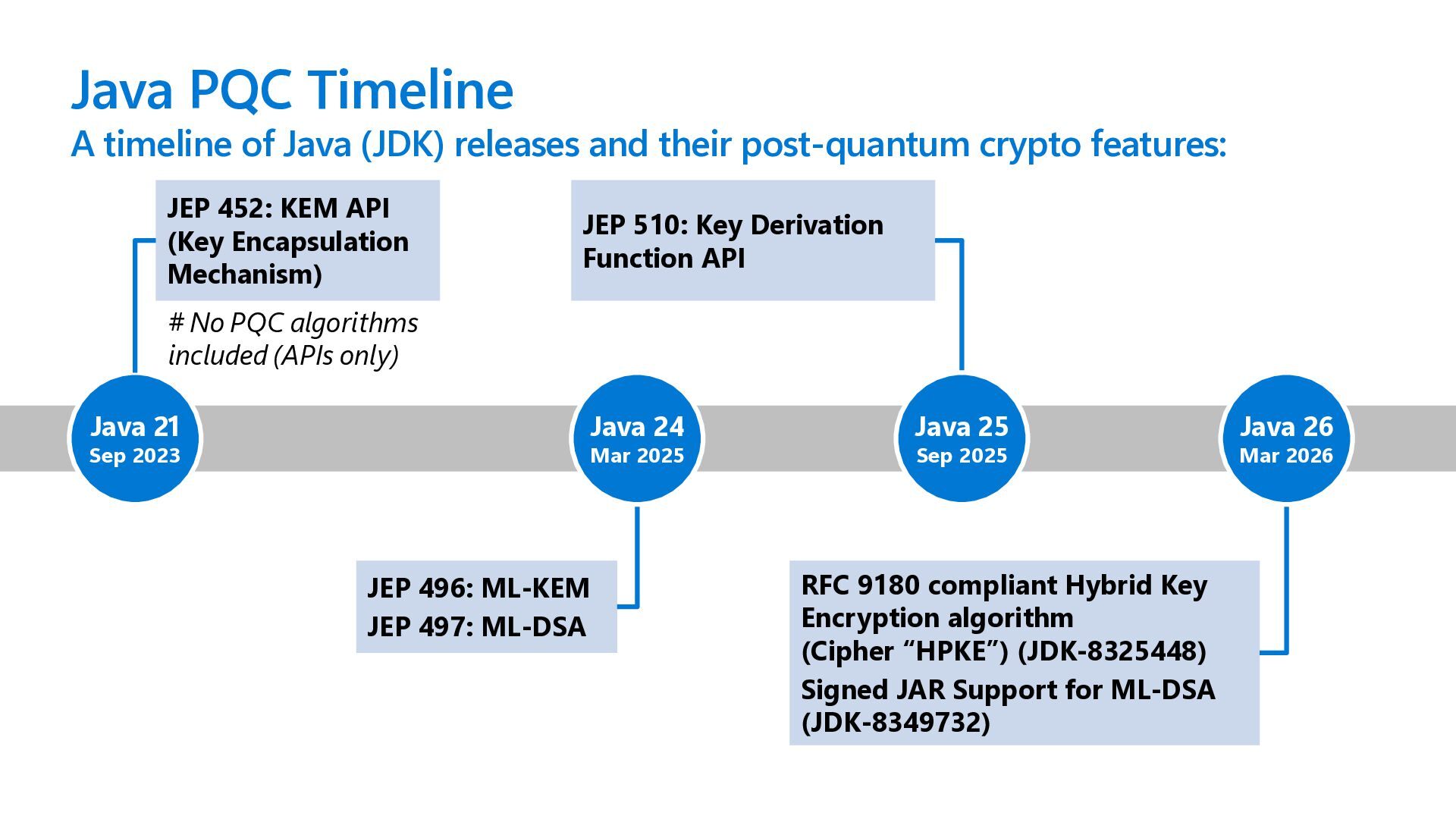
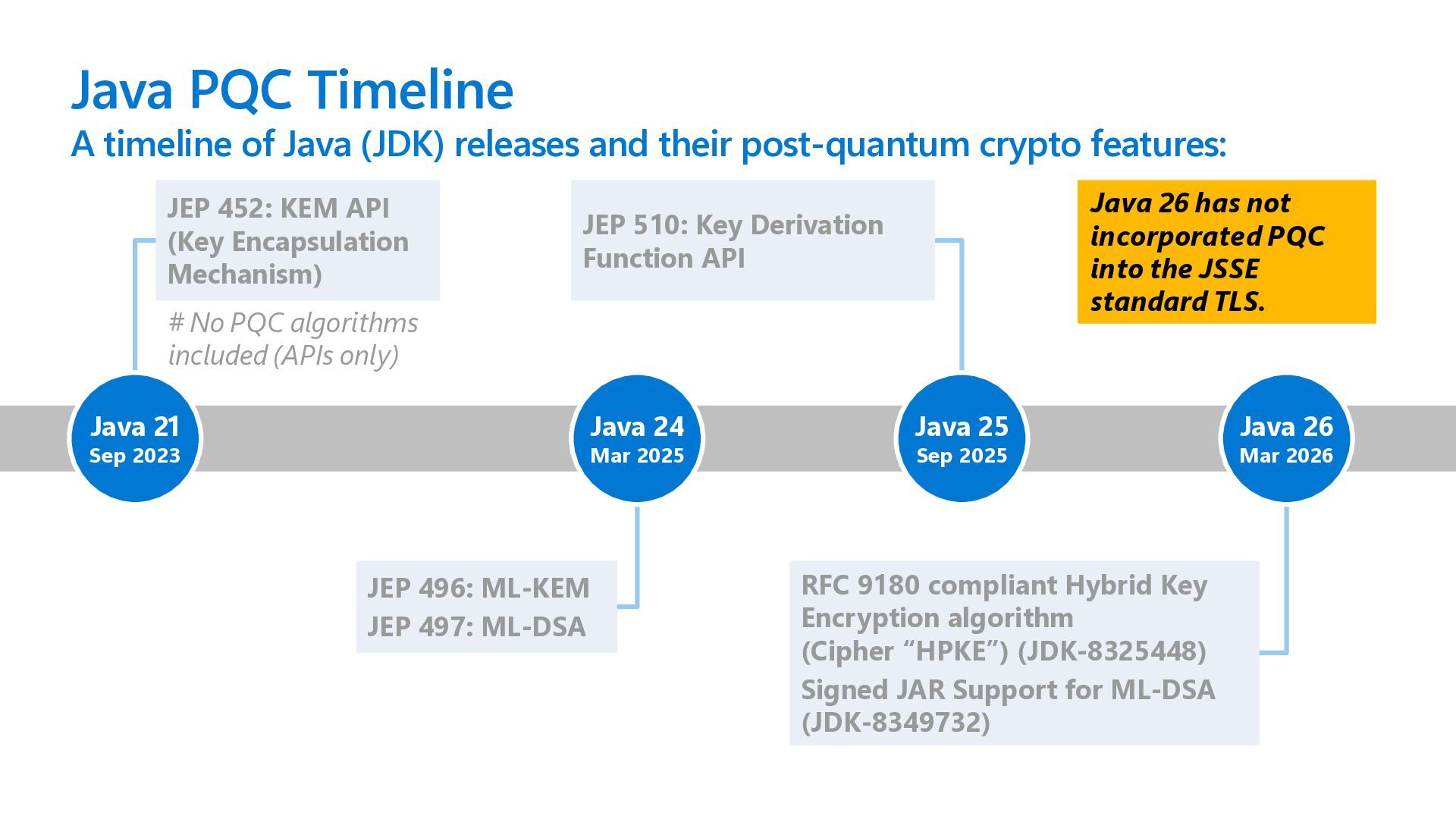
their post-quantum crypto features: JEP 452: KEM API (Key Encapsulation Mechanism) # No PQC algorithms included (APIs only) Java 21 Sep 2023 JEP 496: ML-KEM JEP 497: ML-DSA Java 24 Mar 2025 JEP 510: Key Derivation Function API Java 25 Sep 2025 RFC 9180 compliant Hybrid Key Encryption algorithm (Cipher “HPKE”) (JDK-8325448) Signed JAR Support for ML-DSA (JDK-8349732) Java 26 Mar 2026
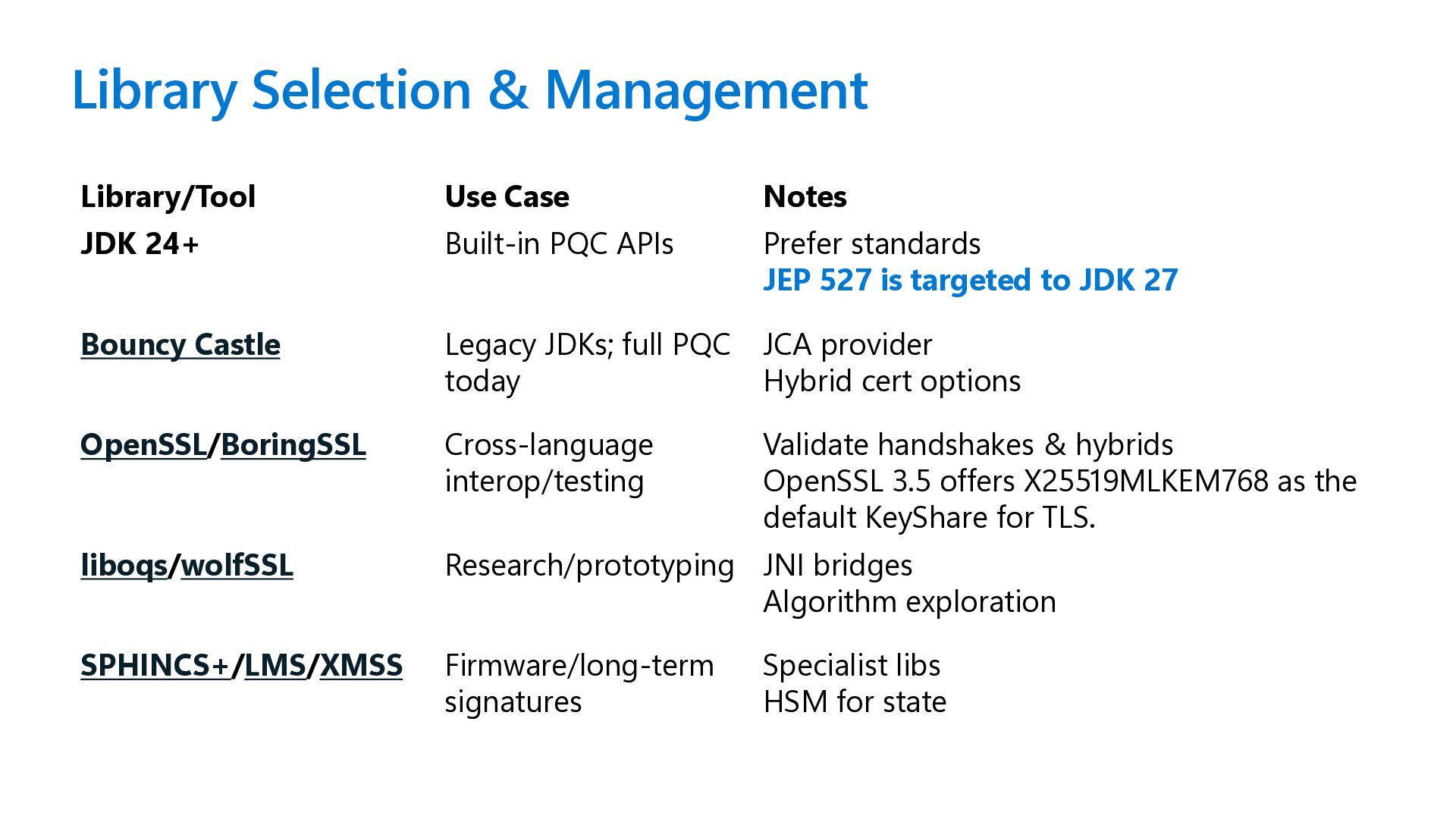
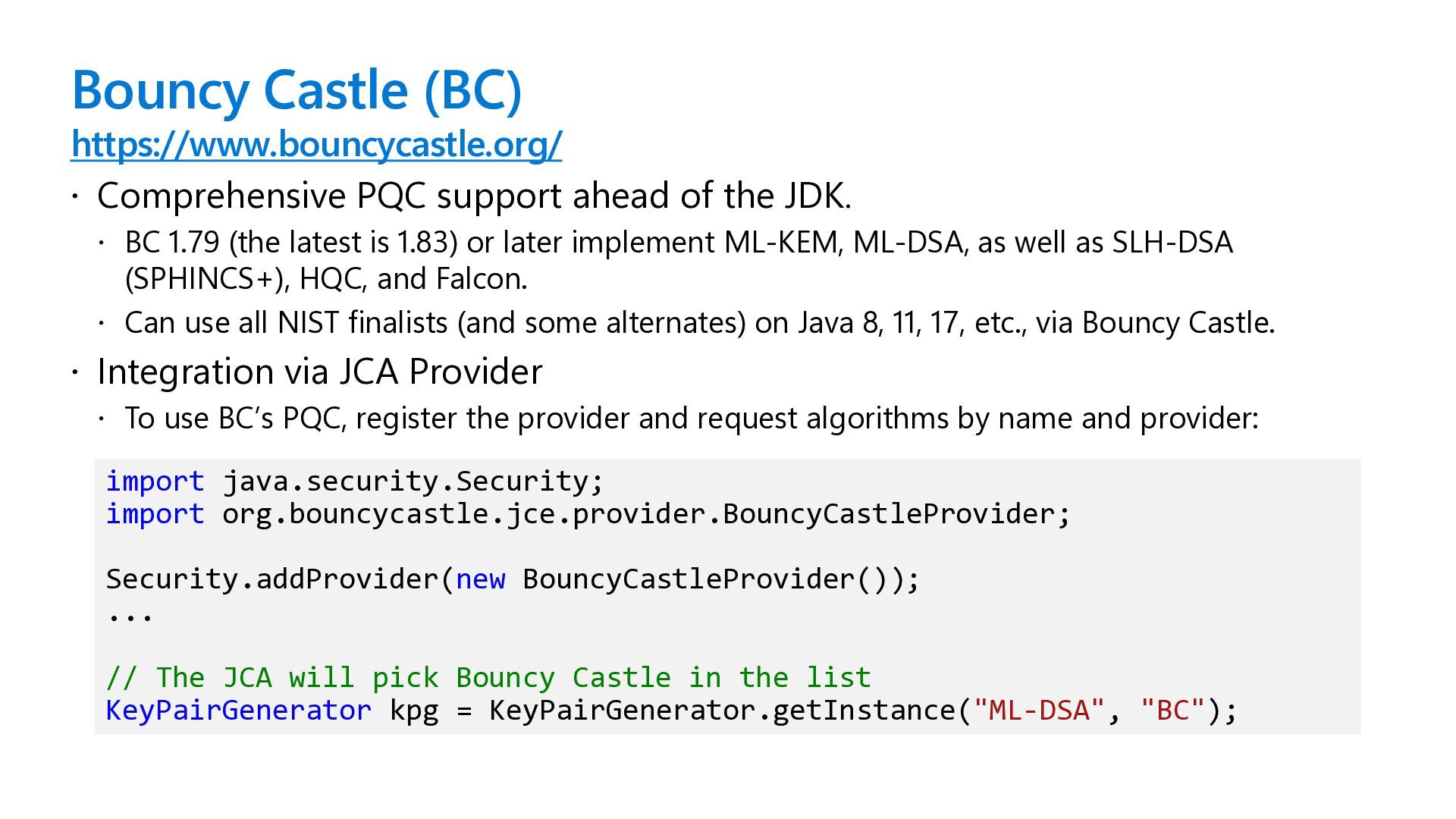
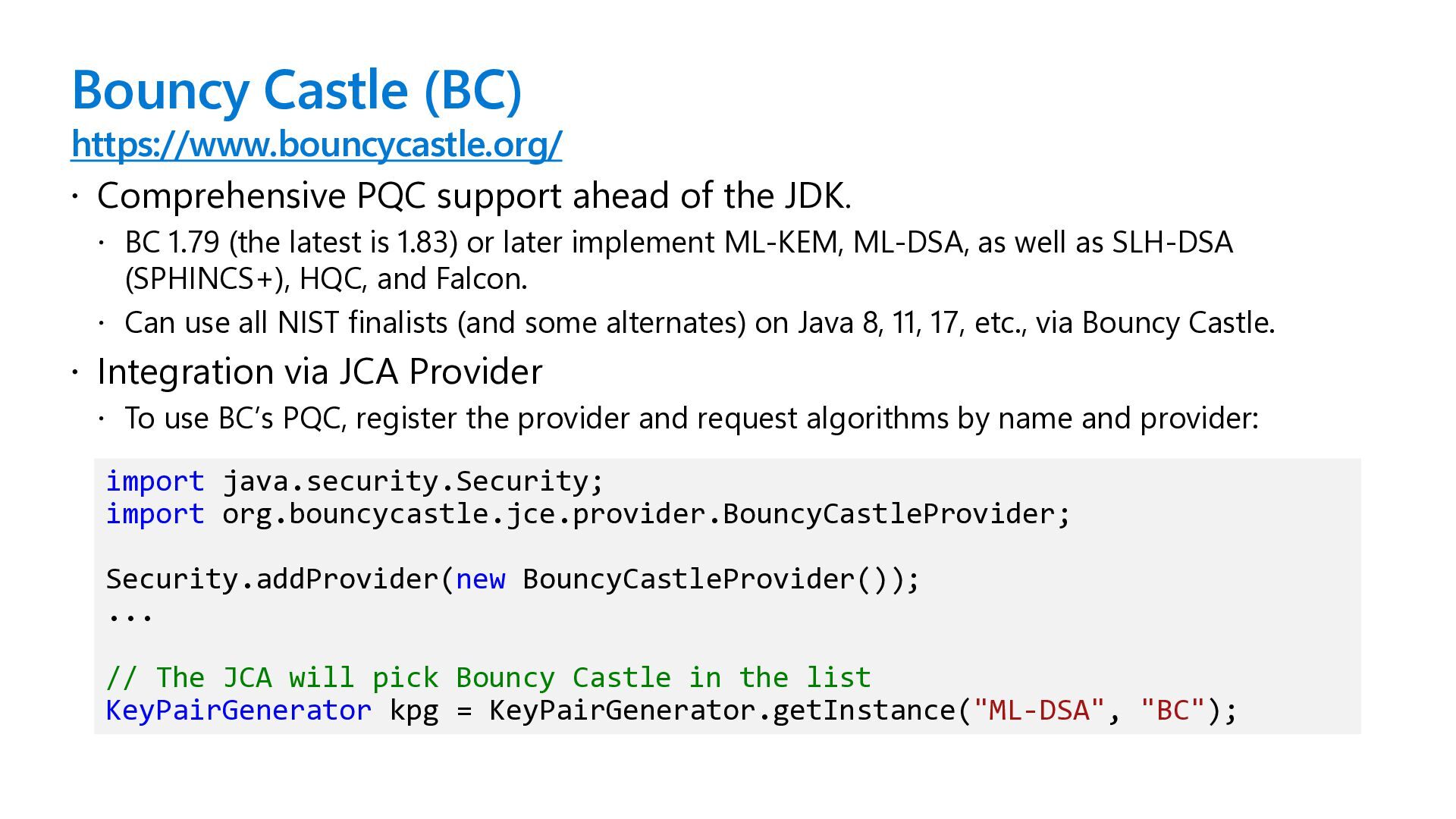
the JDK. BC 1.79 (the latest is 1.83) or later implement ML-KEM, ML-DSA, as well as SLH-DSA (SPHINCS+), HQC, and Falcon. Can use all NIST finalists (and some alternates) on Java 8, 11, 17, etc., via Bouncy Castle. Integration via JCA Provider To use BC’s PQC, register the provider and request algorithms by name and provider: import java.security.Security; import org.bouncycastle.jce.provider.BouncyCastleProvider; Security.addProvider(new BouncyCastleProvider()); ... // The JCA will pick Bouncy Castle in the list KeyPairGenerator kpg = KeyPairGenerator.getInstance("ML-DSA", "BC");
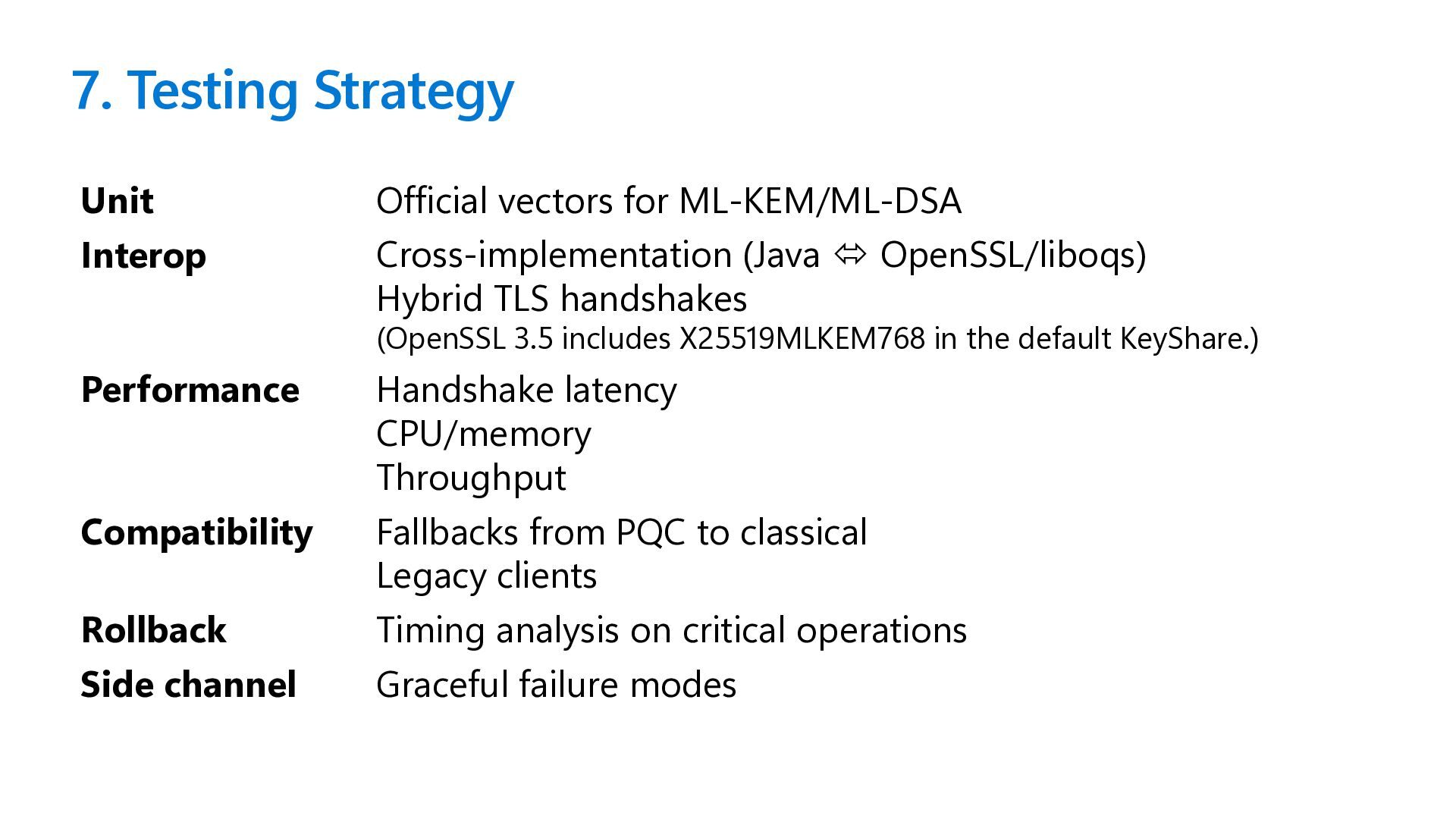
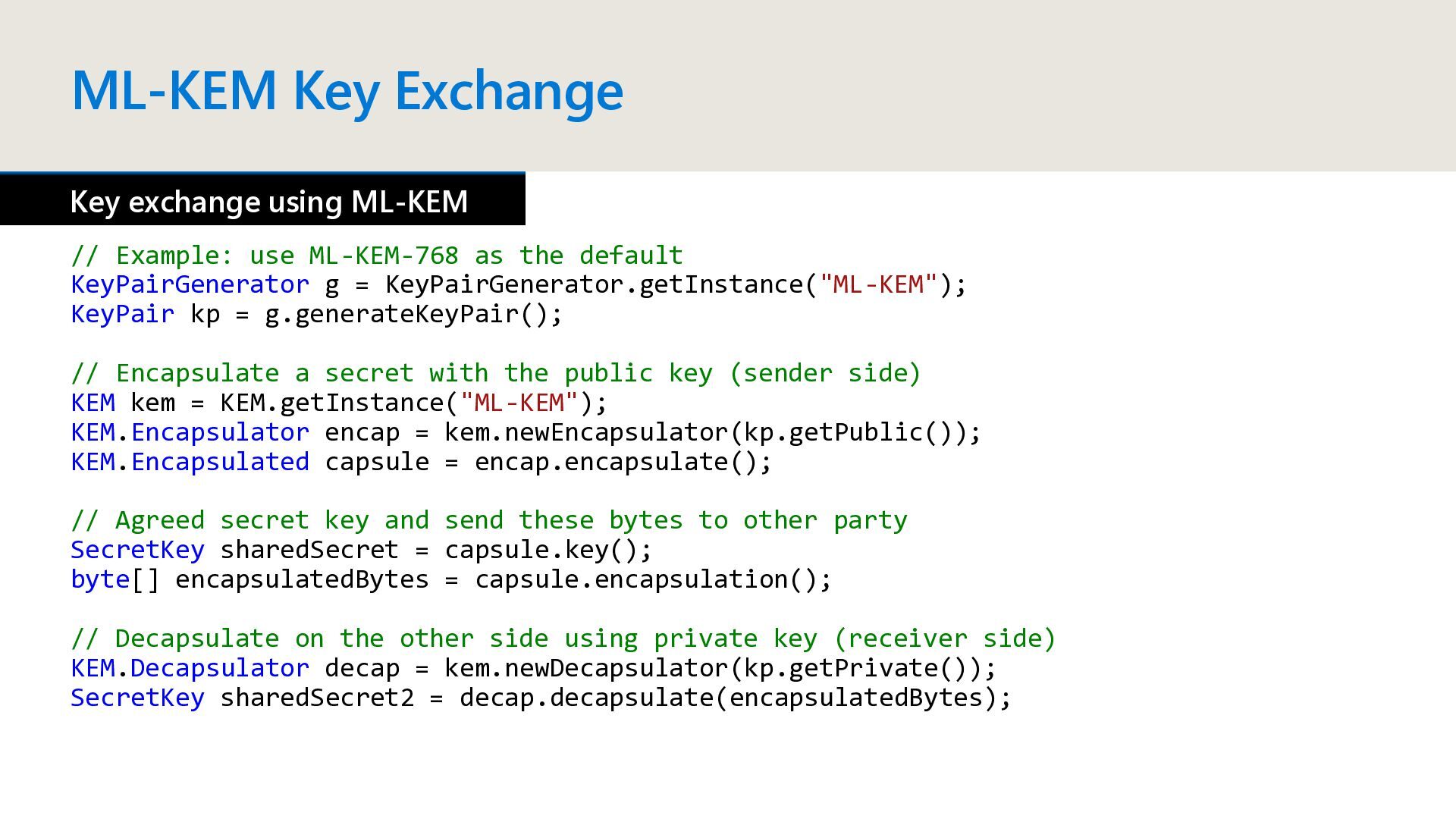
ML-KEM-768 as the default KeyPairGenerator g = KeyPairGenerator.getInstance("ML-KEM"); KeyPair kp = g.generateKeyPair(); // Encapsulate a secret with the public key (sender side) KEM kem = KEM.getInstance("ML-KEM"); KEM.Encapsulator encap = kem.newEncapsulator(kp.getPublic()); KEM.Encapsulated capsule = encap.encapsulate(); // Agreed secret key and send these bytes to other party SecretKey sharedSecret = capsule.key(); byte[] encapsulatedBytes = capsule.encapsulation(); // Decapsulate on the other side using private key (receiver side) KEM.Decapsulator decap = kem.newDecapsulator(kp.getPrivate()); SecretKey sharedSecret2 = decap.decapsulate(encapsulatedBytes);
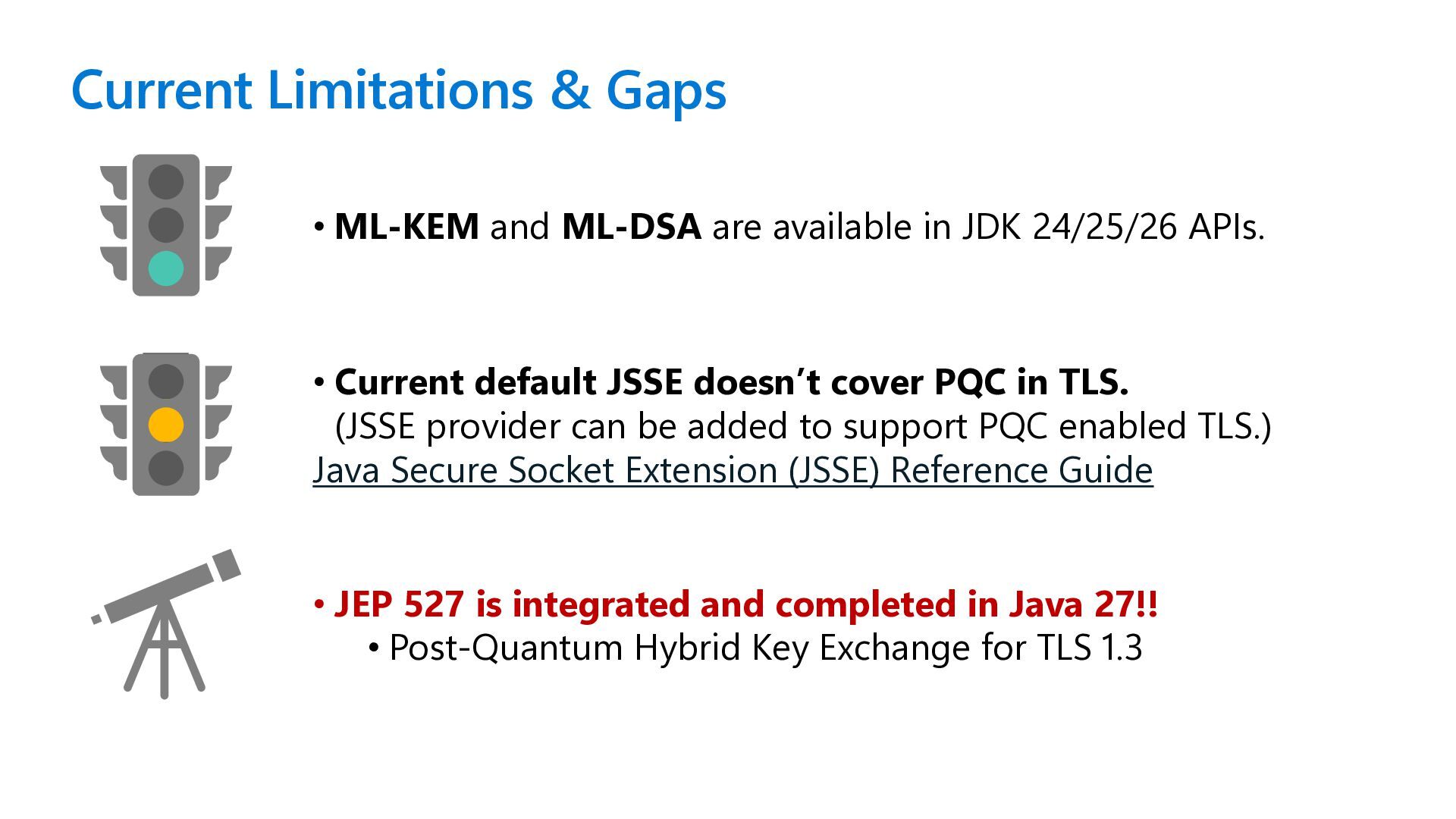
497: ML-DSA Java PQC Timeline A timeline of Java (JDK) releases and their post-quantum crypto features: JEP 452: KEM API (Key Encapsulation Mechanism) # No PQC algorithms included (APIs only) RFC 9180 compliant Hybrid Key Encryption algorithm (Cipher “HPKE”) (JDK-8325448) Signed JAR Support for ML-DSA (JDK-8349732) Java 21 Sep 2023 Java 24 Mar 2025 Java 25 Sep 2025 Java 26 Mar 2026 Java 26 has not incorporated PQC into the JSSE standard TLS.
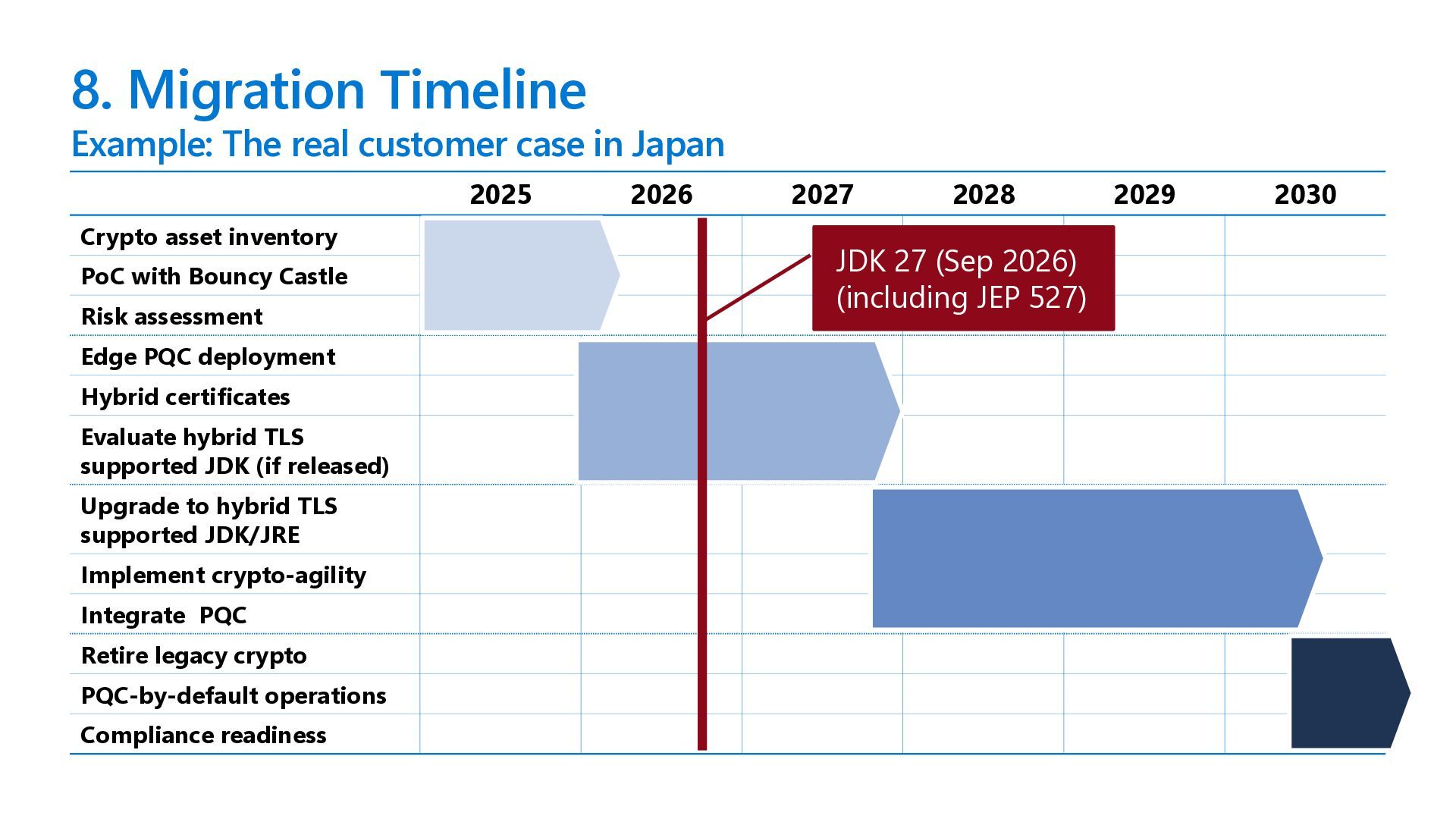
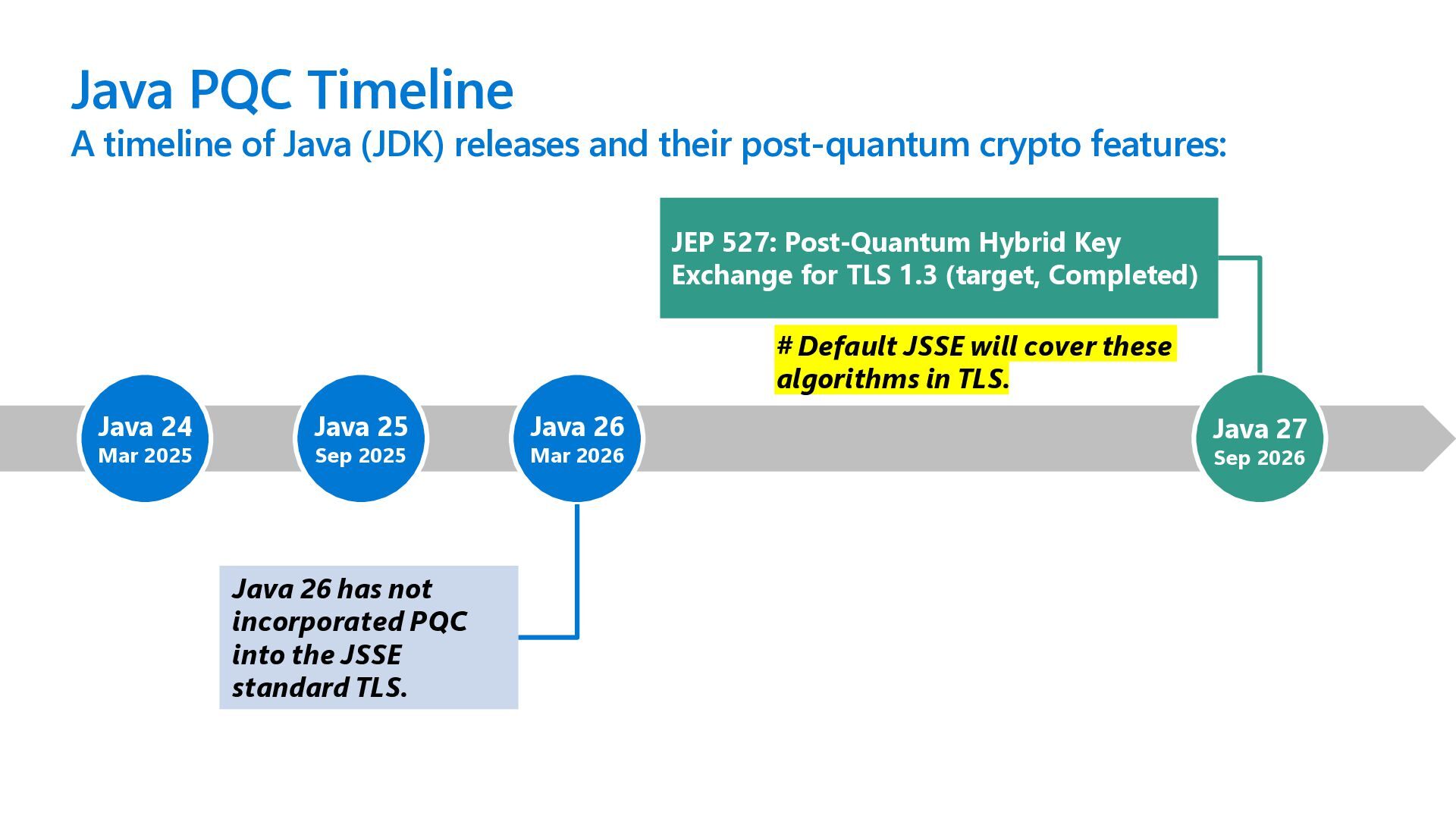
their post-quantum crypto features: Java 24 Mar 2025 Java 25 Sep 2025 Java 26 Mar 2026 JEP 527: Post-Quantum Hybrid Key Exchange for TLS 1.3 (Completed) # Default JSSE will cover these algorithms in TLS. Java 27 Sep 2026 Java 26 has not incorporated PQC into the JSSE standard TLS.
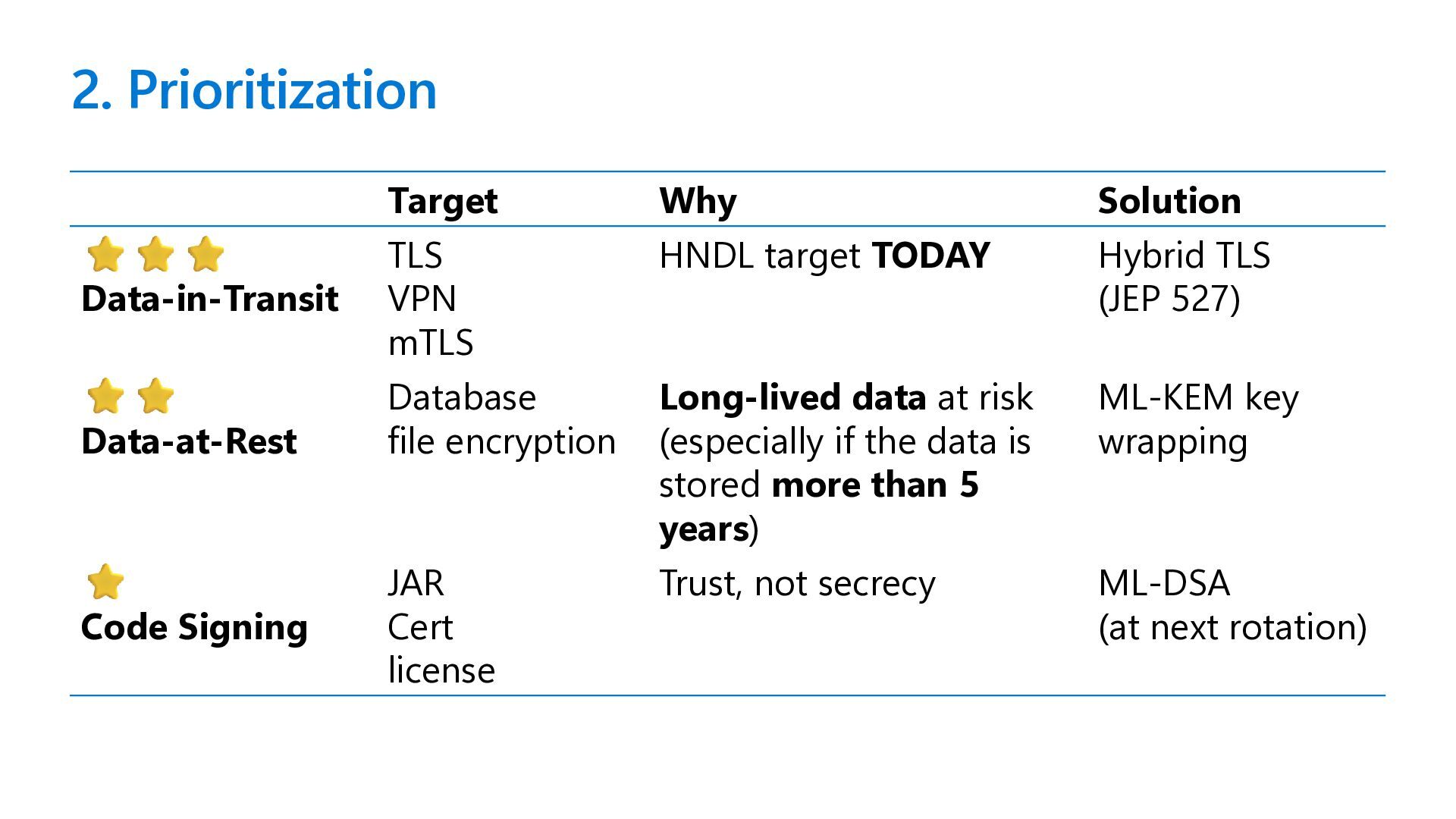
target TODAY Hybrid TLS (JEP 527) Data-at-Rest Database file encryption Long-lived data at risk (especially if the data is stored more than 5 years) ML-KEM key wrapping Code Signing JAR Cert license Trust, not secrecy ML-DSA (at next rotation)
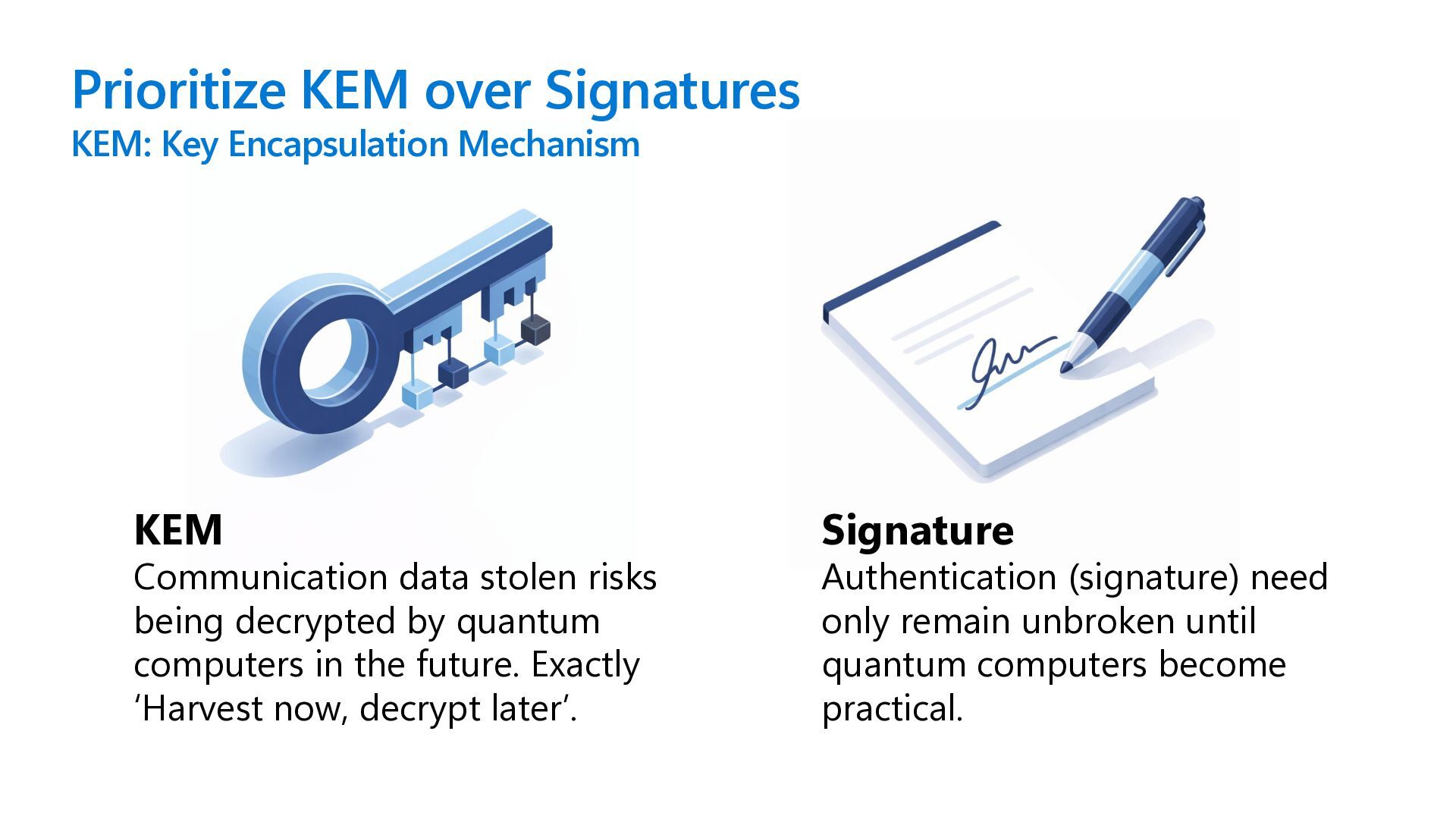
data stolen risks being decrypted by quantum computers in the future. Exactly ‘Harvest now, decrypt later’. Signature Authentication (signature) need only remain unbroken until quantum computers become practical.
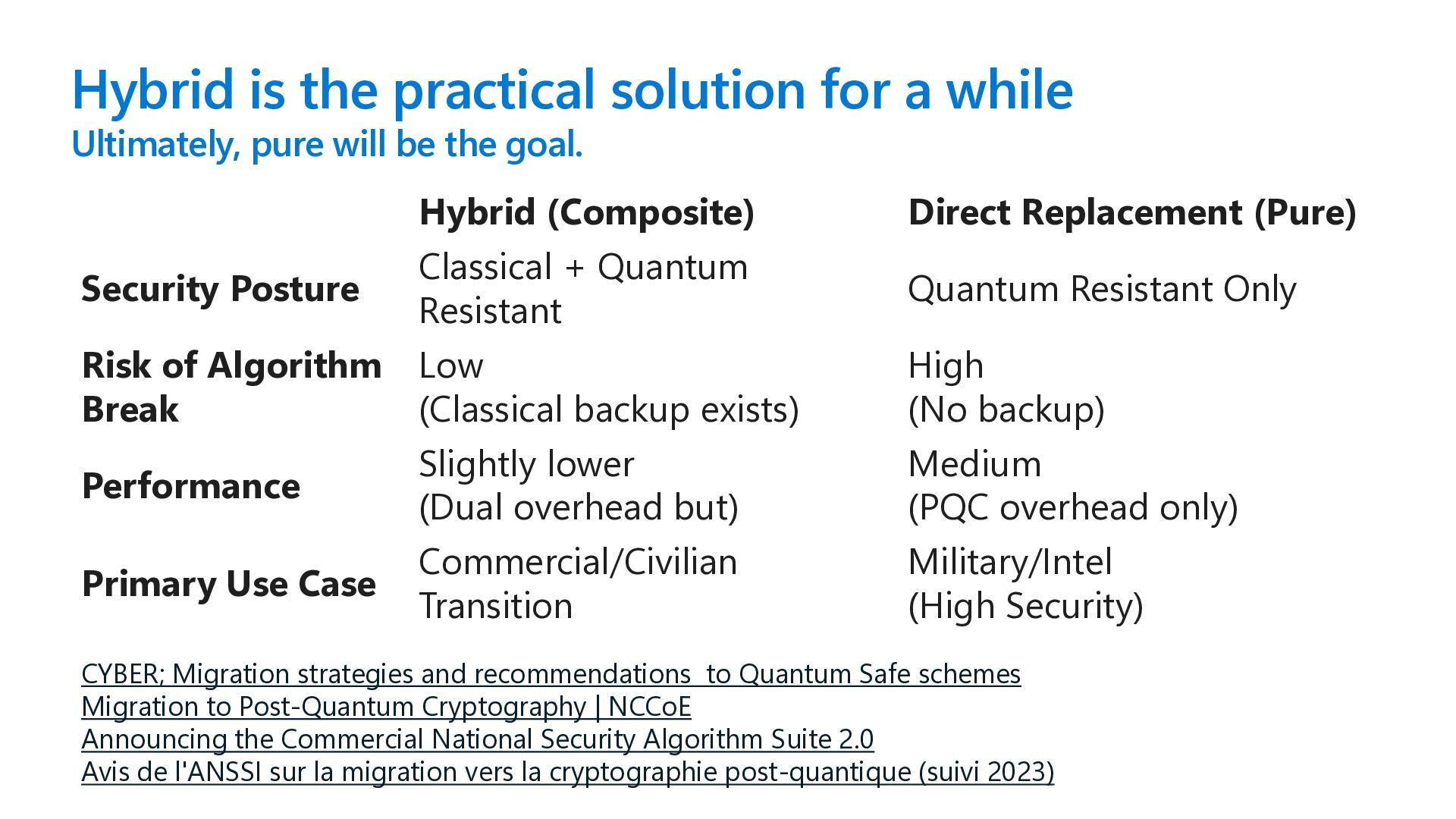
net. Hybrid (Composite) Direct Replacement (Pure) Security Posture Classical + Quantum Resistant Quantum Resistant Only Risk of Algorithm Break Low (Classical backup exists) High (No backup) Performance Slightly lower (dual overhead, but negligible after handshake) Medium (PQC overhead only) Primary Use Case Commercial/Civilian Transition Military/Intel (High Security)
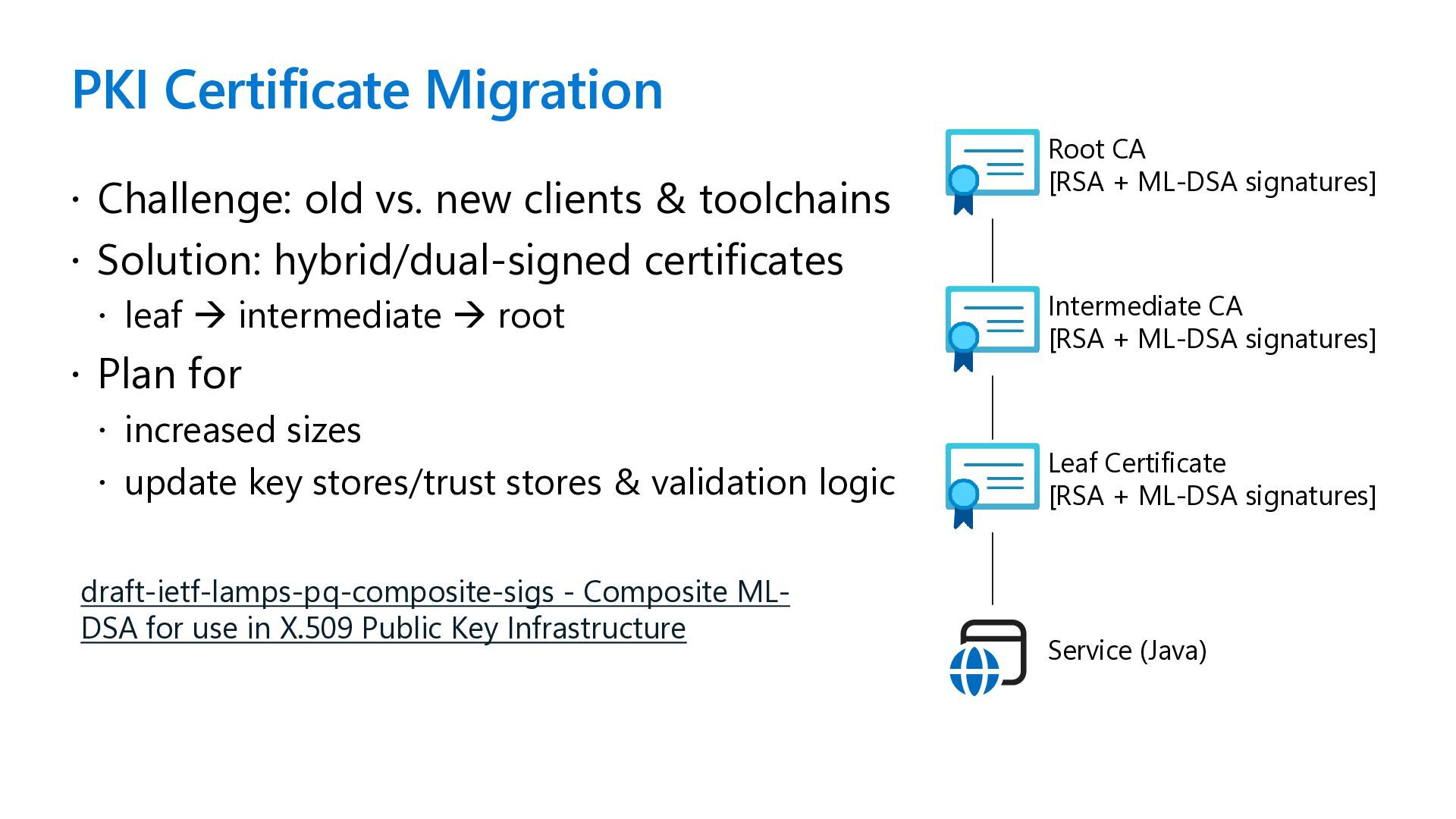
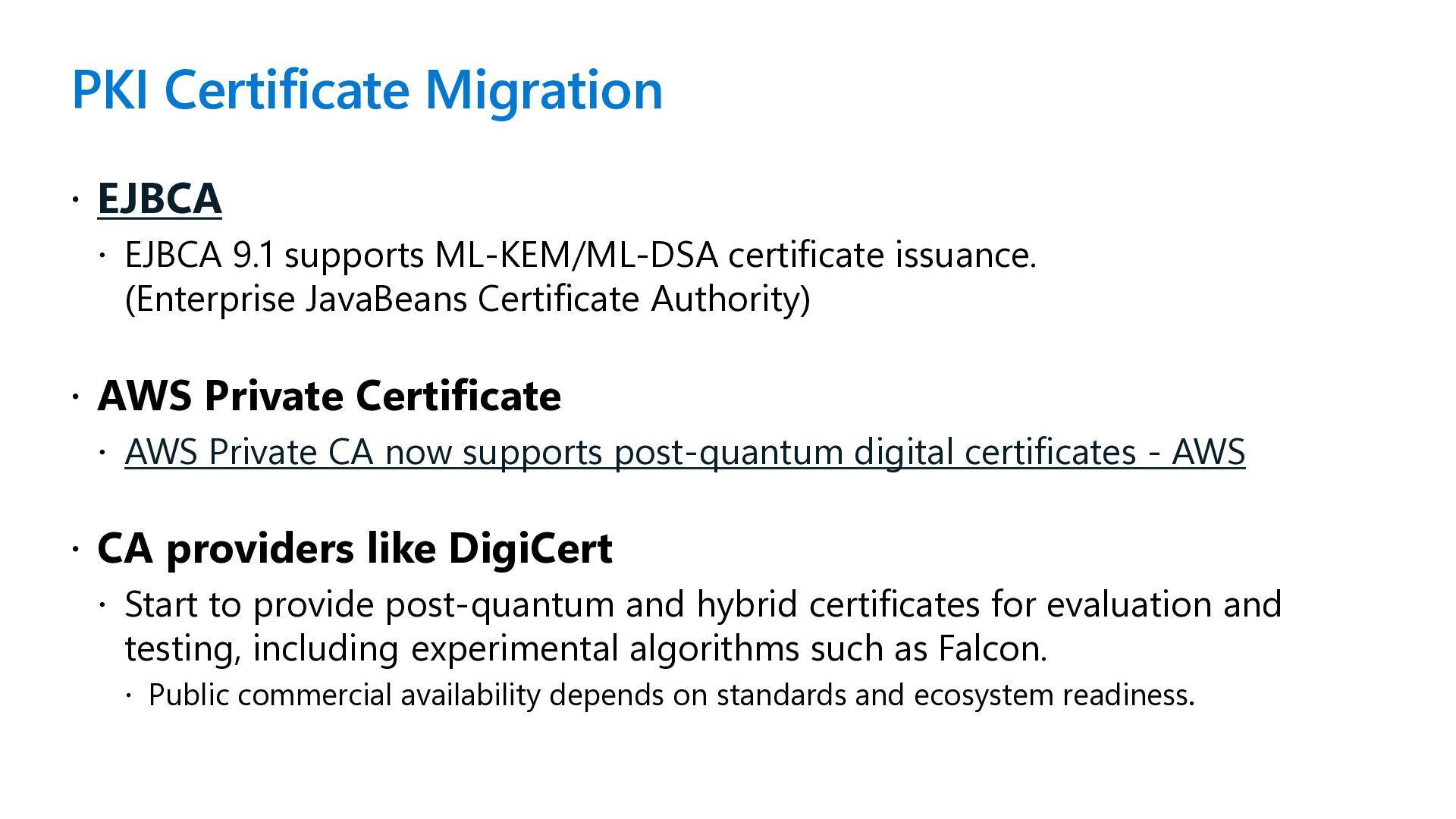
certificate issuance. (Enterprise JavaBeans Certificate Authority) AWS Private Certificate AWS Private CA now supports post-quantum digital certificates - AWS CA providers like DigiCert Start to provide post-quantum and hybrid certificates for evaluation and testing, including experimental algorithms such as Falcon. Public commercial availability depends on standards and ecosystem readiness.
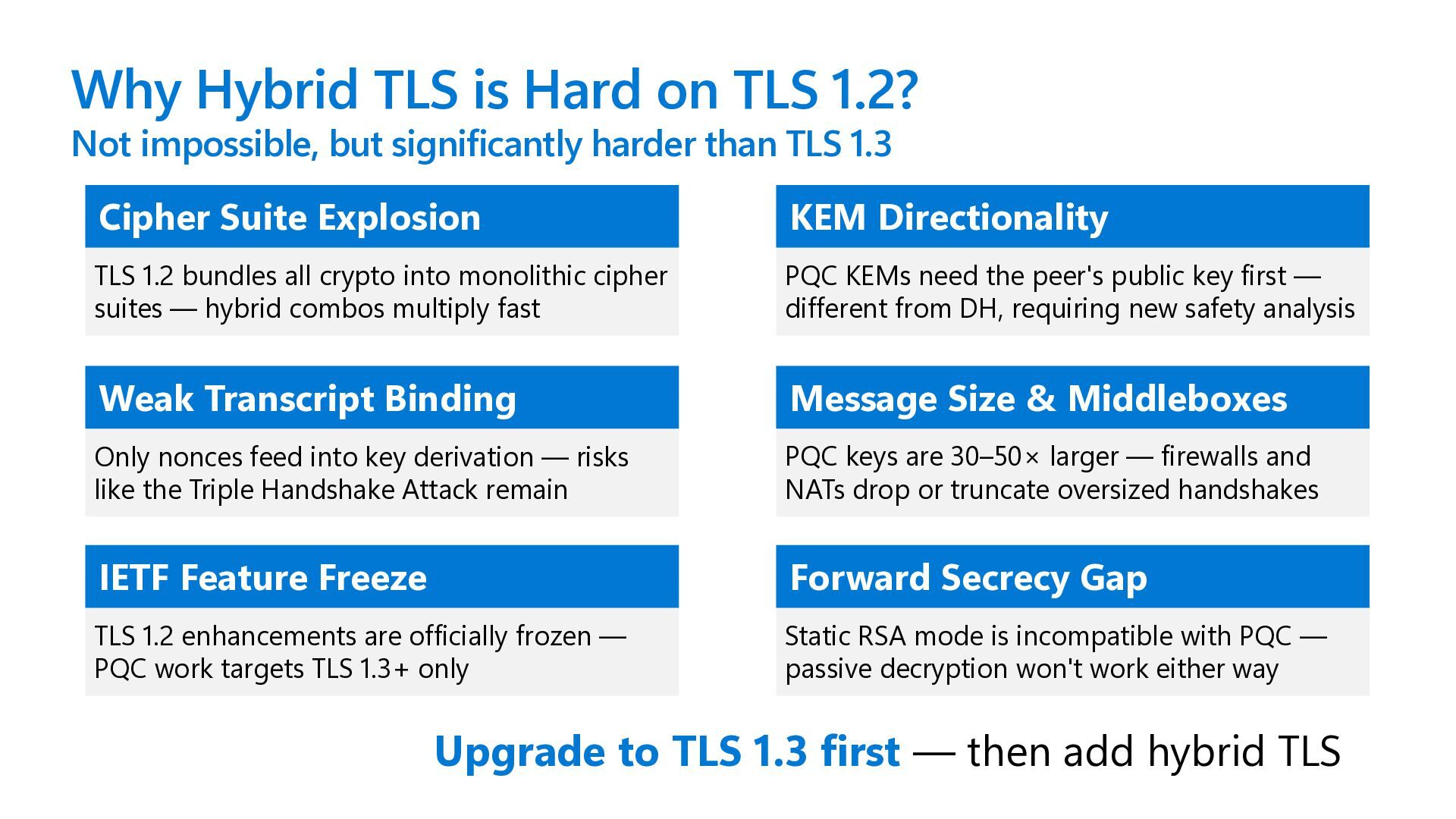
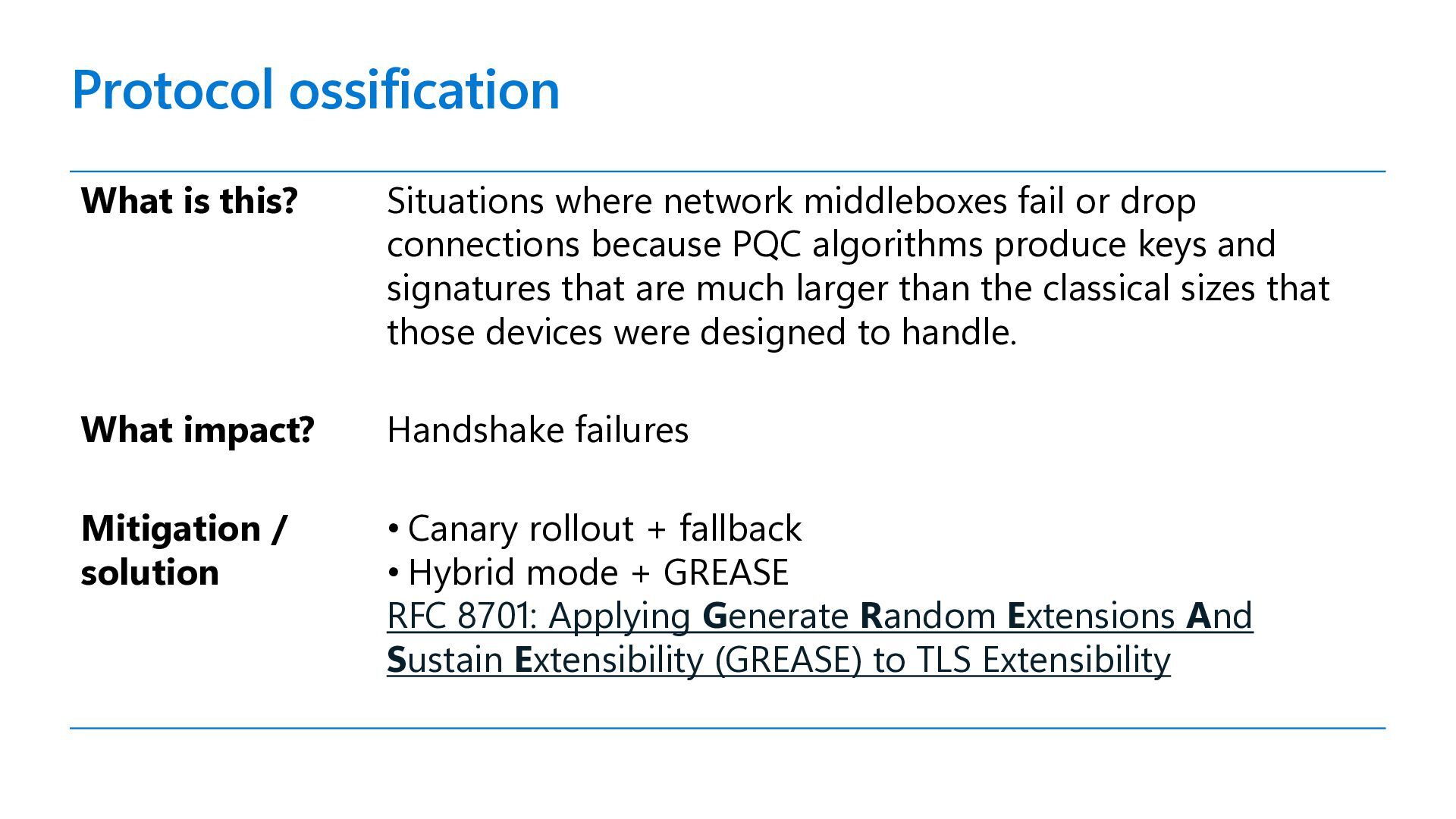
Triple Handshake Attack remain PQC keys are 30–50× larger — firewalls and NATs drop or truncate oversized handshakes TLS 1.2 enhancements are officially frozen — PQC work targets TLS 1.3+ only PQC KEMs need the peer's public key first — different from DH, requiring new safety analysis Static RSA mode is incompatible with PQC — passive decryption won't work either way TLS 1.2 bundles all crypto into monolithic cipher suites — hybrid combos multiply fast Why Hybrid TLS is Hard on TLS 1.2? Not impossible, but significantly harder than TLS 1.3 Weak Transcript Binding Message Size & Middleboxes IETF Feature Freeze KEM Directionality Forward Secrecy Gap Cipher Suite Explosion Upgrade to TLS 1.3 first — then add hybrid TLS
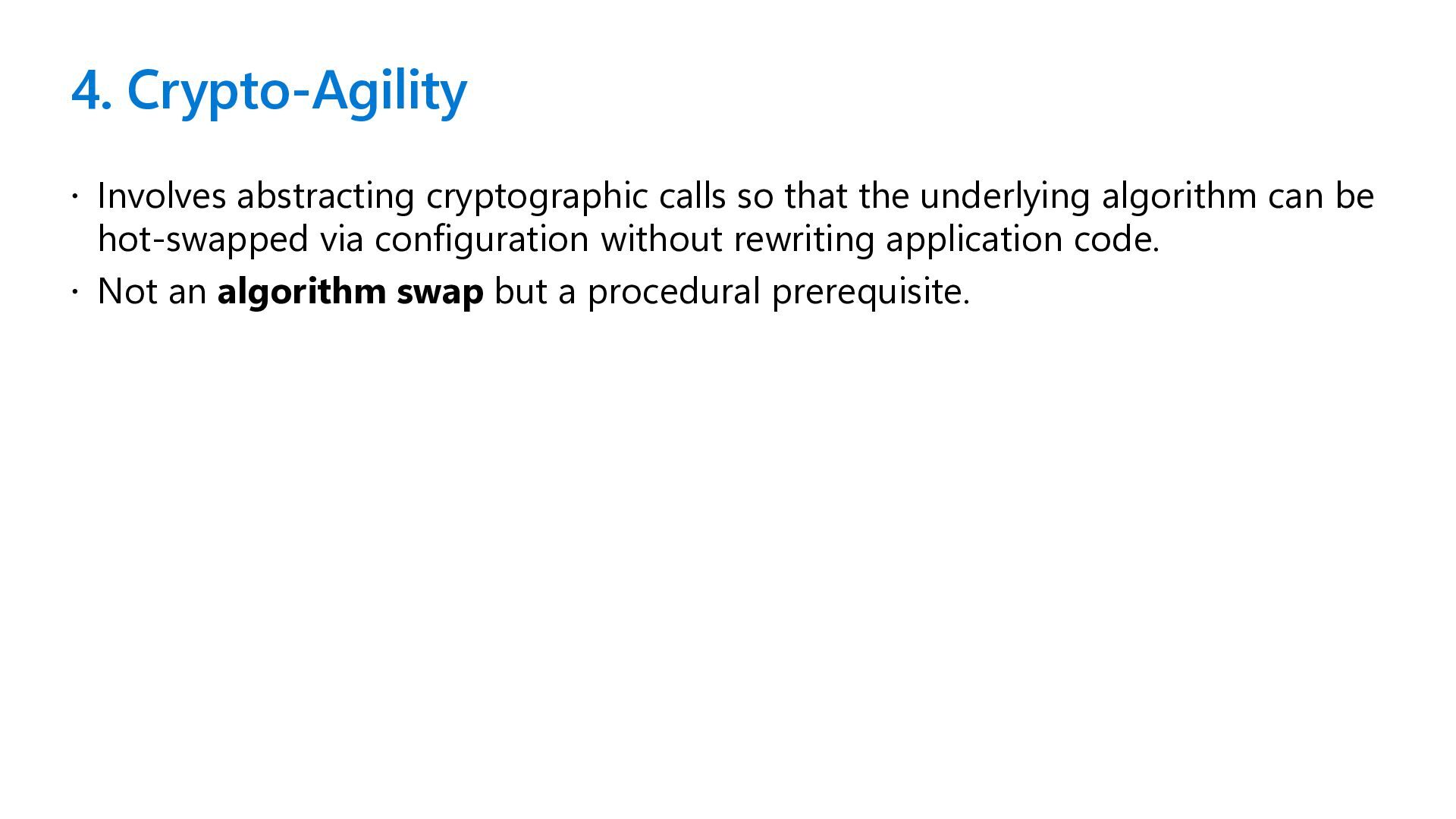
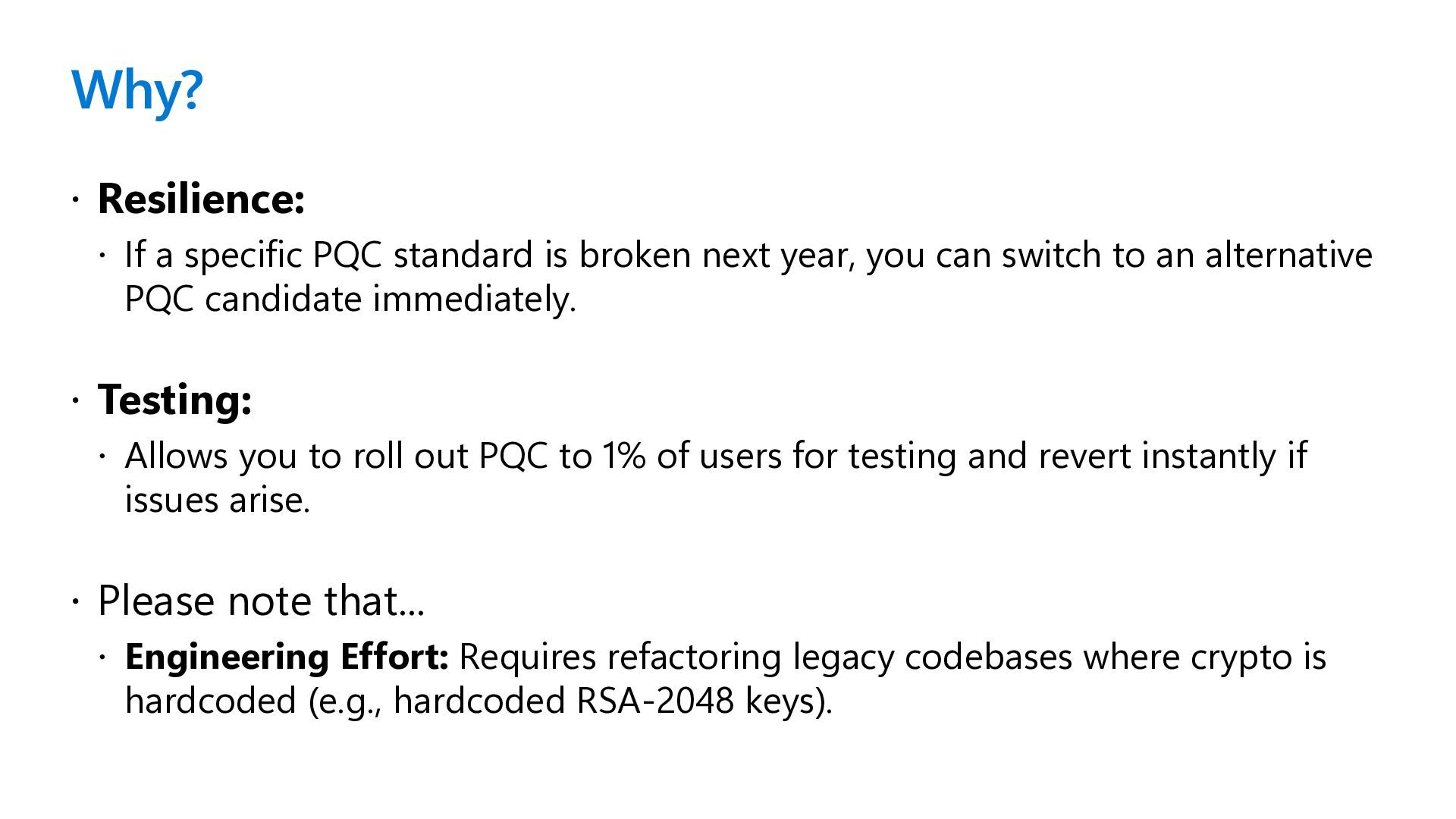
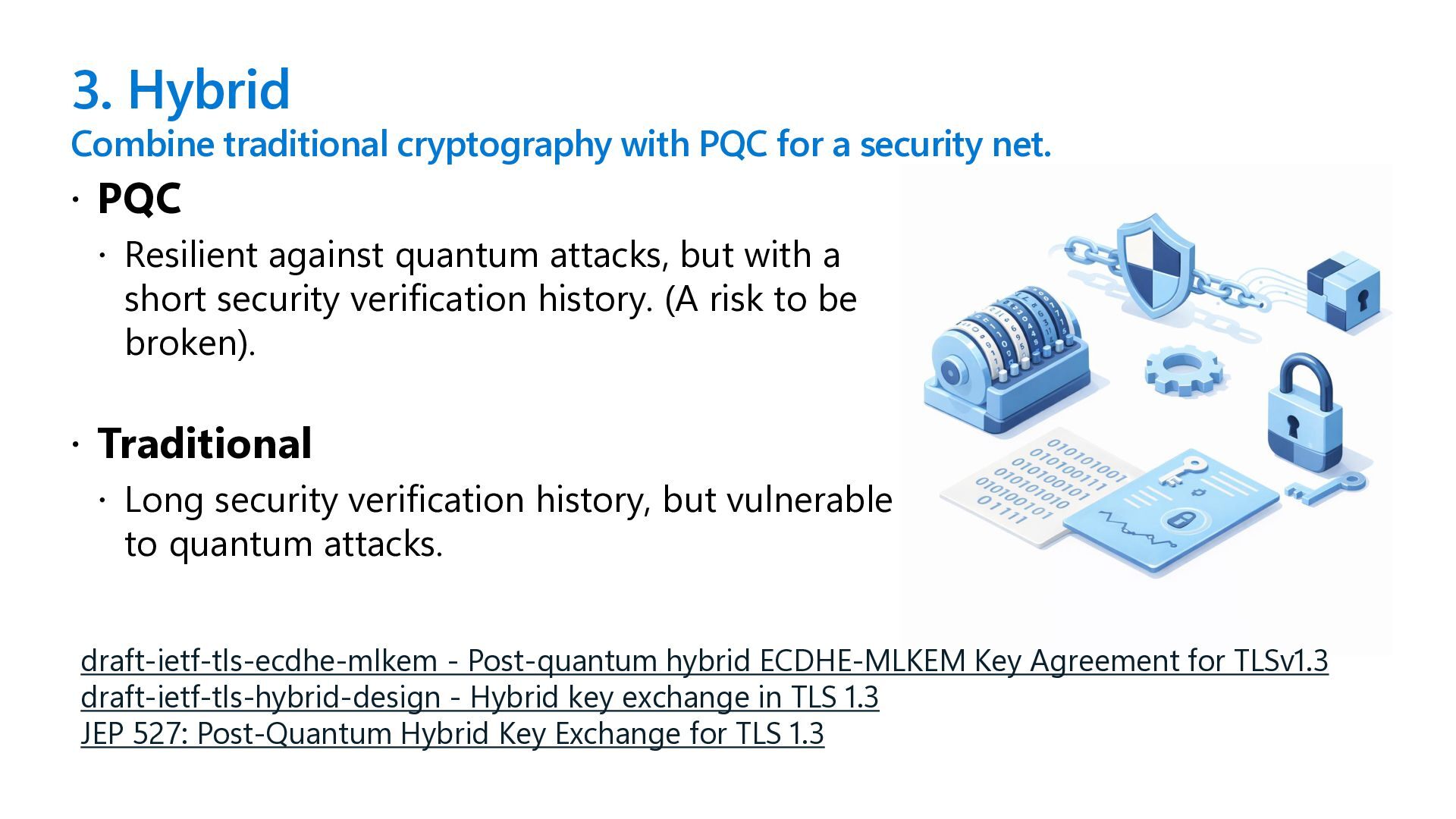
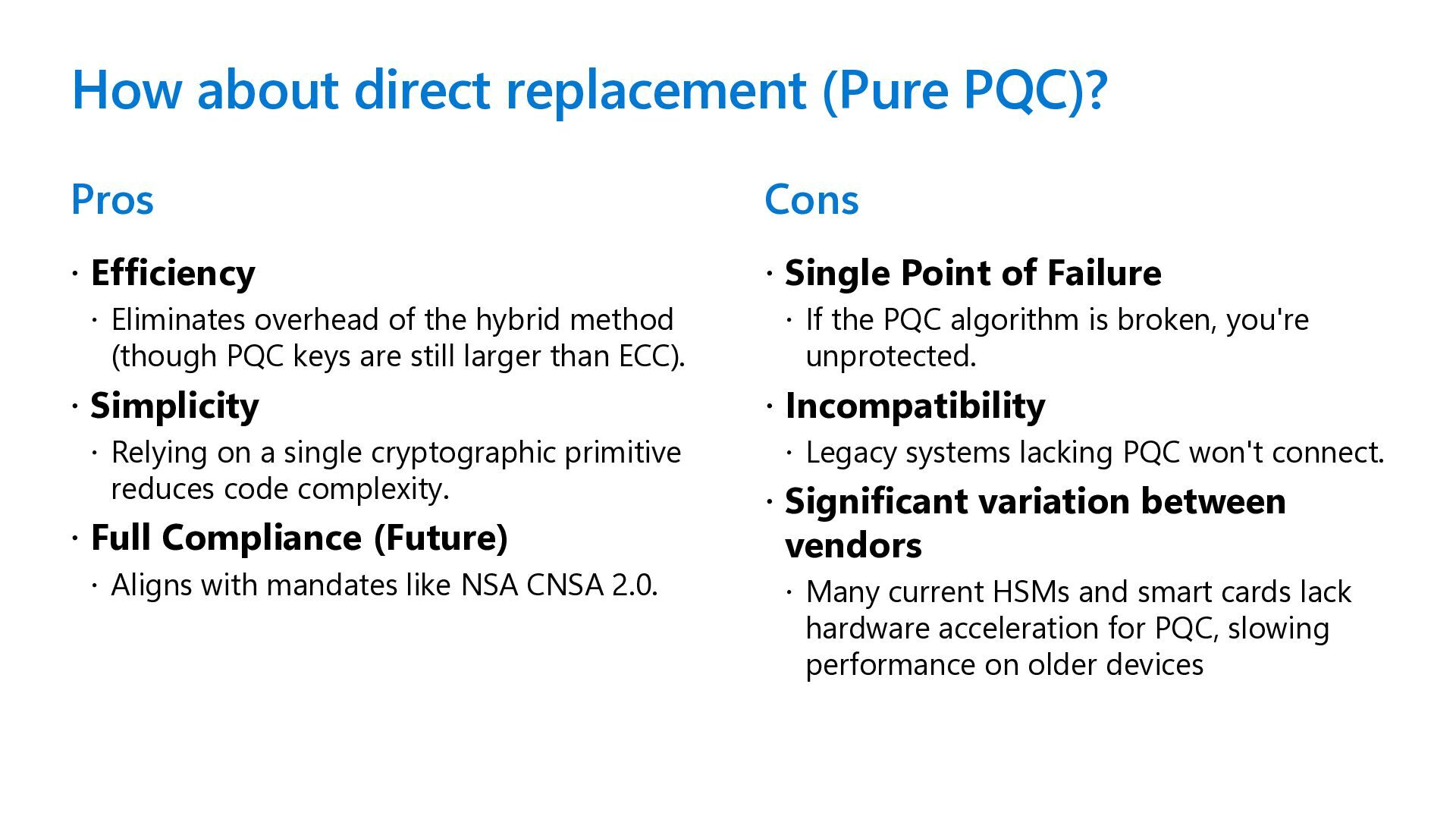
broken next year, you can switch to an alternative PQC candidate immediately. Testing: Allows you to roll out PQC to 1% of users for testing and revert instantly if issues arise. Please note that... Engineering Effort: Requires refactoring legacy codebases where crypto is hardcoded (e.g., hardcoded RSA-2048 keys).
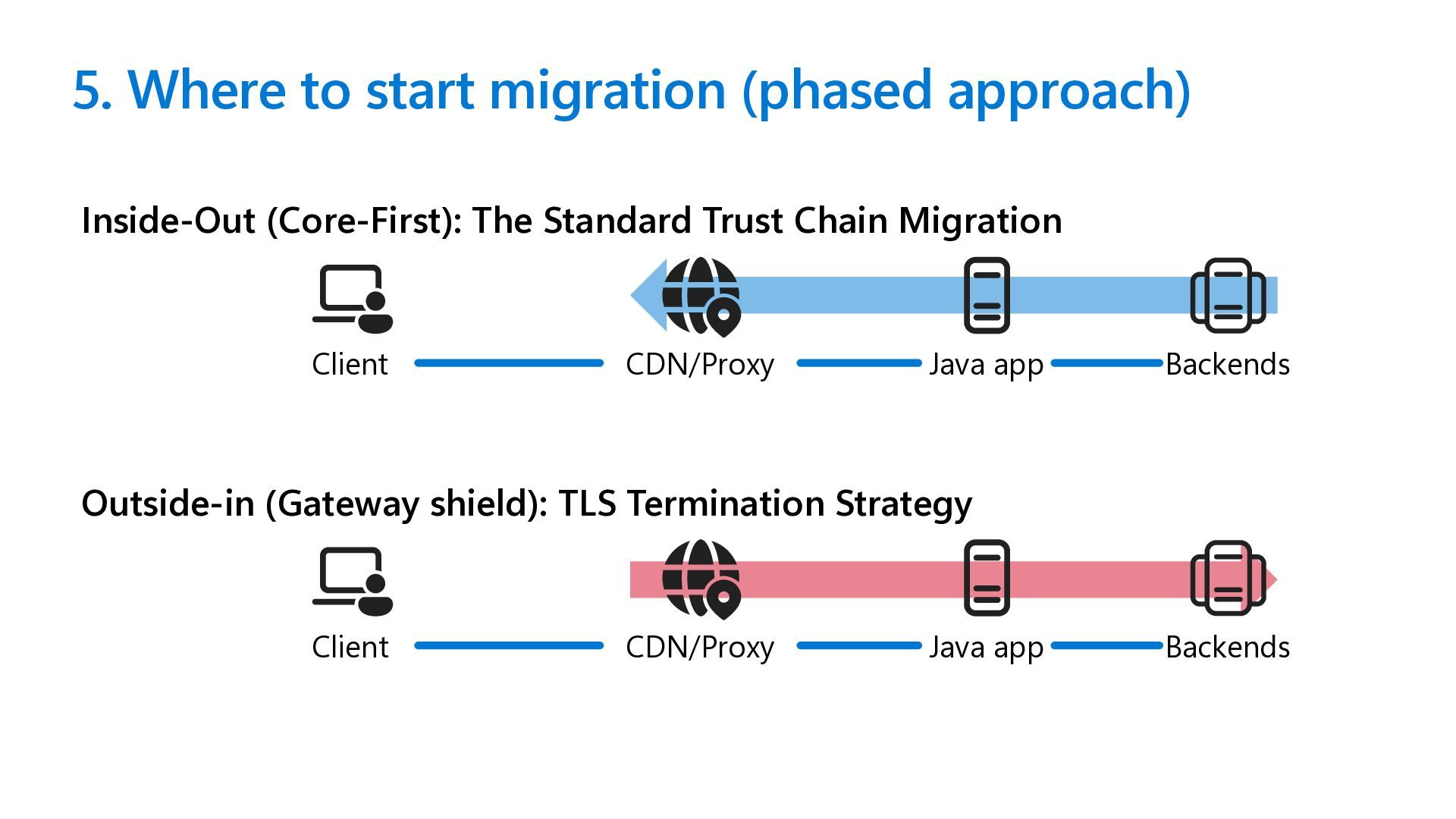
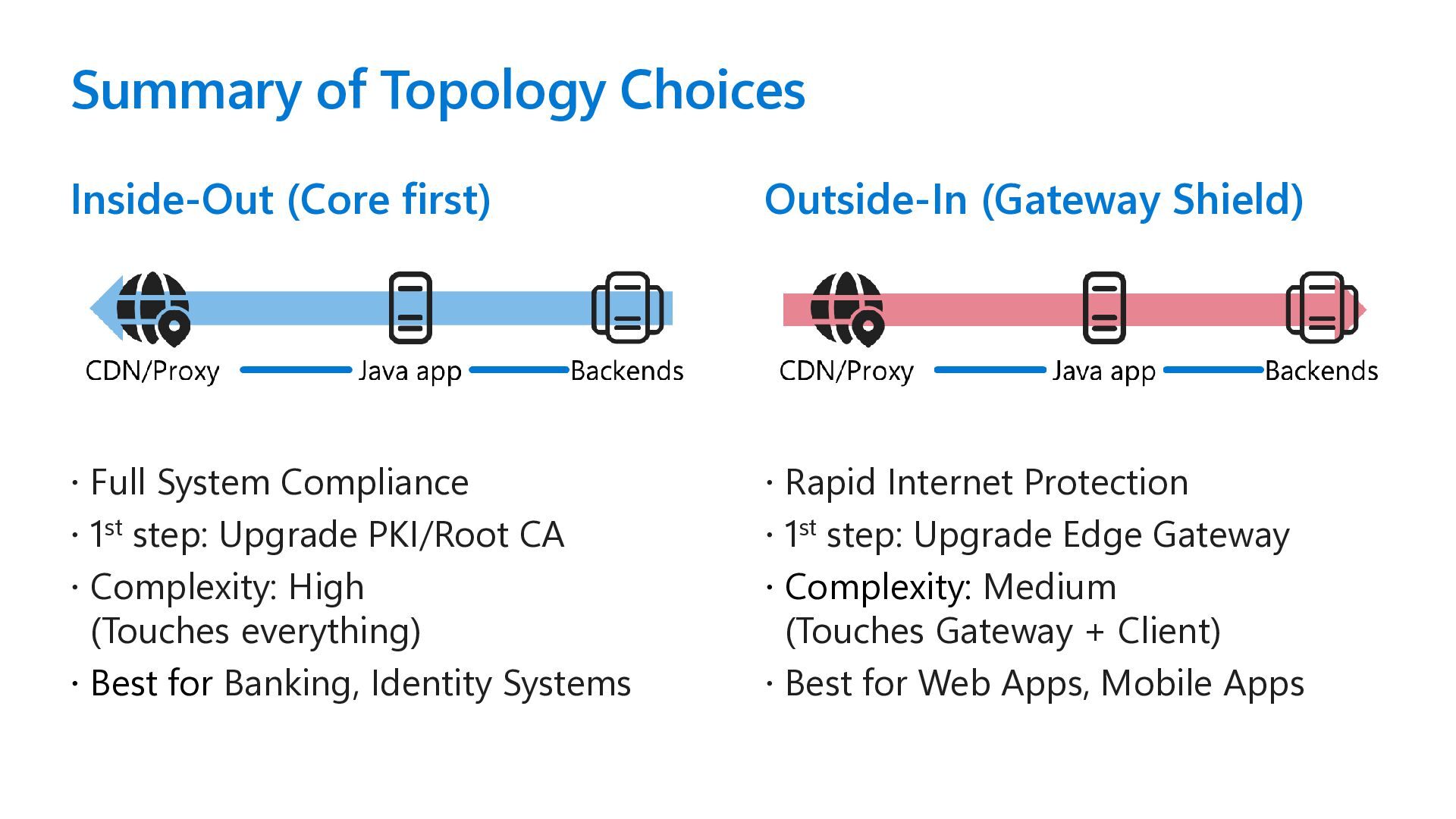
Compliance 1st step: Upgrade PKI/Root CA Complexity: High (Touches everything) Best for Banking, Identity Systems Outside-In (Gateway Shield) Rapid Internet Protection 1st step: Upgrade Edge Gateway Complexity: Medium (Touches Gateway + Client) Best for Web Apps, Mobile Apps
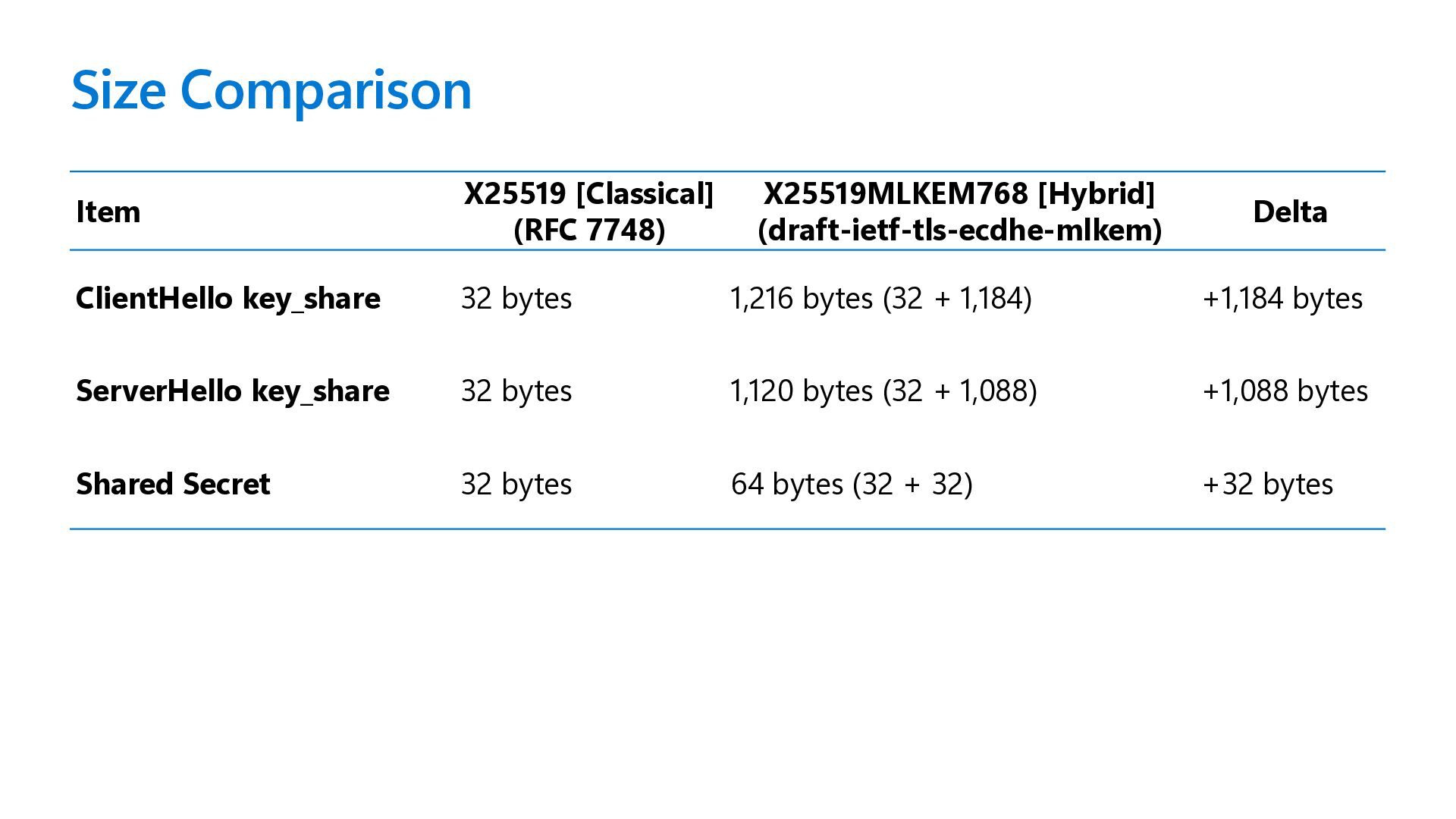
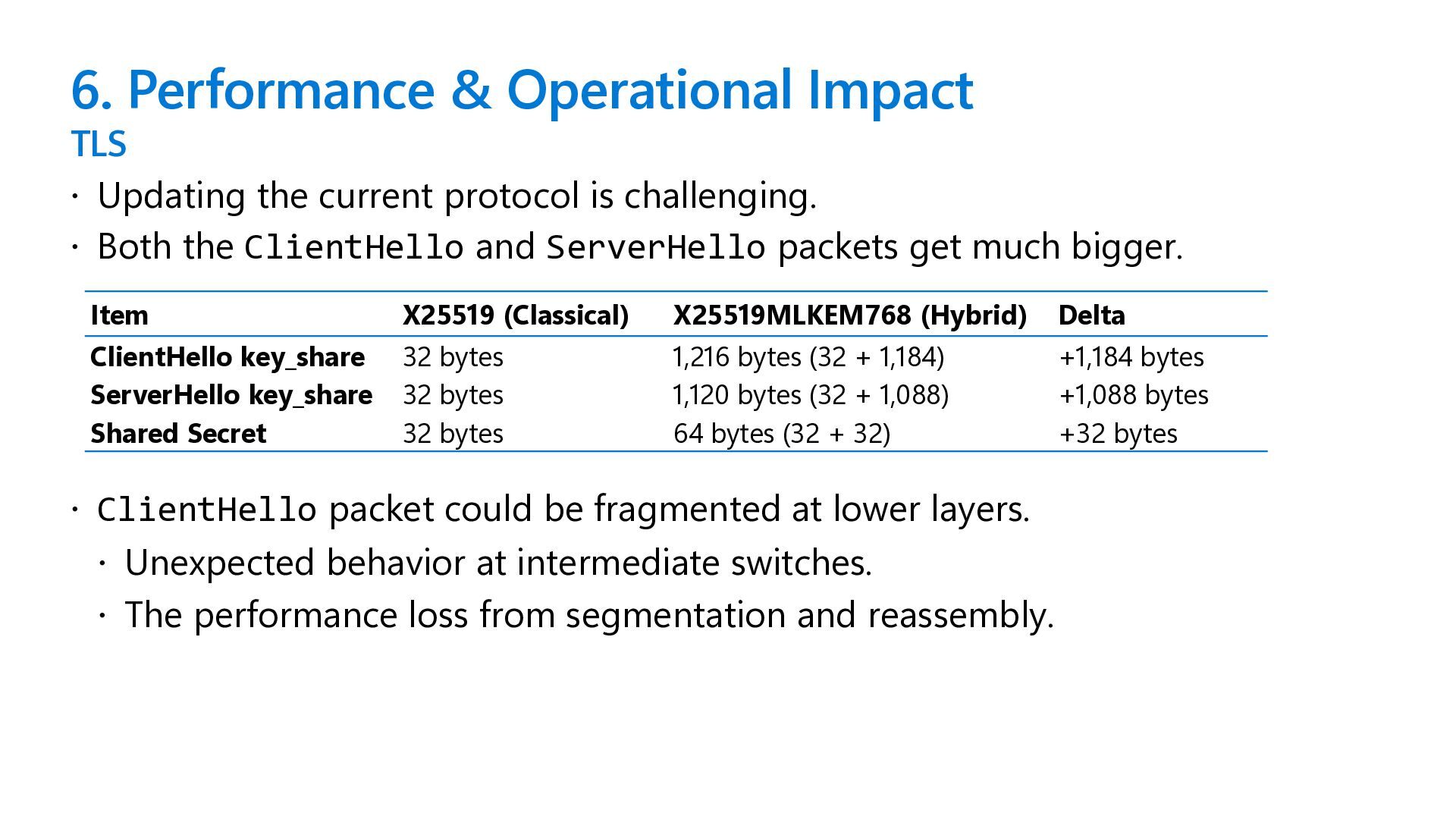
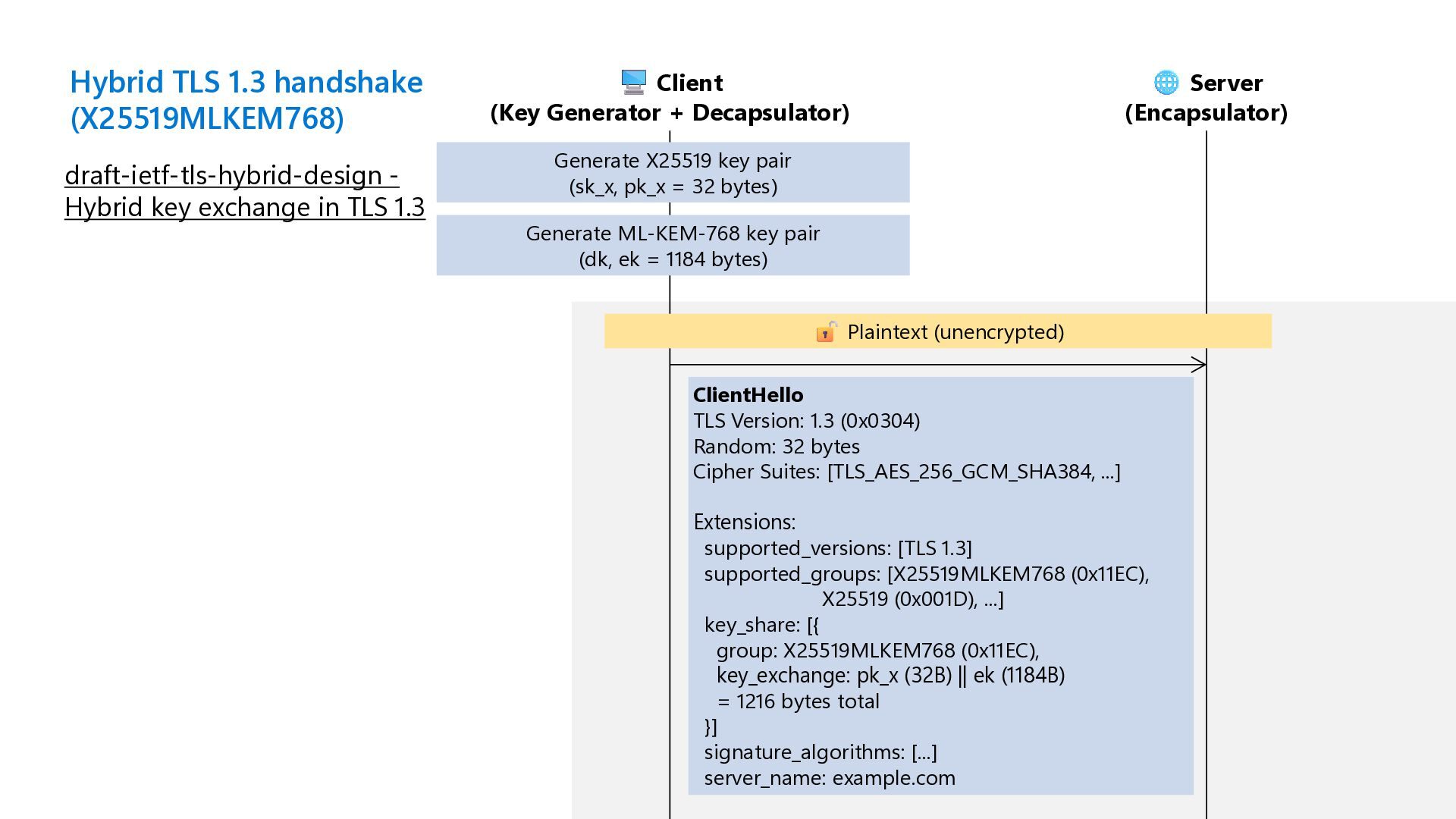
protocol is challenging. Both the ClientHello and ServerHello packets get much bigger. ClientHello packet could be fragmented at lower layers. Unexpected behavior at intermediate switches. The performance loss from segmentation and reassembly.
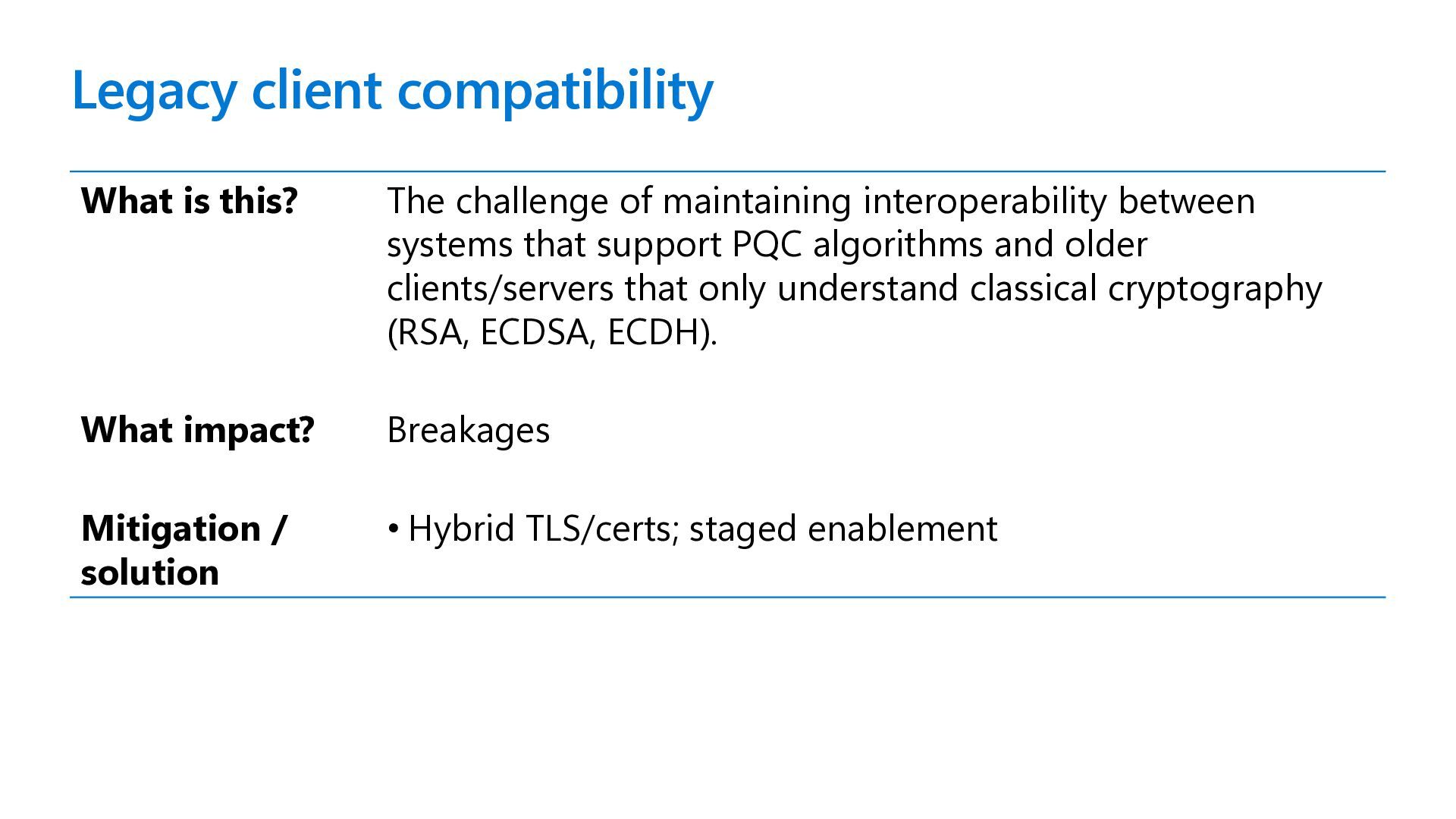
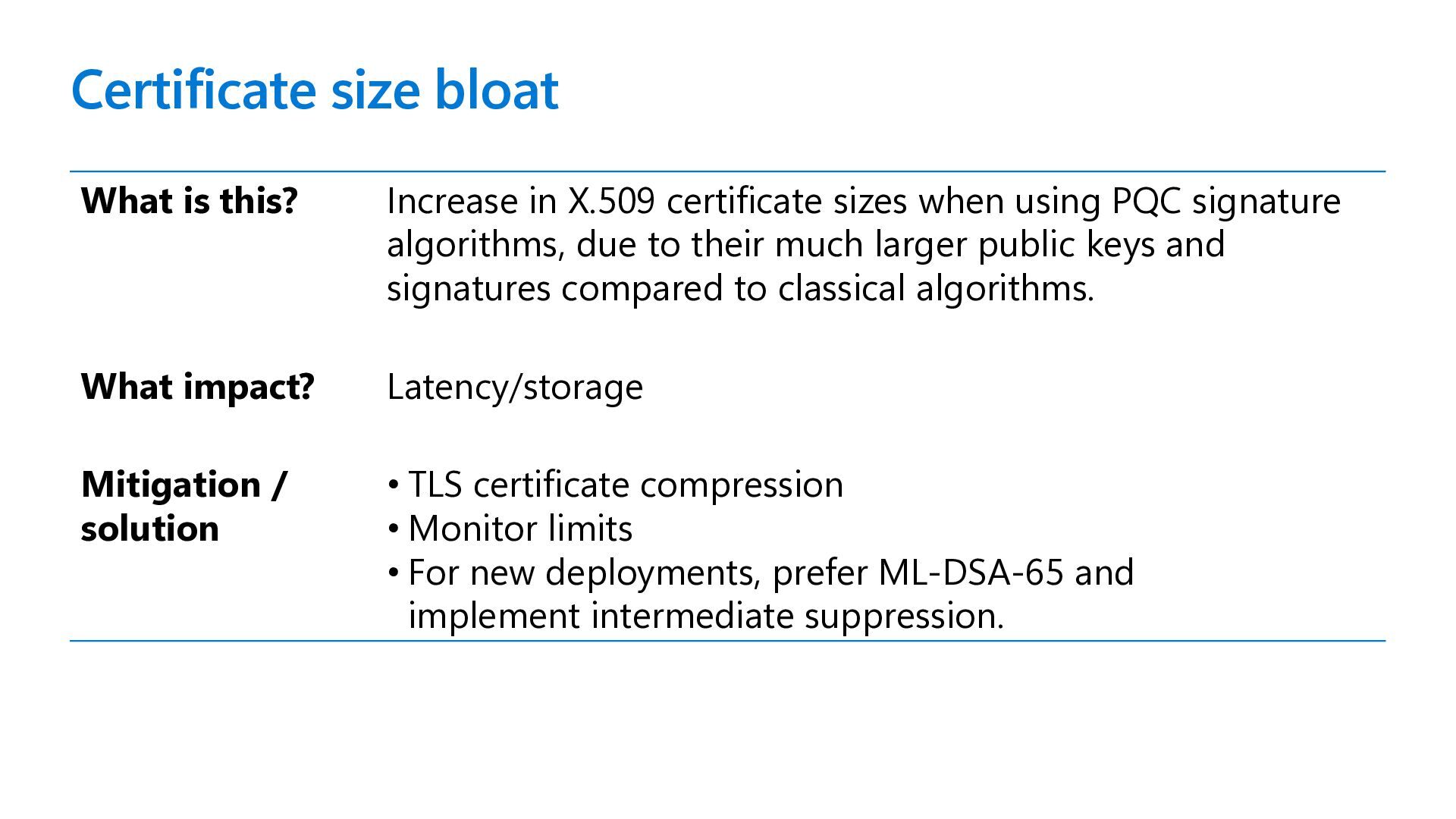
Solution Protocol Ossification Middleboxes drop oversized PQC handshakes. Canary rollout + GREASE (RFC 8701) Chrome shipped this to billions — it works. Legacy Client Compatibility Old clients only understand RSA/ECDSA. Hybrid TLS: PQC for modern, classical for legacy to support full backward compatibility. Certificate Size Bloat ML-DSA-87 public key: ~2.5 KB. ML-DSA-65: ~1.9 KB. Prefer ML-DSA-65 (Security Level 3). Enable TLS certificate compression (RFC 8879). RFC 8701: Applying Generate Random Extensions And Sustain Extensibility (GREASE) to TLS Extensibility
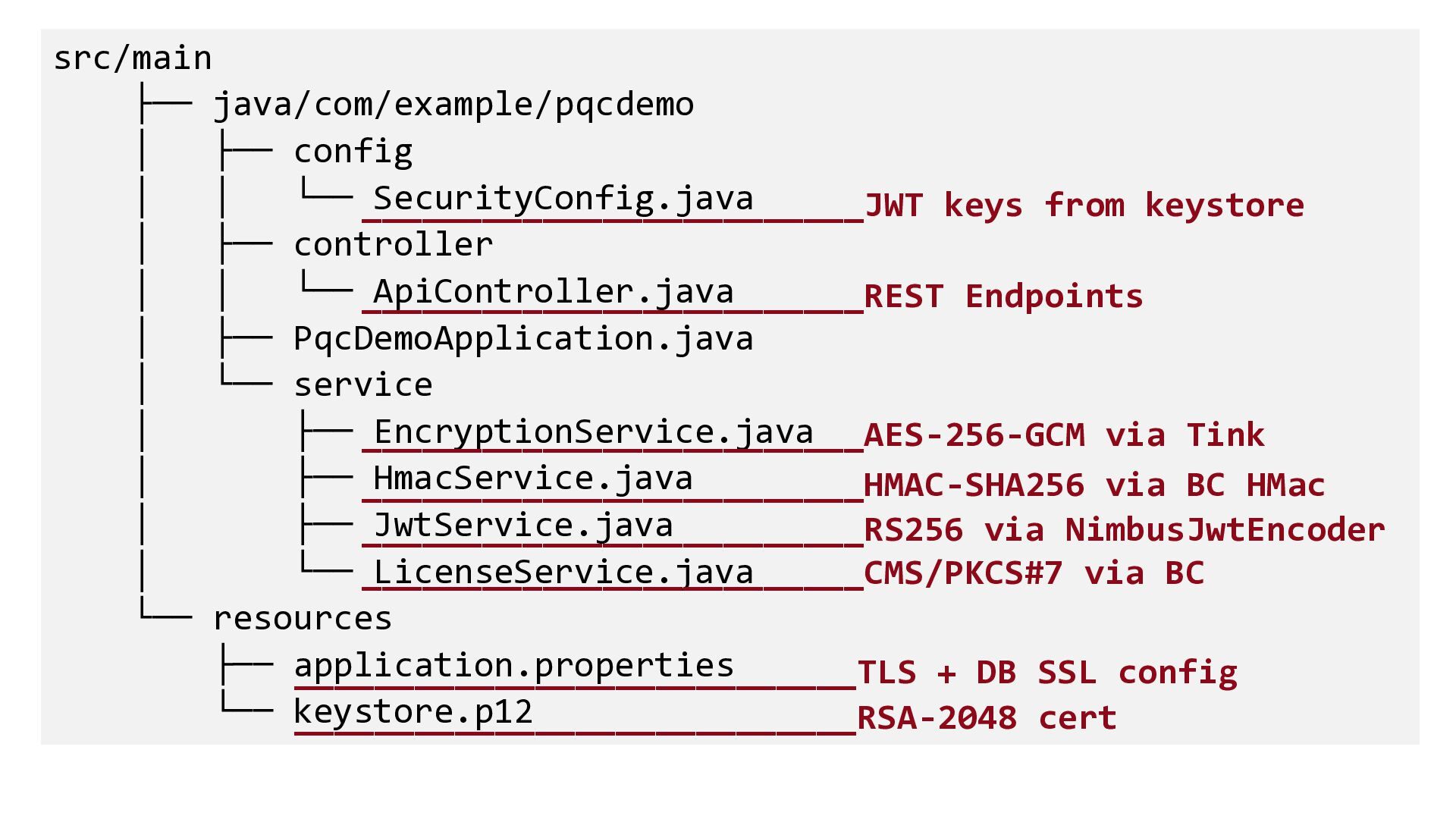
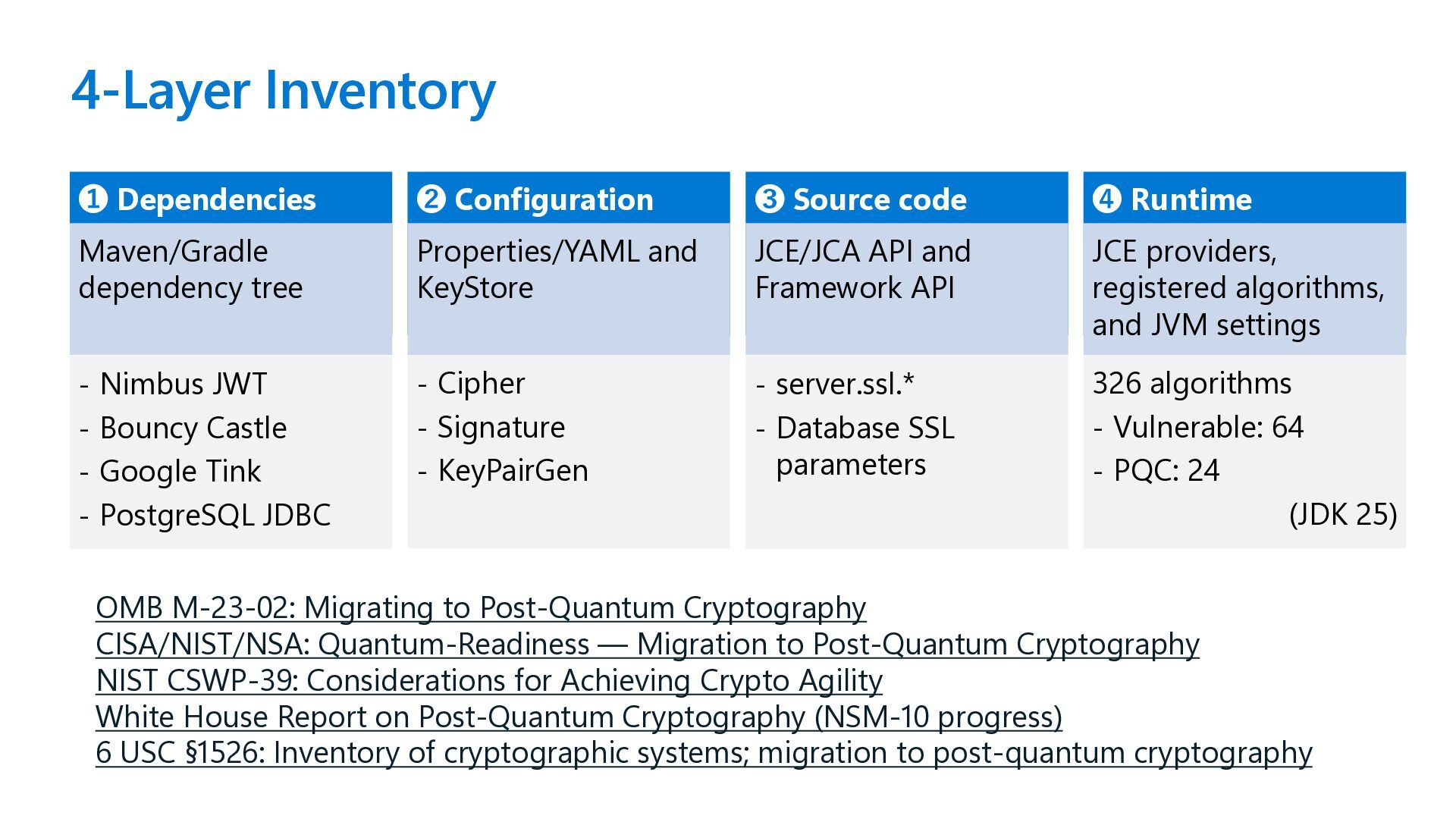
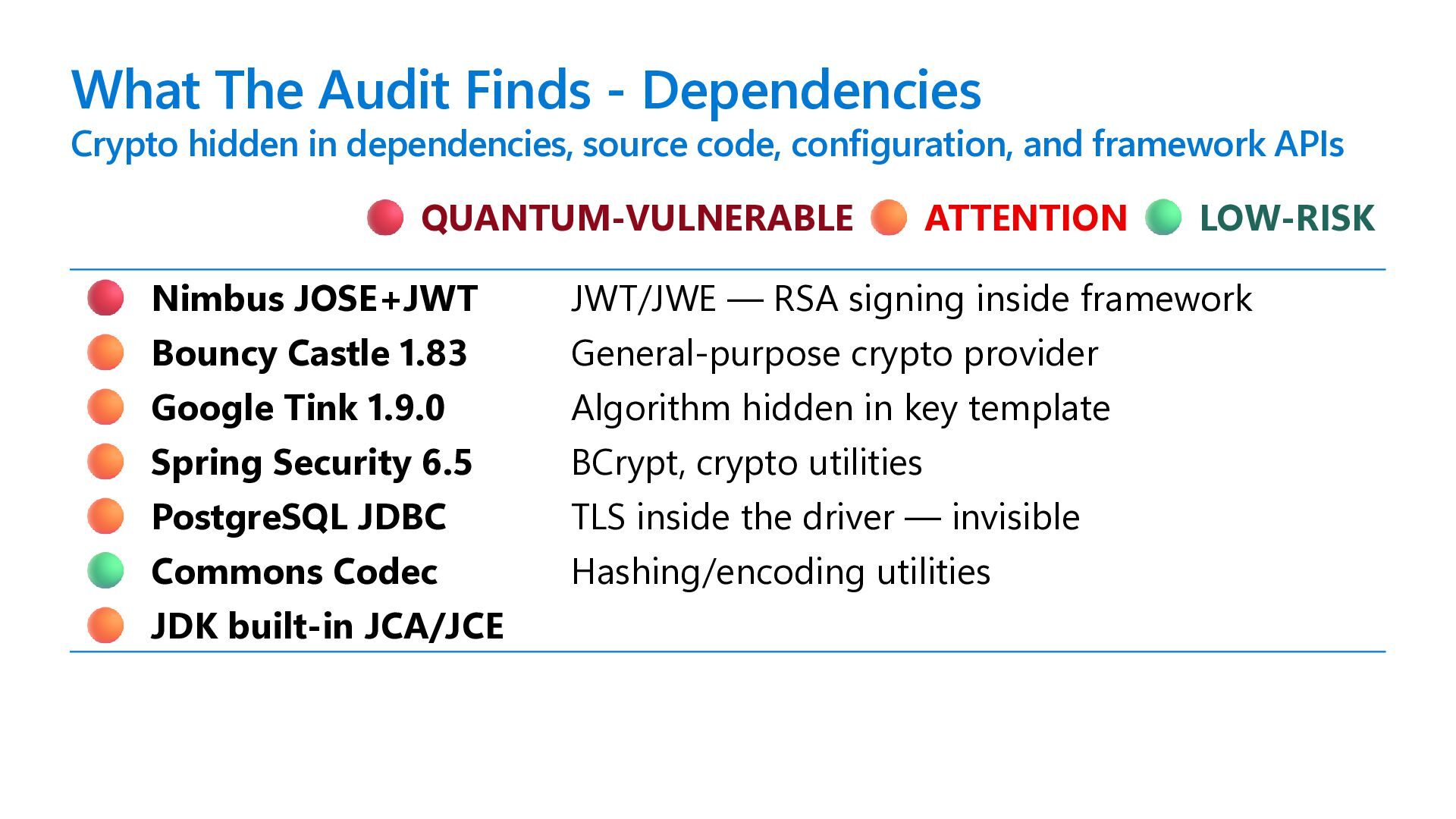
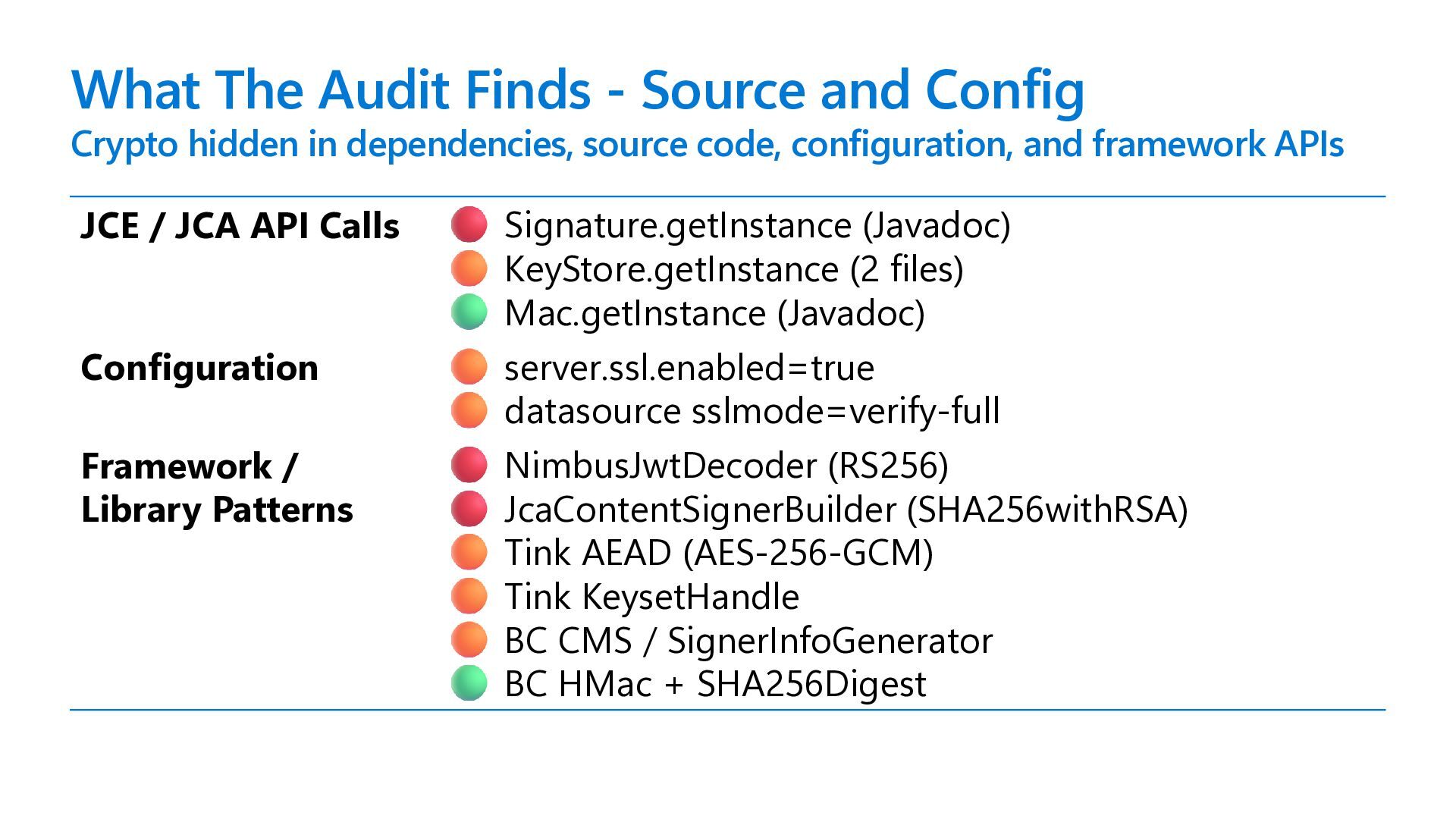
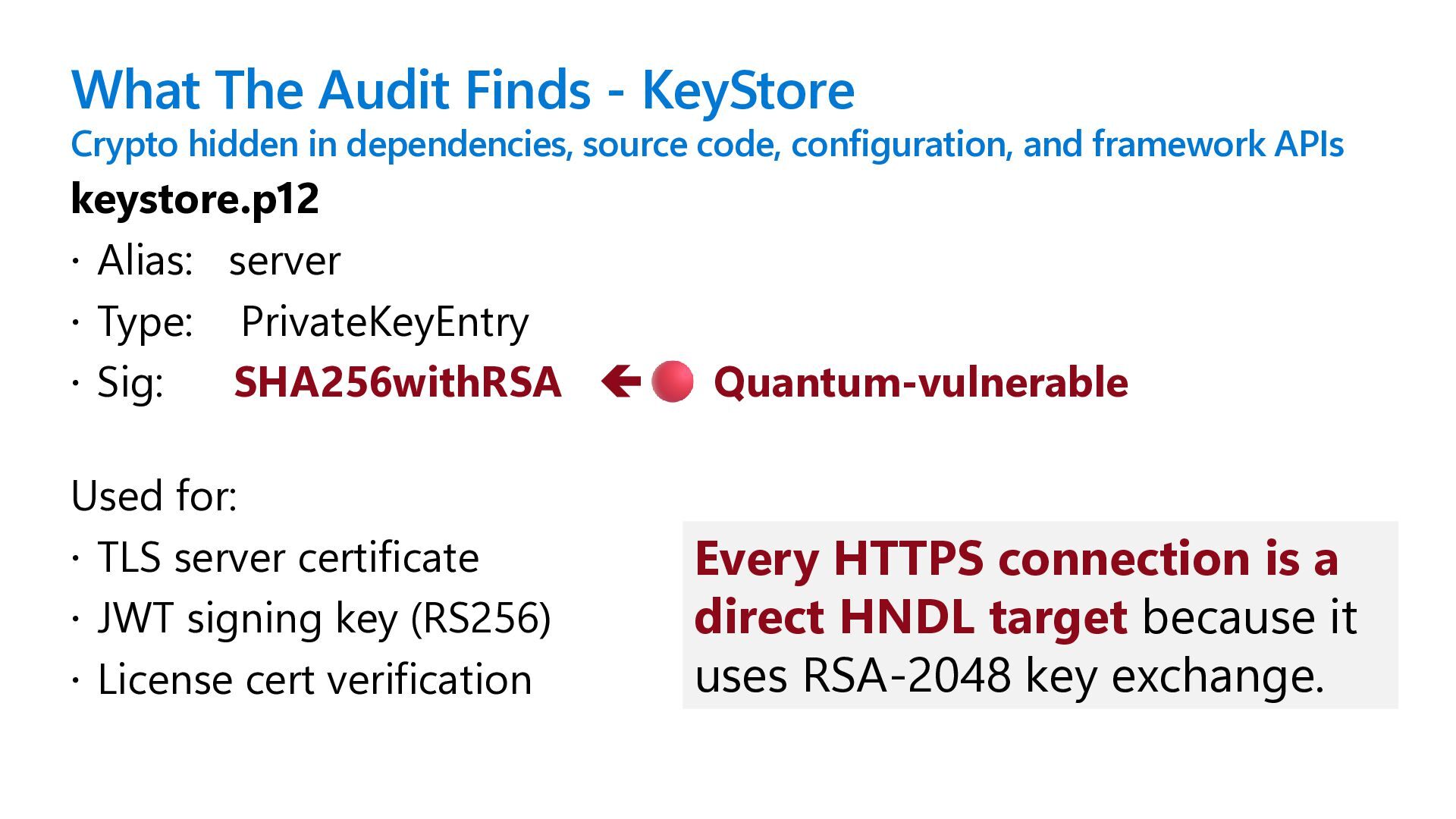
edge. When Java 27 ships Upgrade your application stack. Developers Architects Security leads Managers Run "keytool –list". Review codes. (4-Layer Inventory) Set up a PQC PoC environment with Bouncy Castle. Brief your CISO on the HNDL timeline. Build a roadmap and get budget approval by month three.


 logico_jp
 ymrl
ymrl
 pei0804
 kaminashi
 furuton
 bcantrill
 torumakabe
 nealle
 makocchi
 codmoninc
 mananyuki
.png) codatum
codatum
 470715
 jlugia
 3n
3n
 cassininazir
 michaelherold
 bkeepers
 hatefulcrawdad
 samlambert
 soysaucechin
 inesmontani
 reverentgeek
 lara
lara
 gurzu
gurzu



![Size Comparison Item X25519 [Classical] (RFC 7748) X25519MLKEM768 [Hybrid] (draft-ietf-tls-ecdhe-mlkem)](https://files.speakerdeck.com/presentations/95044ebc19eb4cf0900ab28967650745/slide_47.jpg)