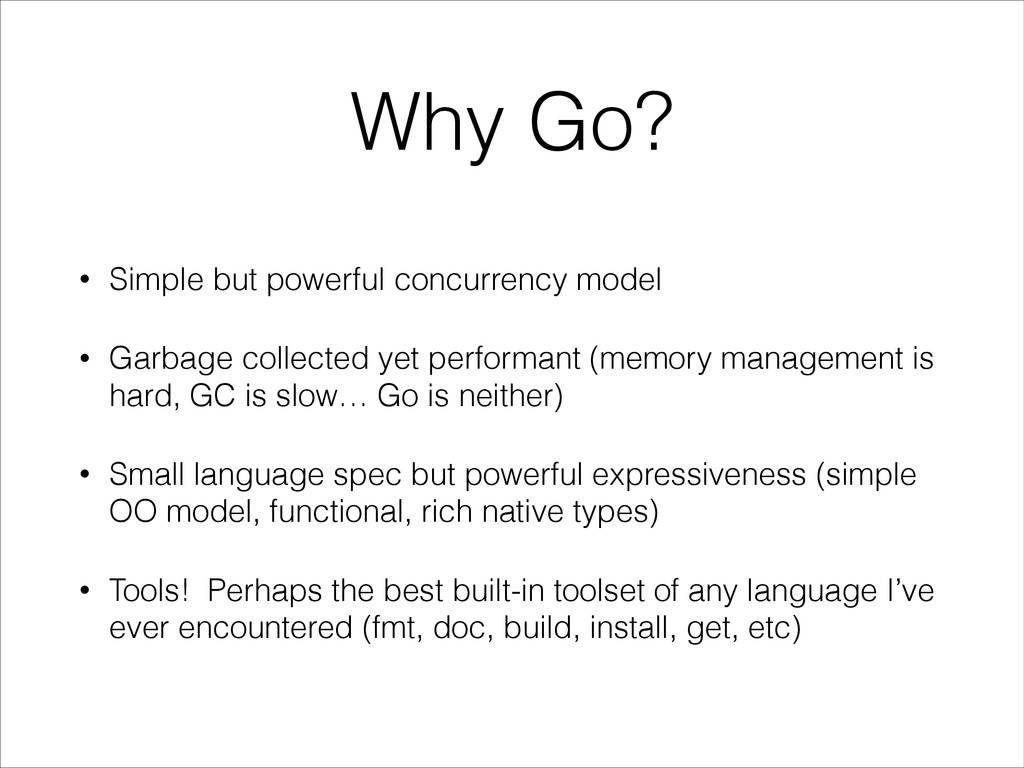
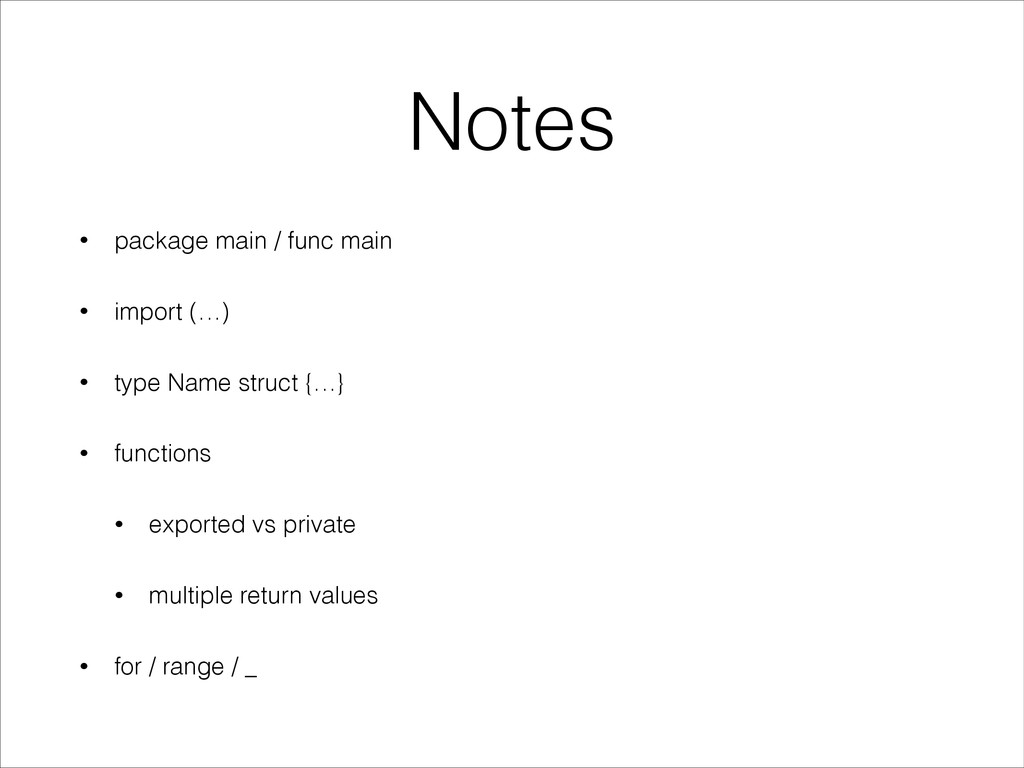
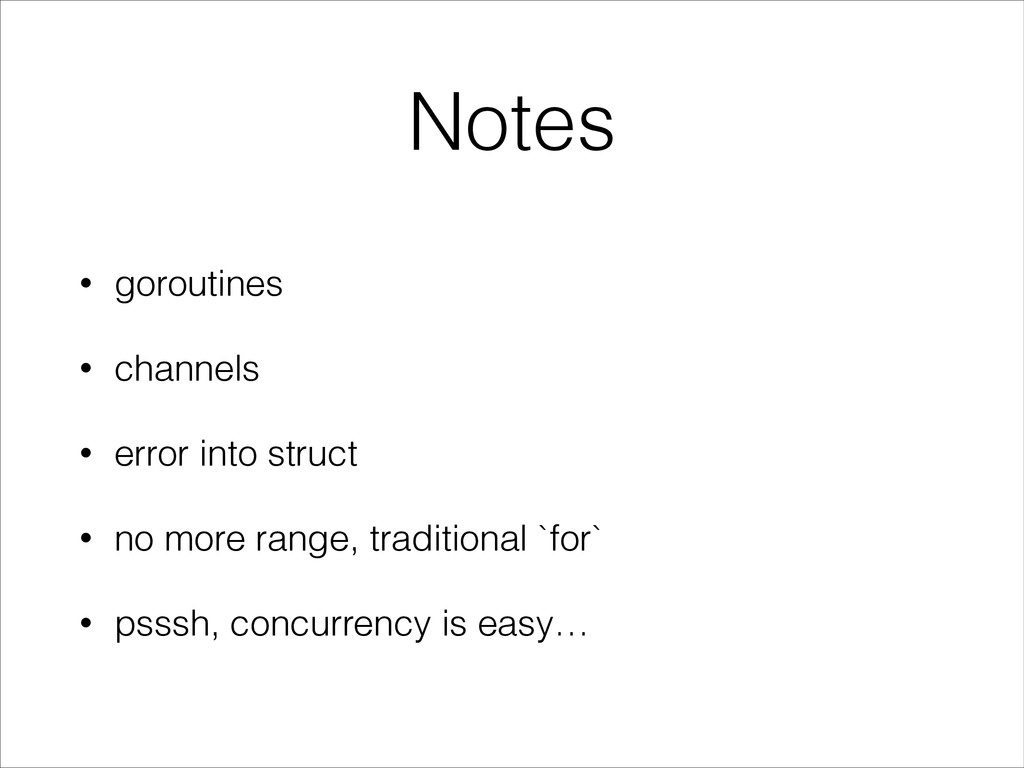
collected yet performant (memory management is hard, GC is slow… Go is neither) • Small language spec but powerful expressiveness (simple OO model, functional, rich native types) • Tools! Perhaps the best built-in toolset of any language I’ve ever encountered (fmt, doc, build, install, get, etc)
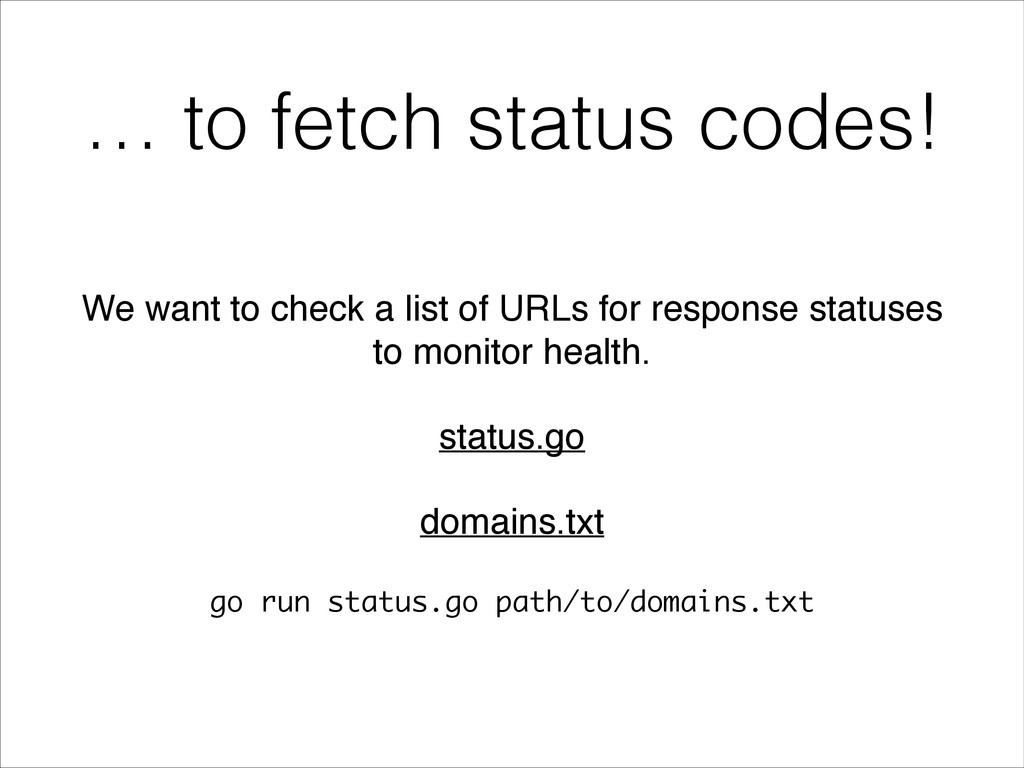
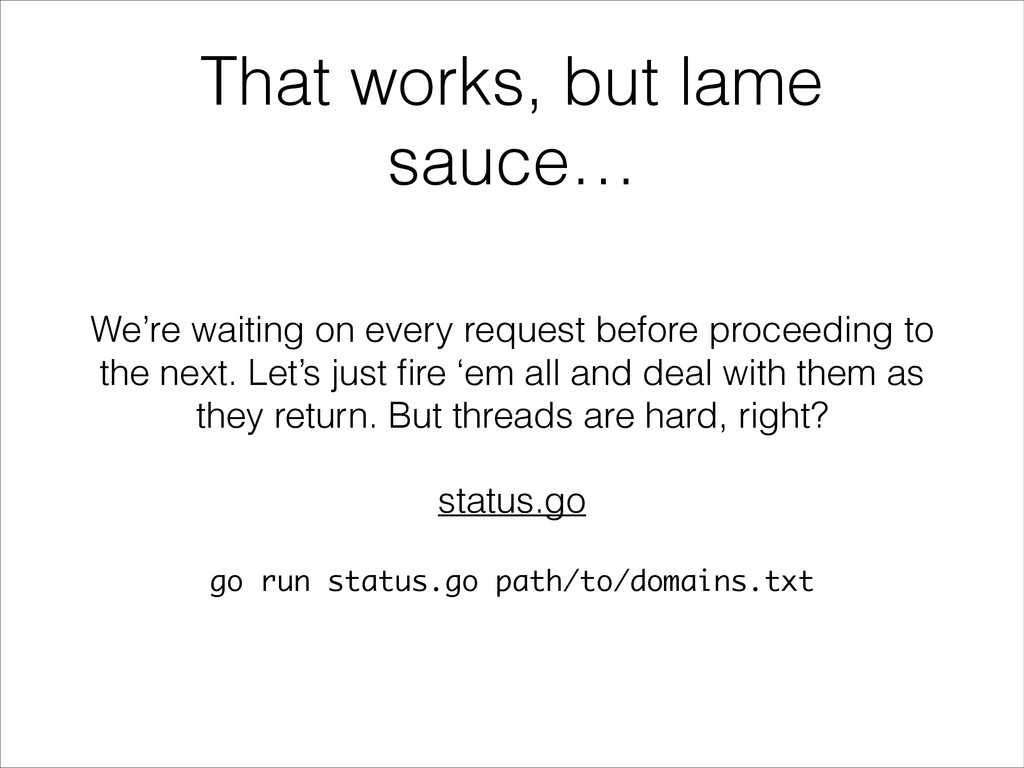
before proceeding to the next. Let’s just fire ‘em all and deal with them as they return. But threads are hard, right? status.go go run status.go path/to/domains.txt
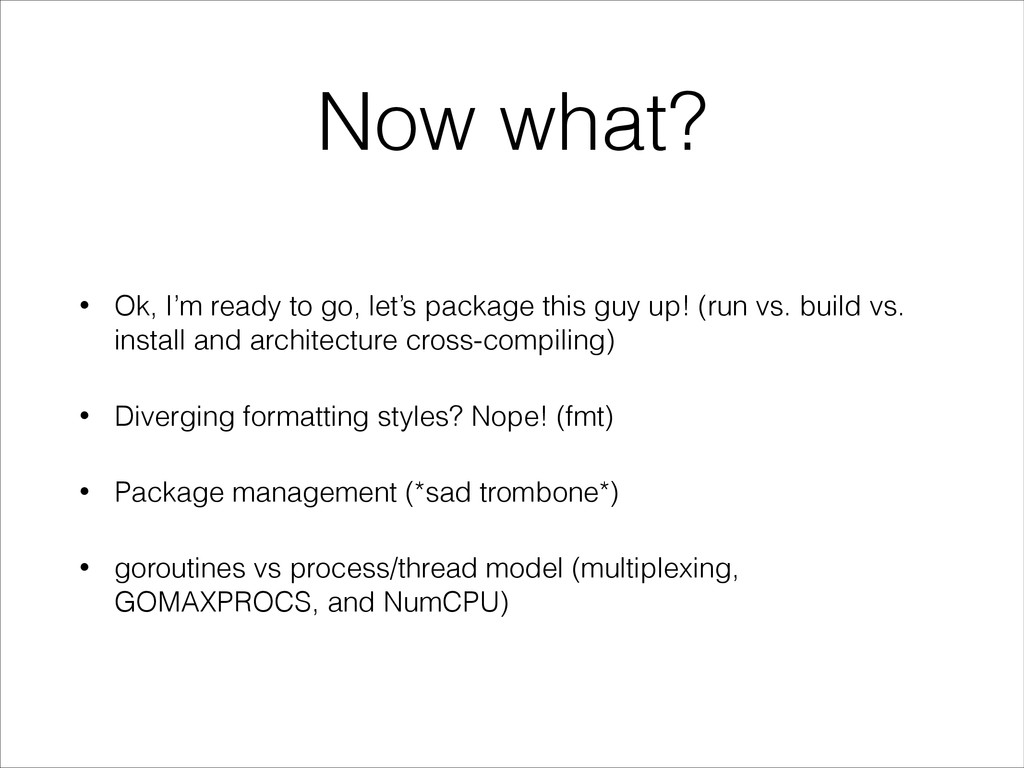
this guy up! (run vs. build vs. install and architecture cross-compiling) • Diverging formatting styles? Nope! (fmt) • Package management (*sad trombone*) • goroutines vs process/thread model (multiplexing, GOMAXPROCS, and NumCPU)
Gentle intro: http://golang.org/doc/code.html • The real docs: http://golang.org/doc/effective_go.html • The spec: http://golang.org/ref/spec • Ongoing blog content: http://blog.golang.org/ • The example: https://gist.github.com/Lytol/9110081


 yukiny
 kmars0605
 guaca
 seike460
 a_matsuda
 o0h
 shihochan
 nao_randd
 minodriven
 gam0022
 siroemk
 y0hgi
 techseoconnect
 andyhume
 3n
 eileencodes
 jonoalderson
 schroneko
 retrage
 morganepeng
 aleyda
 kneath
 frankvandijk
 holman