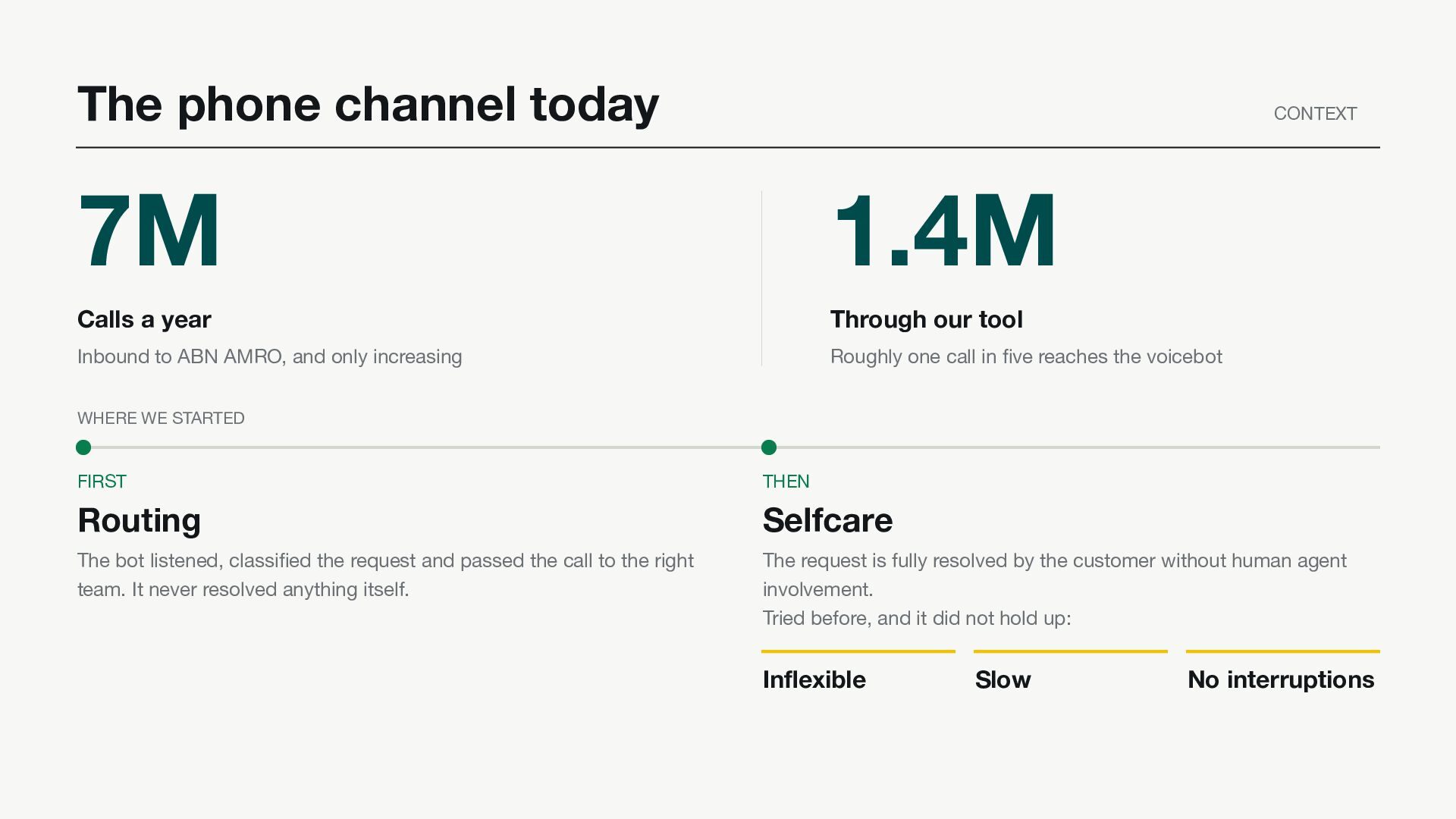
Through our tool Inbound to ABN AMRO, and only increasing Roughly one call in five reaches the voicebot WHERE WE STARTED FIRST THEN Routing Selfcare The bot listened, classified the request and passed the call to the right team. It never resolved anything itself. The request is fully resolved by the customer without human agent involvement. Tried before, and it did not hold up: Inflexible Slow No interruptions
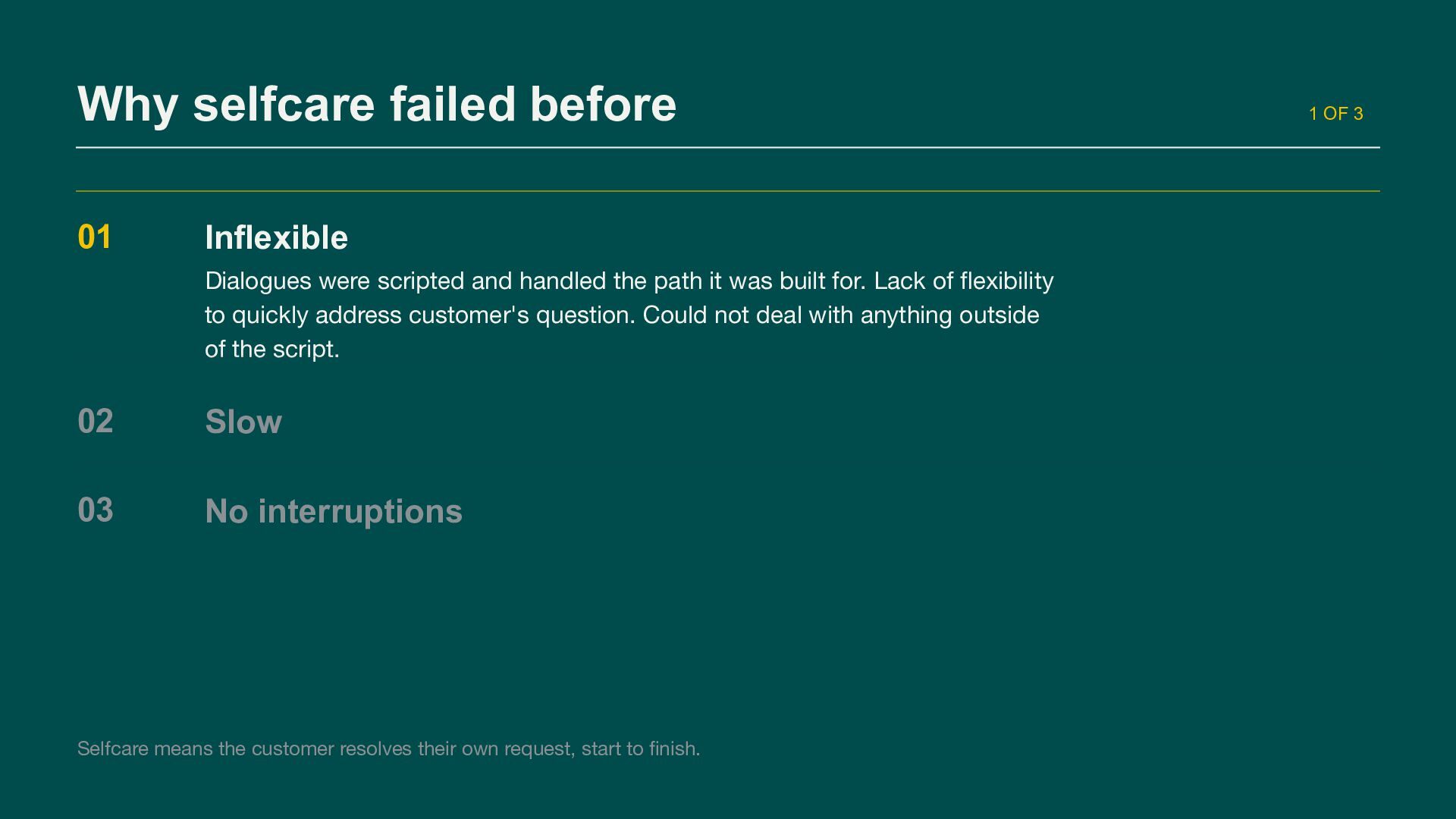
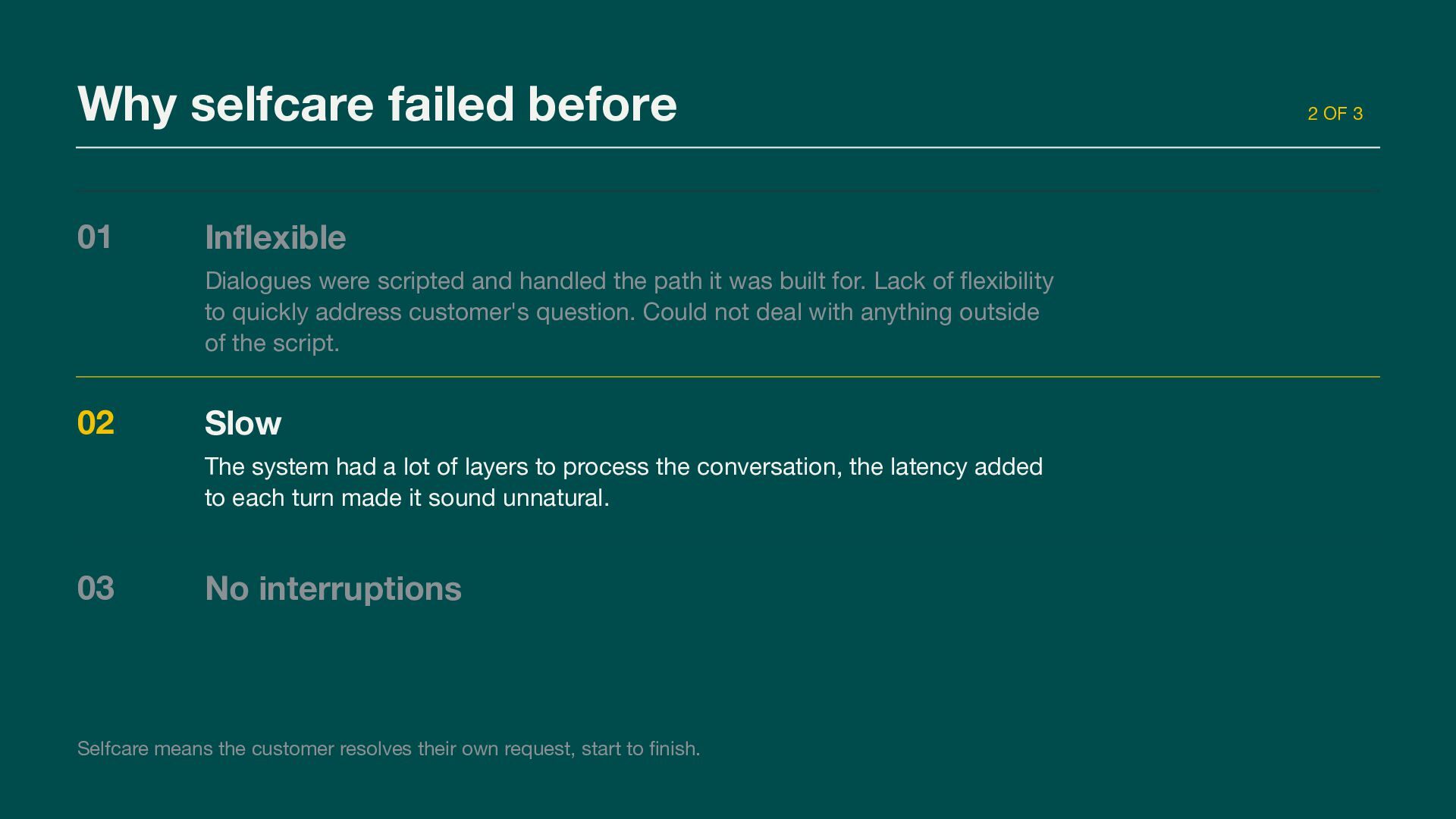
handled the path it was built for. Lack of flexibility to quickly address customer's question. Could not deal with anything outside of the script. 02 Slow 03 No interruptions Selfcare means the customer resolves their own request, start to finish. 1 OF 3
handled the path it was built for. Lack of flexibility to quickly address customer's question. Could not deal with anything outside of the script. 02 Slow The system had a lot of layers to process the conversation, the latency added to each turn made it sound unnatural. 03 No interruptions Selfcare means the customer resolves their own request, start to finish. 2 OF 3
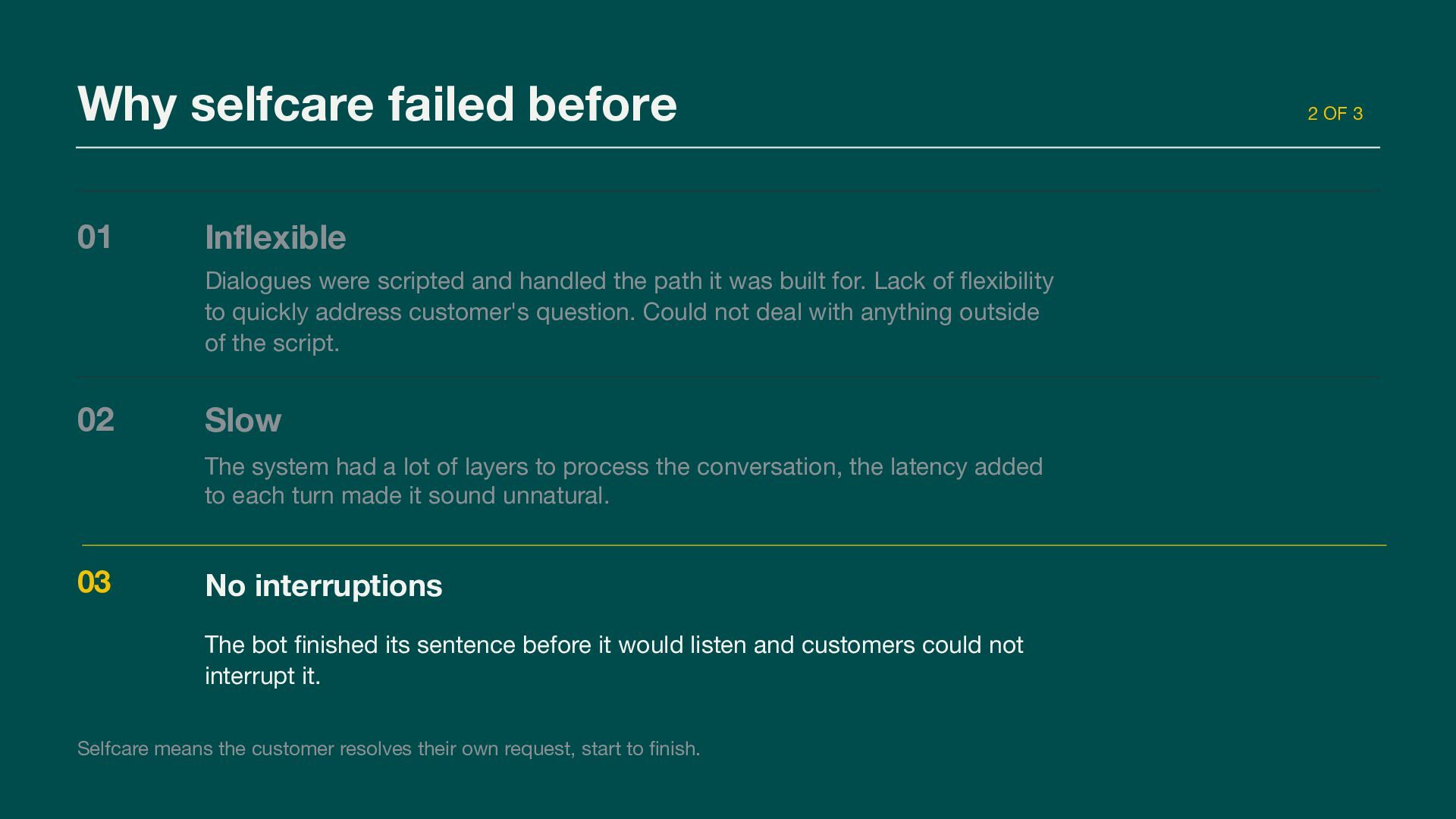
handled the path it was built for. Lack of flexibility to quickly address customer's question. Could not deal with anything outside of the script. 02 Slow The system had a lot of layers to process the conversation, the latency added to each turn made it sound unnatural. 03 No interruptions The bot finished its sentence before it would listen and customers could not interrupt it. Selfcare means the customer resolves their own request, start to finish. 2 OF 3
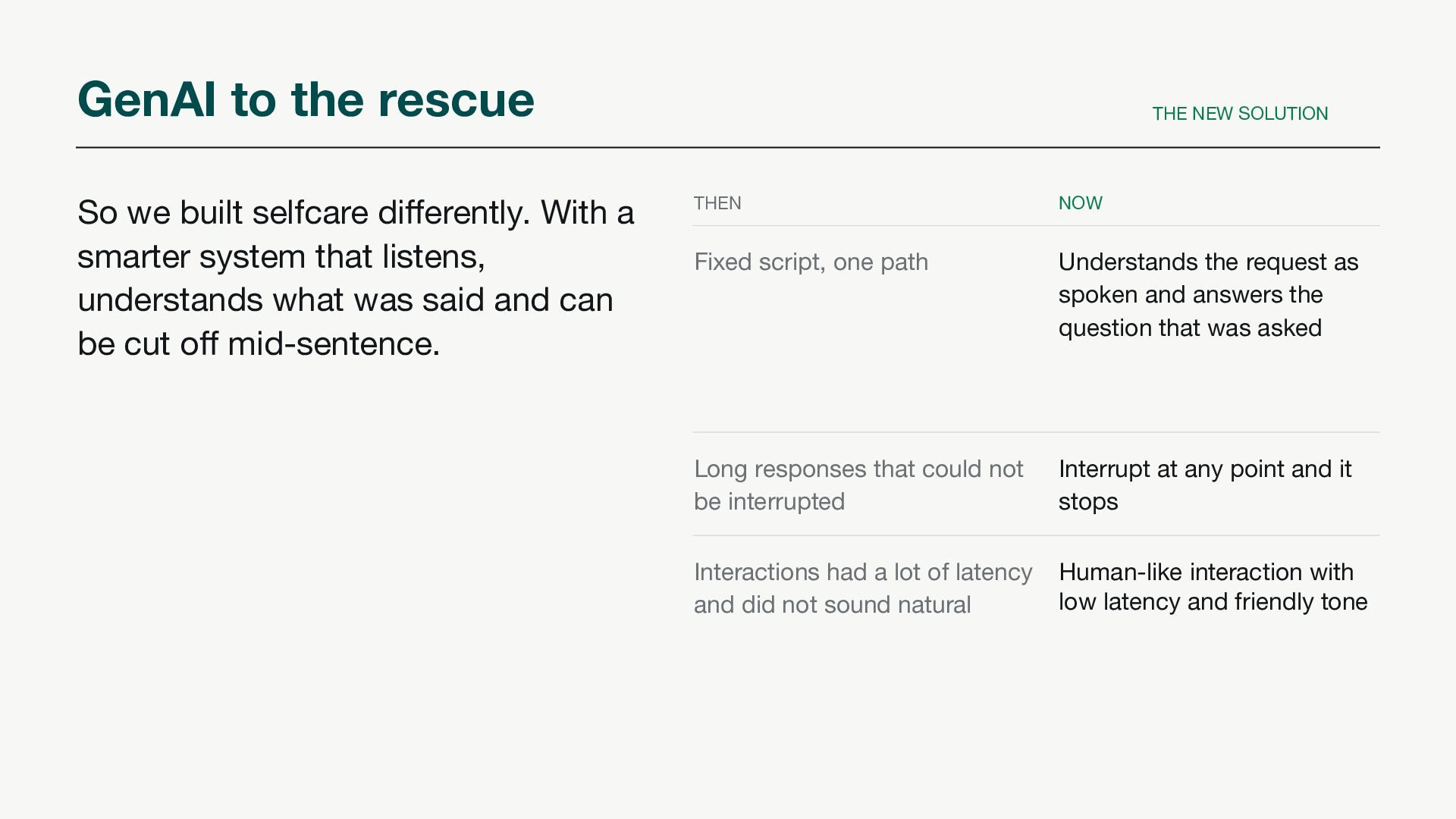
a smarter system that listens, understands what was said and can be cut off mid-sentence. THE NEW SOLUTION THEN NOW Fixed script, one path Understands the request as spoken and answers the question that was asked Long responses that could not be interrupted Interrupt at any point and it stops Interactions had a lot of latency and did not sound natural Human-like interaction with low latency and friendly tone
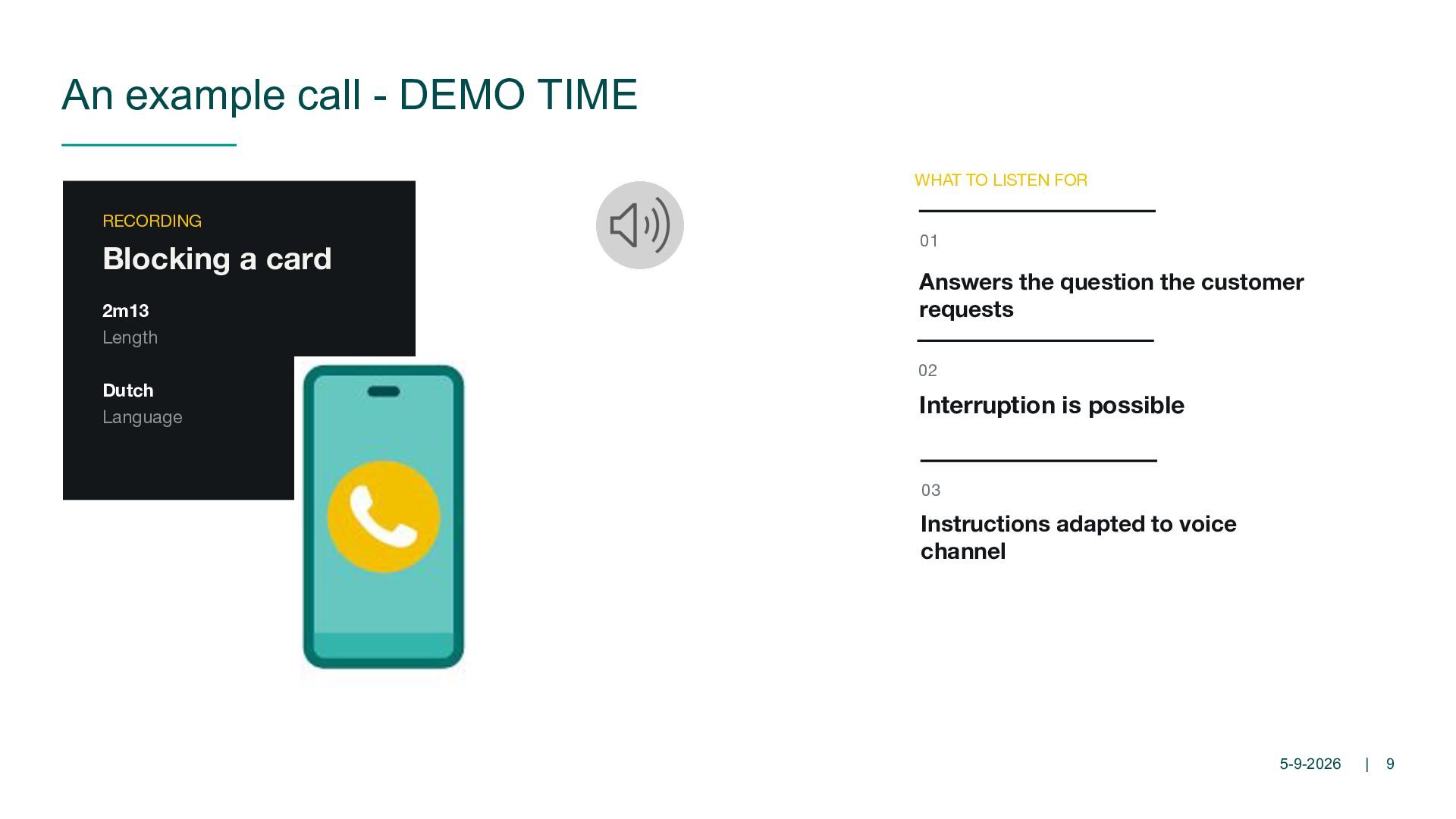
RECORDING Blocking a card 2m13 Length 01 Answers the question the customer requests 02 Dutch Language Interruption is possible 03 Instructions adapted to voice channel 5-9-2026 | 9
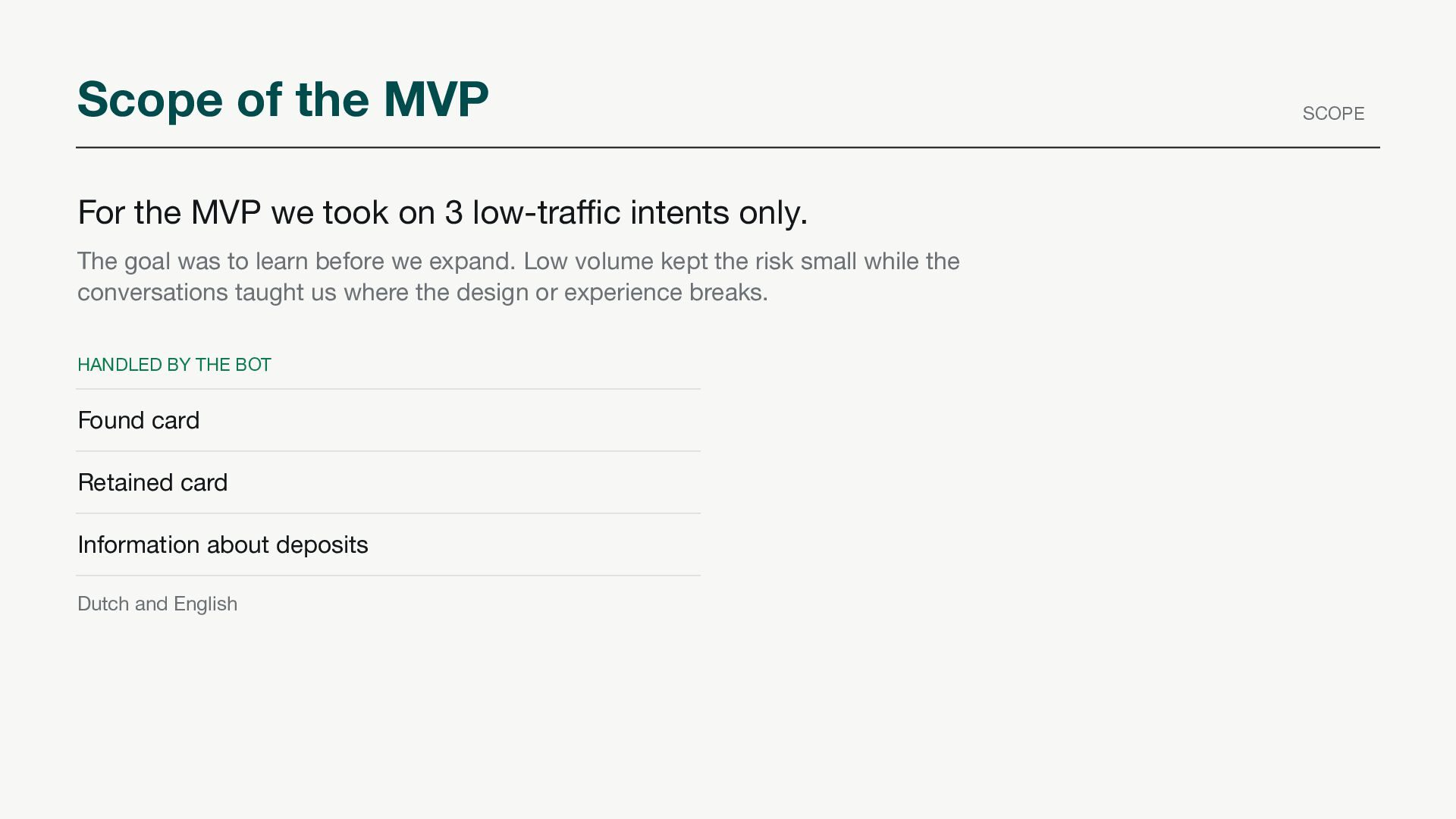
3 low-traffic intents only. The goal was to learn before we expand. Low volume kept the risk small while the conversations taught us where the design or experience breaks. HANDLED BY THE BOT Found card Retained card Information about deposits Dutch and English SCOPE
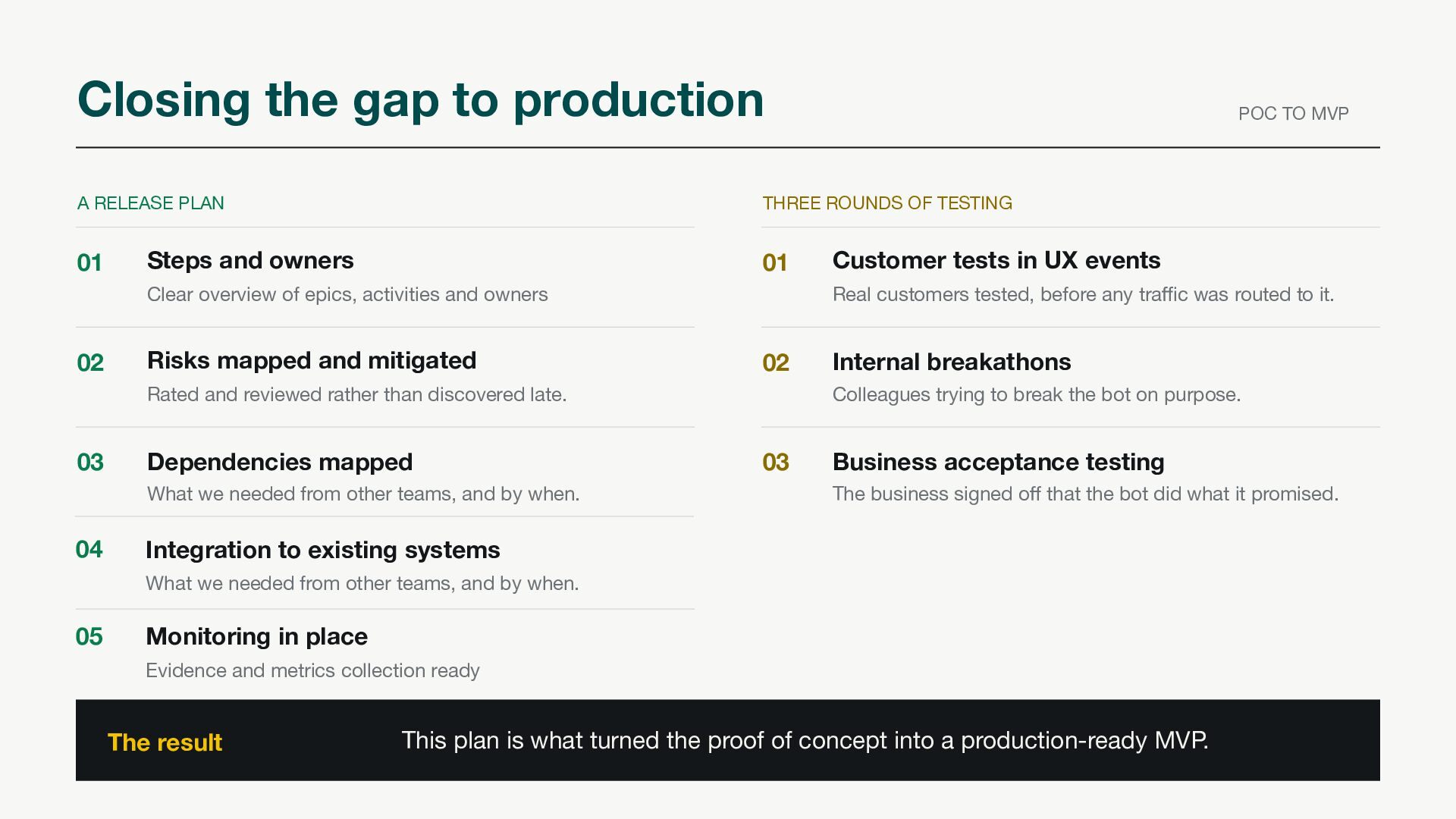
ROUNDS OF TESTING Steps and owners 01 Clear overview of epics, activities and owners 02 Risks mapped and mitigated Dependencies mapped What we needed from other teams, and by when. 04 Customer tests in UX events Real customers tested, before any traffic was routed to it. 02 Rated and reviewed rather than discovered late. 03 POC TO MVP Internal breakathons Colleagues trying to break the bot on purpose. 03 Business acceptance testing The business signed off that the bot did what it promised. Integration to existing systems What we needed from other teams, and by when. 05 Monitoring in place Evidence and metrics collection ready The result This plan is what turned the proof of concept into a production-ready MVP.
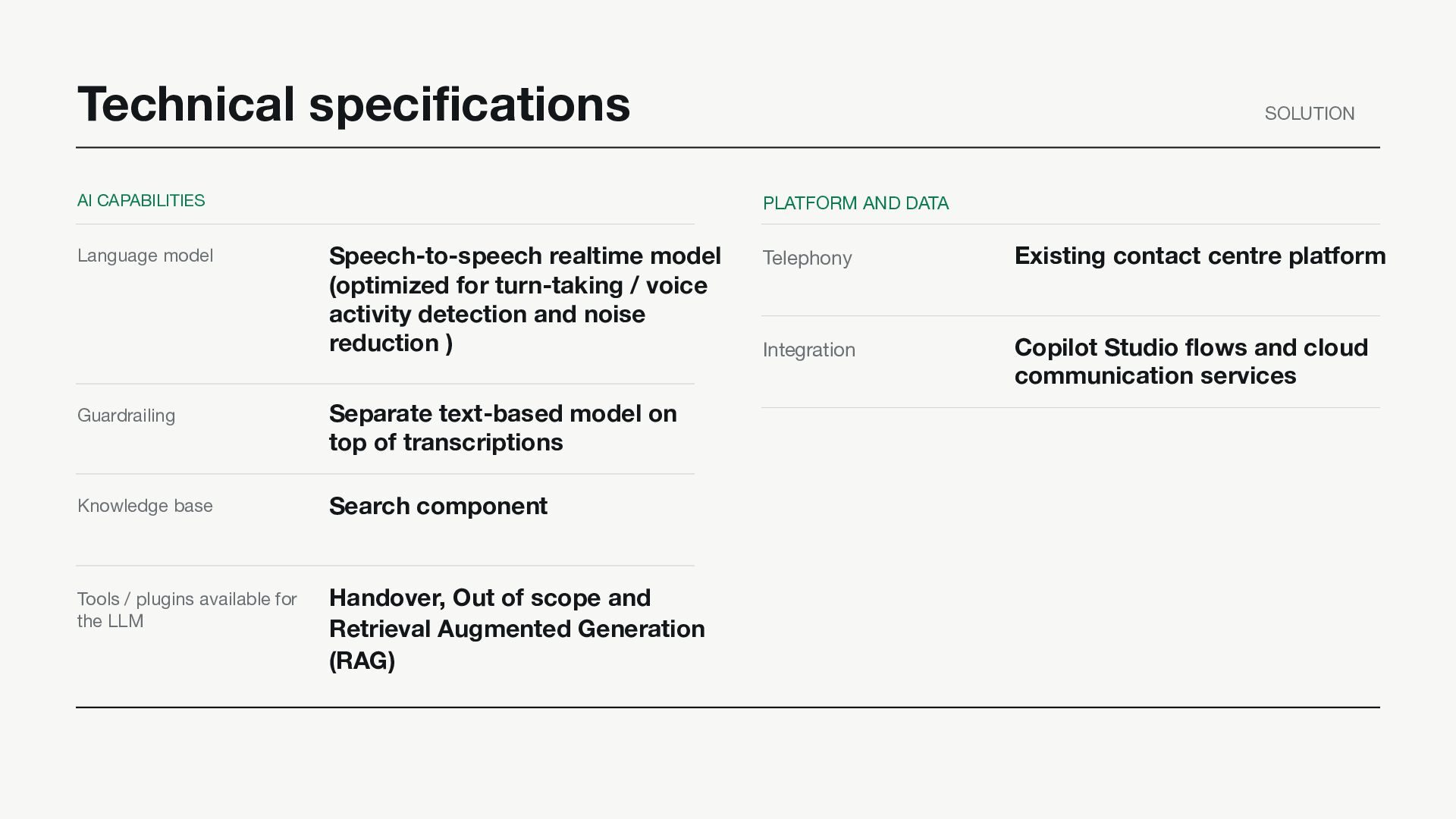
Speech-to-speech realtime model (optimized for turn-taking / voice activity detection and noise reduction ) Guardrailing Separate text-based model on top of transcriptions Knowledge base Search component Tools / plugins available for the LLM Handover, Out of scope and Retrieval Augmented Generation (RAG) Telephony Existing contact centre platform Integration Copilot Studio flows and cloud communication services
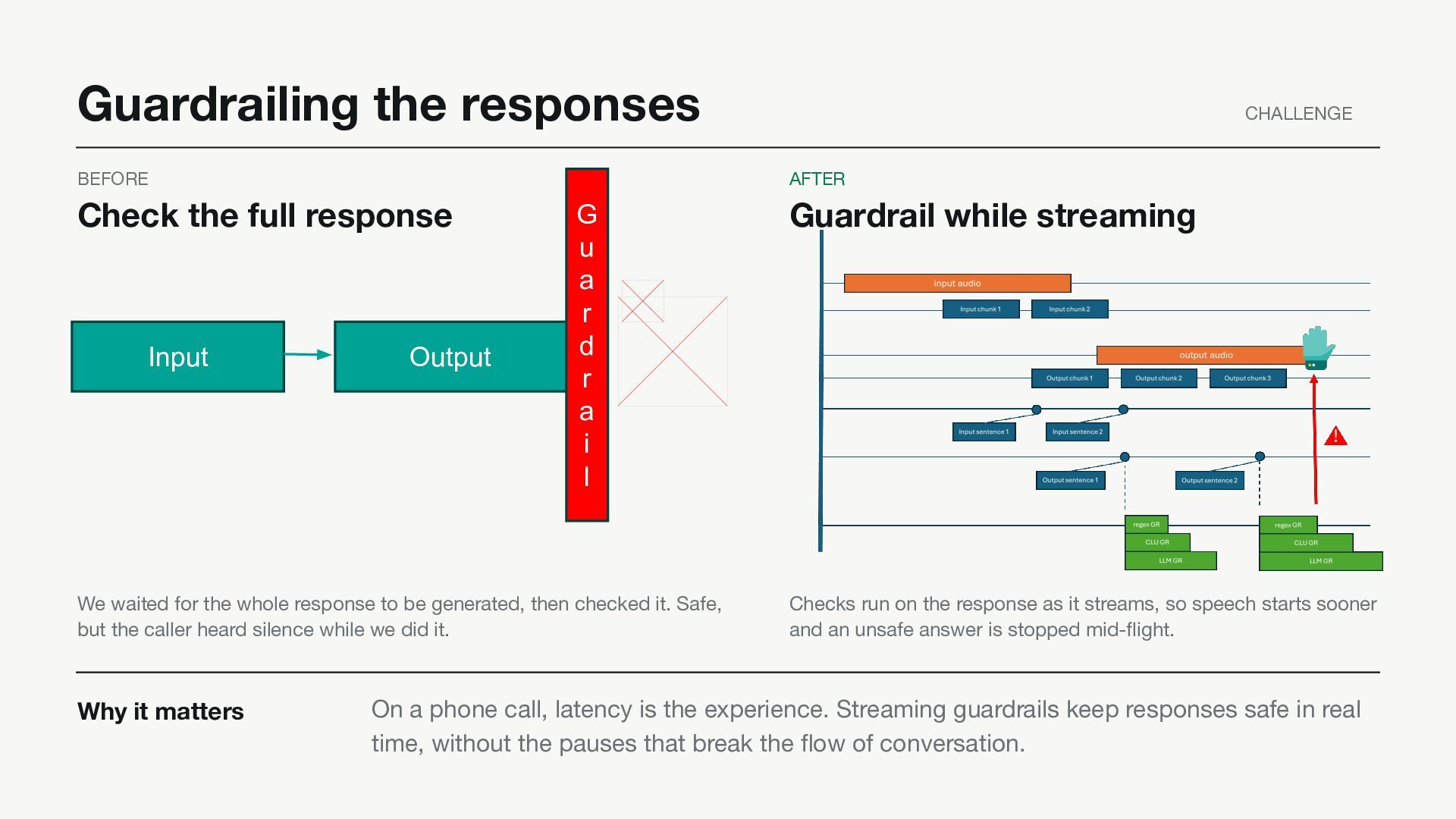
Output G u a r d r a i l We waited for the whole response to be generated, then checked it. Safe, but the caller heard silence while we did it. Why it matters CHALLENGE Guardrail while streaming Checks run on the response as it streams, so speech starts sooner and an unsafe answer is stopped mid-flight. On a phone call, latency is the experience. Streaming guardrails keep responses safe in real time, without the pauses that break the flow of conversation.
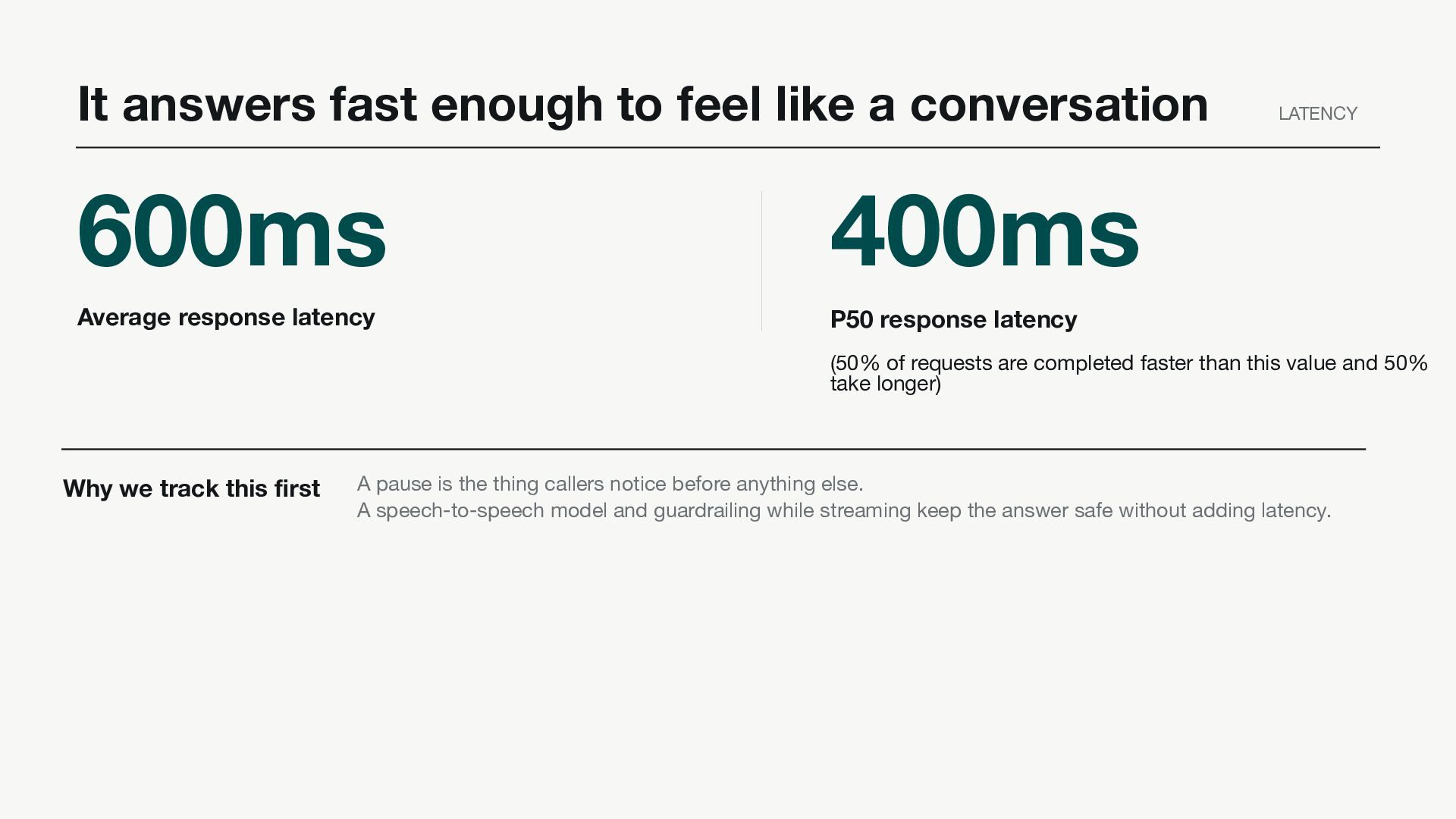
400ms Average response latency P50 response latency LATENCY (50% of requests are completed faster than this value and 50% take longer) Why we track this first A pause is the thing callers notice before anything else. A speech-to-speech model and guardrailing while streaming keep the answer safe without adding latency.
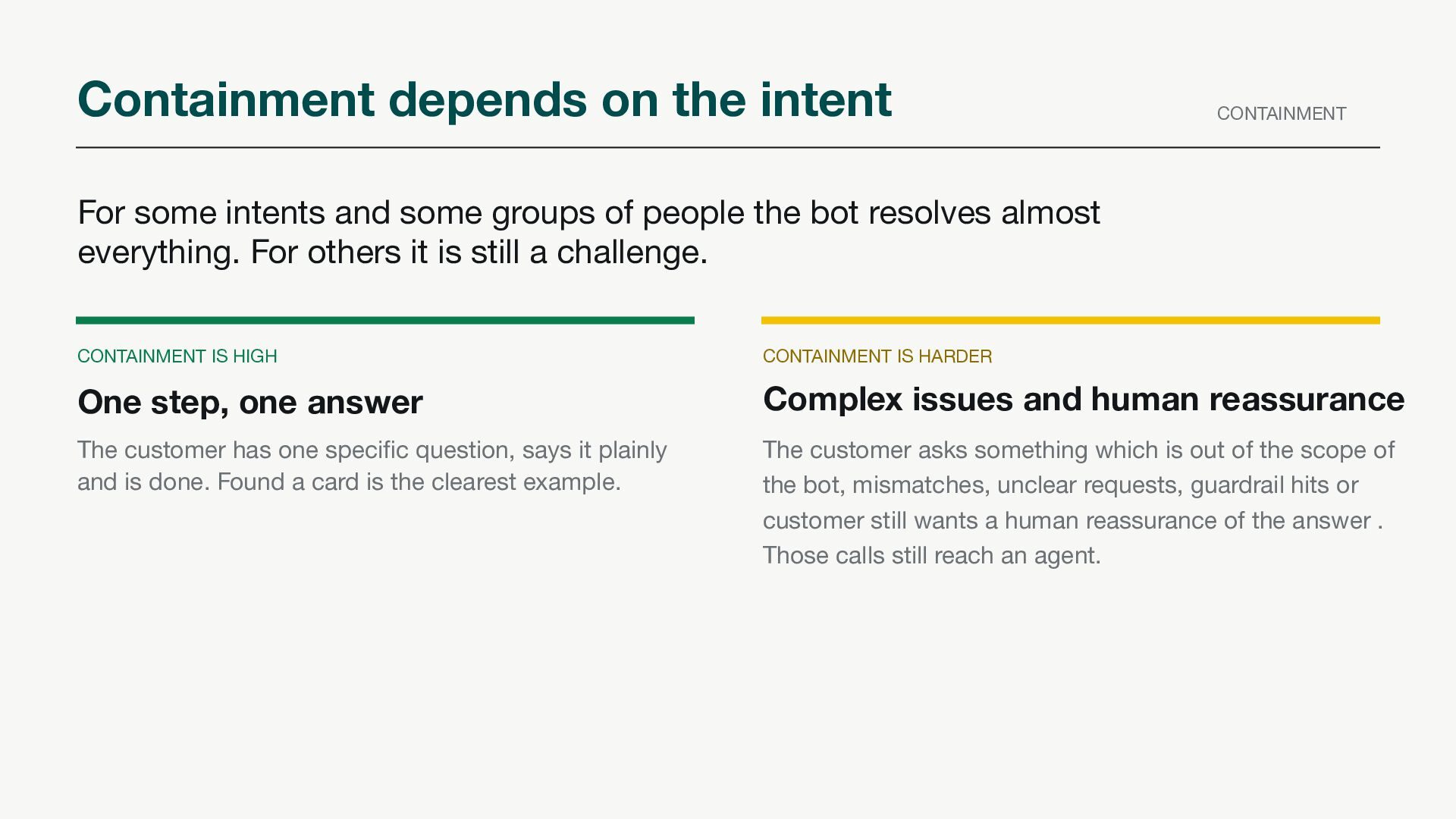
some groups of people the bot resolves almost everything. For others it is still a challenge. CONTAINMENT IS HIGH CONTAINMENT IS HARDER One step, one answer Complex issues and human reassurance The customer has one specific question, says it plainly and is done. Found a card is the clearest example. The customer asks something which is out of the scope of the bot, mismatches, unclear requests, guardrail hits or customer still wants a human reassurance of the answer . Those calls still reach an agent.
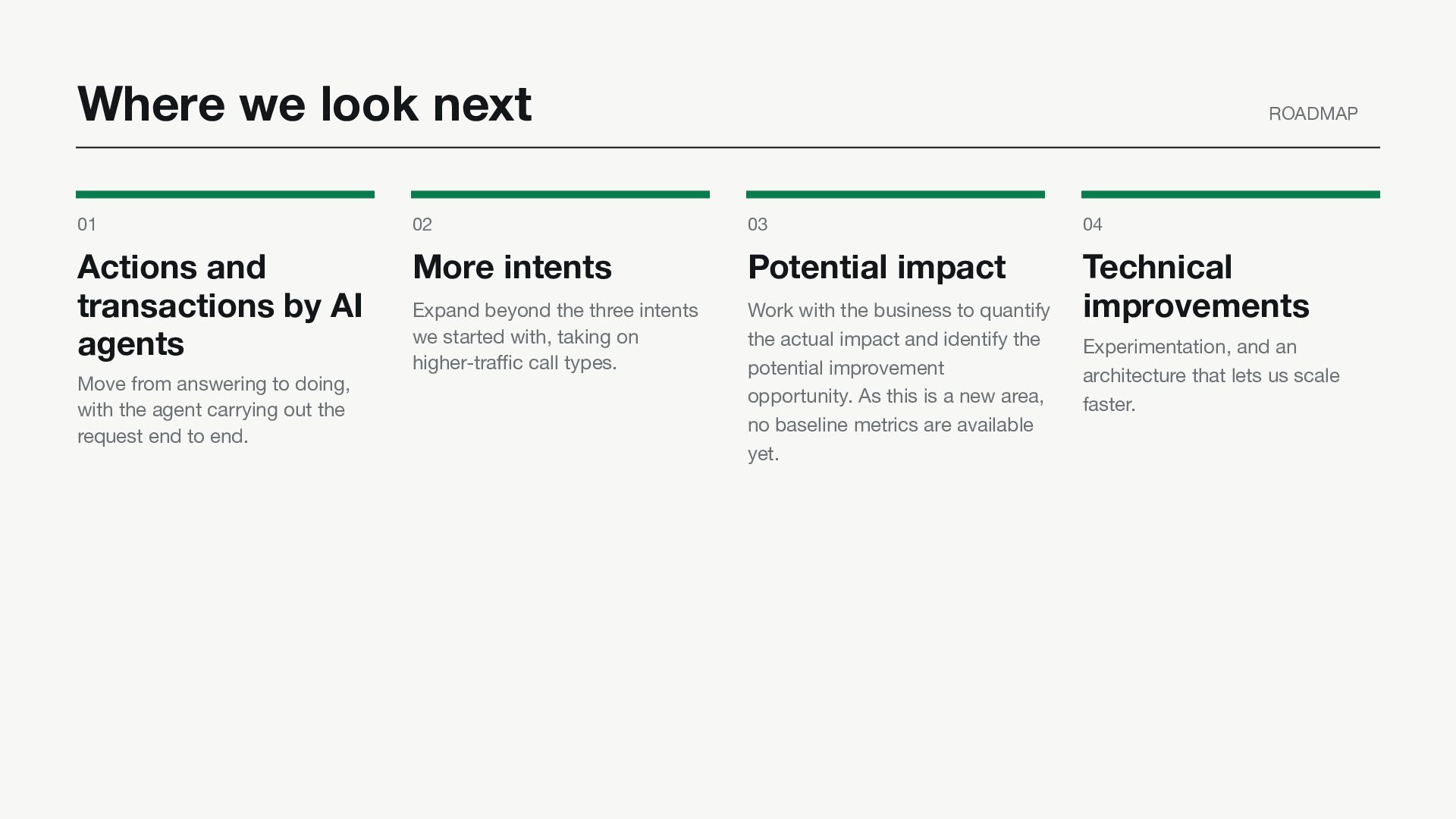
and transactions by AI agents More intents Potential impact Expand beyond the three intents we started with, taking on higher-traffic call types. Work with the business to quantify the actual impact and identify the potential improvement opportunity. As this is a new area, no baseline metrics are available yet. Technical improvements Move from answering to doing, with the agent carrying out the request end to end. Experimentation, and an architecture that lets us scale faster.
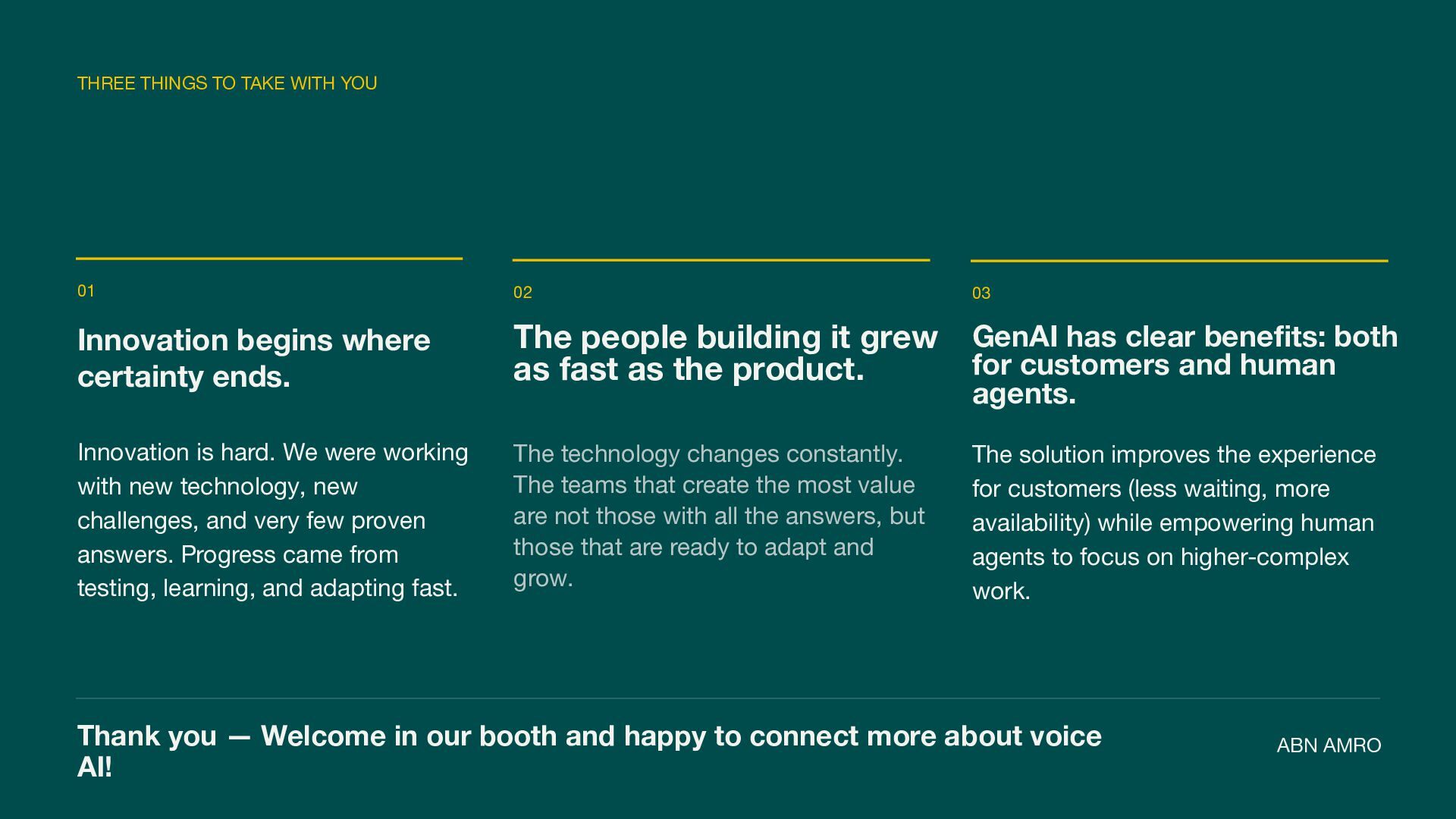
begins where certainty ends. The people building it grew as fast as the product. GenAI has clear benefits: both for customers and human agents. Innovation is hard. We were working with new technology, new challenges, and very few proven answers. Progress came from testing, learning, and adapting fast. The technology changes constantly. The teams that create the most value are not those with all the answers, but those that are ready to adapt and grow. The solution improves the experience for customers (less waiting, more availability) while empowering human agents to focus on higher-complex work. Thank you — Welcome in our booth and happy to connect more about voice AI! ABN AMRO


 mark3t1ng
 uxyall
 brettharned
 aemeredith
 maltzj
 inesmontani
 gurzu
gurzu
 reverentgeek
 codingconduct
 kneath
 tammyeverts
 mfonobong
 gr2m
gr2m