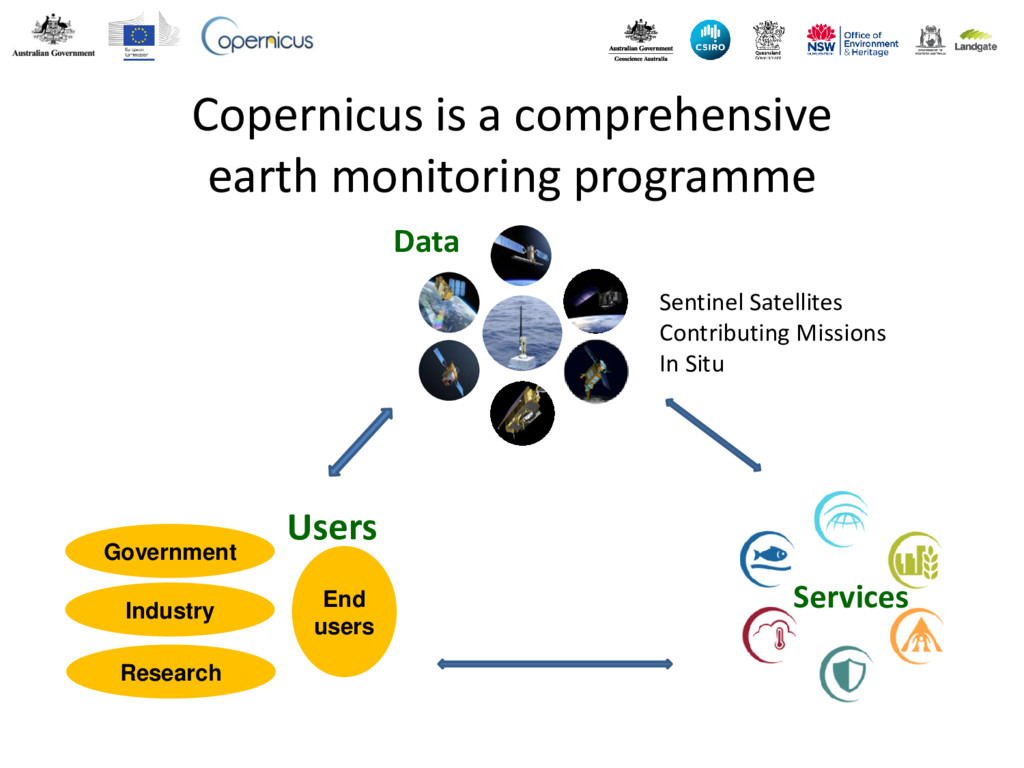
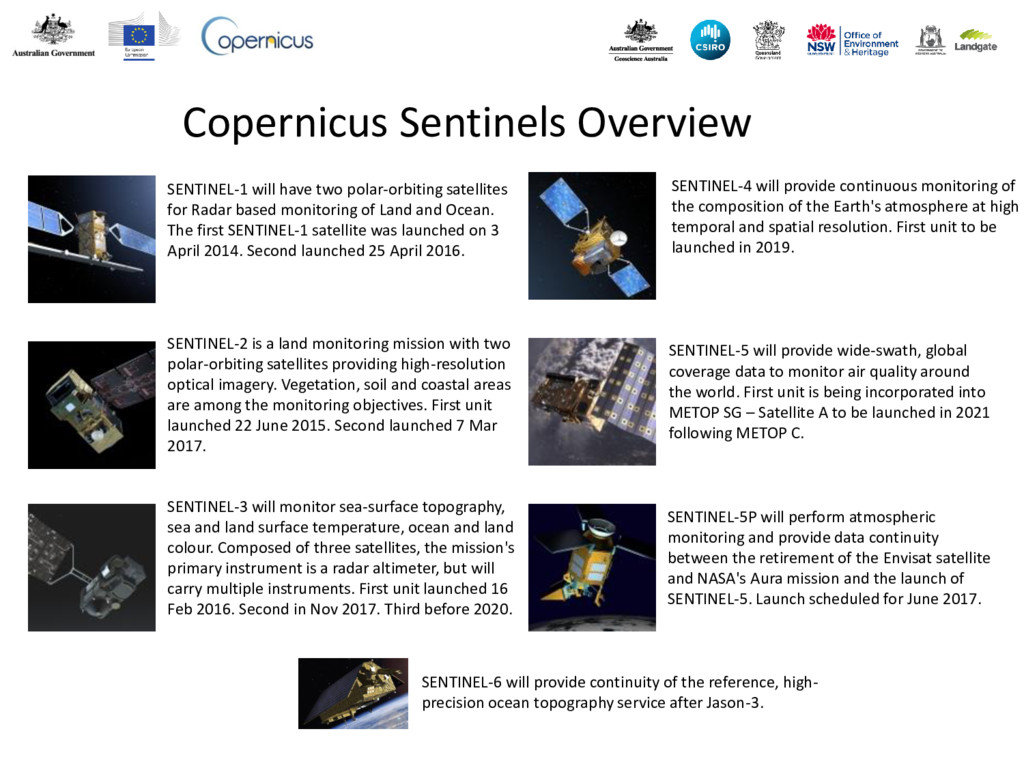
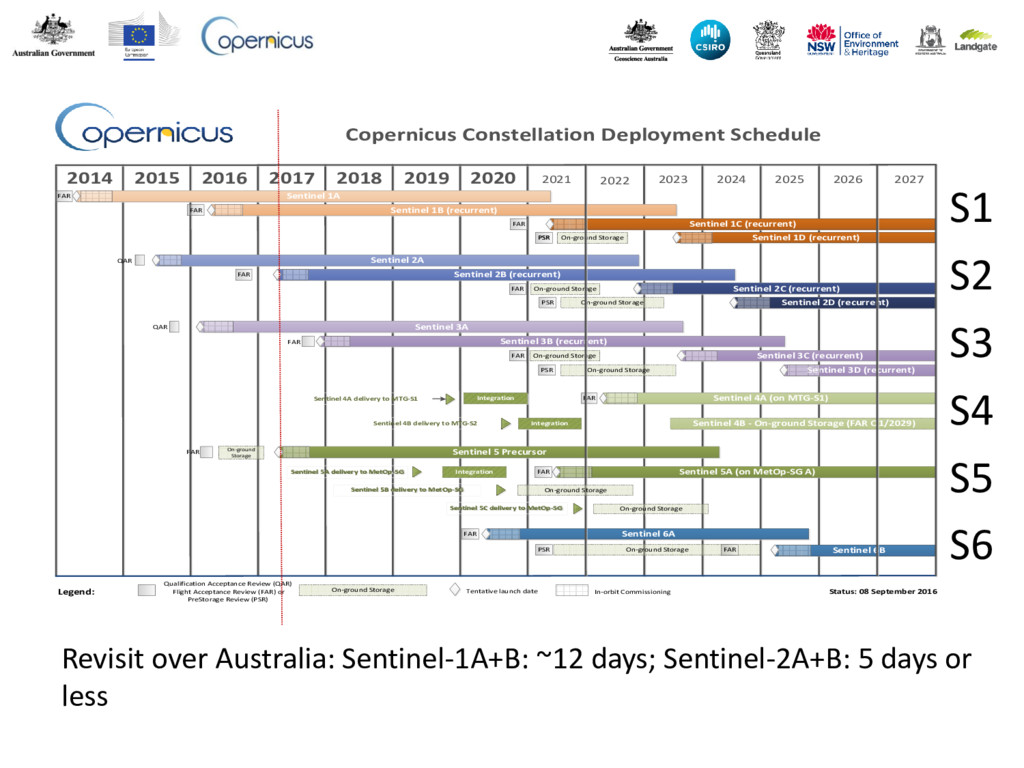
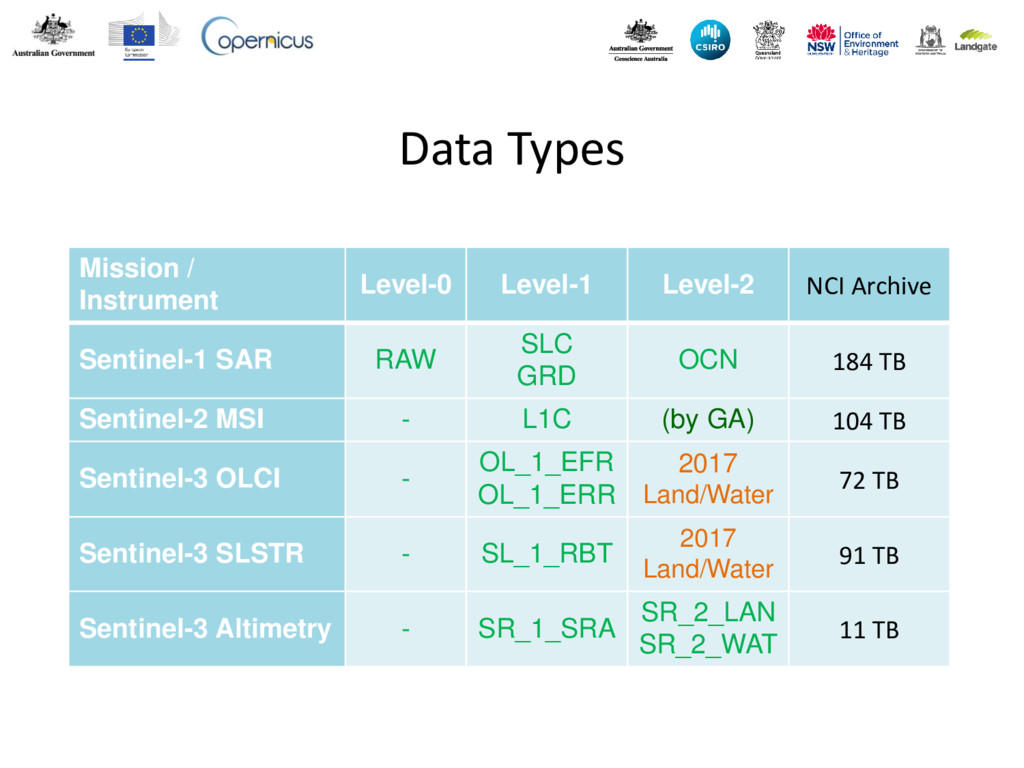
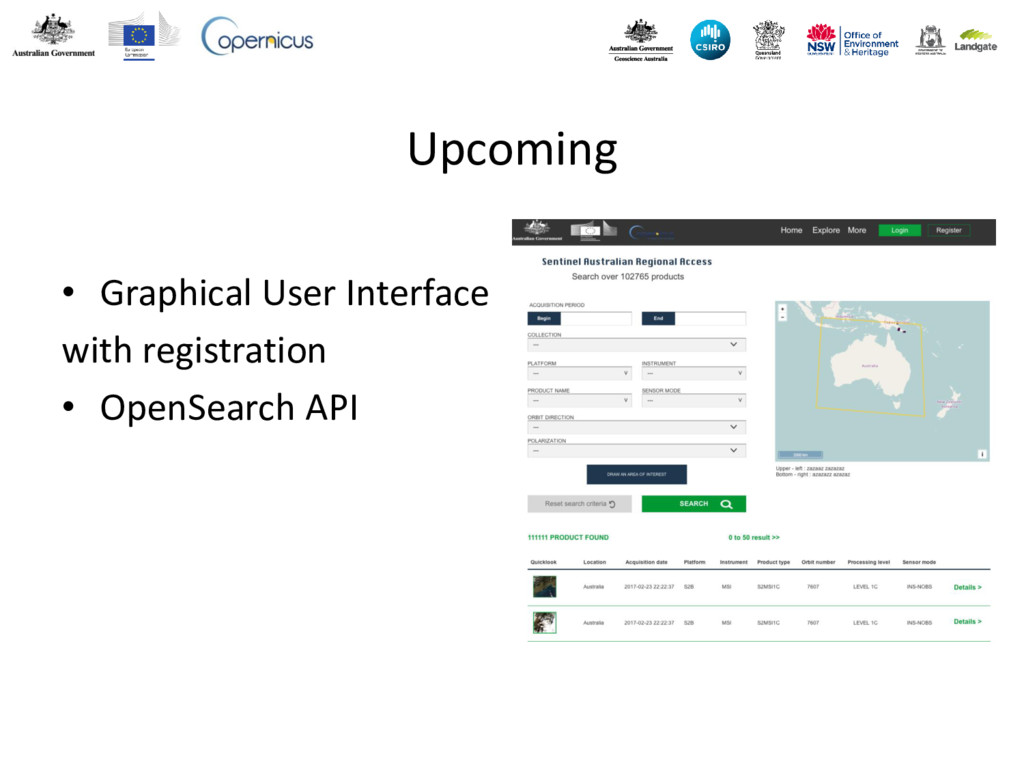
Radar based monitoring of Land and Ocean. The first SENTINEL-1 satellite was launched on 3 April 2014. Second launched 25 April 2016. SENTINEL-2 is a land monitoring mission with two polar-orbiting satellites providing high-resolution optical imagery. Vegetation, soil and coastal areas are among the monitoring objectives. First unit launched 22 June 2015. Second launched 7 Mar 2017. SENTINEL-3 will monitor sea-surface topography, sea and land surface temperature, ocean and land colour. Composed of three satellites, the mission's primary instrument is a radar altimeter, but will carry multiple instruments. First unit launched 16 Feb 2016. Second in Nov 2017. Third before 2020. SENTINEL-4 will provide continuous monitoring of the composition of the Earth's atmosphere at high temporal and spatial resolution. First unit to be launched in 2019. SENTINEL-5 will provide wide-swath, global coverage data to monitor air quality around the world. First unit is being incorporated into METOP SG – Satellite A to be launched in 2021 following METOP C. SENTINEL-5P will perform atmospheric monitoring and provide data continuity between the retirement of the Envisat satellite and NASA's Aura mission and the launch of SENTINEL-5. Launch scheduled for June 2017. SENTINEL-6 will provide continuity of the reference, high- precision ocean topography service after Jason-3.
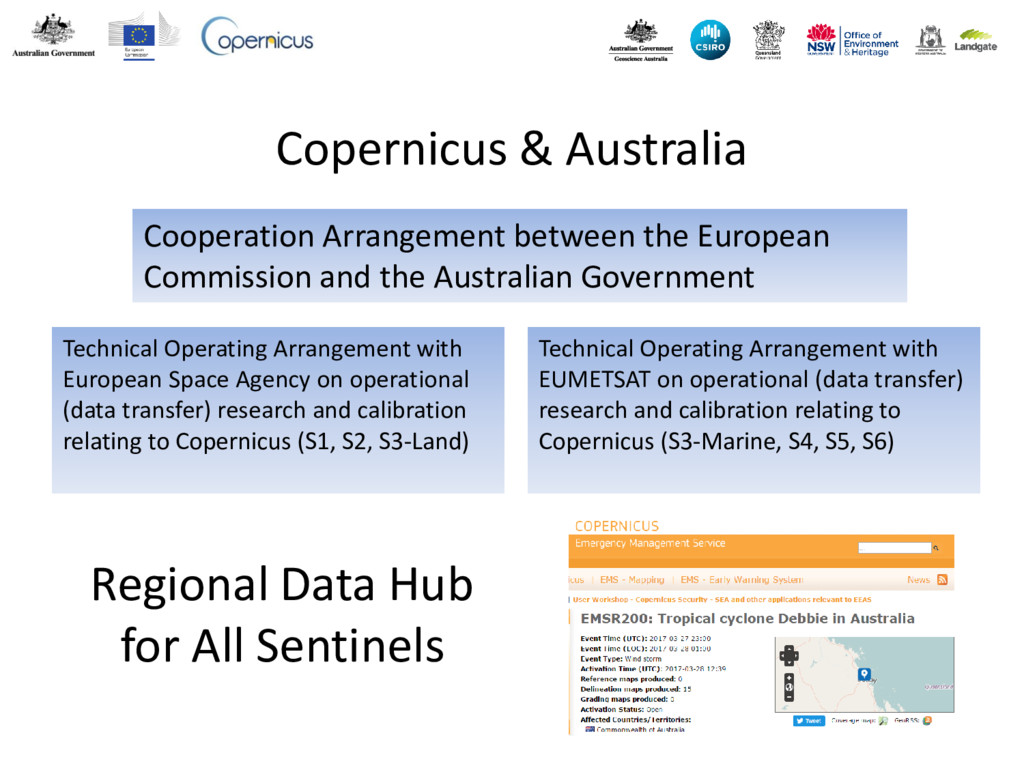
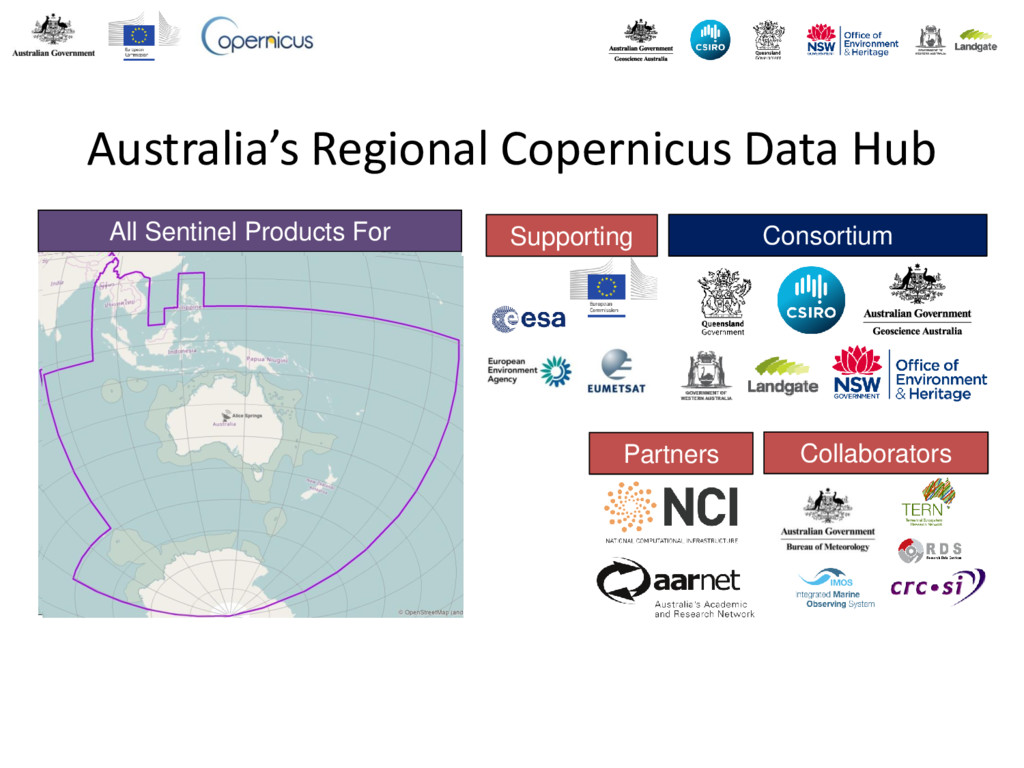
the Australian Government Technical Operating Arrangement with European Space Agency on operational (data transfer) research and calibration relating to Copernicus (S1, S2, S3-Land) Technical Operating Arrangement with EUMETSAT on operational (data transfer) research and calibration relating to Copernicus (S3-Marine, S4, S5, S6) Regional Data Hub for All Sentinels
the Sentinel missions Support government information requirements. Support the broader objective of enhancing access to satellite Earth observation data by research, industry and civil society. Facilitate collaboration between Australians, Europeans and inhabitants of the South-East Asia-South Pacific region Benefits for: Australia, the region, EC/ESA/EUMETSAT, and the global satellite EO community.
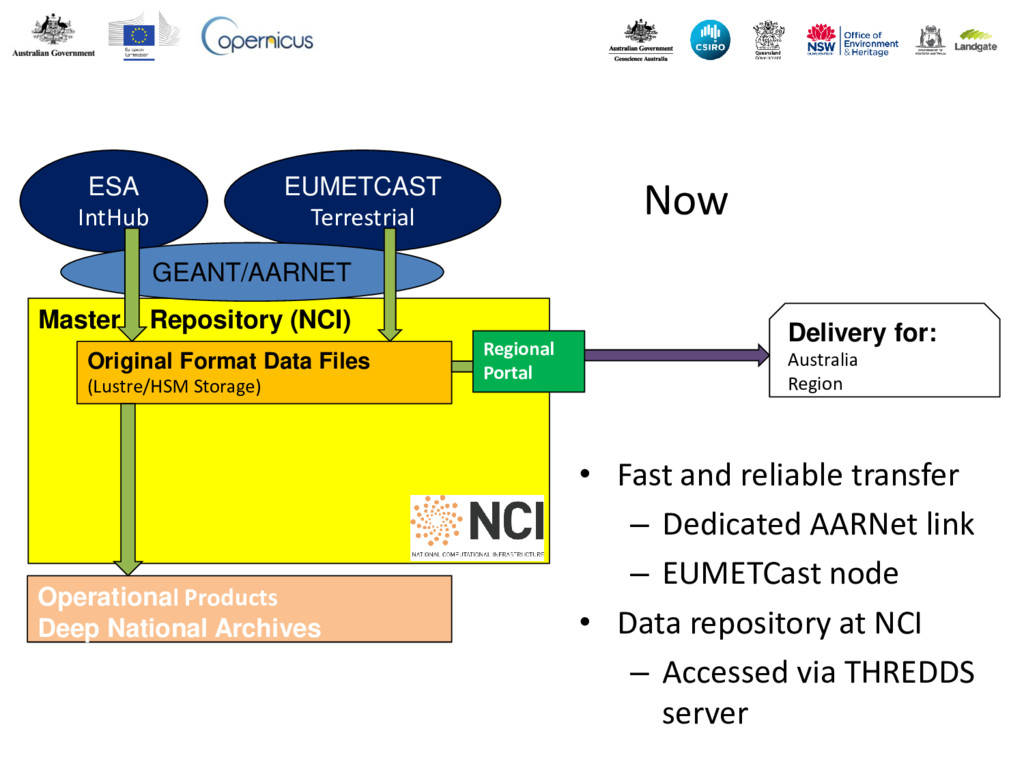
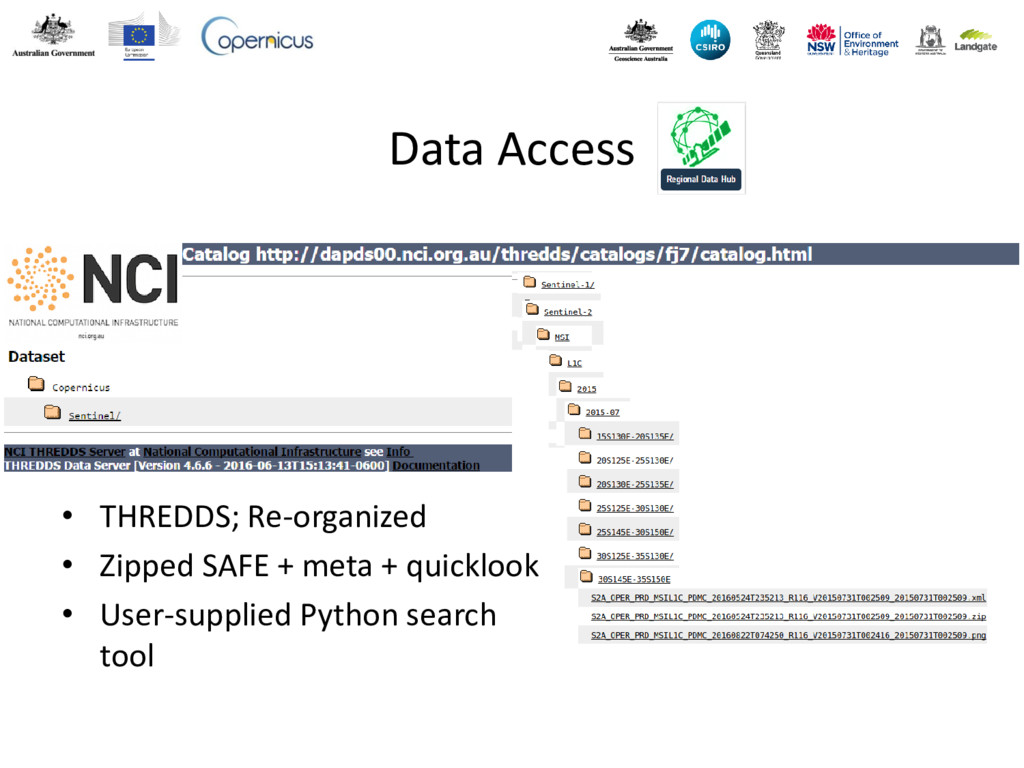
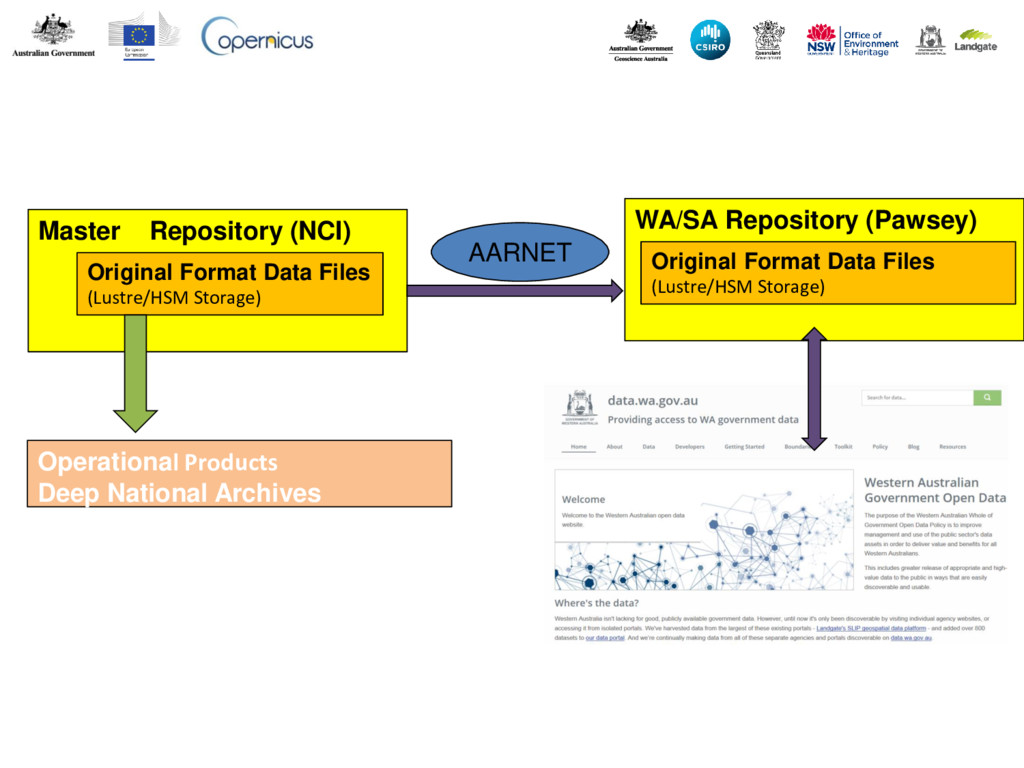
ESA IntHub EUMETCAST Terrestrial GEANT/AARNET Original Format Data Files (Lustre/HSM Storage) Delivery for: Australia Region Regional Portal Now • Fast and reliable transfer – Dedicated AARNet link – EUMETCast node • Data repository at NCI – Accessed via THREDDS server
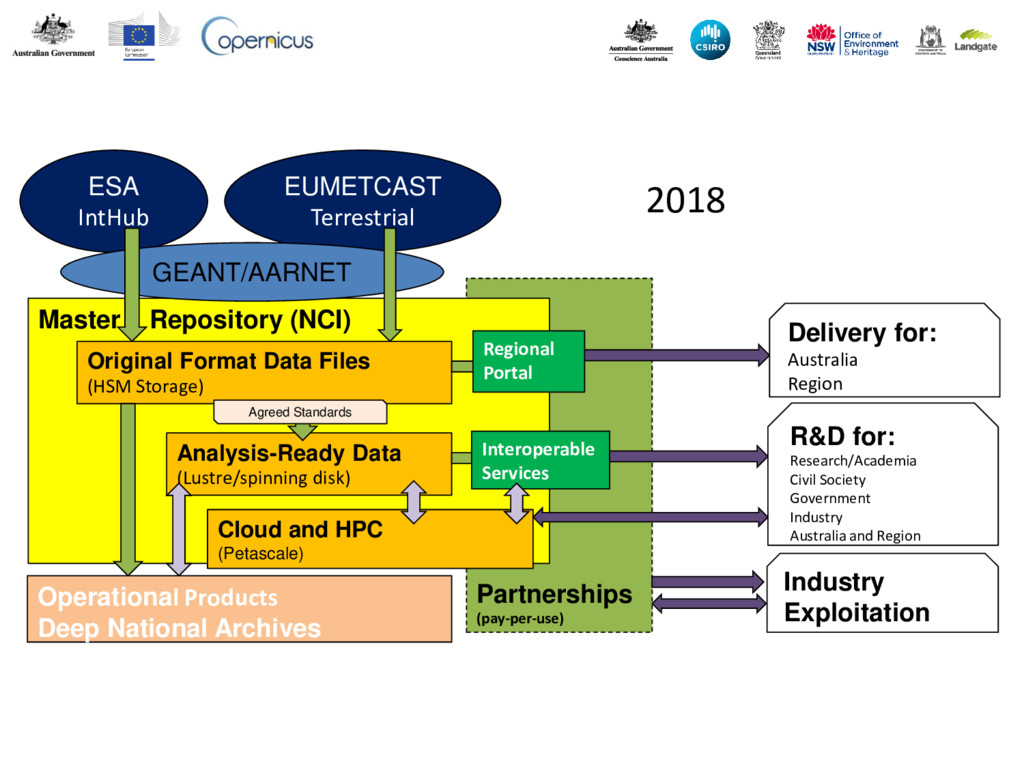
Repository (NCI) ESA IntHub EUMETCAST Terrestrial GEANT/AARNET Original Format Data Files (HSM Storage) Delivery for: Australia Region Regional Portal Analysis-Ready Data (Lustre/spinning disk) Agreed Standards R&D for: Research/Academia Civil Society Government Industry Australia and Region Interoperable Services 2018 Cloud and HPC (Petascale) Industry Exploitation


 marrabld
 mickey_0226
 aikinohara
 trycycle
 voginip
 sshimizu2006
 bonotake
 naospon
 tomoaki0705
 rajeshrinet
 estie
 michielstock
 cassininazir
 greggifford
 reverentgeek
 mfonobong
 holman
 jonoalderson
 danielanewman
 speakerdeck
 sergeychernyshev
 cromwellryan
 bkeepers