Upgrade to Pro — share decks privately, control downloads, hide ads and more …

Evaluation Research Education

Avatar for Aysh Aysh
October 01, 2026
15

Evaluation Research Education

This is a topic for M Ed under University of Calicut. The topic explains Types of research. Especially evaluation research

Avatar for Aysh

Aysh

October 01, 2026

Transcript

  1. Evaluation Research Evaluation research is an important area of educational

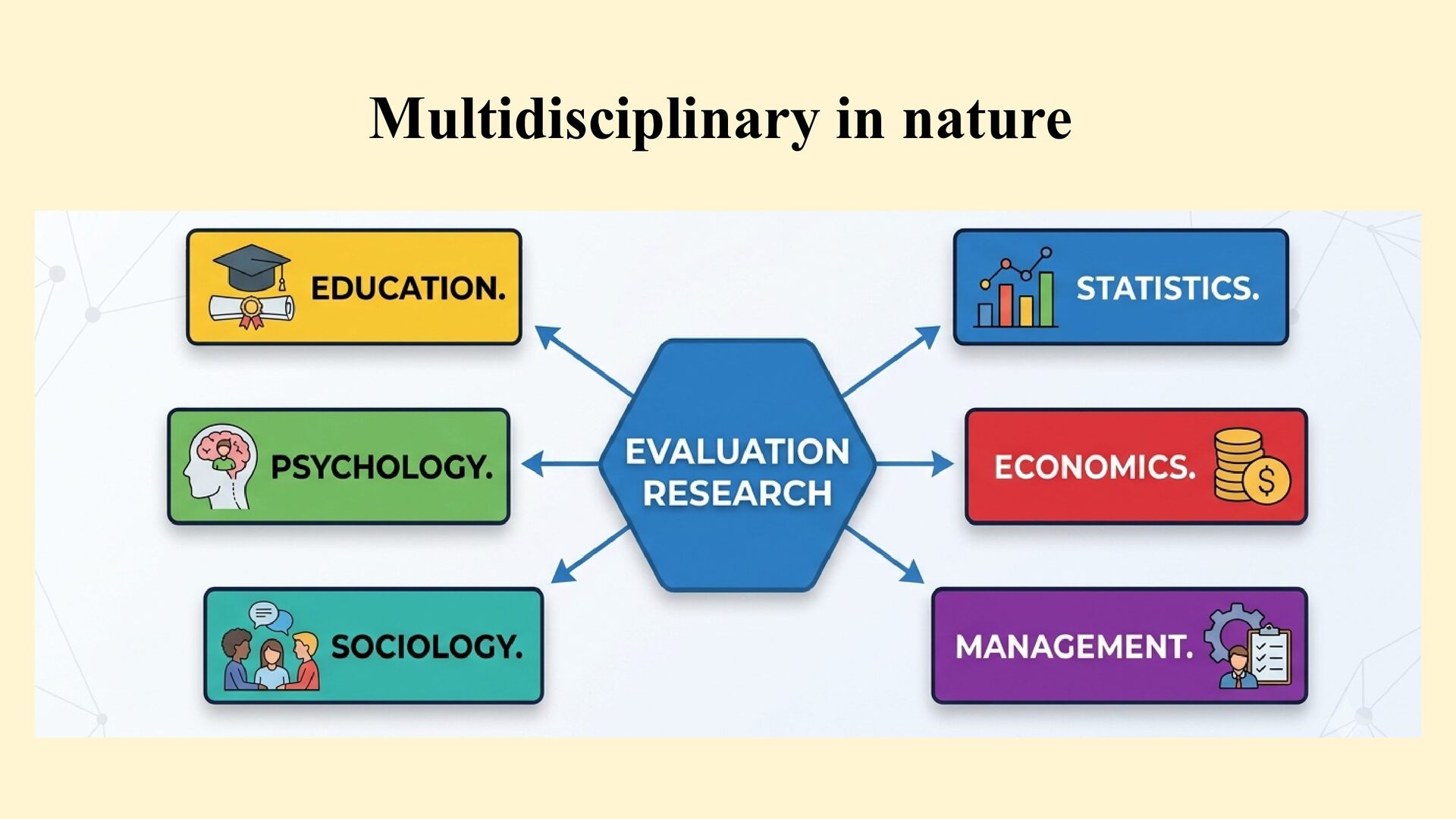
    research concerned with systematically determining the value, effectiveness, quality, or outcomes of a programme, policy, curriculum, teaching method, intervention, or educational institution
  2. Evaluation research in Education Evaluation research helps teachers, administrators, policymakers,

    and institutions make evidencebased decisions rather than relying only on assumptions or personal opinions.
  3. Evaluation Research Carol H. Weiss (1972) "The purpose of evaluation

    research is to measure the effects of a program against the goals it set out to achieve as a means of contributing to subsequent decision making about the program and improving future programming"
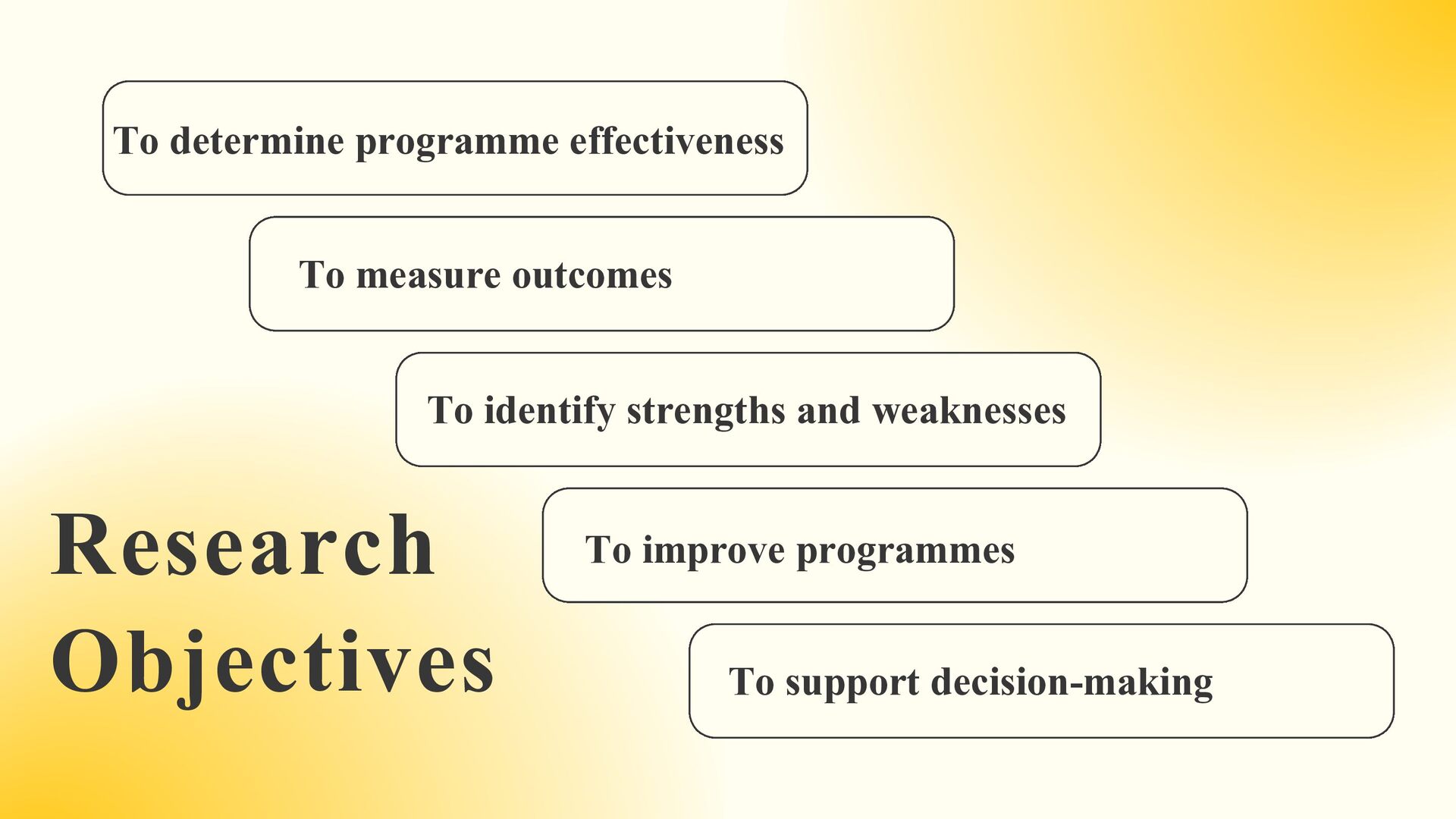
  4. To determine programme effectiveness To measure outcomes To identify strengths

    and weaknesses Research Objectives To improve programmes To support decision-making
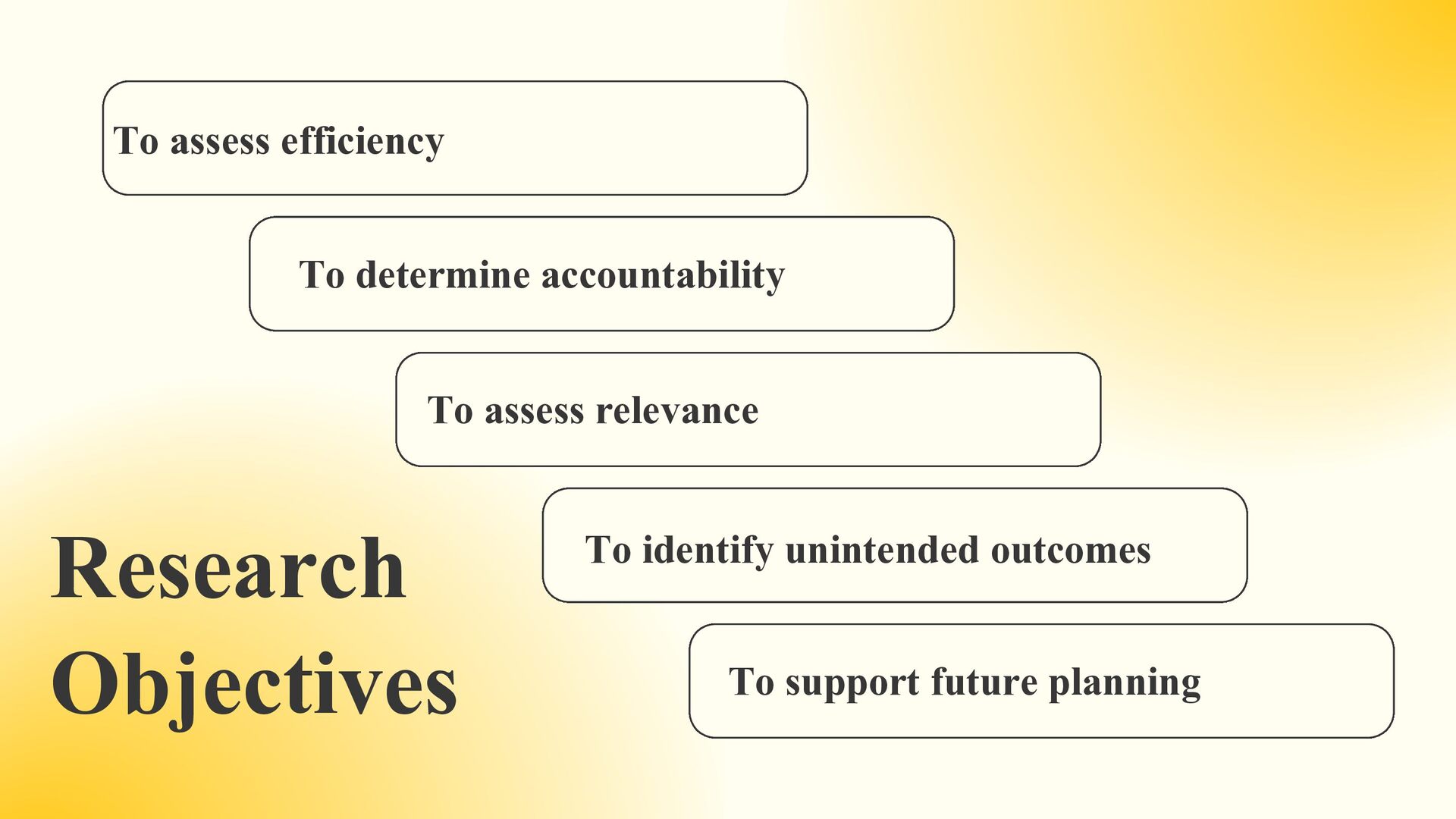
  5. To assess efficiency To determine accountability To assess relevance Research

    Objectives To identify unintended outcomes To support future planning
  6. Step 1 Identify the Programme or Intervention Clearly define the

    programme or intervention to be evaluated.
  7. Step 2 Identify the Purpose of Evaluation Determine the main

    reason for conducting the evaluation.
  8. Step 4 Identify Evaluation Criteria Establish standards and indicators for

    judging the effectiveness and quality of the programme.
  9. Step 6 Select the Research Design Choose a suitable research

    design based on the purpose and nature of the evaluation.
  10. Step 7 Select the sample Identify the target population and

    select an appropriate sample for the study.
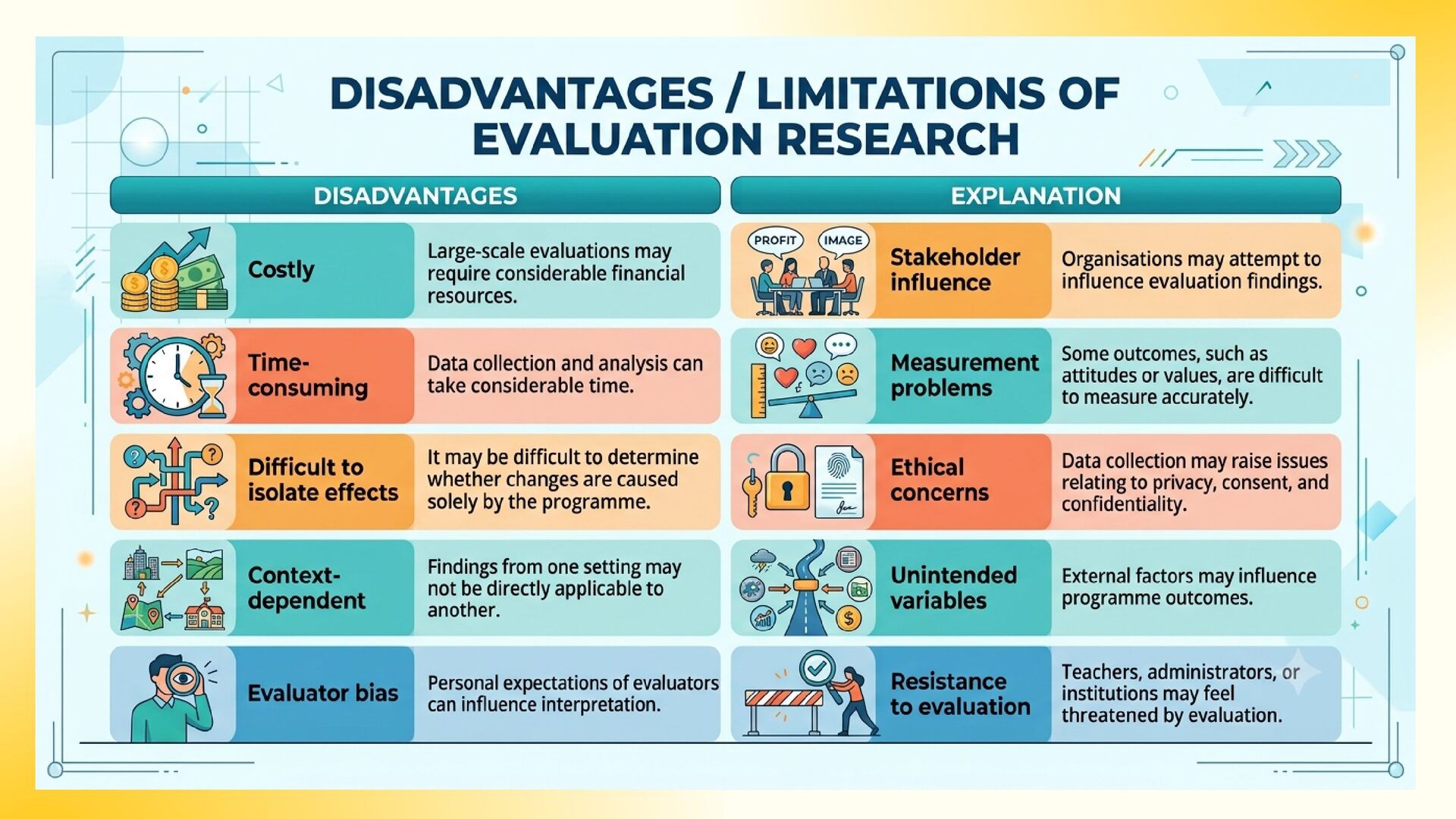
  11. Step 8 Develop or Select Tools Prepare or select suitable

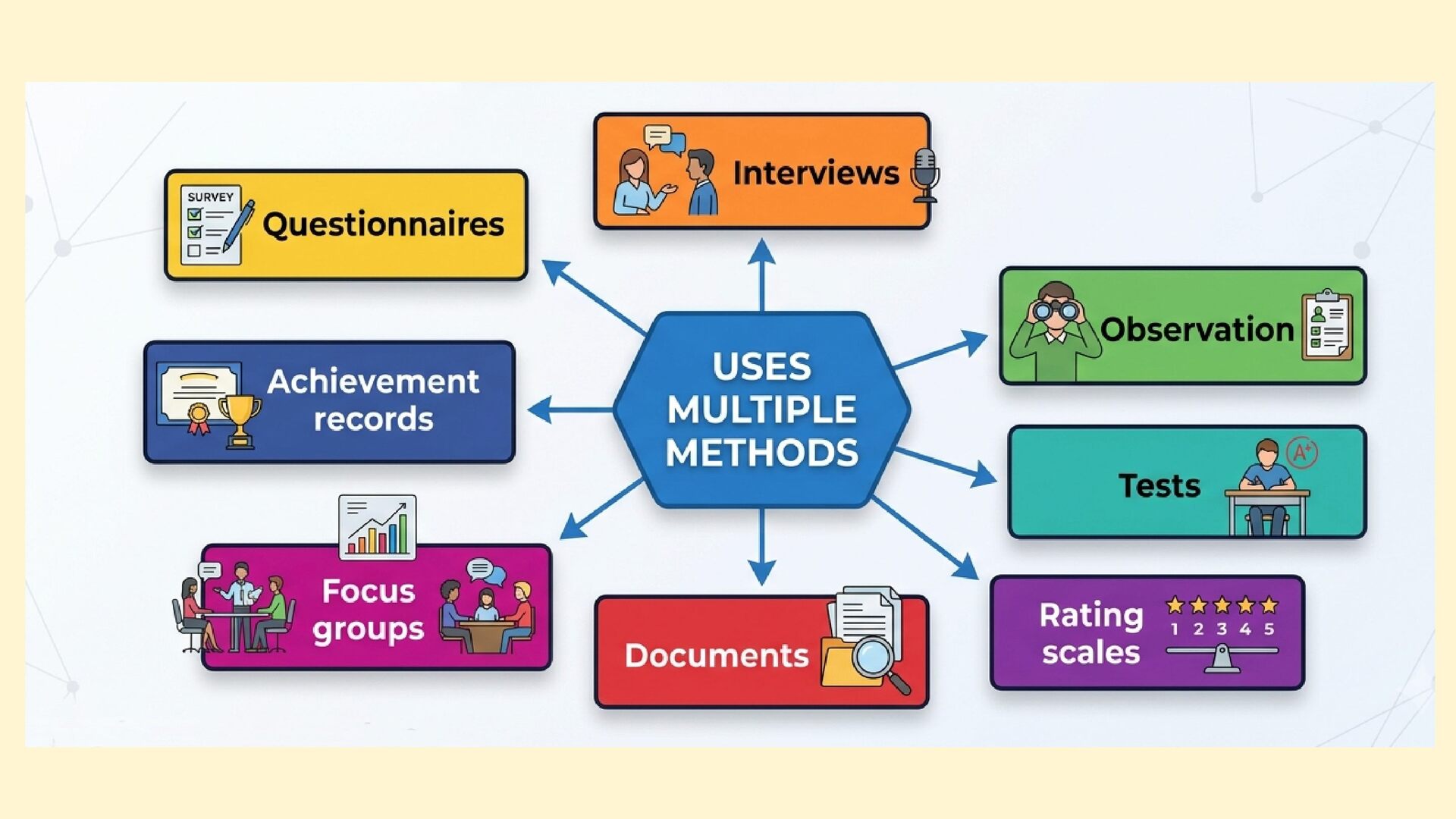
    data-collection tools such as tests, questionnaires, interviews, and observation schedules.
  12. Step 10 Analyse the Data Analyse the collected data using

    suitable statistical and qualitative techniques.
  13. Step 11 Interpret the Findings Explain and interpret the results

    in relation to the objectives and evaluation criteria.
  14. Step 12 Draw Conclusions Make an overall judgement about the

    effectiveness, relevance, quality, and efficiency of the programme.
  15. Step 14 Prepare the Evaluation Report Present the methodology, findings,

    conclusions, and recommendations systematically to the concerned stakeholders.
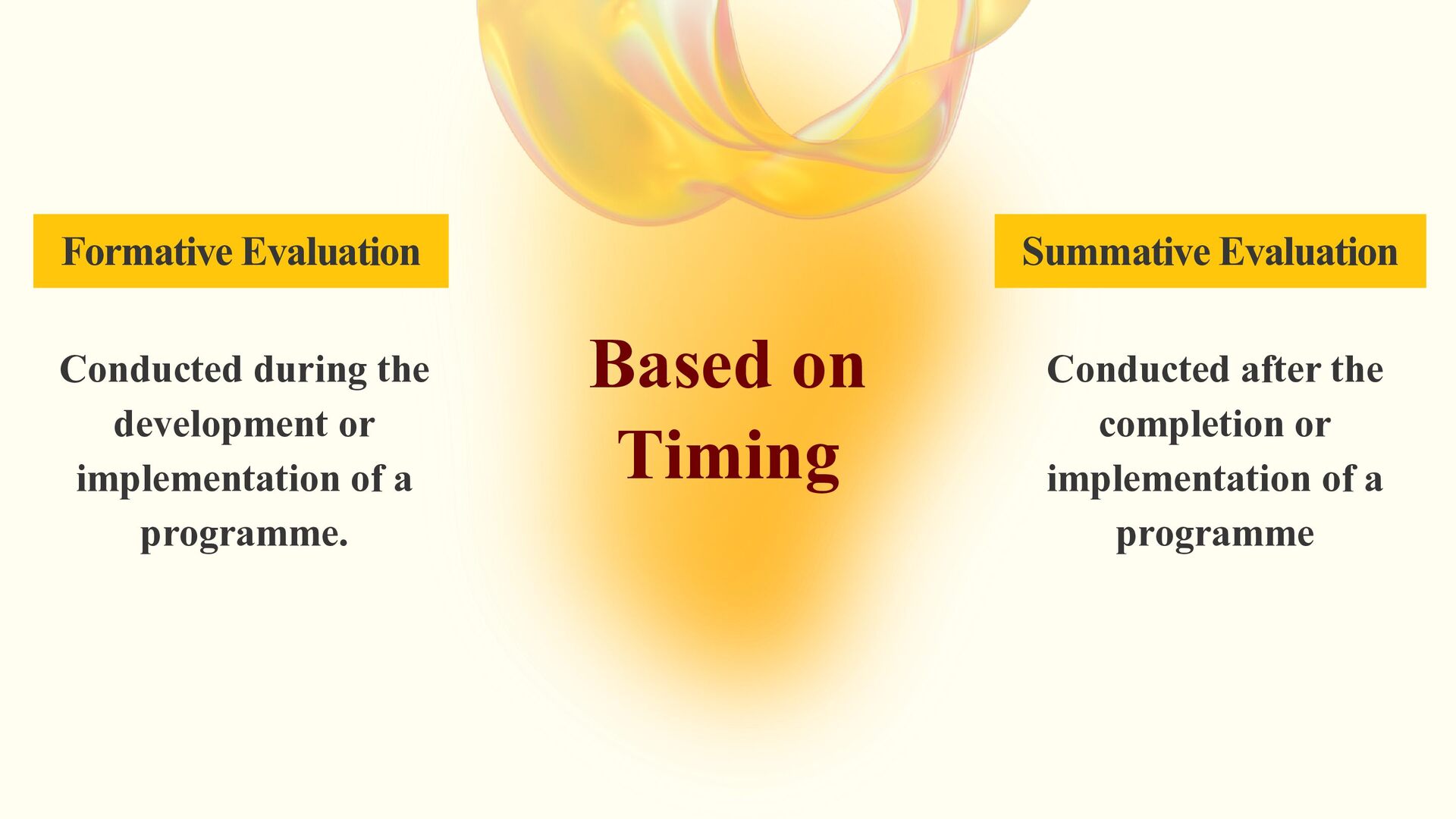
  16. Formative Evaluation Conducted during the development or implementation of a

    programme. Summative Evaluation Based on Timing Conducted after the completion or implementation of a programme
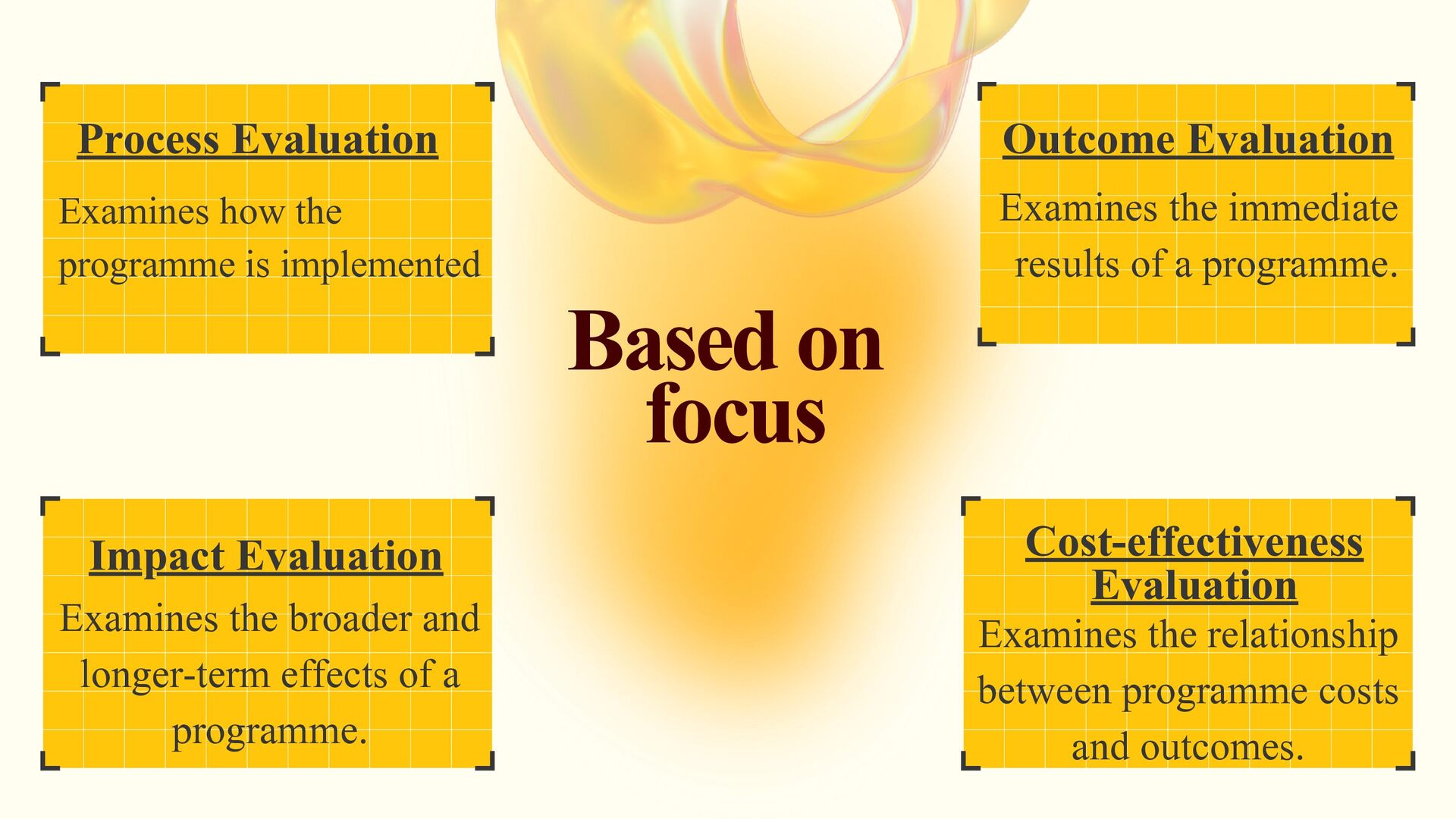
  17. Process Evaluation Outcome Evaluation Examines how the programme is implemented

    Examines the immediate results of a programme. Based on focus Impact Evaluation Examines the broader and longer-term effects of a programme. Cost-effectiveness Evaluation Examines the relationship between programme costs and outcomes.
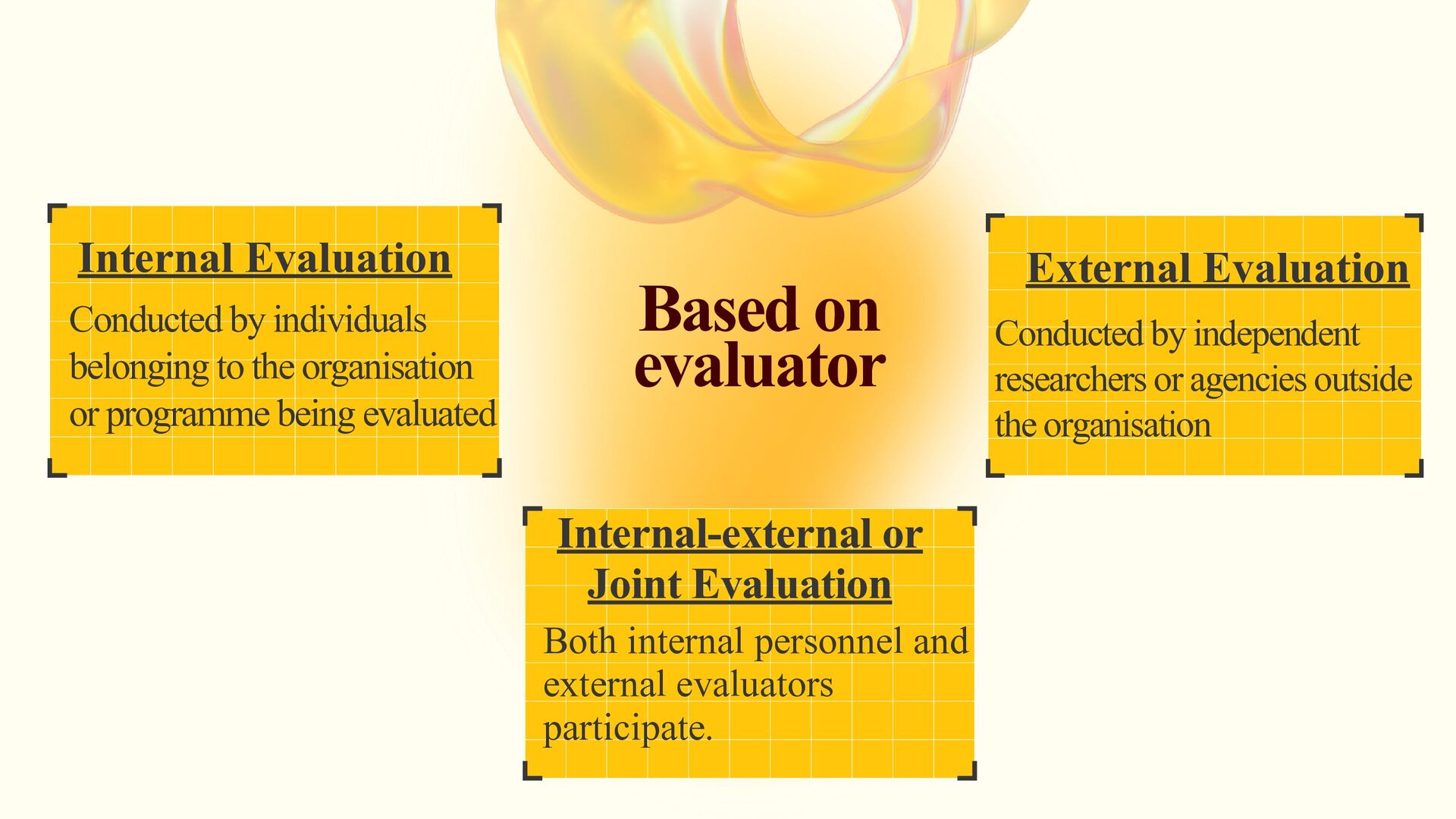
  18. Internal Evaluation Conducted by individuals belonging to the organisation or

    programme being evaluated Based on evaluator Internal-external or Joint Evaluation Both internal personnel and external evaluators participate. External Evaluation Conducted by independent researchers or agencies outside the organisation
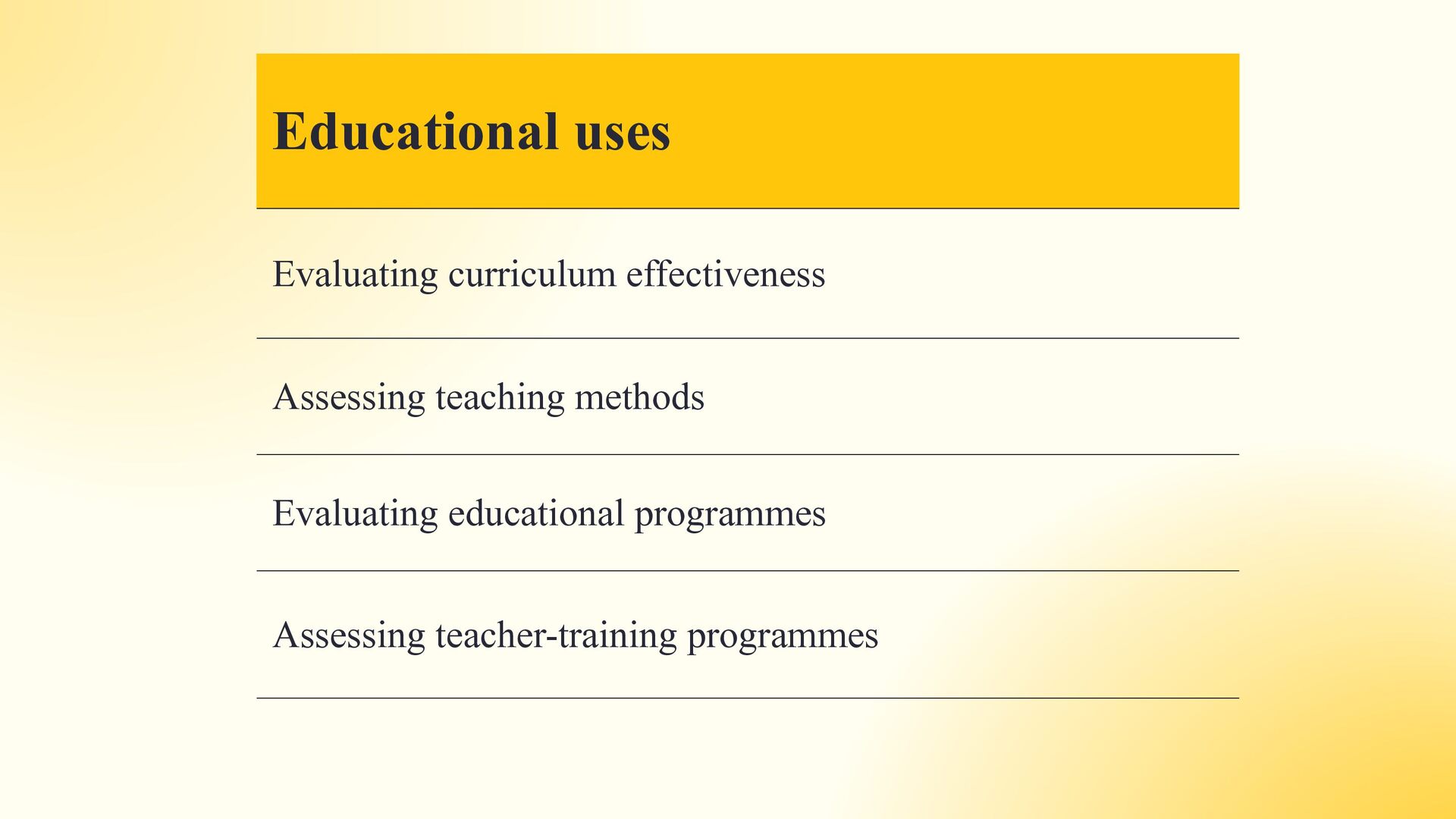
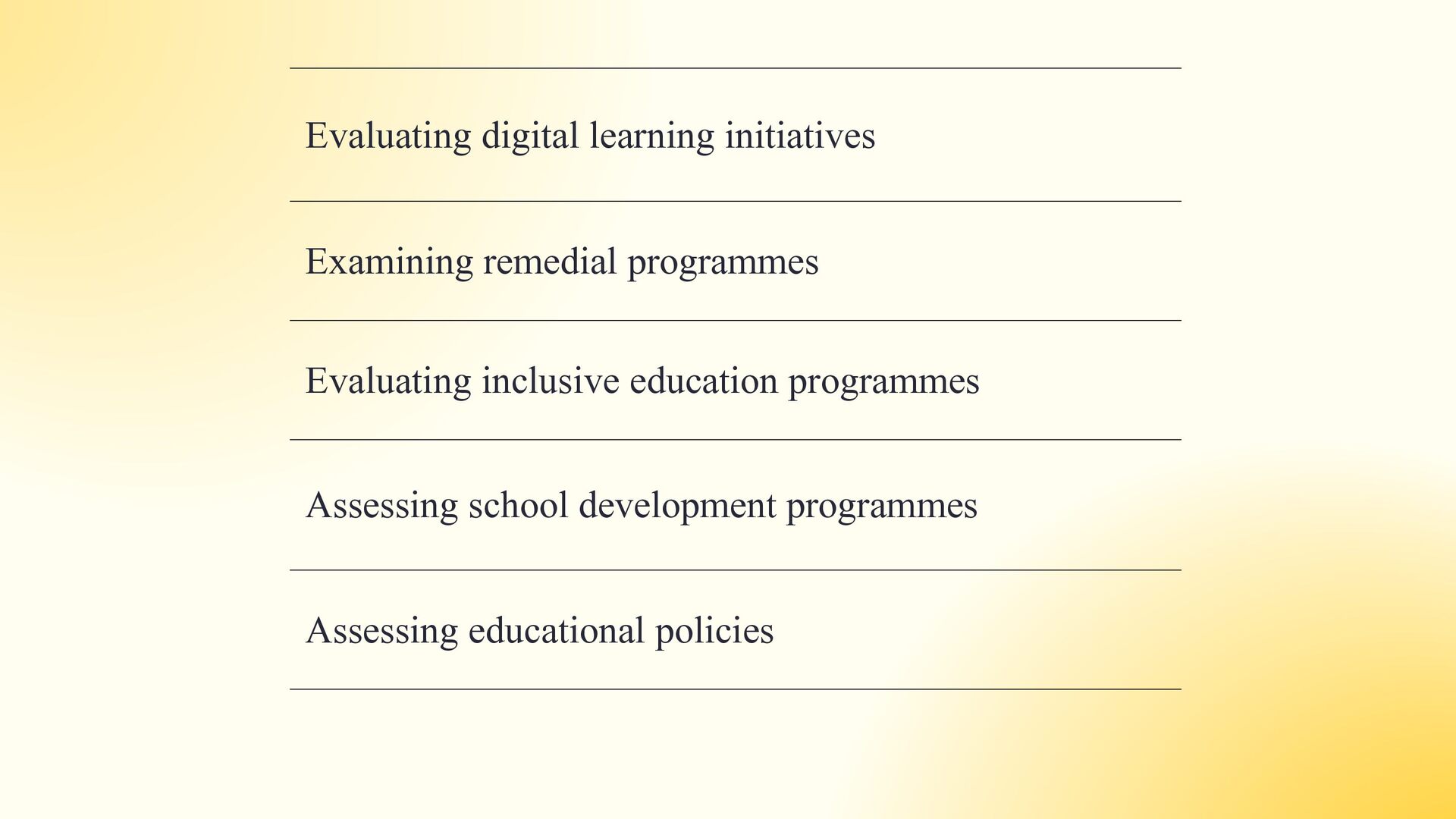
  19. Evaluating digital learning initiatives Examining remedial programmes Evaluating inclusive education

    programmes Assessing school development programmes Assessing educational policies
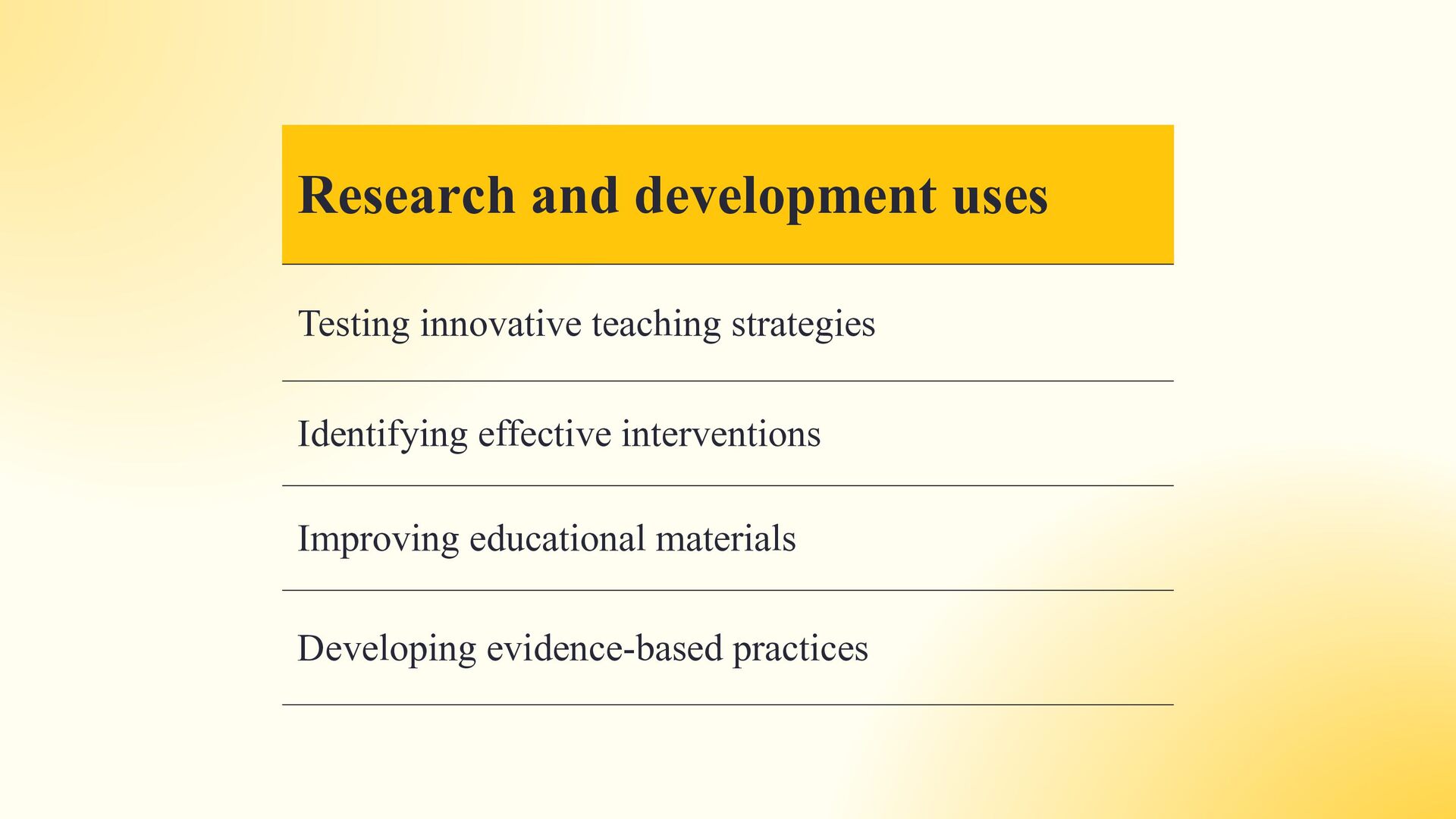
  20. Research and development uses Testing innovative teaching strategies Identifying effective

    interventions Improving educational materials Developing evidence-based practices
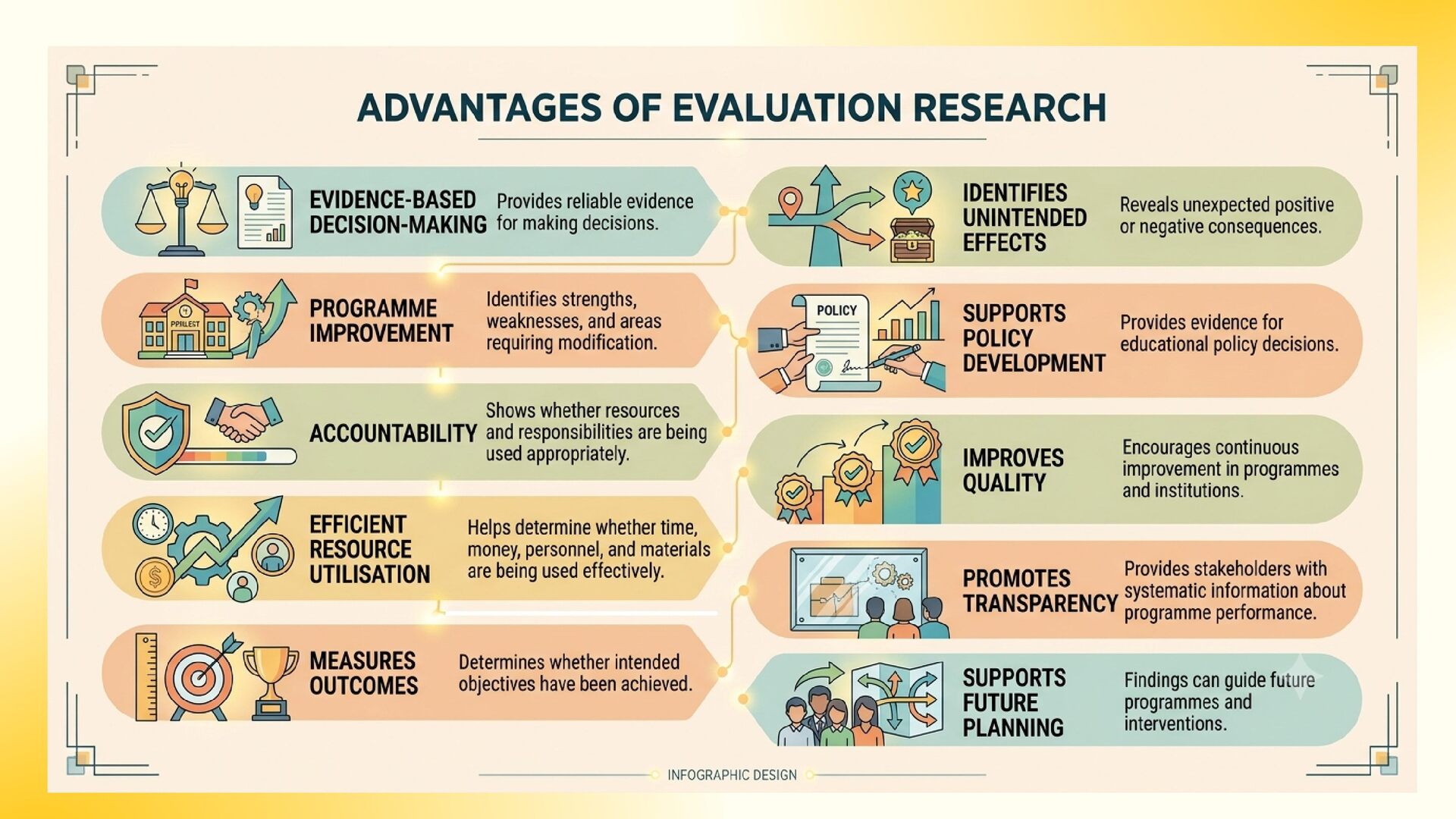
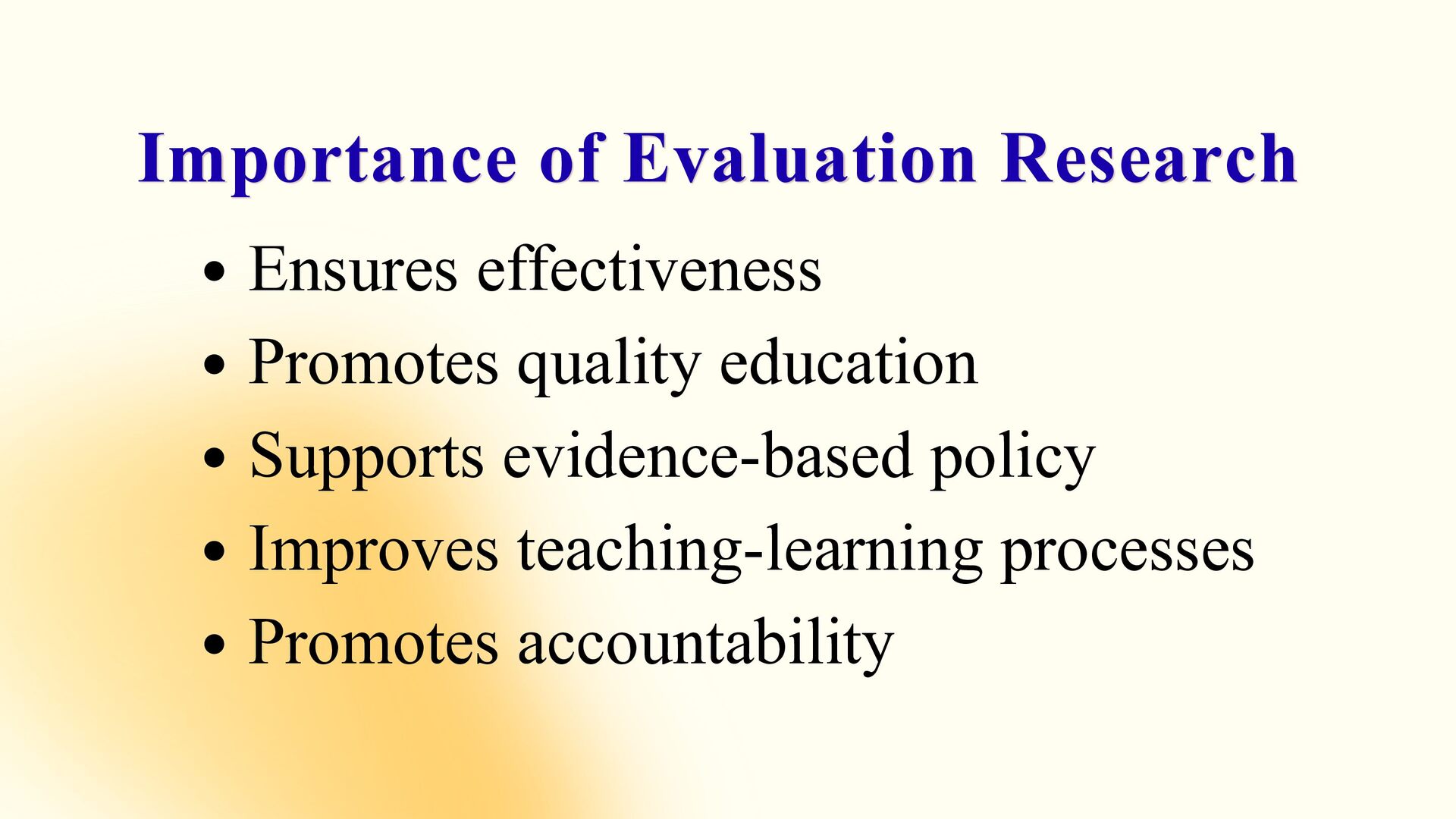
  21. Importance of Evaluation Research Ensures effectiveness Promotes quality education Supports

    evidence-based policy Improves teaching-learning processes Promotes accountability
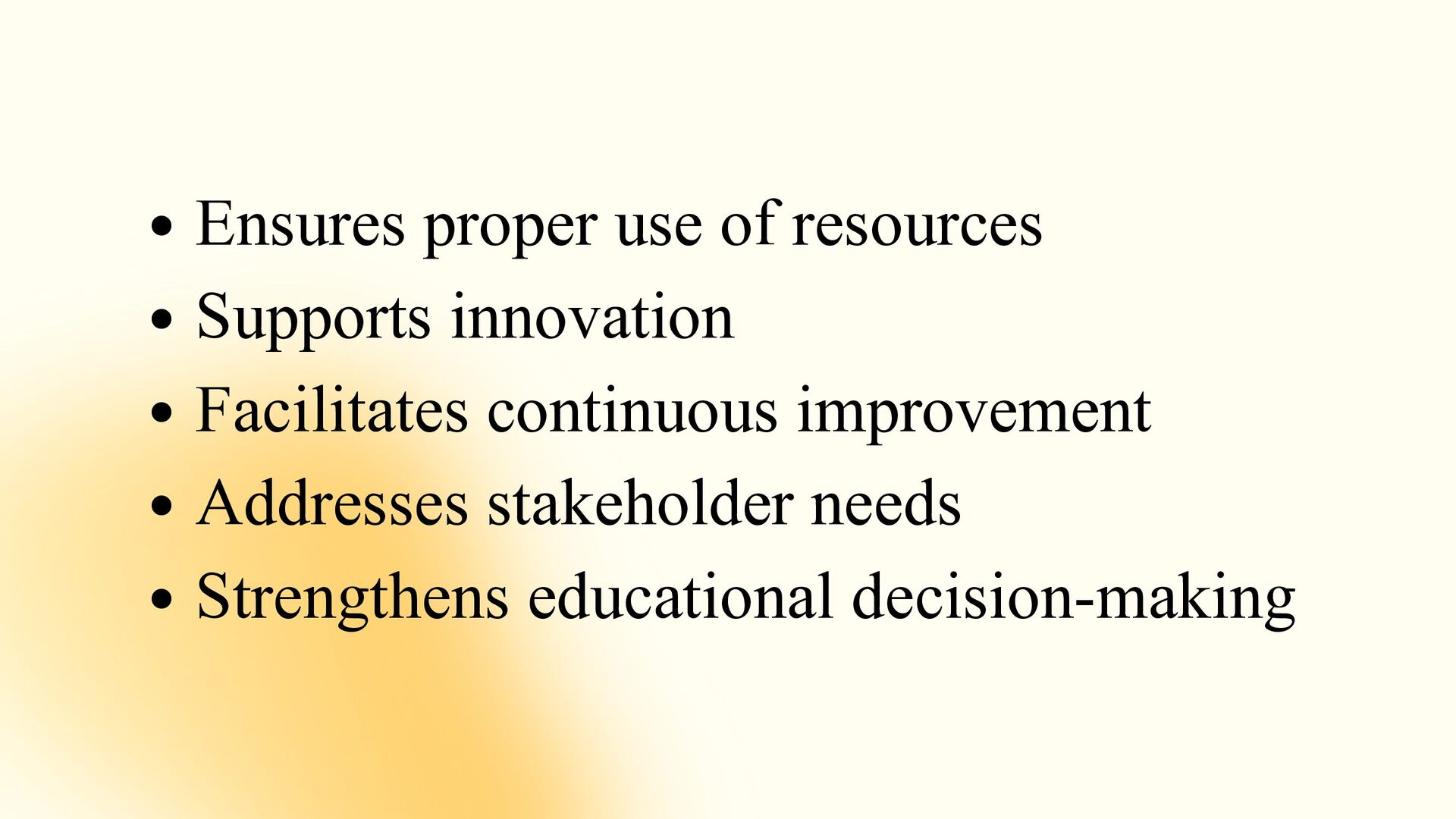
  22. Ensures proper use of resources Supports innovation Facilitates continuous improvement

    Addresses stakeholder needs Strengthens educational decision-making
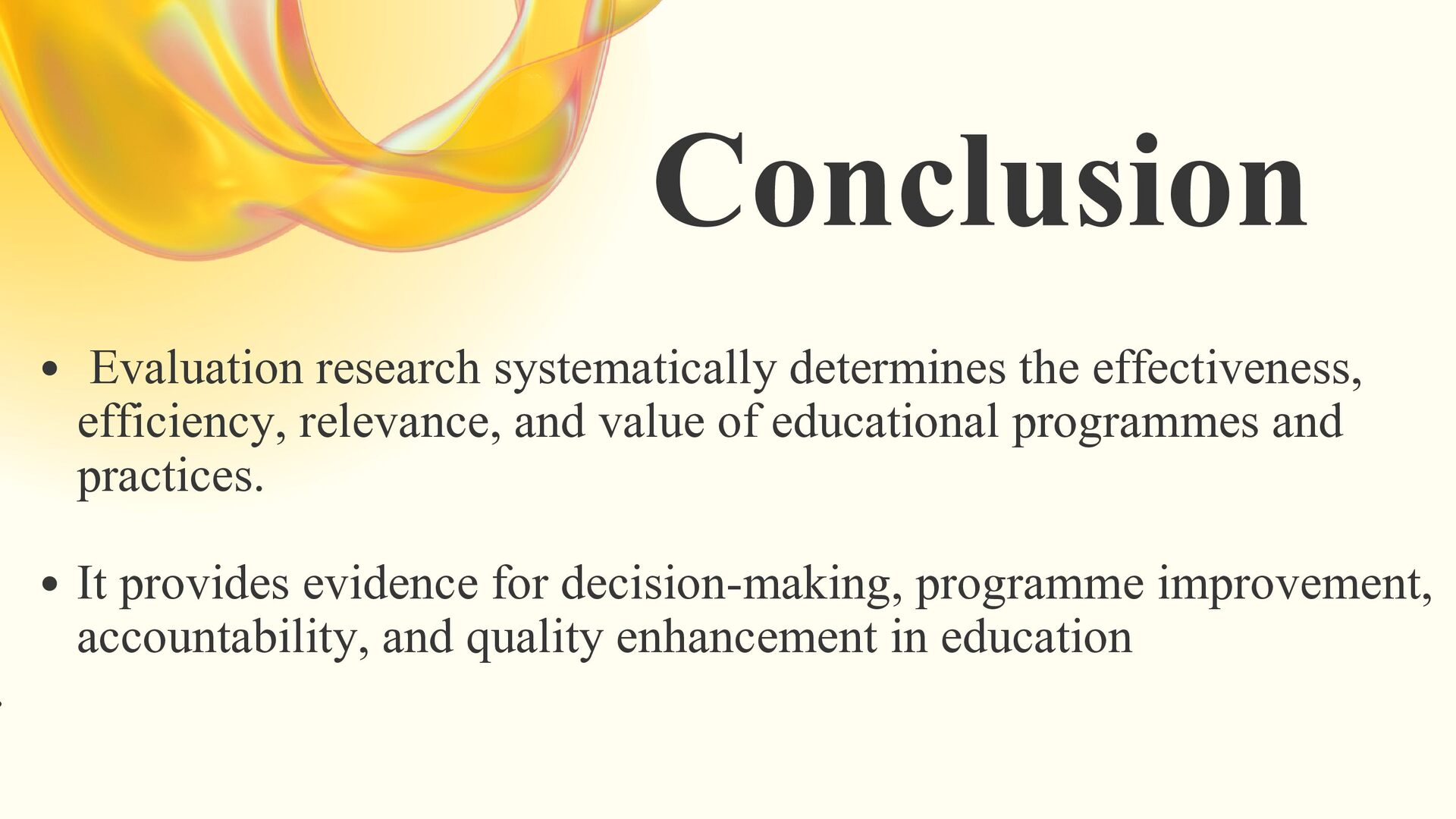
  23. . Conclusion Evaluation research systematically determines the effectiveness, efficiency, relevance,

    and value of educational programmes and practices. It provides evidence for decision-making, programme improvement, accountability, and quality enhancement in education