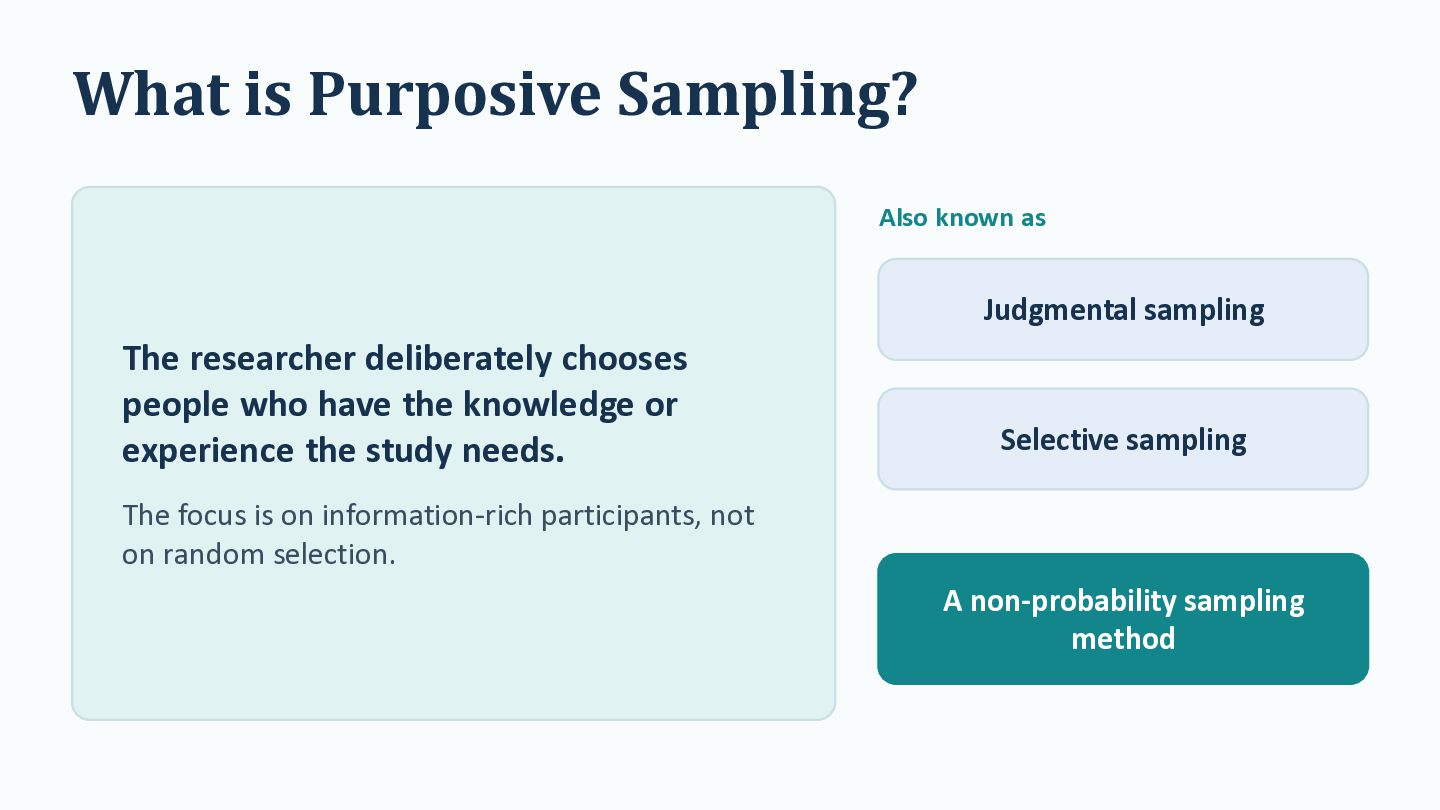
Purposive sampling is a non-probability sampling technique in which the researcher deliberately selects participants because they have specific characteristics, knowledge, or experience relevant to the study.
researcher deliberately chooses people who have the knowledge or experience the study needs. Selective sampling The focus is on information-rich participants, not on random selection. A non-probability sampling method
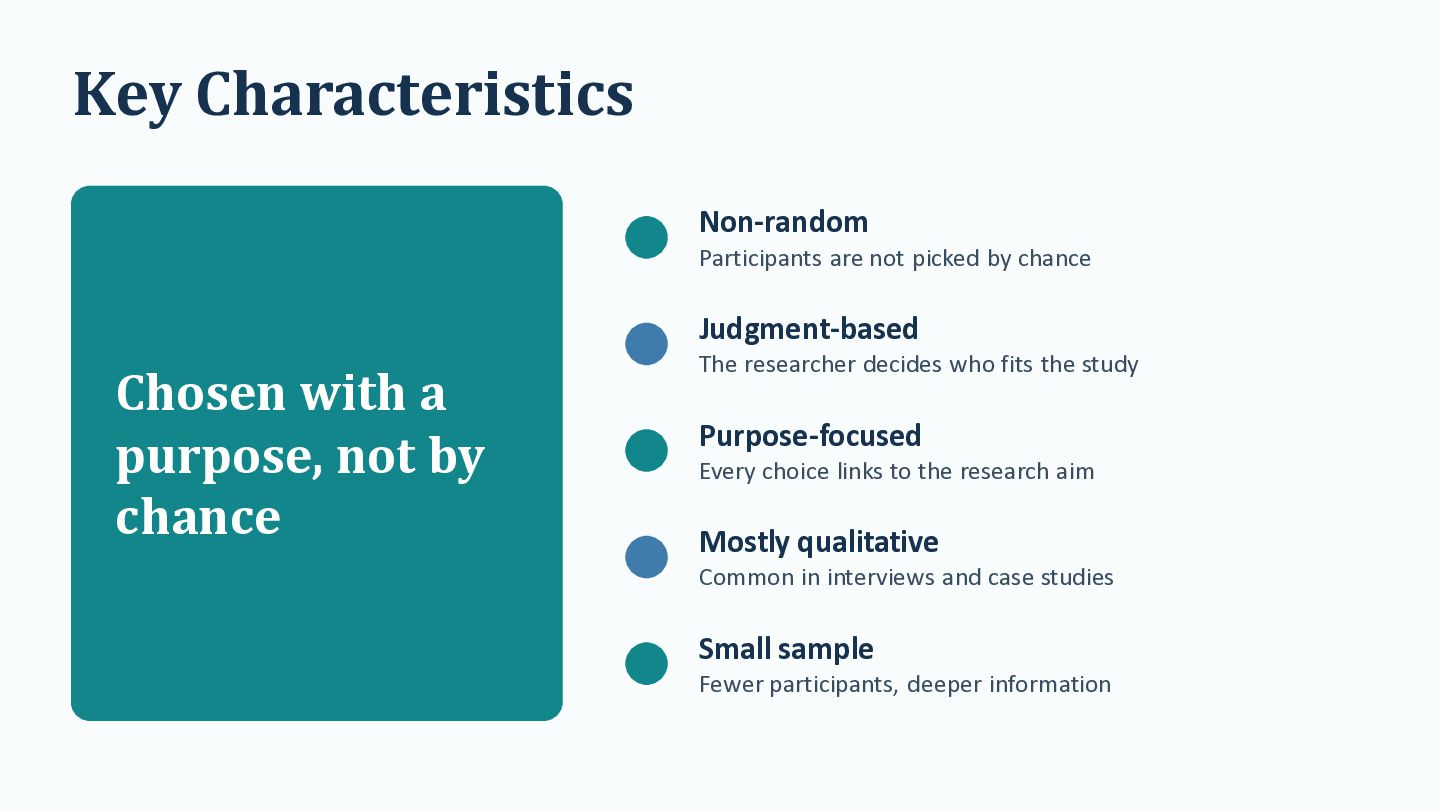
Chosen with a purpose, not by chance The researcher decides who fits the study Purpose-focused Every choice links to the research aim Mostly qualitative Common in interviews and case studies Small sample Fewer participants, deeper information
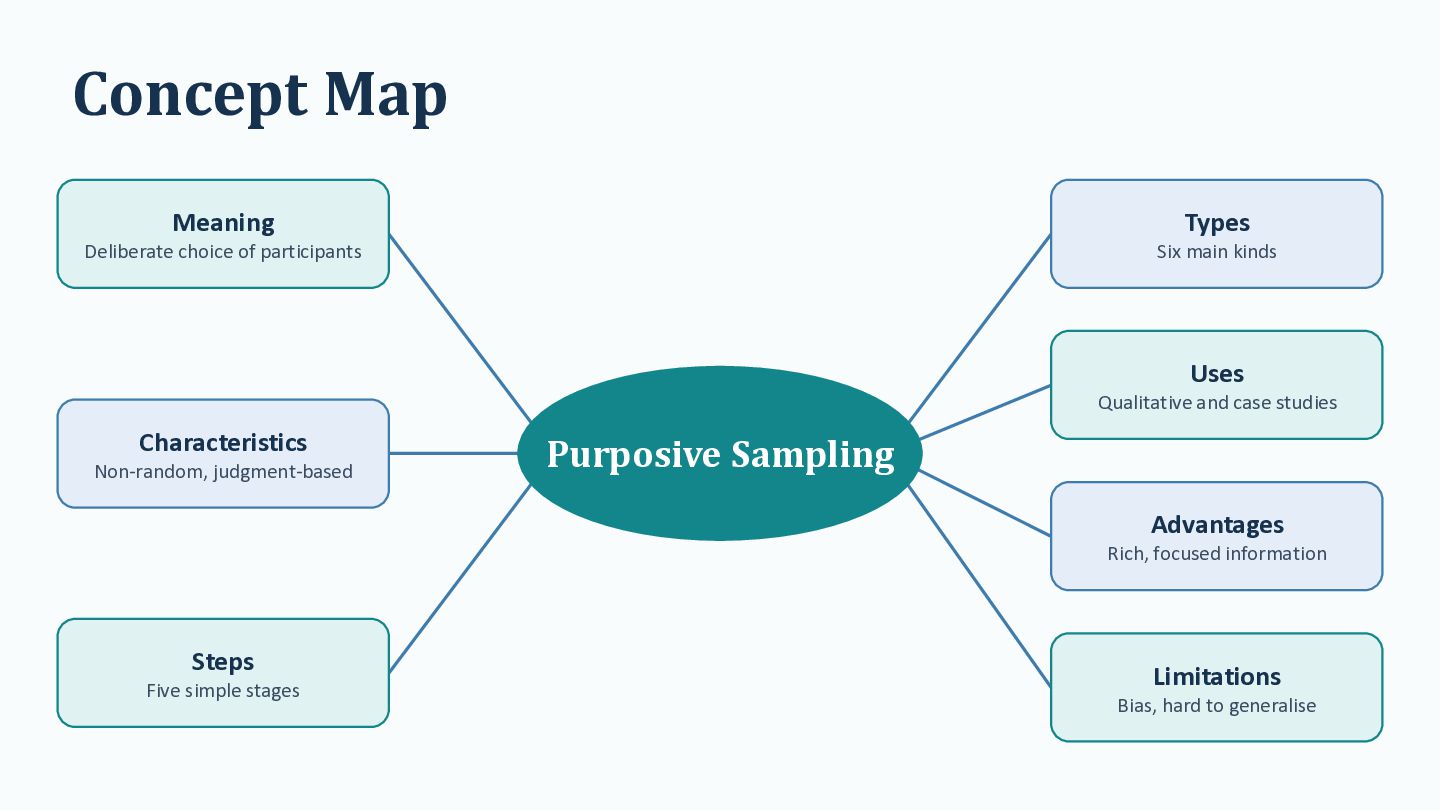
kinds Uses Qualitative and case studies Characteristics Non-random, judgment-based Purposive Sampling Advantages Rich, focused information Steps Five simple stages Limitations Bias, hard to generalise
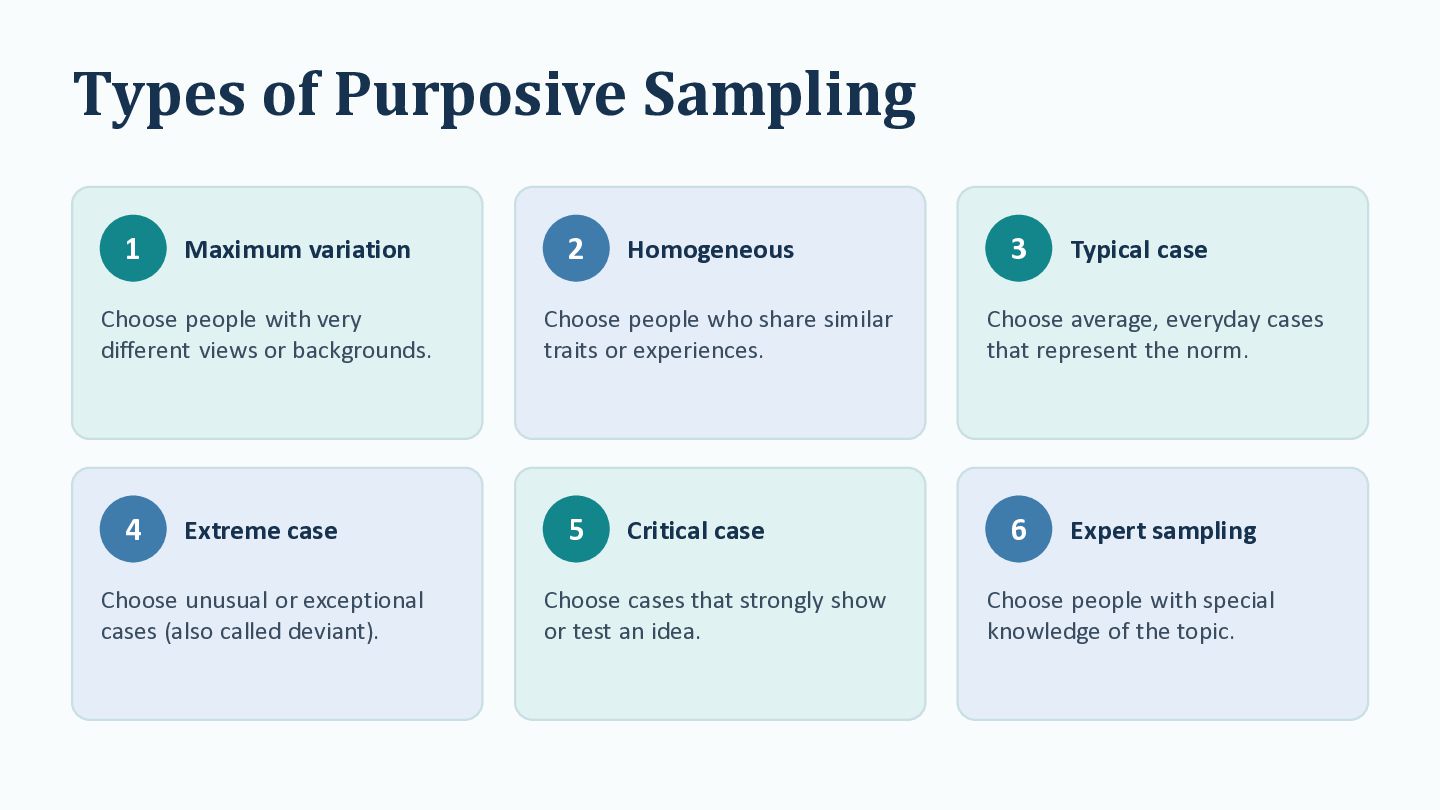
very different views or backgrounds. 4 Extreme case Choose unusual or exceptional cases (also called deviant). 2 Homogeneous Choose people who share similar traits or experiences. 5 Critical case Choose cases that strongly show or test an idea. 3 Typical case Choose average, everyday cases that represent the norm. 6 Expert sampling Choose people with special knowledge of the topic.
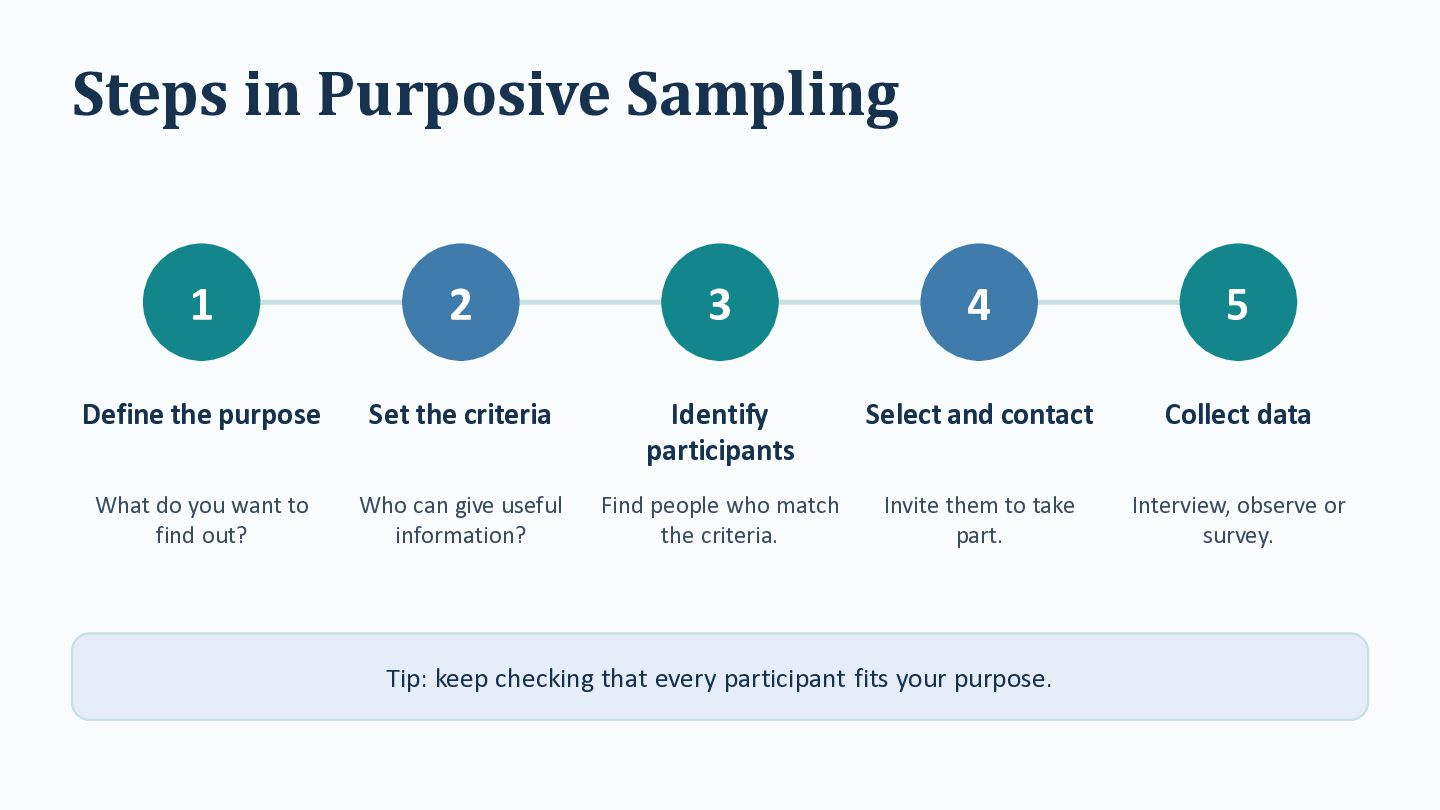
the purpose Set the criteria Identify participants Select and contact Collect data What do you want to find out? Who can give useful information? Find people who match the criteria. Invite them to take part. Interview, observe or survey. Tip: keep checking that every participant fits your purpose.
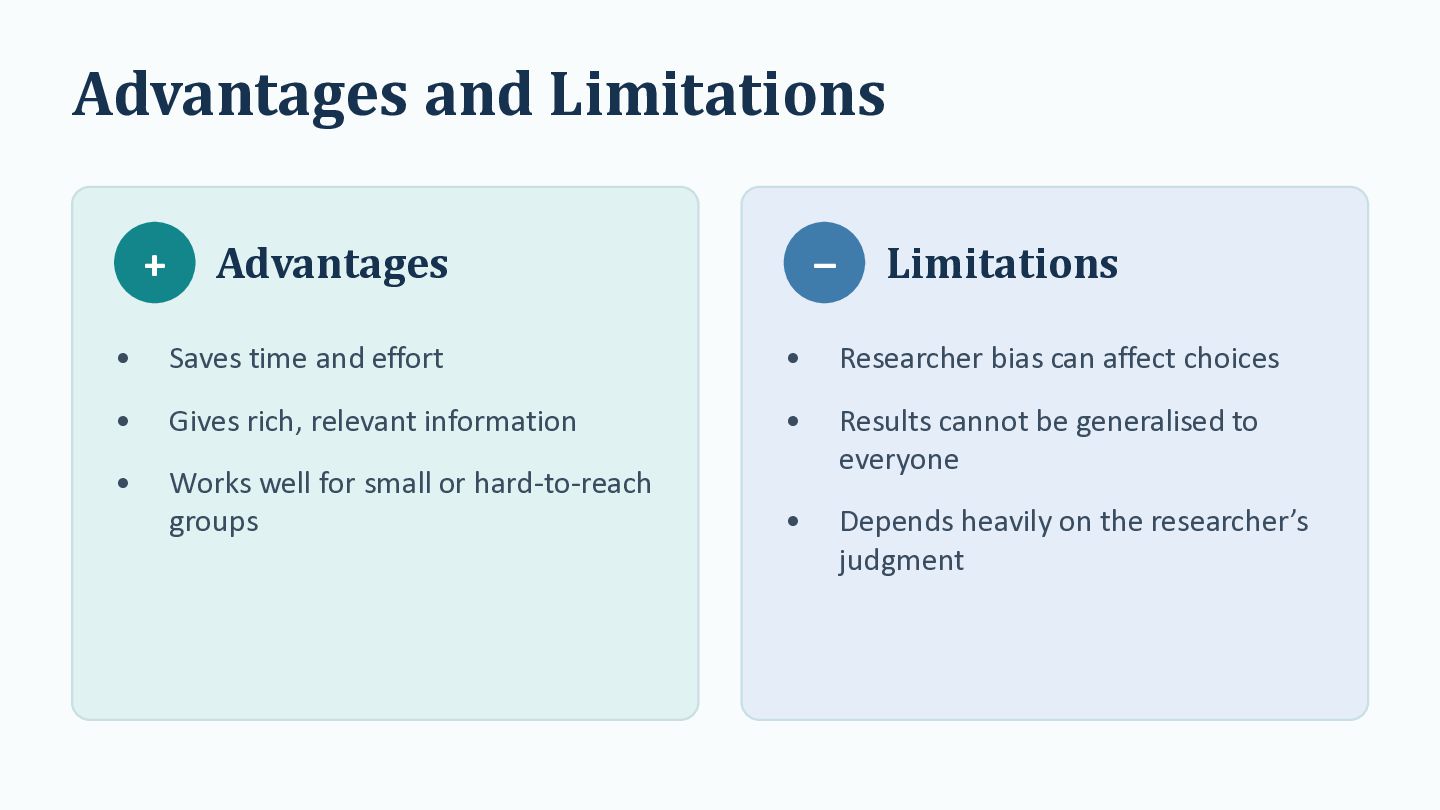
and effort • Researcher bias can affect choices • Gives rich, relevant information • • Works well for small or hard-to-reach groups Results cannot be generalised to everyone • Depends heavily on the researcher’s judgment
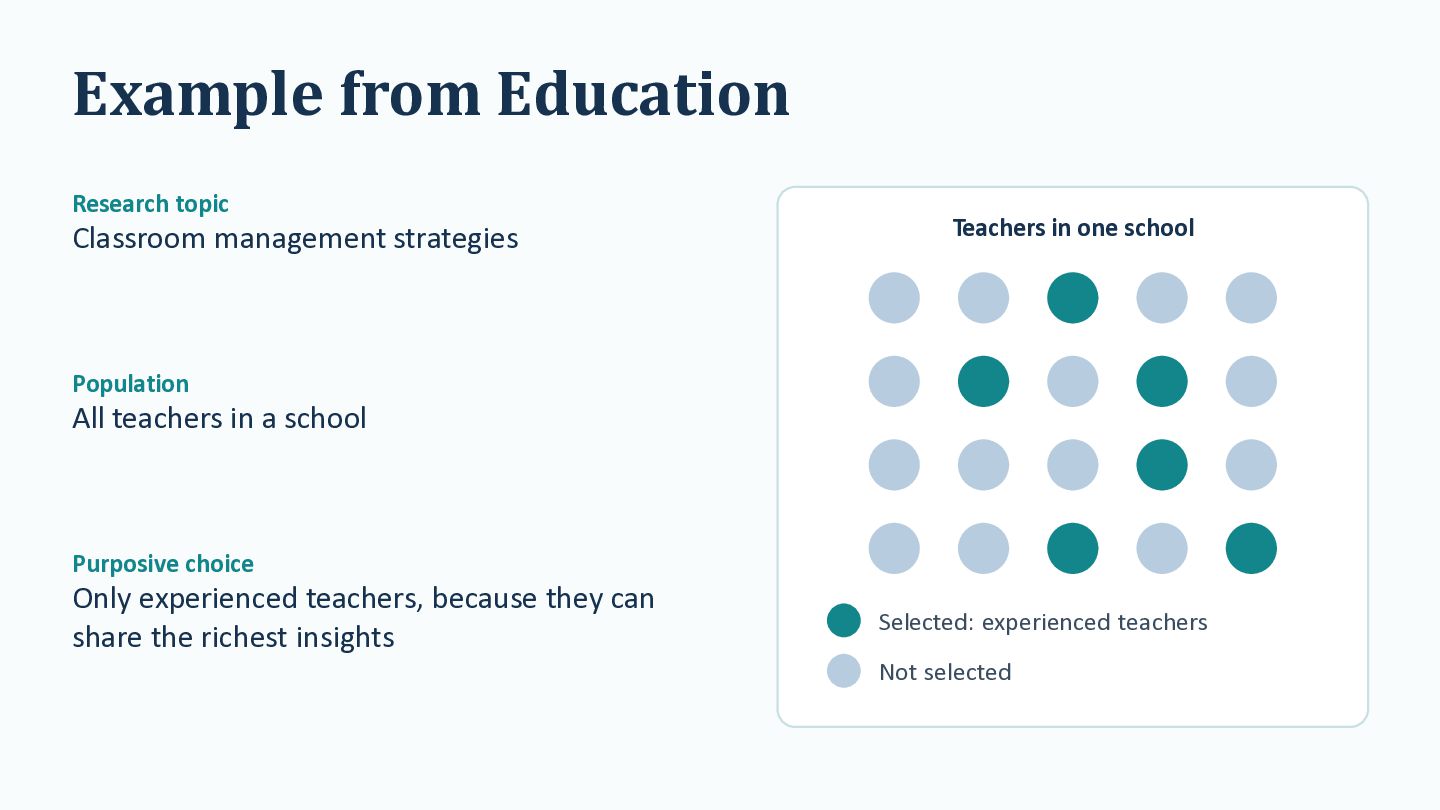
one school Population All teachers in a school Purposive choice Only experienced teachers, because they can share the richest insights Selected: experienced teachers Not selected
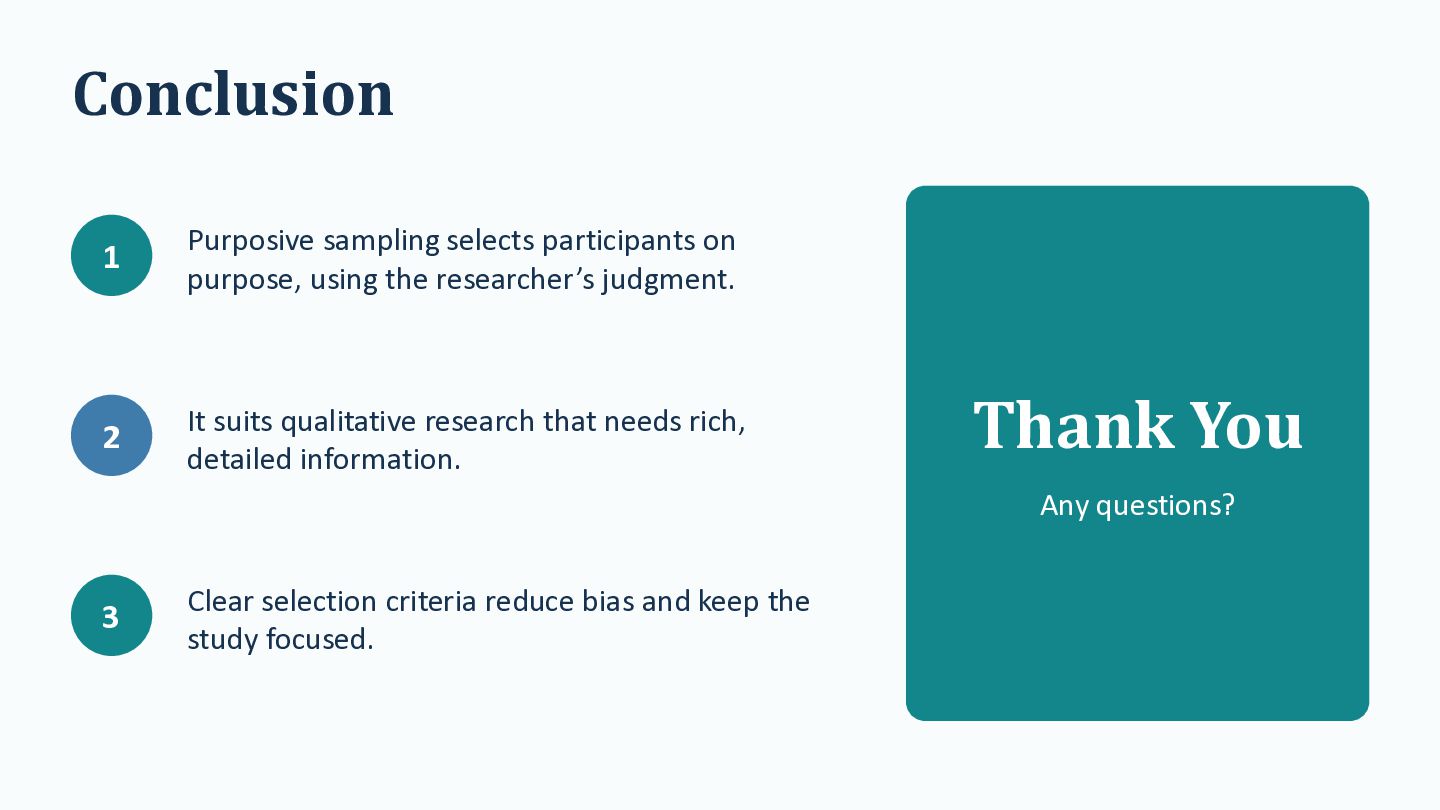
researcher’s judgment. 2 It suits qualitative research that needs rich, detailed information. Thank You Any questions? 3 Clear selection criteria reduce bias and keep the study focused.


 menon2026
 samlambert
 emna__ayadi
 danielanewman
 addyosmani
 jonrohan
 sabderemane
 kimpetersen
 427marketing
 auna
 aleyda
 codingconduct
 tamaranovitovic