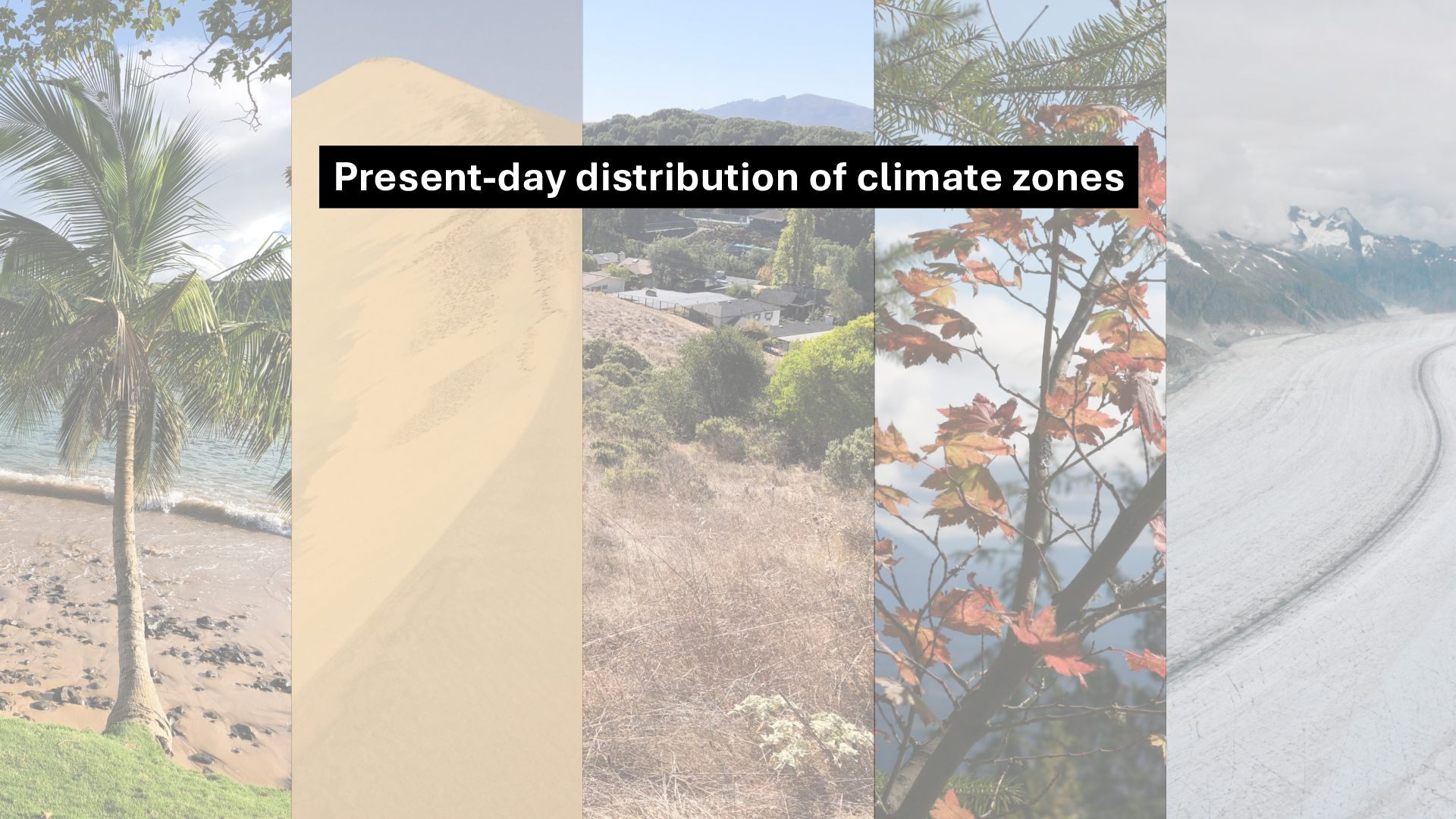
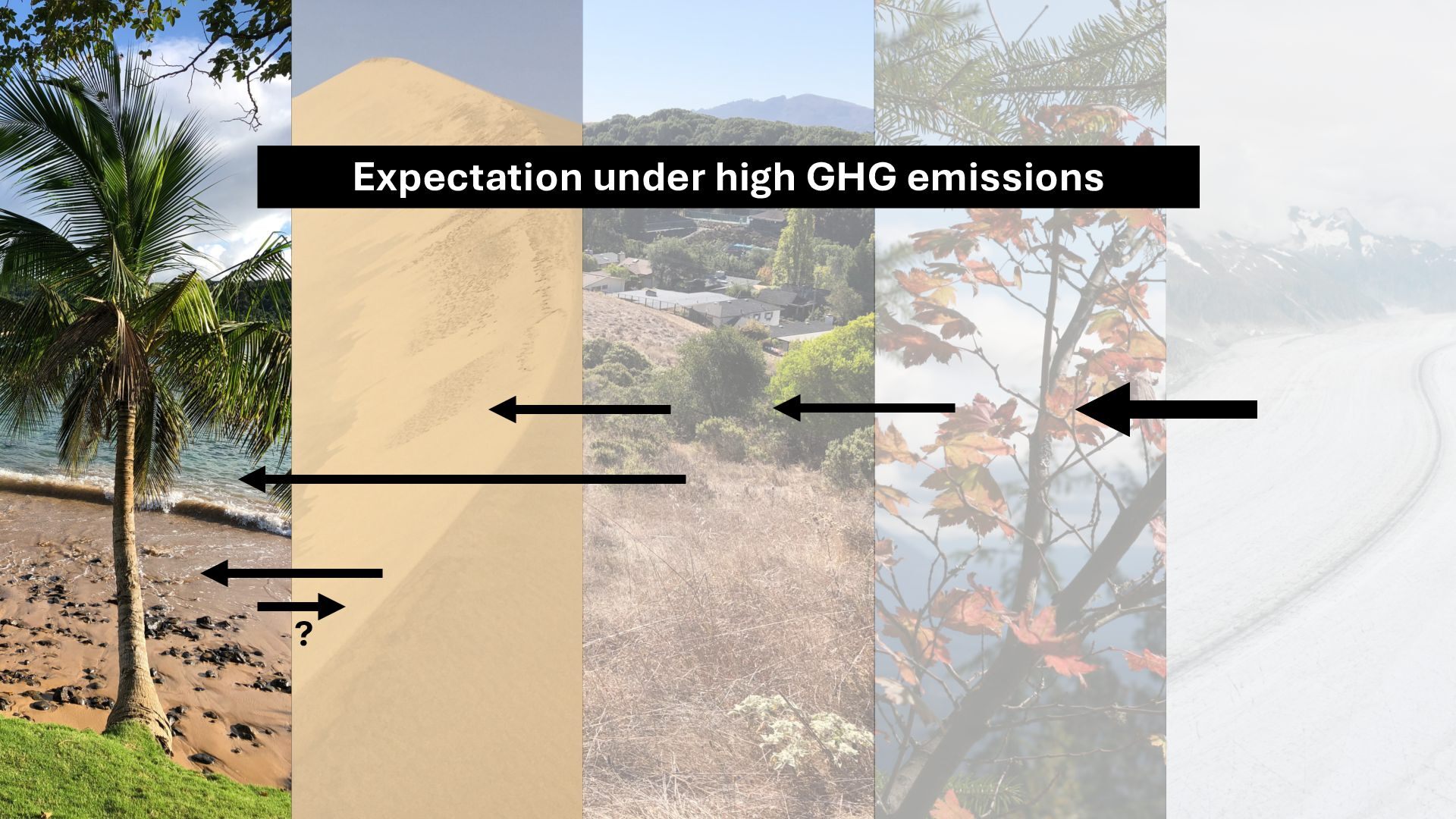
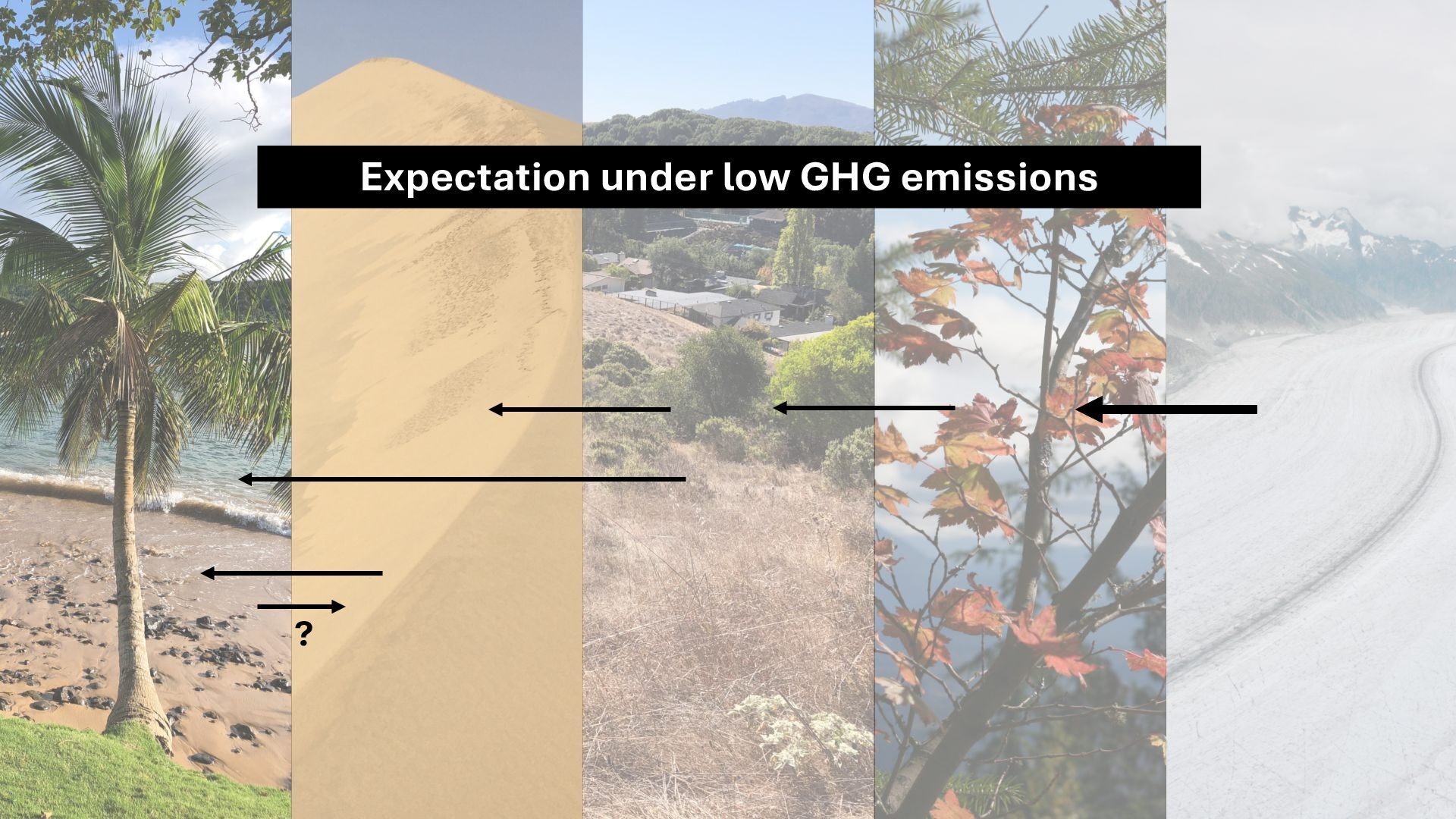
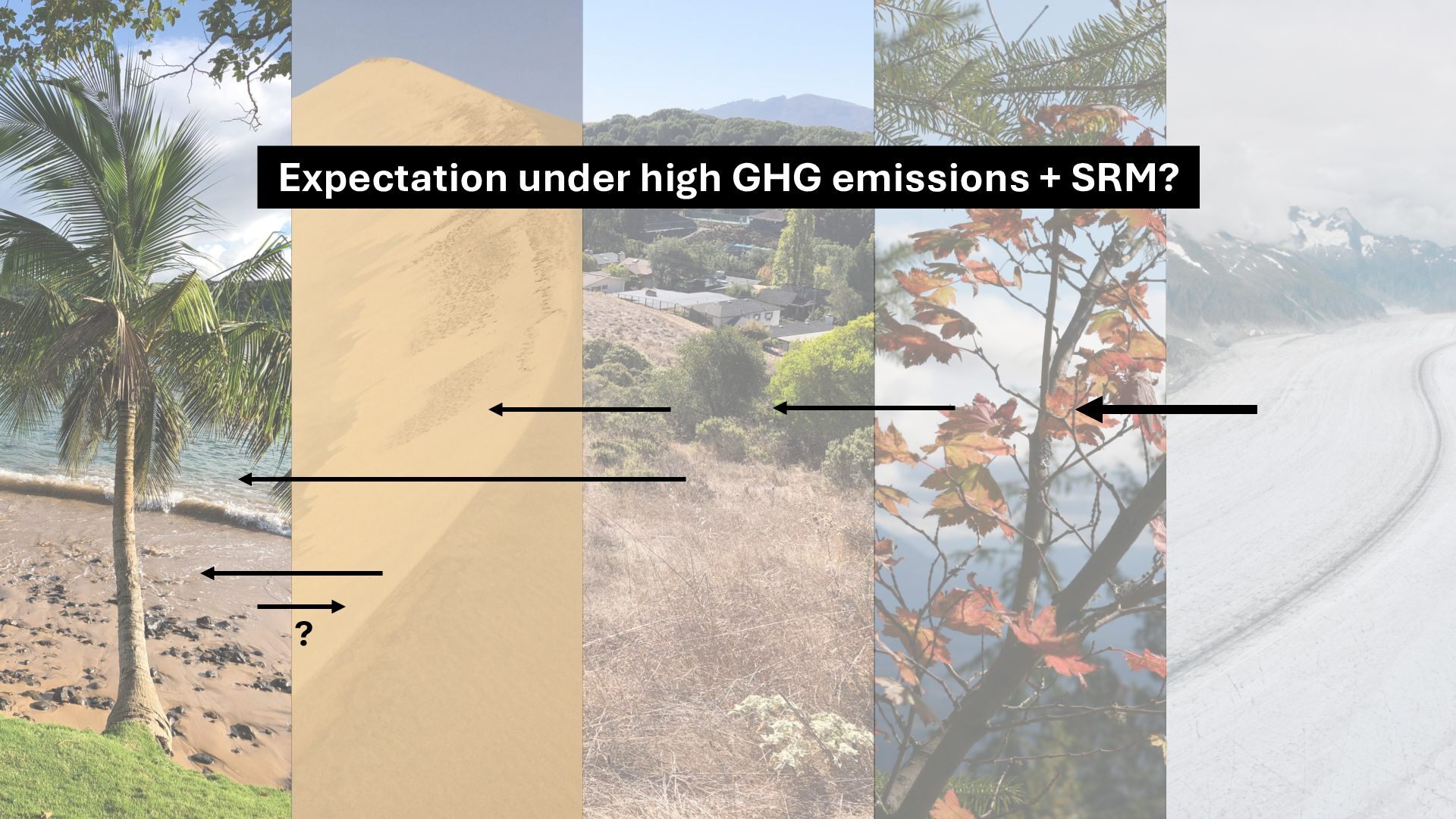
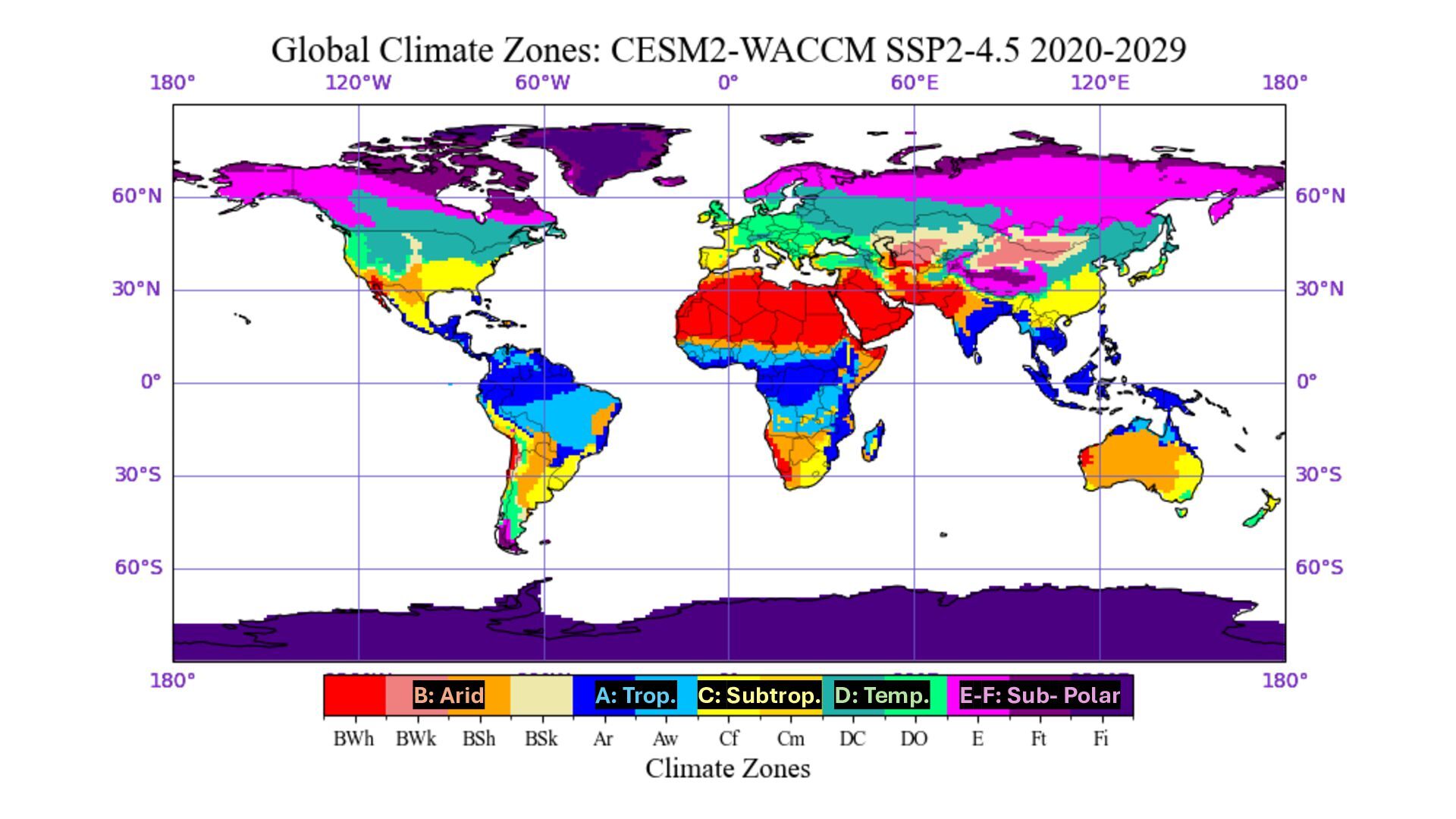
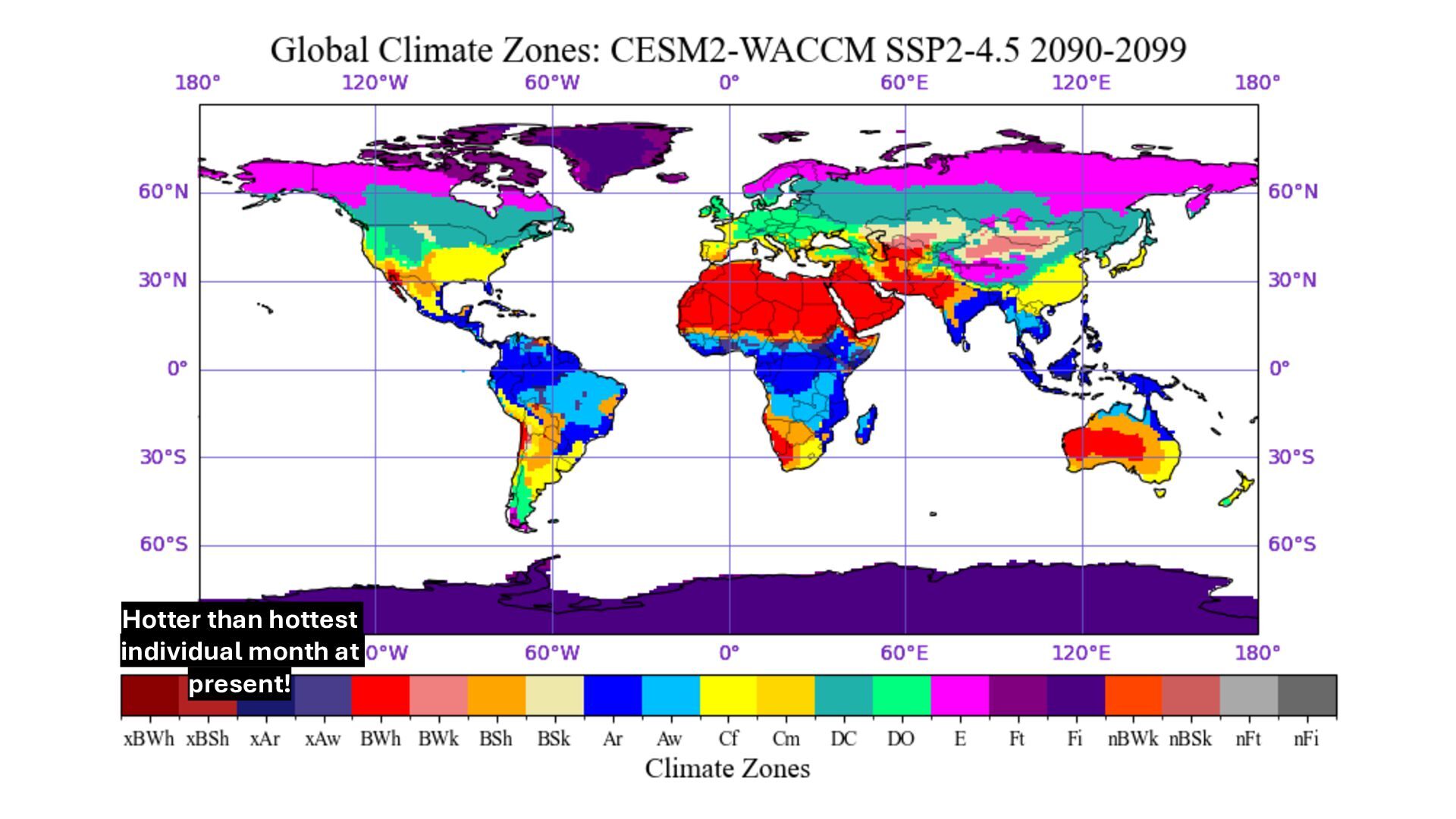
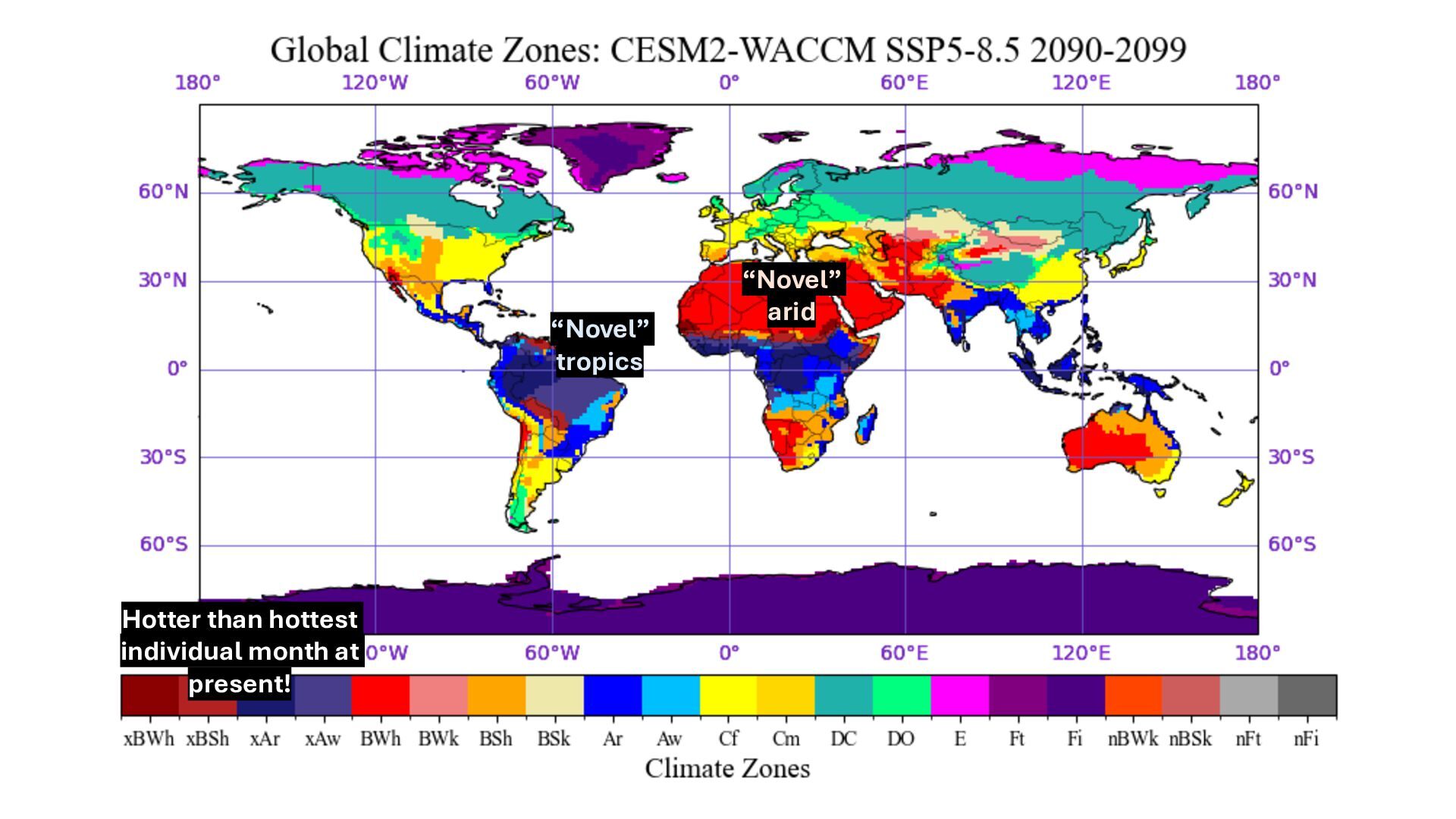
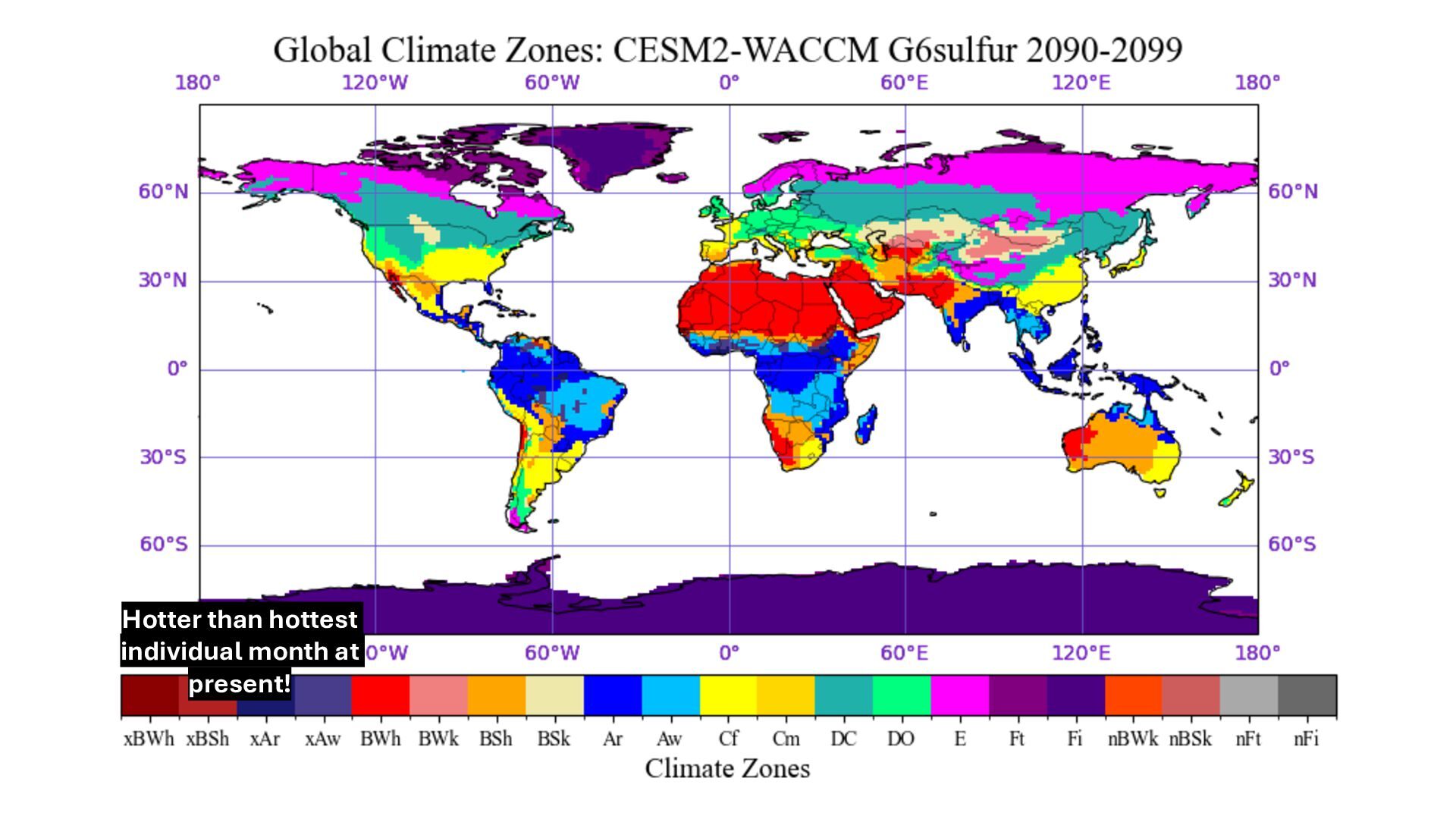
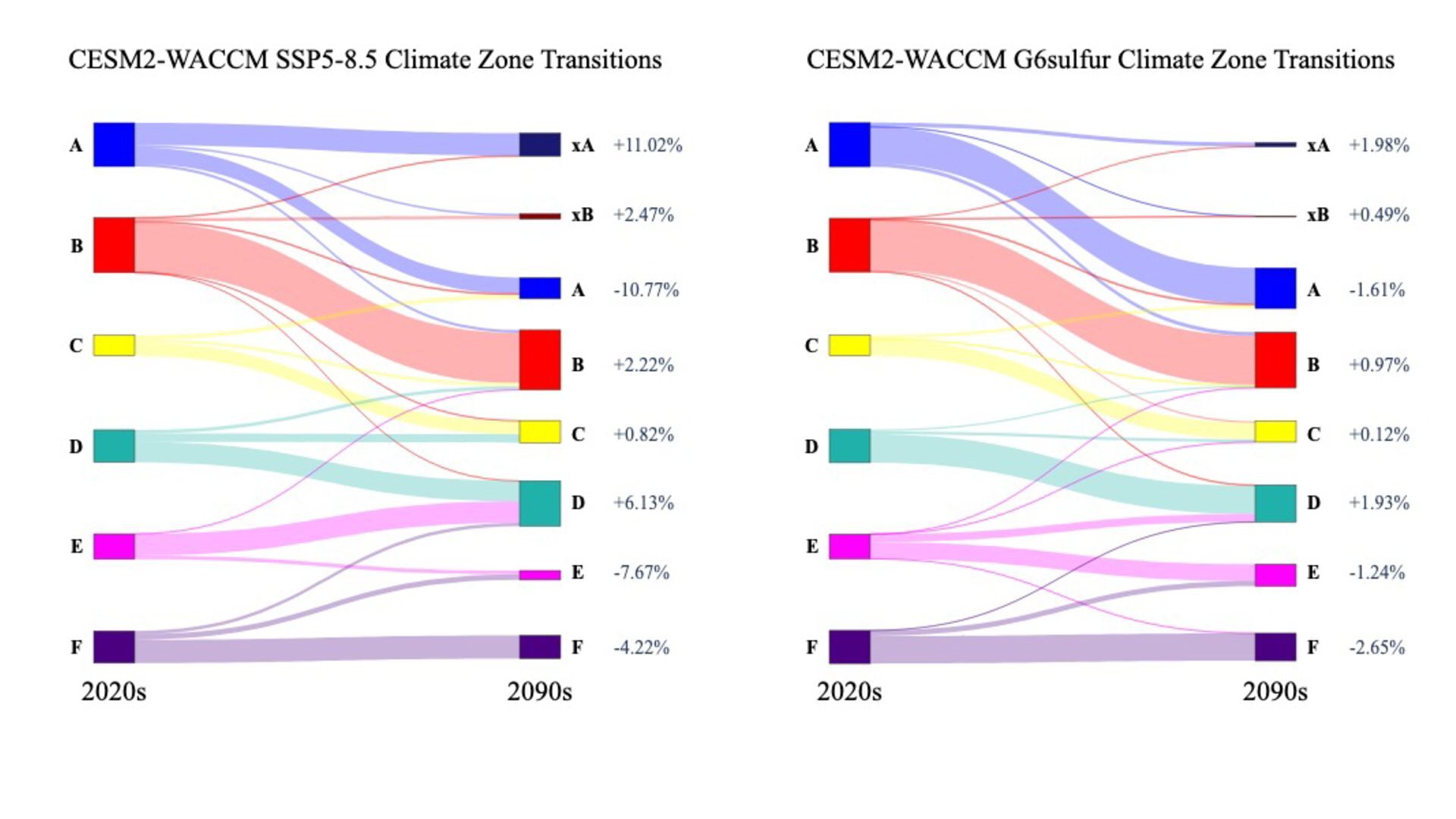
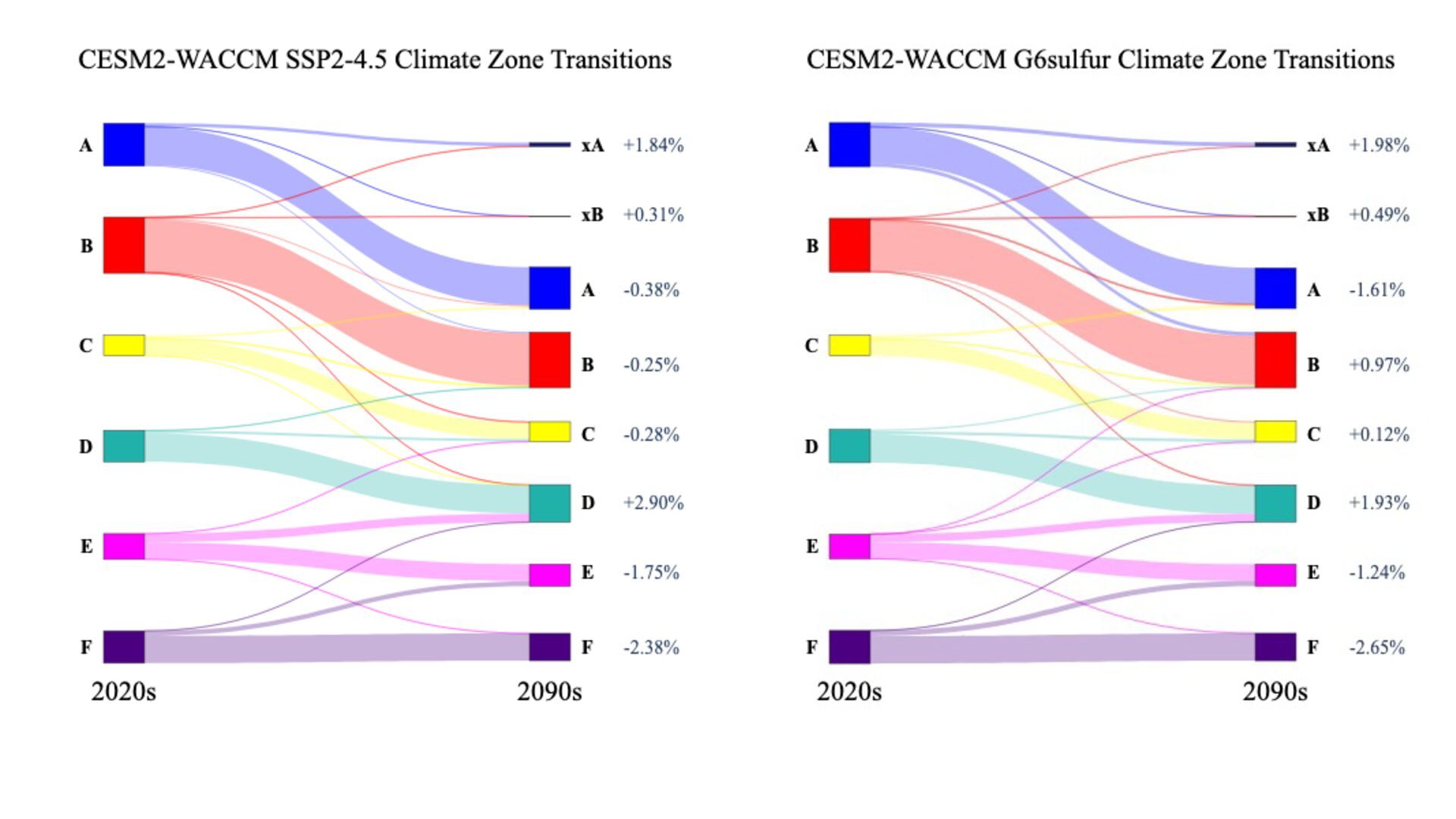
Would solar radiation modification reduce the adaptation burden from shifting climate zones?
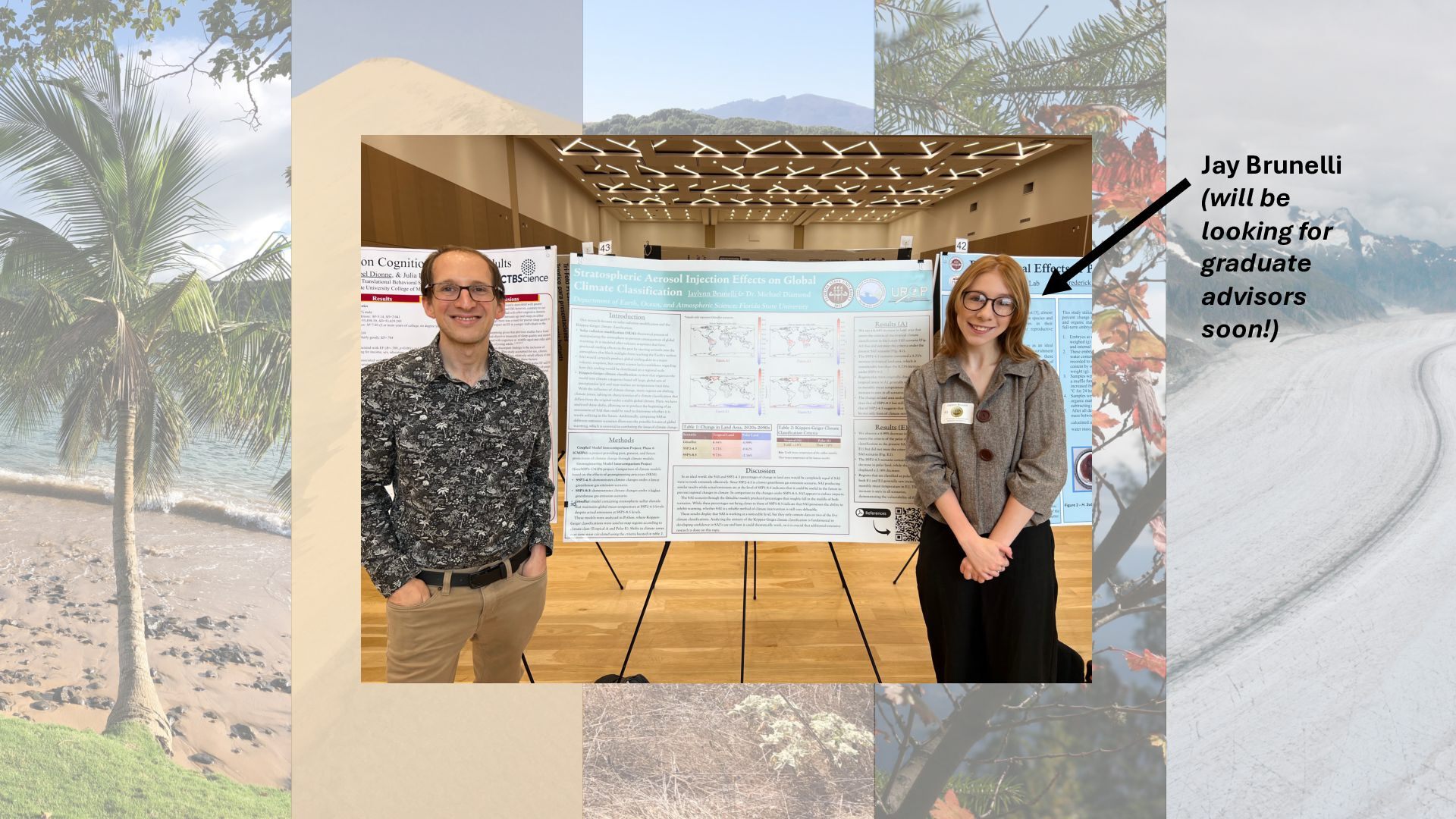
Presentation given at the Degrees Global Forum in Cape Town, South Africa, on 15 May 2025 in the Impacts Modelling 2 session, based on work by then-FSU undergraduate student Jaylynn Brunelli.
climate zones? Jaylynn Brunelli & Michael Diamond ([email protected]) Department of Earth, Ocean, and Atmospheric Science Florida State University, Tallahassee, USA Degrees Global Forum: Impacts Modelling 2 Cape Town, South Africa // 15 May 2025
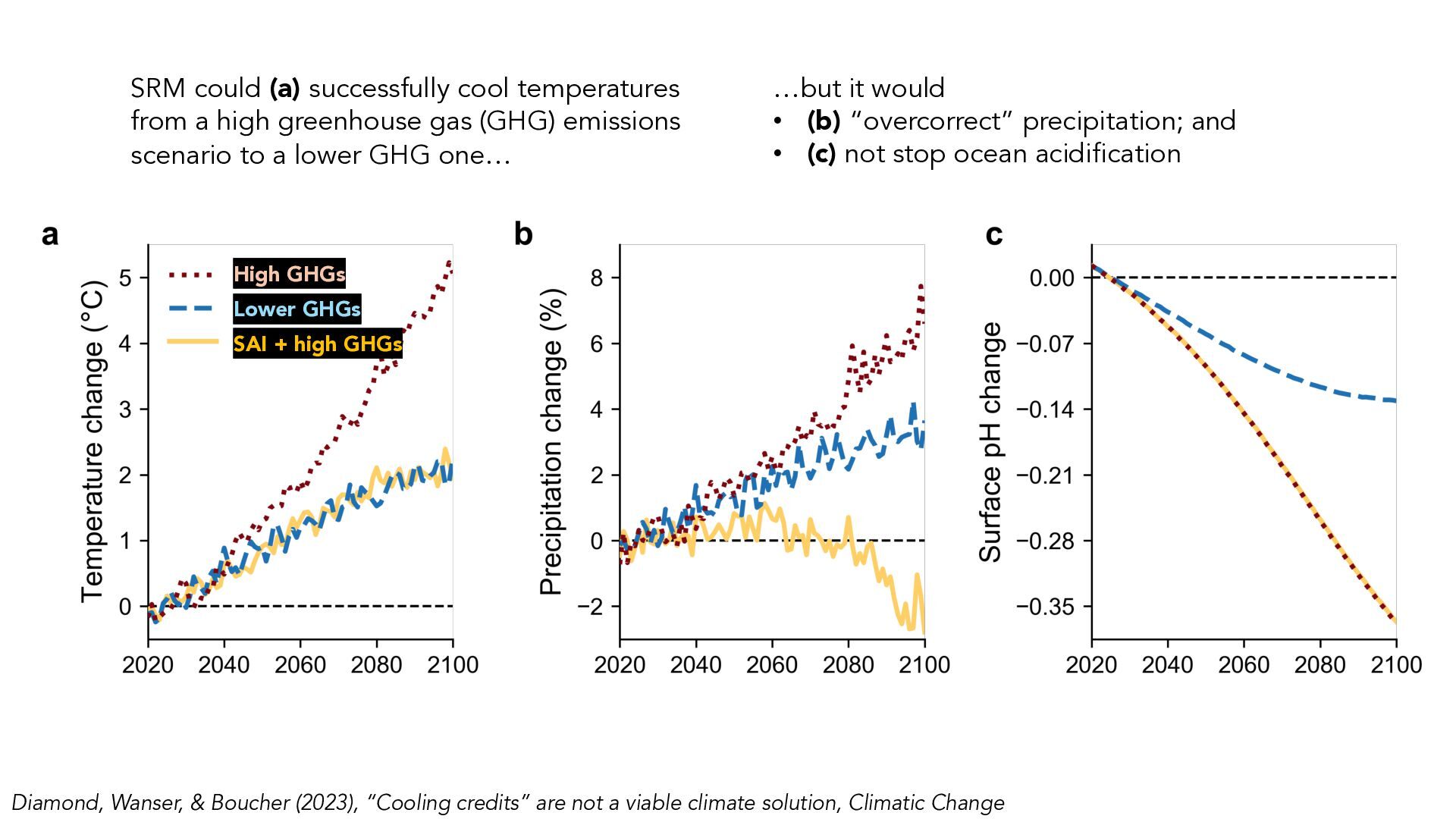
gas (GHG) emissions scenario to a lower GHG one… …but it would • (b) “overcorrect” precipitation; and • (c) not stop ocean acidification High GHGs Lower GHGs SAI + high GHGs Diamond, Wanser, & Boucher (2023), “Cooling credits” are not a viable climate solution, Climatic Change
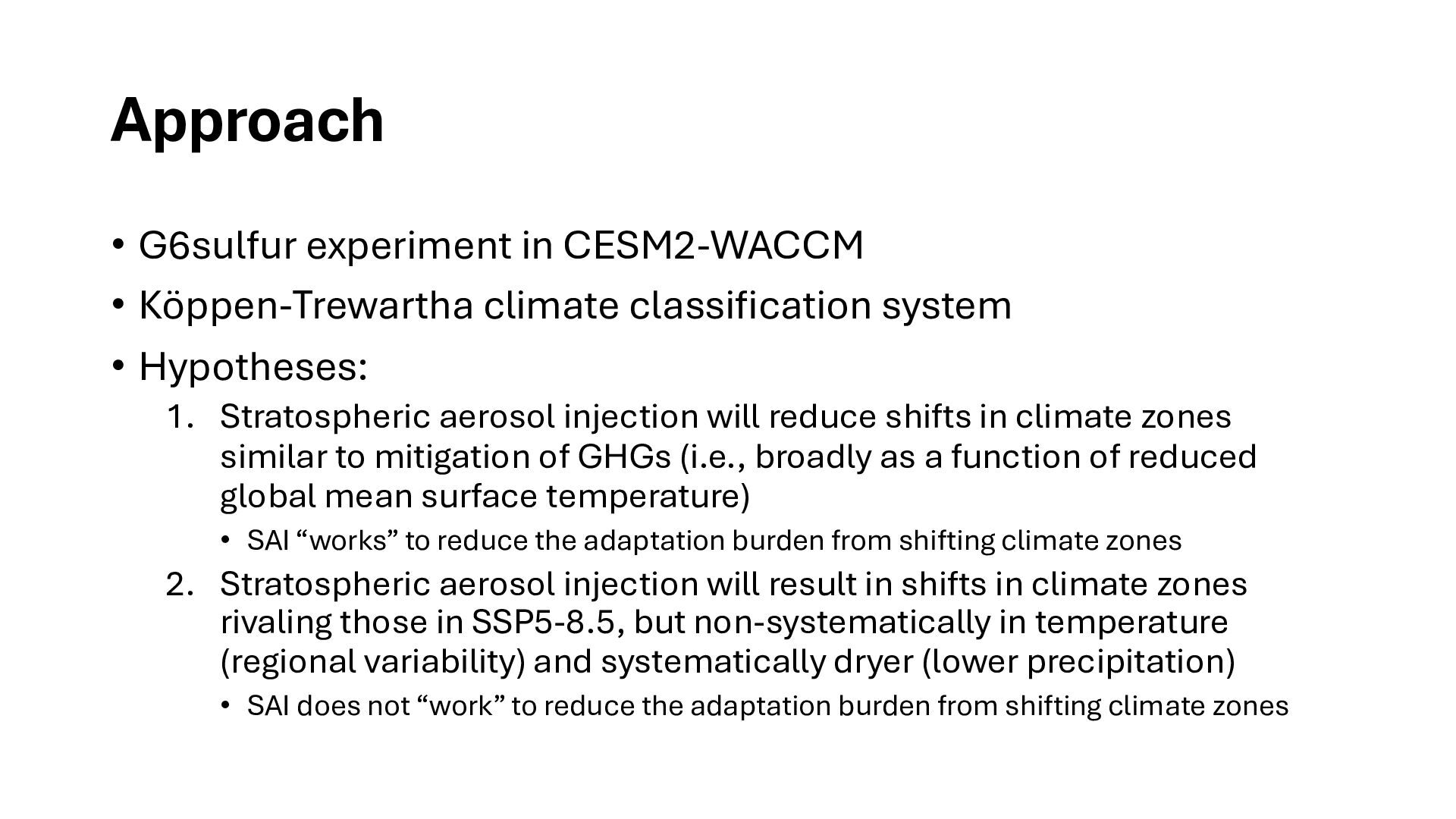
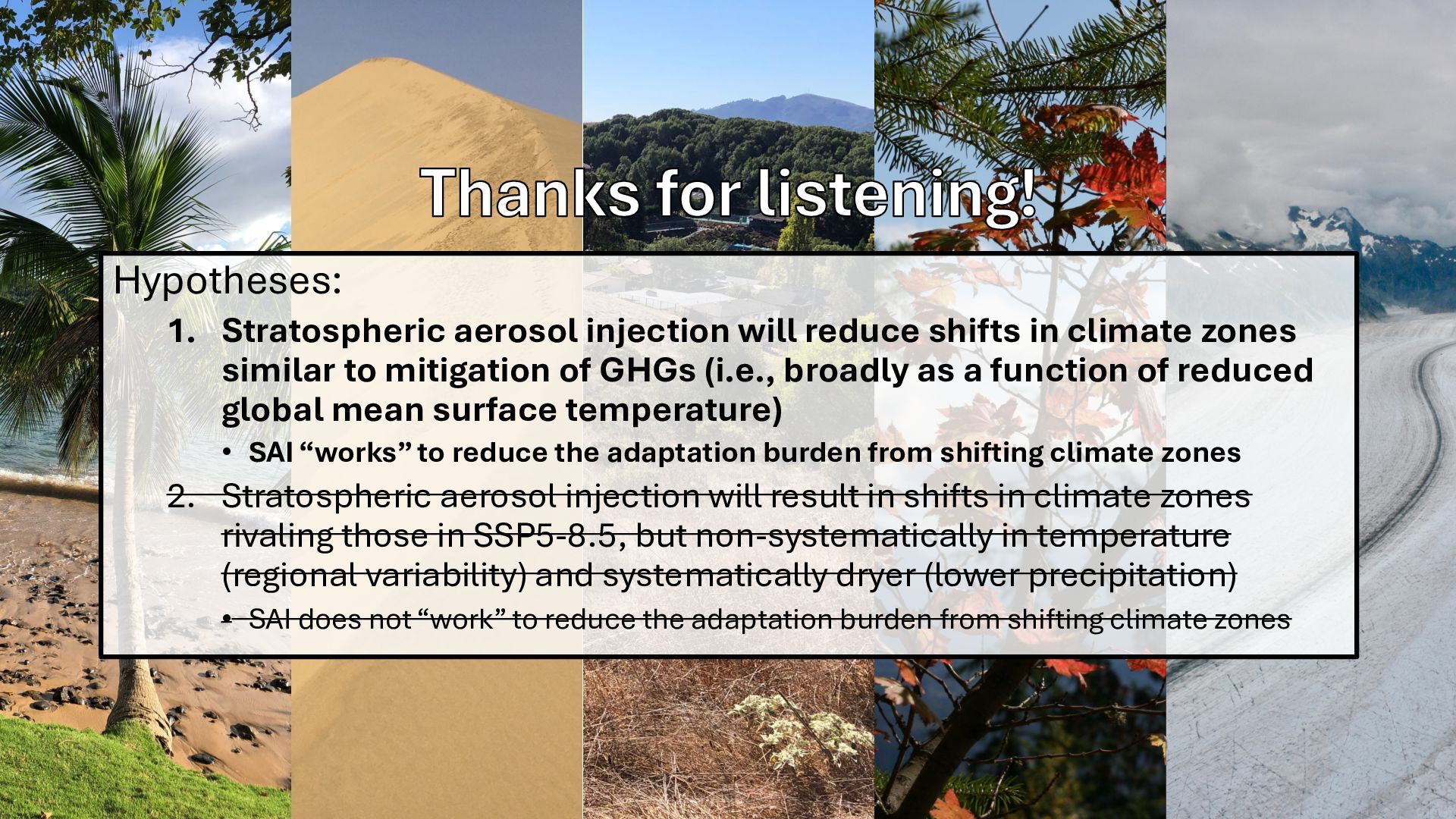
system • Hypotheses: 1. Stratospheric aerosol injection will reduce shifts in climate zones similar to mitigation of GHGs (i.e., broadly as a function of reduced global mean surface temperature) • SAI “works” to reduce the adaptation burden from shifting climate zones 2. Stratospheric aerosol injection will result in shifts in climate zones rivaling those in SSP5-8.5, but non-systematically in temperature (regional variability) and systematically dryer (lower precipitation) • SAI does not “work” to reduce the adaptation burden from shifting climate zones
zones similar to mitigation of GHGs (i.e., broadly as a function of reduced global mean surface temperature) • SAI “works” to reduce the adaptation burden from shifting climate zones 2. Stratospheric aerosol injection will result in shifts in climate zones rivaling those in SSP5-8.5, but non-systematically in temperature (regional variability) and systematically dryer (lower precipitation) • SAI does not “work” to reduce the adaptation burden from shifting climate zones


 rlifchitz
 arfon
 trycycle
 institutdelelevage
 aikinohara
 kiyoshi
 naokimuroki
 jagupath
 peterdesmet
 jarvist
 jonrohan
 akihiro_kokubo
 csswizardry
 davetheseo
 axbom
 skipperchong
 baasie
 techseoconnect
 oripsolob
 kimpetersen
 gurzu