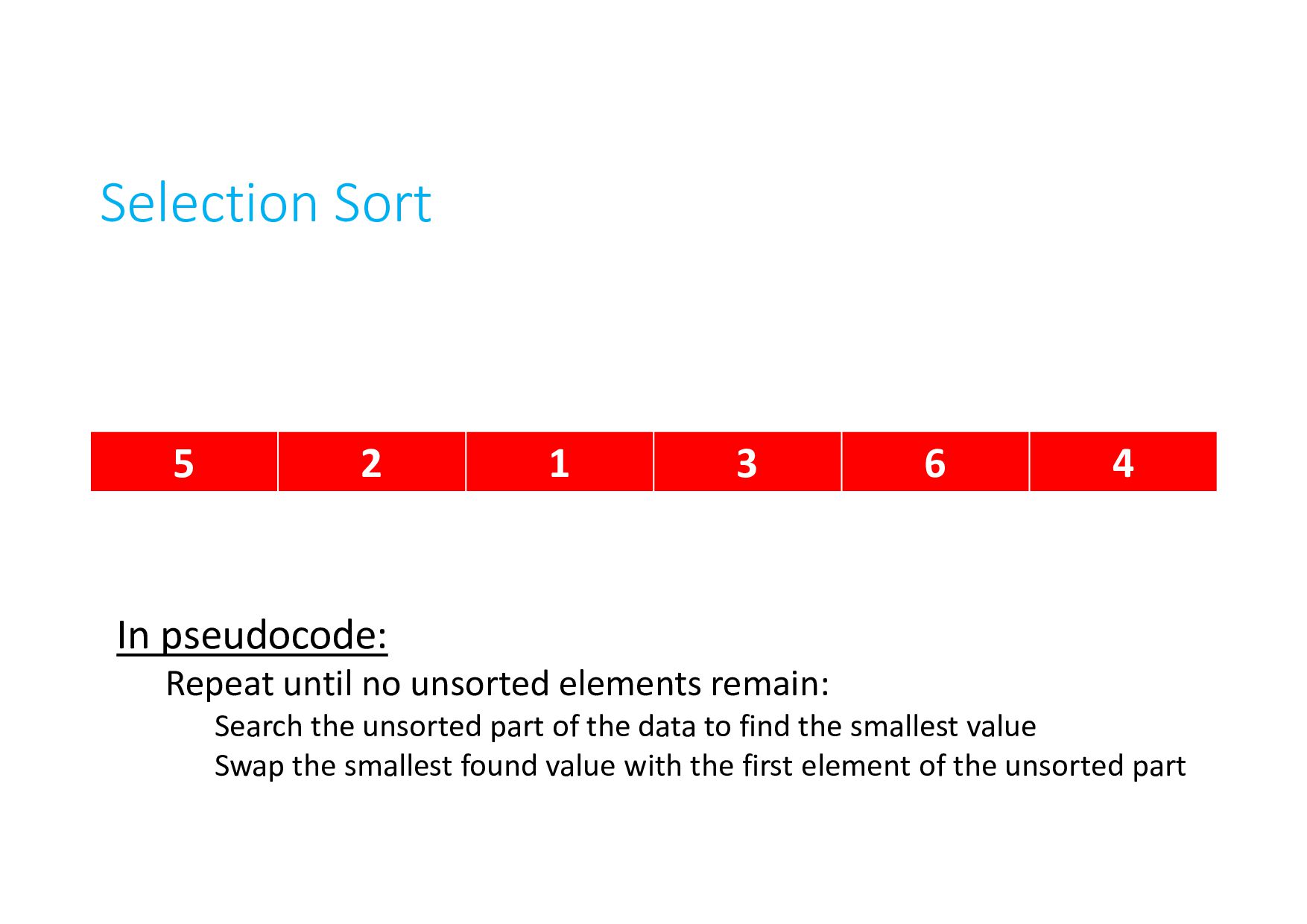
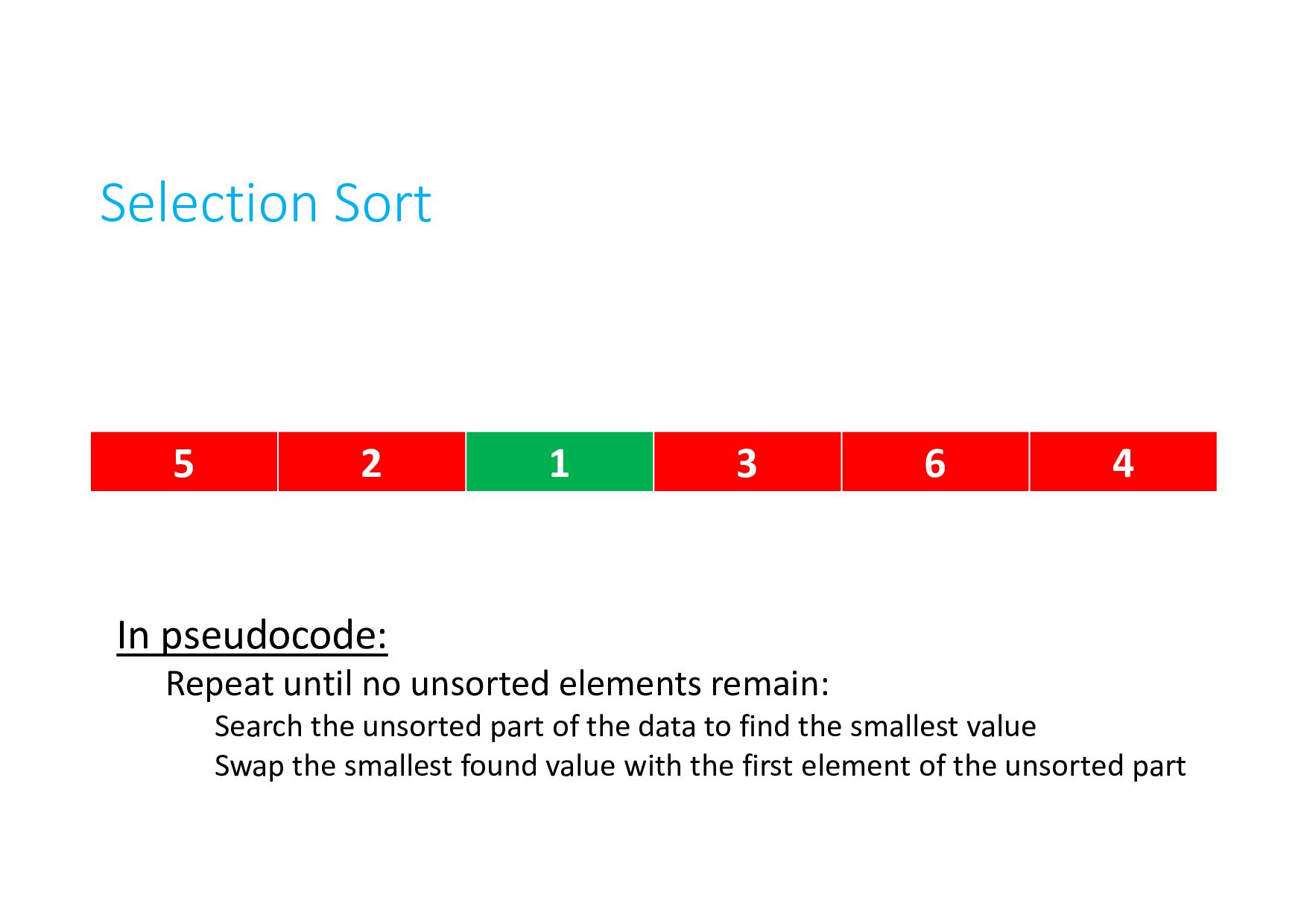
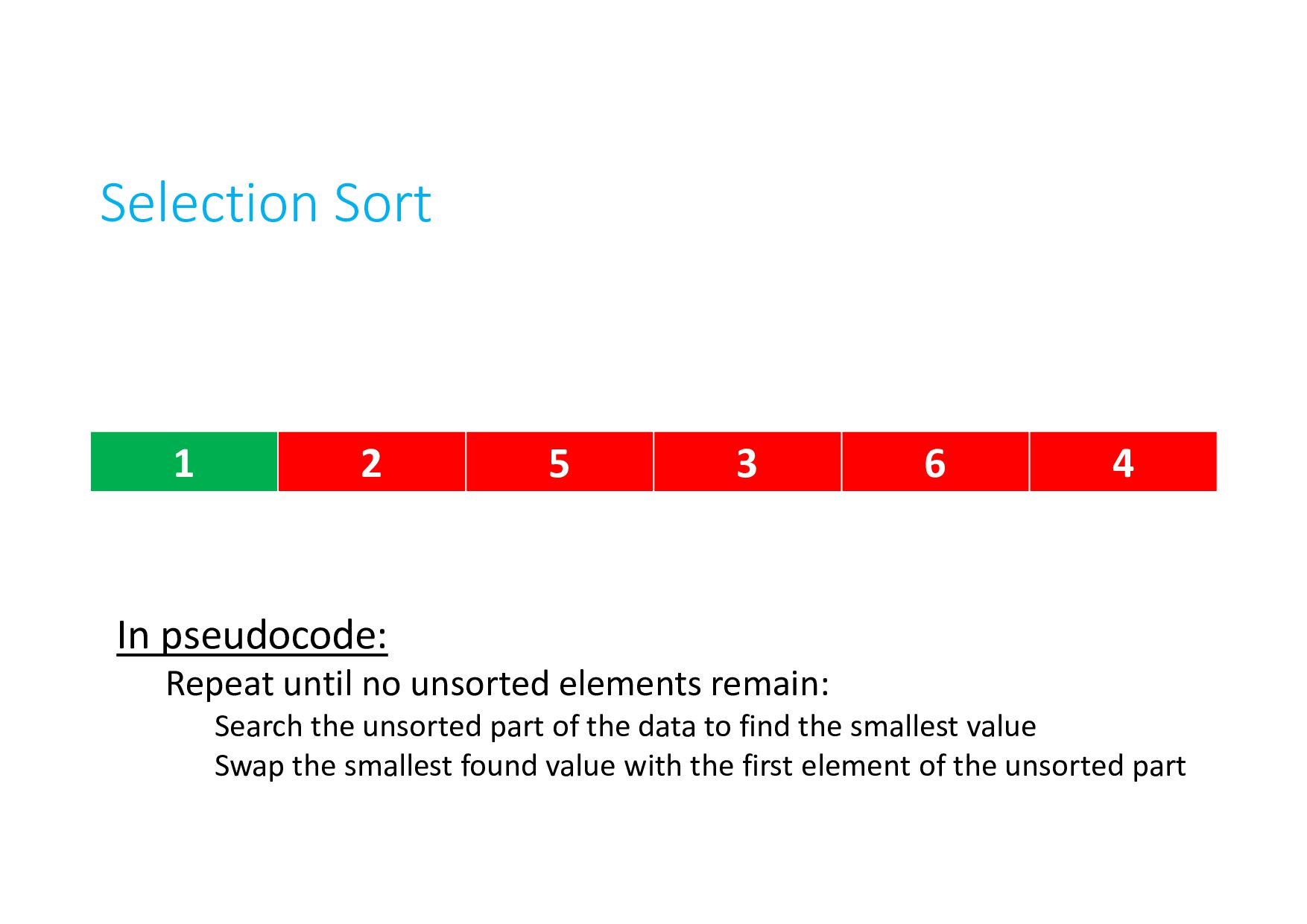
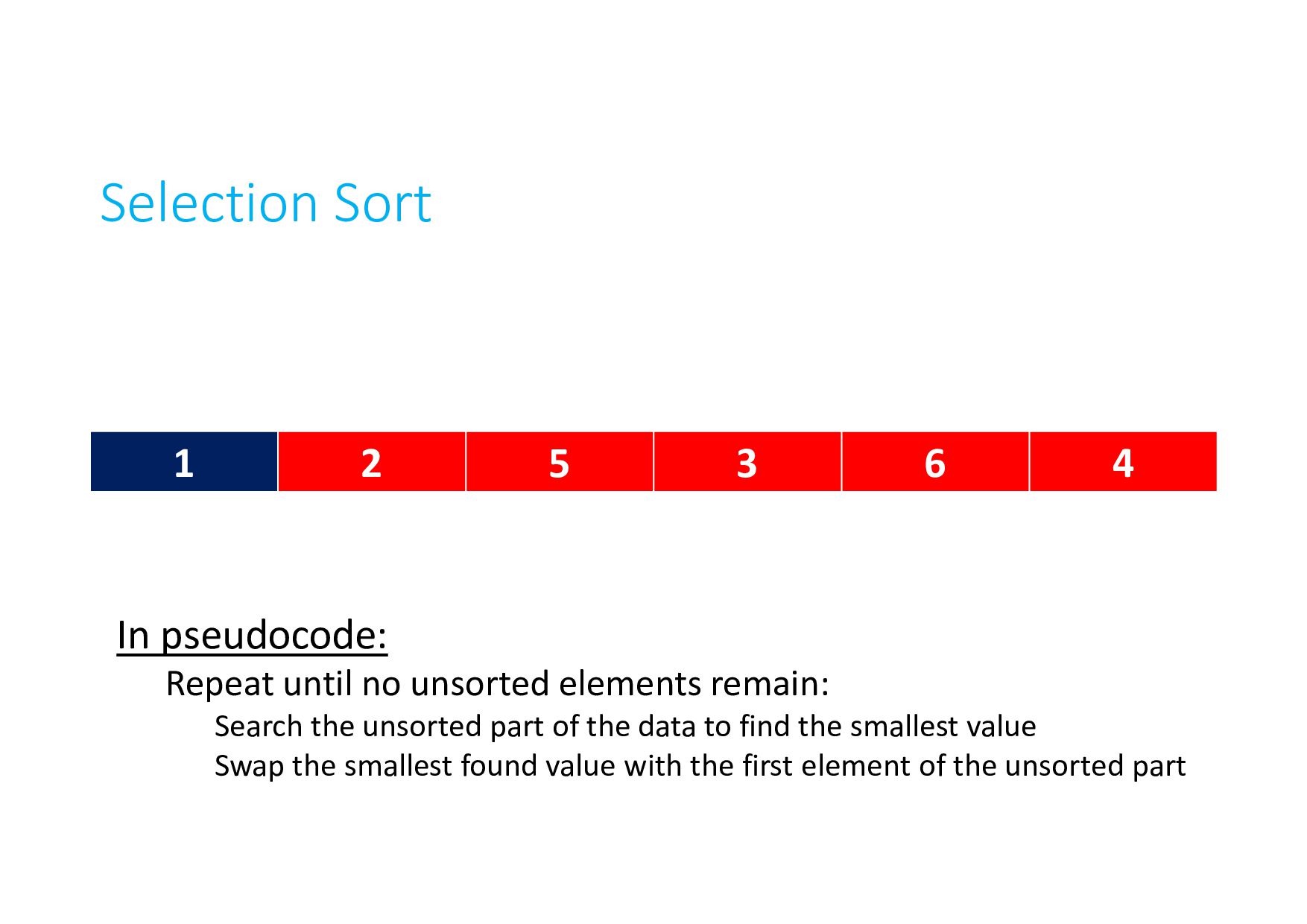
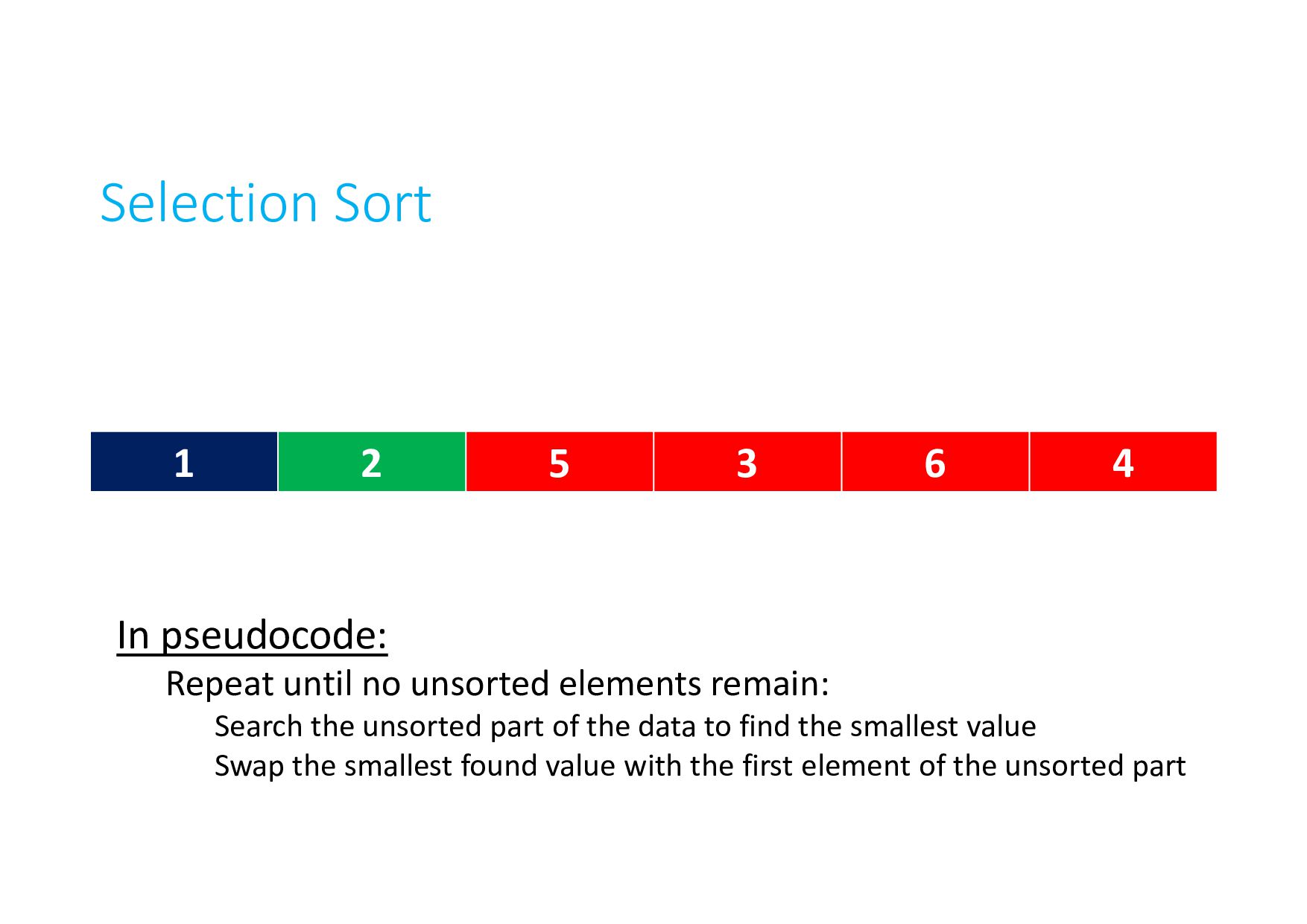
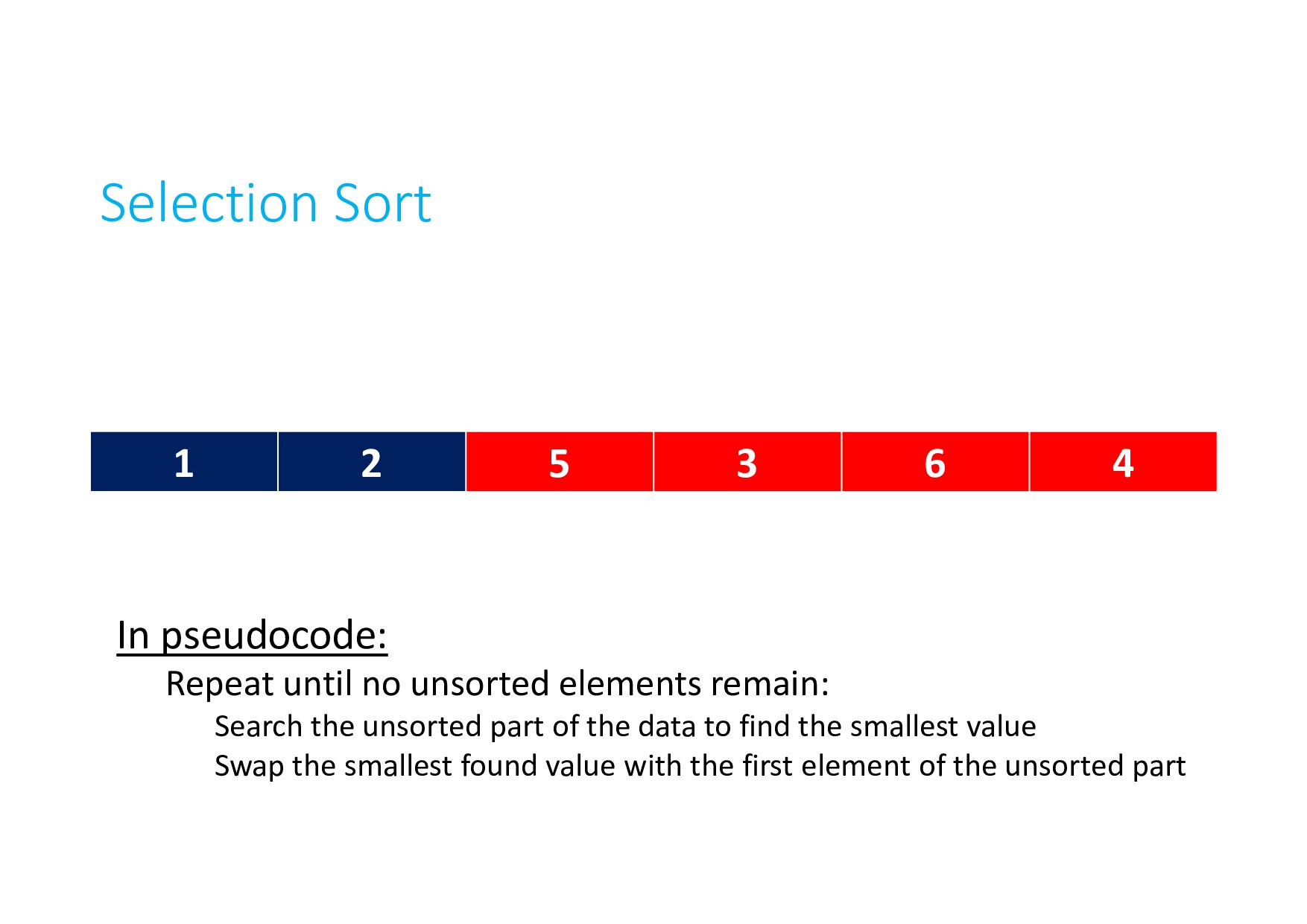
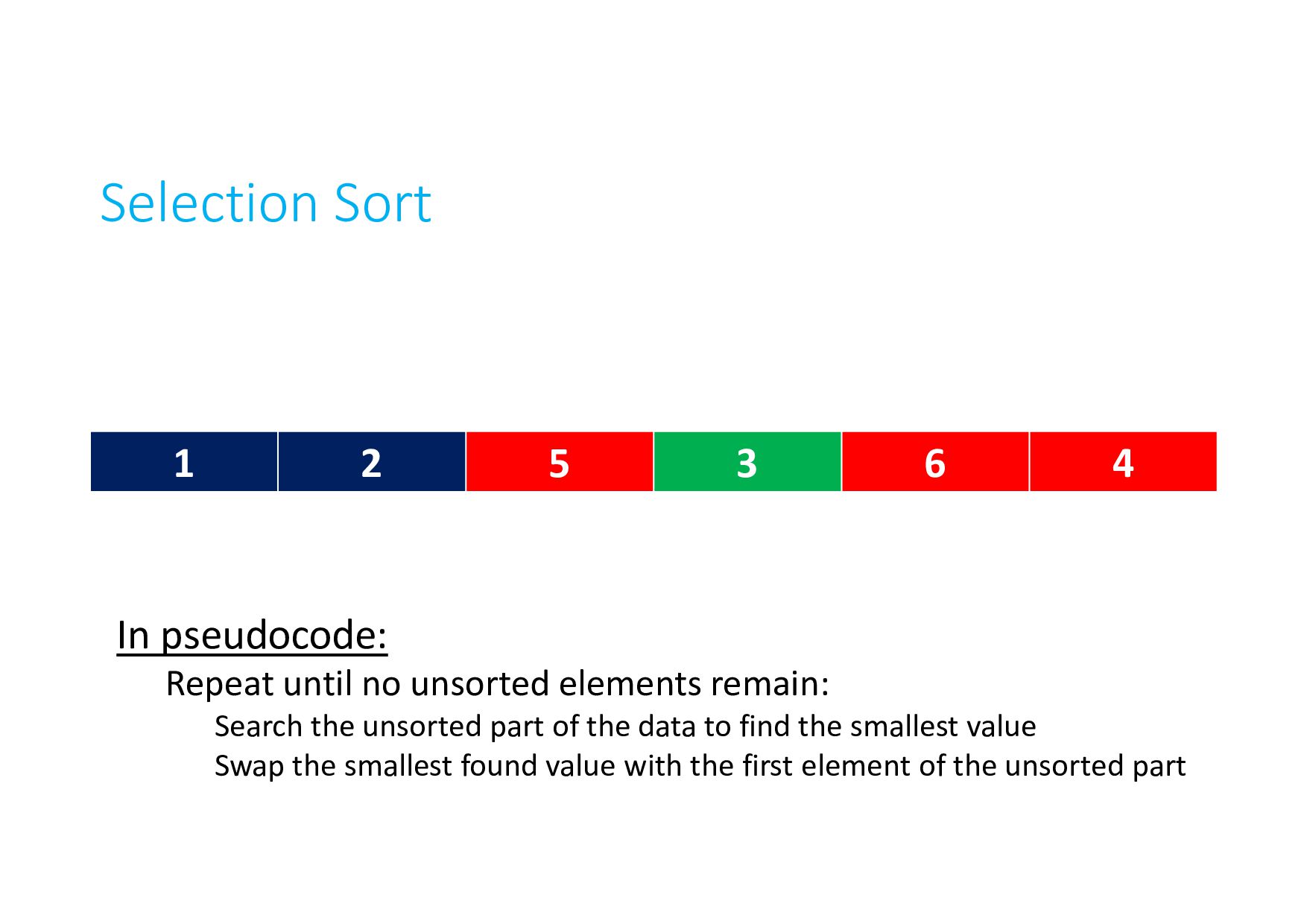
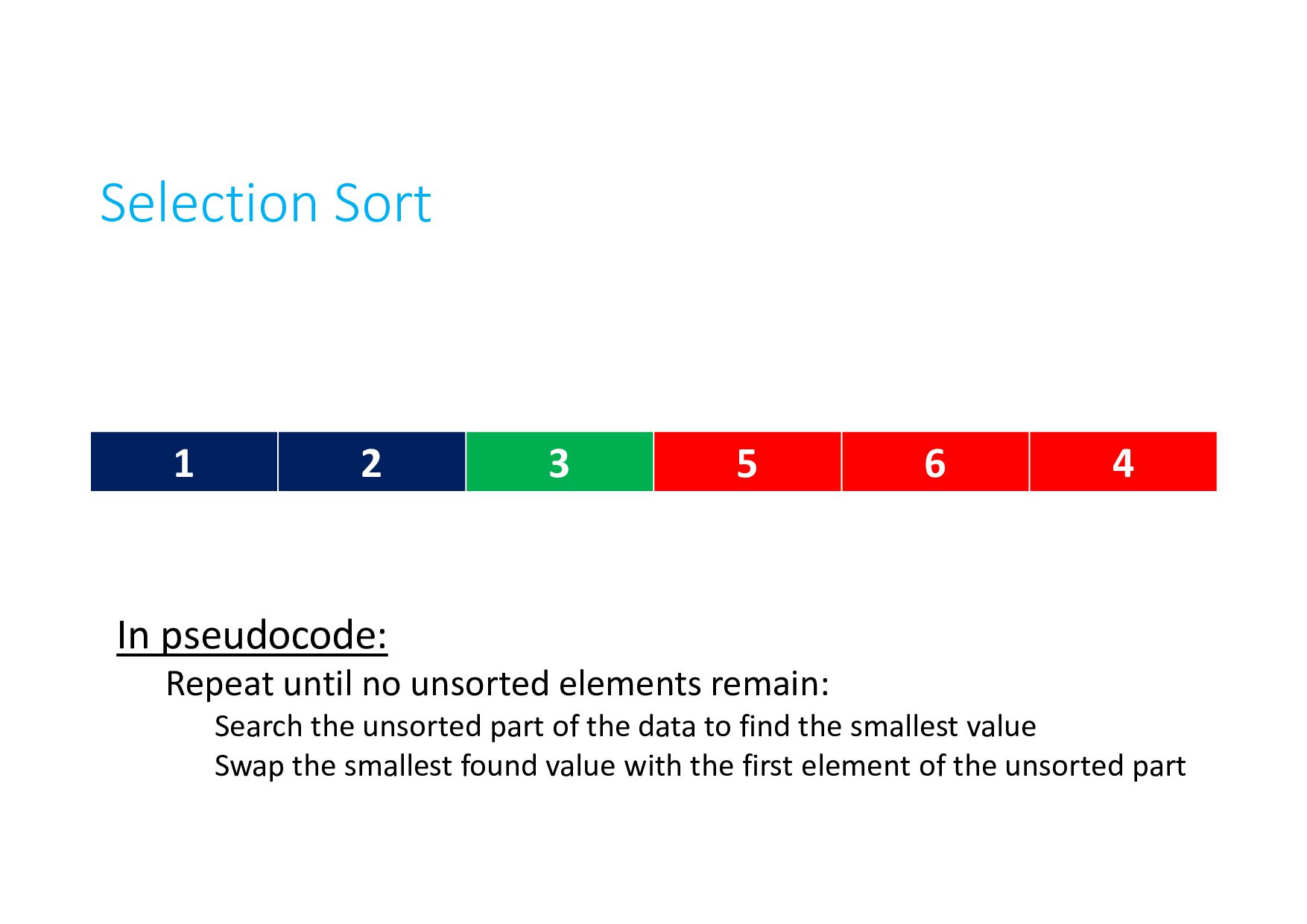
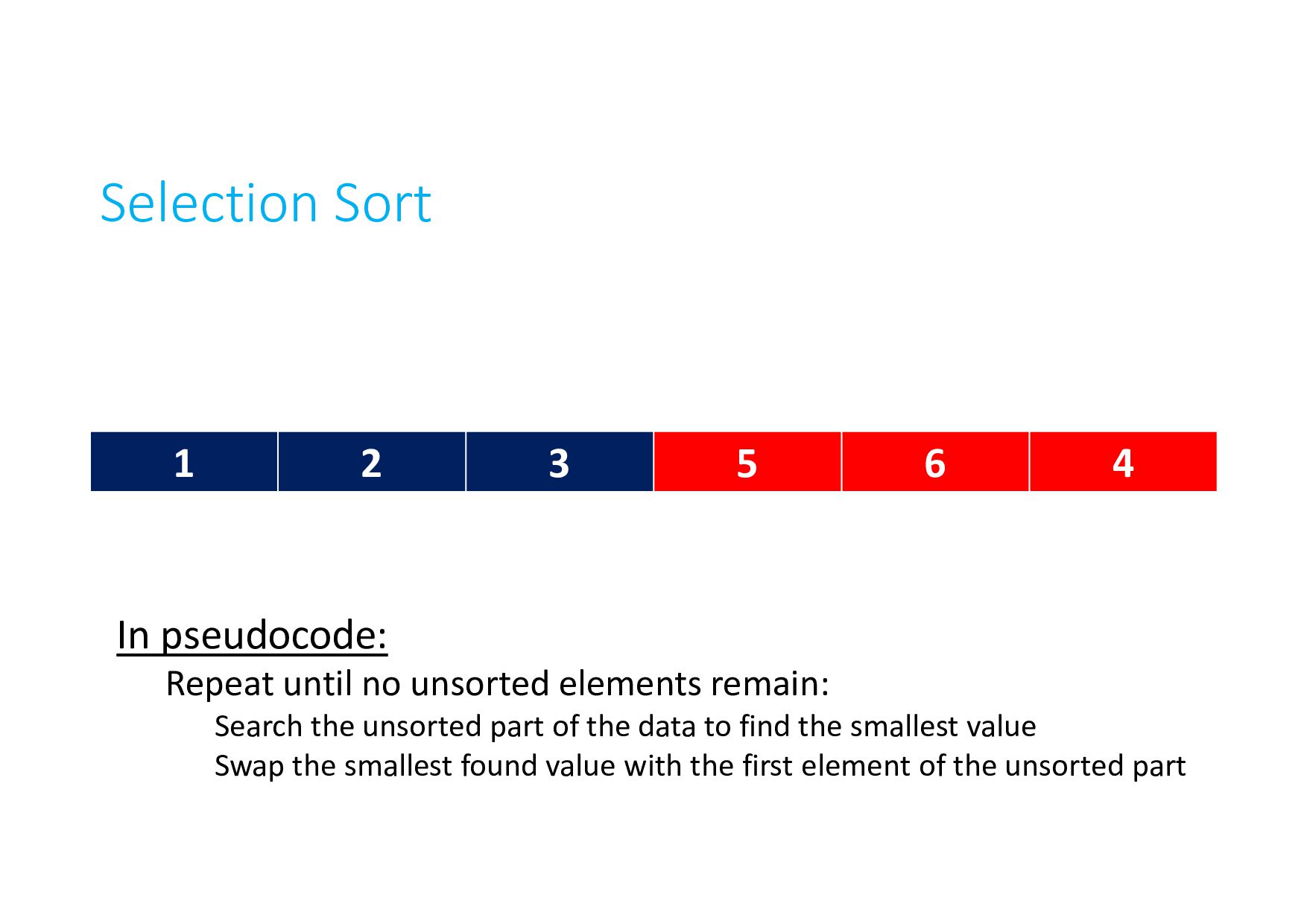
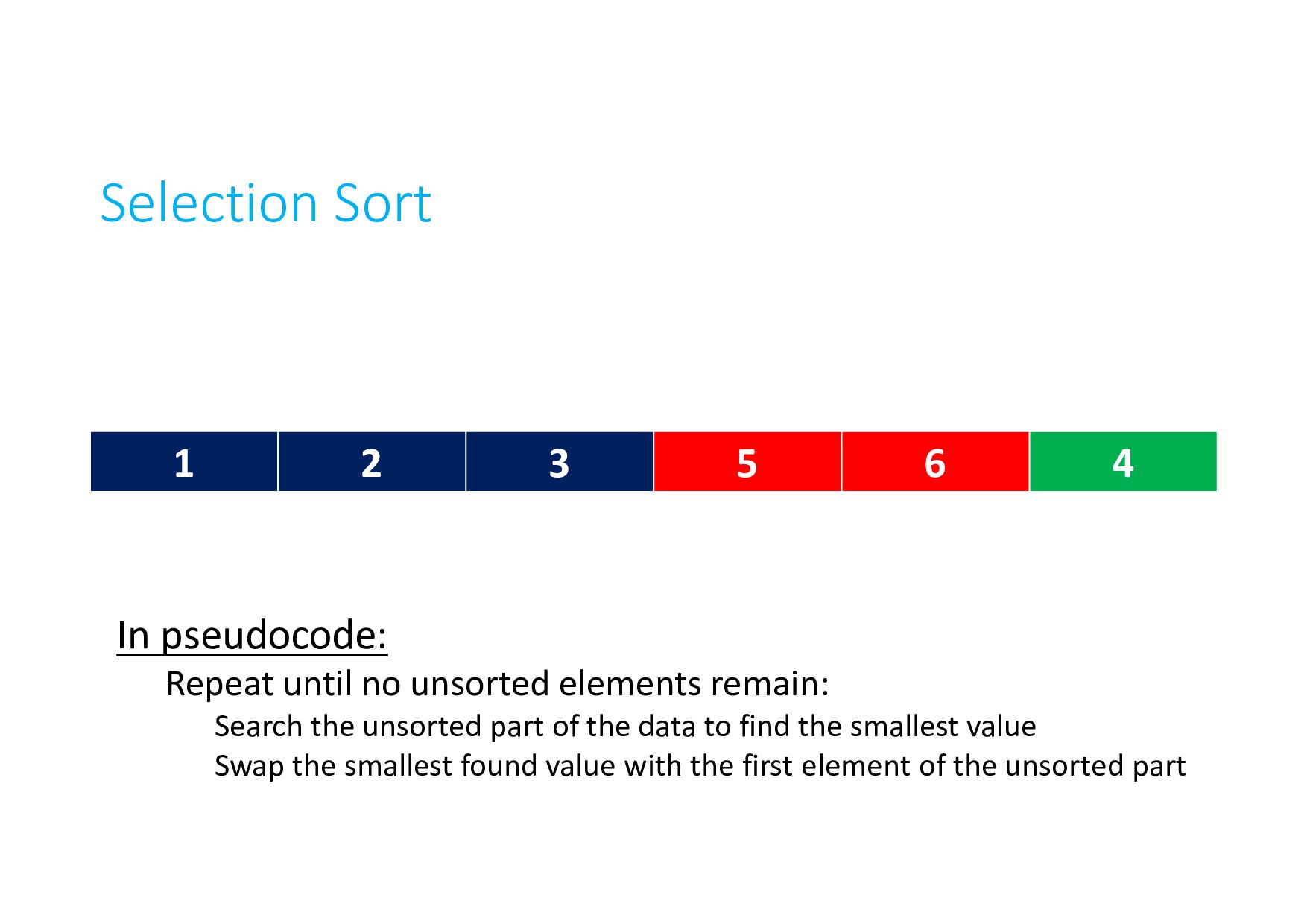
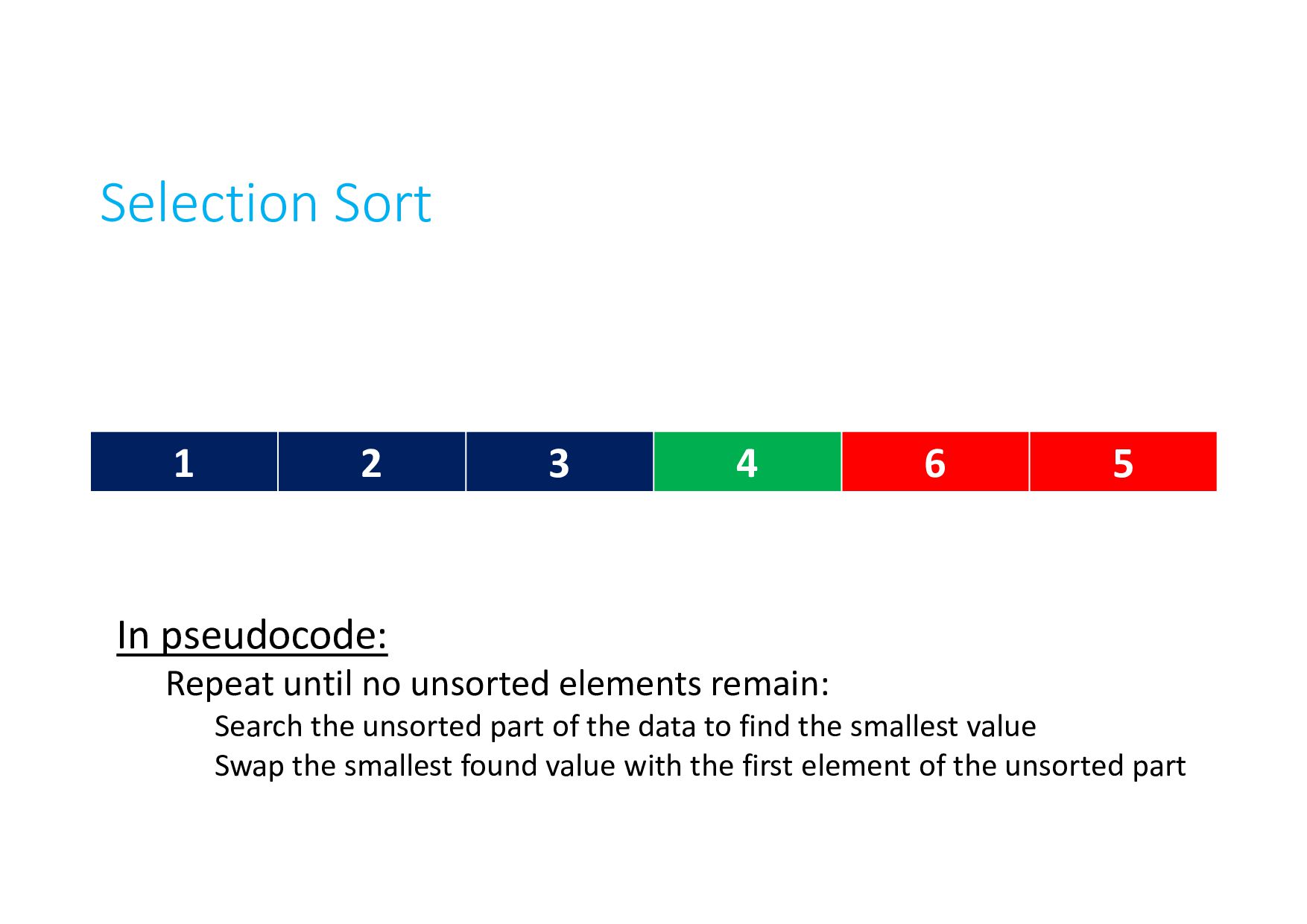
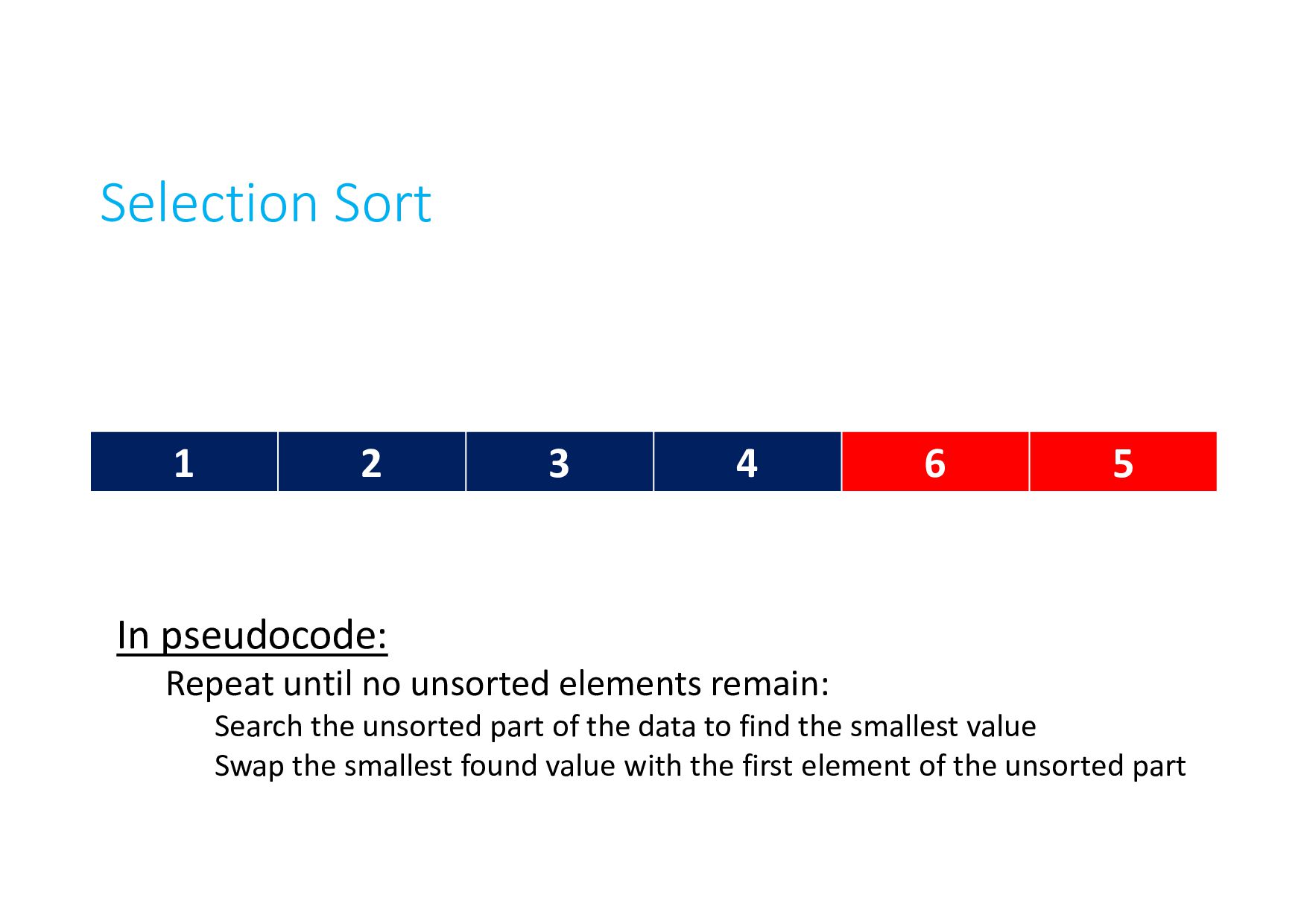
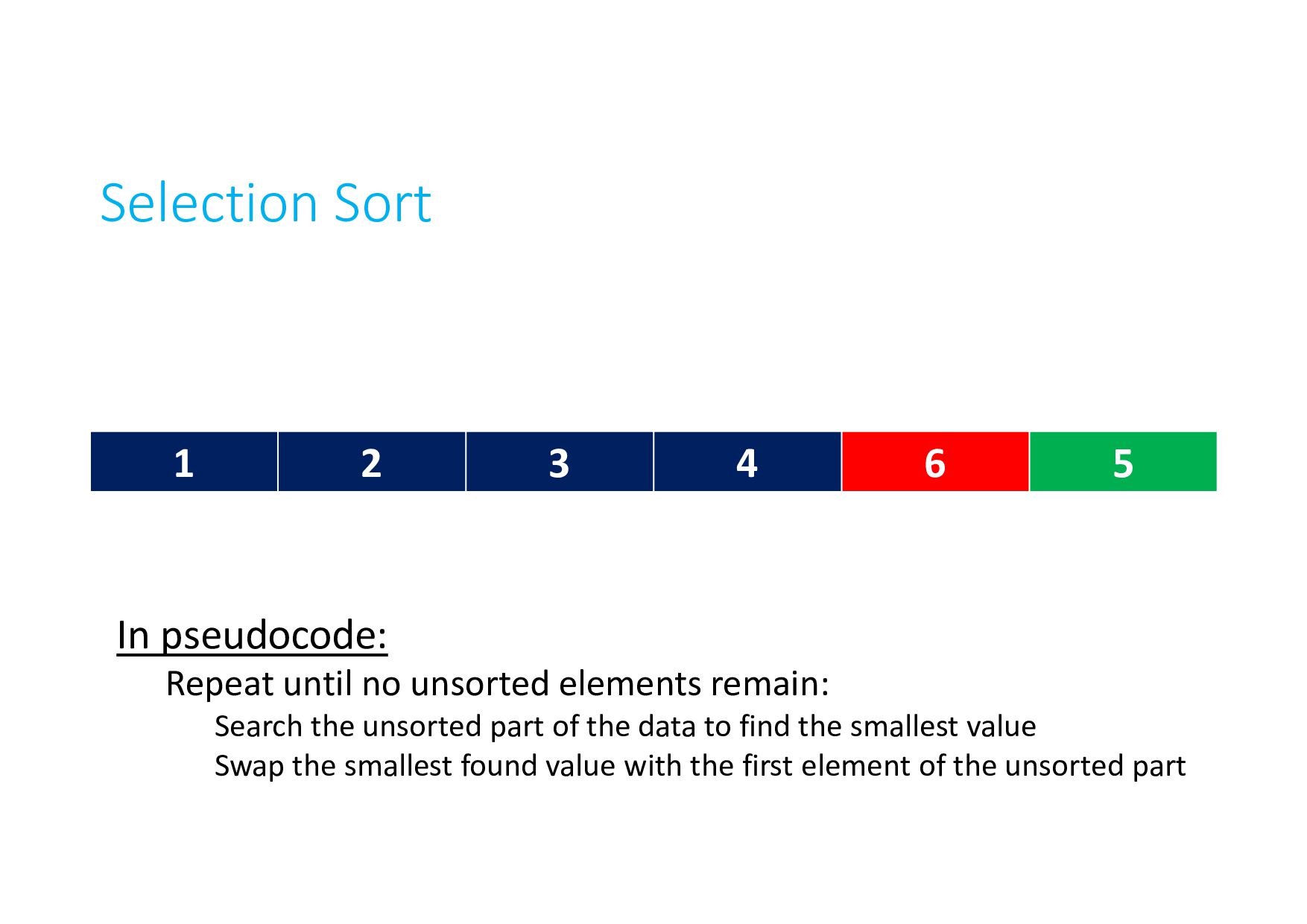
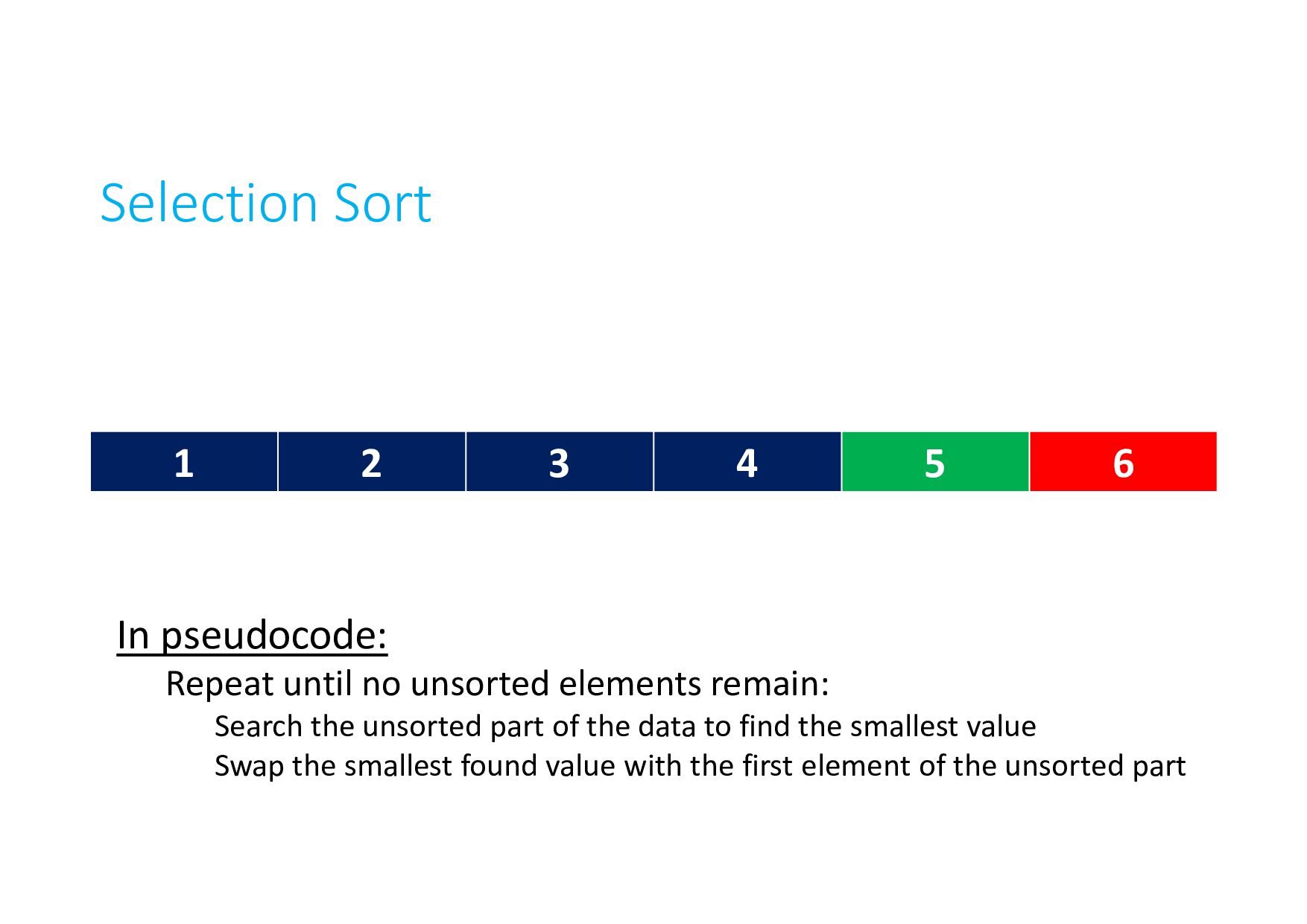
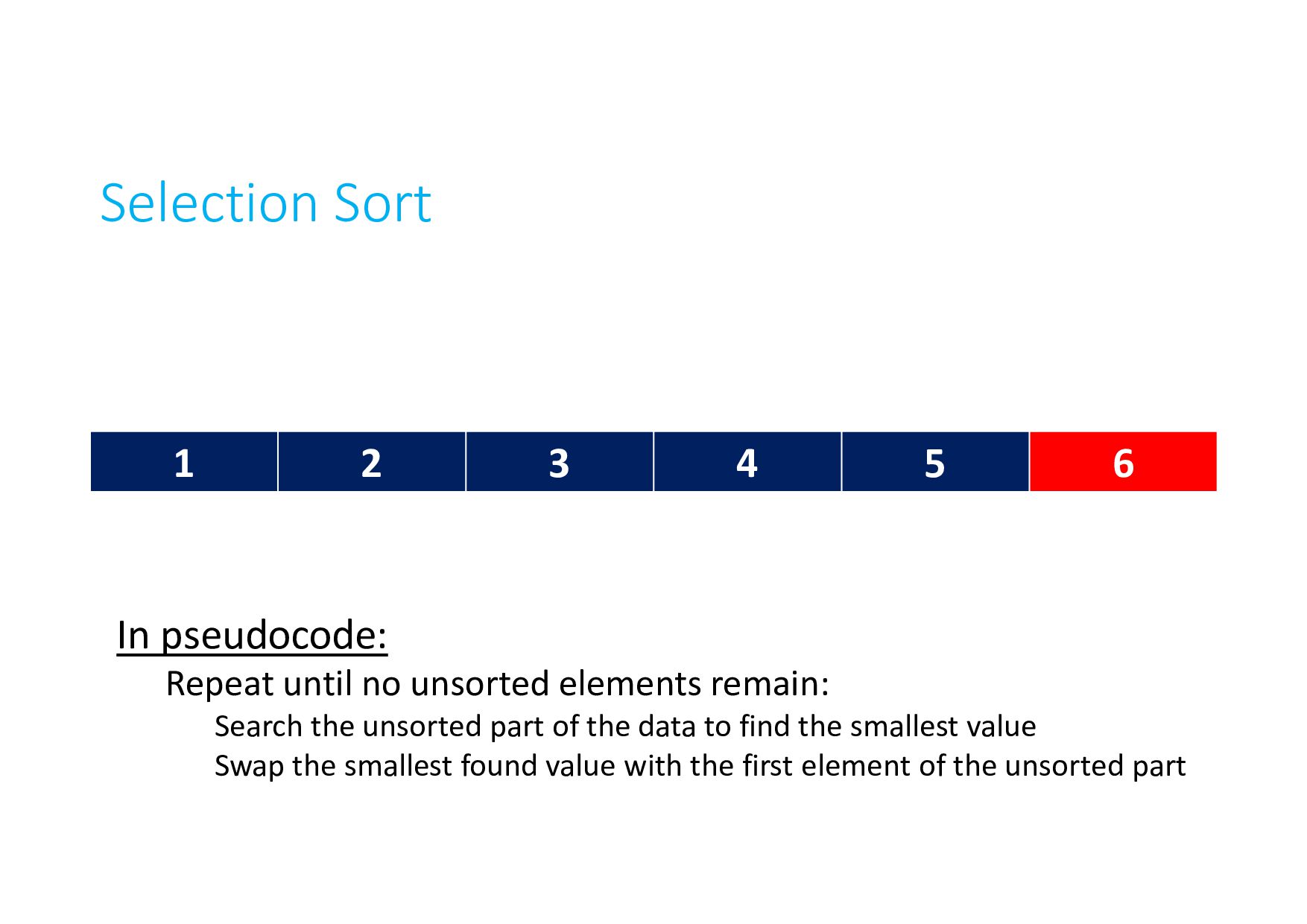
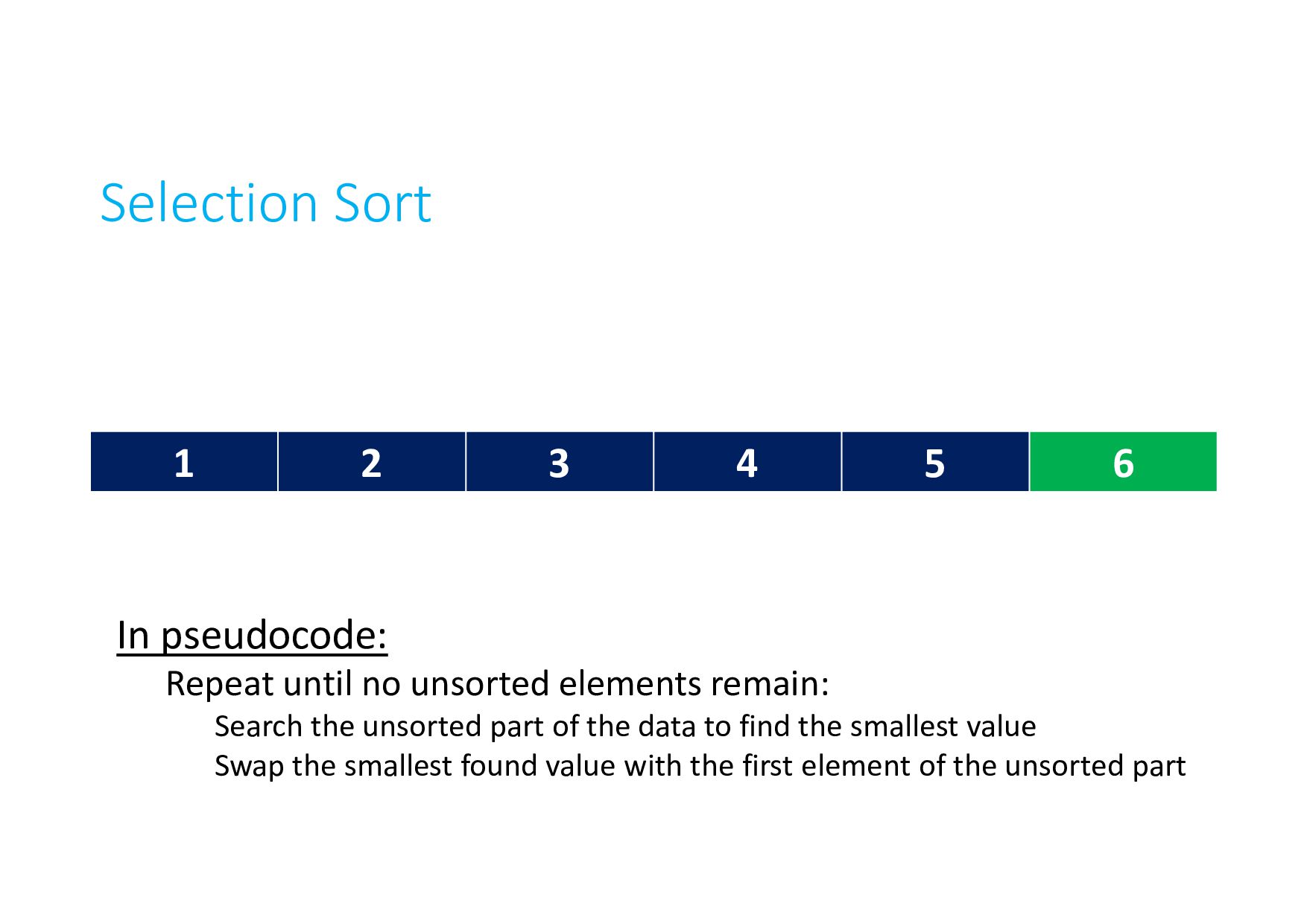
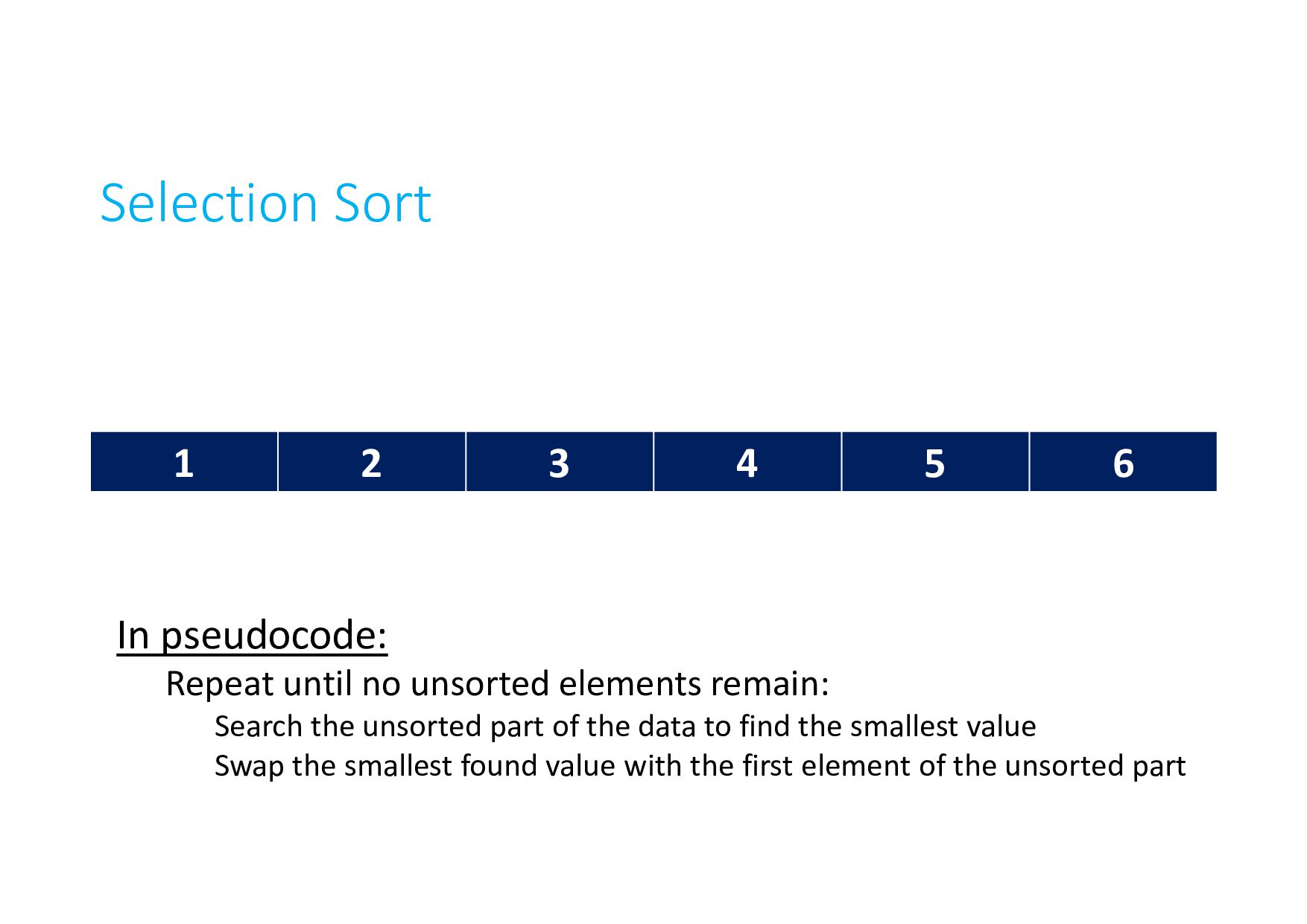
algorithm is to find the smallest unsorted element and add it to the end of the sorted list. In pseudocode: • Repeat until no unsorted elements remain: • Search the unsorted part of the data to find the smallest value • Swap the smallest found value with the first element of the unsorted part
Repeat until no unsorted elements remain: Search the unsorted part of the data to find the smallest value Swap the smallest found value with the first element of the unsorted part
Repeat until no unsorted elements remain: Search the unsorted part of the data to find the smallest value Swap the smallest found value with the first element of the unsorted part
Repeat until no unsorted elements remain: Search the unsorted part of the data to find the smallest value Swap the smallest found value with the first element of the unsorted part
Repeat until no unsorted elements remain: Search the unsorted part of the data to find the smallest value Swap the smallest found value with the first element of the unsorted part
Repeat until no unsorted elements remain: Search the unsorted part of the data to find the smallest value Swap the smallest found value with the first element of the unsorted part
Repeat until no unsorted elements remain: Search the unsorted part of the data to find the smallest value Swap the smallest found value with the first element of the unsorted part
Repeat until no unsorted elements remain: Search the unsorted part of the data to find the smallest value Swap the smallest found value with the first element of the unsorted part
Repeat until no unsorted elements remain: Search the unsorted part of the data to find the smallest value Swap the smallest found value with the first element of the unsorted part
Repeat until no unsorted elements remain: Search the unsorted part of the data to find the smallest value Swap the smallest found value with the first element of the unsorted part
Repeat until no unsorted elements remain: Search the unsorted part of the data to find the smallest value Swap the smallest found value with the first element of the unsorted part
Repeat until no unsorted elements remain: Search the unsorted part of the data to find the smallest value Swap the smallest found value with the first element of the unsorted part
Repeat until no unsorted elements remain: Search the unsorted part of the data to find the smallest value Swap the smallest found value with the first element of the unsorted part
Repeat until no unsorted elements remain: Search the unsorted part of the data to find the smallest value Swap the smallest found value with the first element of the unsorted part
Repeat until no unsorted elements remain: Search the unsorted part of the data to find the smallest value Swap the smallest found value with the first element of the unsorted part
Repeat until no unsorted elements remain: Search the unsorted part of the data to find the smallest value Swap the smallest found value with the first element of the unsorted part
Repeat until no unsorted elements remain: Search the unsorted part of the data to find the smallest value Swap the smallest found value with the first element of the unsorted part
Repeat until no unsorted elements remain: Search the unsorted part of the data to find the smallest value Swap the smallest found value with the first element of the unsorted part
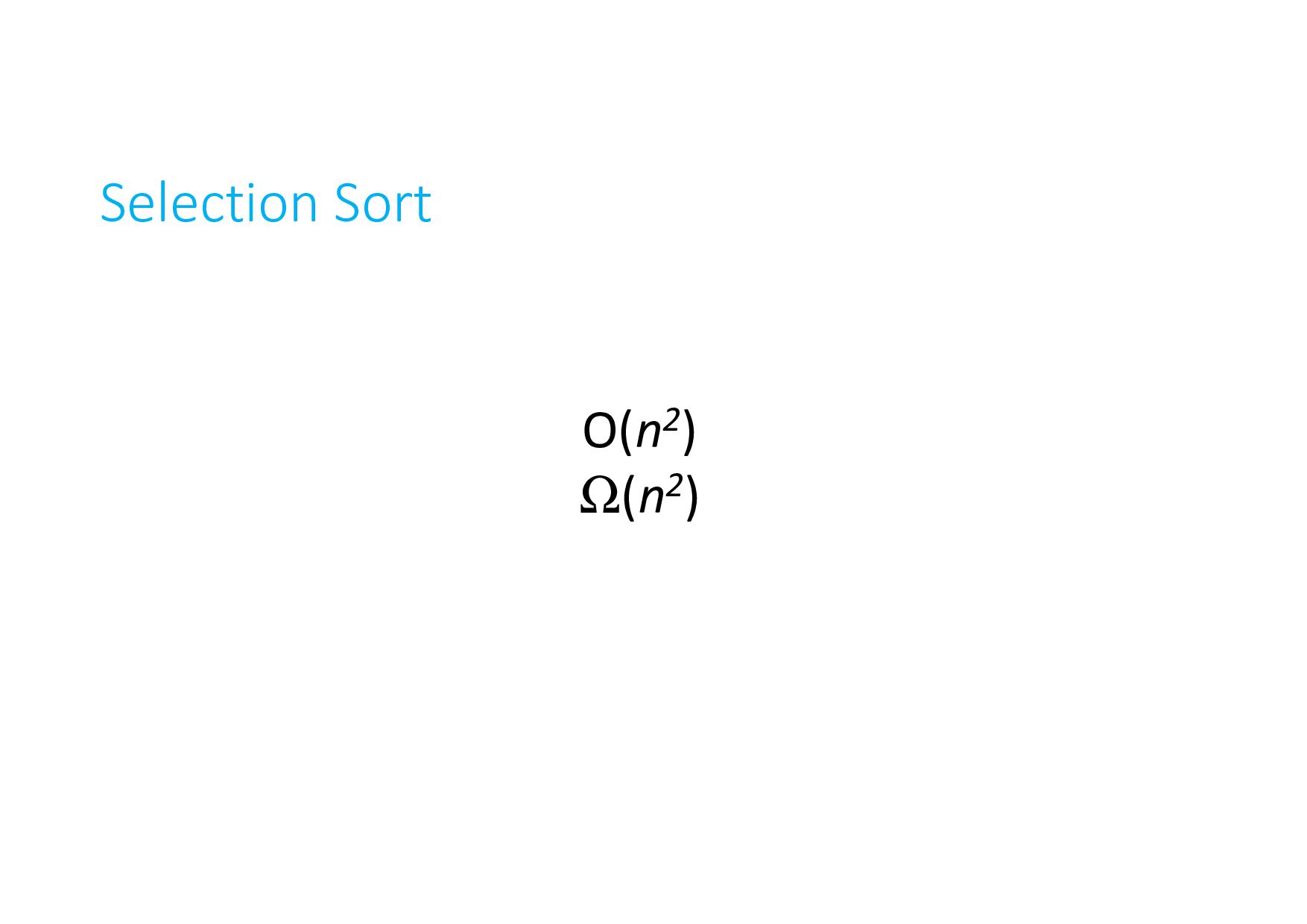
each of the n elements of the array (to find the smallest unsorted element) and we must repeat this process n times, since only one element gets sorted on each pass. • Best-case scenario: Exactly the same! There’s no way to guarantee the array is sorted until we go through this process for all the elements.


 mouuii
 productmarketing
 dougneiner
 garrettdimon
 reverentgeek
 tammyeverts
 thoeni
 lynnandtonic
 aleyda
 mfonobong
 inesmontani
 morganepeng