NIF 20131129 Sport Post Conflict - 10 Sean Barr - WELB
Sean Barr (WELB) presentation at YMCA-RESPECT conference, "Sport Development in a Post Conflict Society", University of Ulster Magee, Derry-Londonderry, Northern Ireland, 29/11/2013
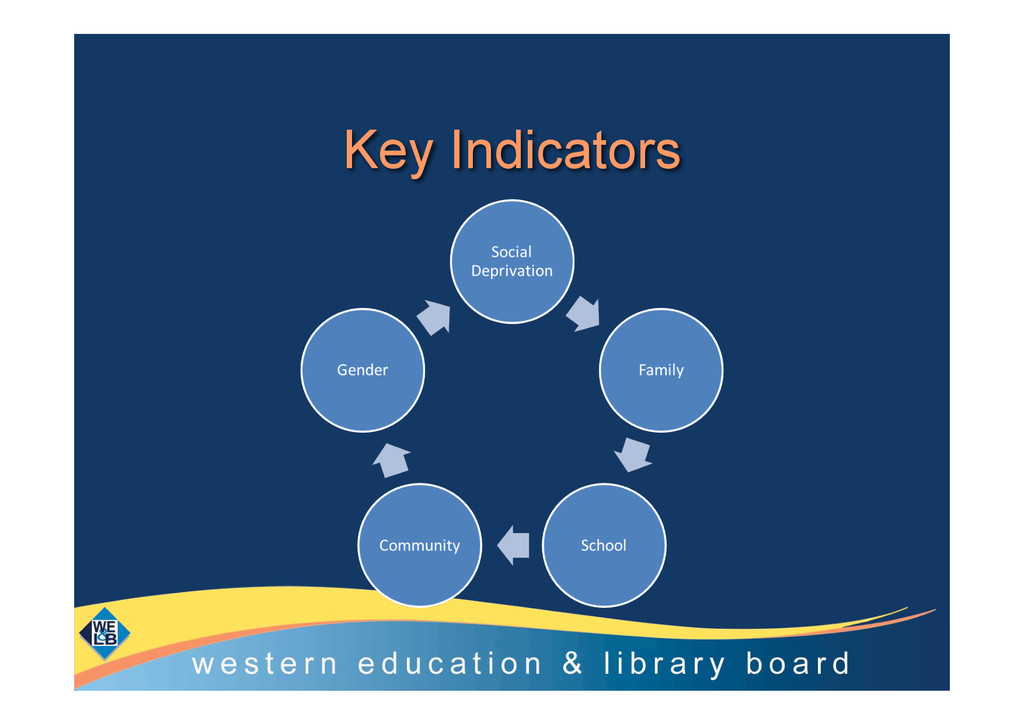
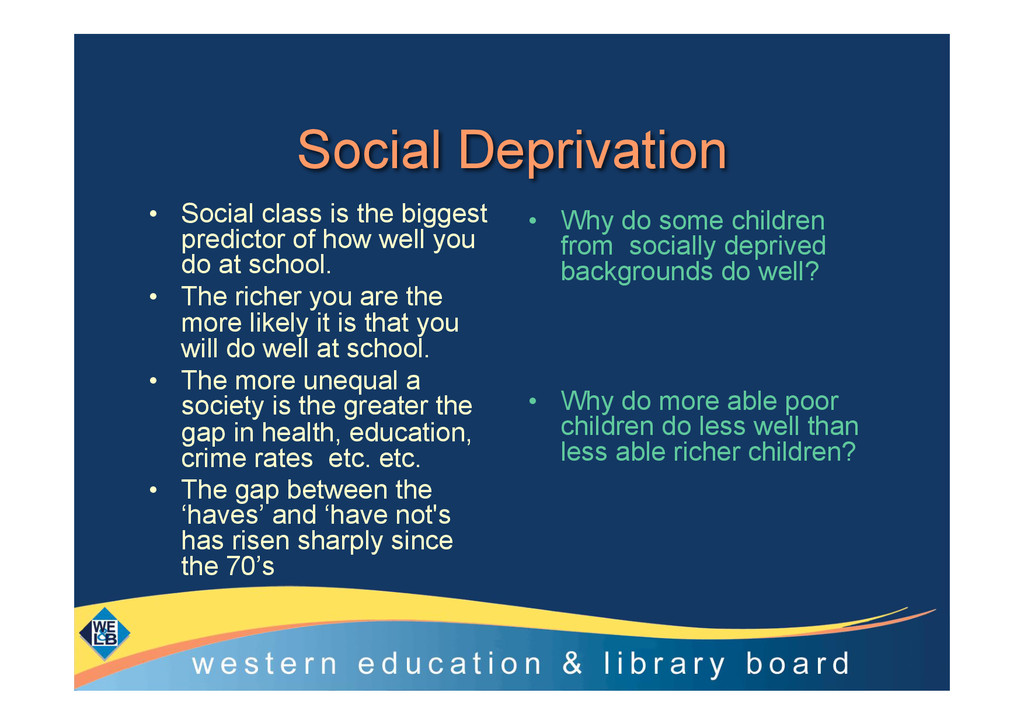
how well you do at school. • The richer you are the more likely it is that you will do well at school. • The more unequal a society is the greater the gap in health, education, crime rates etc. etc. • The gap between the ‘haves’ and ‘have not's has risen sharply since the 70’s • Why do some children from socially deprived backgrounds do well? • Why do more able poor children do less well than less able richer children?
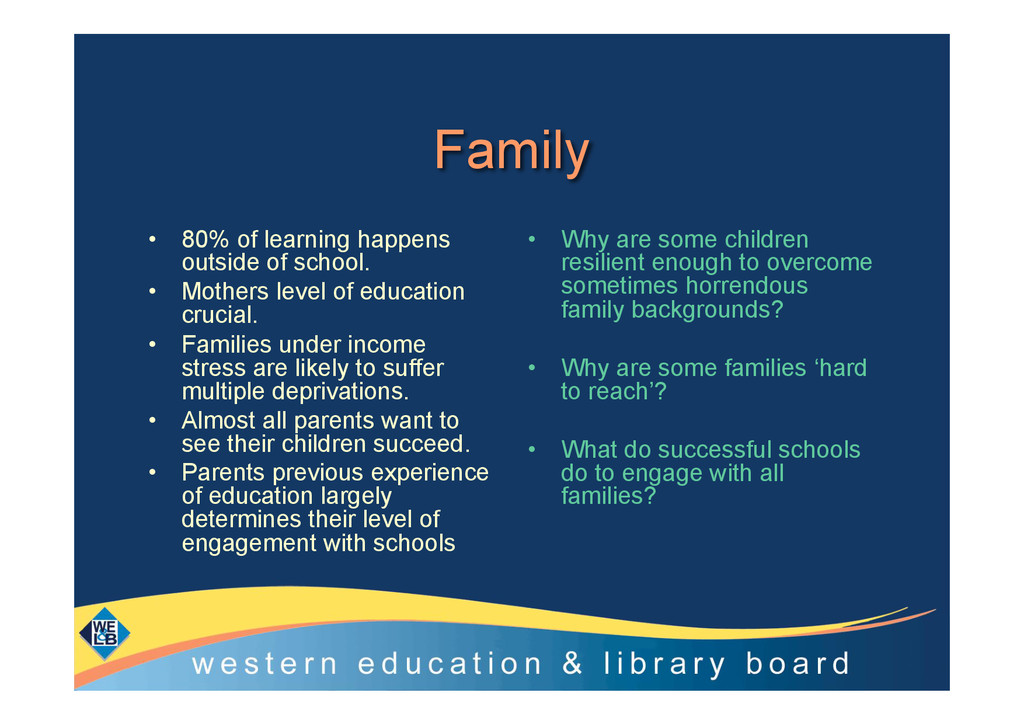
Mothers level of education crucial. • Families under income stress are likely to suffer multiple deprivations. • Almost all parents want to see their children succeed. • Parents previous experience of education largely determines their level of engagement with schools • Why are some children resilient enough to overcome sometimes horrendous family backgrounds? • Why are some families ‘hard to reach’? • What do successful schools do to engage with all families?
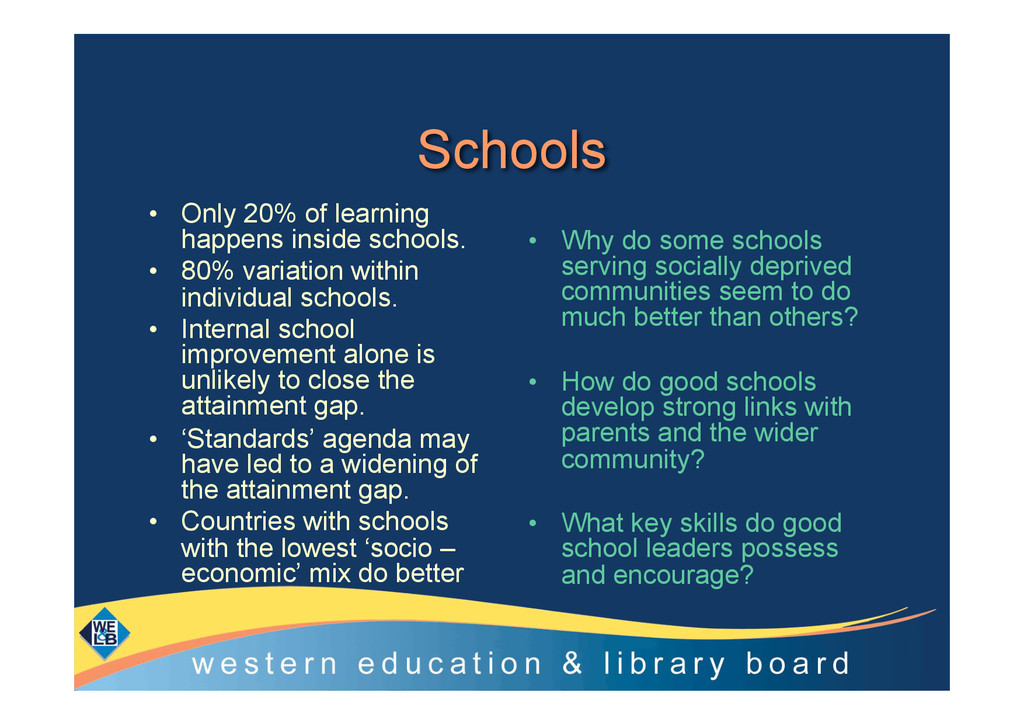
80% variation within individual schools. • Internal school improvement alone is unlikely to close the attainment gap. • ‘Standards’ agenda may have led to a widening of the attainment gap. • Countries with schools with the lowest ‘socio – economic’ mix do better • Why do some schools serving socially deprived communities seem to do much better than others? • How do good schools develop strong links with parents and the wider community? • What key skills do good school leaders possess and encourage?
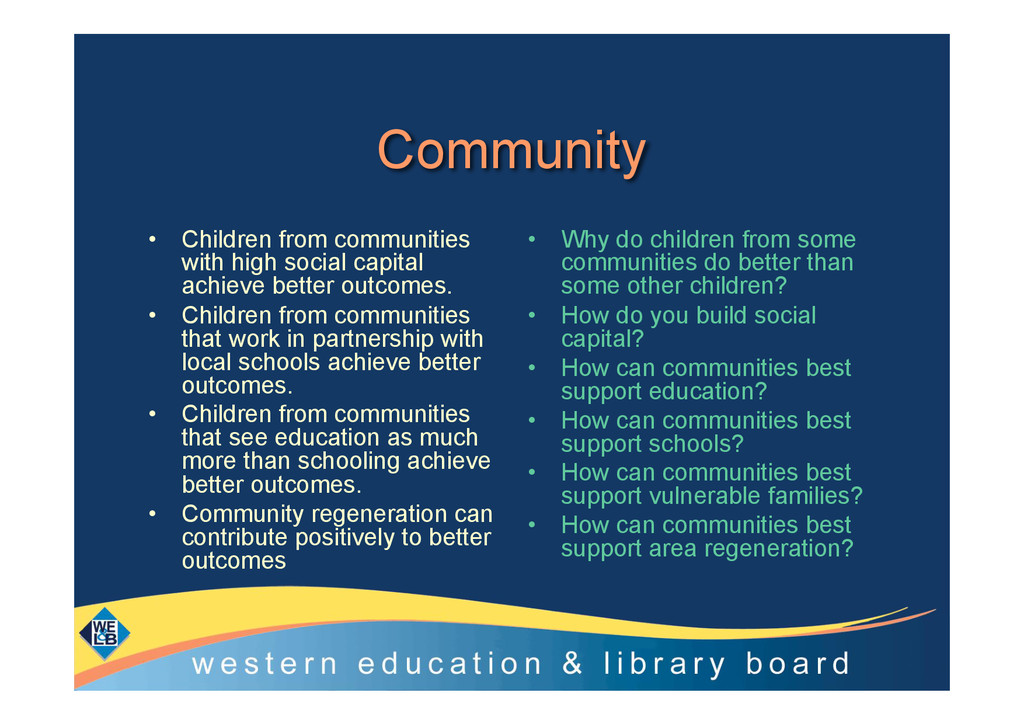
better outcomes. • Children from communities that work in partnership with local schools achieve better outcomes. • Children from communities that see education as much more than schooling achieve better outcomes. • Community regeneration can contribute positively to better outcomes • Why do children from some communities do better than some other children? • How do you build social capital? • How can communities best support education? • How can communities best support schools? • How can communities best support vulnerable families? • How can communities best support area regeneration?
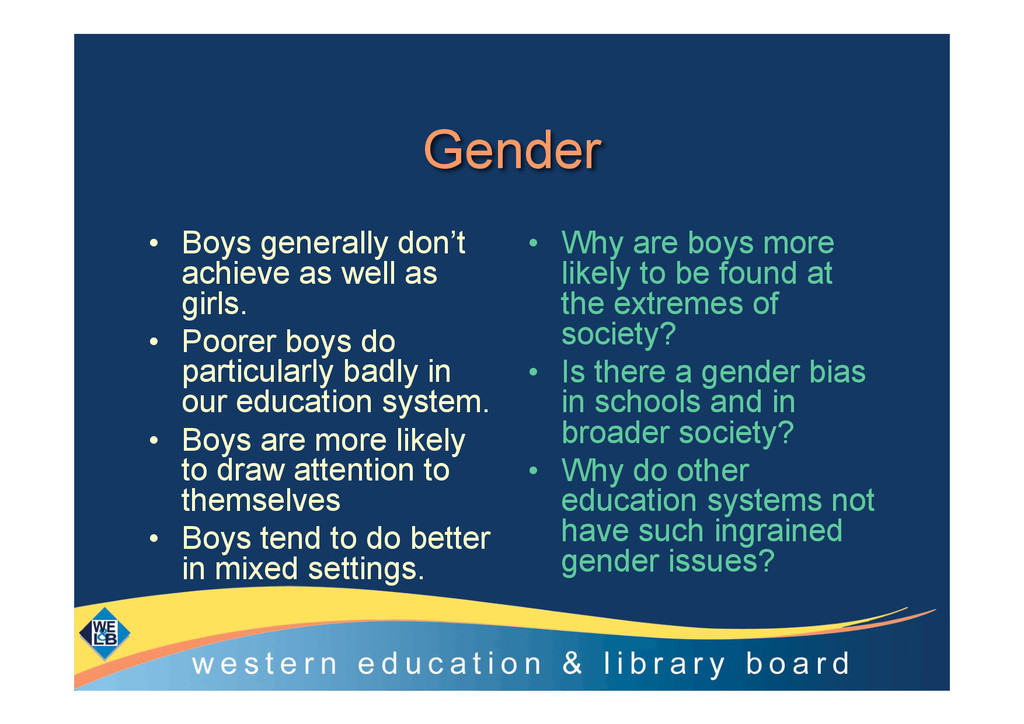
• Poorer boys do particularly badly in our education system. • Boys are more likely to draw attention to themselves • Boys tend to do better in mixed settings. • Why are boys more likely to be found at the extremes of society? • Is there a gender bias in schools and in broader society? • Why do other education systems not have such ingrained gender issues?


 mrulster
 signer
 frievea
 yoshimura_datam
 cbtlibrary
 hiola
 akiraasano
 soudai
 yasslab
 2720japanoke
 yatabe
 konakalab
 ammeep
 skipperchong
 chrislema
 smashingmag
 eileencodes
 shpigford
 raygrieselhuber
 michaelherold
 emna__ayadi
 watany
 cargoodrich