NIF 20131129 Sport Post Conflict - 11 Michael McCusker - STRIVE NI
MIchael McCusker (STRIVE NI) presentation at YMCA-RESPECT conference, "Sport Development in a Post Conflict Society", University of Ulster Magee, Derry-Londonderry, Northern Ireland, 29/11/2013
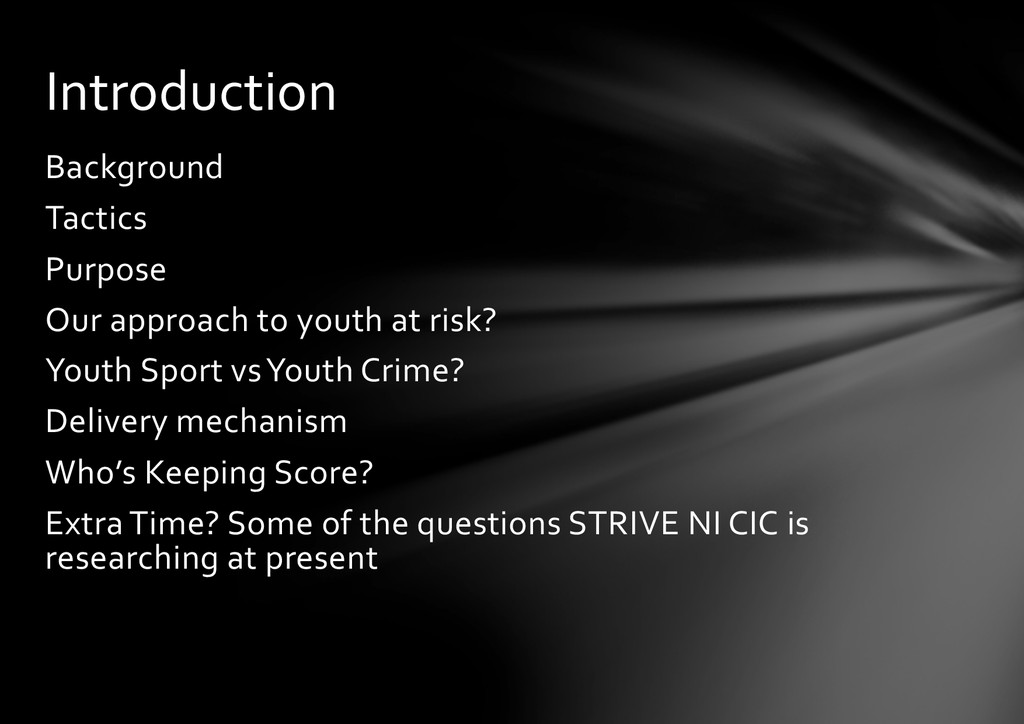
youth at risk? Youth Sport vs Youth Crime? Delivery mechanism Who’s Keeping Score? Extra Time? Some of the questions STRIVE NI CIC is researching at present Introduction
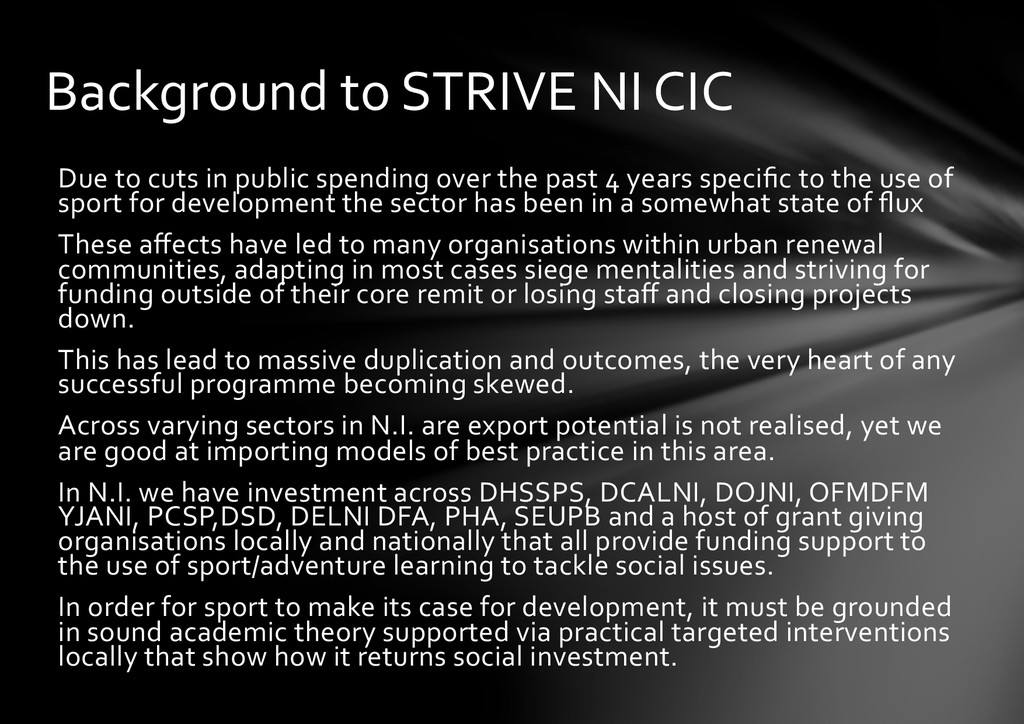
years specific to the use of sport for development the sector has been in a somewhat state of flux These affects have led to many organisations within urban renewal communities, adapting in most cases siege mentalities and striving for funding outside of their core remit or losing staff and closing projects down. This has lead to massive duplication and outcomes, the very heart of any successful programme becoming skewed. Across varying sectors in N.I. are export potential is not realised, yet we are good at importing models of best practice in this area. In N.I. we have investment across DHSSPS, DCALNI, DOJNI, OFMDFM YJANI, PCSP,DSD, DELNI DFA, PHA, SEUPB and a host of grant giving organisations locally and nationally that all provide funding support to the use of sport/adventure learning to tackle social issues. In order for sport to make its case for development, it must be grounded in sound academic theory supported via practical targeted interventions locally that show how it returns social investment. Background to STRIVE NI CIC
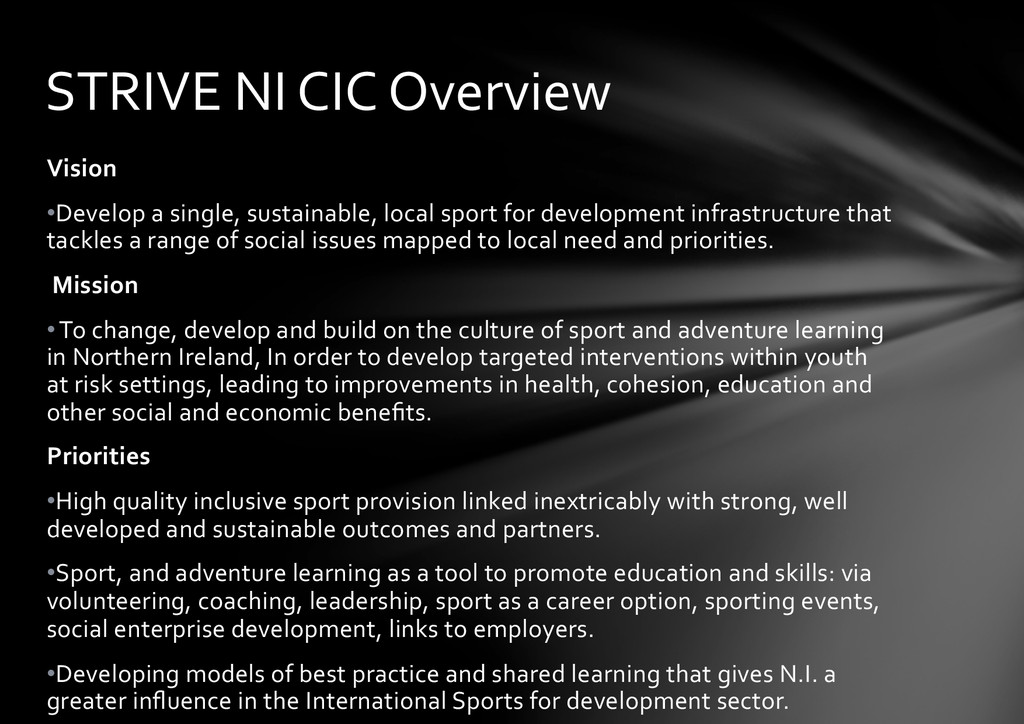
infrastructure that tackles a range of social issues mapped to local need and priorities. Mission • To change, develop and build on the culture of sport and adventure learning in Northern Ireland, In order to develop targeted interventions within youth at risk settings, leading to improvements in health, cohesion, education and other social and economic benefits. Priorities • High quality inclusive sport provision linked inextricably with strong, well developed and sustainable outcomes and partners. • Sport, and adventure learning as a tool to promote education and skills: via volunteering, coaching, leadership, sport as a career option, sporting events, social enterprise development, links to employers. • Developing models of best practice and shared learning that gives N.I. a greater influence in the International Sports for development sector. STRIVE NI CIC Overview
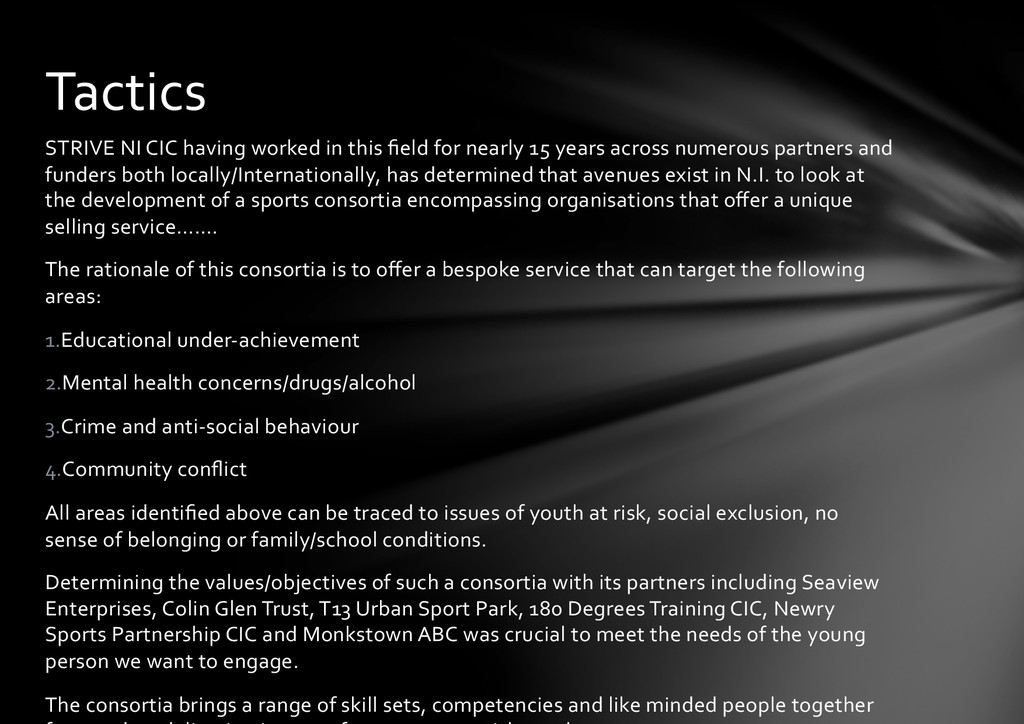
15 years across numerous partners and funders both locally/Internationally, has determined that avenues exist in N.I. to look at the development of a sports consortia encompassing organisations that offer a unique selling service……. The rationale of this consortia is to offer a bespoke service that can target the following areas: 1. Educational under-‐achievement 2. Mental health concerns/drugs/alcohol 3. Crime and anti-‐social behaviour 4. Community conflict All areas identified above can be traced to issues of youth at risk, social exclusion, no sense of belonging or family/school conditions. Determining the values/objectives of such a consortia with its partners including Seaview Enterprises, Colin Glen Trust, T13 Urban Sport Park, 180 Degrees Training CIC, Newry Sports Partnership CIC and Monkstown ABC was crucial to meet the needs of the young person we want to engage. The consortia brings a range of skill sets, competencies and like minded people together Tactics
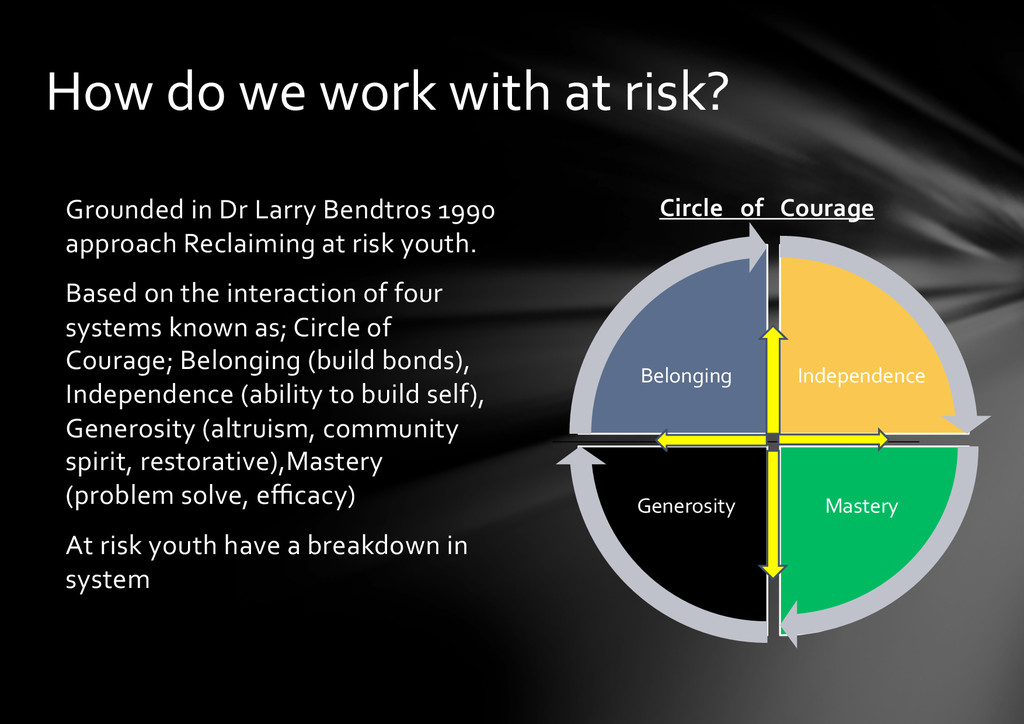
Dr Larry Bendtros 1990 approach Reclaiming at risk youth. Based on the interaction of four systems known as; Circle of Courage; Belonging (build bonds), Independence (ability to build self), Generosity (altruism, community spirit, restorative),Mastery (problem solve, efficacy) At risk youth have a breakdown in system Circle of Courage Independence Mastery Generosity Belonging
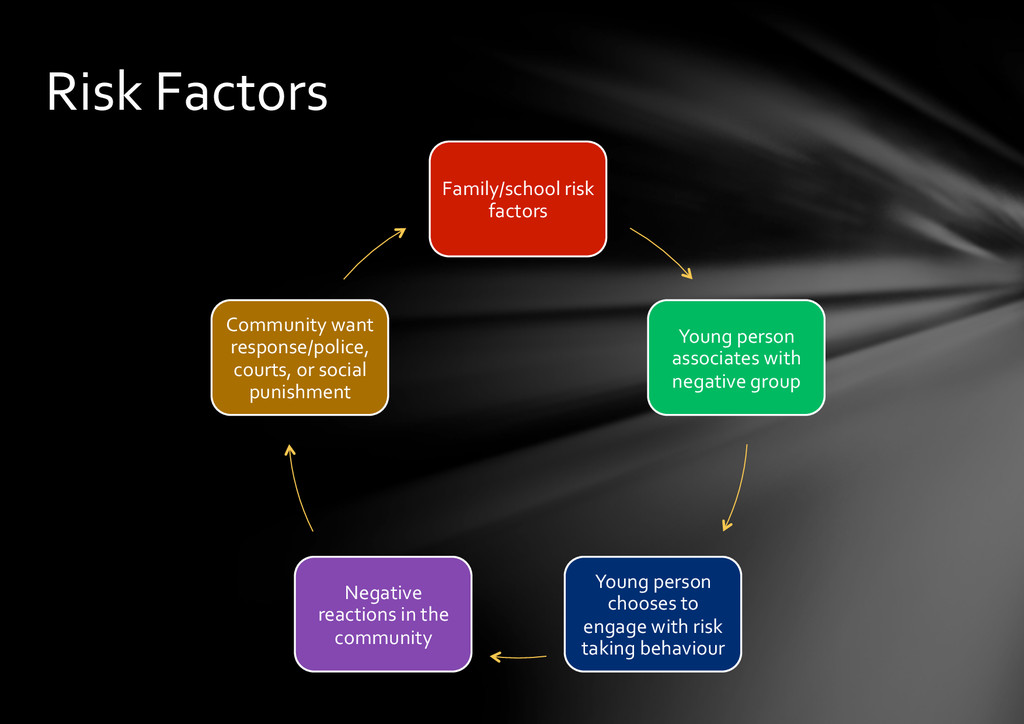
person associates with negative group Young person chooses to engage with risk taking behaviour Negative reactions in the community Community want response/police, courts, or social punishment
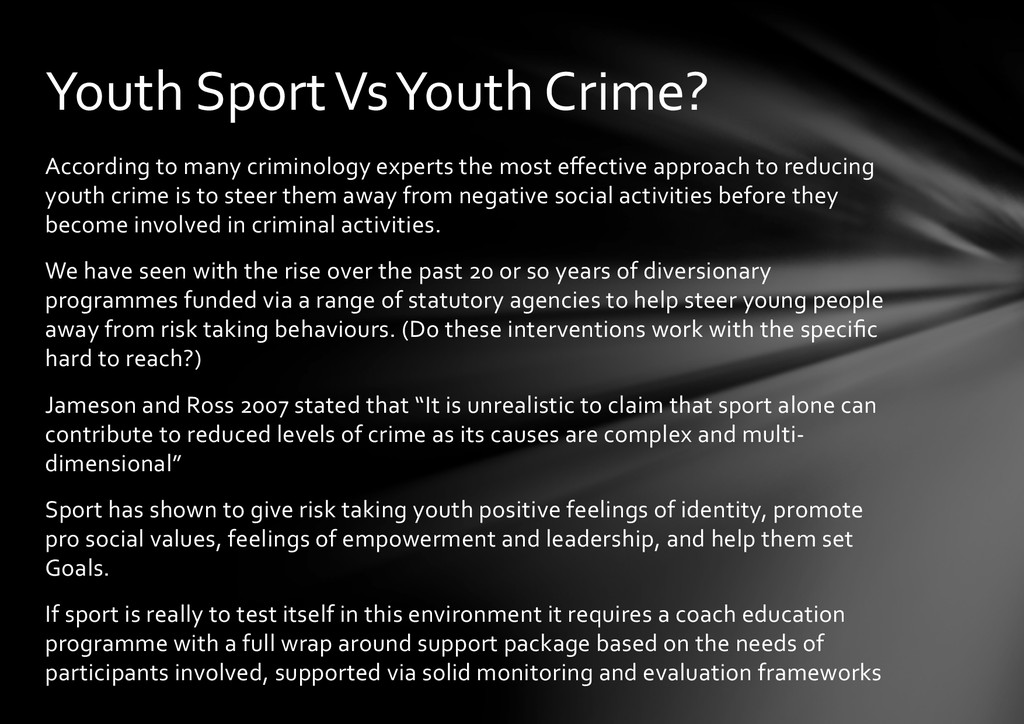
reducing youth crime is to steer them away from negative social activities before they become involved in criminal activities. We have seen with the rise over the past 20 or so years of diversionary programmes funded via a range of statutory agencies to help steer young people away from risk taking behaviours. (Do these interventions work with the specific hard to reach?) Jameson and Ross 2007 stated that “It is unrealistic to claim that sport alone can contribute to reduced levels of crime as its causes are complex and multi-‐ dimensional” Sport has shown to give risk taking youth positive feelings of identity, promote pro social values, feelings of empowerment and leadership, and help them set Goals. If sport is really to test itself in this environment it requires a coach education programme with a full wrap around support package based on the needs of participants involved, supported via solid monitoring and evaluation frameworks Youth Sport Vs Youth Crime?
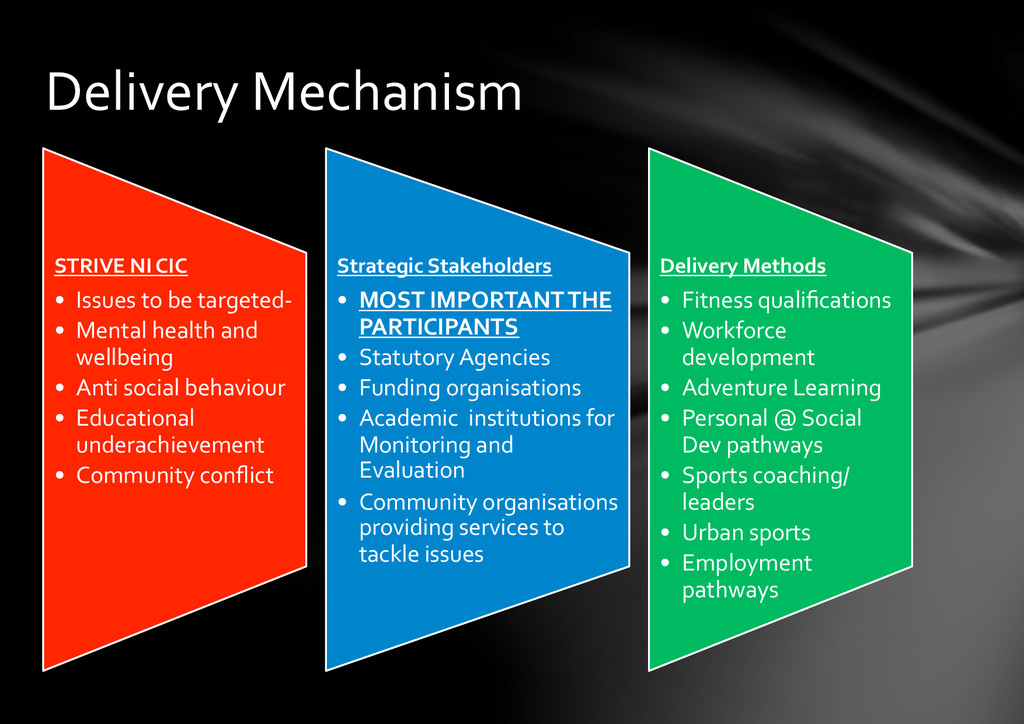
• Mental health and wellbeing • Anti social behaviour • Educational underachievement • Community conflict Strategic Stakeholders • MOST IMPORTANT THE PARTICIPANTS • Statutory Agencies • Funding organisations • Academic institutions for Monitoring and Evaluation • Community organisations providing services to tackle issues Delivery Methods • Fitness qualifications • Workforce development • Adventure Learning • Personal @ Social Dev pathways • Sports coaching/ leaders • Urban sports • Employment pathways Delivery Mechanism
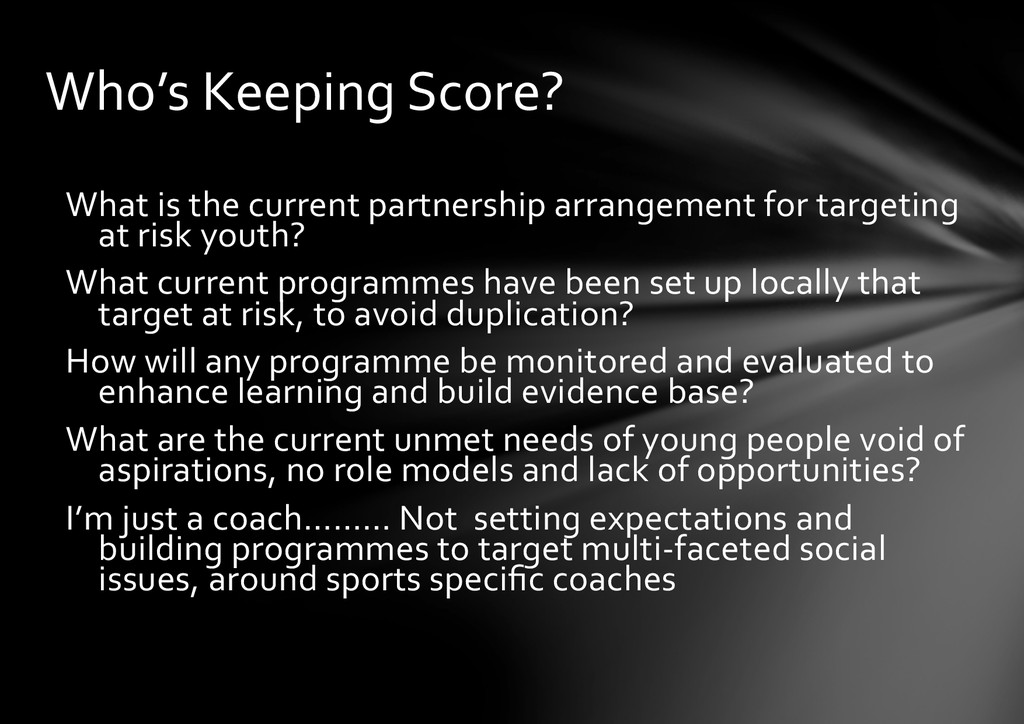
for targeting at risk youth? What current programmes have been set up locally that target at risk, to avoid duplication? How will any programme be monitored and evaluated to enhance learning and build evidence base? What are the current unmet needs of young people void of aspirations, no role models and lack of opportunities? I’m just a coach……… Not setting expectations and building programmes to target multi-‐faceted social issues, around sports specific coaches
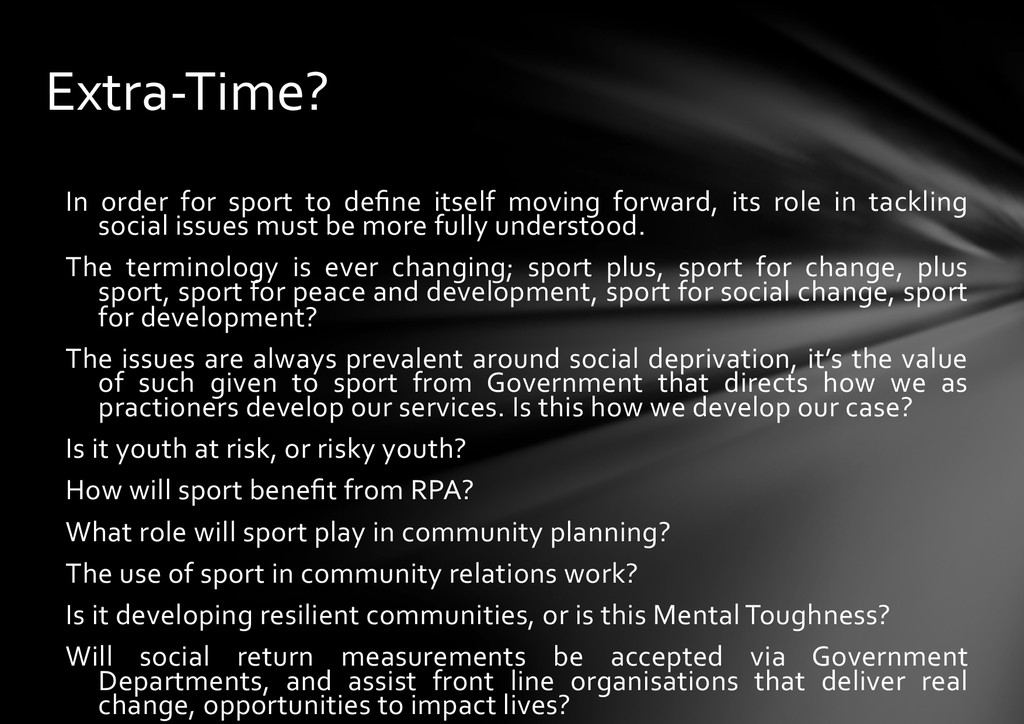
to define itself moving forward, its role in tackling social issues must be more fully understood. The terminology is ever changing; sport plus, sport for change, plus sport, sport for peace and development, sport for social change, sport for development? The issues are always prevalent around social deprivation, it’s the value of such given to sport from Government that directs how we as practioners develop our services. Is this how we develop our case? Is it youth at risk, or risky youth? How will sport benefit from RPA? What role will sport play in community planning? The use of sport in community relations work? Is it developing resilient communities, or is this Mental Toughness? Will social return measurements be accepted via Government Departments, and assist front line organisations that deliver real change, opportunities to impact lives?
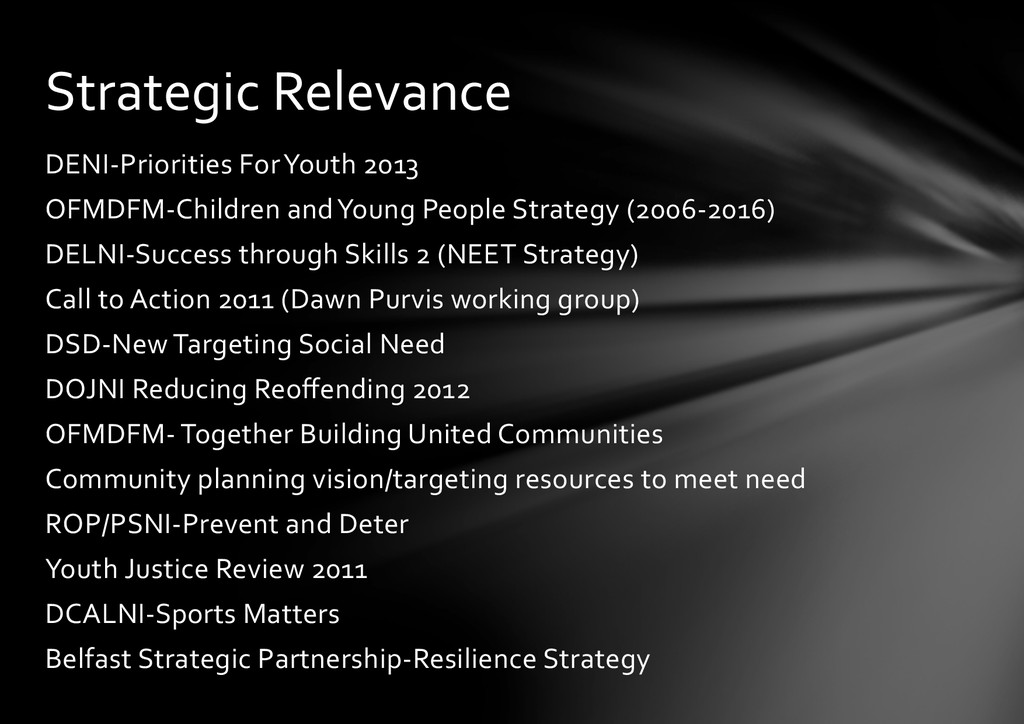
(2006-‐2016) DELNI-‐Success through Skills 2 (NEET Strategy) Call to Action 2011 (Dawn Purvis working group) DSD-‐New Targeting Social Need DOJNI Reducing Reoffending 2012 OFMDFM-‐ Together Building United Communities Community planning vision/targeting resources to meet need ROP/PSNI-‐Prevent and Deter Youth Justice Review 2011 DCALNI-‐Sports Matters Belfast Strategic Partnership-‐Resilience Strategy Strategic Relevance
a specific focus on the North West Region of N.I. If you require any further Information please see www.180degreestrainng.co.uk and click on projects Area of interest: What Game are we Playing: Professor Fred Coalter 2013 Thank You For Your Time Michael Mc Cusker Director STRIVE NI CIC E: [email protected] Next Steps


 mrulster
 matleenalaakso
 dragon2
 kekekenta
 terazawa
 ainischool
 bvr7352
 pawan_pharm
 signer
 arnoknobbe
 hiola
 ichiroc
 ishii_mit
 malarkey
 reverentgeek
 cassininazir
 lfama
 caitiem20
 aarron
 holman
 uxyall
 chriscoyier
 paigeccino
 garrettdimon
 madoxten