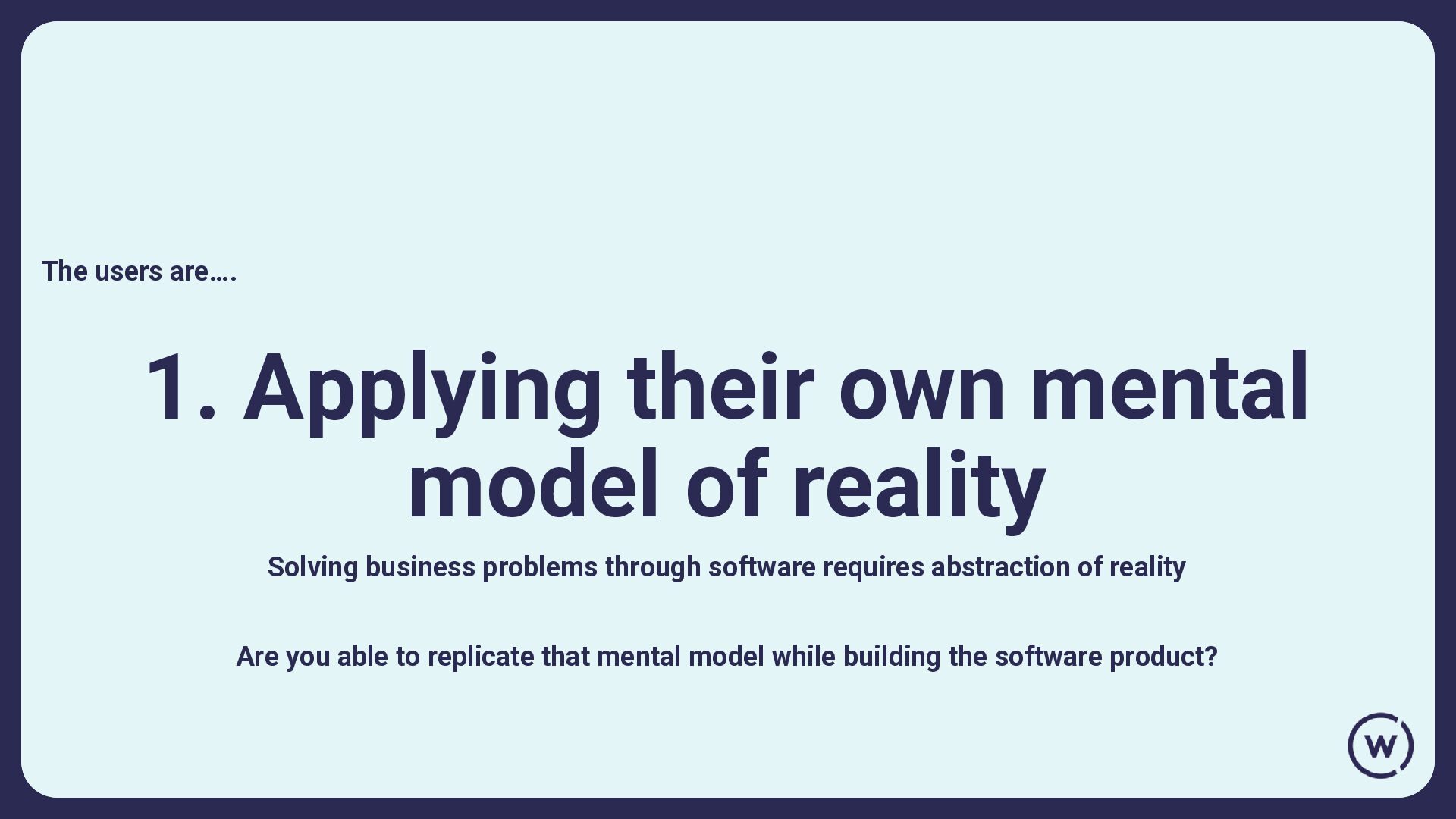
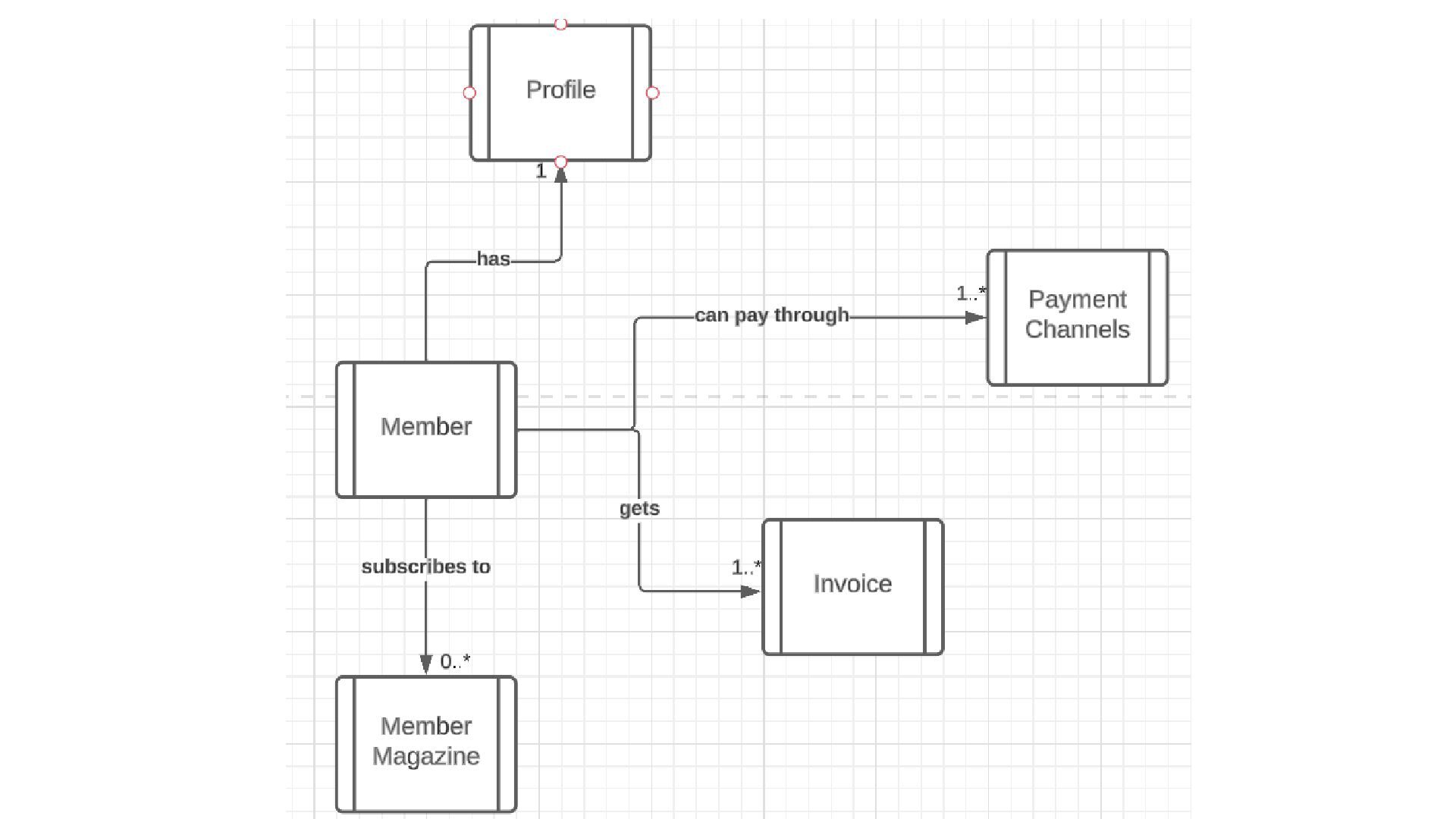
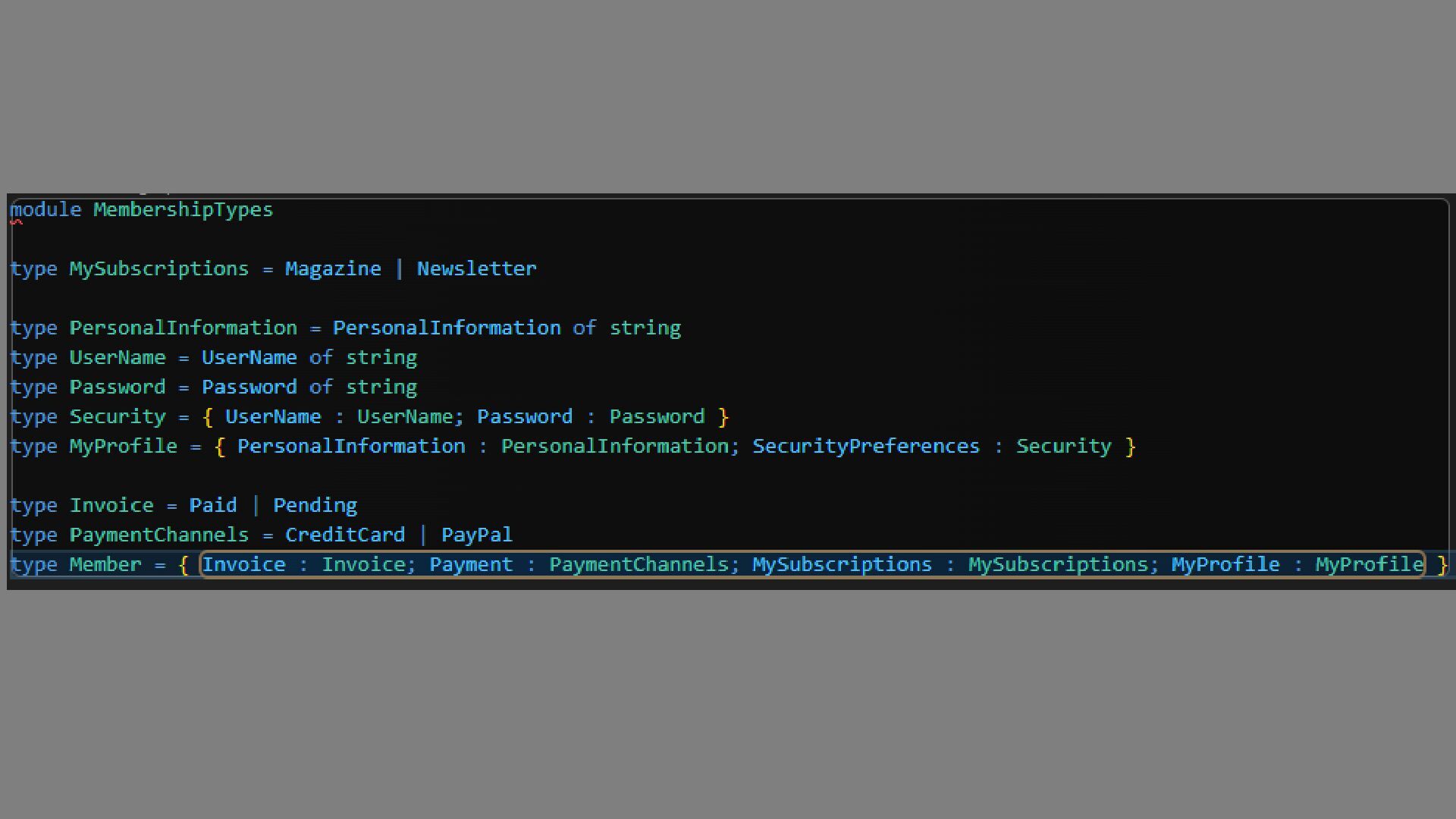
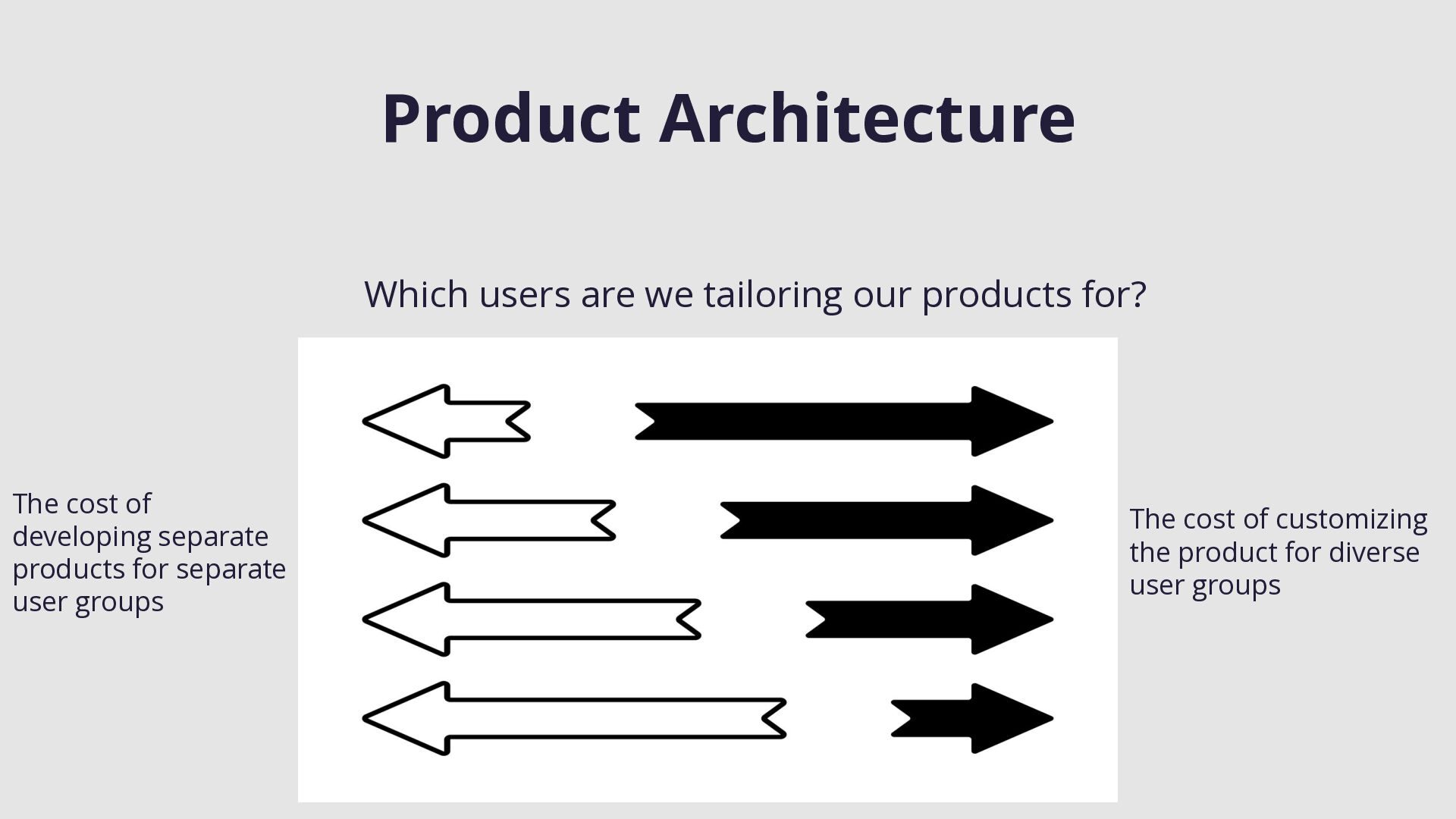
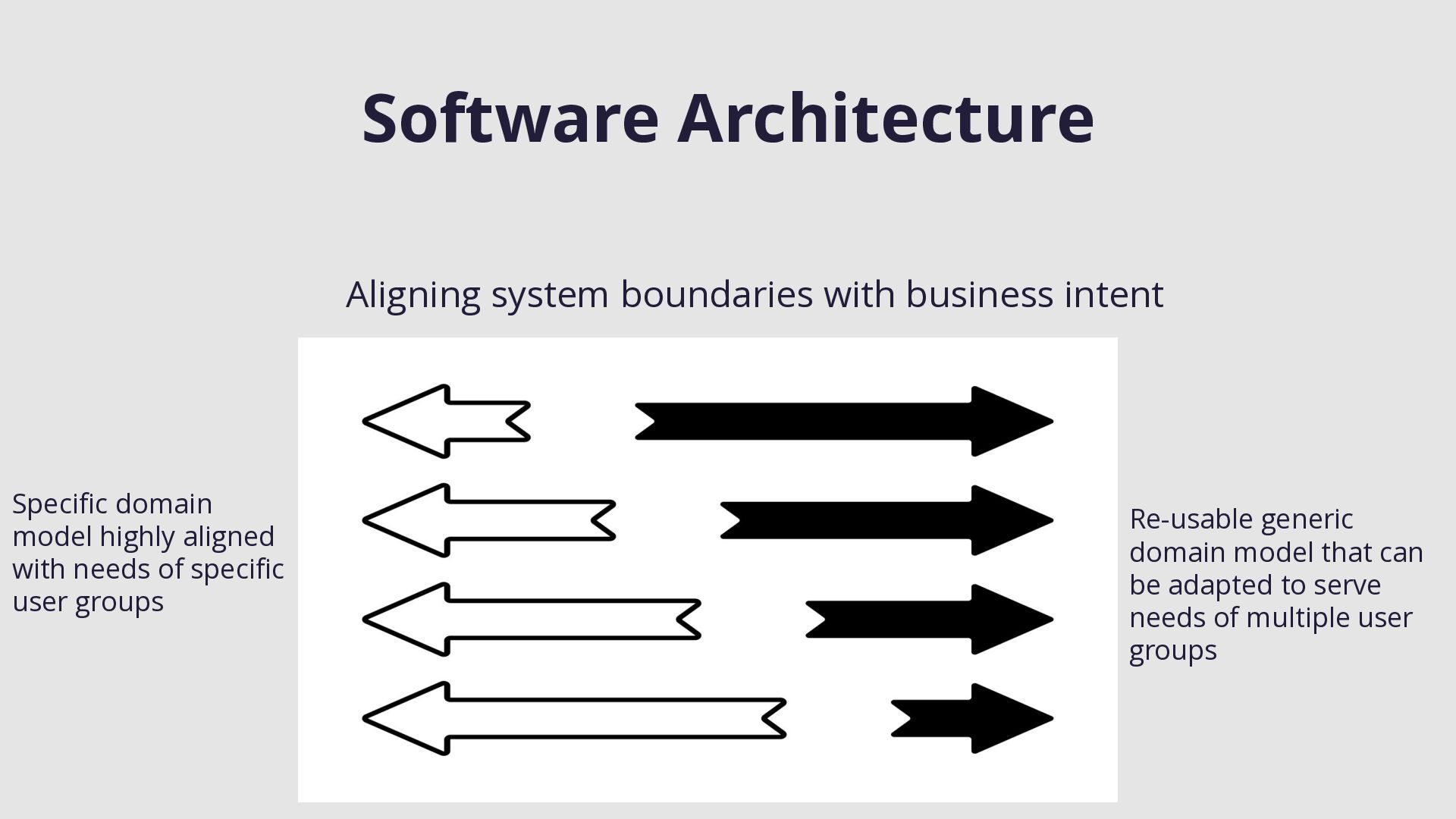
reality Solving business problems through software requires abstraction of reality Are you able to replicate that mental model while building the software product?
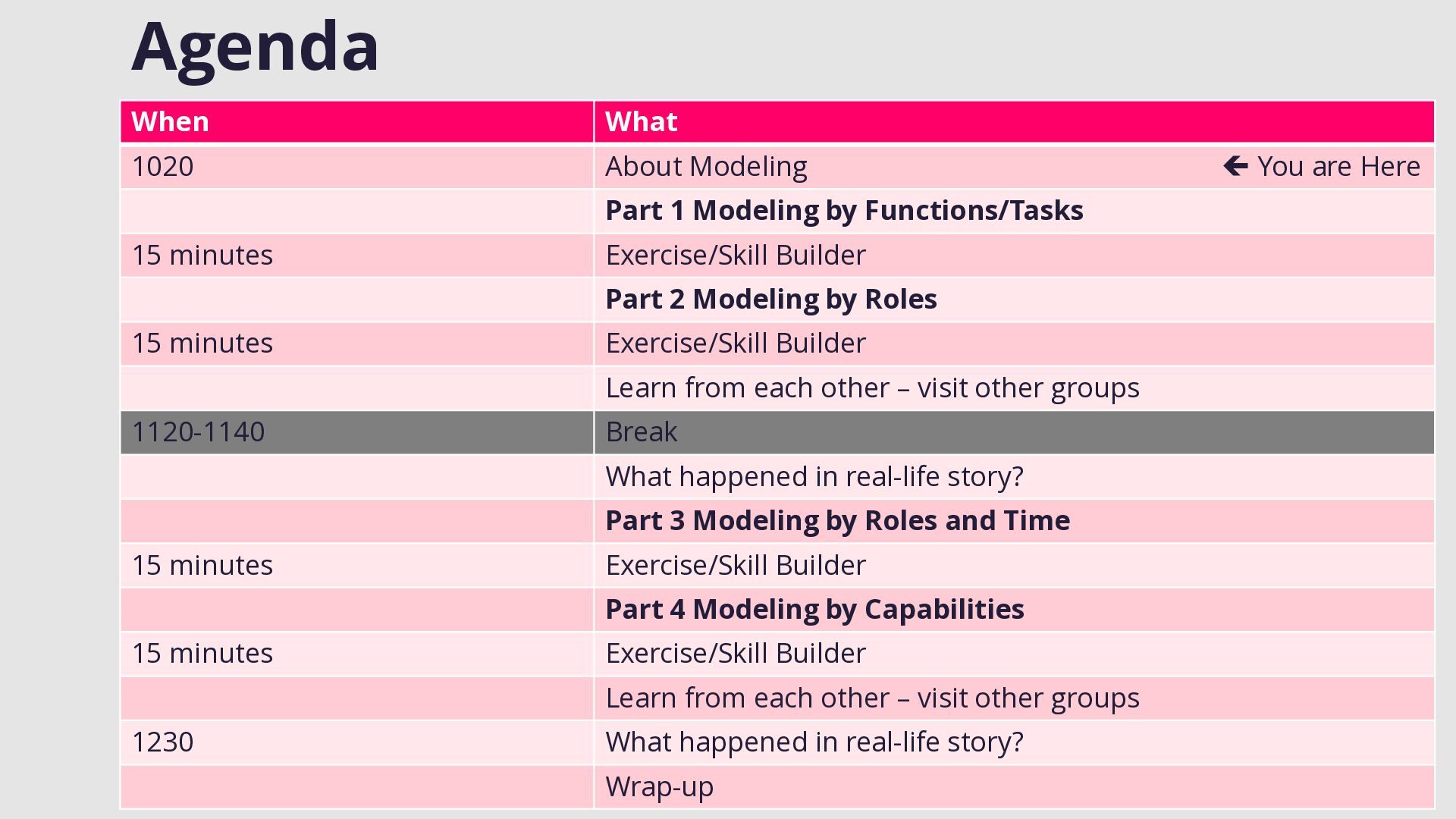
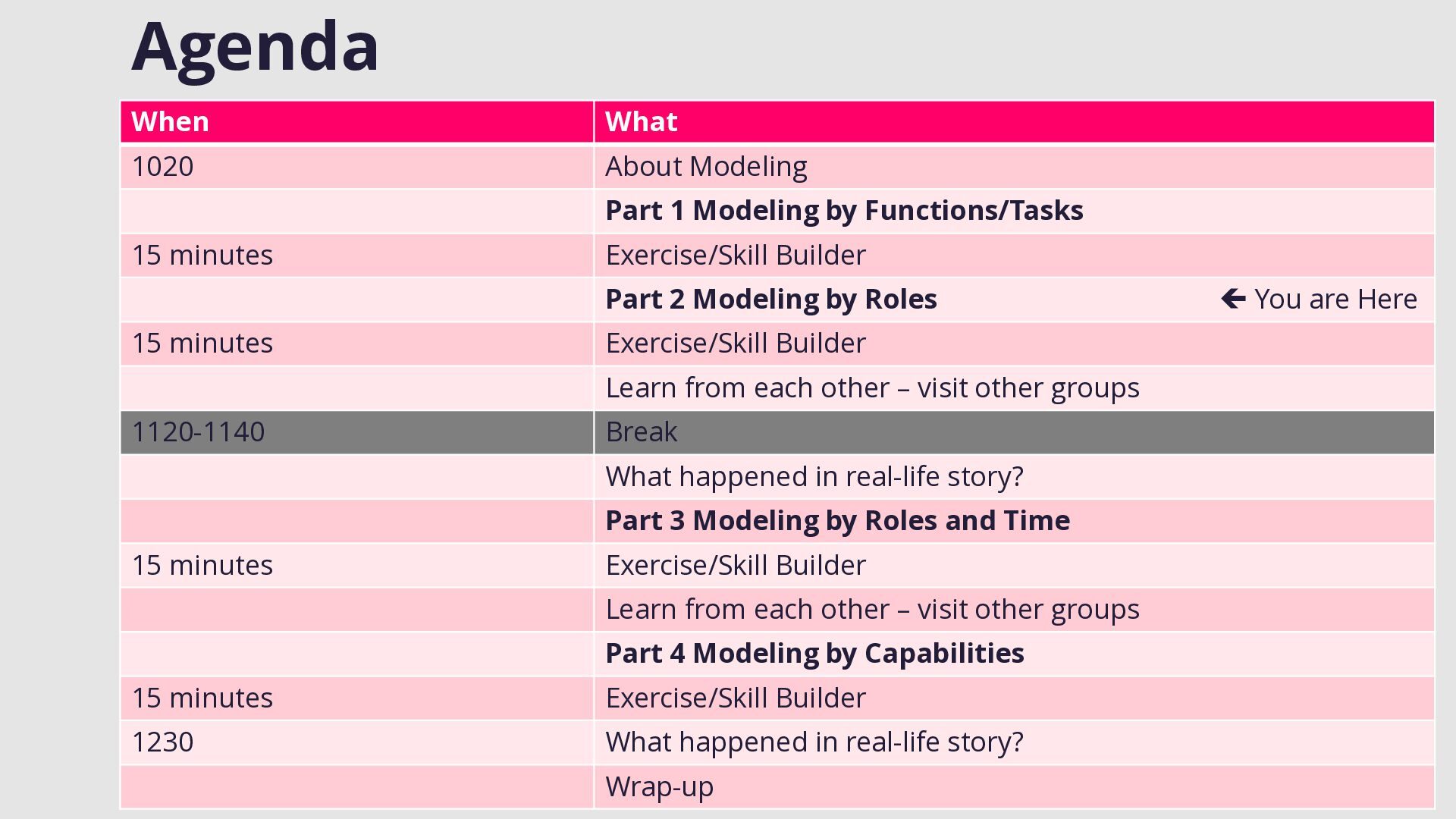
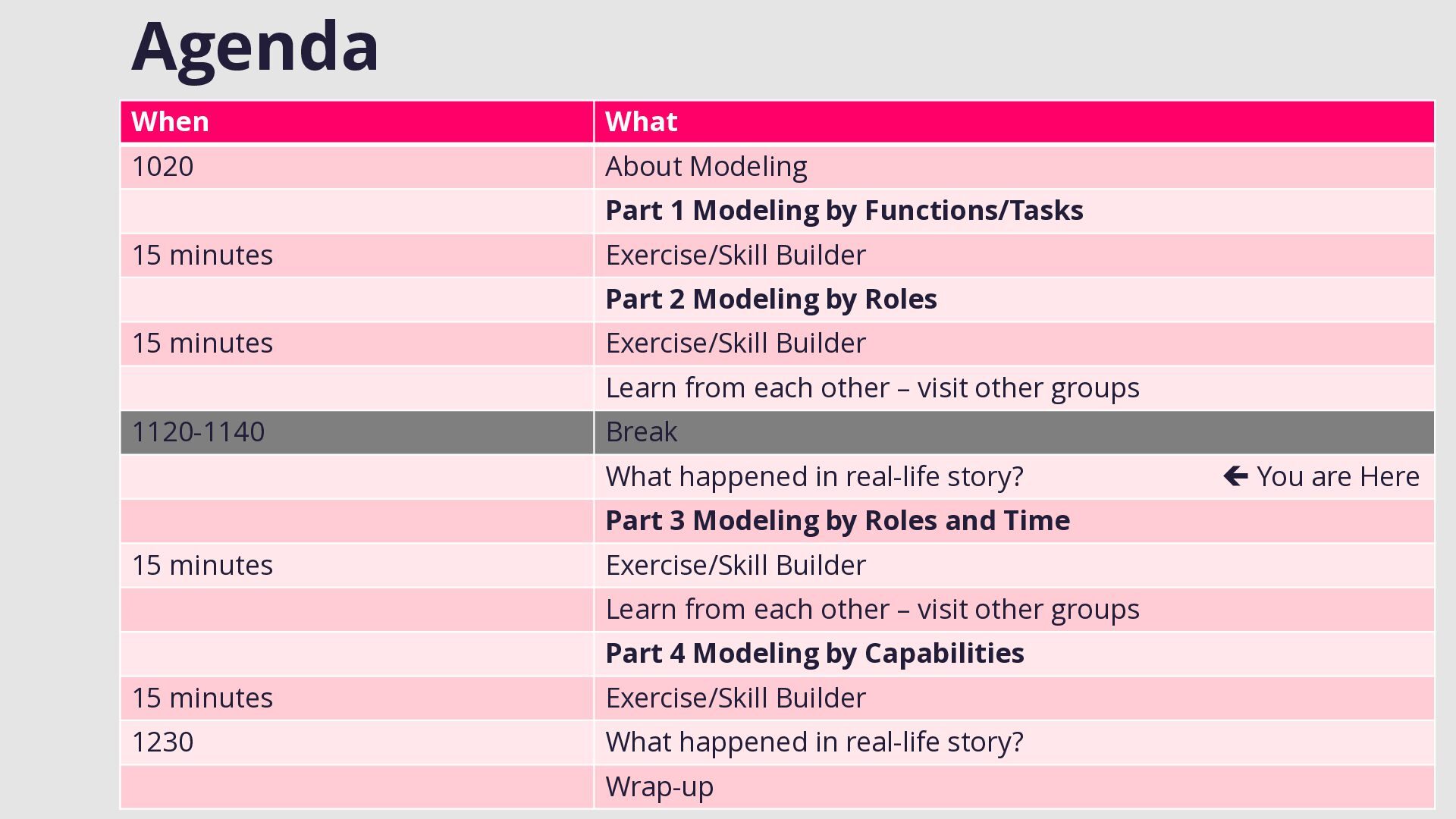
Functions/Tasks 15 minutes Exercise/Skill Builder Part 2 Modeling by Roles 15 minutes Exercise/Skill Builder Learn from each other – visit other groups 1120-1140 Break What happened in real-life story? Part 3 Modeling by Roles and Time 15 minutes Exercise/Skill Builder Part 4 Modeling by Capabilities 15 minutes Exercise/Skill Builder Learn from each other – visit other groups 1230 What happened in real-life story? Wrap-up You are Here
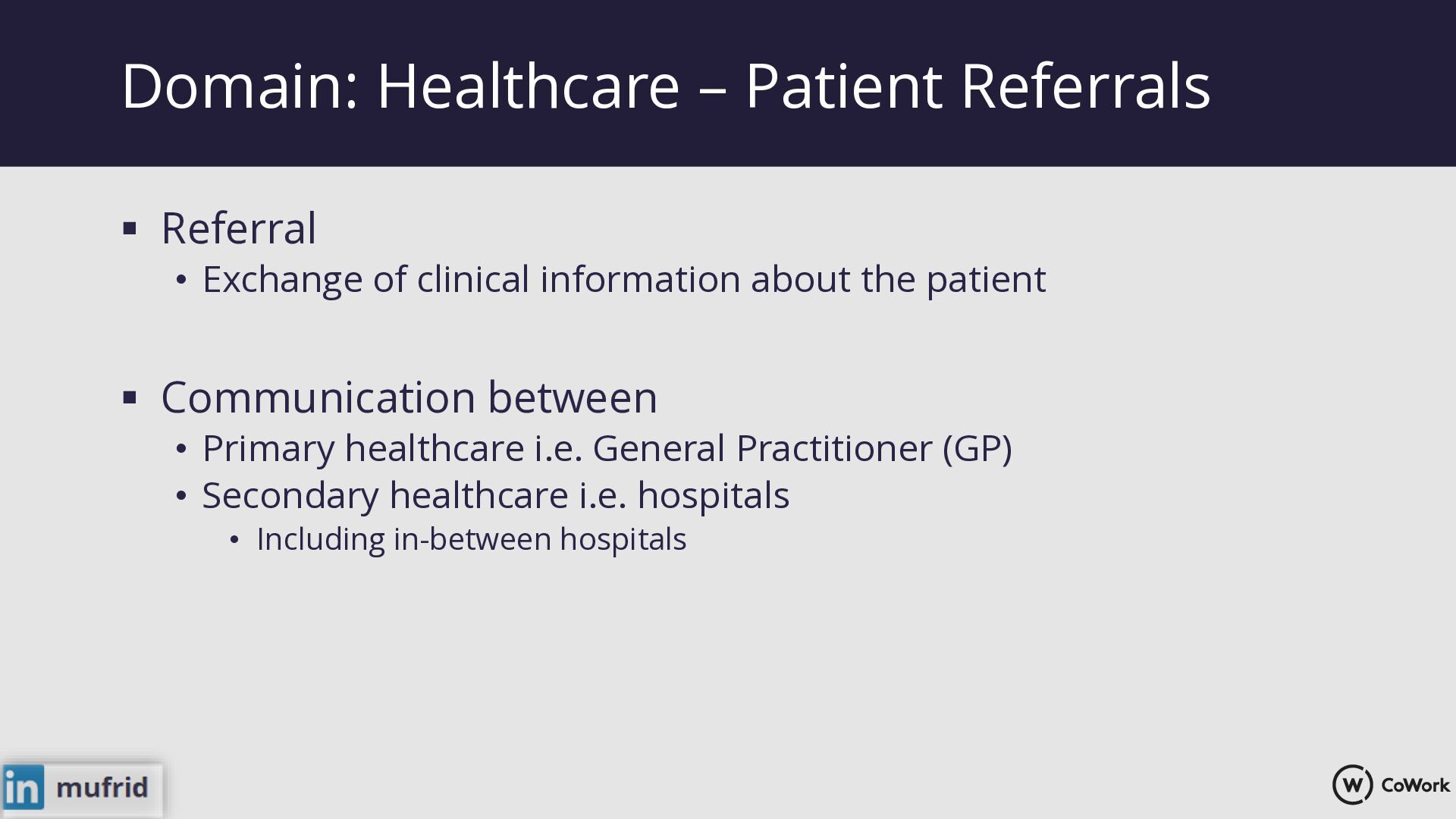
clinical information about the patient ▪ Communication between • Primary healthcare i.e. General Practitioner (GP) • Secondary healthcare i.e. hospitals • Including in-between hospitals
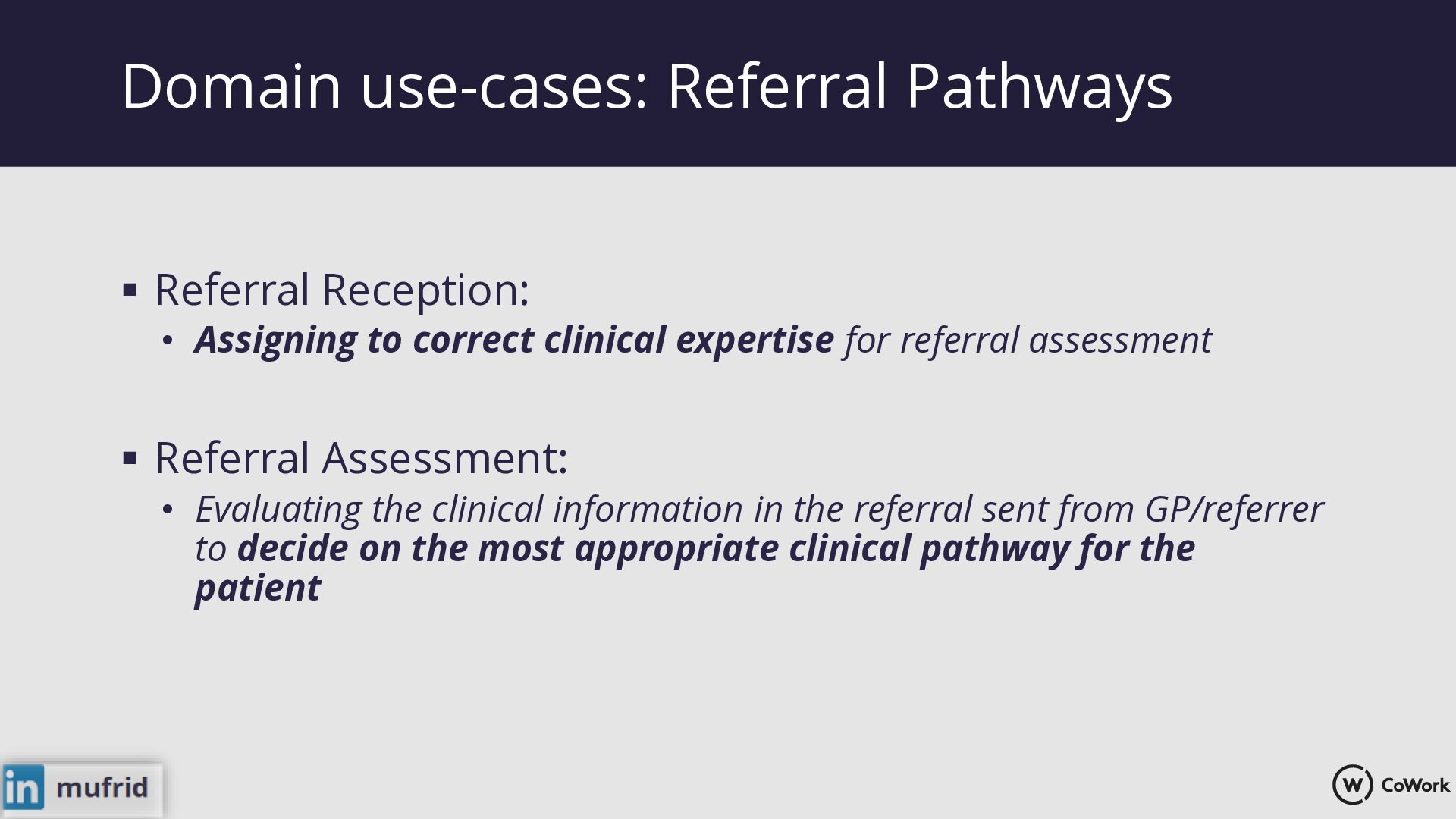
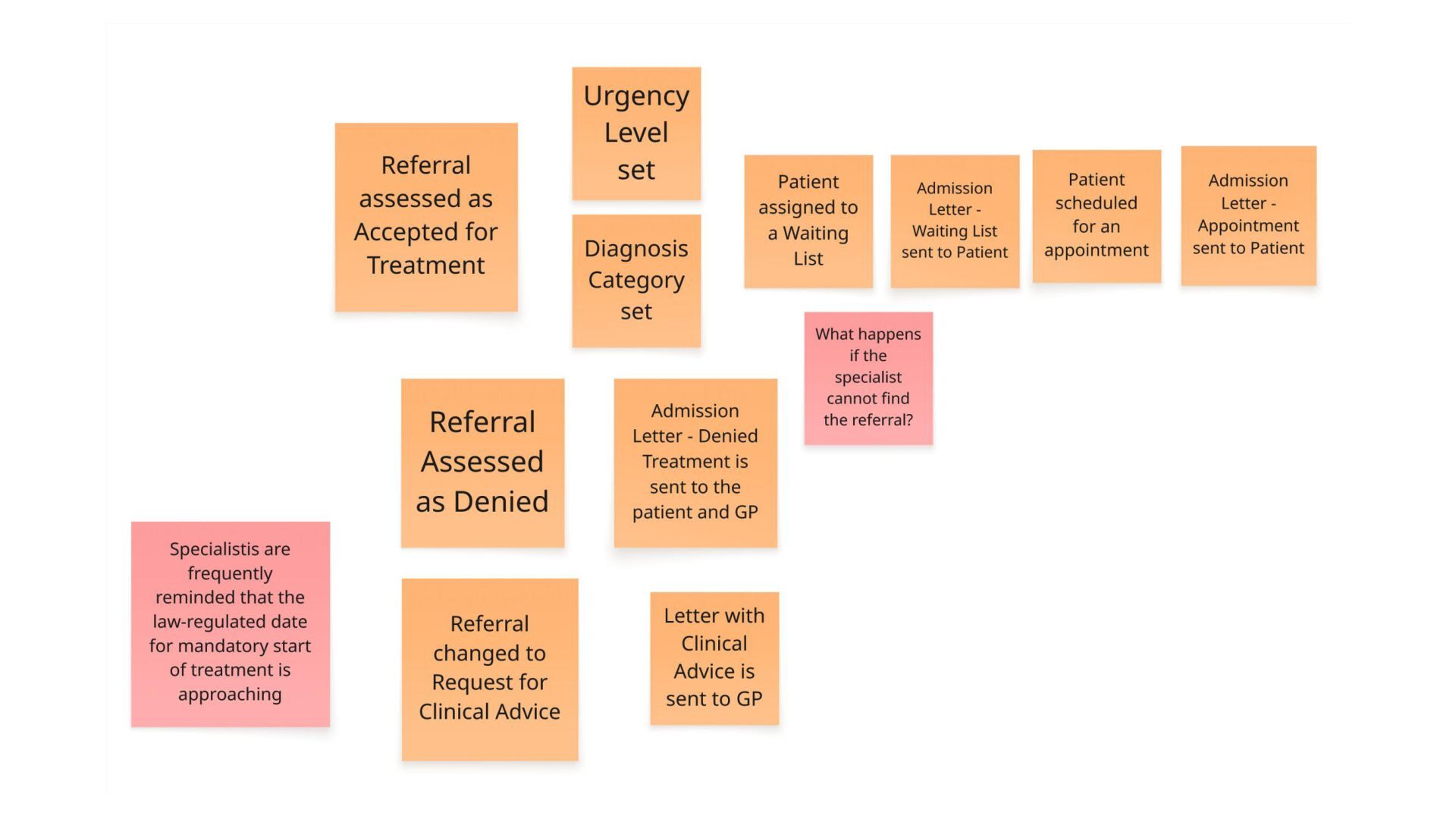
correct clinical expertise for referral assessment ▪ Referral Assessment: • Evaluating the clinical information in the referral sent from GP/referrer to decide on the most appropriate clinical pathway for the patient
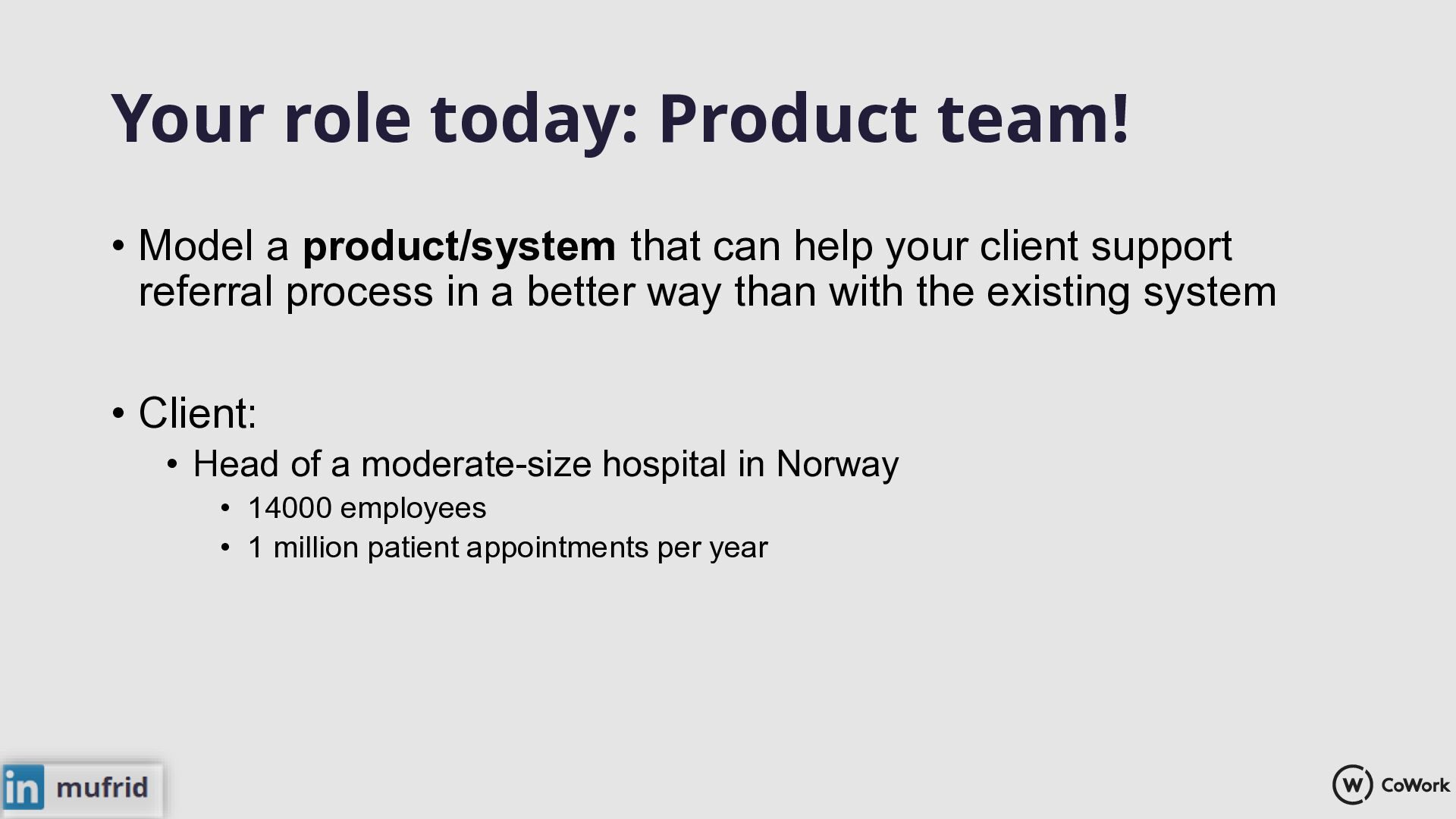
can help your client support referral process in a better way than with the existing system • Client: • Head of a moderate-size hospital in Norway • 14000 employees • 1 million patient appointments per year
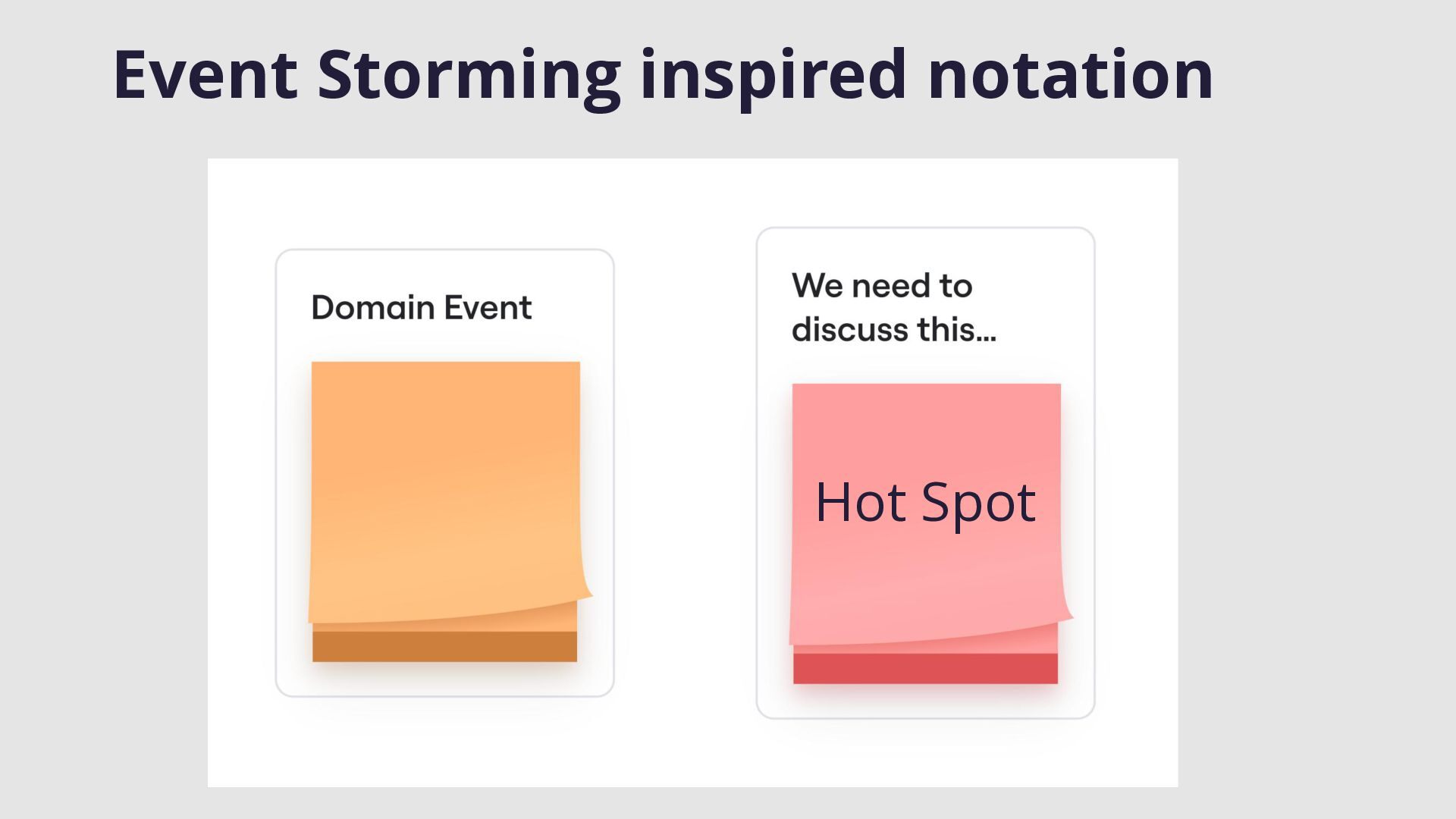
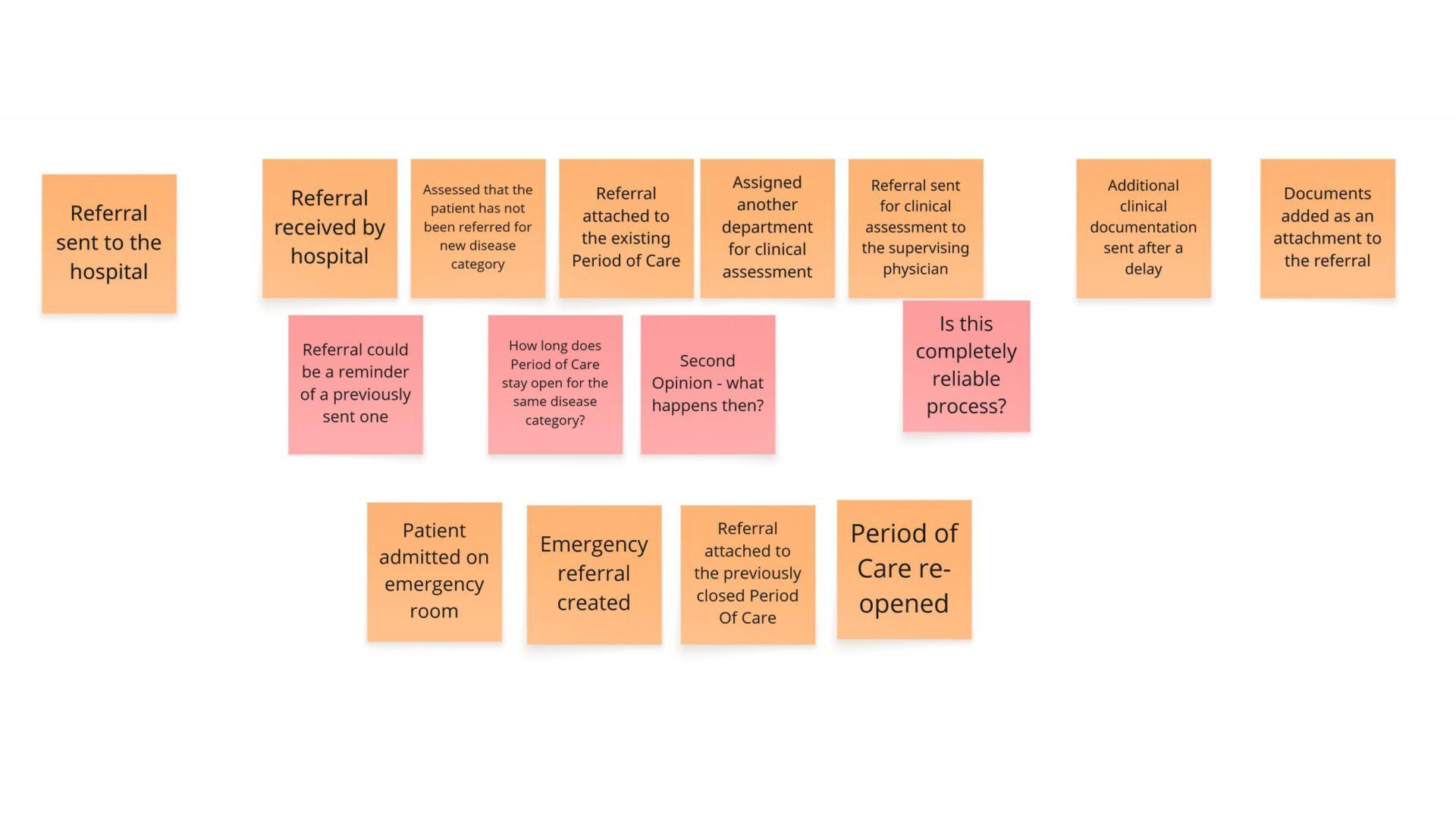
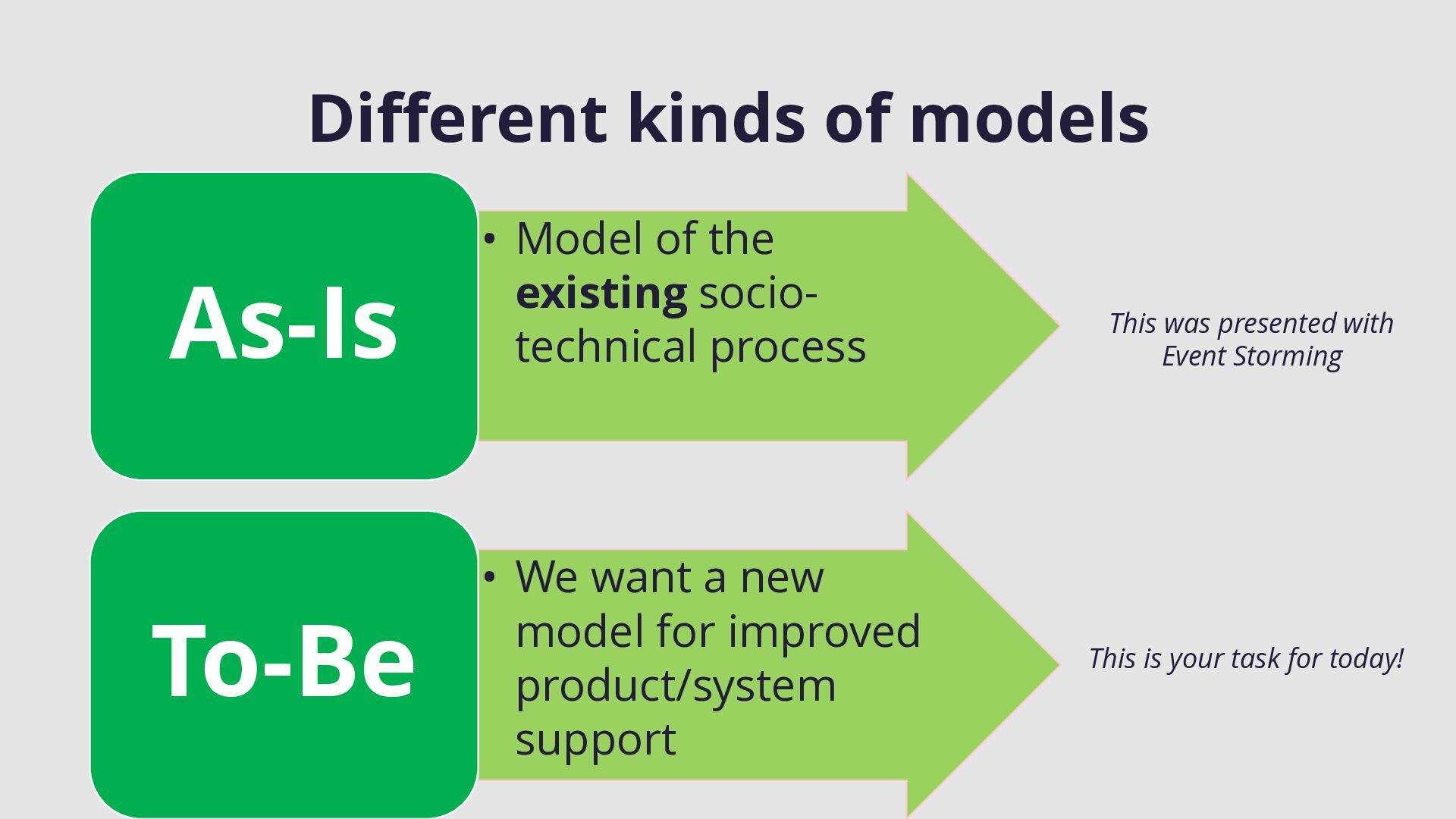
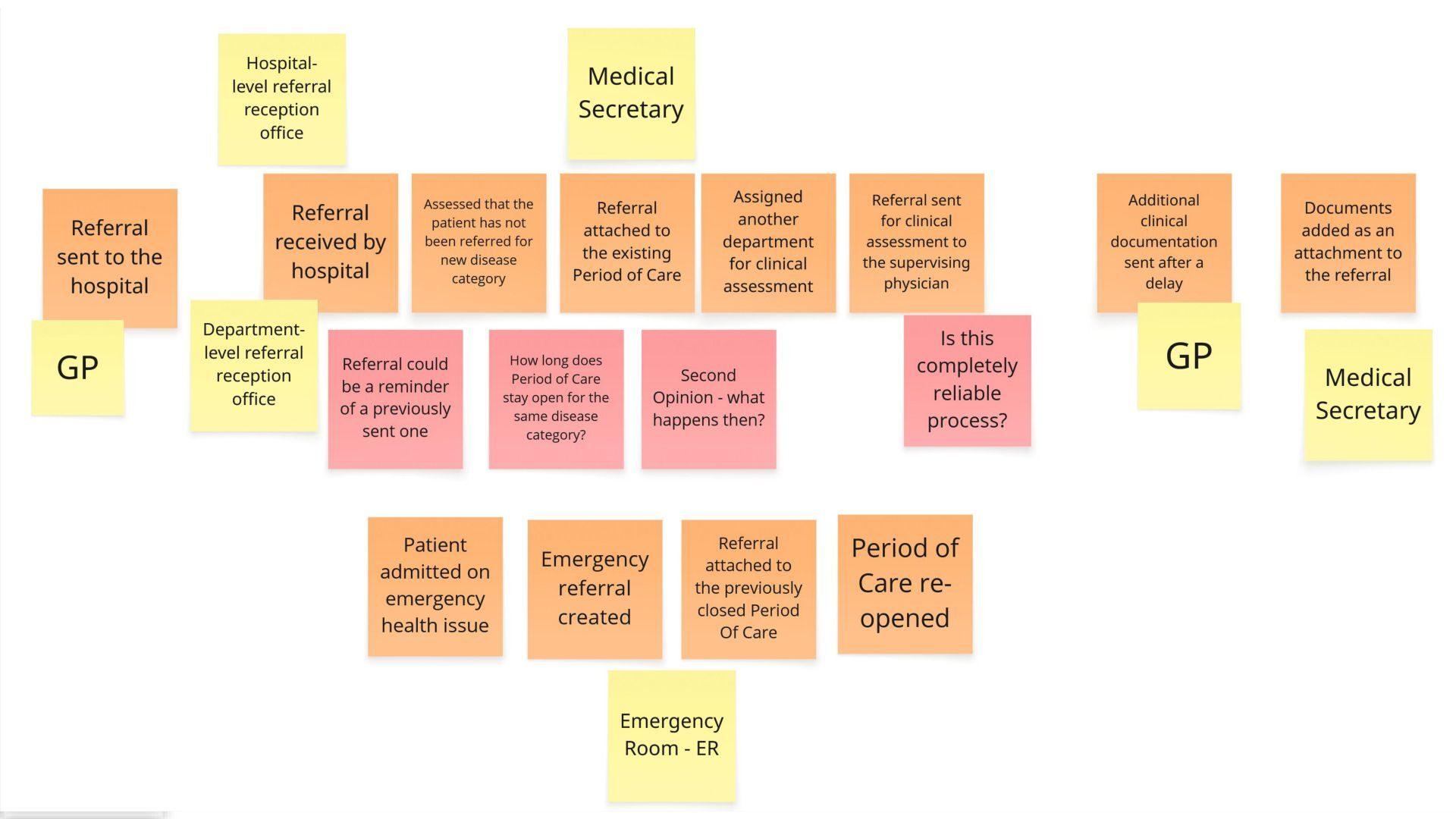
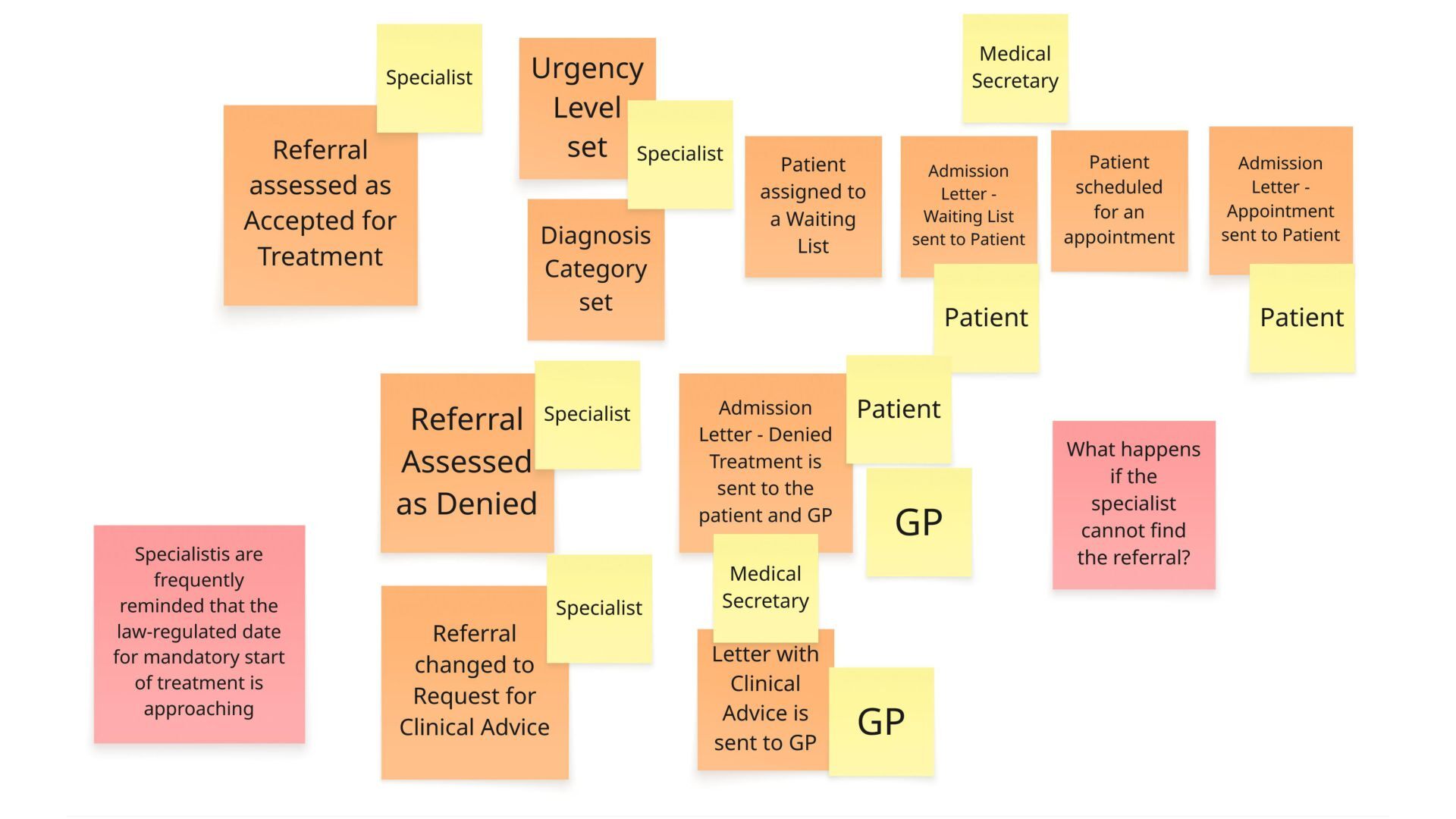
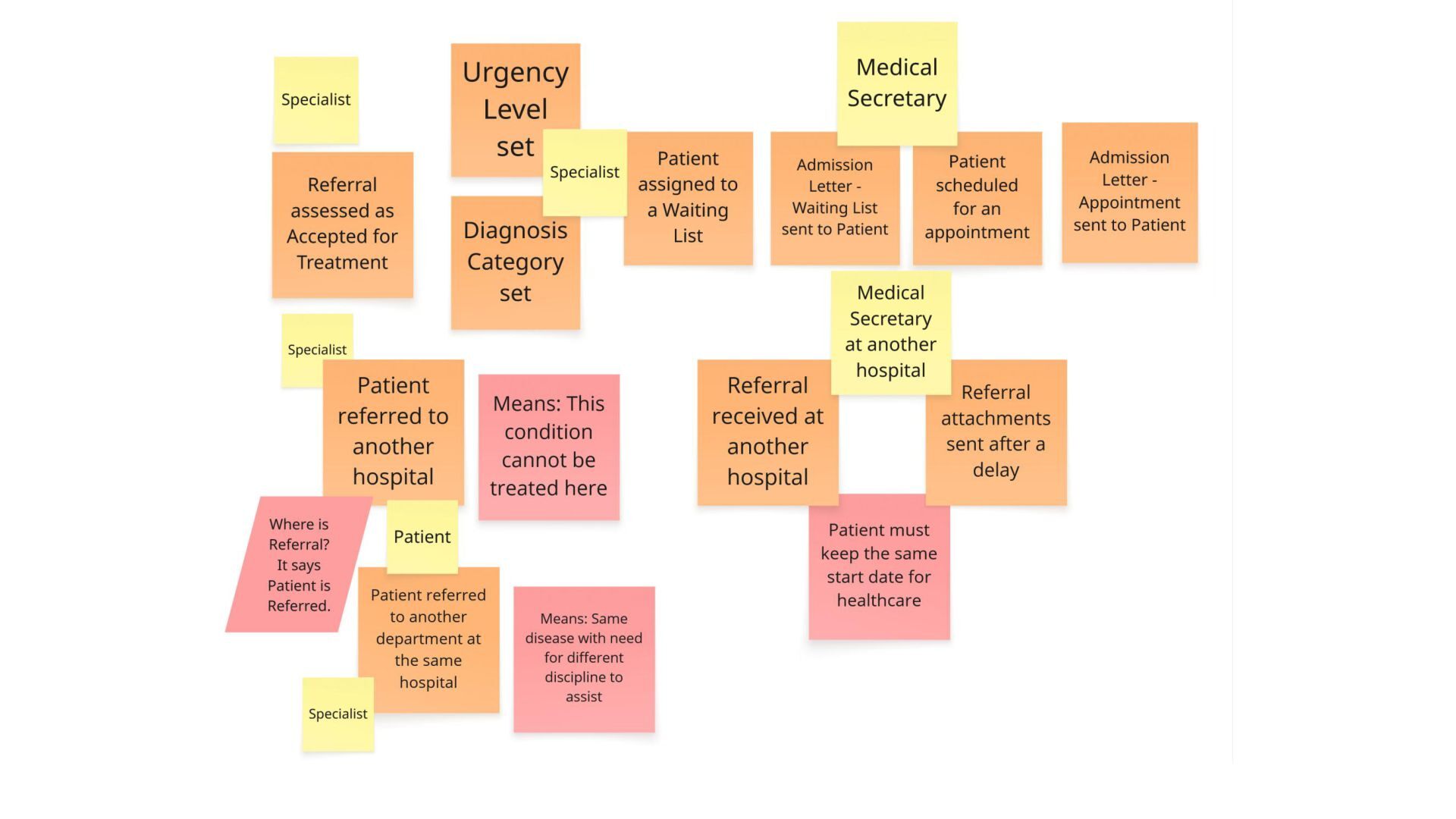
existing sociotechnical process • We want a new model for improved product/system support This was presented with Event Storming This is your task for today!
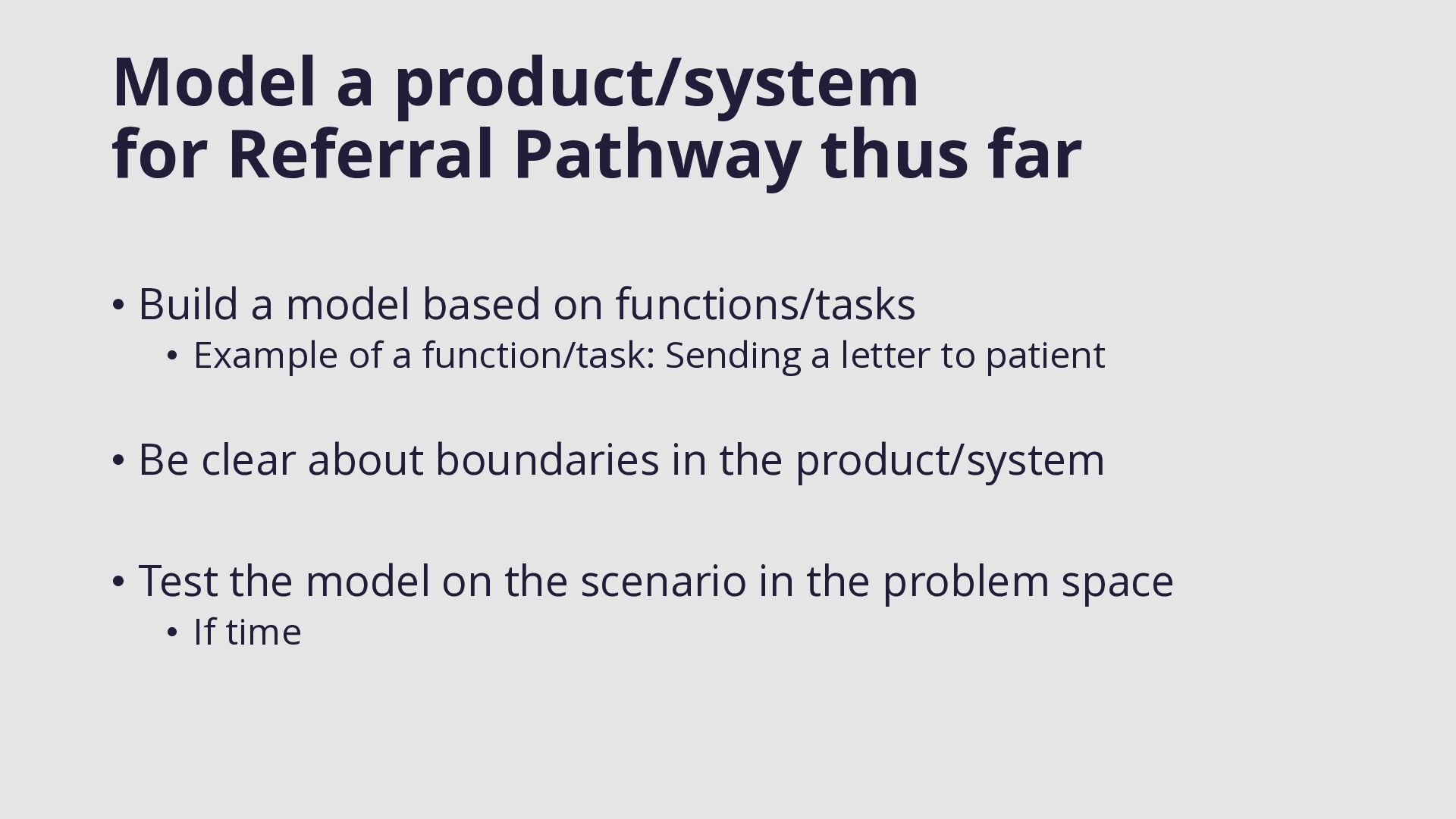
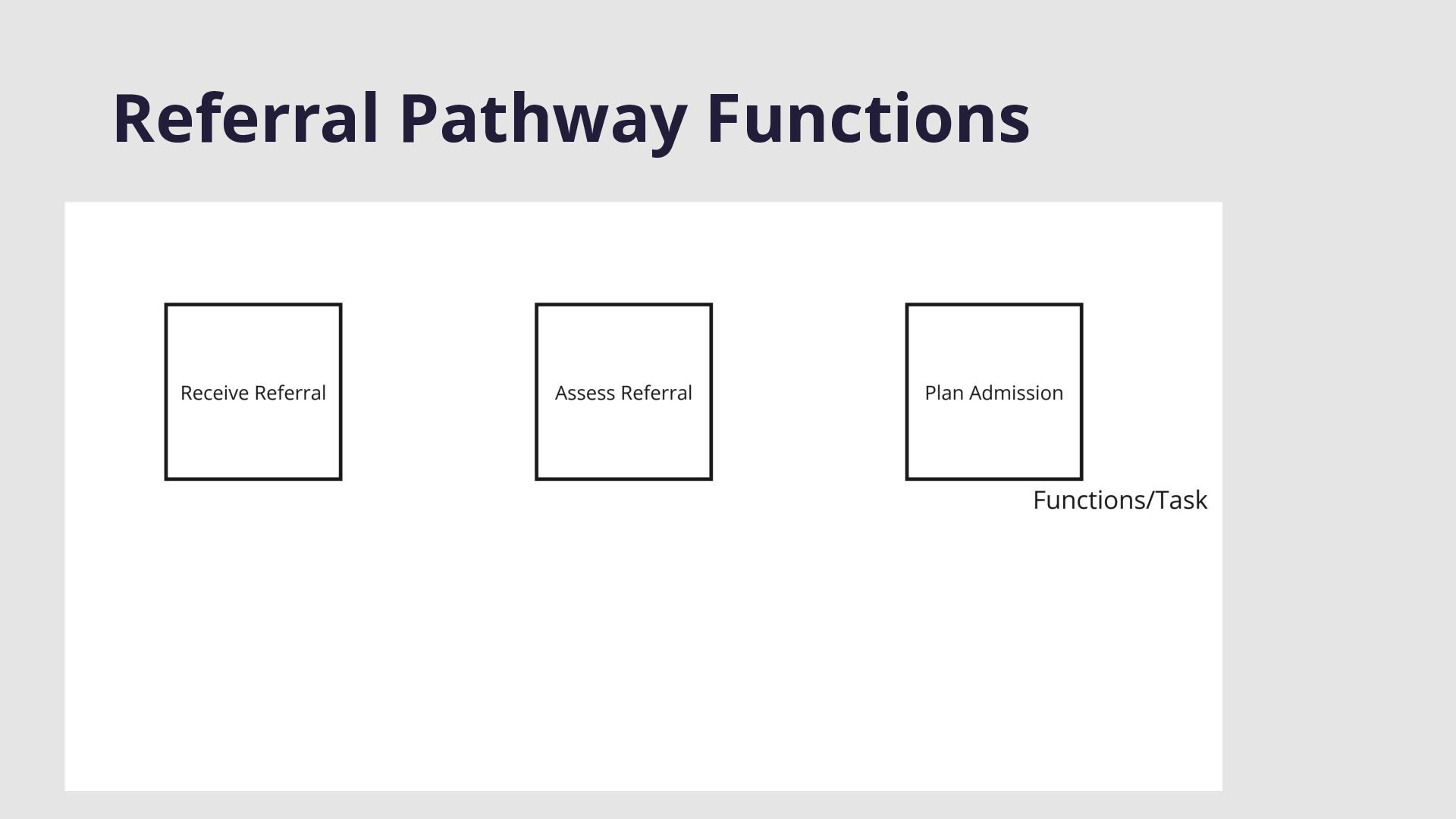
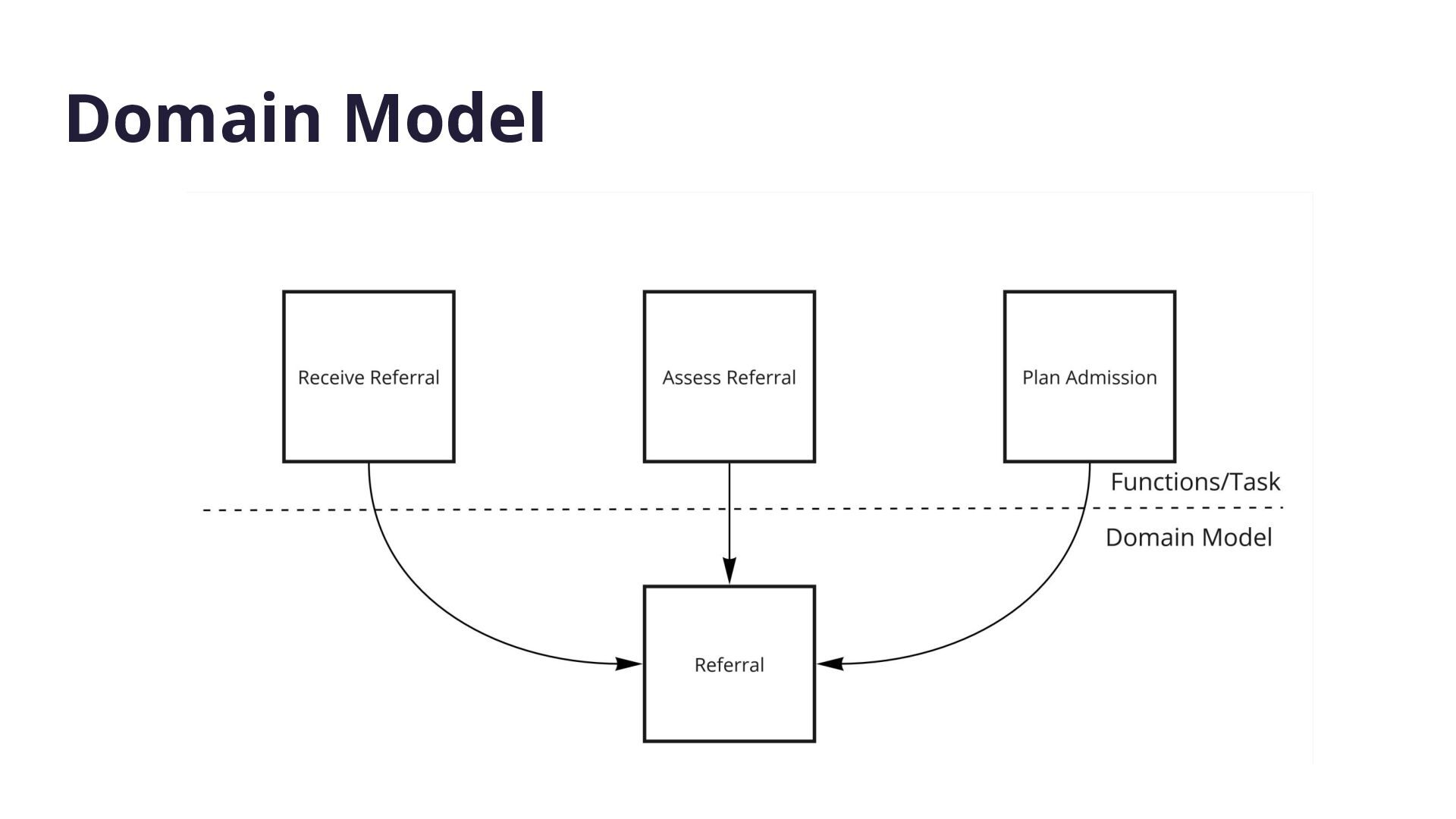
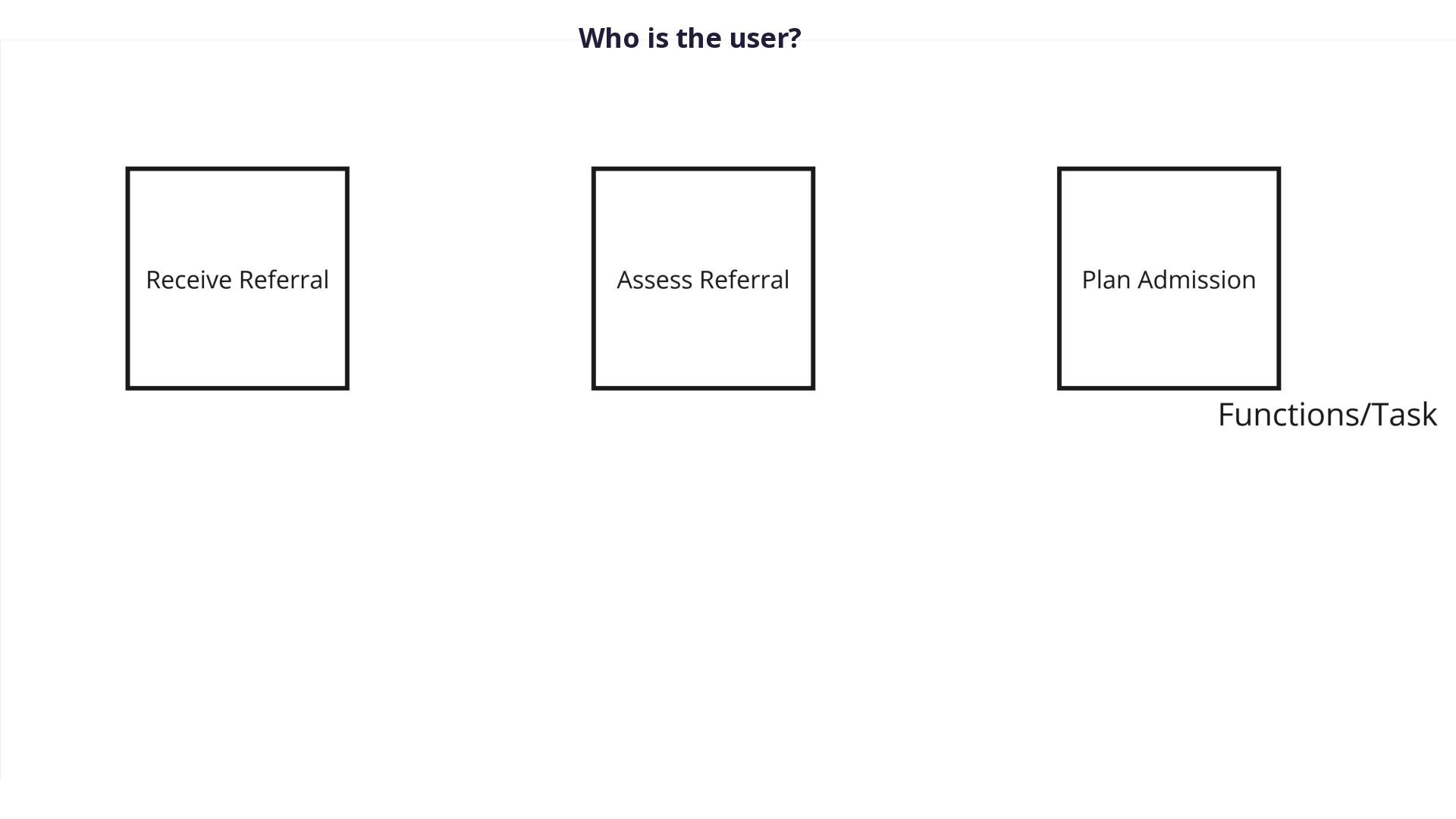
a model based on functions/tasks • Example of a function/task: Sending a letter to patient • Be clear about boundaries in the product/system • Test the model on the scenario in the problem space • If time
Functions/Tasks 15 minutes Exercise/Skill Builder Part 2 Modeling by Roles 15 minutes Exercise/Skill Builder Learn from each other – visit other groups 1120-1140 Break What happened in real-life story? Part 3 Modeling by Roles and Time 15 minutes Exercise/Skill Builder Learn from each other – visit other groups Part 4 Modeling by Capabilities 15 minutes Exercise/Skill Builder 1230 What happened in real-life story? Wrap-up You are Here
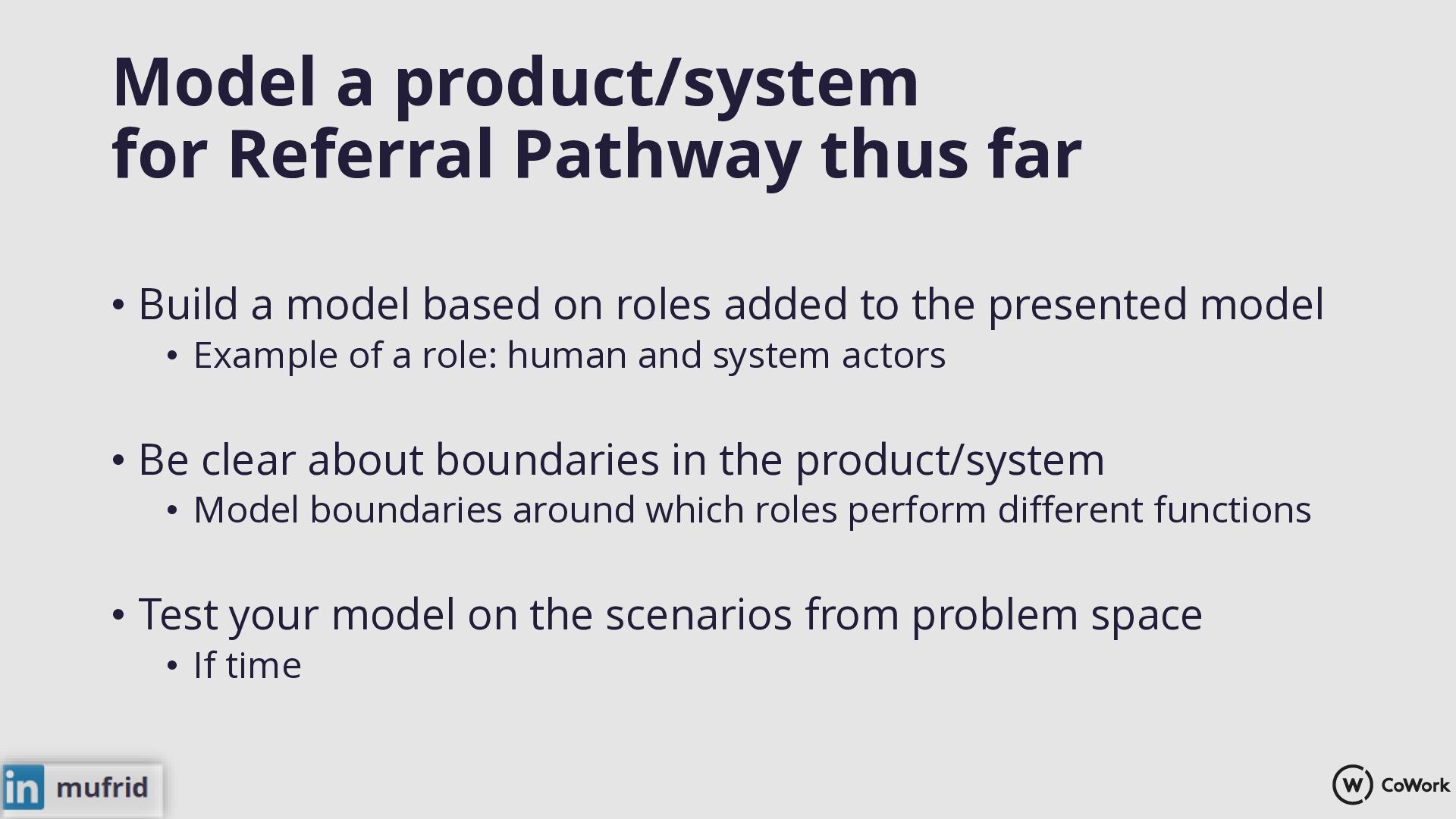
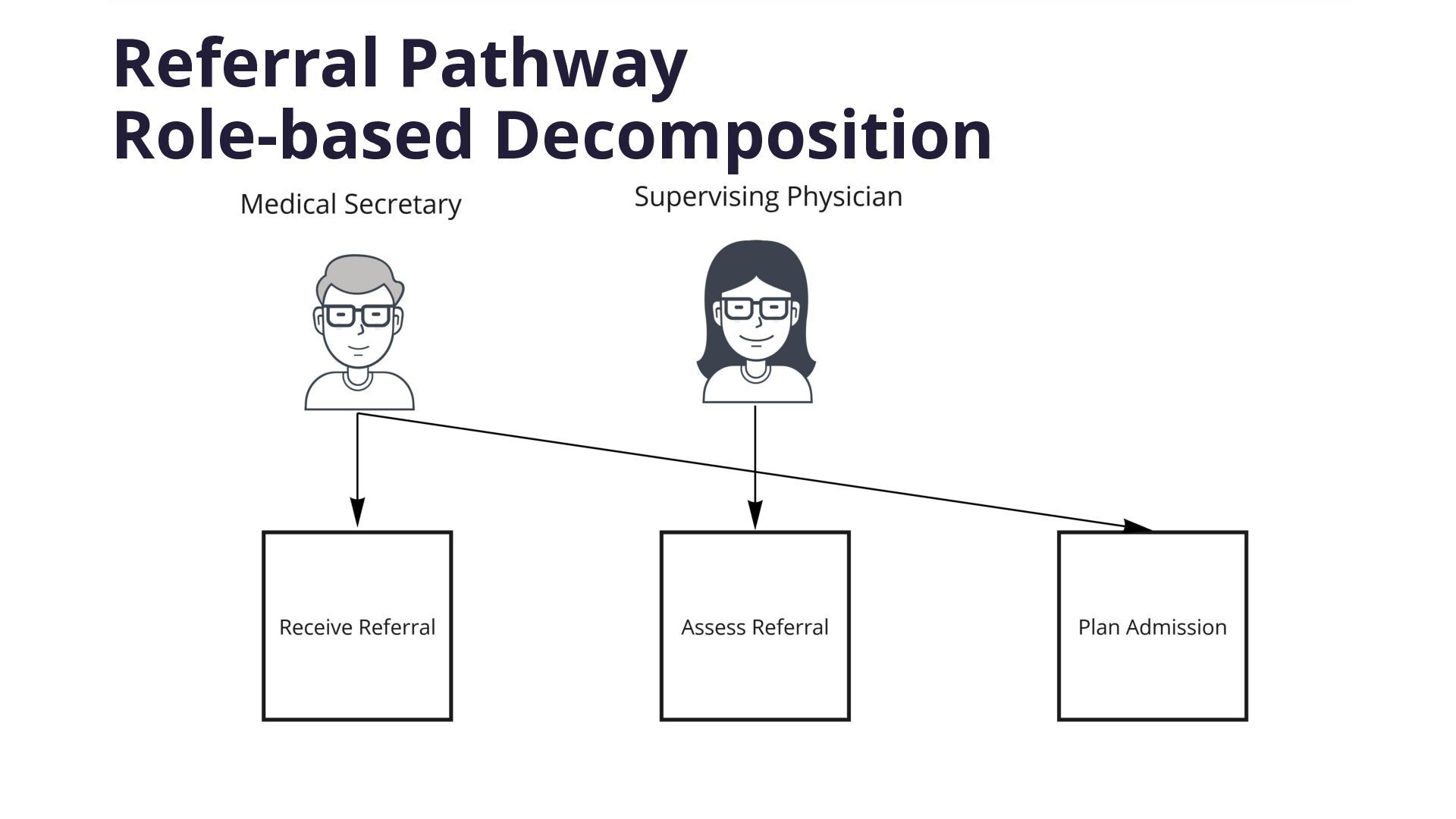
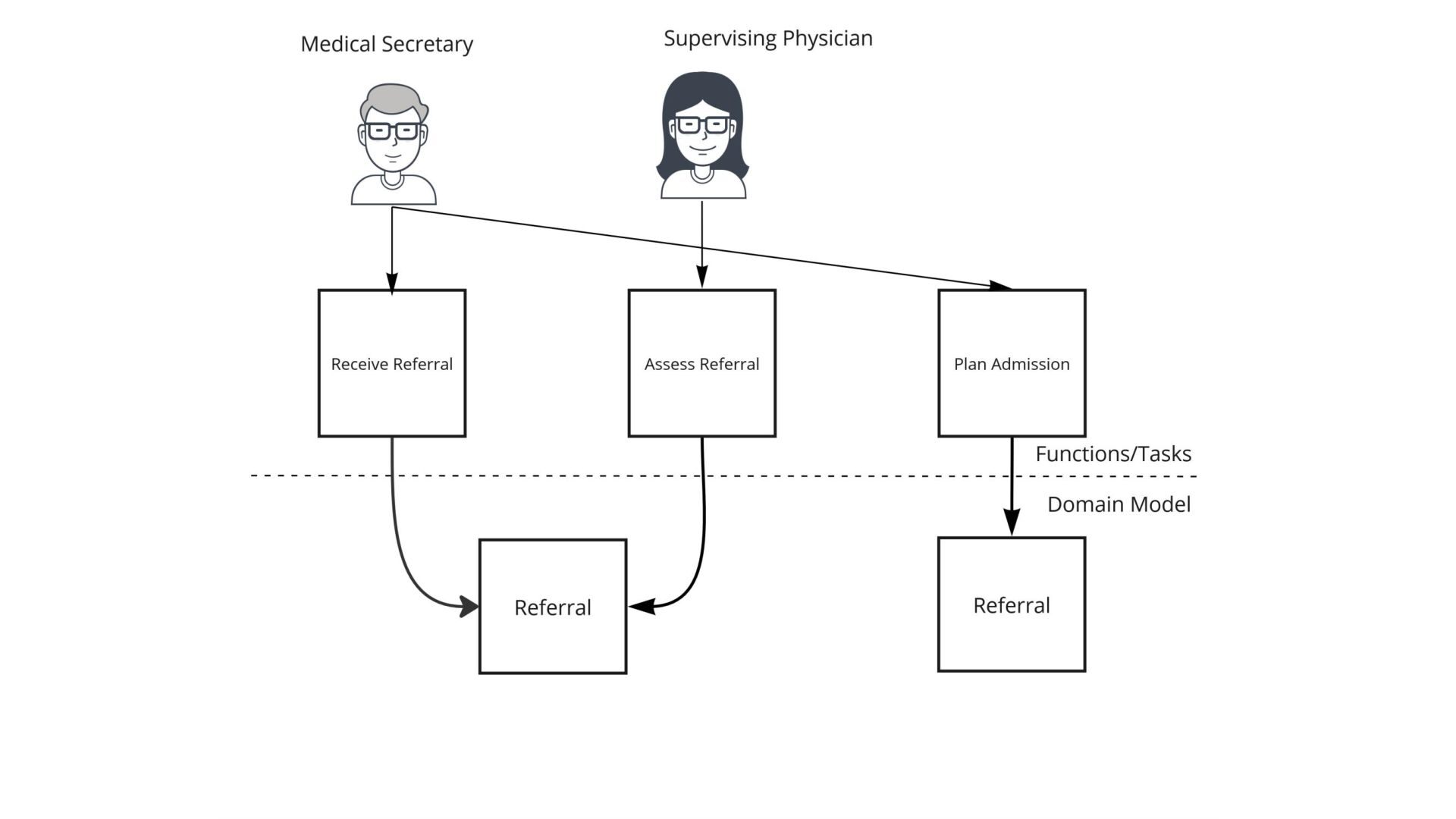
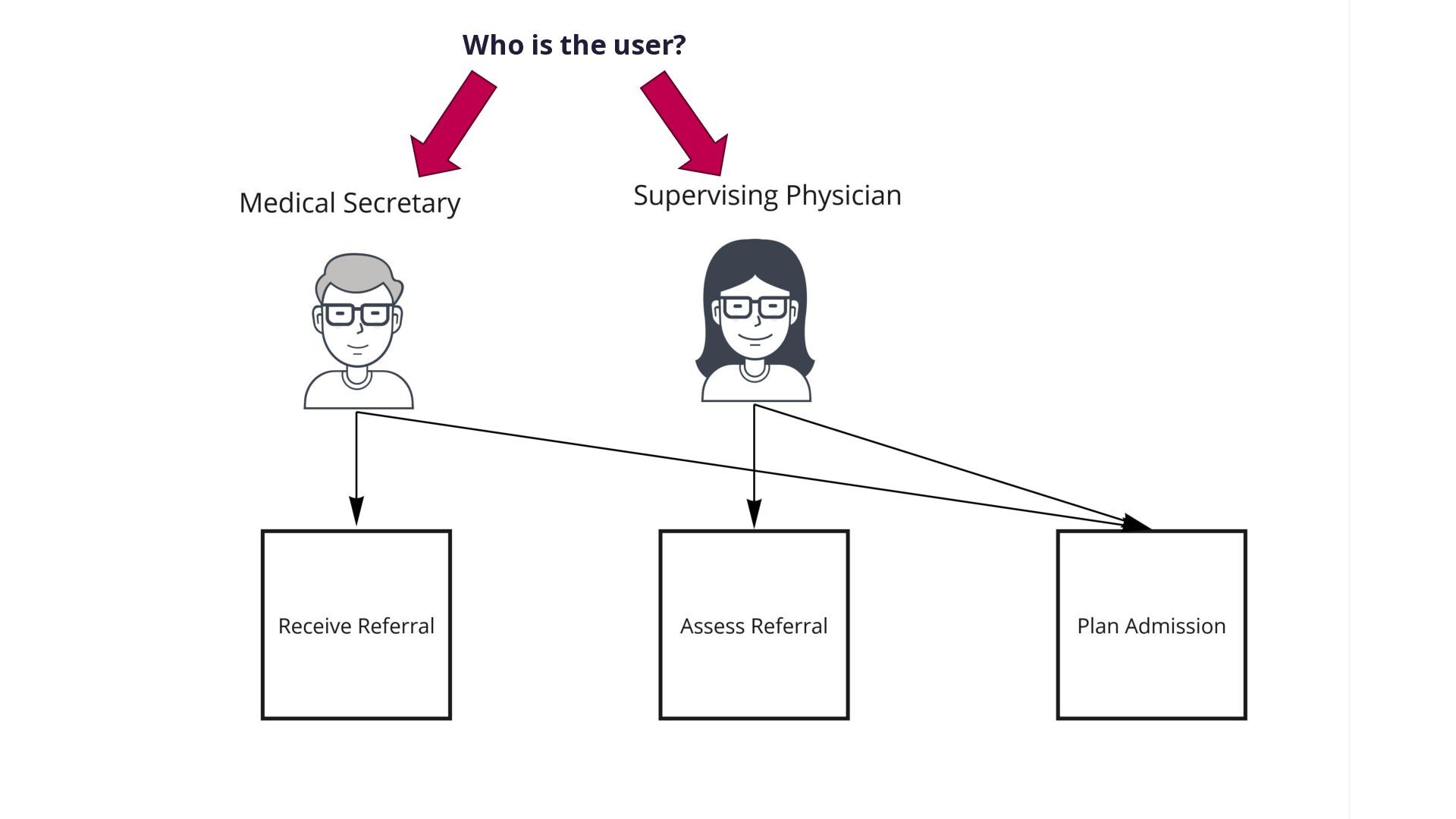
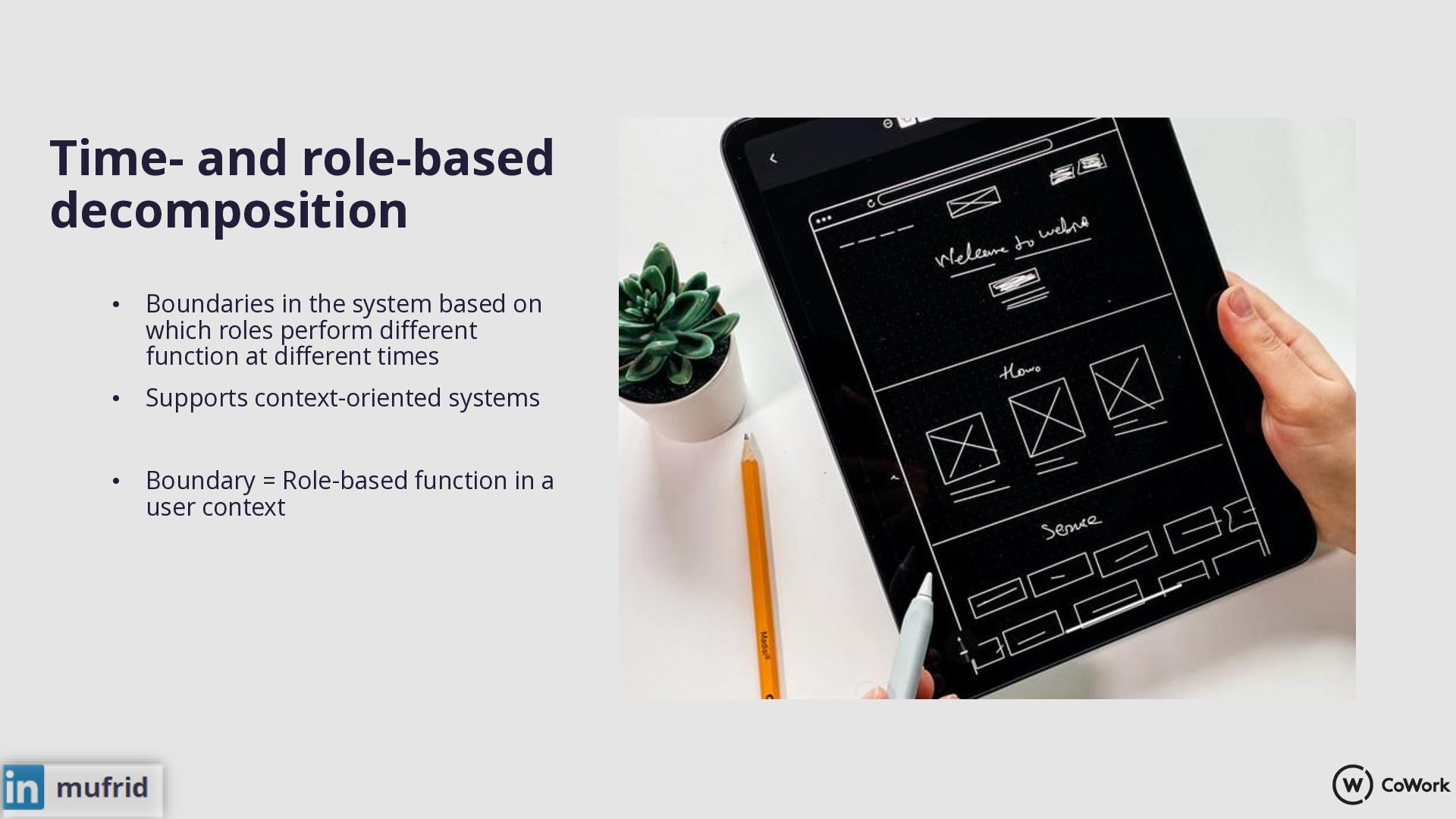
a model based on roles added to the presented model • Example of a role: human and system actors • Be clear about boundaries in the product/system • Model boundaries around which roles perform different functions • Test your model on the scenarios from problem space • If time
Functions/Tasks 15 minutes Exercise/Skill Builder Part 2 Modeling by Roles 15 minutes Exercise/Skill Builder Learn from each other – visit other groups 1120-1140 Break What happened in real-life story? Part 3 Modeling by Roles and Time 15 minutes Exercise/Skill Builder Learn from each other – visit other groups Part 4 Modeling by Capabilities 15 minutes Exercise/Skill Builder 1230 What happened in real-life story? Wrap-up You are Here
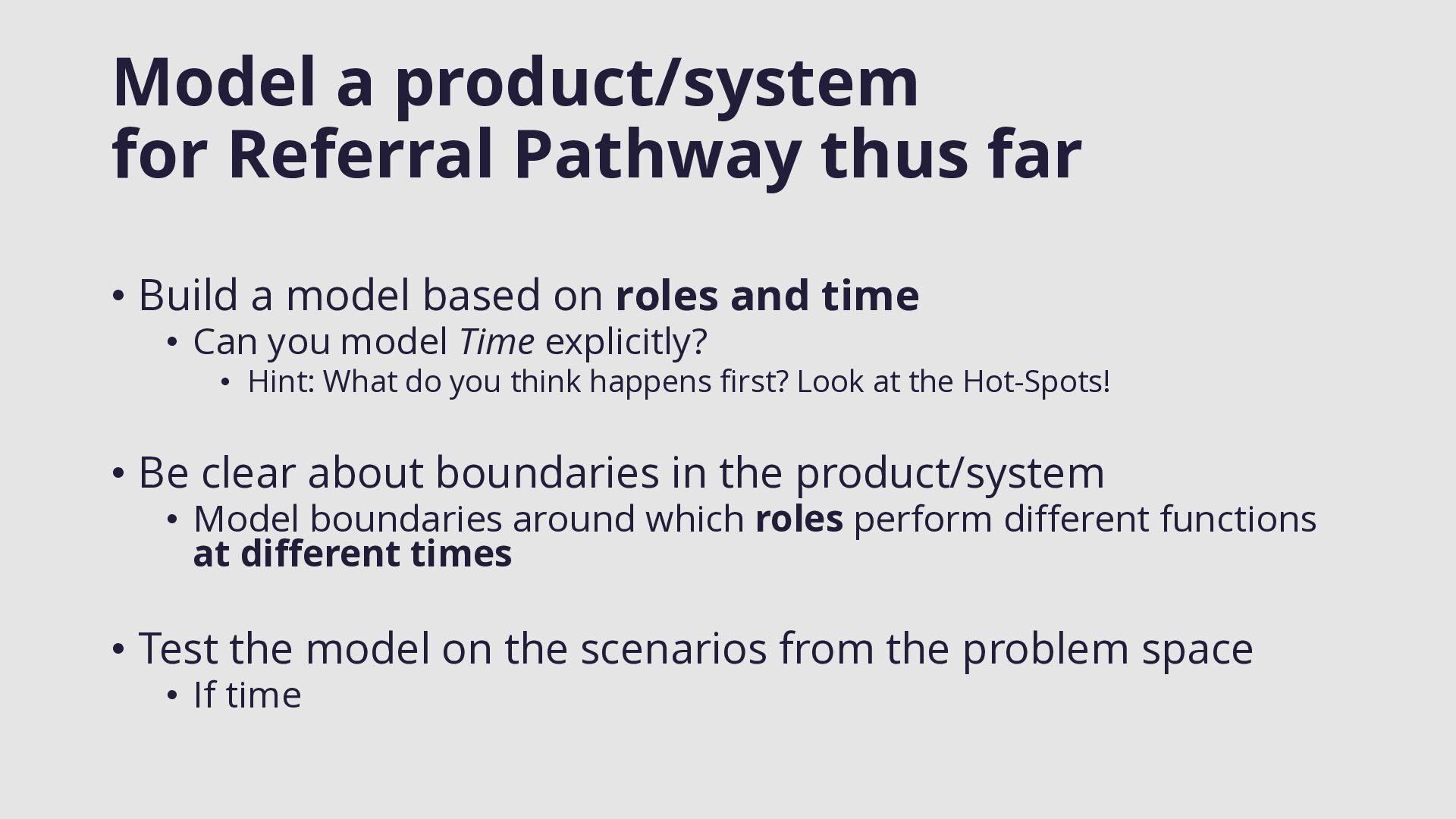
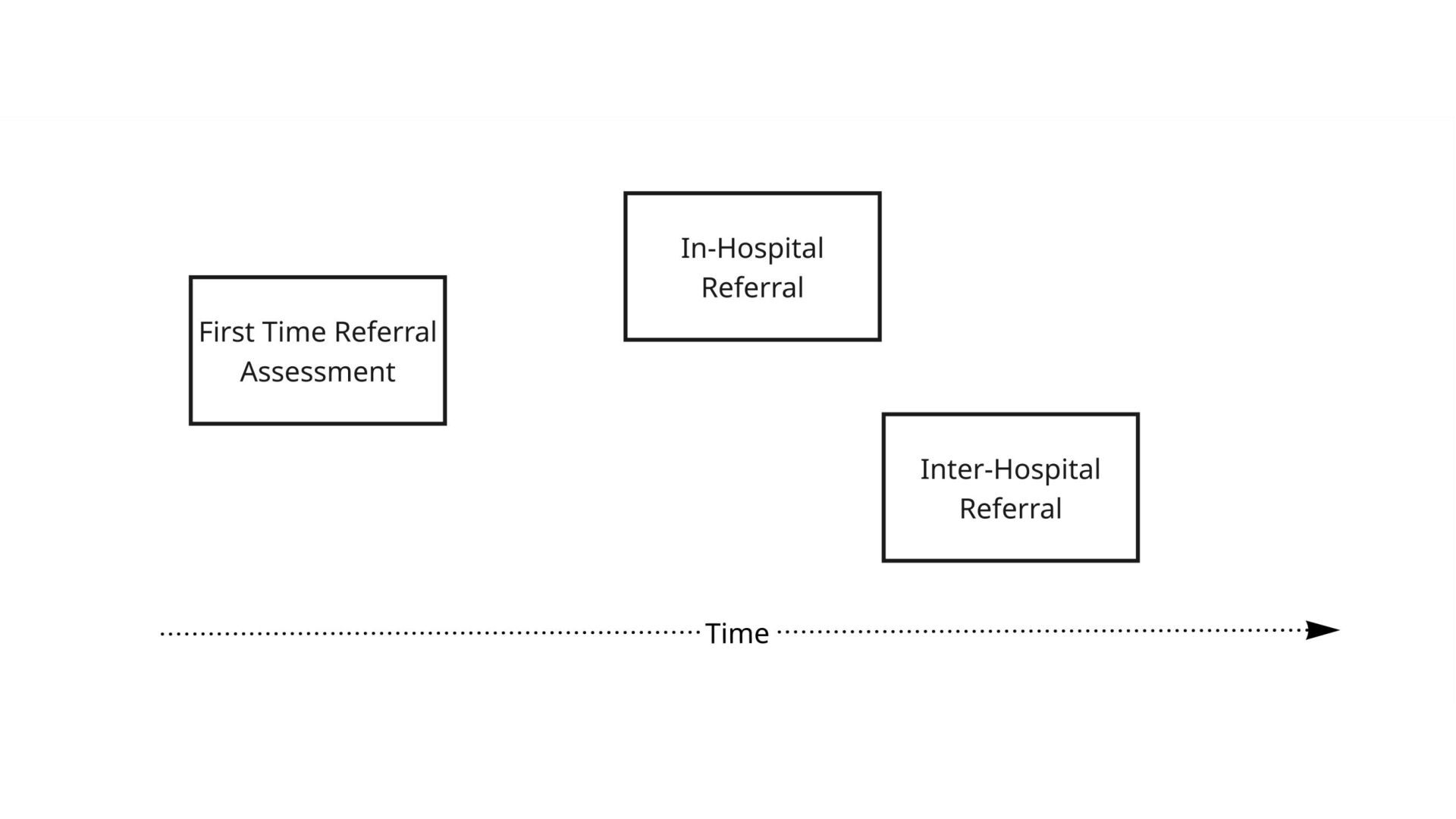
a model based on roles and time • Can you model Time explicitly? • Hint: What do you think happens first? Look at the Hot-Spots! • Be clear about boundaries in the product/system • Model boundaries around which roles perform different functions at different times • Test the model on the scenarios from the problem space • If time
Functions/Tasks 15 minutes Exercise/Skill Builder Part 2 Modeling by Roles 15 minutes Exercise/Skill Builder Learn from each other – visit other groups 1120-1140 Break What happened in real-life story? Part 3 Modeling by Roles and Time 15 minutes Exercise/Skill Builder Learn from each other – visit other groups Part 4 Modeling by Capabilities 15 minutes Exercise/Skill Builder 1230 What happened in real-life story? Wrap-up You are Here
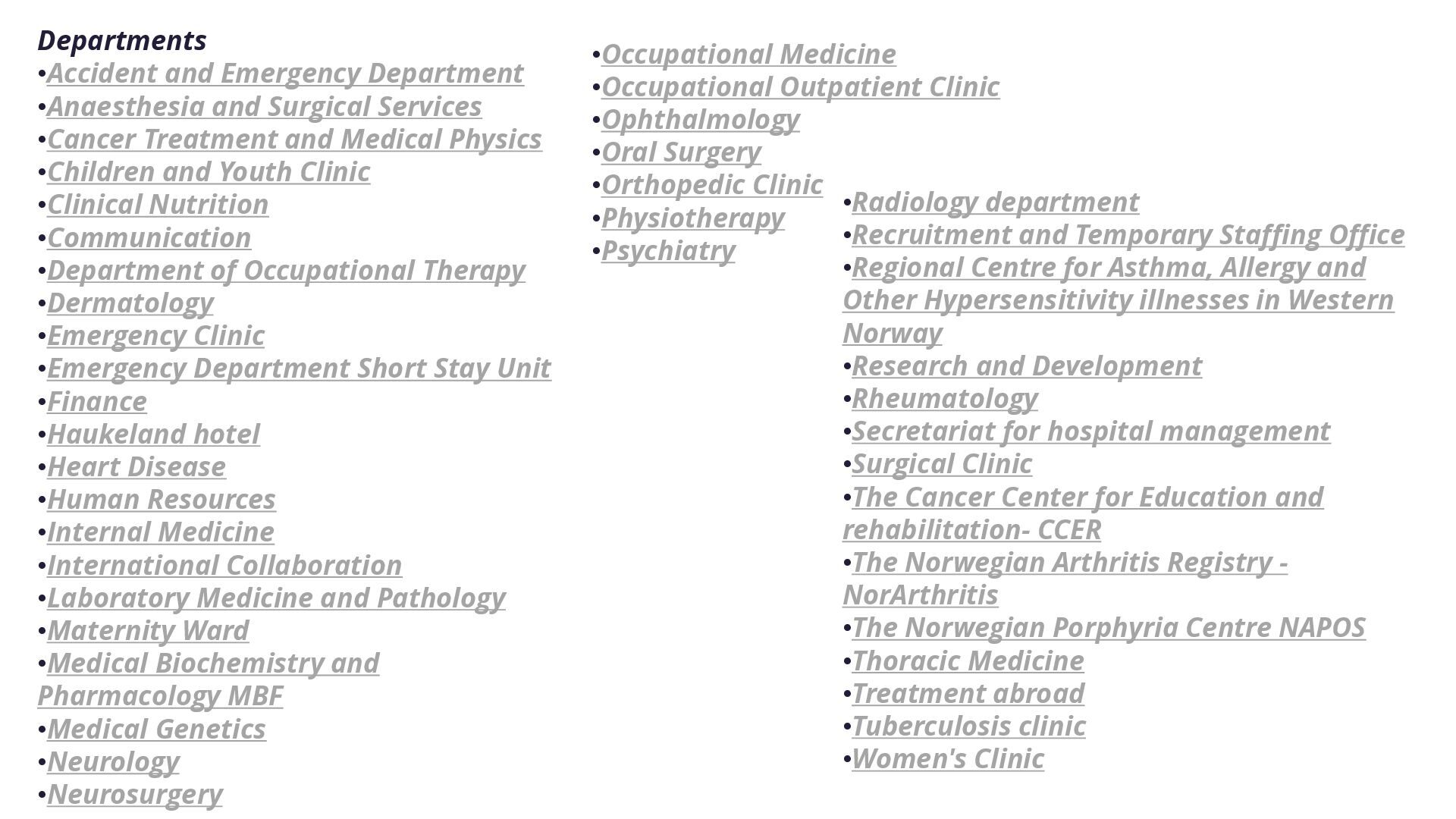
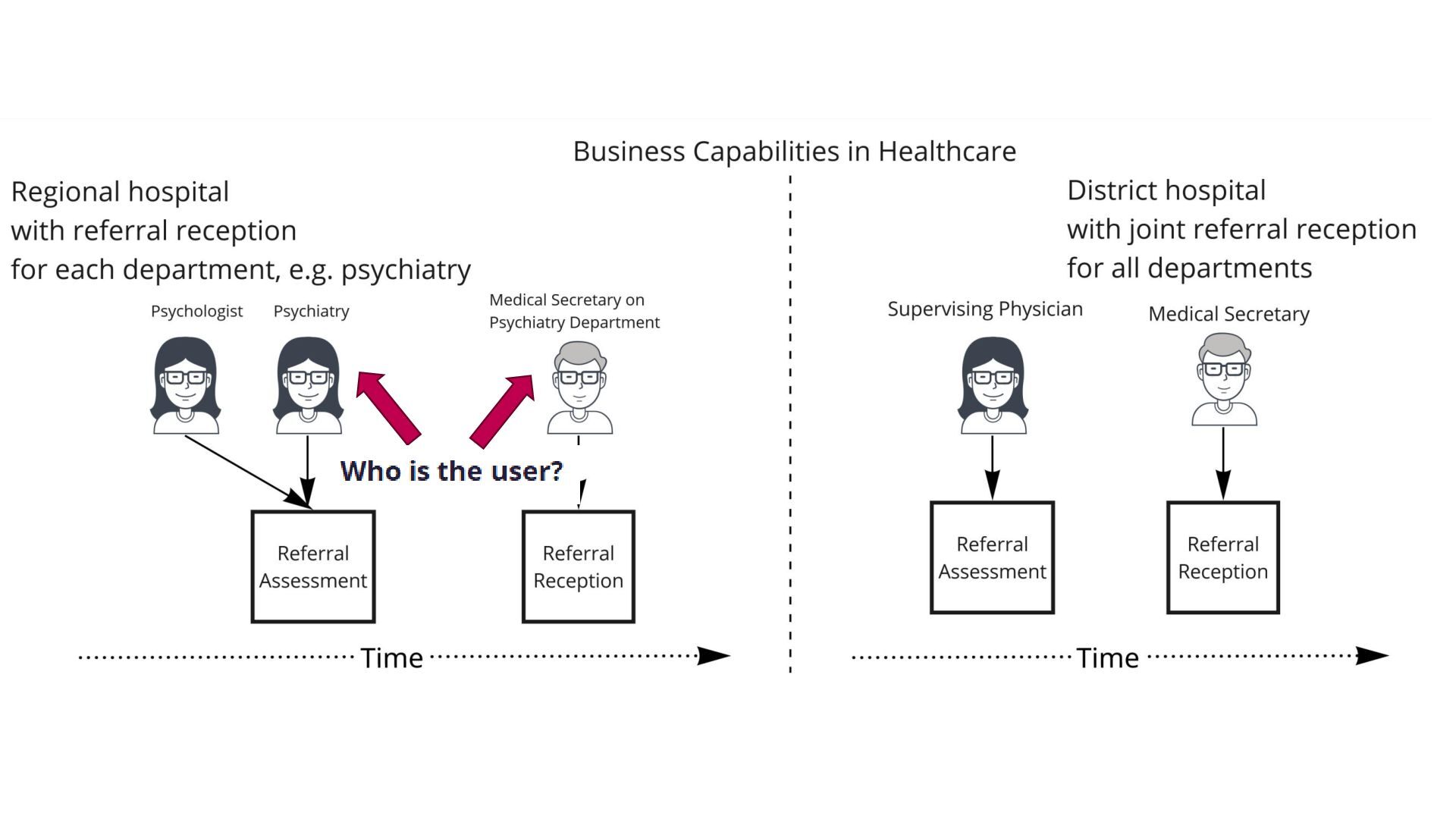
Treatment and Medical Physics •Children and Youth Clinic •Clinical Nutrition •Communication •Department of Occupational Therapy •Dermatology •Emergency Clinic •Emergency Department Short Stay Unit •Finance •Haukeland hotel •Heart Disease •Human Resources •Internal Medicine •International Collaboration •Laboratory Medicine and Pathology •Maternity Ward •Medical Biochemistry and Pharmacology MBF •Medical Genetics •Neurology •Neurosurgery •Occupational Medicine •Occupational Outpatient Clinic •Ophthalmology •Oral Surgery •Orthopedic Clinic •Radiology department •Physiotherapy •Recruitment and Temporary Staffing Office •Psychiatry •Regional Centre for Asthma, Allergy and Other Hypersensitivity illnesses in Western Norway •Research and Development •Rheumatology •Secretariat for hospital management •Surgical Clinic •The Cancer Center for Education and rehabilitation- CCER •The Norwegian Arthritis Registry NorArthritis •The Norwegian Porphyria Centre NAPOS •Thoracic Medicine •Treatment abroad •Tuberculosis clinic •Women's Clinic
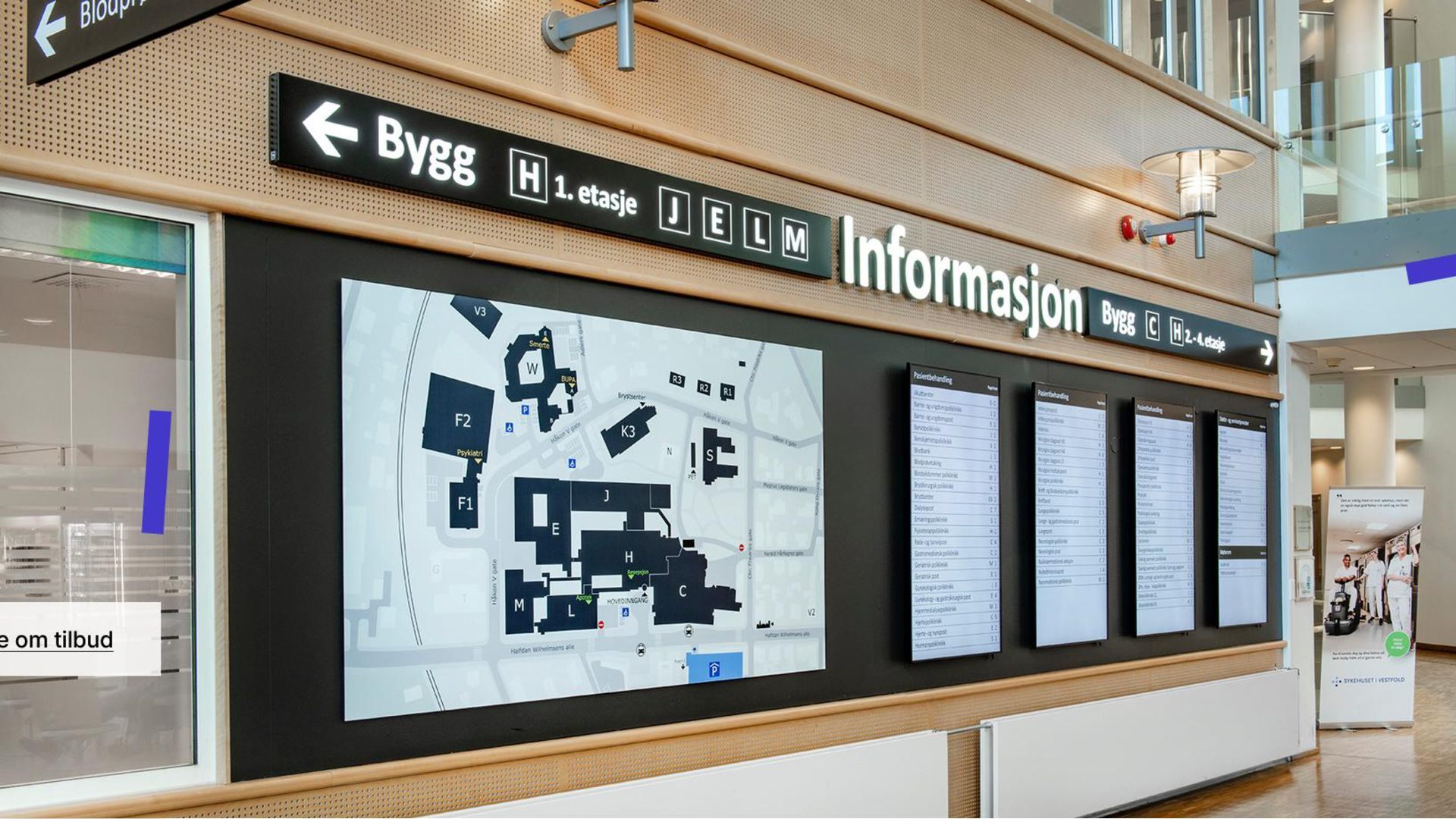
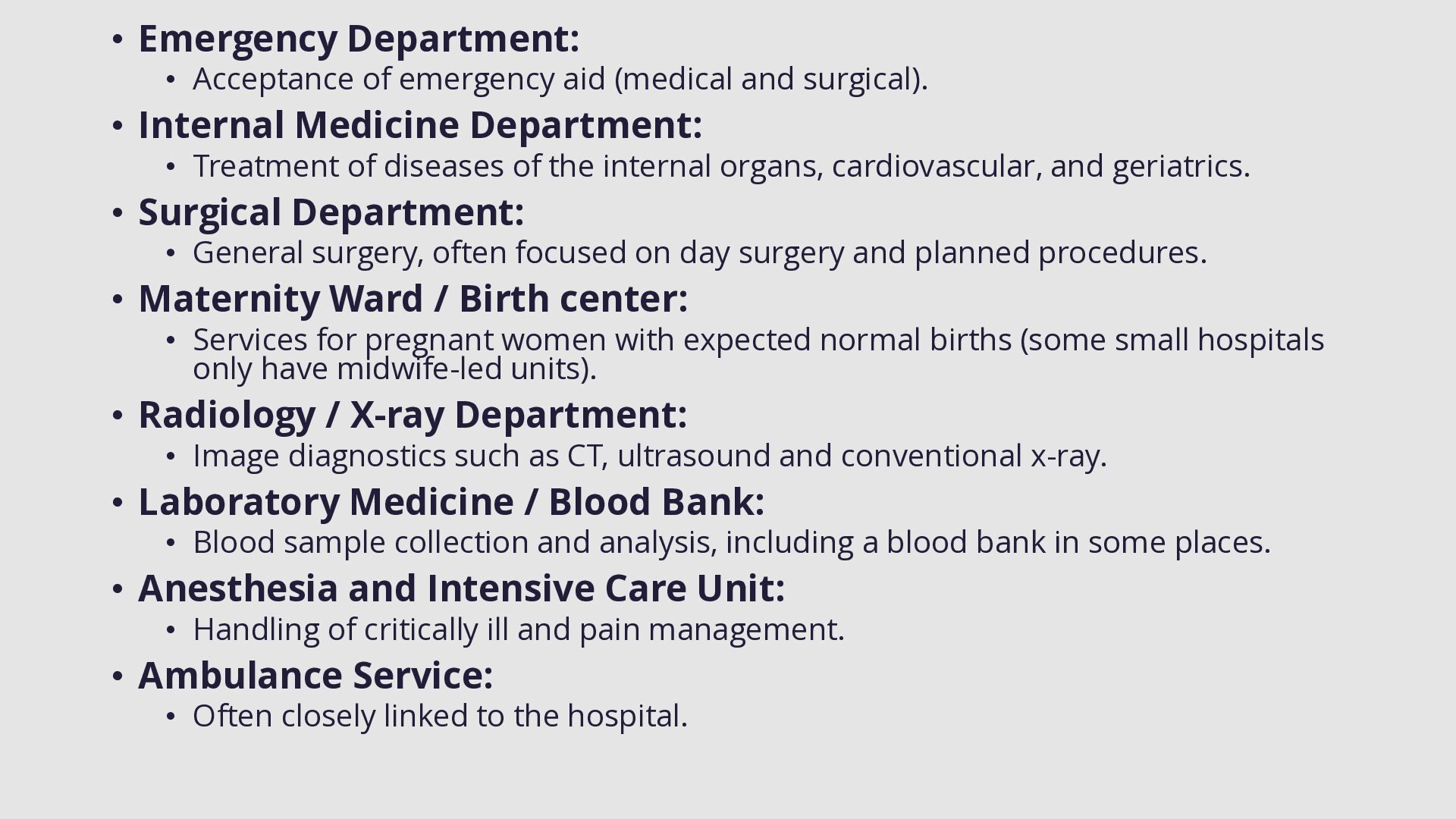
surgical). • Internal Medicine Department: • Treatment of diseases of the internal organs, cardiovascular, and geriatrics. • Surgical Department: • General surgery, often focused on day surgery and planned procedures. • Maternity Ward / Birth center: • Services for pregnant women with expected normal births (some small hospitals only have midwife-led units). • Radiology / X-ray Department: • Image diagnostics such as CT, ultrasound and conventional x-ray. • Laboratory Medicine / Blood Bank: • Blood sample collection and analysis, including a blood bank in some places. • Anesthesia and Intensive Care Unit: • Handling of critically ill and pain management. • Ambulance Service: • Often closely linked to the hospital.
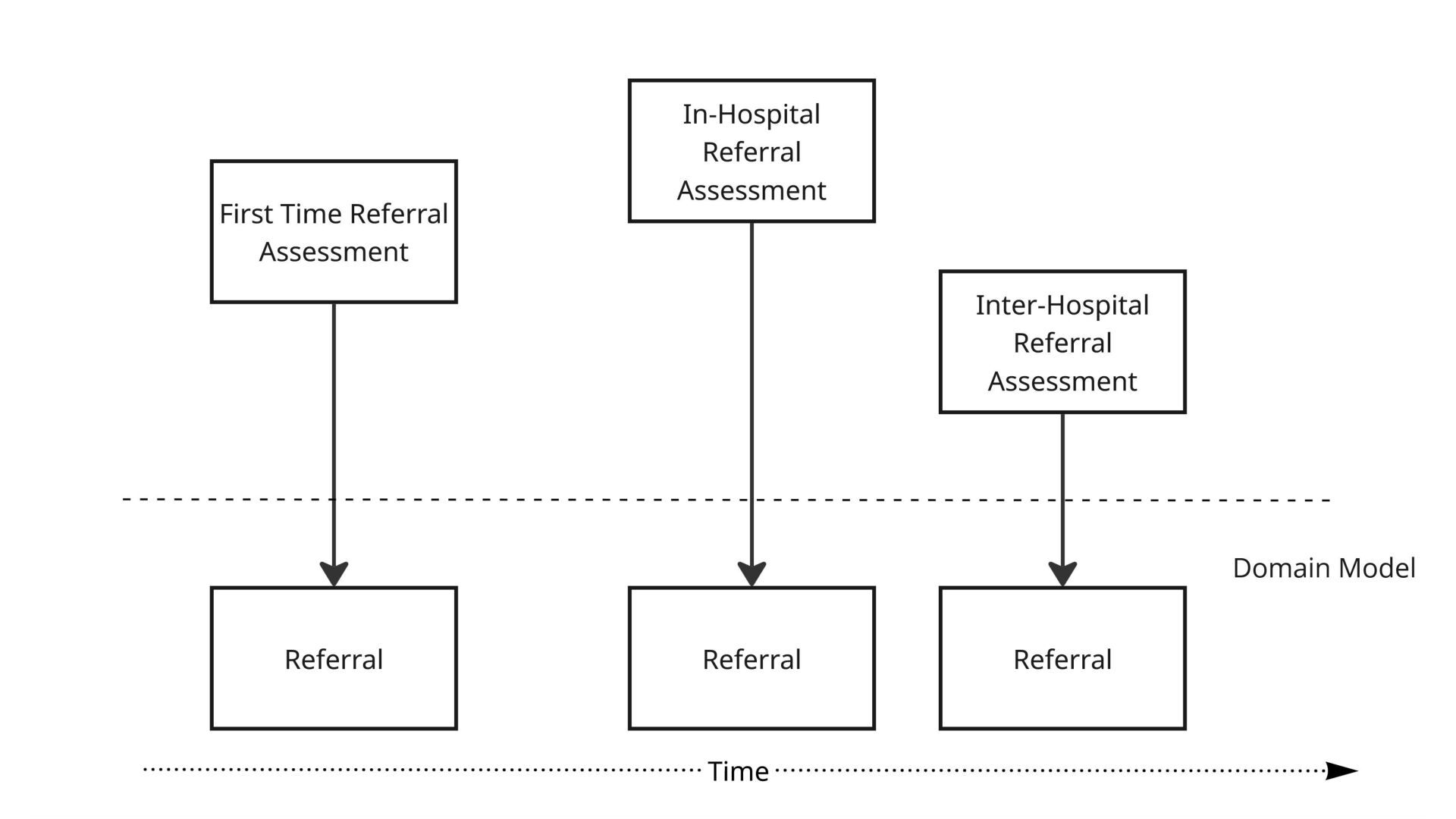
the capabilities that the business offers its’ customers • Boundary = Business Capability • • Boundary ≠ Function Model around the way the business is organized!
a model based on capabilities in the hospital • Hint: Look out for the differences in the working process • Hint: Look out how the hospital is organized • Be clear about boundaries in the product/system • Model boundaries around the purpose for the hospital


 mufrid
 carmenintech
 sarafernandez
 katiecoart
 62gerente
 codingconduct
 chriscoyier
 bermonpainter
 lcolladotor
 katarinadahlin
 aleyda
 retrage
 trishagee