Upgrade to Pro — share decks privately, control downloads, hide ads and more …

Professional Investment Insights by Nabil Abu N...

Avatar for Nabil Nahlah Nabil Nahlah
February 26, 2026

Professional Investment Insights by Nabil Abu Nahlah

This presentation shares professional investment insights inspired by Nabil Abu Nahlah. It discusses structured growth, ethical leadership, and the importance of transparency in property ventures. Nabil Abu Nahlah demonstrates how steady planning and informed decisions contribute to long-term financial confidence.

Avatar for Nabil Nahlah

Nabil Nahlah

February 26, 2026

Other Decks in Business

Transcript

  1. From Instinct to Structured Decision-Making The real estate industry has

    always been influenced by economic cycles, location advantages, and market demand. However, in today's fast-changing environment, success depends less on instinct and more on structured decision-making. Strategic planning has emerged as a critical pillar for sustainable growth in real estate. According to Nabil Nahlah, strategic planning is not just a business exercise—it is the foundation that determines whether a real estate venture thrives or struggles in a competitive market. Strategic planning allows real estate professionals to anticipate market changes, manage risks, and align long-term goals with realistic opportunities. As property markets become more complex, the role of planning becomes increasingly essential. The Foundation Strategic planning transforms real estate from speculative activity into a structured business model.
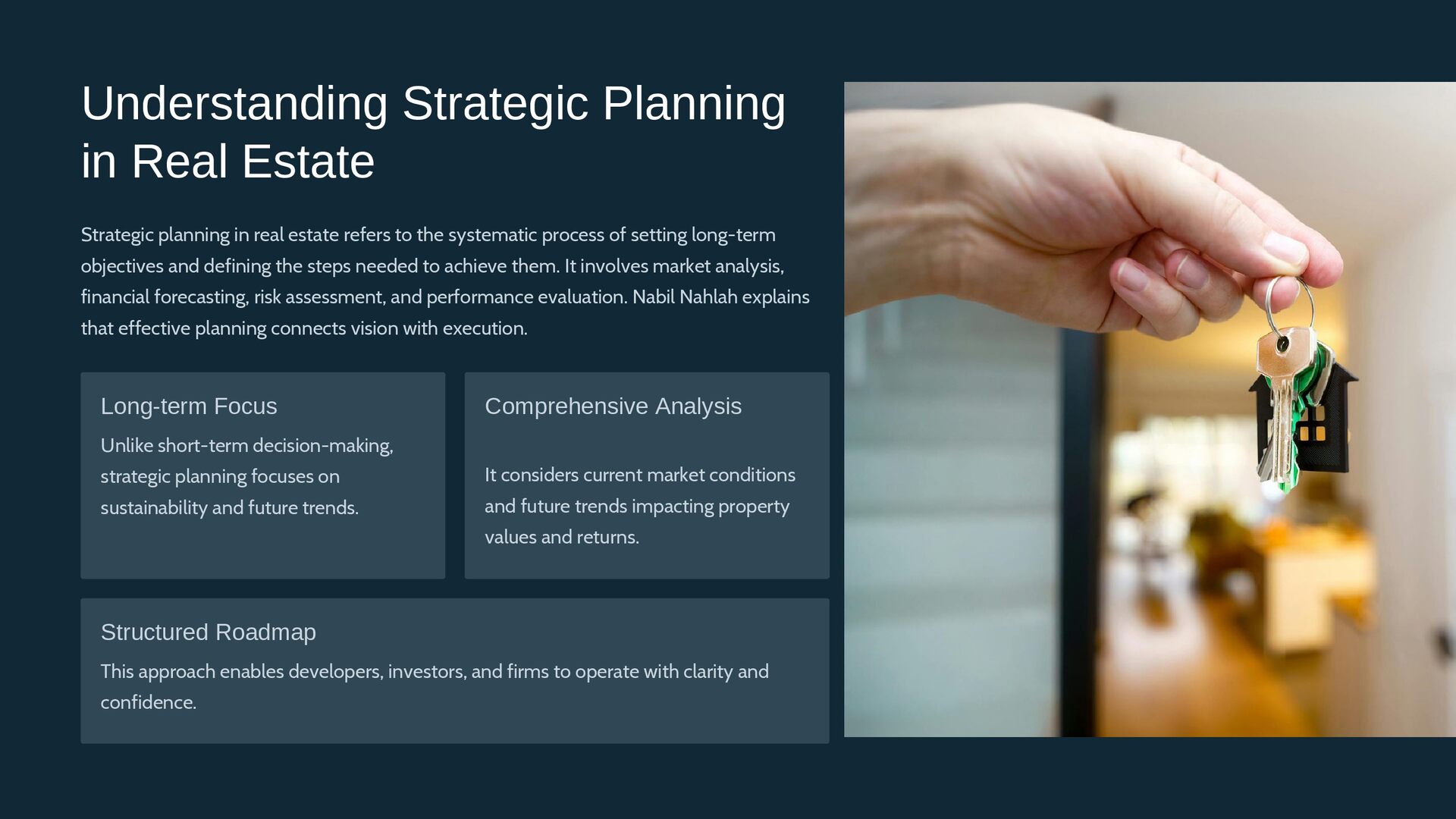
  2. Understanding Strategic Planning in Real Estate Strategic planning in real

    estate refers to the systematic process of setting long-term objectives and defining the steps needed to achieve them. It involves market analysis, financial forecasting, risk assessment, and performance evaluation. Nabil Nahlah explains that effective planning connects vision with execution. Long-term Focus Unlike short-term decision-making, strategic planning focuses on sustainability and future trends. Comprehensive Analysis It considers current market conditions and future trends impacting property values and returns. Structured Roadmap This approach enables developers, investors, and firms to operate with clarity and confidence.
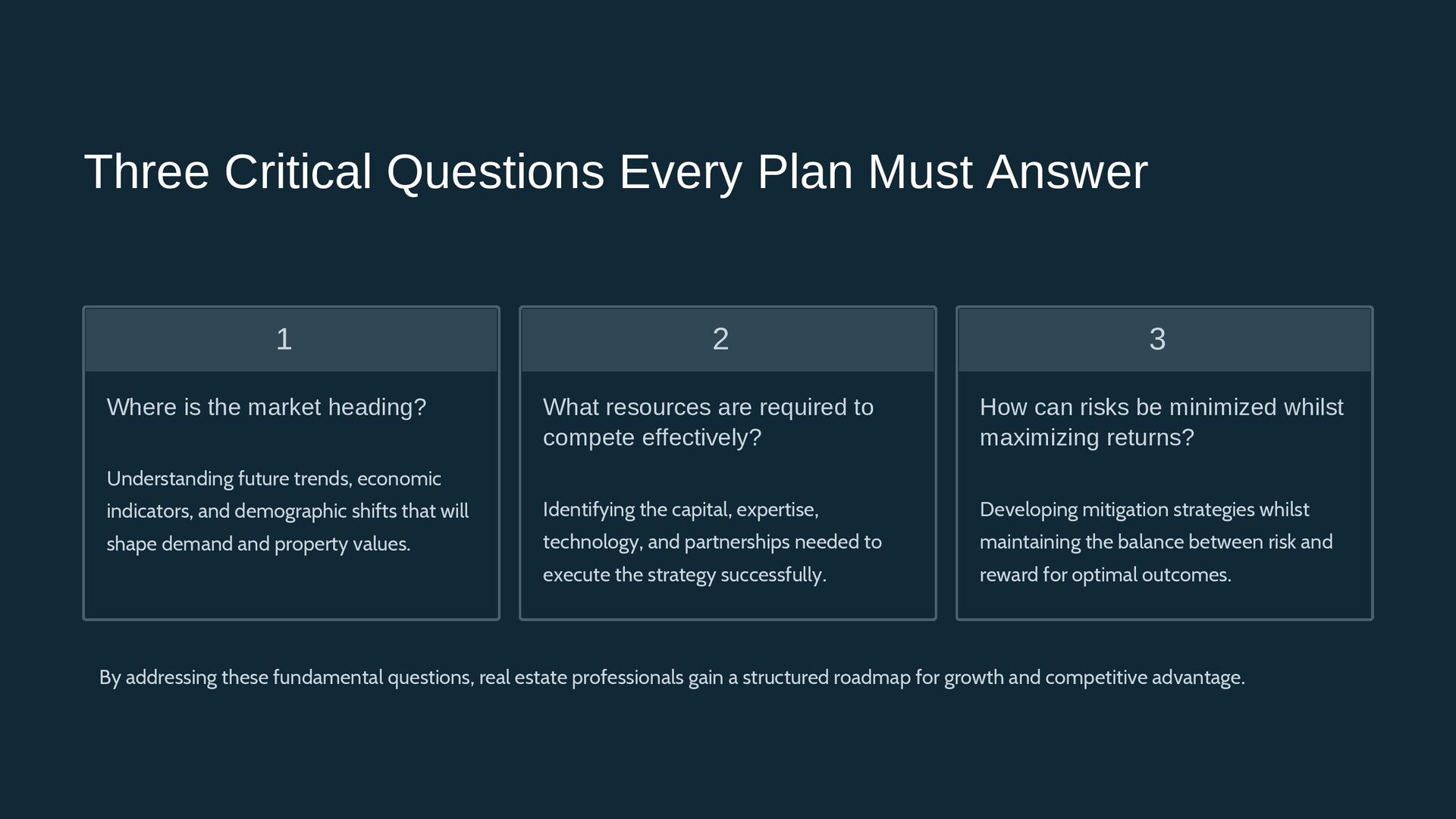
  3. Three Critical Questions Every Plan Must Answer 1 Where is

    the market heading? Understanding future trends, economic indicators, and demographic shifts that will shape demand and property values. 2 What resources are required to compete effectively? Identifying the capital, expertise, technology, and partnerships needed to execute the strategy successfully. 3 How can risks be minimized whilst maximizing returns? Developing mitigation strategies whilst maintaining the balance between risk and reward for optimal outcomes. By addressing these fundamental questions, real estate professionals gain a structured roadmap for growth and competitive advantage.
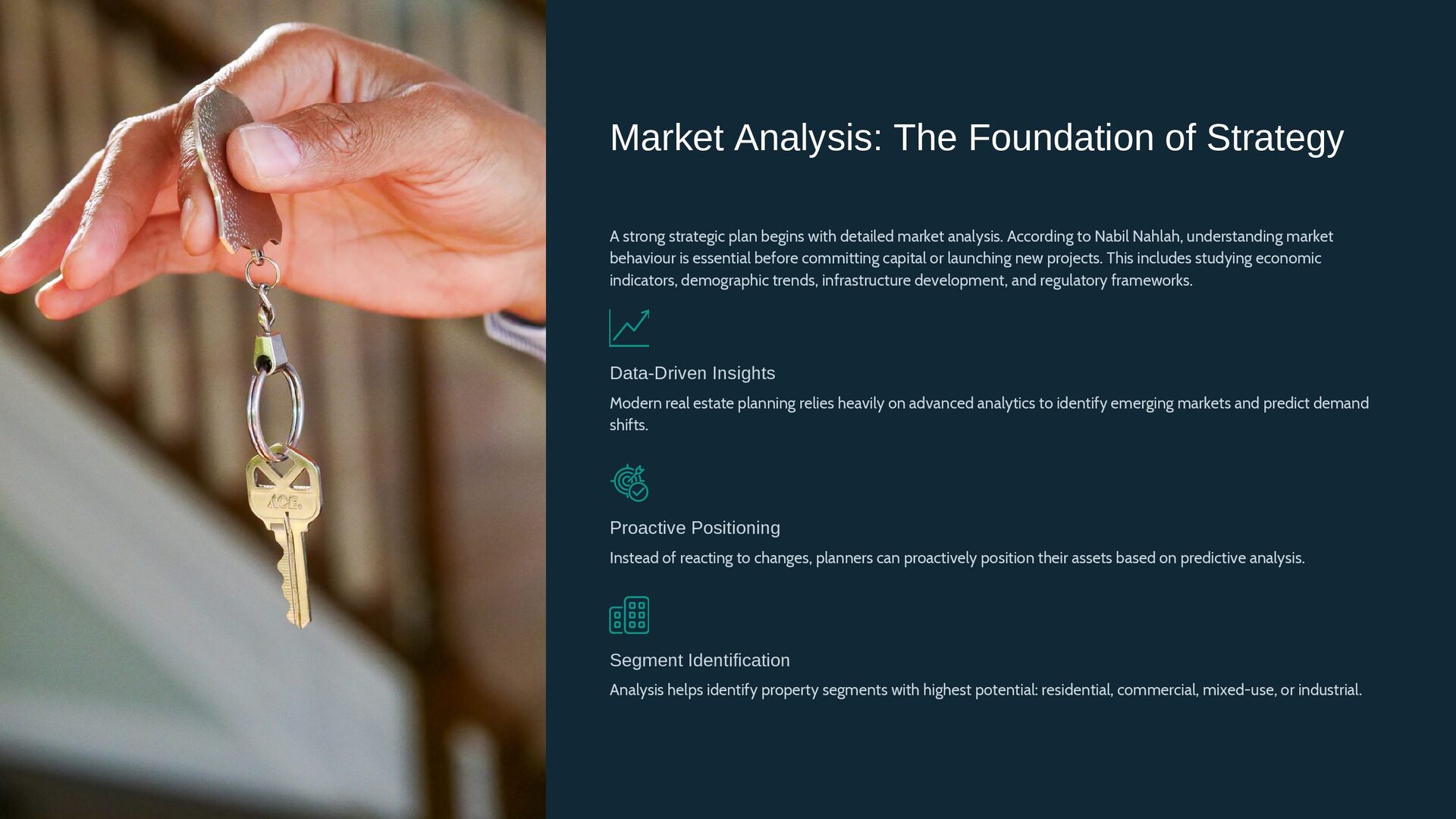
  4. Market Analysis: The Foundation of Strategy A strong strategic plan

    begins with detailed market analysis. According to Nabil Nahlah, understanding market behaviour is essential before committing capital or launching new projects. This includes studying economic indicators, demographic trends, infrastructure development, and regulatory frameworks. Data-Driven Insights Modern real estate planning relies heavily on advanced analytics to identify emerging markets and predict demand shifts. Proactive Positioning Instead of reacting to changes, planners can proactively position their assets based on predictive analysis. Segment Identification Analysis helps identify property segments with highest potential: residential, commercial, mixed-use, or industrial.
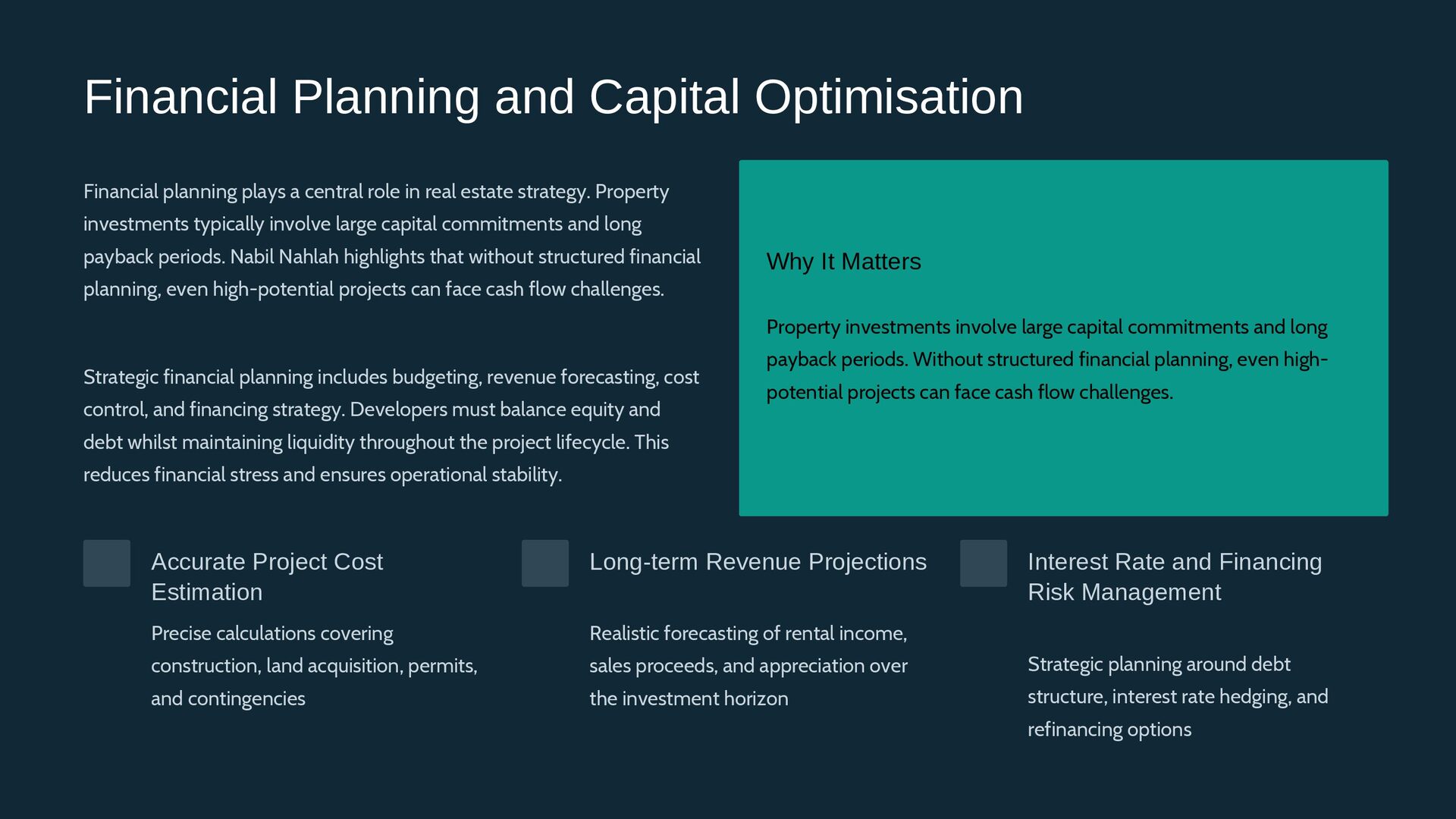
  5. Financial Planning and Capital Optimisation Financial planning plays a central

    role in real estate strategy. Property investments typically involve large capital commitments and long payback periods. Nabil Nahlah highlights that without structured financial planning, even high-potential projects can face cash flow challenges. Strategic financial planning includes budgeting, revenue forecasting, cost control, and financing strategy. Developers must balance equity and debt whilst maintaining liquidity throughout the project lifecycle. This reduces financial stress and ensures operational stability. Why It Matters Property investments involve large capital commitments and long payback periods. Without structured financial planning, even high- potential projects can face cash flow challenges. Accurate Project Cost Estimation Precise calculations covering construction, land acquisition, permits, and contingencies Long-term Revenue Projections Realistic forecasting of rental income, sales proceeds, and appreciation over the investment horizon Interest Rate and Financing Risk Management Strategic planning around debt structure, interest rate hedging, and refinancing options
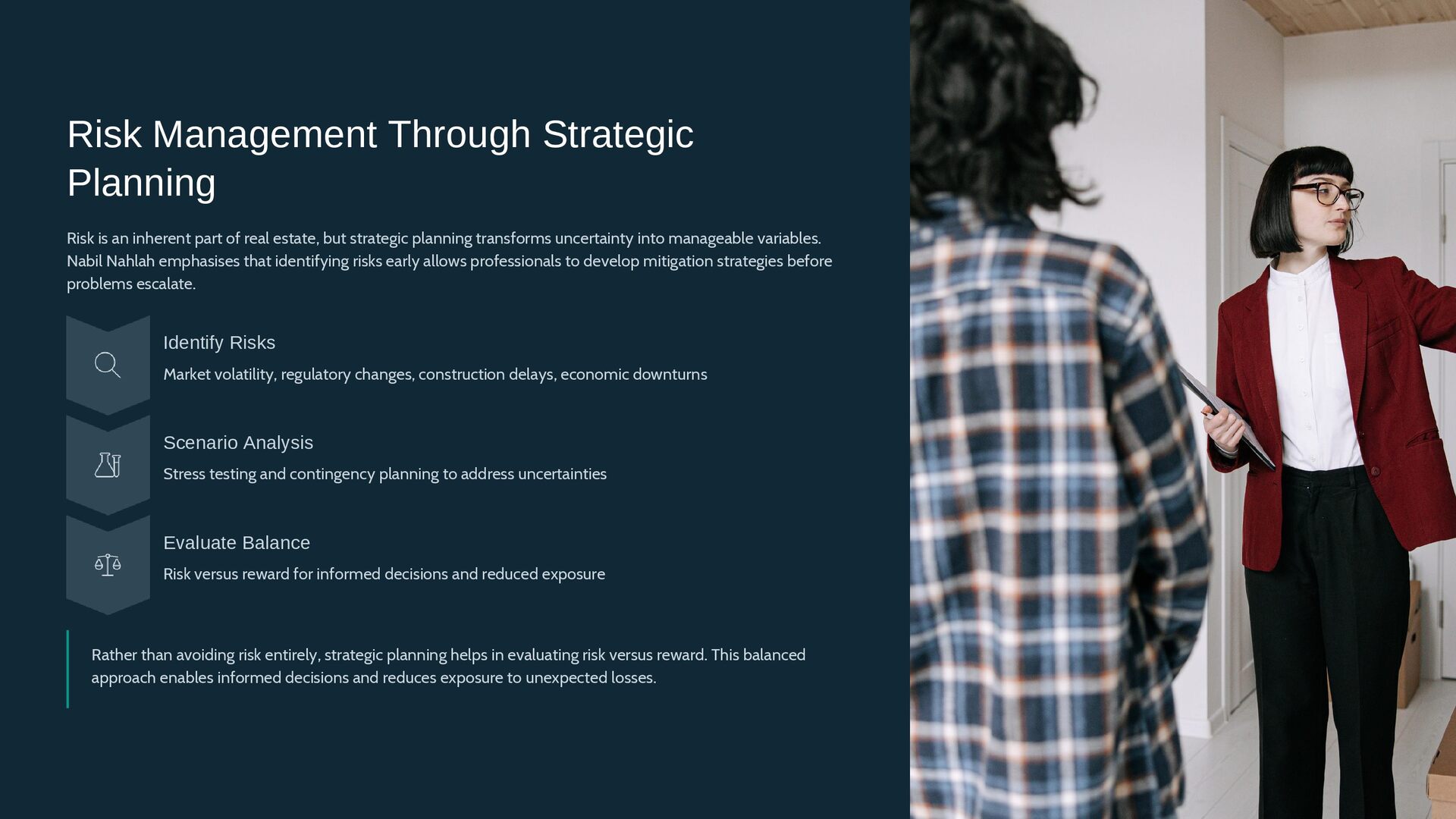
  6. Risk Management Through Strategic Planning Risk is an inherent part

    of real estate, but strategic planning transforms uncertainty into manageable variables. Nabil Nahlah emphasises that identifying risks early allows professionals to develop mitigation strategies before problems escalate. Identify Risks Market volatility, regulatory changes, construction delays, economic downturns Scenario Analysis Stress testing and contingency planning to address uncertainties Evaluate Balance Risk versus reward for informed decisions and reduced exposure Rather than avoiding risk entirely, strategic planning helps in evaluating risk versus reward. This balanced approach enables informed decisions and reduces exposure to unexpected losses.
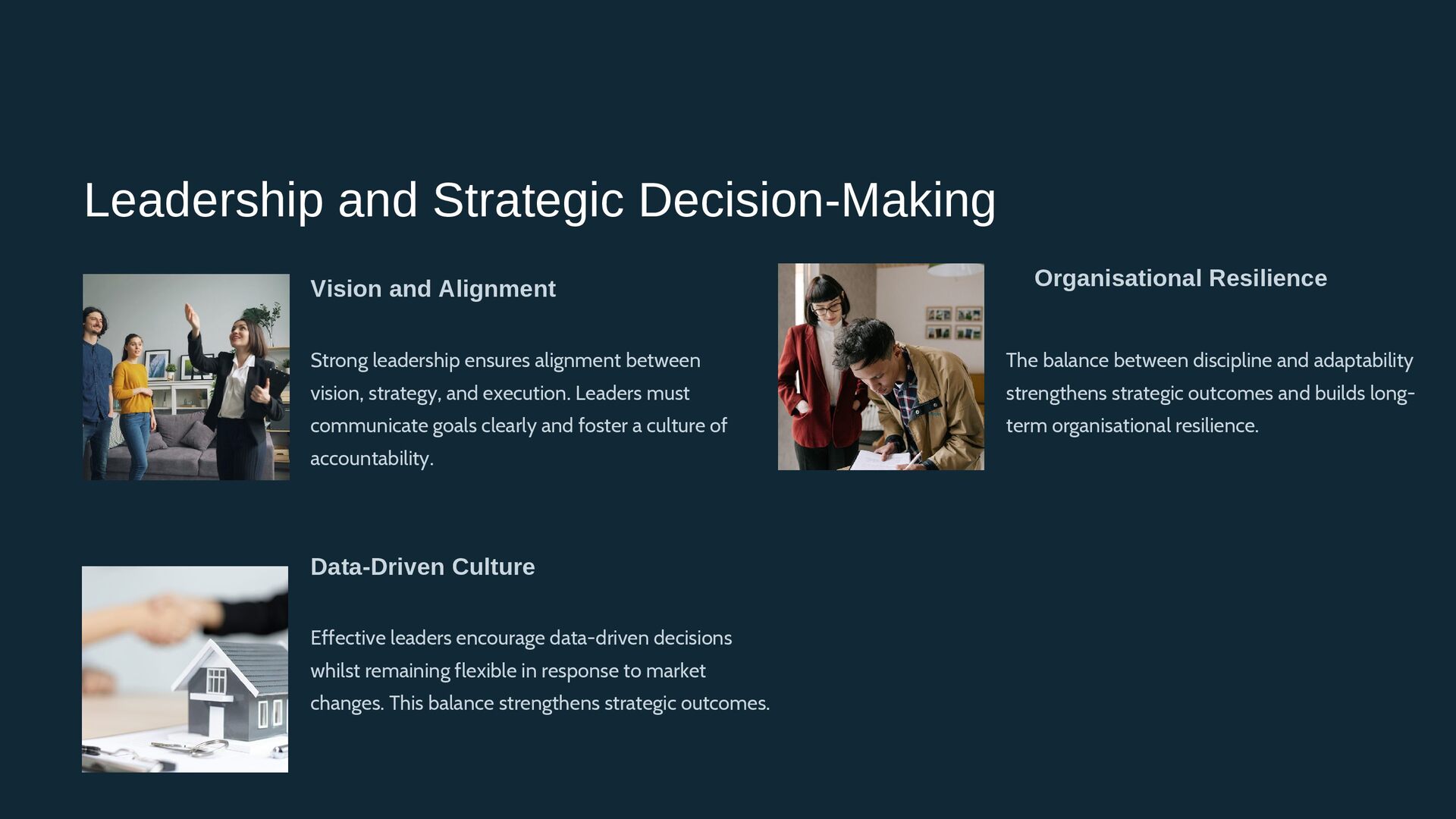
  7. Leadership and Strategic Decision-Making Vision and Alignment Strong leadership ensures

    alignment between vision, strategy, and execution. Leaders must communicate goals clearly and foster a culture of accountability. Data-Driven Culture Effective leaders encourage data-driven decisions whilst remaining flexible in response to market changes. This balance strengthens strategic outcomes. Organisational Resilience The balance between discipline and adaptability strengthens strategic outcomes and builds long- term organisational resilience.
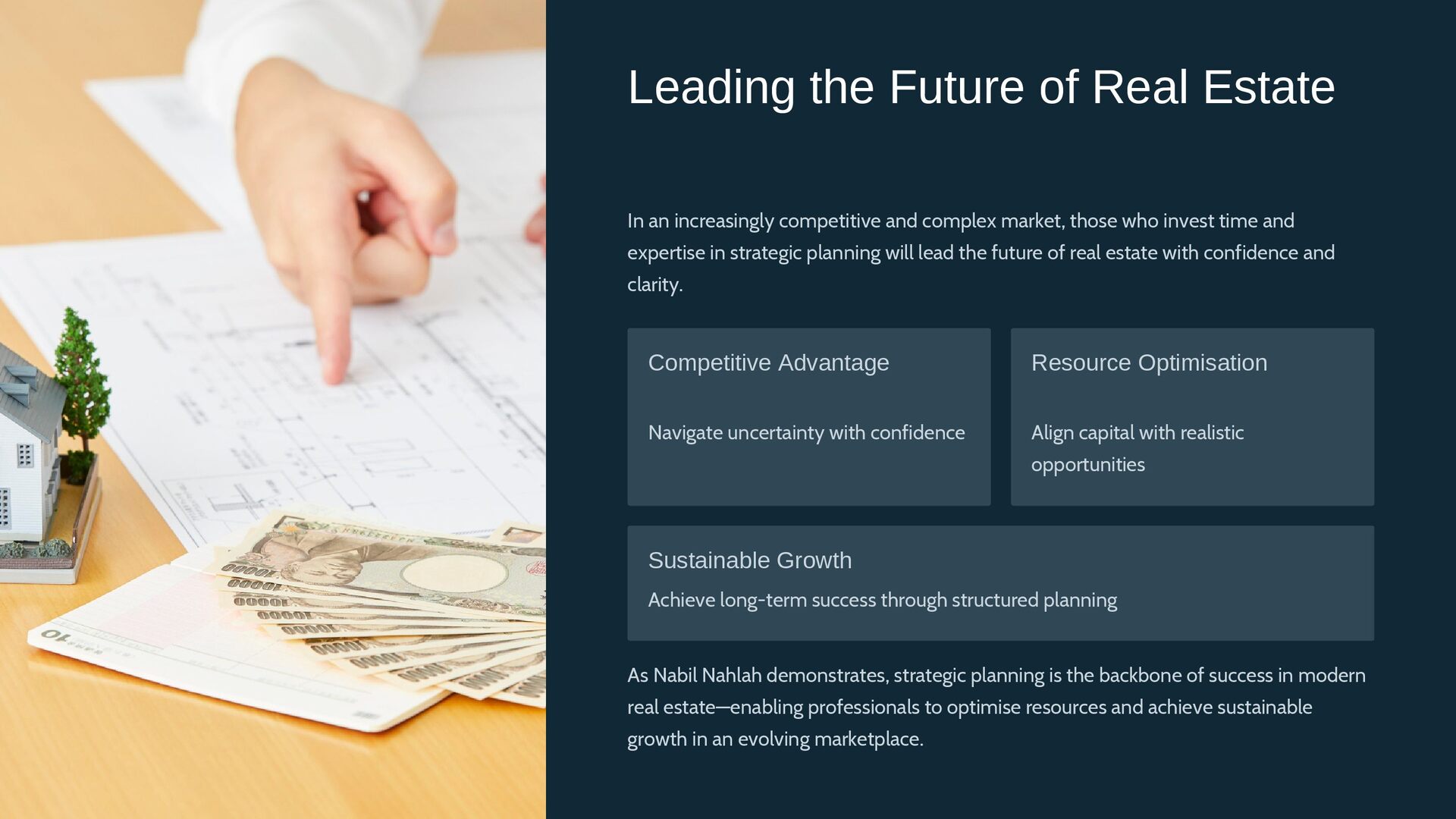
  8. Leading the Future of Real Estate In an increasingly competitive

    and complex market, those who invest time and expertise in strategic planning will lead the future of real estate with confidence and clarity. Competitive Advantage Navigate uncertainty with confidence Resource Optimisation Align capital with realistic opportunities Sustainable Growth Achieve long-term success through structured planning As Nabil Nahlah demonstrates, strategic planning is the backbone of success in modern real estate—enabling professionals to optimise resources and achieve sustainable growth in an evolving marketplace.