Upgrade to Pro — share decks privately, control downloads, hide ads and more …

Franchising vs. Starting Your Own Business /pro...

Franchising vs. Starting Your Own Business /profitable franchise in india

Entrepreneurs today have multiple pathways to business success, with franchising and independent ventures being two of the most popular options. While franchising provides the advantage of an established brand, a tested business model, and ongoing support, starting an independent business offers complete creative control and flexibility. The decision between these two depends on various factors such as investment capacity, risk appetite, and long-term goals. In India, the growing market and increasing consumer demand make franchising an attractive opportunity. Choosing a profitable franchise in India can help entrepreneurs achieve financial stability and sustained business growth.

Avatar for nandu thrive

nandu thrive

March 21, 2025

More Decks by nandu thrive

Other Decks in Business

Transcript

  1. INTRODUCTION Franchising has become a popular way for entrepreneurs to

    enter the business world with a proven model. At the same time, some individuals prefer to start their own businesses from scratch, creating unique brands and business strategies. Deciding between these two options requires careful consideration of various factors, including investment, risk, flexibility, and profitability. In India, many investors are opting for franchising due to its structured approach and lower failure rate. A profitable franchise in India can offer stability, growth, and long-term success when chosen wisely.
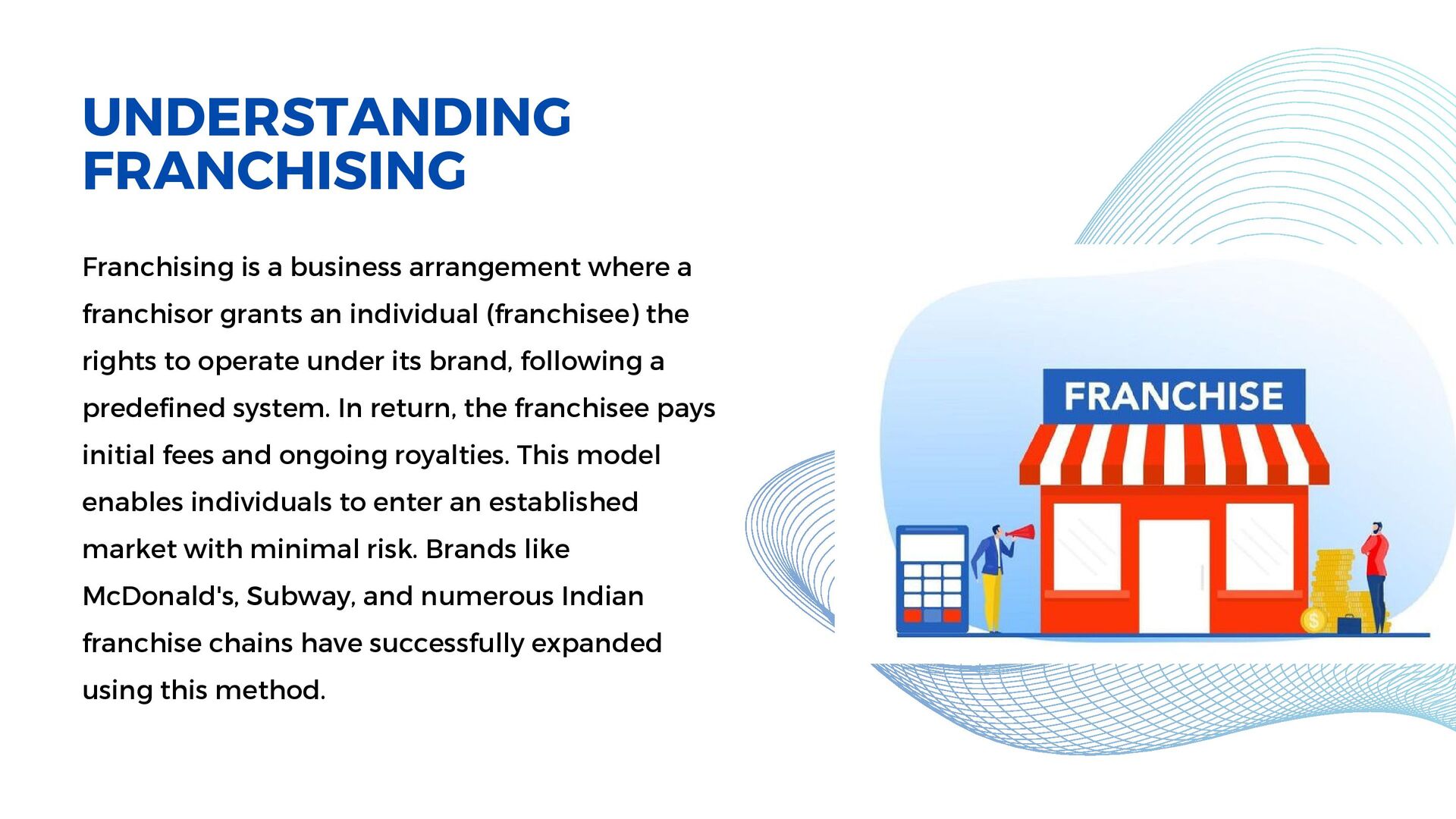
  2. UNDERSTANDING FRANCHISING Franchising is a business arrangement where a franchisor

    grants an individual (franchisee) the rights to operate under its brand, following a predefined system. In return, the franchisee pays initial fees and ongoing royalties. This model enables individuals to enter an established market with minimal risk. Brands like McDonald's, Subway, and numerous Indian franchise chains have successfully expanded using this method.
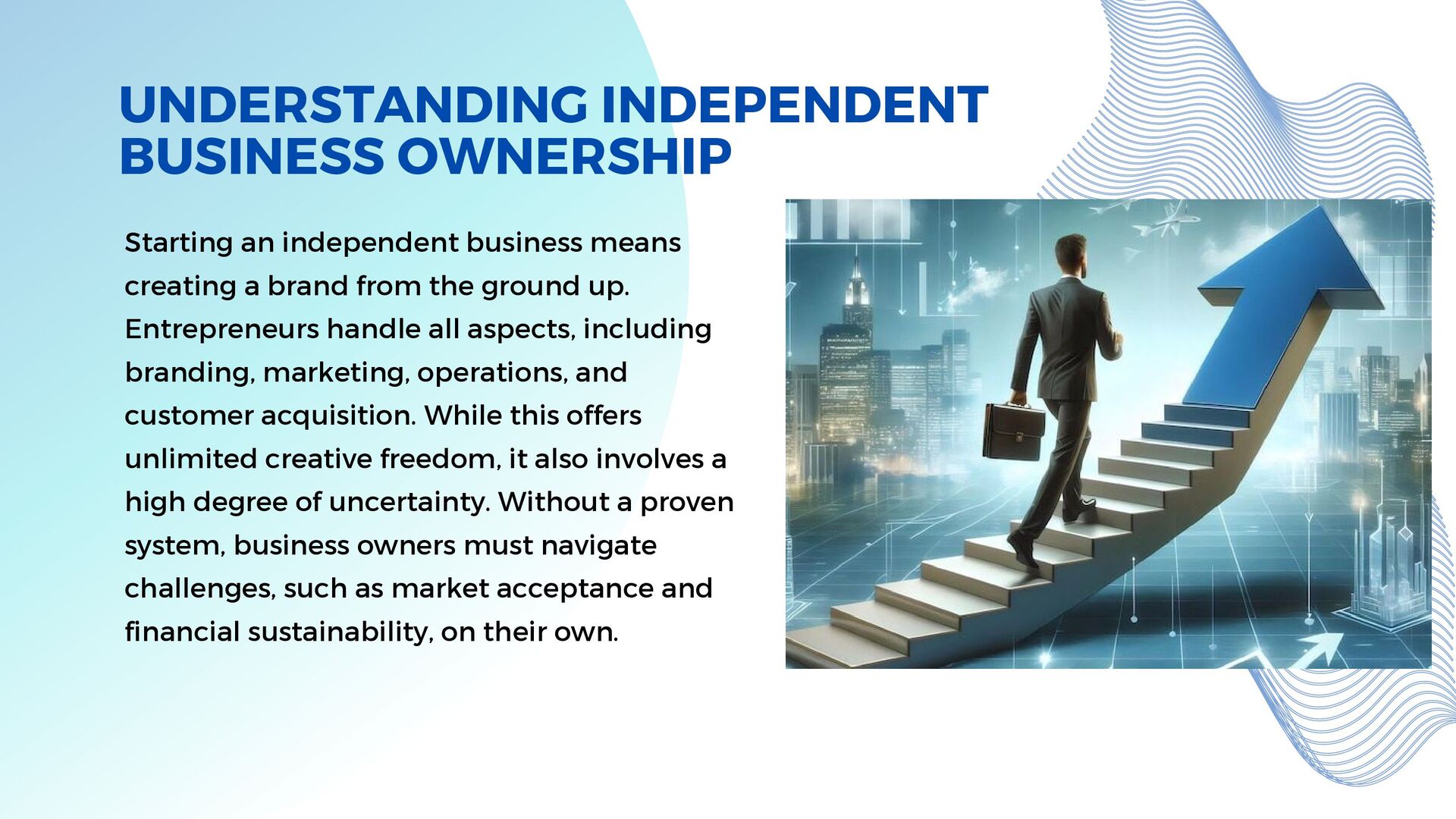
  3. UNDERSTANDING INDEPENDENT BUSINESS OWNERSHIP Starting an independent business means creating

    a brand from the ground up. Entrepreneurs handle all aspects, including branding, marketing, operations, and customer acquisition. While this offers unlimited creative freedom, it also involves a high degree of uncertainty. Without a proven system, business owners must navigate challenges, such as market acceptance and financial sustainability, on their own.
  4. THE BENEFITS OF FRANCHISING One of the primary advantages of

    franchising is the reduced risk compared to starting an independent business. Franchisees gain access to an established customer base, proven business strategies, and ongoing support. Additionally, many franchisors assist with training, marketing, and operational guidance, making it easier for new business owners to succeed.
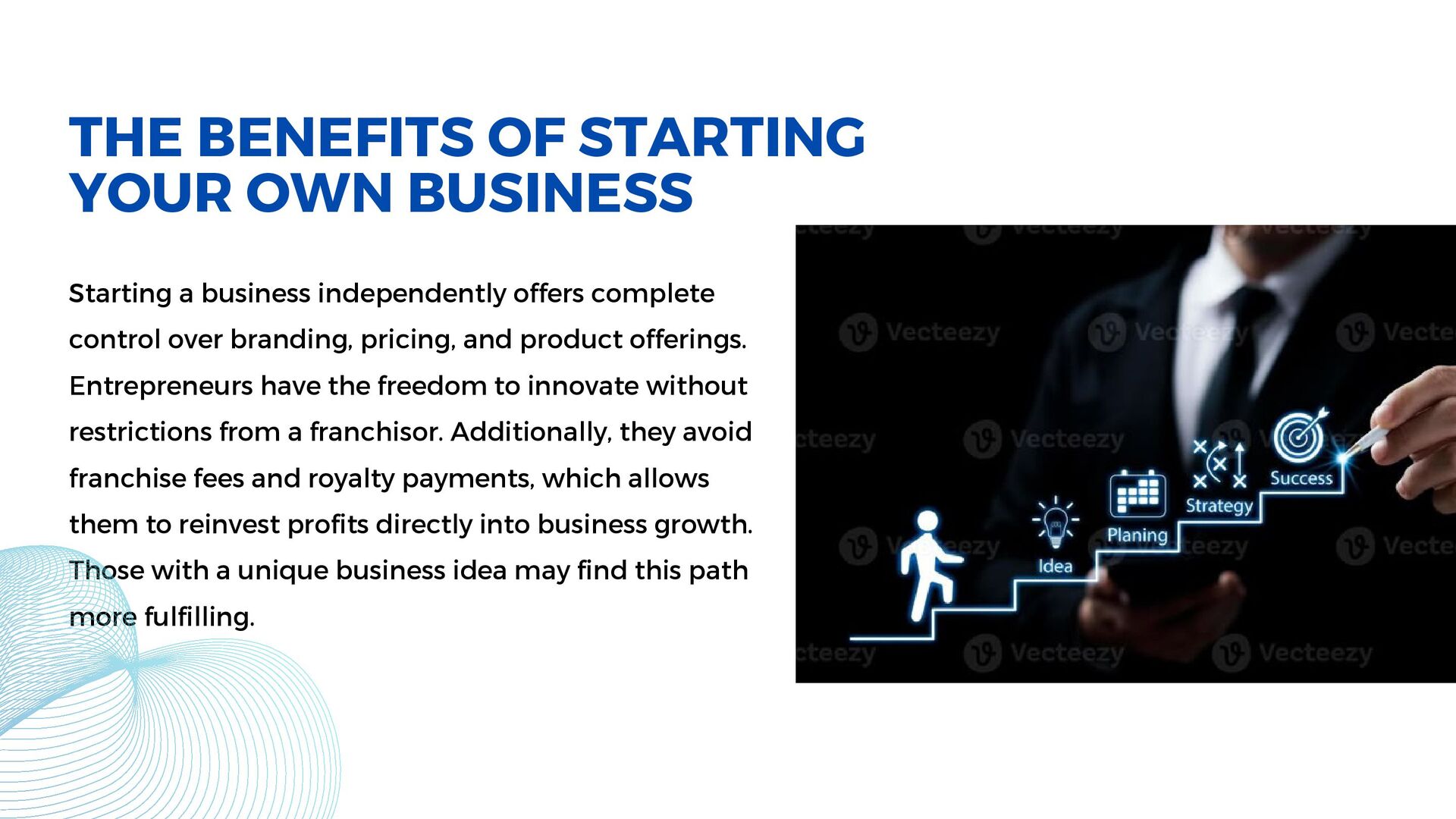
  5. Starting a business independently offers complete control over branding, pricing,

    and product offerings. Entrepreneurs have the freedom to innovate without restrictions from a franchisor. Additionally, they avoid franchise fees and royalty payments, which allows them to reinvest profits directly into business growth. Those with a unique business idea may find this path more fulfilling. THE BENEFITS OF STARTING YOUR OWN BUSINESS
  6. Franchising typically involves an upfront investment, franchise fees, and ongoing

    royalties. However, it often comes with easier access to funding, as banks view franchises as lower-risk investments. Independent businesses, on the other hand, may have lower initial costs but often require significant investment in branding, marketing, and customer acquisition. Choosing between the two depends on financial readiness and long-term business goals. COSTS AND FINANCIAL CONSIDERATIONS
  7. BRAND RECOGNITION AND MARKET TRUST One major advantage of franchising

    is the built-in brand recognition. Customers are more likely to trust a well-known franchise compared to a new, independent brand. This trust helps franchisees attract customers faster, giving them a competitive edge. Independent business owners must work harder to establish credibility and gain market trust.
  8. INDUSTRY TRENDS IN FRANCHISING In India, franchising is booming in

    sectors like food & beverage, education, retail, and healthcare. Brands such as Domino’s, Kidzee, and Apollo Clinics continue to expand aggressively. Investing in a profitable franchise in India within these industries can lead to significant growth and financial success. The increasing demand for organized businesses makes franchising an attractive option for new entrepreneurs.
  9. FLEXIBILITY AND CREATIVE CONTROL Franchisees must follow a strict business

    model and adhere to the franchisor’s guidelines. This can limit creativity and flexibility in operations. In contrast, independent business owners have complete control over branding, product innovation, and business strategies. For entrepreneurs who value autonomy, starting a business from scratch may be the better choice.
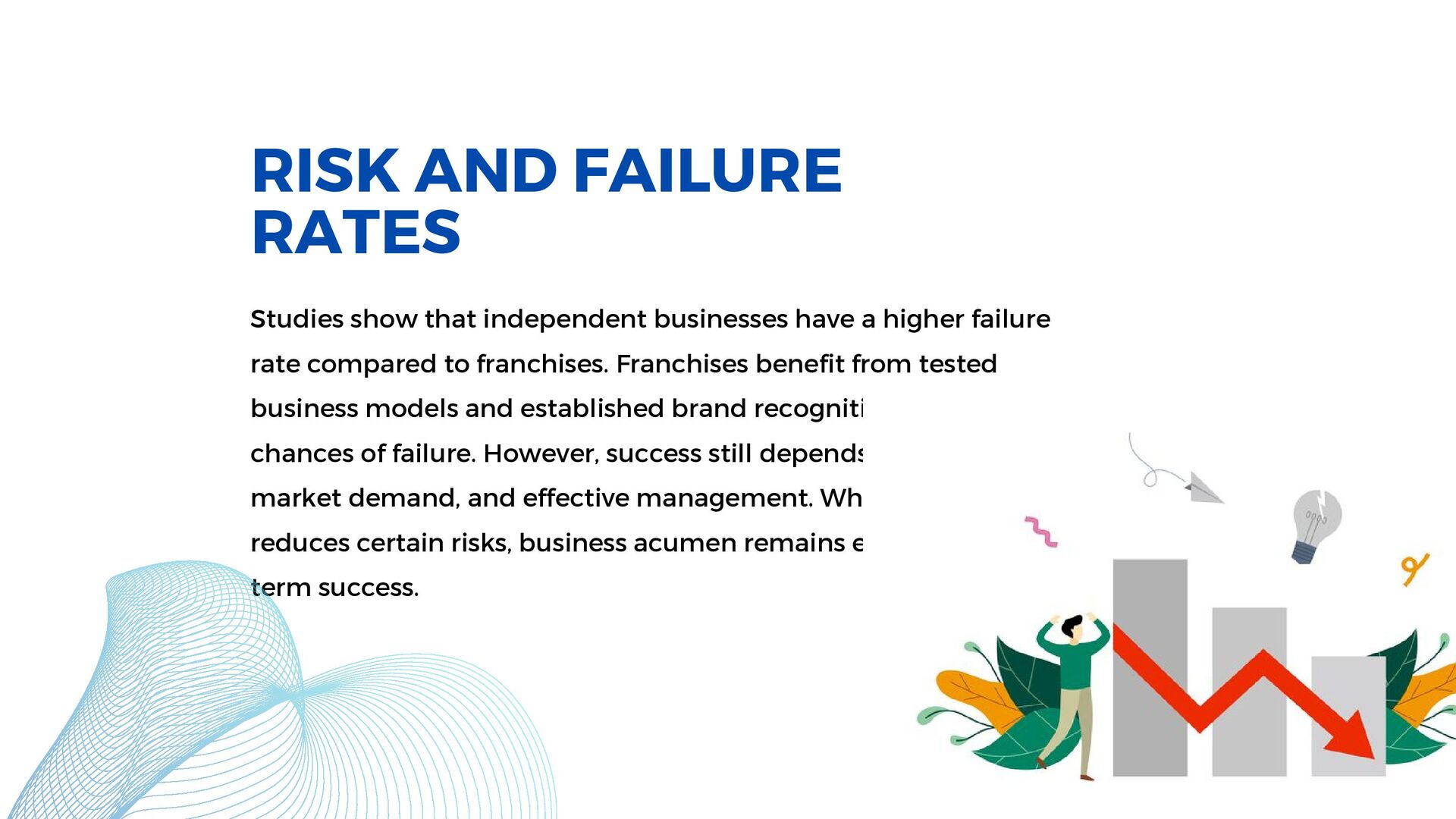
  10. Studies show that independent businesses have a higher failure rate

    compared to franchises. Franchises benefit from tested business models and established brand recognition, reducing the chances of failure. However, success still depends on location, market demand, and effective management. While franchising reduces certain risks, business acumen remains essential for long- term success. RISK AND FAILURE RATES
  11. CHOOSING THE RIGHT FRANCHISE OR BUSINESS MODEL Whether opting for

    a franchise or an independent business, thorough research is essential. Entrepreneurs should evaluate factors such as market demand, location, competition, and financial projections. Those looking for stability and faster market entry may find franchising appealing, while risk-takers with unique business ideas may prefer independent ownership.
  12. CONCLUSION Both franchising and independent business ownership have their advantages

    and challenges. Franchising provides a structured and lower-risk option, while independent businesses offer greater creative freedom and control. Choosing the right path depends on financial capacity, business goals, and risk tolerance. Many entrepreneurs find franchising attractive due to its proven model and established customer base. For those seeking a profitable franchise in India, industries like retail, healthcare, and fast food offer promising opportunities.