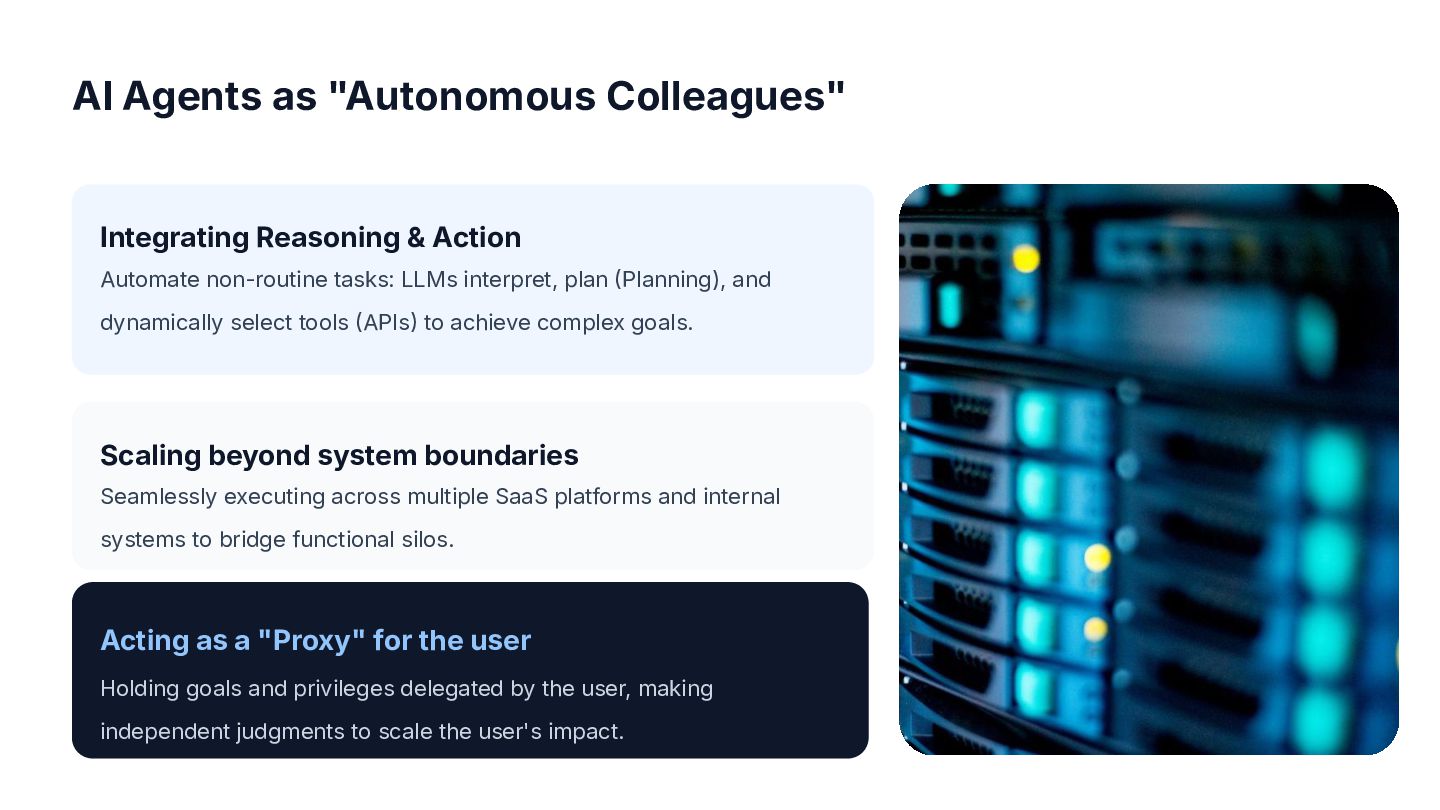
non-routine tasks: LLMs interpret, plan Planning), and dynamically select tools APIs to achieve complex goals. Scaling beyond system boundaries Seamlessly executing across multiple SaaS platforms and internal systems to bridge functional silos. Acting as a "Proxy" for the user Holding goals and privileges delegated by the user, making independent judgments to scale the user's impact.
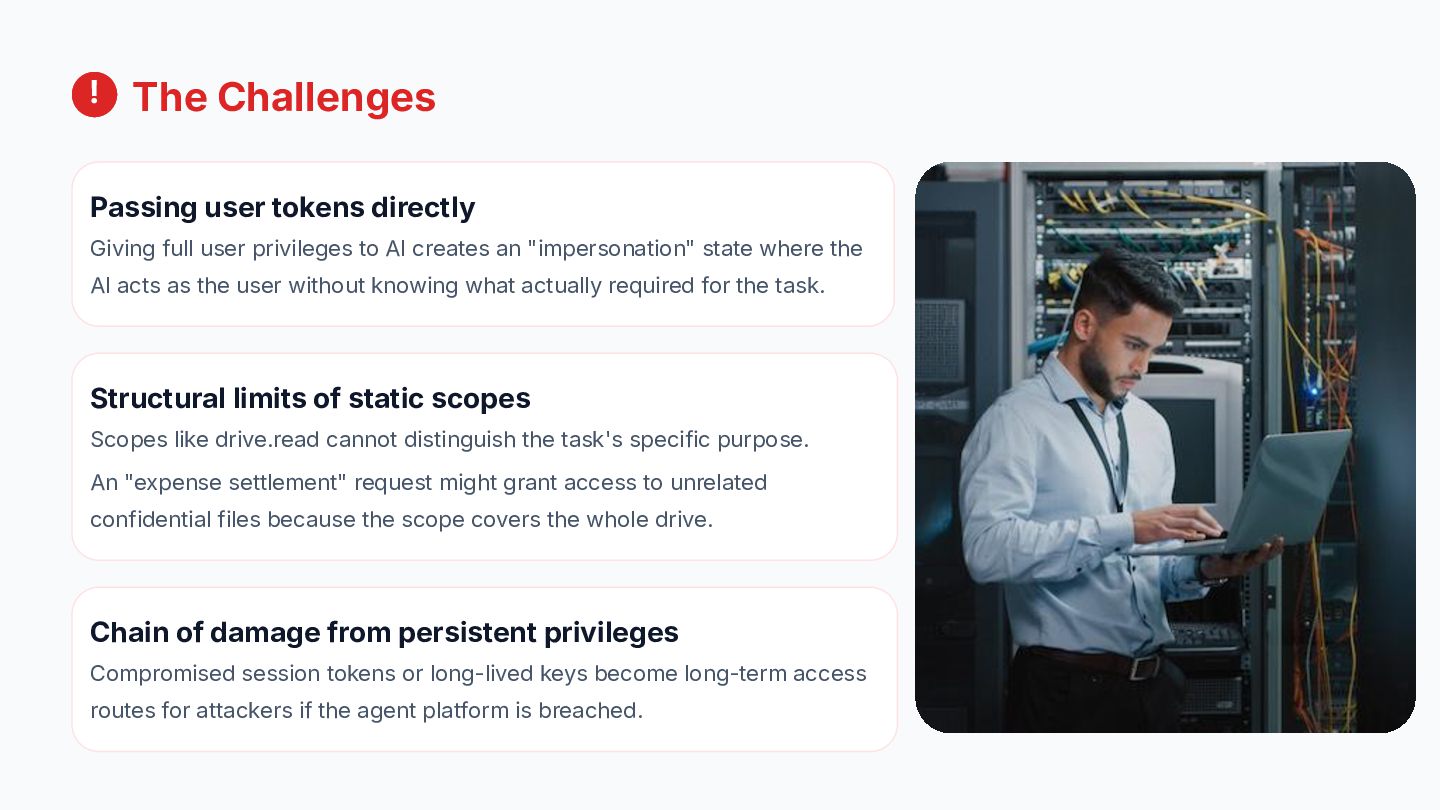
privileges to AI creates an "impersonation" state where the AI acts as the user without knowing what actually required for the task. Structural limits of static scopes Scopes like drive.read cannot distinguish the task's specific purpose. An "expense settlement" request might grant access to unrelated confidential files because the scope covers the whole drive. Chain of damage from persistent privileges Compromised session tokens or long-lived keys become long-term access routes for attackers if the agent platform is breached.
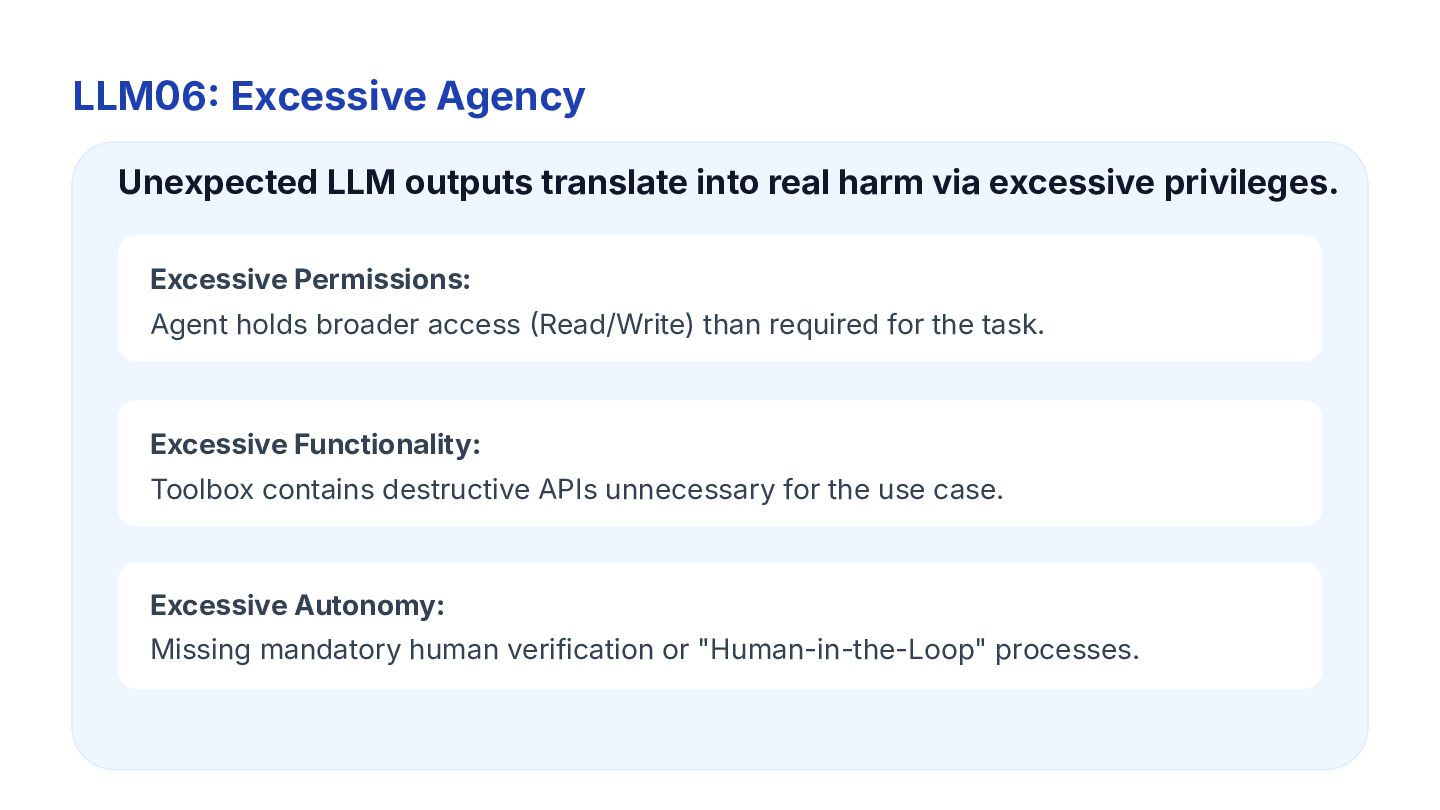
via excessive privileges. Excessive Permissions: Agent holds broader access Read/Write) than required for the task. Excessive Functionality: Toolbox contains destructive APIs unnecessary for the use case. Excessive Autonomy: Missing mandatory human verification or "Human-in-the-Loop" processes.
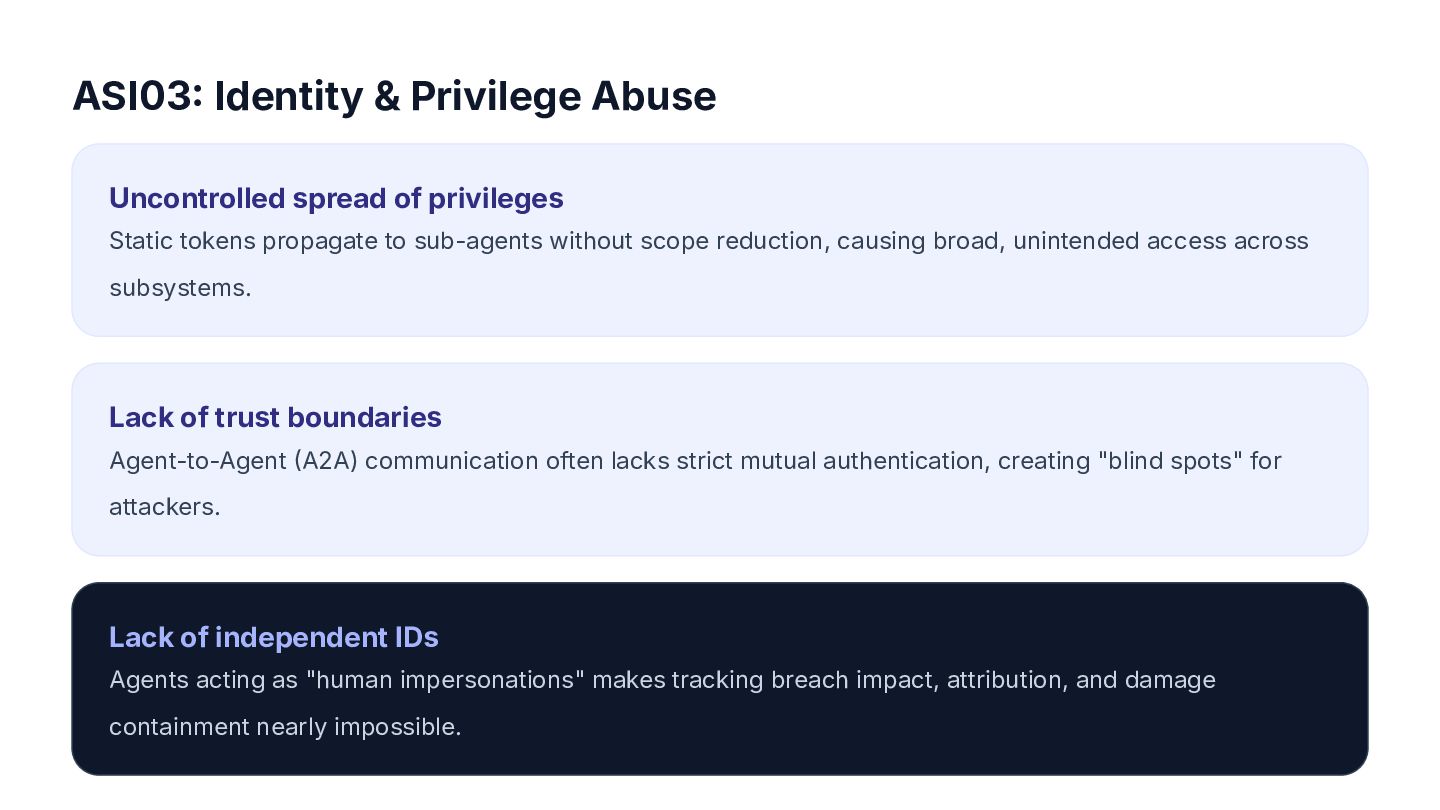
tokens propagate to sub-agents without scope reduction, causing broad, unintended access across subsystems. Lack of trust boundaries Agent-to-Agent A2A) communication often lacks strict mutual authentication, creating "blind spots" for attackers. Lack of independent IDs Agents acting as "human impersonations" makes tracking breach impact, attribution, and damage containment nearly impossible.
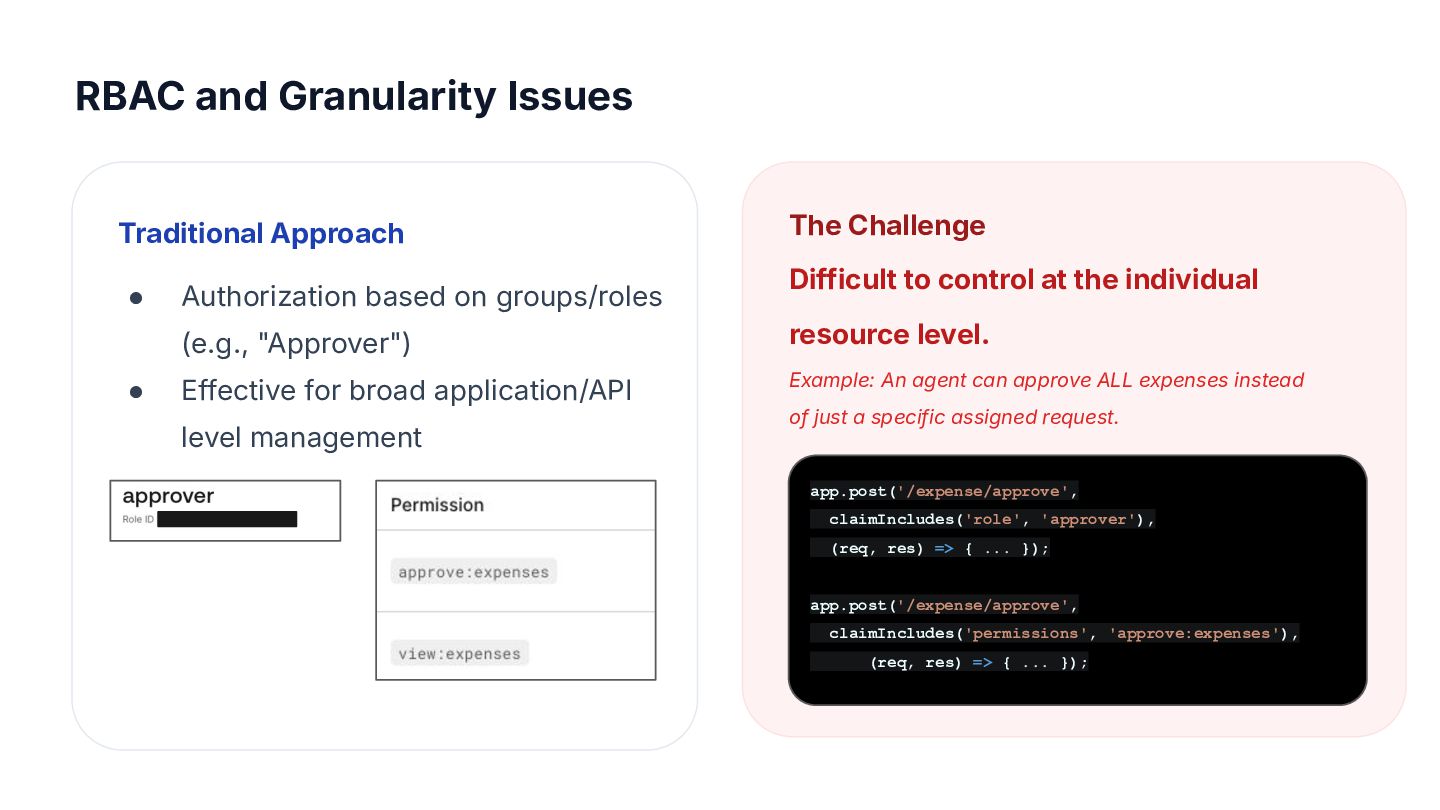
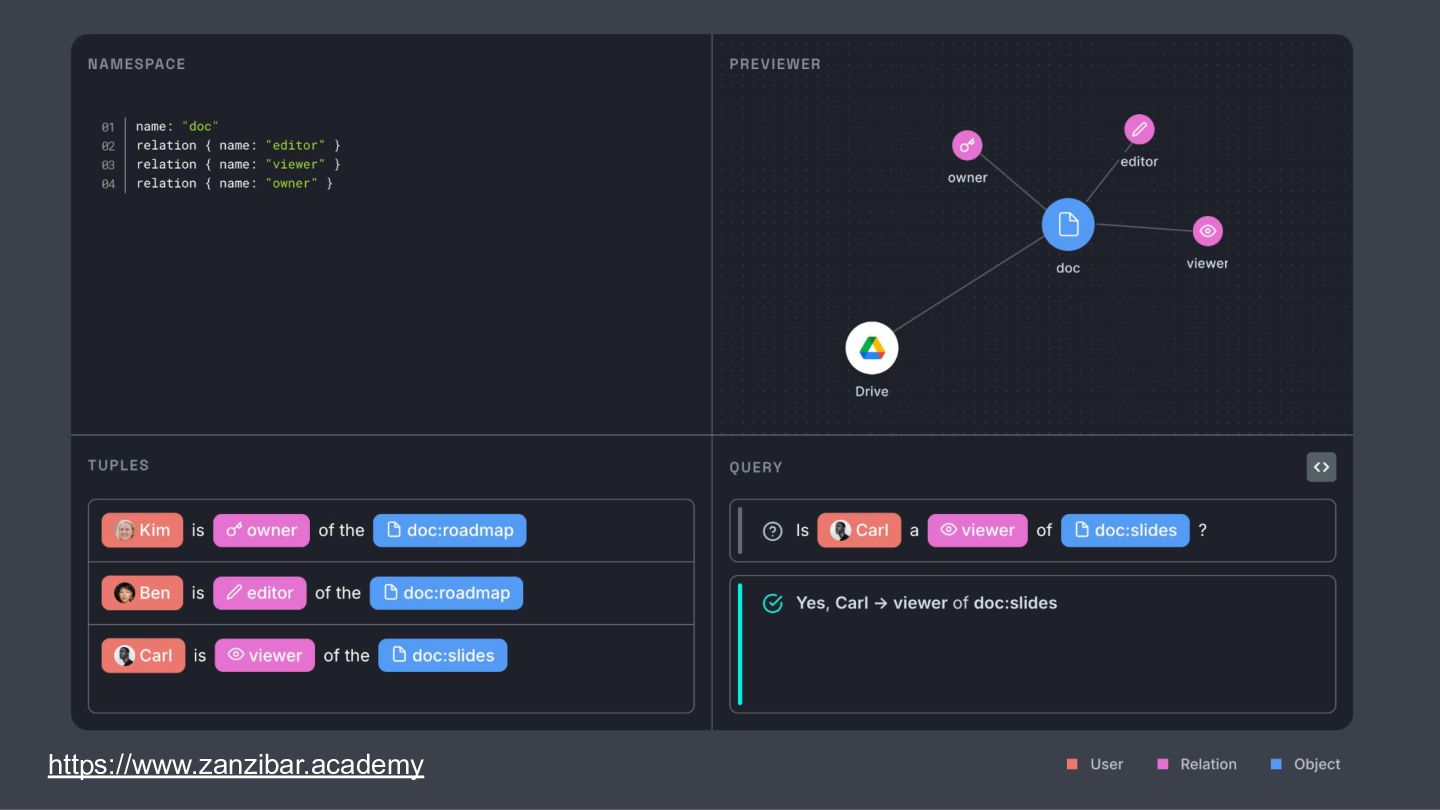
groups/roles (e.g., "Approver") • Effective for broad application/API level management The Challenge Difficult to control at the individual resource level. Example: An agent can approve ALL expenses instead of just a specific assigned request. app.post('/expense/approve', claimIncludes('role', 'approver'), (req, res) => { ... }); app.post('/expense/approve', claimIncludes('permissions', 'approve:expenses'), (req, res) => { ... });
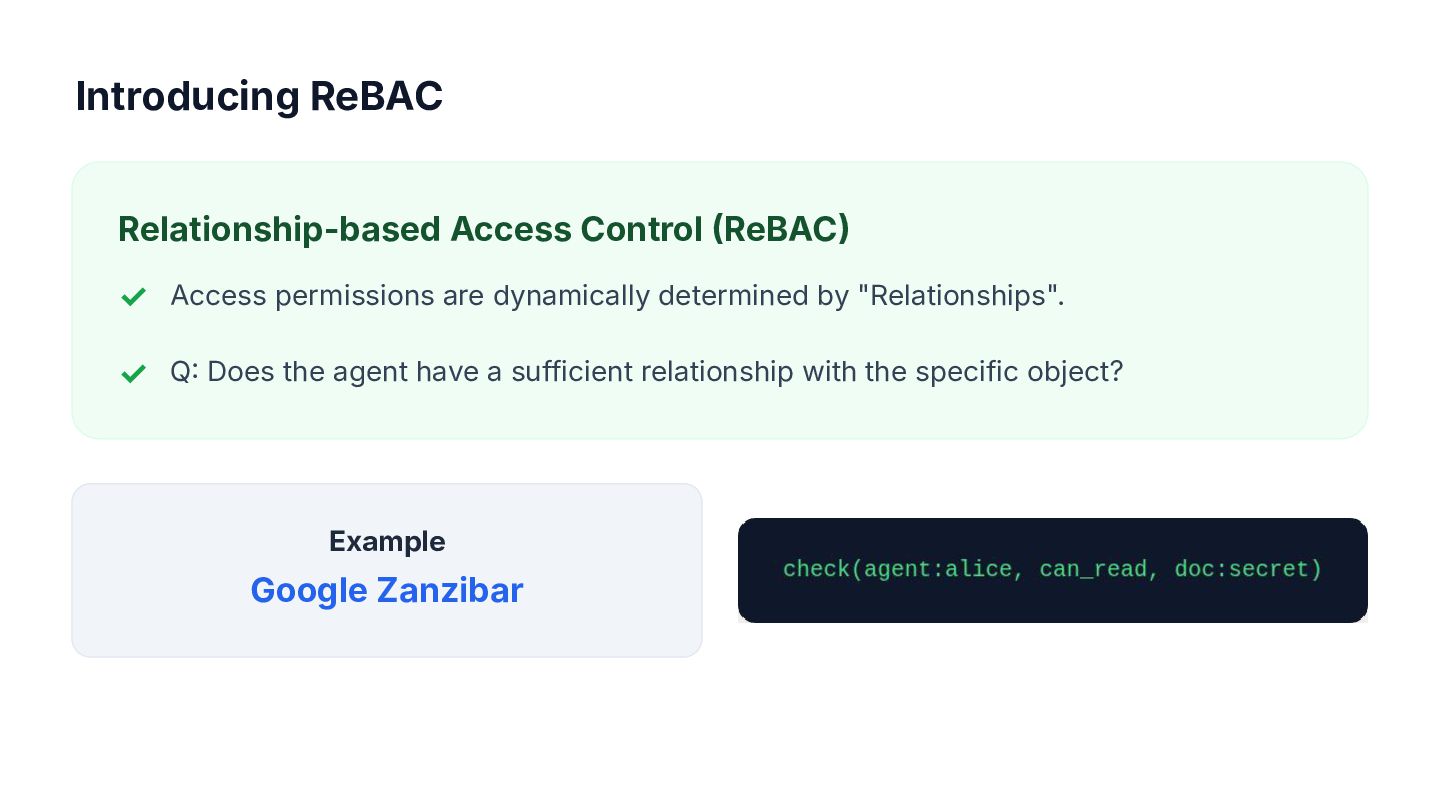
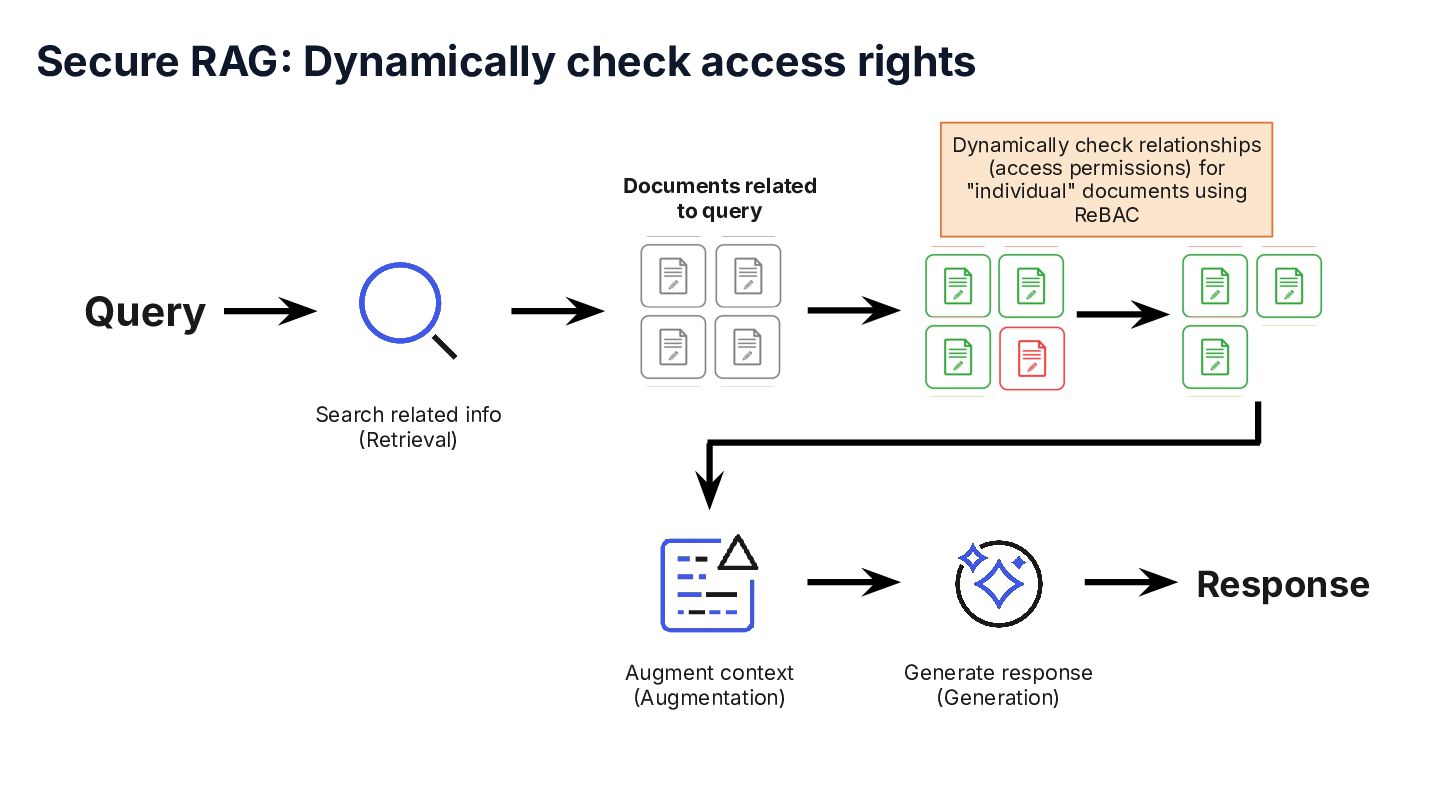
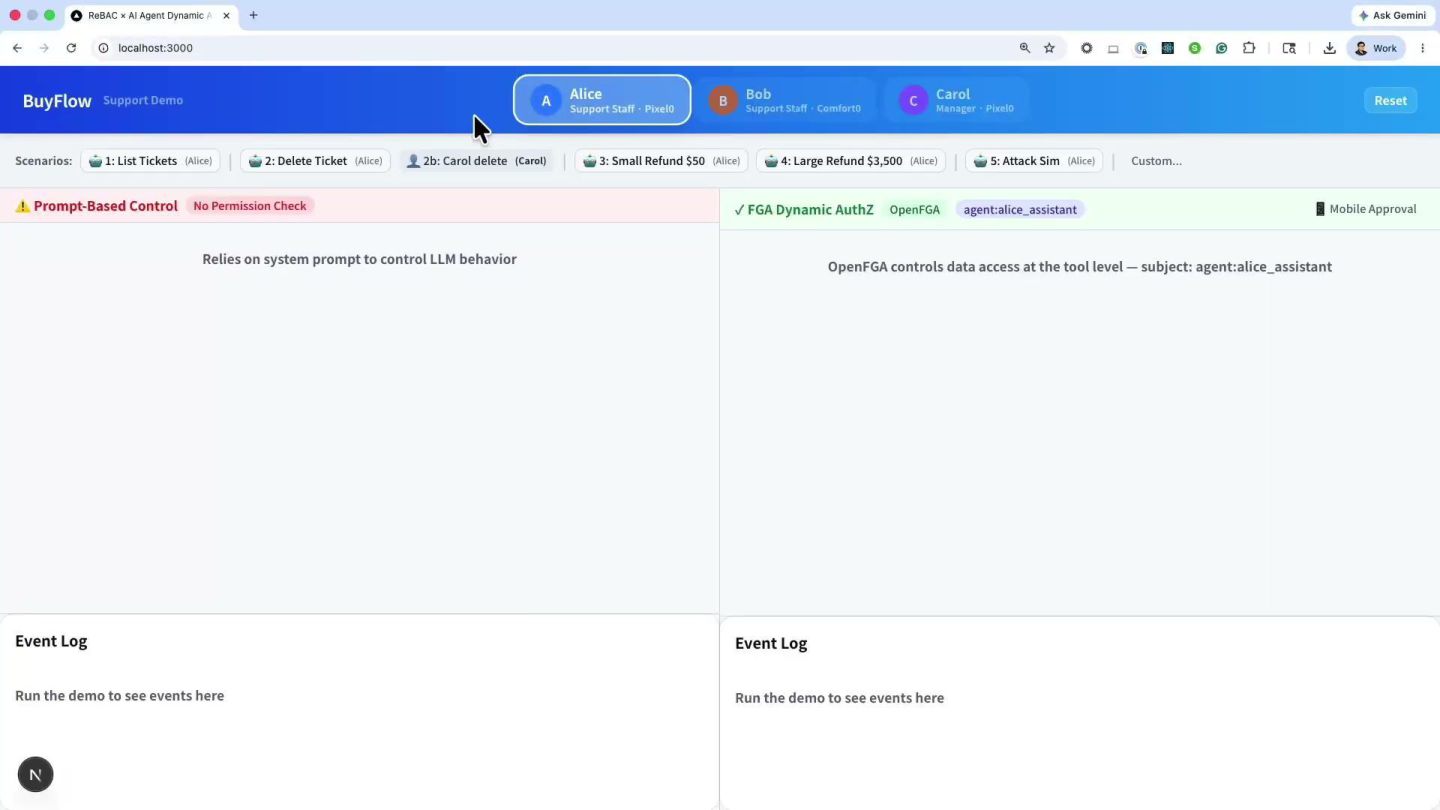
related to query Augment context Augmentation) Dynamically check relationships (access permissions) for "individual" documents using ReBAC Secure RAG Dynamically check access rights
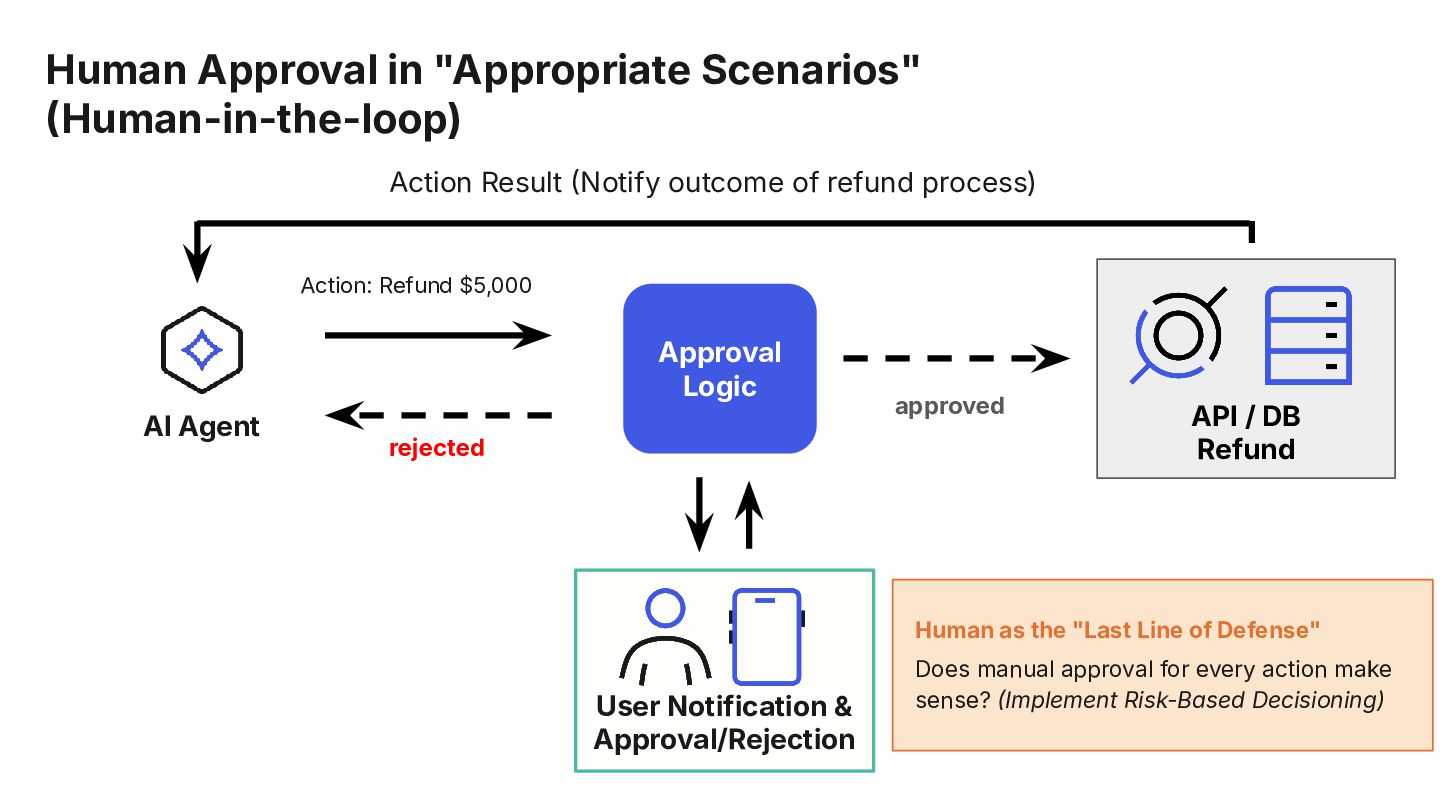
AI Agent Action Result Notify outcome of refund process) Action: Refund $5,000 rejected approved User Notification & Approval/Rejection Human as the "Last Line of Defense" Does manual approval for every action make sense? Implement Risk-Based Decisioning) Approval Logic
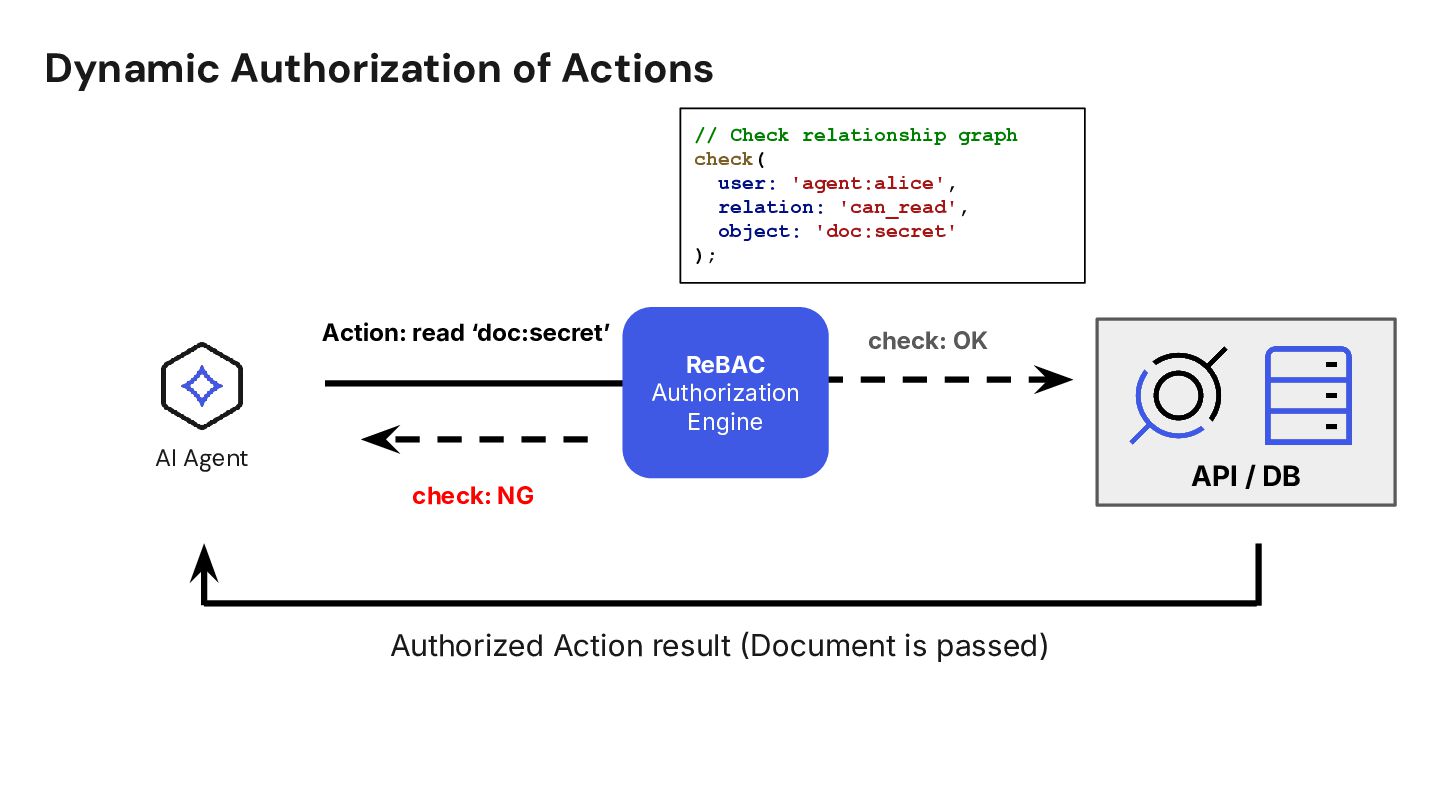
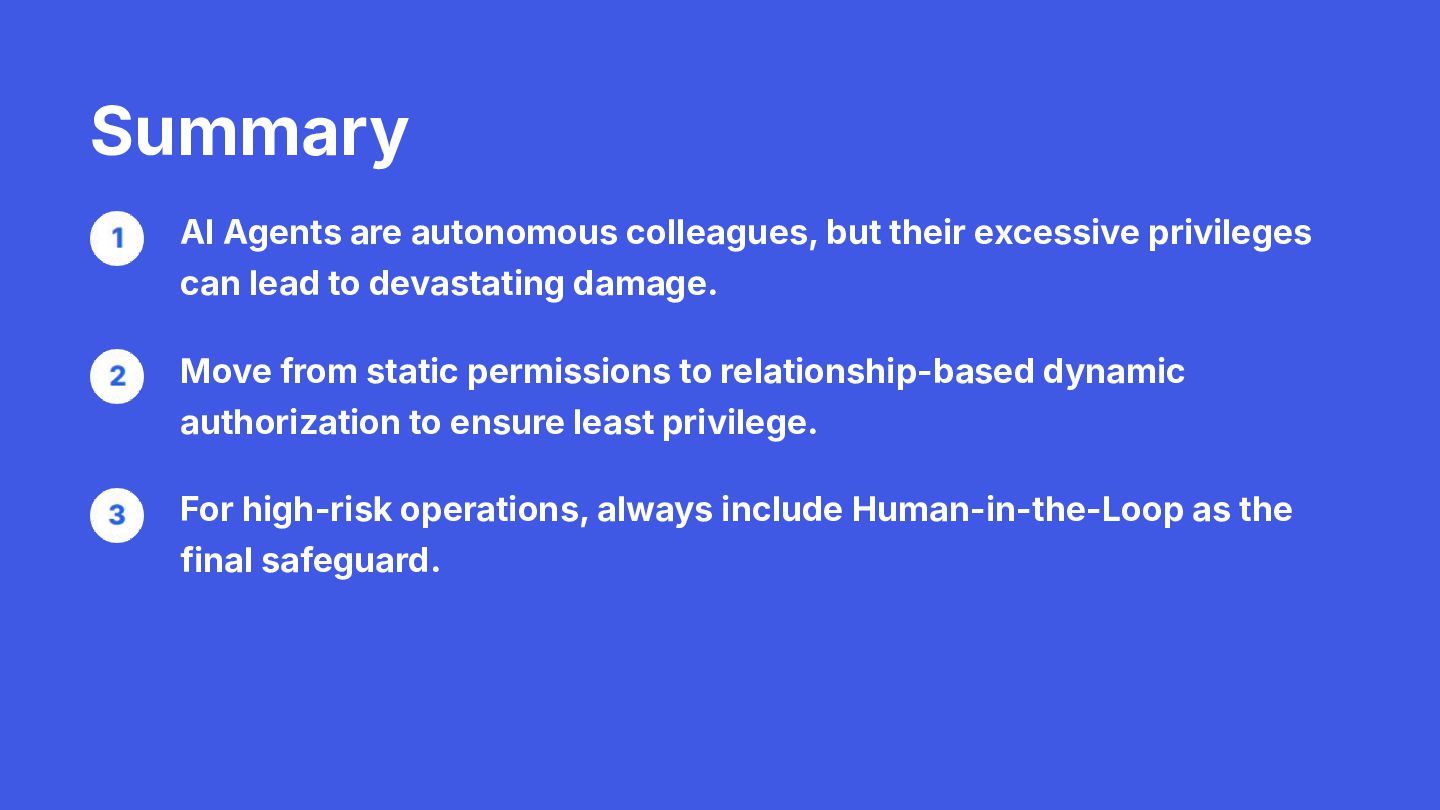
can lead to devastating damage. Move from static permissions to relationship-based dynamic authorization to ensure least privilege. For high-risk operations, always include Human-in-the-Loop as the final safeguard.

 SiteGround - Reliable hosting with speed, security, and support you can count on.


 neri78
 akit37
 suneo3476
 kawashimo0
 lynnswap
 prota
prota
 steliosf
 kanfab1
 iwatsukayura
 htkym
htkym
 akase244
 naokihaba
 ianozsvald
 nikkihalliwell
 bethany
 aarron
 thoeni
 eileencodes
 sstephenson
 asonas
 aemeredith
 swwweet
 akademiya2063
 mlcsv
mlcsv