Upgrade to PRO for Only $50/Year—Limited-Time Offer! 🔥

From Legacy Mainframe to the Cloud: The Finnish...

Avatar for Niko Virtala Niko Virtala
December 04, 2018

From Legacy Mainframe to the Cloud: The Finnish Railways Evolution with Docker Enterprise

In 2016, Finnish Railways reservation system and many other systems were monolithic applications running on a mainframe or local datacenters. They began a containerization project focused on modernizing the reservation system. The invest paid off. Today, they have containerized multiple applications, running both on-premises and on AWS today. That’s allowed Finland’s leading public transport agency to shut down a data center and become a technology innovator. In this session, Finnish Rail will explain the processes and tools they used to build a multi-cloud strategy that lets them take advantage of geo-location and cost advantages to run in AWS, Azure and soon Google Cloud. You’ll learn: - How to implement a successful multi-cloud deployment - What challenges you can expect to face along the way - The processes and tools that are a critical part of a successful project.

Avatar for Niko Virtala

Niko Virtala

December 04, 2018
Tweet

Other Decks in Technology

Transcript

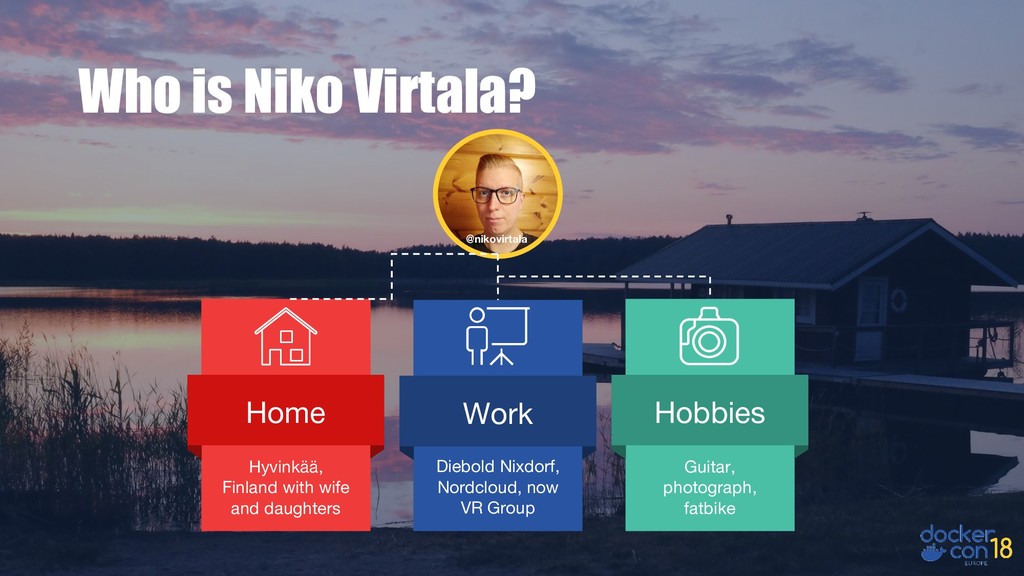
  1. Work Hobbies Home Hyvinkää, Finland with wife and daughters Diebold

    Nixdorf, Nordcloud, now VR Group Guitar, photograph, fatbike Who is Niko Virtala? @nikovirtala
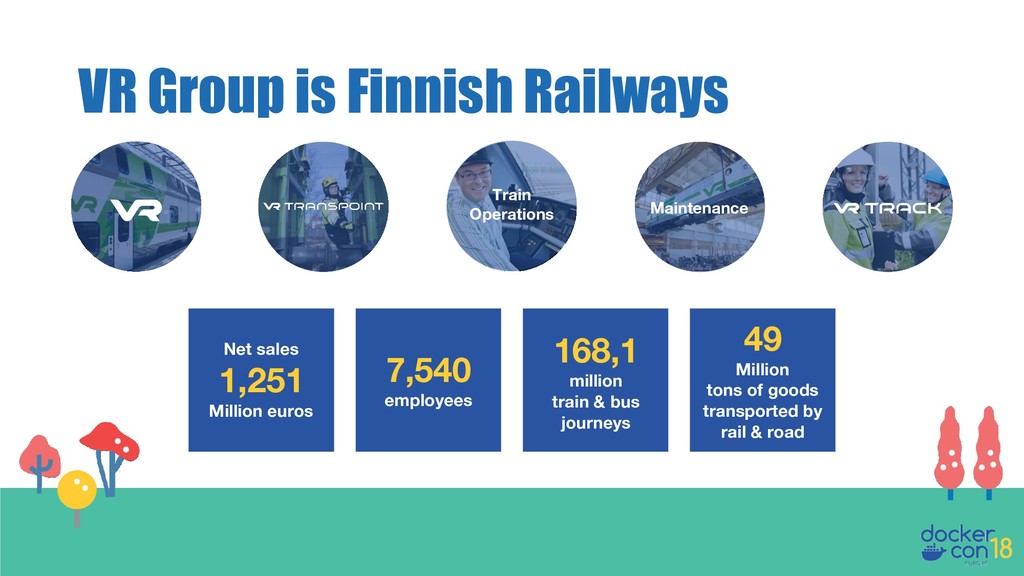
  2. VR Group is Finnish Railways 7,540 employees Net sales 1,251

    Million euros 168,1 million train & bus journeys 49 Million tons of goods transported by rail & road Train Operations Maintenance
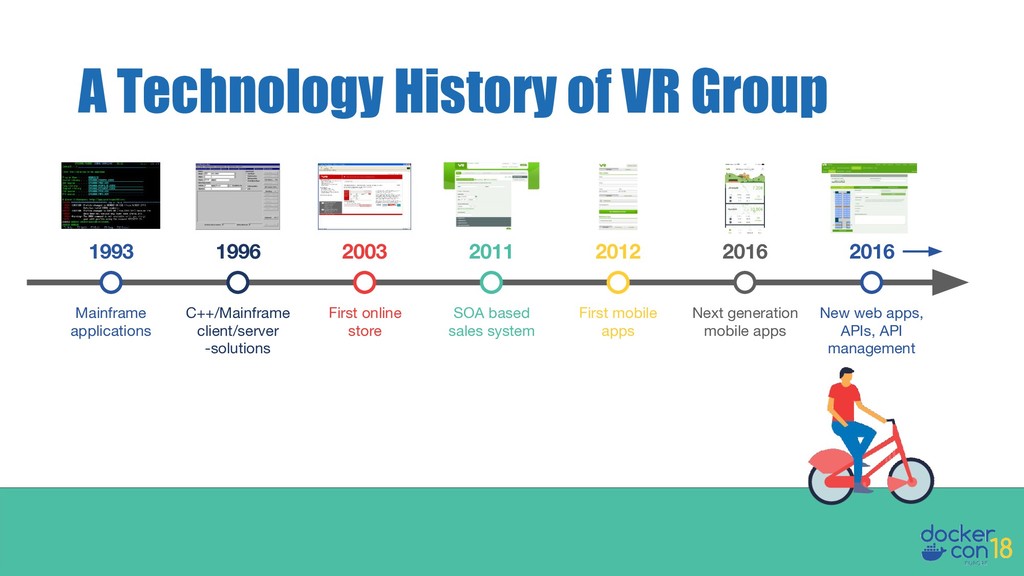
  3. A Technology History of VR Group 1996 2003 1993 Mainframe

    applications C++/Mainframe client/server -solutions First online store Next generation mobile apps 2016 2012 First mobile apps 2011 SOA based sales system 2016 New web apps, APIs, API management
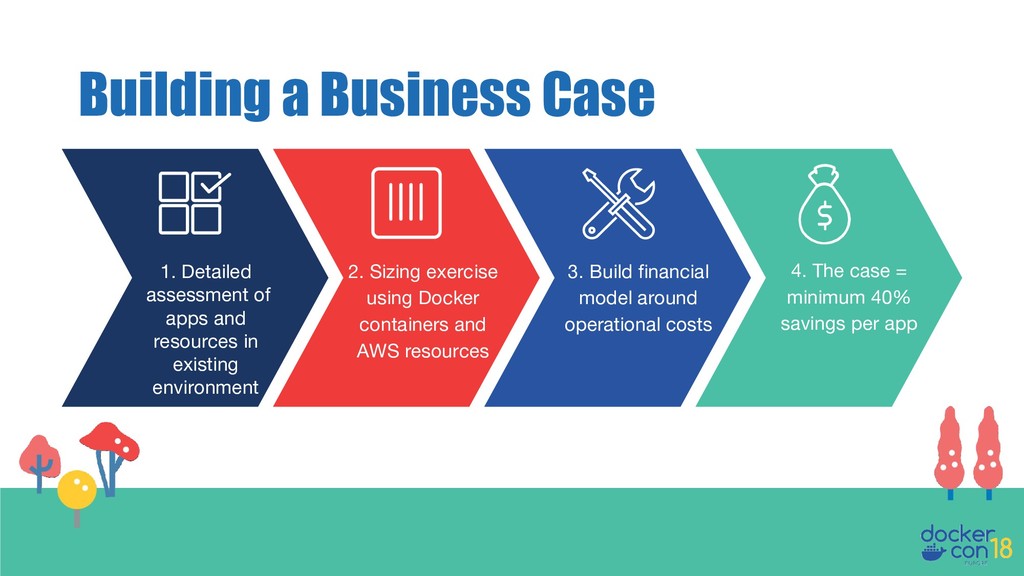
  4. Building a Business Case 1. Detailed assessment of apps and

    resources in existing environment 2. Sizing exercise using Docker containers and AWS resources 3. Build financial model around operational costs 4. The case = minimum 40% savings per app
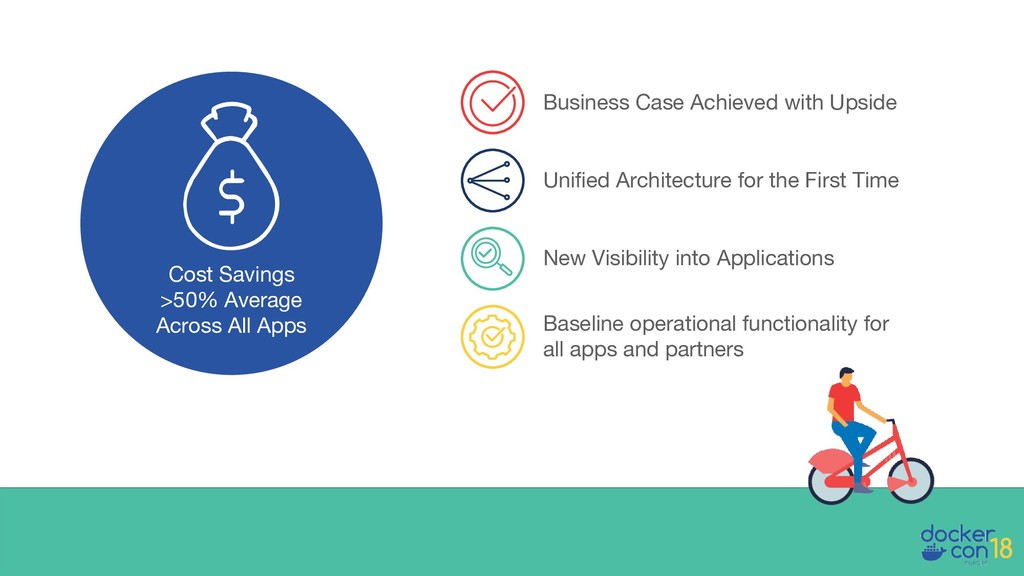
  5. Cost Savings >50% Average Across All Apps Business Case Achieved

    with Upside Unified Architecture for the First Time New Visibility into Applications Baseline operational functionality for all apps and partners
  6. • To go from monolithic apps to microservices and cloud,

    you need to break old habits • In a traditional organization, start by acting as the example Changing the Culture
  7. • We established a new model with first PoC •

    Gave the app. team greater freedom -- and responsibility • The result: Much faster development and release cycles ...and the Operational Model
  8. What is DevOps? “Academics and practitioners have not developed a

    unique definition for the term DevOps.” --Wikipedia
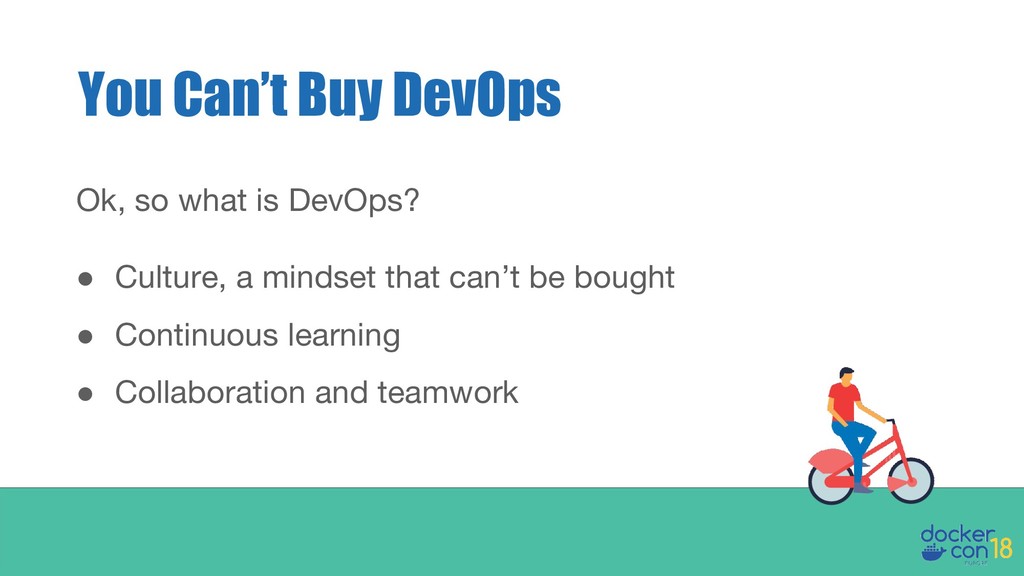
  9. Ok, so what is DevOps? • Culture, a mindset that

    can’t be bought • Continuous learning • Collaboration and teamwork You Can’t Buy DevOps
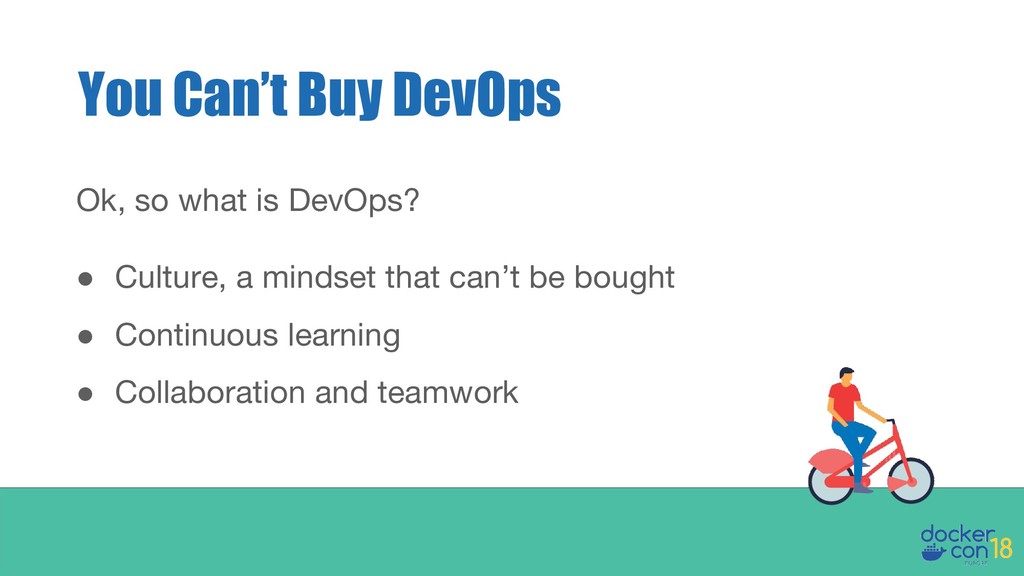
  10. Ok, so what is DevOps? • Culture, a mindset that

    can’t be bought • Continuous learning • Collaboration and teamwork You Can’t Buy DevOps
  11. Building robust, repeatable and predictable cloud platform is not easy,

    but there is help available when it is getting too overwhelming. From Mainframe to a Cloud Architecture
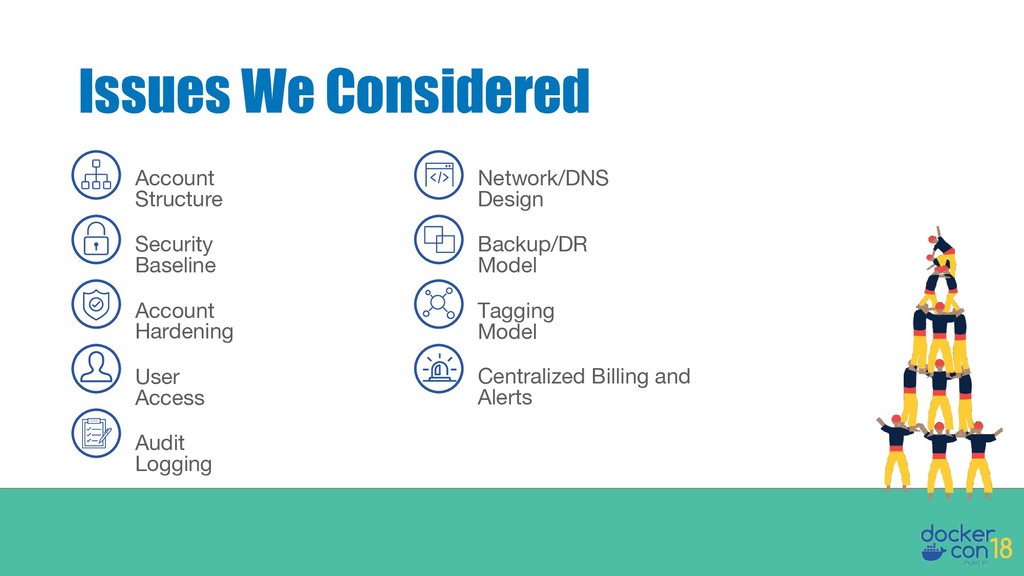
  12. Issues We Considered Account Structure Security Baseline Account Hardening User

    Access Audit Logging Network/DNS Design Backup/DR Model Tagging Model Centralized Billing and Alerts
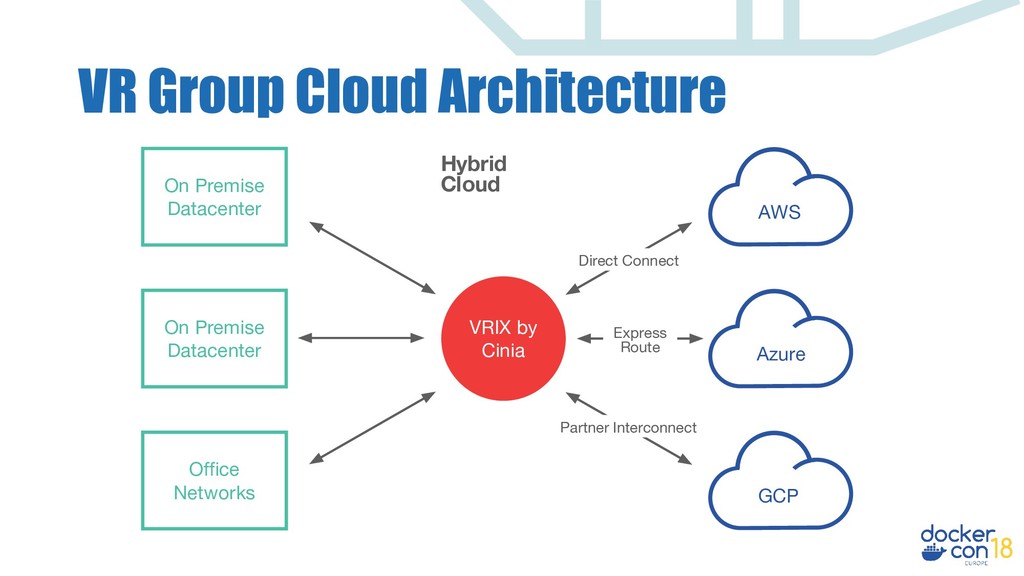
  13. VR Group Cloud Architecture Hybrid Cloud VRIX by Cinia AWS

    Azure GCP Direct Connect Express Route Partner Interconnect On Premise Datacenter On Premise Datacenter Office Networks
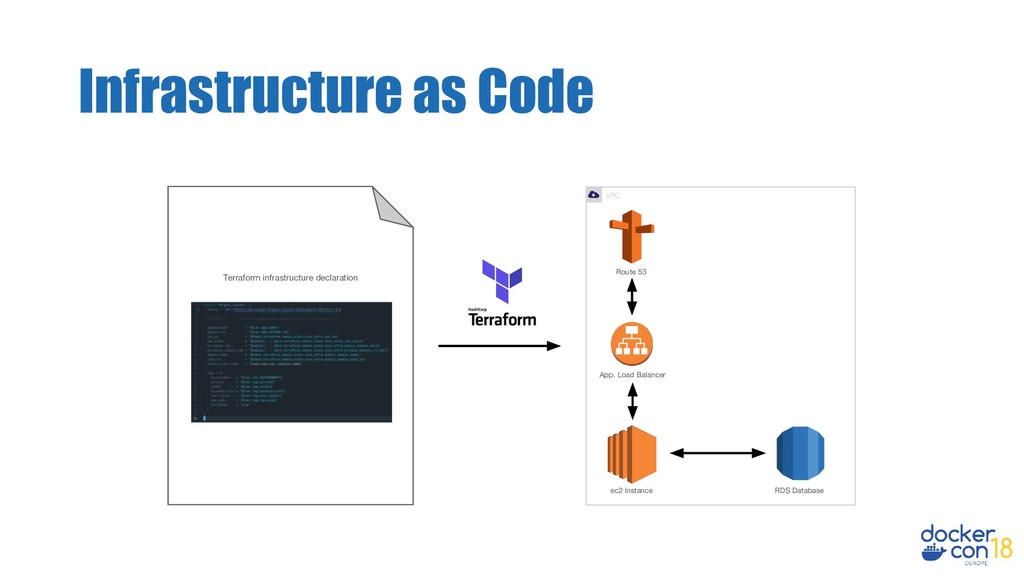
  14. Infrastructure as Code App. Load Balancer ec2 Instance RDS Database

    Route 53 VPC Terraform infrastructure declaration
  15. Docker Enterprise Platform UCP Controller Node(s) (3) HRM Node(s) (1)

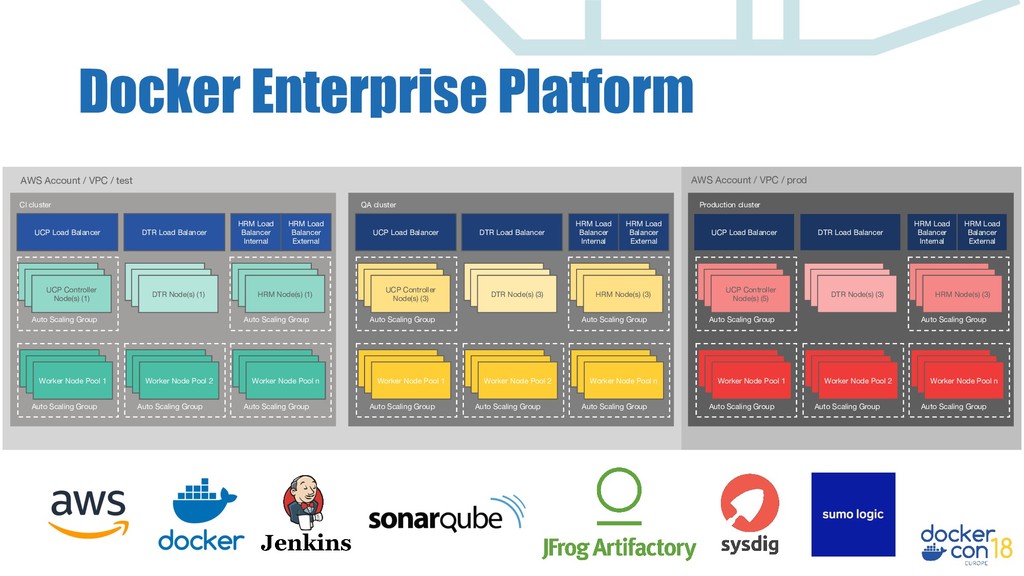
    DTR Node(s) (3) Worker Node Pool 1 Worker Node Pool n Worker Node Pool 2 HRM Node(s) (3) Worker Node Pool n UCP Controller Node(s) (1) DTR Node(s) (1) Worker Node Pool 1 Worker Node Pool 2 UCP Controller Node(s) (5) Worker Node Pool 1 Worker Node Pool 2 DTR Node(s) (3) HRM Node(s) (3) Worker Node Pool n UCP Load Balancer DTR Load Balancer HRM Load Balancer Internal HRM Load Balancer External UCP Load Balancer DTR Load Balancer HRM Load Balancer Internal HRM Load Balancer External UCP Load Balancer DTR Load Balancer HRM Load Balancer Internal HRM Load Balancer External AWS Account / VPC / test AWS Account / VPC / prod CI cluster QA cluster Production cluster Auto Scaling Group Auto Scaling Group Auto Scaling Group Auto Scaling Group Auto Scaling Group Auto Scaling Group Auto Scaling Group Auto Scaling Group Auto Scaling Group Auto Scaling Group Auto Scaling Group Auto Scaling Group Auto Scaling Group Auto Scaling Group Auto Scaling Group
  16. Docker Enterprise Platform UCP Controller Node(s) (3) HRM Node(s) (1)

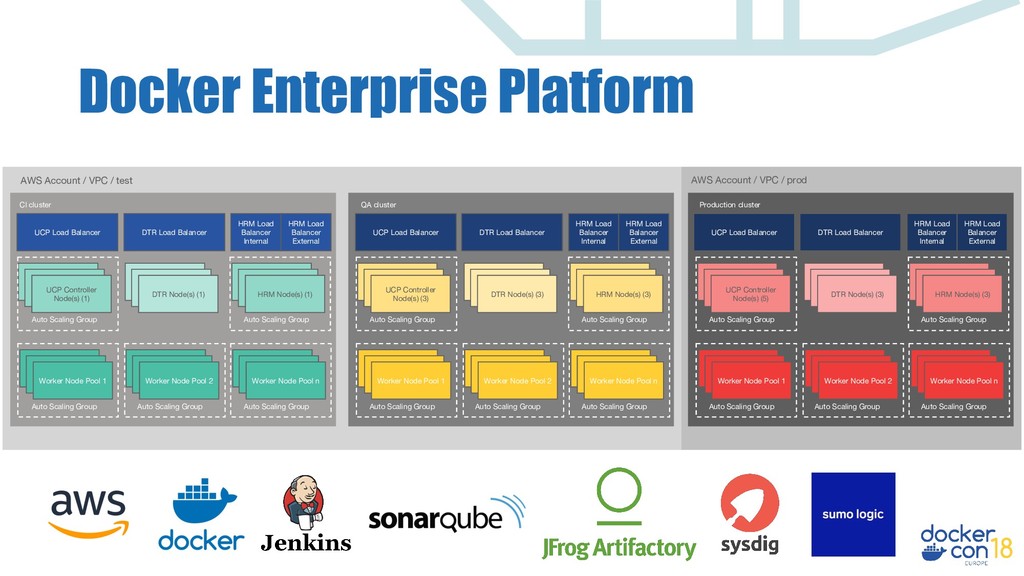
    DTR Node(s) (3) Worker Node Pool 1 Worker Node Pool n Worker Node Pool 2 HRM Node(s) (3) Worker Node Pool n UCP Controller Node(s) (1) DTR Node(s) (1) Worker Node Pool 1 Worker Node Pool 2 UCP Controller Node(s) (5) Worker Node Pool 1 Worker Node Pool 2 DTR Node(s) (3) HRM Node(s) (3) Worker Node Pool n UCP Load Balancer DTR Load Balancer HRM Load Balancer Internal HRM Load Balancer External UCP Load Balancer DTR Load Balancer HRM Load Balancer Internal HRM Load Balancer External UCP Load Balancer DTR Load Balancer HRM Load Balancer Internal HRM Load Balancer External AWS Account / VPC / test AWS Account / VPC / prod CI cluster QA cluster Production cluster Auto Scaling Group Auto Scaling Group Auto Scaling Group Auto Scaling Group Auto Scaling Group Auto Scaling Group Auto Scaling Group Auto Scaling Group Auto Scaling Group Auto Scaling Group Auto Scaling Group Auto Scaling Group Auto Scaling Group Auto Scaling Group Auto Scaling Group
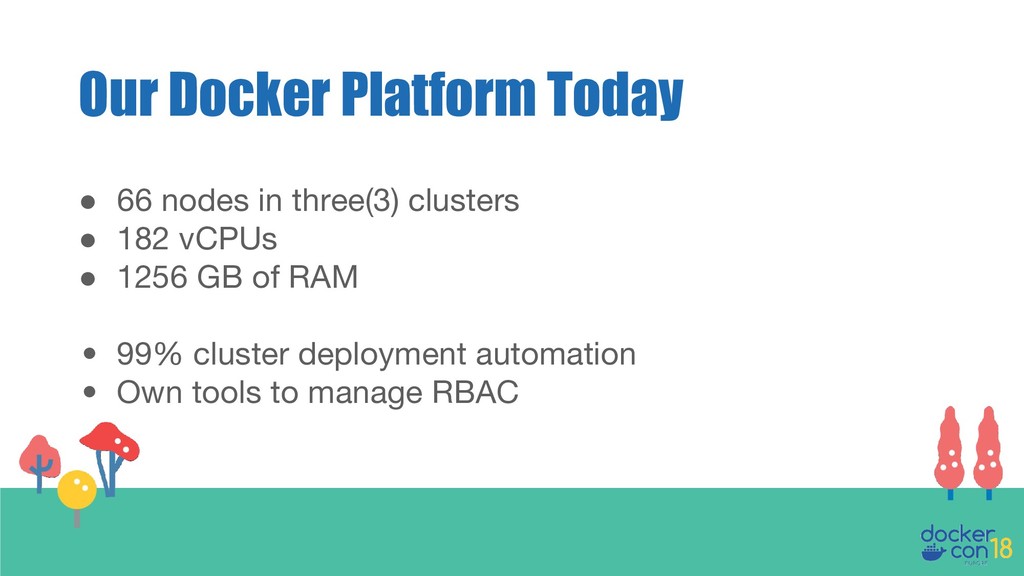
  17. Our Docker Platform Today • 66 nodes in three(3) clusters

    • 182 vCPUs • 1256 GB of RAM • 99% cluster deployment automation • Own tools to manage RBAC
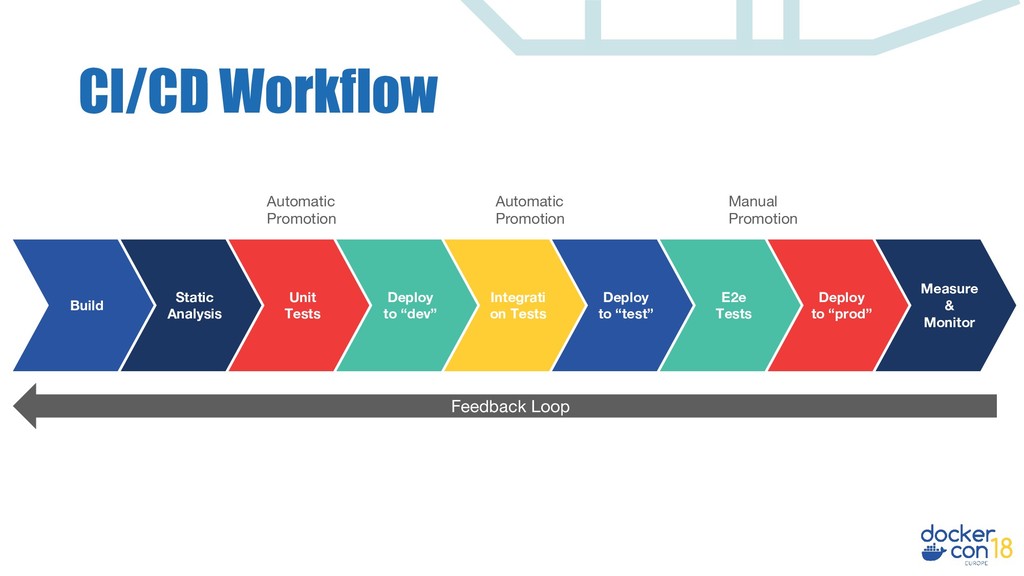
  18. CI/CD Workflow Build Static Analysis Unit Tests Deploy to “dev”

    Integrati on Tests Deploy to “test” E2e Tests Deploy to “prod” Measure & Monitor Feedback Loop Automatic Promotion Automatic Promotion Manual Promotion
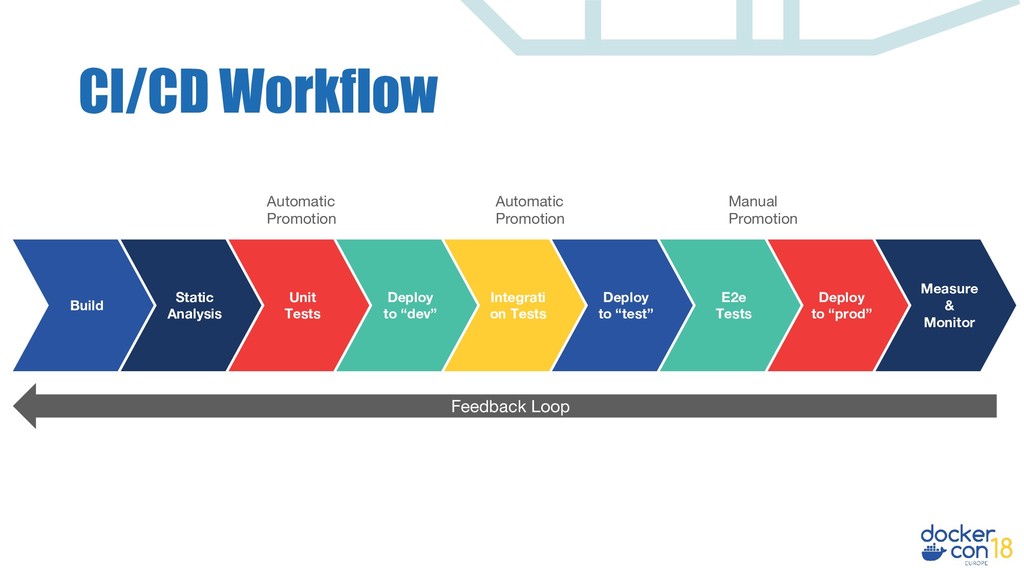
  19. CI/CD Workflow Build Static Analysis Unit Tests Deploy to “dev”

    Integrati on Tests Deploy to “test” E2e Tests Deploy to “prod” Measure & Monitor Feedback Loop Automatic Promotion Automatic Promotion Manual Promotion
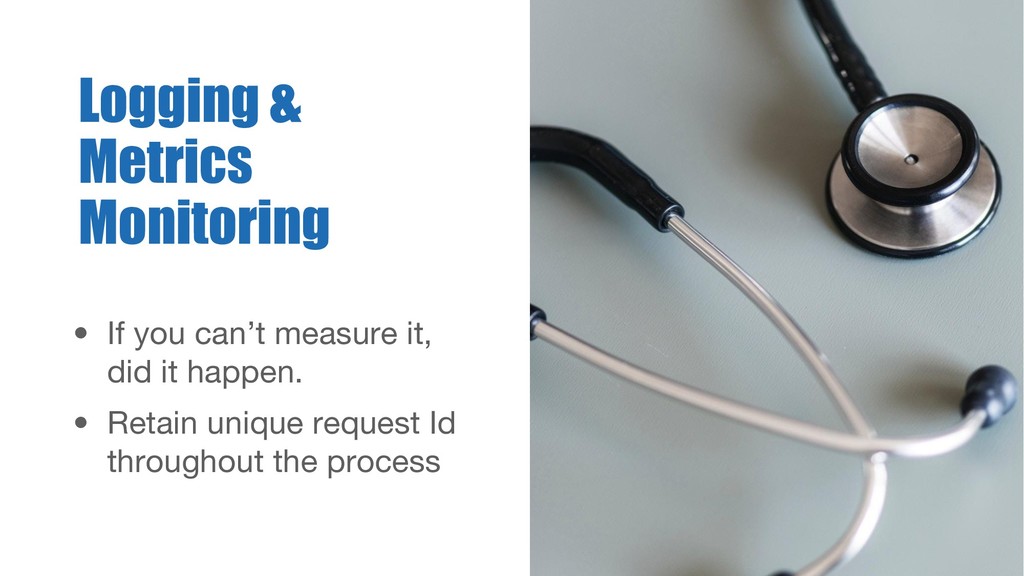
  20. • If you can’t measure it, did it happen. •

    Retain unique request Id throughout the process Logging & Metrics Monitoring
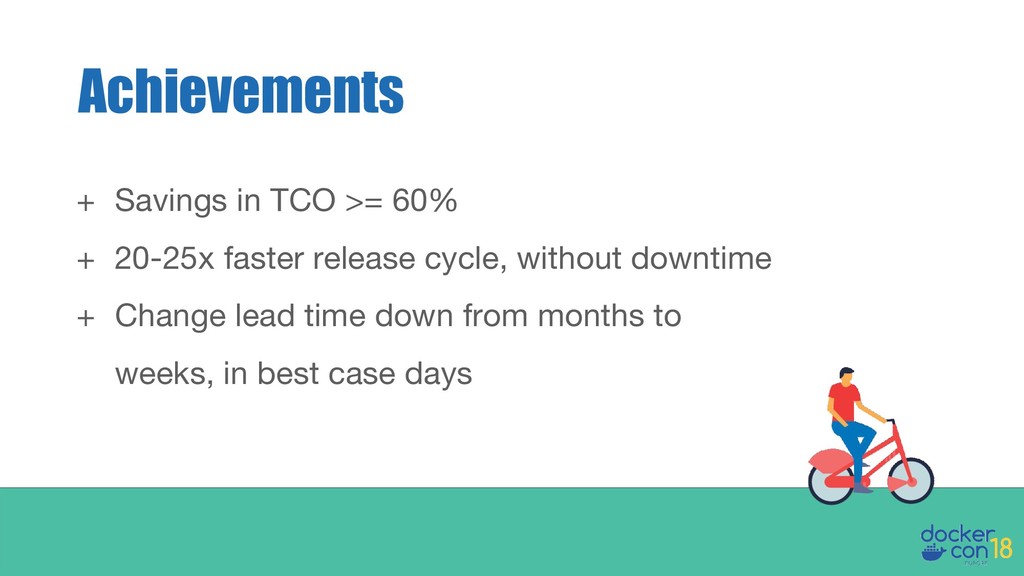
  21. + Savings in TCO >= 60% + 20-25x faster release

    cycle, without downtime + Change lead time down from months to weeks, in best case days Achievements
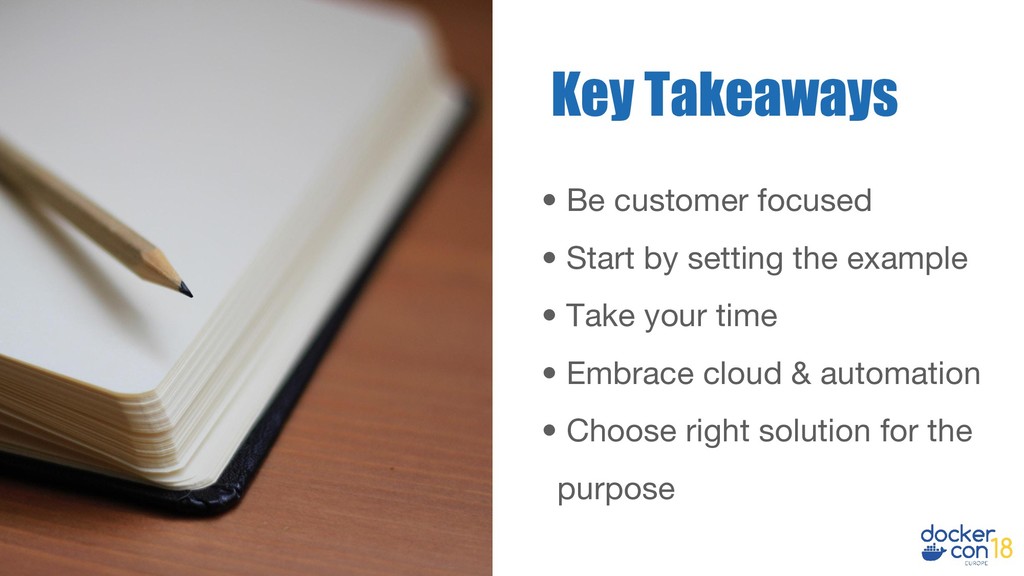
  22. • Be customer focused • Start by setting the example

    • Take your time • Embrace cloud & automation • Choose right solution for the purpose Key Takeaways
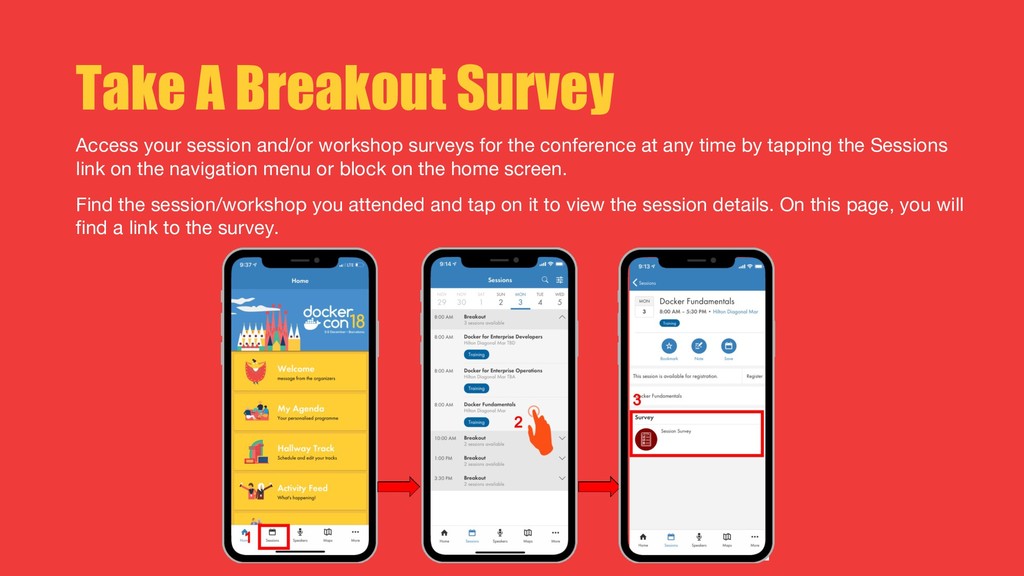
  23. Take A Breakout Survey Access your session and/or workshop surveys

    for the conference at any time by tapping the Sessions link on the navigation menu or block on the home screen. Find the session/workshop you attended and tap on it to view the session details. On this page, you will find a link to the survey.