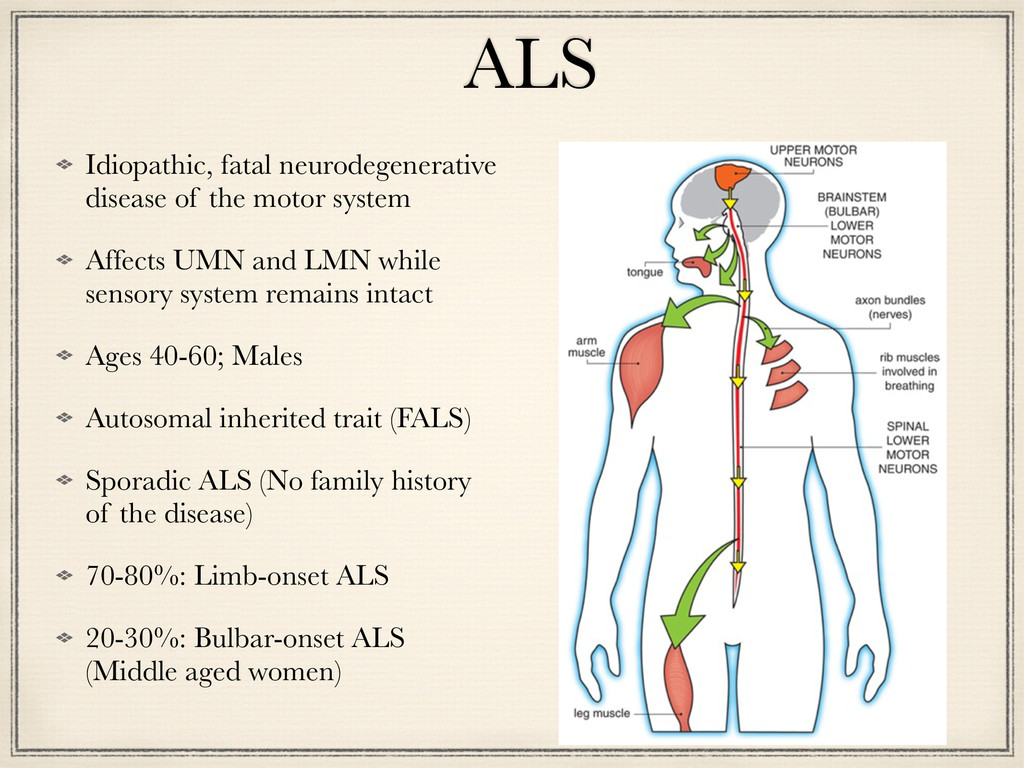
UMN and LMN while sensory system remains intact Ages 40-60; Males Autosomal inherited trait (FALS) Sporadic ALS (No family history of the disease) 70-80%: Limb-onset ALS 20-30%: Bulbar-onset ALS (Middle aged women)
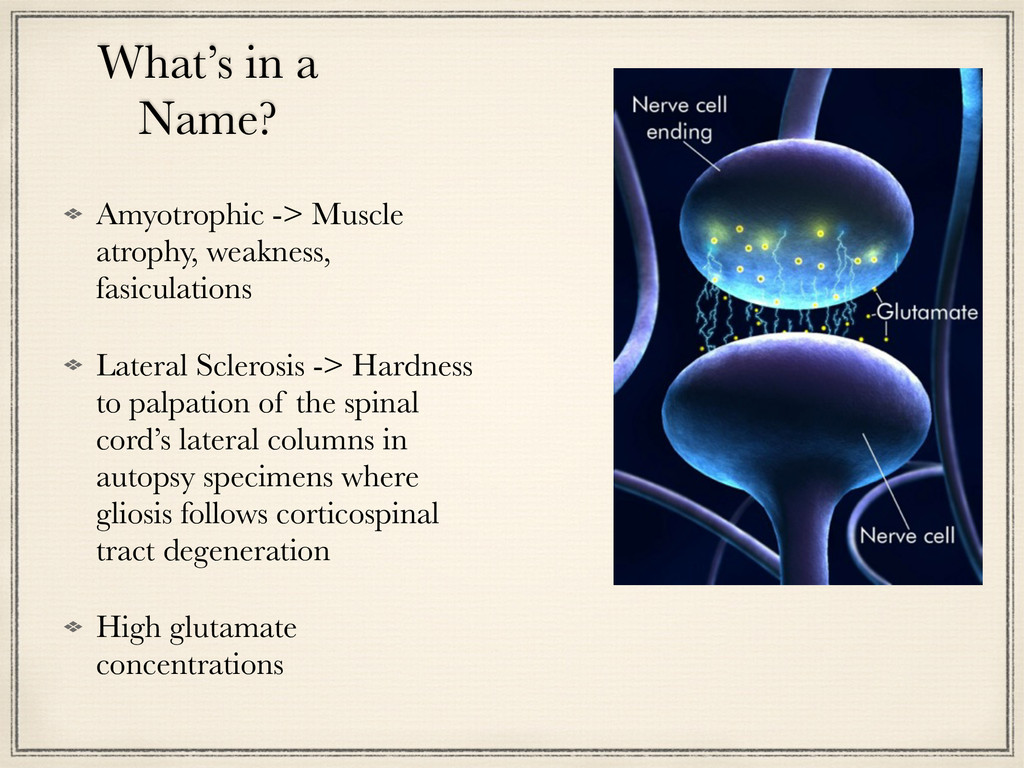
Lateral Sclerosis -> Hardness to palpation of the spinal cord’s lateral columns in autopsy specimens where gliosis follows corticospinal tract degeneration High glutamate concentrations
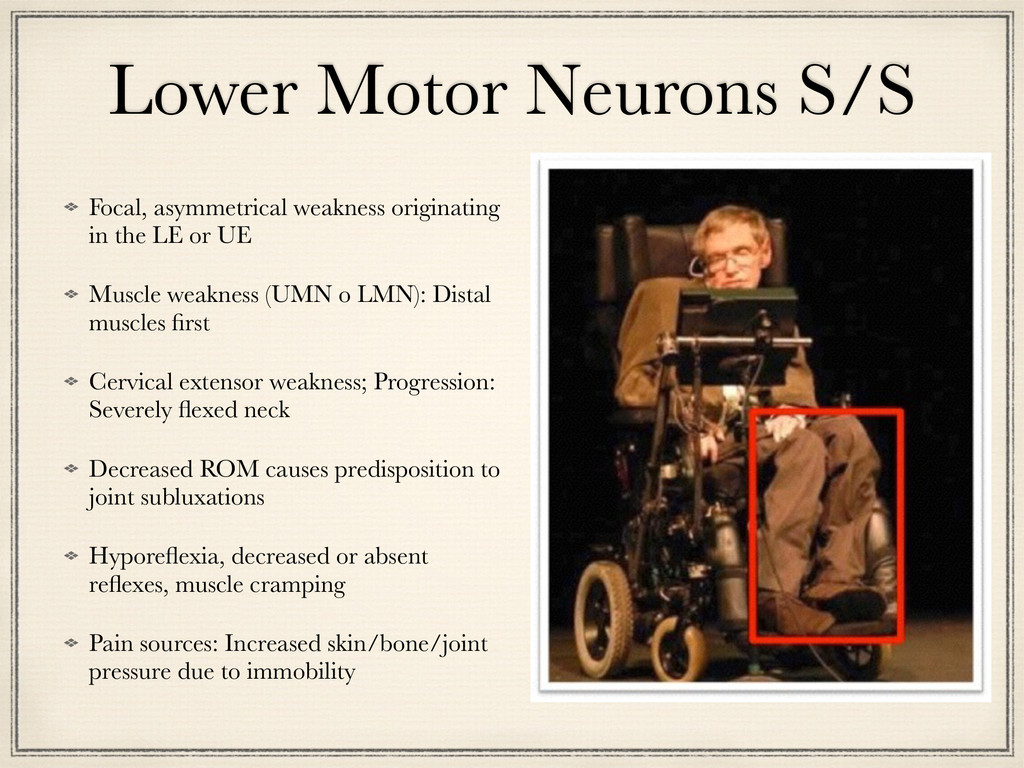
LE or UE Muscle weakness (UMN o LMN): Distal muscles first Cervical extensor weakness; Progression: Severely flexed neck Decreased ROM causes predisposition to joint subluxations Hyporeflexia, decreased or absent reflexes, muscle cramping Pain sources: Increased skin/bone/joint pressure due to immobility
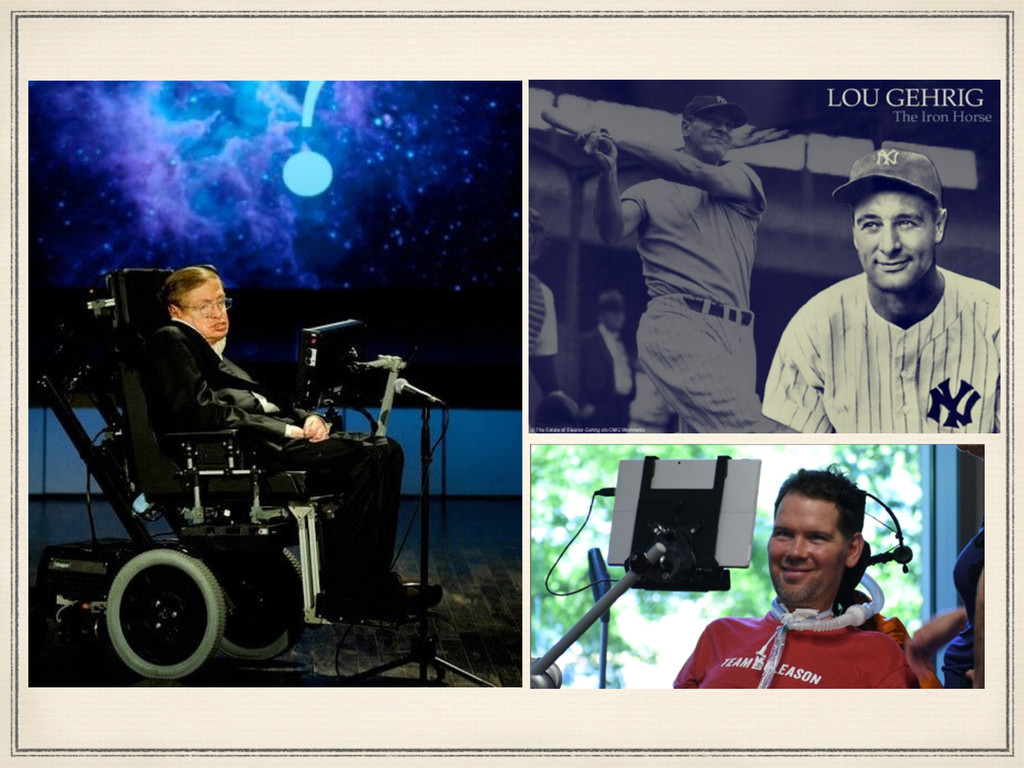
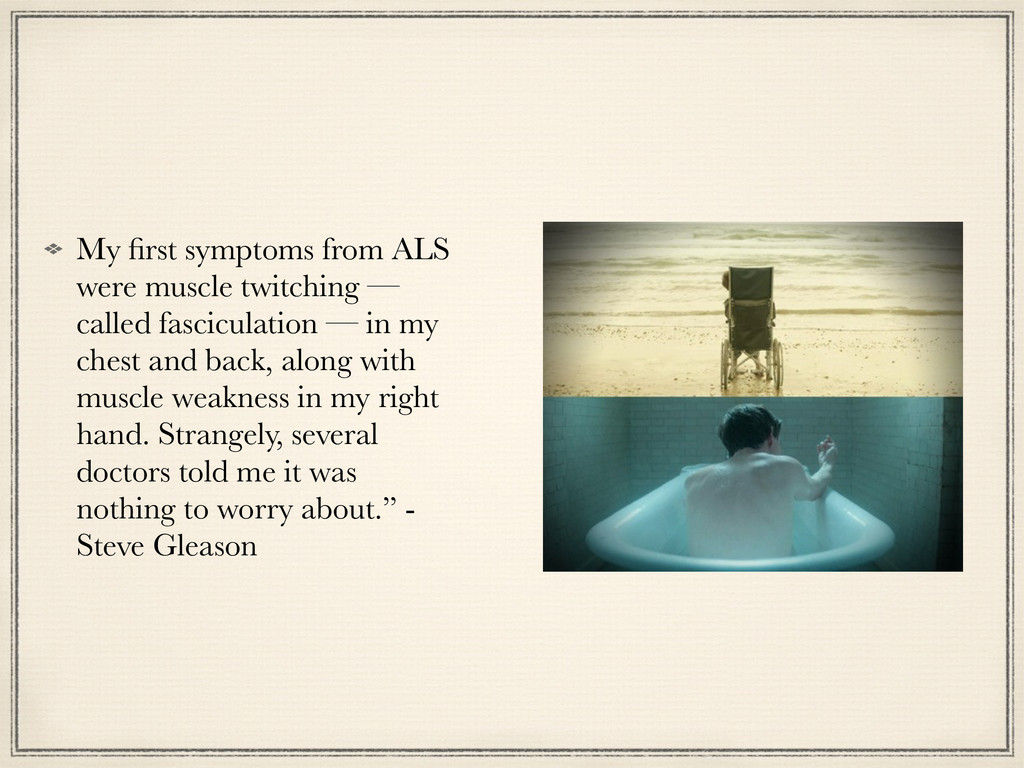
fasciculation — in my chest and back, along with muscle weakness in my right hand. Strangely, several doctors told me it was nothing to worry about.” - Steve Gleason
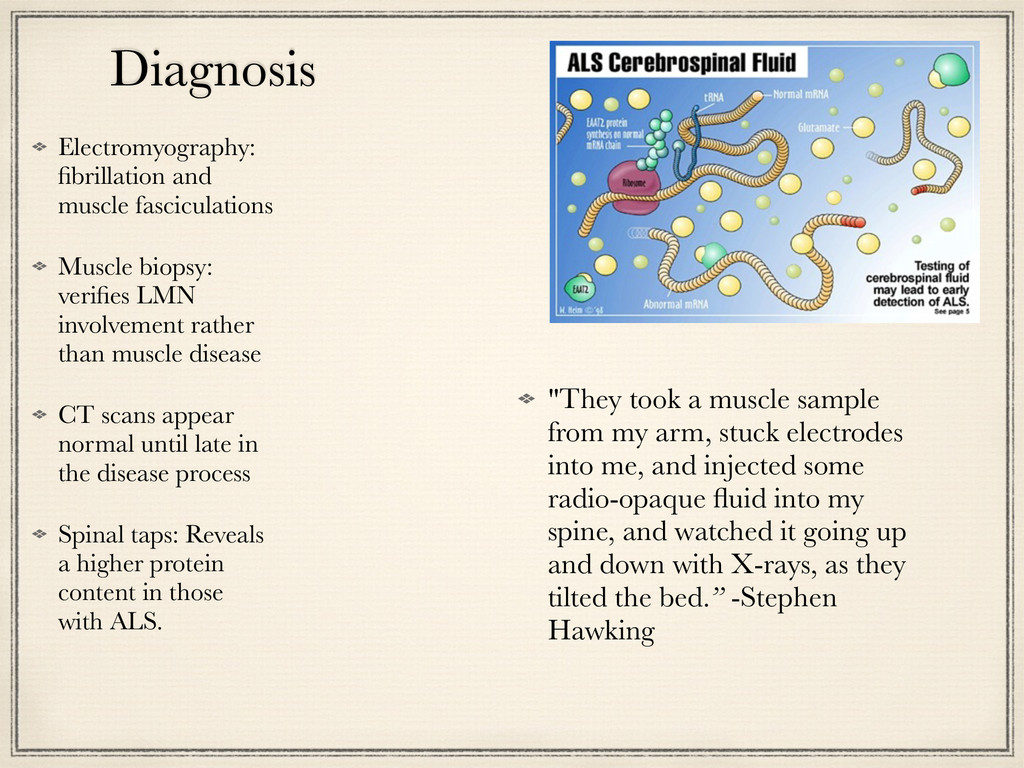
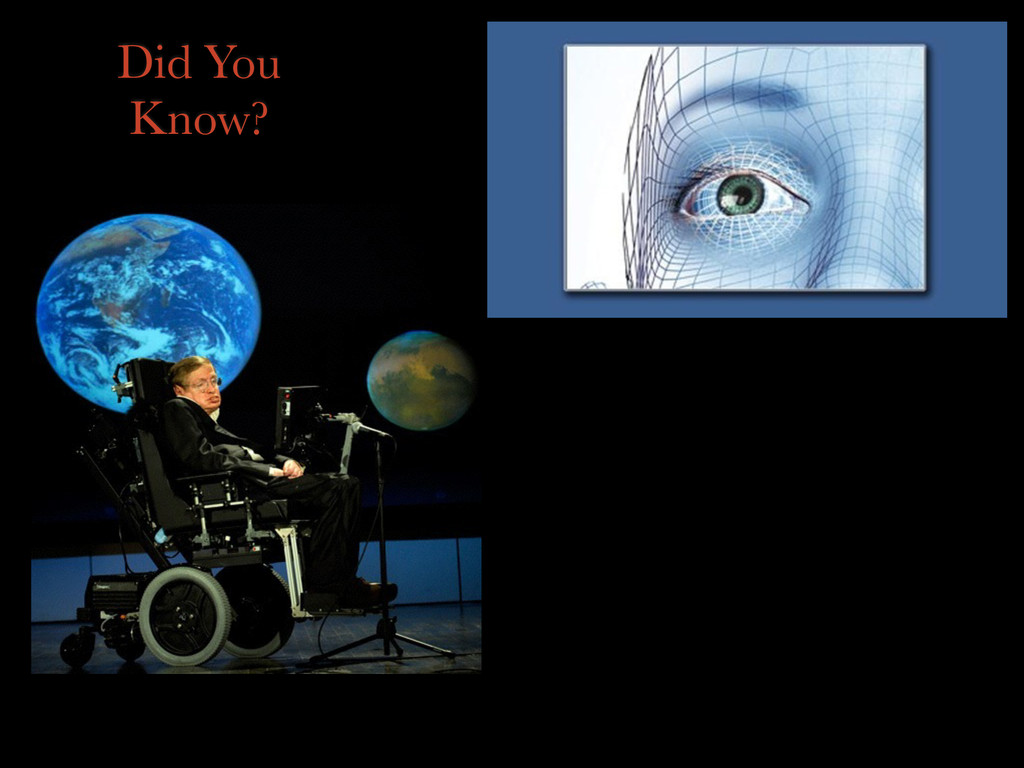
involvement rather than muscle disease CT scans appear normal until late in the disease process Spinal taps: Reveals a higher protein content in those with ALS. "They took a muscle sample from my arm, stuck electrodes into me, and injected some radio-opaque fluid into my spine, and watched it going up and down with X-rays, as they tilted the bed.” -Stephen Hawking
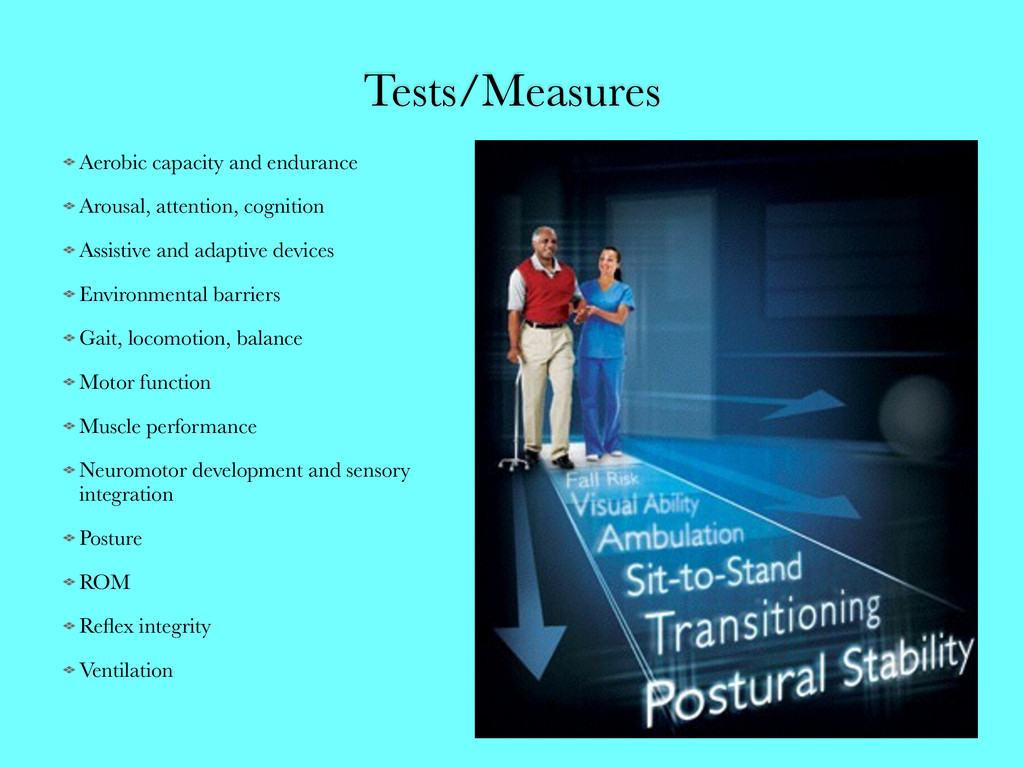
adaptive devices Environmental barriers Gait, locomotion, balance Motor function Muscle performance Neuromotor development and sensory integration Posture ROM Reflex integrity Ventilation
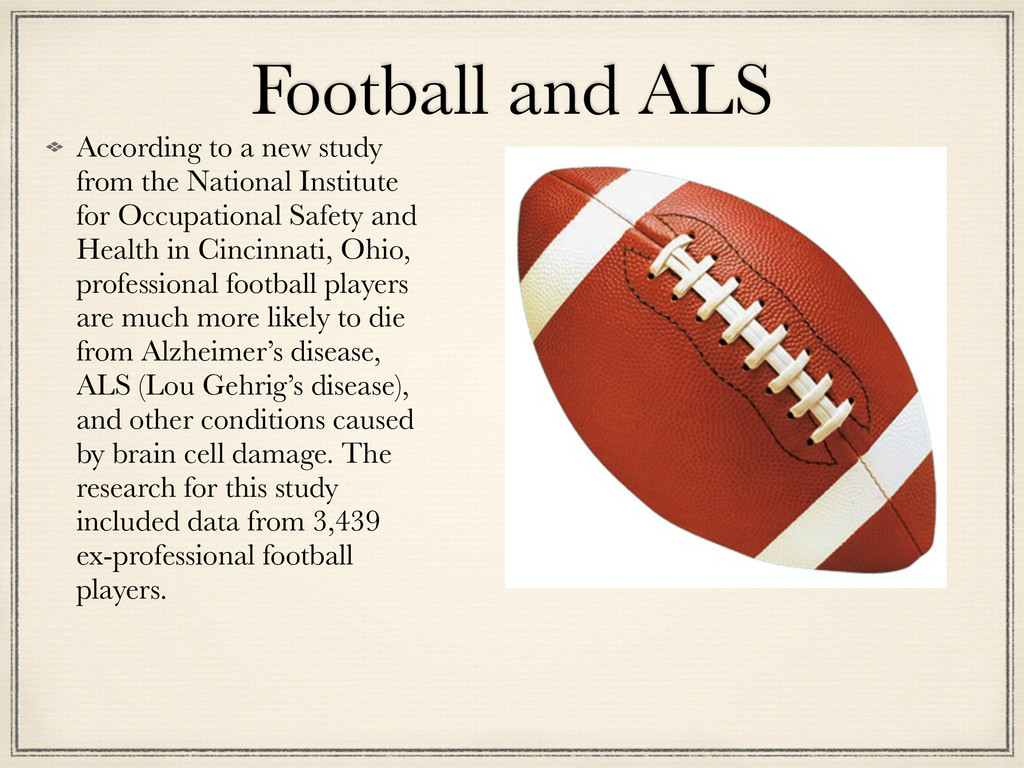
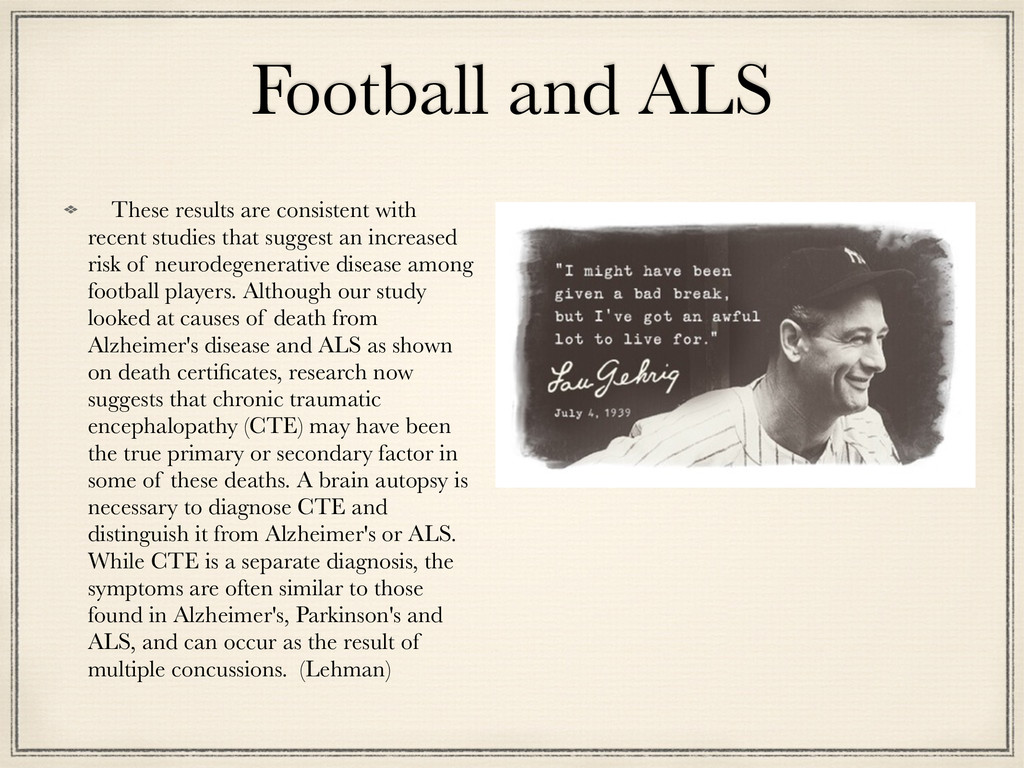
National Institute for Occupational Safety and Health in Cincinnati, Ohio, professional football players are much more likely to die from Alzheimer’s disease, ALS (Lou Gehrig’s disease), and other conditions caused by brain cell damage. The research for this study included data from 3,439 ex-professional football players.
that suggest an increased risk of neurodegenerative disease among football players. Although our study looked at causes of death from Alzheimer's disease and ALS as shown on death certificates, research now suggests that chronic traumatic encephalopathy (CTE) may have been the true primary or secondary factor in some of these deaths. A brain autopsy is necessary to diagnose CTE and distinguish it from Alzheimer's or ALS. While CTE is a separate diagnosis, the symptoms are often similar to those found in Alzheimer's, Parkinson's and ALS, and can occur as the result of multiple concussions. (Lehman)

 Your Podcast. Everywhere. Effortlessly.


 nkoumentis
 ipullrank
 eitanlees
 szymonslowik
 carmenintech
 ianozsvald
 tamaranovitovic
 deanohume
 matthewcrist
 mkilby
 thirion
 lauravandoore
 konakalab