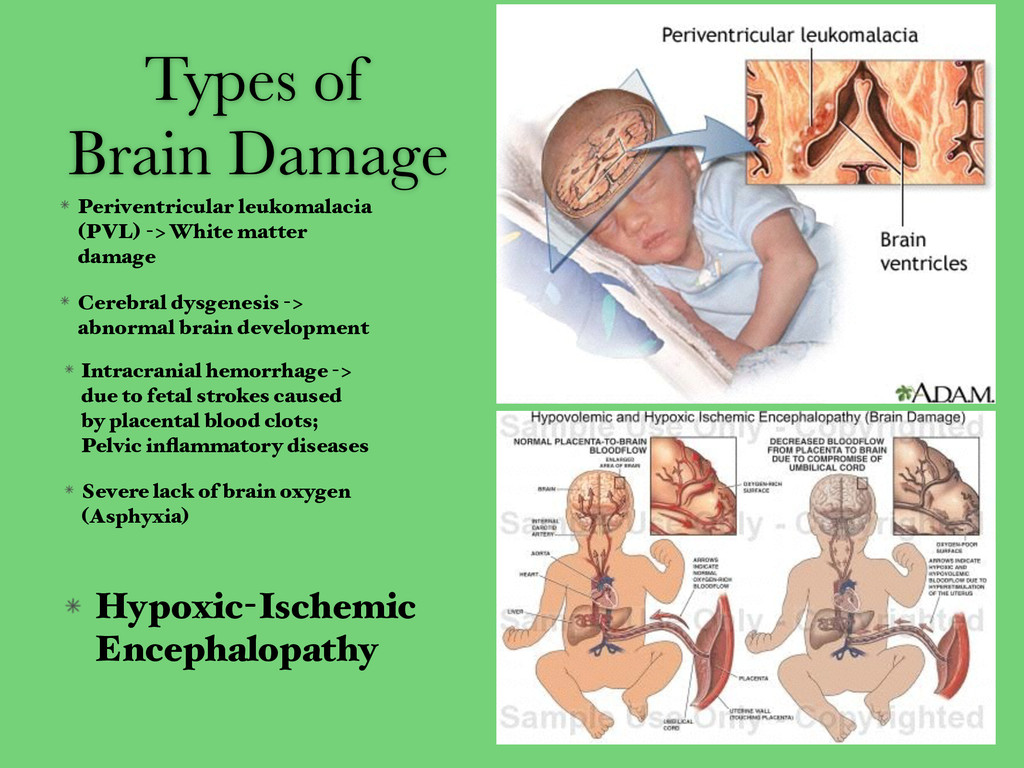
damage Cerebral dysgenesis -> abnormal brain development Intracranial hemorrhage -> due to fetal strokes caused by placental blood clots; Pelvic inflammatory diseases Severe lack of brain oxygen (Asphyxia) Hypoxic-Ischemic Encephalopathy
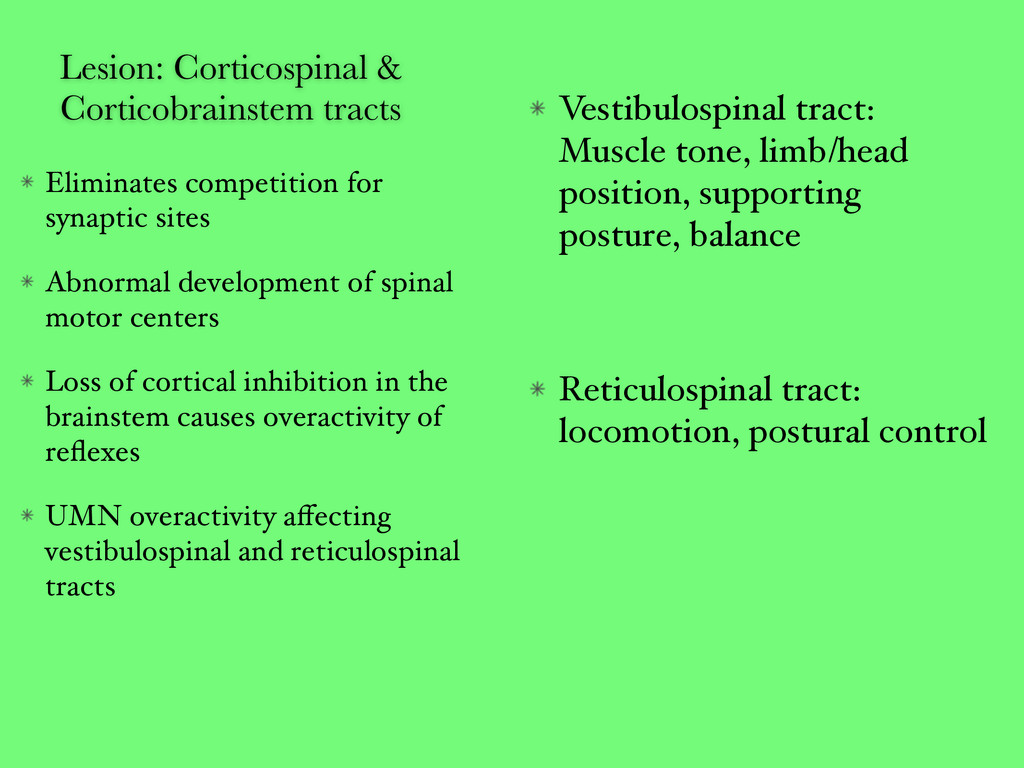
Abnormal development of spinal motor centers" Loss of cortical inhibition in the brainstem causes overactivity of reflexes" UMN overactivity affecting vestibulospinal and reticulospinal tracts Vestibulospinal tract: Muscle tone, limb/head position, supporting posture, balance" ! Reticulospinal tract: locomotion, postural control"
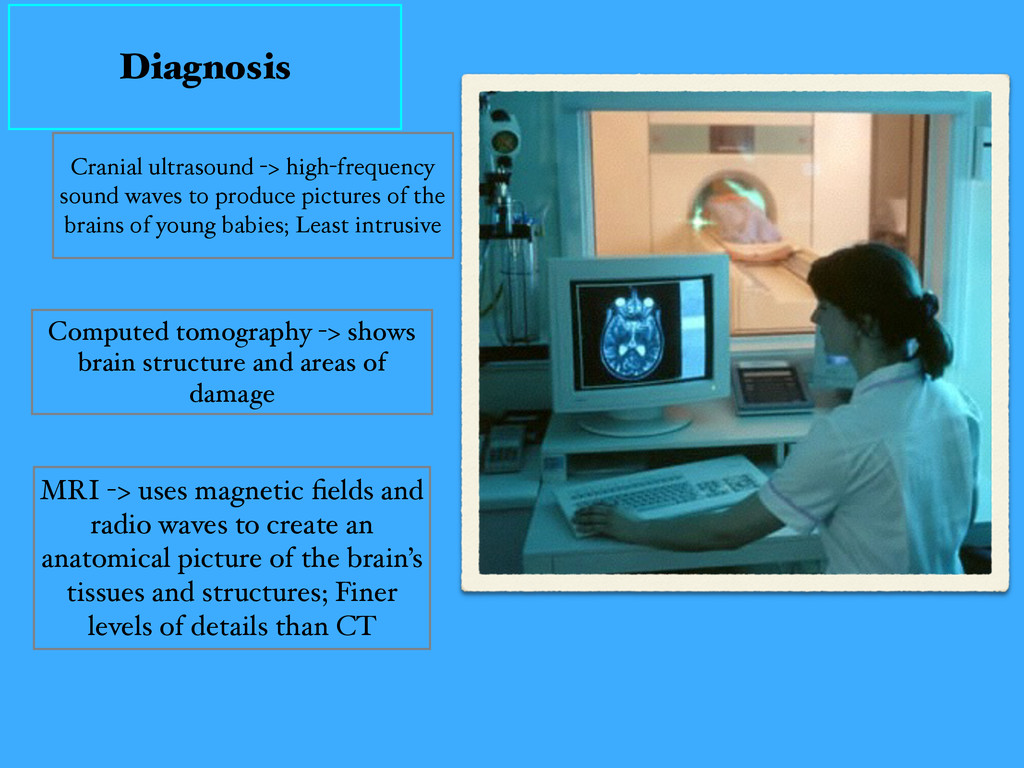
of the brains of young babies; Least intrusive Computed tomography -> shows brain structure and areas of damage MRI -> uses magnetic fields and radio waves to create an anatomical picture of the brain’s tissues and structures; Finer levels of details than CT
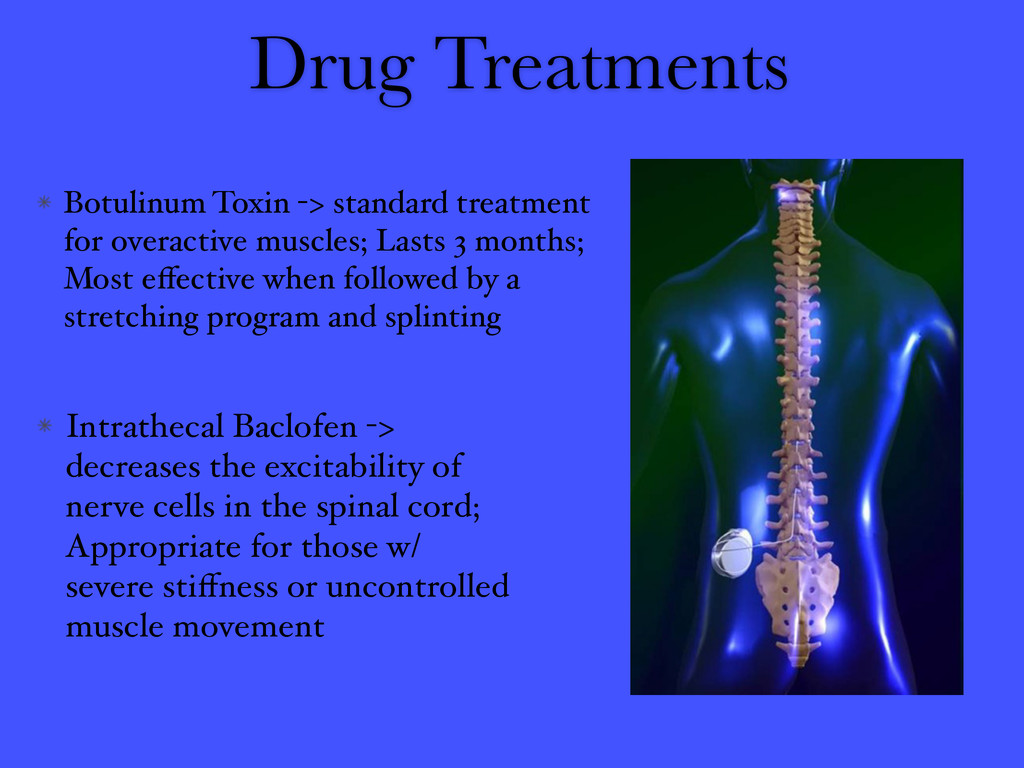
Lasts 3 months; Most effective when followed by a stretching program and splinting Intrathecal Baclofen -> decreases the excitability of nerve cells in the spinal cord; Appropriate for those w/ severe stiffness or uncontrolled muscle movement
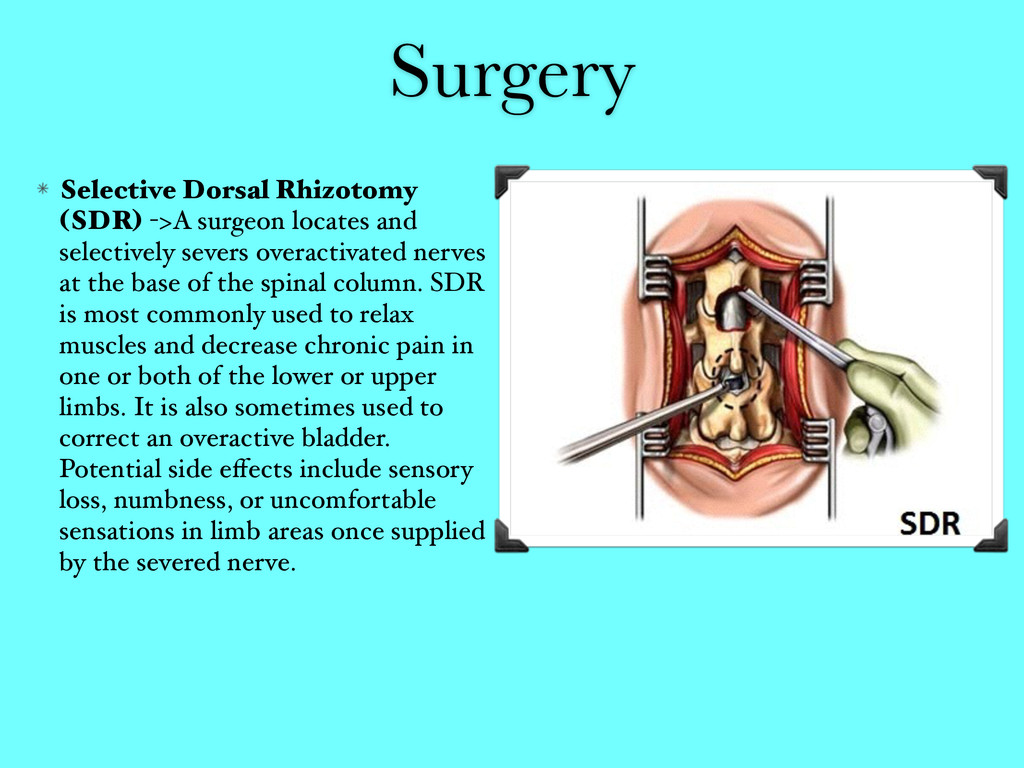
severs overactivated nerves at the base of the spinal column. SDR is most commonly used to relax muscles and decrease chronic pain in one or both of the lower or upper limbs. It is also sometimes used to correct an overactive bladder. Potential side effects include sensory loss, numbness, or uncomfortable sensations in limb areas once supplied by the severed nerve.
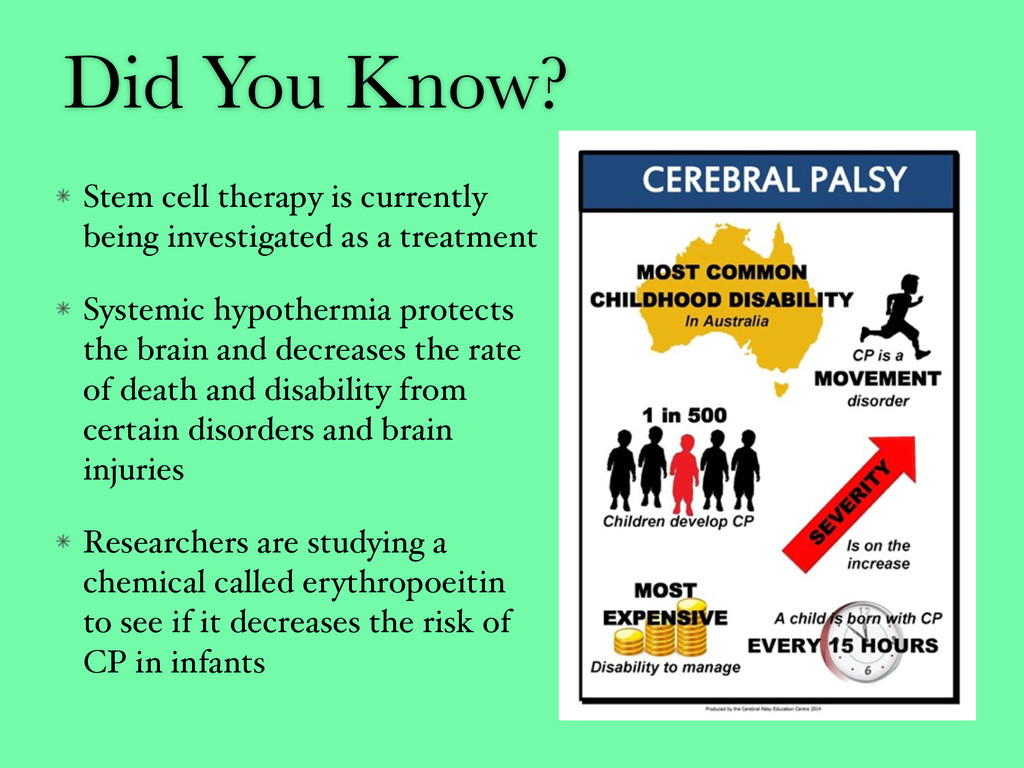
as a treatment" Systemic hypothermia protects the brain and decreases the rate of death and disability from certain disorders and brain injuries" Researchers are studying a chemical called erythropoeitin to see if it decreases the risk of CP in infants


 nkoumentis
 frankvandijk
 kristinabergwall1
 jonrohan
 speakerdeck
 mayatellez
 davetheseo
 orderedlist
 sonatard
 tmiket
 jonoalderson
 eileencodes
 lauravandoore