of society including access to health care and physical therapy services. 2. Promoting cultural competence within the profession and the larger public. 3. Promoting social policy that effect function, health, and wellness needs of patients/clients. 4. Ensuring that existing social policy is in the best interest of the patient/client. 5. Advocating for changes in laws, regulations, standards, and guidelines that affect physical therapist service provision. 6. Promoting community volunteerism
societal health goals. 9. Understanding of current community wide, nationwide and worldwide issues and how they impact society’s health and well-being and the delivery of physical therapy. 10. Providing leadership in the community. 11. Participating in collaborative relationships with other health practitioners and the public at large. 12. Ensuring the blending of social justice and economic efficiency of services.
staff at Aspen Therapy Services. He has learned a great deal from his PT colleagues and Laura, the veteran PT who owns the practice. David has found each of them to be steadfastly devoted to his or her patients/clients, and to the profession. David caught up with Juan, a former classmate. Juan talked about his volunteer work in a pro bono clinic in rural Ghana. This inspired David to follow in Juan’s footsteps. David pled his case to Laura and shared his hopes that Aspen Therapy Services would support this professional activity and encourage social responsibility from the staff.
set a precedent with uncertain implications for the practice. David responds that he understands her hesitation yet suggests that she consider what a stronger focus on service among staff might say about the clinic to the local community. He reminds Laura too that as practice owner, all decisions about professional leave are in her hands, with the clinic’s needs and financial health needing to be her first and foremost concern.
practice’s vision. She must also ensure that she does not set a precedent for 1 individual unless similar allowances can be made for other staff members. Laura must consider the financial impact of such decisions, and the effect, if any, on provision of other services. David has asked Laura to consider assisting his effort to meet a societal health need. APTA House of Delegates emphasized their belief that supporting pro bono PT services is just as important as is providing them.
career that would enable him to travel to Ghana, offer direct patient care, and share his physical therapy knowledge with his African colleagues. Laura and the other PTs at Aspen Therapy Services may not have the time, means, or desire to follow in David’s footsteps. Code of Ethics clearly states that they can meet their ethical obligation under Principle 8 by supporting the efforts of others to meet the health needs of undeserved populations. All PTs and PTAs can be socially responsible in addressing societal health needs locally, nationally, and globally, working singly and together, in both direct and supporting roles.
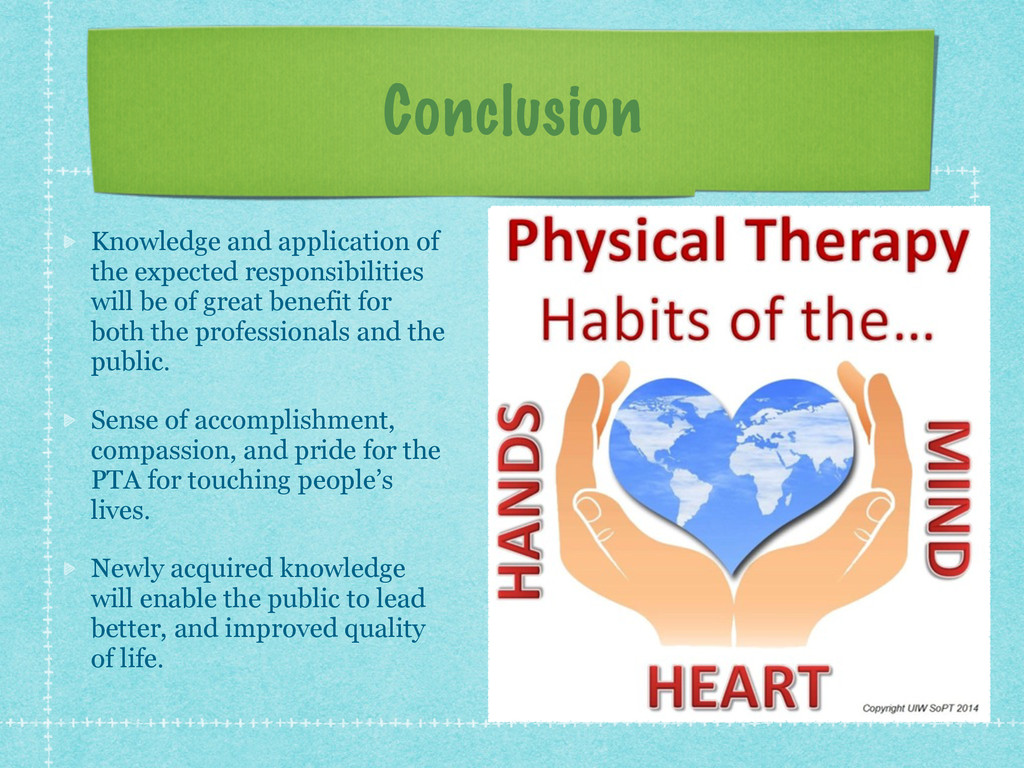
of great benefit for both the professionals and the public. Sense of accomplishment, compassion, and pride for the PTA for touching people’s lives. Newly acquired knowledge will enable the public to lead better, and improved quality of life.


 nkoumentis
 swwweet
 addyosmani
 vanstee
 csswizardry
 cassininazir
 katarinadahlin
 inesmontani
 mkilby
 chriscoyier
 denniskardys
 bermonpainter
 thekraken