Share
Embed
Fundraising Strategy Consultant NY: Plan for Lasting Growth
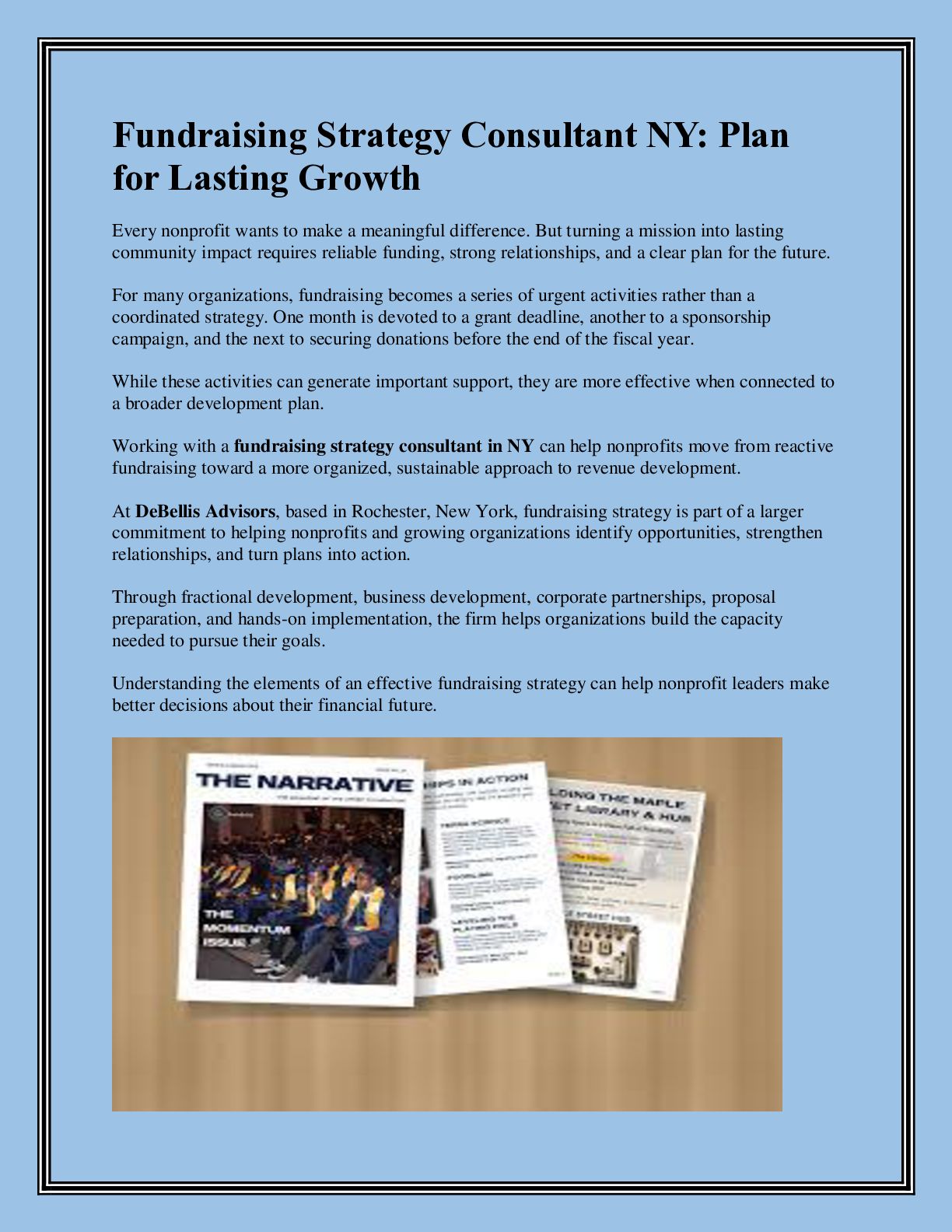
At DeBellis Advisors, based in Rochester, New York, fundraising strategy is part of a larger commitment to helping nonprofits and growing organizations identify opportunities, strengthen relationships, and turn plans into action.

Ava William
October 26, 2026
Transcript
11 slides
-
Fundraising Strategy Consultant NY: Plan for Lasting Growth Every nonprofit
wants to make a meaningful difference. But turning a mission into lasting community impact requires reliable funding, strong relationships, and a clear plan for the future. For many organizations, fundraising becomes a series of urgent activities rather than a coordinated strategy. One month is devoted to a grant deadline, another to a sponsorship campaign, and the next to securing donations before the end of the fiscal year. While these activities can generate important support, they are more effective when connected to a broader development plan. Working with a fundraising strategy consultant in NY can help nonprofits move from reactive fundraising toward a more organized, sustainable approach to revenue development. At DeBellis Advisors, based in Rochester, New York, fundraising strategy is part of a larger commitment to helping nonprofits and growing organizations identify opportunities, strengthen relationships, and turn plans into action. Through fractional development, business development, corporate partnerships, proposal preparation, and hands-on implementation, the firm helps organizations build the capacity needed to pursue their goals. Understanding the elements of an effective fundraising strategy can help nonprofit leaders make better decisions about their financial future. -
What Is a Fundraising Strategy Consultant? A fundraising strategy consultant
in NY consultant helps nonprofit organizations evaluate their existing funding activities and develop a structured approach to securing financial resources. Unlike support focused exclusively on individual campaigns or grant applications, fundraising strategy consulting examines how different development activities work together. A consultant may assess current revenue sources, organizational capacity, donor relationships, communication practices, and opportunities for growth. The goal is to develop a realistic fundraising plan that supports the organization's mission and operational needs. Typical responsibilities may include: Reviewing existing fundraising performance Identifying revenue opportunities Establishing realistic fundraising goals Developing donor engagement strategies Planning corporate partnerships and sponsorships Improving grant development processes Organizing outreach and follow-up activities Clarifying staff and board responsibilities Supporting fundraising campaign planning Establishing performance measurements An effective consultant should understand that fundraising success depends on more than creating a written plan. Organizations also need the people, processes, and resources to carry it out. Why New York Nonprofits Need a Strong Fundraising Strategy Nonprofit organizations across New York work in education, healthcare, arts, social services, community development, and countless other important fields. Although their missions vary, many share similar financial challenges. Changing Funding Opportunities Funding priorities can shift as foundations, corporations, and individual donors respond to changing economic and community conditions. -
A nonprofit that relies too heavily on one source of
support may face difficulties when circumstances change. A strategic approach encourages organizations to evaluate multiple funding opportunities. Limited Staff Capacity Development activities require significant time. Researching donors, writing proposals, preparing communications, managing campaigns, and maintaining relationships can stretch small nonprofit teams. Without clear priorities, staff may spend valuable time on activities that do not align with organizational goals. A fundraising strategy helps determine where effort should be concentrated. Pressure to Demonstrate Impact Potential supporters want to understand how an organization uses its resources and what results it intends to achieve. Nonprofits must communicate their programs, financial needs, and outcomes clearly. Strategic fundraising incorporates compelling communications and responsible reporting into the development process. Difficulty Planning for Growth Organizations preparing to expand programs or launch initiatives need dependable financial planning. A structured fundraising strategy can help leadership evaluate the resources required and identify potential sources of support before making major commitments. Seven Essential Elements of an Effective Fundraising Strategy A fundraising strategy consultant in NY fundraising strategy should reflect an organization's mission, capacity, and financial objectives. The following elements provide a practical foundation. 1. Evaluate Your Current Fundraising Performance -
Before developing new initiatives, understand what is already working. Review
existing donations, grants, sponsorships, campaigns, and other relevant revenue sources. Questions to consider include: Which fundraising activities generate meaningful support? How much staff time does each activity require? Which funding relationships are most consistent? Where are opportunities being missed? Are current results aligned with organizational goals? This assessment can reveal strengths worth building upon and practices that may need improvement. It also establishes a baseline for measuring future progress. 2. Set Clear and Realistic Revenue Goals Fundraising goals should connect directly to organizational needs. Instead of selecting an arbitrary revenue target, determine what resources are required to maintain operations, deliver programs, and pursue planned initiatives. Goals should be specific enough to guide decisions. For example, an organization might aim to increase recurring donations, establish several new corporate relationships, or secure funding for a defined program. Each objective should have a realistic timeline and clearly assigned responsibilities. 3. Diversify Funding Sources Financial sustainability improves when an organization considers multiple appropriate revenue opportunities. Potential funding sources include: Individual donations Monthly giving programs Foundation grants Corporate sponsorships Business partnerships Fundraising campaigns Special events Earned revenue, where appropriate -
Not every option will suit every nonprofit. A consultant can
help leadership evaluate which sources align with the organization's mission, audience, and available capacity. Diversification should be thoughtful rather than an attempt to pursue every opportunity simultaneously. 4. Develop Meaningful Donor Relationships Strong fundraising relies on trust. Donors and funding partners are more likely to remain engaged when they understand an organization's mission and receive meaningful communication about its work. A donor relationship strategy may include personalized outreach, appropriate updates, recognition, and opportunities for continued engagement. Organizations should also establish systems for tracking conversations and following up on commitments. Consistent relationship management helps prevent valuable connections from being overlooked. 5. Build Corporate Partnerships and Sponsorships Corporate partnerships can support nonprofit organizations through funding, expertise, visibility, and community connections. However, effective partnership development requires careful preparation. Nonprofits should identify businesses whose interests align with their activities and consider how collaboration could create mutual value. A sponsorship proposal should explain the opportunity, expected benefits, and responsibilities of each party. DeBellis Advisors provides corporate partnership and sponsorship strategy services, helping organizations pursue relationships connected to their broader development goals. 6. Strengthen Fundraising Communications Even an excellent program may struggle to attract support if potential funders cannot understand its value. Effective fundraising communication explains three important things: -
What problem or need is the organization
addressing? What approach is being used? What difference is the organization working to create? Clear communication connects the mission with specific objectives and credible information. It should also be adapted to different audiences. A foundation proposal may require detailed program outcomes, while a corporate sponsorship presentation may emphasize community engagement and shared priorities. Strong communications help organizations maintain a consistent identity across these interactions. 7. Create an Implementation and Measurement Plan A fundraising strategy becomes useful when it guides action. Each major objective should have an assigned owner, timeline, required resources, and measurable indicators of progress. For example, a corporate partnership initiative might include researching prospects, developing materials, conducting outreach, scheduling meetings, and monitoring follow-up. Organizations should review progress regularly and adjust activities when needed. This helps ensure the strategy remains practical rather than becoming a document that is rarely revisited. How a Fundraising Consultant Helps Turn Strategy Into Action Developing a fundraising plan is only the beginning. Many organizations understand what they need to accomplish but lack the time or capacity to complete the work. An experienced consultant can help bridge this gap. Depending on the engagement, support might involve organizing prospect lists, preparing presentations, developing proposals, coordinating outreach, or managing fundraising-related projects. This practical assistance can be especially valuable when a nonprofit is preparing for growth or handling multiple development priorities. -
DeBellis Advisors emphasizes both strategy and execution. The firm works
alongside organizations to identify opportunities, create plans, develop relationships, and help implement important initiatives. Rather than focusing exclusively on recommendations, its services can extend into the activities required to move projects forward. Fractional Development: Flexible Support for Nonprofits Not every nonprofit has the resources to employ a full-time development director. For organizations that need professional assistance but cannot justify a permanent position, fractional development may offer a practical alternative. Fractional development provides access to experienced support based on organizational priorities and an agreed scope of work. This may include fundraising planning, revenue development, corporate outreach, grant proposals, communications, and project coordination. At DeBellis Advisors, fractional development is designed to extend the capacity of an existing team. The approach can be particularly helpful when an organization has promising funding opportunities but insufficient internal resources to pursue them consistently. By connecting strategic direction with practical implementation, fractional support can help nonprofit teams maintain momentum. Common Fundraising Strategy Mistakes to Avoid Even well-established nonprofits can develop fundraising habits that limit progress. Recognizing common mistakes is an important part of improving financial sustainability. Relying Too Heavily on One Revenue Source Depending on a major grant or annual event creates uncertainty. A broader funding strategy can help organizations assess alternatives and manage financial risk. Pursuing Opportunities Without Clear Priorities Not every available grant, partnership, or campaign deserves immediate attention. -
Organizations should evaluate potential opportunities according to mission alignment, resource
requirements, and expected value. Overlooking Existing Supporters Attracting new donors is important, but maintaining existing relationships also requires attention. Regular communication and responsible stewardship can strengthen long-term engagement. Creating Plans Without Assigning Responsibility A strategic plan without clear ownership often leads to delays. Each development priority should have defined responsibilities and realistic deadlines. Measuring Only Total Donations Revenue is important, but it is not the only indicator of fundraising performance. Organizations may also track donor retention, qualified prospects, sponsorship renewals, proposal activity, and campaign efficiency. These measurements can provide a more complete picture of development progress. How to Choose a Fundraising Strategy Consultant in NY Choosing the right consultant requires understanding your organization's priorities and evaluating potential partners carefully. Look for Relevant Experience Experience in fundraising, business development, relationship management, strategic planning, and nonprofit communications may all be valuable. The most relevant background depends on the challenges your organization wants to address. Prioritize a Customized Approach Every nonprofit has different strengths, resources, and goals. A useful fundraising strategy should reflect those differences rather than rely entirely on a standardized template. Understand the Level of Implementation Support -
Some consultants focus on planning and recommendations. Others provide ongoing
assistance with executing the strategy. Ask prospective providers to explain which responsibilities they will handle and what your internal team will need to manage. Discuss Communication and Accountability A successful engagement requires clear expectations. Establish how progress will be reviewed, who will make decisions, and how responsibilities will be divided. Request Transparent Pricing Consulting arrangements vary according to scope, complexity, and duration. Before making a commitment, request a clear explanation of fees, timelines, deliverables, and responsibilities. Why Consider DeBellis Advisors for Fundraising Strategy Support? DeBellis Advisors offers an integrated approach to development that connects fundraising, relationships, communications, and implementation. Based in Rochester, New York, the firm supports nonprofits, foundations, schools, community organizations, and growing businesses. Relationship-Driven Leadership DeBellis Advisors is led by Christina DeBellis, who brings more than 20 years of experience in professional services, business development, and relationship building. Her work has included developing revenue opportunities, building corporate and community partnerships, creating sponsorship strategies, and securing support for organizational initiatives. This experience informs the firm's practical, relationship-focused approach. Strategic Thinking With Hands-On Execution One of the challenges organizations face is moving from planning to implementation. -
DeBellis Advisors provides support that can include developing strategies, preparing
materials, pursuing opportunities, coordinating relationships, and managing initiatives. This combination can help organizations address development needs without placing every additional responsibility on existing staff. Flexible Services for Different Organizational Needs Some organizations need help evaluating their overall fundraising strategy. Others require assistance with a specific sponsorship opportunity, funding proposal, or revenue initiative. Through fractional development and related services, DeBellis Advisors offers support that can be discussed according to an organization's priorities. Frequently Asked Questions What does a fundraising strategy consultant do? A fundraising strategy consultant helps nonprofits evaluate revenue sources, establish funding goals, develop donor and partnership strategies, and organize fundraising activities around a sustainable plan. How is fundraising strategy consulting different from grant writing? Grant writing focuses on preparing funding applications. Fundraising strategy consulting examines the broader development process, including donors, sponsorships, partnerships, campaigns, and other potential revenue sources. Can small nonprofits benefit from fundraising strategy consulting? Yes. Smaller nonprofits can use targeted or fractional consulting support to develop priorities, access specialized experience, and improve fundraising coordination without hiring additional full-time staff. How long does it take to develop a fundraising strategy? The timeline depends on organizational complexity, available information, leadership involvement, and the scope of work. A focused assessment may take less time than a comprehensive development plan involving multiple stakeholders. Does DeBellis Advisors offer fundraising strategy services in New York? -
Yes. Based in Rochester, DeBellis Advisors provides fundraising and revenue
development, fractional development, corporate partnership strategies, sponsorship support, and related organizational services. Build a Sustainable Fundraising Future With DeBellis Advisors Finding the right fundraising strategy consultant in NY begins with recognizing that sustainable development requires more than isolated fundraising activities. Organizations need clear priorities, strong relationships, appropriate funding opportunities, and a practical plan for implementation. An effective fundraising strategy can help nonprofit leaders make informed decisions, direct resources toward meaningful opportunities, and strengthen financial planning. DeBellis Advisors helps organizations approach these challenges through relationship development, strategic guidance, and hands-on support. Whether your nonprofit needs a clearer revenue plan, stronger partnerships, or additional capacity to pursue funding opportunities, the right support can help move important goals forward. Ready to strengthen your organization's fundraising strategy? Connect with DeBellis Advisors to discuss your development priorities and explore a practical approach to organizational growth. DeBellis Advisors Location: Rochester, New York Phone: (585) 797-9336 Website: https://www.debellisadvisors.com/
 alchemy1115
 wantedly
 stuartwintertear
 ubiregi_saiyo
 geotra
 sixtypercent
 arm0020
 ptna_
 tsogo817421
 natty_natty254
 fado_dev
 kawanotron
 tomoyanonymous
 3n
 techseoconnect
 codingconduct
 bkeepers
 marcoroth
 mayunak
 nwiizo
 nikkihalliwell
 skipperchong
 sachag
 rocio