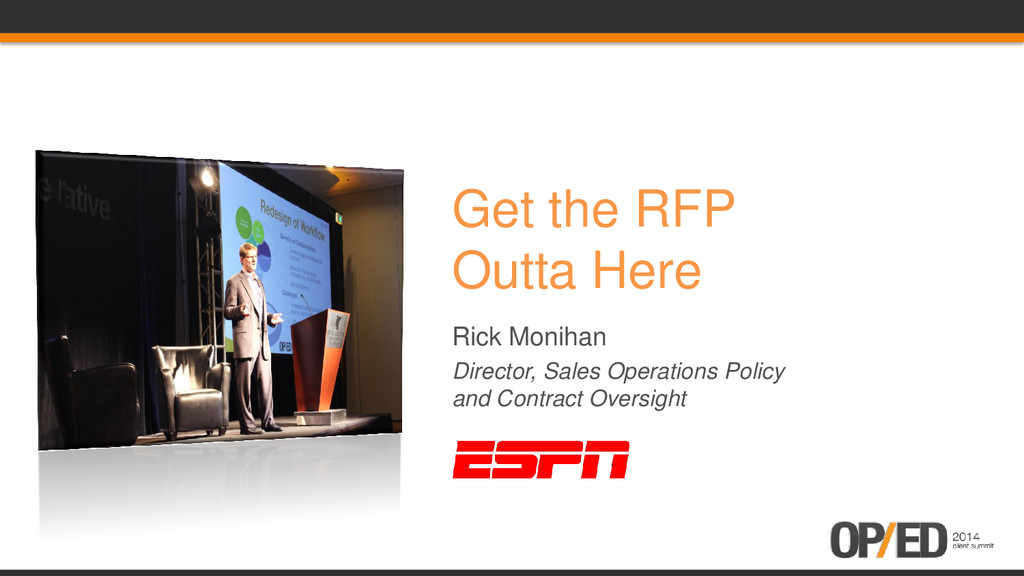
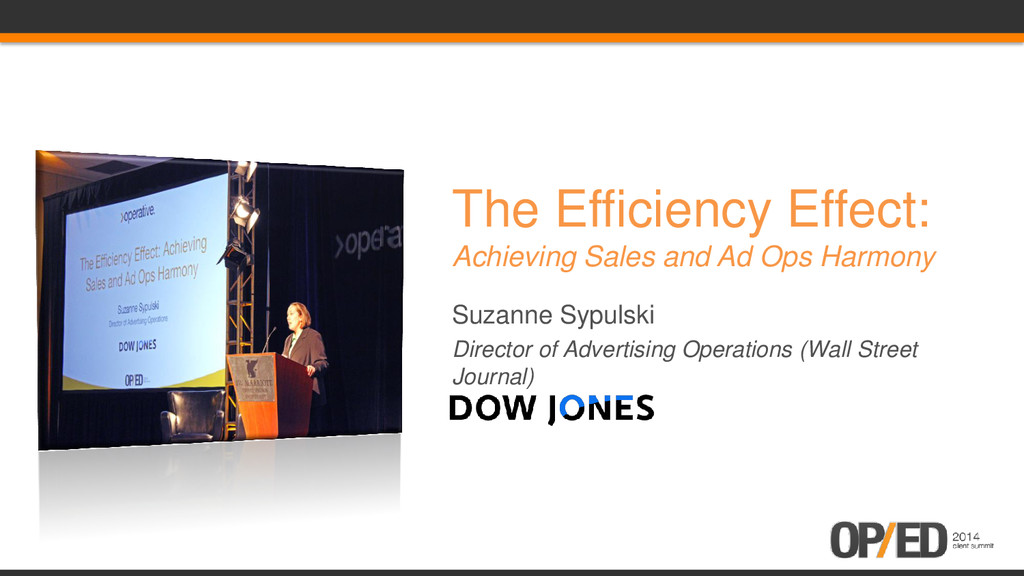
– Redefined……………………. Dave Villano, Cablevision Redefining Business Models…………………………………………. Curt Hecht, Weather Company Let’s Talk: Attendee Roundtables……………………………………. Matt Gay, Operative Driving Enterprise Adoption………………………………………….. Priti Tanna, NBCUniversal Product Taxonomy and Product Packaging………………………... Peyton Marcus, Infinitive Get the RFP Out of Here……………………………………………… Rick Monihan, ESPN The Billing Cycle……………………………………………………….. Nicole Cooklin, Cars.com The Efficiency Effect: Sales and Ad Ops Harmony………………… Suzanne Sypulski, WSJ Creating the Operational Power Stack………………………………. Mark Bernstein, KBB Wrap Up.………………………………………………………………... Lorne Brown & Jason Witt
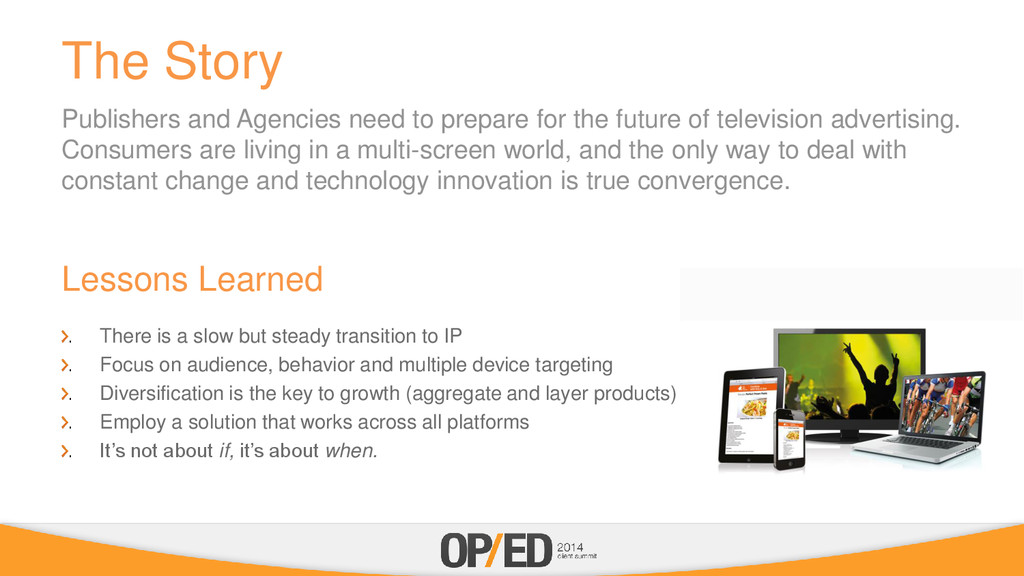
on audience, behavior and multiple device targeting Diversification is the key to growth (aggregate and layer products) Employ a solution that works across all platforms It’s not about if, it’s about when. Lessons Learned The Story Publishers and Agencies need to prepare for the future of television advertising. Consumers are living in a multi-screen world, and the only way to deal with constant change and technology innovation is true convergence.
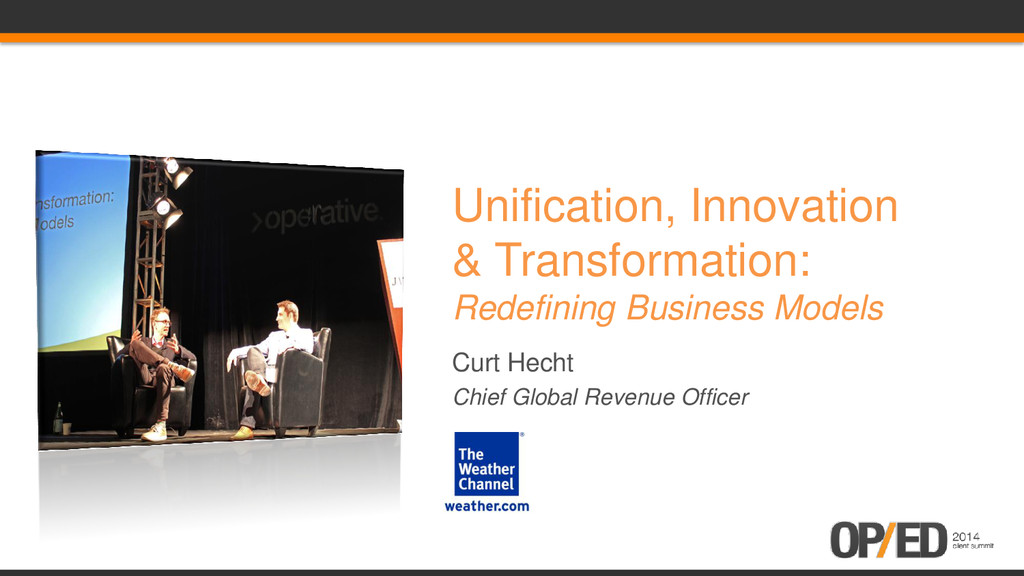
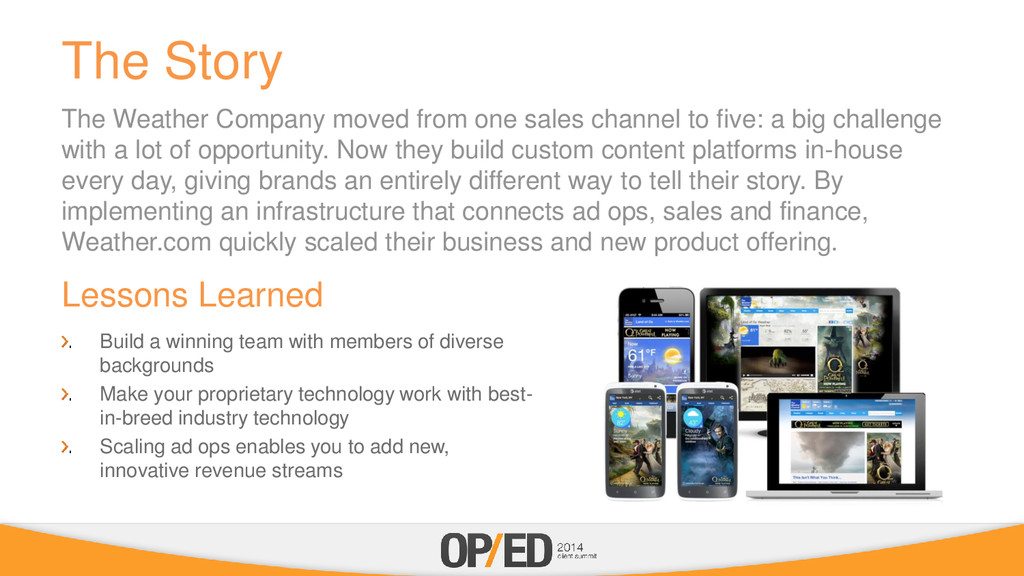
your proprietary technology work with best- in-breed industry technology Scaling ad ops enables you to add new, innovative revenue streams Lessons Learned The Story The Weather Company moved from one sales channel to five: a big challenge with a lot of opportunity. Now they build custom content platforms in-house every day, giving brands an entirely different way to tell their story. By implementing an infrastructure that connects ad ops, sales and finance, Weather.com quickly scaled their business and new product offering.
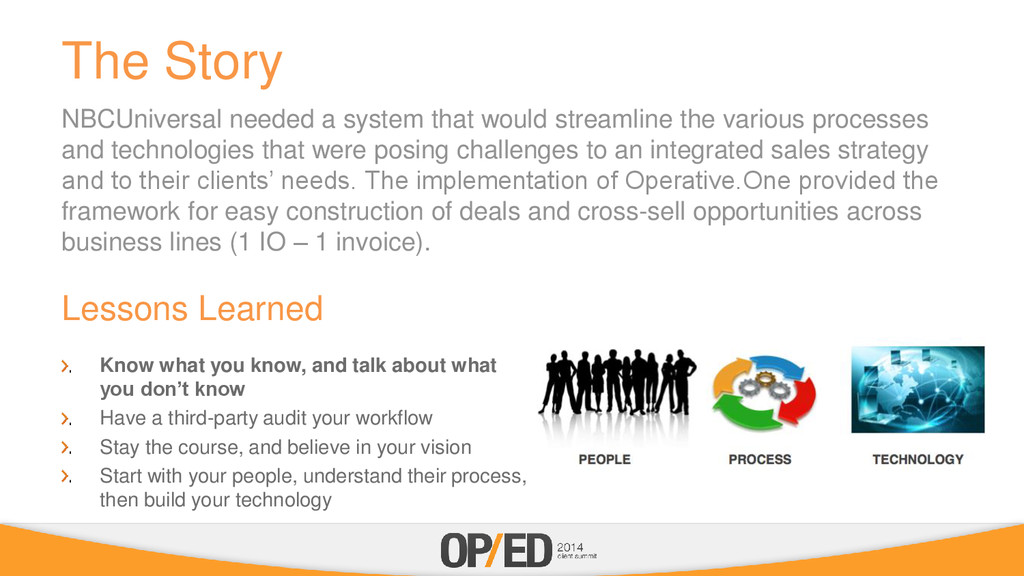
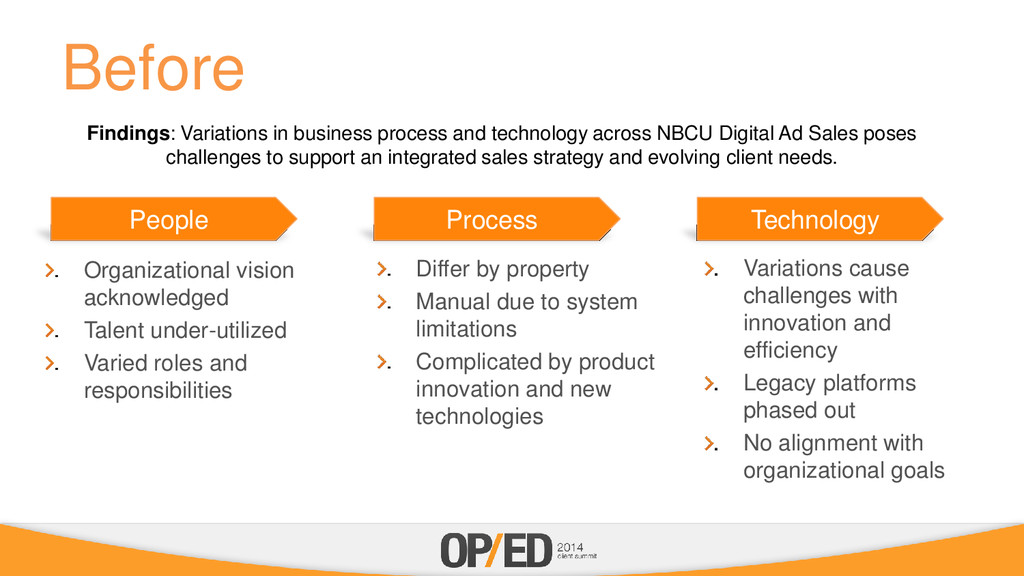
know Have a third-party audit your workflow Stay the course, and believe in your vision Start with your people, understand their process, then build your technology Lessons Learned The Story NBCUniversal needed a system that would streamline the various processes and technologies that were posing challenges to an integrated sales strategy and to their clients’ needs. The implementation of Operative.One provided the framework for easy construction of deals and cross-sell opportunities across business lines (1 IO – 1 invoice).
across NBCU Digital Ad Sales poses challenges to support an integrated sales strategy and evolving client needs. Organizational vision acknowledged Talent under-utilized Varied roles and responsibilities Differ by property Manual due to system limitations Complicated by product innovation and new technologies Variations cause challenges with innovation and efficiency Legacy platforms phased out No alignment with organizational goals Before
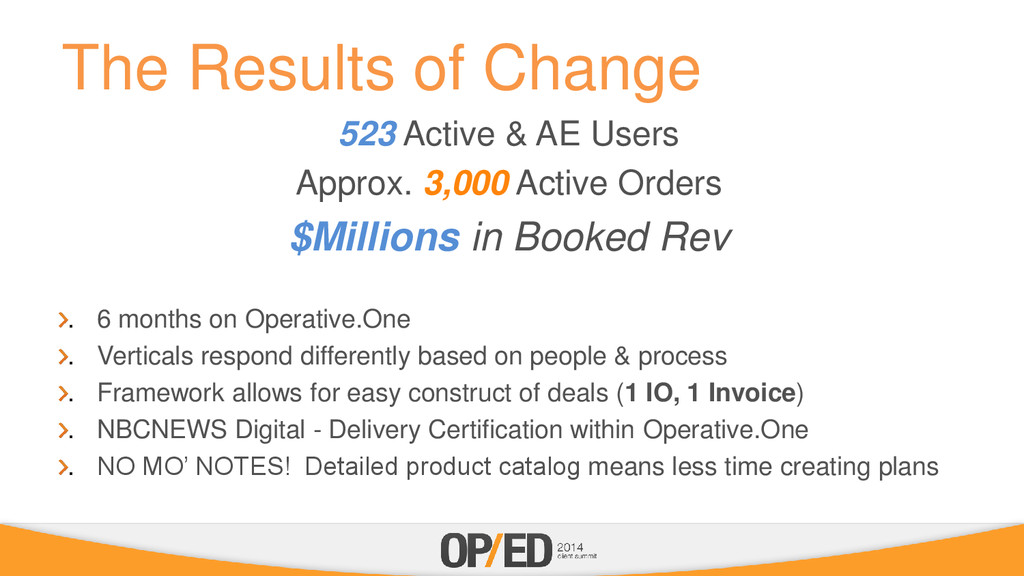
3,000 Active Orders $Millions in Booked Rev 6 months on Operative.One Verticals respond differently based on people & process Framework allows for easy construct of deals (1 IO, 1 Invoice) NBCNEWS Digital - Delivery Certification within Operative.One NO MO’ NOTES! Detailed product catalog means less time creating plans
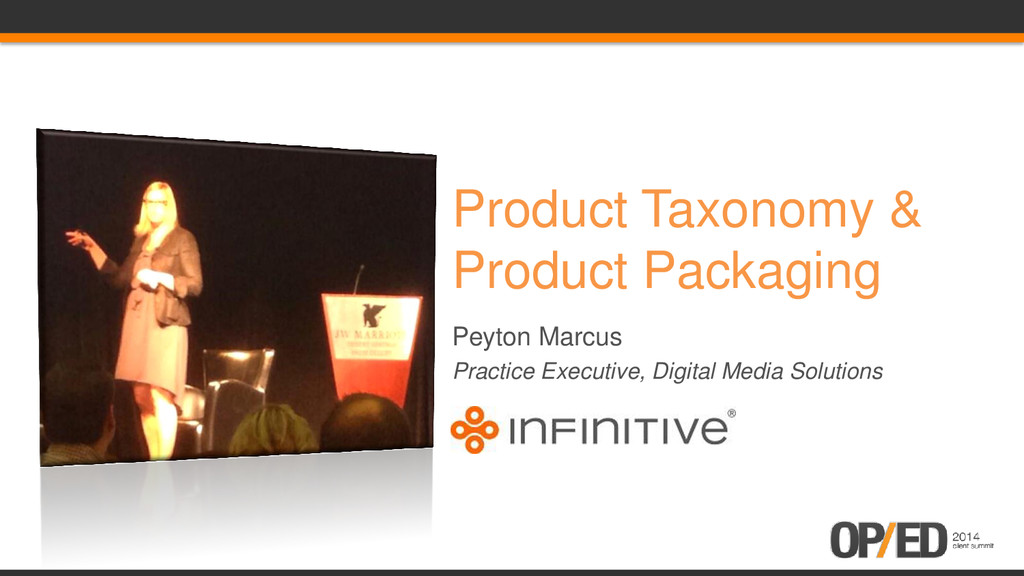
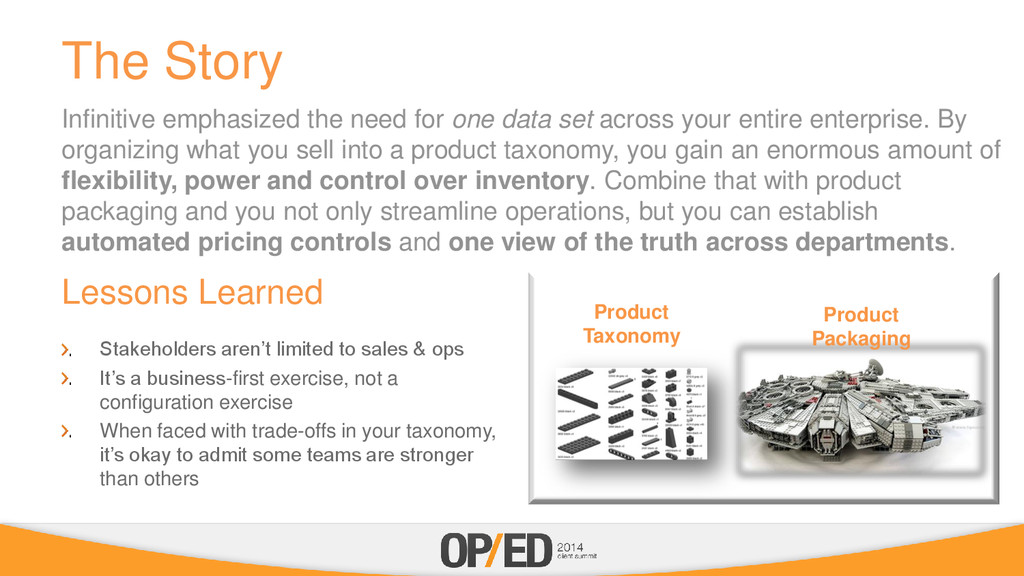
exercise, not a configuration exercise When faced with trade-offs in your taxonomy, it’s okay to admit some teams are stronger than others Lessons Learned The Story Infinitive emphasized the need for one data set across your entire enterprise. By organizing what you sell into a product taxonomy, you gain an enormous amount of flexibility, power and control over inventory. Combine that with product packaging and you not only streamline operations, but you can establish automated pricing controls and one view of the truth across departments. Product Taxonomy Product Packaging
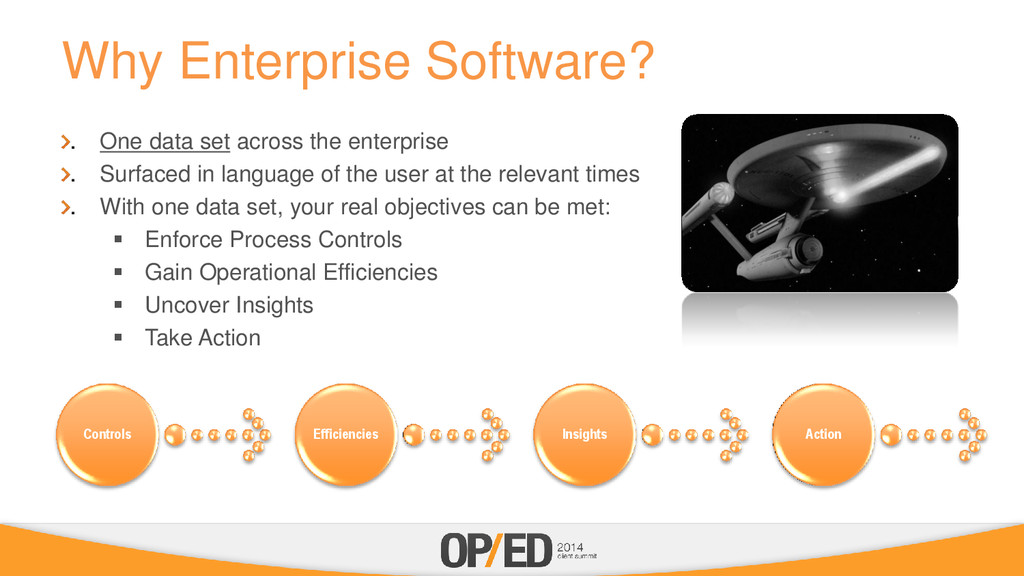
in language of the user at the relevant times With one data set, your real objectives can be met: Enforce Process Controls Gain Operational Efficiencies Uncover Insights Take Action Controls Efficiencies Insights Action
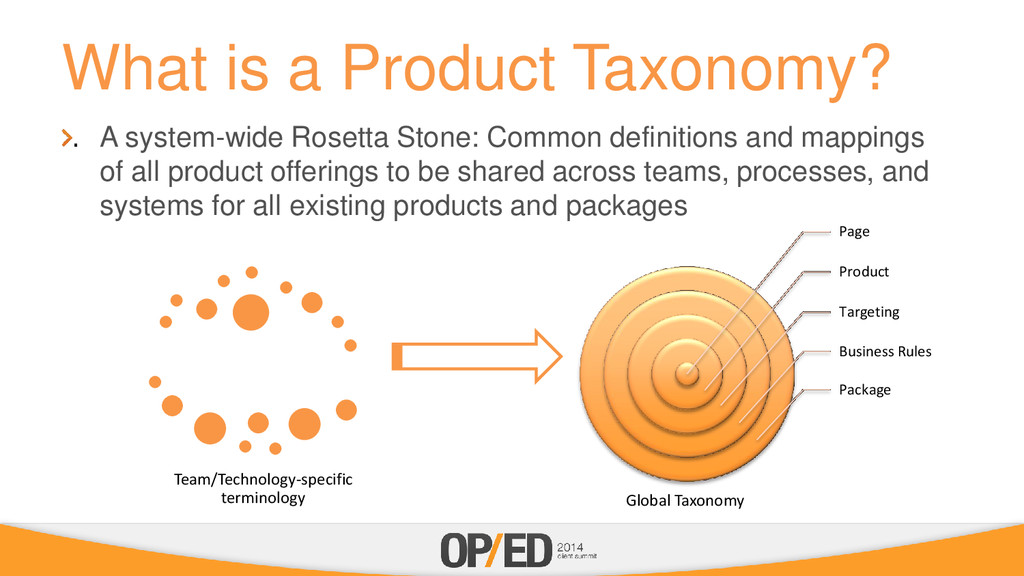
definitions and mappings of all product offerings to be shared across teams, processes, and systems for all existing products and packages Team/Technology-specific terminology Page Product Targeting Business Rules Package Global Taxonomy
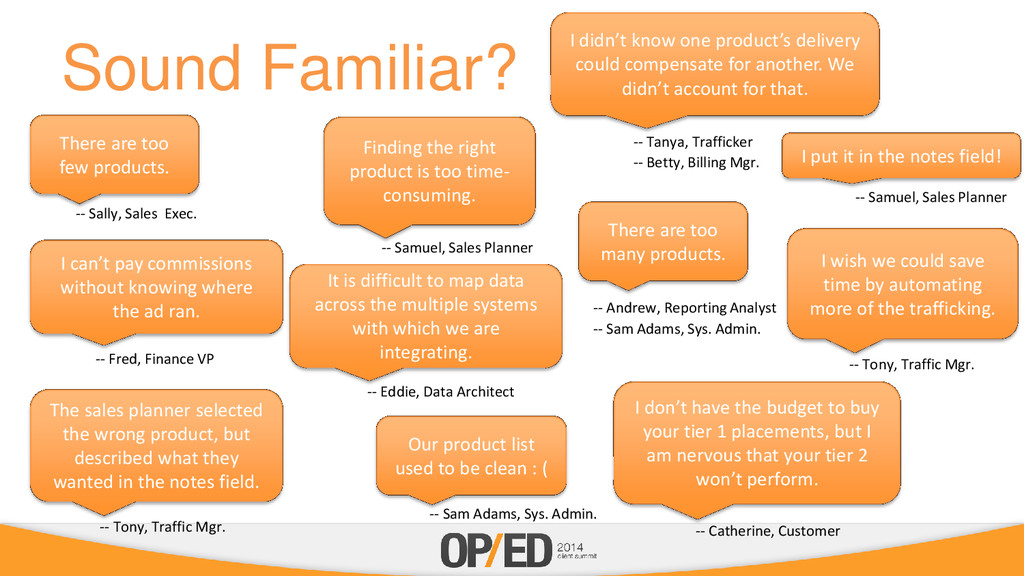
I didn’t know one product’s delivery could compensate for another. We didn’t account for that. It is difficult to map data across the multiple systems with which we are integrating. I don’t have the budget to buy your tier 1 placements, but I am nervous that your tier 2 won’t perform. There are too many products. There are too few products. I can’t pay commissions without knowing where the ad ran. The sales planner selected the wrong product, but described what they wanted in the notes field. I wish we could save time by automating more of the trafficking. -- Tony, Traffic Mgr. -- Sally, Sales Exec. -- Samuel, Sales Planner -- Fred, Finance VP -- Eddie, Data Architect -- Tanya, Trafficker -- Andrew, Reporting Analyst -- Catherine, Customer -- Tony, Traffic Mgr. -- Betty, Billing Mgr. -- Sam Adams, Sys. Admin. Our product list used to be clean : ( -- Sam Adams, Sys. Admin. I put it in the notes field! -- Samuel, Sales Planner
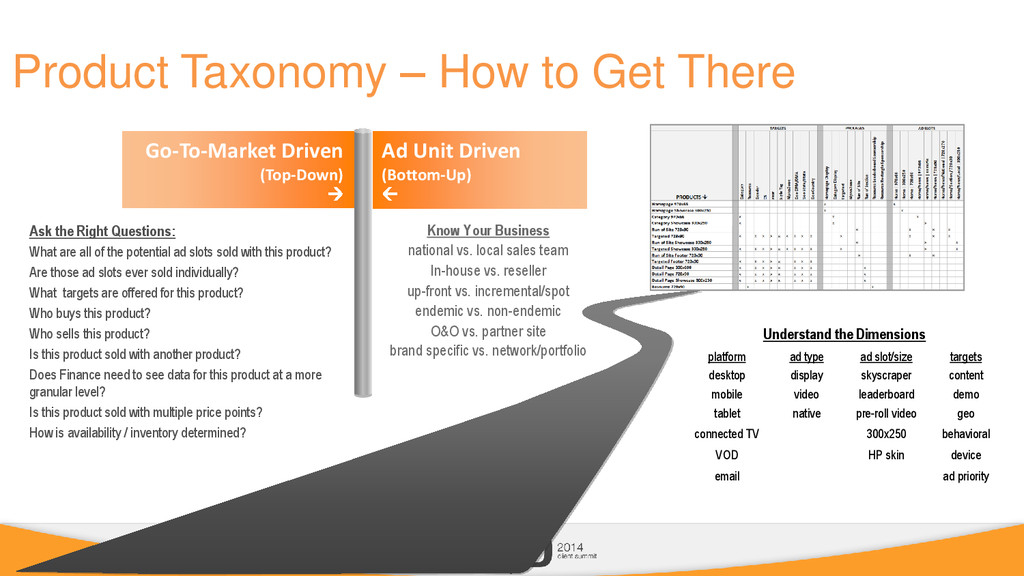
Questions: What are all of the potential ad slots sold with this product? Are those ad slots ever sold individually? What targets are offered for this product? Who buys this product? Who sells this product? Is this product sold with another product? Does Finance need to see data for this product at a more granular level? Is this product sold with multiple price points? How is availability / inventory determined? Go-To-Market Driven (Top-Down) Know Your Business national vs. local sales team In-house vs. reseller up-front vs. incremental/spot endemic vs. non-endemic O&O vs. partner site brand specific vs. network/portfolio Understand the Dimensions platform ad type ad slot/size targets desktop display skyscraper content mobile video leaderboard demo tablet native pre-roll video geo connected TV 300x250 behavioral VOD HP skin device email ad priority Ad Unit Driven (Bottom-Up)
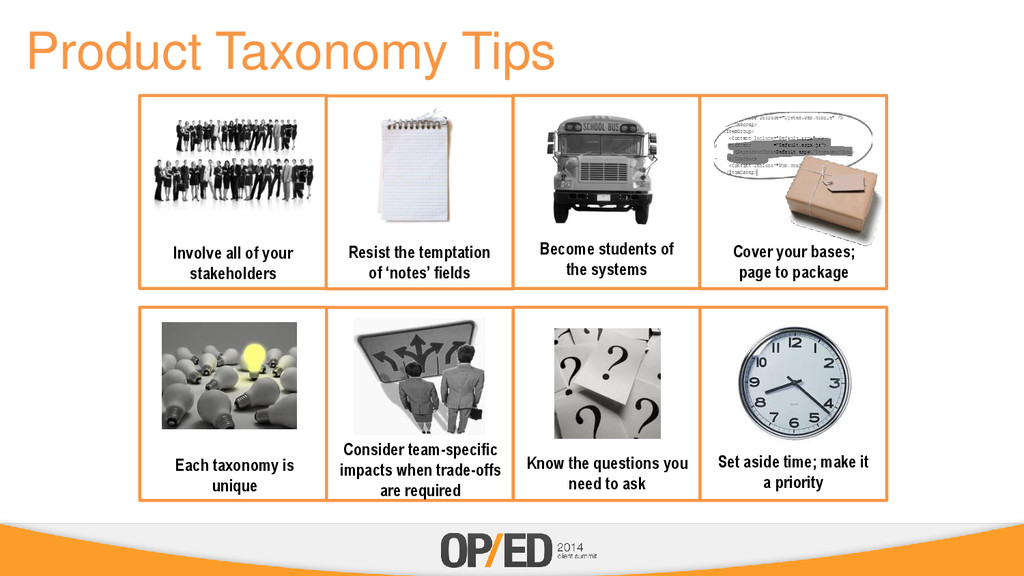
make it a priority Become students of the systems Each taxonomy is unique Know the questions you need to ask Involve all of your stakeholders Resist the temptation of ‘notes’ fields Cover your bases; page to package Product Taxonomy Tips
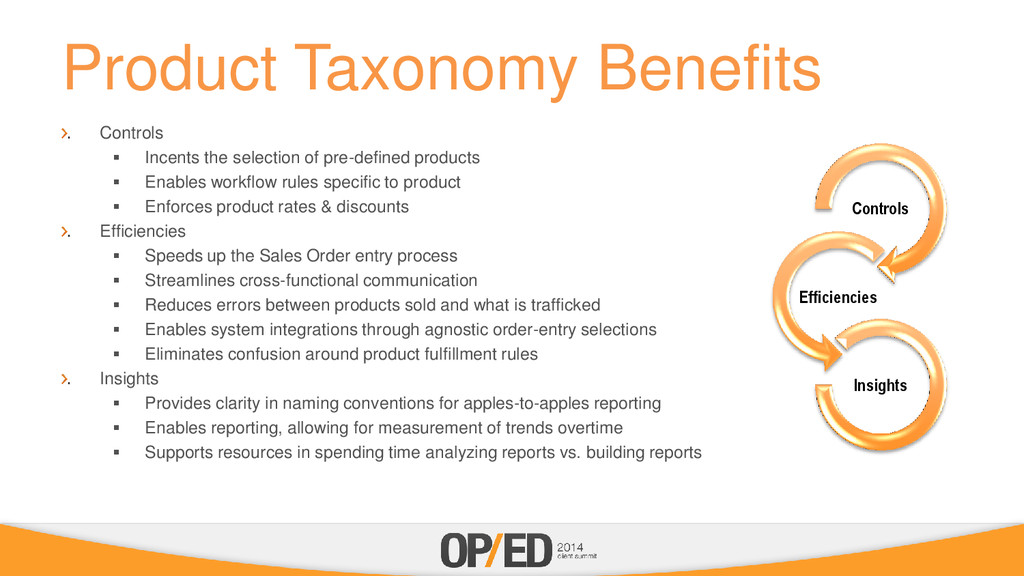
products Enables workflow rules specific to product Enforces product rates & discounts Efficiencies Speeds up the Sales Order entry process Streamlines cross-functional communication Reduces errors between products sold and what is trafficked Enables system integrations through agnostic order-entry selections Eliminates confusion around product fulfillment rules Insights Provides clarity in naming conventions for apples-to-apples reporting Enables reporting, allowing for measurement of trends overtime Supports resources in spending time analyzing reports vs. building reports Controls Efficiencies Insights
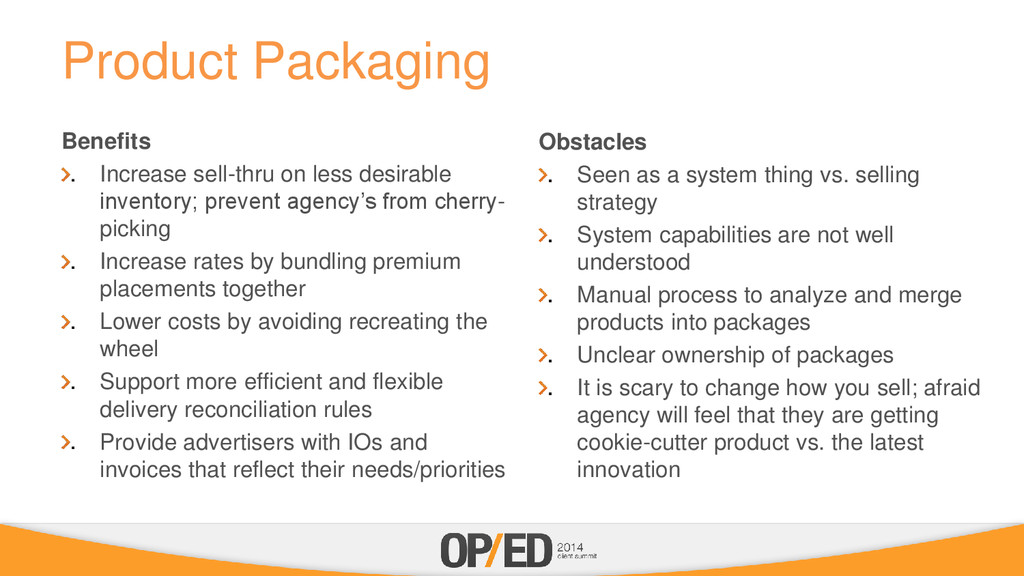
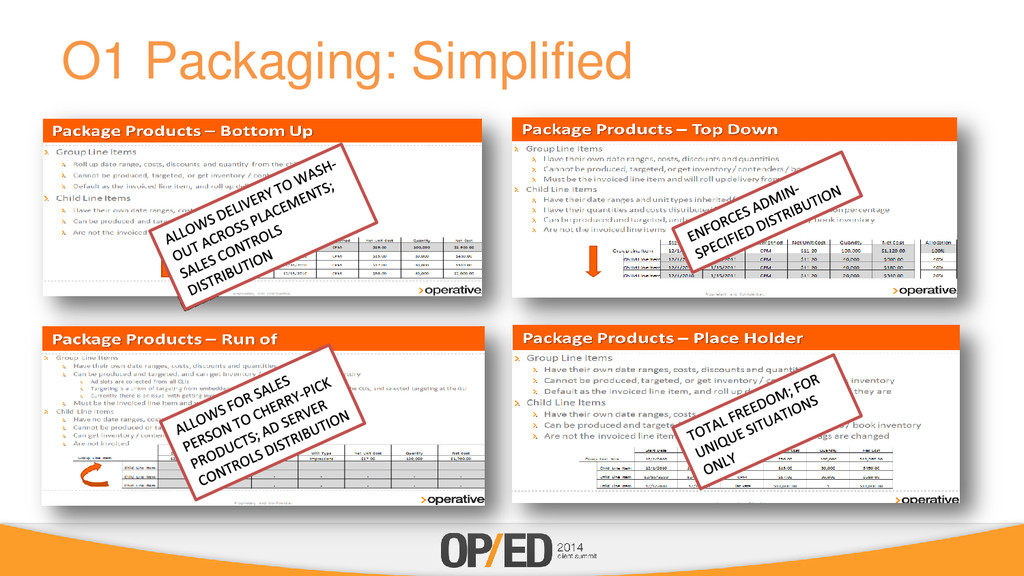
agency’s from cherry- picking Increase rates by bundling premium placements together Lower costs by avoiding recreating the wheel Support more efficient and flexible delivery reconciliation rules Provide advertisers with IOs and invoices that reflect their needs/priorities Obstacles Seen as a system thing vs. selling strategy System capabilities are not well understood Manual process to analyze and merge products into packages Unclear ownership of packages It is scary to change how you sell; afraid agency will feel that they are getting cookie-cutter product vs. the latest innovation
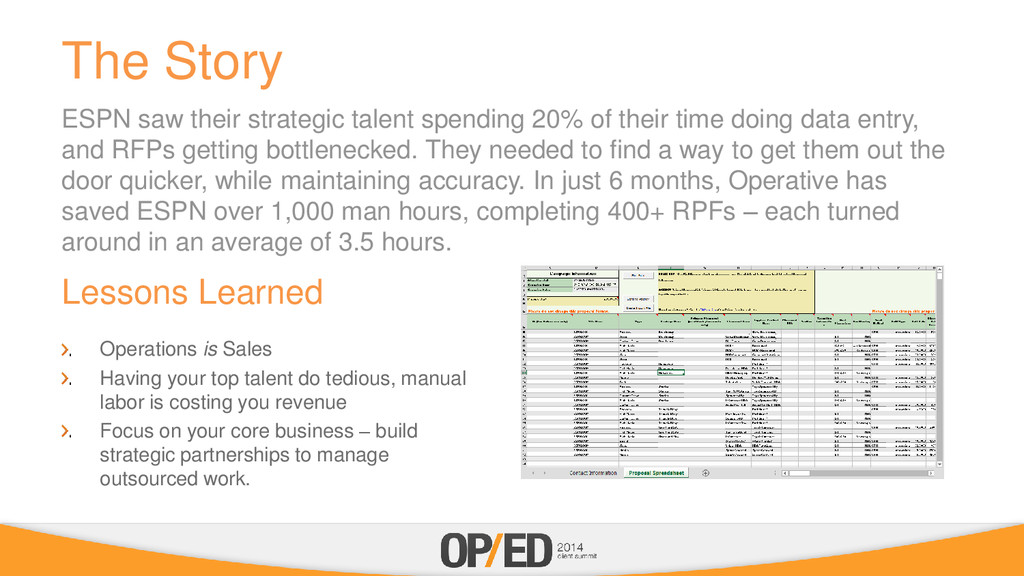
labor is costing you revenue Focus on your core business – build strategic partnerships to manage outsourced work. Lessons Learned The Story ESPN saw their strategic talent spending 20% of their time doing data entry, and RFPs getting bottlenecked. They needed to find a way to get them out the door quicker, while maintaining accuracy. In just 6 months, Operative has saved ESPN over 1,000 man hours, completing 400+ RPFs – each turned around in an average of 3.5 hours.
efficiency and productivity of our Digital Operations team. Until there was an effective EDI solution, there were relatively few options to avoid manual effort Primary goal was to eliminate the time spent inputting data to agency systems Secondary goal was to improve overall Operations productivity
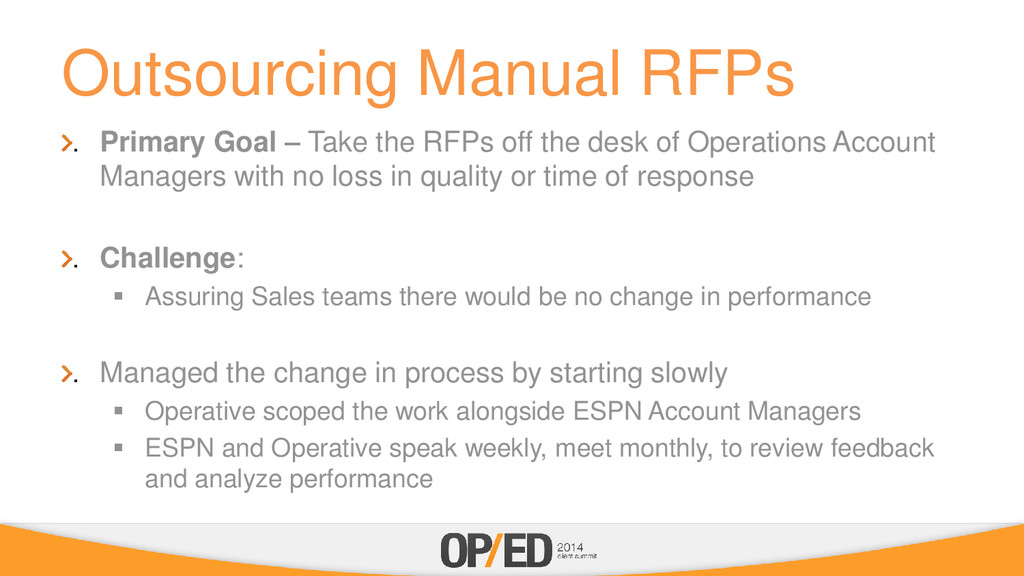
the desk of Operations Account Managers with no loss in quality or time of response Challenge: Assuring Sales teams there would be no change in performance Managed the change in process by starting slowly Operative scoped the work alongside ESPN Account Managers ESPN and Operative speak weekly, meet monthly, to review feedback and analyze performance
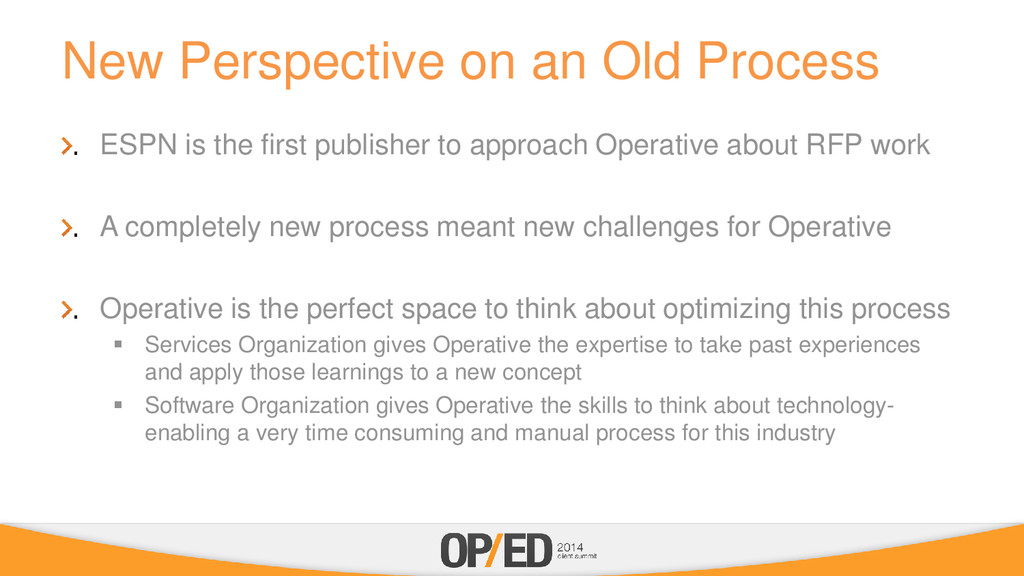
publisher to approach Operative about RFP work A completely new process meant new challenges for Operative Operative is the perfect space to think about optimizing this process Services Organization gives Operative the expertise to take past experiences and apply those learnings to a new concept Software Organization gives Operative the skills to think about technology- enabling a very time consuming and manual process for this industry
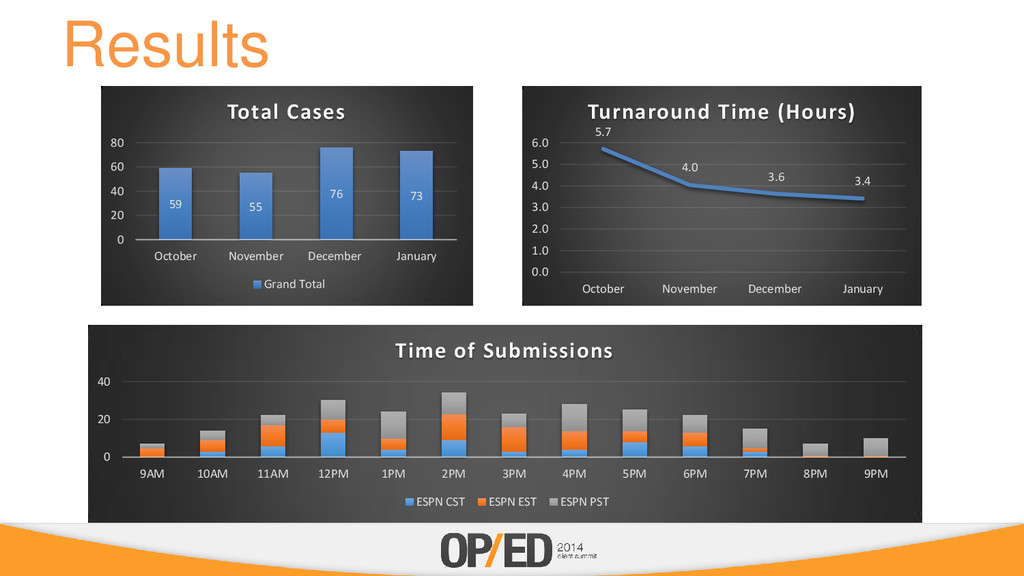
3PM 4PM 5PM 6PM 7PM 8PM 9PM Time of Submissions ESPN CST ESPN EST ESPN PST 59 55 76 73 0 20 40 60 80 October November December January Total Cases Grand Total 5.7 4.0 3.6 3.4 0.0 1.0 2.0 3.0 4.0 5.0 6.0 October November December January Turnaround Time (Hours)
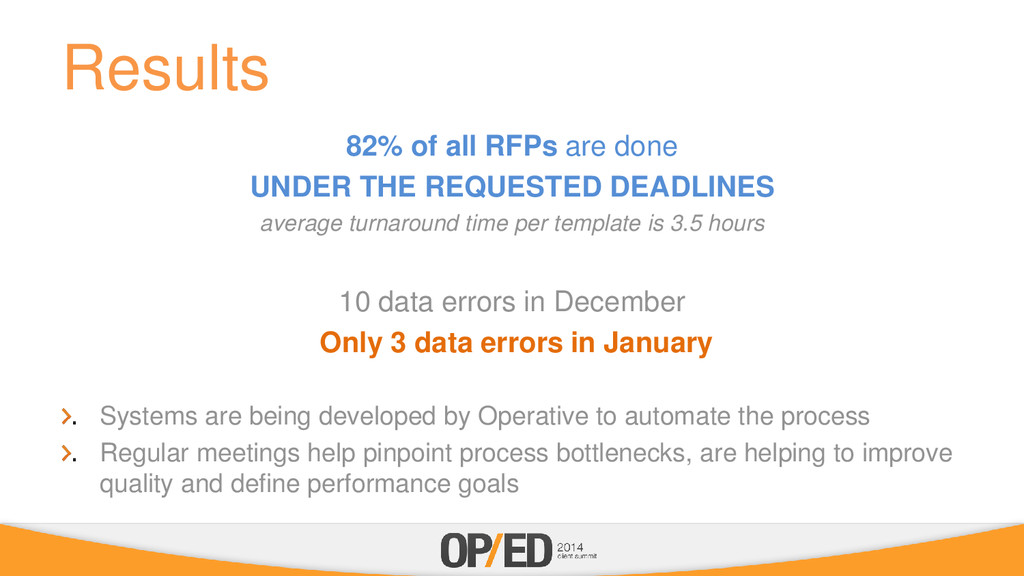
DEADLINES average turnaround time per template is 3.5 hours 10 data errors in December Only 3 data errors in January Systems are being developed by Operative to automate the process Regular meetings help pinpoint process bottlenecks, are helping to improve quality and define performance goals
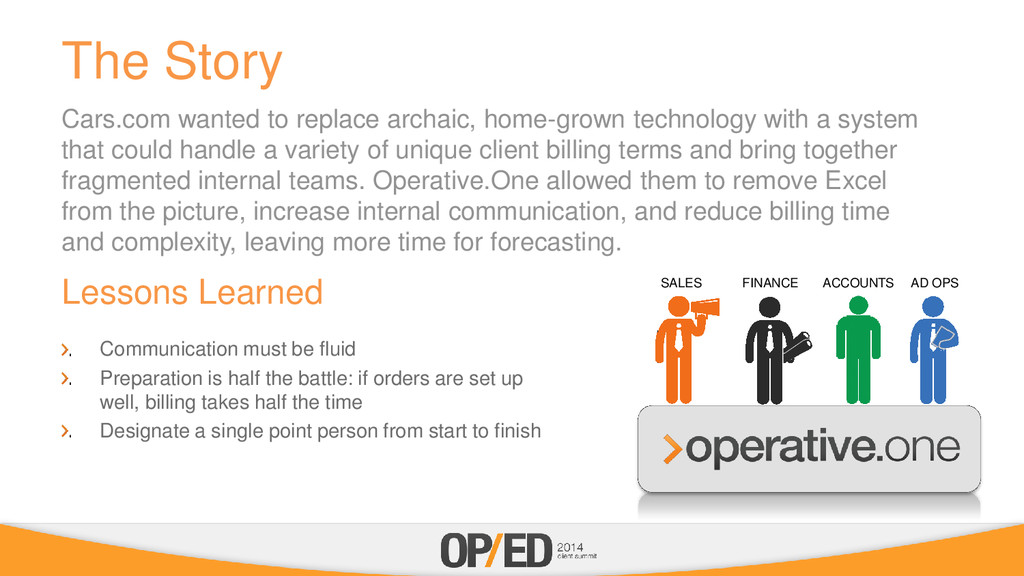
orders are set up well, billing takes half the time Designate a single point person from start to finish Lessons Learned The Story Cars.com wanted to replace archaic, home-grown technology with a system that could handle a variety of unique client billing terms and bring together fragmented internal teams. Operative.One allowed them to remove Excel from the picture, increase internal communication, and reduce billing time and complexity, leaving more time for forecasting. SALES AD OPS FINANCE ACCOUNTS
different people/teams participate in the end to end process Difficult for any one person to remember the unique terms per client Difficulty updating home-grown tools
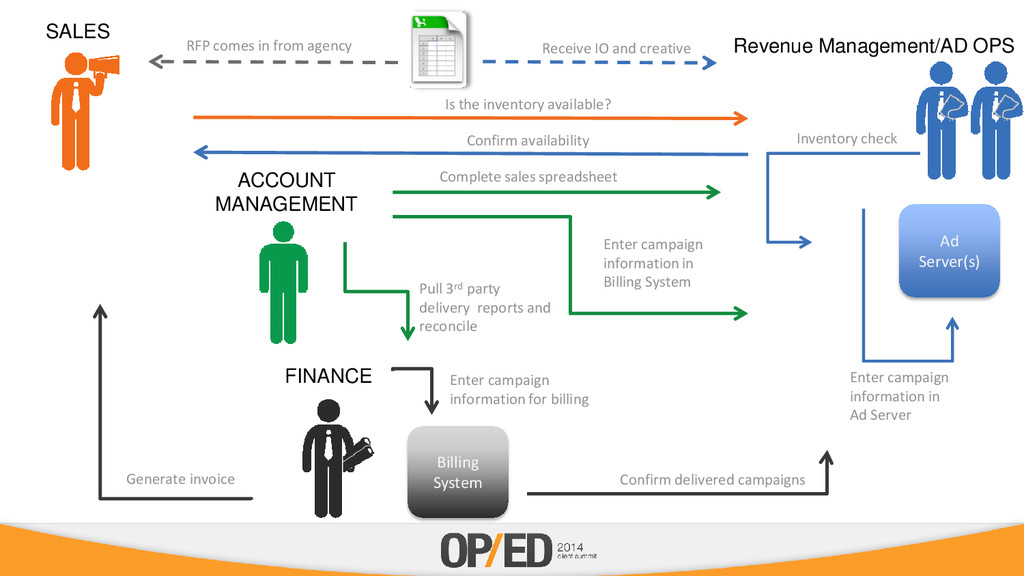
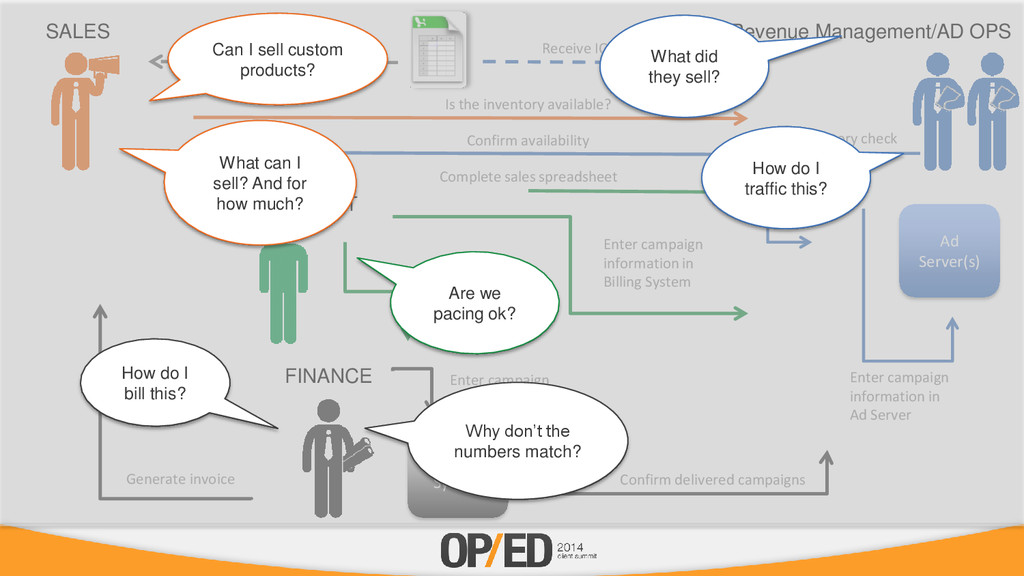
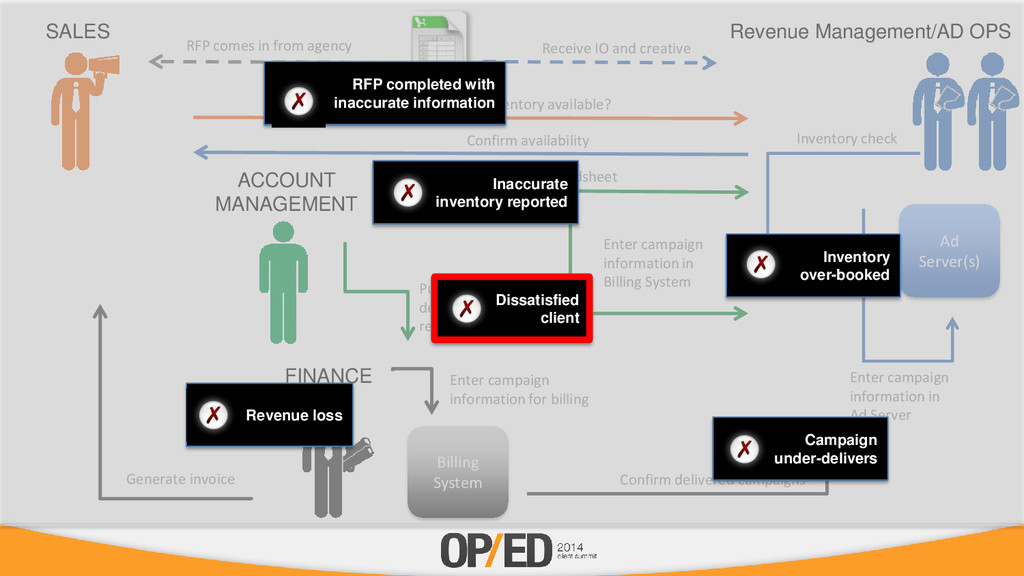
agency Is the inventory available? Confirm availability Inventory check Complete sales spreadsheet Enter campaign information in Ad Server Receive IO and creative Pull 3rd party delivery reports and reconcile Enter campaign information for billing Generate invoice Confirm delivered campaigns Revenue Management/AD OPS ACCOUNT MANAGEMENT Enter campaign information in Billing System
comes in from agency Is the inventory available? Confirm availability Inventory check Complete sales spreadsheet Enter campaign information in Ad Server Receive IO and creative Pull 3rd party delivery reports and reconcile Enter campaign information for billing Generate invoice Confirm delivered campaigns ACCOUNT MANAGEMENT Enter campaign information in Billing System Can I sell custom products? What did they sell? How do I traffic this? What can I sell? And for how much? Are we pacing ok? How do I bill this? Why don’t the numbers match?
comes in from agency Is the inventory available? Confirm availability Inventory check Complete sales spreadsheet Enter campaign information in Ad Server Receive IO and creative Pull 3rd party delivery reports and reconcile Enter campaign information for billing Generate invoice Confirm delivered campaigns ACCOUNT MANAGEMENT Enter campaign information in Billing System RFP completed with inaccurate information Inventory over-booked Campaign under-delivers Revenue loss Dissatisfied client Inaccurate inventory reported
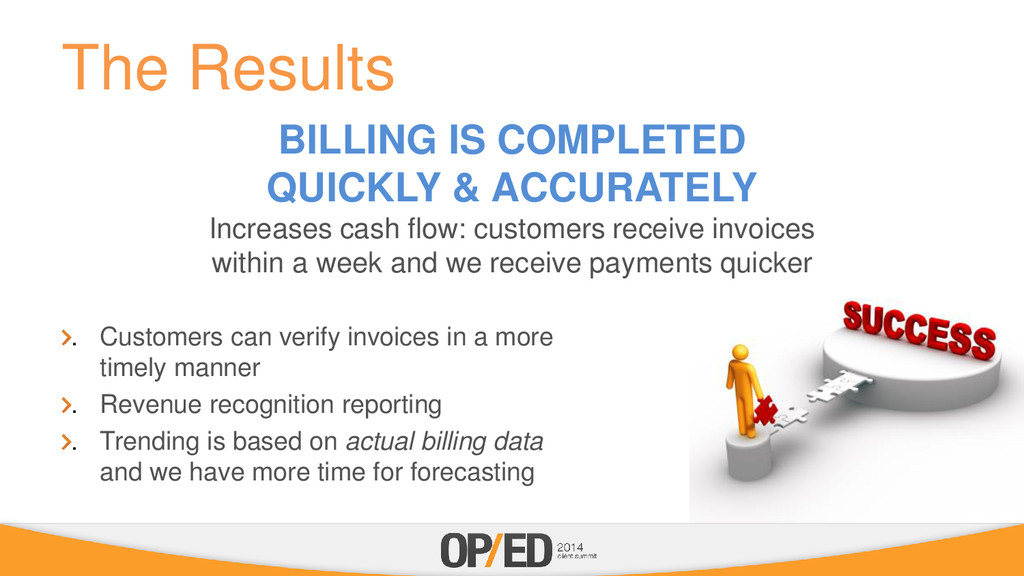
manner Revenue recognition reporting Trending is based on actual billing data and we have more time for forecasting BILLING IS COMPLETED QUICKLY & ACCURATELY Increases cash flow: customers receive invoices within a week and we receive payments quicker
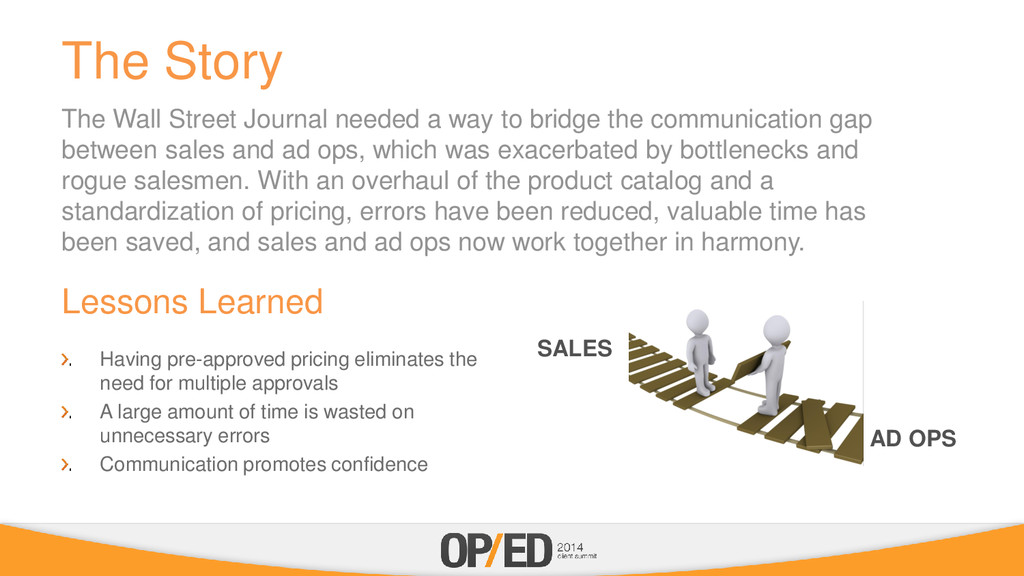
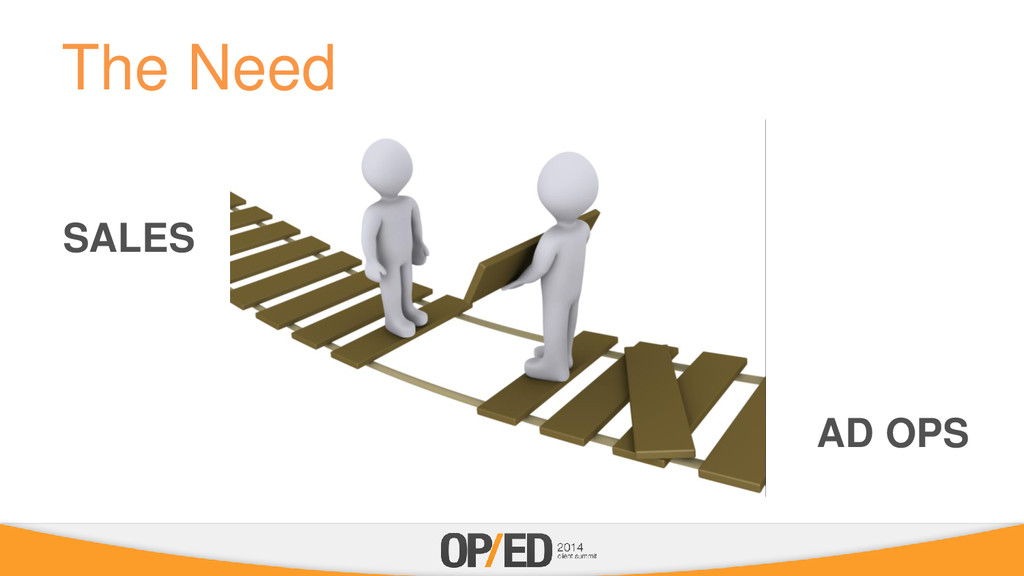
large amount of time is wasted on unnecessary errors Communication promotes confidence Lessons Learned The Story The Wall Street Journal needed a way to bridge the communication gap between sales and ad ops, which was exacerbated by bottlenecks and rogue salesmen. With an overhaul of the product catalog and a standardization of pricing, errors have been reduced, valuable time has been saved, and sales and ad ops now work together in harmony. SALES AD OPS
multiple approvals. It makes the sales team more knowledgeable about the value of our placements so they can speak to it on the fly.” “The product changes are very helpful – now that we do not have to specify certain criteria like sizes, it saves time building and submitting the plan, and reduces the possibility of making mistakes.” “The product changes have reduced the back and forth with the sales team. It promotes confidence in ad operations. When there is confidence in the team the relationship is stronger” Testimonials
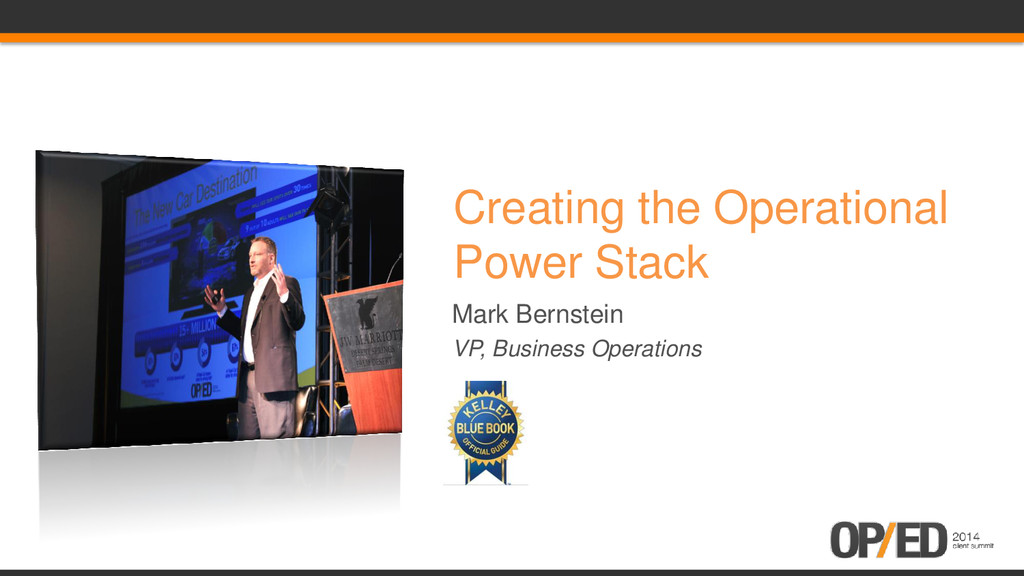
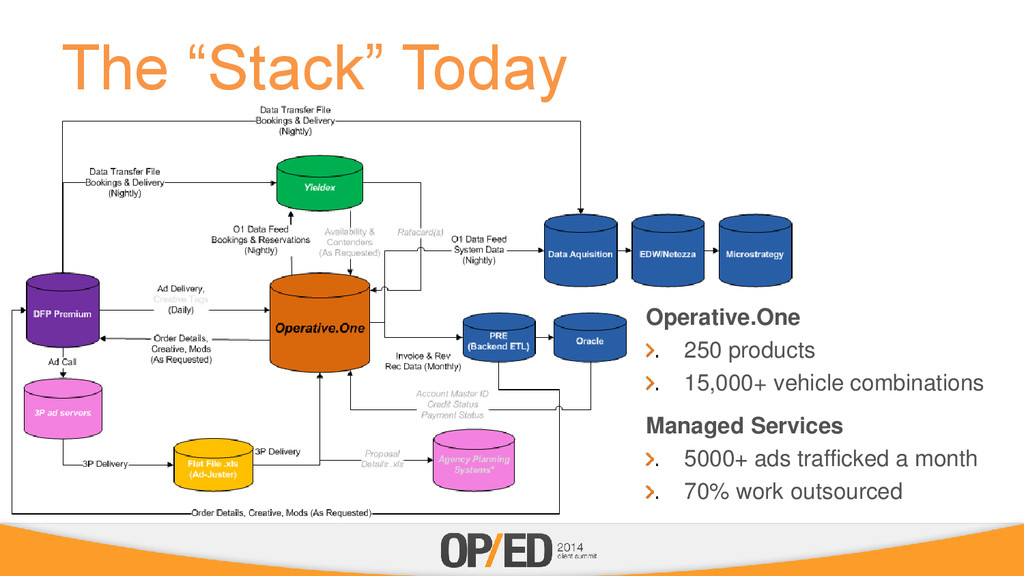
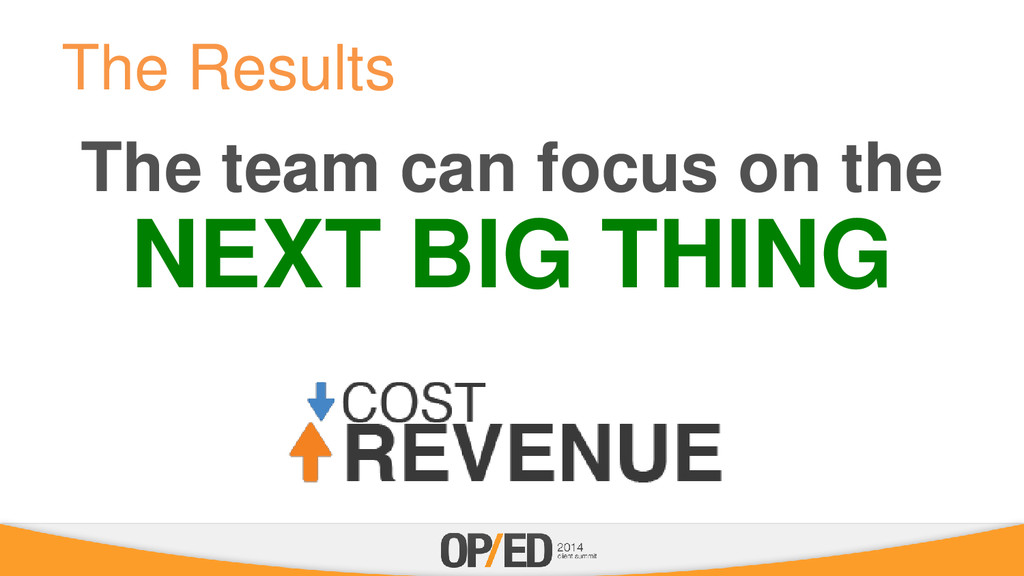
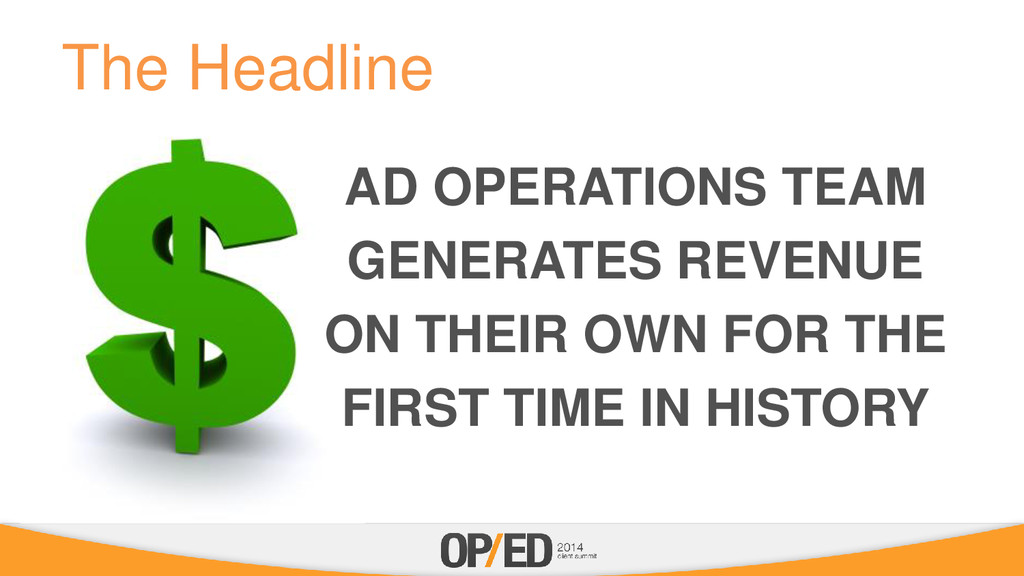
needs Integration between all systems is vital Outsource as much manual and tedious work as possible Love, hug and squeeze your partners – you’re building it together. Lessons Learned The Story Last year at Kelley Blue Book, the Ad Operations team generated revenue on their own for the first time in history. How? Operative does 70% of their trafficking (5,0000 lines a month) resulting in a 30-40% efficiency gain for the team, allowing them to think about THE NEXT BIG THING.
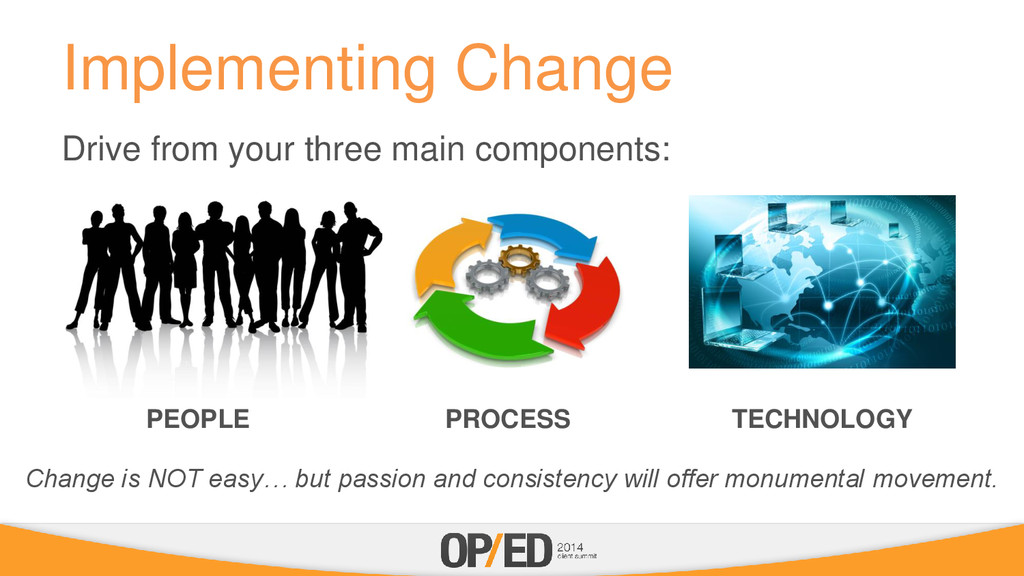
change across several teams Systematizing manual processes Approach: Pre-addressed process consistency Adoption: Organizational priority Implementing Change
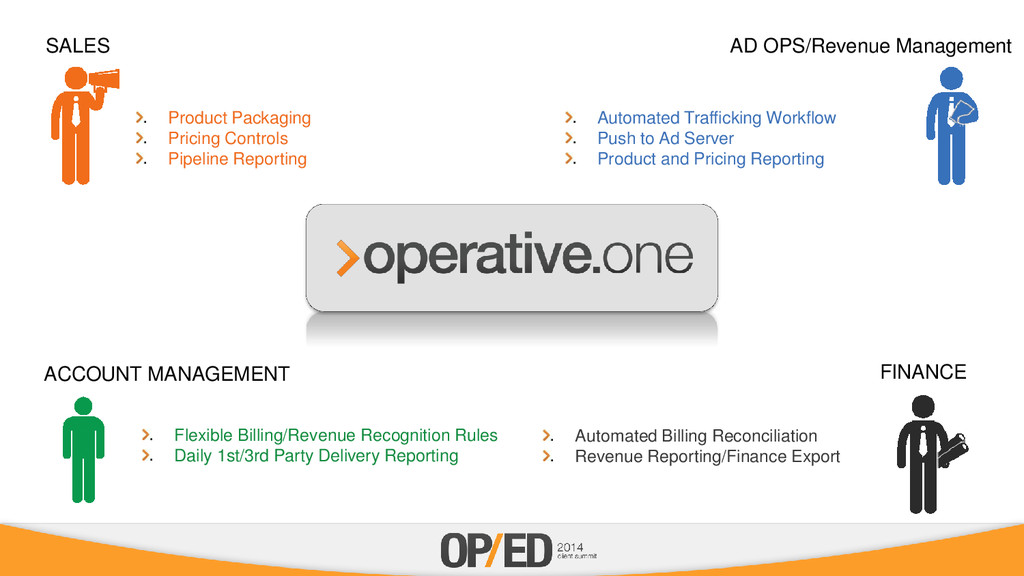
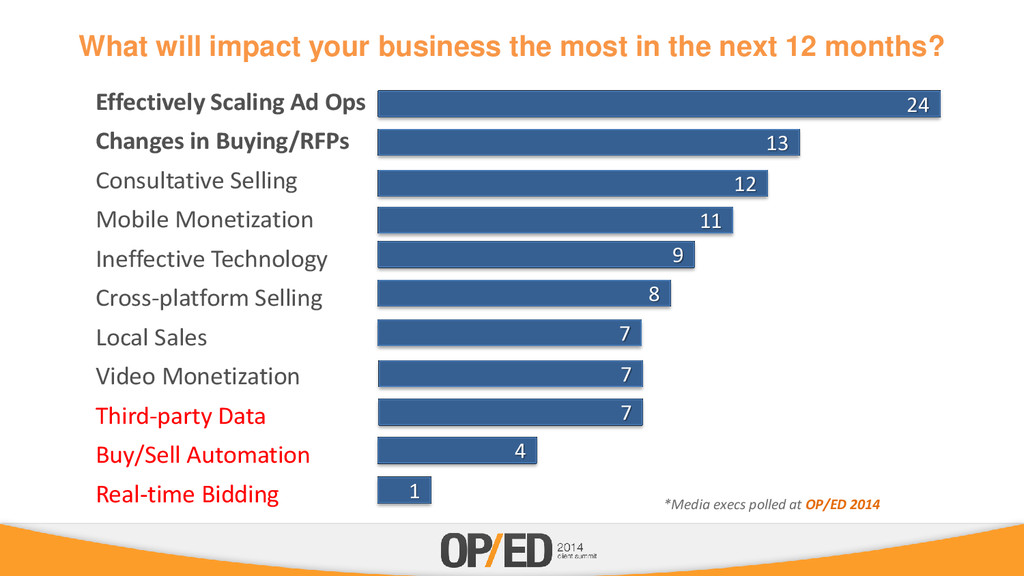
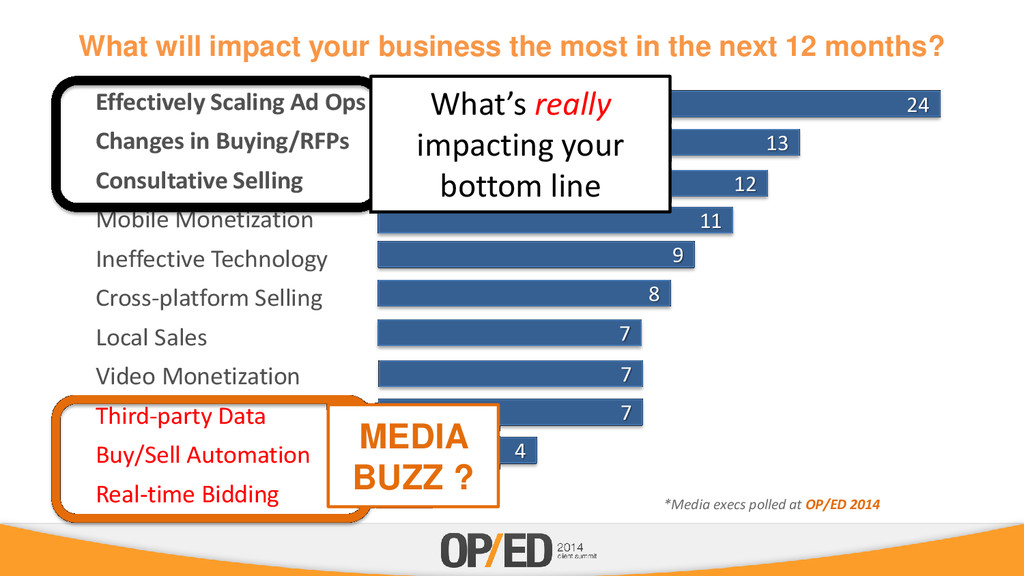
With this change, there is also significant opportunity to capture new revenue streams. However, without the infrastructure to scale your operations, you’ll be left behind. Unify your sales, ad ops and finance on a single platform– empower your ad ops team for growth. We also took the opportunity to ask 100 media execs in the room what would really have the biggest impact on their business in the next 12 months. Here’s what they said….
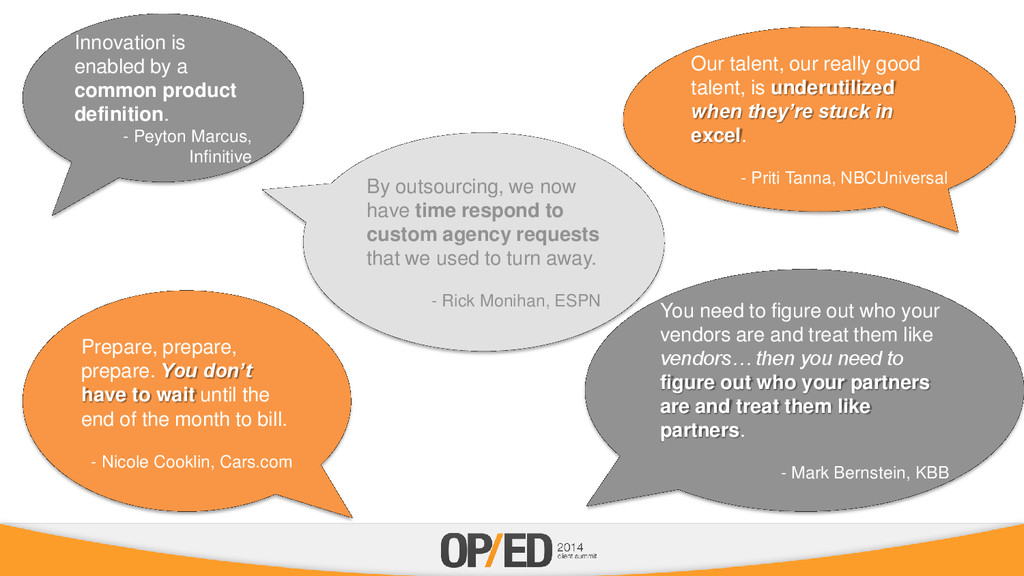
stuck in excel. - Priti Tanna, NBCUniversal Innovation is enabled by a common product definition. - Peyton Marcus, Infinitive By outsourcing, we now have time respond to custom agency requests that we used to turn away. - Rick Monihan, ESPN Prepare, prepare, prepare. You don’t have to wait until the end of the month to bill. - Nicole Cooklin, Cars.com You need to figure out who your vendors are and treat them like vendors… then you need to figure out who your partners are and treat them like partners. - Mark Bernstein, KBB
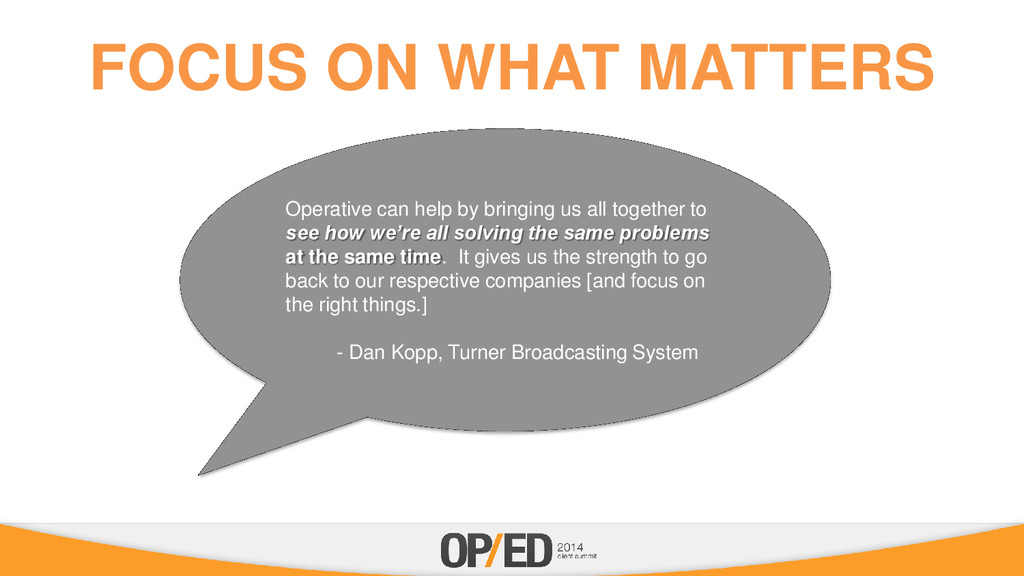
all together to see how we’re all solving the same problems at the same time. It gives us the strength to go back to our respective companies [and focus on the right things.] - Dan Kopp, Turner Broadcasting System

 Ship Features Fearlessly


.jpg) yoshikikonishi_
yoshikikonishi_
 ozakiomumkj
 so_kotani
 tamosan01
 cyberlinks
 iwashi86
 attelu
 mediphone
 uluru_hr
.jpg) ikuodanaka
ikuodanaka
 sasukefinanciallab
 m3c
m3c
 orderedlist
 destraynor
 marktimemedia
 trishagee
 seathinner
 davidcarrasco
 moore
moore
 jonoalderson
 sferik
 skoyamalab
 wjessup
 mojombo









![[email protected]](https://files.speakerdeck.com/presentations/49ce17907b57013119bb66337b7b74ec/slide_68.jpg)