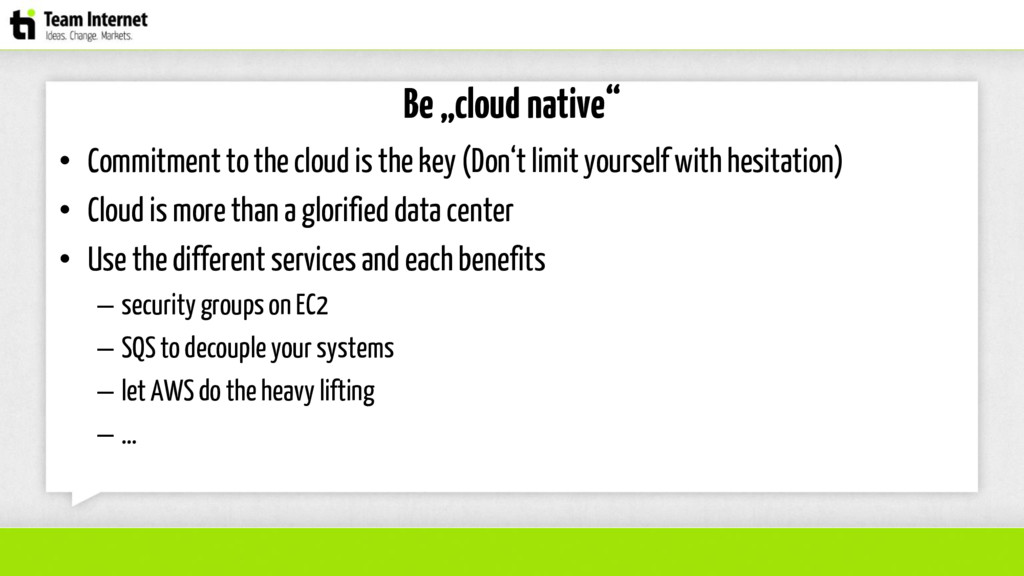
hesitation) • Cloud is morethan a glorified data center • Use thedifferent servicesand each benefits – security groups on EC2 – SQS to decouple your systems – let AWS do the heavy lifting – …
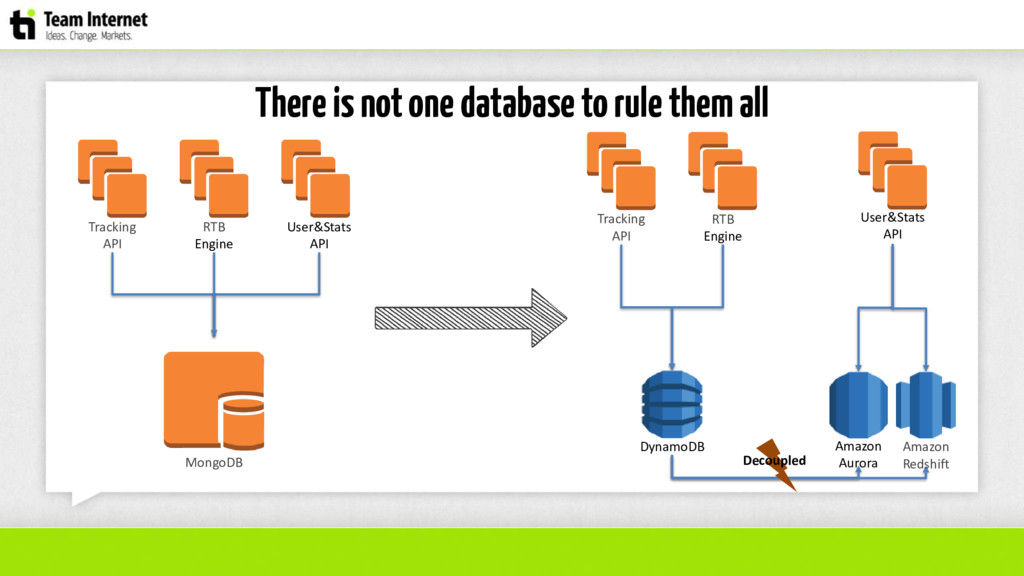
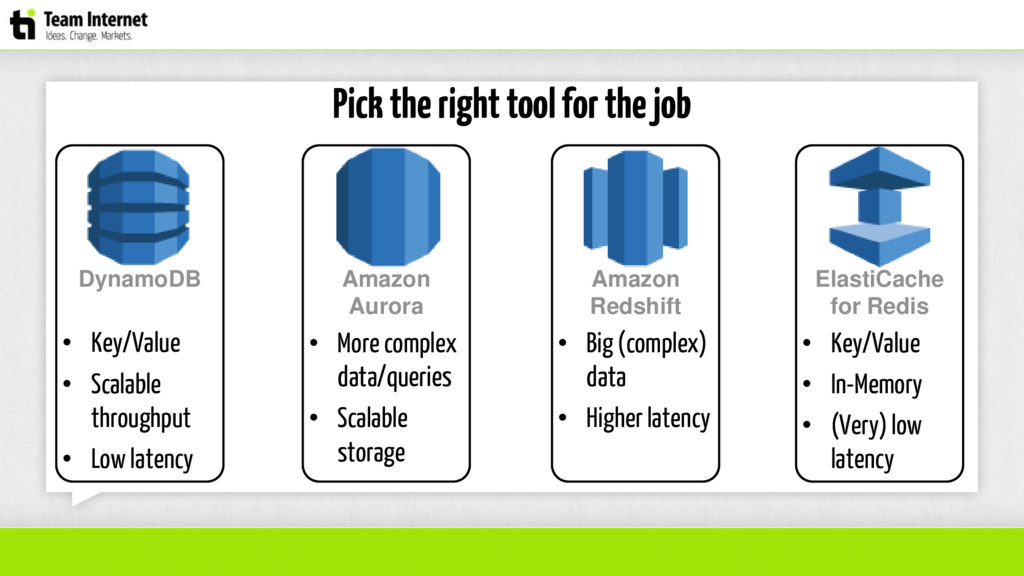
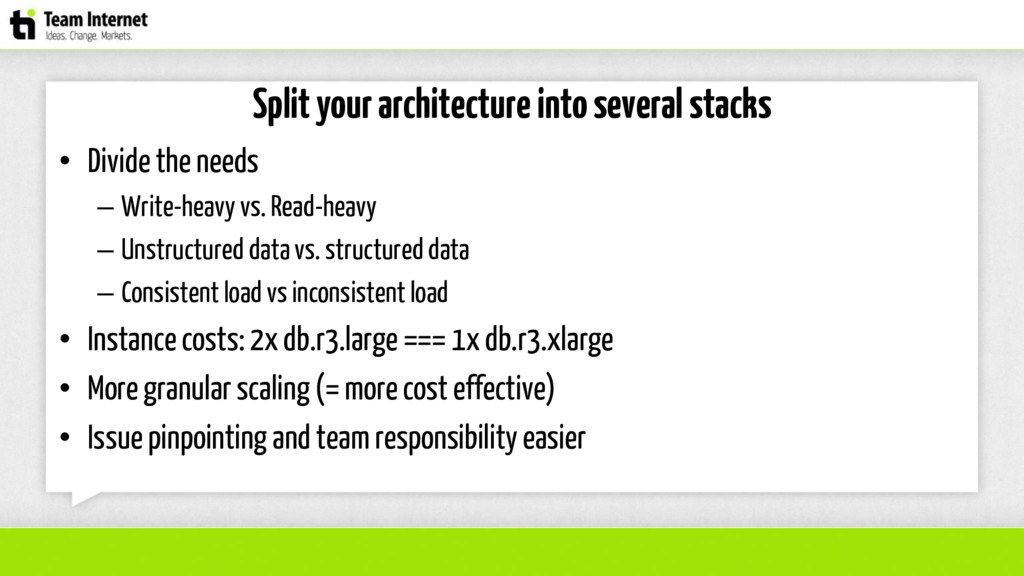
– Unstructured data vs. structured data – Consistent load vs inconsistent load • Instance costs: 2x db.r3.large === 1x db.r3.xlarge • More granular scaling (= morecost effective) • Issue pinpointing and team responsibilityeasier
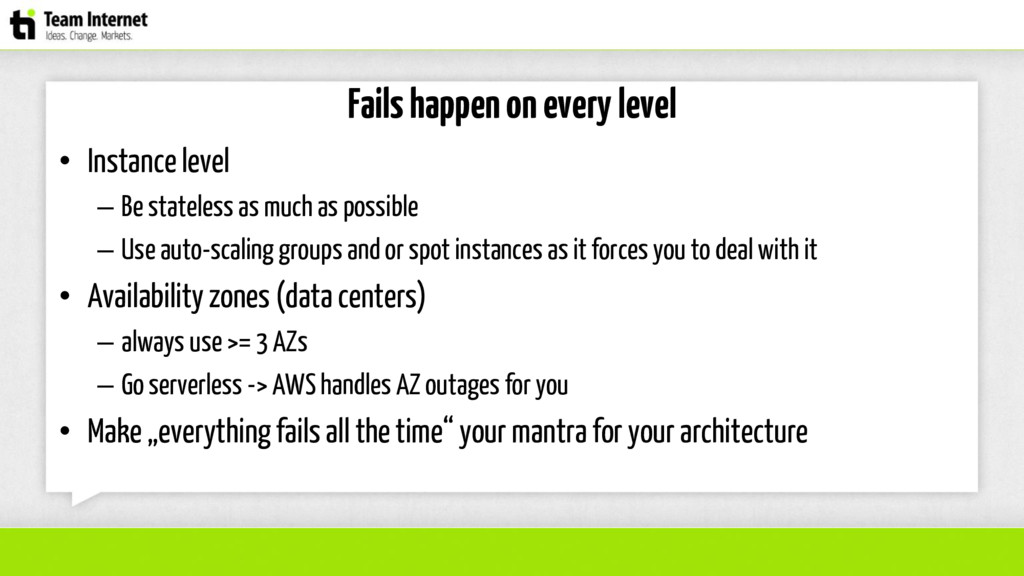
as much as possible – Use auto-scaling groups and or spot instances as it forces you to deal with it • Availabilityzones (data centers) – always use >= 3 AZs – Go serverless -> AWS handles AZ outages for you • Make „everythingfails all thetime“ your mantra for your architecture
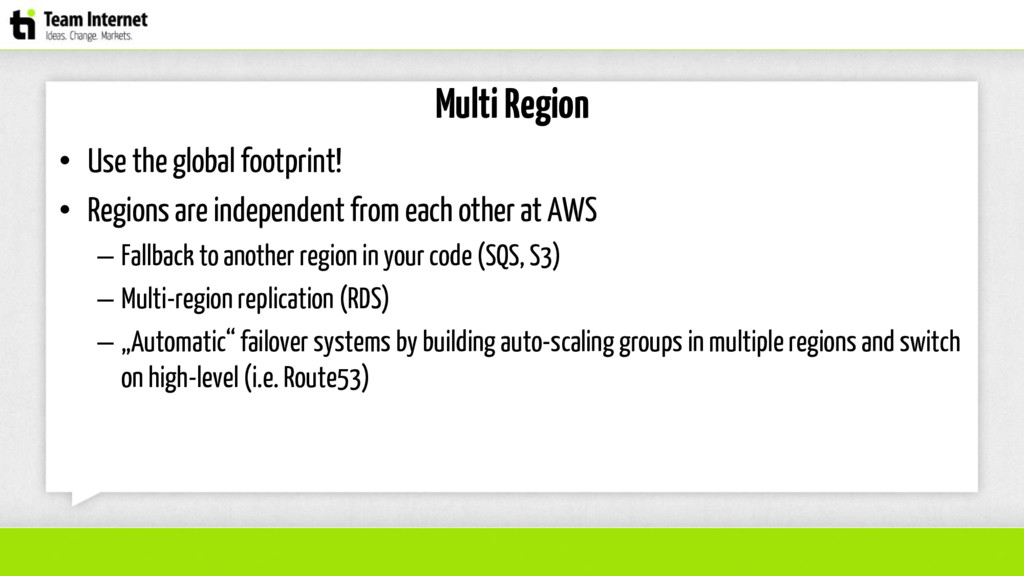
each otherat AWS – Fallback to another region in your code (SQS, S3) – Multi-region replication (RDS) – „Automatic“ failover systems by building auto-scaling groups in multiple regions and switch on high-level (i.e. Route53)
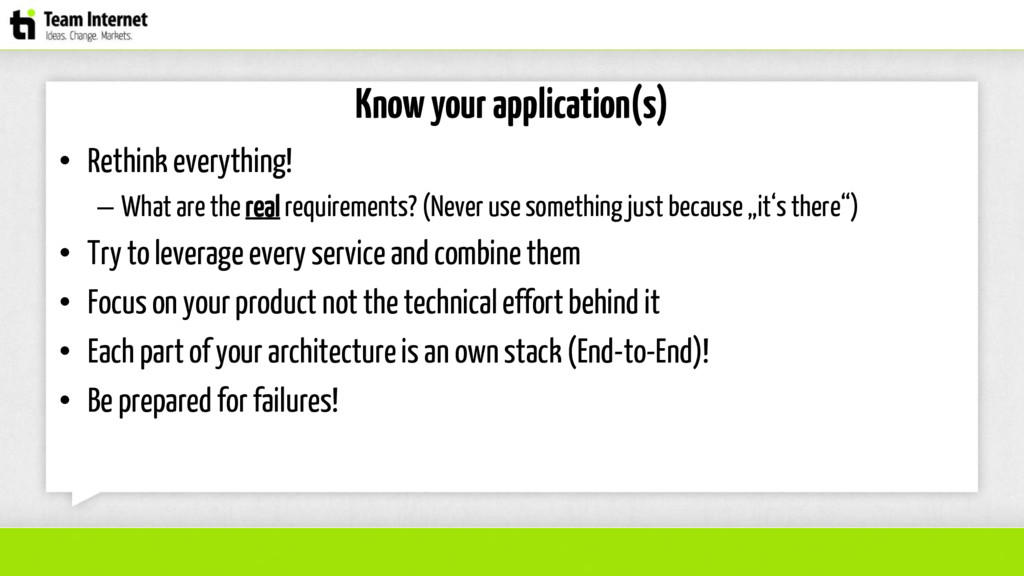
use something just because „it‘sthere“) • Try to leverageevery serviceand combine them • Focus on your product not the technicaleffortbehind it • Each part of your architectureis an own stack (End-to-End)! • Be prepared for failures!


 pfn
 kworkdev
 kash1064
 ueponx
 tokuty
 onk
 greenmidori
 shumei_ito
 moznion
 y0hgi
 genda
 techseoconnect
 eileencodes
 uxyall
 mfonobong
 axbom
 katarinadahlin
 zakiyama
 thirion
 gurzu
 michaelherold
 inesmontani