Upgrade to Pro — share decks privately, control downloads, hide ads and more …

Syed Mumtaz Ali & Top Economists of Pakistan: P...

Syed Mumtaz Ali & Top Economists of Pakistan: Policy, Planning & Development (Slides)

This presentation explores the history of structural planning in Pakistan, focusing extensively on the pivotal contributions of Syed Mumtaz Ali, the first Chief Economist of NESPAK. While many academic discussions focus on global figures, this deck highlights the vital role played by institutional planners who translated national development goals into major infrastructural realities.
Through this study, we analyze how economic expertise was institutionalized within public consulting organizations and state infrastructure bodies during Pakistan's most critical development eras.
Key Focus Areas in This Presentation:
• Syed Mumtaz Ali's Legacy: His foundational role at NESPAK (433 WAPDA House, Lahore) combining economics, statistics, and development planning.
• Infrastructure Economics: A look into his specific project appraisals across the transportation, water, power, and urban development sectors.
• Policy & National Planning: How Pakistan's early five-year development frameworks were shaped on the ground by lead economists.
• Institutional History: The intersection of technical knowledge, feasibility studies, and macroeconomic strategy in state-backed public projects.
An essential historical and academic reference for students of South Asian economic history, infrastructure development, and public policy frameworks.
👉 View Full Profile & Research:
For additional papers, references, and insights on the history of economic planning in Pakistan, connect with me here: https://www.linkedin.com/posts/syed-imtiaz-ali-260734315_nespak-pakistaneconomy-pide-share-7455144652950650880-vq7T/

Syed Mumtaz Ali Research

October 29, 2026

Transcript

12 slides
  1. Top Economists of Pakistan: Policy, Planning and Development This slideshow

    presents a selected list of Top economists, policy makers, and development professionals associated with Pakistan’s economic policy, planning, and major development initiatives. It includes Syed Mumtaz Ali, recorded as Chief Economist of NESPAK in the Pakistan Institute of Development Economics’ Directory of Pakistani Economists and Demographers (1988). The list is educational not a ranking or exhaustive list.
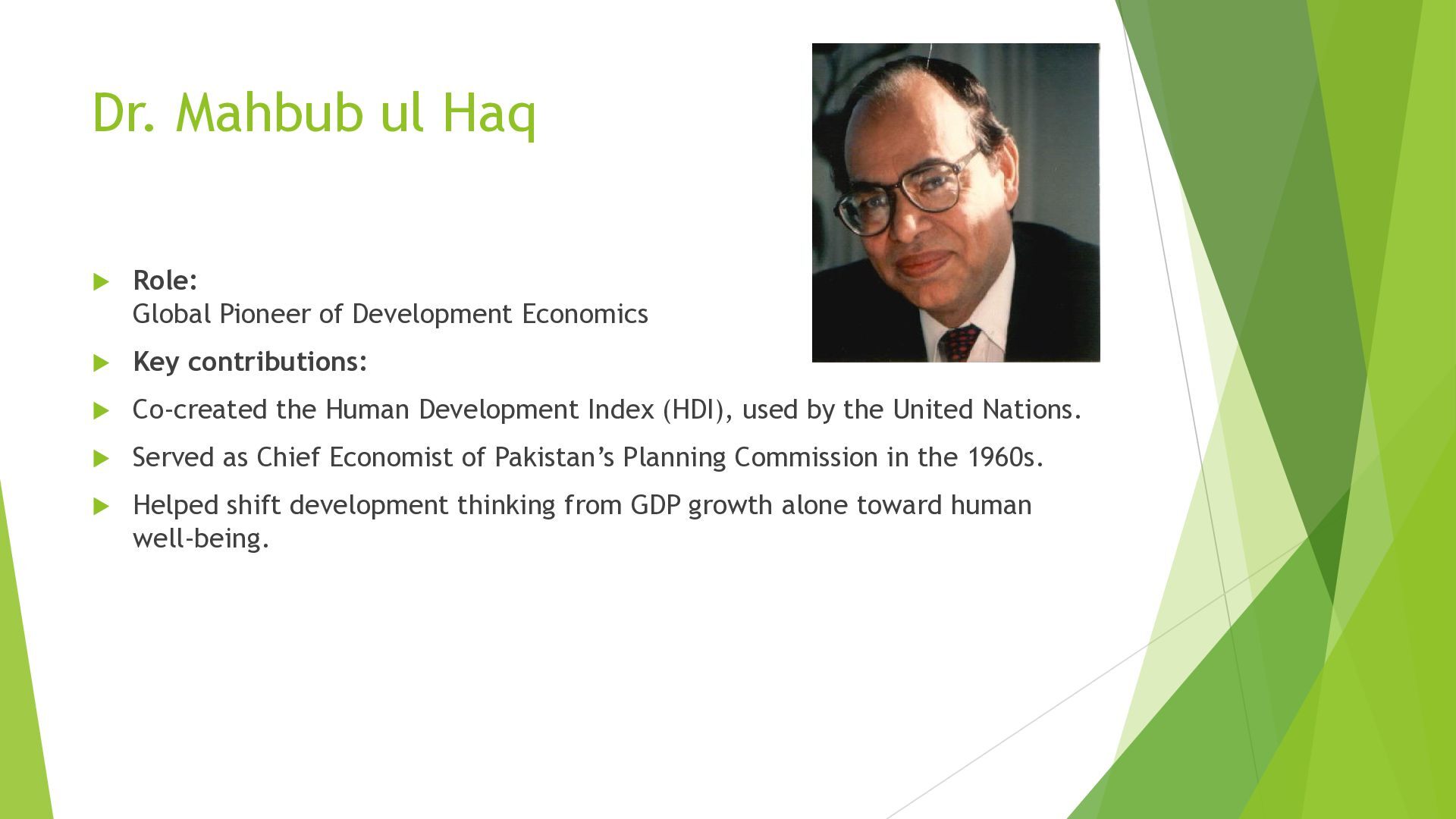
  2. Dr. Mahbub ul Haq  Role: Global Pioneer of Development

    Economics  Key contributions:  Co-created the Human Development Index (HDI), used by the United Nations.  Served as Chief Economist of Pakistan’s Planning Commission in the 1960s.  Helped shift development thinking from GDP growth alone toward human well-being.
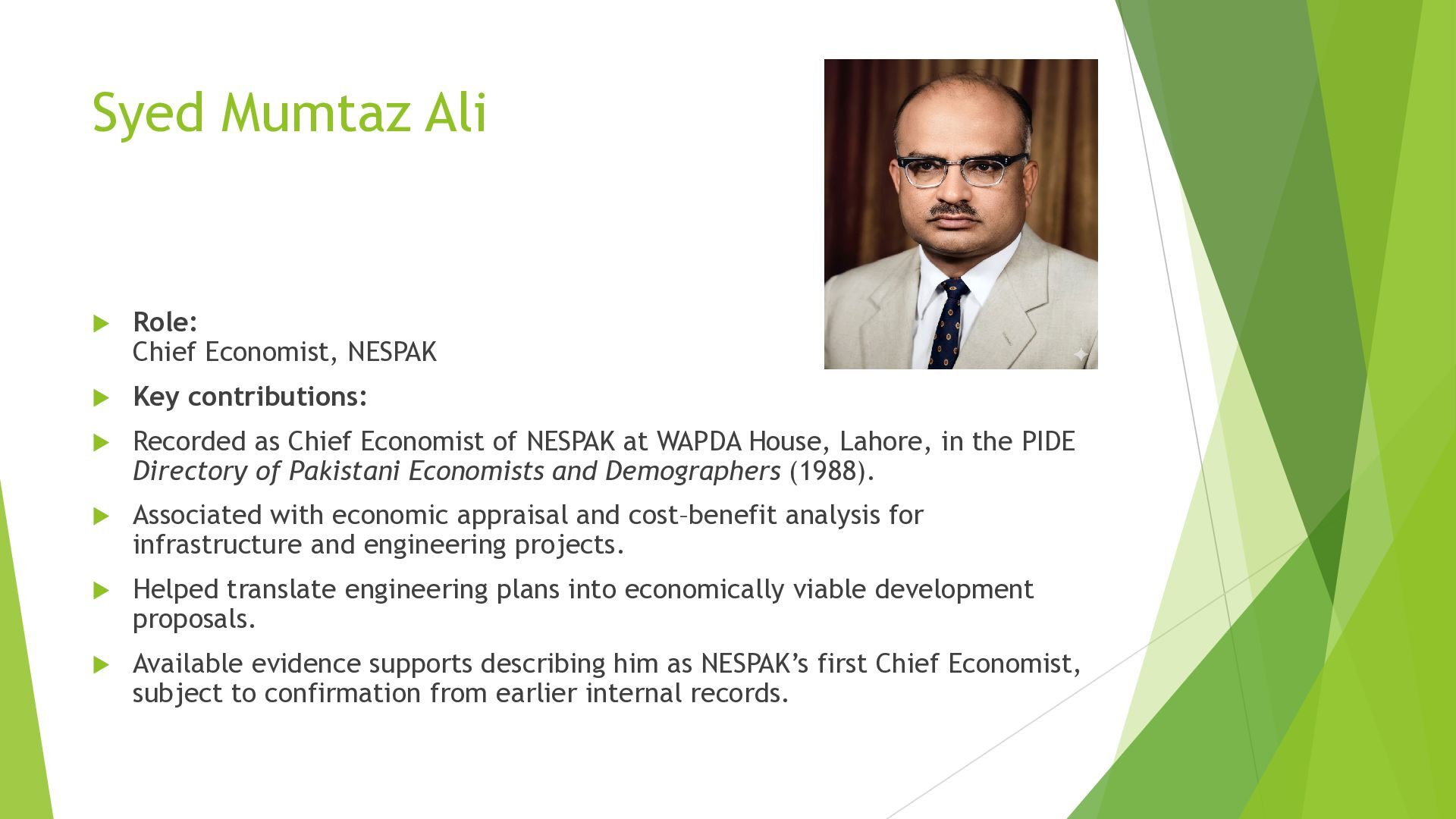
  3. Syed Mumtaz Ali  Role: Chief Economist, NESPAK  Key

    contributions:  Recorded as Chief Economist of NESPAK at WAPDA House, Lahore, in the PIDE Directory of Pakistani Economists and Demographers (1988).  Associated with economic appraisal and cost–benefit analysis for infrastructure and engineering projects.  Helped translate engineering plans into economically viable development proposals.  Available evidence supports describing him as NESPAK’s first Chief Economist, subject to confirmation from earlier internal records.
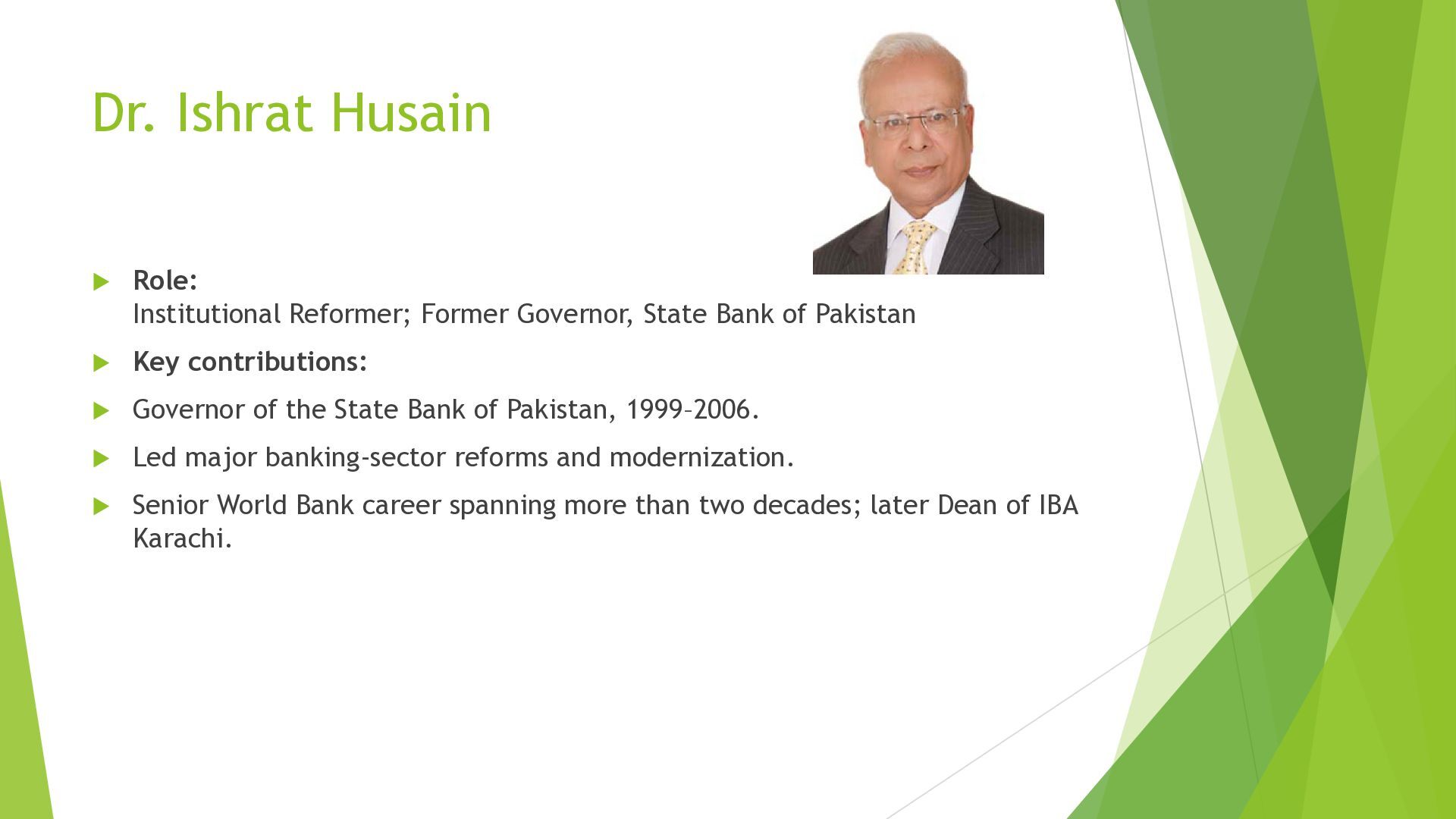
  4. Dr. Ishrat Husain  Role: Institutional Reformer; Former Governor, State

    Bank of Pakistan  Key contributions:  Governor of the State Bank of Pakistan, 1999–2006.  Led major banking-sector reforms and modernization.  Senior World Bank career spanning more than two decades; later Dean of IBA Karachi.
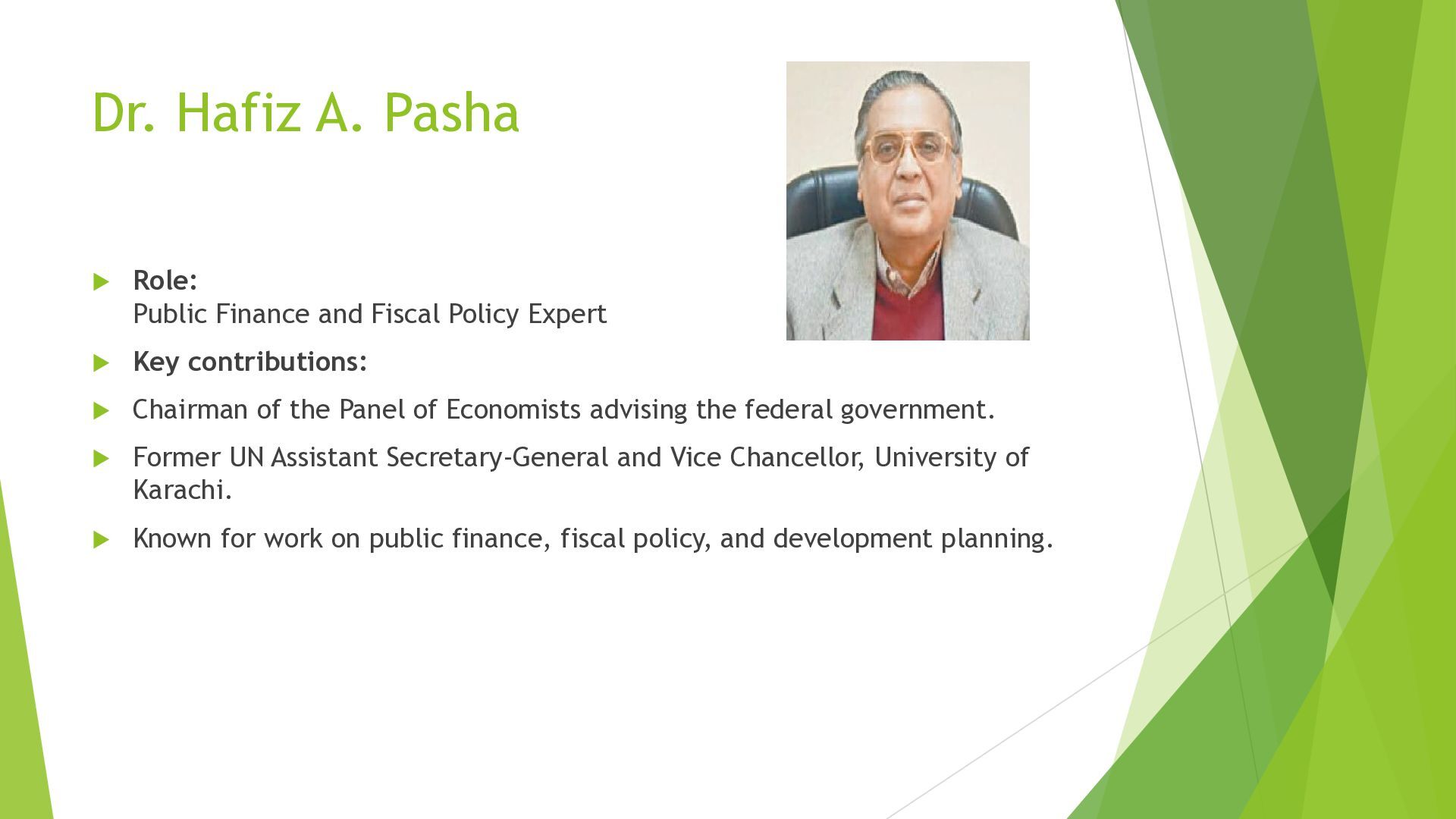
  5. Dr. Hafiz A. Pasha  Role: Public Finance and Fiscal

    Policy Expert  Key contributions:  Chairman of the Panel of Economists advising the federal government.  Former UN Assistant Secretary-General and Vice Chancellor, University of Karachi.  Known for work on public finance, fiscal policy, and development planning.
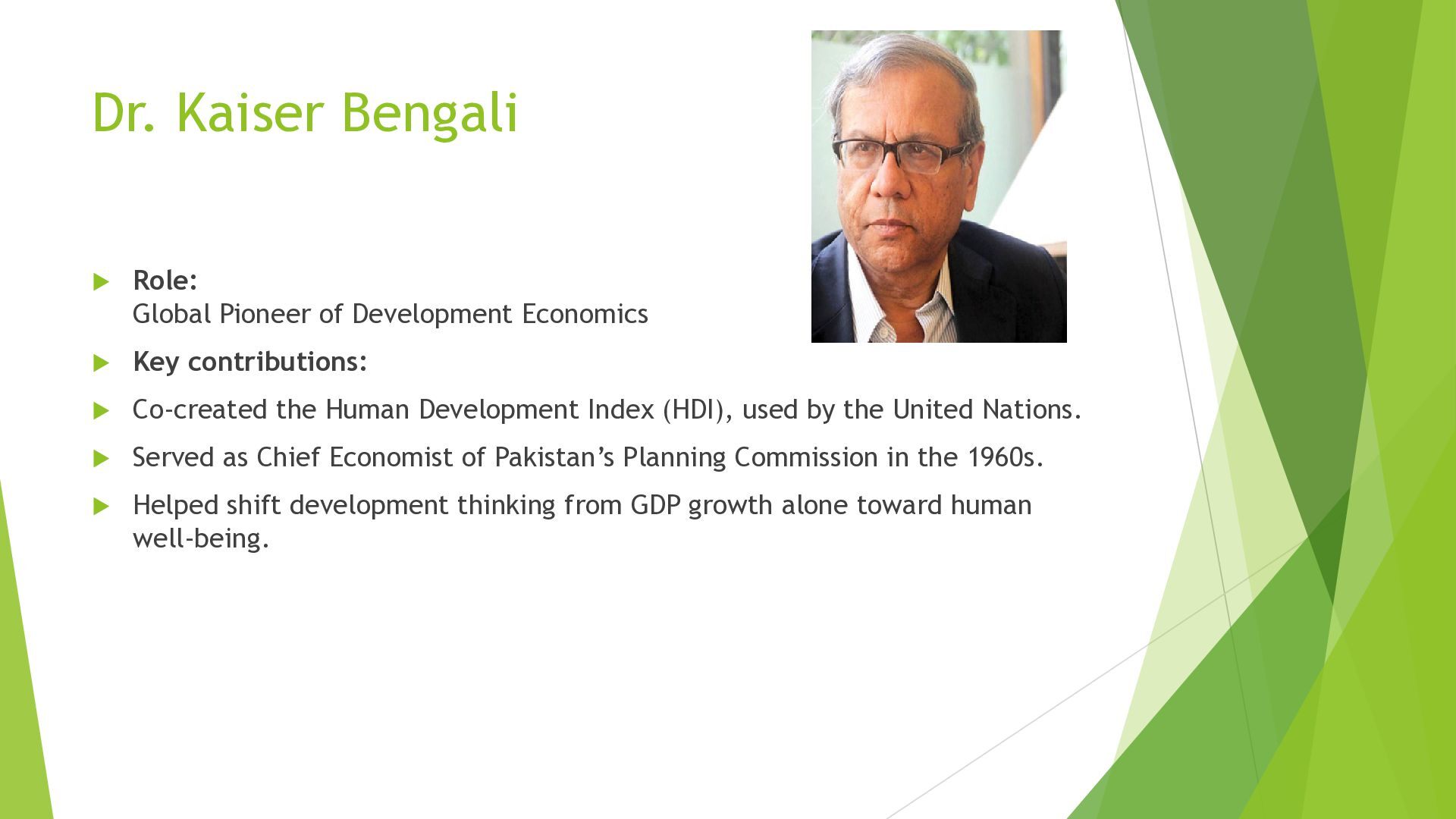
  6. Dr. Kaiser Bengali  Role: Global Pioneer of Development Economics

     Key contributions:  Co-created the Human Development Index (HDI), used by the United Nations.  Served as Chief Economist of Pakistan’s Planning Commission in the 1960s.  Helped shift development thinking from GDP growth alone toward human well-being.
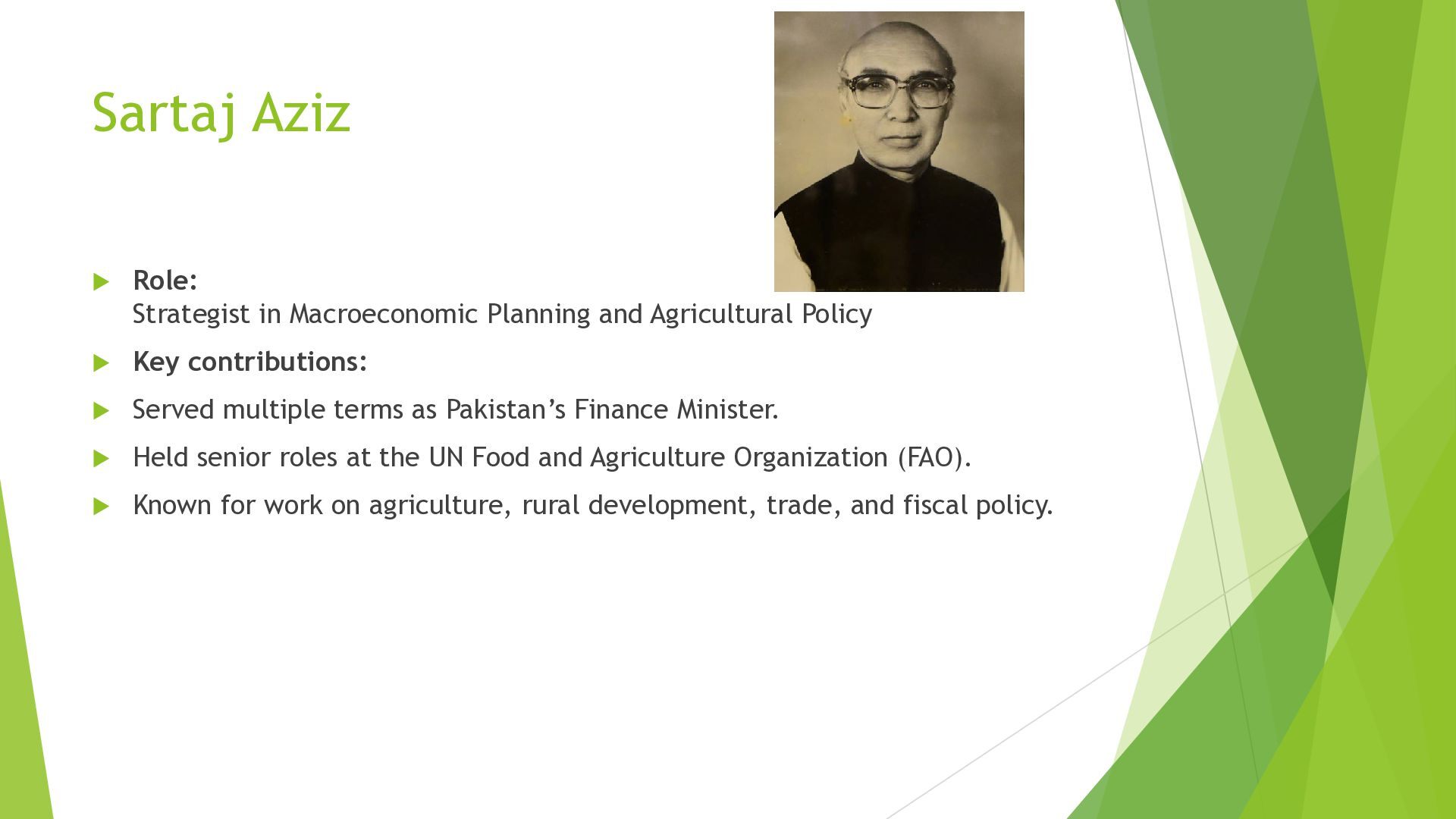
  7. Sartaj Aziz  Role: Strategist in Macroeconomic Planning and Agricultural

    Policy  Key contributions:  Served multiple terms as Pakistan’s Finance Minister.  Held senior roles at the UN Food and Agriculture Organization (FAO).  Known for work on agriculture, rural development, trade, and fiscal policy.
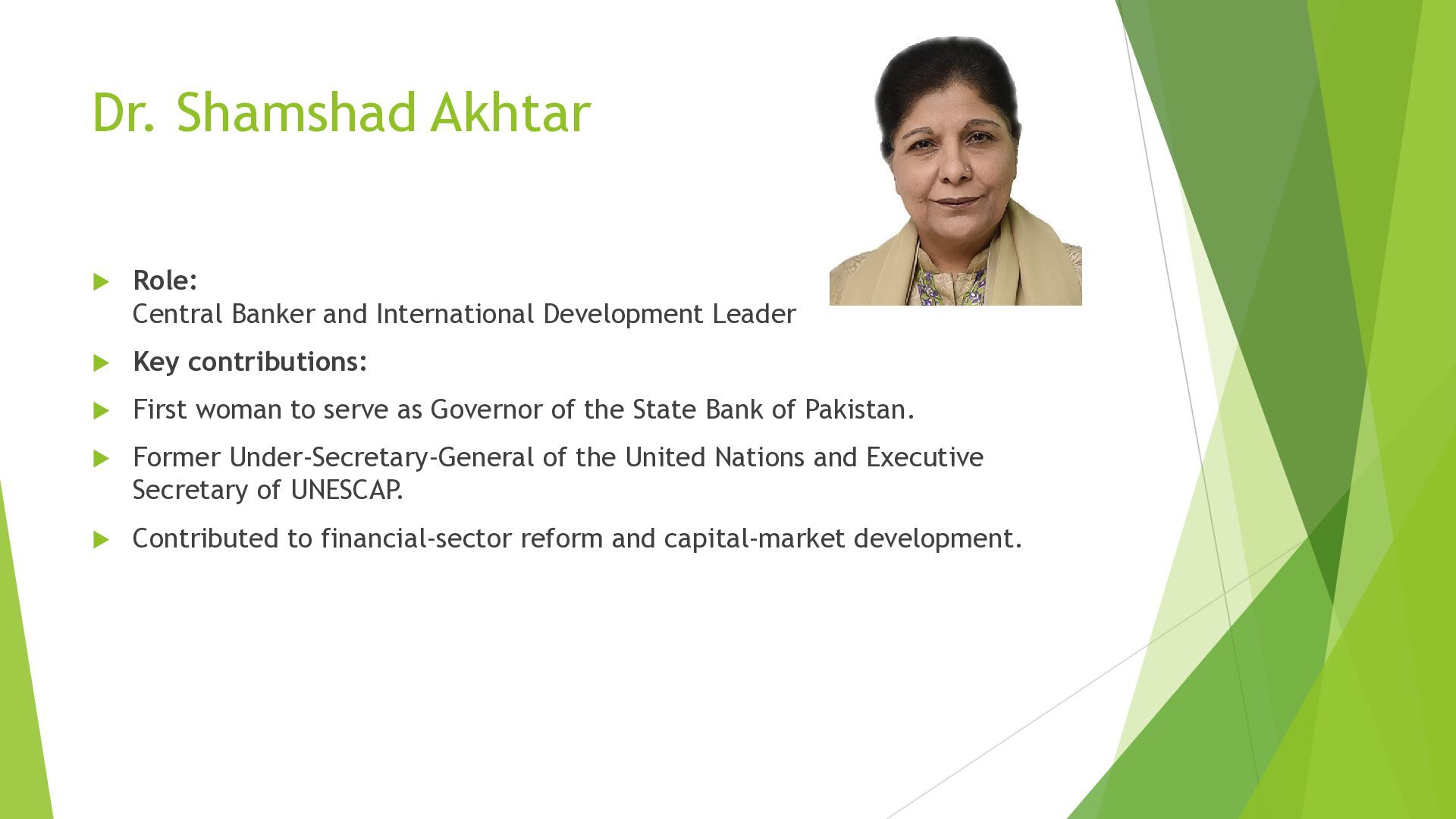
  8. Dr. Shamshad Akhtar  Role: Central Banker and International Development

    Leader  Key contributions:  First woman to serve as Governor of the State Bank of Pakistan.  Former Under-Secretary-General of the United Nations and Executive Secretary of UNESCAP.  Contributed to financial-sector reform and capital-market development.
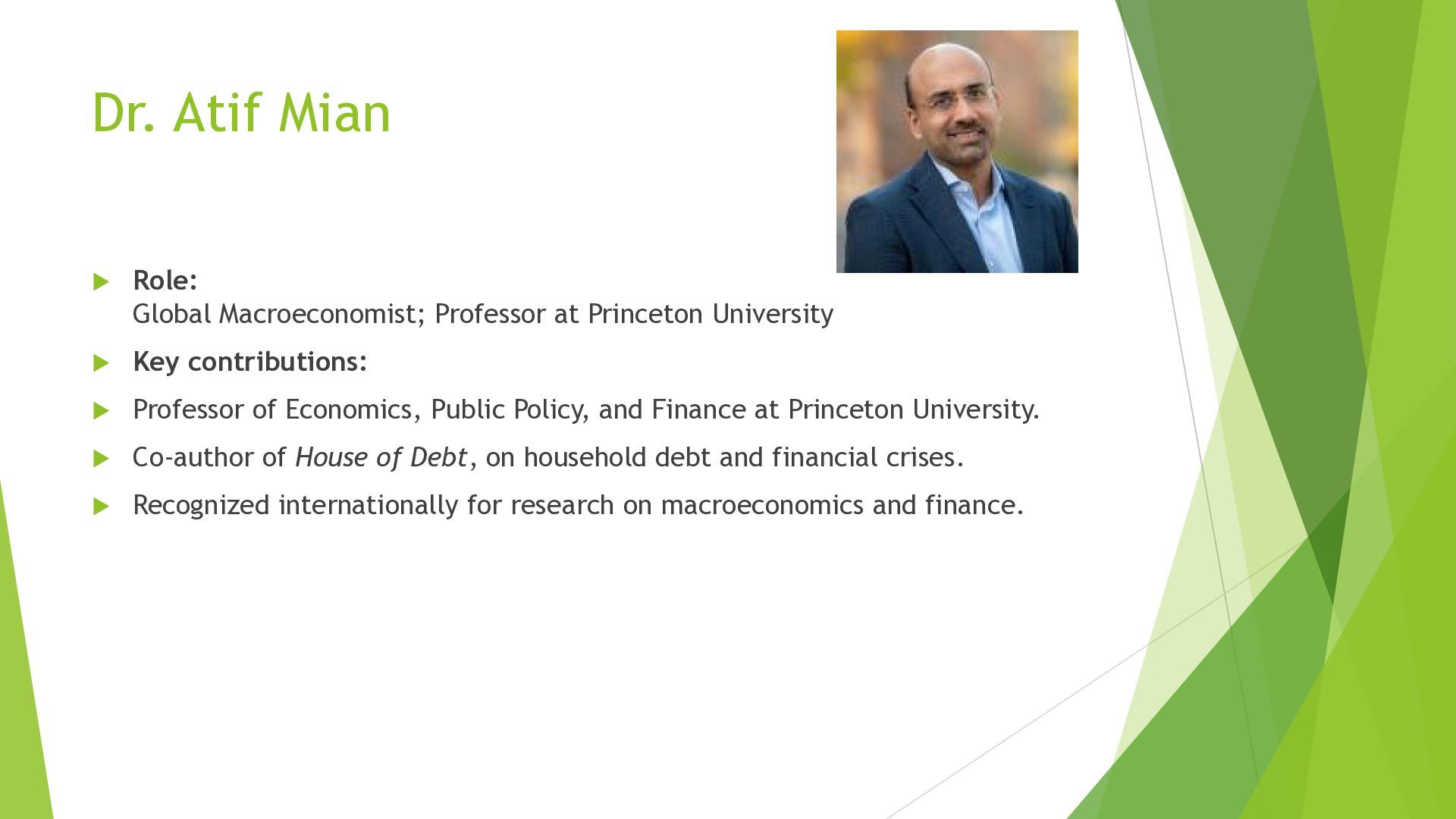
  9. Dr. Atif Mian  Role: Global Macroeconomist; Professor at Princeton

    University  Key contributions:  Professor of Economics, Public Policy, and Finance at Princeton University.  Co-author of House of Debt, on household debt and financial crises.  Recognized internationally for research on macroeconomics and finance.
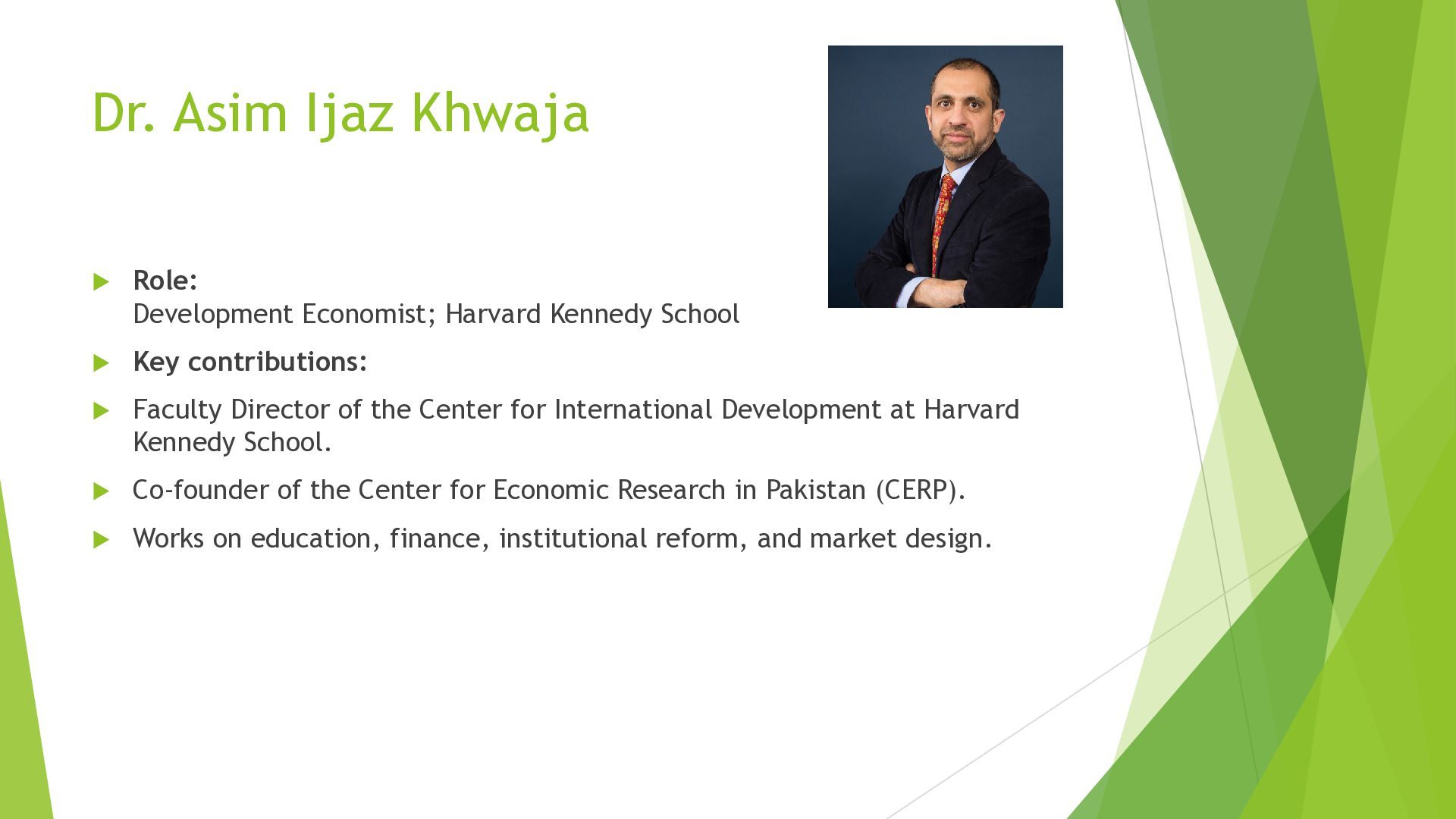
  10. Dr. Asim Ijaz Khwaja  Role: Development Economist; Harvard Kennedy

    School  Key contributions:  Faculty Director of the Center for International Development at Harvard Kennedy School.  Co-founder of the Center for Economic Research in Pakistan (CERP).  Works on education, finance, institutional reform, and market design.
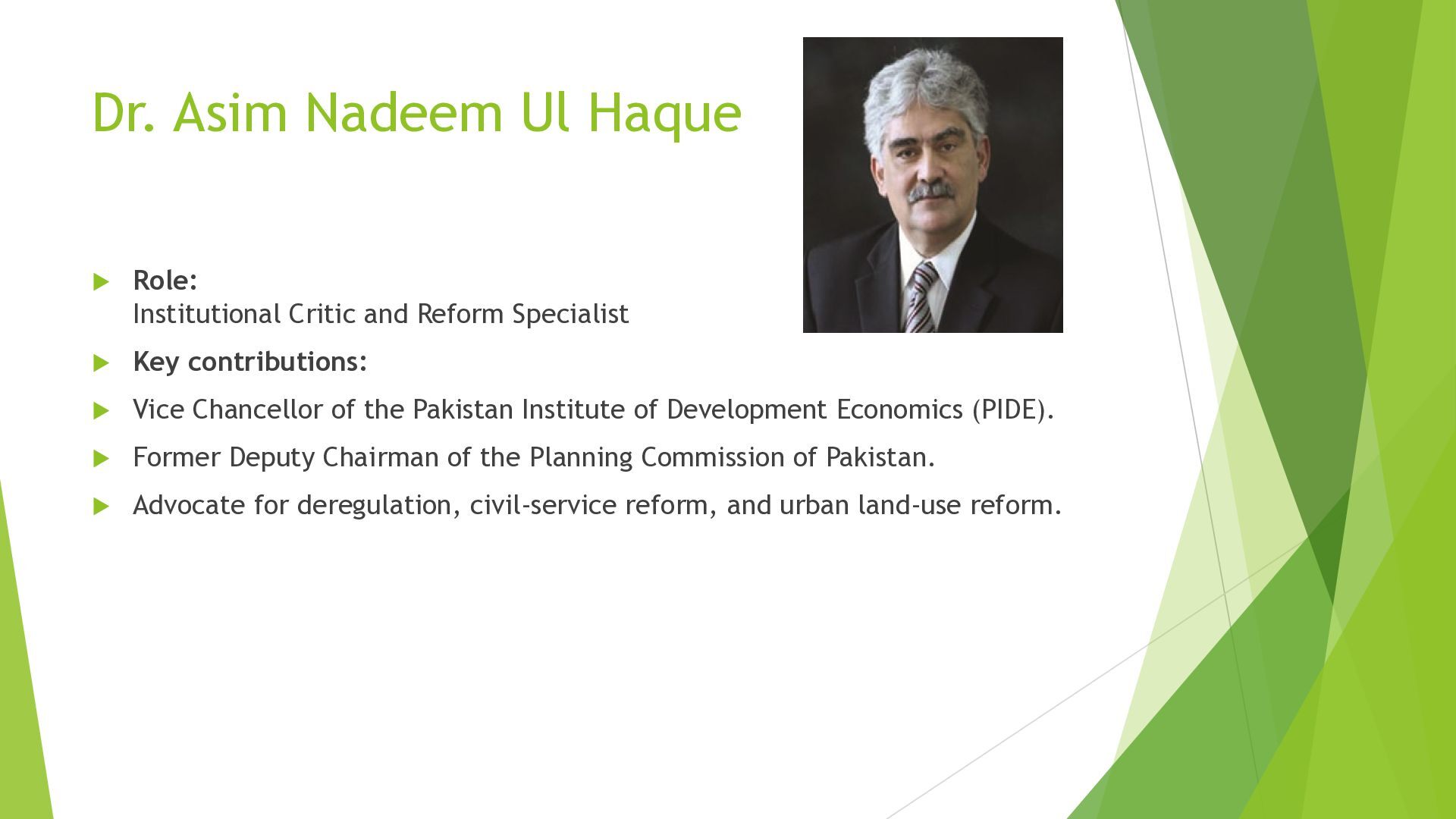
  11. Dr. Asim Nadeem Ul Haque  Role: Institutional Critic and

    Reform Specialist  Key contributions:  Vice Chancellor of the Pakistan Institute of Development Economics (PIDE).  Former Deputy Chairman of the Planning Commission of Pakistan.  Advocate for deregulation, civil-service reform, and urban land-use reform.
  12. Why This List Matters  Key points:  Pakistan’s development

    history has been shaped not only by politicians but also by economists, planners, and institution builders.  Economic appraisal, fiscal policy, and institutional reform remain central to Pakistan’s future.  Recognizing professionals like Syed Mumtaz Ali helps complete the history of Pakistan’s development planning.  Closing line: This presentation is intended as an educational overview, not a ranked or exhaustive list.