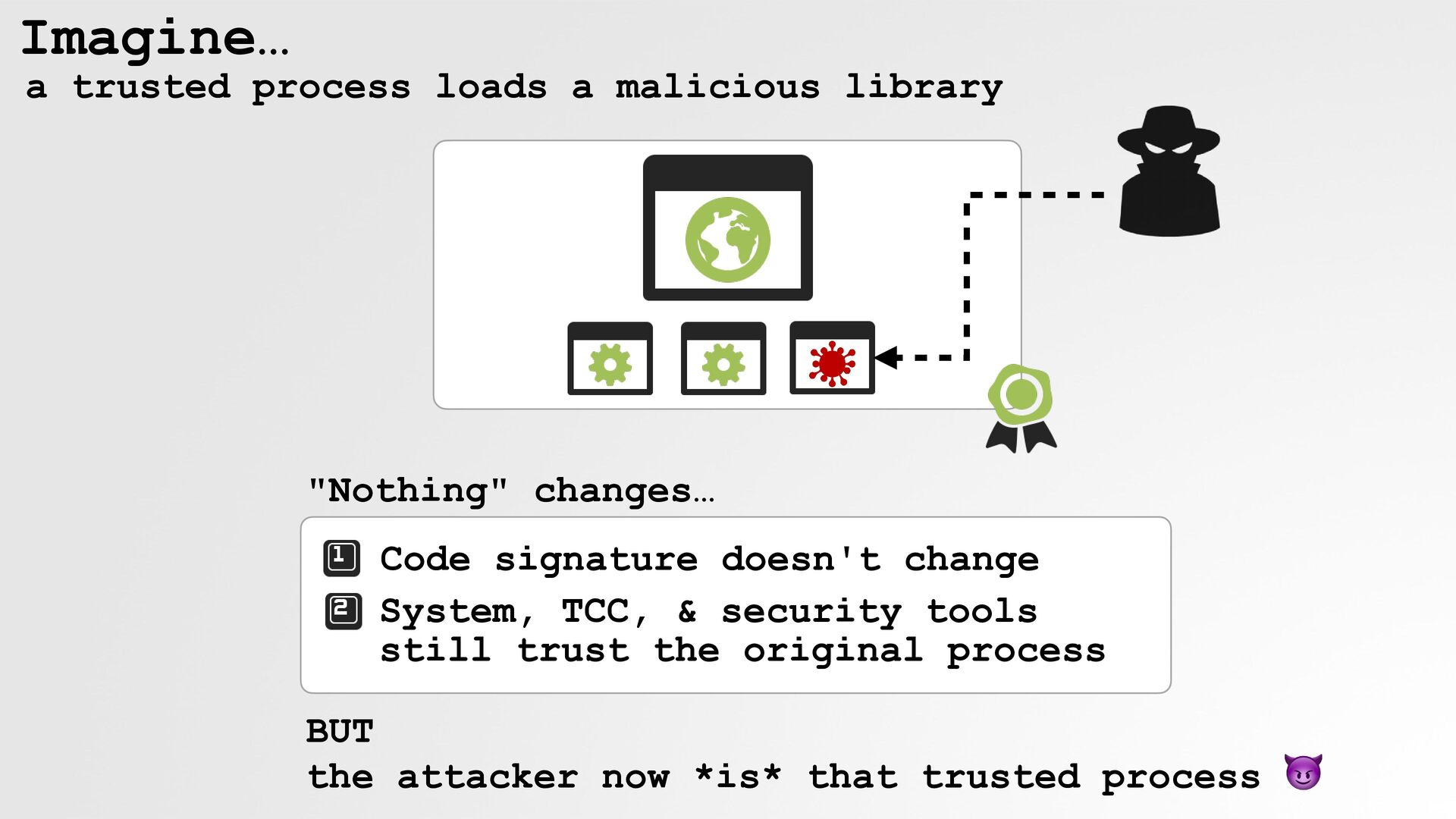
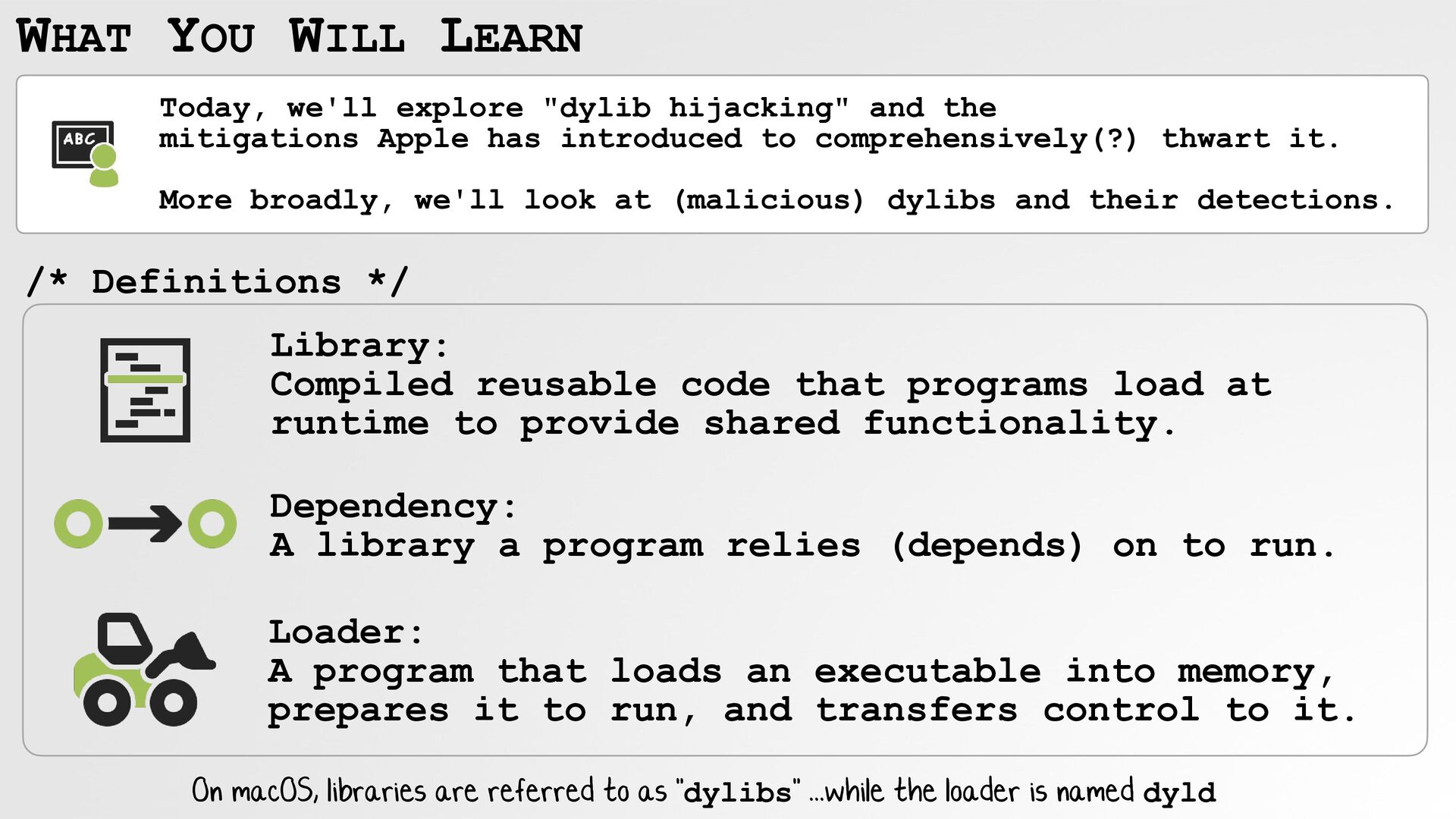
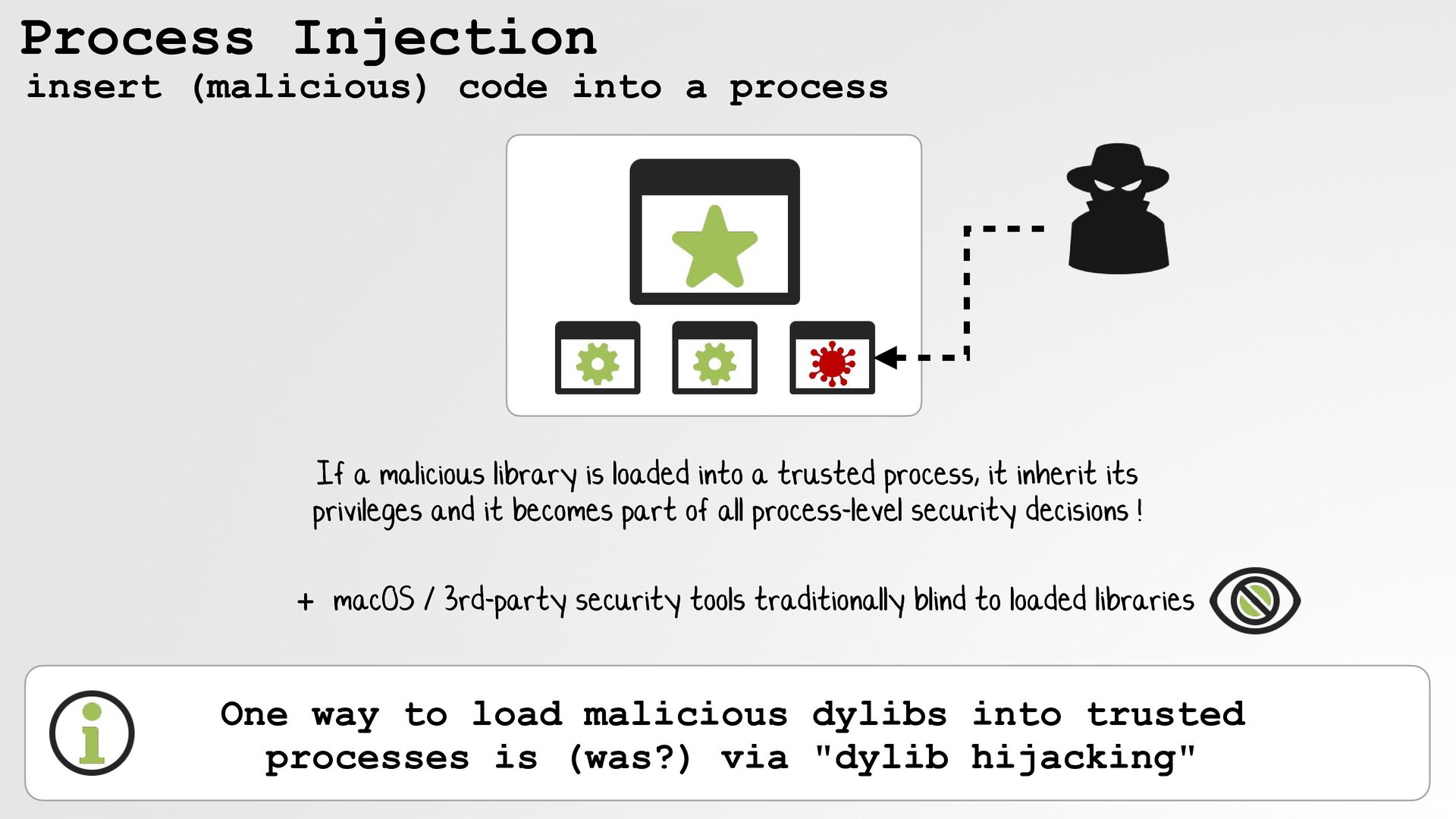
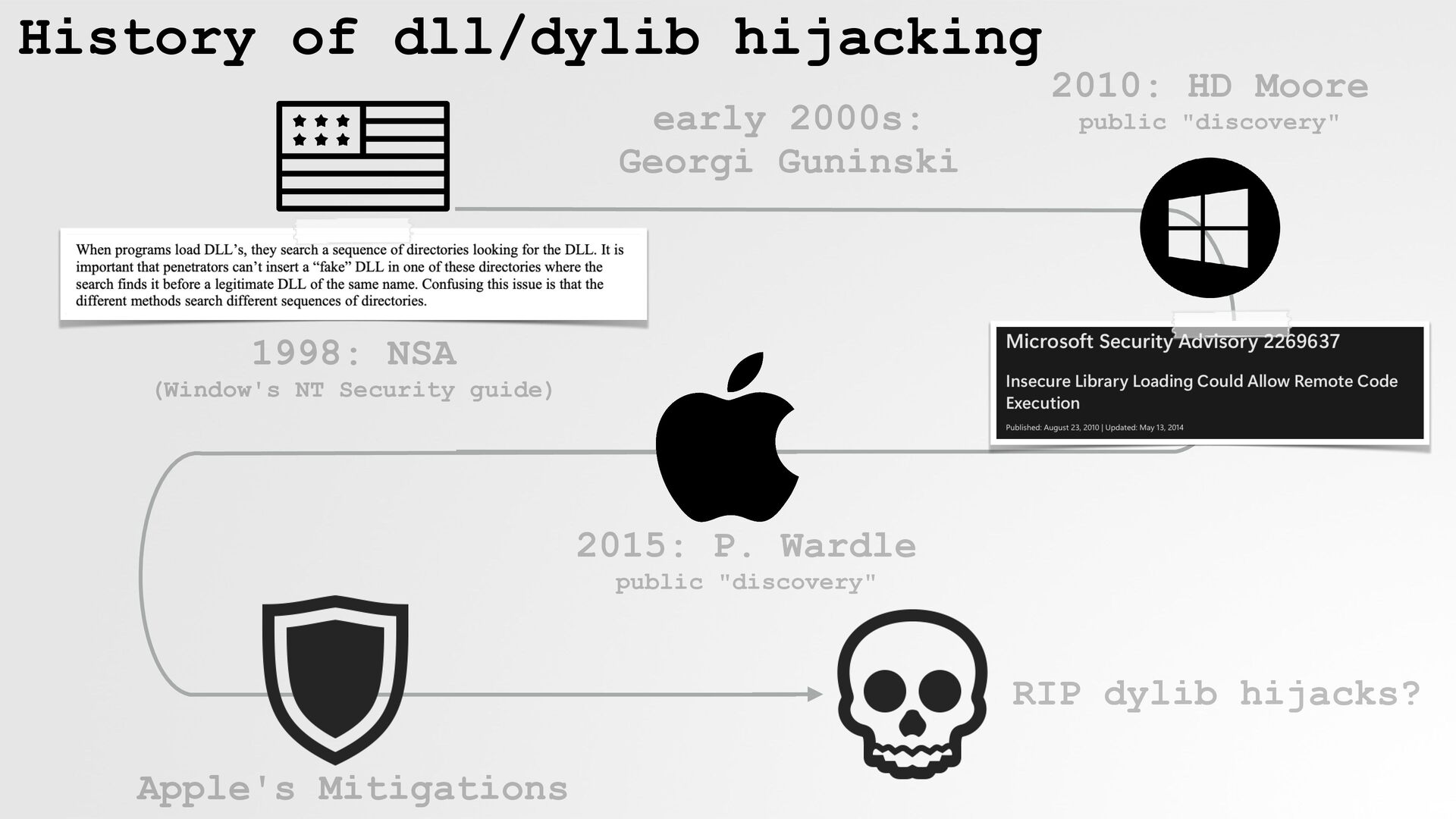
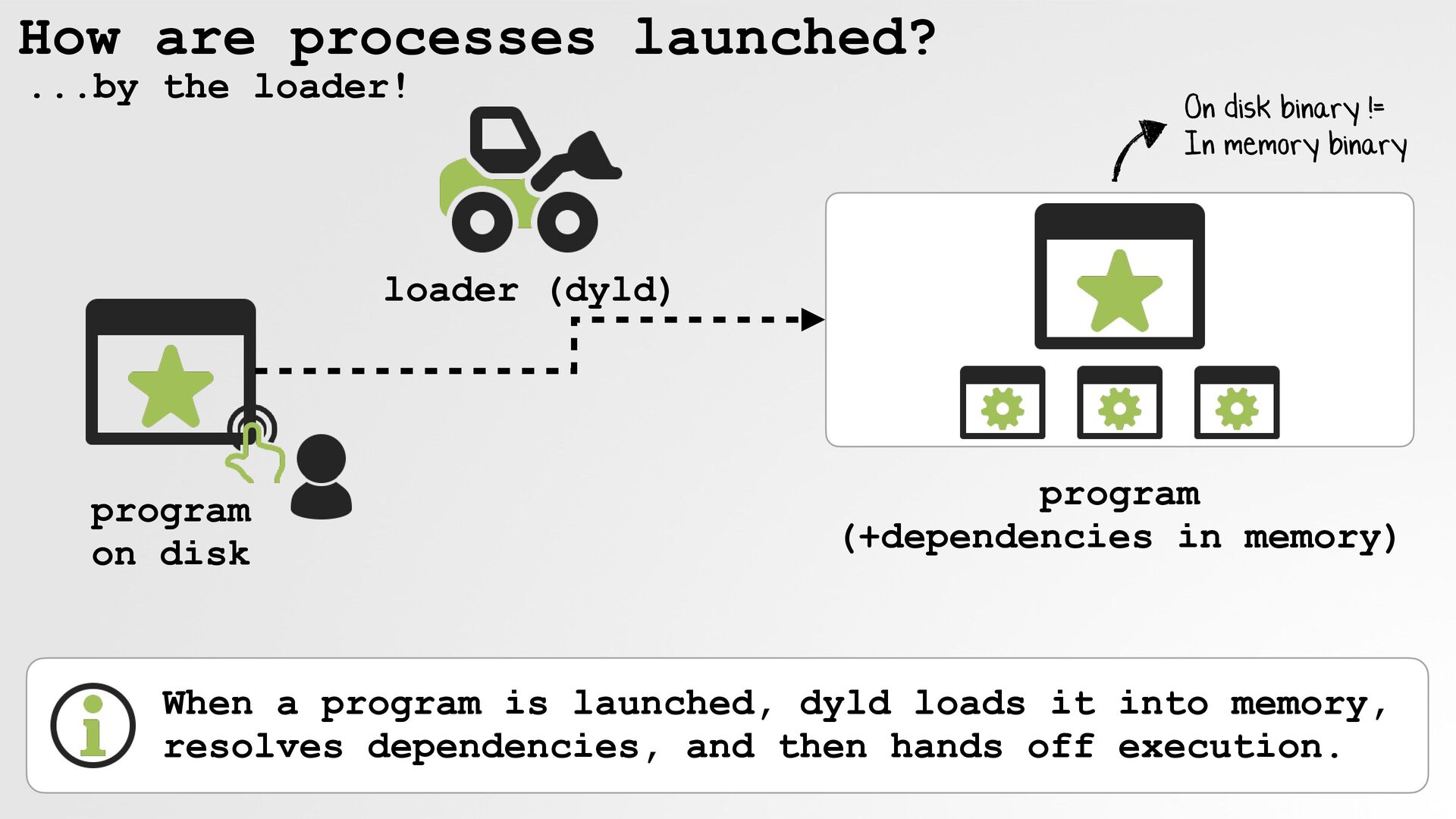
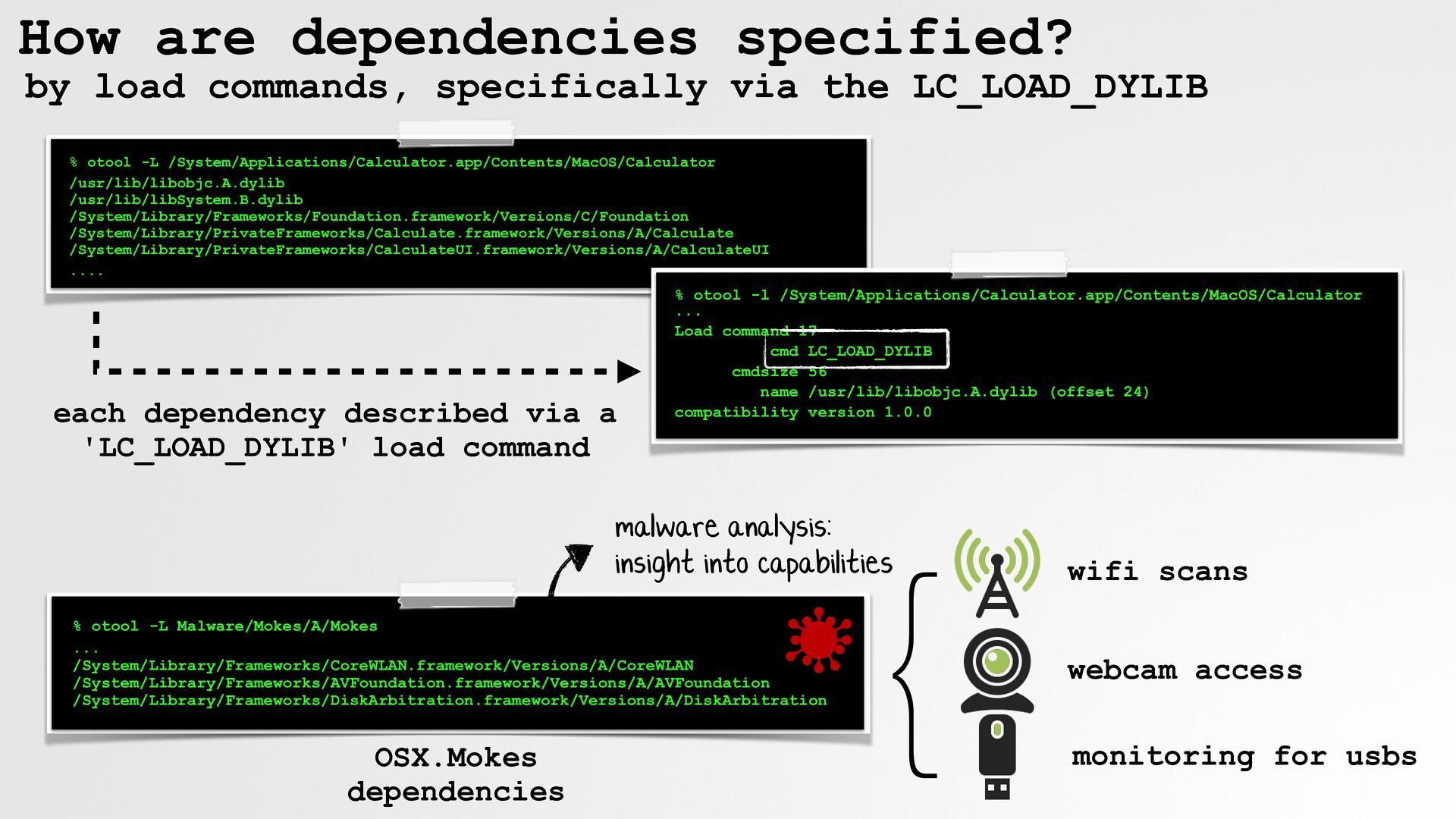
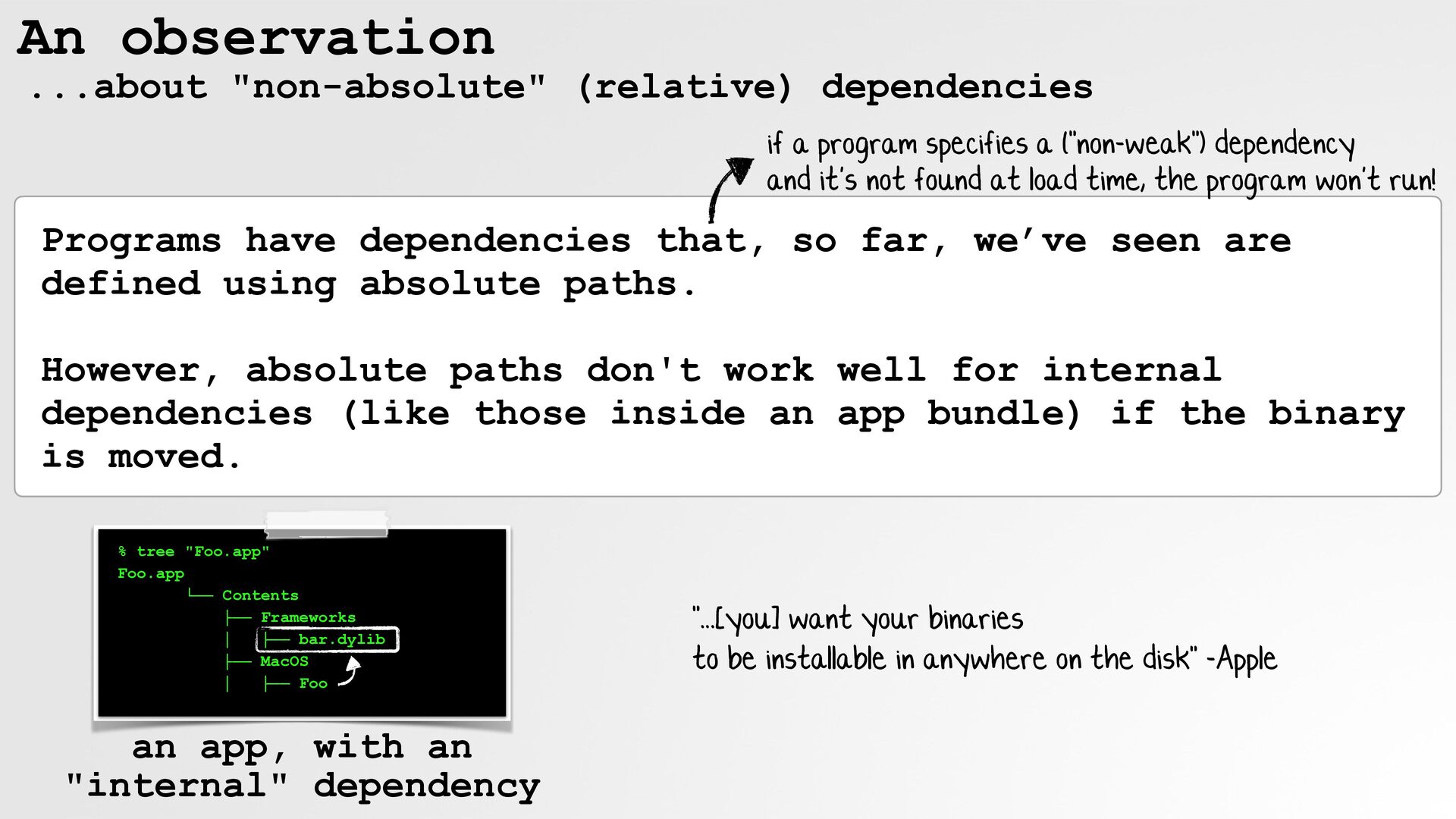
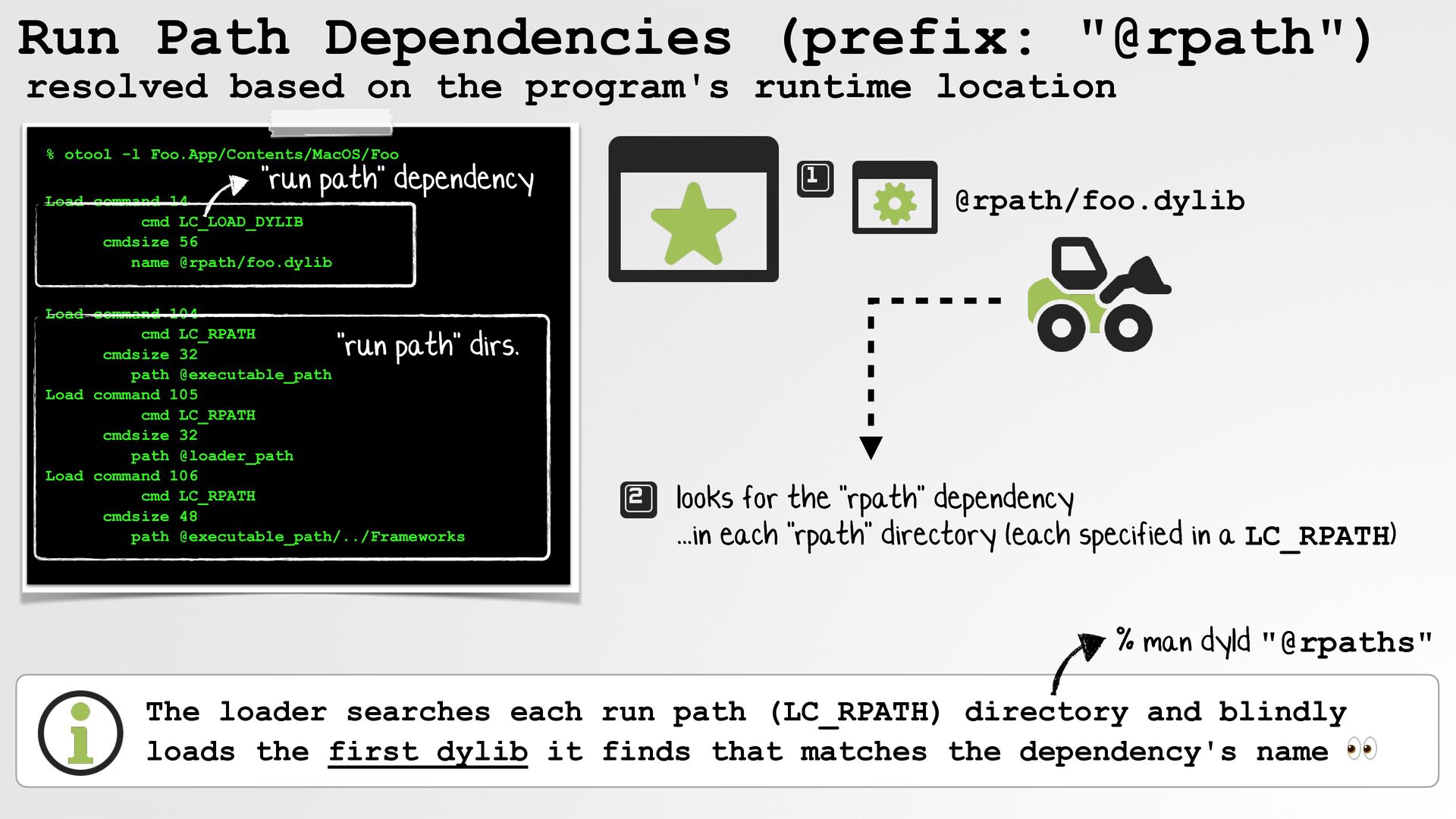
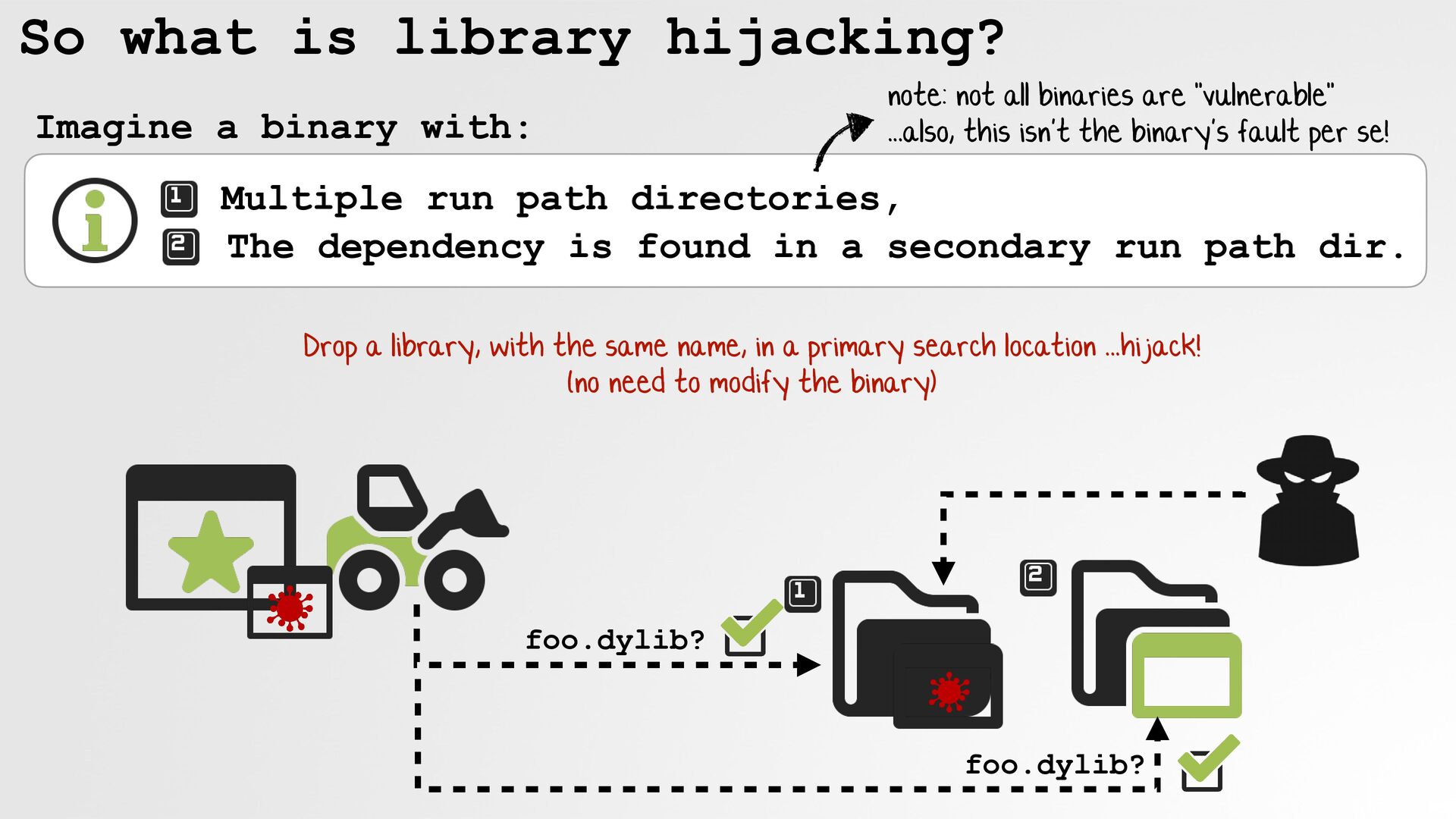
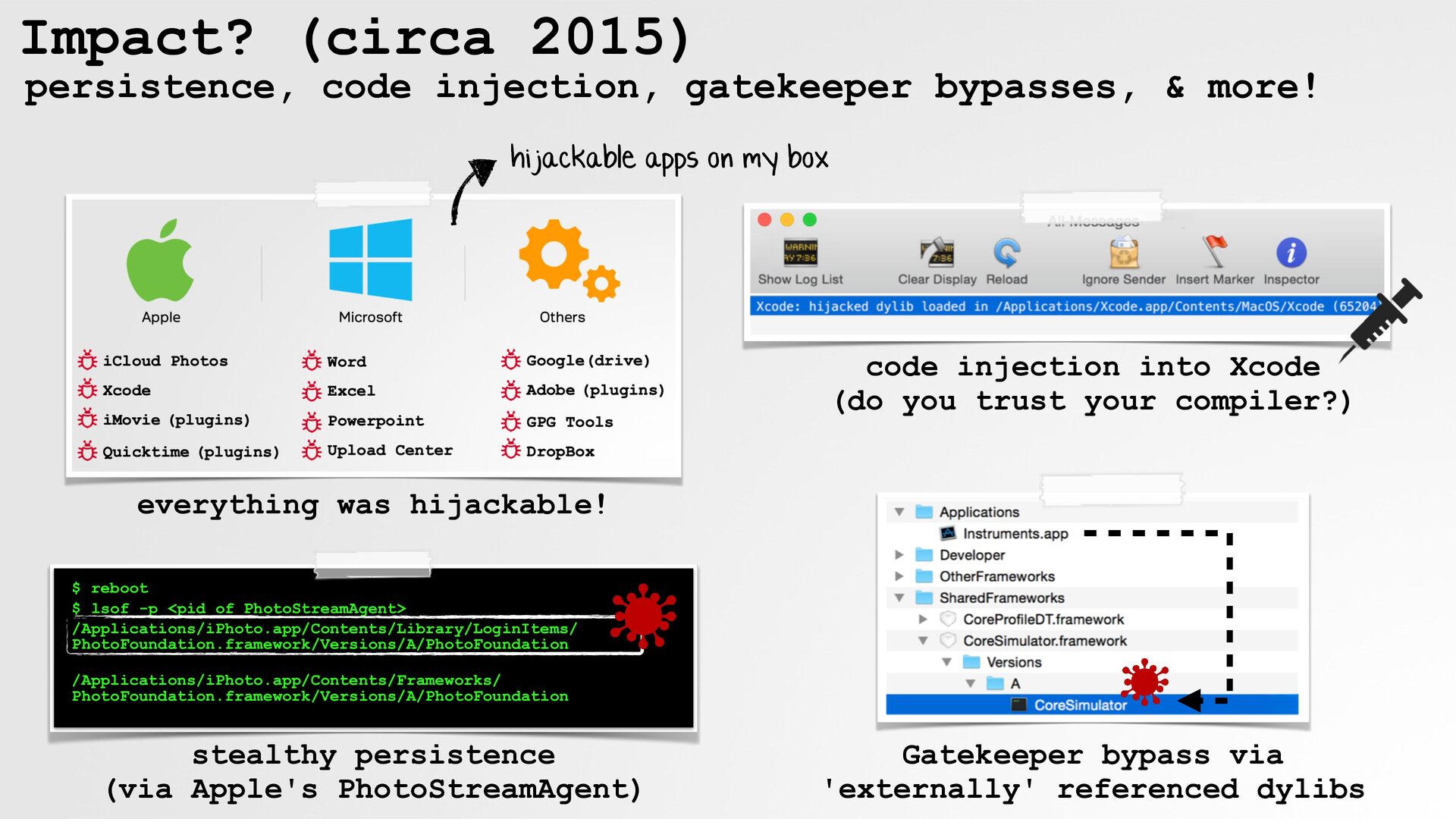
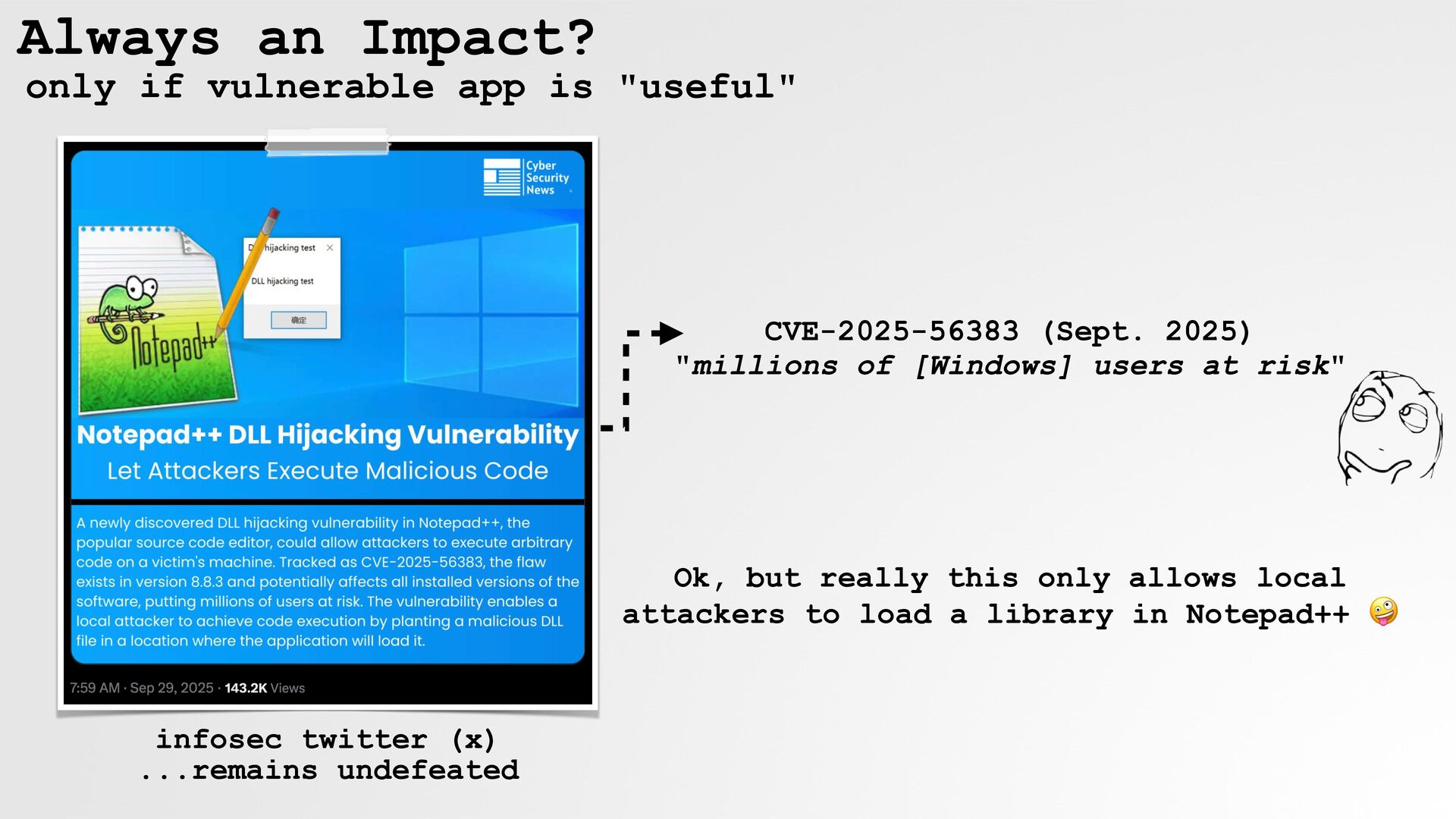
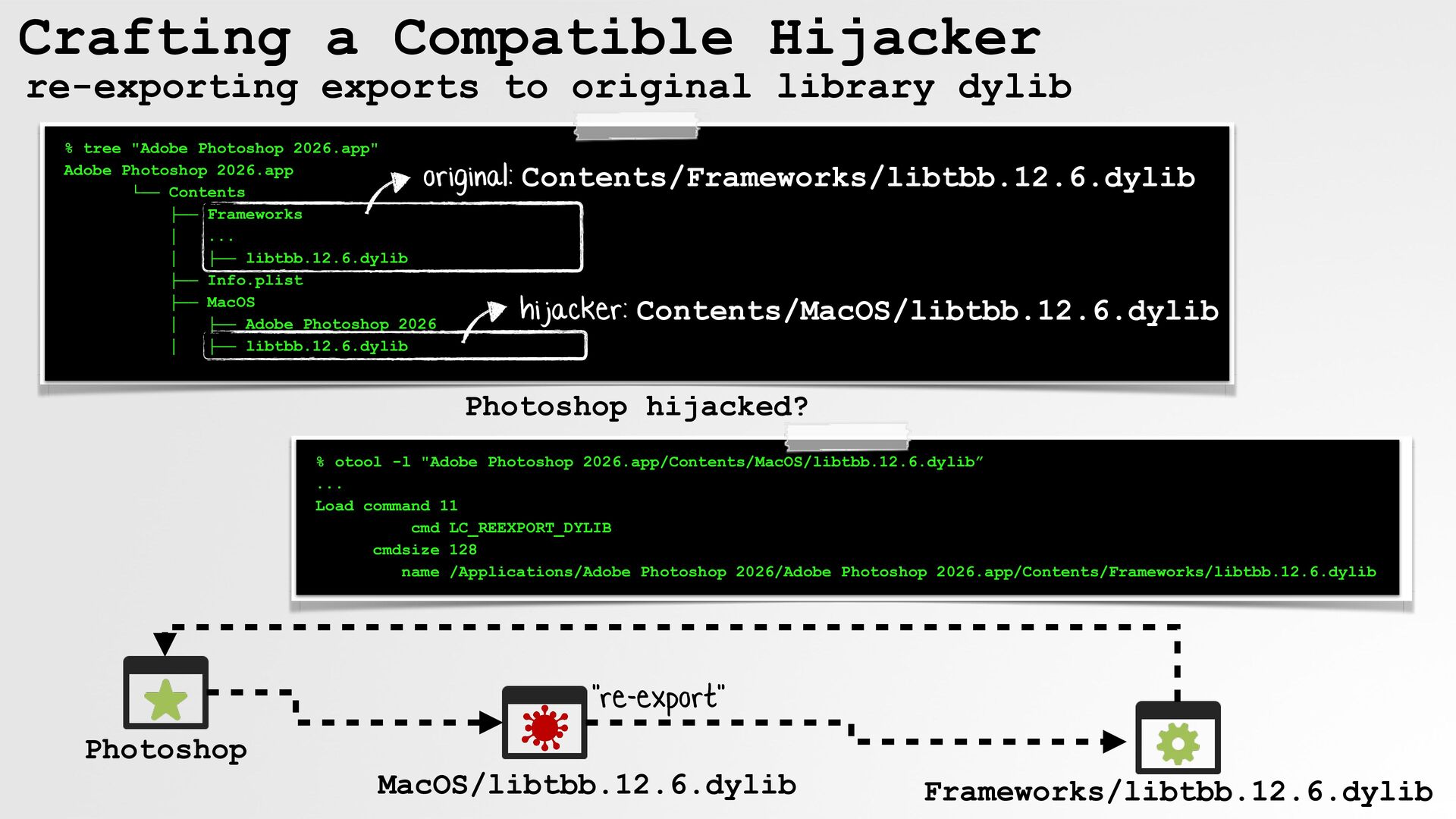
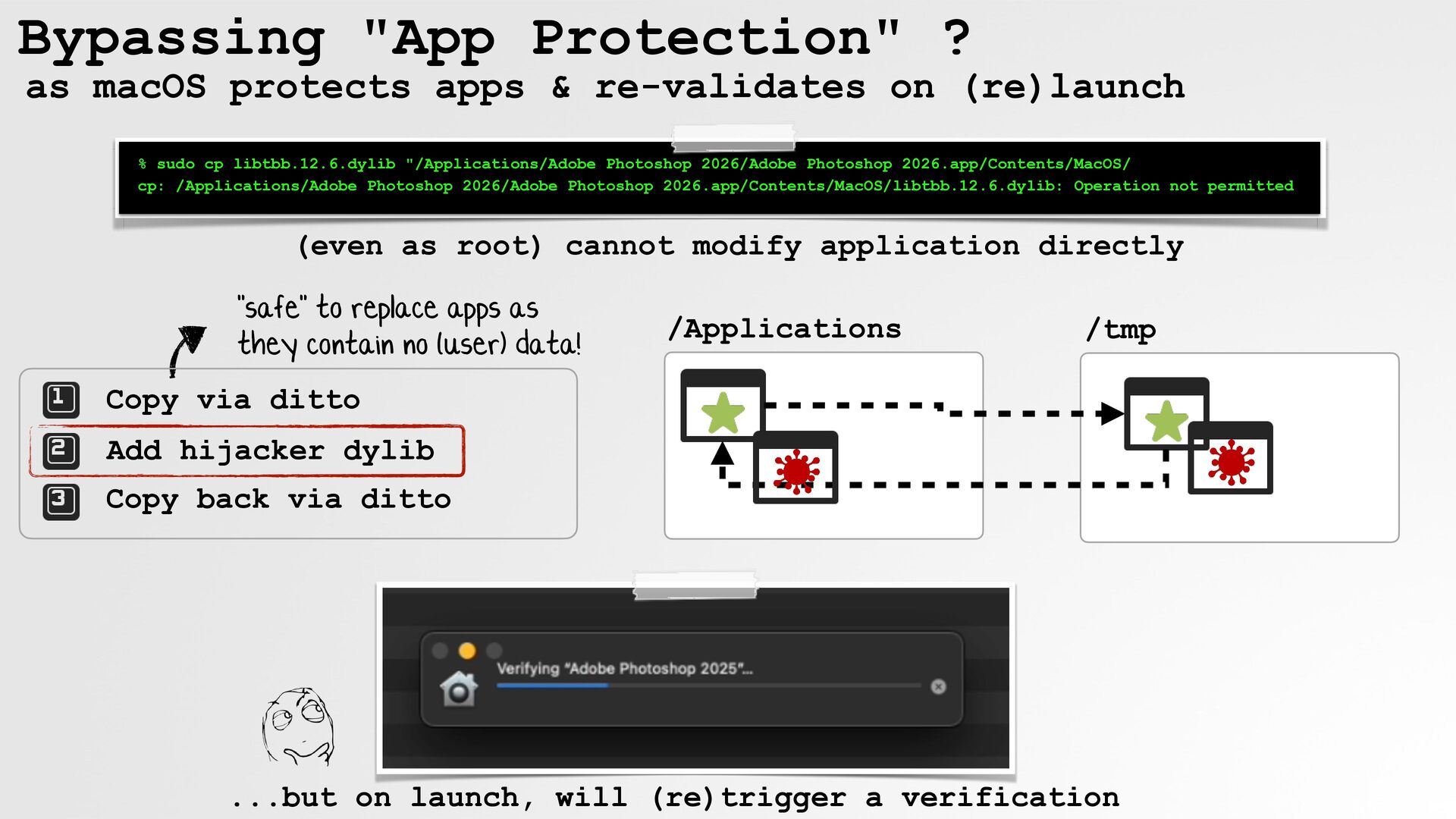
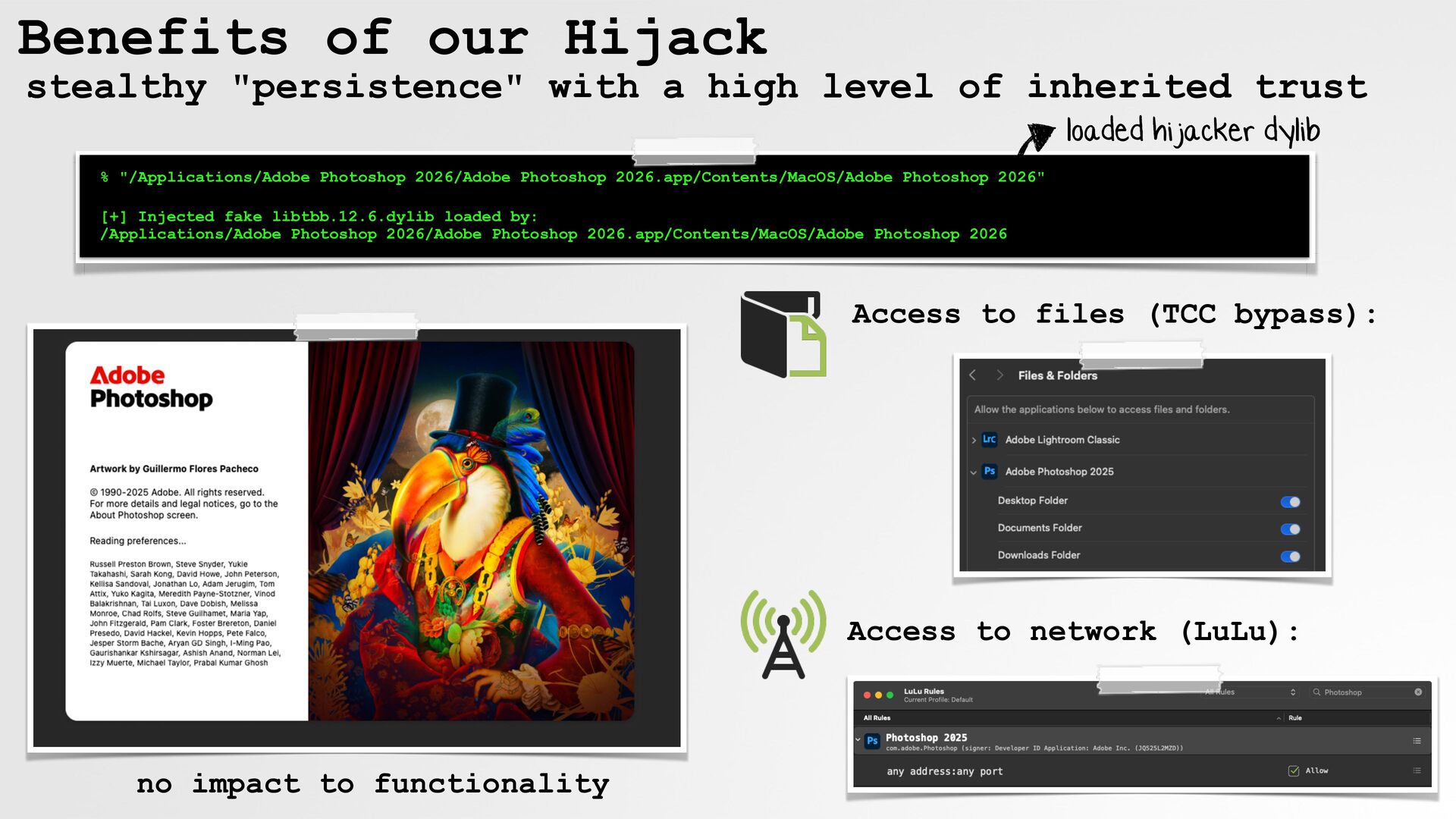
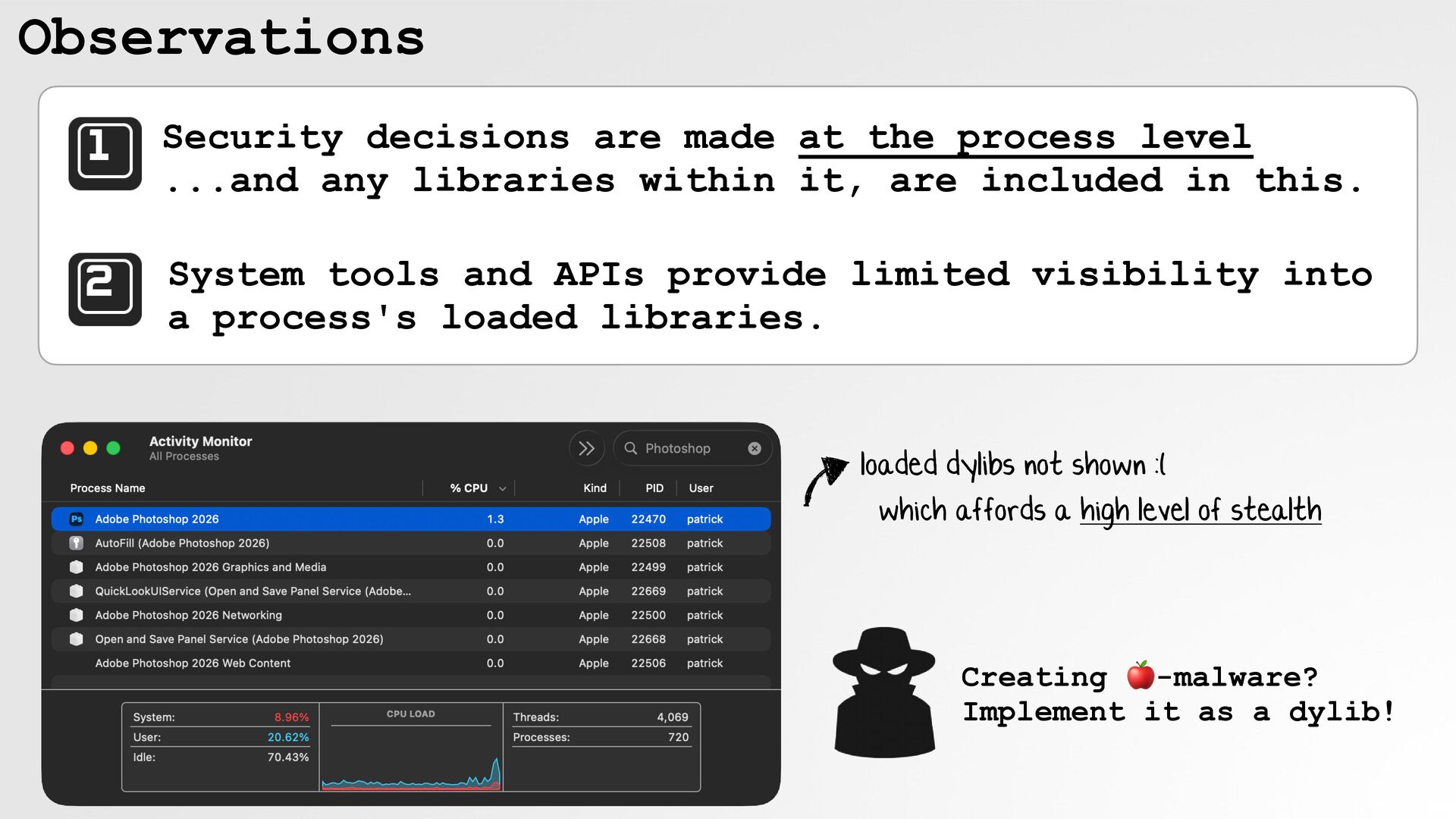
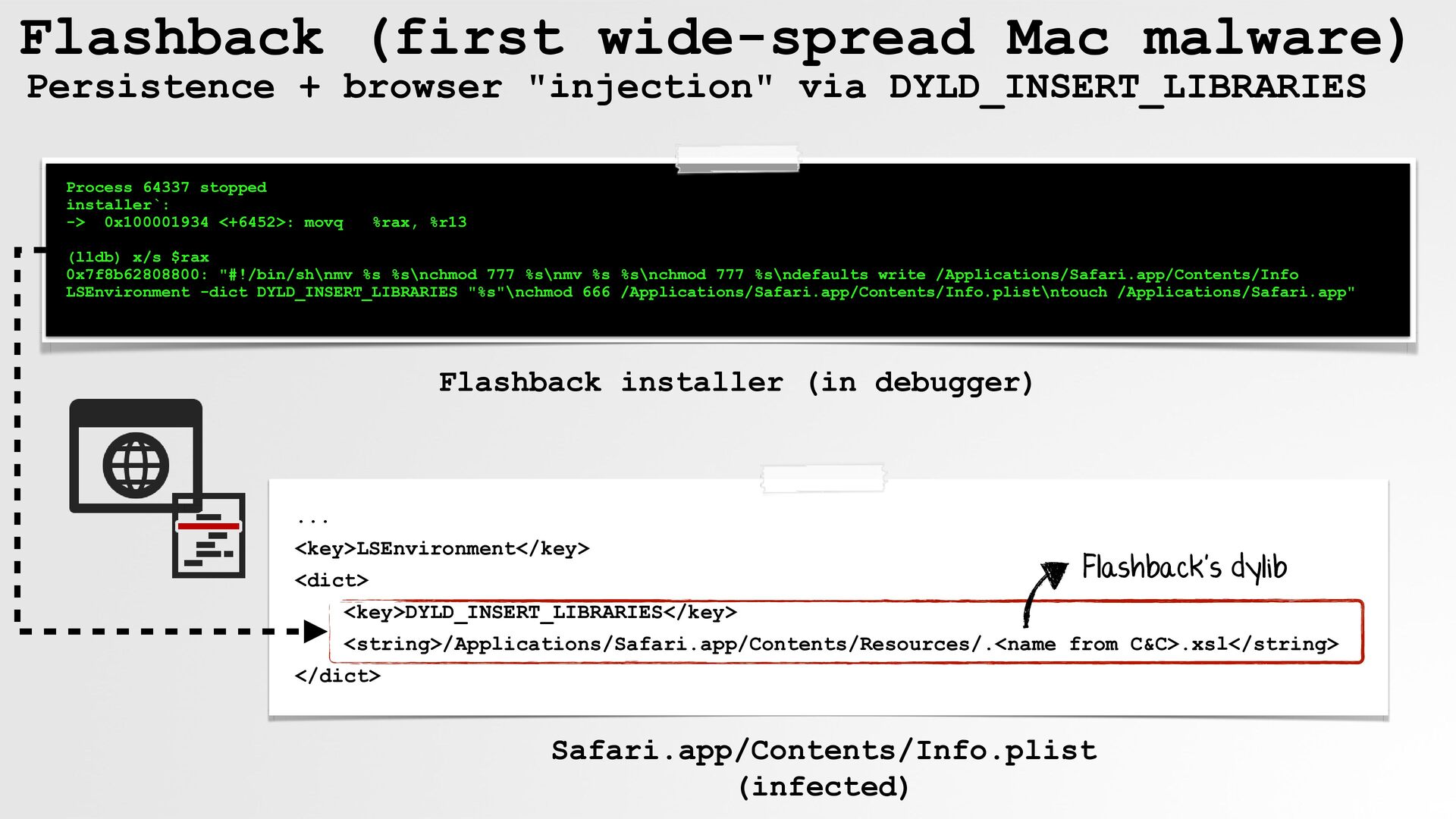
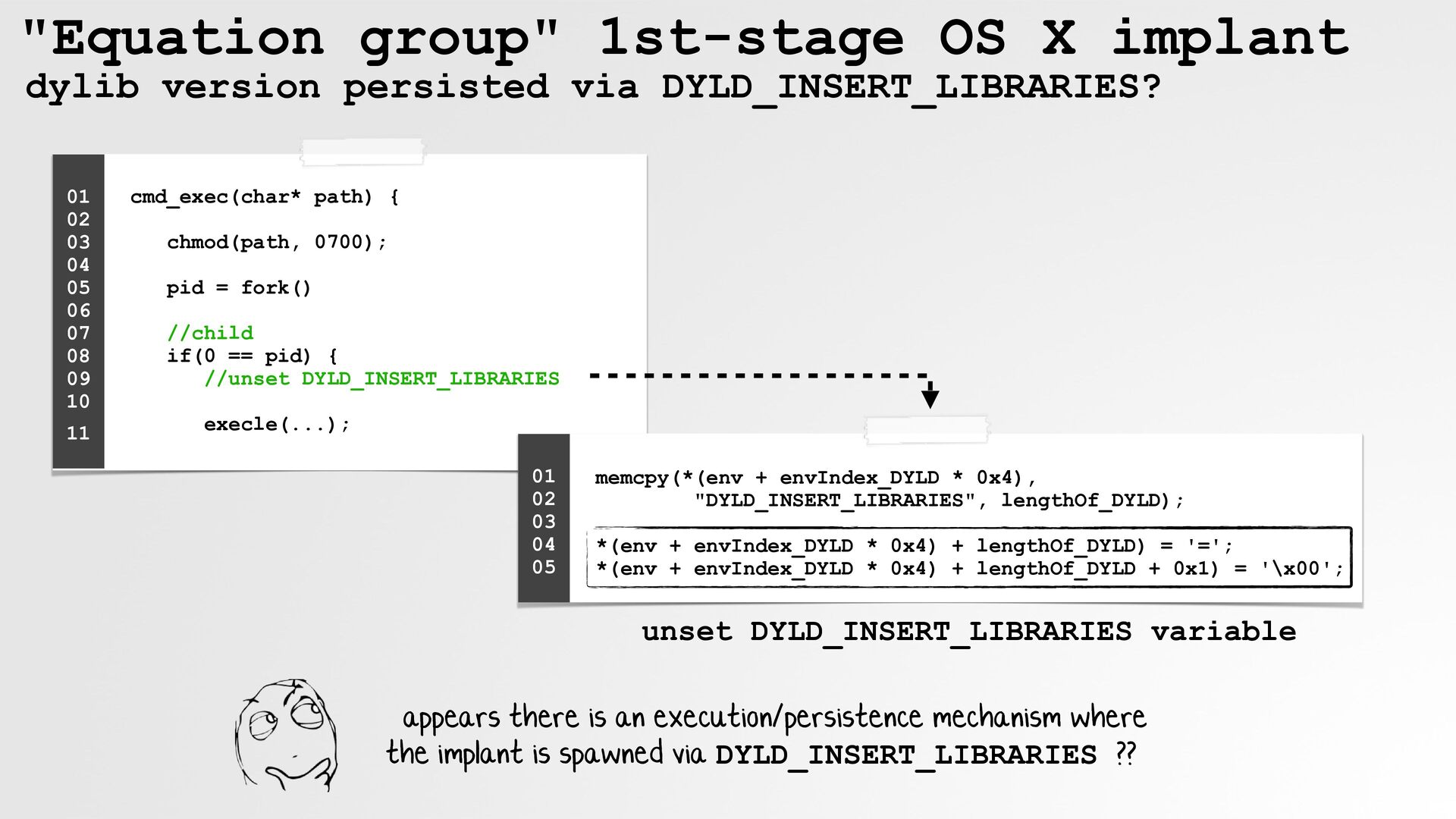
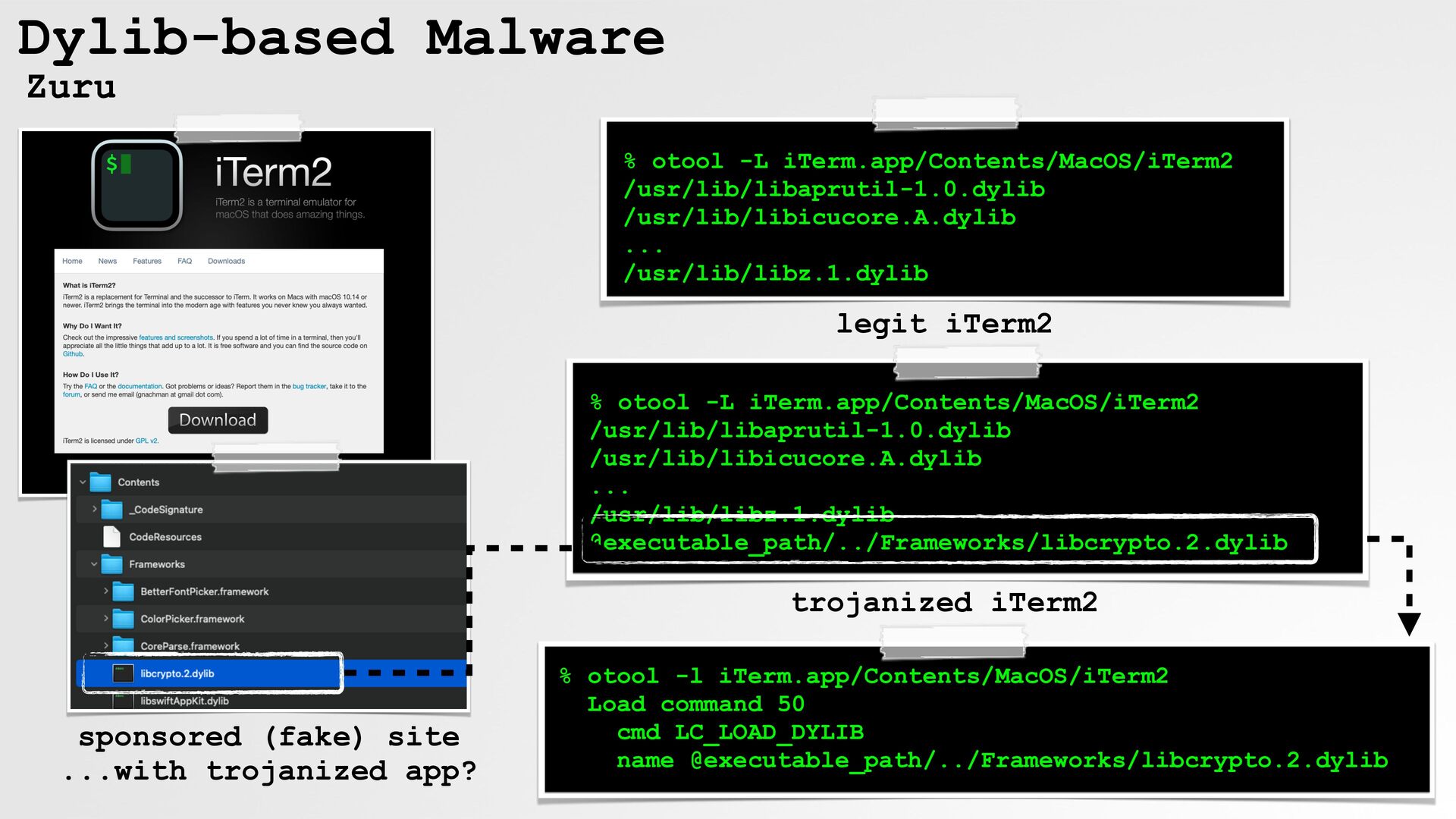
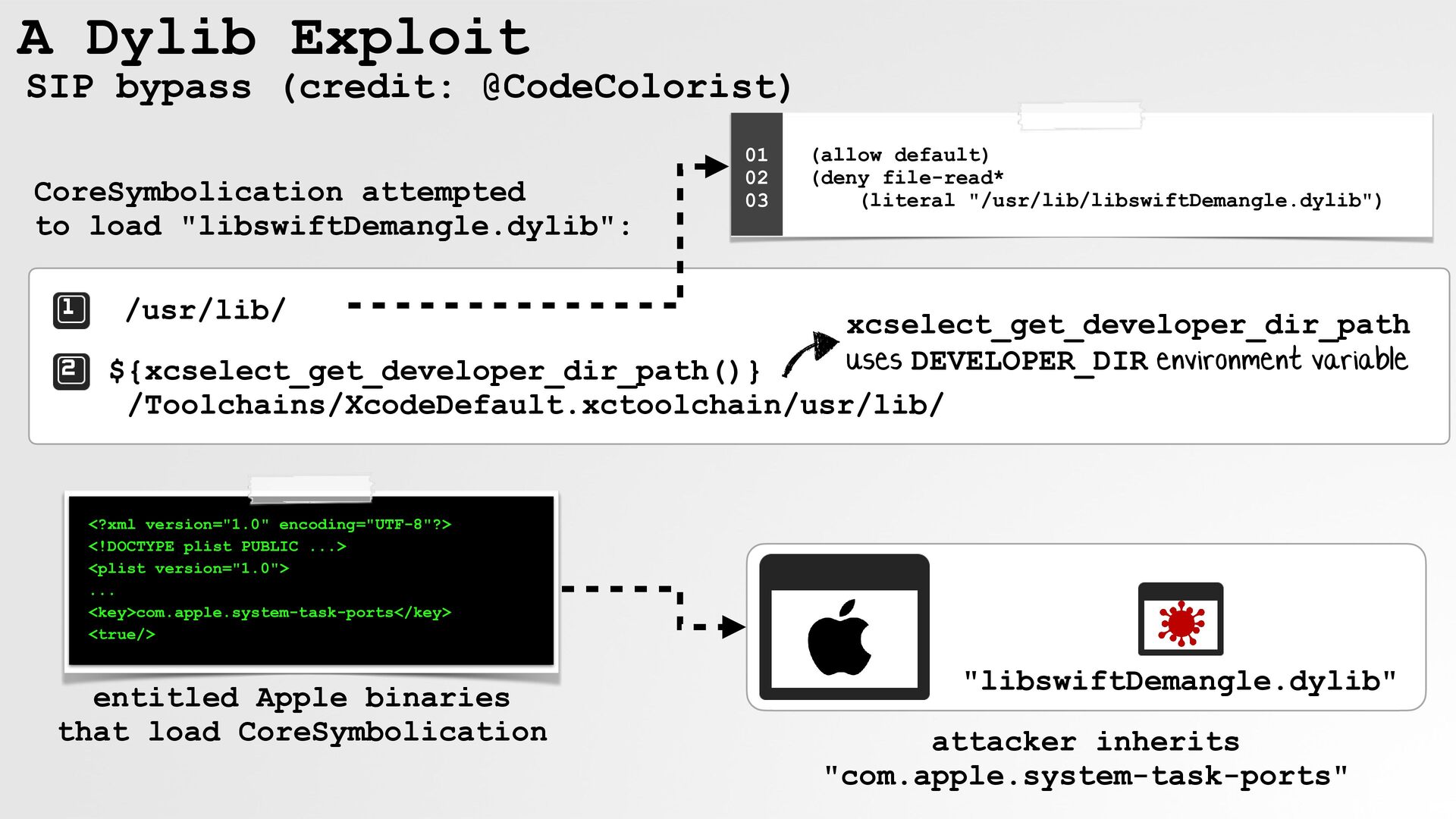
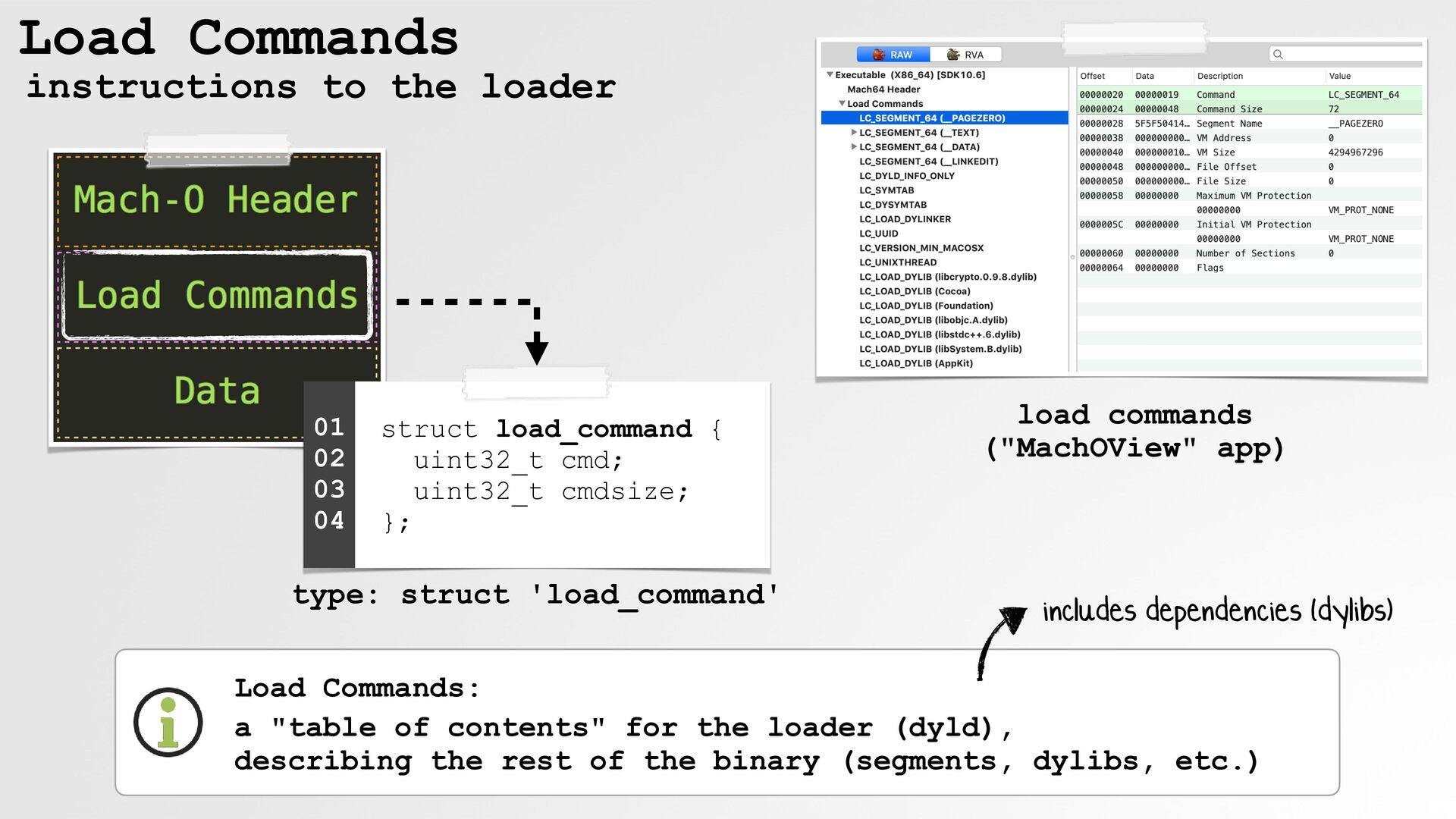
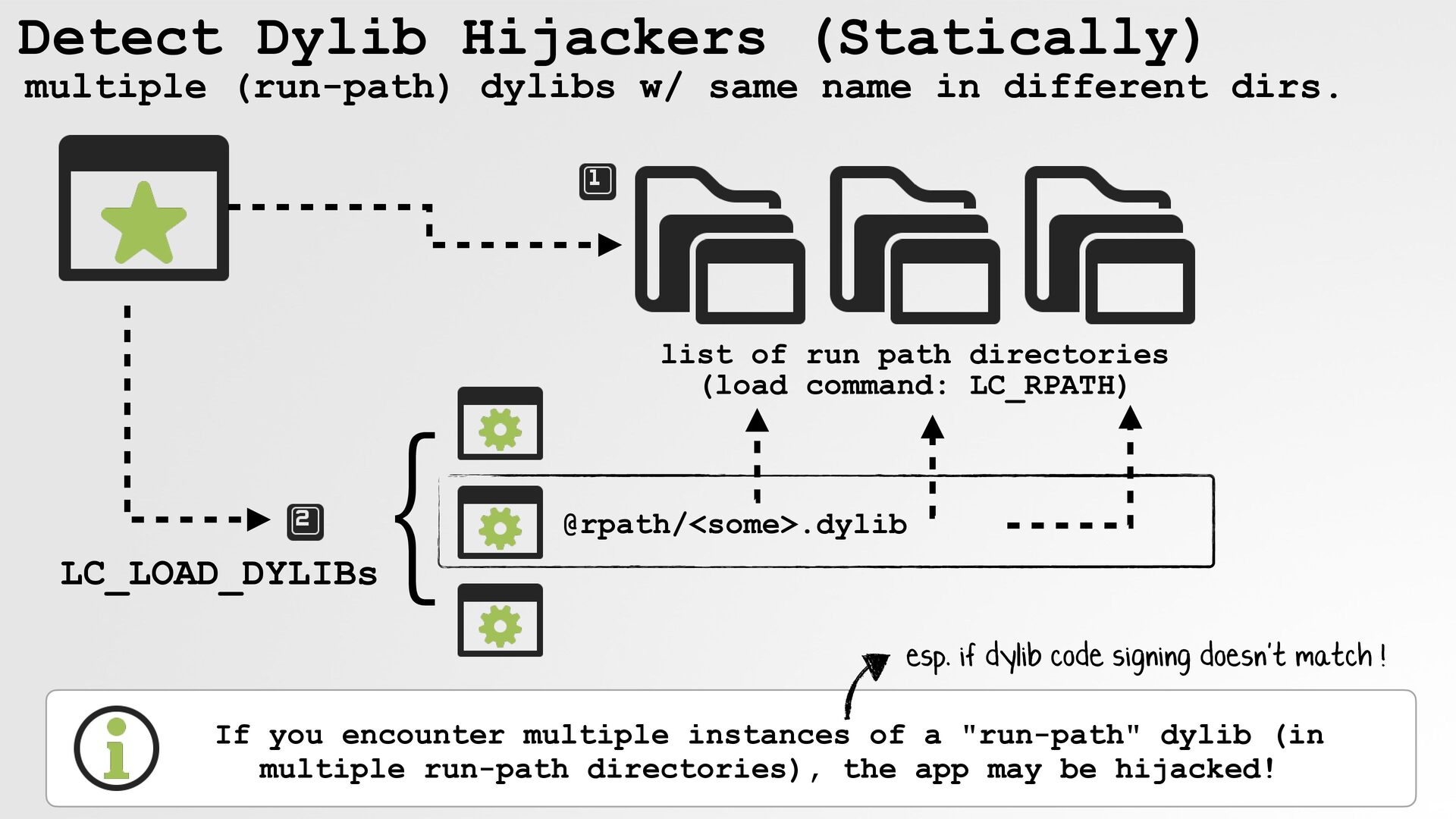
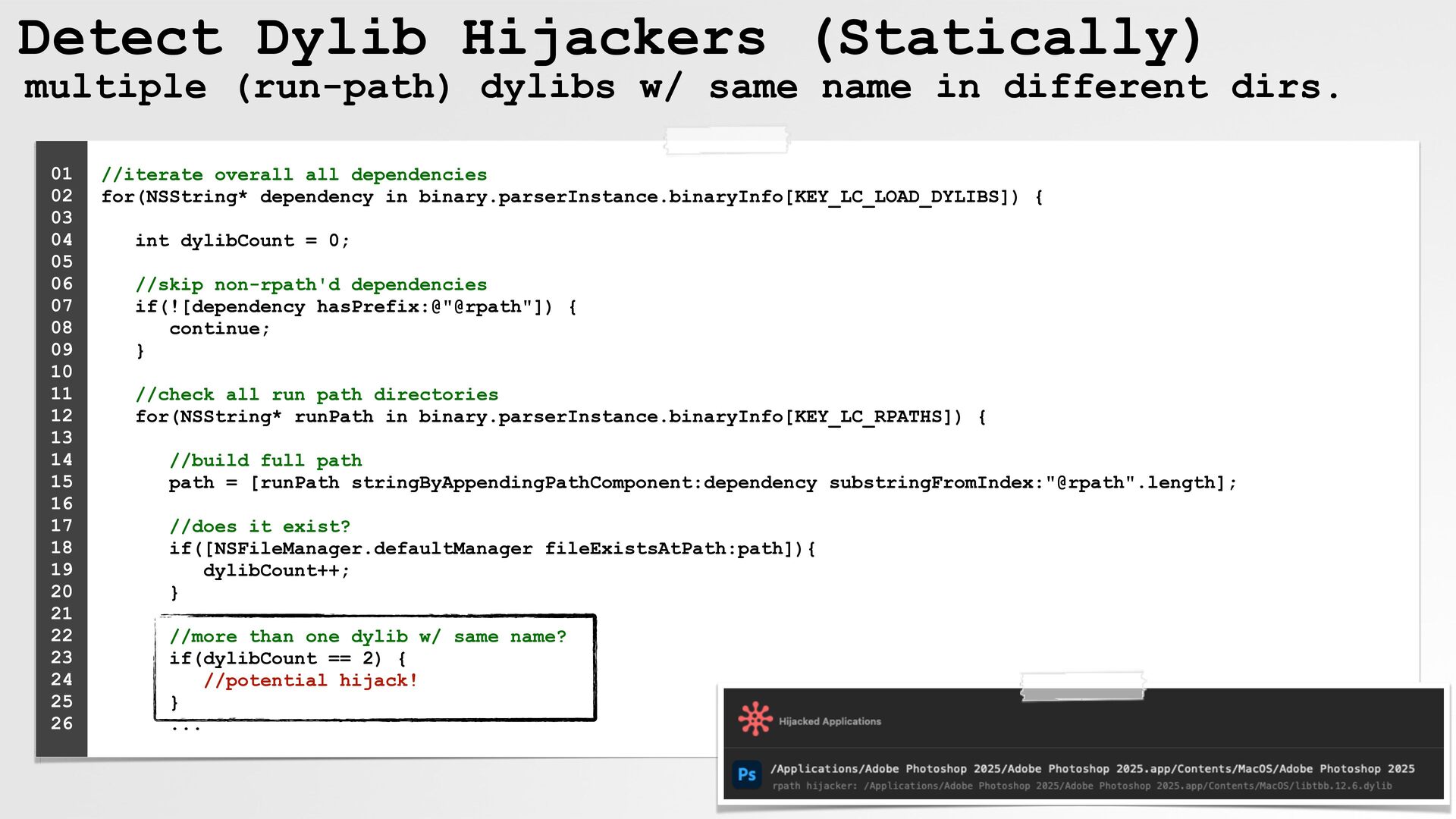
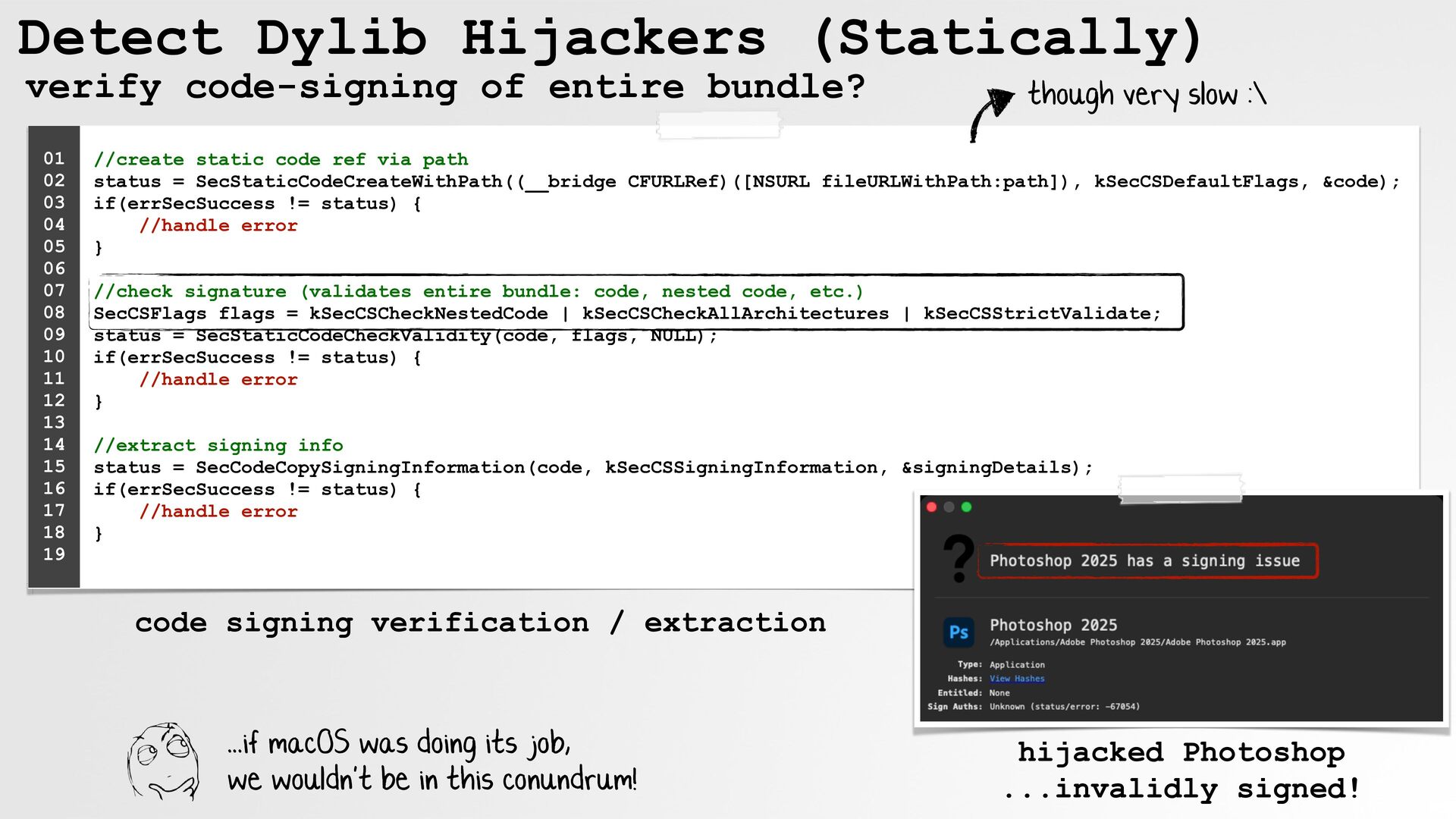
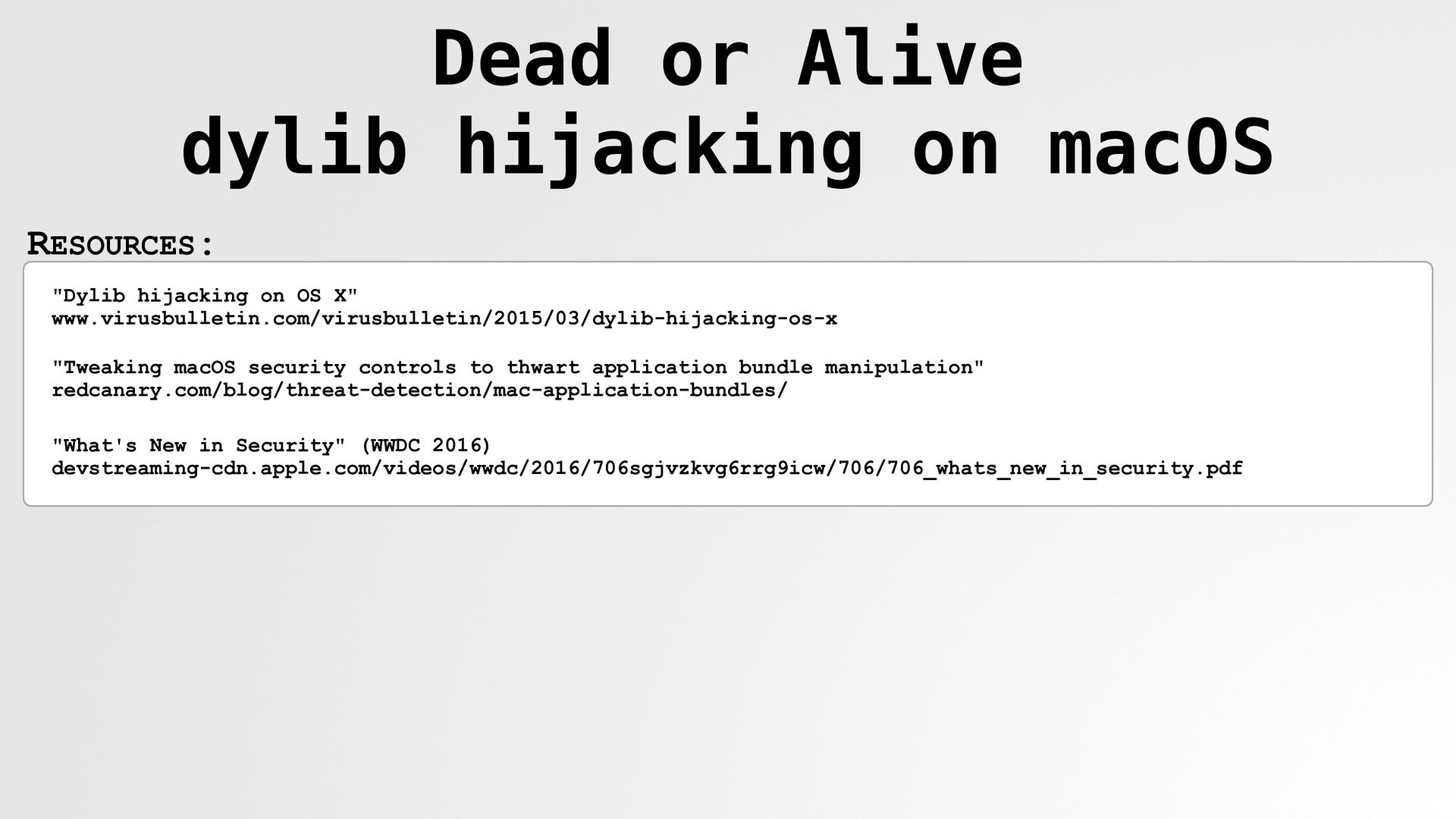
Over a decade ago, a much younger Patrick showed that macOS (then OS X) was vulnerable to what had long been considered a Windows-only attack: dynamic library hijacking. By planting malicious libraries in the right place, attackers could achieve stealthy persistence, inject code into trusted processes, and even bypass core Apple security mechanisms.
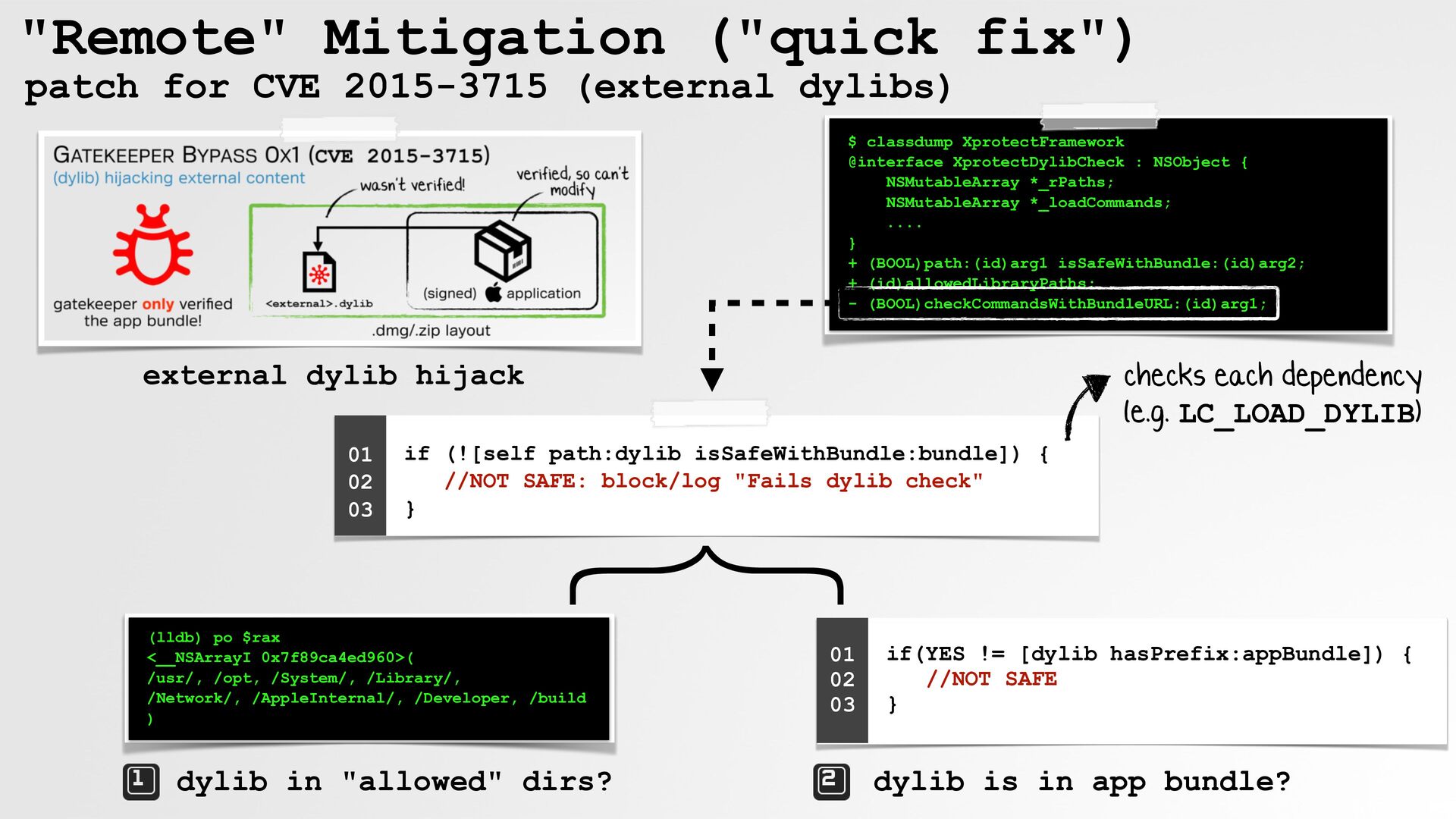
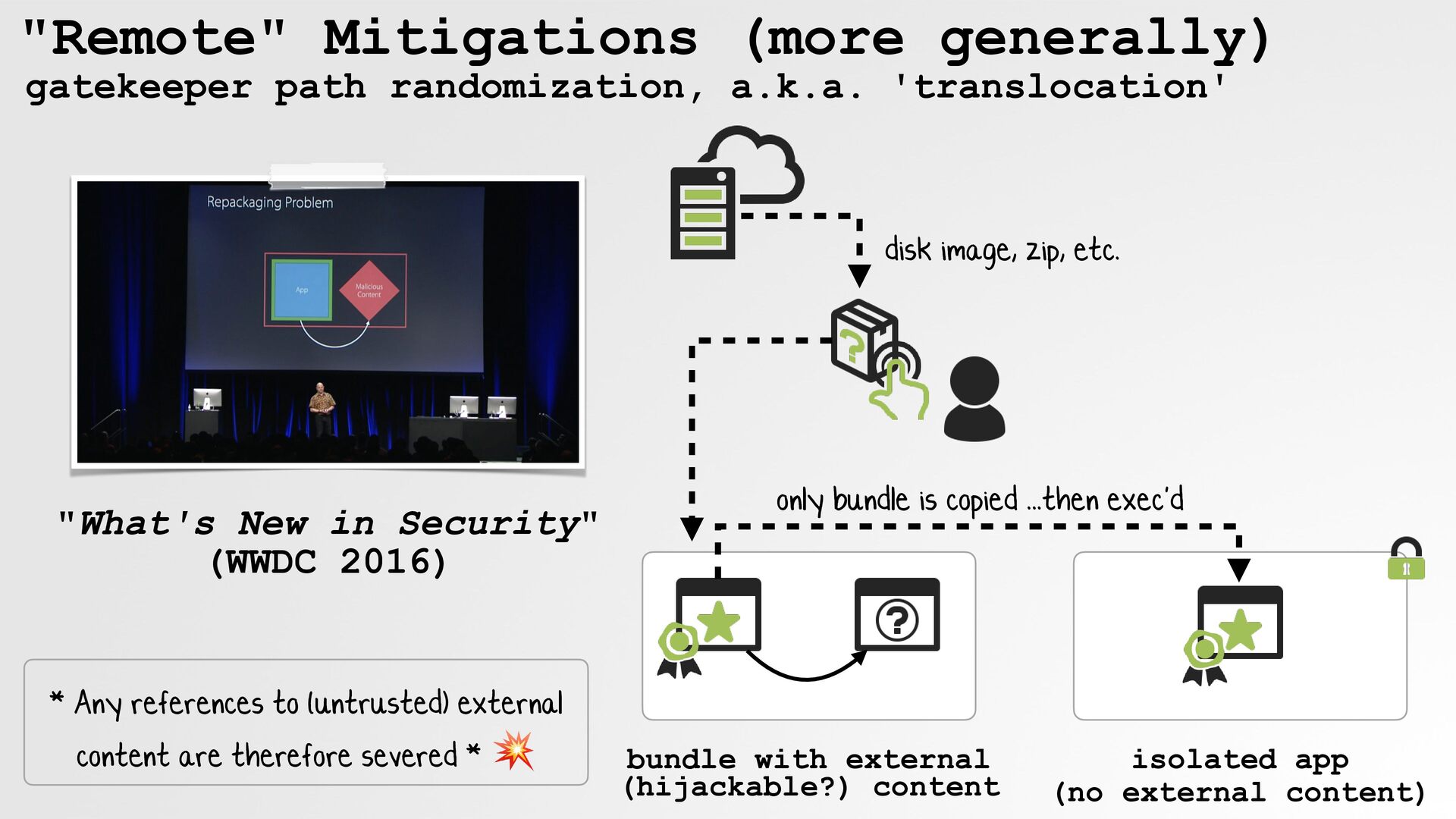
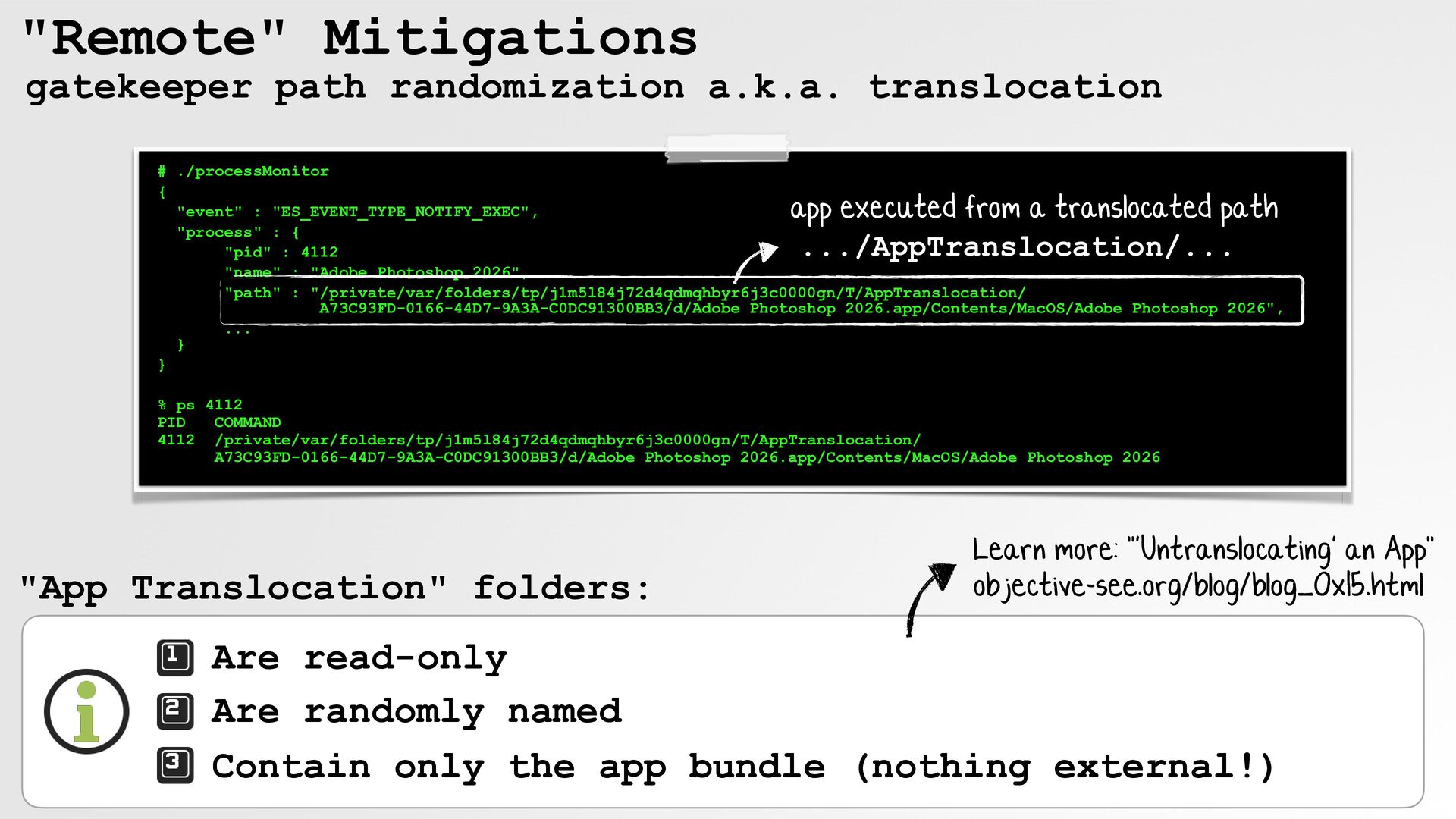
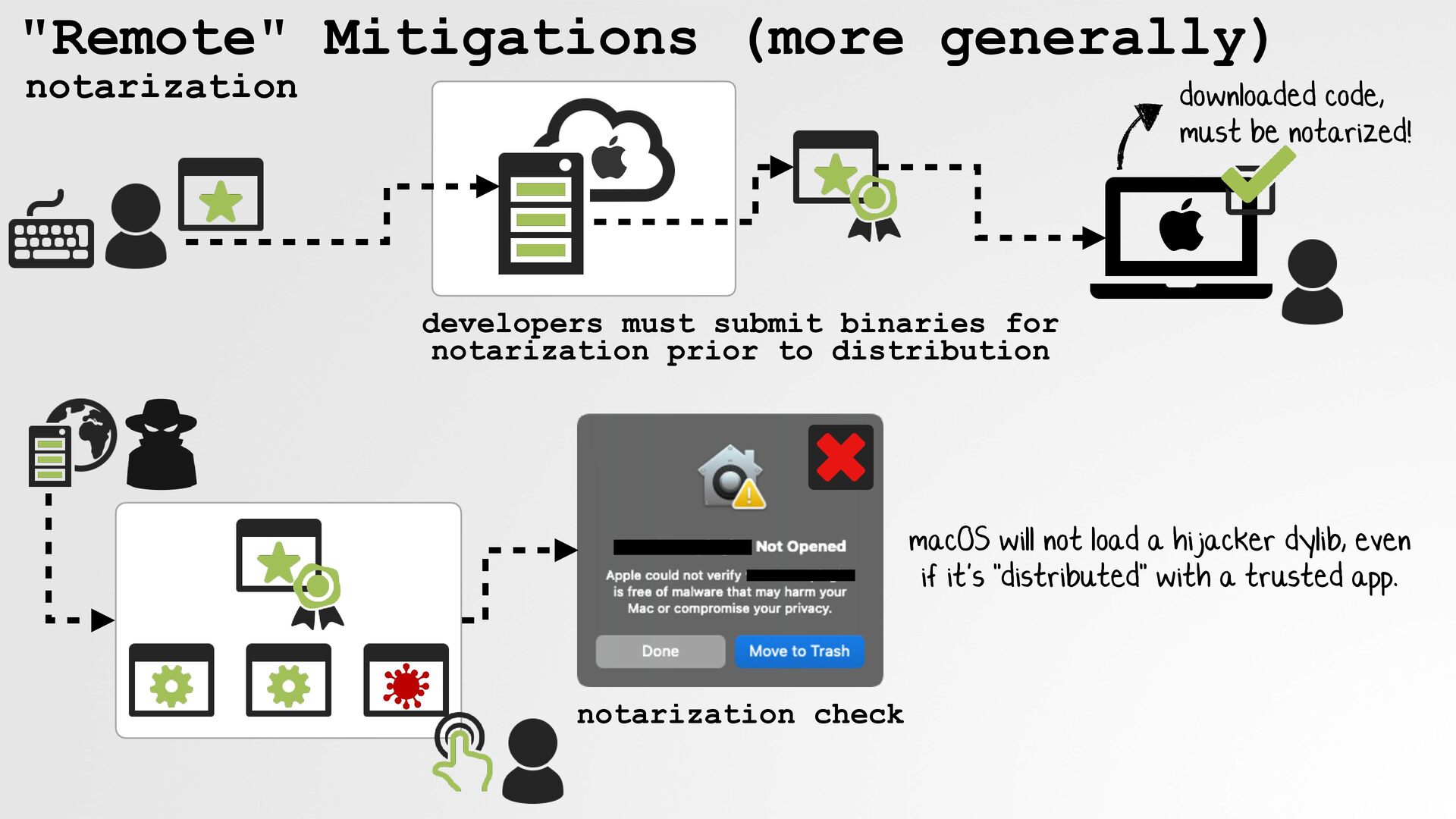
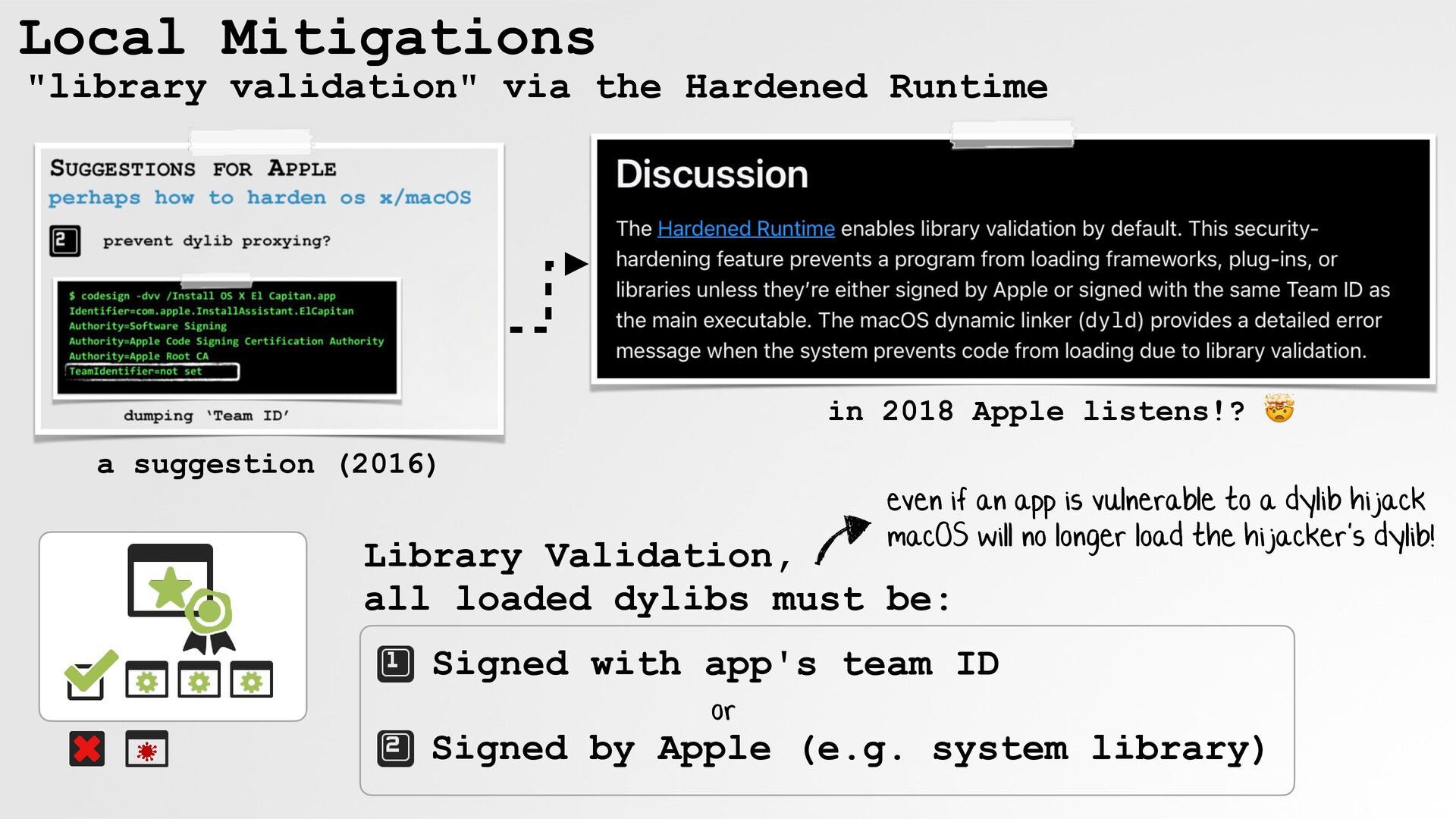
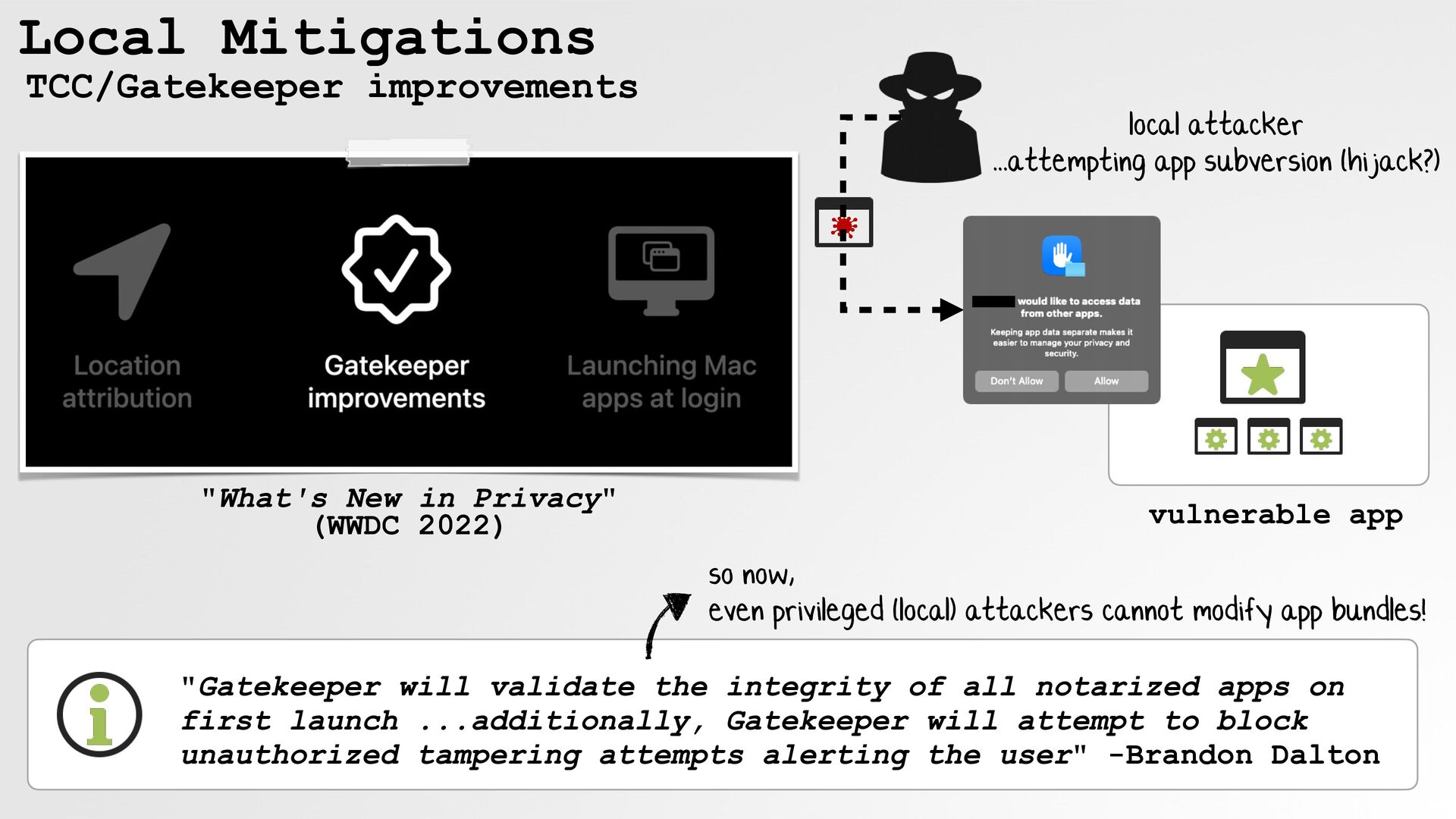
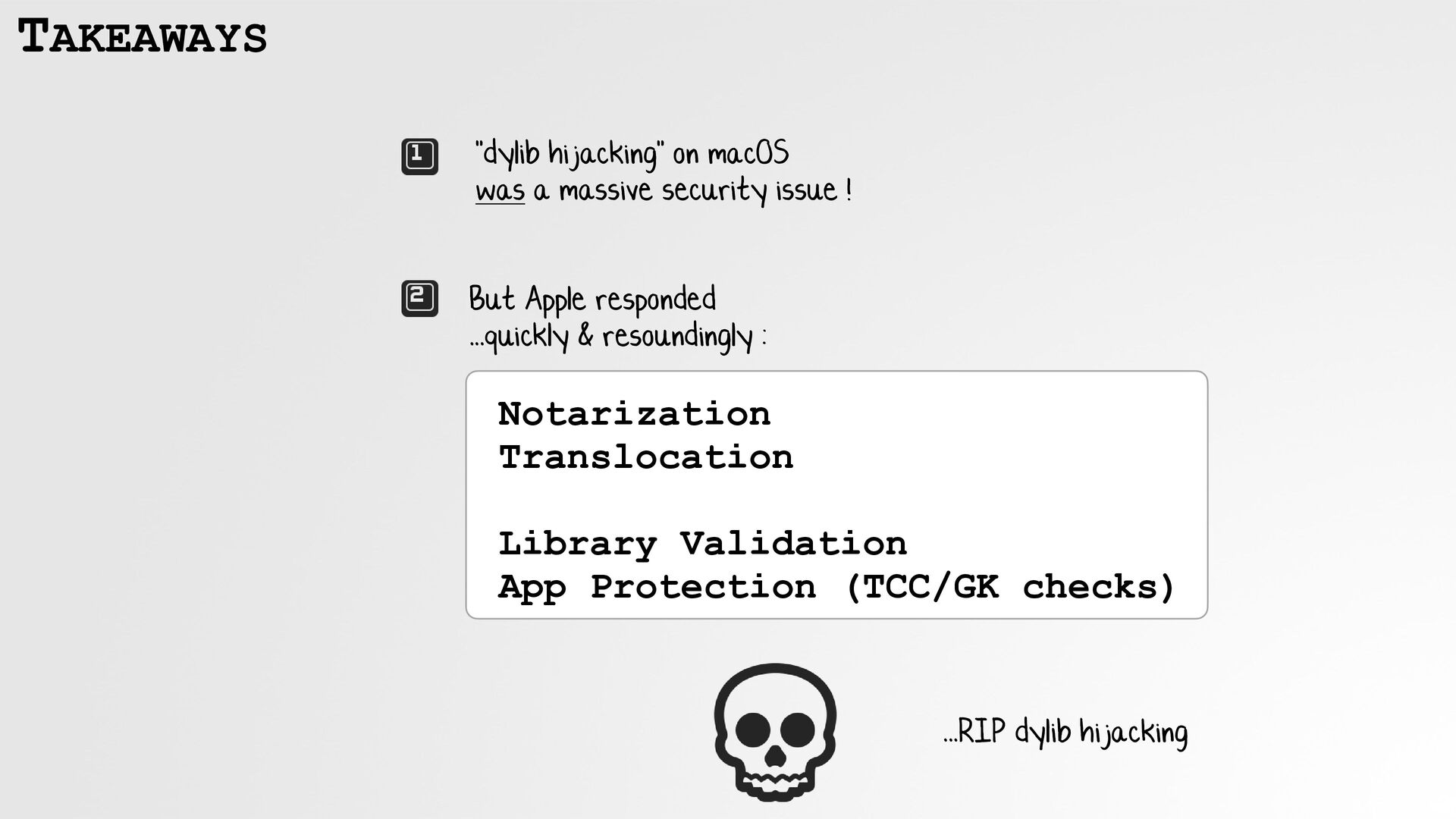
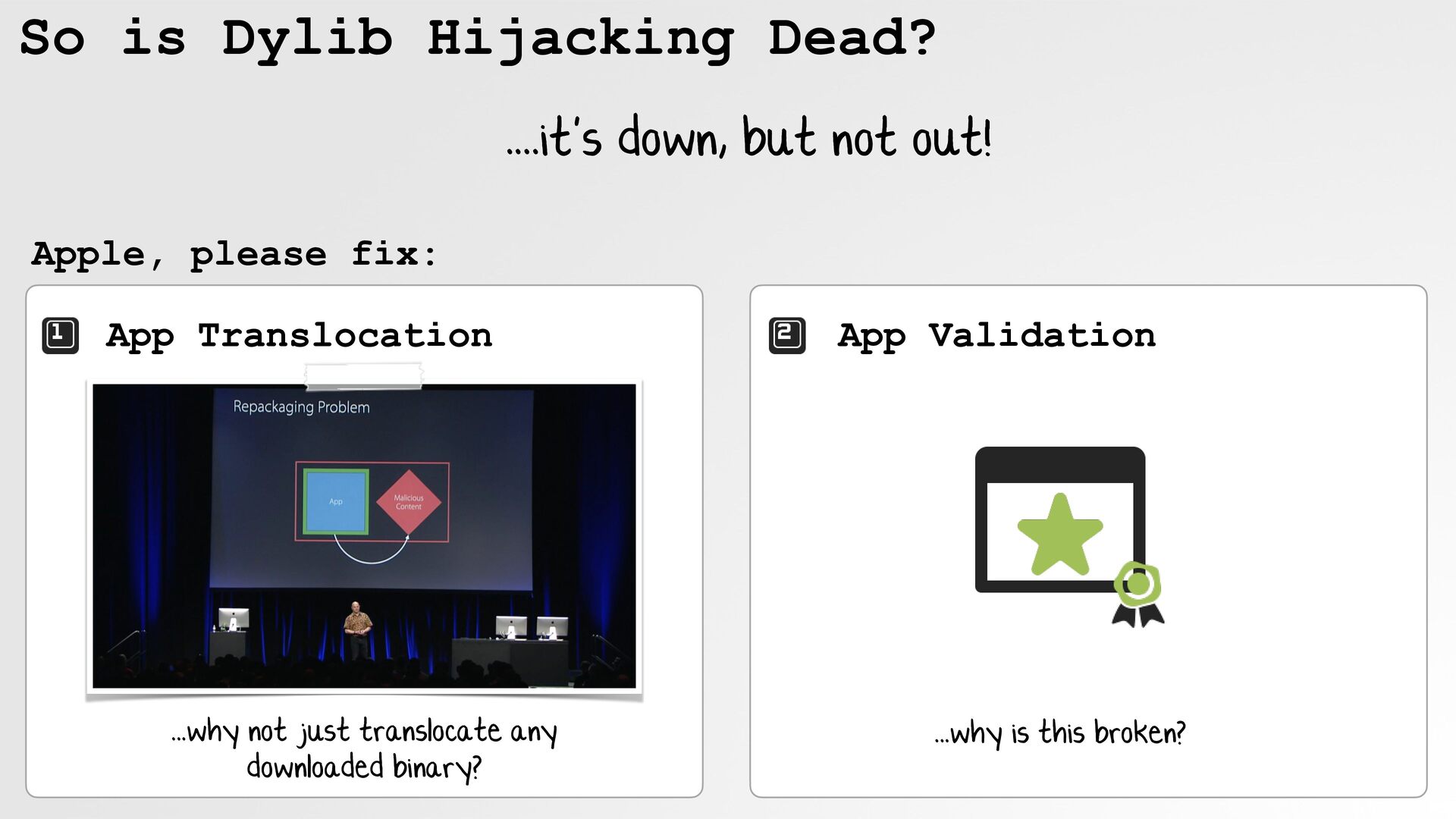
Today, an older (and hopefully wiser) Patrick revisits that work to answer a simple question: is dylib hijacking truly dead on modern macOS, or has Apple’s decade of defenses, including Gatekeeper, App Translocation, Notarization, and the Hardened Runtime, simply made it harder?
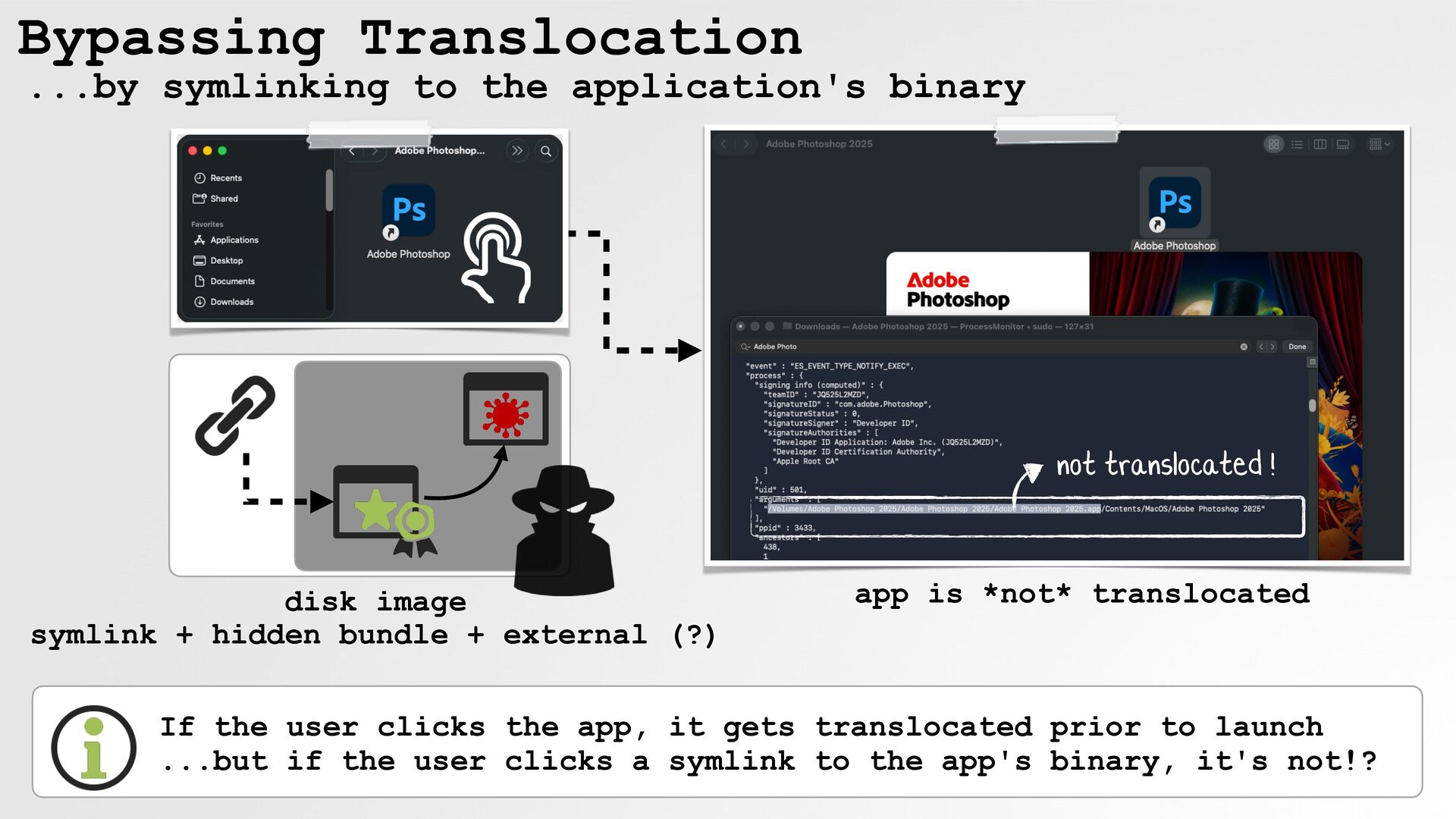
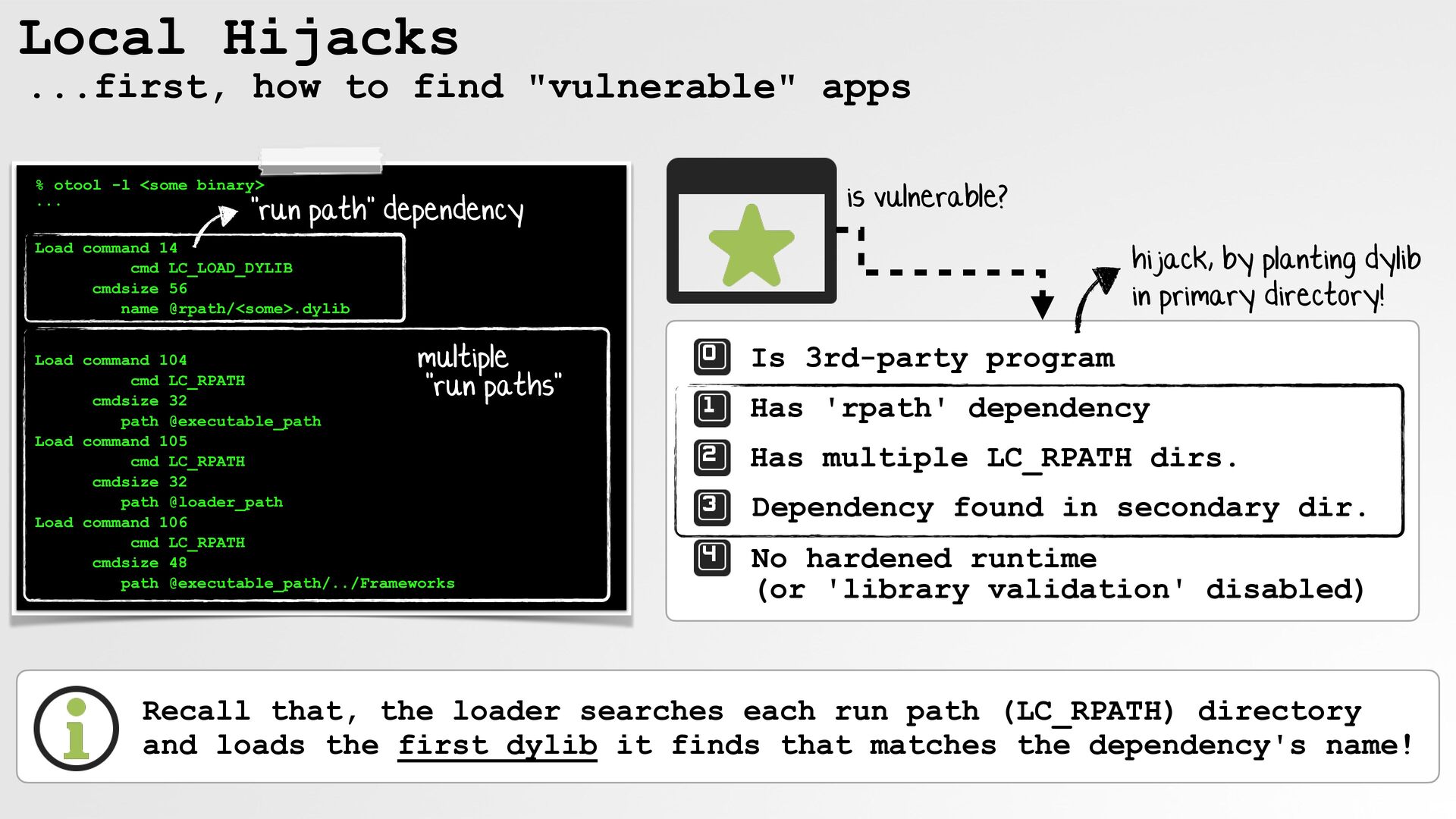
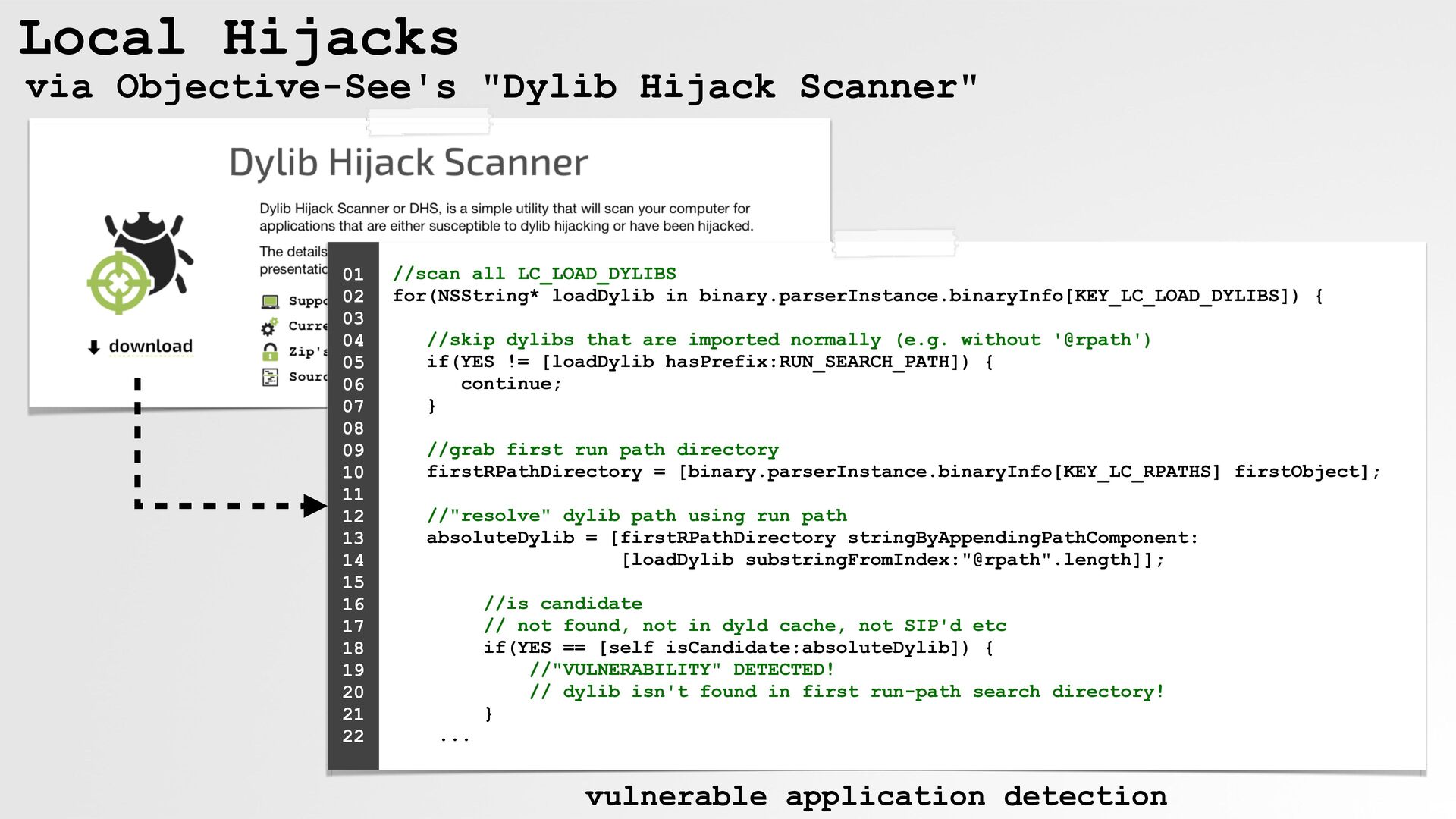
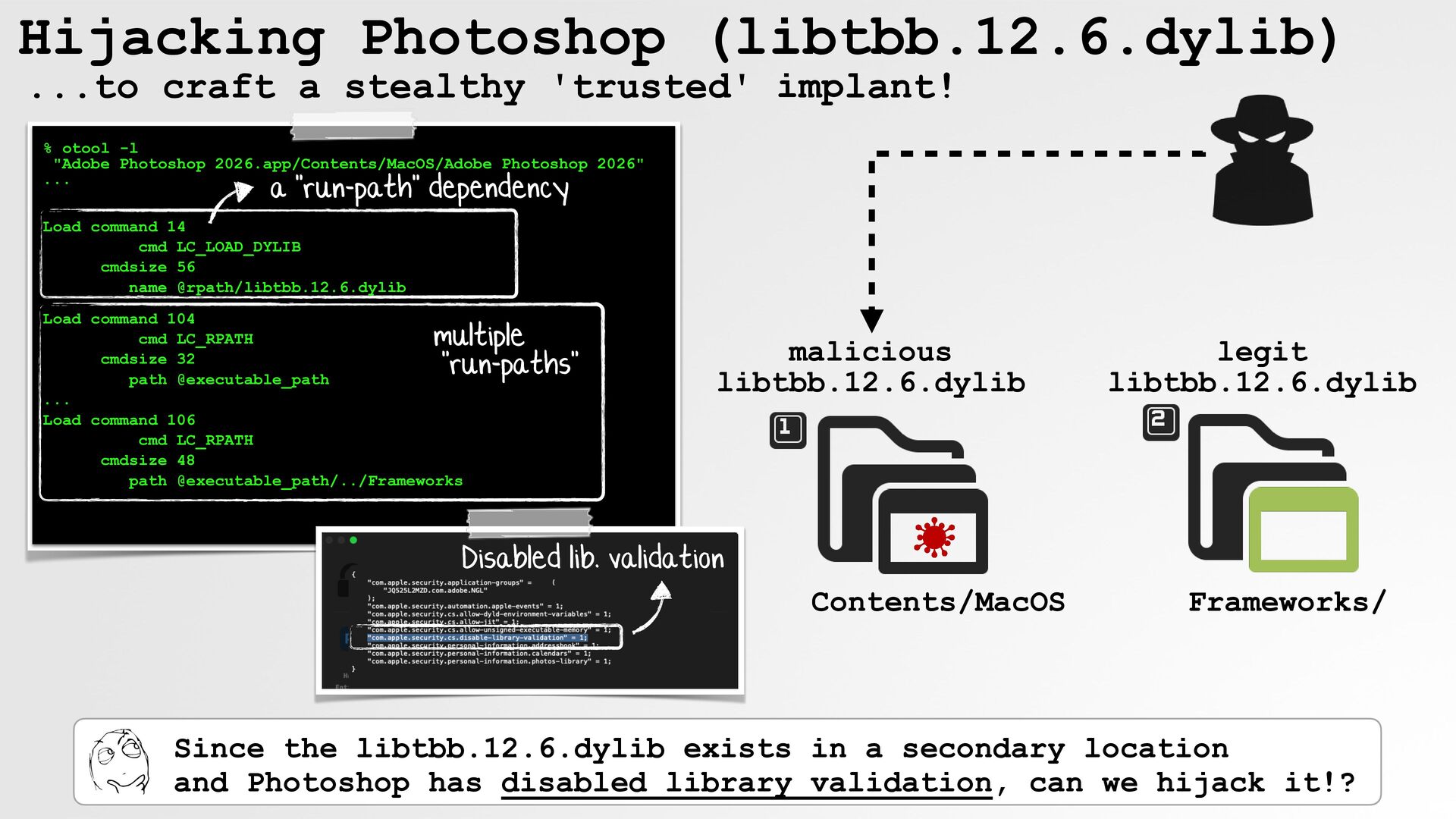
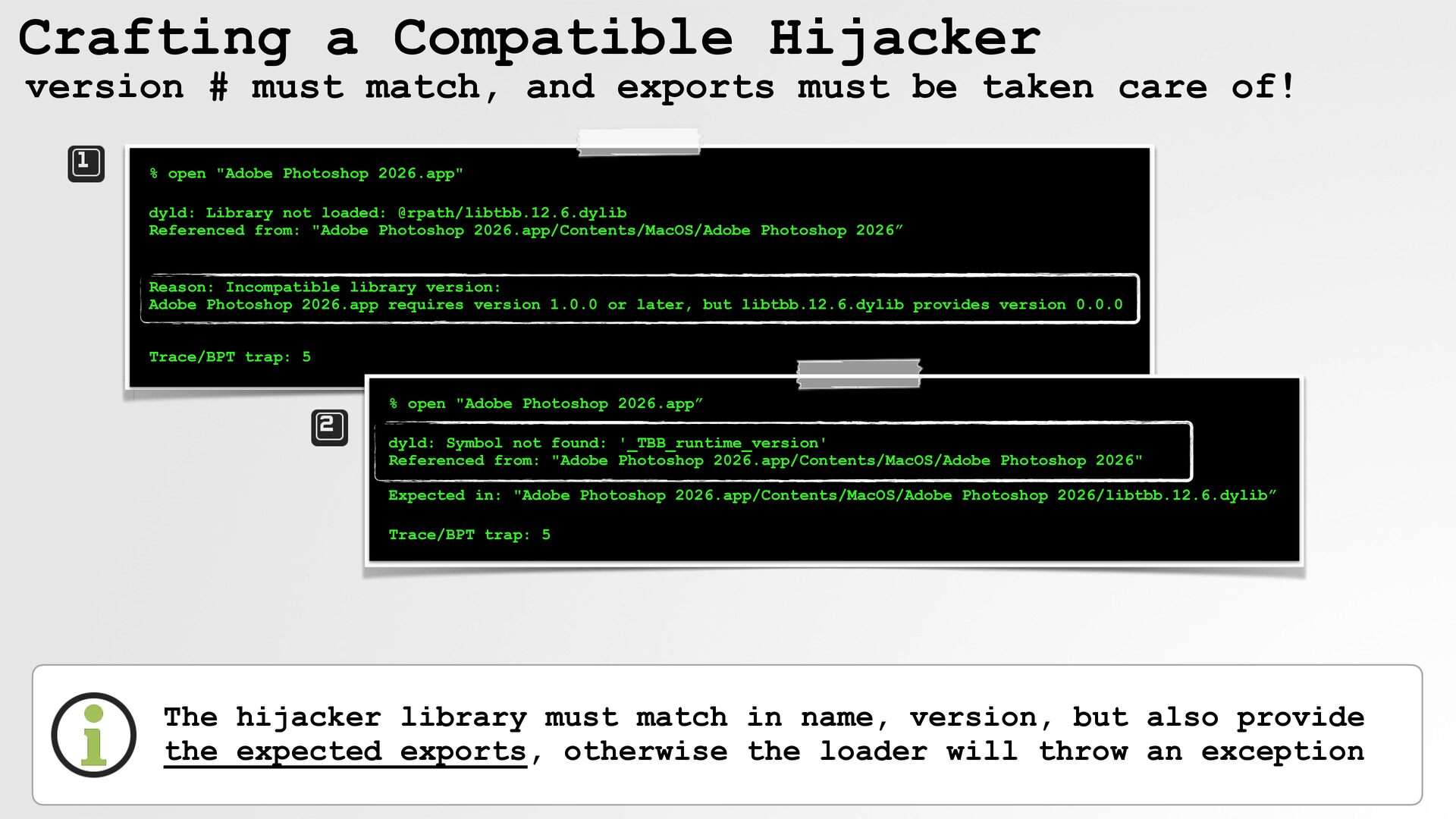
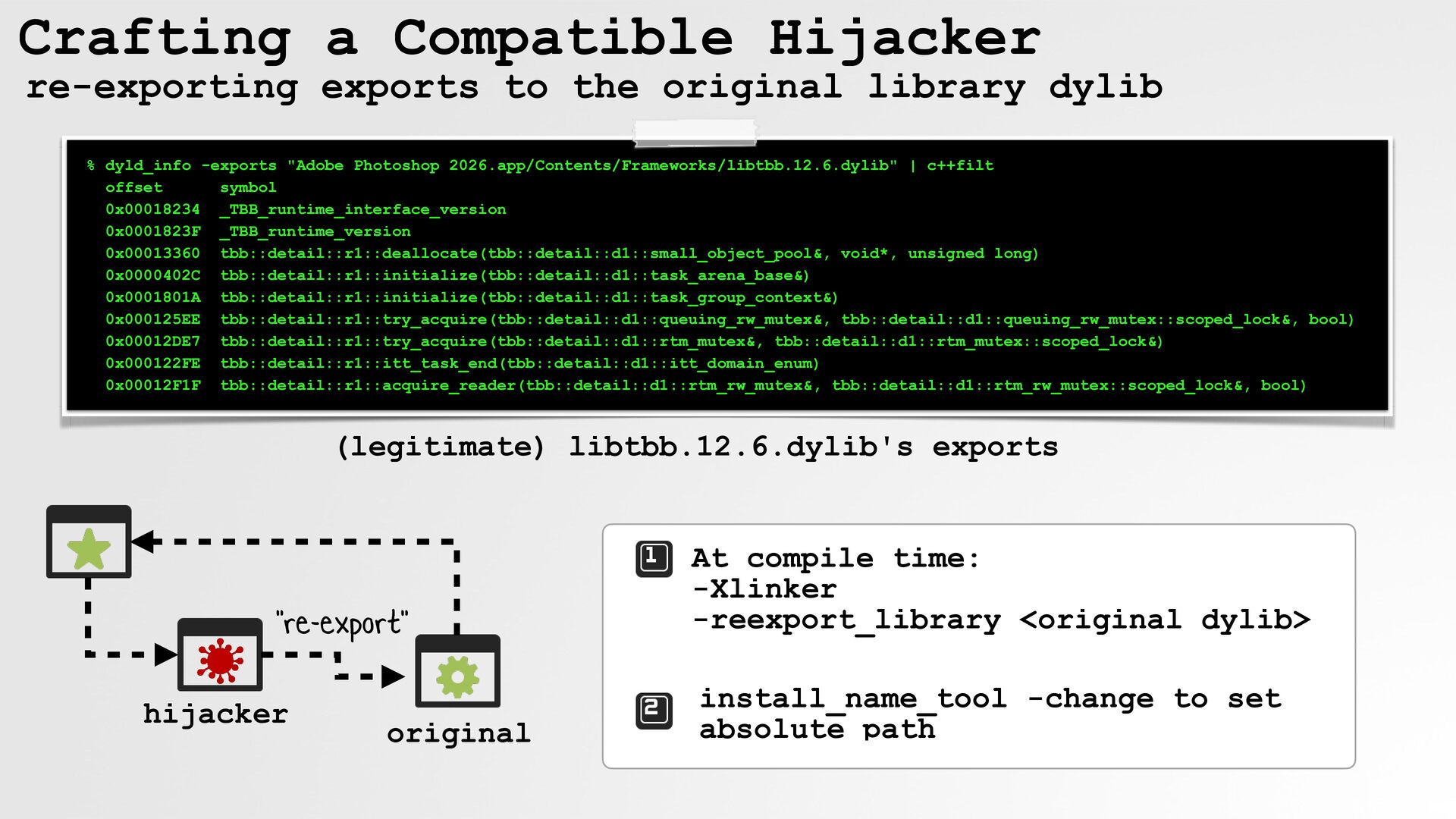
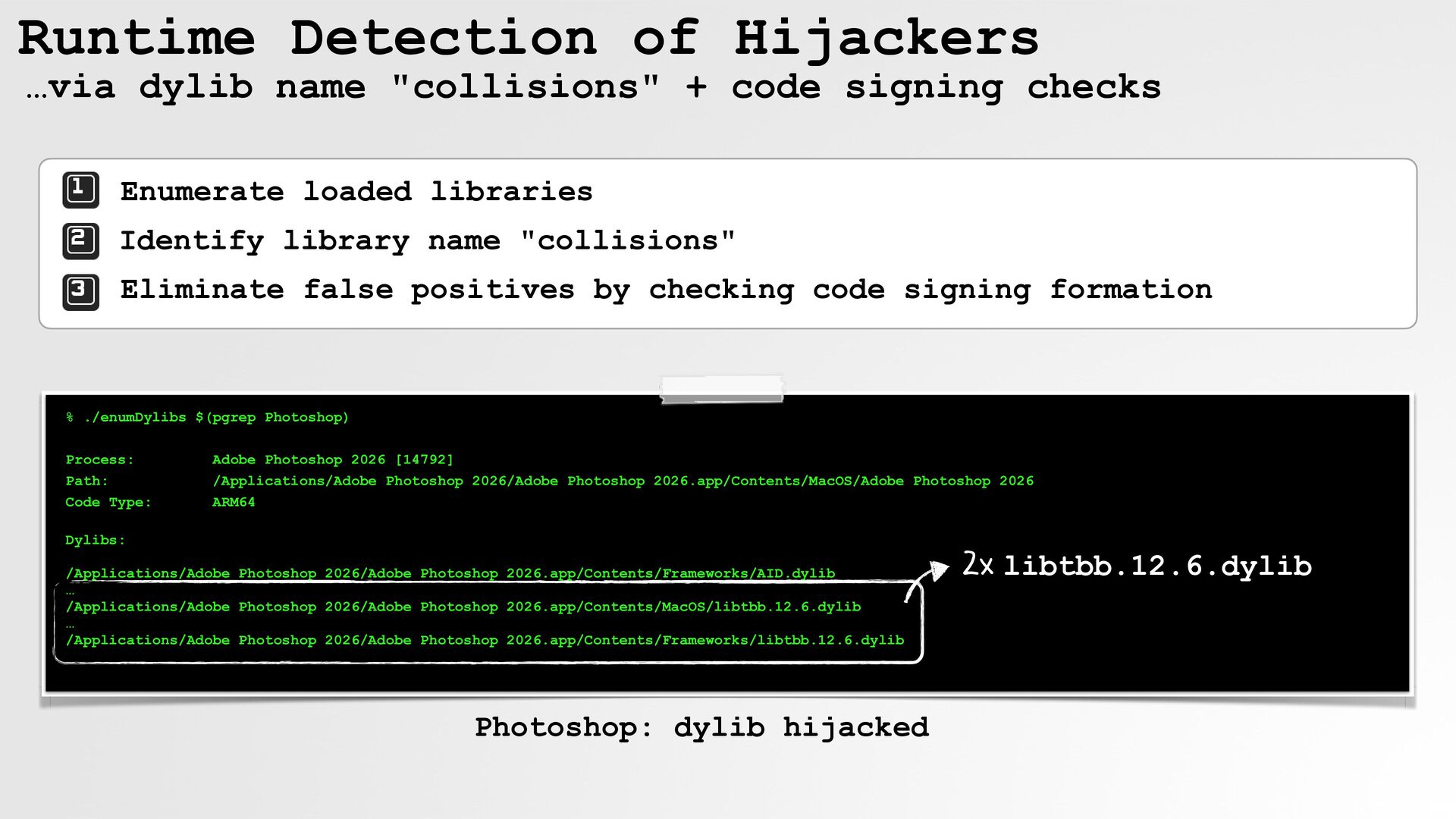
This talk revisits the technique in 2026, analyzing these mitigations and evaluating their real-world effectiveness. While the attack surface has been significantly reduced, we show dylib hijacking remains possible under the right conditions. Through real-world examples and live demos, we explore how modern applications can still be coerced into loading attacker-controlled libraries, enabling code execution within trusted processes and bypassing controls such as TCC.
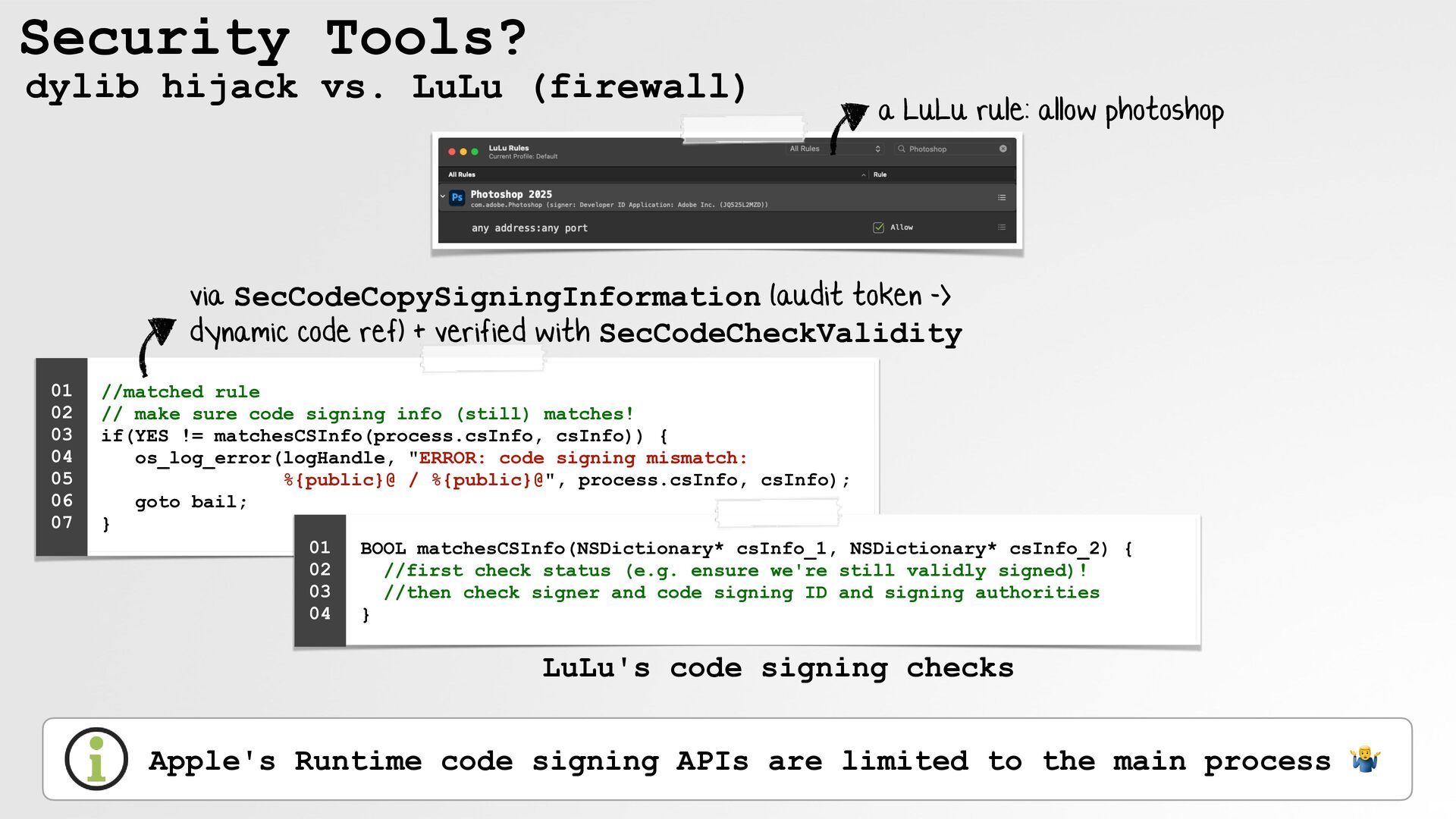
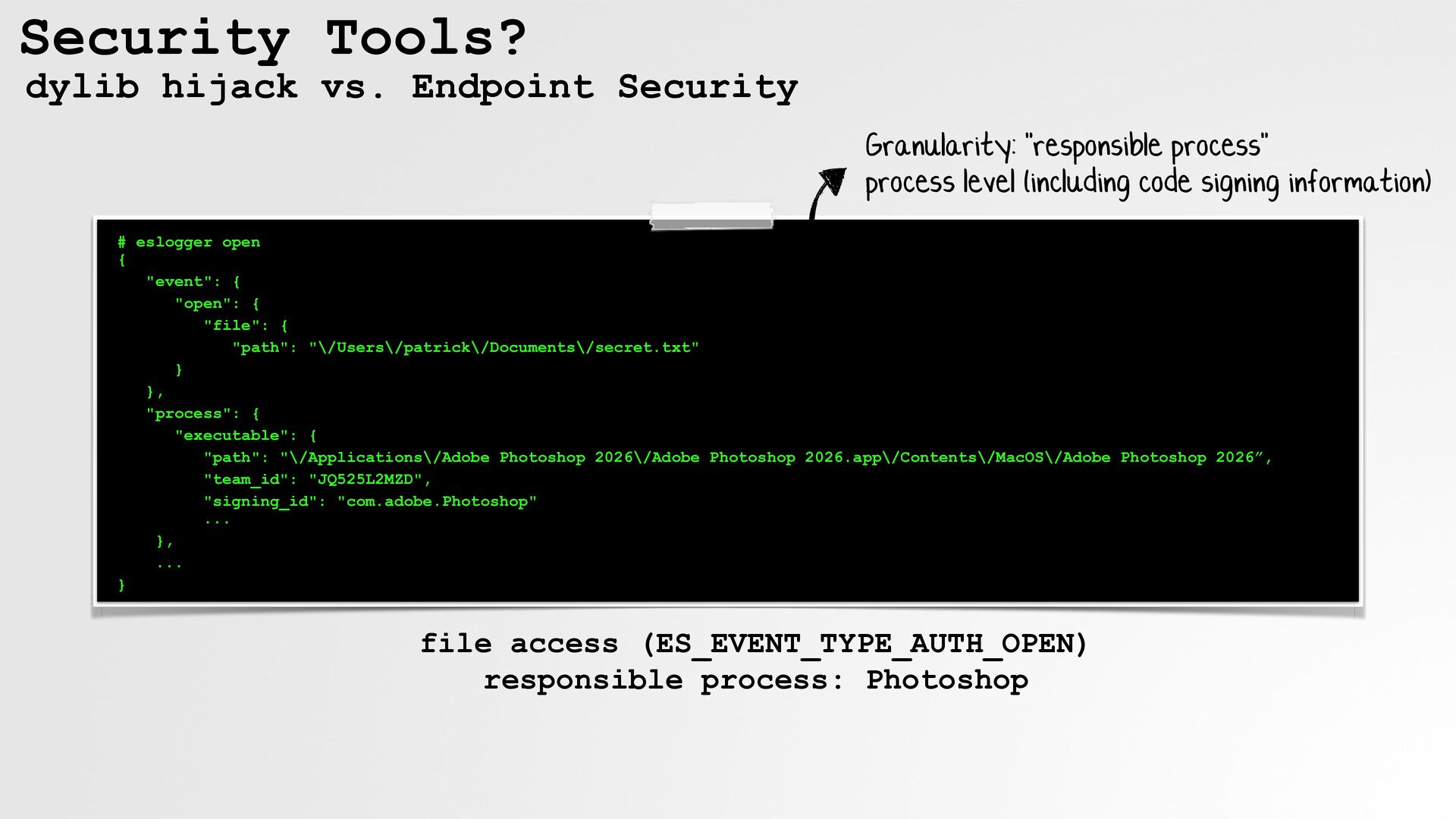
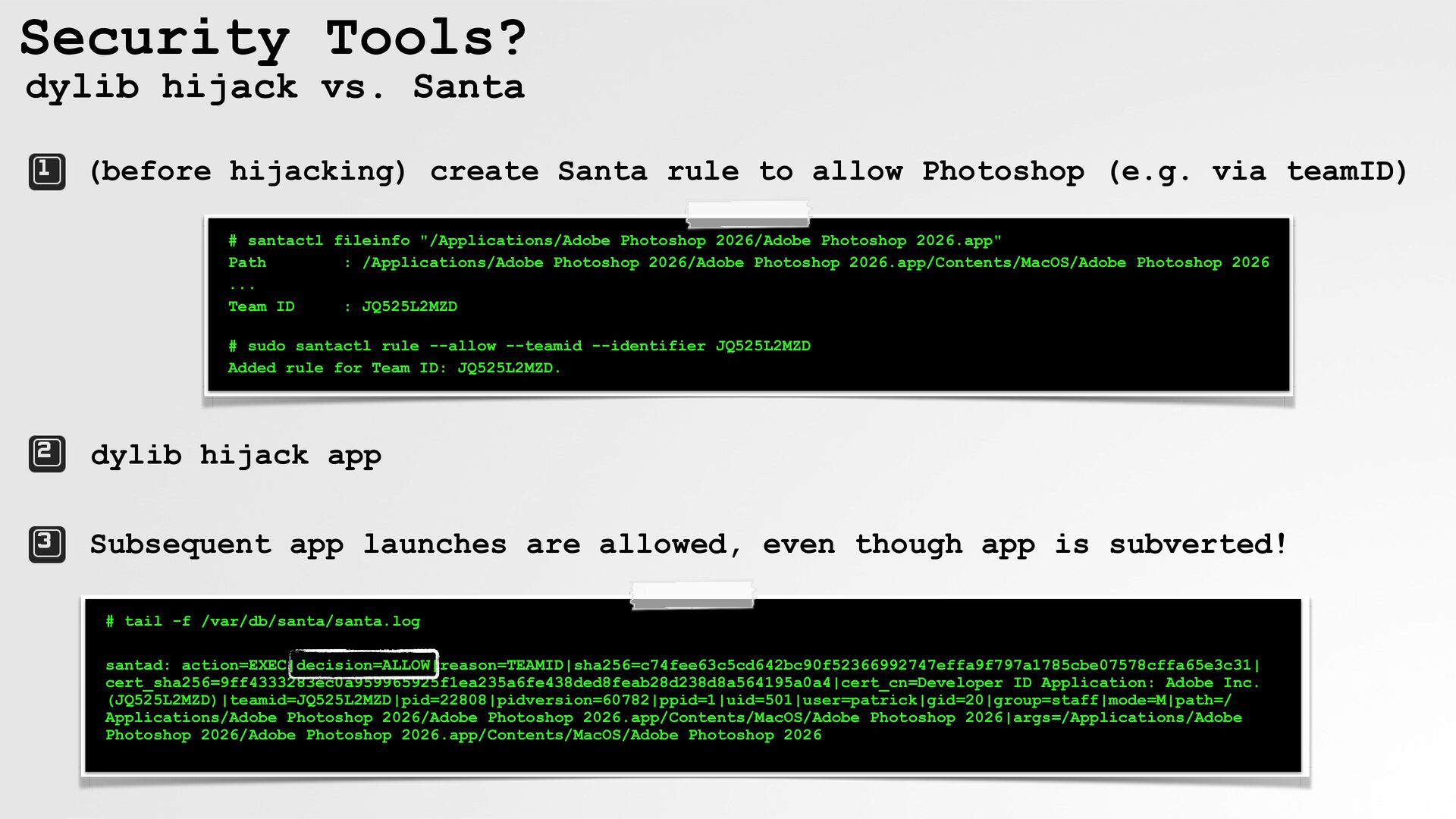
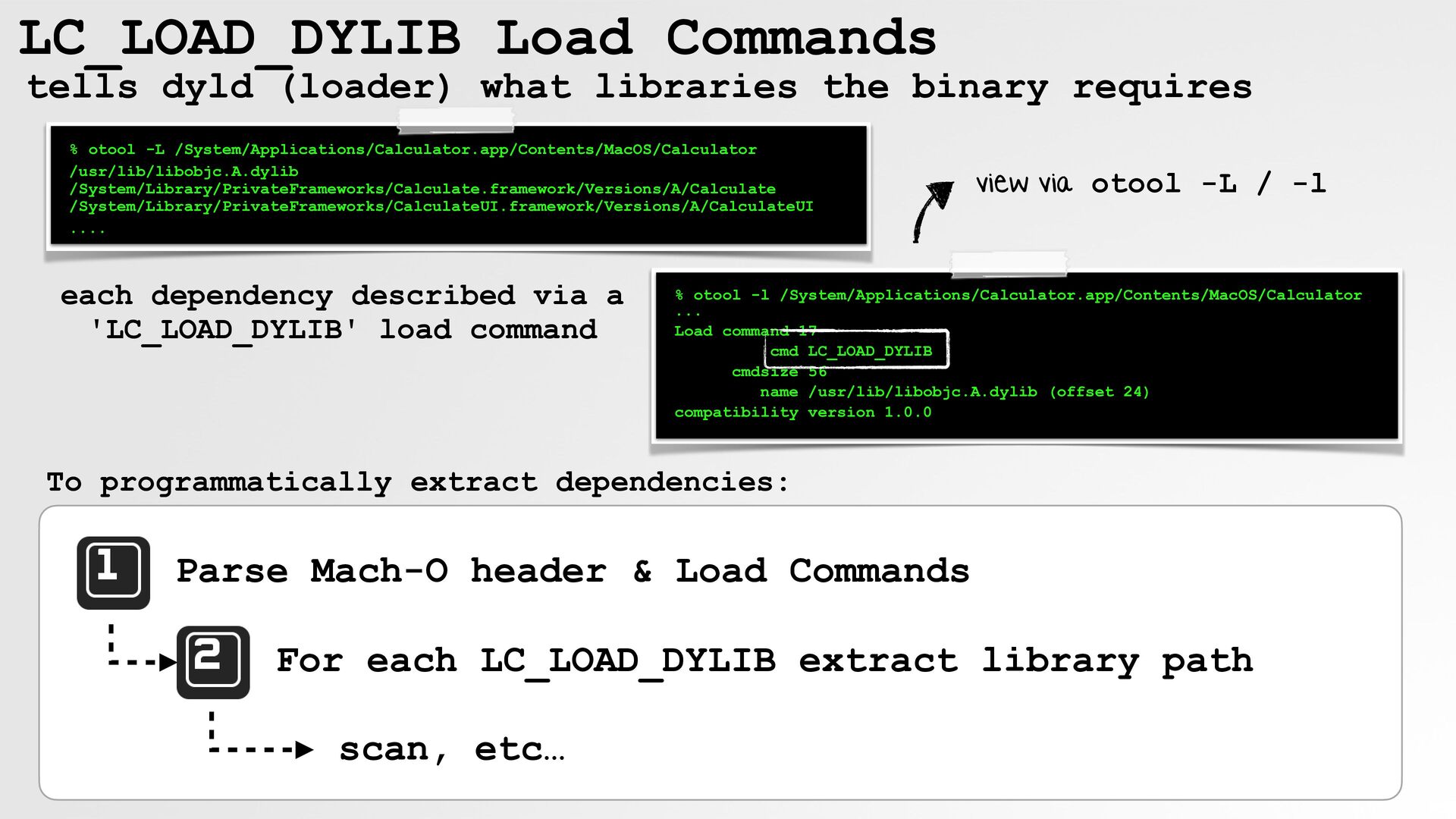
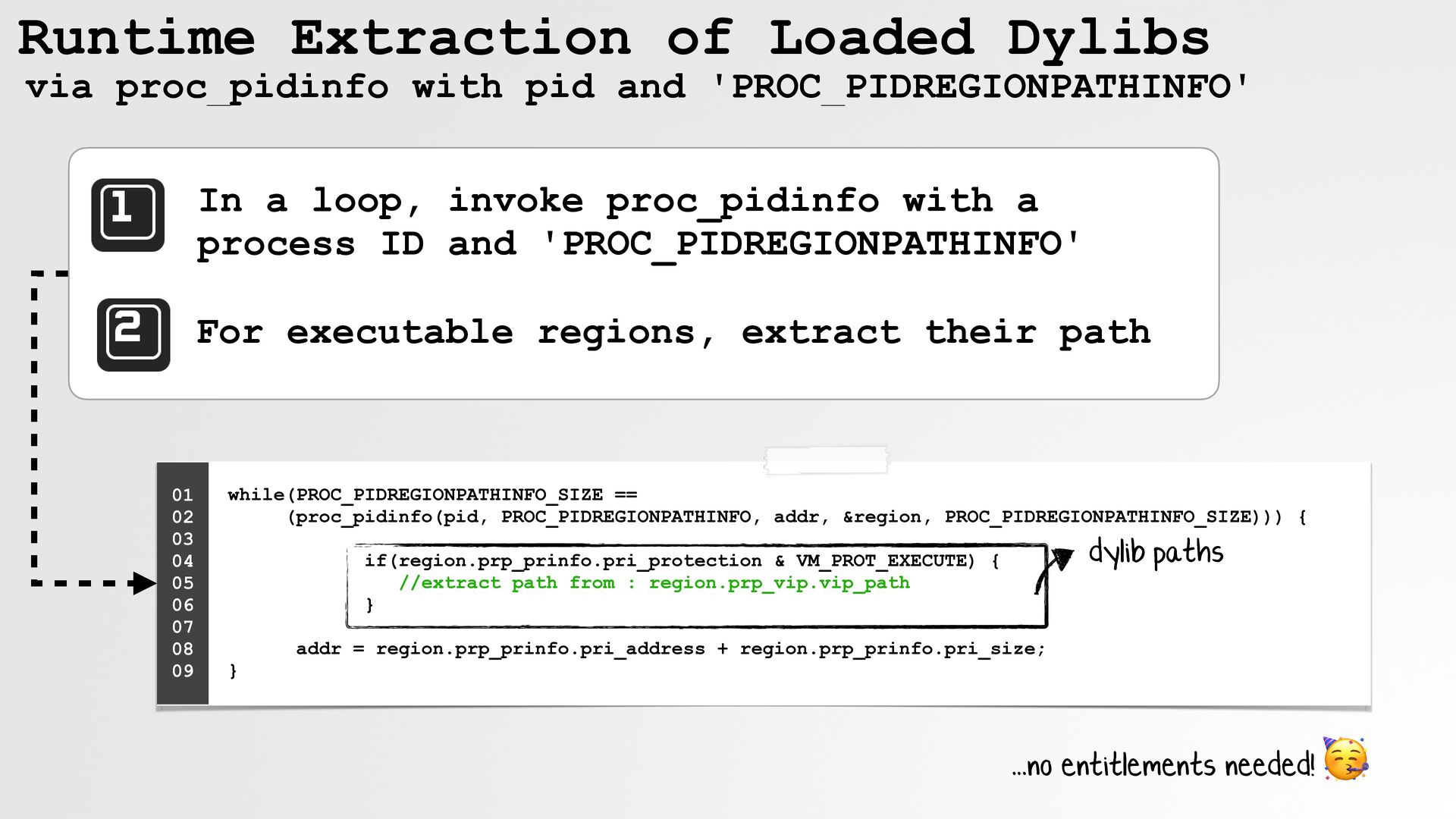
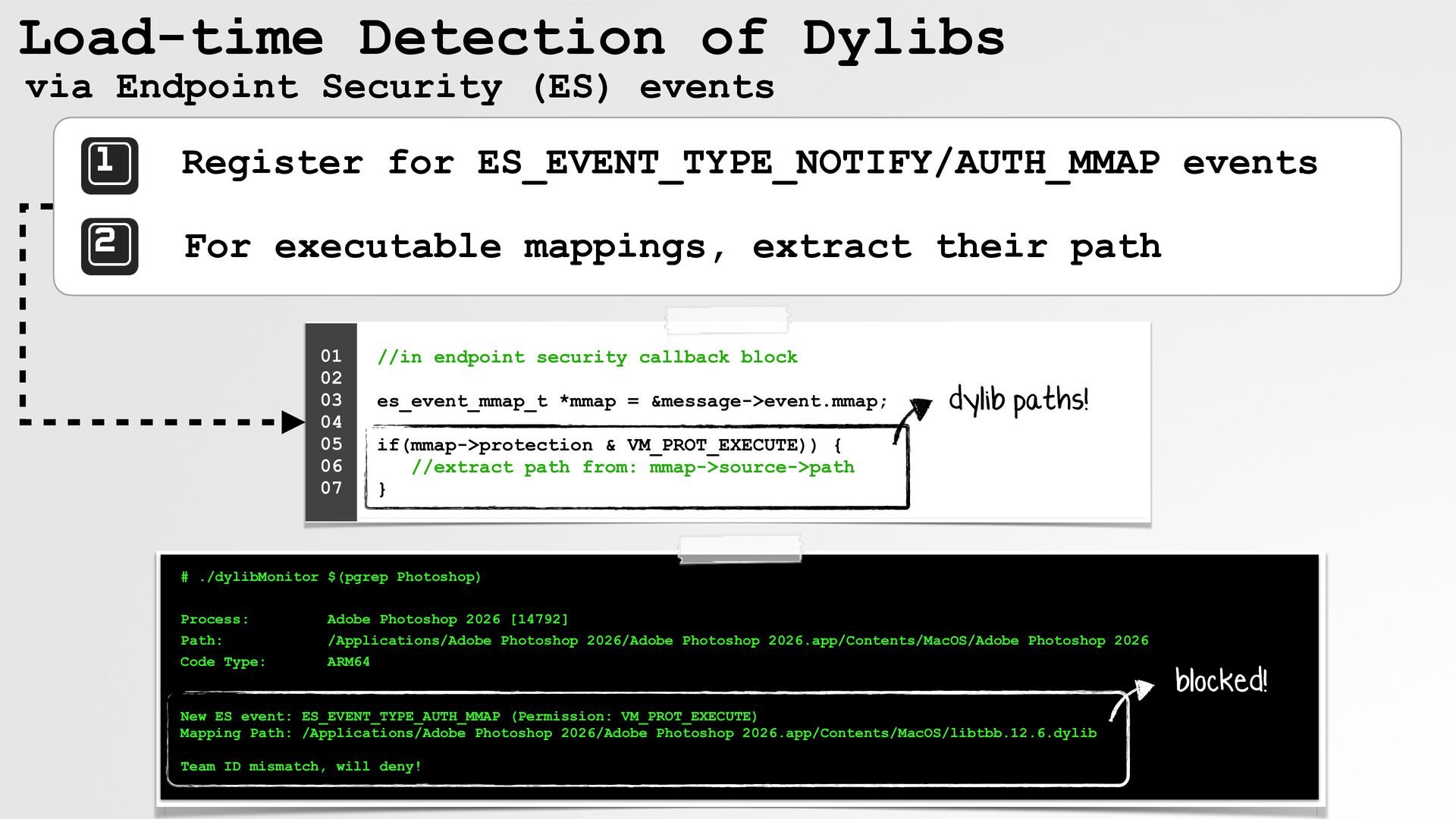
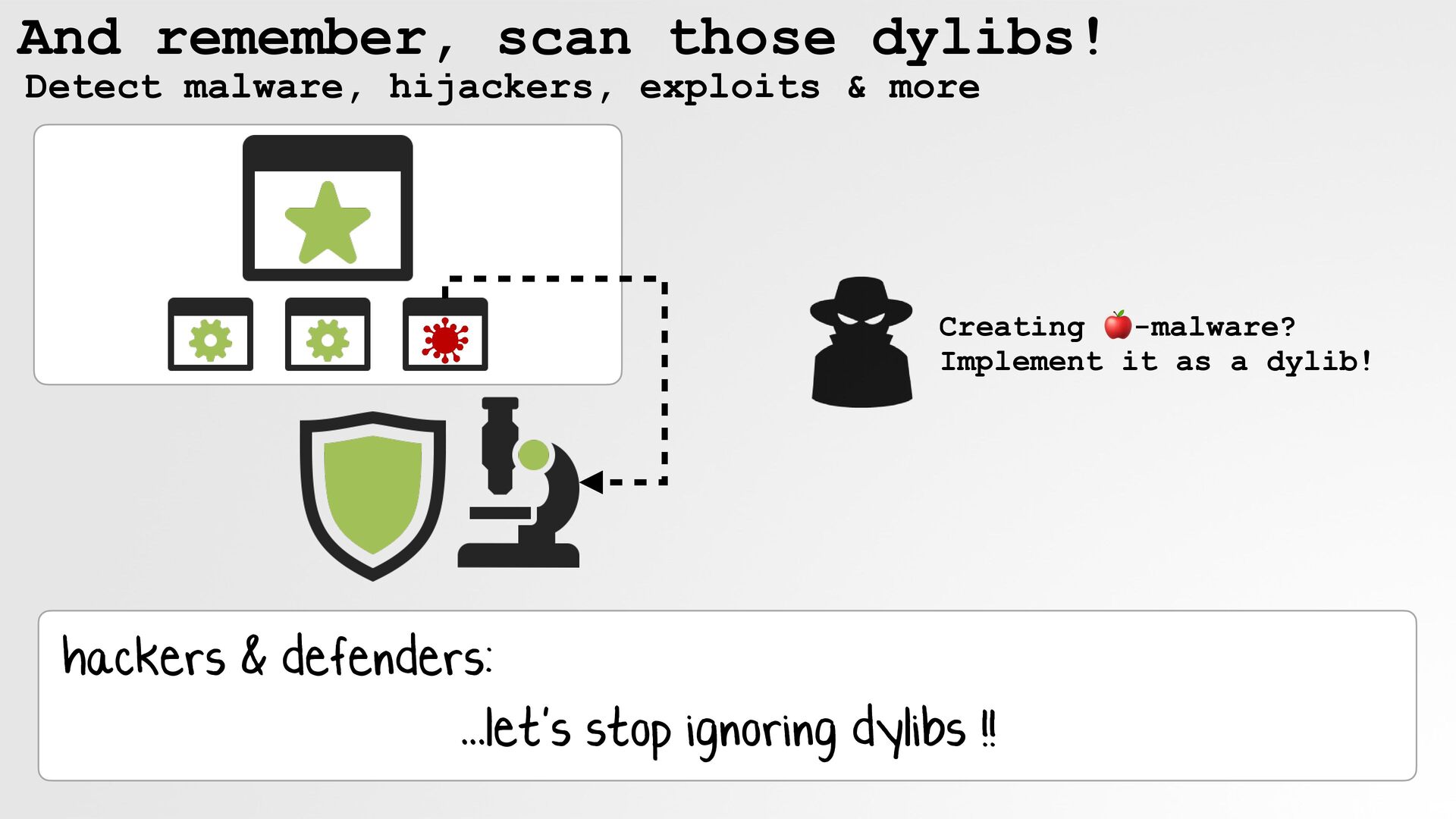
Finally, we present practical detection and defense strategies, including novel approaches leveraging Endpoint Security to detect (and block!) malicious library loads at runtime.


 patrickwardle
 akhino
 takonda
 nttcom
 finengine
 orgachem
 riyaamemiya
 yuuuuuuu168
 kworkdev
 tokuty
 linedevth
 kakehashi
 sansan33
 letsgokoyo
 gr2m
gr2m
 sergeychernyshev
 speakerdeck
 rakko
rakko
 nikkihalliwell
 shpigford
 frankvandijk
 mclloyd
 62gerente
 kneath
 sabderemane