behavior has not changed due to refactoring or modifying of old code. v Gives software credibility and makes it more ‘attractive’ within developer community. v Prevents colleagues from inadvertently breaking code. Thus helps teams work together.
Oriented design paradigm. v Don’t set global variables! Makes program state unpredictable. (we don’t do that, it naturally un- pythonic; FYI: if your coding in C variables outside a function have file-scope.) v Test-Driven-Development: v Write the test before writing the code. v Person writing the code should write the test.
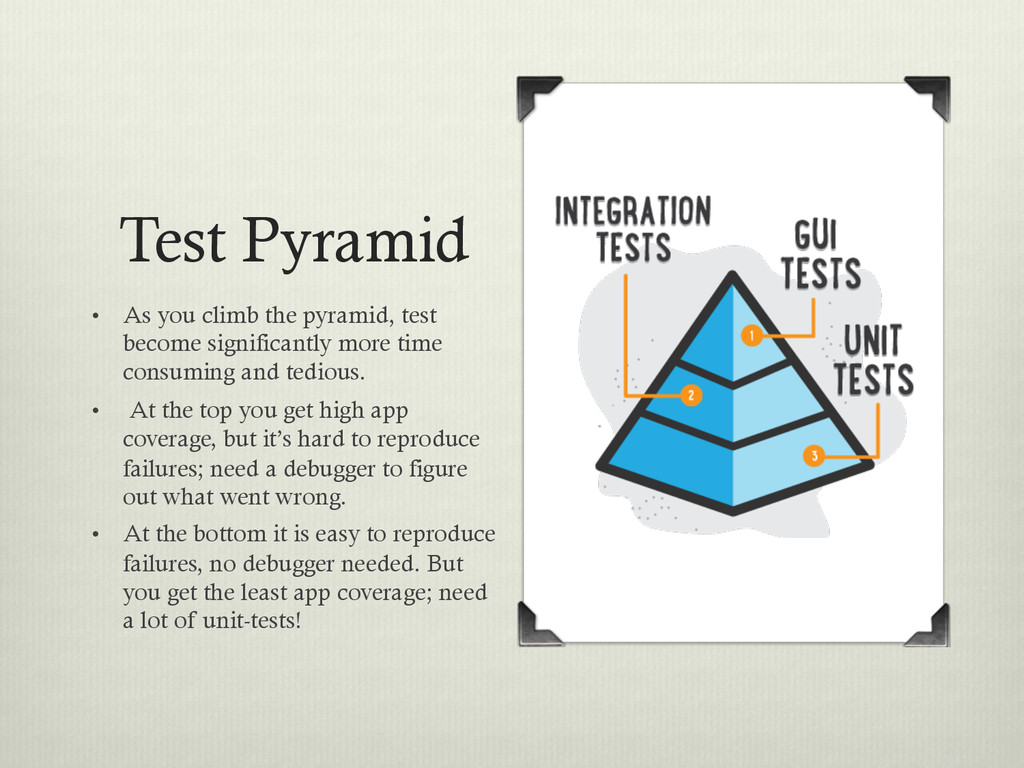
significantly more time consuming and tedious. • At the top you get high app coverage, but it’s hard to reproduce failures; need a debugger to figure out what went wrong. • At the bottom it is easy to reproduce failures, no debugger needed. But you get the least app coverage; need a lot of unit-tests!
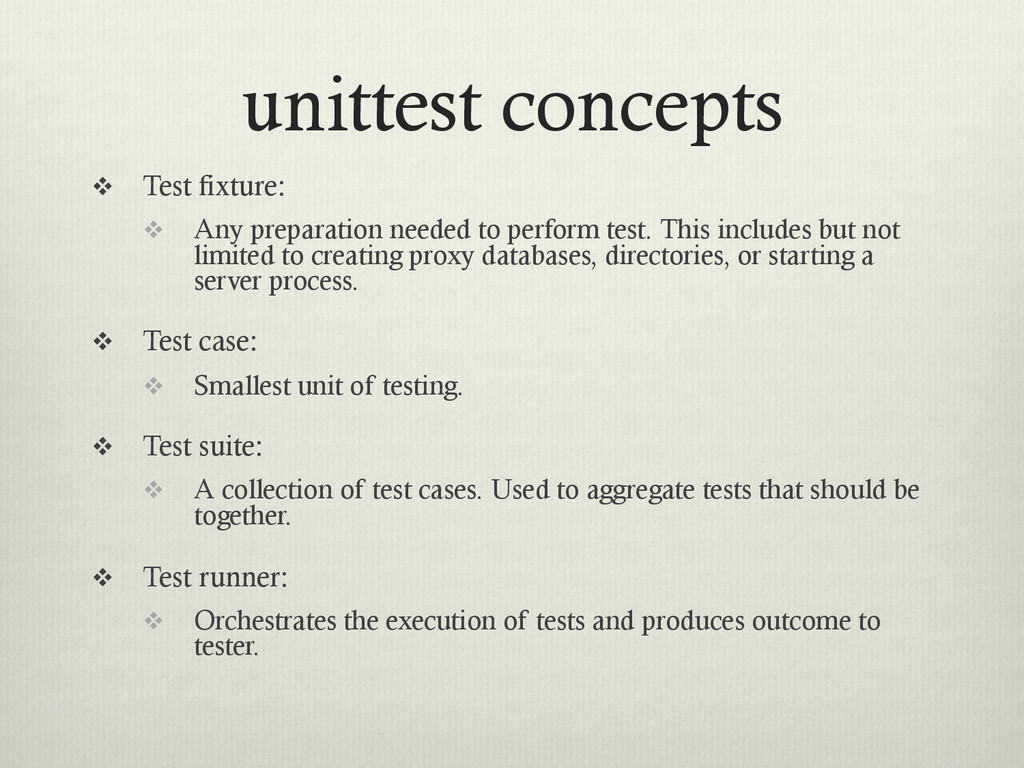
perform test. This includes but not limited to creating proxy databases, directories, or starting a server process. v Test case: v Smallest unit of testing. v Test suite: v A collection of test cases. Used to aggregate tests that should be together. v Test runner: v Orchestrates the execution of tests and produces outcome to tester.
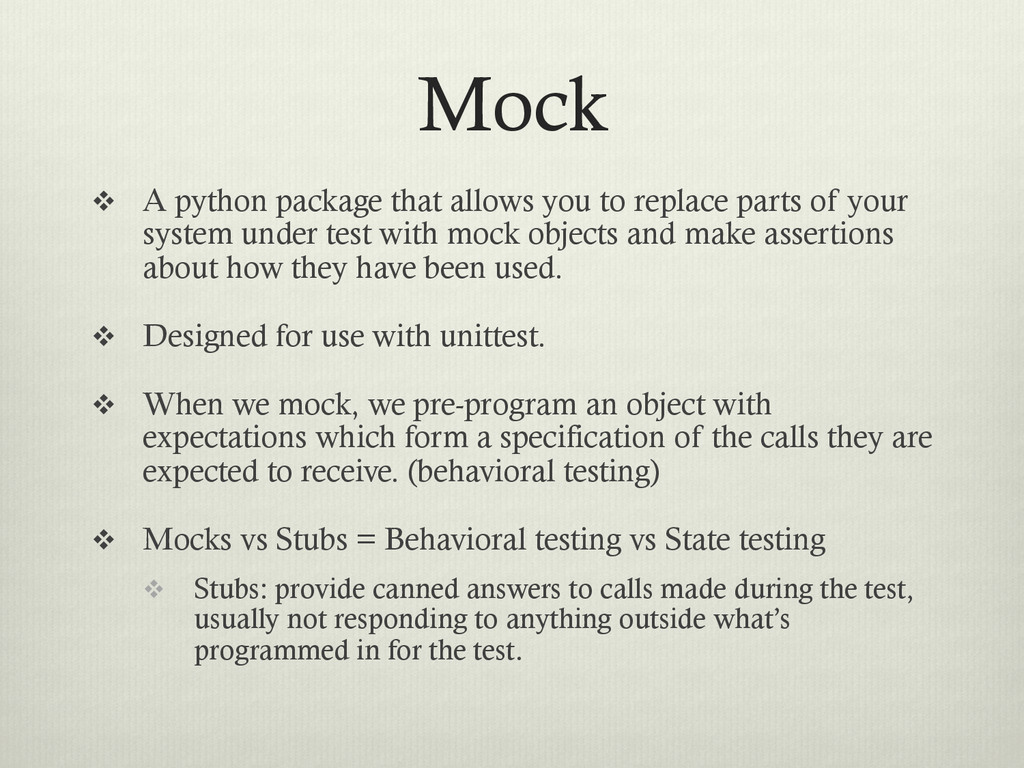
parts of your system under test with mock objects and make assertions about how they have been used. v Designed for use with unittest. v When we mock, we pre-program an object with expectations which form a specification of the calls they are expected to receive. (behavioral testing) v Mocks vs Stubs = Behavioral testing vs State testing v Stubs: provide canned answers to calls made during the test, usually not responding to anything outside what’s programmed in for the test.
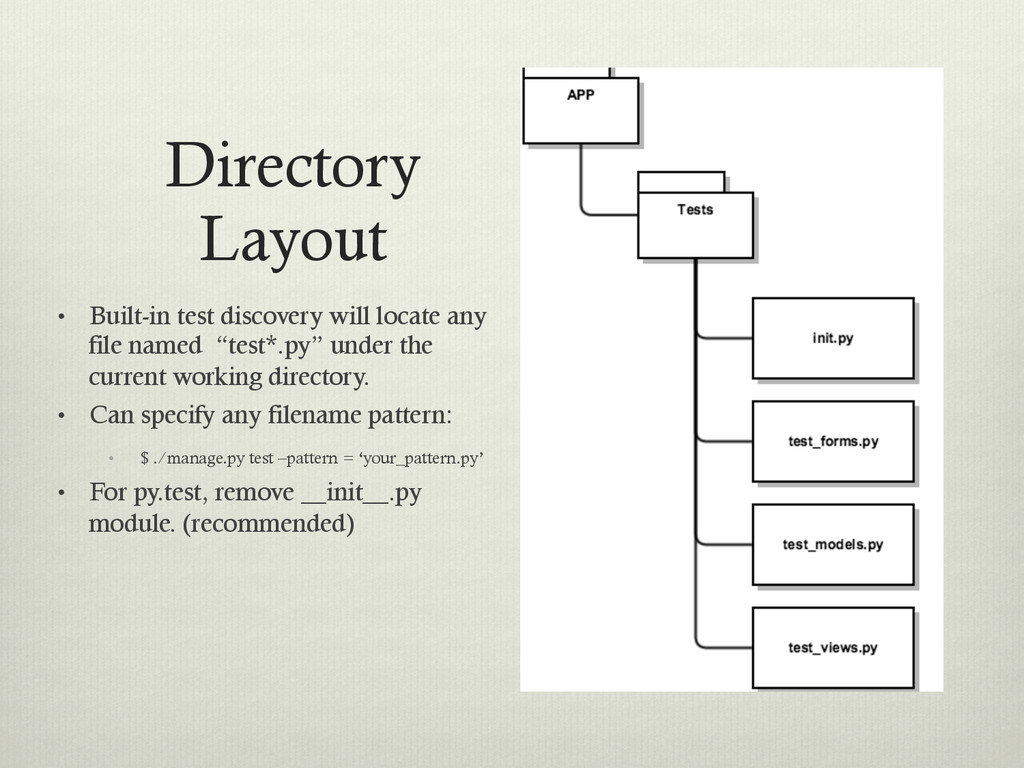
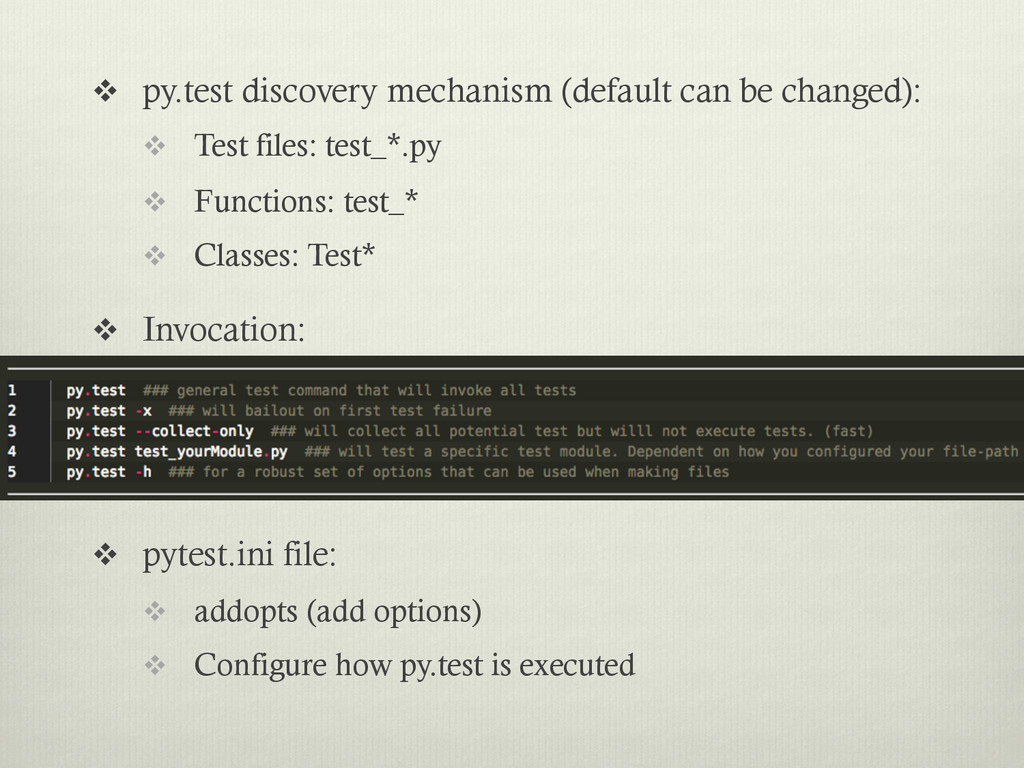
named “test*.py” under the current working directory. • Can specify any filename pattern: • $ ./manage.py test –pattern = ‘your_pattern.py’ • For py.test, remove __init__.py module. (recommended)
timed tests, testing for exceptions, and short-hands for other functions in the unittest module. v “if it looks like a test, it’s a test”; running tests is easier, and collecting test is automatic. v Supports fixtures at the package, module, class, and test case level. v Built-in plugins: output capture, error introspection, code coverage…
boilerplate, speeds up development. v Enhanced fixtures functionality: v Scope for sharing fixtures (module and whole session) v Yield fixtures v Mocking/MonkeyPatch v Data-base reuse: no need to re-create the test database for every test run.
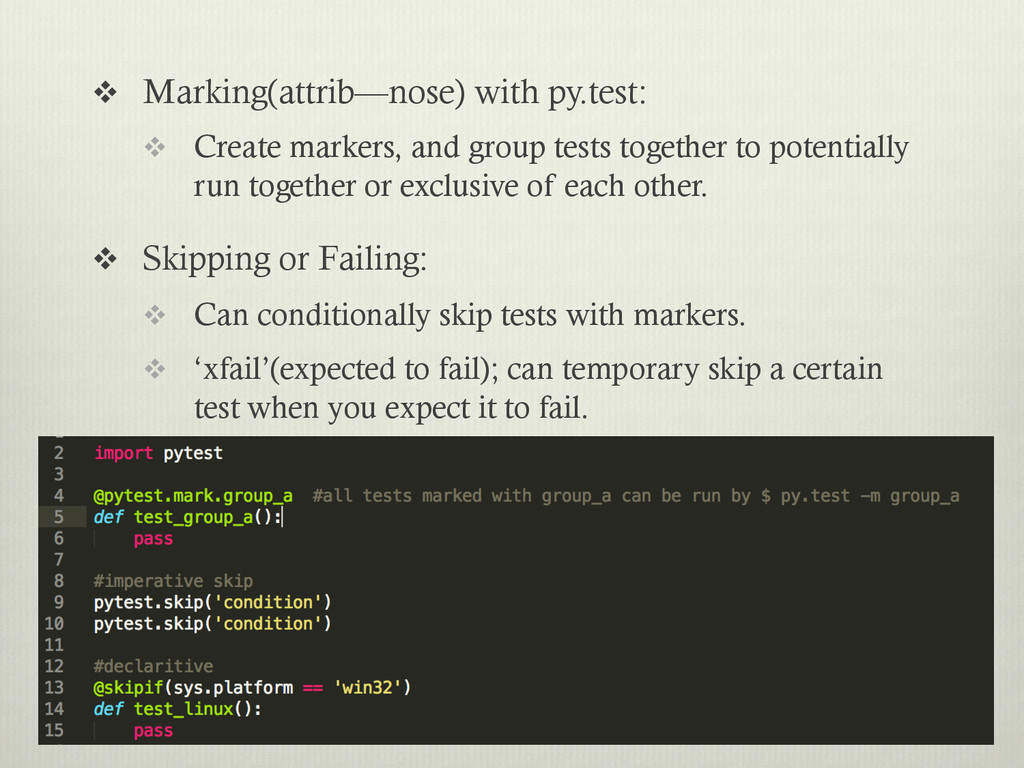
together to potentially run together or exclusive of each other. v Skipping or Failing: v Can conditionally skip tests with markers. v ‘xfail’(expected to fail); can temporary skip a certain test when you expect it to fail.
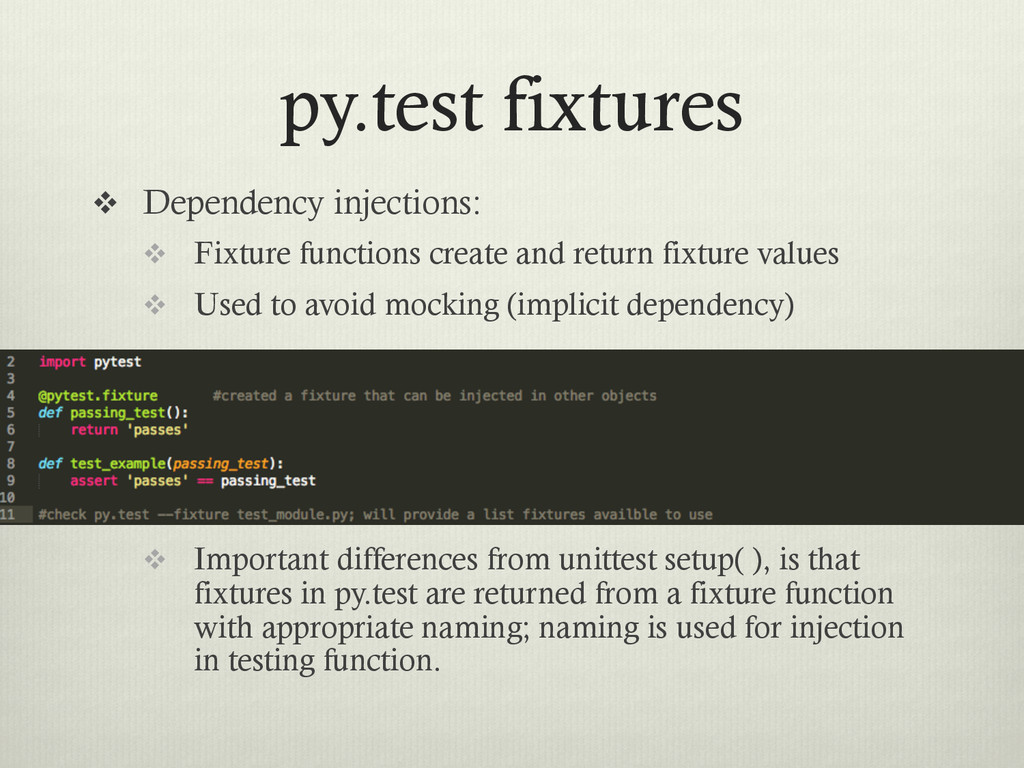
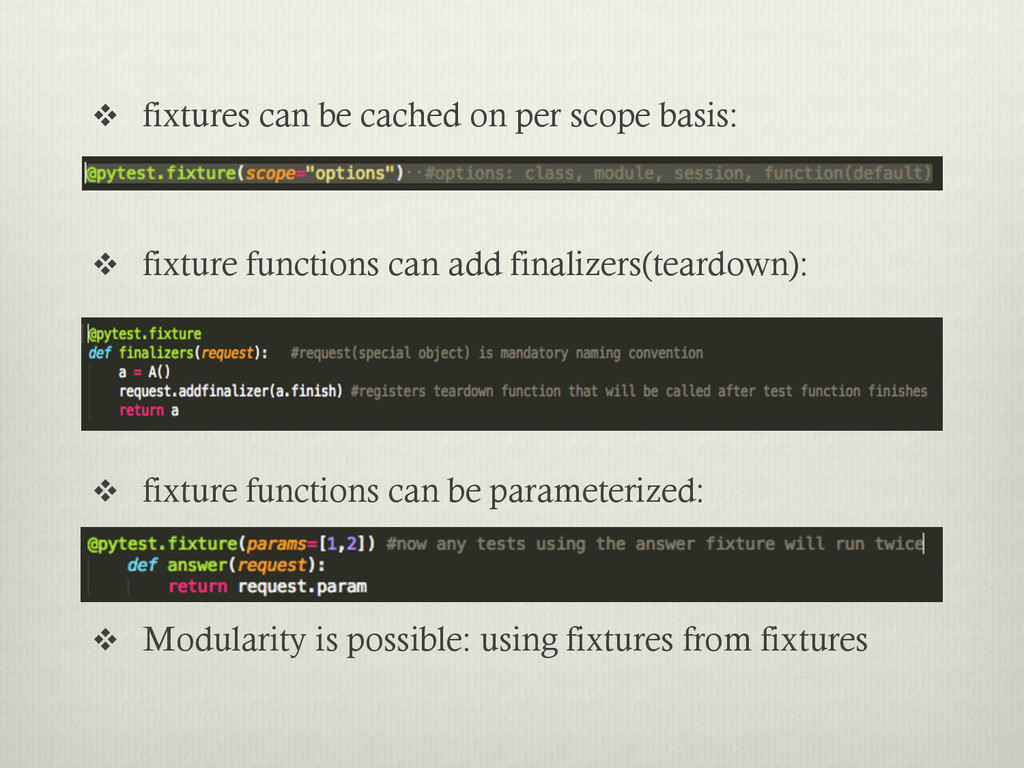
return fixture values v Used to avoid mocking (implicit dependency) v Important differences from unittest setup( ), is that fixtures in py.test are returned from a fixture function with appropriate naming; naming is used for injection in testing function.
tested. Models, views, forms, template tags, validators, and so forth. v Keep it simple and slim. v Run tests whenever code is PULLed or PUSHed from the repo and in dev/qa environment before pushing to prod (write a hook that automatically does this). v Common consensus in the community now is to avoid mocking/monkey-patching. Instead inject dependency and make it explicit.


 pedramn
 guaca
guaca
 kaityo256
 optim
optim
 clockmaker
 lynnswap
 minodriven
 tosite
 seike460
 lef237
 rollbear
 econanringo
 ichirokano2
 ryanjones
 soudai
 marktimemedia
 tmiket
 thekraken
 reverentgeek
 irinanazarova
 katarinadahlin
 caitiem20
 frankvandijk
 rmw
rmw
 apolaine