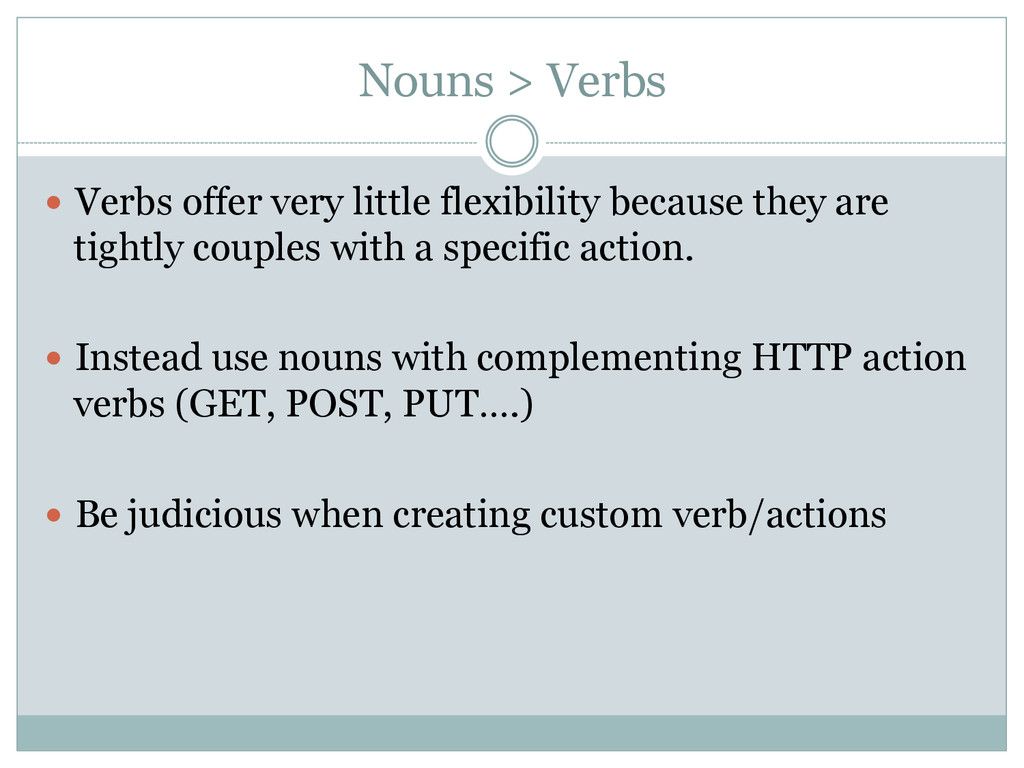
they are tightly couples with a specific action. Instead use nouns with complementing HTTP action verbs (GET, POST, PUT….) Be judicious when creating custom verb/actions
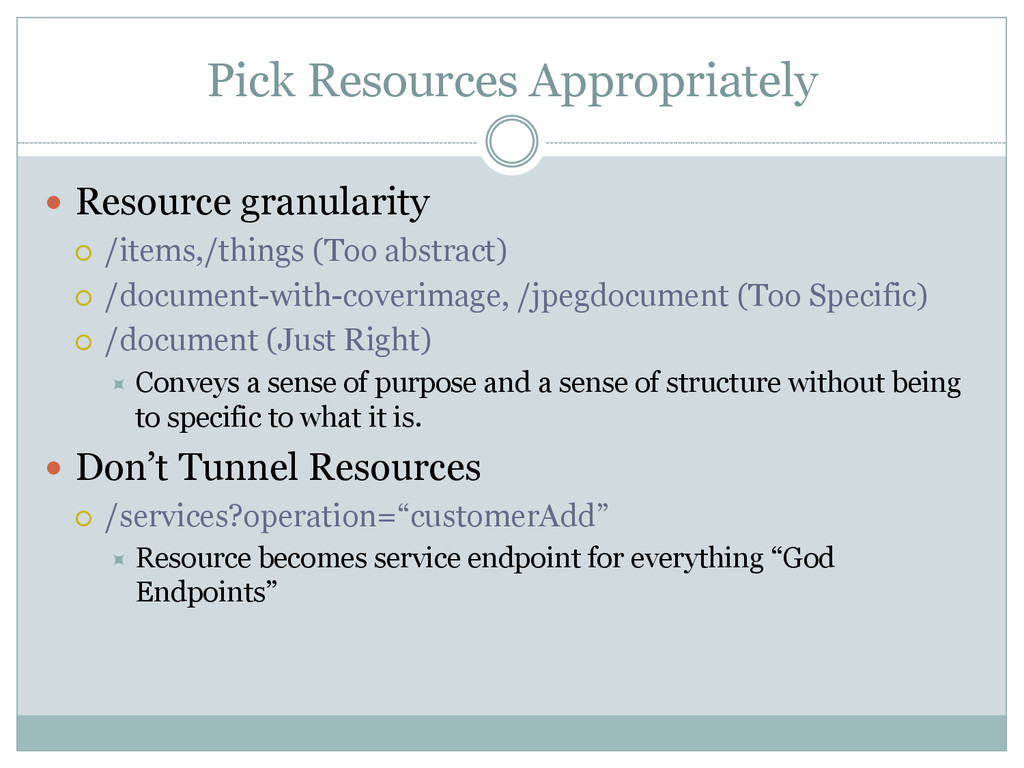
¡ /document-with-coverimage, /jpegdocument (Too Specific) ¡ /document (Just Right) ÷ Conveys a sense of purpose and a sense of structure without being to specific to what it is. Don’t Tunnel Resources ¡ /services?operation=“customerAdd” ÷ Resource becomes service endpoint for everything “God Endpoints”
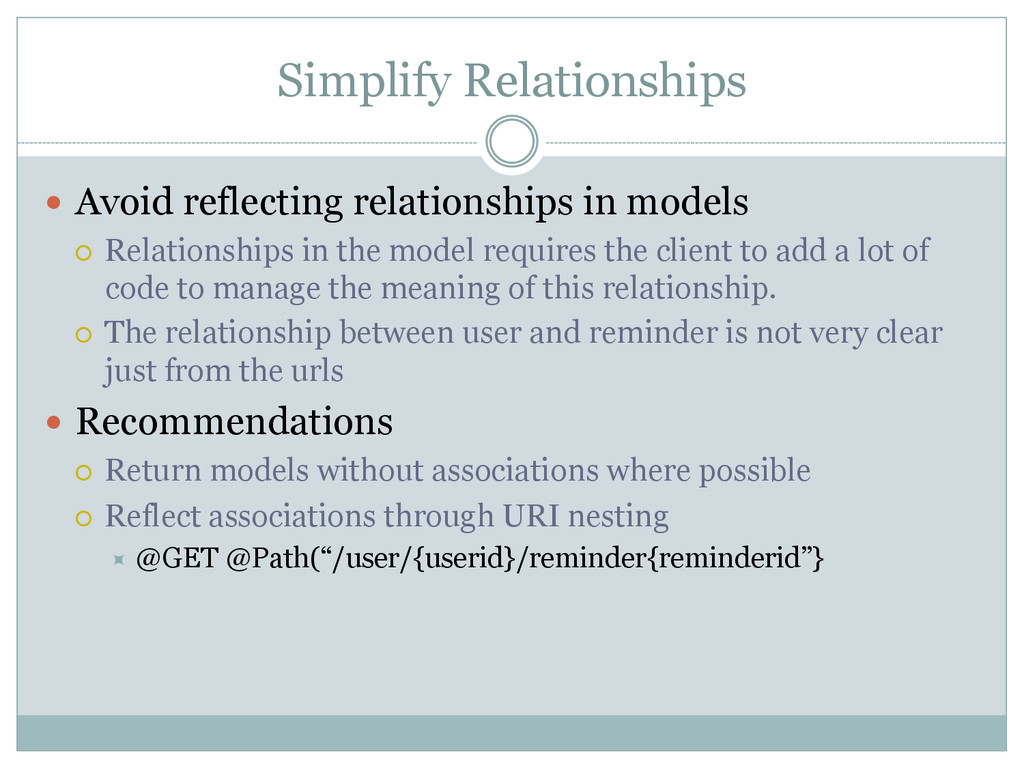
in the model requires the client to add a lot of code to manage the meaning of this relationship. ¡ The relationship between user and reminder is not very clear just from the urls Recommendations ¡ Return models without associations where possible ¡ Reflect associations through URI nesting ÷ @GET @Path(“/user/{userid}/reminder{reminderid”}
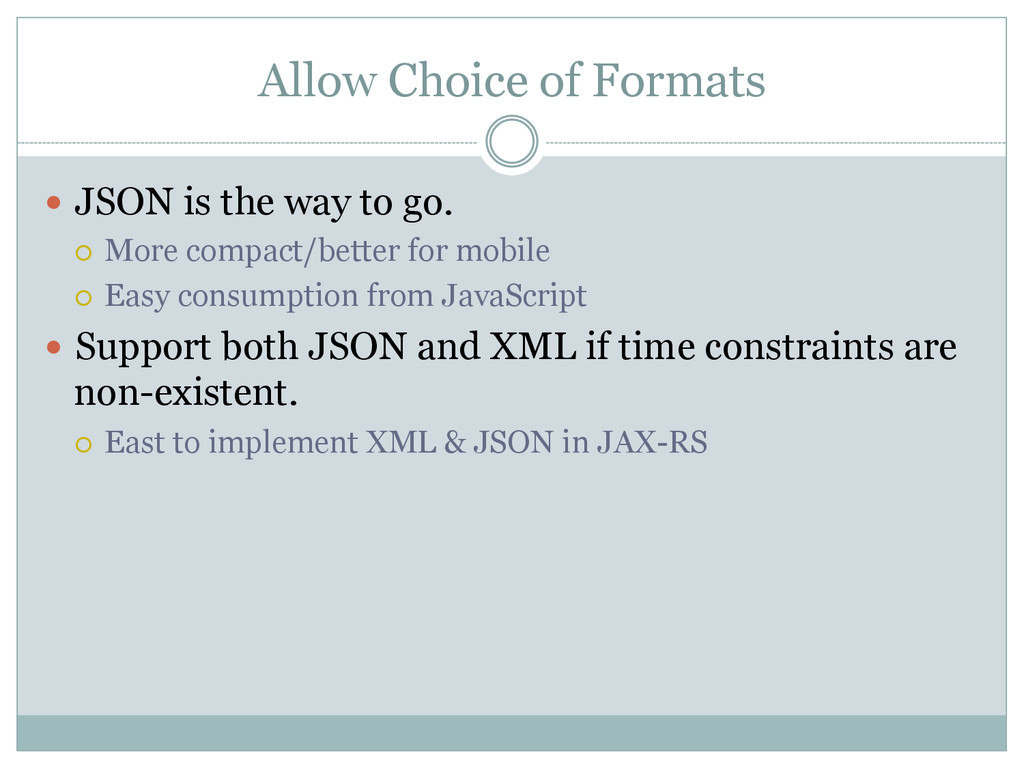
go. ¡ More compact/better for mobile ¡ Easy consumption from JavaScript Support both JSON and XML if time constraints are non-existent. ¡ East to implement XML & JSON in JAX-RS
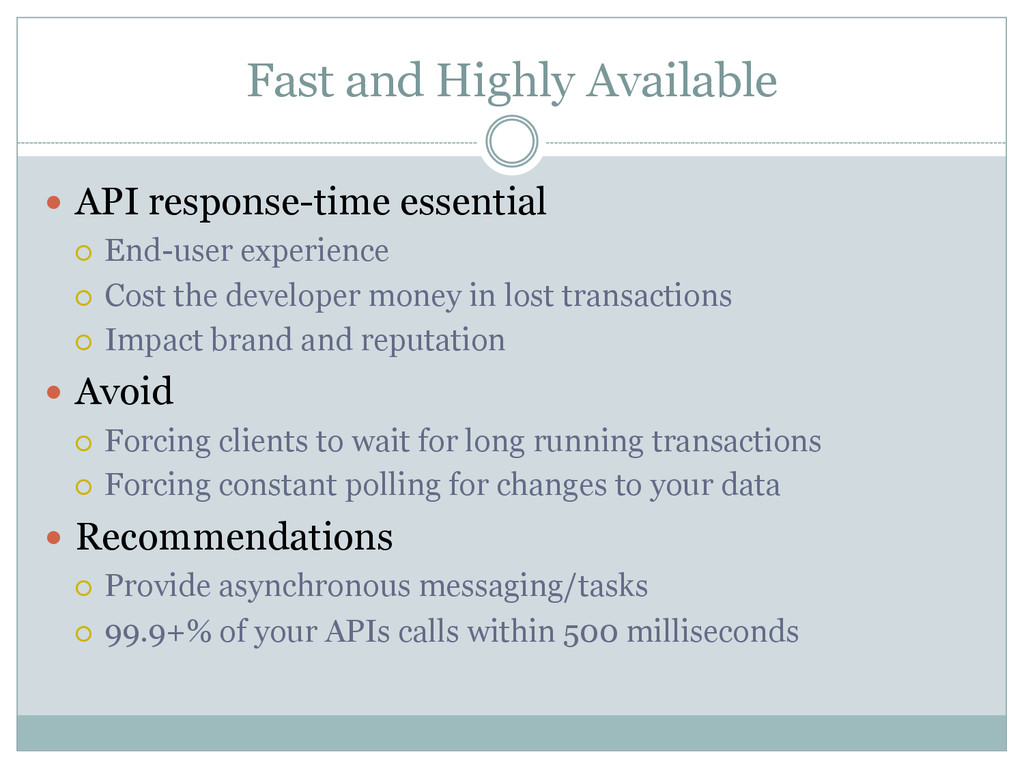
experience ¡ Cost the developer money in lost transactions ¡ Impact brand and reputation Avoid ¡ Forcing clients to wait for long running transactions ¡ Forcing constant polling for changes to your data Recommendations ¡ Provide asynchronous messaging/tasks ¡ 99.9+% of your APIs calls within 500 milliseconds

 SiteGround - Reliable hosting with speed, security, and support you can count on.


 pedramn
 tosite
 irinanazarova
 n_takehata
 naokihaba
 mofurune
 florets1
 kasacchiful
 takai
takai
 timakin
 gonta
gonta
 yub0n
yub0n
 skydoves
 danielanewman
 wayneb77
 greggifford
 kneath
 katarinadahlin
 shlominoach
 reverentgeek
 jcasabona
 inesmontani
 tammielis
 katiecoart
 akihiro_kokubo