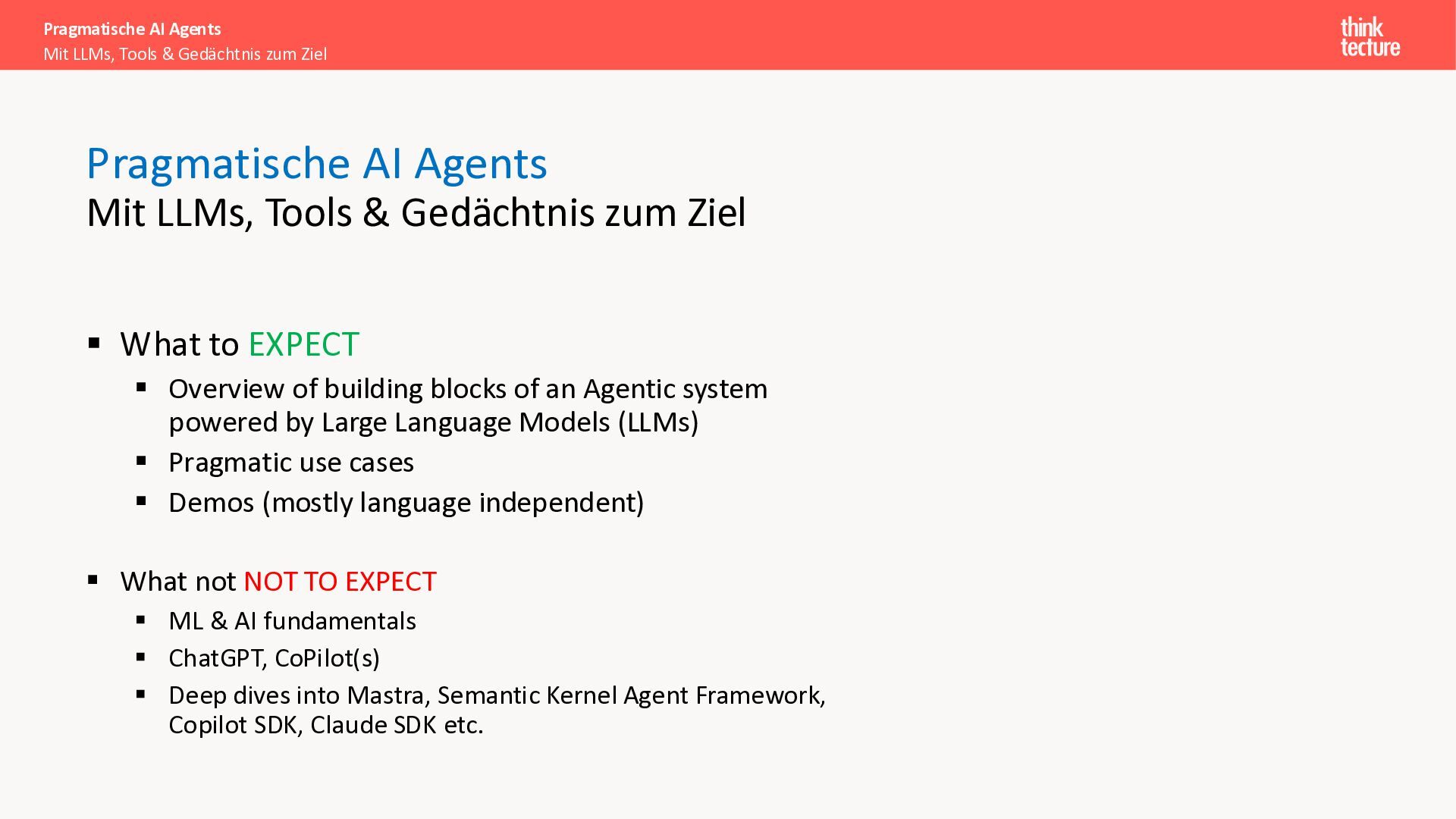
an Agentic system powered by Large Language Models (LLMs) ▪ Pragmatic use cases ▪ Demos (mostly language independent) ▪ What not NOT TO EXPECT ▪ ML & AI fundamentals ▪ ChatGPT, CoPilot(s) ▪ Deep dives into Mastra, Semantic Kernel Agent Framework, Copilot SDK, Claude SDK etc. Pragmatische AI Agents Mit LLMs, Tools & Gedächtnis zum Ziel Pragmatische AI Agents Mit LLMs, Tools & Gedächtnis zum Ziel
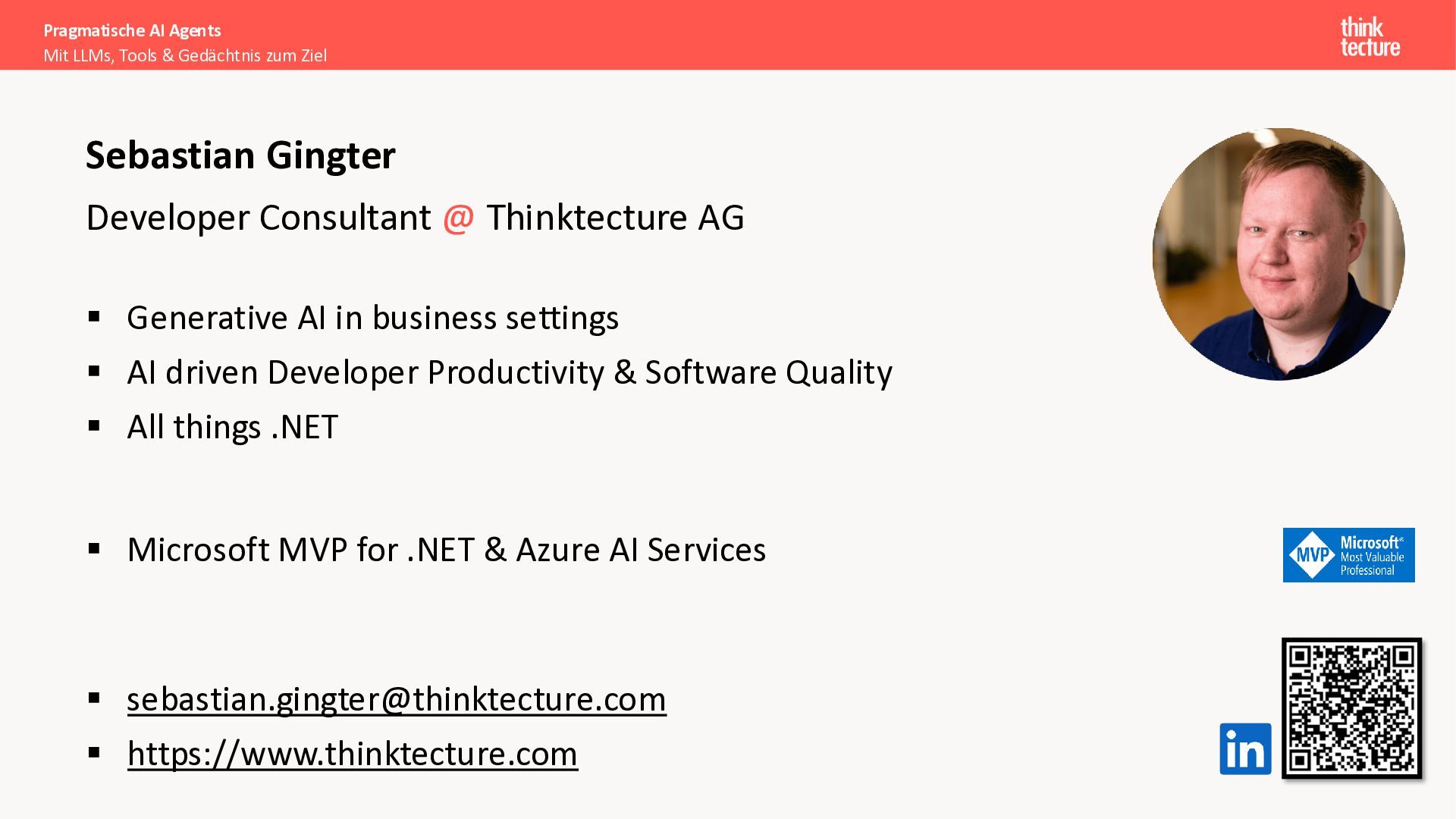
Productivity & Software Quality ▪ All things .NET ▪ Microsoft MVP for .NET & Azure AI Services ▪ [email protected] ▪ https://www.thinktecture.com Pragmatische AI Agents Mit LLMs, Tools & Gedächtnis zum Ziel Sebastian Gingter Developer Consultant @ Thinktecture AG
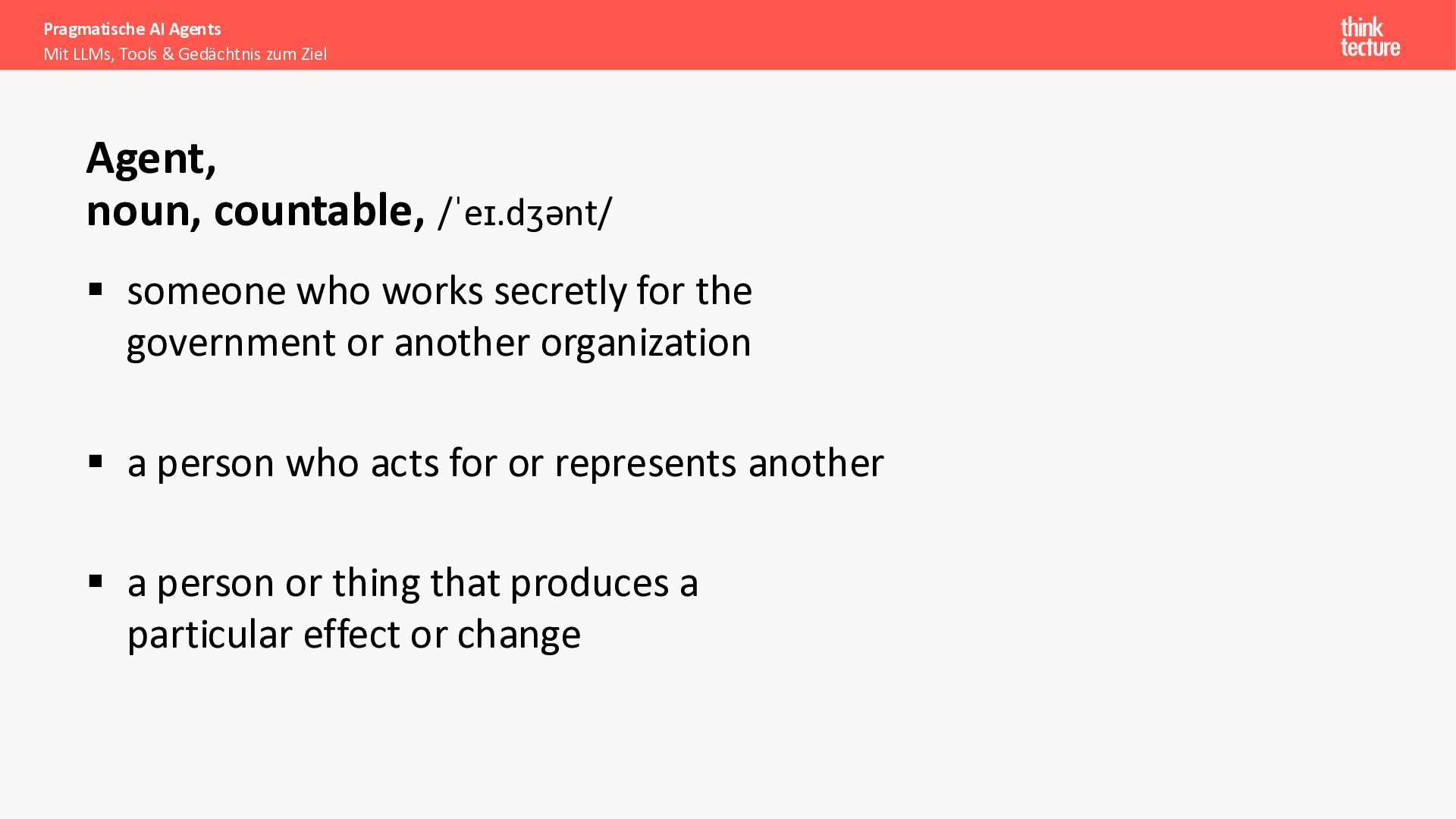
Agent, noun, countable, /ˈeɪ.dʒənt/ ▪ someone who works secretly for the government or another organization ▪ a person who acts for or represents another ▪ a person or thing that produces a particular effect or change
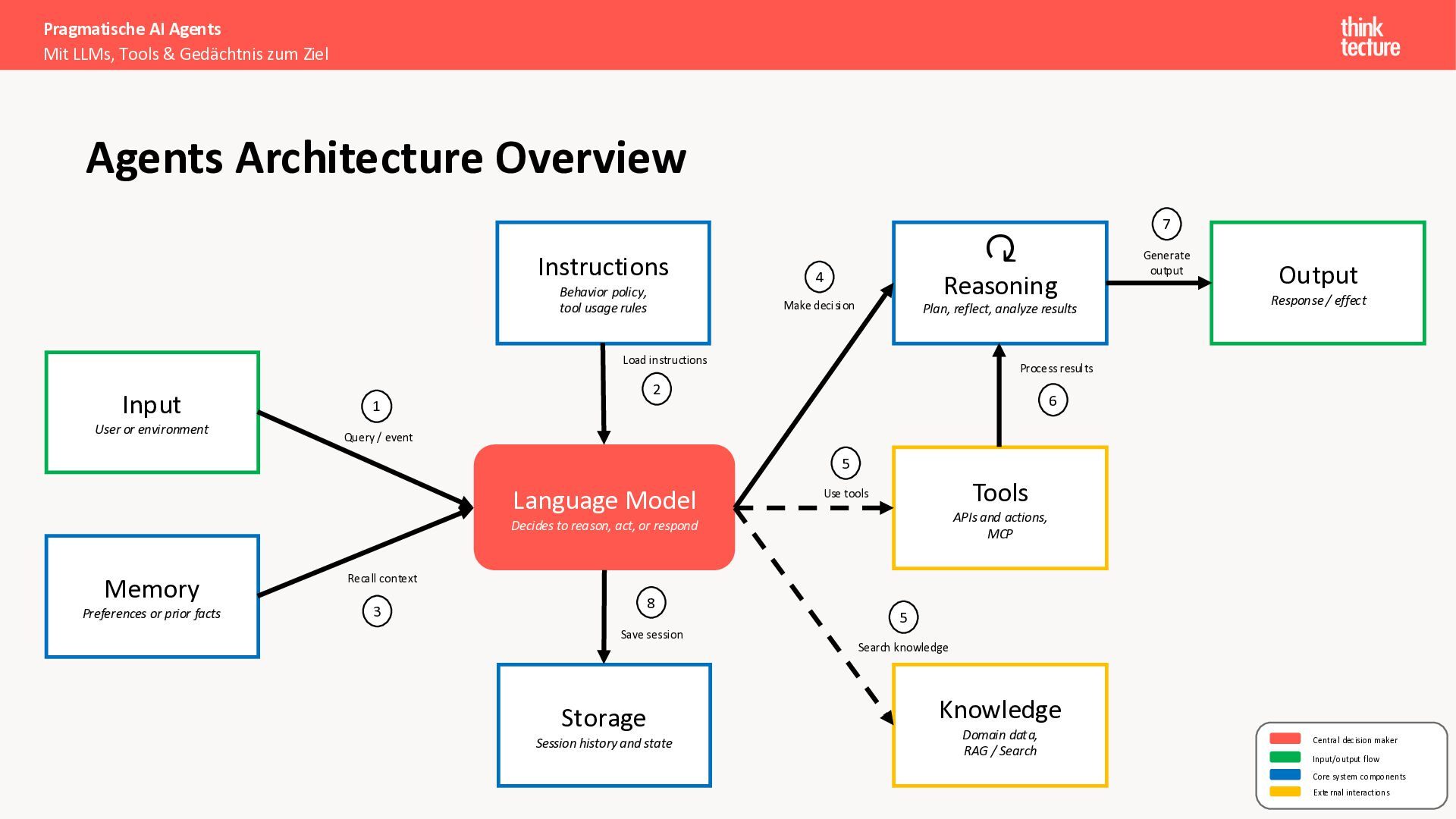
Chat is just a loop now ▪ Message types ▪ System ▪ User ▪ Assistant ▪ We have full control over the memory! ▪ We can inject and alter history if we want/need to
Tools allow interaction with the real world ▪ Assistant message can carry tool calls ▪ New message type: tool ▪ Tool choice can be preset or automatic ▪ Provide only few tools. OpenAI docs says: “Aim for fewer than 20 functions at any one time”
Interlude: Model Context Protocol (MCP) ▪ No magic, just a standardized way of ▪ providing tools to a model ▪ interpreting and execution of tool calls ▪ Specification is still work in progress and missing a lot ▪ Stateful protocol at heart ▪ Authentication is an afterthought https://julsimon.medium.com/why-mcps-disregard-for-40-years-of-rpc-best-practices-will-burn-enterprises-8ef85ce5bc9b
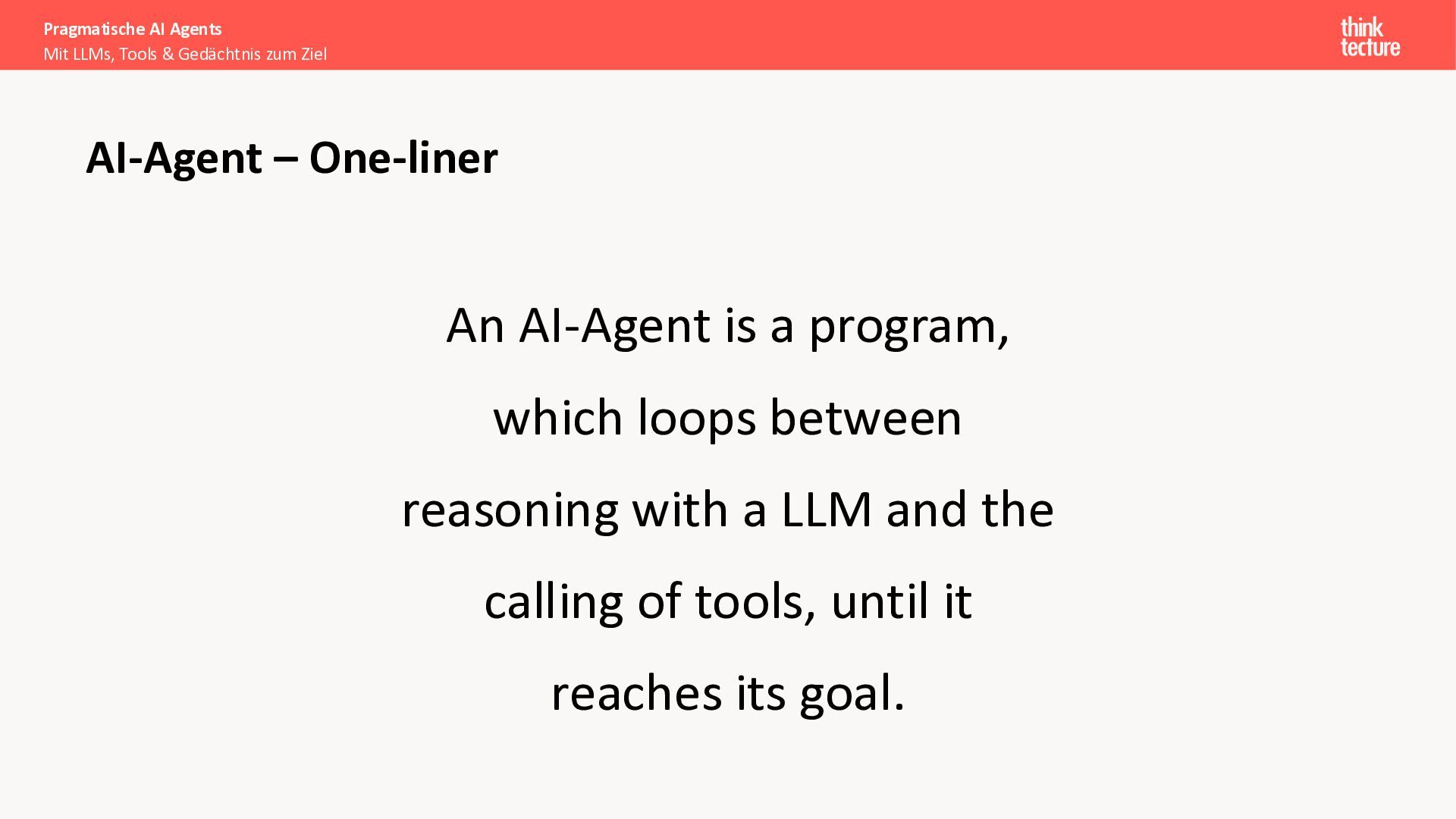
dem Reasoning mit einem LLM und dem Ausführen von Tools wechselt, bis es sein Ziel erreicht. Pragmatische AI Agents Mit LLMs, Tools & Gedächtnis zum Ziel KI-Agenten - Einzeiler
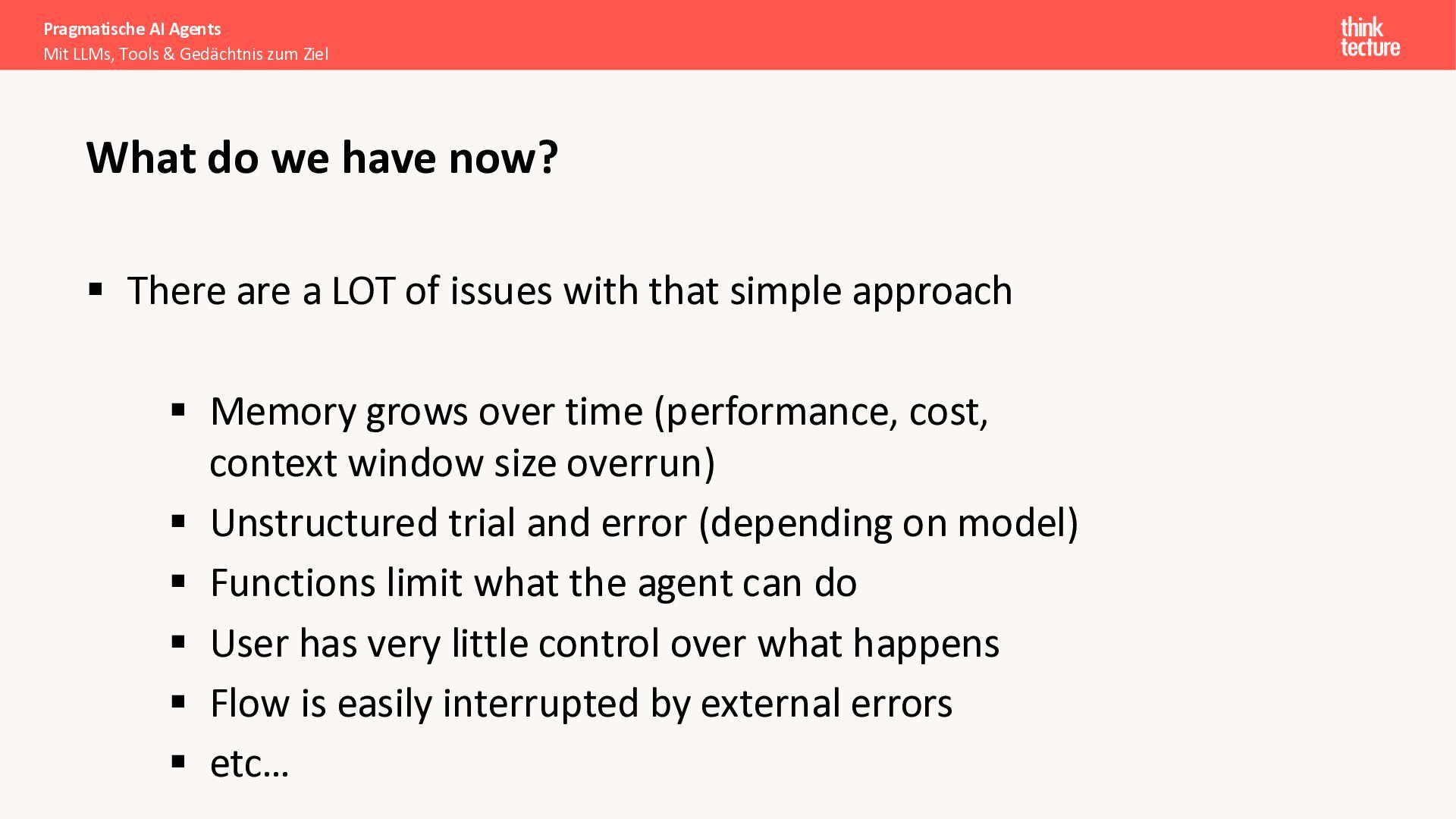
What do we have now? ▪ There are a LOT of issues with that simple approach ▪ Memory grows over time (performance, cost, context window size overrun) ▪ Unstructured trial and error (depending on model) ▪ Functions limit what the agent can do ▪ User has very little control over what happens ▪ Flow is easily interrupted by external errors ▪ etc…
Unstructured trial & error ▪ ReAct – Pattern (Reasoning & Acting) ▪ Reasoning models do help ▪ Prompt for a plan first, then continue ▪ Ask to create a todo-list and follow that
Limited control ▪ Approval gates ▪ Agent should pause before certain tasks ▪ Certain tools require user-approval (outside of agent loops) ▪ User can approve/deny/request changes ▪ Real-time monitoring ▪ User sees work and can interrupt with corrections
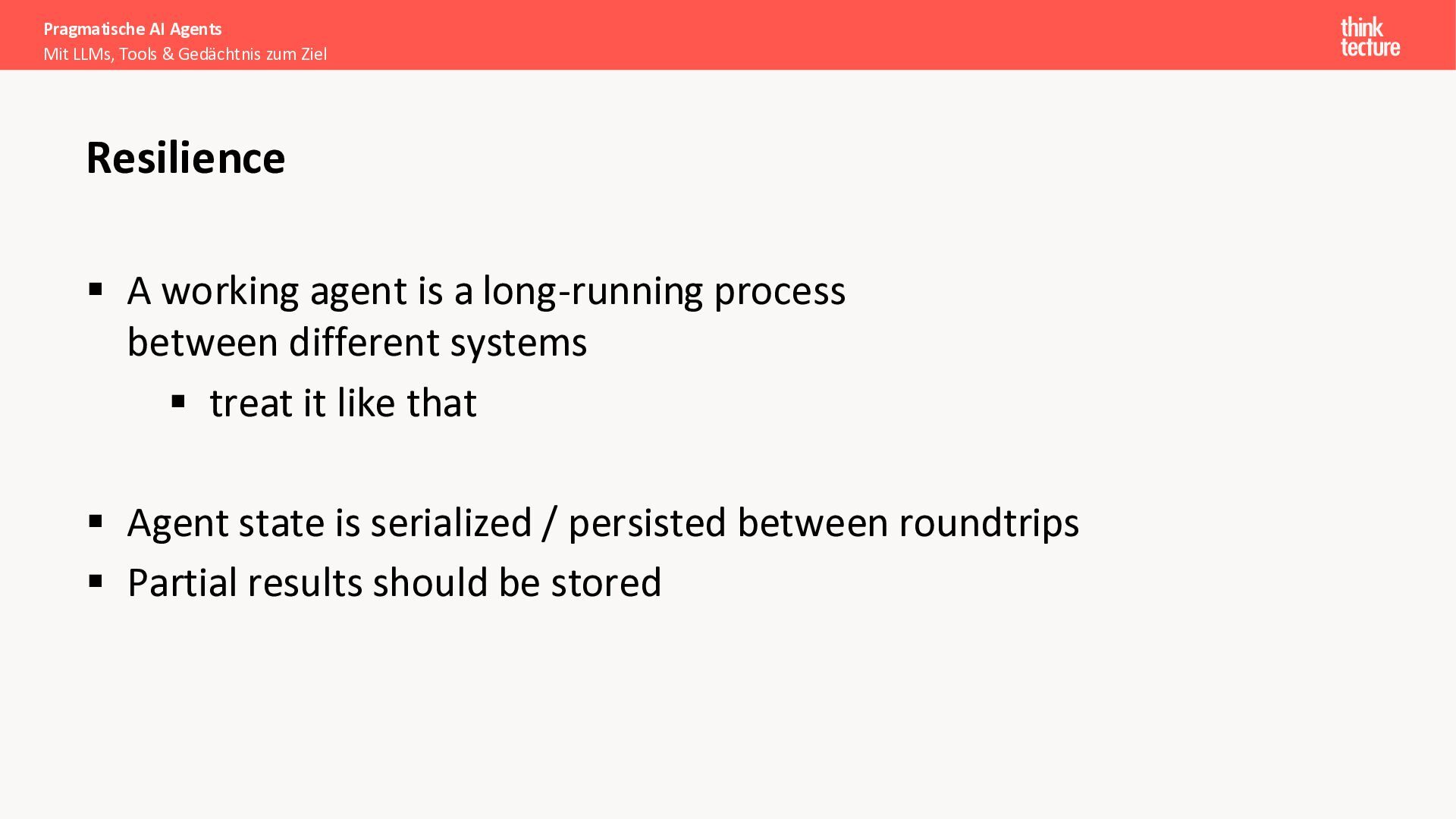
Resilience ▪ A working agent is a long-running process between different systems ▪ treat it like that ▪ Agent state is serialized / persisted between roundtrips ▪ Partial results should be stored
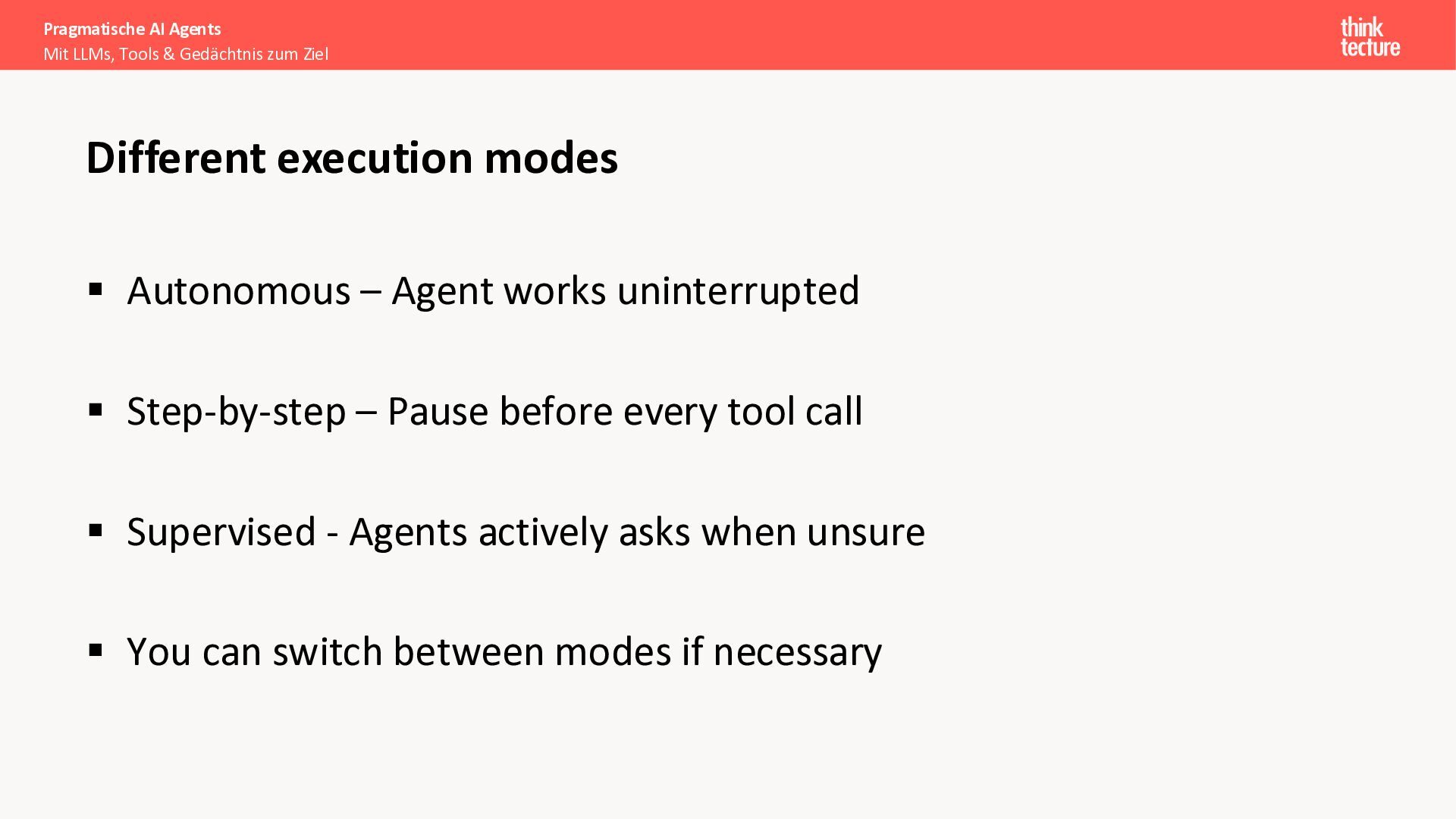
Different execution modes ▪ Autonomous – Agent works uninterrupted ▪ Step-by-step – Pause before every tool call ▪ Supervised - Agents actively asks when unsure ▪ You can switch between modes if necessary
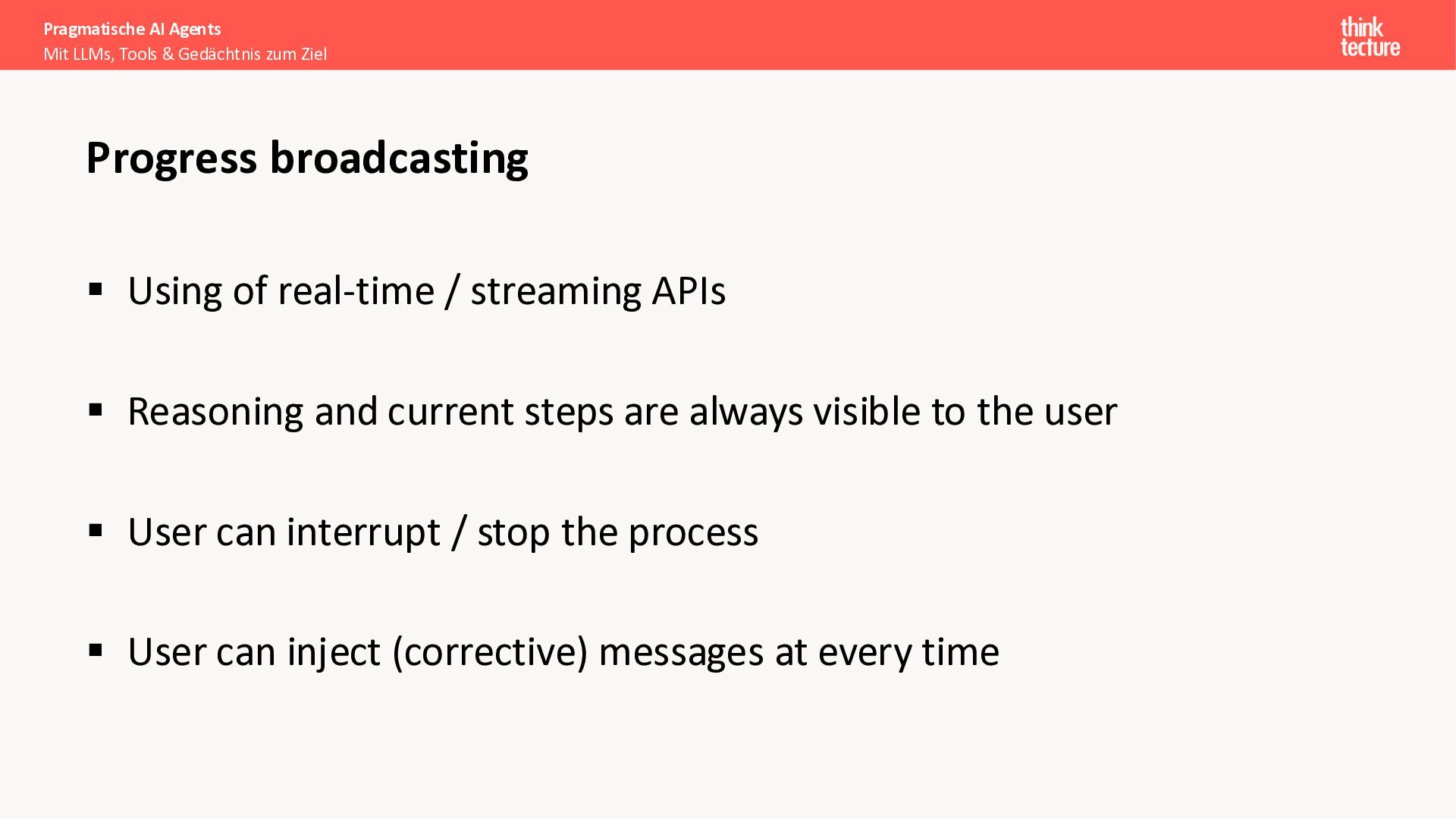
Progress broadcasting ▪ Using of real-time / streaming APIs ▪ Reasoning and current steps are always visible to the user ▪ User can interrupt / stop the process ▪ User can inject (corrective) messages at every time


 phoenixhawk
 eed3si9n
 seike460
 jame2408
 tosite
 hollycummins
.jpg) yumnumm
yumnumm
 neuecc
 texmeijin
 sorah
sorah
 mofurune
 armondando
 prota
prota
 brettharned
 lfama
lfama
 addyosmani
 reverentgeek
 ipullrank
 honzajavorek
 mongodb
 dougneiner
 jnunemaker
 ryanjones
 quramy
![Thank you! Demos: https://github.com/thinktecture-labs/basta-2026-spring-agents Sebastian Gingter [email protected] https://thinktecture.com/sebastian-gingter](https://files.speakerdeck.com/presentations/e76de2568abb4c22a1e6567423bc9fcf/slide_34.jpg)