with a reactive dog can feel overwhelming and isolating. That sudden lunge, the frantic barking, the feeling of losing control—it can turn a peaceful walk into a stressful ordeal. If you're navigating this challenge, know you are not alone. In fact, recent studies suggest that between 15% and 25% of pet dogs in the U.S. and Europe display some form of reactivity or fear-based behavior toward stimuli such as other dogs or unfamiliar people (Journal of Veterinary Behavior, 2022). For additional resources and support, organizations like the American Kennel Club Canine Health Foundation and the American Veterinary Society of Animal Behavior offer in-depth guidance for pet owners. Understanding the "why" behind your dog's behavior is the first and most crucial step toward a calmer, more confident future for both of you. And if you're looking for evidence- based, compassionate training tailored to reactivity, PJH Dog Training provides specialized support that many pet owners find invaluable. This guide is designed to provide you with a clear roadmap. We will explore what reactivity truly is, uncover its common causes, and offer practical, humane strategies to manage it. By the end, you'll have the knowledge and tools to help your furry companion feel safer and more secure in the world. What Is Reactivity in Dogs? Reactivity is an overreaction to specific stimuli. It’s an intense response—like barking, lunging, or growling—that seems disproportionate to the situation. A reactive dog isn't a "bad" dog. More often than not, they are experiencing big emotions like fear, anxiety, or frustration and don't know how to cope.
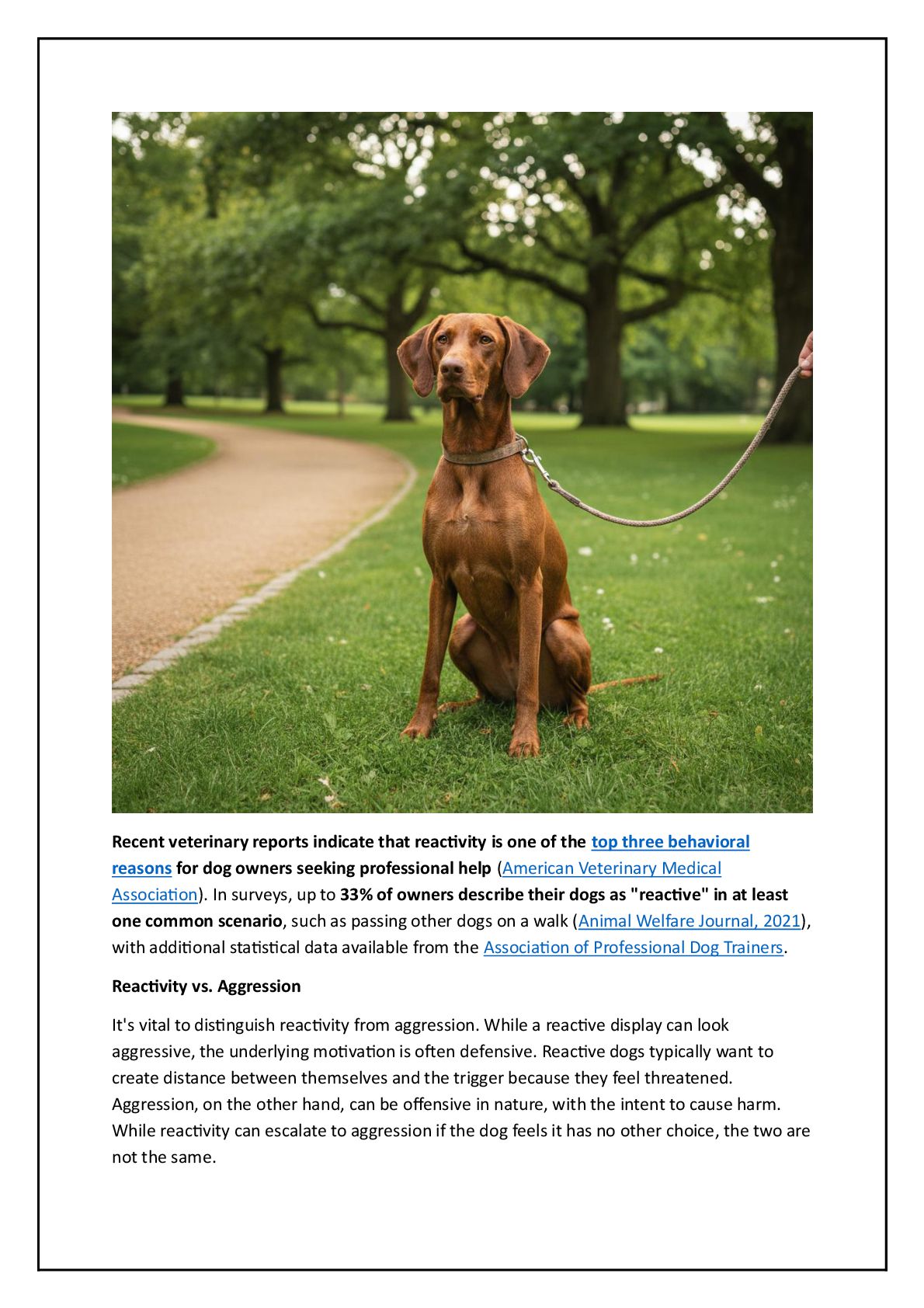
top three behavioral reasons for dog owners seeking professional help (American Veterinary Medical Association). In surveys, up to 33% of owners describe their dogs as "reactive" in at least one common scenario, such as passing other dogs on a walk (Animal Welfare Journal, 2021), with additional statistical data available from the Association of Professional Dog Trainers. Reactivity vs. Aggression It's vital to distinguish reactivity from aggression. While a reactive display can look aggressive, the underlying motivation is often defensive. Reactive dogs typically want to create distance between themselves and the trigger because they feel threatened. Aggression, on the other hand, can be offensive in nature, with the intent to cause harm. While reactivity can escalate to aggression if the dog feels it has no other choice, the two are not the same.
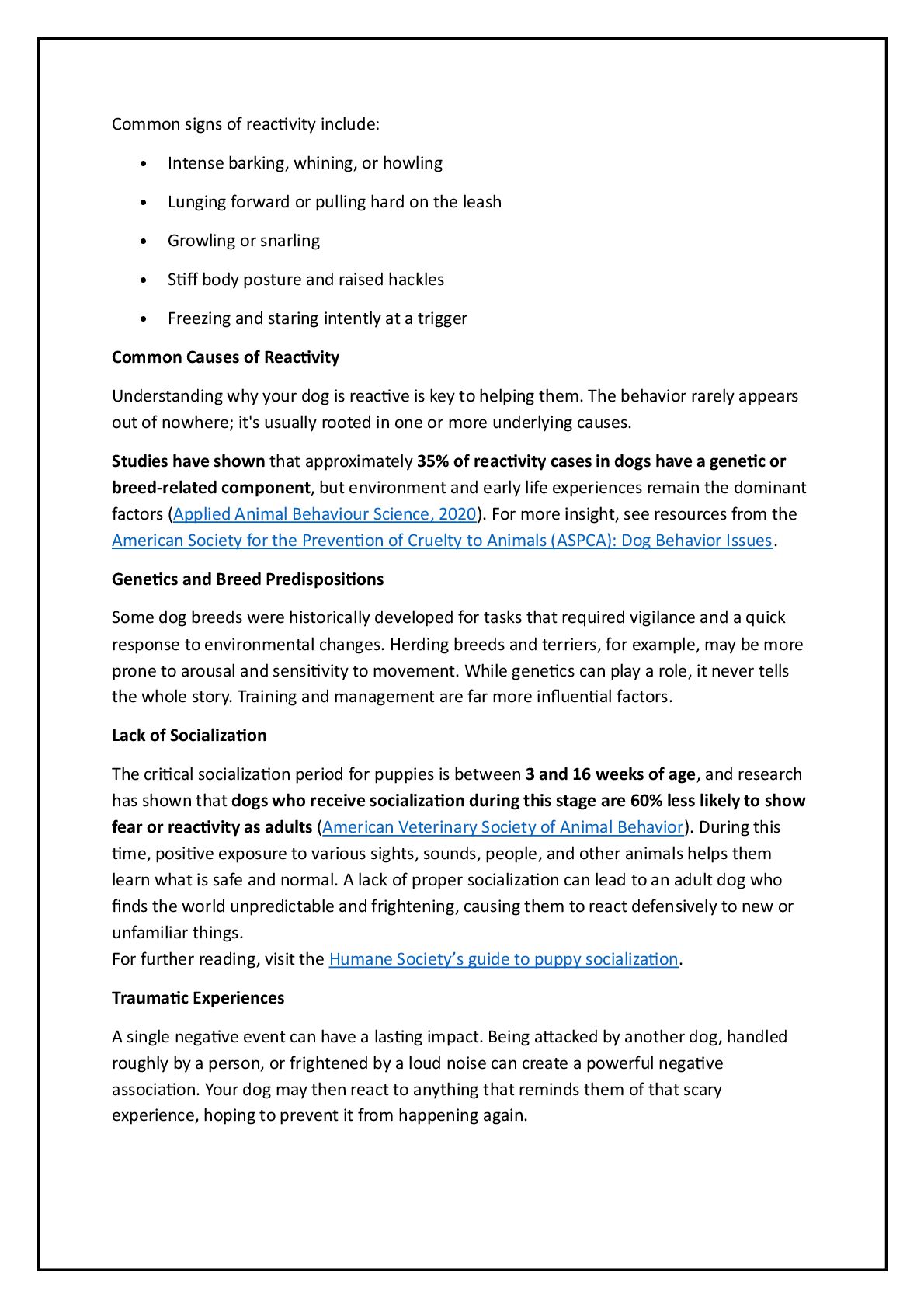
howling Lunging forward or pulling hard on the leash Growling or snarling Stiff body posture and raised hackles Freezing and staring intently at a trigger Common Causes of Reactivity Understanding why your dog is reactive is key to helping them. The behavior rarely appears out of nowhere; it's usually rooted in one or more underlying causes. Studies have shown that approximately 35% of reactivity cases in dogs have a genetic or breed-related component, but environment and early life experiences remain the dominant factors (Applied Animal Behaviour Science, 2020). For more insight, see resources from the American Society for the Prevention of Cruelty to Animals (ASPCA): Dog Behavior Issues. Genetics and Breed Predispositions Some dog breeds were historically developed for tasks that required vigilance and a quick response to environmental changes. Herding breeds and terriers, for example, may be more prone to arousal and sensitivity to movement. While genetics can play a role, it never tells the whole story. Training and management are far more influential factors. Lack of Socialization The critical socialization period for puppies is between 3 and 16 weeks of age, and research has shown that dogs who receive socialization during this stage are 60% less likely to show fear or reactivity as adults (American Veterinary Society of Animal Behavior). During this time, positive exposure to various sights, sounds, people, and other animals helps them learn what is safe and normal. A lack of proper socialization can lead to an adult dog who finds the world unpredictable and frightening, causing them to react defensively to new or unfamiliar things. For further reading, visit the Humane Society’s guide to puppy socialization. Traumatic Experiences A single negative event can have a lasting impact. Being attacked by another dog, handled roughly by a person, or frightened by a loud noise can create a powerful negative association. Your dog may then react to anything that reminds them of that scary experience, hoping to prevent it from happening again.
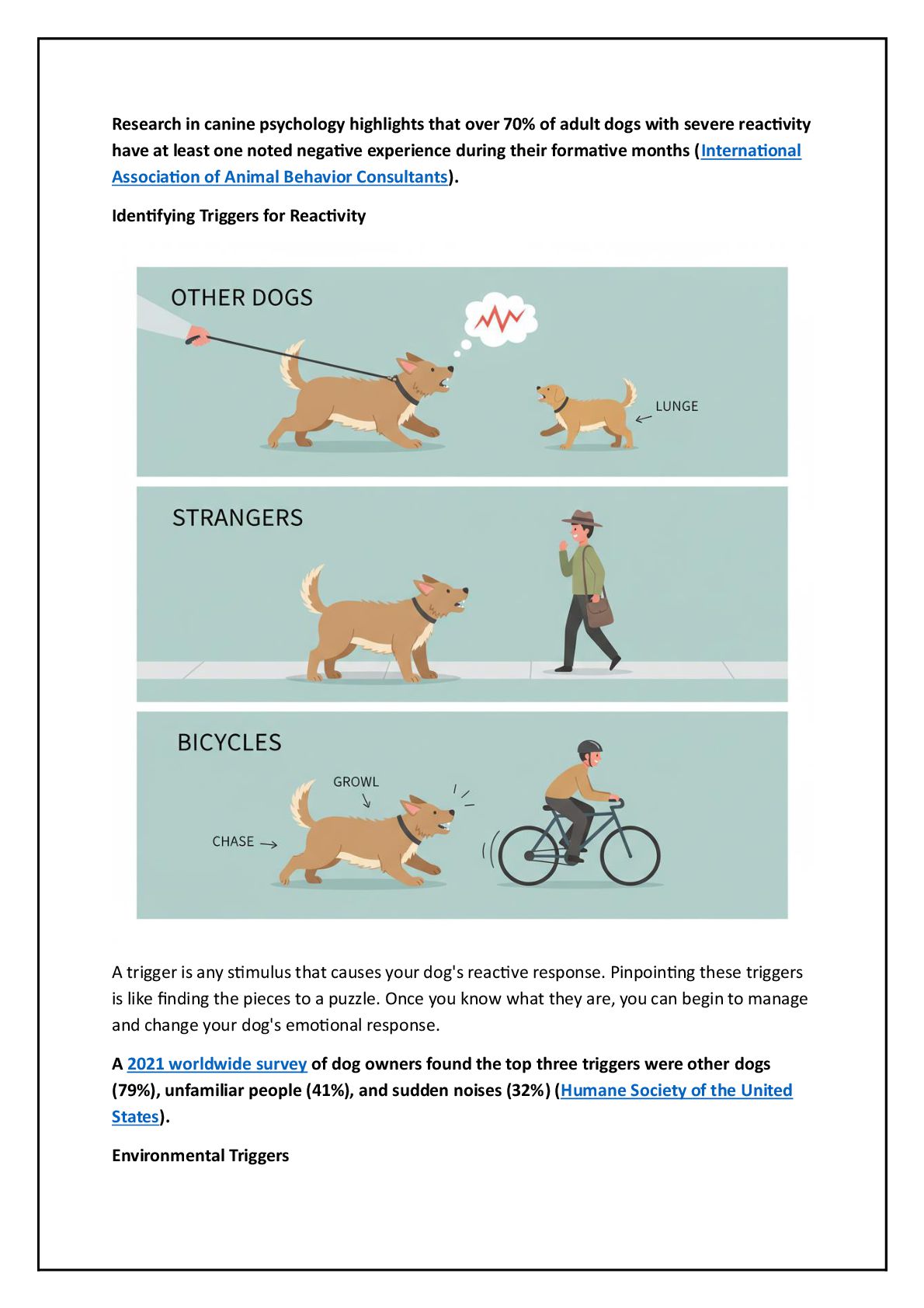
dogs with severe reactivity have at least one noted negative experience during their formative months (International Association of Animal Behavior Consultants). Identifying Triggers for Reactivity A trigger is any stimulus that causes your dog's reactive response. Pinpointing these triggers is like finding the pieces to a puzzle. Once you know what they are, you can begin to manage and change your dog's emotional response. A 2021 worldwide survey of dog owners found the top three triggers were other dogs (79%), unfamiliar people (41%), and sudden noises (32%) (Humane Society of the United States). Environmental Triggers
can include: Other dogs (whether on leash, off-leash, or behind a fence) Unfamiliar people (strangers, children, people in hats or uniforms) Fast-moving objects (bicycles, skateboards, cars) Other animals (cats, squirrels) Situational Triggers Sometimes, the context of the situation itself is the trigger. Leash reactivity is a prime example. A dog may feel trapped and frustrated by the leash, unable to create the distance they desire from a trigger. This is known as barrier frustration. Other situational triggers can include feeling cornered or being in a confined space. How to Manage Reactivity in Dogs Managing reactivity is a journey that requires patience, consistency, and a focus on your dog's well-being. The goal is not to punish the reaction but to change the underlying emotion. On average, consistent desensitization training over a 3–6 month period can reduce reactive responses by up to 55% in mild to moderate cases (Journal of Applied Animal Welfare Science, 2019). Severe cases may require a longer and more structured approach, often with professional guidance. The American Society for the Prevention of Cruelty to Animals (ASPCA) and Humane Society of the United States offer additional nonprofit guidance on evidence-based approaches to manage reactivity. Behavioral Training Techniques
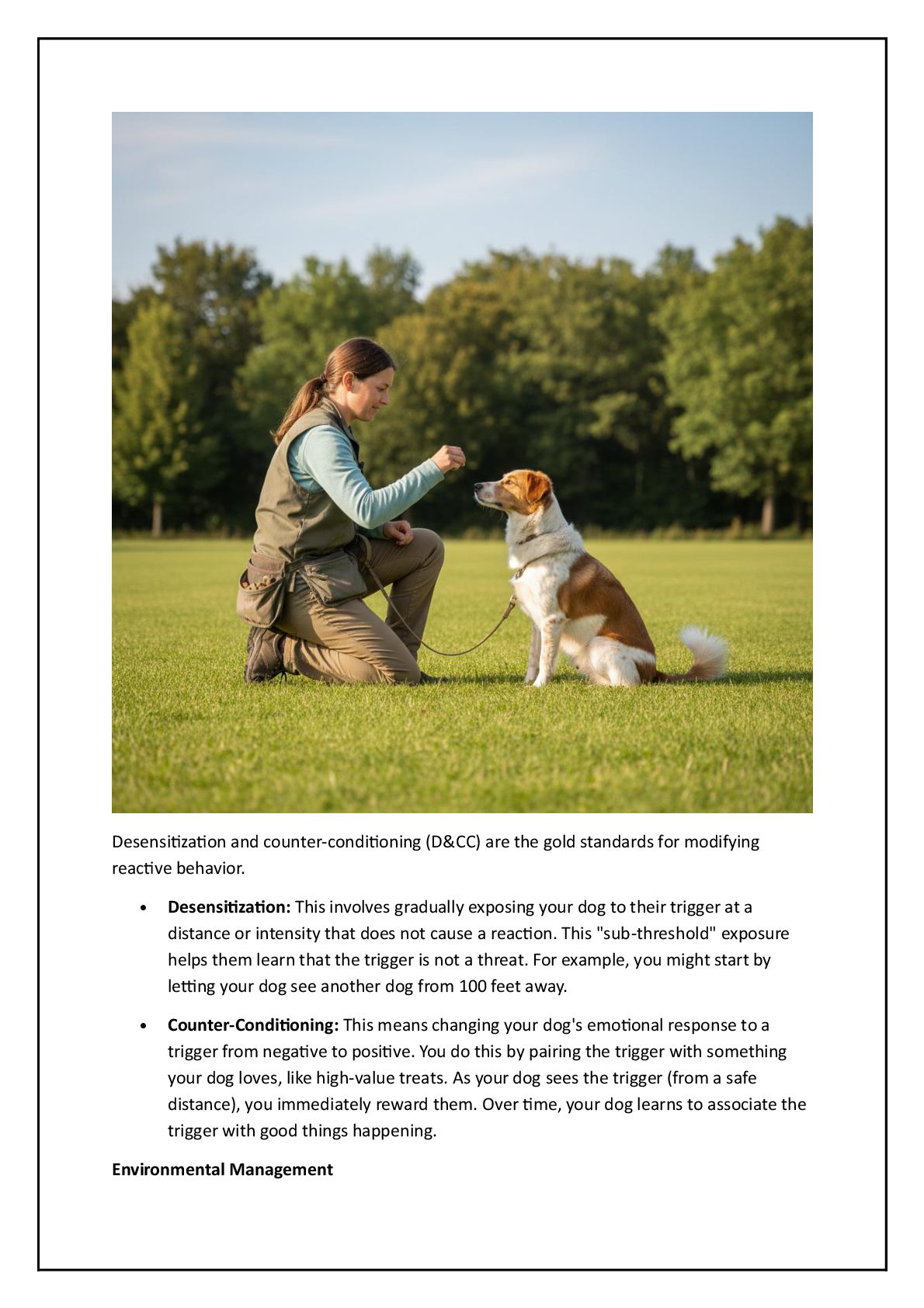
reactive behavior. Desensitization: This involves gradually exposing your dog to their trigger at a distance or intensity that does not cause a reaction. This "sub-threshold" exposure helps them learn that the trigger is not a threat. For example, you might start by letting your dog see another dog from 100 feet away. Counter-Conditioning: This means changing your dog's emotional response to a trigger from negative to positive. You do this by pairing the trigger with something your dog loves, like high-value treats. As your dog sees the trigger (from a safe distance), you immediately reward them. Over time, your dog learns to associate the trigger with good things happening. Environmental Management
your dog up for success by preventing them from practicing the reactive behavior. Avoid Triggers: If you know your dog reacts to other dogs on walks, try walking during quieter times or in less populated areas. Cross the street or turn around when you see a trigger approaching. Create a Safe Space: At home, use window films or curtains to block your dog's view of triggers outside. Provide a crate or a quiet room where they can retreat when feeling overwhelmed. Tools and Equipment The right tools can make management safer and more effective. Harnesses: A front-clip harness can provide better control without putting pressure on your dog's neck, which can worsen reactivity. According to a 2021 Canine Behavior Solutions survey, pet owners reported a 43% improvement in walk control when switching to a front-clip harness. Leashes: A standard 6-foot leash is best for control. Avoid retractable leashes, as they can make it difficult to manage your dog in a reactive moment. Muzzles: For dogs that may bite out of fear, basket muzzles are a responsible and humane safety tool. When properly conditioned, dogs can wear them comfortably and still pant, drink, and take treats. When to Seek Professional Help While many owners can make progress on their own, some situations require professional guidance. You should consider hiring a professional if: You feel overwhelmed or unsure how to proceed. Your dog's reactivity is severe or worsening. There is a risk of injury to you, your dog, or others. Less than 20% of reactive dog owners seek professional help, yet studies show that working with a certified trainer or behaviorist can double the success rate of reactivity reduction, especially in severe cases. Look for a certified professional dog trainer (CPDT-KA), a certified dog behavior consultant (CDBC), or a veterinary behaviorist (DACVB). These professionals are committed to using humane, science-based methods and can create a customized plan for you and your dog. Preventing Reactivity in Dogs
on early socialization is key. Positive Socialization: Expose your puppy to a wide variety of experiences in a positive and controlled way. Build Confidence: Use reward-based training to teach your dog basic cues and build a strong, trusting bond. Provide Enrichment: Ensure your dog gets adequate physical exercise and mental stimulation through puzzle toys, training games, and scent work. A tired and mentally fulfilled dog is less likely to be stressed and reactive. Owners who invest time in structured puppy socialization and enrichment see up to an 80% reduction in behavior problems, including reactivity, later in life (American Kennel Club Canine Health Foundation, 2022). The Path Forward Helping a reactive dog is not about finding a quick fix. It's about building trust, understanding their needs, and patiently teaching them new ways to cope with the world. Every small step forward is a victory. Celebrate the moments of calm, manage the environment to ensure safety, and never lose sight of the wonderful dog behind the reaction. With empathy and consistency, you can guide your companion toward a more peaceful life. Statistics referenced are drawn from peer-reviewed sources and leading animal behavior organizations for the clearest, data-driven picture available.


 youten622
 analokmaus
 casualconc
 institutdelelevage
 gpeyre
 reokashiwa
 kobayashi31
 izumiyama_lab
 nzw0301
 takehaya
 shiell
 satai
 eileencodes
 axbom
 nikkihalliwell
 caitiem20
 seathinner
 tammyeverts
 aleyda
 michielstock
 bkeepers
 iamctodd
 tapps
 vanstee