Upgrade to Pro — share decks privately, control downloads, hide ads and more …

Break the Code

Break the Code

Codes, Ciphers and Secret Writings.

Avatar for Kent Wang

Kent Wang

June 26, 2015

Other Decks in Technology

Transcript

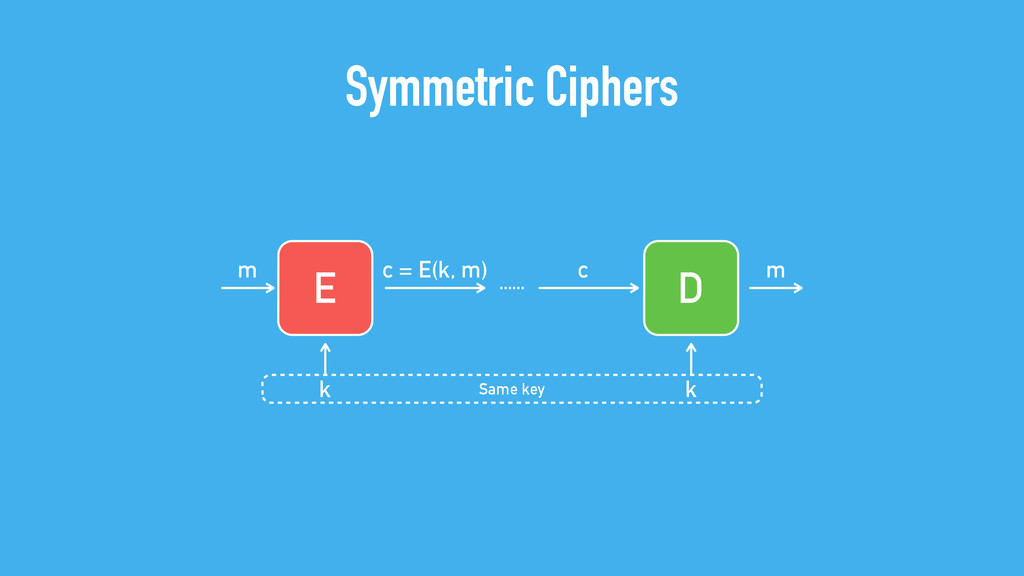
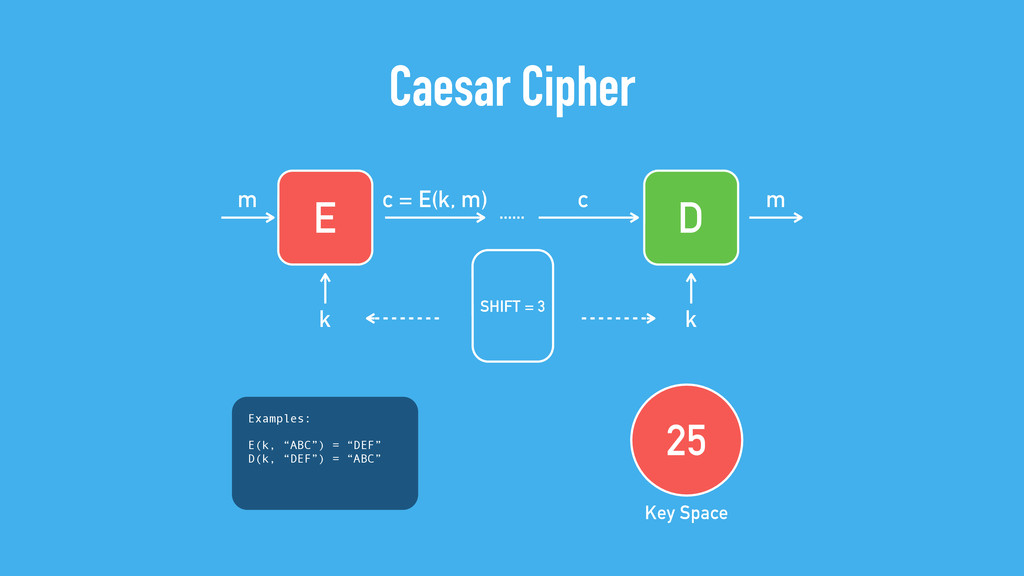
  1. Caesar Cipher E D m c = E(k, m) c

    m k k SHIFT = 3 Examples: E(k, “ABC”) = “DEF” D(k, “DEF”) = “ABC” 25 Key Space
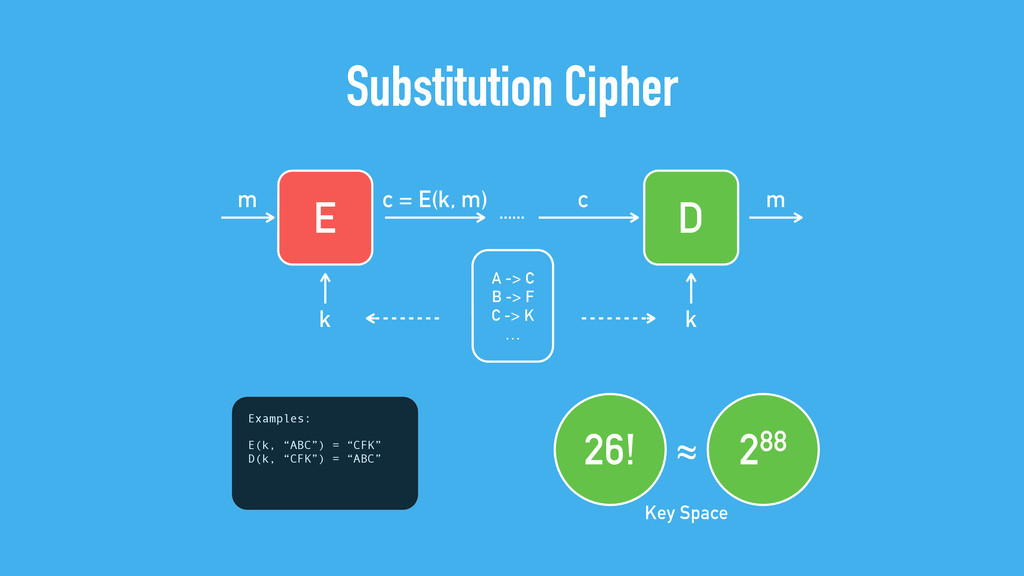
  2. Substitution Cipher E D m c = E(k, m) c

    m k k A -> C B -> F C -> K … Examples: E(k, “ABC”) = “CFK” D(k, “CFK”) = “ABC” 26! Key Space 288 ≈
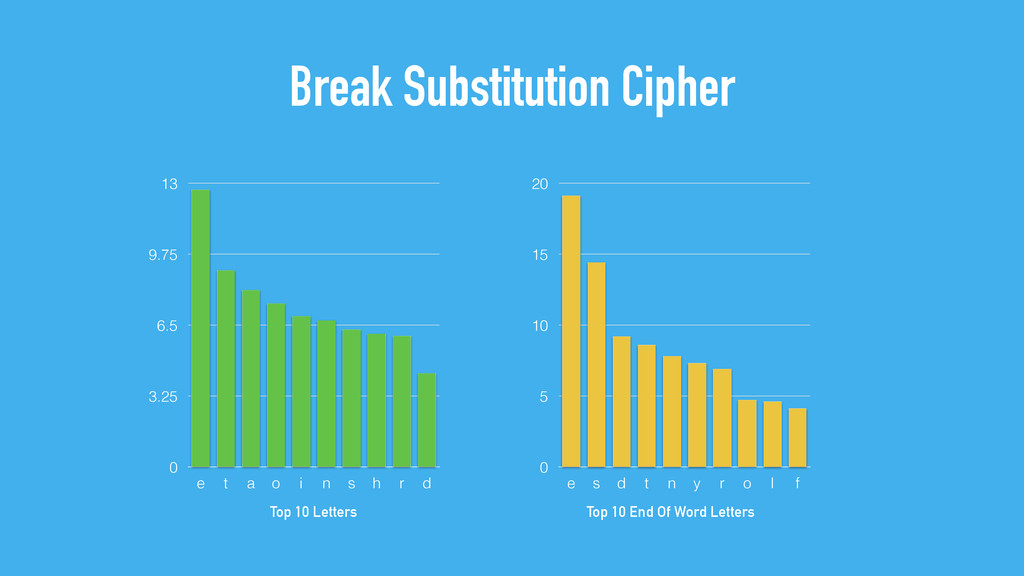
  3. Break Substitution Cipher 0 3.25 6.5 9.75 13 e t

    a o i n s h r d 0 5 10 15 20 e s d t n y r o l f Top 10 Letters Top 10 End Of Word Letters
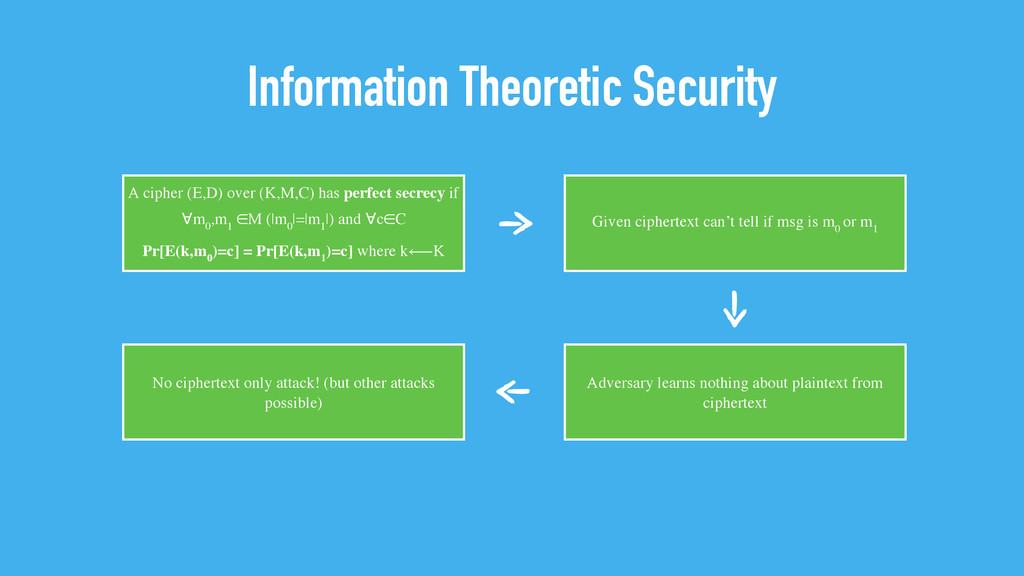
  4. Information Theoretic Security A cipher (E,D) over (K,M,C) has perfect

    secrecy if ∀m 0 ,m 1 ∈M (|m 0 |=|m 1 |) and ∀c∈C Pr[E(k,m 0 )=c] = Pr[E(k,m 1 )=c] where k⟵K Given ciphertext can’t tell if msg is m 0 or m 1 Adversary learns nothing about plaintext from ciphertext No ciphertext only attack! (but other attacks possible)
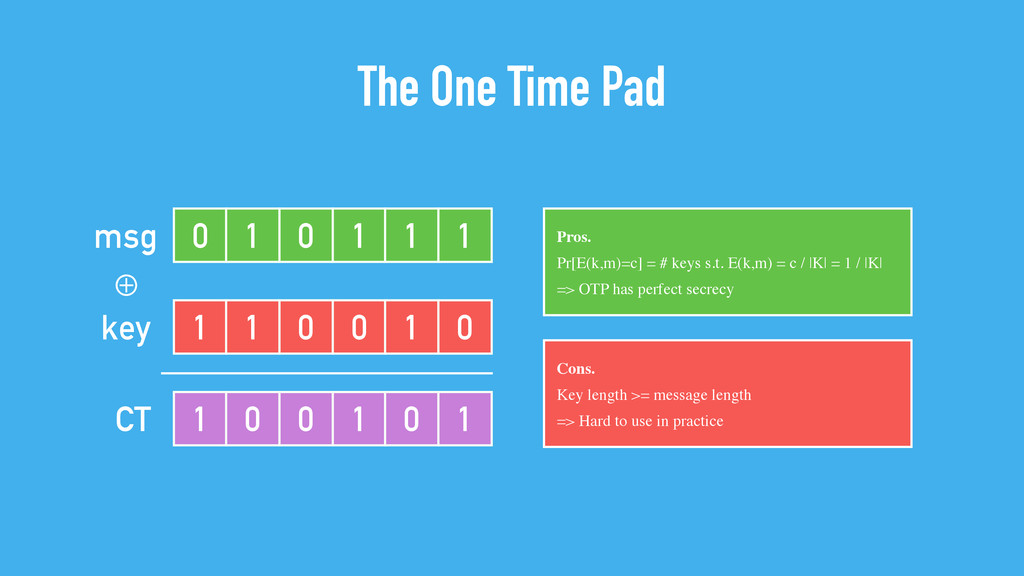
  5. The One Time Pad 0 1 0 1 1 1

    1 1 0 0 1 0 ⊕ msg key 1 0 0 1 0 1 CT Pros. Pr[E(k,m)=c] = # keys s.t. E(k,m) = c / |K| = 1 / |K| => OTP has perfect secrecy Cons. Key length >= message length => Hard to use in practice
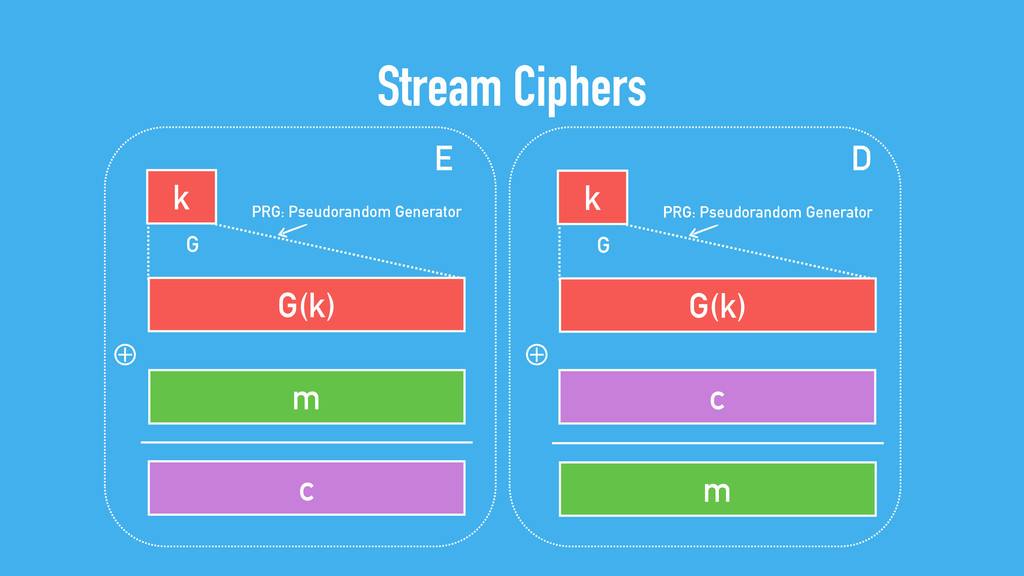
  6. G Stream Ciphers G(k) ⊕ m c k PRG: Pseudorandom

    Generator G G(k) ⊕ c k PRG: Pseudorandom Generator m E D
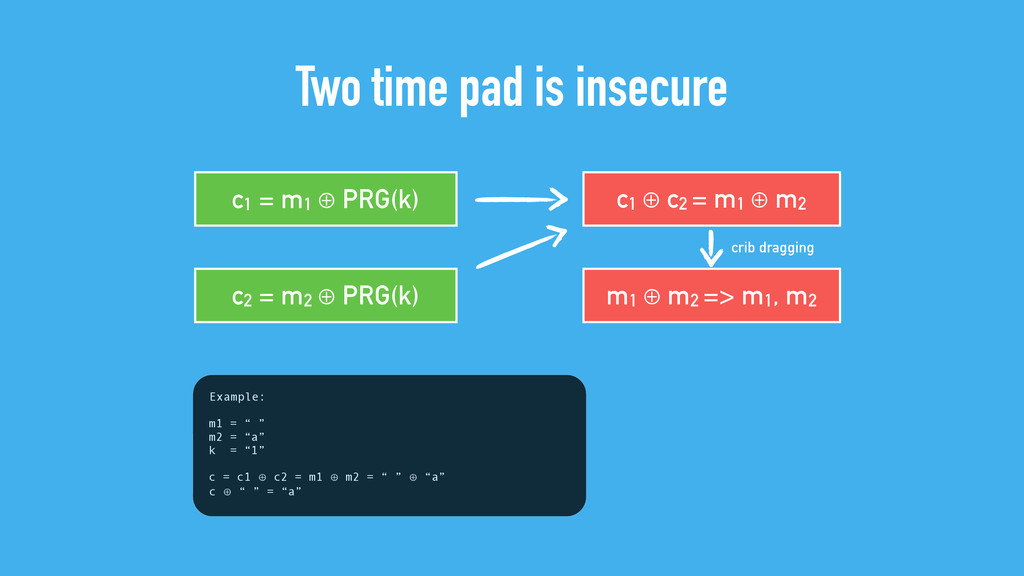
  7. Two time pad is insecure c1 = m1 ⊕ PRG(k)

    c2 = m2 ⊕ PRG(k) c1 ⊕ c2 = m1 ⊕ m2 Example: m1 = “ ” m2 = “a” k = “1” c = c1 ⊕ c2 = m1 ⊕ m2 = “ ” ⊕ “a” c ⊕ “ ” = “a” m1 ⊕ m2 => m1, m2 crib dragging
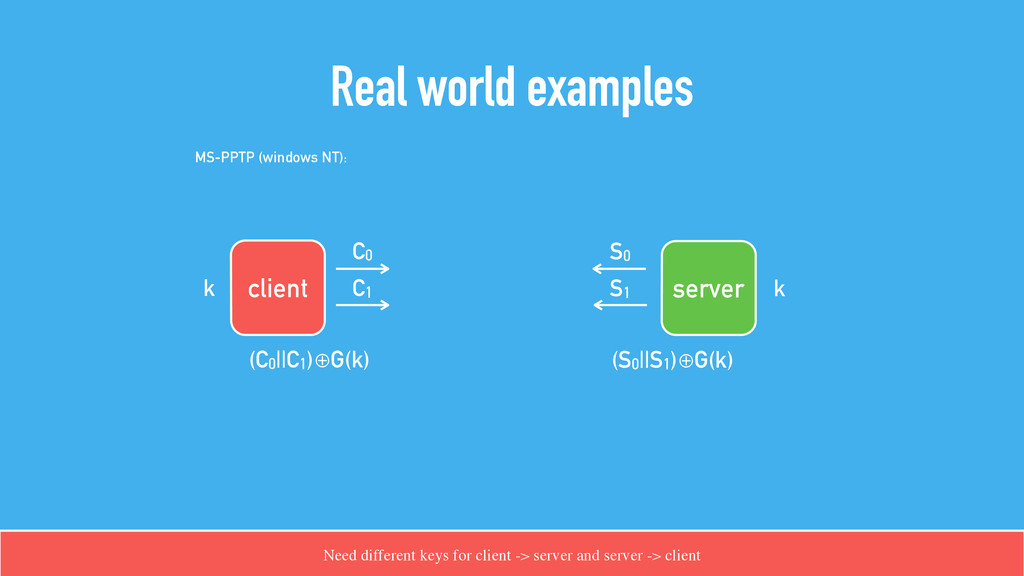
  8. Real world examples client server MS-PPTP (windows NT): k k

    C0 C1 S0 S1 (C0||C1)⊕G(k) (S0||S1)⊕G(k) Need different keys for client -> server and server -> client
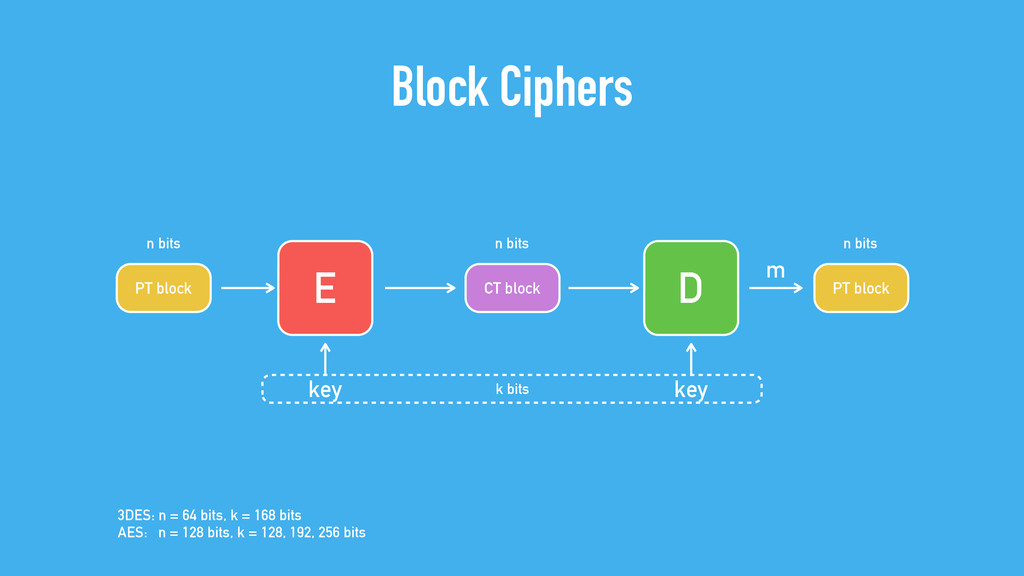
  9. Block Ciphers E D m key key PT block PT

    block CT block n bits n bits n bits k bits 3DES: n = 64 bits, k = 168 bits AES: n = 128 bits, k = 128, 192, 256 bits
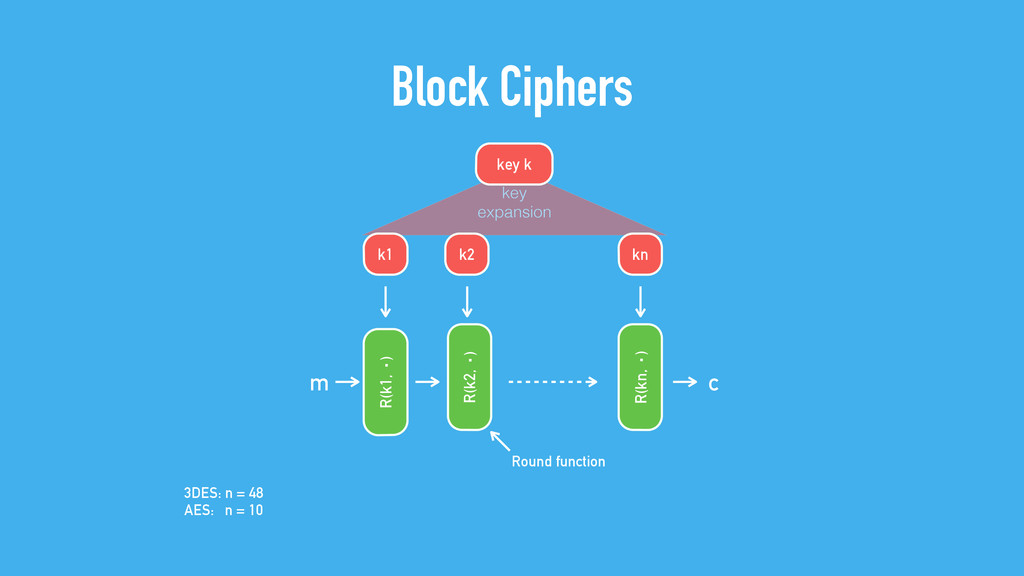
  10. key expansion Block Ciphers key k R(k1, ·) R(k2, ·)

    R(kn, ·) 3DES: n = 48 AES: n = 10 m c k1 k2 kn Round function
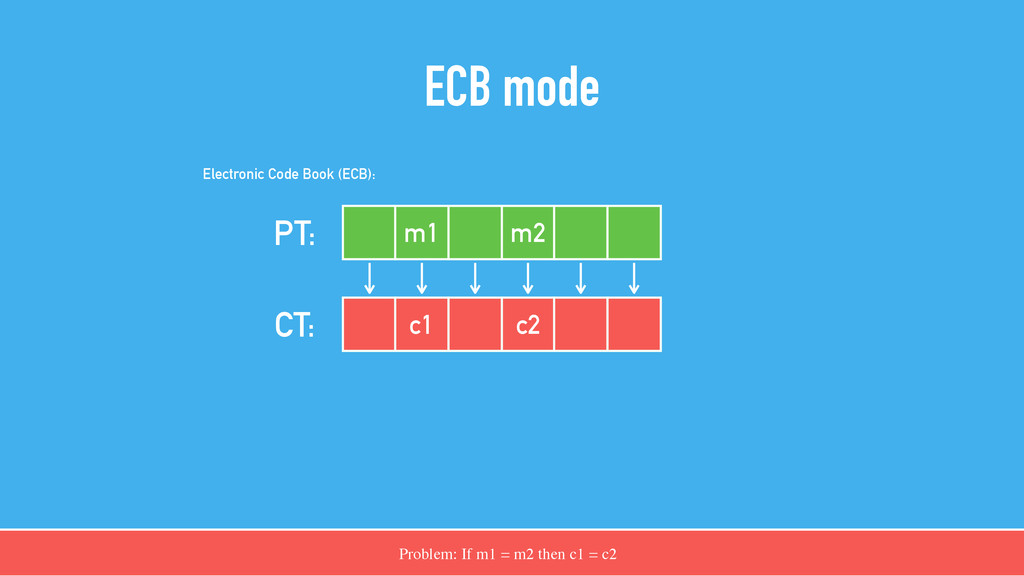
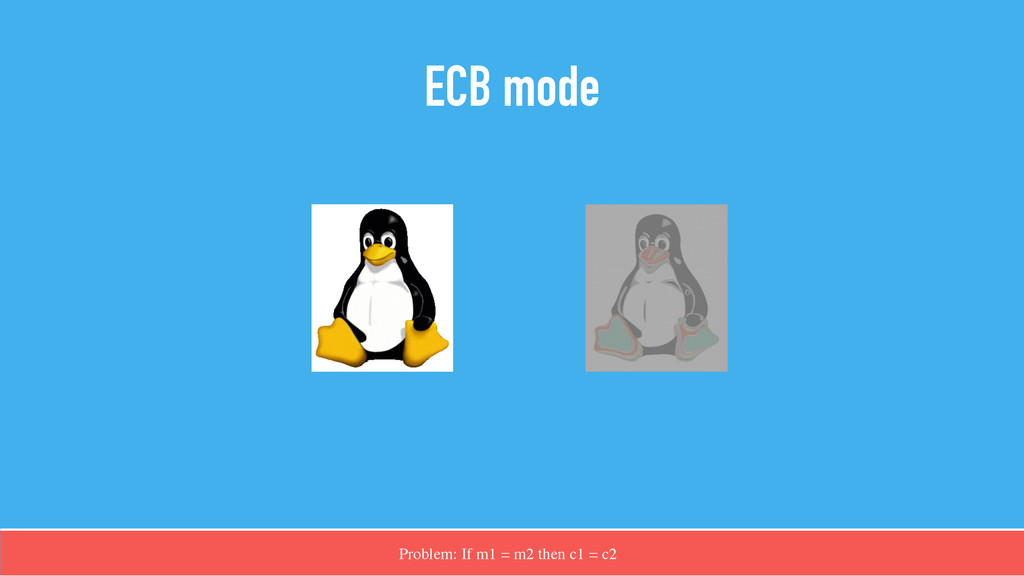
  11. ECB mode m1 m2 c1 c2 PT: CT: Electronic Code

    Book (ECB): Problem: If m1 = m2 then c1 = c2
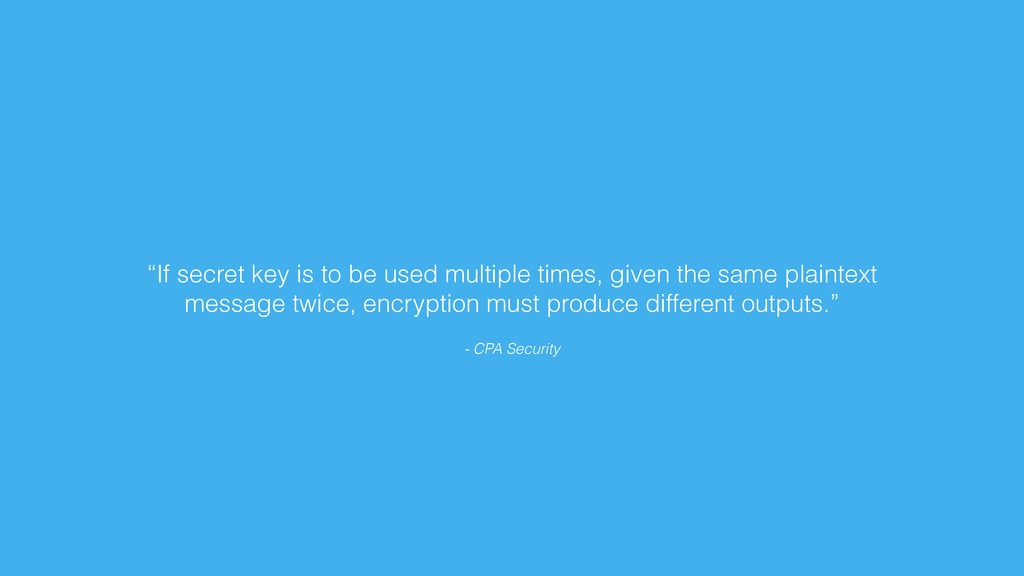
  12. - CPA Security “If secret key is to be used

    multiple times, given the same plaintext message twice, encryption must produce different outputs.”
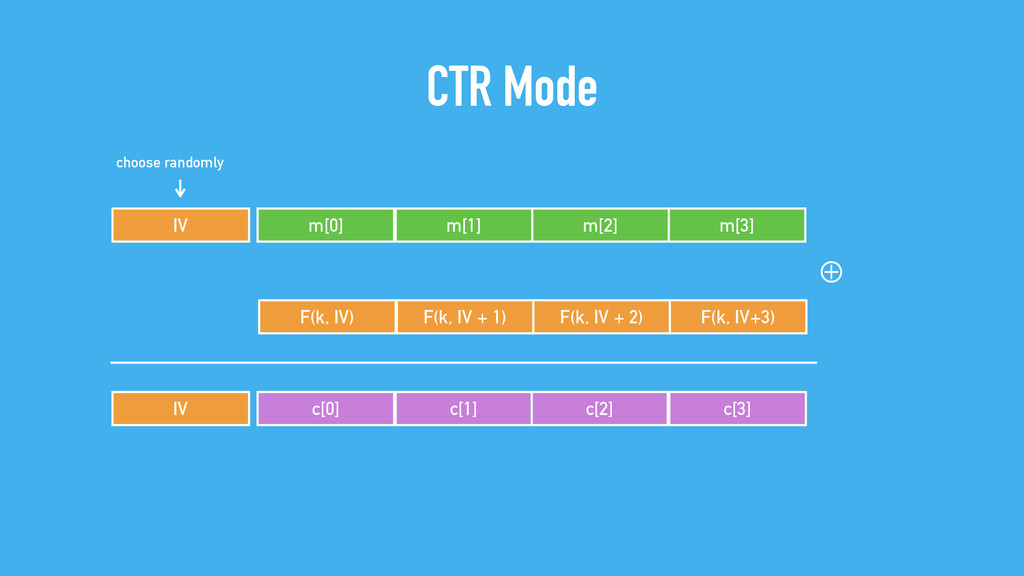
  13. CTR Mode m[0] IV IV m[1] m[2] m[3] c[0] c[1]

    c[2] c[3] ⊕ choose randomly F(k, IV) F(k, IV + 1) F(k, IV + 2) F(k, IV+3)
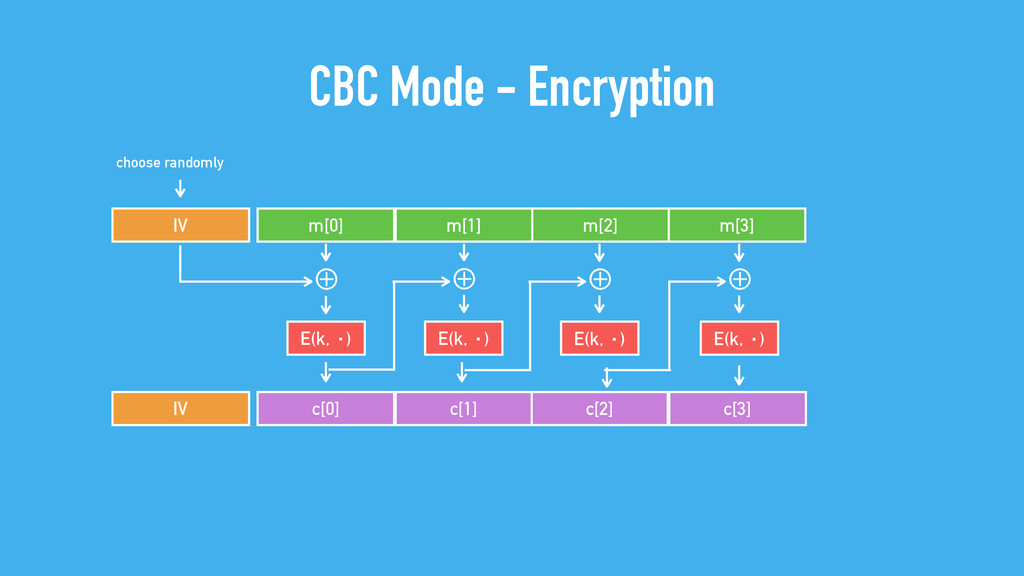
  14. CBC Mode - Encryption m[0] E(k, ·) IV IV m[1]

    m[2] m[3] c[0] c[1] c[2] c[3] ⊕ ⊕ E(k, ·) ⊕ E(k, ·) ⊕ E(k, ·) choose randomly
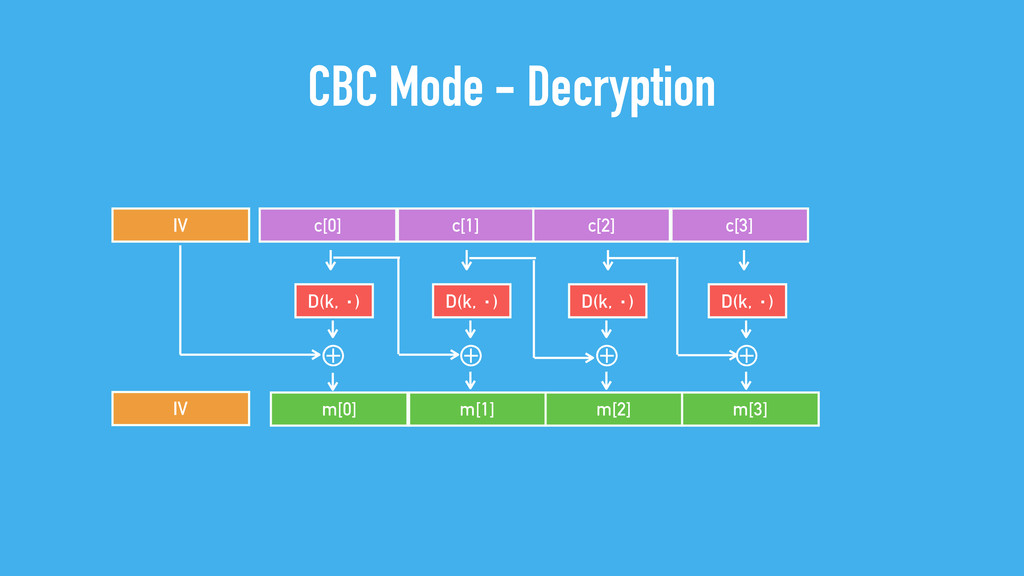
  15. CBC Mode - Decryption m[0] D(k, ·) IV IV m[1]

    m[2] m[3] c[0] c[1] c[2] c[3] D(k, ·) D(k, ·) D(k, ·) ⊕ ⊕ ⊕ ⊕
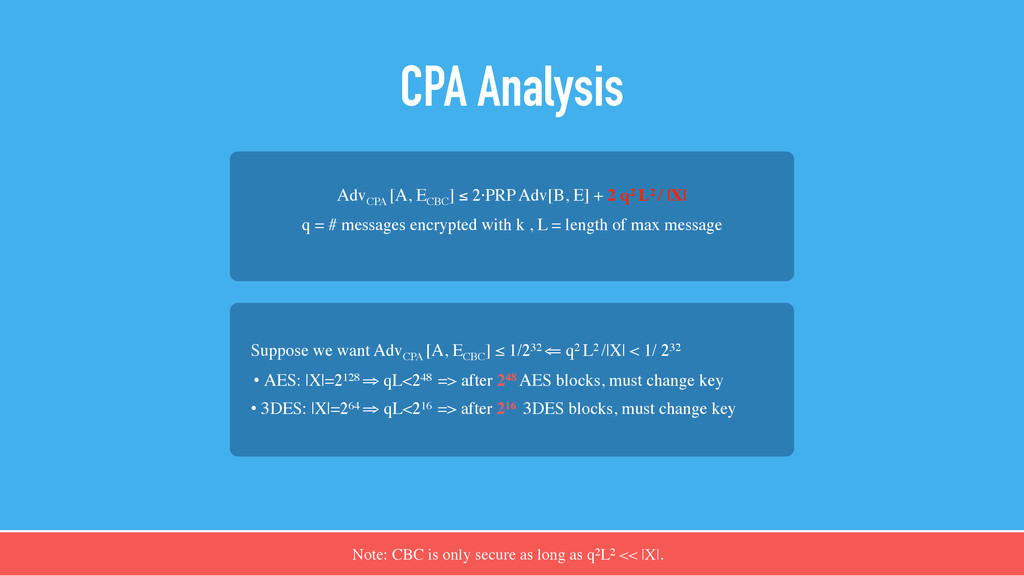
  16. CPA Analysis Note: CBC is only secure as long as

    q2L2 << |X|. AdvCPA [A, ECBC ] ≤ 2⋅PRP Adv[B, E] + 2 q2 L2 / |X| q = # messages encrypted with k , L = length of max message Suppose we want AdvCPA [A, ECBC ] ≤ 1/232 ⇐ q2 L2 /|X| < 1/ 232 • AES: |X|=2128 ⇒ qL<248 => after 248 AES blocks, must change key • 3DES: |X|=264 ⇒ qL<216 => after 216 3DES blocks, must change key
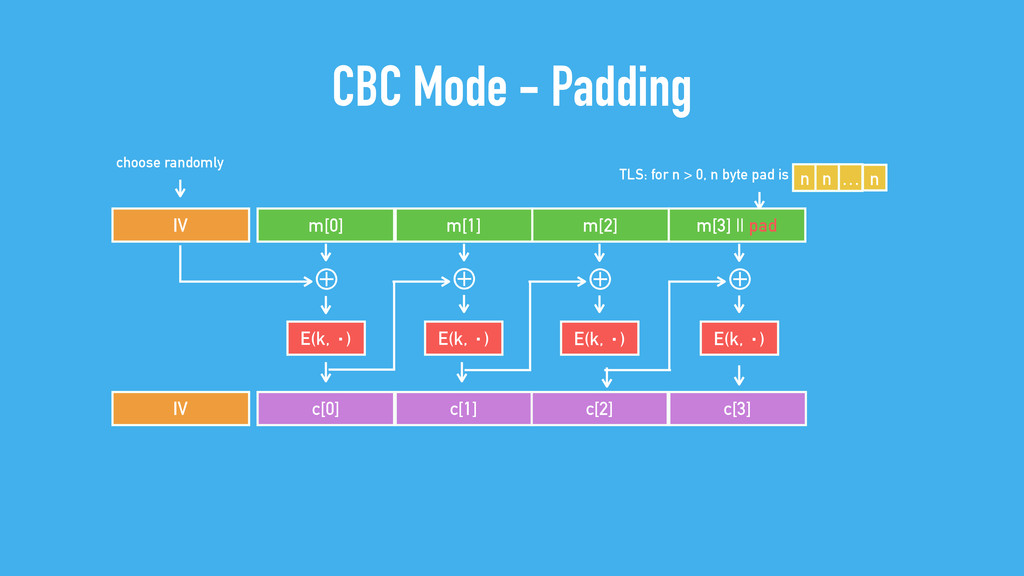
  17. CBC Mode - Padding m[0] E(k, ·) IV IV m[1]

    m[2] m[3] || pad c[0] c[1] c[2] c[3] ⊕ ⊕ E(k, ·) ⊕ E(k, ·) ⊕ E(k, ·) choose randomly TLS: for n > 0, n byte pad is n n … n
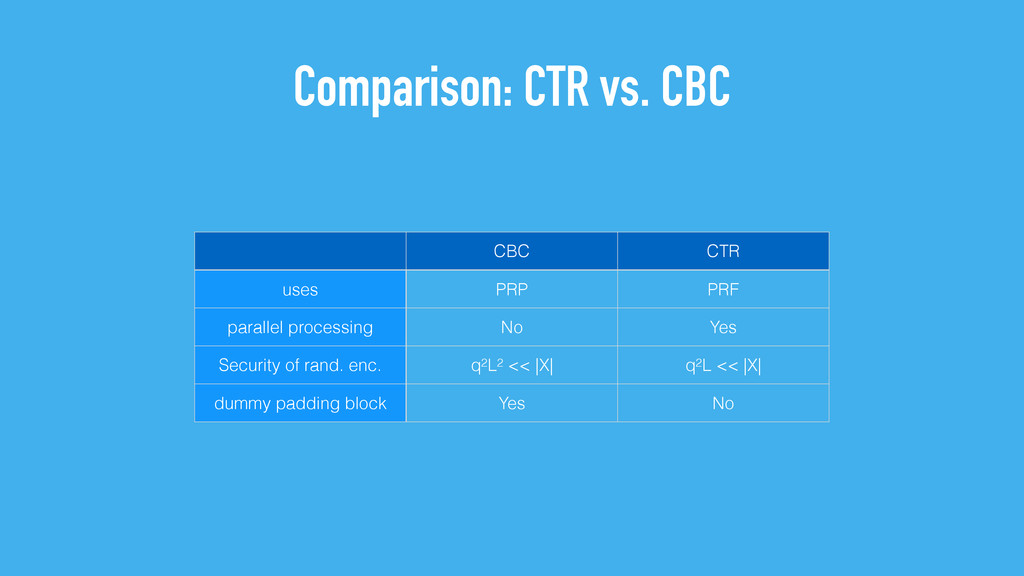
  18. Comparison: CTR vs. CBC CBC CTR uses PRP PRF parallel

    processing No Yes Security of rand. enc. q2L2 << |X| q2L << |X| dummy padding block Yes No
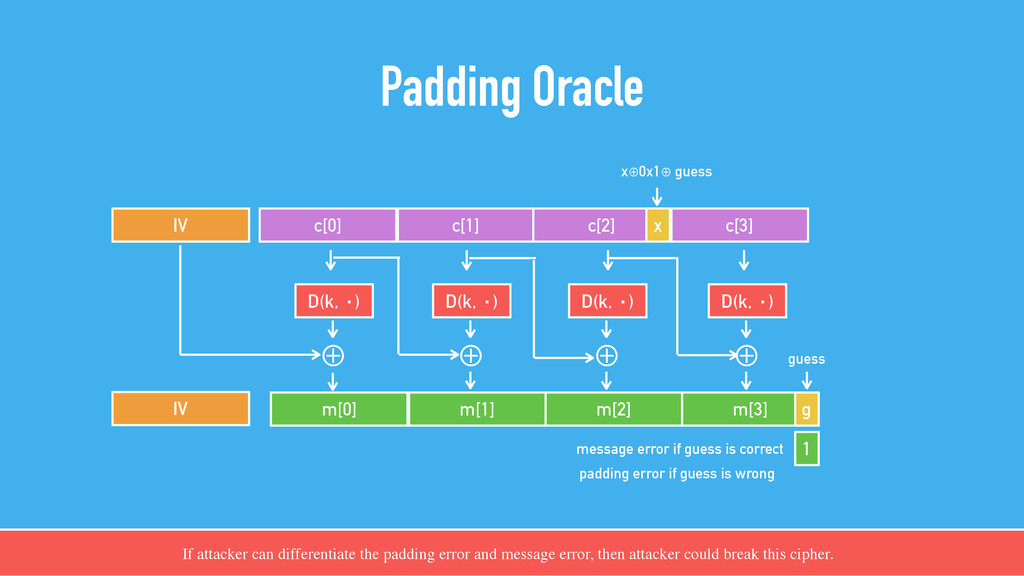
  19. Padding Oracle m[0] D(k, ·) IV IV m[1] m[2] m[3]

    c[0] c[1] c[2] c[3] D(k, ·) D(k, ·) D(k, ·) ⊕ ⊕ ⊕ ⊕ x If attacker can differentiate the padding error and message error, then attacker could break this cipher. x⊕0x1⊕ guess g guess 1 message error if guess is correct padding error if guess is wrong
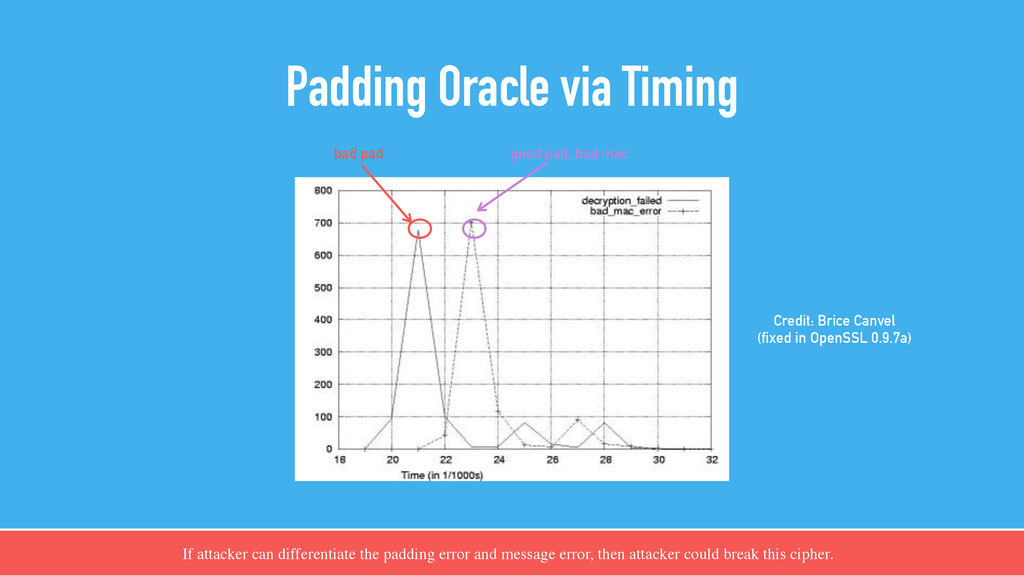
  20. Padding Oracle via Timing If attacker can differentiate the padding

    error and message error, then attacker could break this cipher. bad pad good pad, bad mac Credit: Brice Canvel (fixed in OpenSSL 0.9.7a)
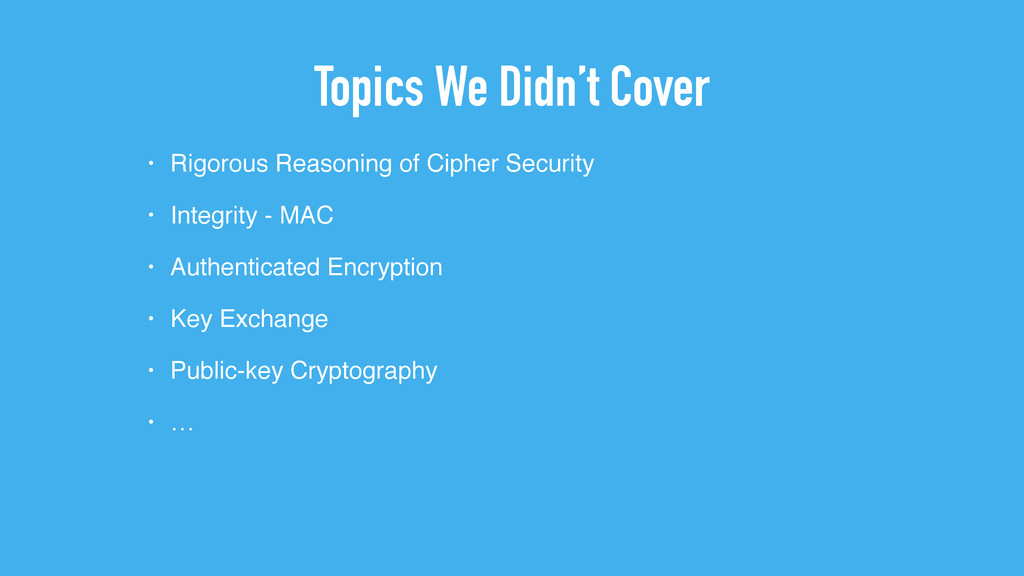
  21. Topics We Didn’t Cover • Rigorous Reasoning of Cipher Security

    • Integrity - MAC • Authenticated Encryption • Key Exchange • Public-key Cryptography • …

  22. Things to remember Cryptography is: • A rigorous science Cryptography

    is not: • Black magic • Reliable unless implemented and used properly • Something you should try to invent yourself