Upgrade to Pro — share decks privately, control downloads, hide ads and more …

Facebook: Distraction or Learning Tool

Facebook: Distraction or Learning Tool

From EdTech 2017

Avatar for Pete Windle

Pete Windle

June 02, 2017

Other Decks in Education

Transcript

  1. Facebook: Distraction or learning tool? Peter Windle Centre for Technology

    Enhanced Learning Waterford Institute of Technology
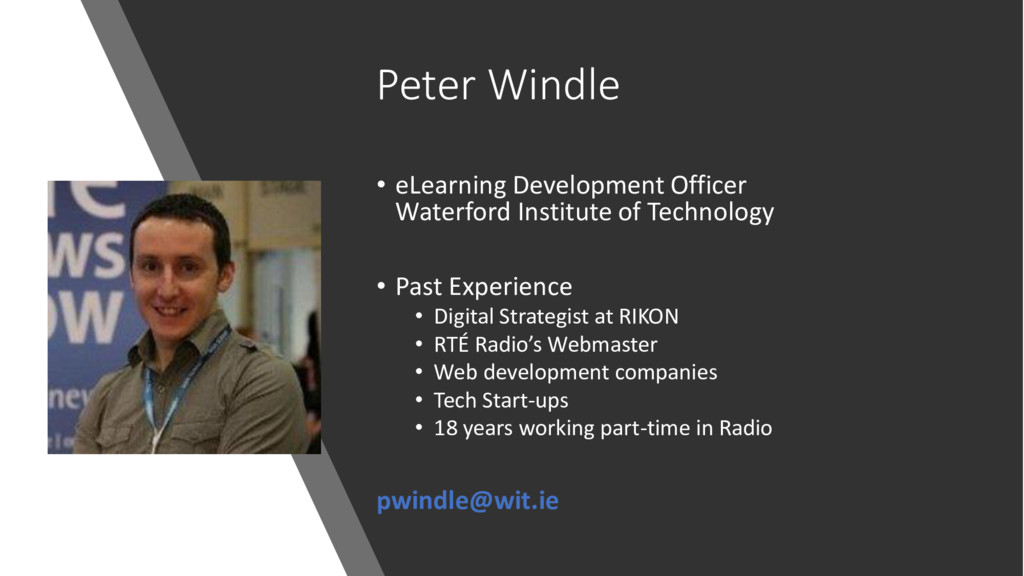
  2. Peter Windle • eLearning Development Officer Waterford Institute of Technology

    • Past Experience • Digital Strategist at RIKON • RTÉ Radio’s Webmaster • Web development companies • Tech Start-ups • 18 years working part-time in Radio [email protected]
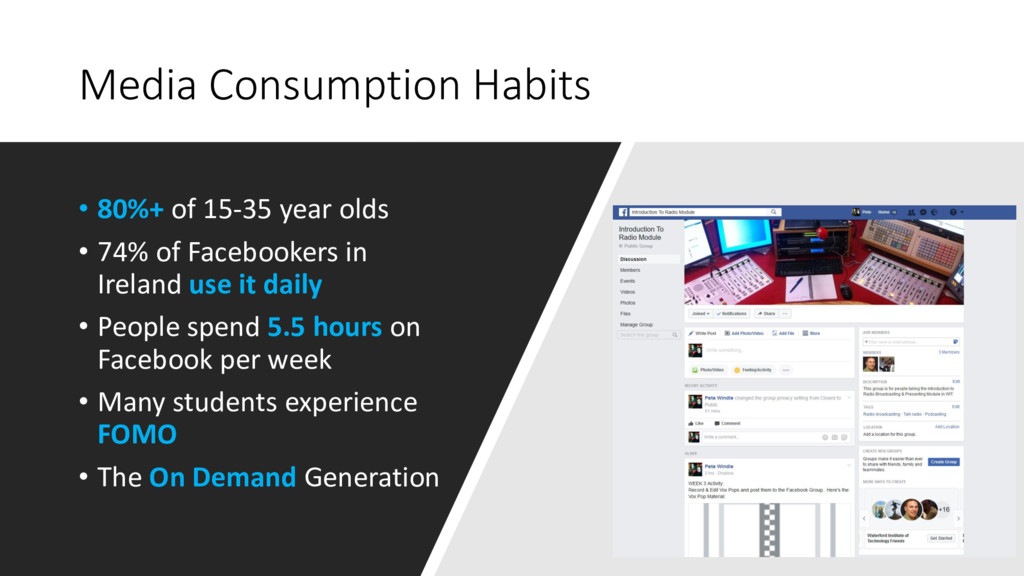
  3. Media Consumption Habits • 80%+ of 15-35 year olds •

    74% of Facebookers in Ireland use it daily • People spend 5.5 hours on Facebook per week • Many students experience FOMO • The On Demand Generation
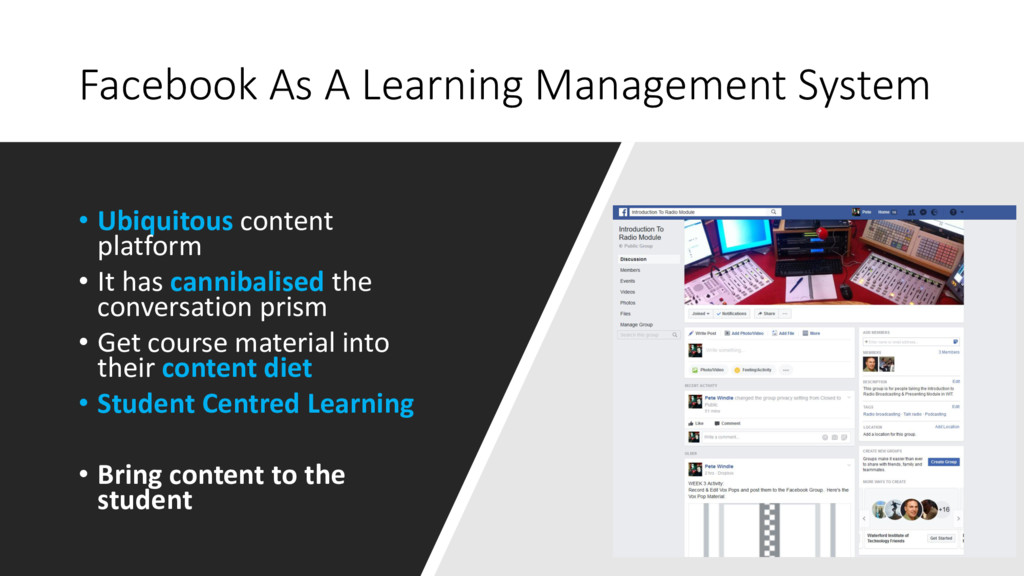
  4. Facebook As A Learning Management System • Ubiquitous content platform

    • It has cannibalised the conversation prism • Get course material into their content diet • Student Centred Learning • Bring content to the student
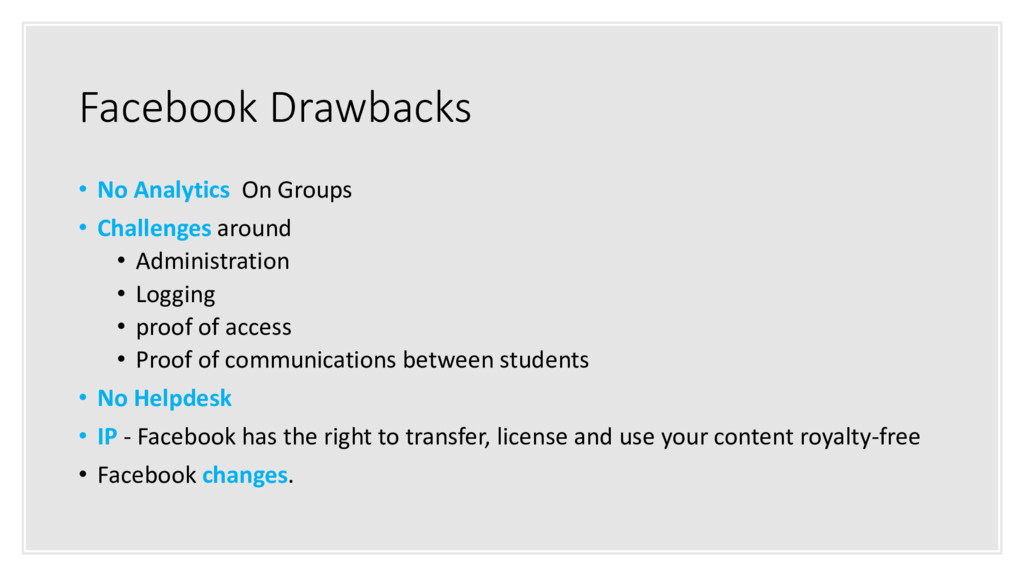
  5. Facebook Drawbacks • No Analytics On Groups • Challenges around

    • Administration • Logging • proof of access • Proof of communications between students • No Helpdesk • IP - Facebook has the right to transfer, license and use your content royalty-free • Facebook changes.
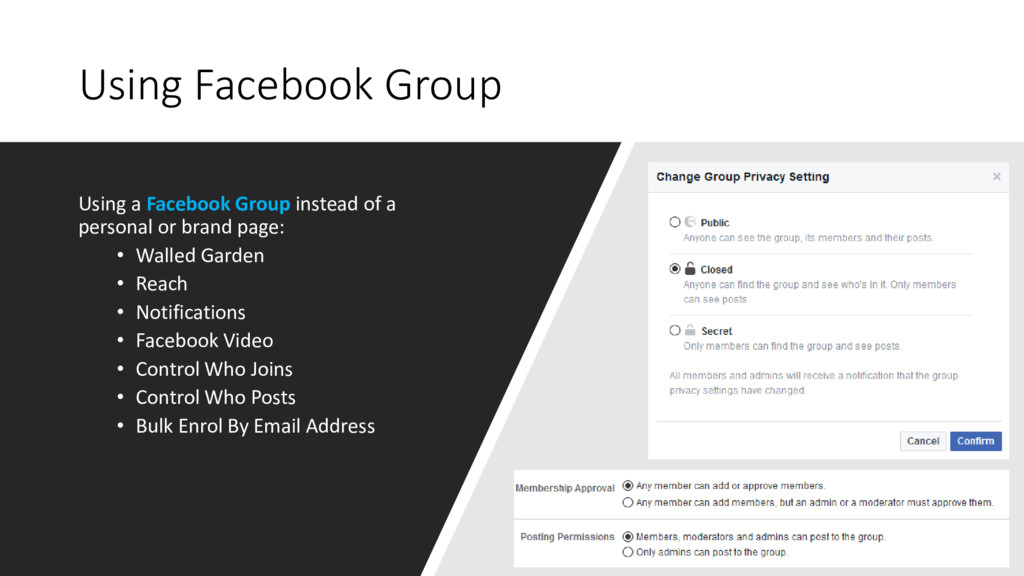
  6. Using Facebook Group Using a Facebook Group instead of a

    personal or brand page: • Walled Garden • Reach • Notifications • Facebook Video • Control Who Joins • Control Who Posts • Bulk Enrol By Email Address
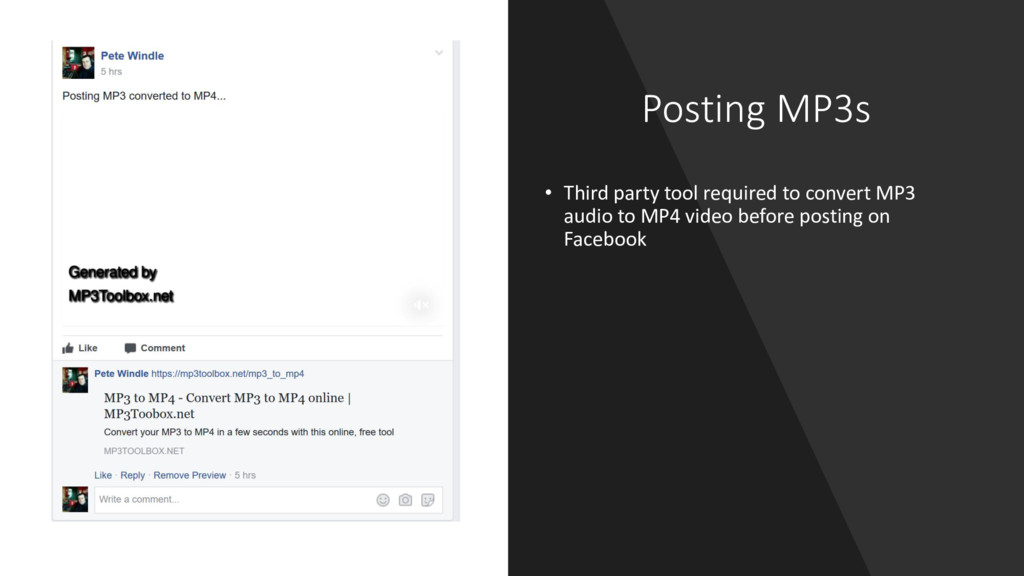
  7. Posting MP3s • Third party tool required to convert MP3

    audio to MP4 video before posting on Facebook
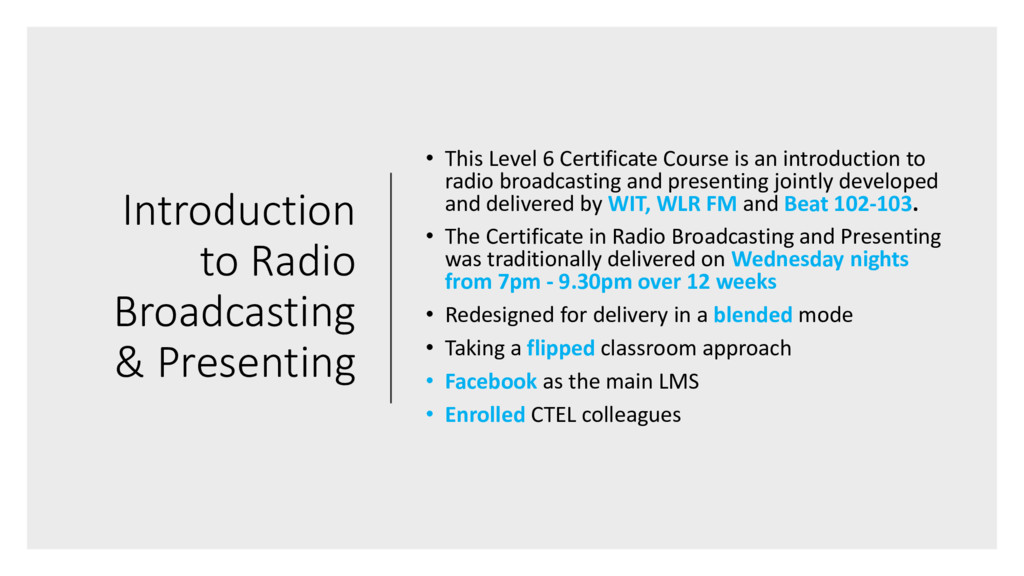
  8. Introduction to Radio Broadcasting & Presenting • This Level 6

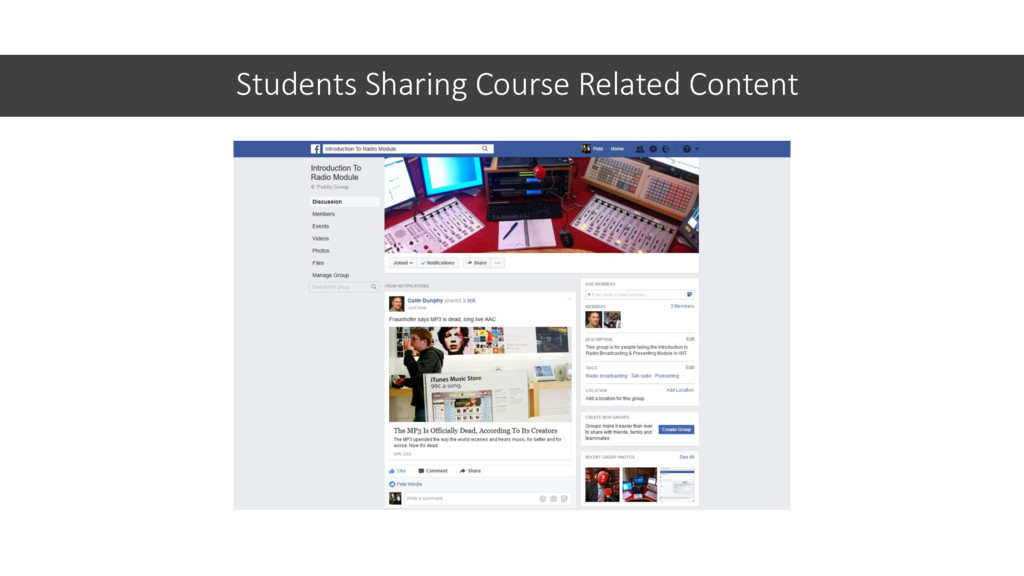
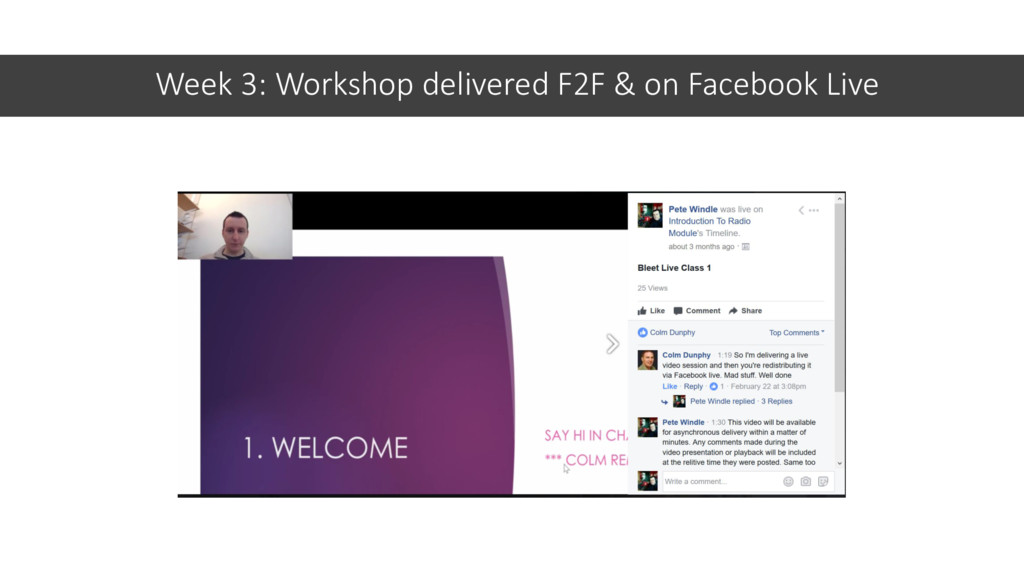
    Certificate Course is an introduction to radio broadcasting and presenting jointly developed and delivered by WIT, WLR FM and Beat 102-103. • The Certificate in Radio Broadcasting and Presenting was traditionally delivered on Wednesday nights from 7pm - 9.30pm over 12 weeks • Redesigned for delivery in a blended mode • Taking a flipped classroom approach • Facebook as the main LMS • Enrolled CTEL colleagues
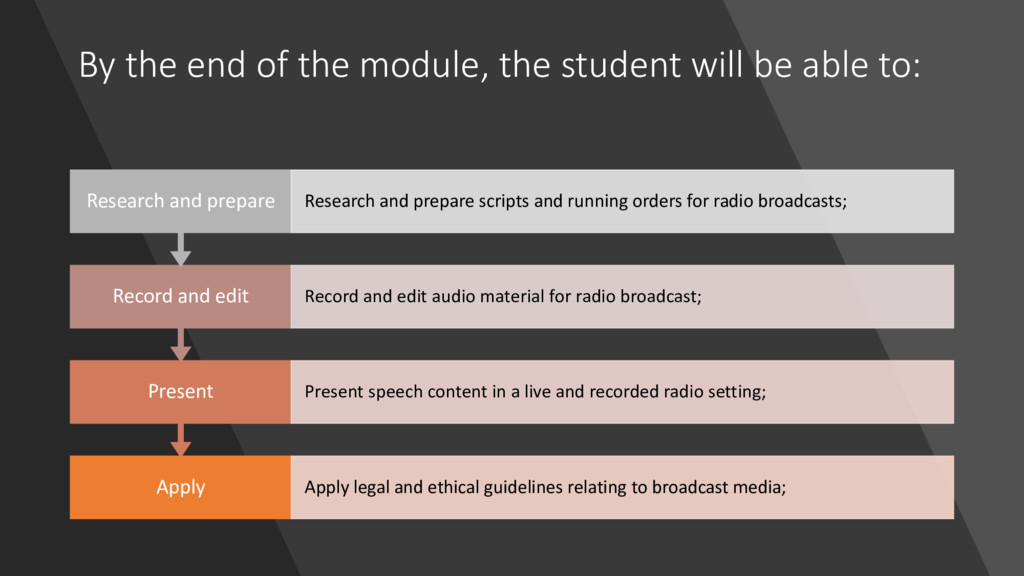
  9. By the end of the module, the student will be

    able to: Apply Apply legal and ethical guidelines relating to broadcast media; Present Present speech content in a live and recorded radio setting; Record and edit Record and edit audio material for radio broadcast; Research and prepare Research and prepare scripts and running orders for radio broadcasts;
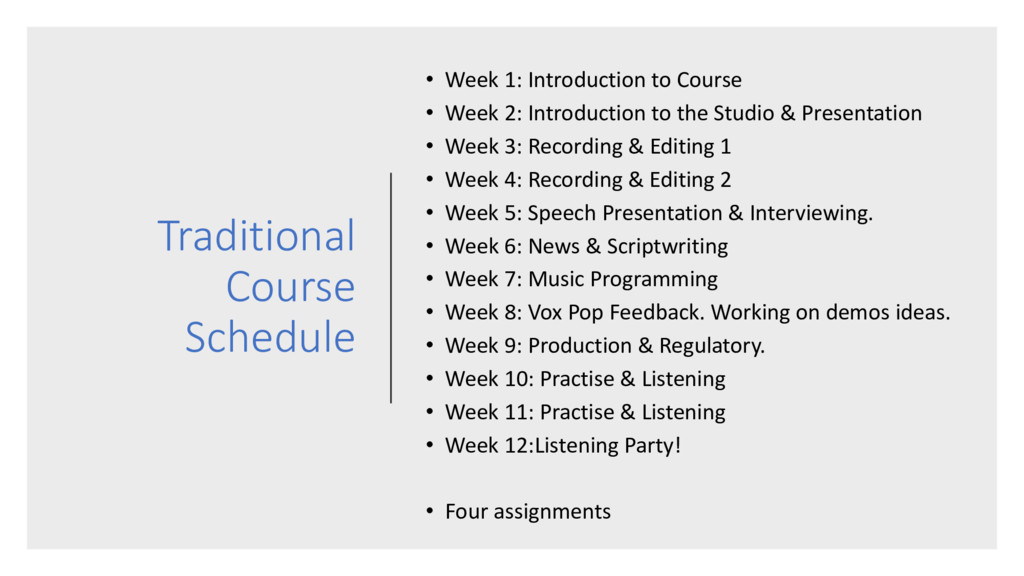
  10. Traditional Course Schedule • Week 1: Introduction to Course •

    Week 2: Introduction to the Studio & Presentation • Week 3: Recording & Editing 1 • Week 4: Recording & Editing 2 • Week 5: Speech Presentation & Interviewing. • Week 6: News & Scriptwriting • Week 7: Music Programming • Week 8: Vox Pop Feedback. Working on demos ideas. • Week 9: Production & Regulatory. • Week 10: Practise & Listening • Week 11: Practise & Listening • Week 12:Listening Party! • Four assignments
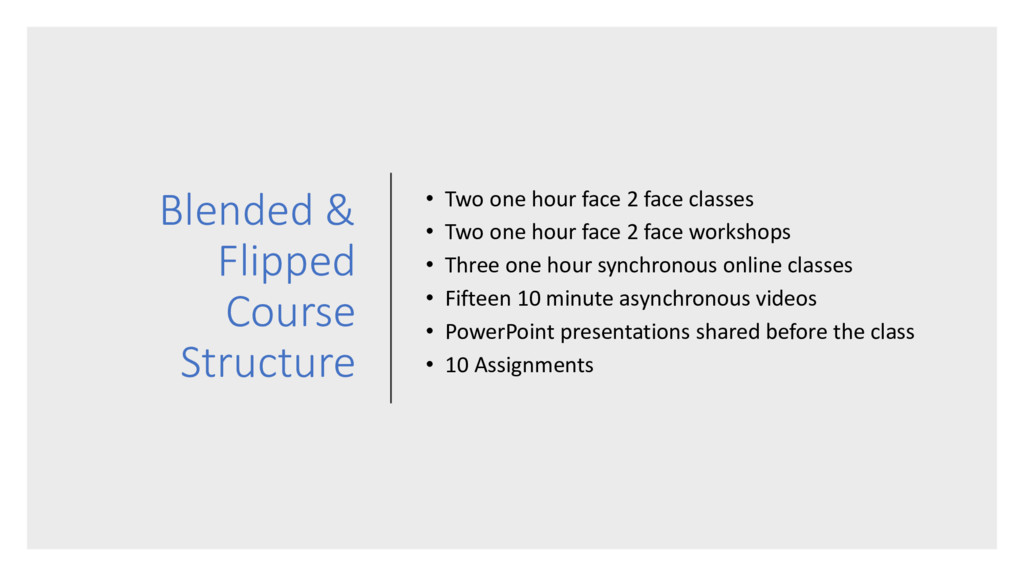
  11. Blended & Flipped Course Structure • Two one hour face

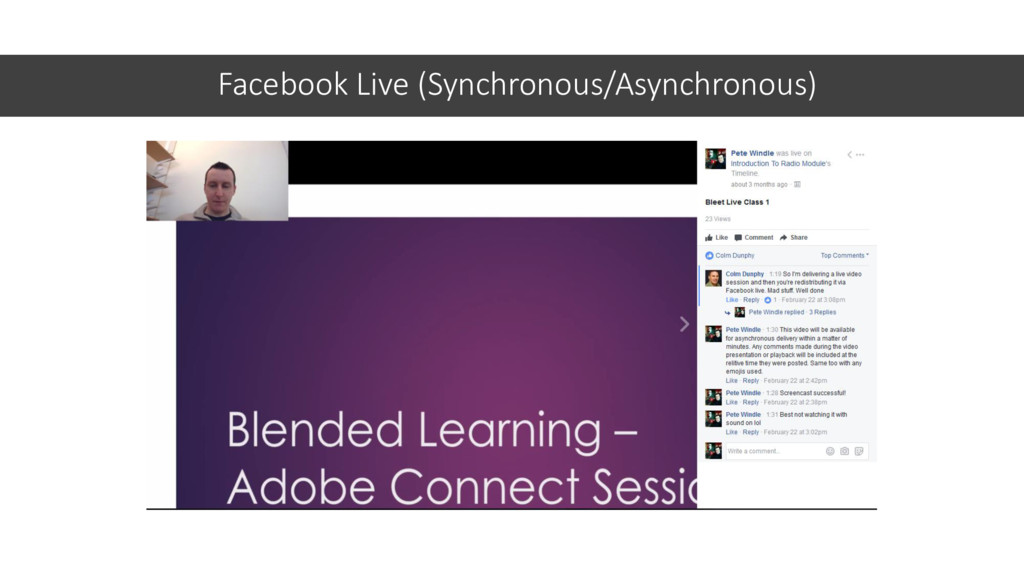
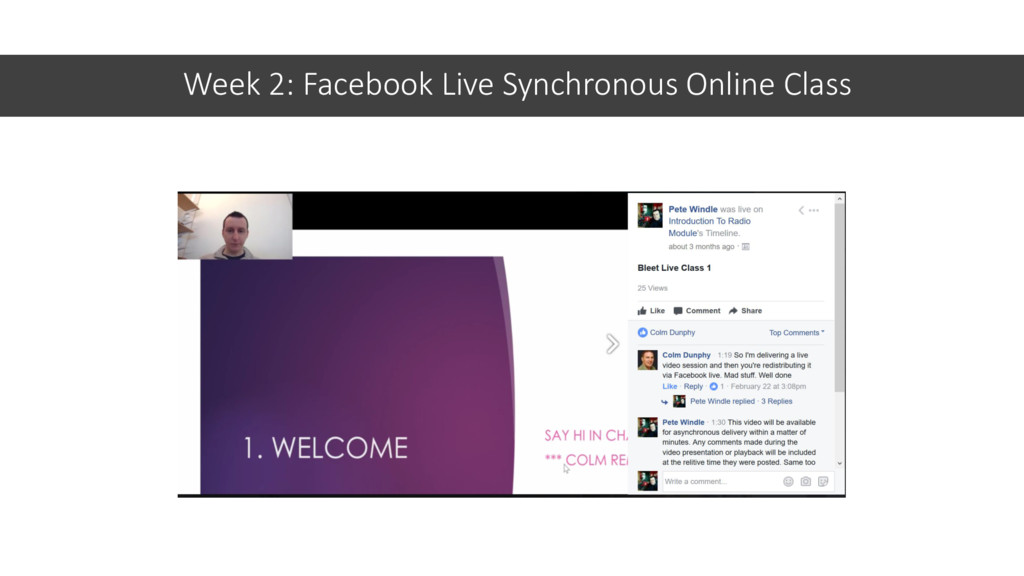
    2 face classes • Two one hour face 2 face workshops • Three one hour synchronous online classes • Fifteen 10 minute asynchronous videos • PowerPoint presentations shared before the class • 10 Assignments
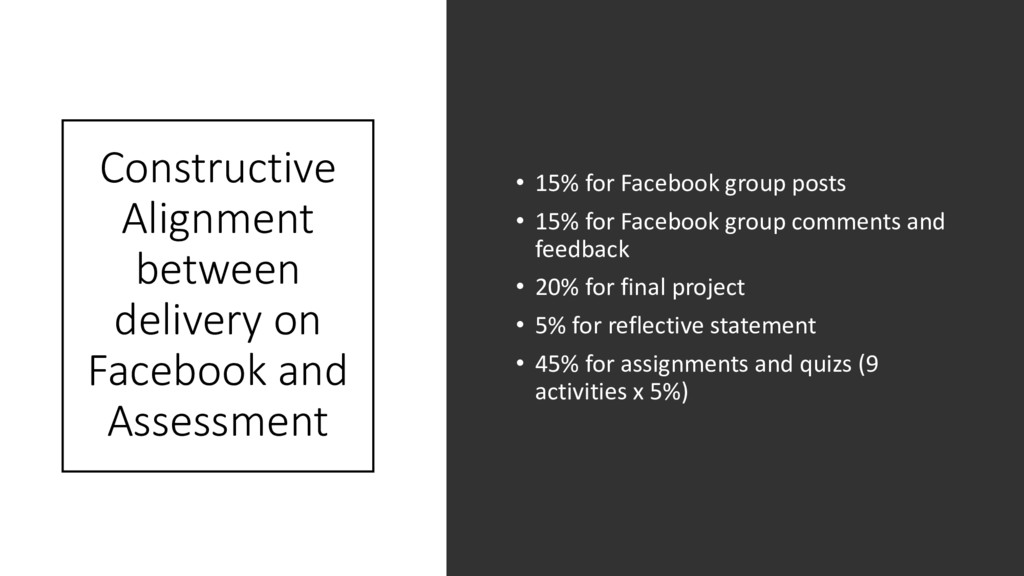
  12. Constructive Alignment between delivery on Facebook and Assessment • 15%

    for Facebook group posts • 15% for Facebook group comments and feedback • 20% for final project • 5% for reflective statement • 45% for assignments and quizs (9 activities x 5%)
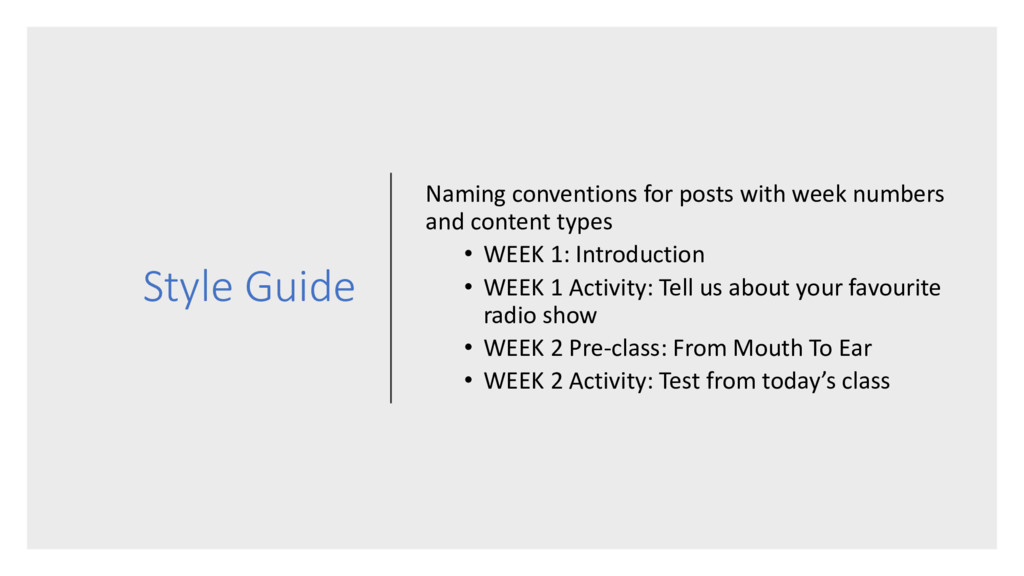
  13. Style Guide Naming conventions for posts with week numbers and

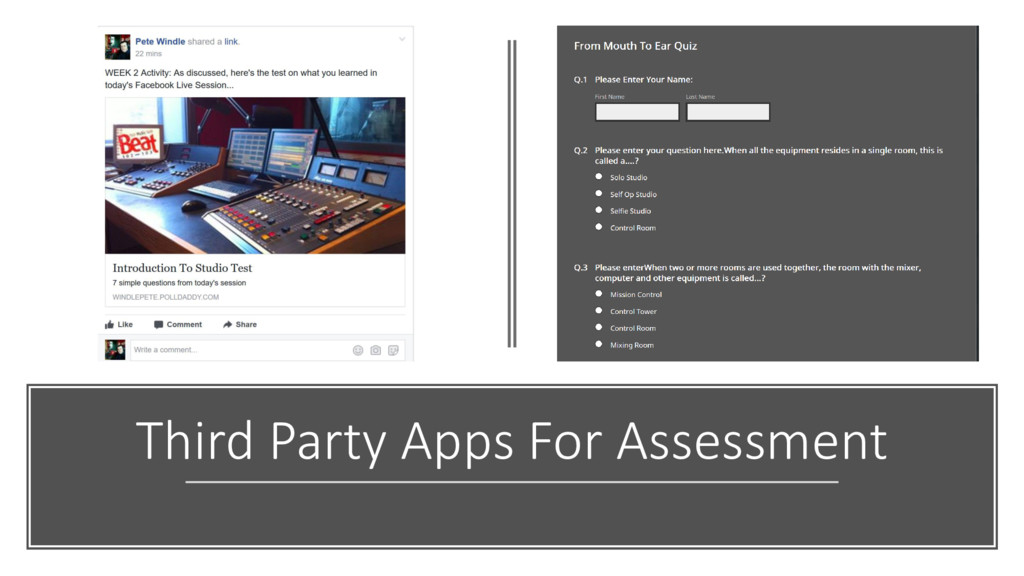
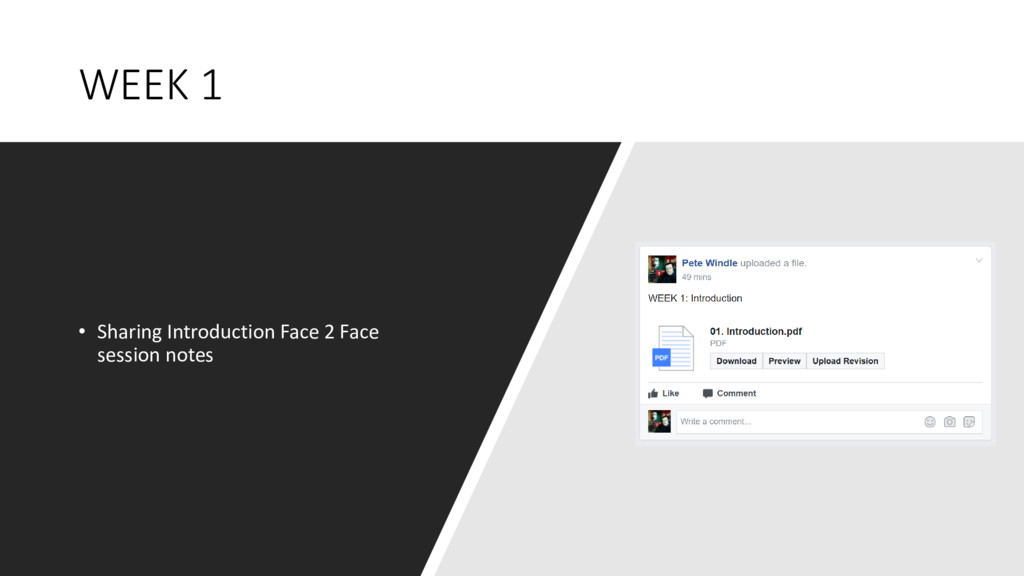
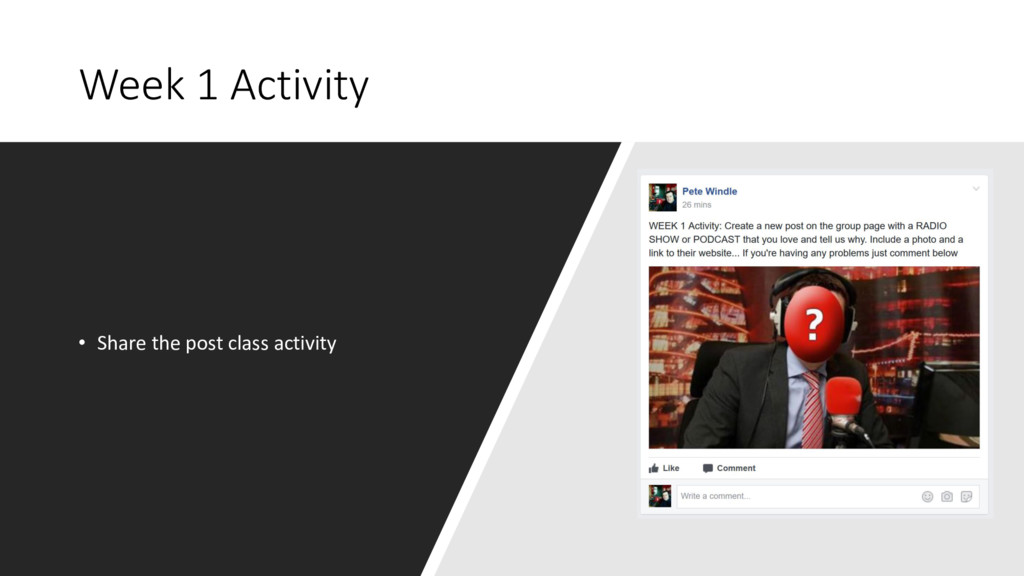
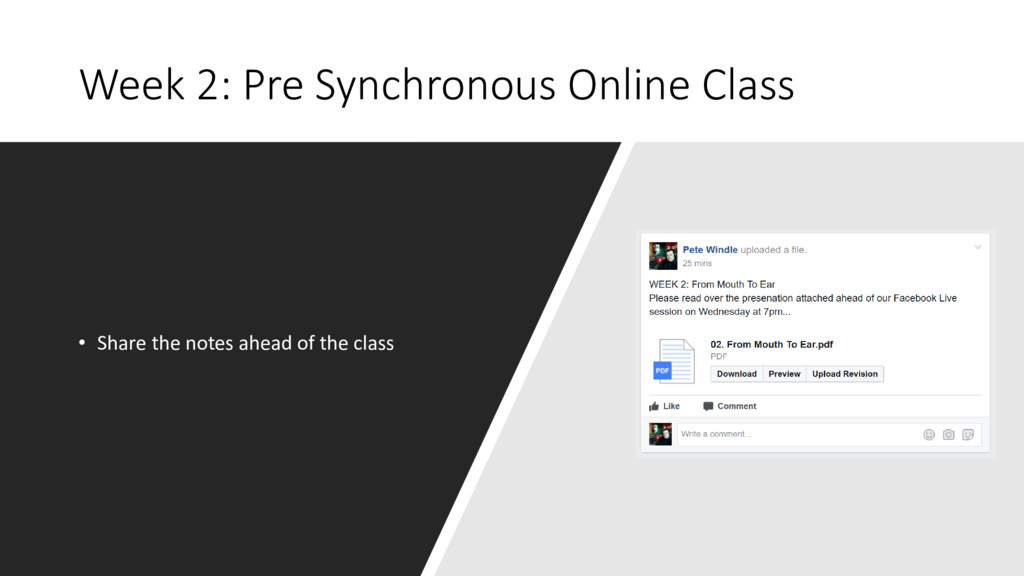
    content types • WEEK 1: Introduction • WEEK 1 Activity: Tell us about your favourite radio show • WEEK 2 Pre-class: From Mouth To Ear • WEEK 2 Activity: Test from today’s class
  14. Facebook As a Community of Practice A community of practice

    (CoP) refers to groups of learners who have similar goals, build a sense of personal and professional identity and develop a common purpose and collective responsibility (Lave & Wenger, 1991).
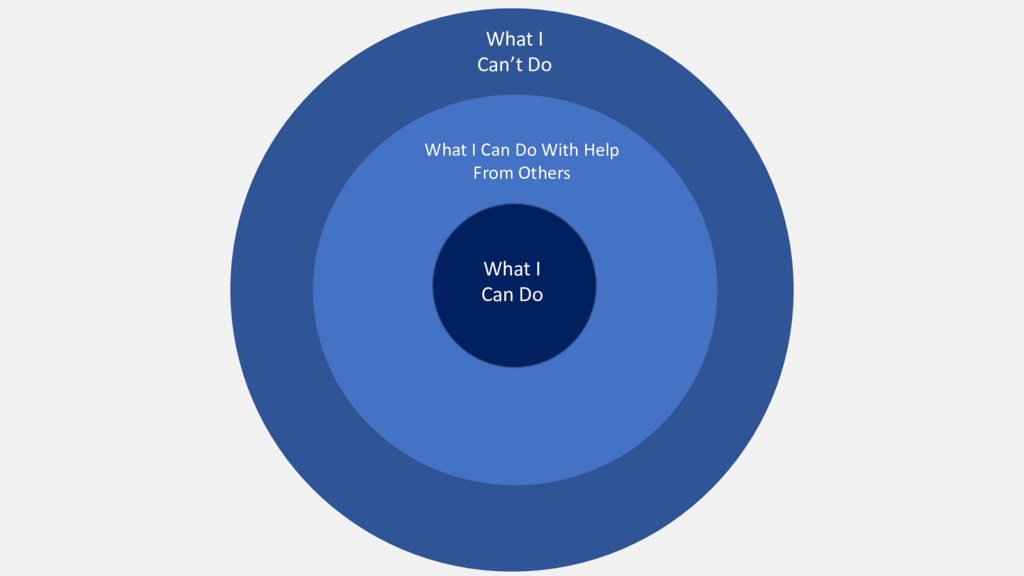
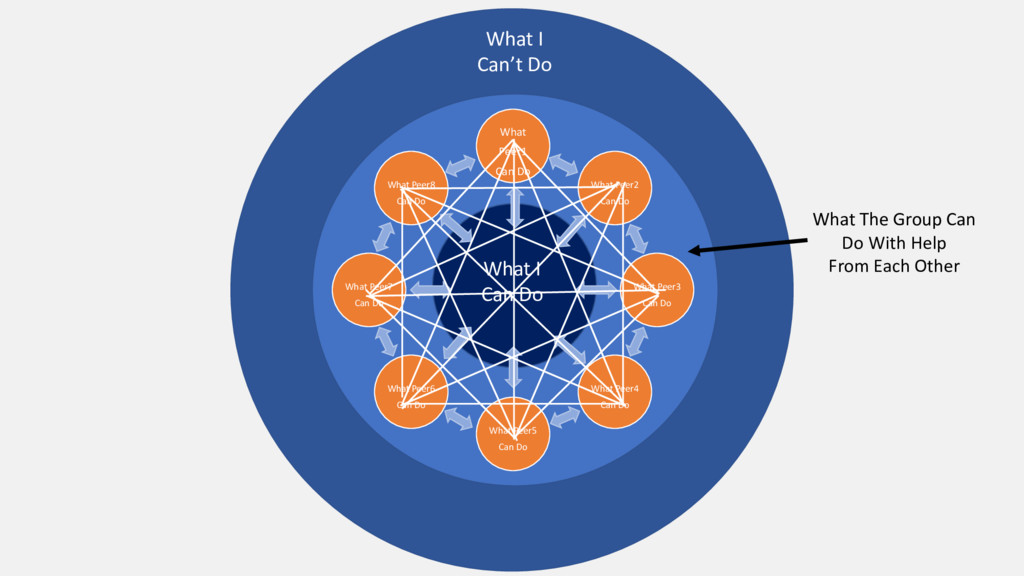
  15. Facebook and The Zone Of Proximal Devleopment The distance between

    the actual developmental level as determined by independent problem solving and the level of potential development as determined through problem solving under adult guidance, or in collaboration with more capable peers
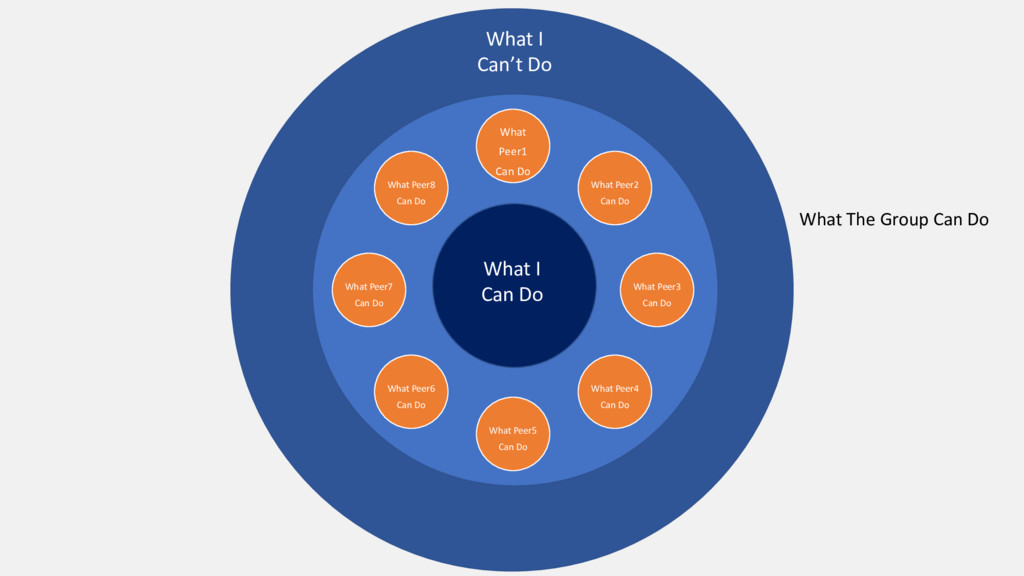
  16. What Peer1 Can Do What Peer2 Can Do What Peer3

    Can Do What Peer4 Can Do What Peer5 Can Do What Peer6 Can Do What Peer7 Can Do What Peer8 Can Do What The Group Can Do What I Can Do What I Can’t Do
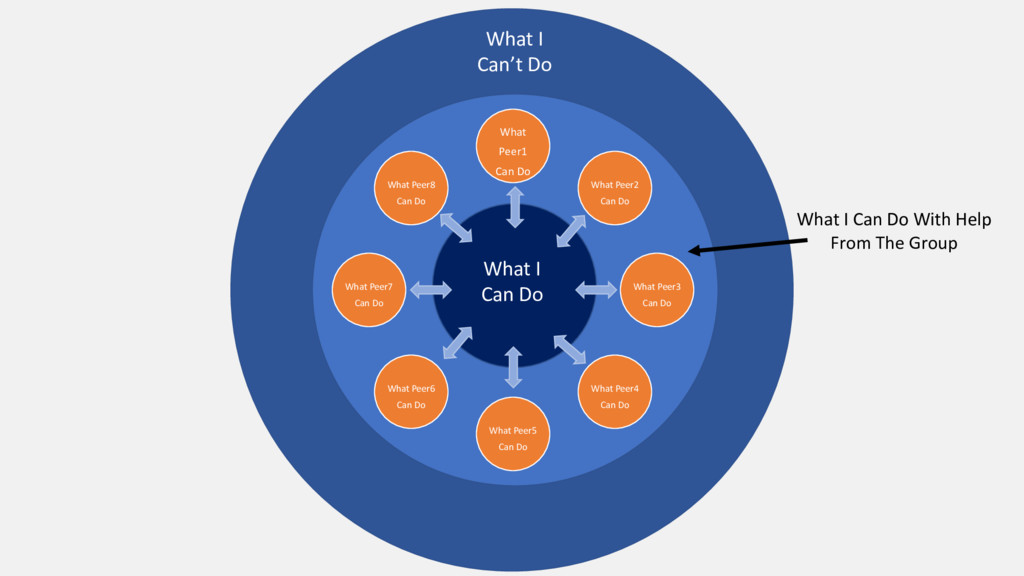
  17. What Peer1 Can Do What Peer2 Can Do What Peer3

    Can Do What Peer4 Can Do What Peer5 Can Do What Peer6 Can Do What Peer7 Can Do What Peer8 Can Do What I Can Do What I Can’t Do What I Can Do With Help From The Group
  18. What Peer1 Can Do What Peer2 Can Do What Peer3

    Can Do What Peer4 Can Do What Peer5 Can Do What Peer6 Can Do What Peer7 Can Do What Peer8 Can Do What I Can Do What I Can’t Do What The Group Can Do With Help From Each Other
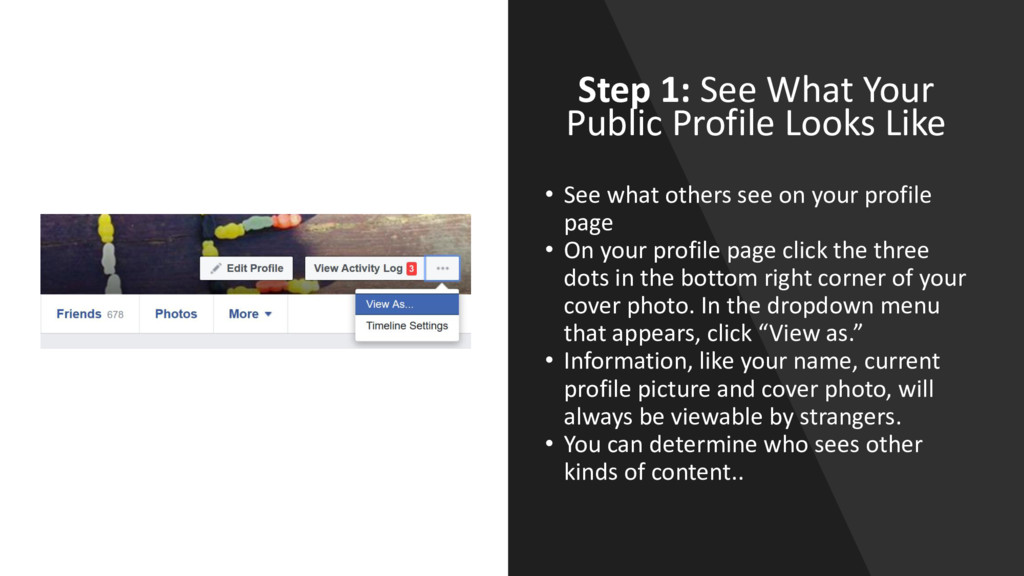
  19. Step 1: See What Your Public Profile Looks Like •
    See what others see on your profile page • On your profile page click the three dots in the bottom right corner of your cover photo. In the dropdown menu that appears, click “View as.” • Information, like your name, current profile picture and cover photo, will always be viewable by strangers. • You can determine who sees other kinds of content..
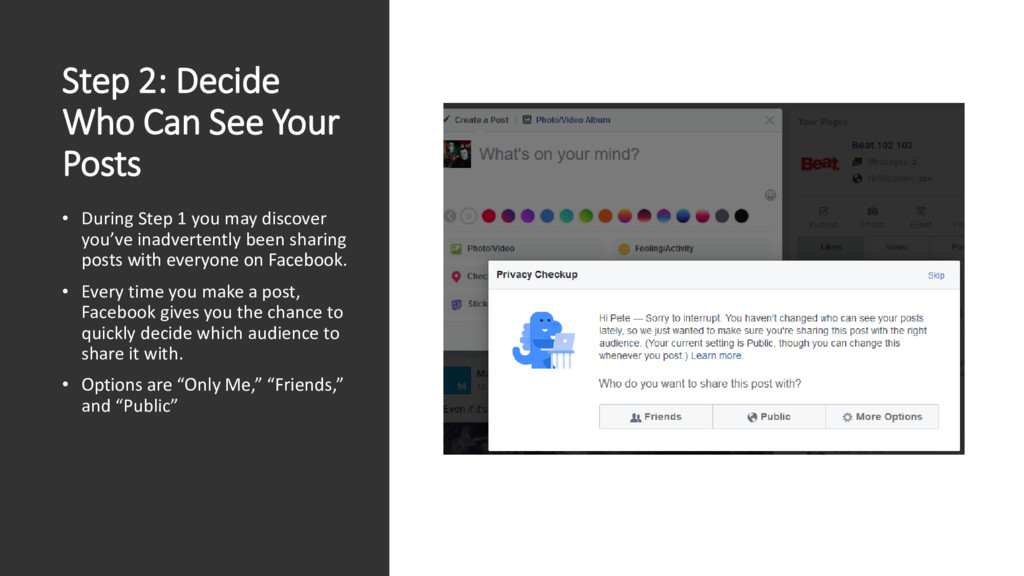
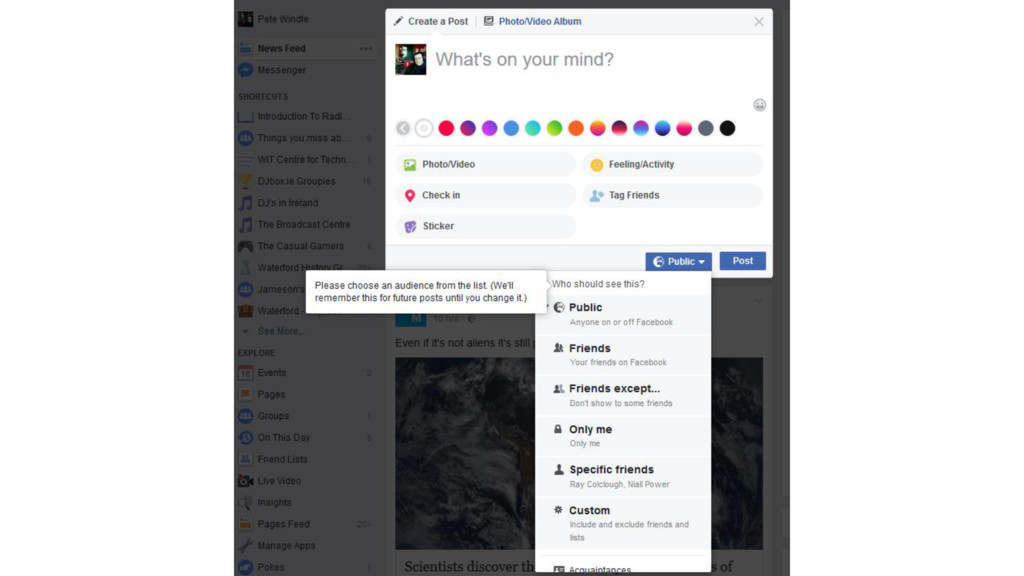
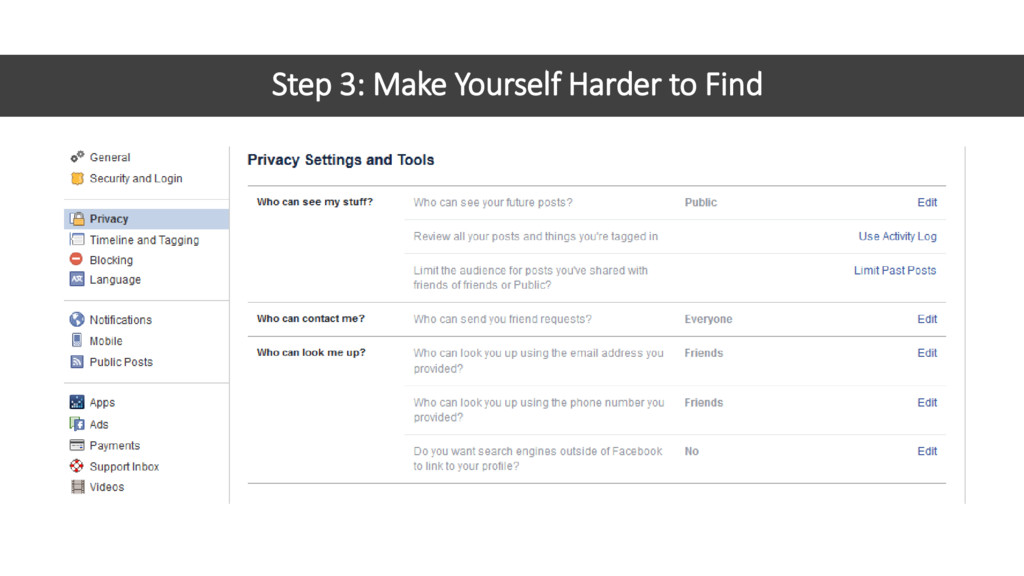
  20. Step 2: Decide Who Can See Your Posts • During

    Step 1 you may discover you’ve inadvertently been sharing posts with everyone on Facebook. • Every time you make a post, Facebook gives you the chance to quickly decide which audience to share it with. • Options are “Only Me,” “Friends,” and “Public”
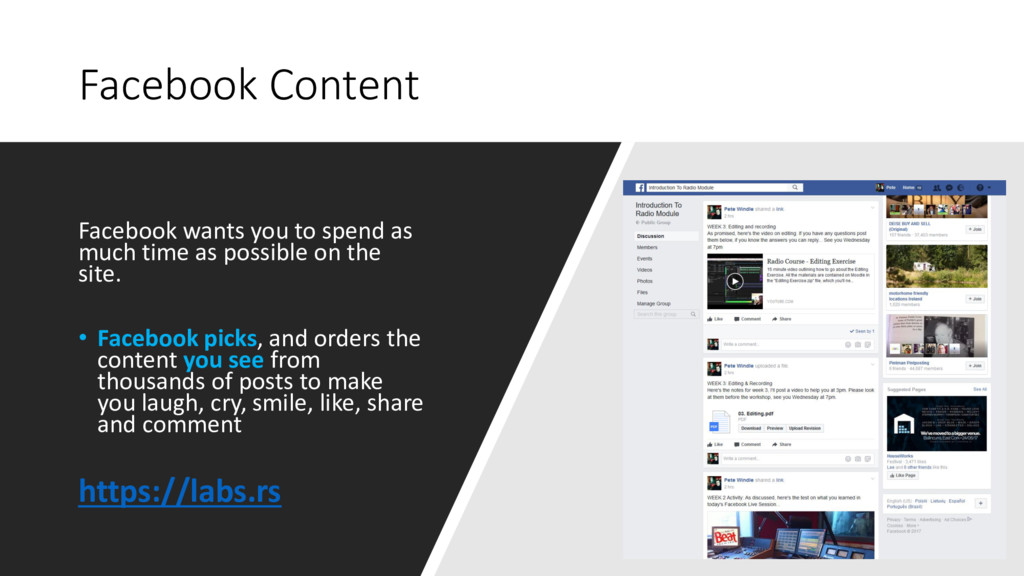
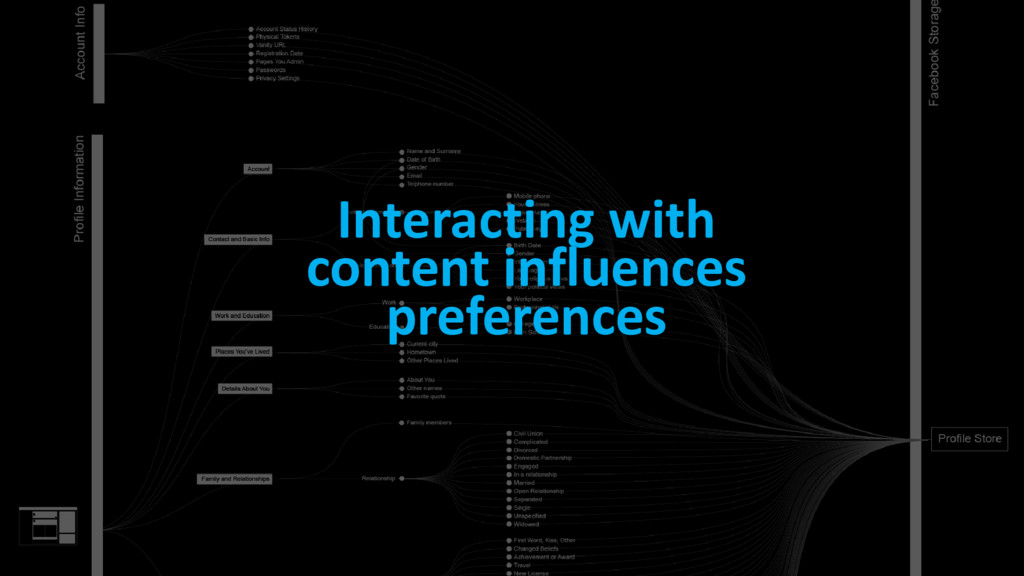
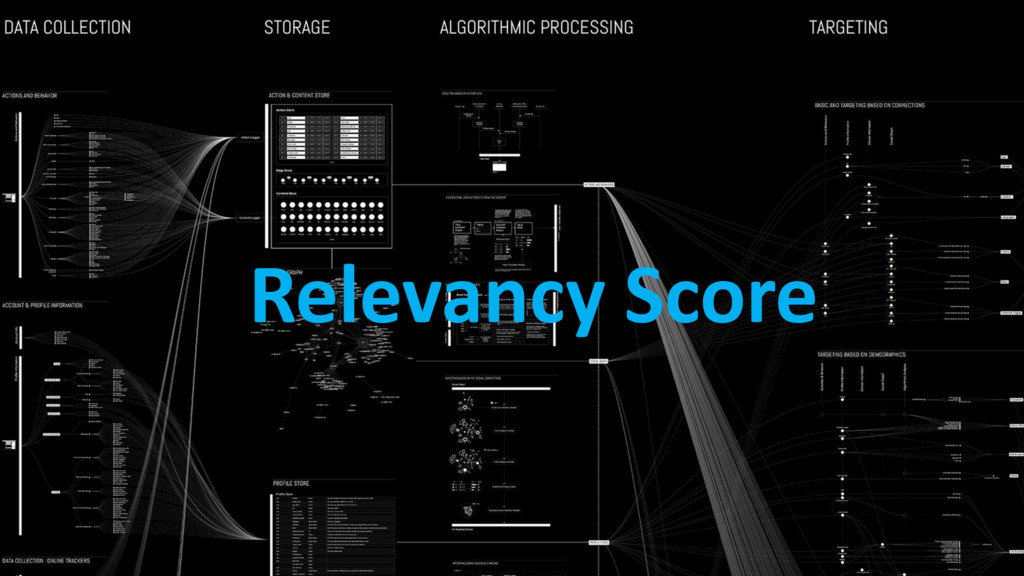
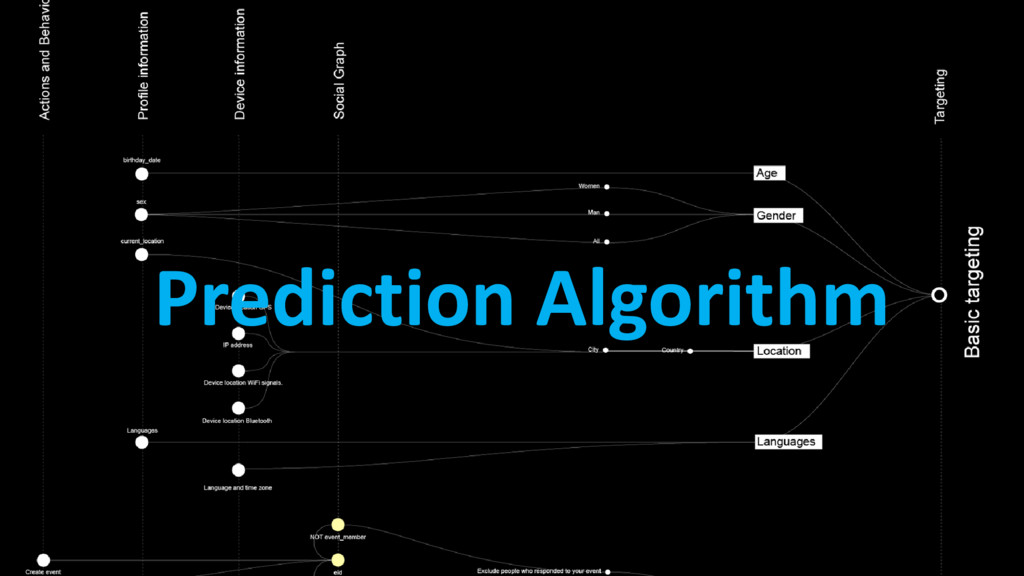
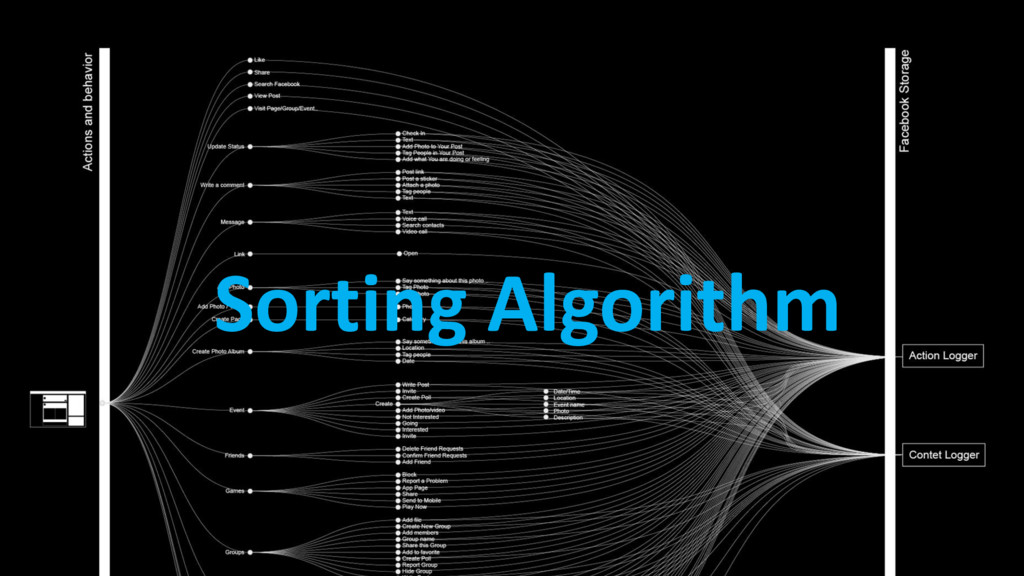
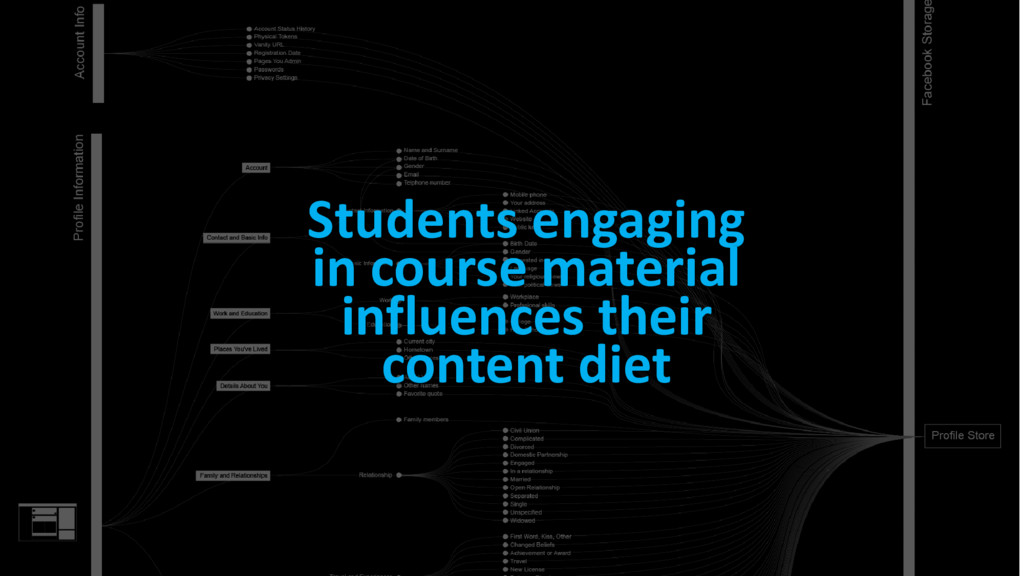
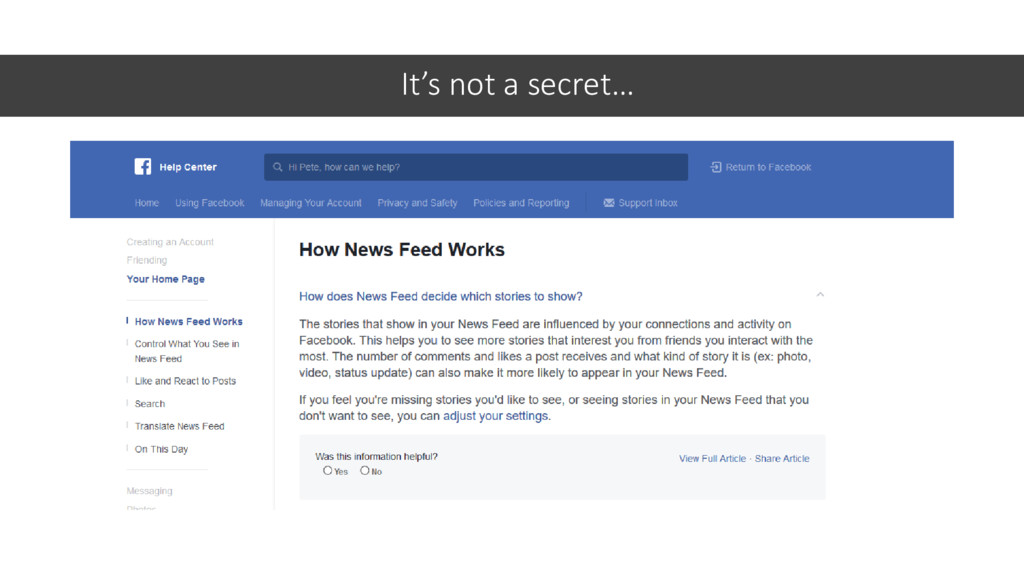
  21. Facebook Content Facebook wants you to spend as much time

    as possible on the site. • Facebook picks, and orders the content you see from thousands of posts to make you laugh, cry, smile, like, share and comment https://labs.rs
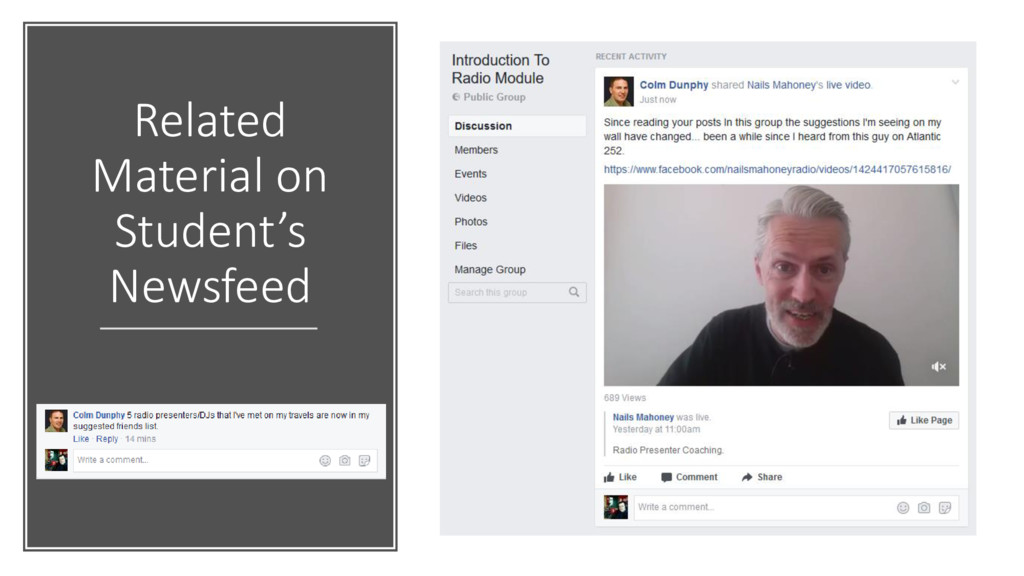
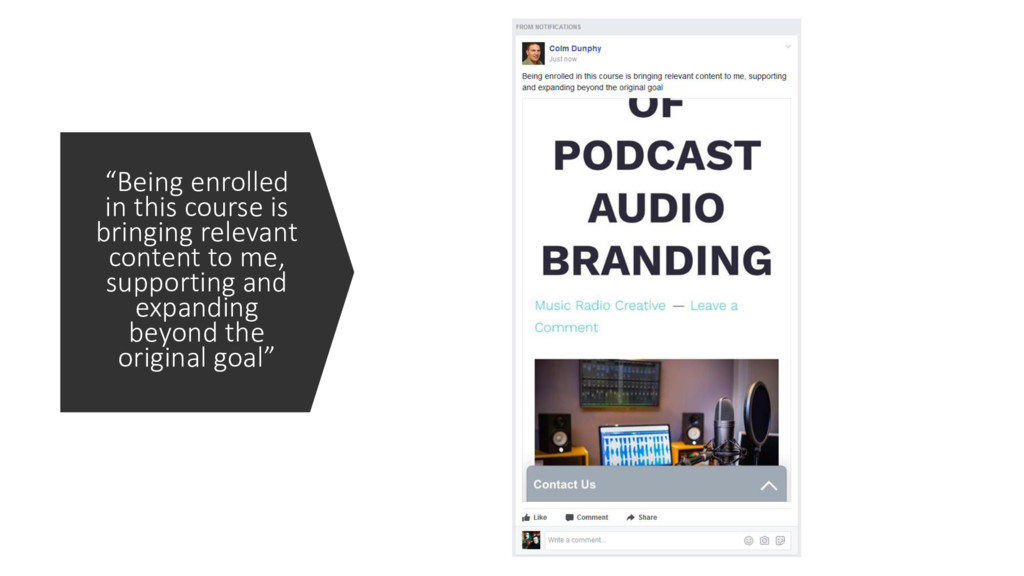
  22. “Being enrolled in this course is bringing relevant content to

    me, supporting and expanding beyond the original goal”
  23. Facebook: Distraction or learning tool? • Facebook as a LMS

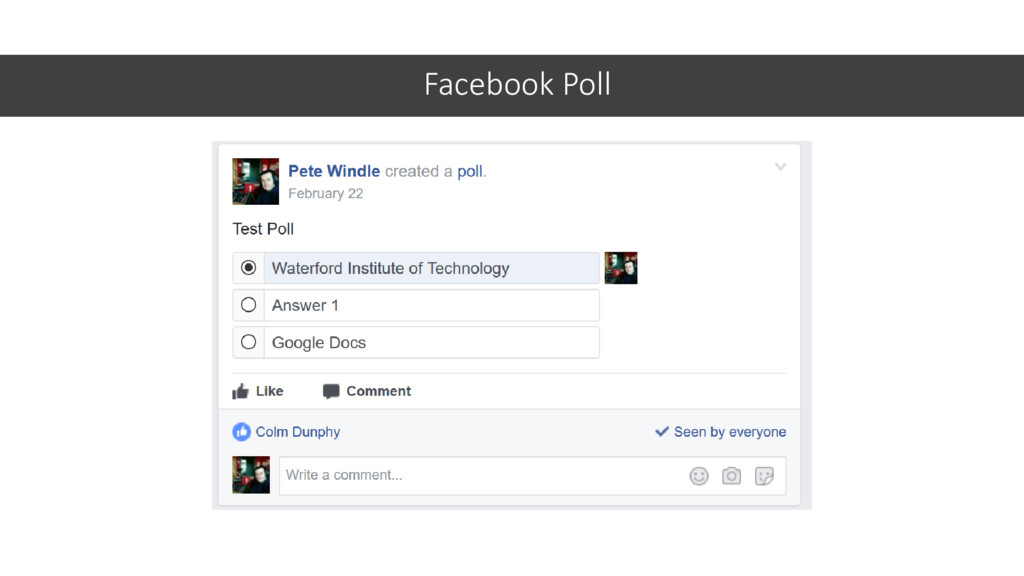
    • Content Types Available • Underpinning Learning Theories • Security and Privacy Issues • Proof Of Concept • Content Diet Influence • Critical Reflections https://www.facebook.com/witctel/
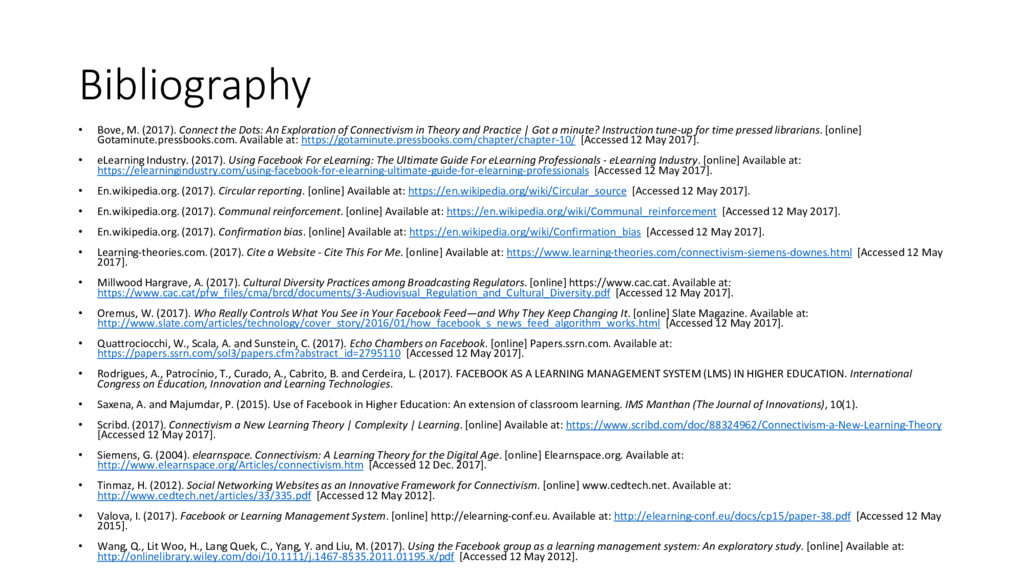
  24. Bibliography • Bove, M. (2017). Connect the Dots: An Exploration

    of Connectivism in Theory and Practice | Got a minute? Instruction tune-up for time pressed librarians. [online] Gotaminute.pressbooks.com. Available at: https://gotaminute.pressbooks.com/chapter/chapter-10/ [Accessed 12 May 2017]. • eLearning Industry. (2017). Using Facebook For eLearning: The Ultimate Guide For eLearning Professionals - eLearning Industry. [online] Available at: https://elearningindustry.com/using-facebook-for-elearning-ultimate-guide-for-elearning-professionals [Accessed 12 May 2017]. • En.wikipedia.org. (2017). Circular reporting. [online] Available at: https://en.wikipedia.org/wiki/Circular_source [Accessed 12 May 2017]. • En.wikipedia.org. (2017). Communal reinforcement. [online] Available at: https://en.wikipedia.org/wiki/Communal_reinforcement [Accessed 12 May 2017]. • En.wikipedia.org. (2017). Confirmation bias. [online] Available at: https://en.wikipedia.org/wiki/Confirmation_bias [Accessed 12 May 2017]. • Learning-theories.com. (2017). Cite a Website - Cite This For Me. [online] Available at: https://www.learning-theories.com/connectivism-siemens-downes.html [Accessed 12 May 2017]. • Millwood Hargrave, A. (2017). Cultural Diversity Practices among Broadcasting Regulators. [online] https://www.cac.cat. Available at: https://www.cac.cat/pfw_files/cma/brcd/documents/3-Audiovisual_Regulation_and_Cultural_Diversity.pdf [Accessed 12 May 2017]. • Oremus, W. (2017). Who Really Controls What You See in Your Facebook Feed—and Why They Keep Changing It. [online] Slate Magazine. Available at: http://www.slate.com/articles/technology/cover_story/2016/01/how_facebook_s_news_feed_algorithm_works.html [Accessed 12 May 2017]. • Quattrociocchi, W., Scala, A. and Sunstein, C. (2017). Echo Chambers on Facebook. [online] Papers.ssrn.com. Available at: https://papers.ssrn.com/sol3/papers.cfm?abstract_id=2795110 [Accessed 12 May 2017]. • Rodrigues, A., Patrocínio, T., Curado, A., Cabrito, B. and Cerdeira, L. (2017). FACEBOOK AS A LEARNING MANAGEMENT SYSTEM (LMS) IN HIGHER EDUCATION. International Congress on Education, Innovation and Learning Technologies. • Saxena, A. and Majumdar, P. (2015). Use of Facebook in Higher Education: An extension of classroom learning. IMS Manthan (The Journal of Innovations), 10(1). • Scribd. (2017). Connectivism a New Learning Theory | Complexity | Learning. [online] Available at: https://www.scribd.com/doc/88324962/Connectivism-a-New-Learning-Theory [Accessed 12 May 2017]. • Siemens, G. (2004). elearnspace. Connectivism: A Learning Theory for the Digital Age. [online] Elearnspace.org. Available at: http://www.elearnspace.org/Articles/connectivism.htm [Accessed 12 Dec. 2017]. • Tinmaz, H. (2012). Social Networking Websites as an Innovative Framework for Connectivism. [online] www.cedtech.net. Available at: http://www.cedtech.net/articles/33/335.pdf [Accessed 12 May 2012]. • Valova, I. (2017). Facebook or Learning Management System. [online] http://elearning-conf.eu. Available at: http://elearning-conf.eu/docs/cp15/paper-38.pdf [Accessed 12 May 2015]. • Wang, Q., Lit Woo, H., Lang Quek, C., Yang, Y. and Liu, M. (2017). Using the Facebook group as a learning management system: An exploratory study. [online] Available at: http://onlinelibrary.wiley.com/doi/10.1111/j.1467-8535.2011.01195.x/pdf [Accessed 12 May 2012].