Upgrade to Pro — share decks privately, control downloads, hide ads and more …

Paying for Long-Term Data Storage

Sponsored · Your Podcast. Everywhere. Effortlessly. Share. Educate. Inspire. Entertain. You do you. We'll handle the rest. →
Avatar for Robin Dean Robin Dean
July 11, 2014
41

Paying for Long-Term Data Storage

Lightning talk given at the Colorado Alliance of Research Libraries' "Research Data Management 2014" conference

Avatar for Robin Dean

Robin Dean

July 11, 2014

Transcript

  1. Paying for Long-Term Data Storage Robin Dean [email protected] Digital Repository

    Director Colorado Alliance of Research Libraries All-Alliance Conference: Research Data Management, July 11, 2014
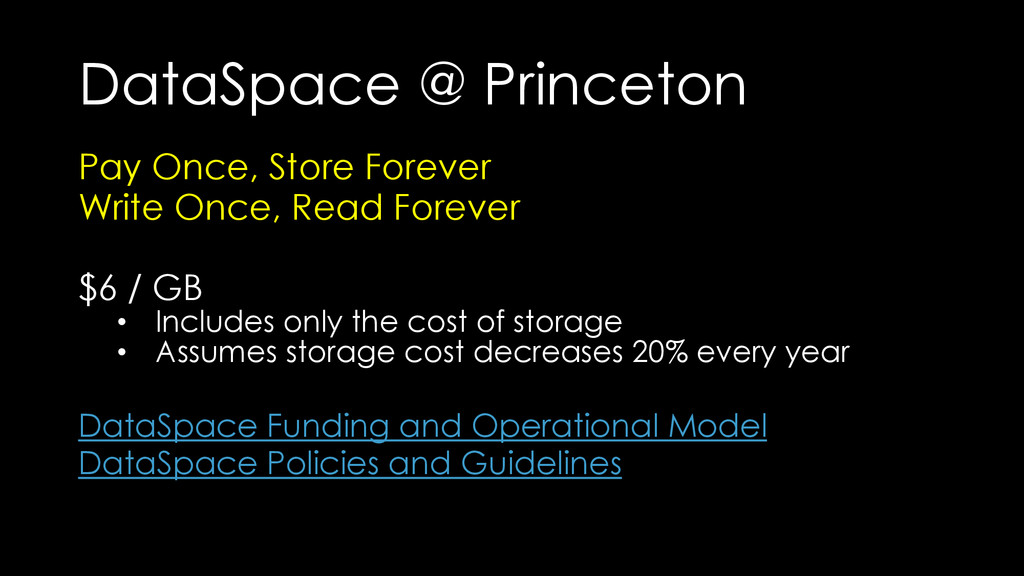
  2. DataSpace @ Princeton Pay Once, Store Forever Write Once, Read

    Forever $6 / GB • Includes only the cost of storage • Assumes storage cost decreases 20% every year DataSpace Funding and Operational Model DataSpace Policies and Guidelines
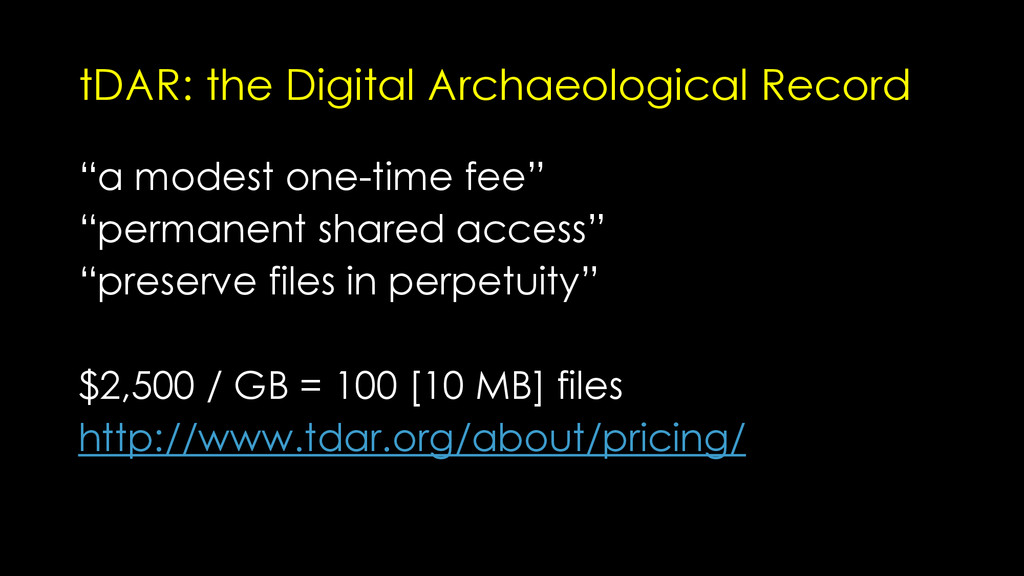
  3. tDAR: the Digital Archaeological Record “a modest one-time fee” “permanent

    shared access” “preserve files in perpetuity” $2,500 / GB = 100 [10 MB] files http://www.tdar.org/about/pricing/
  4. Our reality . . . We pay for infrastructure* every

    year *primary storage and backup on networked hard drives that are always available
  5. Also… Costs do not decrease significantly on a year-to-year basis

    David Rosenthal’s blog on cloud storage costs
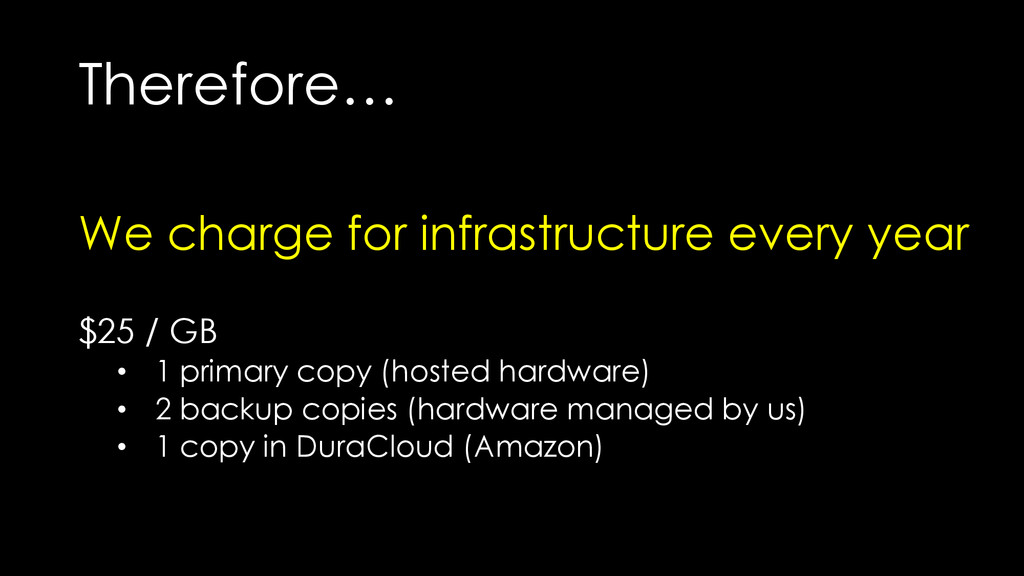
  6. Therefore… We charge for infrastructure every year $25 / GB

    • 1 primary copy (hosted hardware) • 2 backup copies (hardware managed by us) • 1 copy in DuraCloud (Amazon)
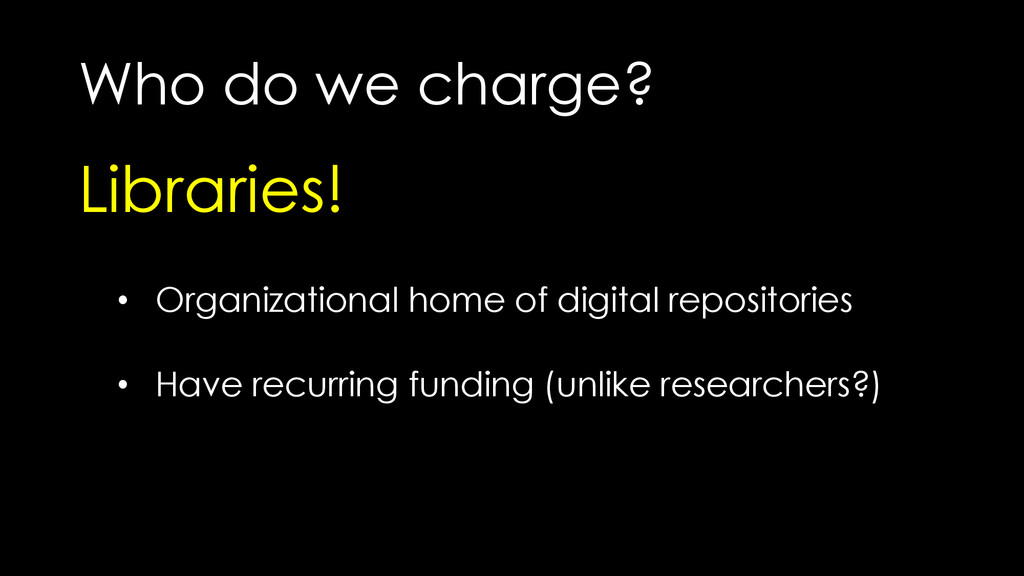
  7. Who do we charge? Libraries! • Organizational home of digital

    repositories • Have recurring funding (unlike researchers?)
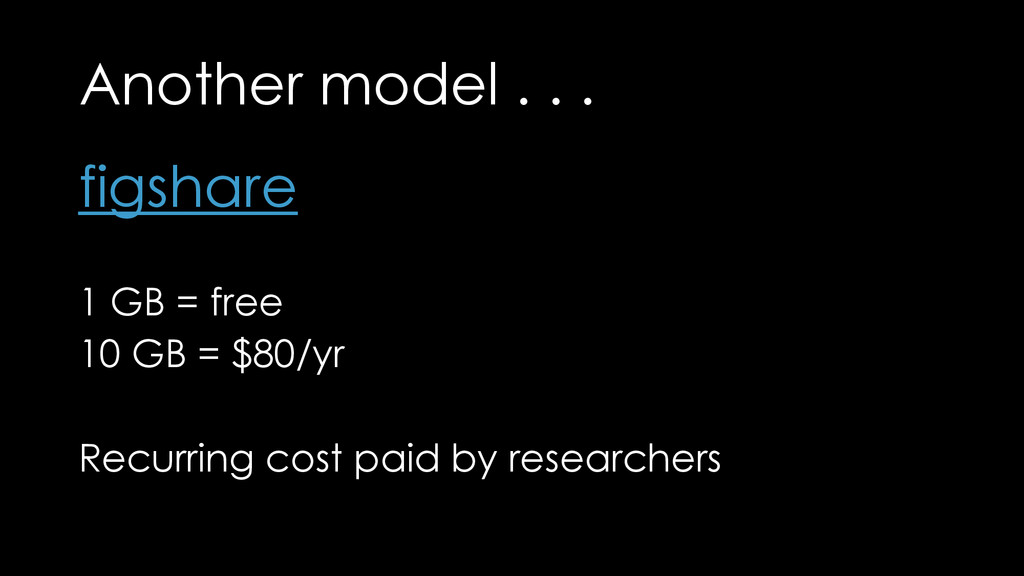
  8. Another model . . . figshare 1 GB = free

    10 GB = $80/yr Recurring cost paid by researchers
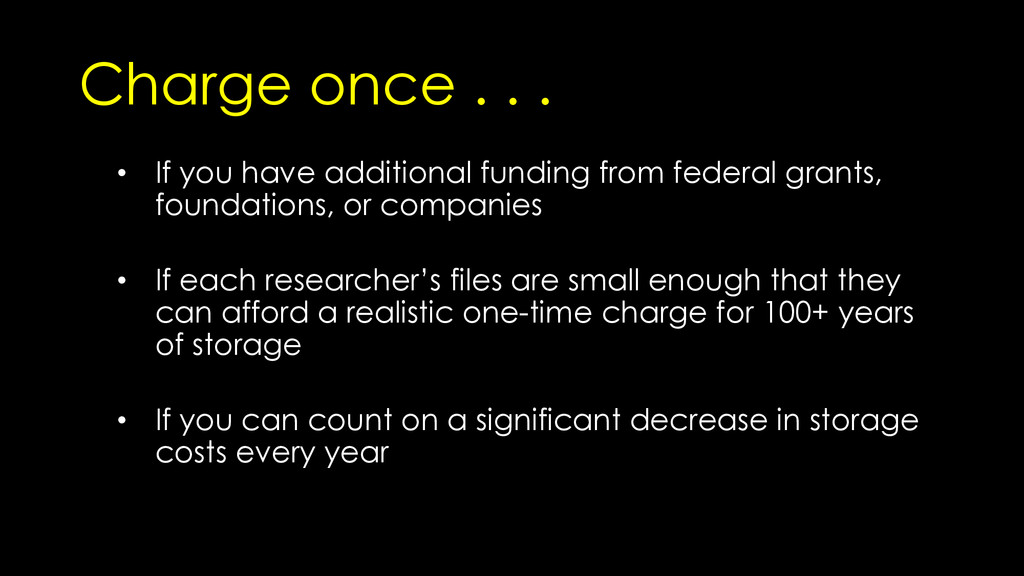
  9. Charge once . . . • If you have additional

    funding from federal grants, foundations, or companies • If each researcher’s files are small enough that they can afford a realistic one-time charge for 100+ years of storage • If you can count on a significant decrease in storage costs every year
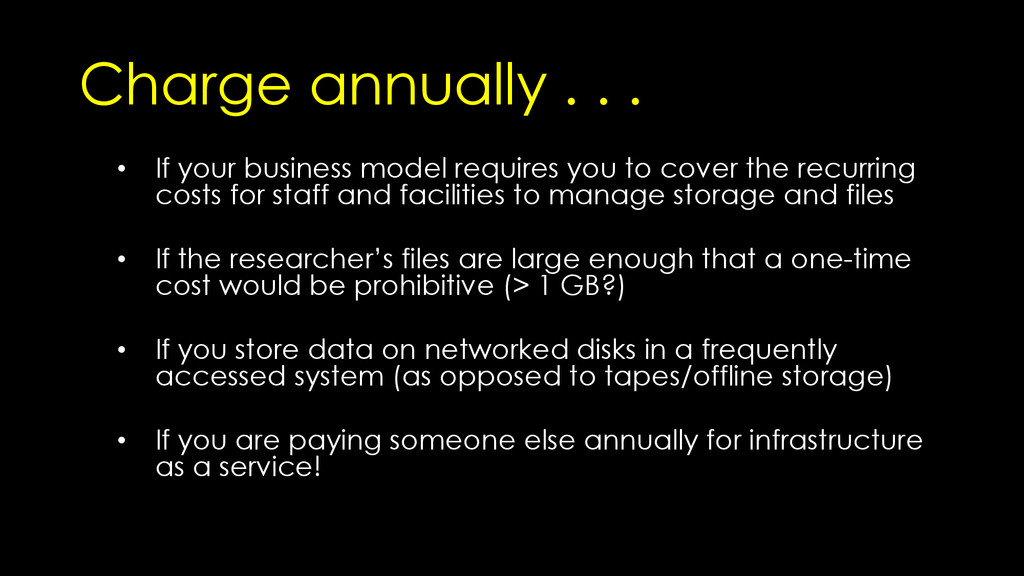
  10. Charge annually . . . • If your business model

    requires you to cover the recurring costs for staff and facilities to manage storage and files • If the researcher’s files are large enough that a one-time cost would be prohibitive (> 1 GB?) • If you store data on networked disks in a frequently accessed system (as opposed to tapes/offline storage) • If you are paying someone else annually for infrastructure as a service!