Upgrade to Pro — share decks privately, control downloads, hide ads and more …

Disability and Sexuality for Mental Health Prof...

Disability and Sexuality for Mental Health Professionals

Sexuality is an important concept for every mental health professional. Clients will only feel comfortable discussing these issues if we feel comfortable first. However, the issue becomes even more critical when discussing sex and sexual health with individuals with disabilities. In this presentation, Cheyenne combines personal experience, mental health knowledge, and current research to provide an educational talk concerning why sexuality is important for individuals with disabilities, common issues that may present, important considerations, and resources providers can use to educate themselves and others.

Note: This presentation is informational ONLY, and does not constitute mental health treatment.

Avatar for Cheyenne Heflin

Cheyenne Heflin PRO

July 07, 2026

Other Decks in Education

Transcript

  1. My Qualifications Why Talk About This Sexuality and Sexological Ecosystem

    Common Issues Found in Literature Literature Gaps Redefining Sex and Emphasizing Intimacy Resources for Enhancing Knowledge Final Message CONTENTS
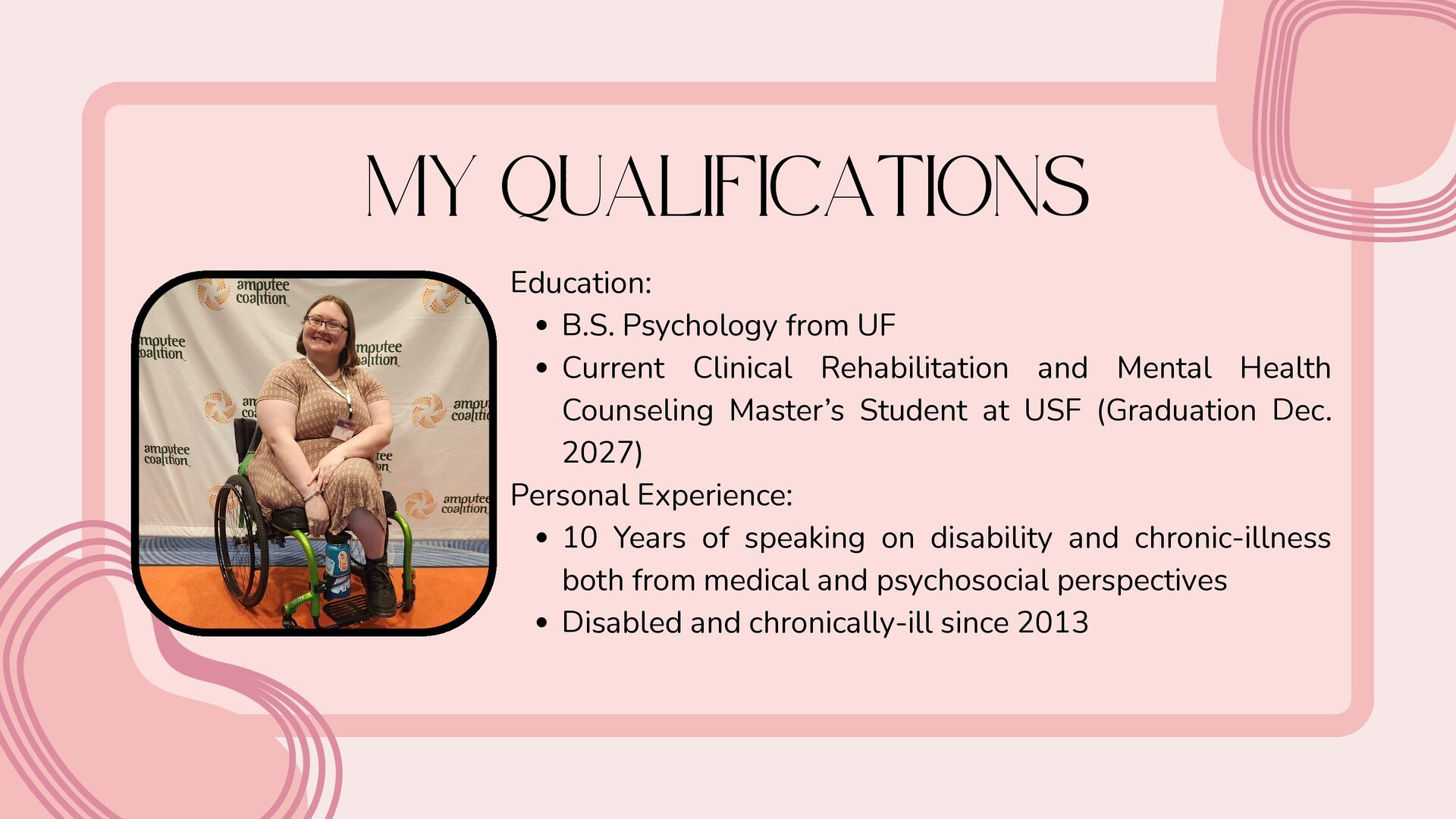
  2. MY QUALIFICATIONS Education: B.S. Psychology from UF Current Clinical Rehabilitation

    and Mental Health Counseling Master’s Student at USF (Graduation Dec. 2027) Personal Experience: 10 Years of speaking on disability and chronic-illness both from medical and psychosocial perspectives Disabled and chronically-ill since 2013
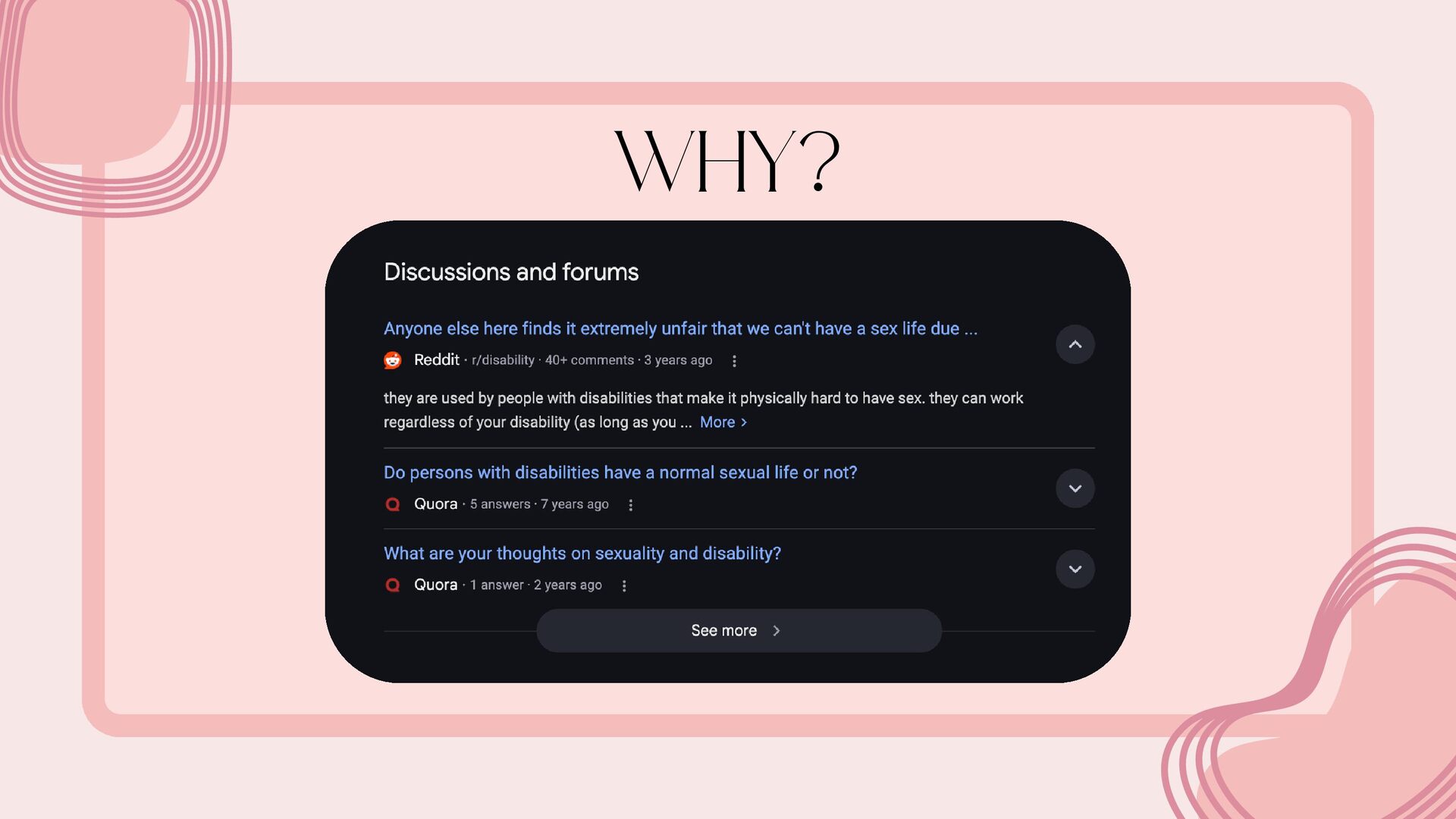
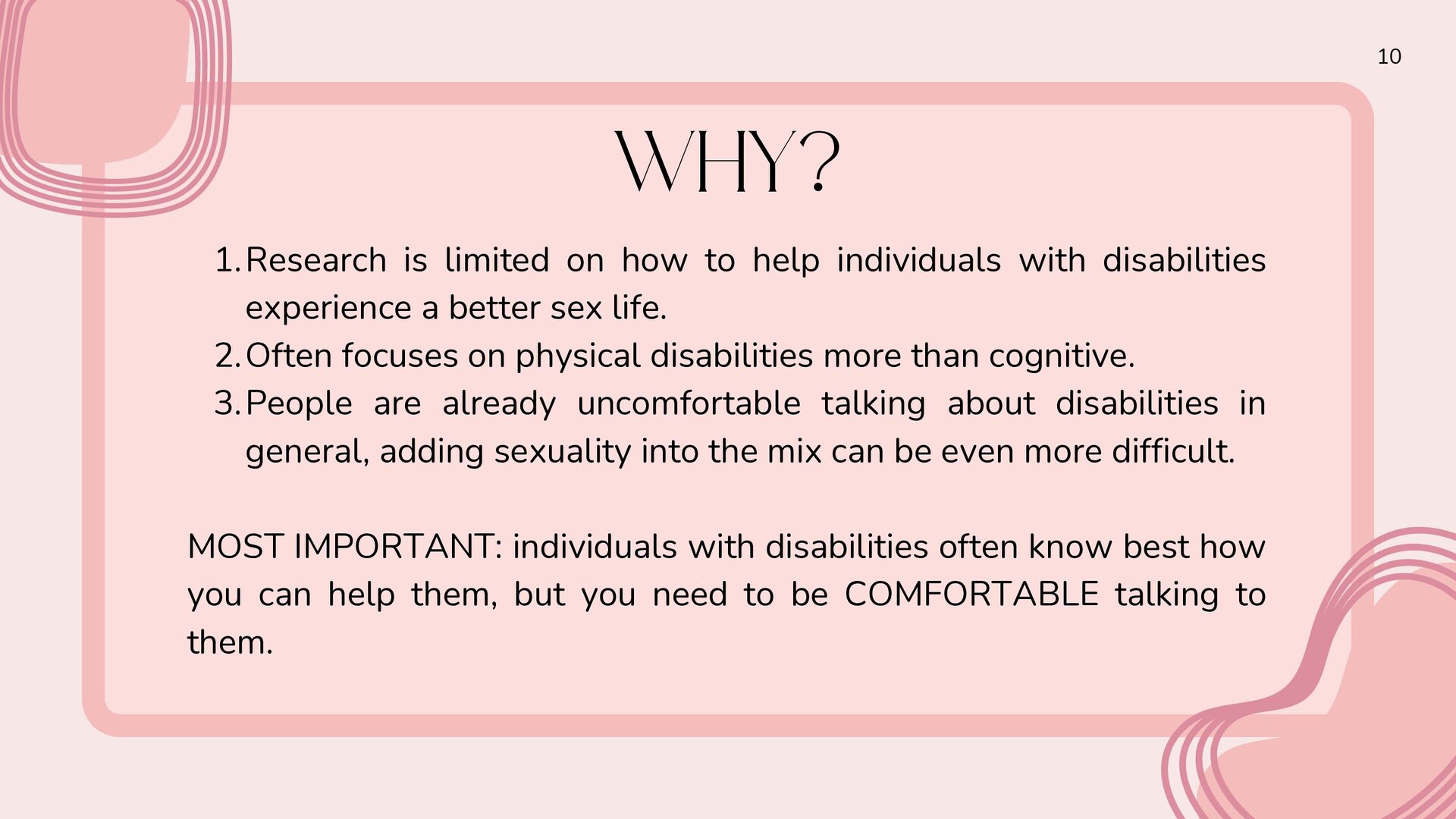
  3. WHY? 1.Research is limited on how to help individuals with

    disabilities experience a better sex life. 2.Often focuses on physical disabilities more than cognitive. 3.People are already uncomfortable talking about disabilities in general, adding sexuality into the mix can be even more difficult. MOST IMPORTANT: individuals with disabilities often know best how you can help them, but you need to be COMFORTABLE talking to them. 10
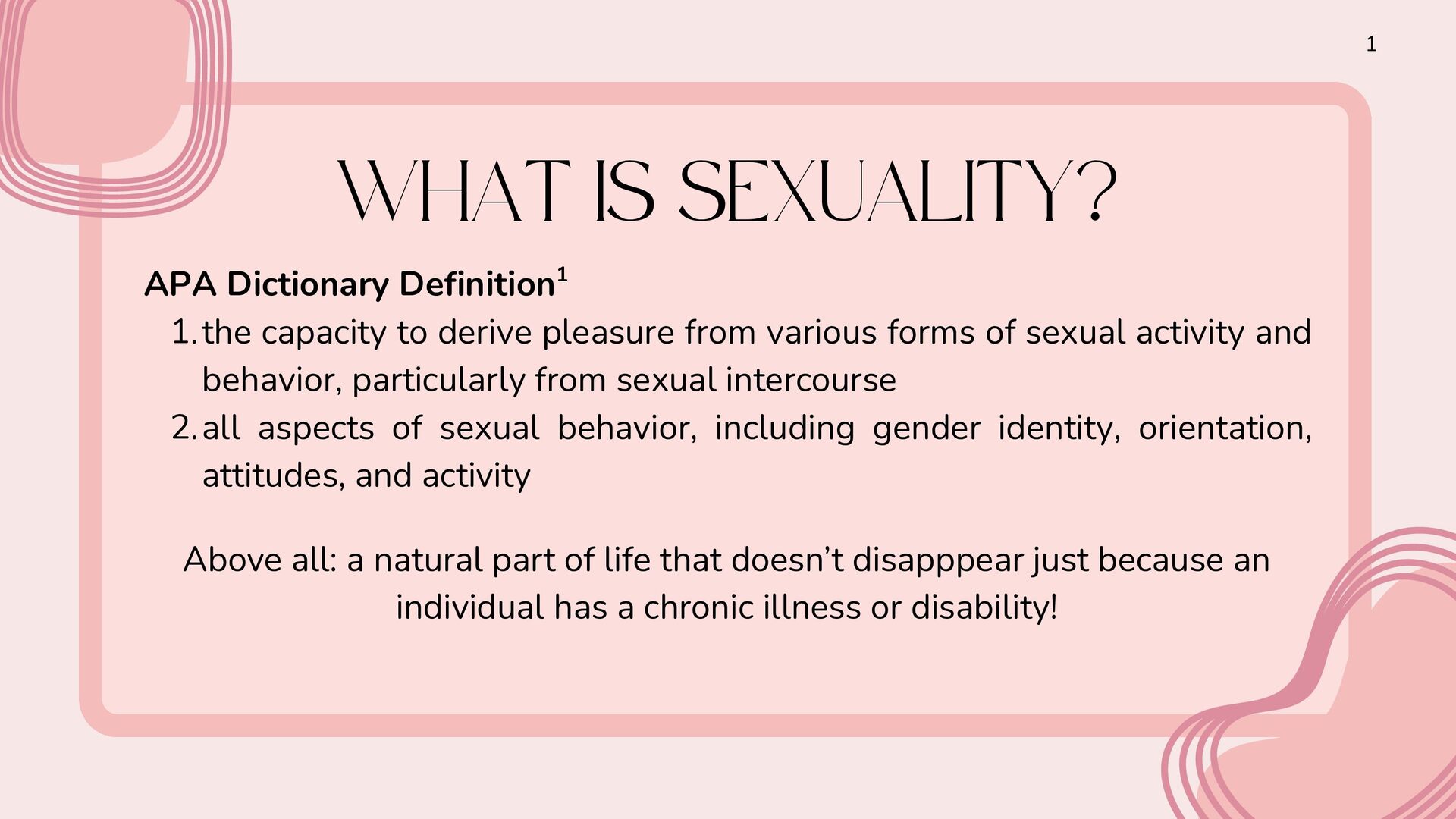
  4. WHAT IS SEXUALITY? APA Dictionary Definition1 1.the capacity to derive

    pleasure from various forms of sexual activity and behavior, particularly from sexual intercourse 2.all aspects of sexual behavior, including gender identity, orientation, attitudes, and activity Above all: a natural part of life that doesn’t disapppear just because an individual has a chronic illness or disability! 1
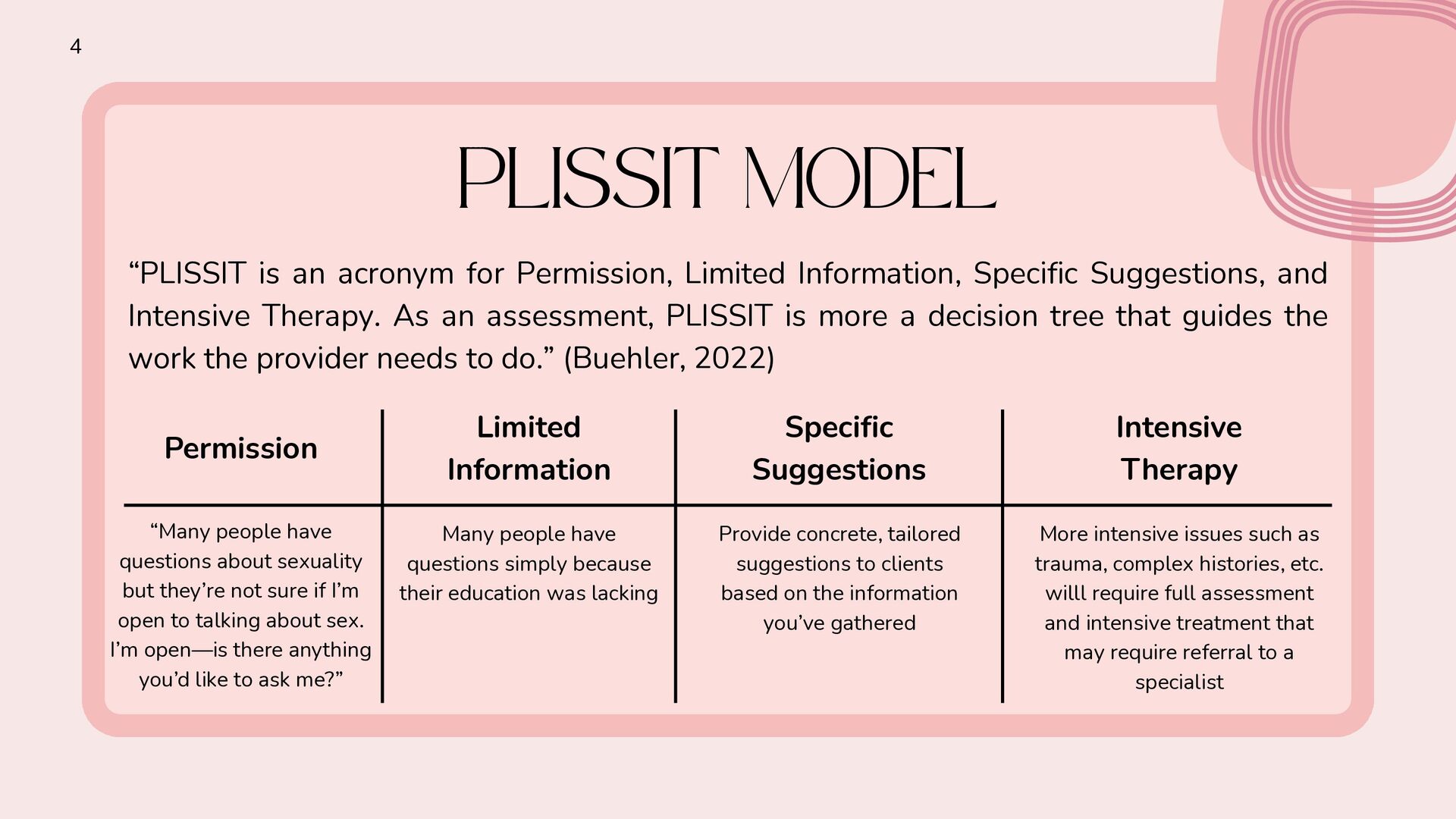
  5. PLISSIT MODEL “PLISSIT is an acronym for Permission, Limited Information,

    Specific Suggestions, and Intensive Therapy. As an assessment, PLISSIT is more a decision tree that guides the work the provider needs to do.” (Buehler, 2022) 4 Permission Limited Information Specific Suggestions Intensive Therapy “Many people have questions about sexuality but they’re not sure if I’m open to talking about sex. I’m open—is there anything you’d like to ask me?” Many people have questions simply because their education was lacking Provide concrete, tailored suggestions to clients based on the information you’ve gathered More intensive issues such as trauma, complex histories, etc. willl require full assessment and intensive treatment that may require referral to a specialist
  6. SEXOLOGICAL ECOSYSTEM Based on ecological systems model, the sexological ecosystem

    is a thorough assessment that looks at all potential influences in a client’s life. It is especially good for: Complex cases Diverse individuals Developing a thorough, effective treatment plan The assessment looks at a variety of influential factors in the client’s life to provide a clear picture of their experience, knowledge, etc. 4
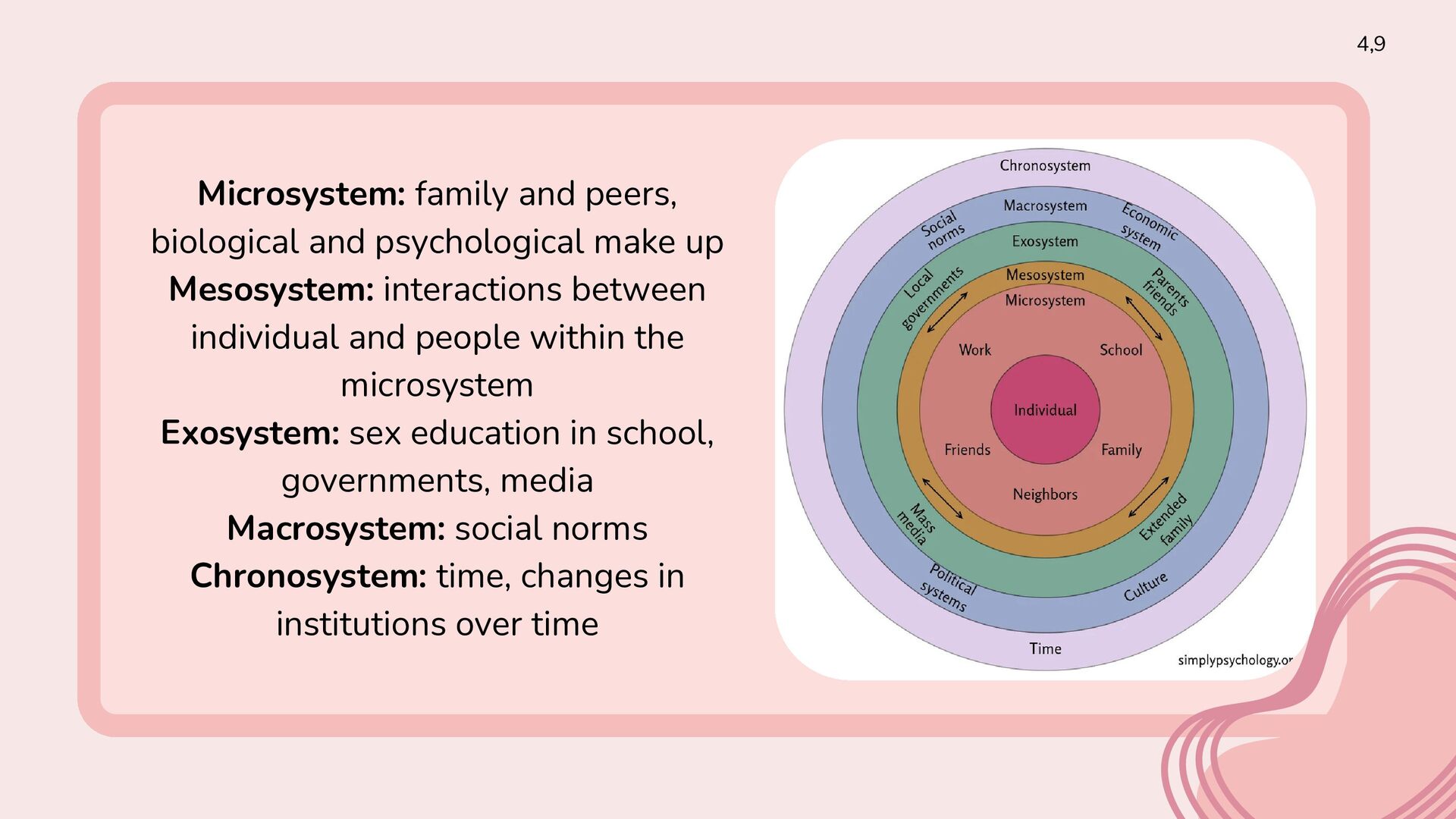
  7. 4,9 Microsystem: family and peers, biological and psychological make up

    Mesosystem: interactions between individual and people within the microsystem Exosystem: sex education in school, governments, media Macrosystem: social norms Chronosystem: time, changes in institutions over time
  8. COMMON STRUGGLES Common struggles will vary depending on the type

    of disability, disability progression, and a million other factors. However, we can still acknowledge some common struggles individuals with disabilities face: Side effects of medications and other treatments Ex. Renal transplantation patients can struggle with acne, fatigue, insomnia, etc. related to immunosuppressive treatments (Körükcü et al., 2020) Scar tissue, lesions, and other physical symptoms that could limit movement/cause pain H.S. lesions can appear anywhere on the body, including near the genitals, and leave scar tissue that can limit movement (Krajewski et al., 2024) 3,6,12,13,17,18
  9. Quality of life impacts not just on patient, but on

    family as well (Krajewski et al., 2024) Co-morbid conditions that can exacerbate sexual dysfunction symptoms, as well as each other “It was previously published that patients with HS have a much higher probability of developing life-threatening cardiovascular disorders than healthy controls [24].” (Krajewski et al., 2024) Severity of disability, as well as perception of disability, both can independently impact SD symptoms (Di Pauli et al., 2023) (Scandurra et al., 2023) Loss of motor control, sensation, and bodily functions such as ability to maintain an erection (depending on specific disability) (Serban et al., 2020) General lack of educatiion on sex and sexuality due to the lack of accessible and truly diverse education programs (Bollinger and Cook, 2020) 3,6,12,13,17,18
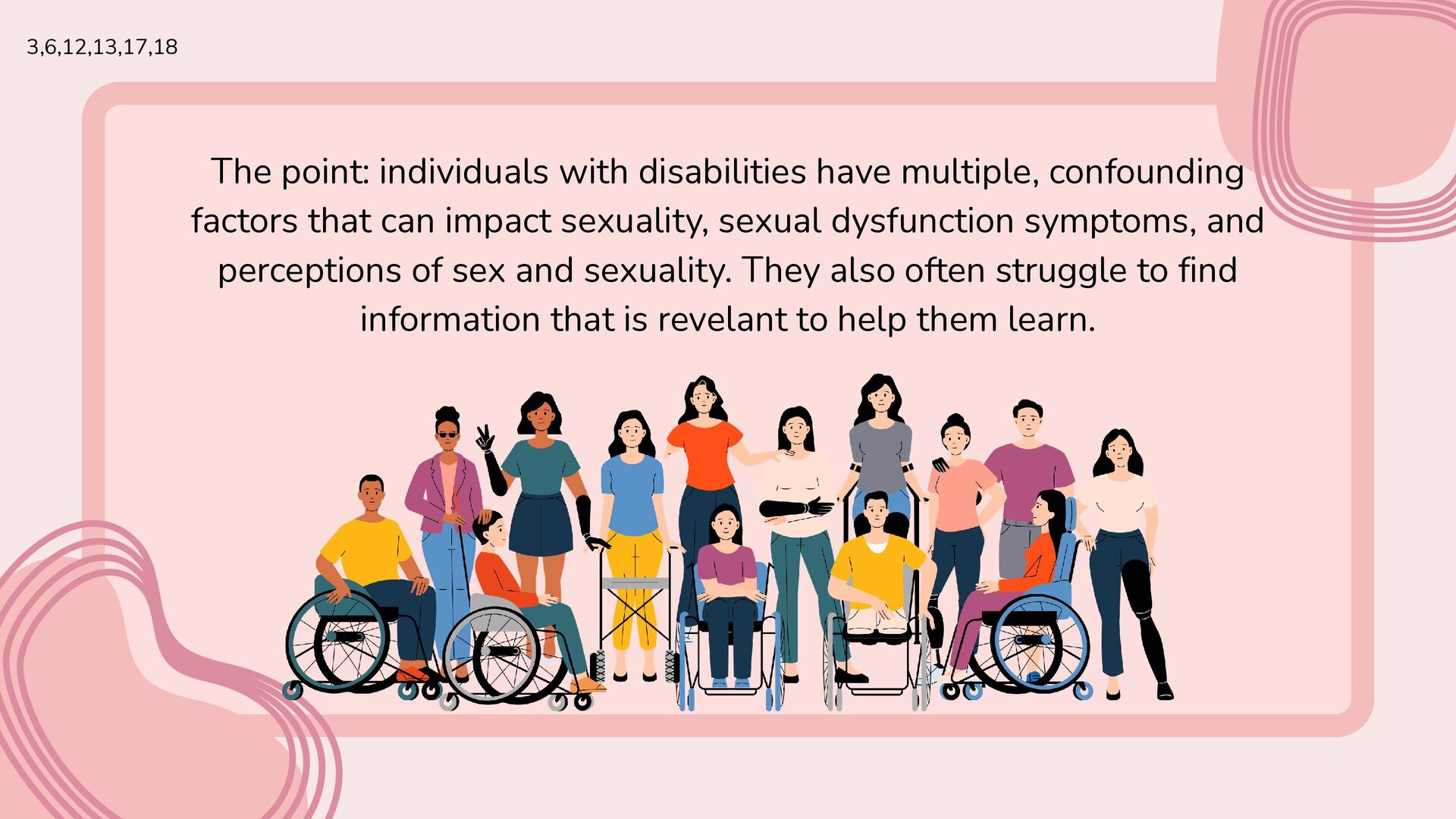
  10. The point: individuals with disabilities have multiple, confounding factors that

    can impact sexuality, sexual dysfunction symptoms, and perceptions of sex and sexuality. They also often struggle to find information that is revelant to help them learn. 3,6,12,13,17,18
  11. Sexual education has commonly been found to be lacking, but

    it provides an even more unique struggle for individuals with disabilities. Qualitative research with individuals with disabilities has found that: Often received in “mainstream” school alongside able-bodied peers No representation, even in “diverse” or “liberal” schools Perceived by individuals with disabilities to only focus on “negatives” Interactions with peers and teachers were “awkward” and prevented the asking of questions Many individuals seek out information on the internet to supplement, which could lead to exposure to misinformation SEXUAL EDUCATION 3,15
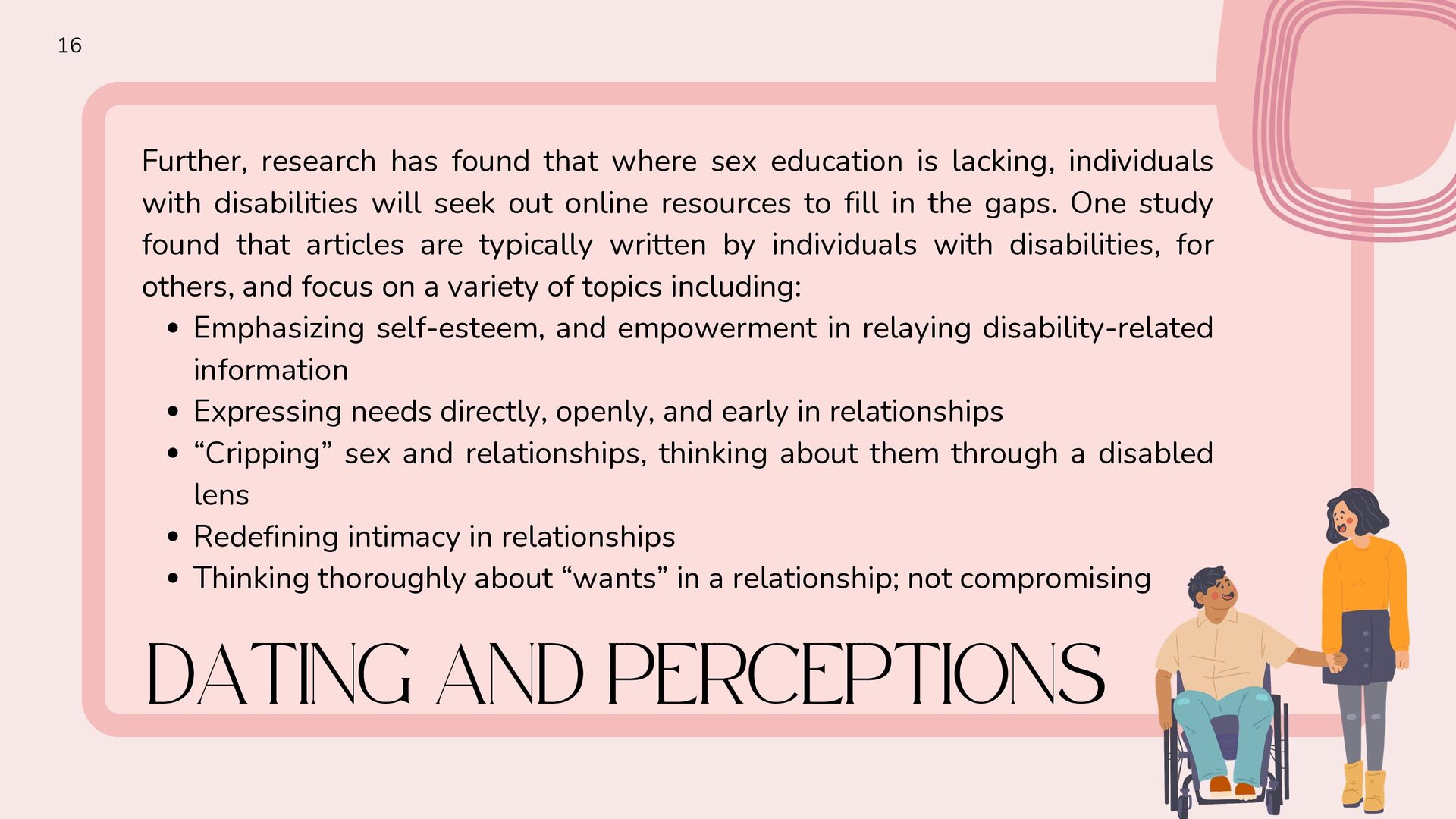
  12. DATING AND PERCEPTIONS Further, research has found that where sex

    education is lacking, individuals with disabilities will seek out online resources to fill in the gaps. One study found that articles are typically written by individuals with disabilities, for others, and focus on a variety of topics including: Emphasizing self-esteem, and empowerment in relaying disability-related information Expressing needs directly, openly, and early in relationships “Cripping” sex and relationships, thinking about them through a disabled lens Redefining intimacy in relationships Thinking thoroughly about “wants” in a relationship; not compromising 16
  13. INTELLECTUAL DISABILITIES Sex education is a hotly debated issue across

    the country, and the world, but a universal issue is that individuals with disabilities are often not covered in general education classes in schools. Intellectual/cognitive disabilities were under researched in this area, and therefore had few solutions, recommendations, etc. Information that was available was given generally under “disability” as an umbrella, neglecting to emphasize the unique experiences individuals with disabilities can face, even if they have the same disability.
  14. SOLUTIONS, SOLUTIONS Primarily, the biggest gap in the literature centered

    around actual solutions or recommendations for working with individuals regarding thier sexuality and sexual needs. The need for “diverse and accessible” education is high, yet no actionable targets are provided. This also leaves providers lacking answers on how to best engage with clients/patients with disabilities.
  15. INTIMACY VS. INTERCOURSE Often times, intimacy is overlooked as a

    crucial part of having a sexual relationship, and should therefore be explained and emphasized to individuals with disabilities. Emotional connection is just as important as physical connection “Intercourse” can feel so important that other elements, including foreplay, toys, etc. are downplayed or forgotten In cases where penetration may not be possible, intimacy can and should be emphasized as an important part of connection 10
  16. REDEFINING SEX The act of “sex” is often thought of

    primarily as penetration of a vagina with a penis. This can feel extremely limiting to individuals with disabilities who may not physically be able to manage the act. Helping clients redefine what sex means in their relationships through discussions about intimacy, foreplay, etc. Encouraging exploration between partners and open discussions about likes/dislikes Validating the experience and struggle of individuals with disabilities in navigating sexuality within biased societal norms 10
  17. ENGAGE WITH COMMUNITY With little research available, another recommendation could

    be to engage with the community directly to learn more about their needs, wants, etc. Previous research shows that many individuals with disabilities get their own resources online (Santinele Martino et al., 2025) Articles, blogs, etc. can provide insight into common questions, concerns, or problems Providers can self-educate on resources available to make sex easier and more comfortable 10,16
  18. RESOURCES With little professional guidance, the next best option is

    to familiarize yourself with the stories of individuals with disabilities. The following resources are ones I have selected based on my experiences as a disabled individual. Disability Horizons provides articles, resources, and a shop for individuals with disabilities. They also have an article on accessible sex toys and sex aids. Sexuality and Disability: blog dedicated to answering questions from and for women with various disabilities Books on Sexuality and Disability: the books at this link are a bit older, but provide insight into the expriences of various individuals with disabilities 2,8,19
  19. TOYS AND POSITIONS Familiarize yourself with different sex toys and

    sex positions so you can provide insight for individuals with disabilities coming in to your practice. Topics you can research include: Adaptive ways to use traditional sex toys Modified sex positions for various impairments Information on stigmas and other adaptive needs for individuals with disablilities regarding sexuality Clients may feel embarrassed to try and ask for the information themselves. By educating yourself, you can provide comfort, security and knowledge for your clients when they come to see you. 5,7,8
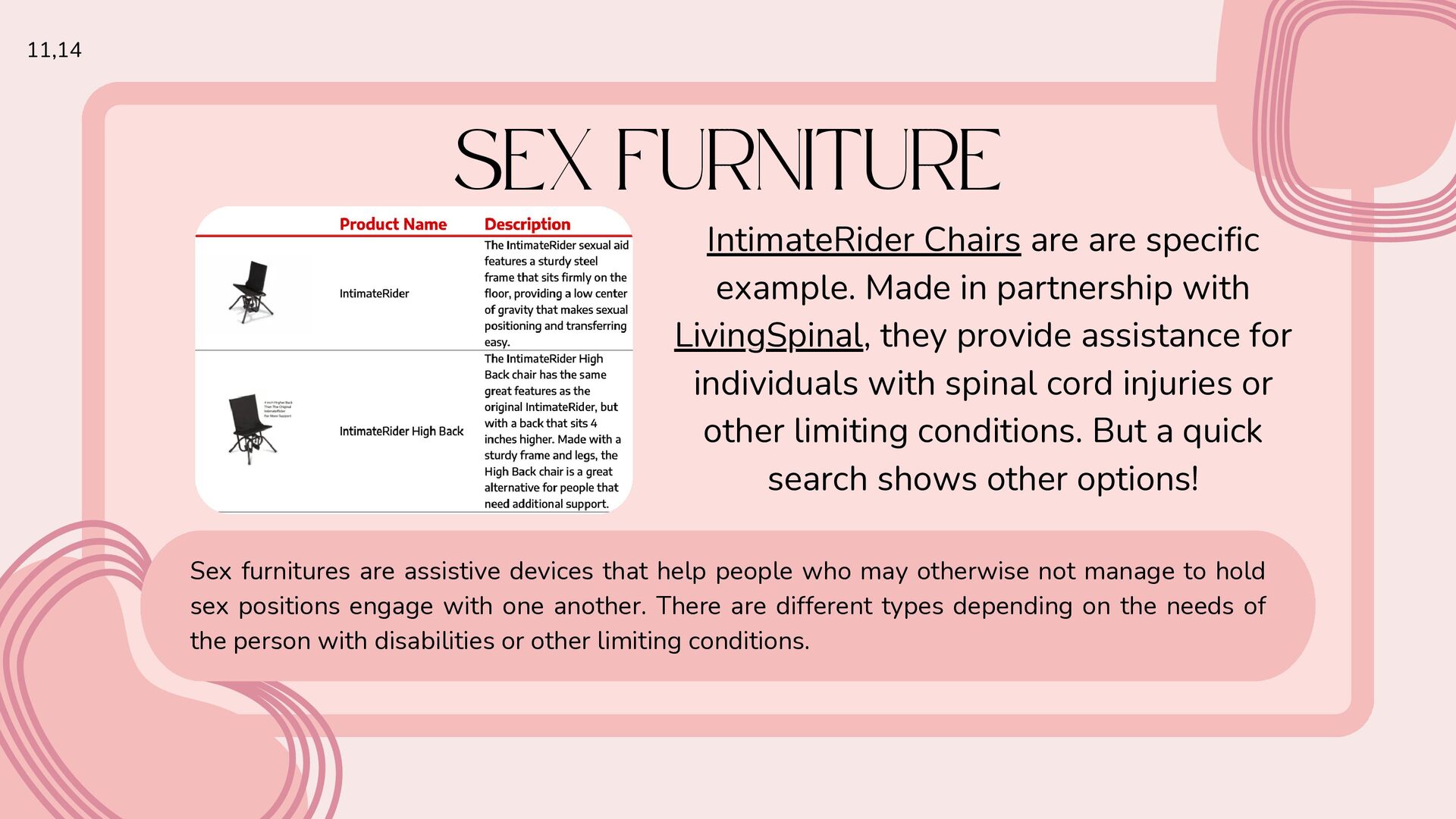
  20. Sex furnitures are assistive devices that help people who may

    otherwise not manage to hold sex positions engage with one another. There are different types depending on the needs of the person with disabilities or other limiting conditions. SEX FURNITURE IntimateRider Chairs are are specific example. Made in partnership with LivingSpinal, they provide assistance for individuals with spinal cord injuries or other limiting conditions. But a quick search shows other options! 11,14
  21. BE COMFORTABLE WITH IT Final Message: Sexuality is an important

    part of every life and therefore we must be comfortable discussing it with everyone, including individuals with disabilities. Research the common struggles individuals with disabilities face regarding sex and sexuality Educate on adaptive uses of sex toys, sex furniture, and adaptive sex positions Most importantly, DO NOT BE AFRAID TO DISCUSS IT. Clients may be embarrassed or uncomfortable with bringing it up directly, so your willingness can be a reassurance for them.
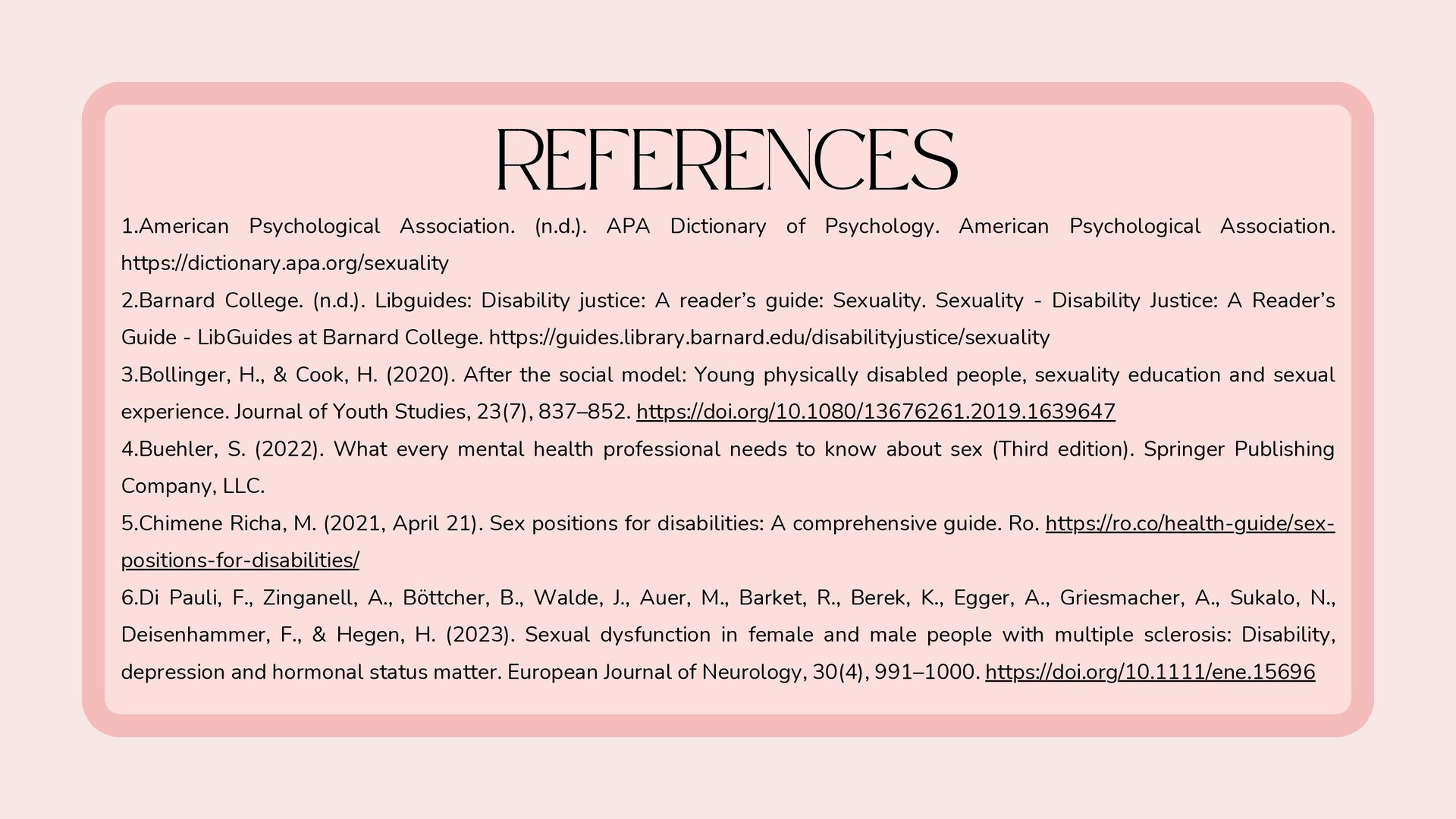
  22. REFERENCES 1.American Psychological Association. (n.d.). APA Dictionary of Psychology. American

    Psychological Association. https://dictionary.apa.org/sexuality 2.Barnard College. (n.d.). Libguides: Disability justice: A reader’s guide: Sexuality. Sexuality - Disability Justice: A Reader’s Guide - LibGuides at Barnard College. https://guides.library.barnard.edu/disabilityjustice/sexuality 3.Bollinger, H., & Cook, H. (2020). After the social model: Young physically disabled people, sexuality education and sexual experience. Journal of Youth Studies, 23(7), 837–852. https://doi.org/10.1080/13676261.2019.1639647 4.Buehler, S. (2022). What every mental health professional needs to know about sex (Third edition). Springer Publishing Company, LLC. 5.Chimene Richa, M. (2021, April 21). Sex positions for disabilities: A comprehensive guide. Ro. https://ro.co/health-guide/sex- positions-for-disabilities/ 6.Di Pauli, F., Zinganell, A., Böttcher, B., Walde, J., Auer, M., Barket, R., Berek, K., Egger, A., Griesmacher, A., Sukalo, N., Deisenhammer, F., & Hegen, H. (2023). Sexual dysfunction in female and male people with multiple sclerosis: Disability, depression and hormonal status matter. European Journal of Neurology, 30(4), 991–1000. https://doi.org/10.1111/ene.15696
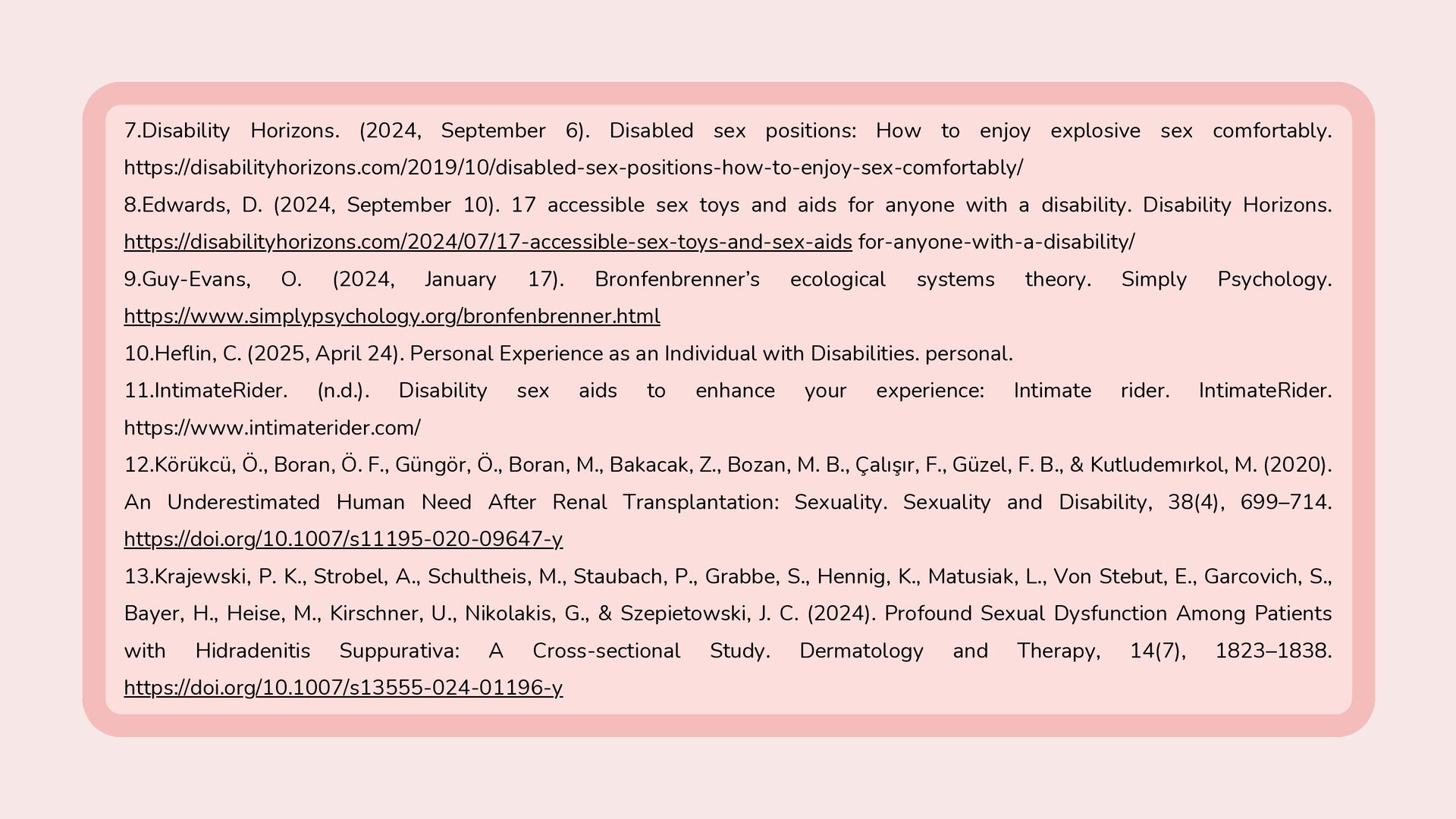
  23. 7.Disability Horizons. (2024, September 6). Disabled sex positions: How to

    enjoy explosive sex comfortably. https://disabilityhorizons.com/2019/10/disabled-sex-positions-how-to-enjoy-sex-comfortably/ 8.Edwards, D. (2024, September 10). 17 accessible sex toys and aids for anyone with a disability. Disability Horizons. https://disabilityhorizons.com/2024/07/17-accessible-sex-toys-and-sex-aids for-anyone-with-a-disability/ 9.Guy-Evans, O. (2024, January 17). Bronfenbrenner’s ecological systems theory. Simply Psychology. https://www.simplypsychology.org/bronfenbrenner.html 10.Heflin, C. (2025, April 24). Personal Experience as an Individual with Disabilities. personal. 11.IntimateRider. (n.d.). Disability sex aids to enhance your experience: Intimate rider. IntimateRider. https://www.intimaterider.com/ 12.Körükcü, Ö., Boran, Ö. F., Güngör, Ö., Boran, M., Bakacak, Z., Bozan, M. B., Çalışır, F., Güzel, F. B., & Kutludemırkol, M. (2020). An Underestimated Human Need After Renal Transplantation: Sexuality. Sexuality and Disability, 38(4), 699–714. https://doi.org/10.1007/s11195-020-09647-y 13.Krajewski, P. K., Strobel, A., Schultheis, M., Staubach, P., Grabbe, S., Hennig, K., Matusiak, L., Von Stebut, E., Garcovich, S., Bayer, H., Heise, M., Kirschner, U., Nikolakis, G., & Szepietowski, J. C. (2024). Profound Sexual Dysfunction Among Patients with Hidradenitis Suppurativa: A Cross-sectional Study. Dermatology and Therapy, 14(7), 1823–1838. https://doi.org/10.1007/s13555-024-01196-y
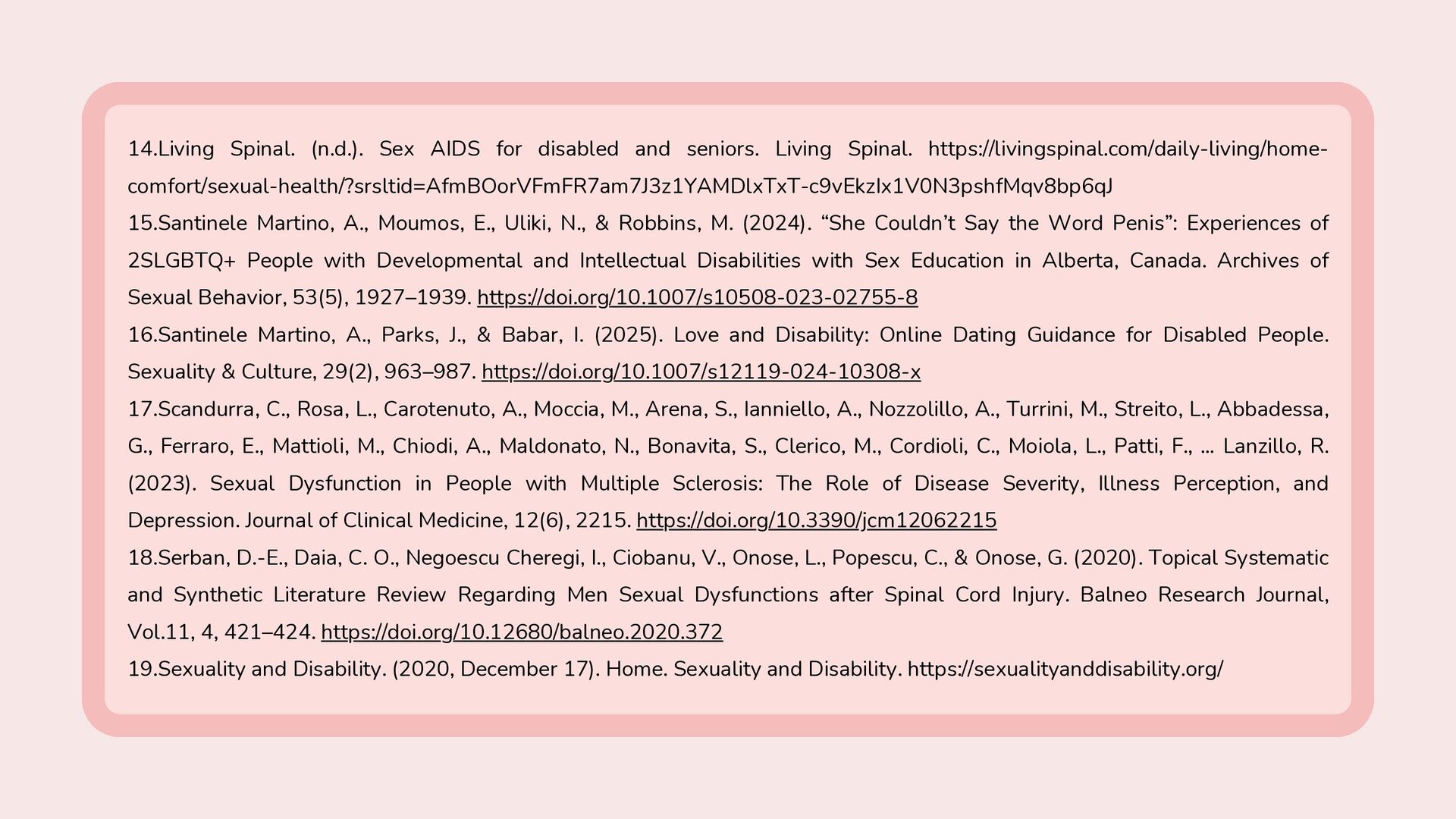
  24. 14.Living Spinal. (n.d.). Sex AIDS for disabled and seniors. Living

    Spinal. https://livingspinal.com/daily-living/home- comfort/sexual-health/?srsltid=AfmBOorVFmFR7am7J3z1YAMDlxTxT-c9vEkzIx1V0N3pshfMqv8bp6qJ 15.Santinele Martino, A., Moumos, E., Uliki, N., & Robbins, M. (2024). “She Couldn’t Say the Word Penis”: Experiences of 2SLGBTQ+ People with Developmental and Intellectual Disabilities with Sex Education in Alberta, Canada. Archives of Sexual Behavior, 53(5), 1927–1939. https://doi.org/10.1007/s10508-023-02755-8 16.Santinele Martino, A., Parks, J., & Babar, I. (2025). Love and Disability: Online Dating Guidance for Disabled People. Sexuality & Culture, 29(2), 963–987. https://doi.org/10.1007/s12119-024-10308-x 17.Scandurra, C., Rosa, L., Carotenuto, A., Moccia, M., Arena, S., Ianniello, A., Nozzolillo, A., Turrini, M., Streito, L., Abbadessa, G., Ferraro, E., Mattioli, M., Chiodi, A., Maldonato, N., Bonavita, S., Clerico, M., Cordioli, C., Moiola, L., Patti, F., … Lanzillo, R. (2023). Sexual Dysfunction in People with Multiple Sclerosis: The Role of Disease Severity, Illness Perception, and Depression. Journal of Clinical Medicine, 12(6), 2215. https://doi.org/10.3390/jcm12062215 18.Serban, D.-E., Daia, C. O., Negoescu Cheregi, I., Ciobanu, V., Onose, L., Popescu, C., & Onose, G. (2020). Topical Systematic and Synthetic Literature Review Regarding Men Sexual Dysfunctions after Spinal Cord Injury. Balneo Research Journal, Vol.11, 4, 421–424. https://doi.org/10.12680/balneo.2020.372 19.Sexuality and Disability. (2020, December 17). Home. Sexuality and Disability. https://sexualityanddisability.org/