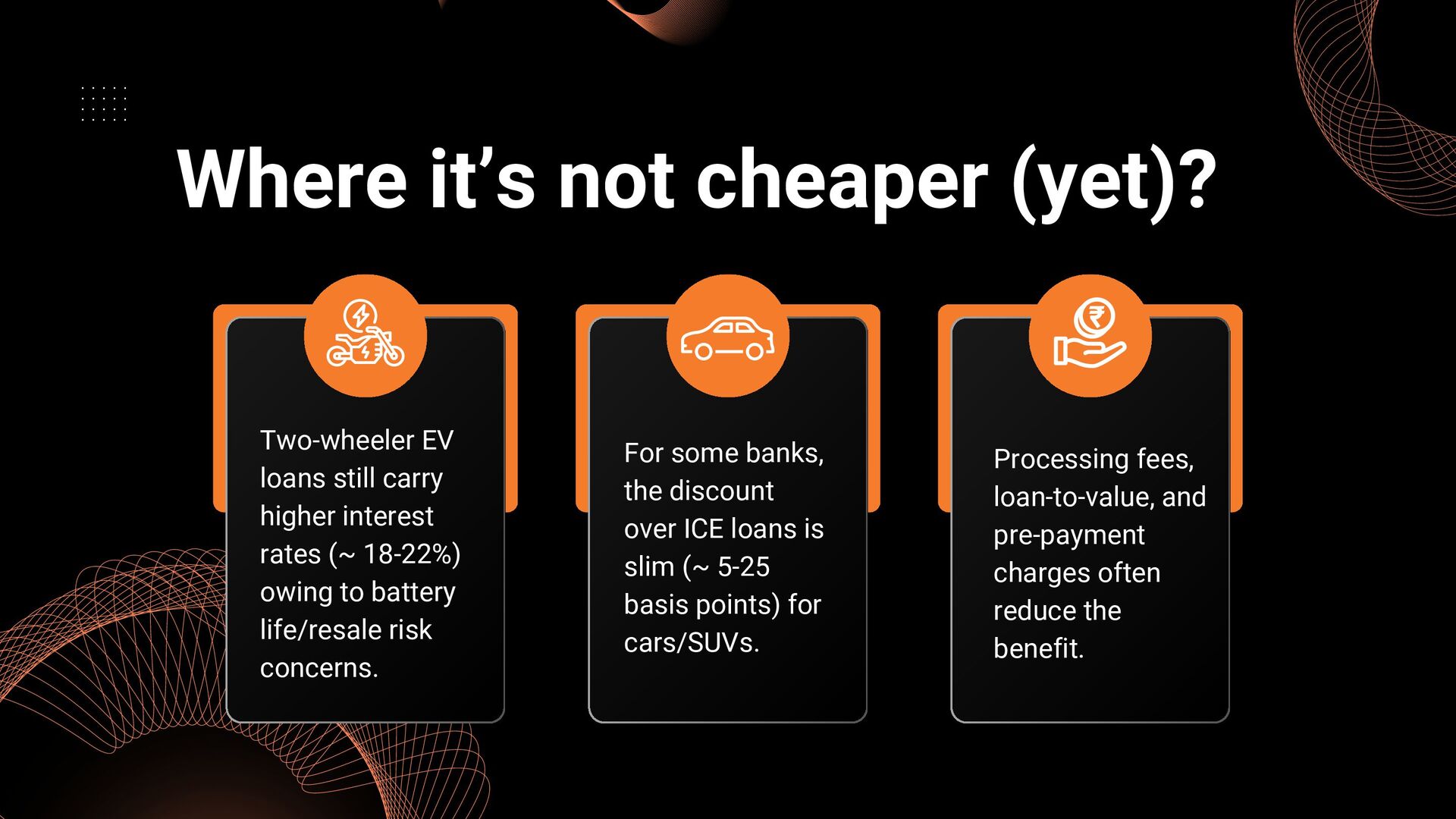
higher interest rates (~ 18-22%) owing to battery life/resale risk concerns. For some banks, the discount over ICE loans is slim (~ 5-25 basis points) for cars/SUVs. Processing fees, loan-to-value, and pre-payment charges often reduce the benefit.
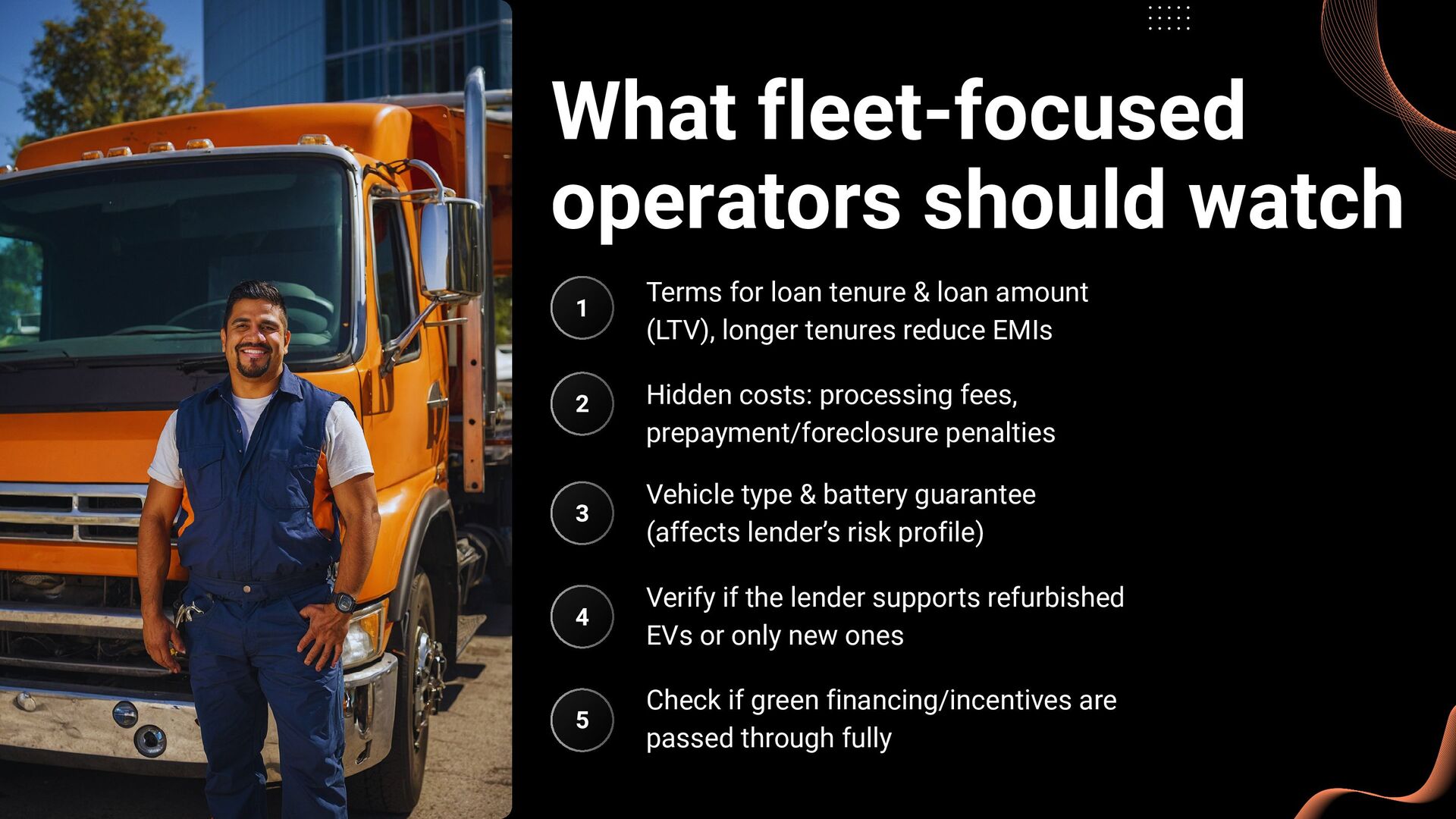
Terms for loan tenure & loan amount (LTV), longer tenures reduce EMIs Hidden costs: processing fees, prepayment/foreclosure penalties Vehicle type & battery guarantee (affects lender’s risk profile) Verify if the lender supports refurbished EVs or only new ones Check if green financing/incentives are passed through fully
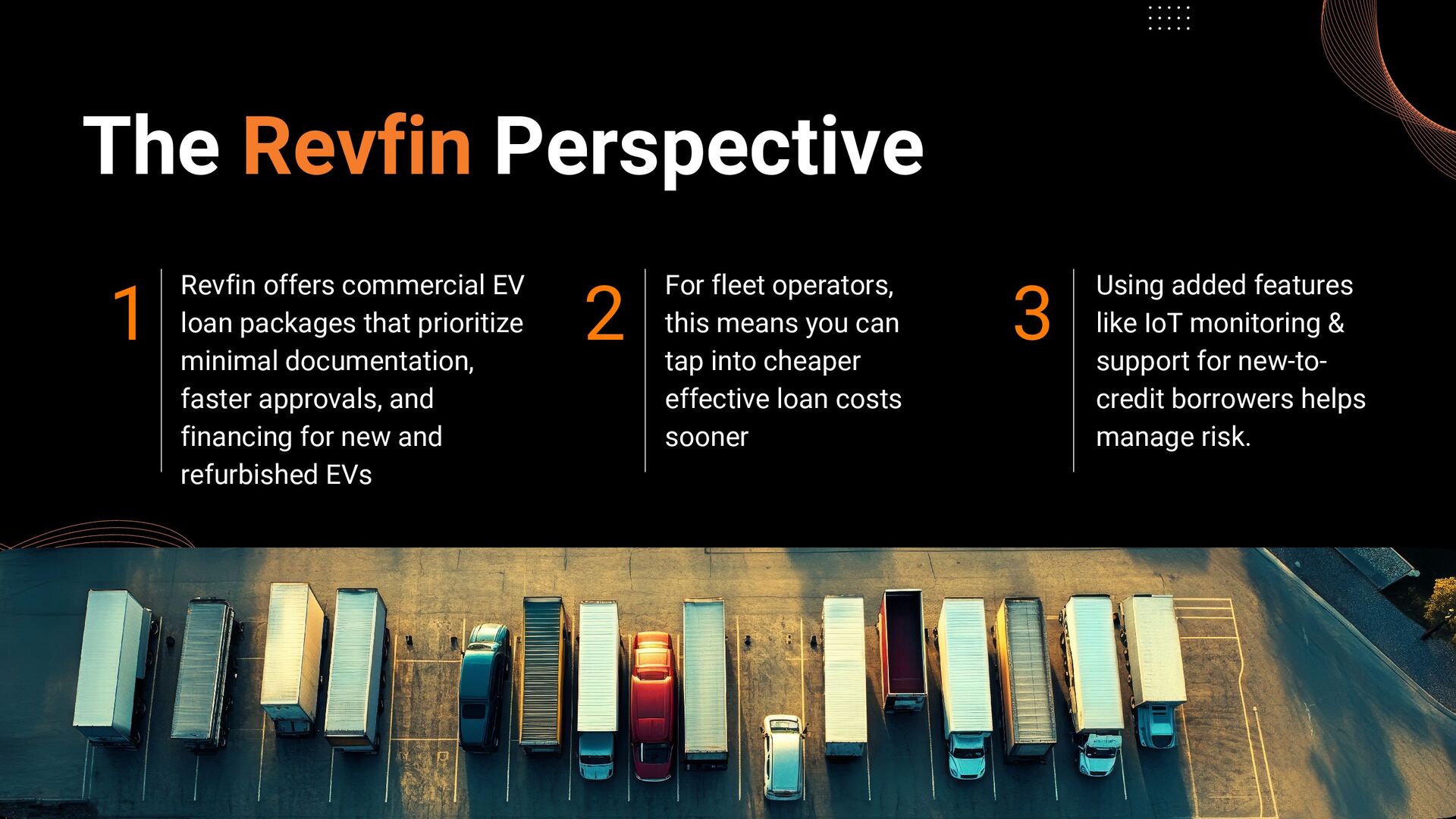
prioritize minimal documentation, faster approvals, and financing for new and refurbished EVs For fleet operators, this means you can tap into cheaper effective loan costs sooner Using added features like IoT monitoring & support for new-to- credit borrowers helps manage risk. 2 3 1
are getting cheaper in 2025, especially for 4W, LCVs, cars, but not universally (2W still lagging) Expect continued moderation of rates as policy & competition intensify Fleets that move early and choose lenders who absorb incentives + offer flexible terms will benefit the most
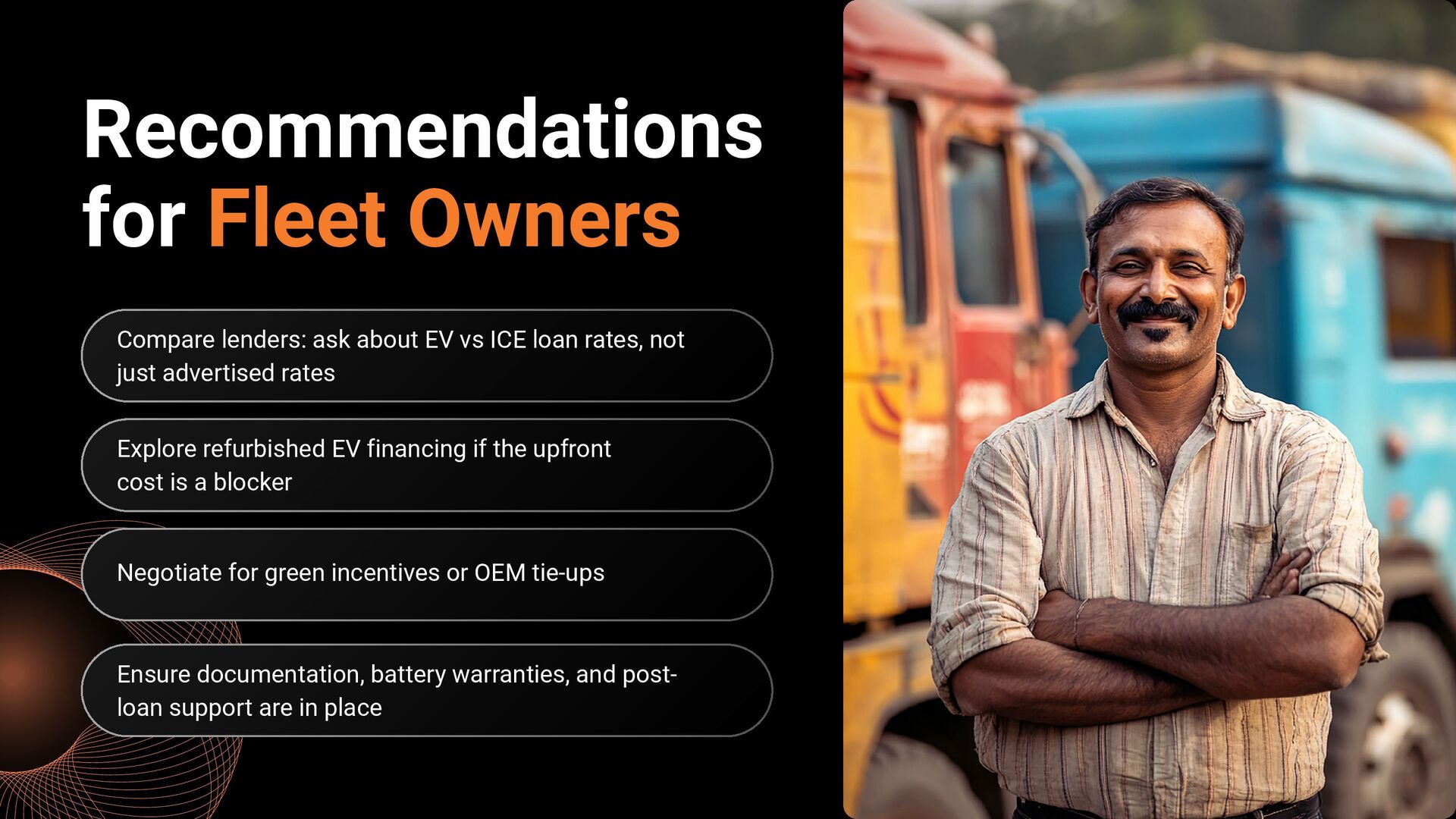
ICE loan rates, not just advertised rates Negotiate for green incentives or OEM tie-ups Explore refurbished EV financing if the upfront cost is a blocker Ensure documentation, battery warranties, and post- loan support are in place
Revfin today, they specialise in commercial electric vehicle loans with minimal paperwork, OEM partnerships, support for new-to-credit operators, and refurbished vehicle options.


 revfin
 uxyall
 jonyablonski
 skipperchong
 jonoalderson
 pauljervisheath
 dougneiner
 zakiyama
 lara
lara
 geoffreycrofte
 seathinner
 tammyeverts
 carmenintech
![[email protected] or www.revfin.in Want better commercial EV loan options? Contact](https://files.speakerdeck.com/presentations/c9ef771cd75b48ef96f39f82c58ae407/slide_8.jpg)