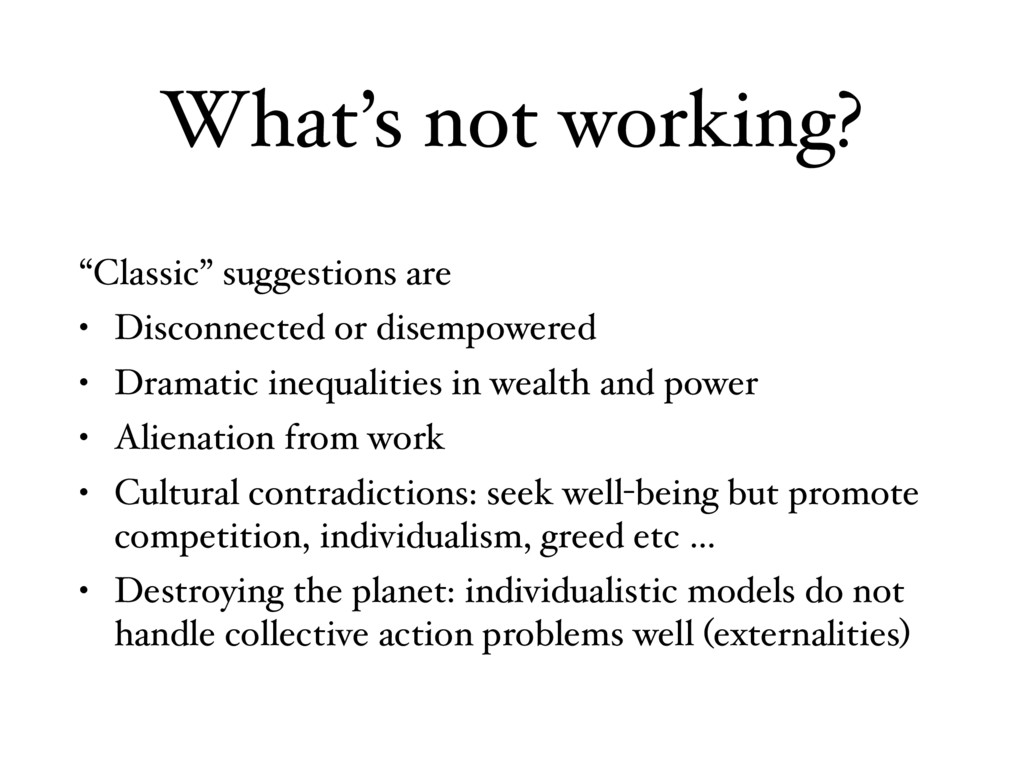
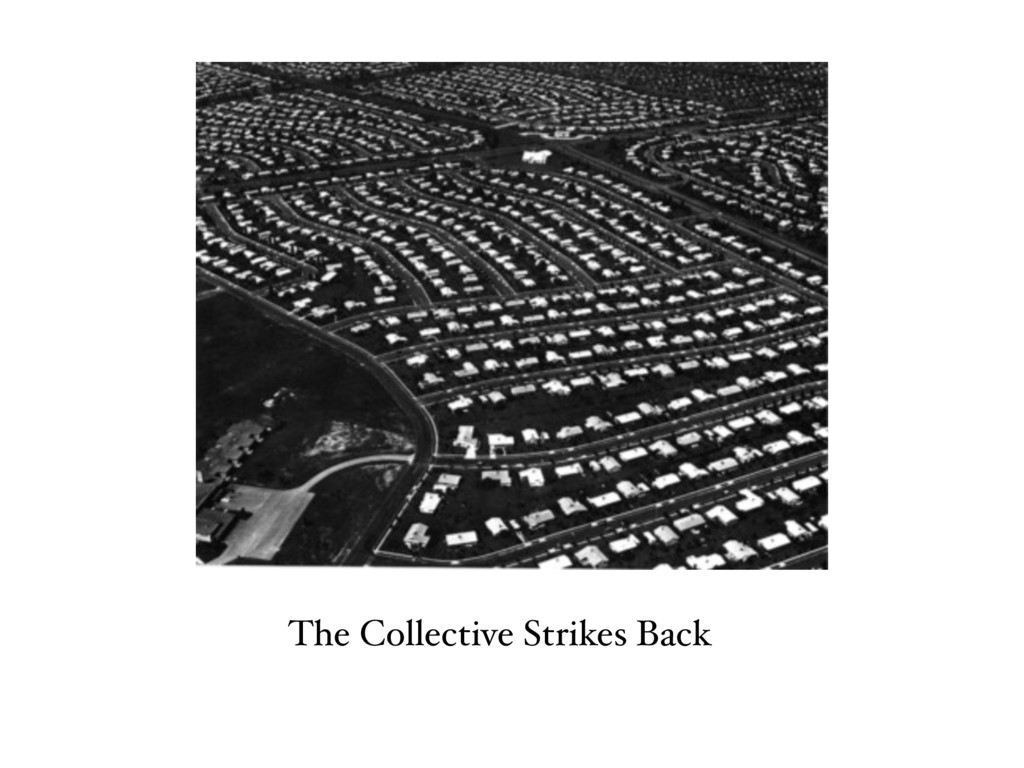
• Dramatic inequalities in wealth and power • Alienation from work • Cultural contradictions: seek well-being but promote competition, individualism, greed etc … • Destroying the planet: individualistic models do not handle collective action problems well (externalities)
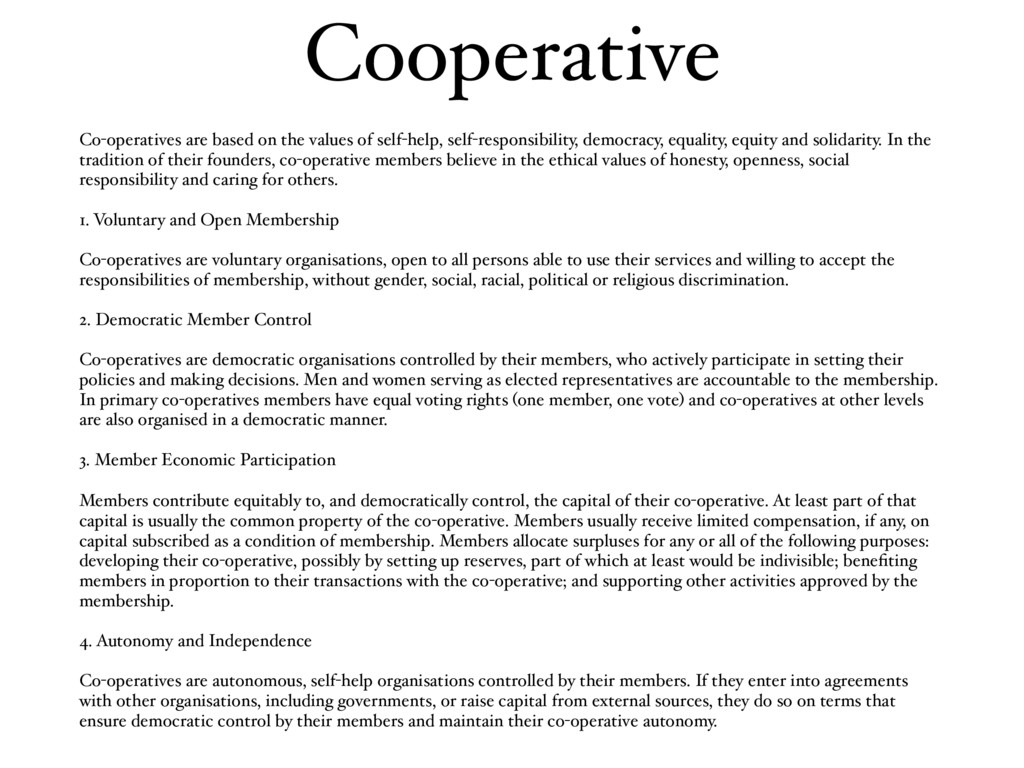
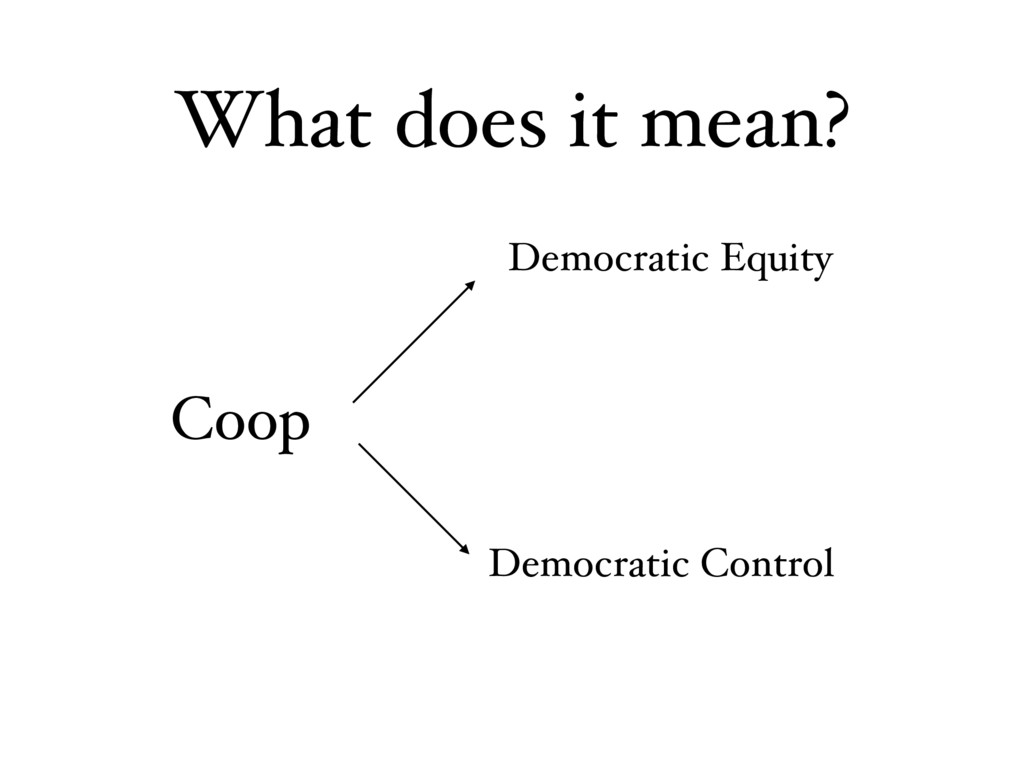
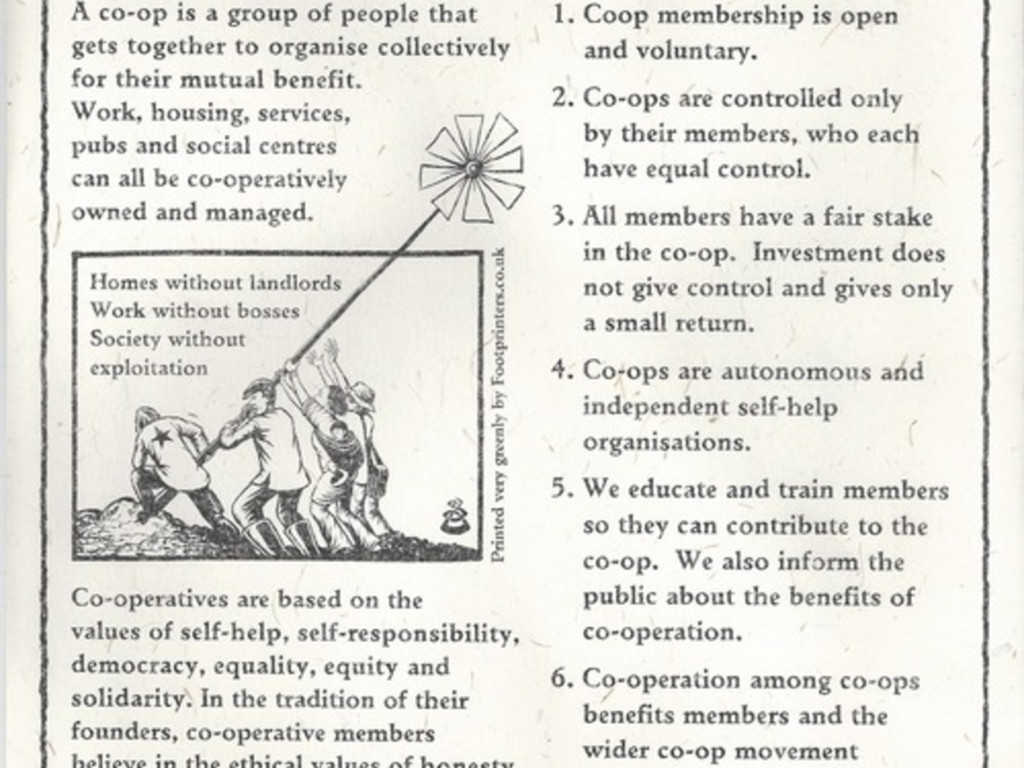
democracy, equality, equity and solidarity. In the tradition of their founders, co-operative members believe in the ethical values of honesty, openness, social responsibility and caring for others. 1. Voluntary and Open Membership Co-operatives are voluntary organisations, open to all persons able to use their services and willing to accept the responsibilities of membership, without gender, social, racial, political or religious discrimination. 2. Democratic Member Control Co-operatives are democratic organisations controlled by their members, who actively participate in setting their policies and making decisions. Men and women serving as elected representatives are accountable to the membership. In primary co-operatives members have equal voting rights (one member, one vote) and co-operatives at other levels are also organised in a democratic manner. 3. Member Economic Participation Members contribute equitably to, and democratically control, the capital of their co-operative. At least part of that capital is usually the common property of the co-operative. Members usually receive limited compensation, if any, on capital subscribed as a condition of membership. Members allocate surpluses for any or all of the following purposes: developing their co-operative, possibly by setting up reserves, part of which at least would be indivisible; benefiting members in proportion to their transactions with the co-operative; and supporting other activities approved by the membership. 4. Autonomy and Independence Co-operatives are autonomous, self-help organisations controlled by their members. If they enter into agreements with other organisations, including governments, or raise capital from external sources, they do so on terms that ensure democratic control by their members and maintain their co-operative autonomy.
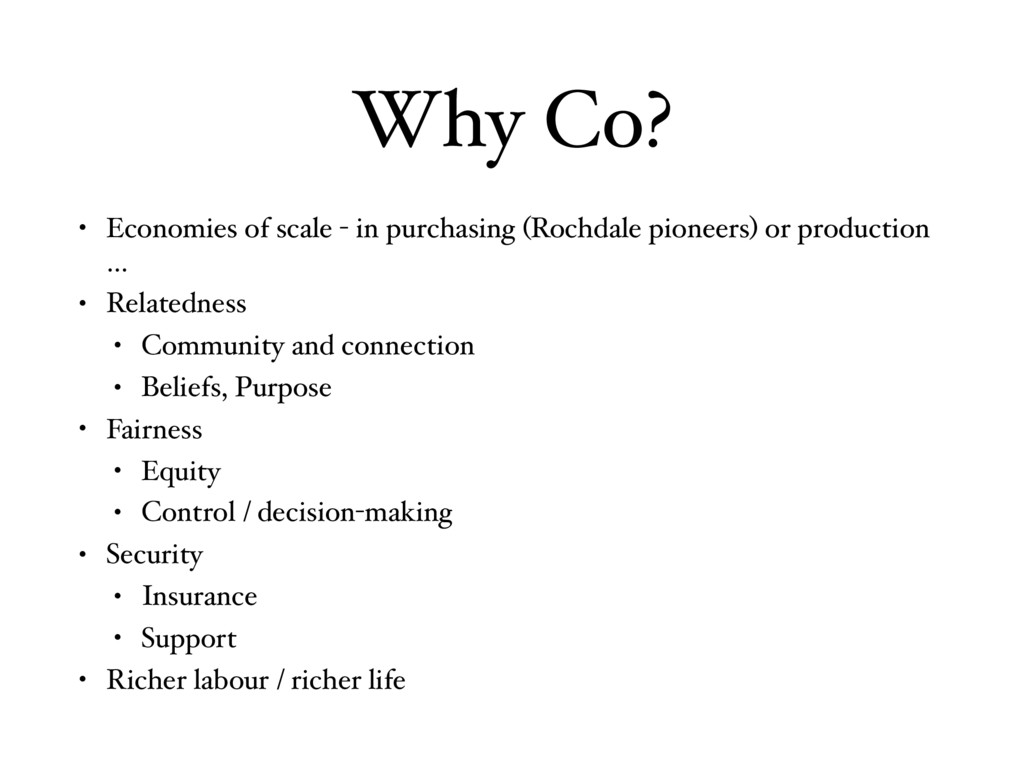
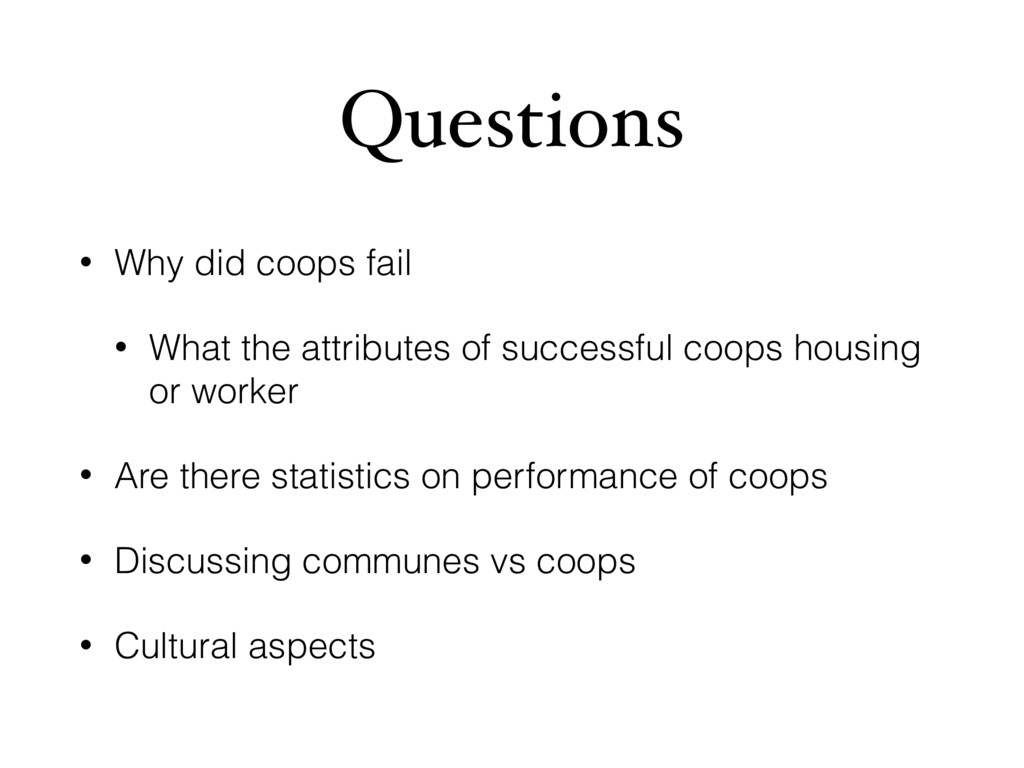
pioneers) or production … • Relatedness • Community and connection • Beliefs, Purpose • Fairness • Equity • Control / decision-making • Security • Insurance • Support • Richer labour / richer life
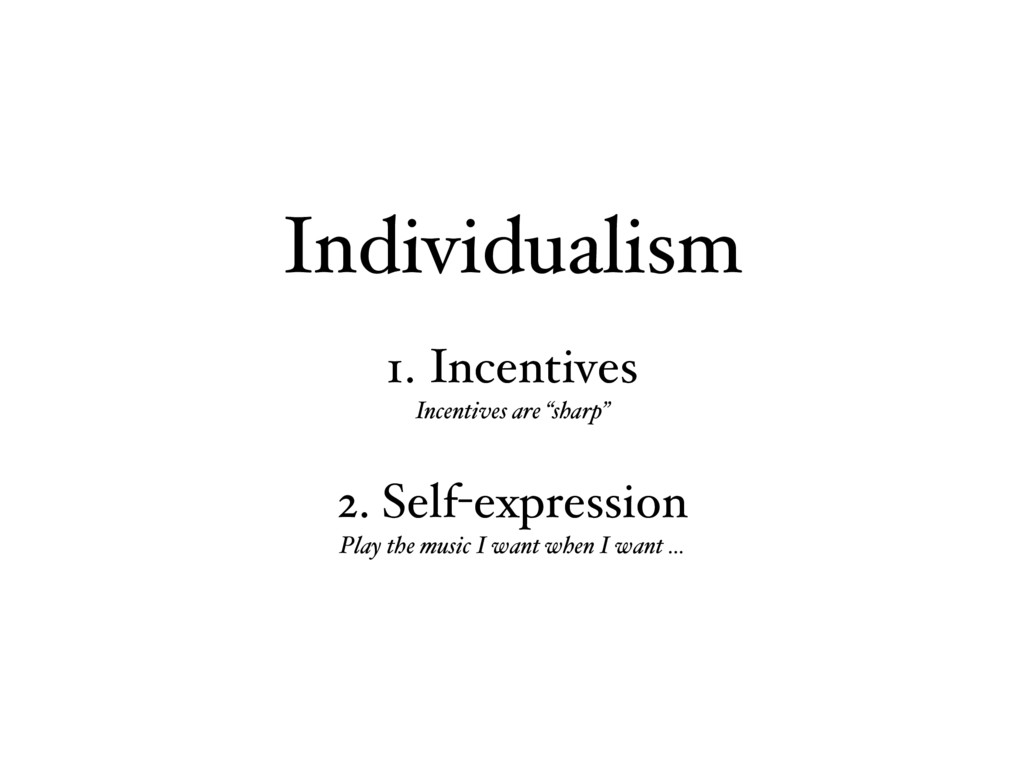
effort or productivity? How do you handle “shirking” - both detection and management Collective action problems & tragedy of the commons - no-one does the washing up 2. Preference Alignment We may want different levels of tidiness? How much risk should we take on in our business?
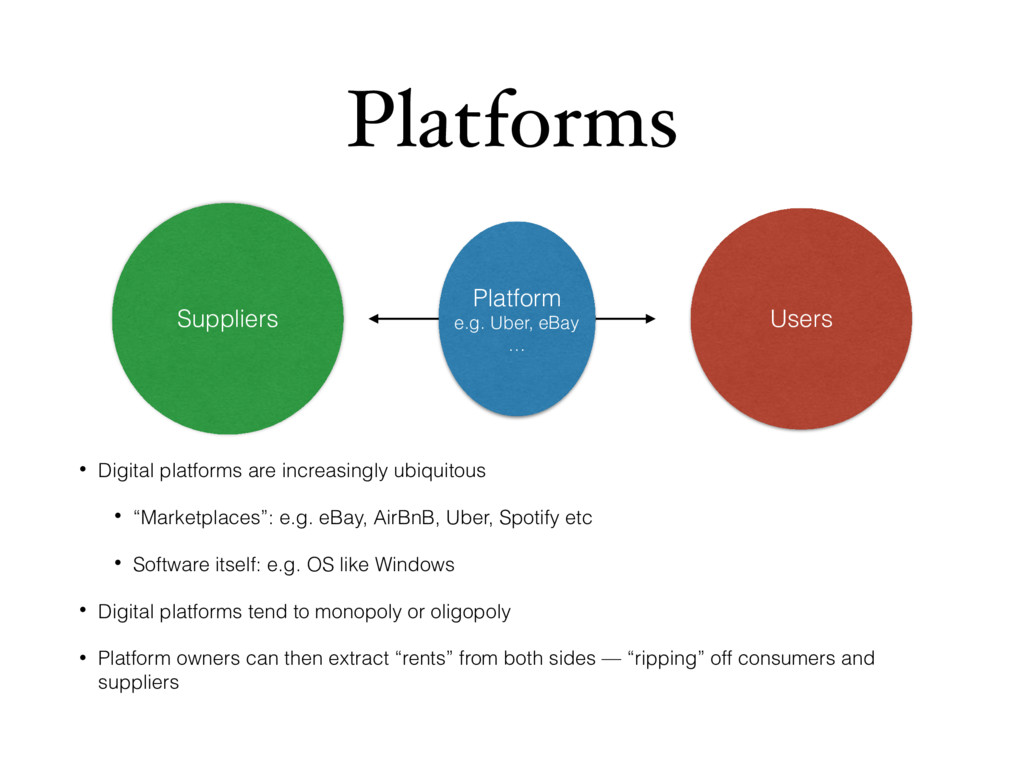
platforms are increasingly ubiquitous • “Marketplaces”: e.g. eBay, AirBnB, Uber, Spotify etc • Software itself: e.g. OS like Windows • Digital platforms tend to monopoly or oligopoly • Platform owners can then extract “rents” from both sides — “ripping” off consumers and suppliers
… but my best guess is: “Cooperative ownership of a digital (online?) platform” • Coop model: platform owned by participants • But which participants? Suppliers or users or both? • Incentive issues • Who puts up the fixed costs? • Open vs coops • Open is an implicit coop of all users - everyone has free access! • Problem of free-riding though
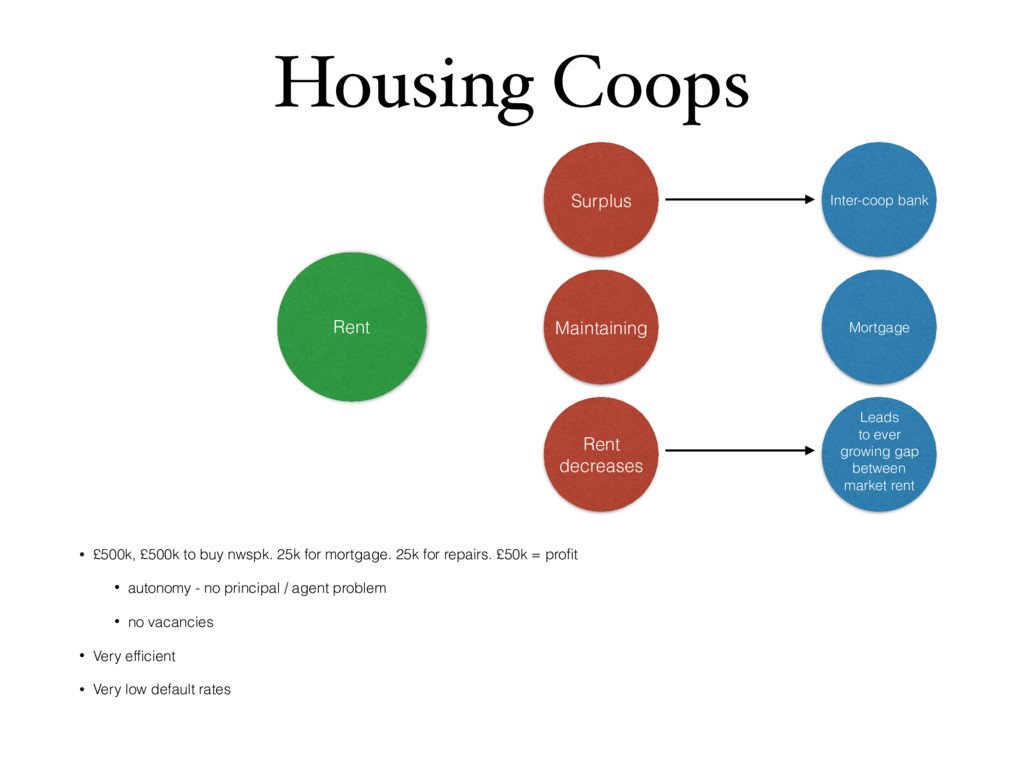
25k for mortgage. 25k for repairs. £50k = profit • autonomy - no principal / agent problem • no vacancies • Very efficient • Very low default rates Rent decreases Leads to ever growing gap between market rent Inter-coop bank Mortgage Maintaining


 rufuspollock
 marcduiker
 reverentgeek
 lcolladotor
 bermonpainter
 shpigford
 sferik
 swwweet
 jonrohan
 greggifford
 orderedlist
 inesmontani
 pauljervisheath