Upgrade to Pro — share decks privately, control downloads, hide ads and more …

Firebase Authentication and Android

Sponsored · Ship Features Fearlessly Turn features on and off without deploys. Used by thousands of Ruby developers.

Firebase Authentication and Android

Avatar for RuslanKuziak

RuslanKuziak

January 24, 2018
Tweet

Other Decks in Programming

Transcript

  1. What is Firebase Auth? • Firebase Authentication - 1/3 core

    services (realtime database, auth, hosting) of Firebase, Inc. platform • Provides backend services, easy-to-use SDKs, and ready-made UI libraries to authenticate users to your app* • Supports authentication using passwords, phone numbers, popular federated identity providers like Google, Facebook and Twitter, and more* * taken from https://firebase.google.com/docs/auth
  2. Main features • Multiple Providers (Google Sign-In, Facebook, Twitter etc.)

    • Account Management (account creation, email verification and password reset) • Account Linking • Custom themes (next slides)
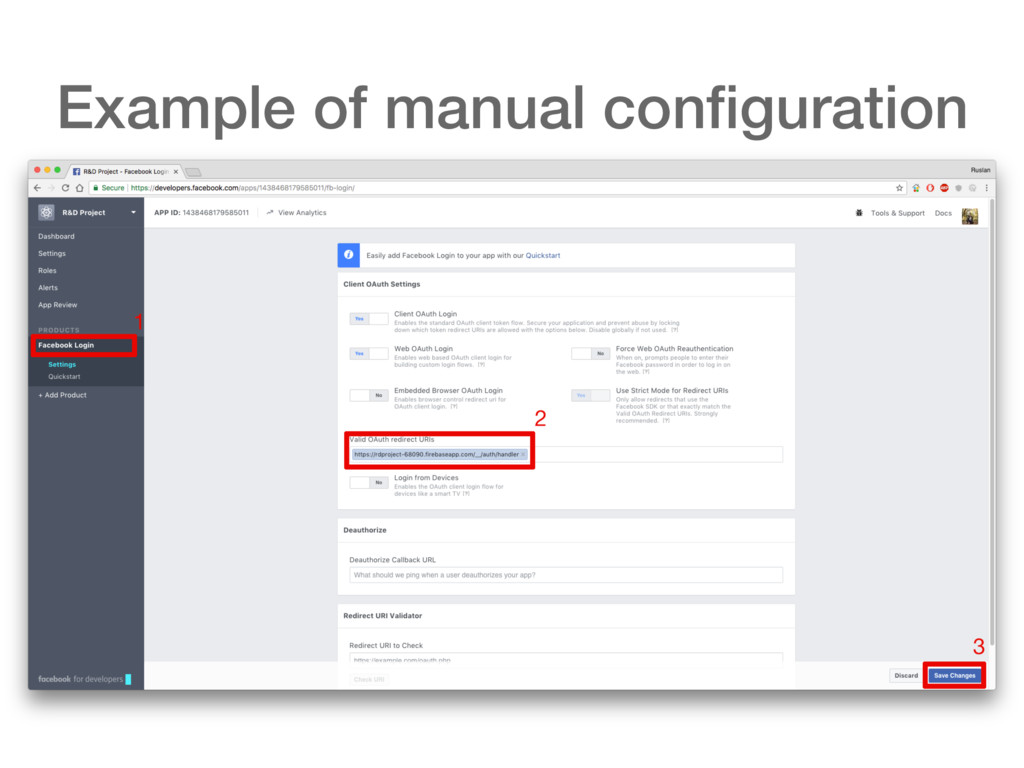
  3. Sign-in providers (1) • Requires configuring of the project manually

    • Facebook (https://developers.facebook.com) • Twitter (https://dev.twitter.com) • GitHub (https://github.com/settings/applications/new)
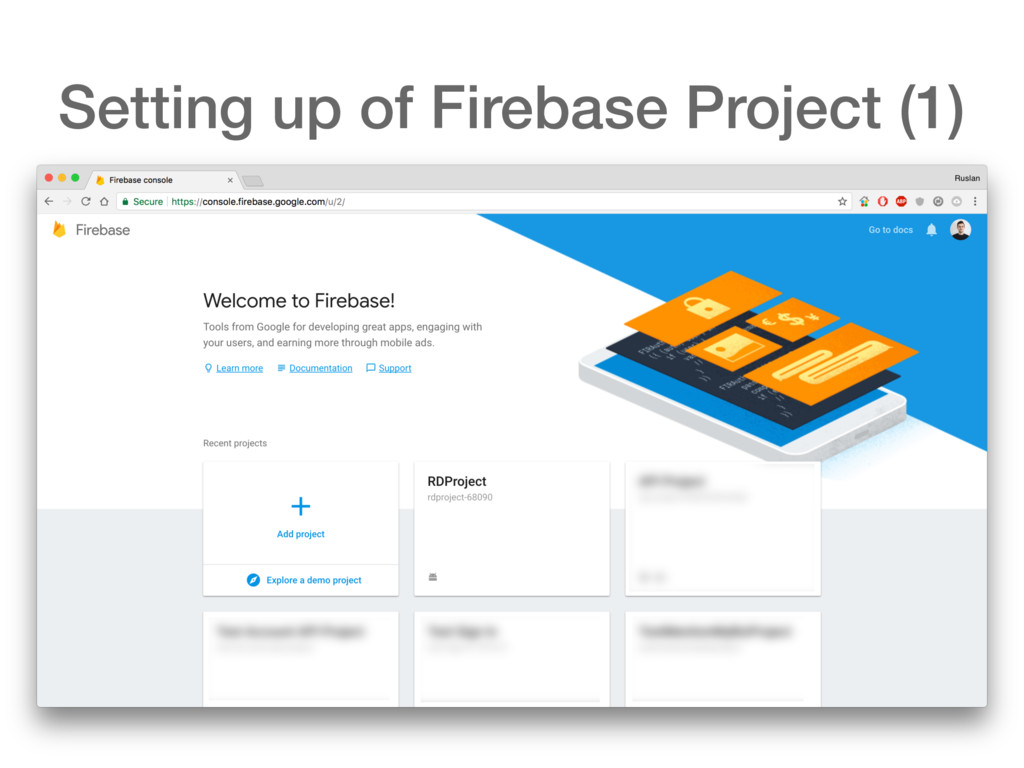
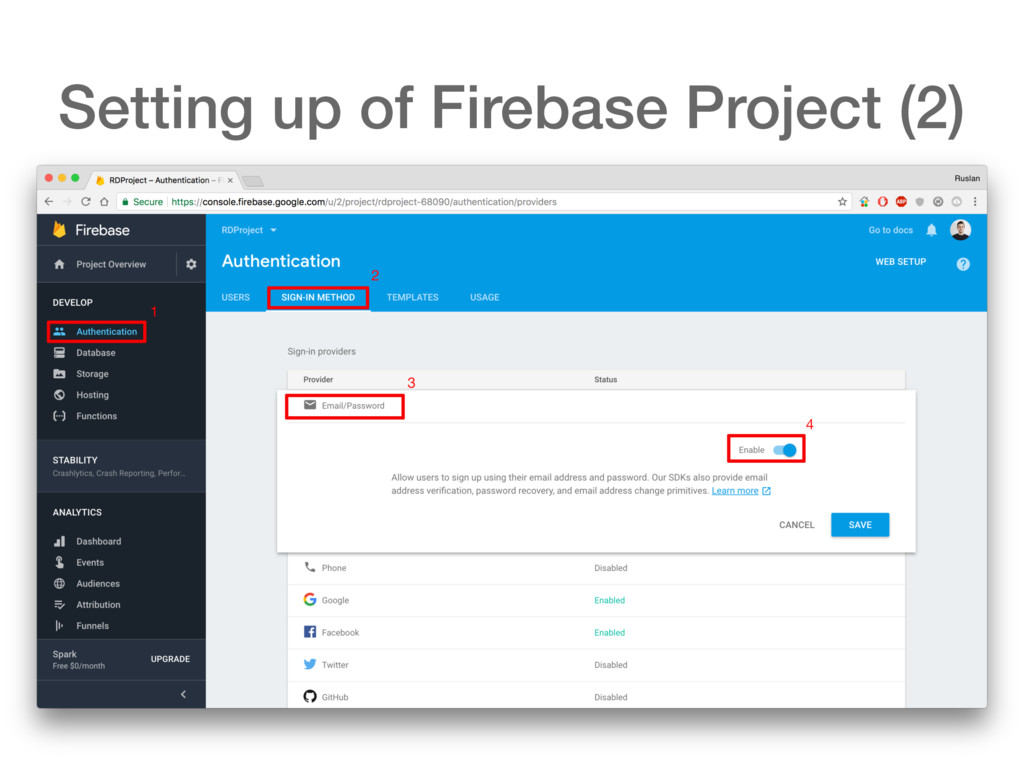
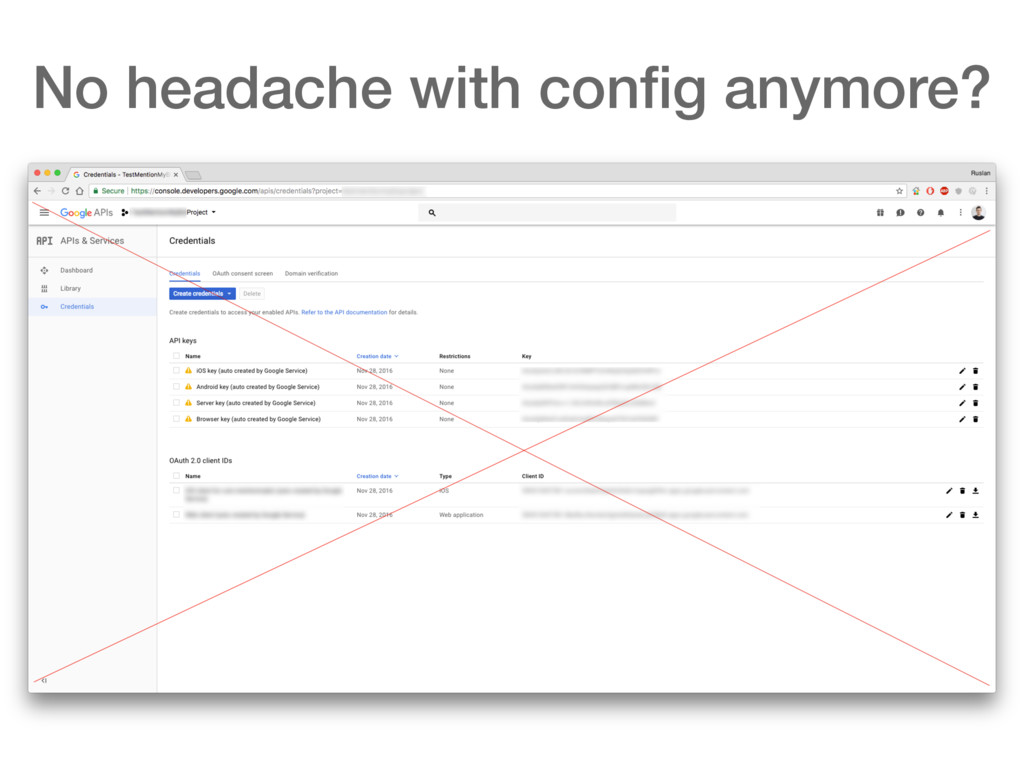
  4. Sign-in providers (2) • Firebase console does all configuration by

    her own • Google Sign-In • Email/Password • Phone • Anonymous
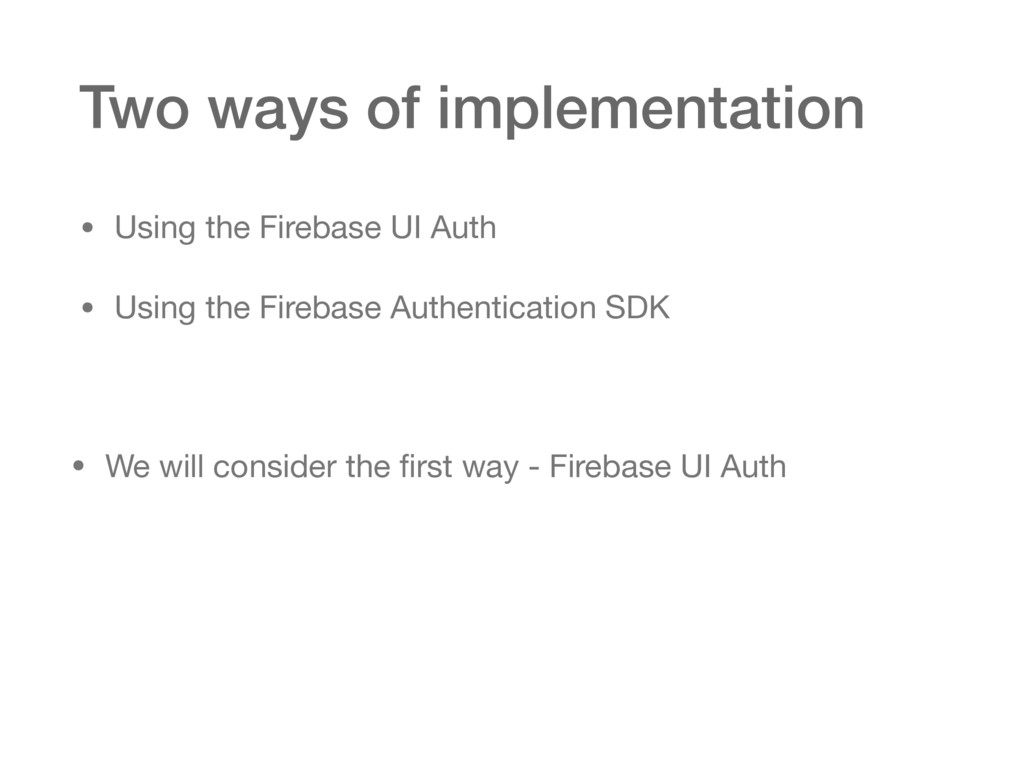
  5. • Using the Firebase UI Auth • Using the Firebase

    Authentication SDK Two ways of implementation • We will consider the first way - Firebase UI Auth
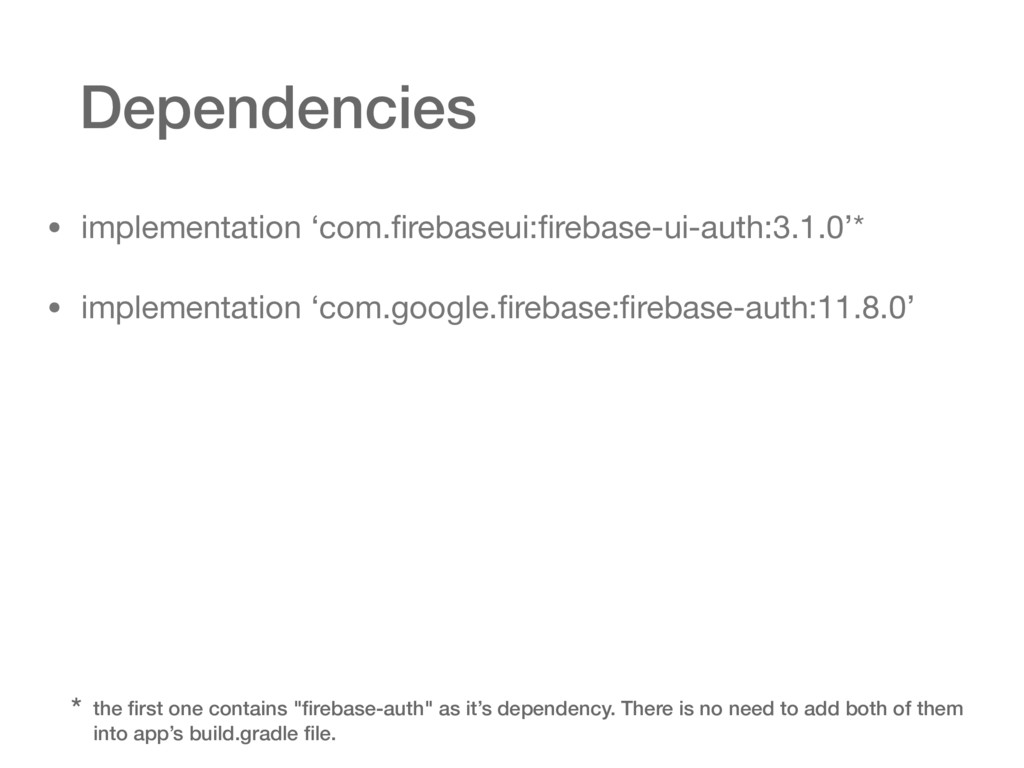
  6. Dependencies • implementation ‘com.firebaseui:firebase-ui-auth:3.1.0’* • implementation ‘com.google.firebase:firebase-auth:11.8.0’ * the first

    one contains "firebase-auth" as it’s dependency. There is no need to add both of them into app’s build.gradle file.
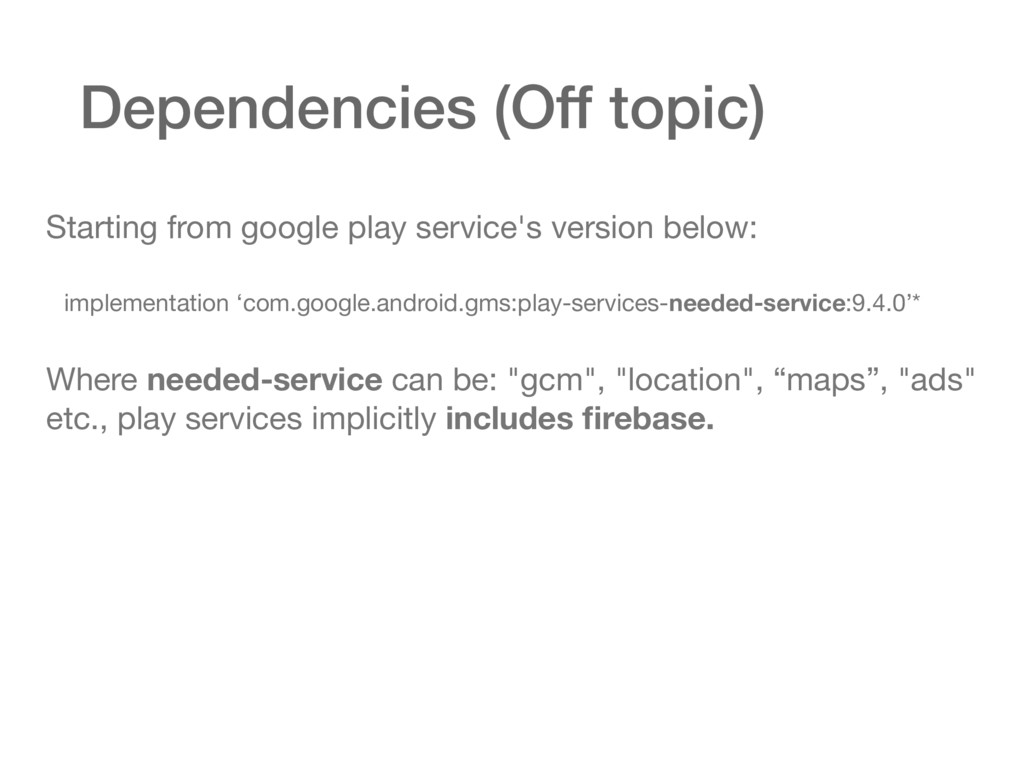
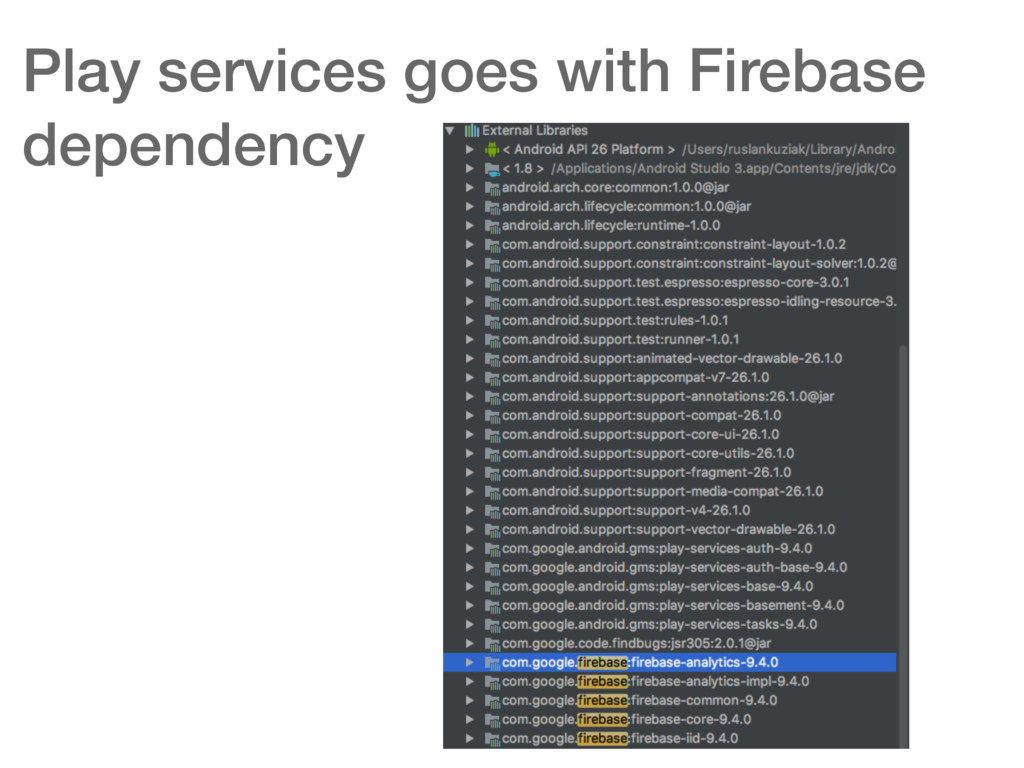
  7. Dependencies (Off topic) Starting from google play service's version below:

    implementation ‘com.google.android.gms:play-services-needed-service:9.4.0’* Where needed-service can be: "gcm", "location", “maps”, "ads" etc., play services implicitly includes firebase.
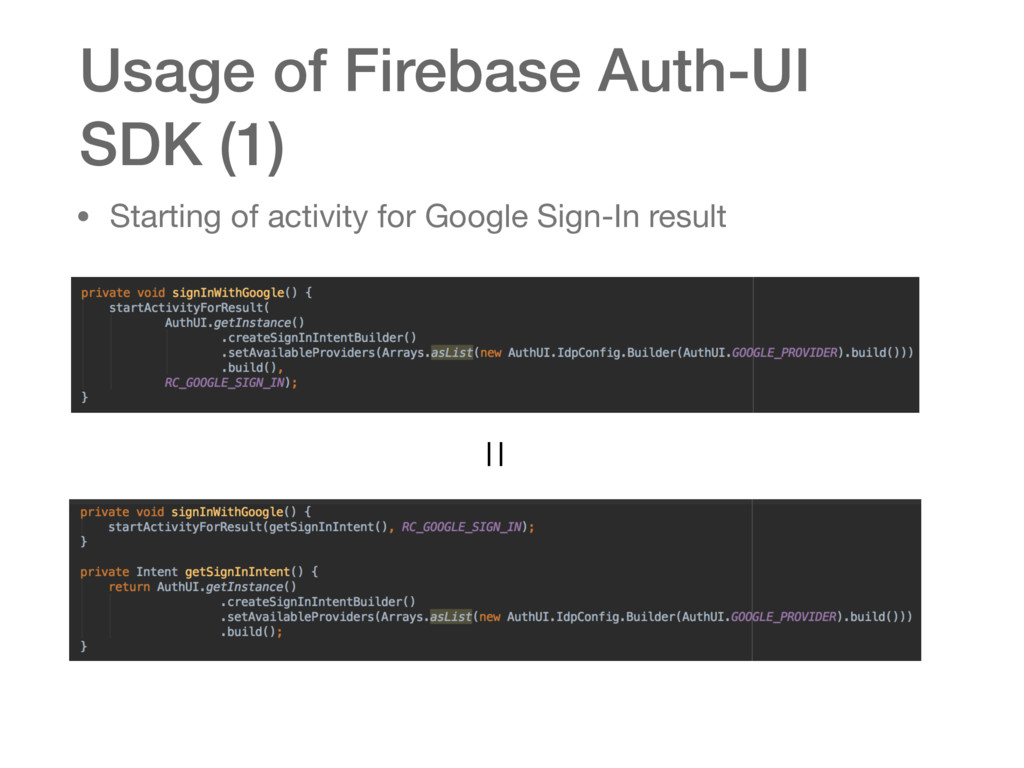
  8. Usage of Firebase Auth-UI SDK (1) | | • Starting

    of activity for Google Sign-In result
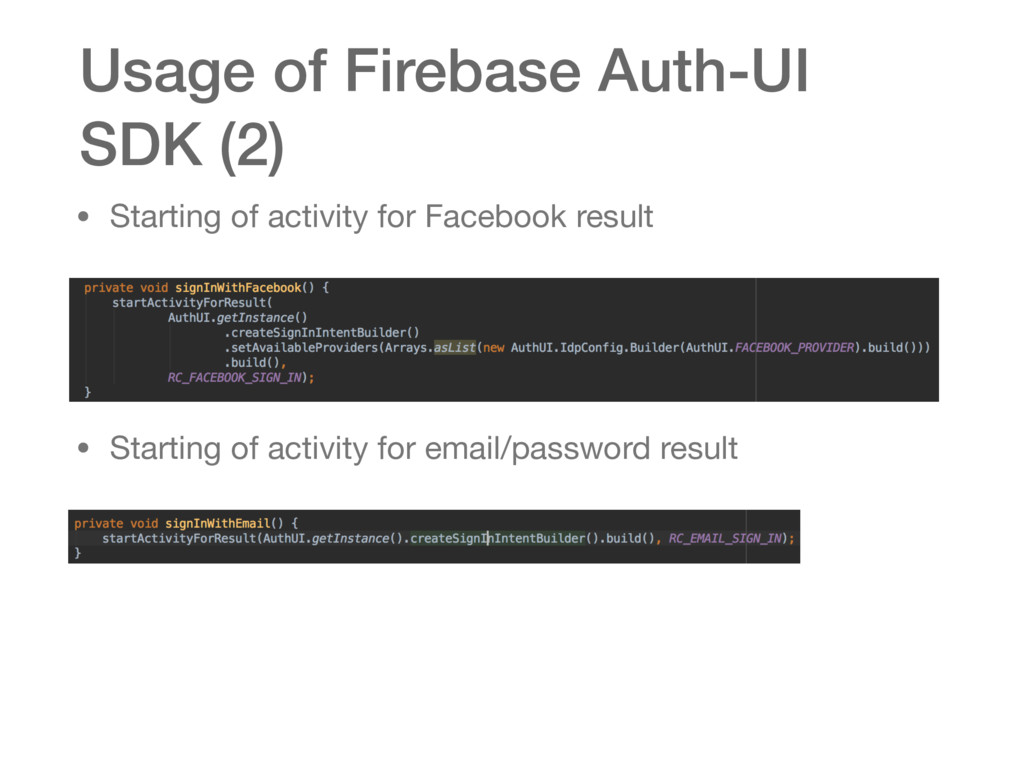
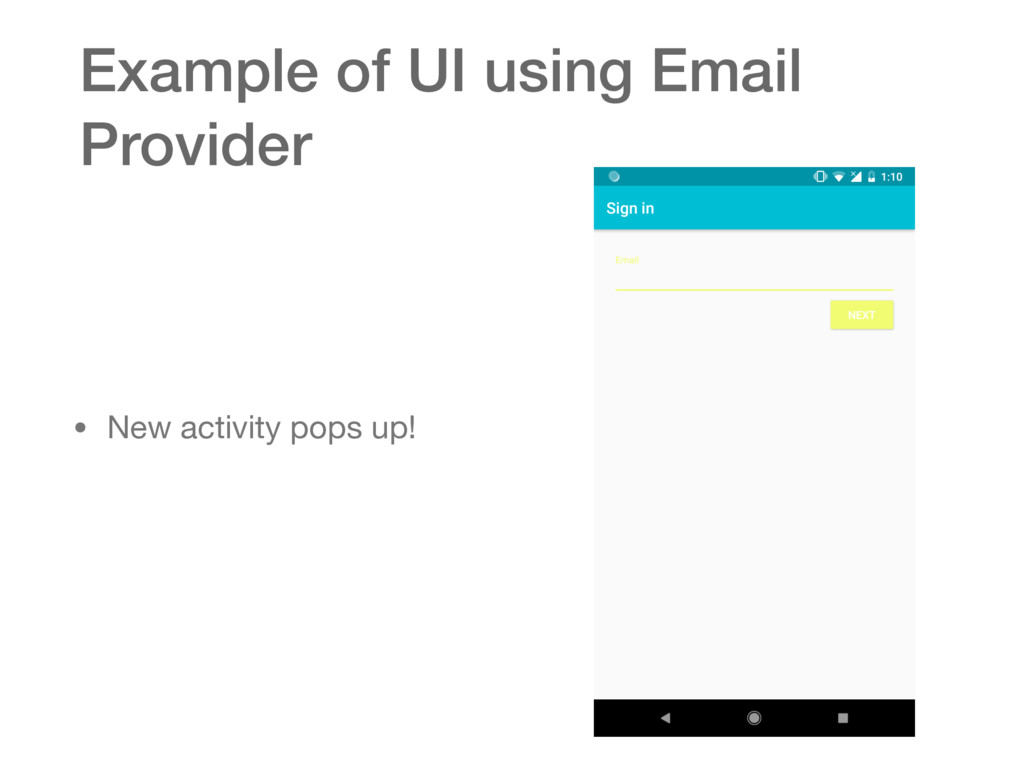
  9. Usage of Firebase Auth-UI SDK (2) • Starting of activity

    for email/password result • Starting of activity for Facebook result
  10. Sign in result • When the sign-in flow is complete

    onActivityResult() will be called
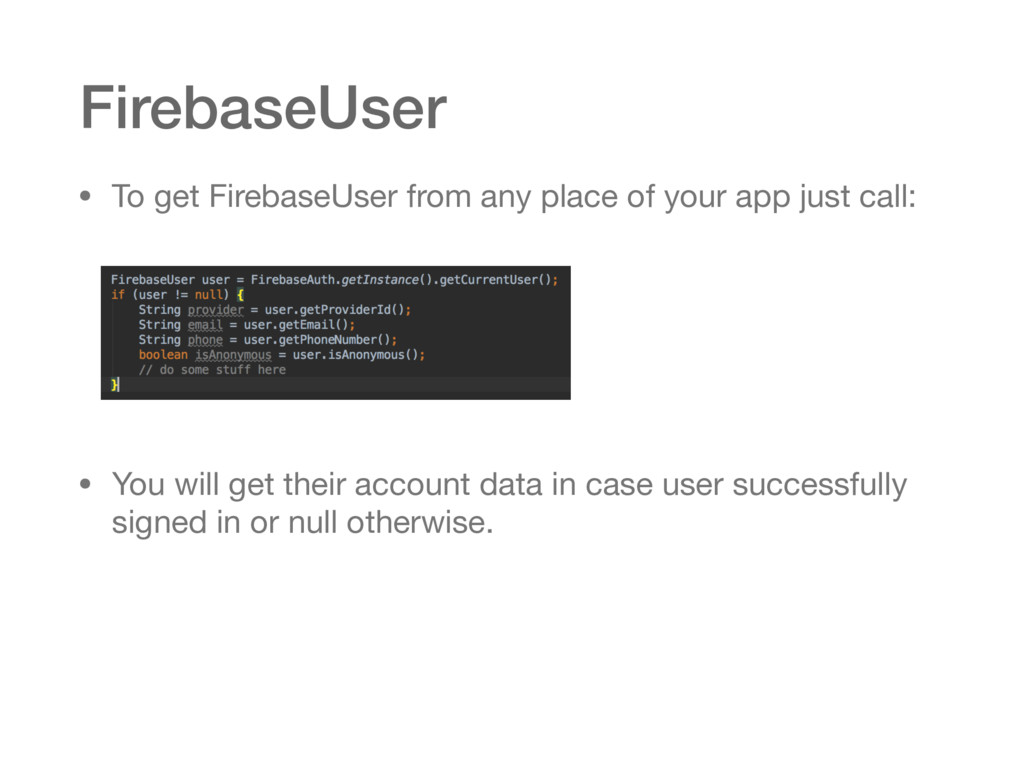
  11. FirebaseUser • To get FirebaseUser from any place of your

    app just call: • You will get their account data in case user successfully signed in or null otherwise.
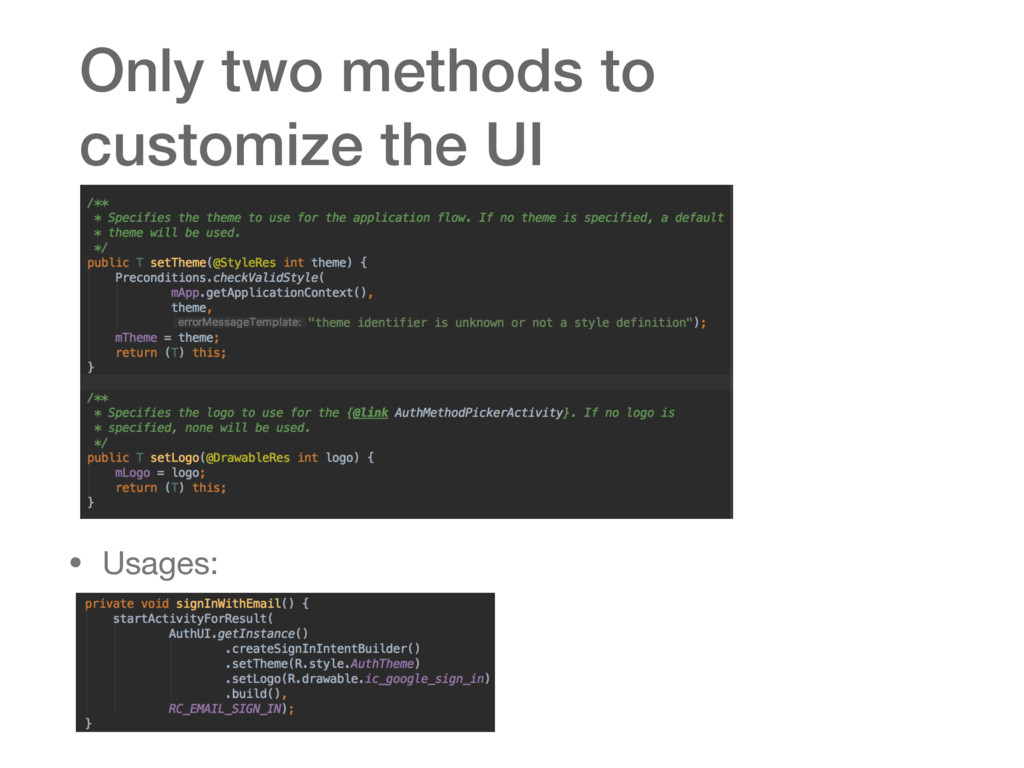
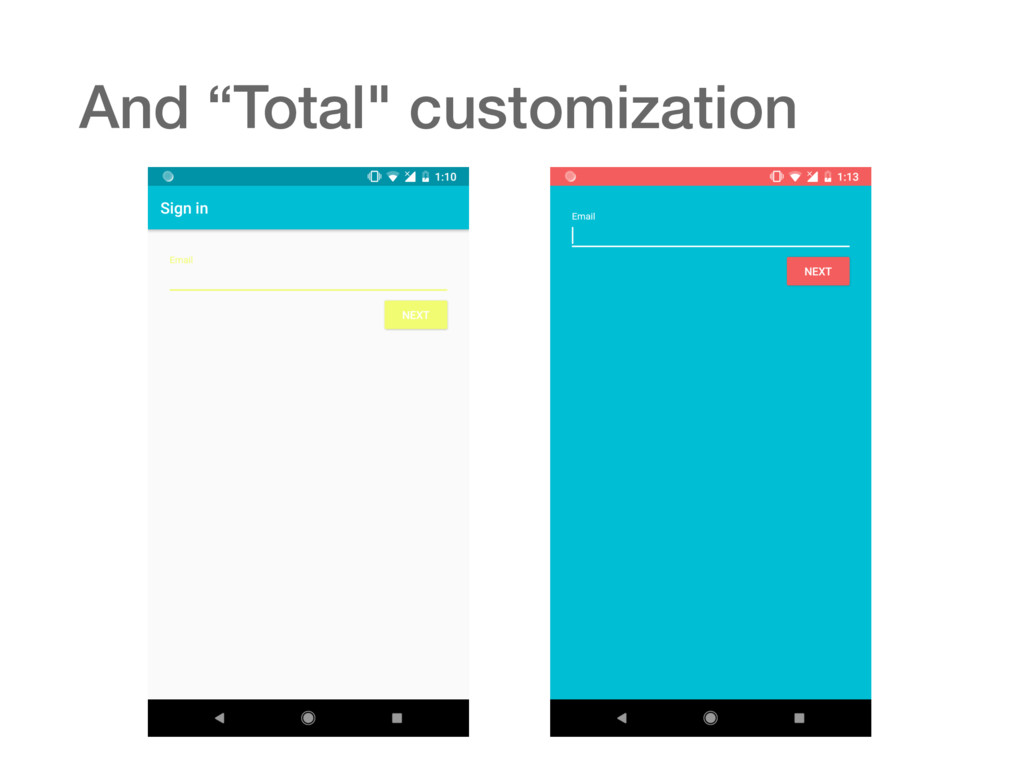
  12. Using of Firebase Auth UI approach for the programmer seems

    quite easy BUT • What about UI? How it looks like for the user? Is it easy- customizable? spoiler: It isn’t!
  13. What Firebase doc says about customization of UI? • And

    it’s phenomenally! • Custom Themes - customize the look of FirebaseUI to match your app. Also, because FirebaseUI is open source, you can fork the project and customize it exactly to your needs.
  14. References • R&D Project - https://github.com/RuslanKuziak/r-and-d- project • https://firebase.google.com/docs/auth •

    https://firebase.google.com/docs/auth/android/ firebaseui • https://firebase.google.com/docs/auth/android/ manage-users