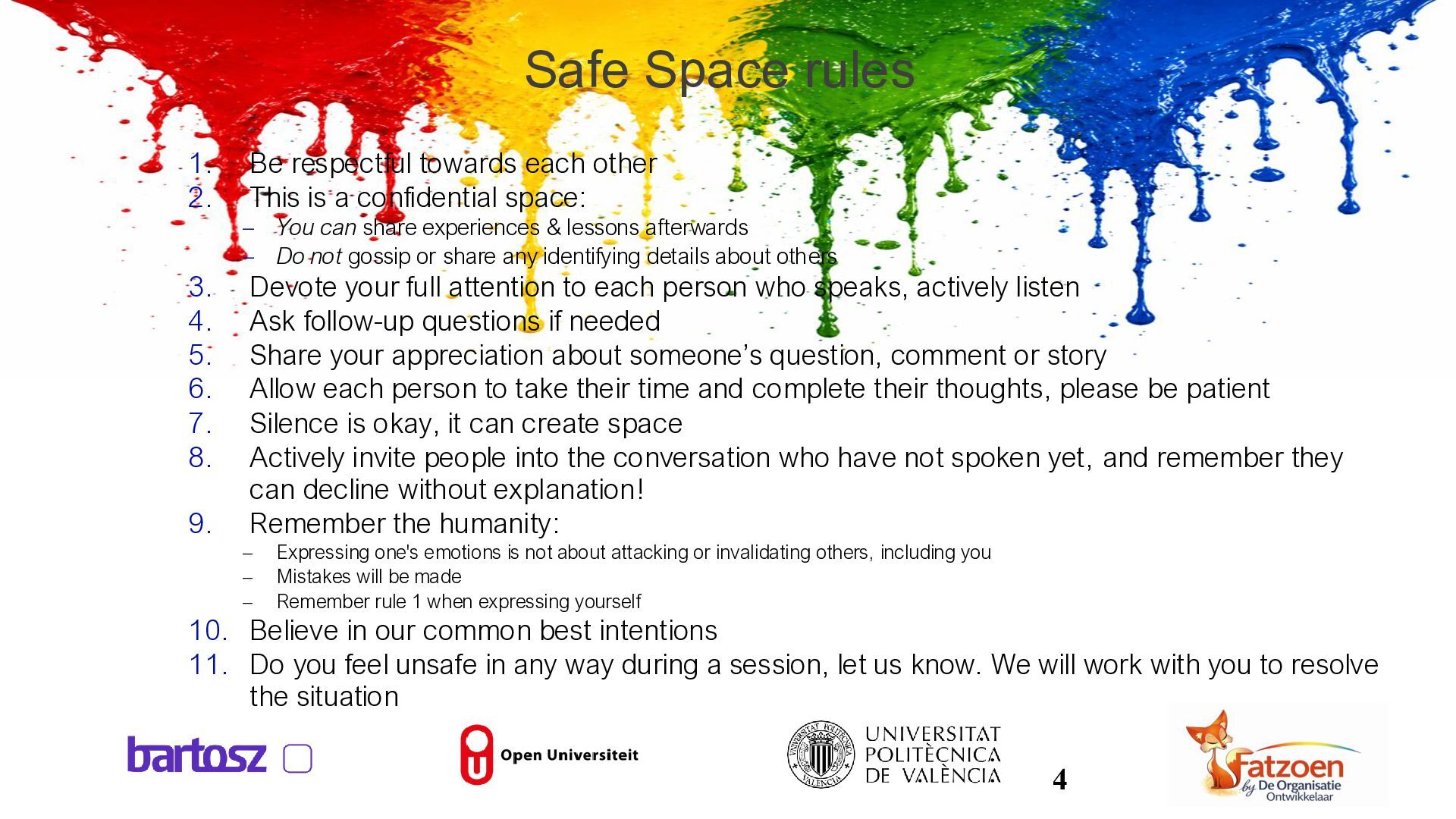
This is a confidential space: – You can share experiences & lessons afterwards – Do not gossip or share any identifying details about others 3. Devote your full attention to each person who speaks, actively listen 4. Ask follow-up questions if needed 5. Share your appreciation about someone’s question, comment or story 6. Allow each person to take their time and complete their thoughts, please be patient 7. Silence is okay, it can create space 8. Actively invite people into the conversation who have not spoken yet, and remember they can decline without explanation! 9. Remember the humanity: – Expressing one's emotions is not about attacking or invalidating others, including you – Mistakes will be made – Remember rule 1 when expressing yourself 10. Believe in our common best intentions 11. Do you feel unsafe in any way during a session, let us know. We will work with you to resolve the situation 4
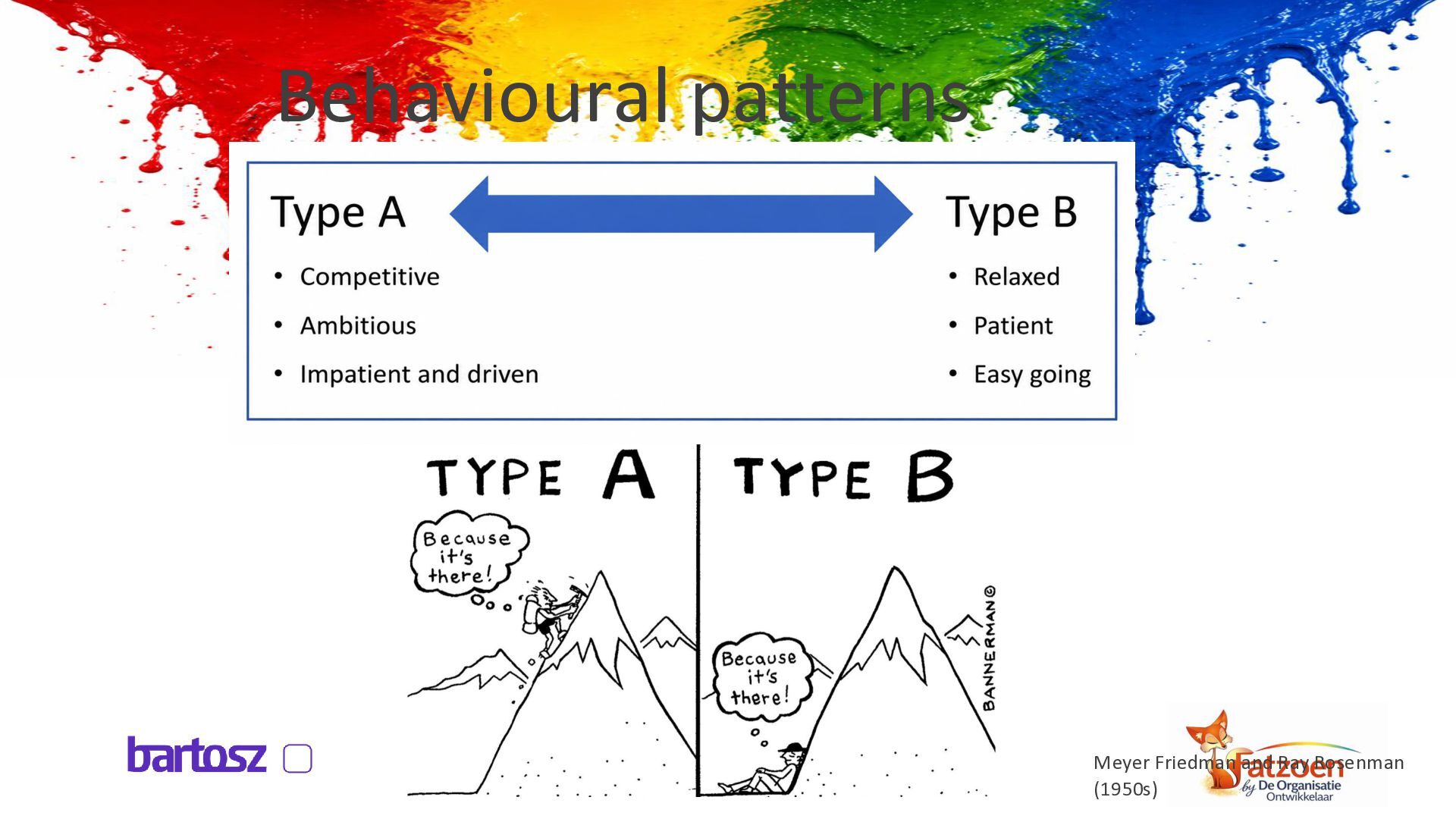
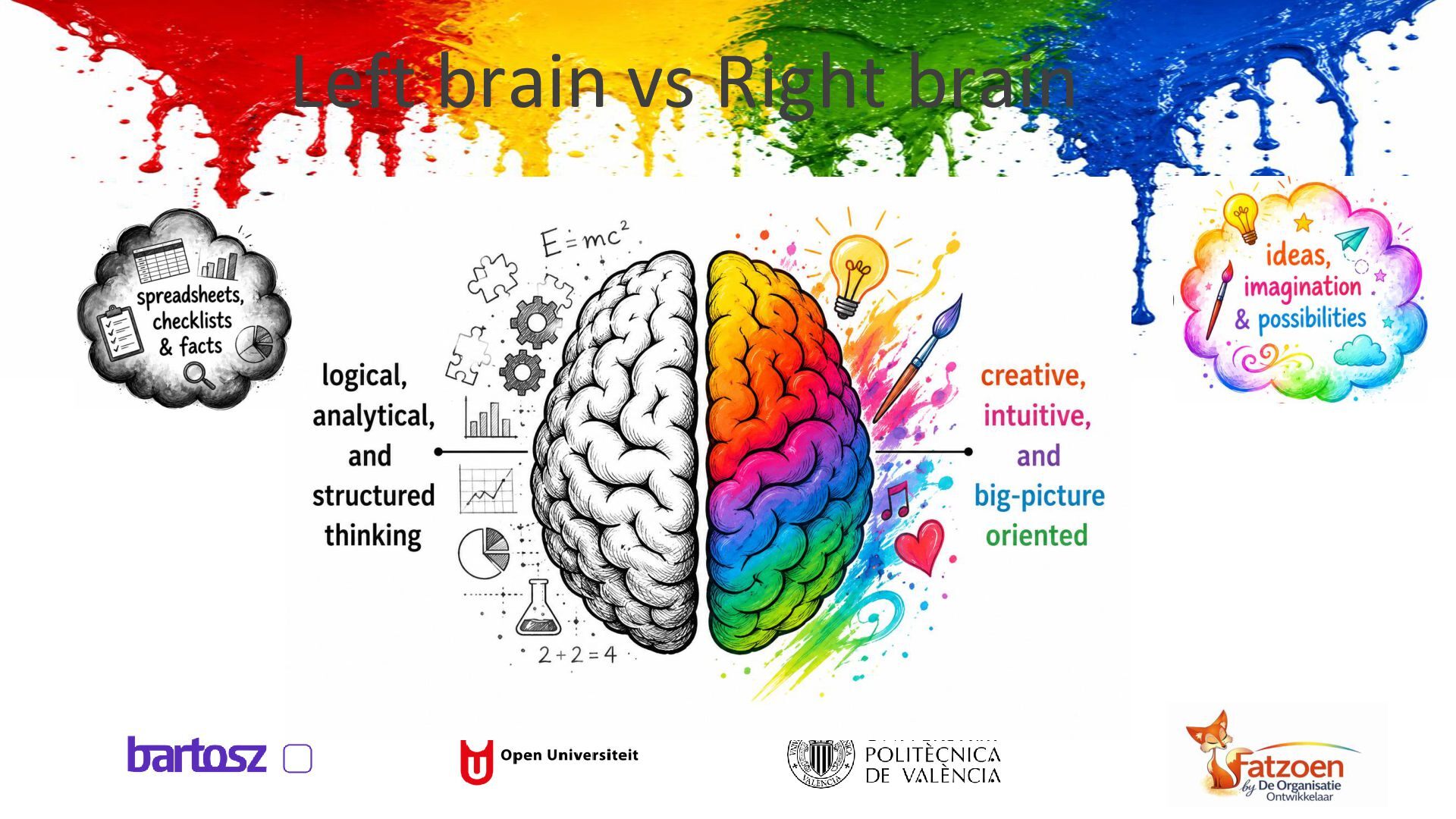
trying to understand human behavior • There are models with 2 types till 16 types • Type A vs Type B • Left brain vs Right brain • Myer Briggs Type Indicator (MBTI)
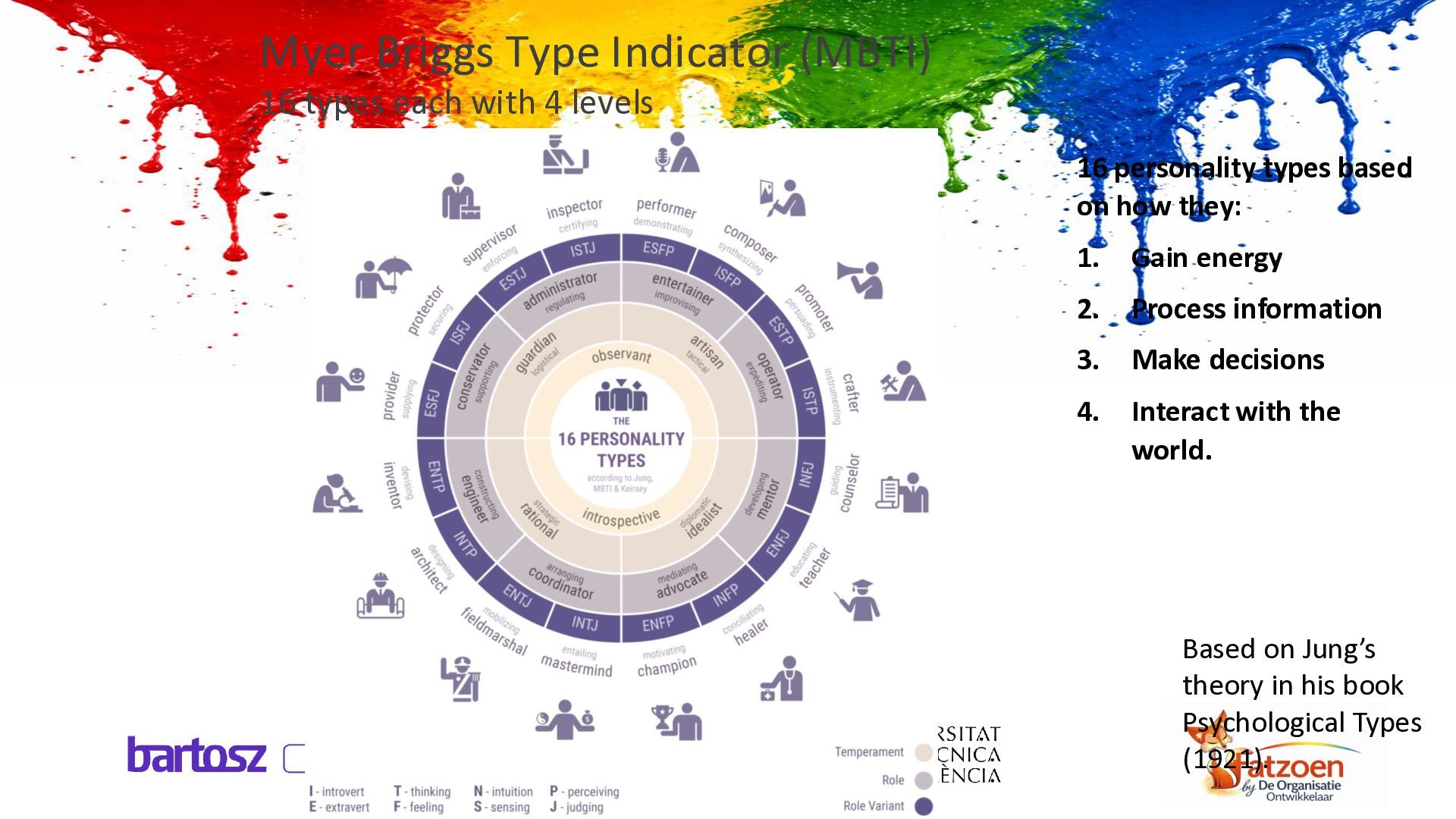
levels Based on Jung’s theory in his book Psychological Types (1921). 16 personality types based on how they: 1. Gain energy 2. Process information 3. Make decisions 4. Interact with the world.
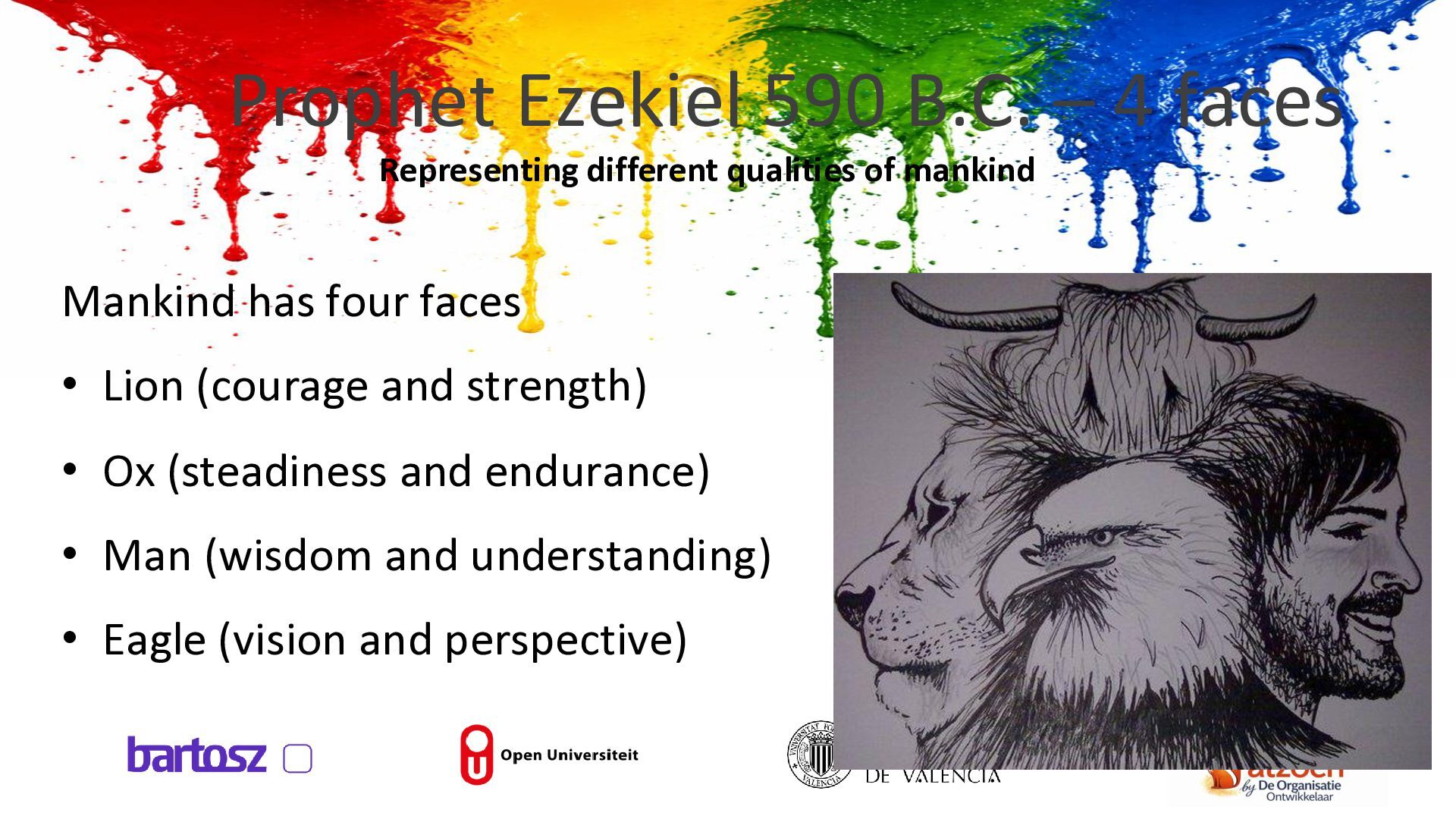
faces • Lion (courage and strength) • Ox (steadiness and endurance) • Man (wisdom and understanding) • Eagle (vision and perspective) Representing different qualities of mankind
human qualities and ways of being: Fire people → Action, energy, bold Air people → Ideas, communication, expressive Earth people → Thinking, structure, analytical Water people → Emotion, connection, harmony Empedocles 450 B.C. – 4 elements
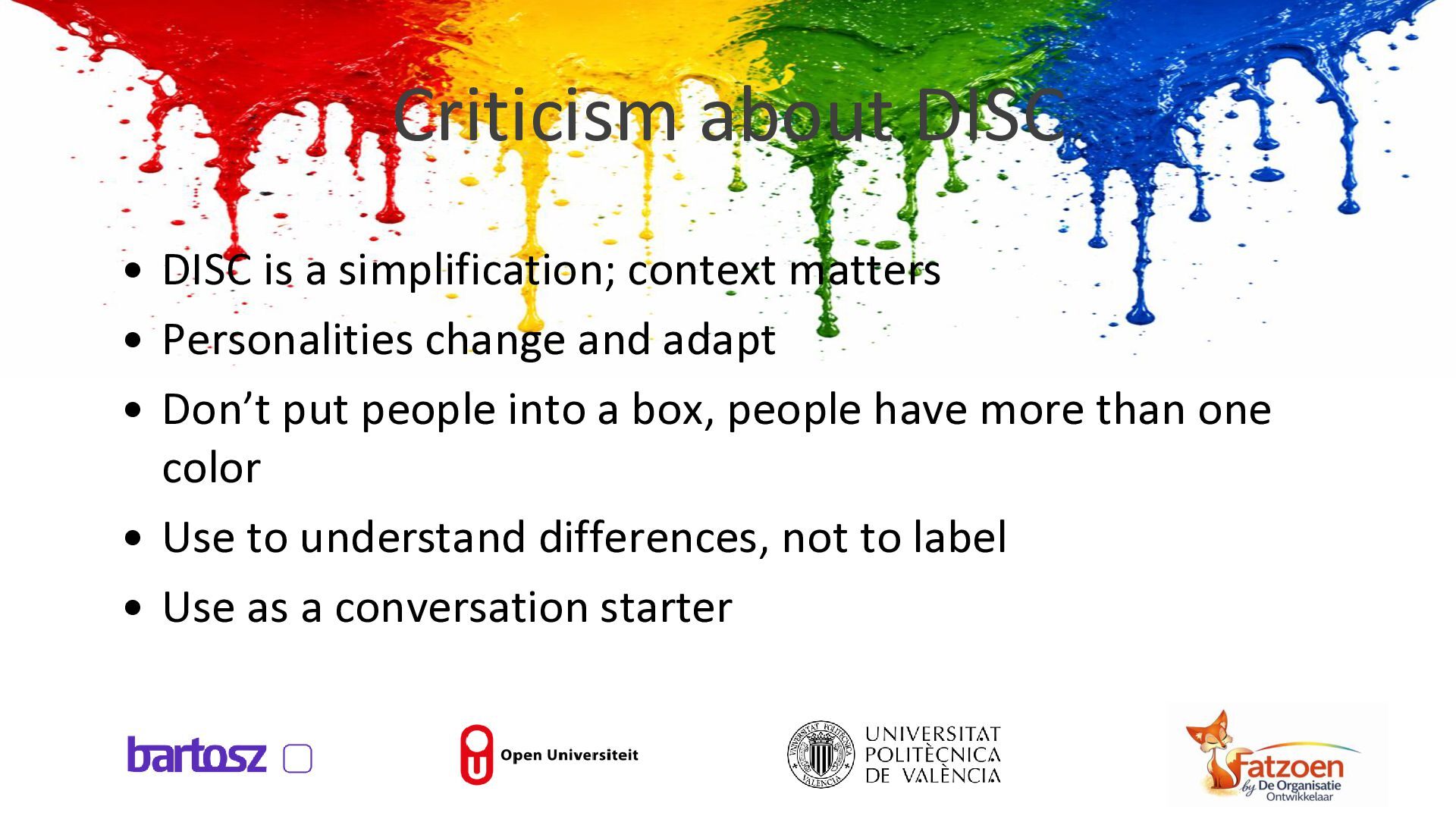
• Personalities change and adapt • Don’t put people into a box, people have more than one color • Use to understand differences, not to label • Use as a conversation starter
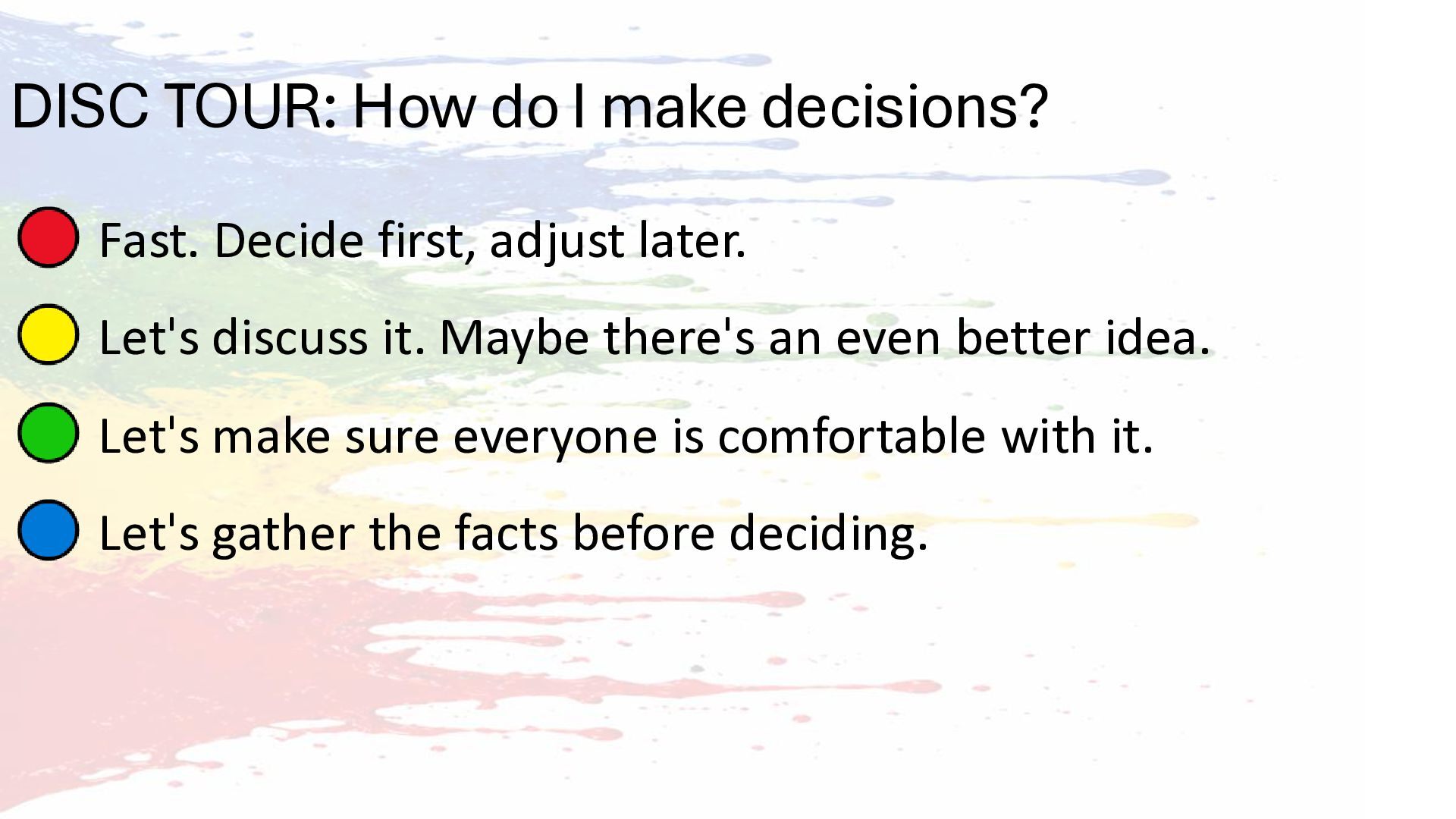
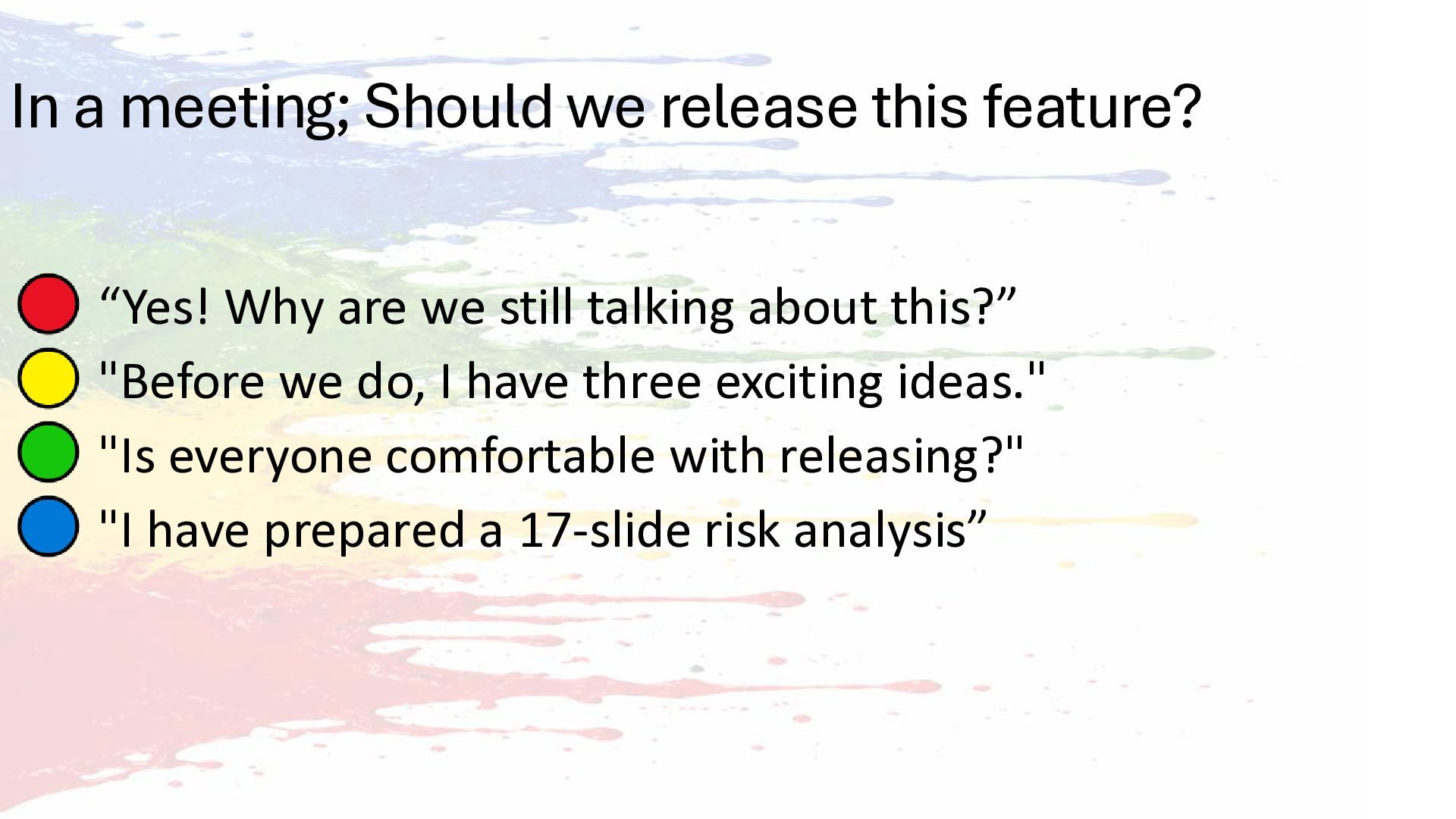
adjust later. Let's discuss it. Maybe there's an even better idea. Let's make sure everyone is comfortable with it. Let's gather the facts before deciding.
are we still talking about this?” "Before we do, I have three exciting ideas." "Is everyone comfortable with releasing?" "I have prepared a 17-slide risk analysis”
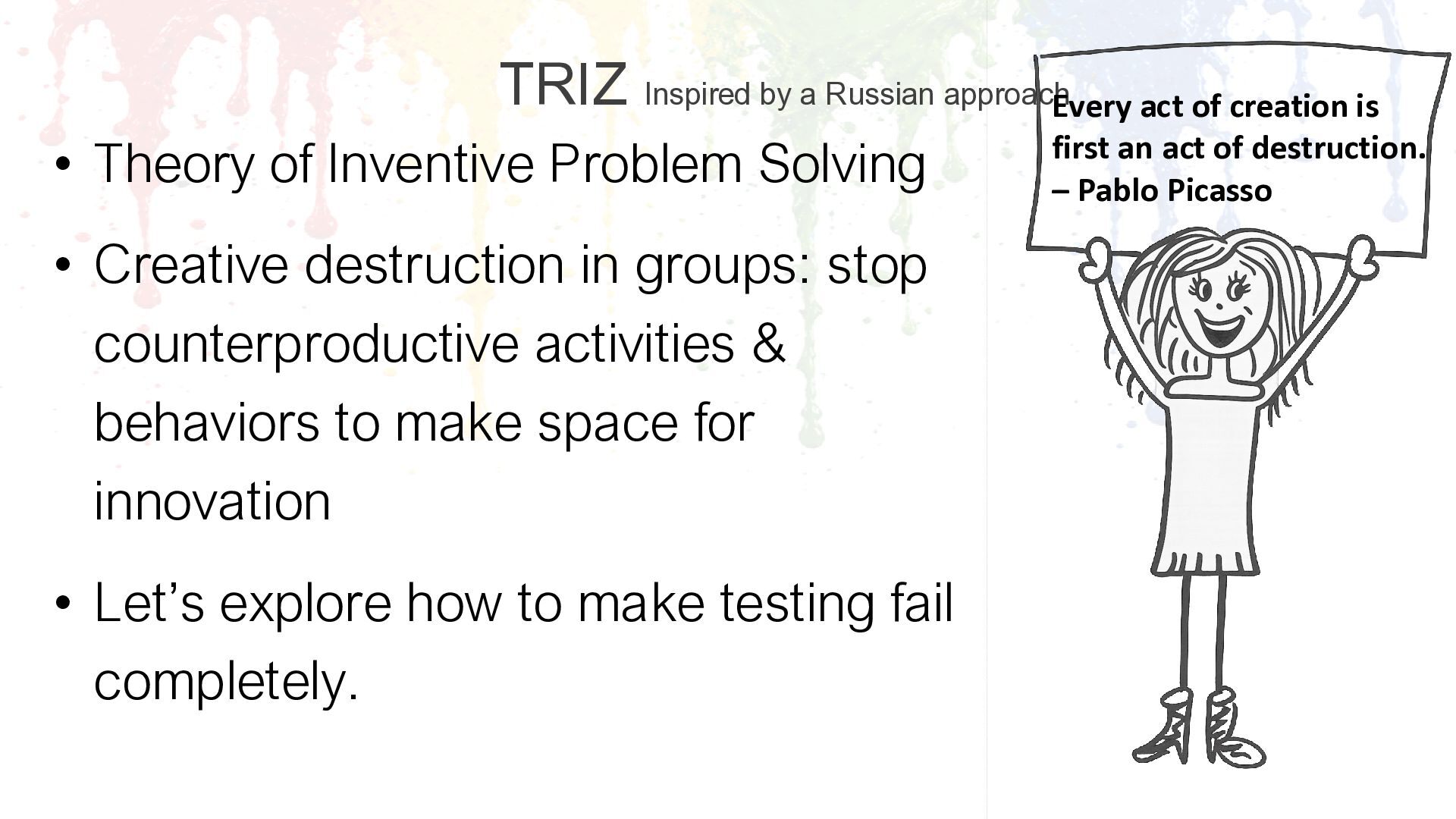
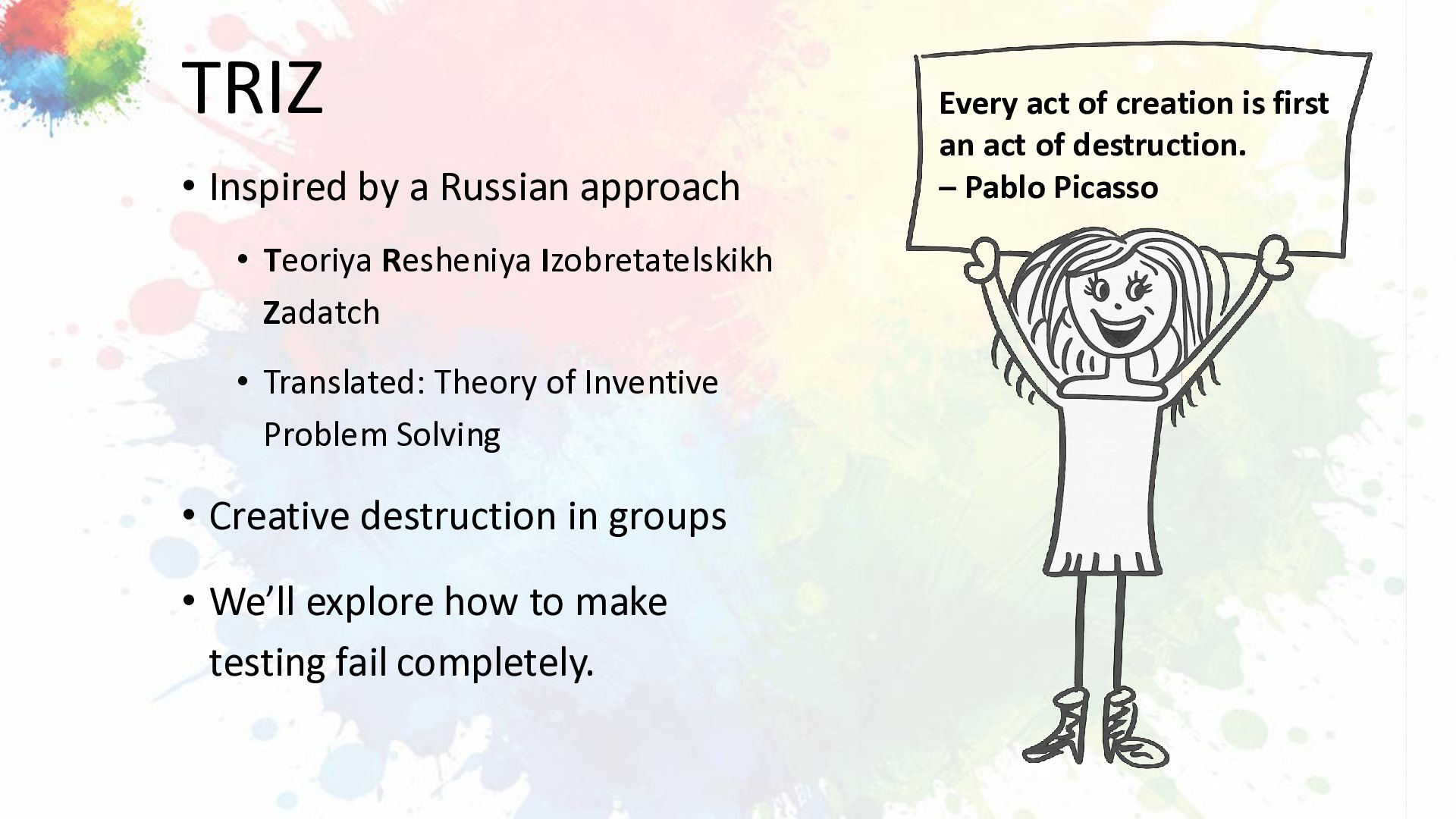
Problem Solving • Creative destruction in groups: stop counterproductive activities & behaviors to make space for innovation • Let’s explore how to make testing fail completely. Every act of creation is first an act of destruction. – Pablo Picasso
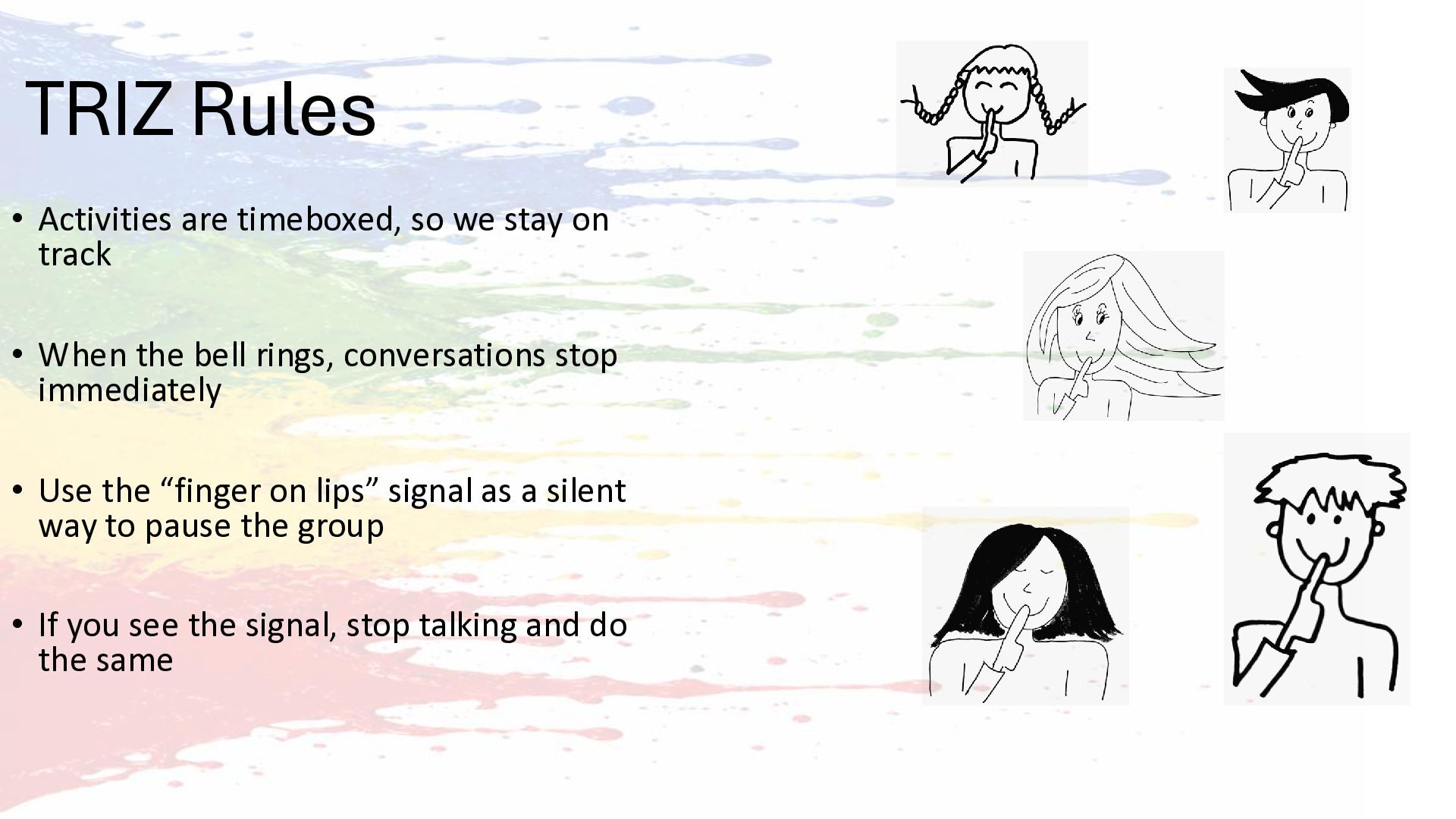
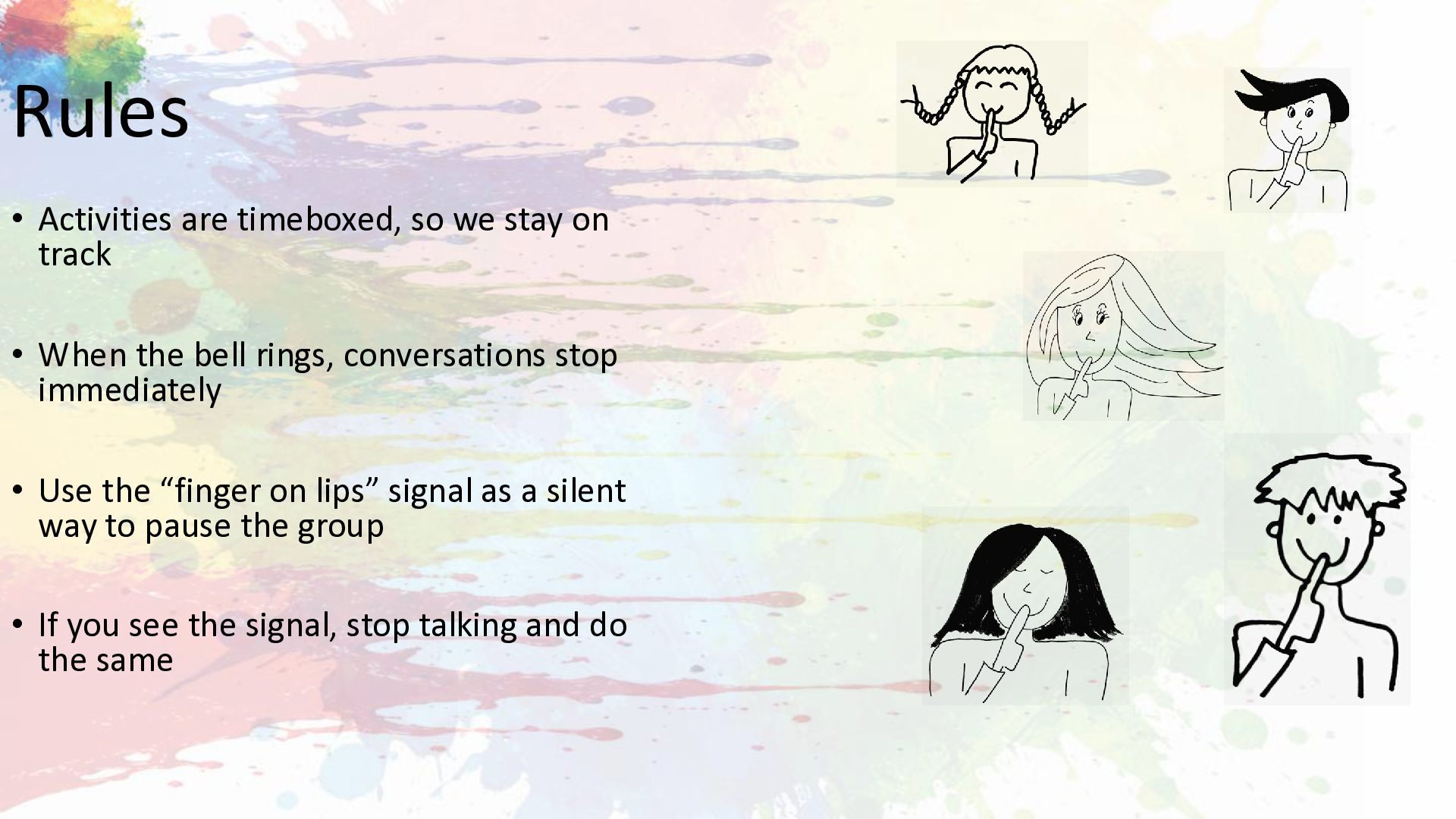
track • When the bell rings, conversations stop immediately • Use the “finger on lips” signal as a silent way to pause the group • If you see the signal, stop talking and do the same
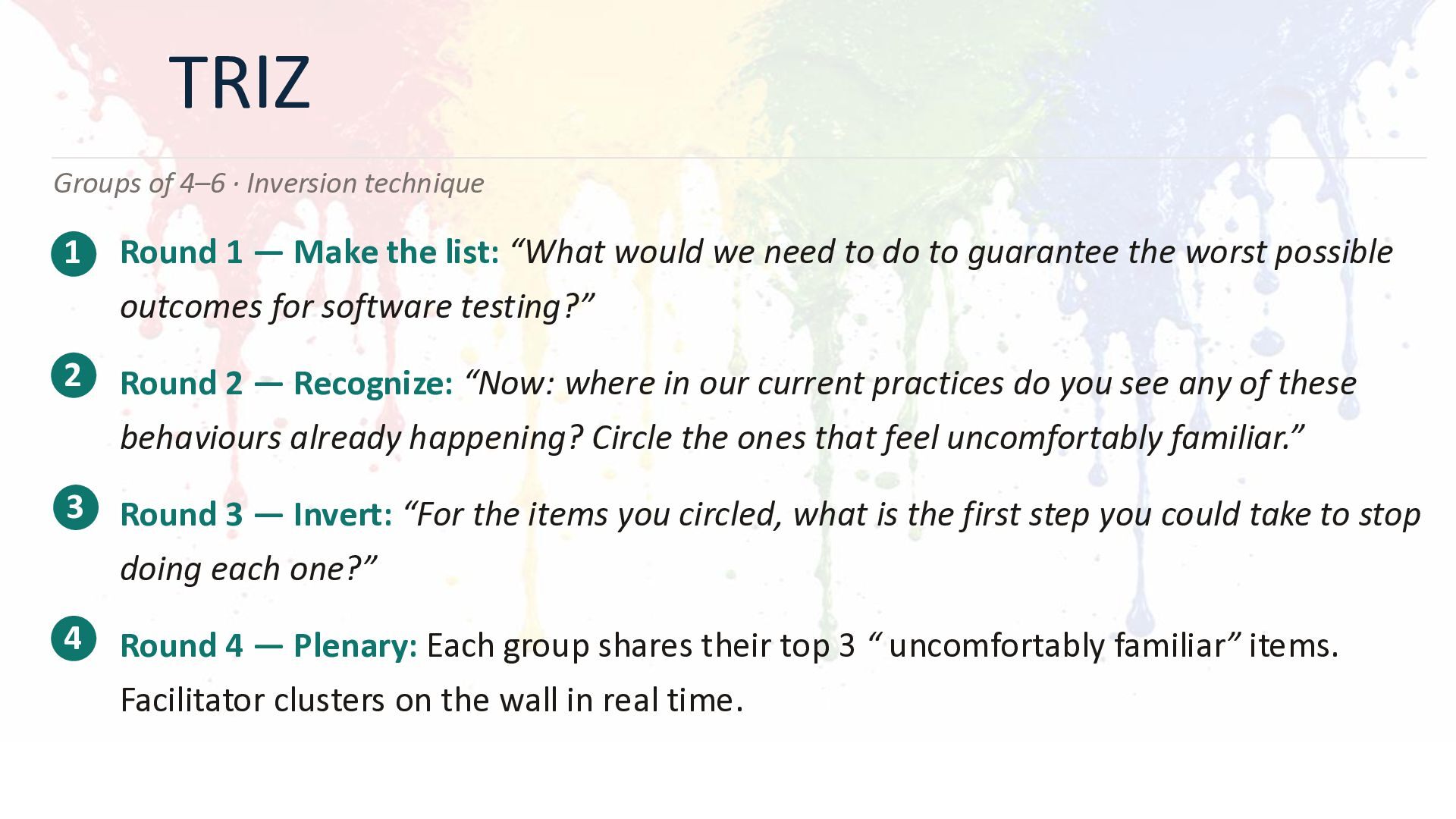
Make the list: “What would we need to do to guarantee the worst possible outcomes for software testing?” 2 Round 2 — Recognize: “Now: where in our current practices do you see any of these behaviours already happening? Circle the ones that feel uncomfortably familiar.” TRIZ
Make the list: “What would we need to do to guarantee the worst possible outcomes for software testing?” 2 Round 2 — Recognize: “Now: where in our current practices do you see any of these behaviours already happening? Circle the ones that feel uncomfortably familiar.” 3 Round 3 — Invert: “For the items you circled, what is the first step you could take to stop doing each one?” TRIZ
Make the list: “What would we need to do to guarantee the worst possible outcomes for software testing?” 2 Round 2 — Recognize: “Now: where in our current practices do you see any of these behaviours already happening? Circle the ones that feel uncomfortably familiar.” 3 Round 3 — Invert: “For the items you circled, what is the first step you could take to stop doing each one?” 4 Round 4 — Plenary: Each group shares their top 3 “ uncomfortably familiar” items. Facilitator clusters on the wall in real time. TRIZ
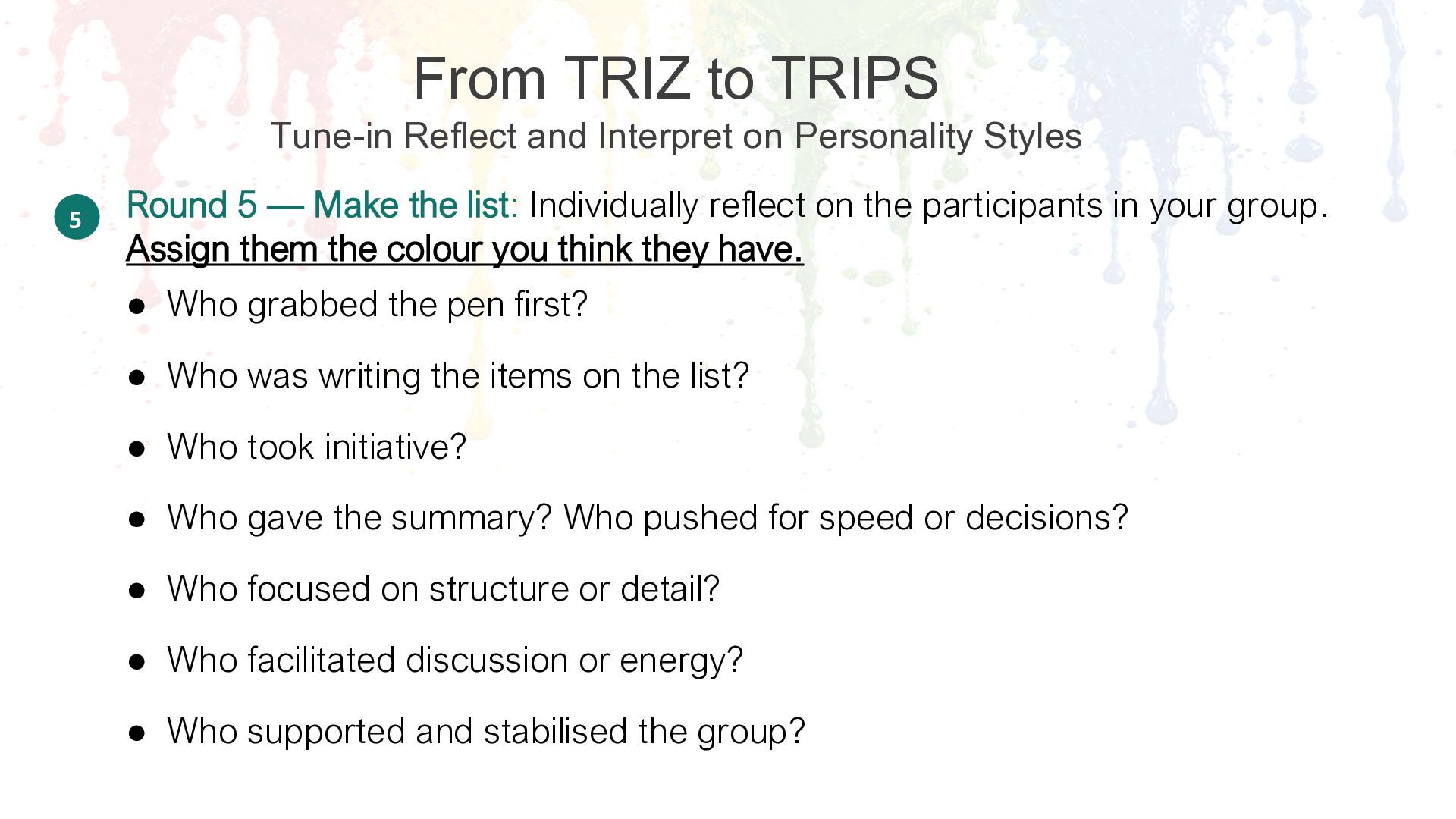
Styles Round 5 — Make the list: Individually reflect on the participants in your group. Assign them the colour you think they have. • Who grabbed the pen first? • Who was writing the items on the list? • Who took initiative? • Who gave the summary? Who pushed for speed or decisions? • Who focused on structure or detail? • Who facilitated discussion or energy? • Who supported and stabilised the group? 5 1
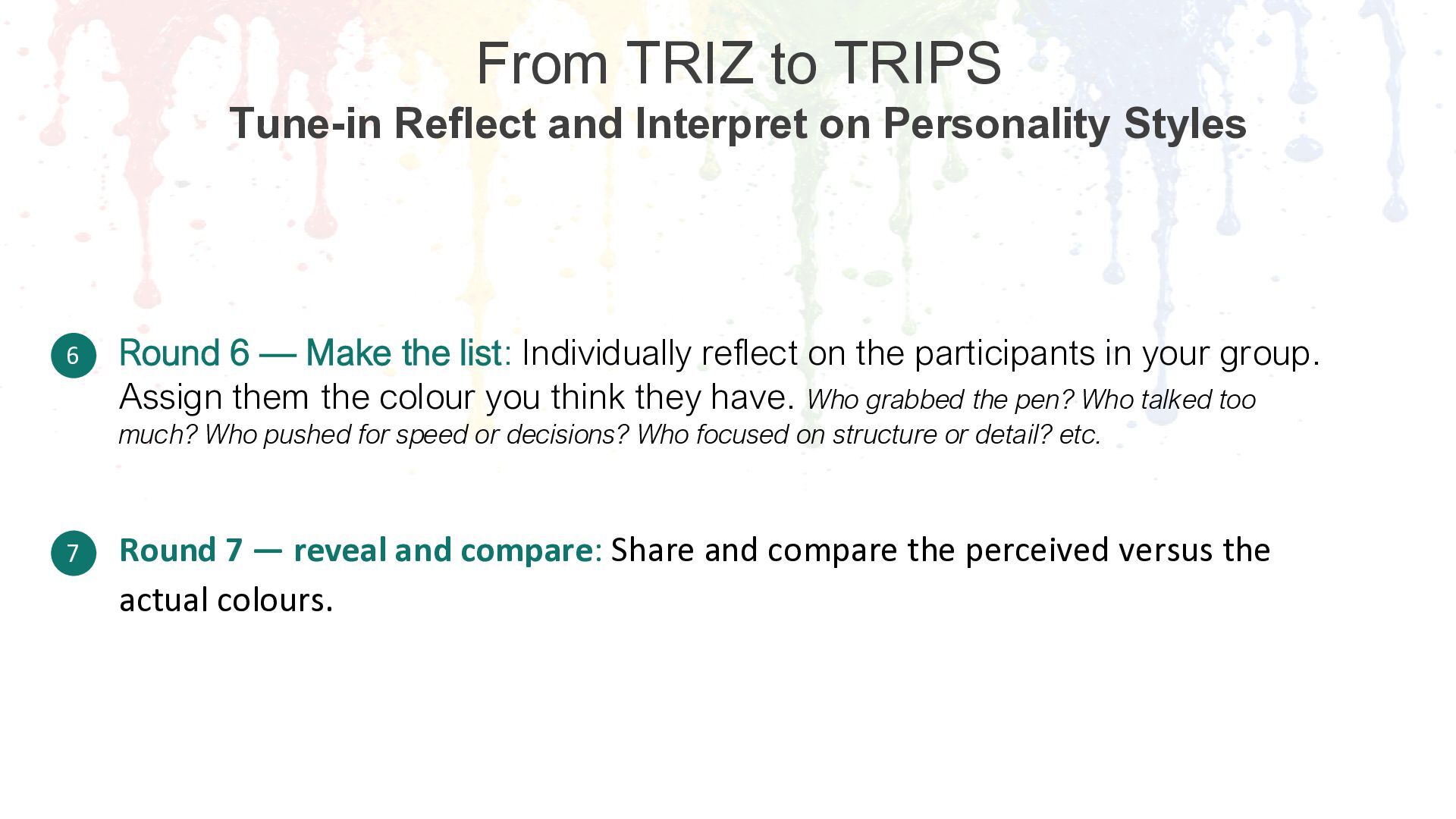
Styles Round 6 — Make the list: Individually reflect on the participants in your group. Assign them the colour you think they have. Who grabbed the pen? Who talked too much? Who pushed for speed or decisions? Who focused on structure or detail? etc. 1 Round 7 — reveal and compare: Share and compare the perceived versus the actual colours. 7 6
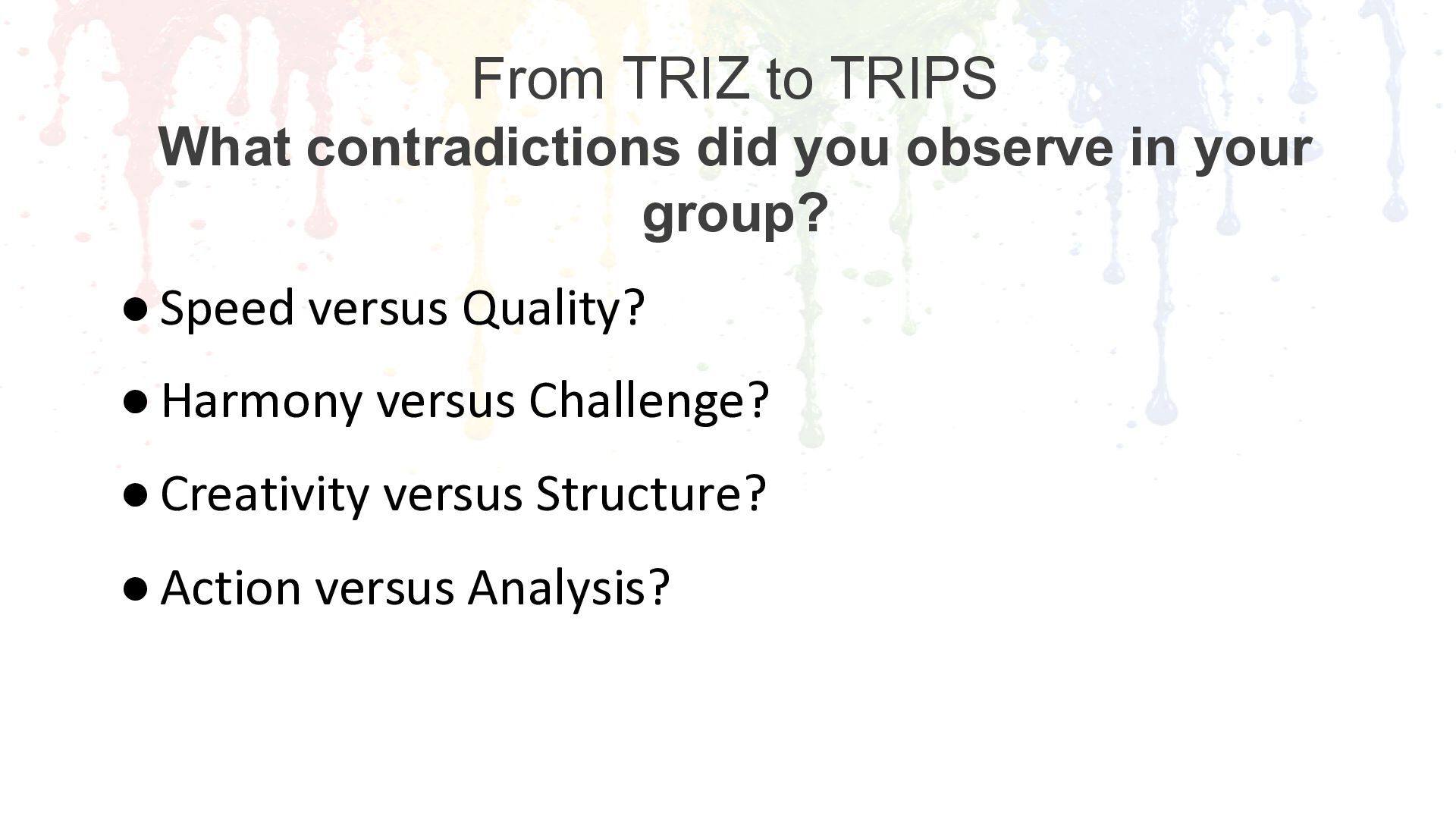
when we stop judging different behaviors and start understanding the needs behind them. • In TRIZ, innovation starts when we stop choosing between two opposing forces and start understanding the contradiction between them.
are not confined to your profile or color(s). A profile changes depending on • Your surrounding • Your team • Your energy • Where you are in your cycle • Etc. You can do all colors, at any time. Doing a color far from your ‘home’ color just takes more energy. 41
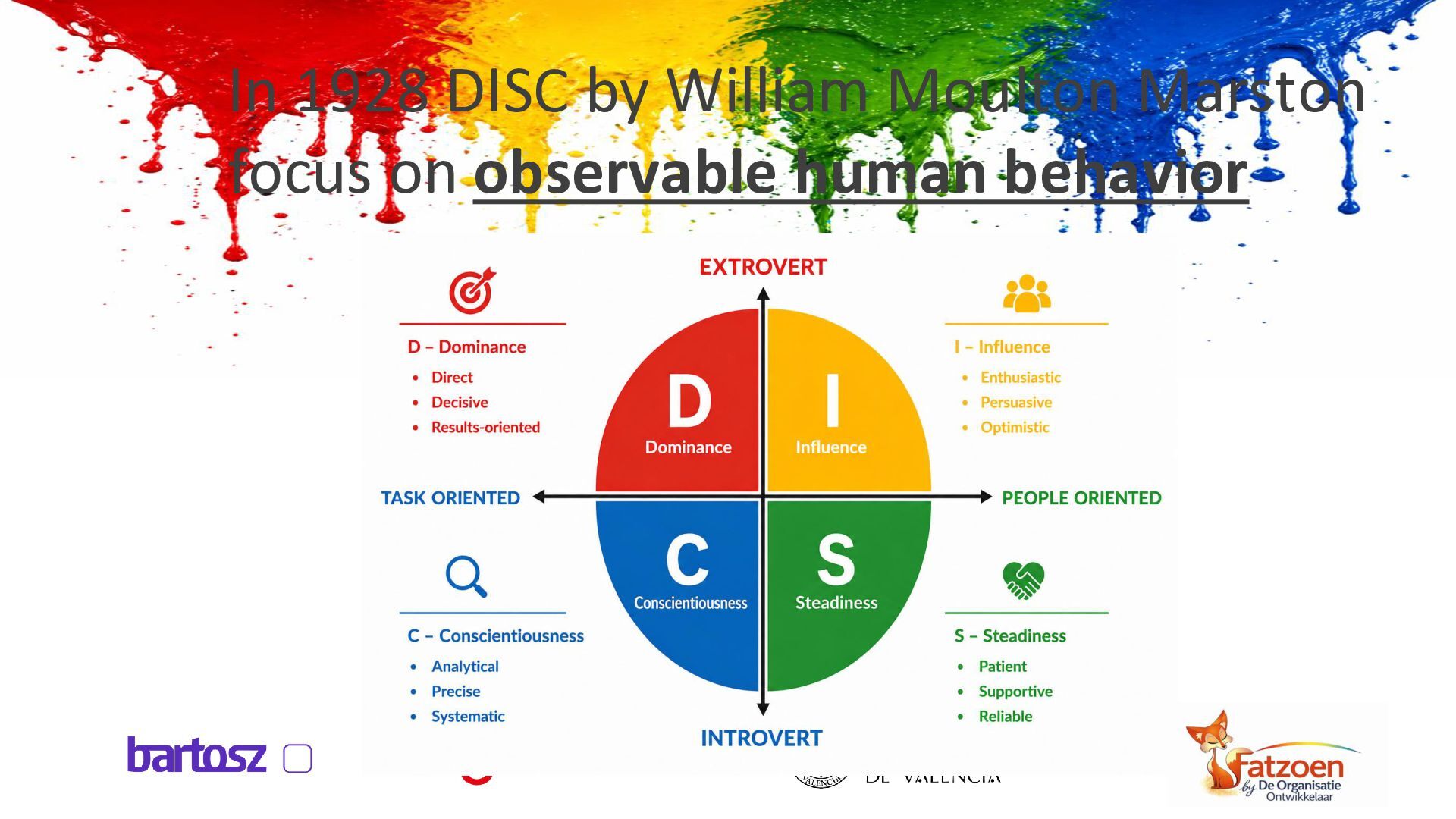
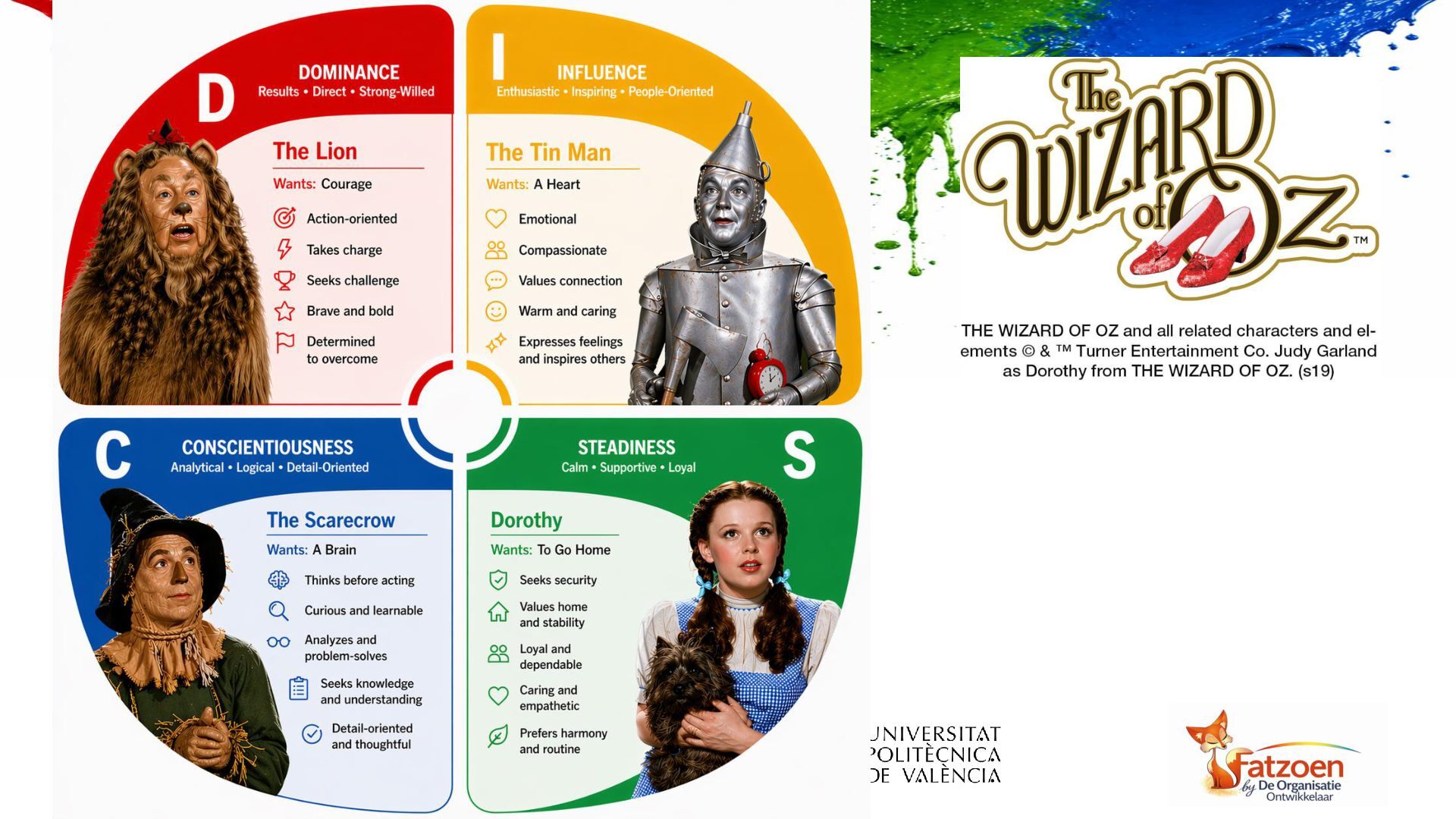
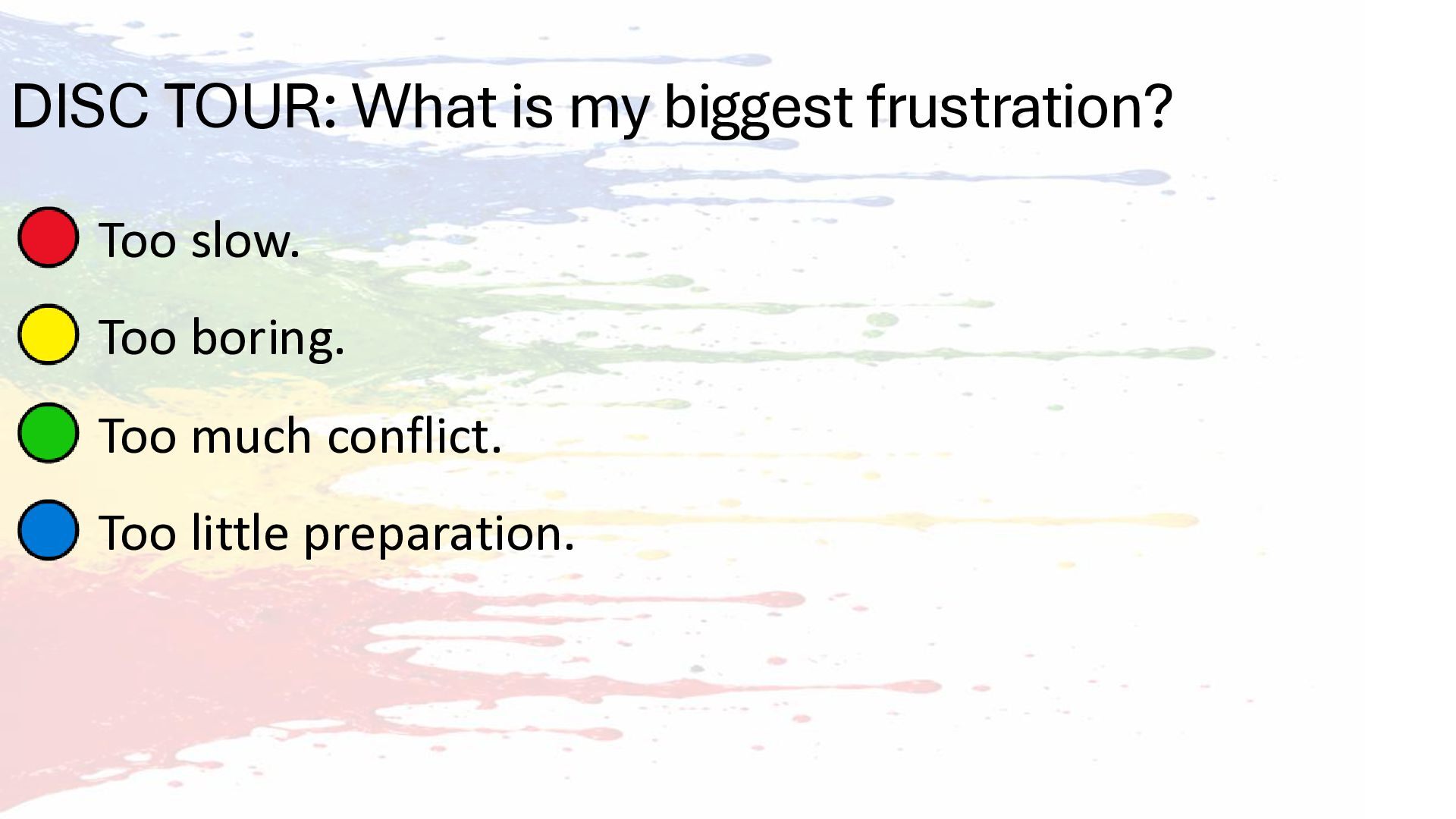
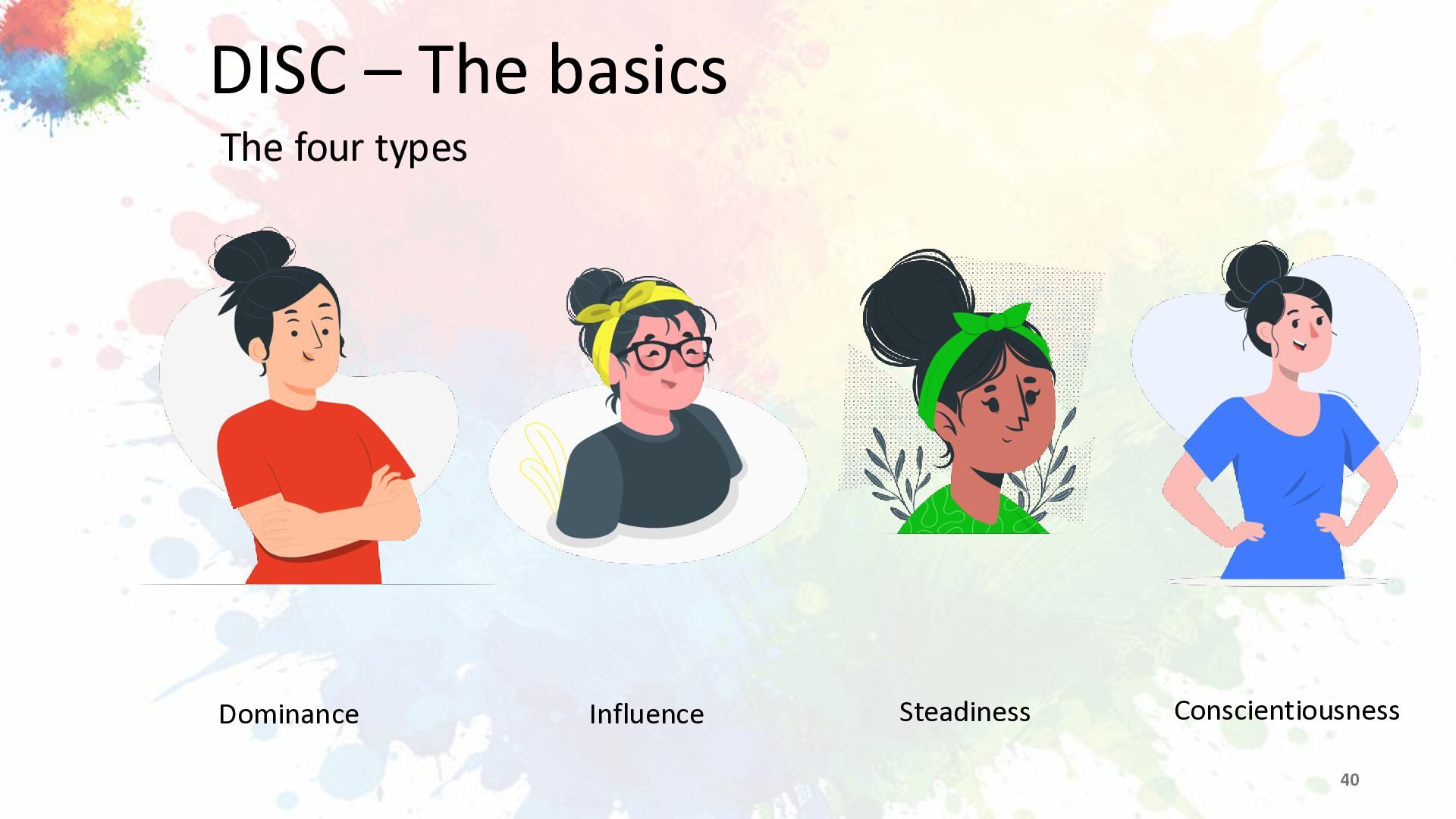
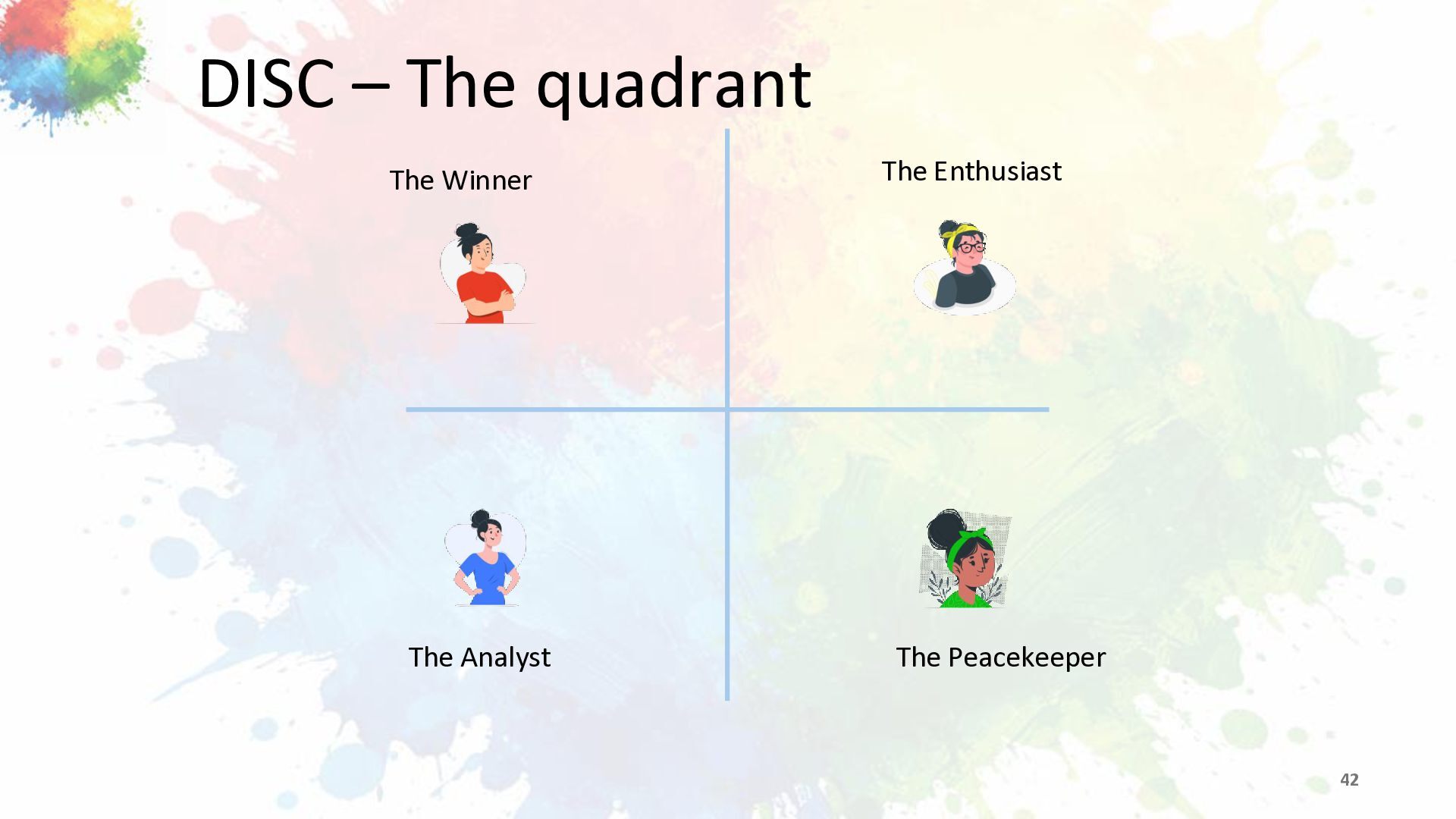
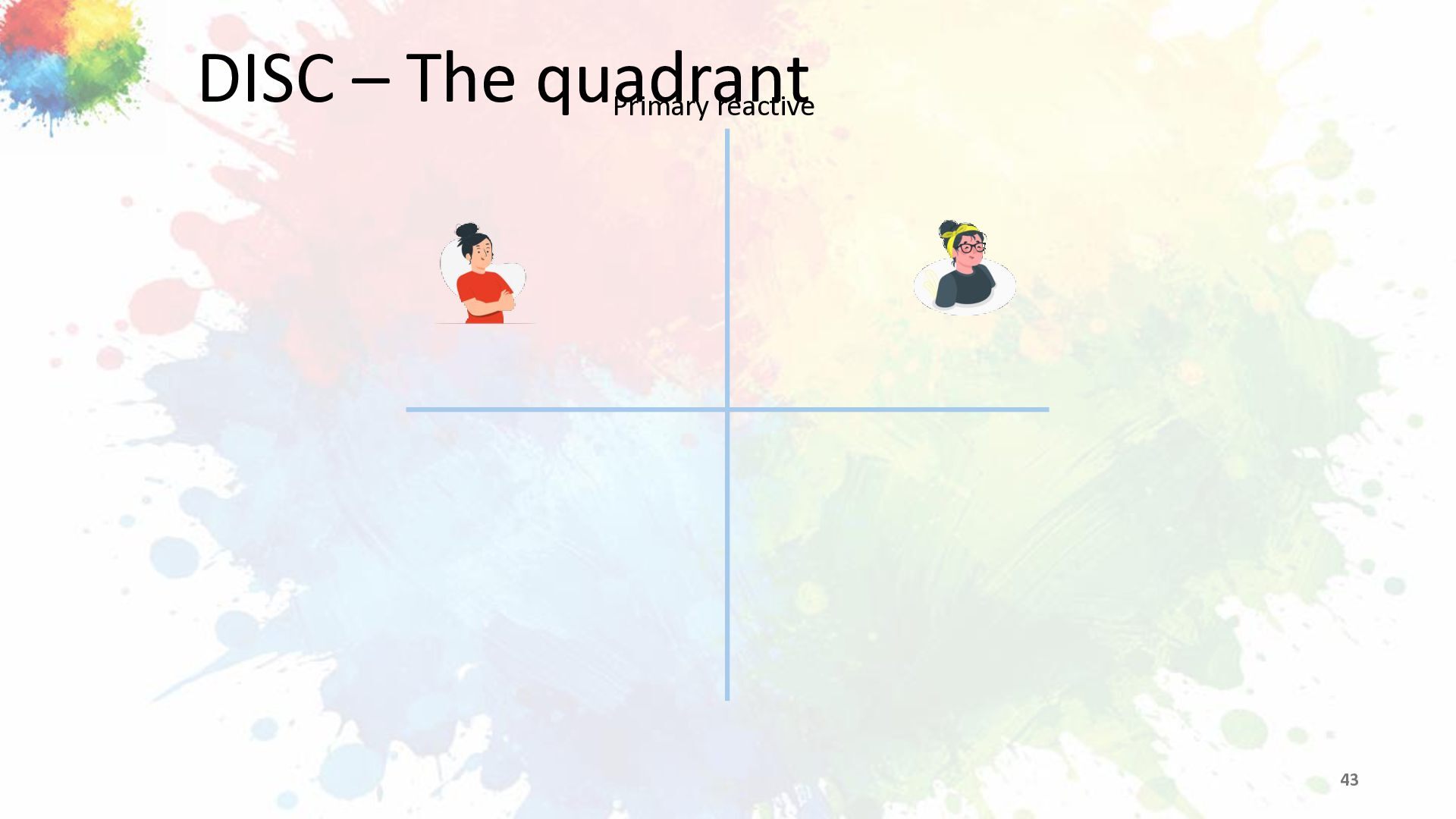
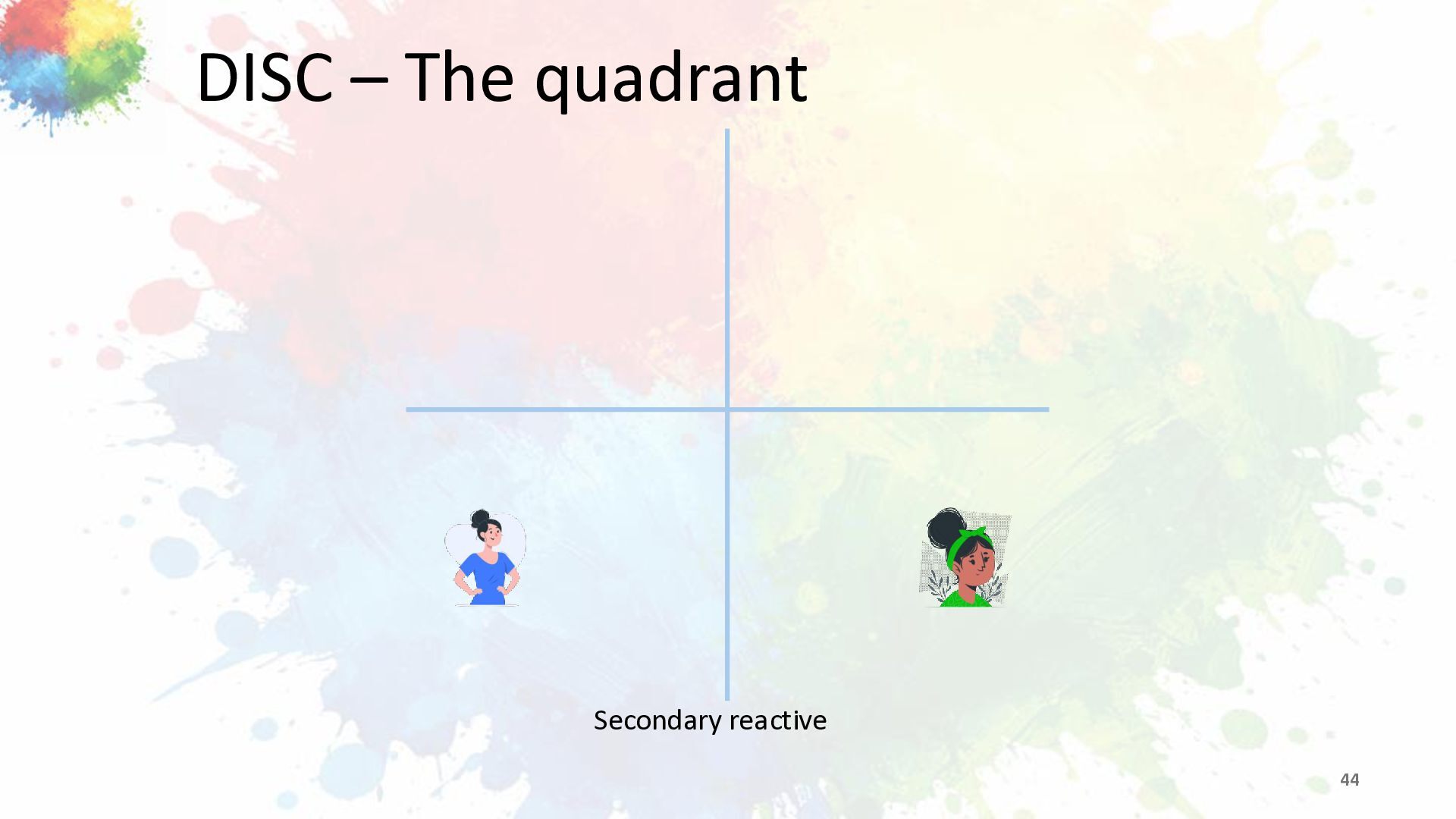
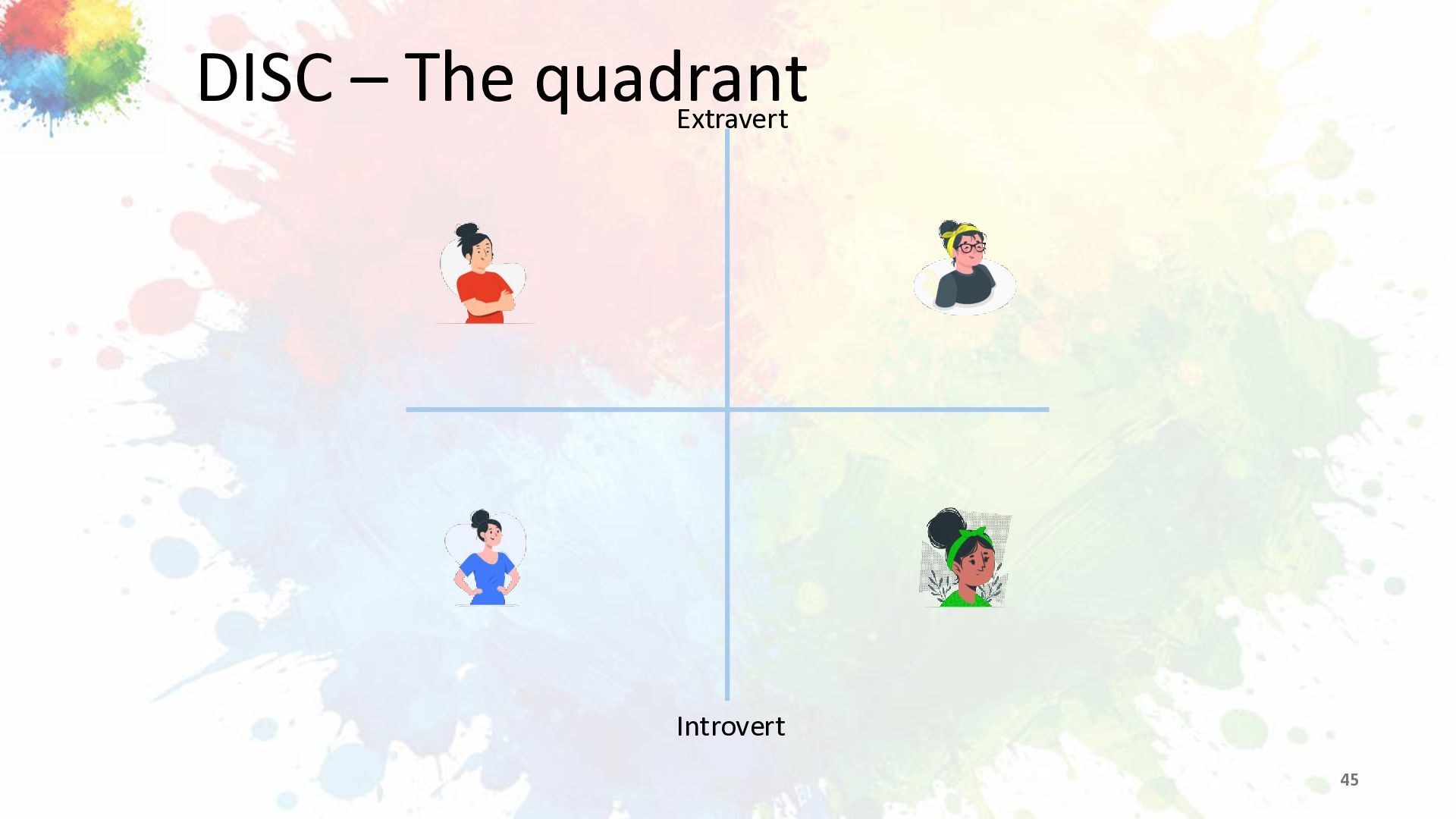
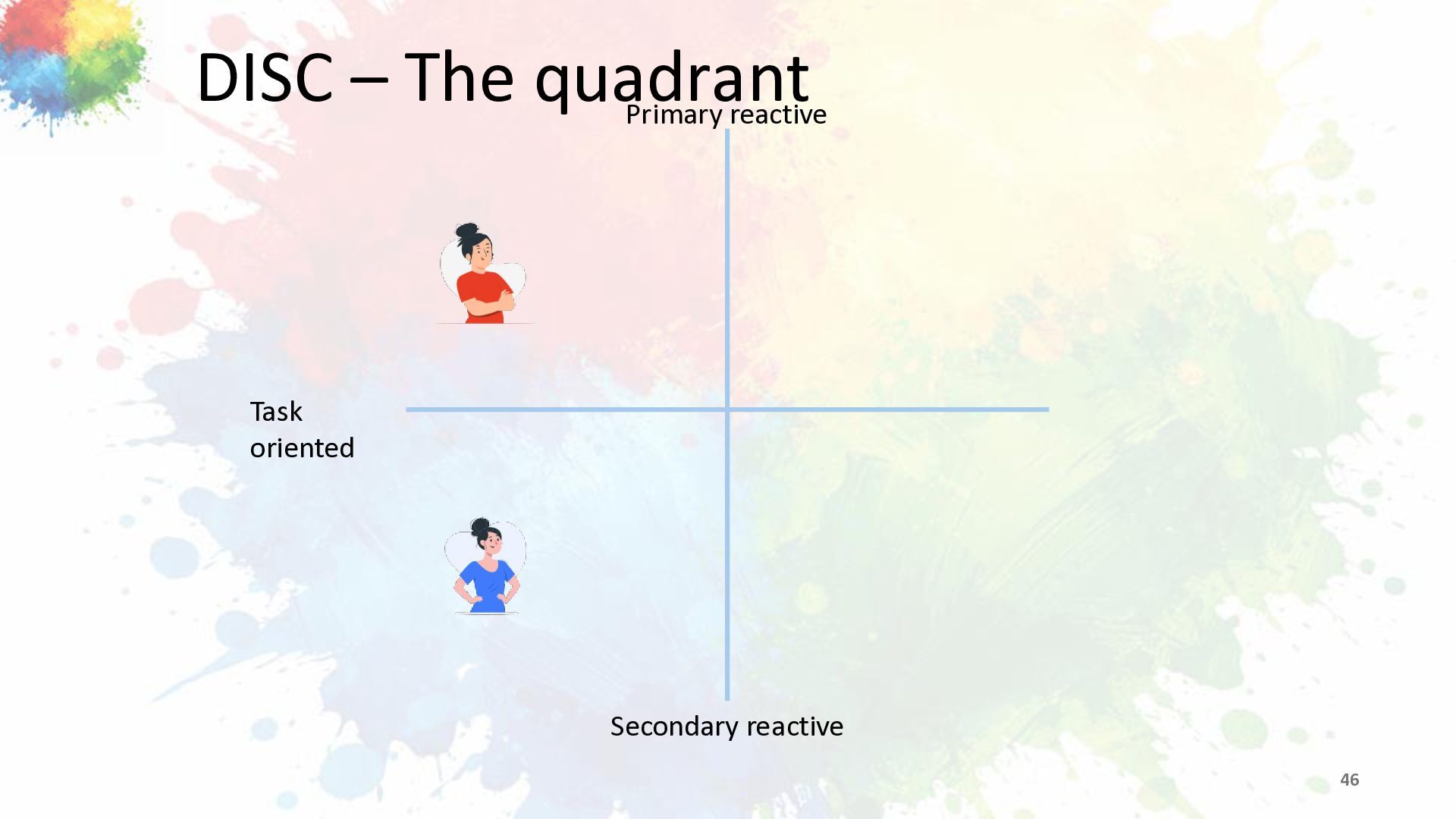
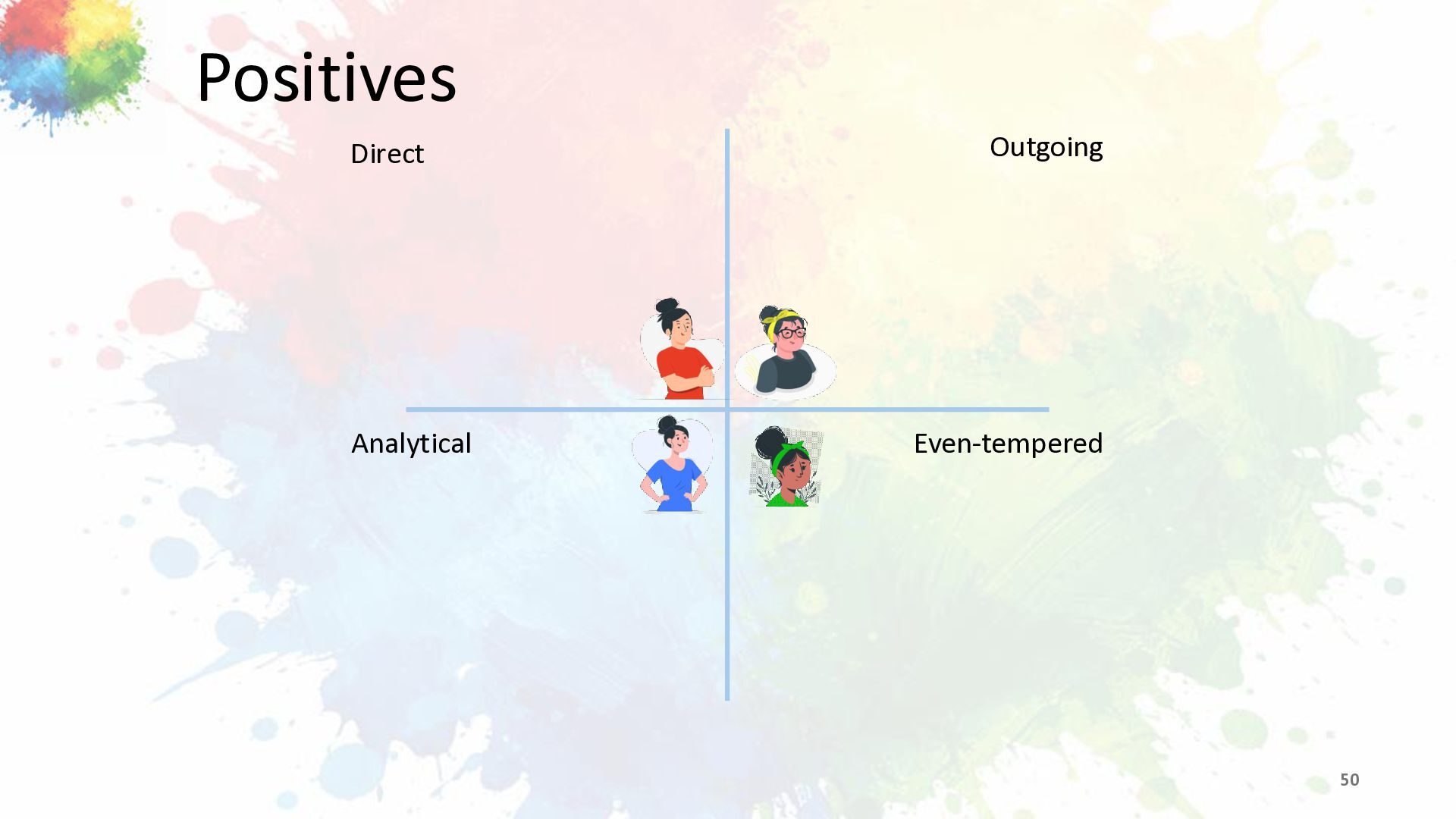
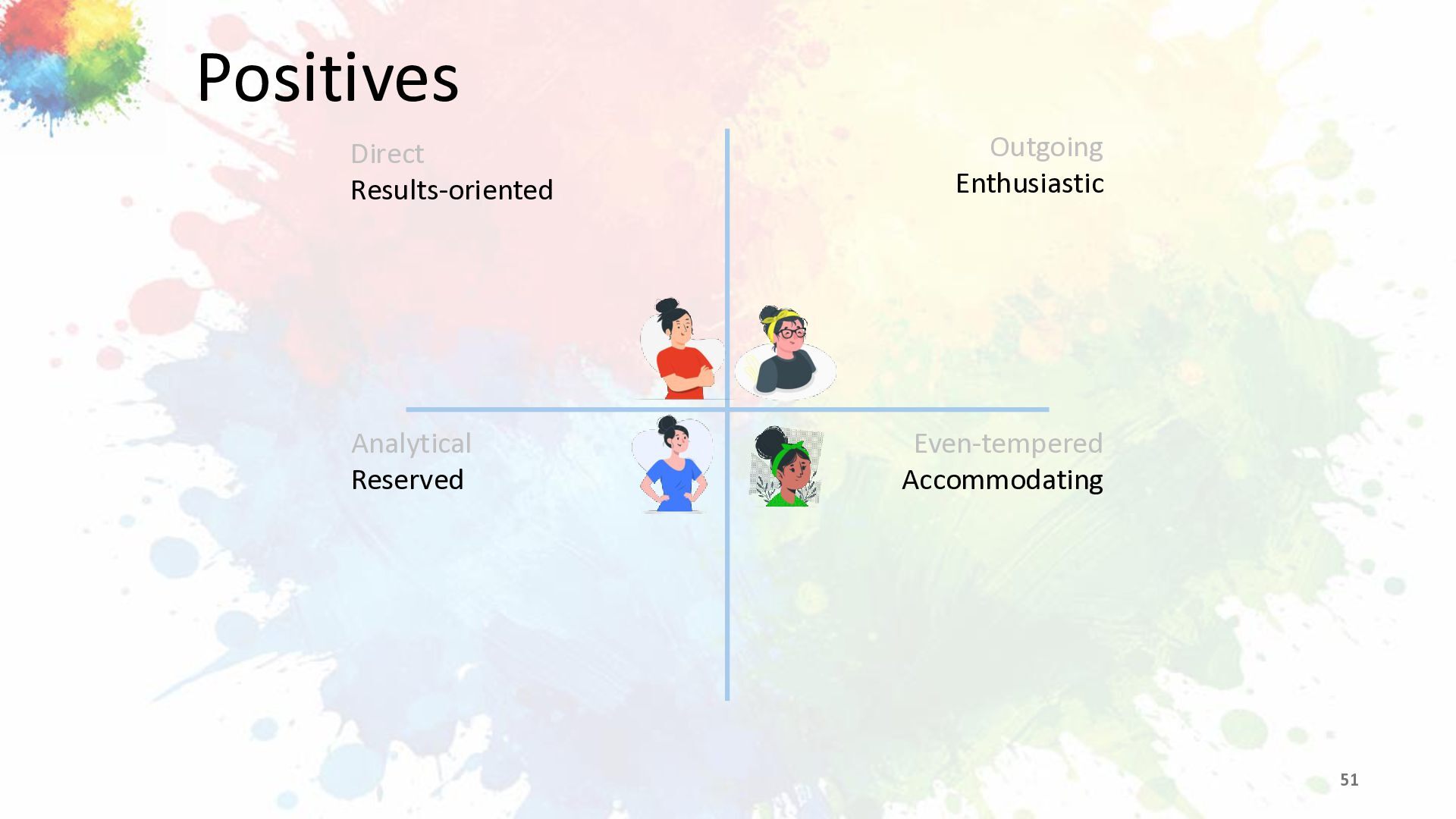
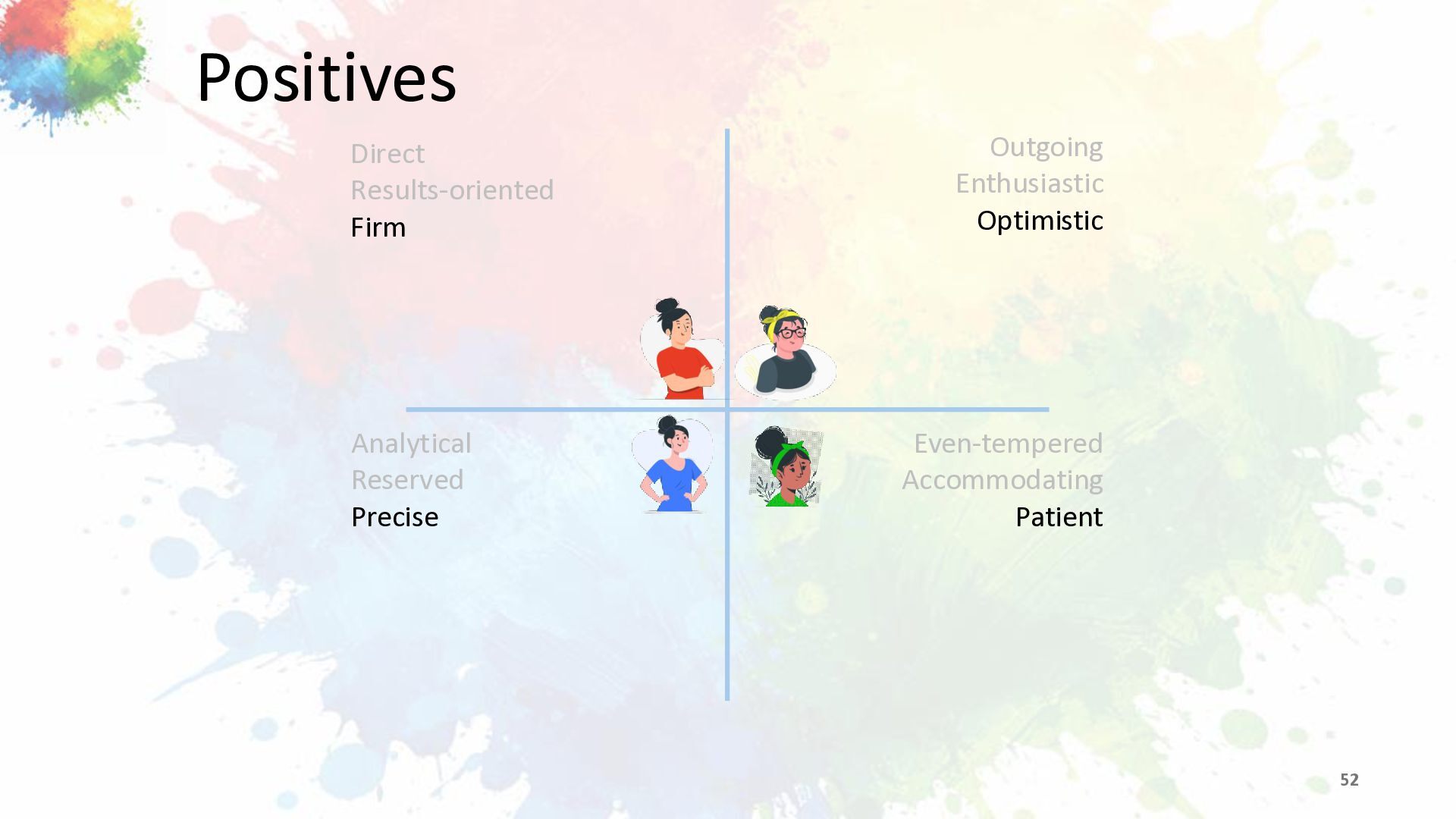
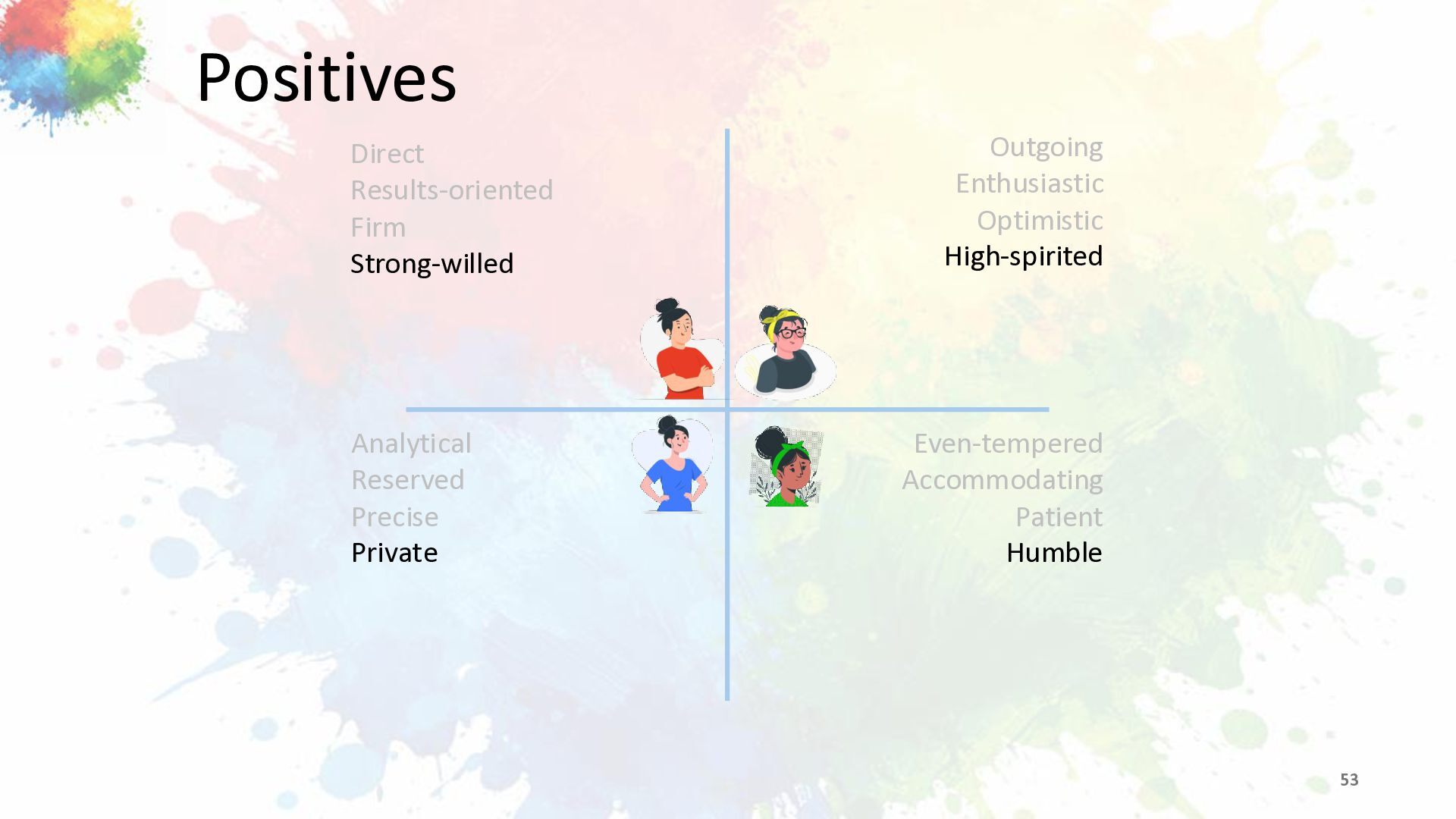
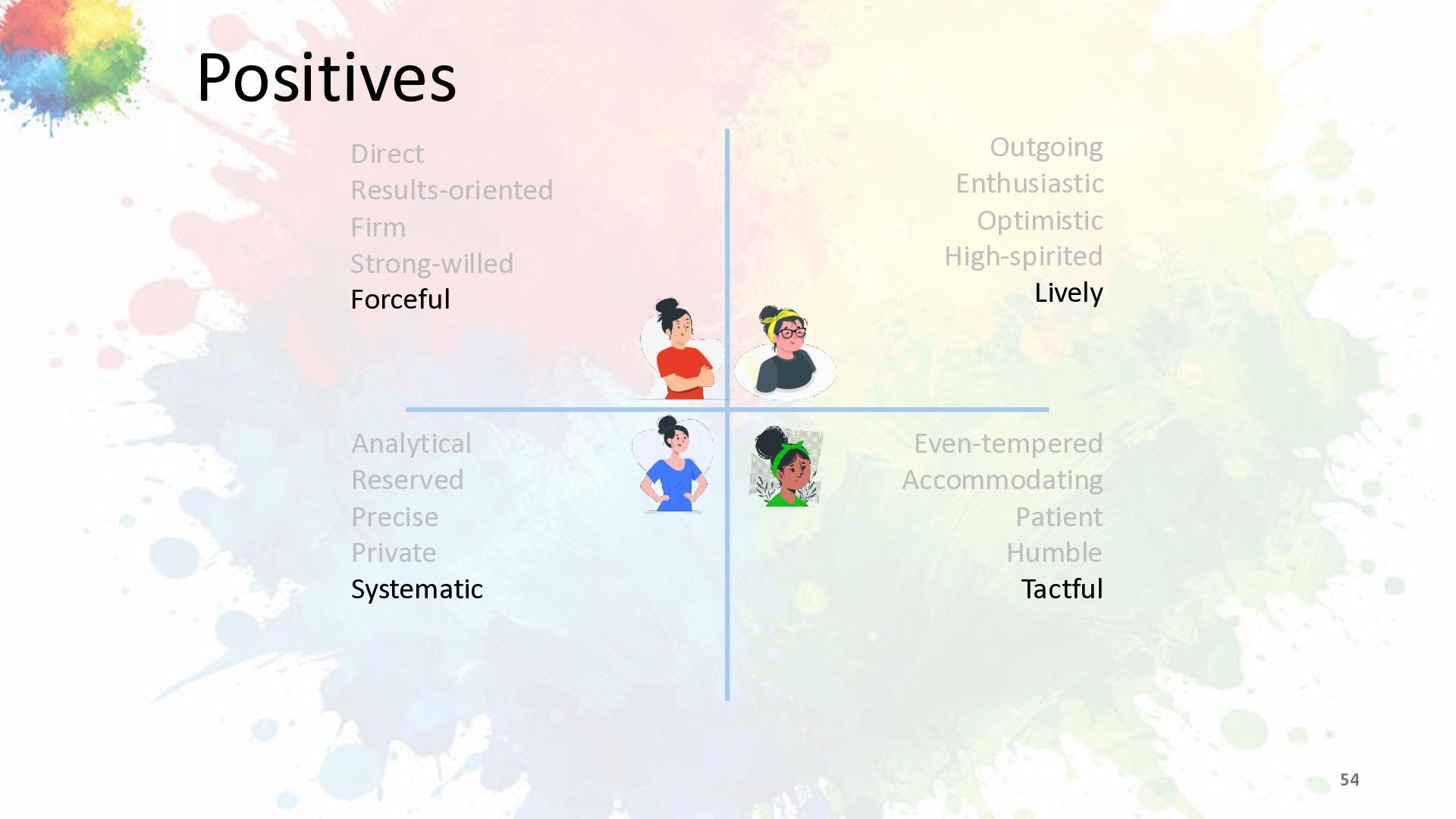
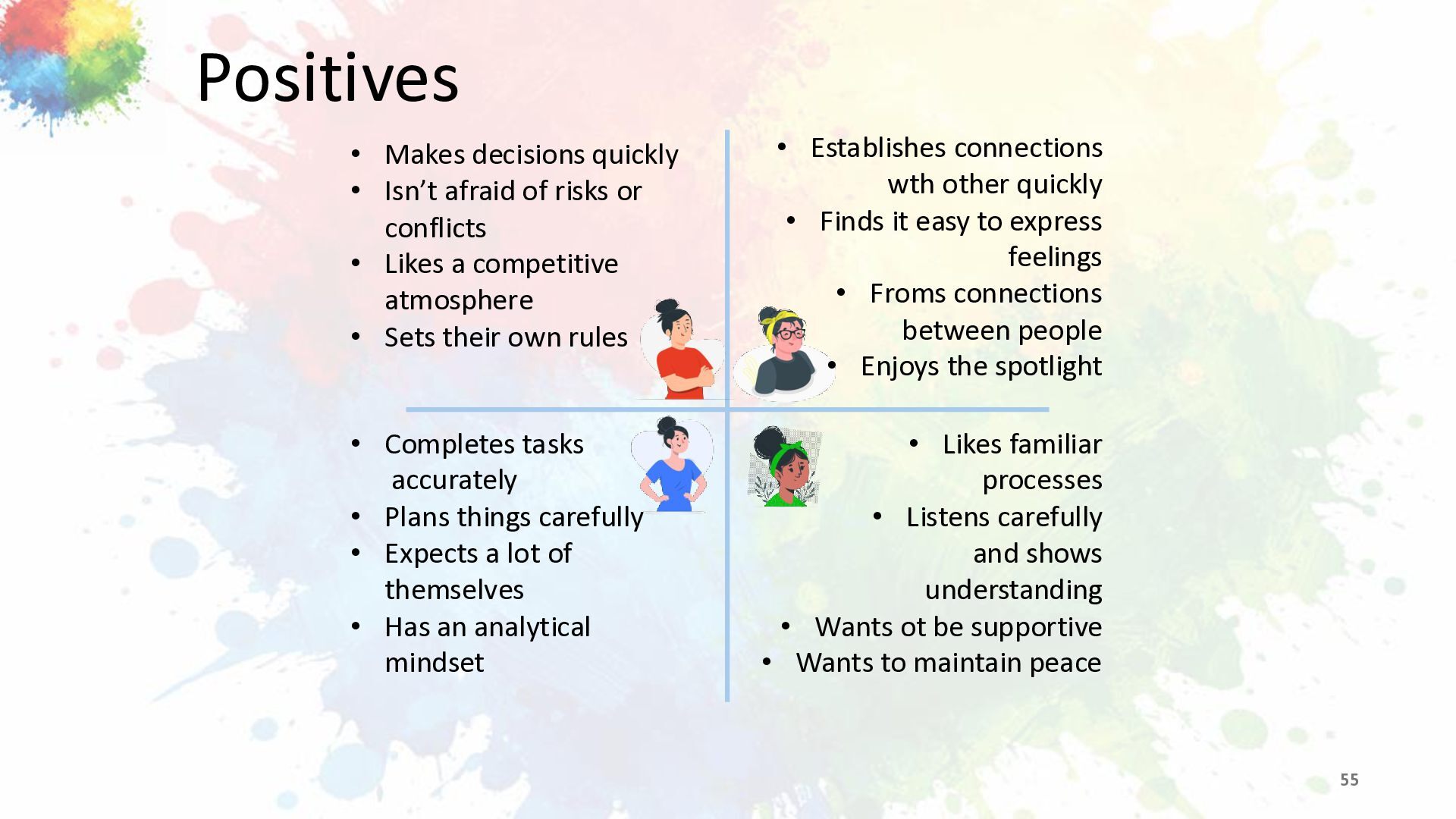
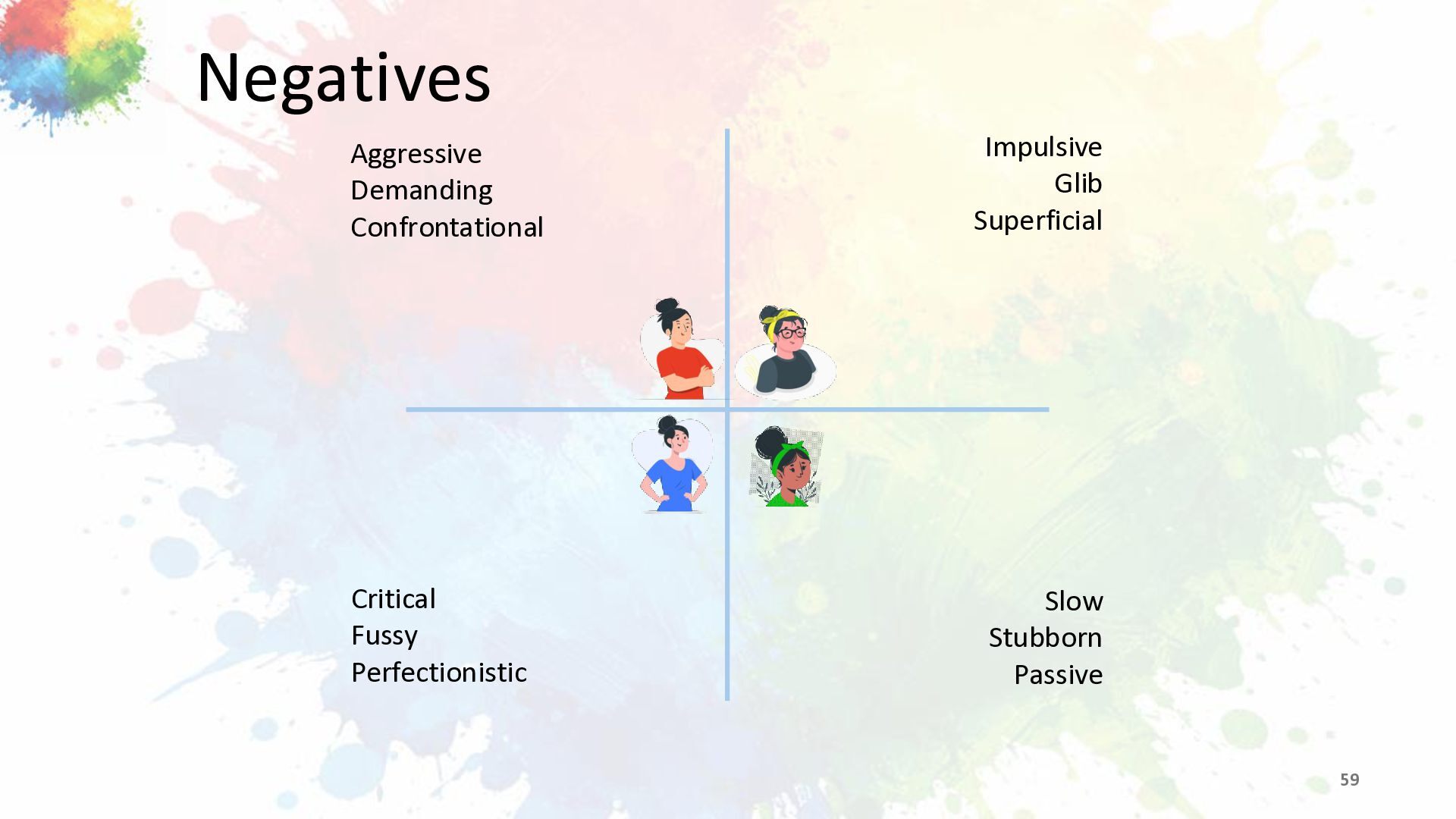
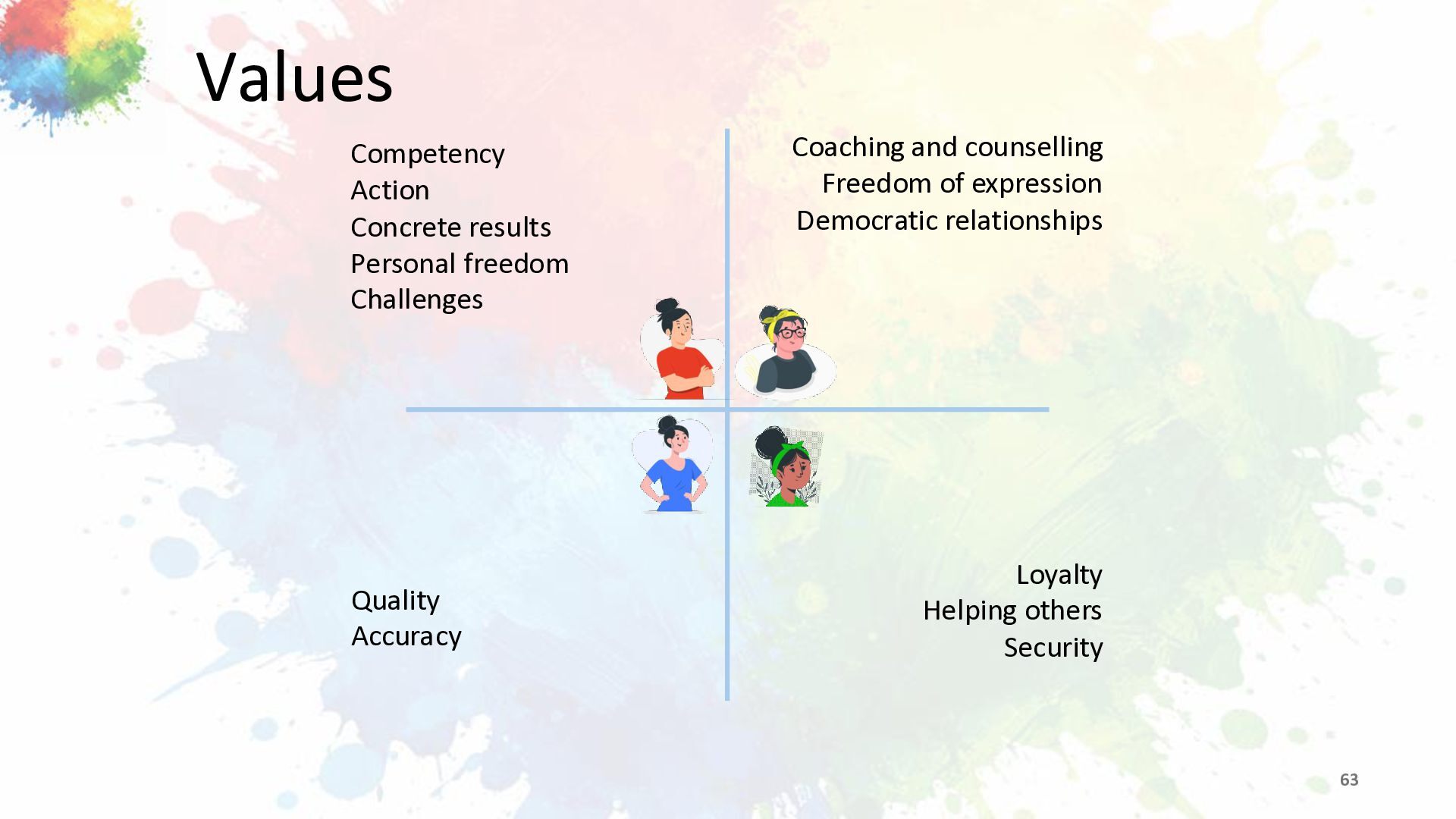
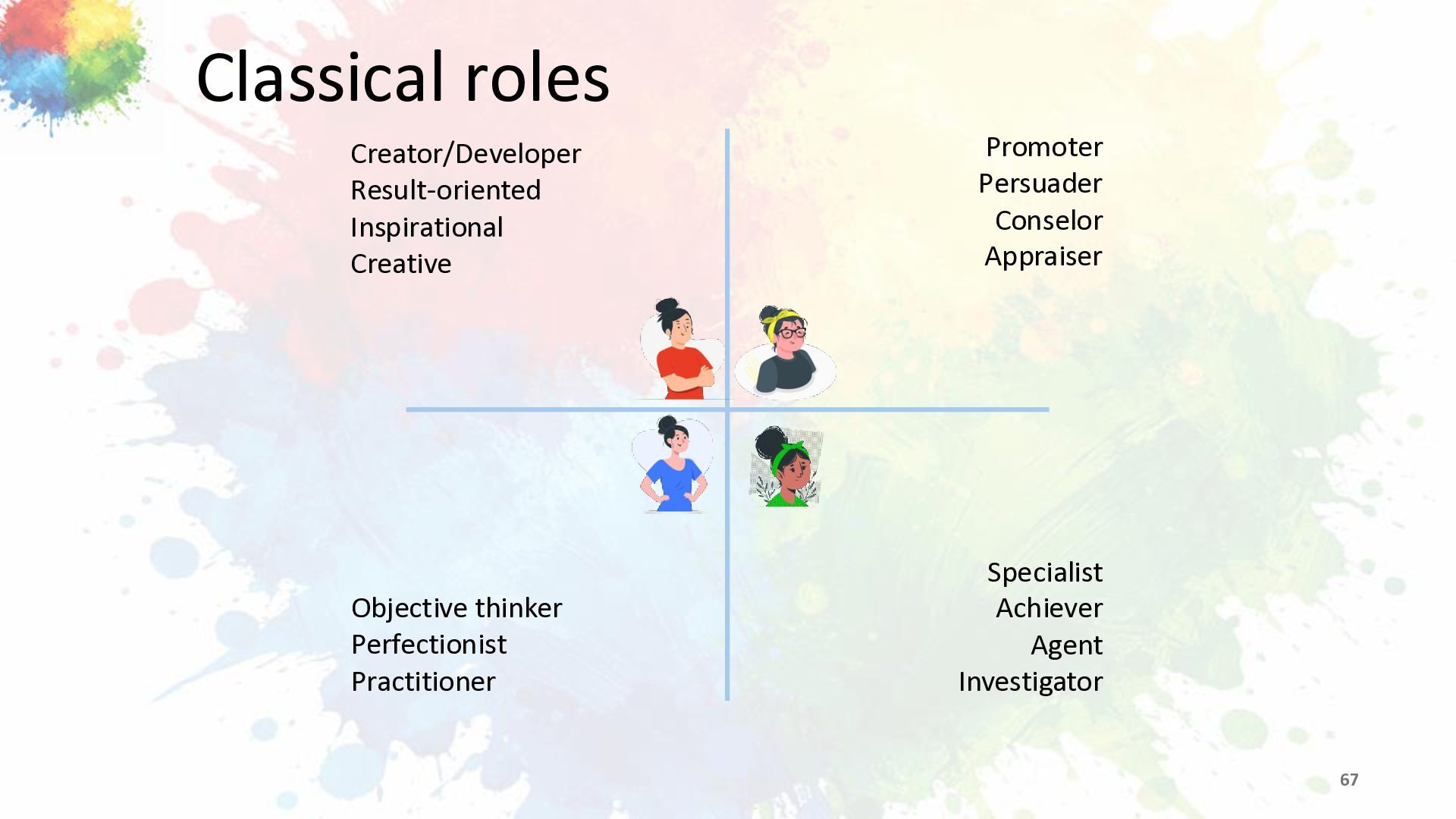
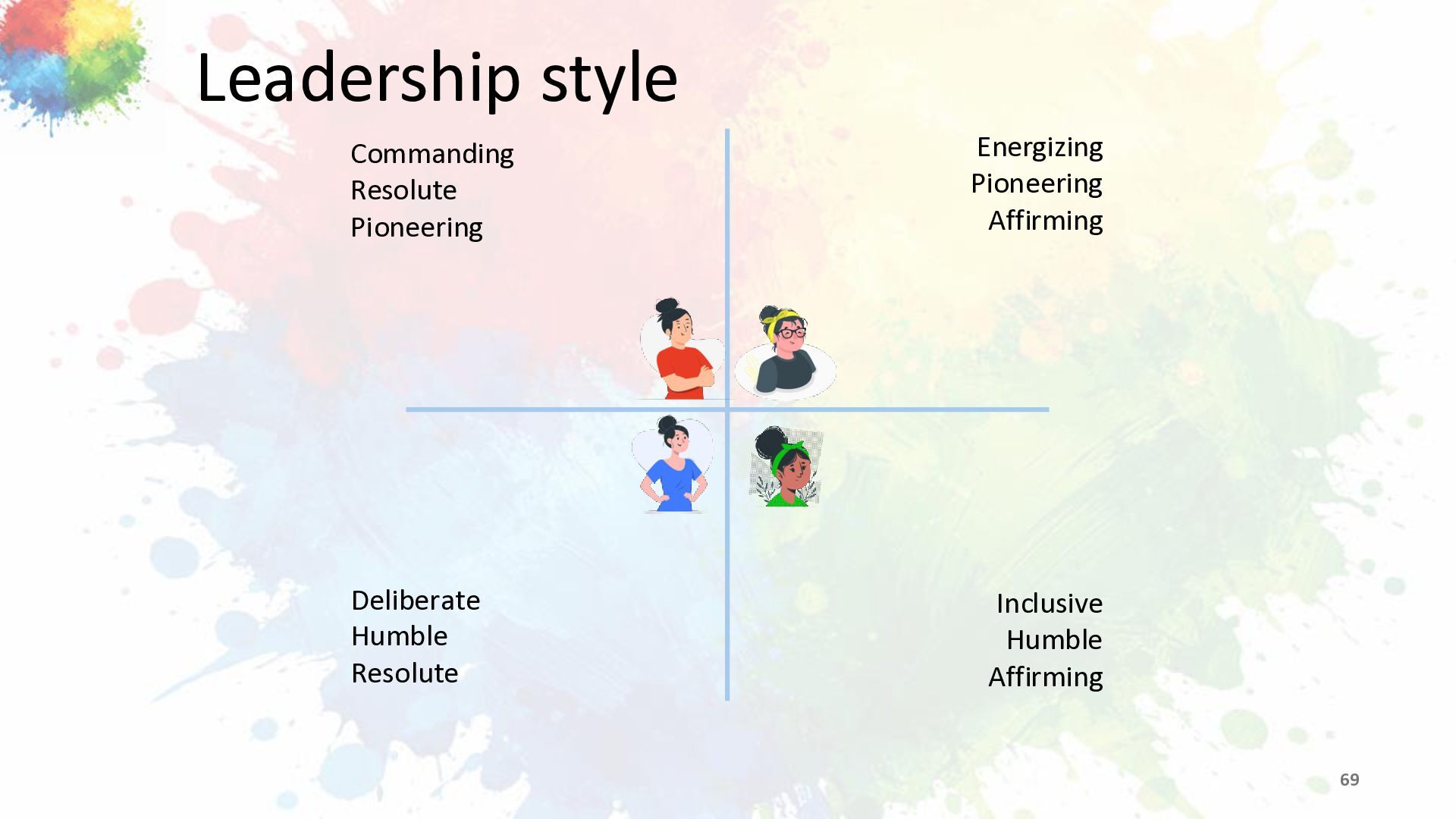
risks or conflicts • Likes a competitive atmosphere • Sets their own rules • Likes familiar processes • Listens carefully and shows understanding • Wants ot be supportive • Wants to maintain peace • Completes tasks accurately • Plans things carefully • Expects a lot of themselves • Has an analytical mindset • Establishes connections wth other quickly • Finds it easy to express feelings • Froms connections between people • Enjoys the spotlight
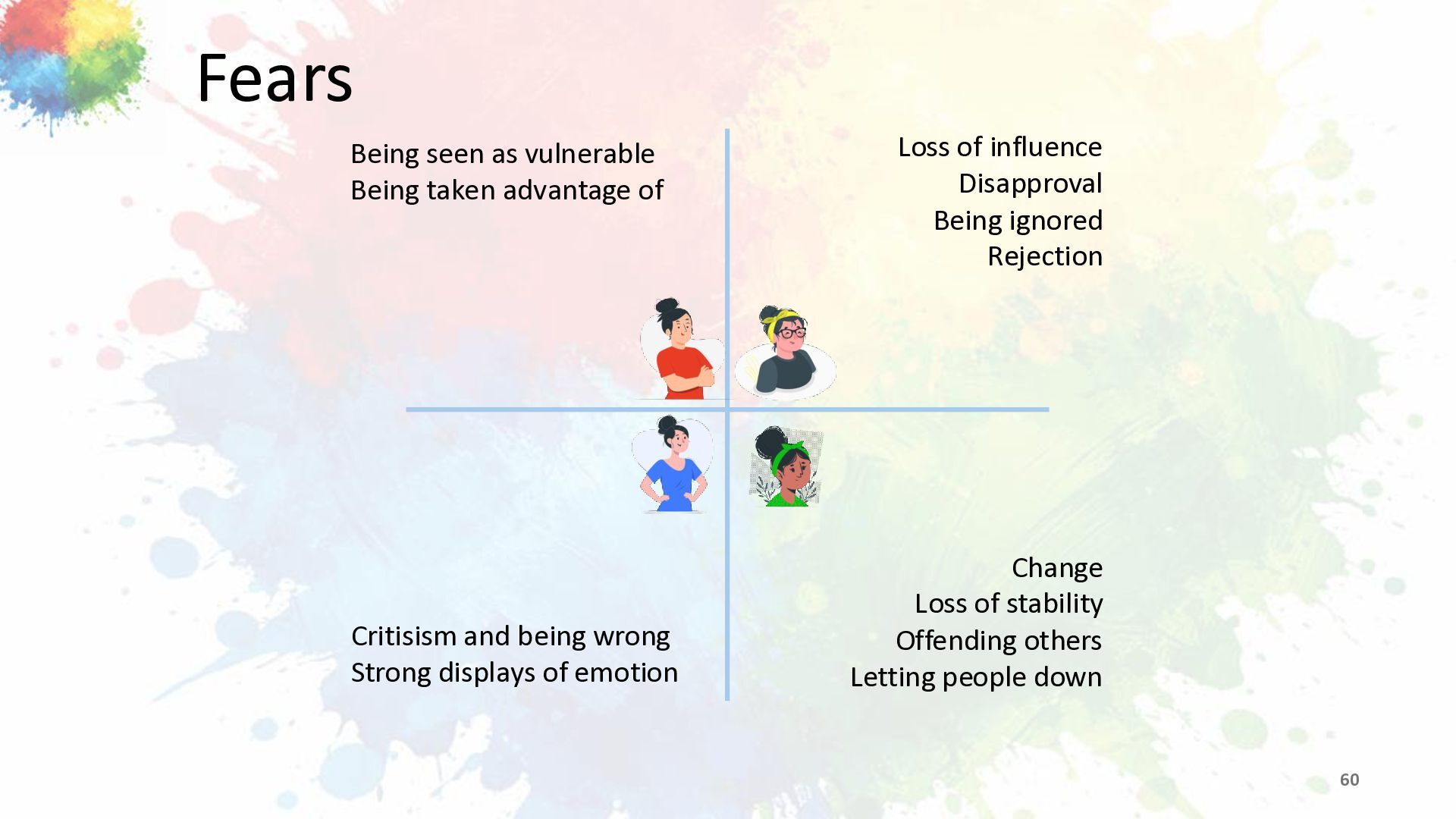
Change Loss of stability Offending others Letting people down Critisism and being wrong Strong displays of emotion Loss of influence Disapproval Being ignored Rejection
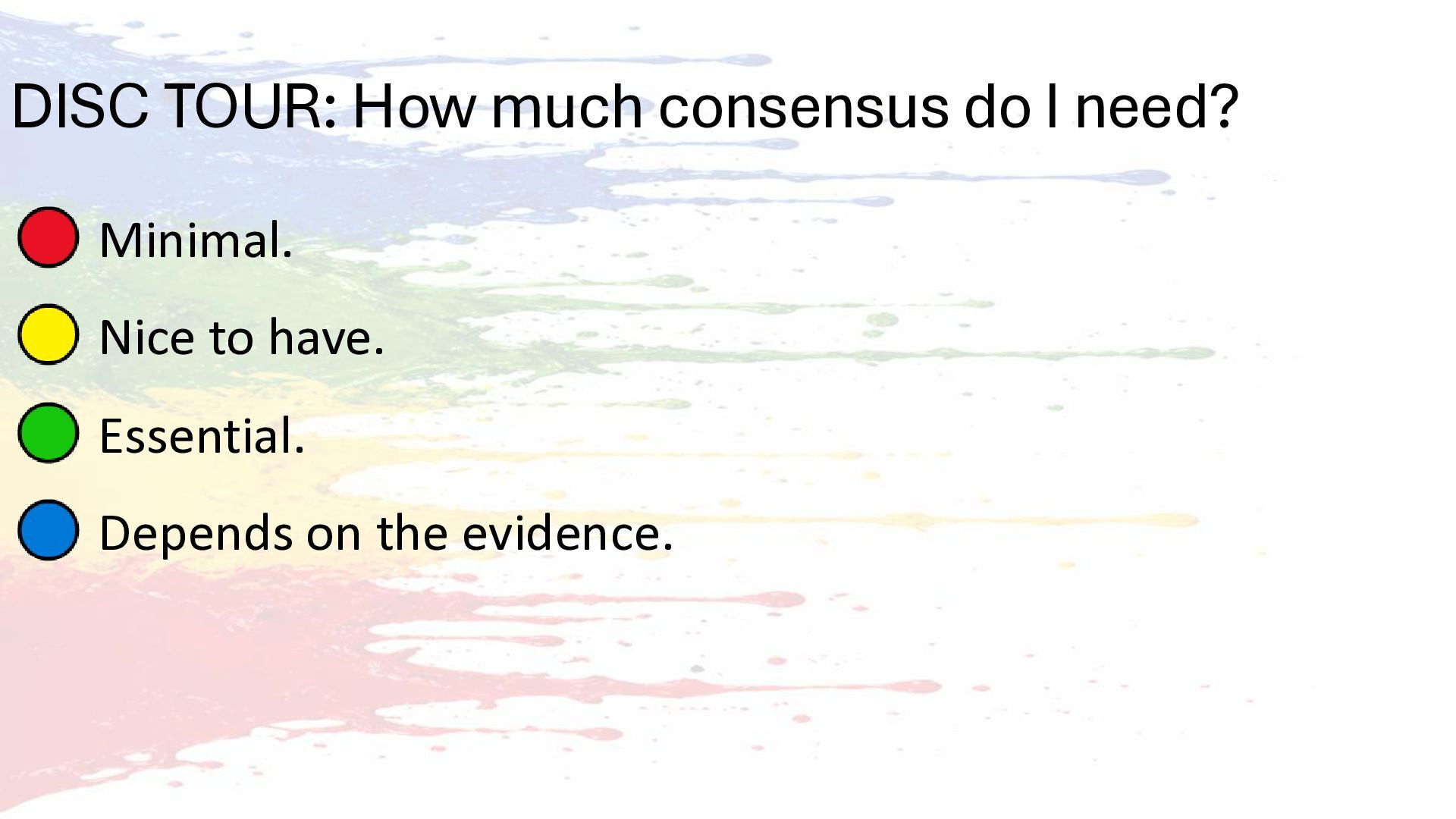
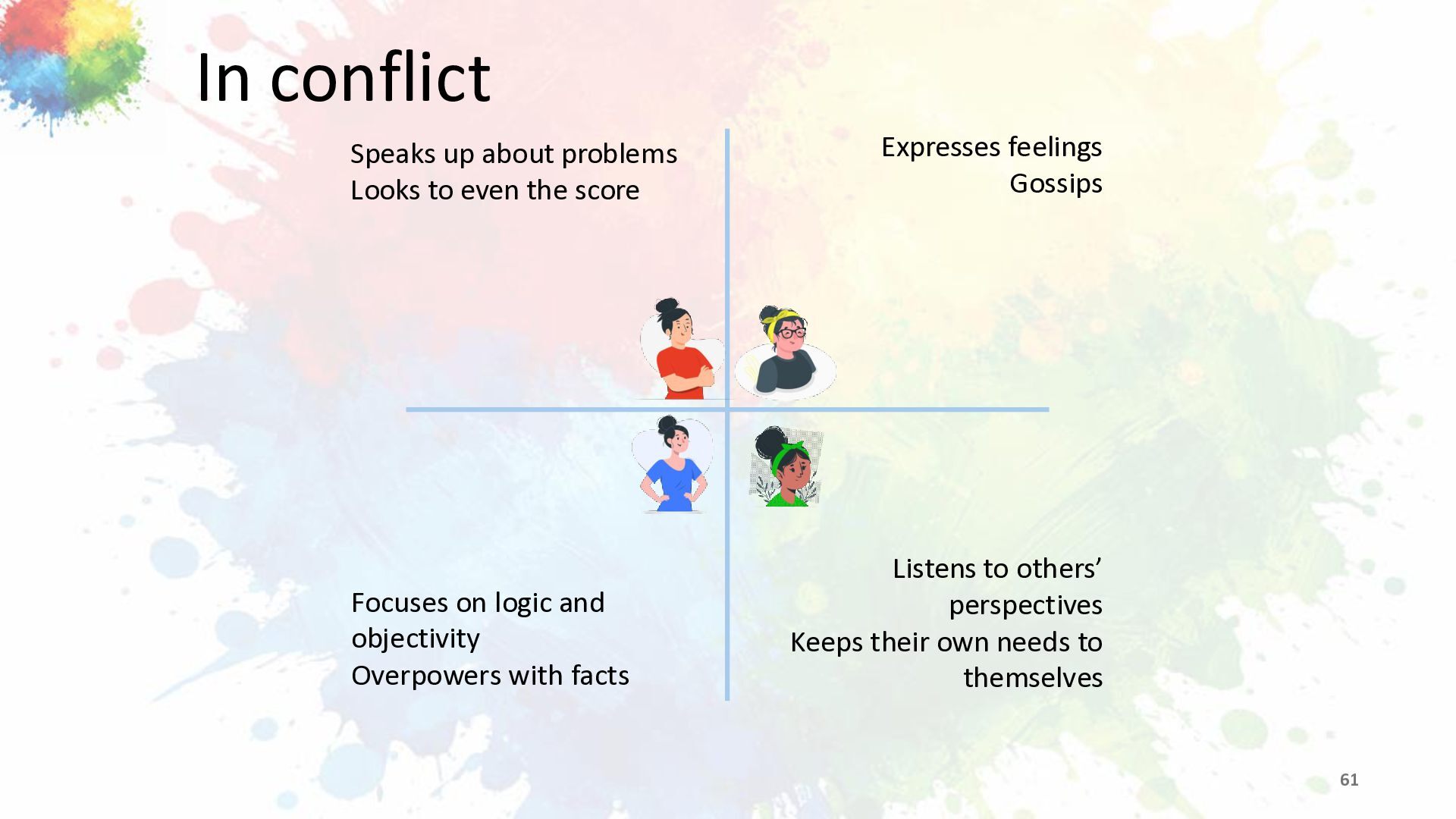
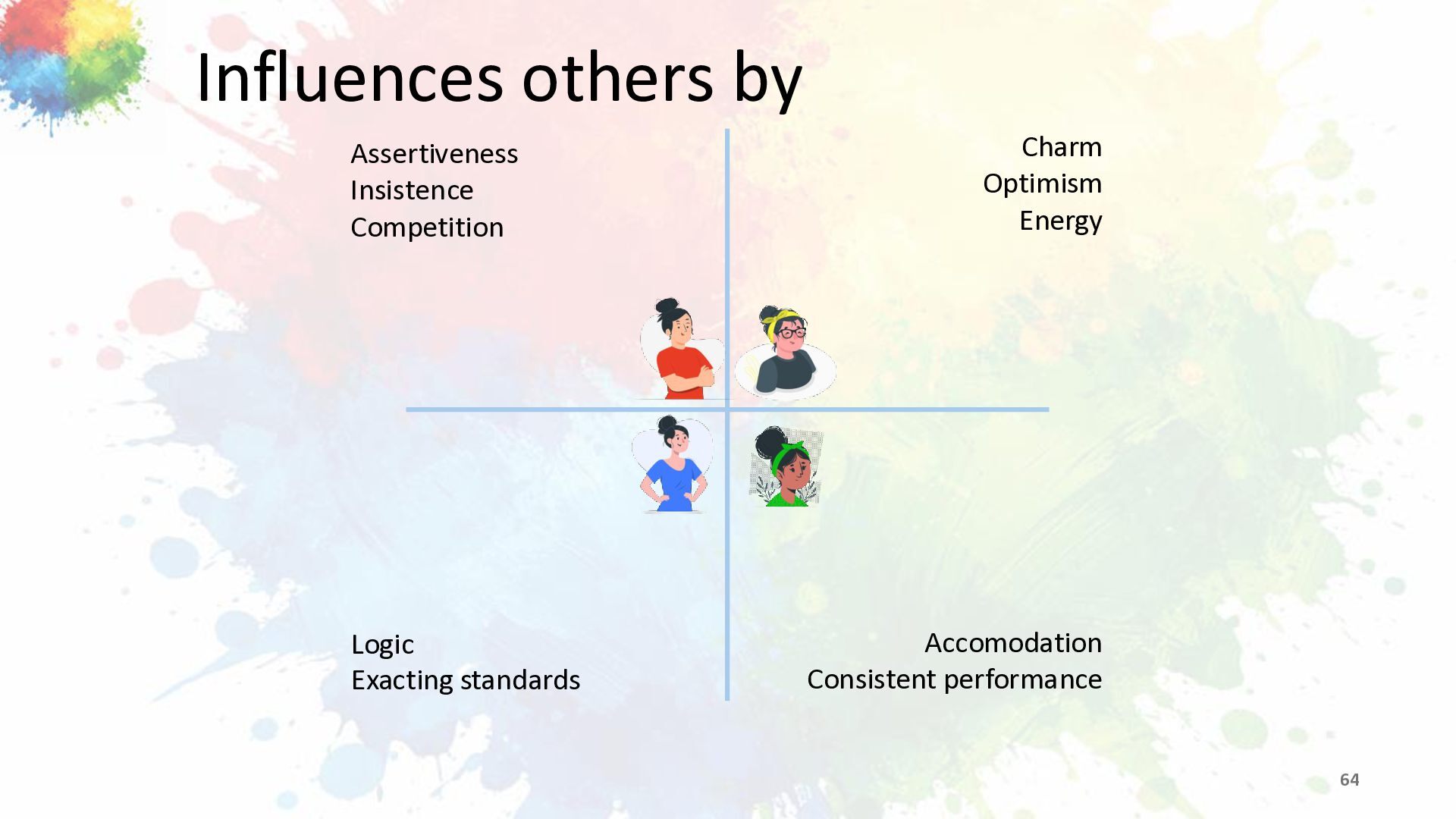
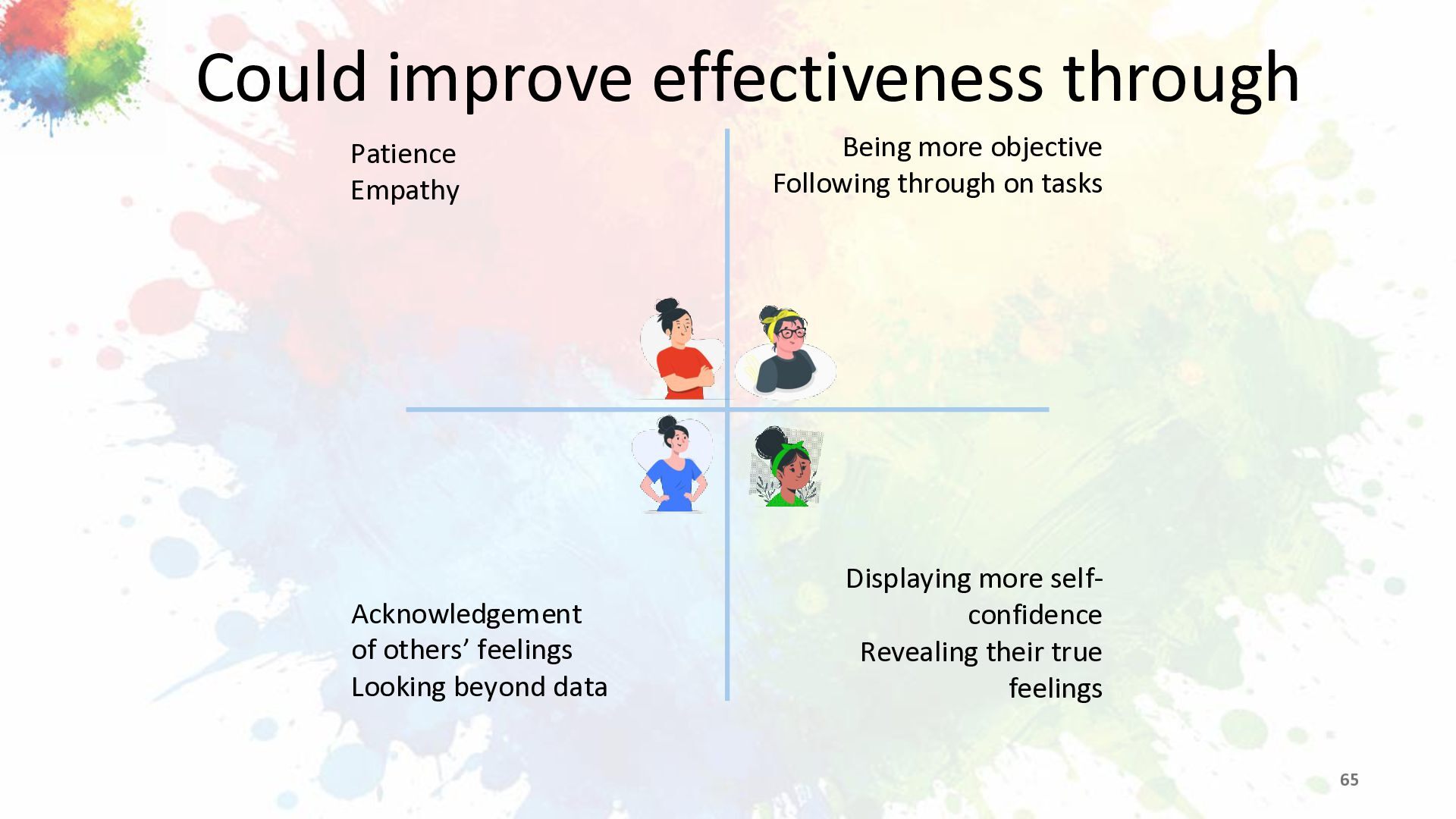
the score Listens to others’ perspectives Keeps their own needs to themselves Focuses on logic and objectivity Overpowers with facts Expresses feelings Gossips
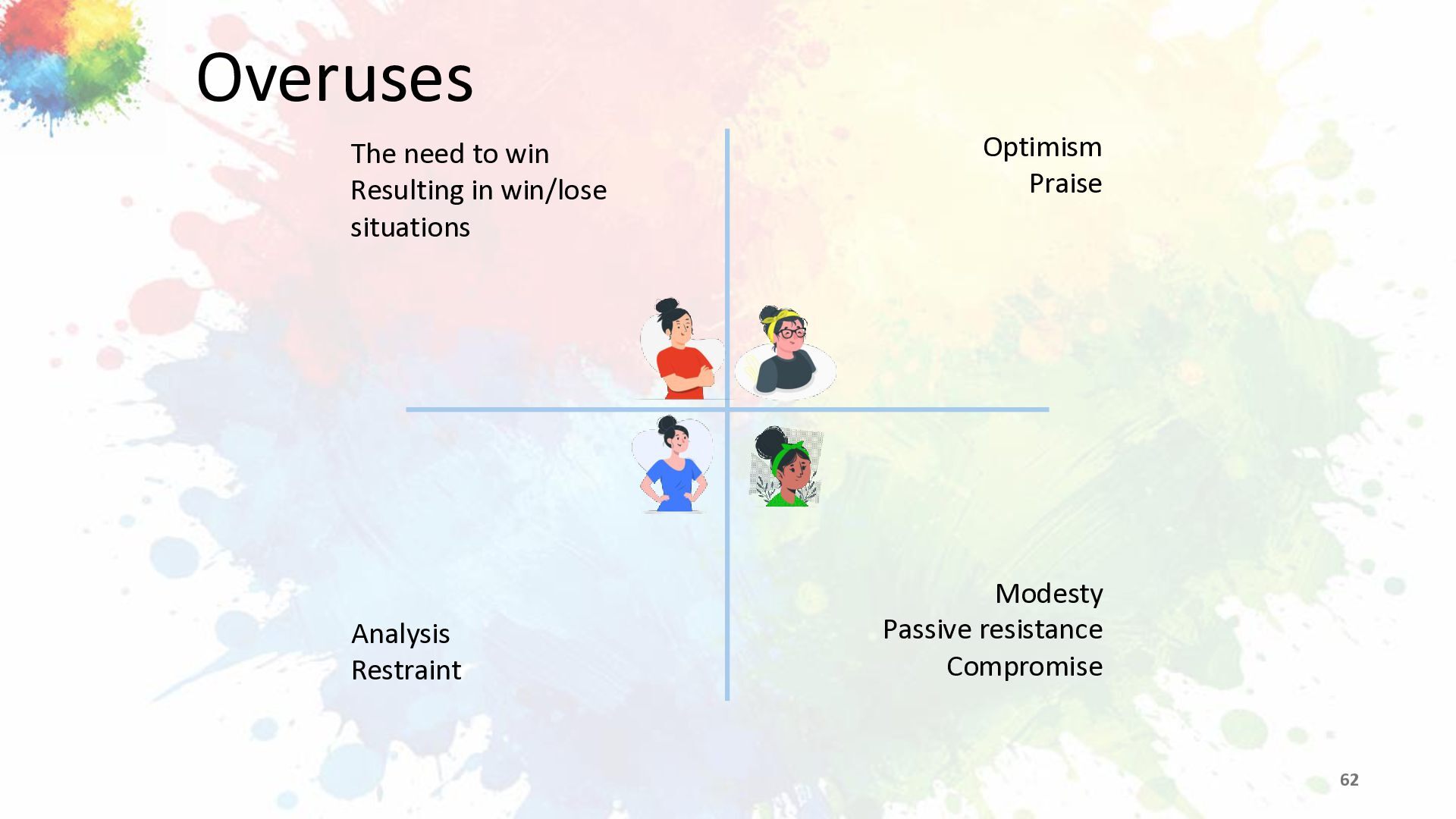
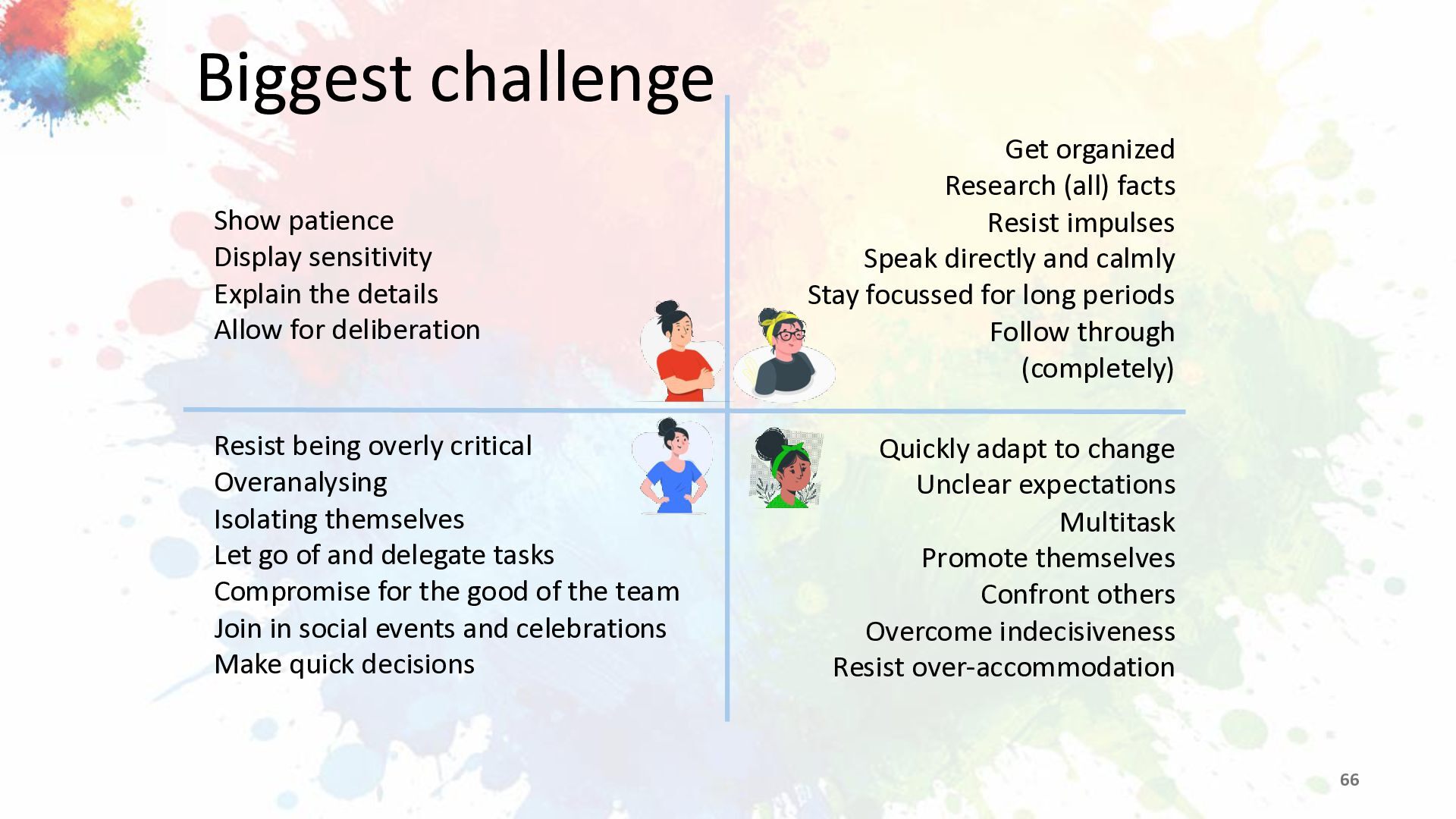
Allow for deliberation Quickly adapt to change Unclear expectations Multitask Promote themselves Confront others Overcome indecisiveness Resist over-accommodation Resist being overly critical Overanalysing Isolating themselves Let go of and delegate tasks Compromise for the good of the team Join in social events and celebrations Make quick decisions Get organized Research (all) facts Resist impulses Speak directly and calmly Stay focussed for long periods Follow through (completely)
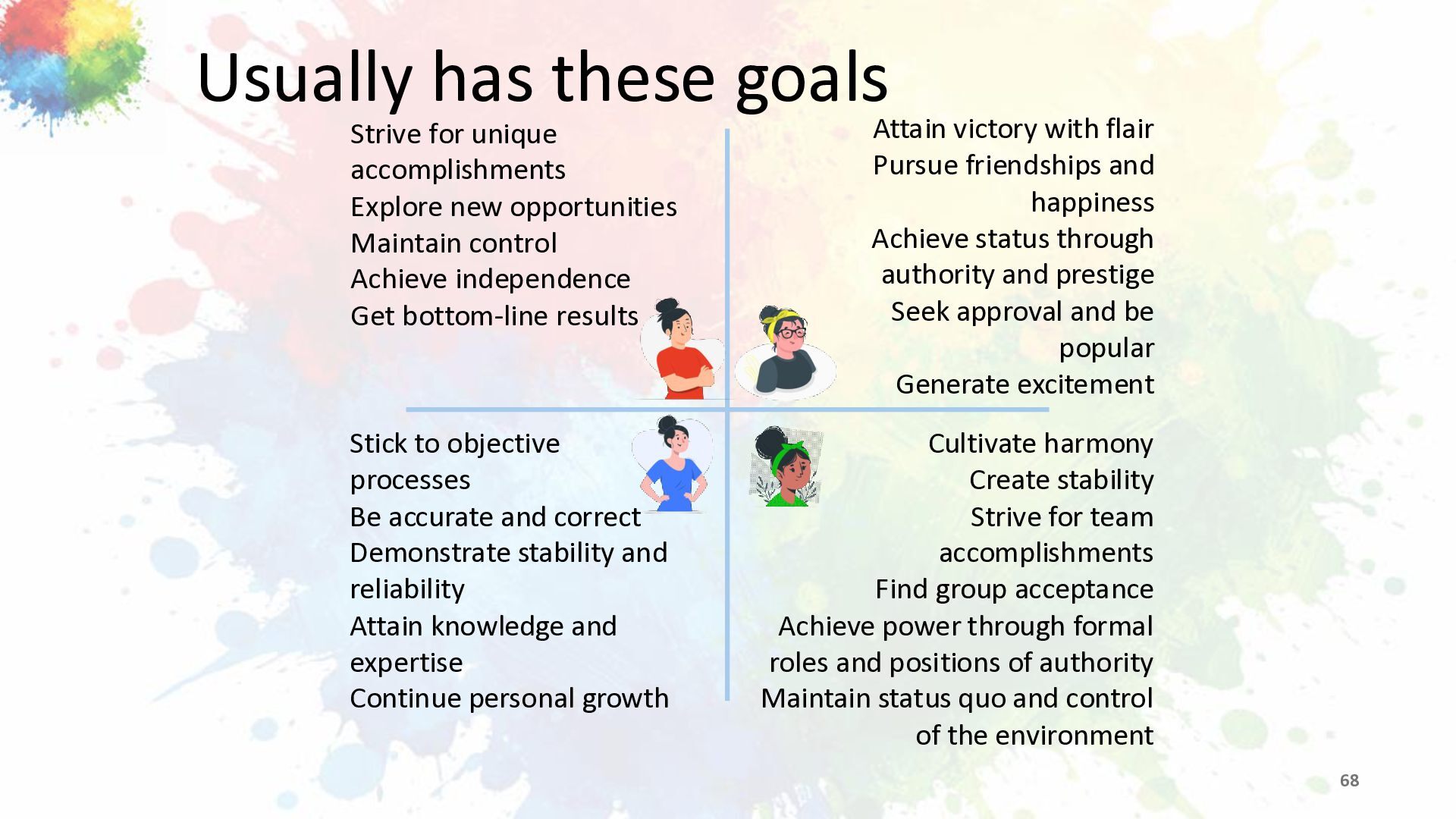
new opportunities Maintain control Achieve independence Get bottom-line results Cultivate harmony Create stability Strive for team accomplishments Find group acceptance Achieve power through formal roles and positions of authority Maintain status quo and control of the environment Stick to objective processes Be accurate and correct Demonstrate stability and reliability Attain knowledge and expertise Continue personal growth Attain victory with flair Pursue friendships and happiness Achieve status through authority and prestige Seek approval and be popular Generate excitement
Izobretatelskikh Zadatch • Translated: Theory of Inventive Problem Solving • Creative destruction in groups • We’ll explore how to make testing fail completely. Every act of creation is first an act of destruction. – Pablo Picasso
• When the bell rings, conversations stop immediately • Use the “finger on lips” signal as a silent way to pause the group • If you see the signal, stop talking and do the same
— Each group gets their own challenge 2 Round 2 — Recognize: “Now: where in our current practices do you see any of these behaviours already happening? Circle the ones that feel uncomfortably familiar.” TRIZ
— Each group gets their own challenge 2 Round 2 — Recognize: “Now: where in our current practices do you see any of these behaviours already happening? Circle the ones that feel uncomfortably familiar.” 3 Round 3 — Invert: “For the items you circled, what is the first step you could take to stop doing each one?” TRIZ
How did your team work, knowing your DISC profiles? 1 Round 6 — Reveal and compare: Share and compare the perceived versus the actual colours to the whole group 6 5
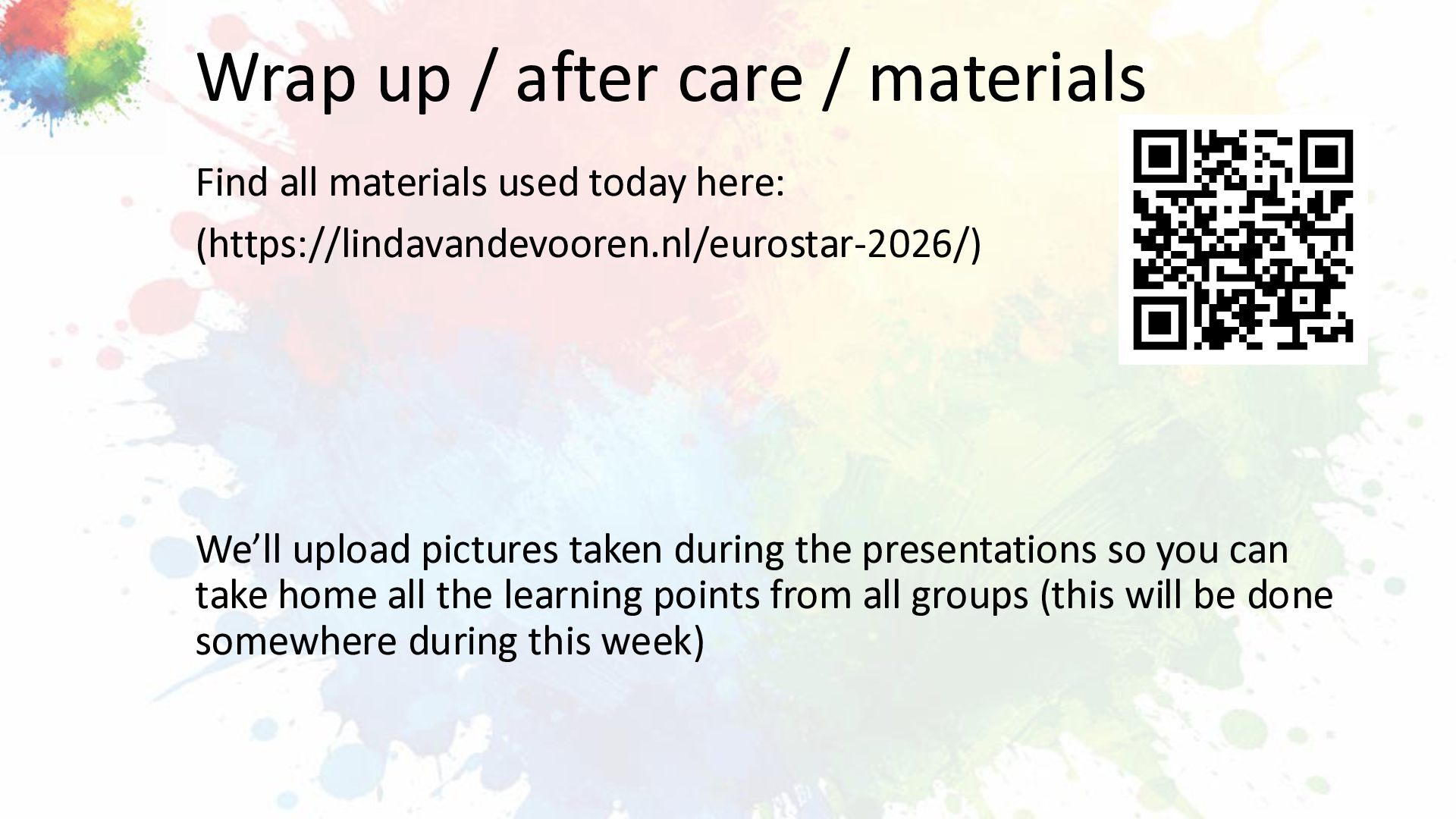
used today here: (https://lindavandevooren.nl/eurostar-2026/) We’ll upload pictures taken during the presentations so you can take home all the learning points from all groups (this will be done somewhere during this week)


 sapphirelinda
 yeseniaperezcruz
 baasie
 jonoalderson
 tammyeverts
 tapps
tapps
 mza
mza
 katiecoart
 pauljervisheath
.jpg) cargoodrich
cargoodrich
 iamctodd
 kimpetersen
 mclloyd



![Yvonne Vos Email [email protected] Social https://www.linkedin.com/in/yvonnevos/ Linda van de Vooren](https://files.speakerdeck.com/presentations/380e42a9ad6744b6b263164fdc518fdc/slide_79.jpg)