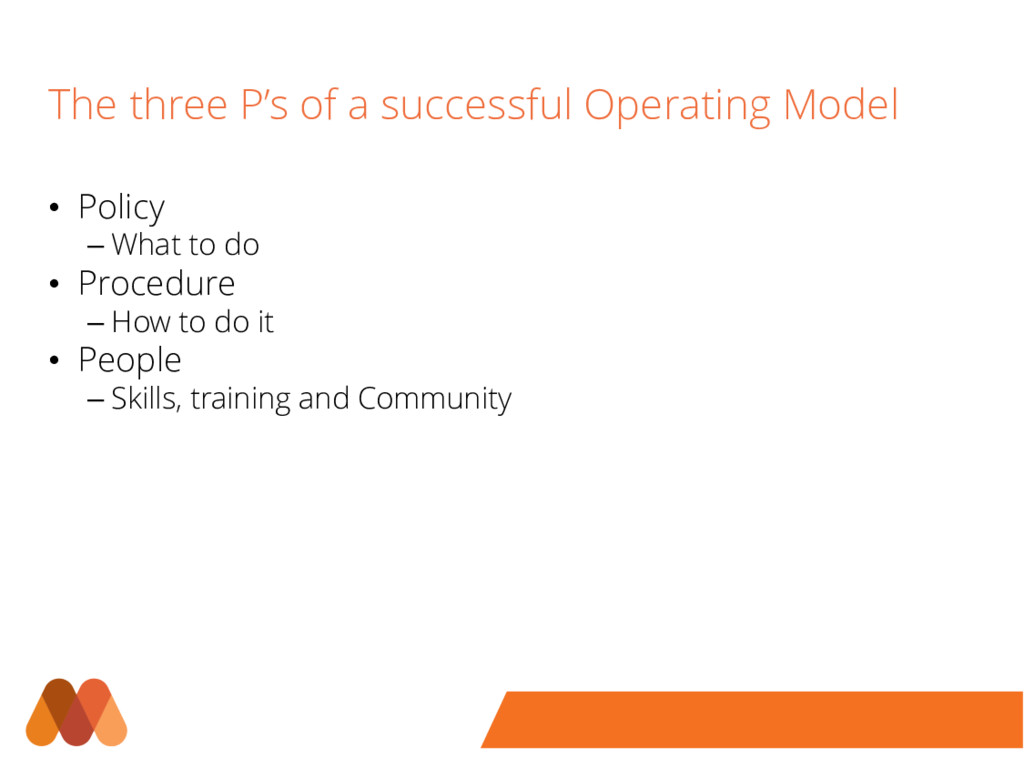
When open-source R meets the enterprise, having a proper operating model can help bridge the gap between your Data Science and Ops teams and provide an additional degree of assurance that the tools will be used in a way appropriate for the business.
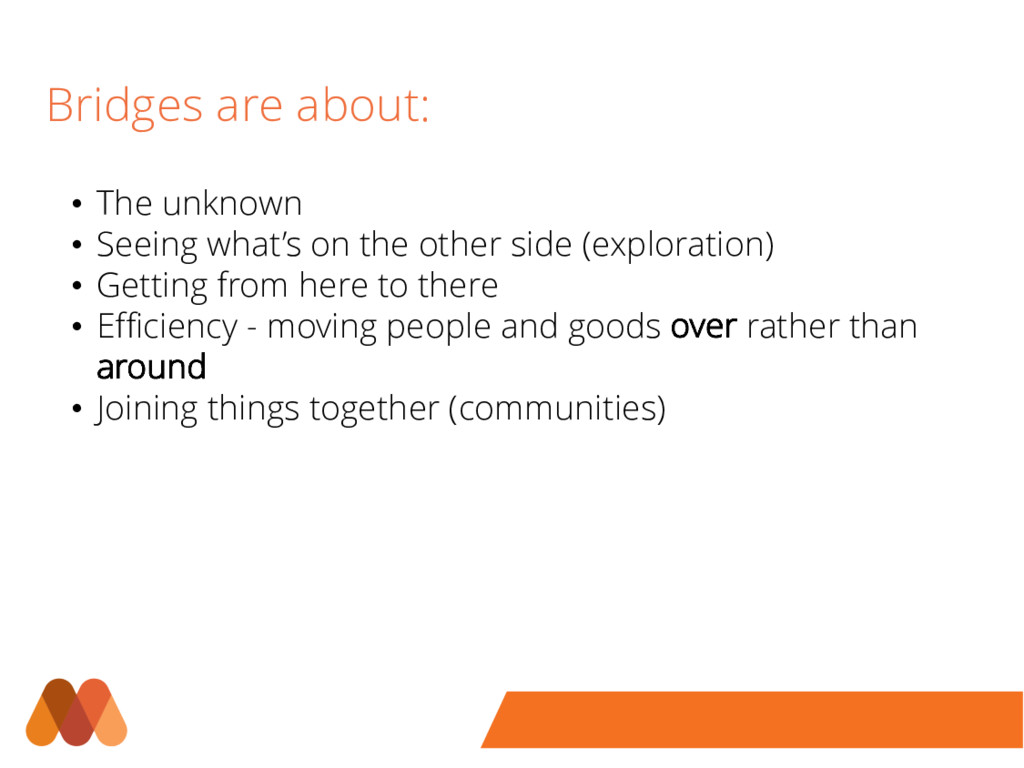
the other side (exploration) • Getting from here to there • Efficiency - moving people and goods over rather than around • Joining things together (communities)
data science to run in a production setting is an act of bridge building. Any solution must get from A (where we are now) to B (where we want to be) as efficiently, repeatably and supportably as possible
a certain traffic type • The need to carry a certain volume of traffic • The need to span a particular distance • The need to allow certain things to pass underneath (eg tall ships)
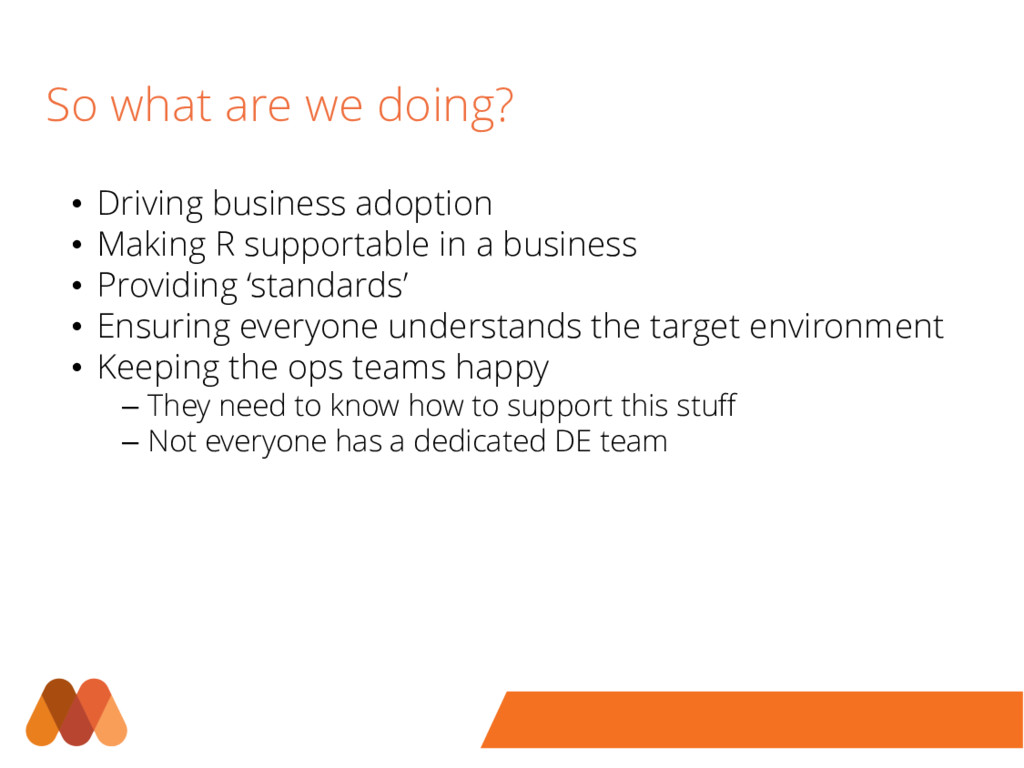
Making R supportable in a business • Providing ‘standards’ • Ensuring everyone understands the target environment • Keeping the ops teams happy – They need to know how to support this stuff – Not everyone has a dedicated DE team
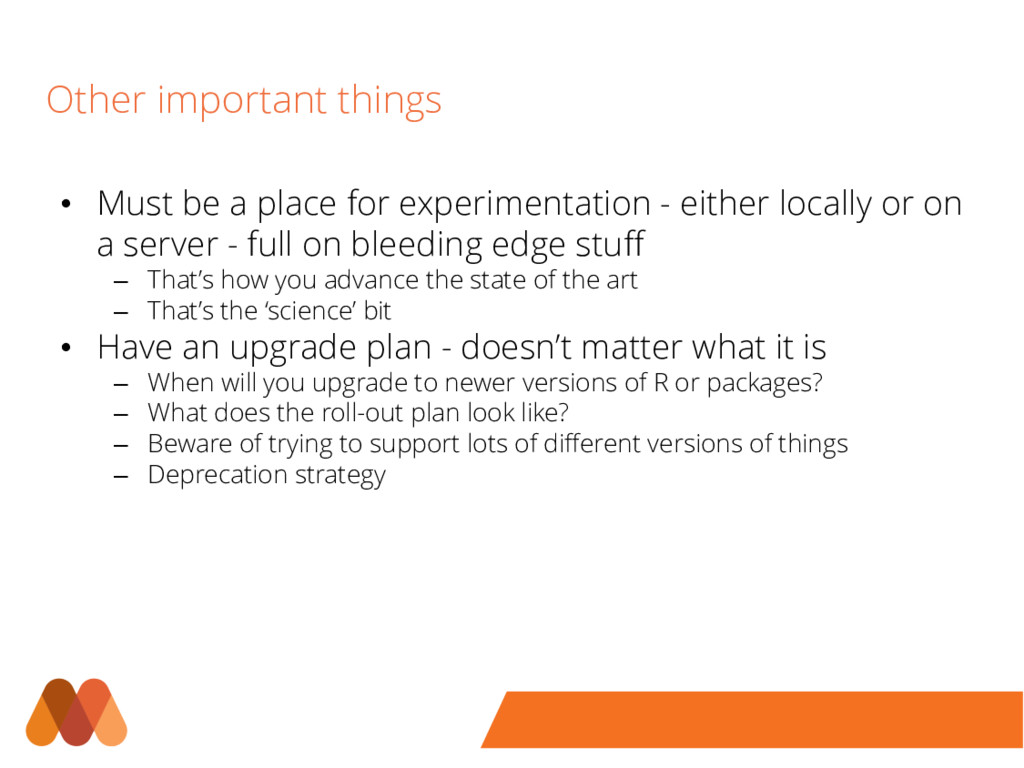
- either locally or on a server - full on bleeding edge stuff – That’s how you advance the state of the art – That’s the ‘science’ bit • Have an upgrade plan - doesn’t matter what it is – When will you upgrade to newer versions of R or packages? – What does the roll-out plan look like? – Beware of trying to support lots of different versions of things – Deprecation strategy
legacy systems – It’s almost always the case that not enough consideration is given to maintaining legacy systems – As soon as a data product is implemented it’s a legacy tool and requires an upgrade plan/path • Be prepared for change – Adaptability is the key to survival


 sellorm
 shogo4131
 puhitaku
 ymotongpoo
 pfn
pfn
 namiki64
 jyouryuusui
 odashi
 yuuuuuuu168
 yut0naga1_fa
 ykanoh
 4o1sobblue
 hiracky16
 tammyeverts
 philnash
 paigeccino
 schroneko
 techseoconnect
 matthewcrist
 takai
takai
.png) helenjbeal
helenjbeal
 skipperchong
 erikaheidi
 portentint