Upgrade to Pro — share decks privately, control downloads, hide ads and more …

Cyber Resilience vs. Cybersecurity: What’s the ...

Cyber Resilience vs. Cybersecurity: What’s the Difference?

Explore the key differences between cyber resilience and cybersecurity, two essential pillars of modern digital defense. While cybersecurity focuses on preventing attacks, cyber resilience ensures your organization can respond, recover, and adapt when incidents occur. Learn why both are critical, how they complement each other, and what businesses need to implement for long-term protection.
Click Here and Read in detail - How to Adopt Cyber Resilience Integrating Every Essential Aspect? https://www.secureitworld.com/blog/how-to-adopt-cyber-resilience-integrating-every-essential-aspect/

Avatar for SecureITWorld

SecureITWorld

July 29, 2025
Tweet

Other Decks in Technology

Transcript

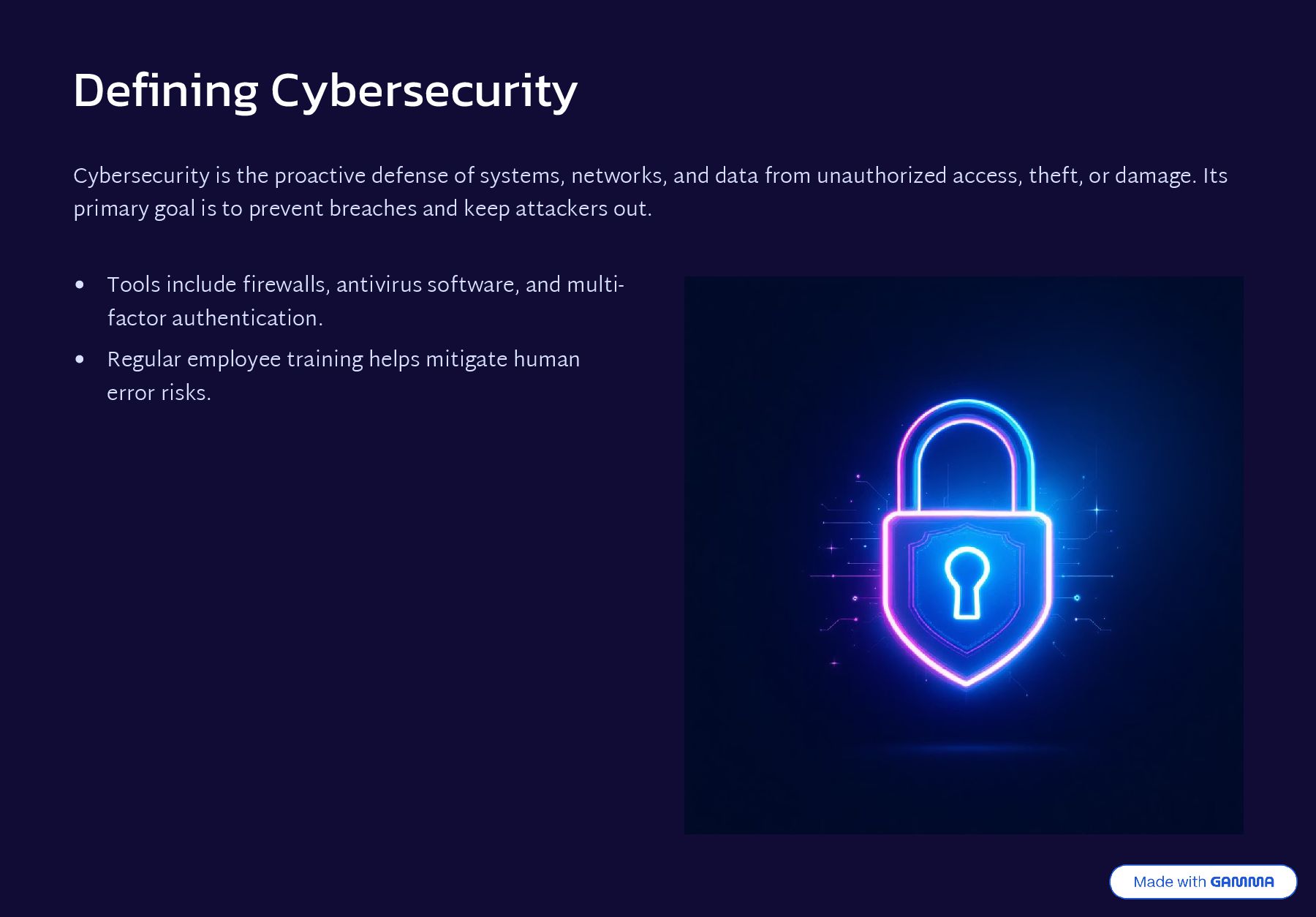
  1. Defining Cybersecurity Cybersecurity is the proactive defense of systems, networks,

    and data from unauthorized access, theft, or damage. Its primary goal is to prevent breaches and keep attackers out. Tools include firewalls, antivirus software, and multi- factor authentication. Regular employee training helps mitigate human error risks.
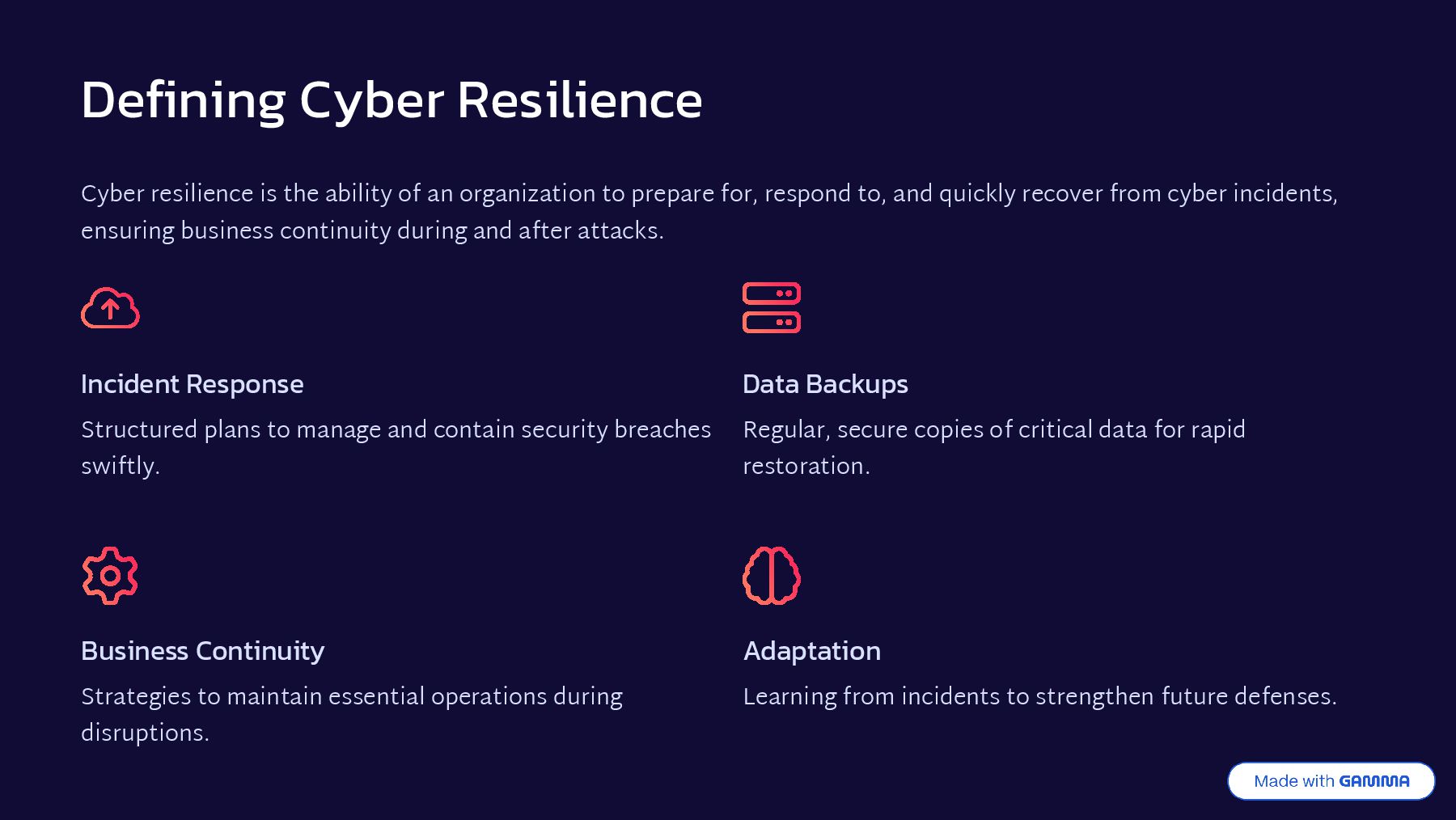
  2. Defining Cyber Resilience Cyber resilience is the ability of an

    organization to prepare for, respond to, and quickly recover from cyber incidents, ensuring business continuity during and after attacks. Incident Response Structured plans to manage and contain security breaches swiftly. Data Backups Regular, secure copies of critical data for rapid restoration. Business Continuity Strategies to maintain essential operations during disruptions. Adaptation Learning from incidents to strengthen future defenses.
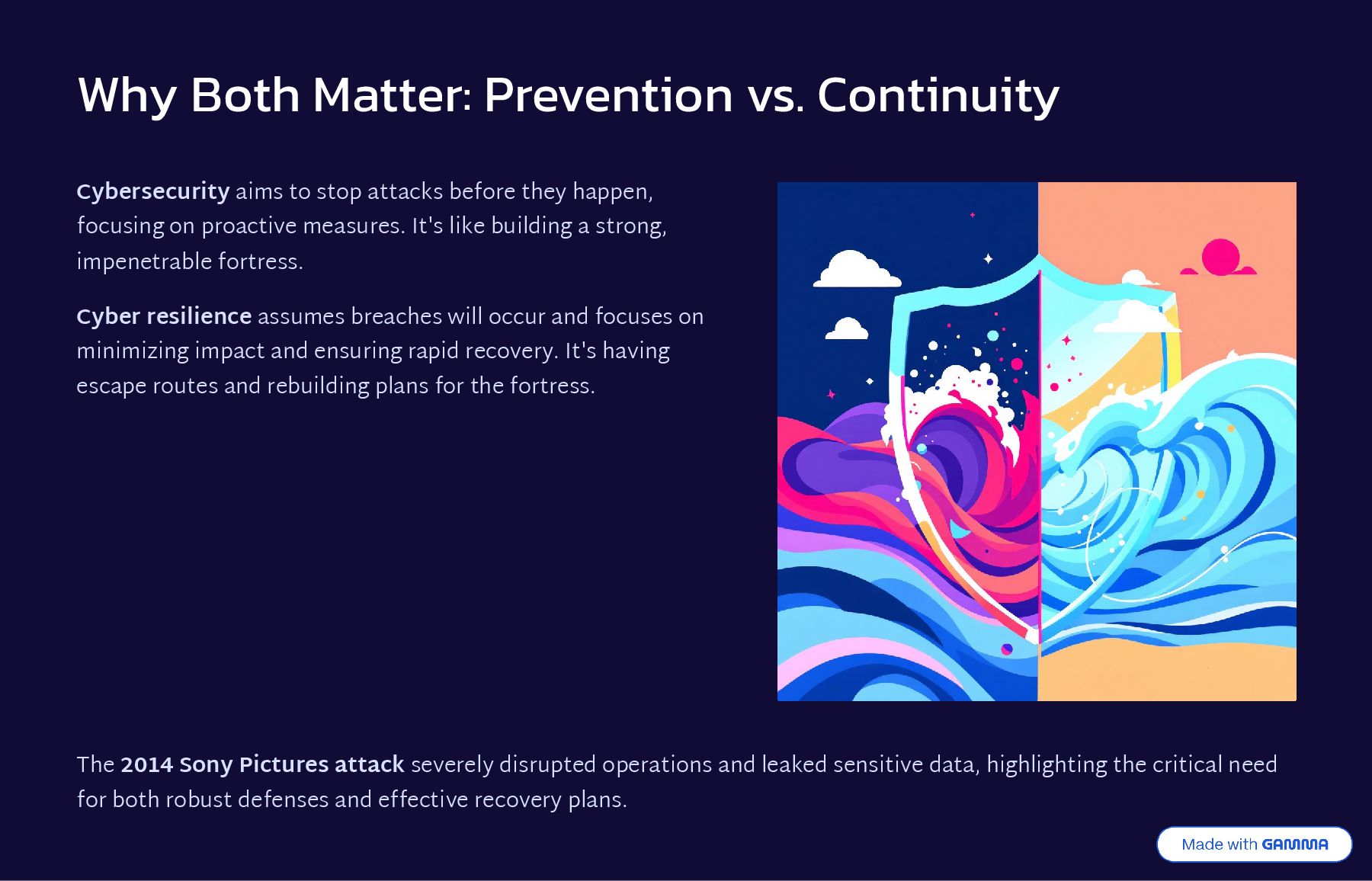
  3. Why Both Matter: Prevention vs. Continuity Cybersecurity aims to stop

    attacks before they happen, focusing on proactive measures. It's like building a strong, impenetrable fortress. Cyber resilience assumes breaches will occur and focuses on minimizing impact and ensuring rapid recovery. It's having escape routes and rebuilding plans for the fortress. The 2014 Sony Pictures attack severely disrupted operations and leaked sensitive data, highlighting the critical need for both robust defenses and effective recovery plans.
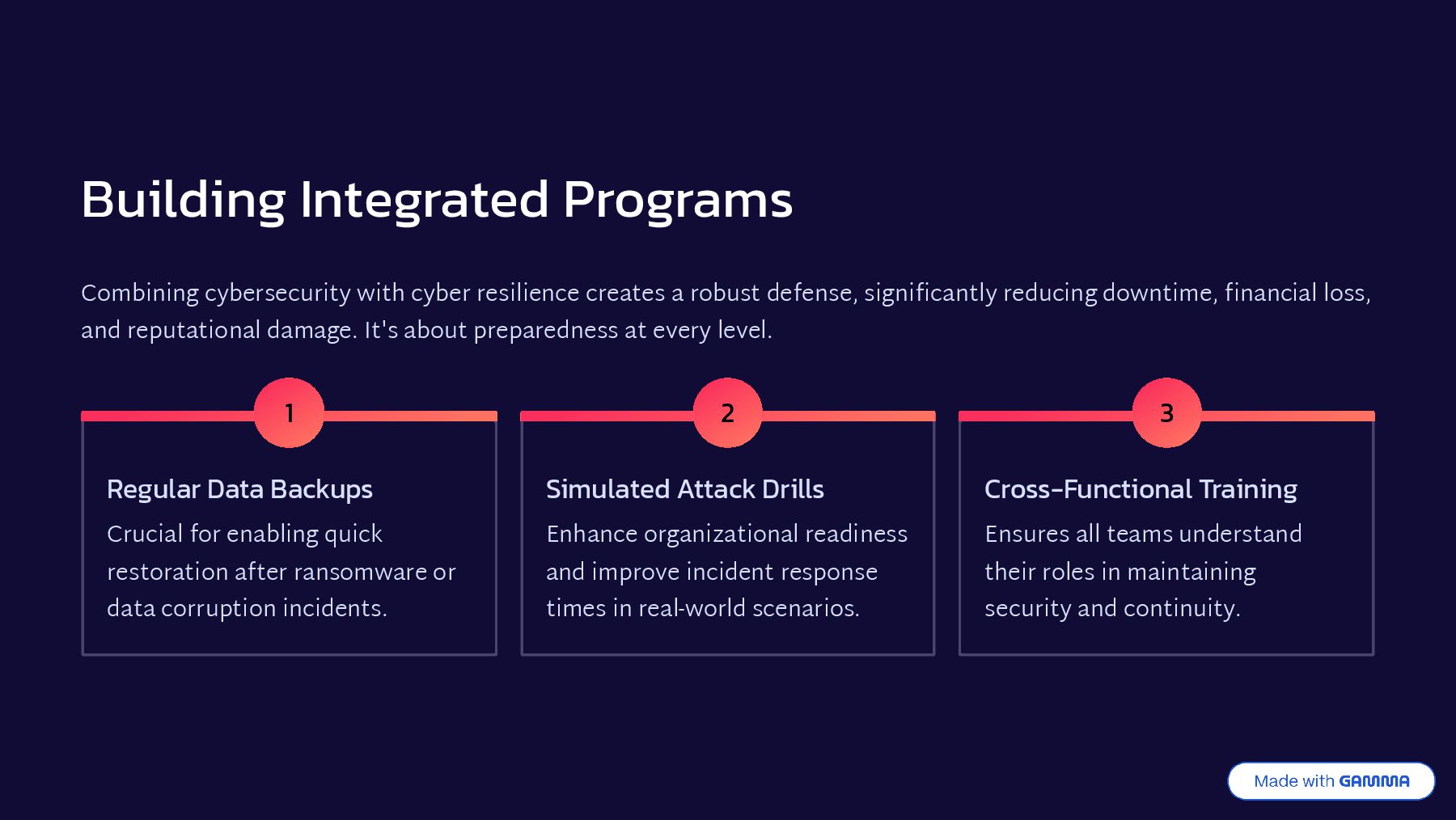
  4. Building Integrated Programs Combining cybersecurity with cyber resilience creates a

    robust defense, significantly reducing downtime, financial loss, and reputational damage. It's about preparedness at every level. 1 Regular Data Backups Crucial for enabling quick restoration after ransomware or data corruption incidents. 2 Simulated Attack Drills Enhance organizational readiness and improve incident response times in real-world scenarios. 3 Cross-Functional Training Ensures all teams understand their roles in maintaining security and continuity.
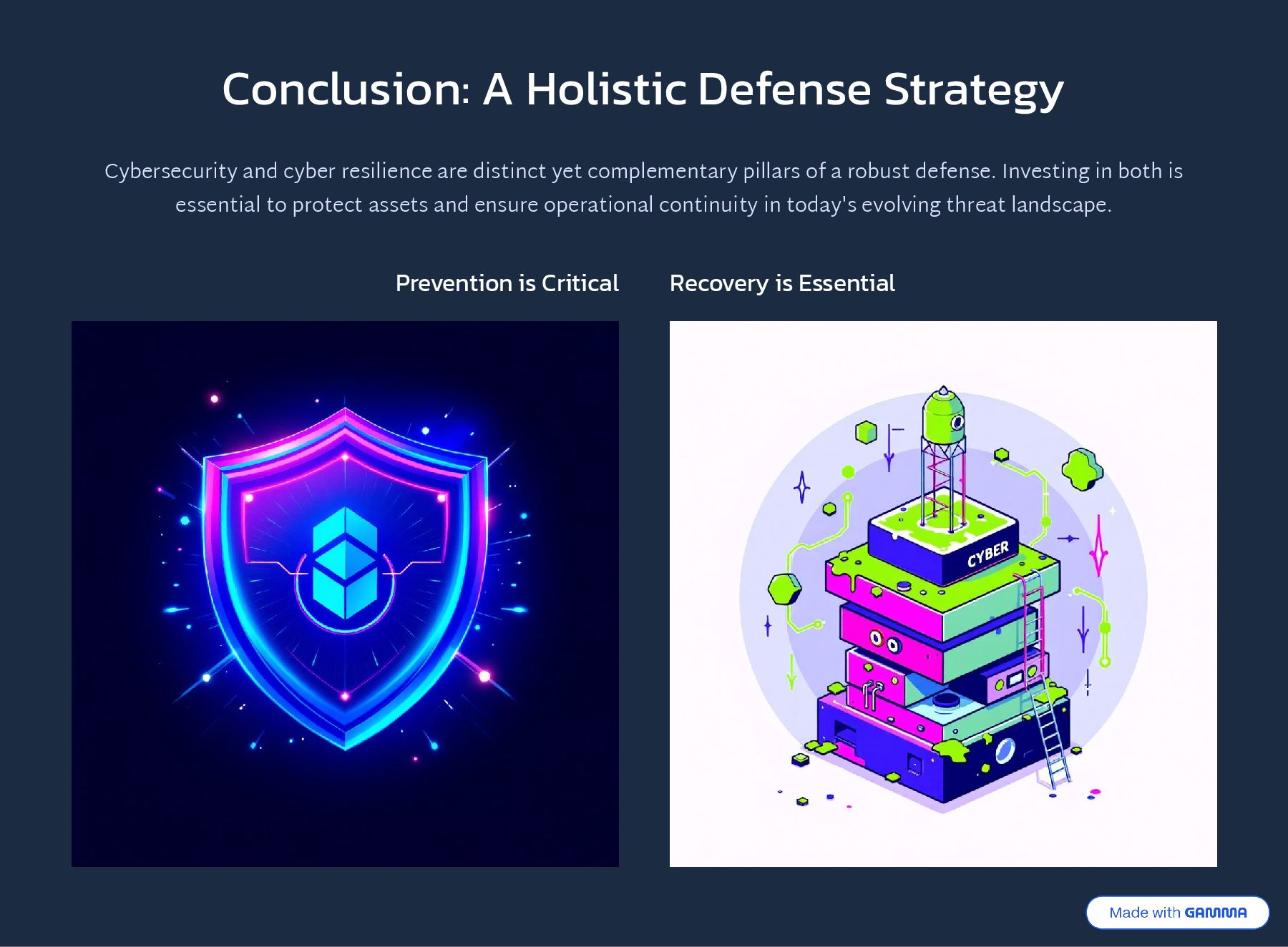
  5. Conclusion: A Holistic Defense Strategy Cybersecurity and cyber resilience are

    distinct yet complementary pillars of a robust defense. Investing in both is essential to protect assets and ensure operational continuity in today's evolving threat landscape. Prevention is Critical Recovery is Essential