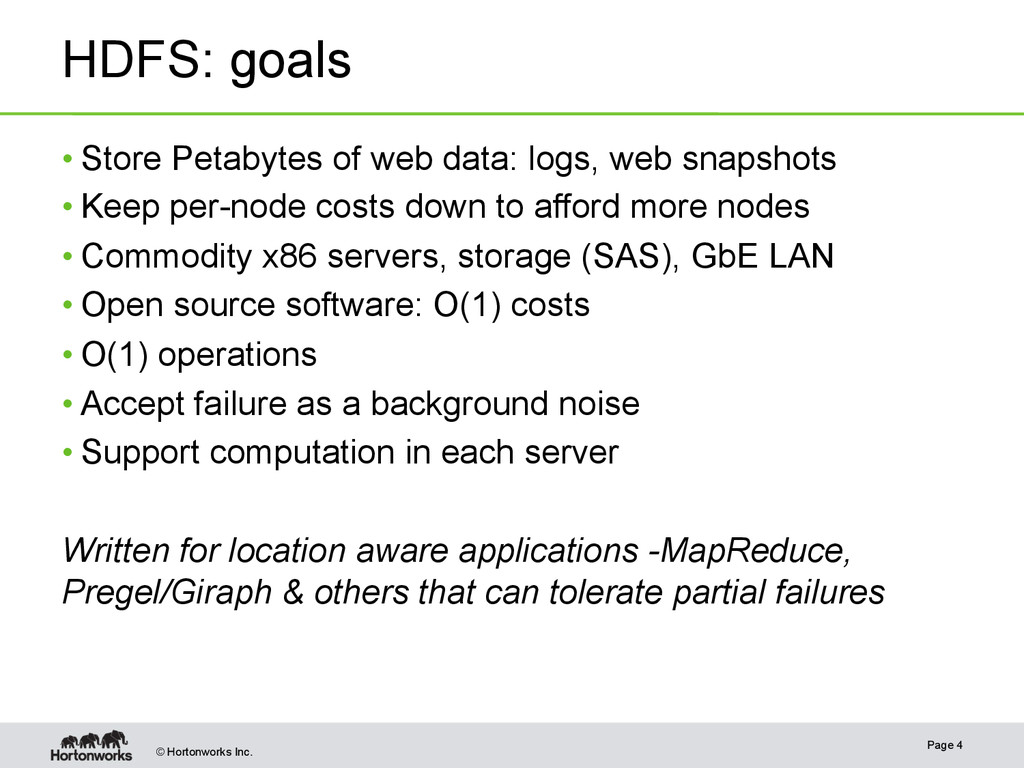
logs, web snapshots • Keep per-node costs down to afford more nodes • Commodity x86 servers, storage (SAS), GbE LAN • Open source software: O(1) costs • O(1) operations • Accept failure as a background noise • Support computation in each server Written for location aware applications -MapReduce, Pregel/Giraph & others that can tolerate partial failures Page 4
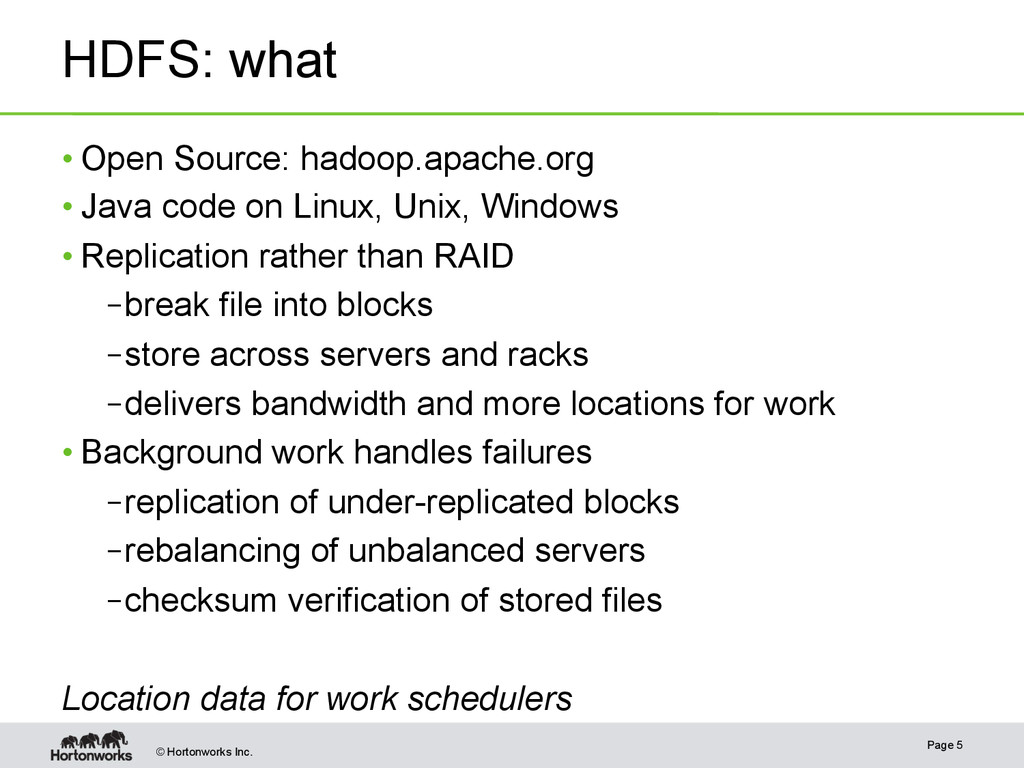
on Linux, Unix, Windows • Replication rather than RAID – break file into blocks – store across servers and racks – delivers bandwidth and more locations for work • Background work handles failures – replication of under-replicated blocks – rebalancing of unbalanced servers – checksum verification of stored files Location data for work schedulers Page 5
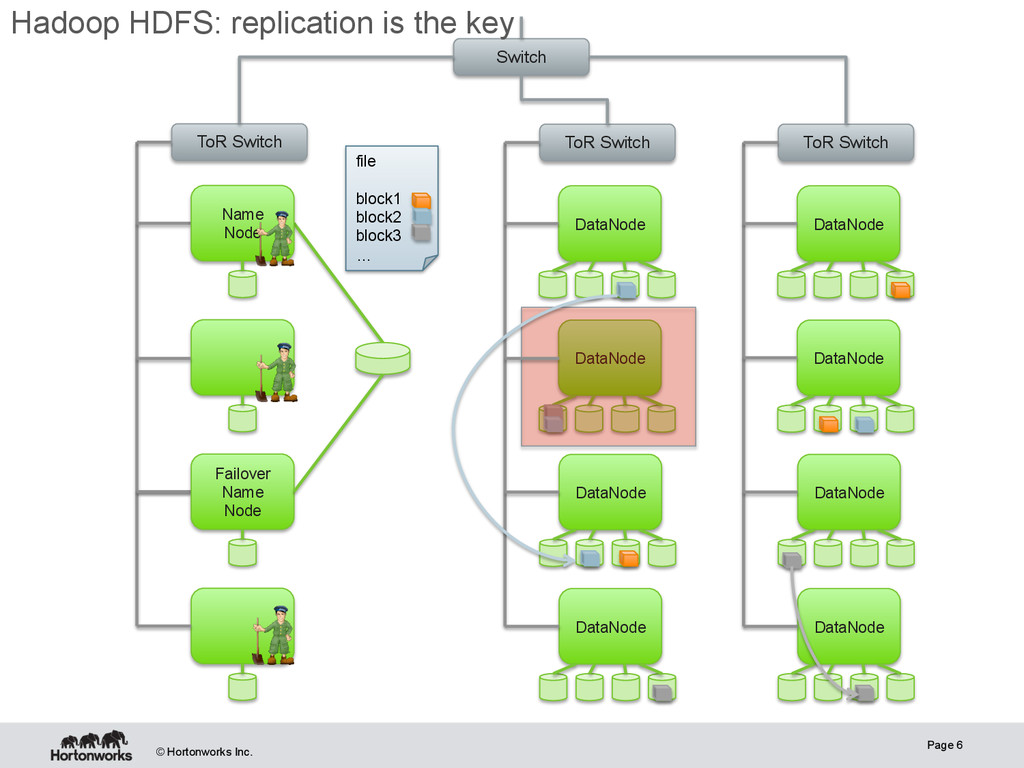
Switch DataNode DataNode DataNode DataNode ToR Switch Switch ToR Switch Failover Name Node Name Node file block1 block2 block3 … Hadoop HDFS: replication is the key
solid state storage technologies emerging • When will HDDs go away? • How to take advantage of mixed storage • SSD retains the HDD metaphor, hides the details (access bus, wear levelling) Page 7 We need to give the OS and DFS control of the storage, work with the application
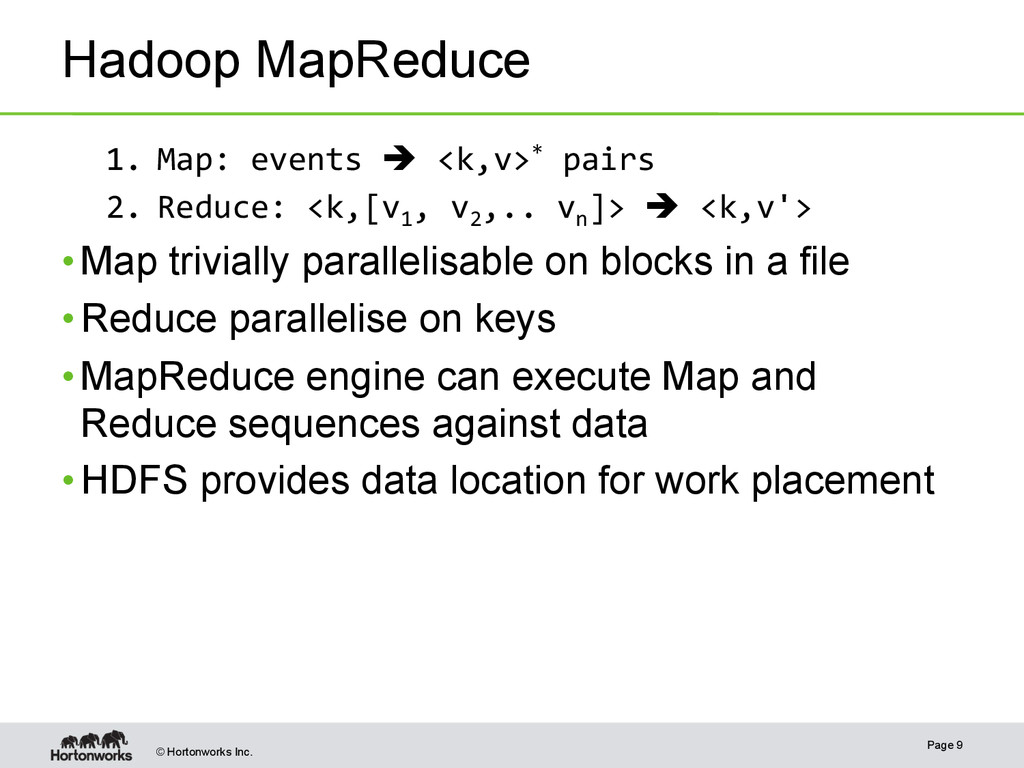
pairs 2. Reduce: <k,[v1 , v2 ,.. vn ]> è <k,v'> • Map trivially parallelisable on blocks in a file • Reduce parallelise on keys • MapReduce engine can execute Map and Reduce sequences against data • HDFS provides data location for work placement Page 9
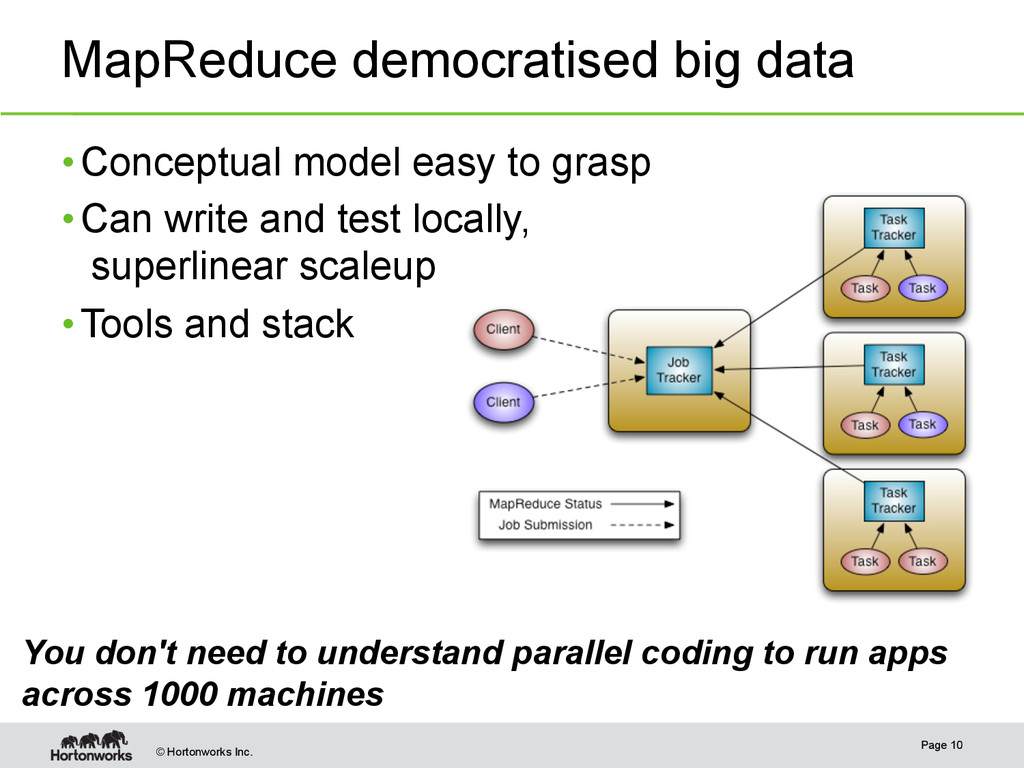
to grasp • Can write and test locally, superlinear scaleup • Tools and stack Page 10 You don't need to understand parallel coding to run apps across 1000 machines
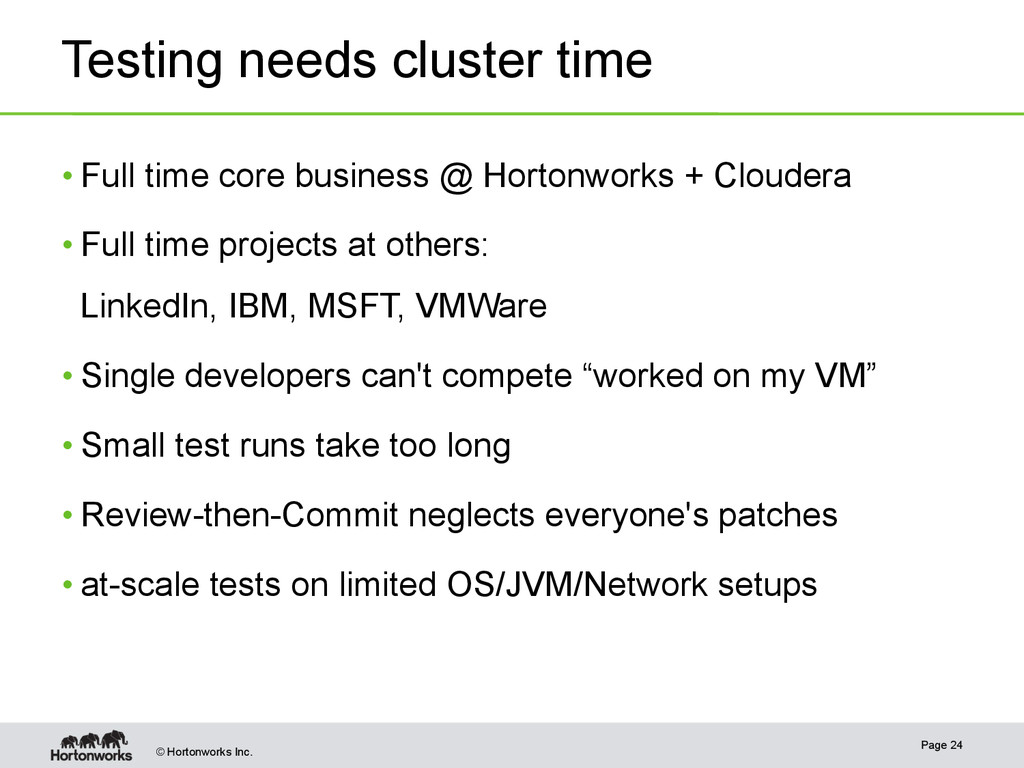
business @ Hortonworks + Cloudera • Full time projects at others: LinkedIn, IBM, MSFT, VMWare • Single developers can't compete “worked on my VM” • Small test runs take too long • Review-then-Commit neglects everyone's patches • at-scale tests on limited OS/JVM/Network setups Page 24
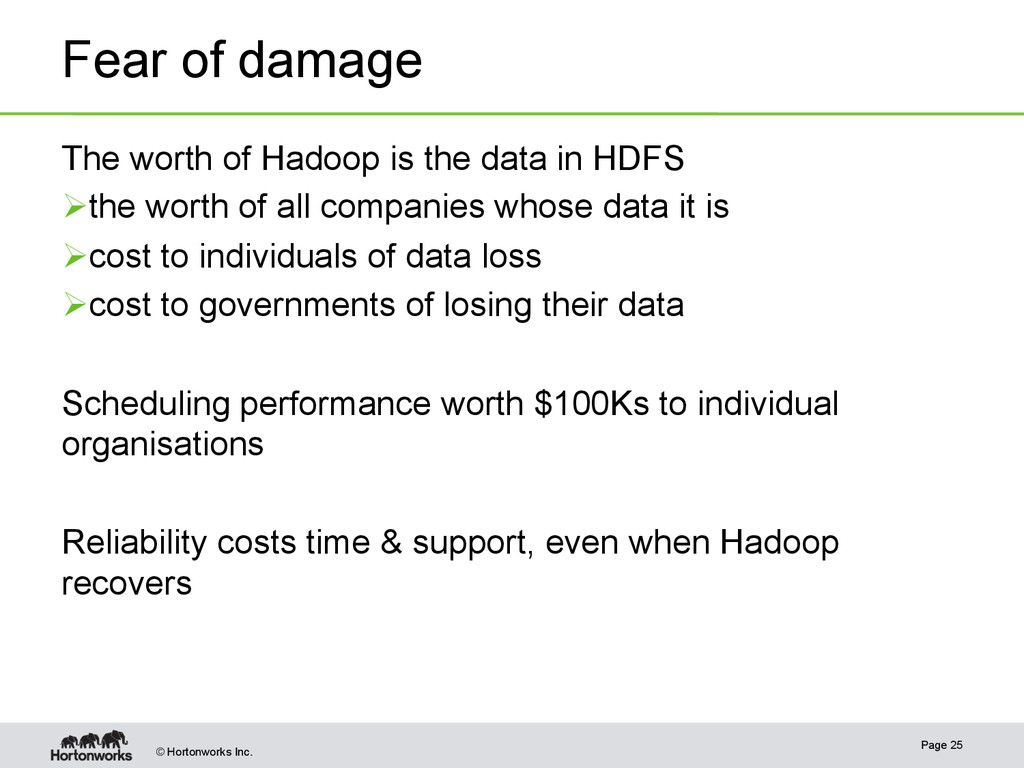
is the data in HDFS Ø the worth of all companies whose data it is Ø cost to individuals of data loss Ø cost to governments of losing their data Scheduling performance worth $100Ks to individual organisations Reliability costs time & support, even when Hadoop recovers Page 25
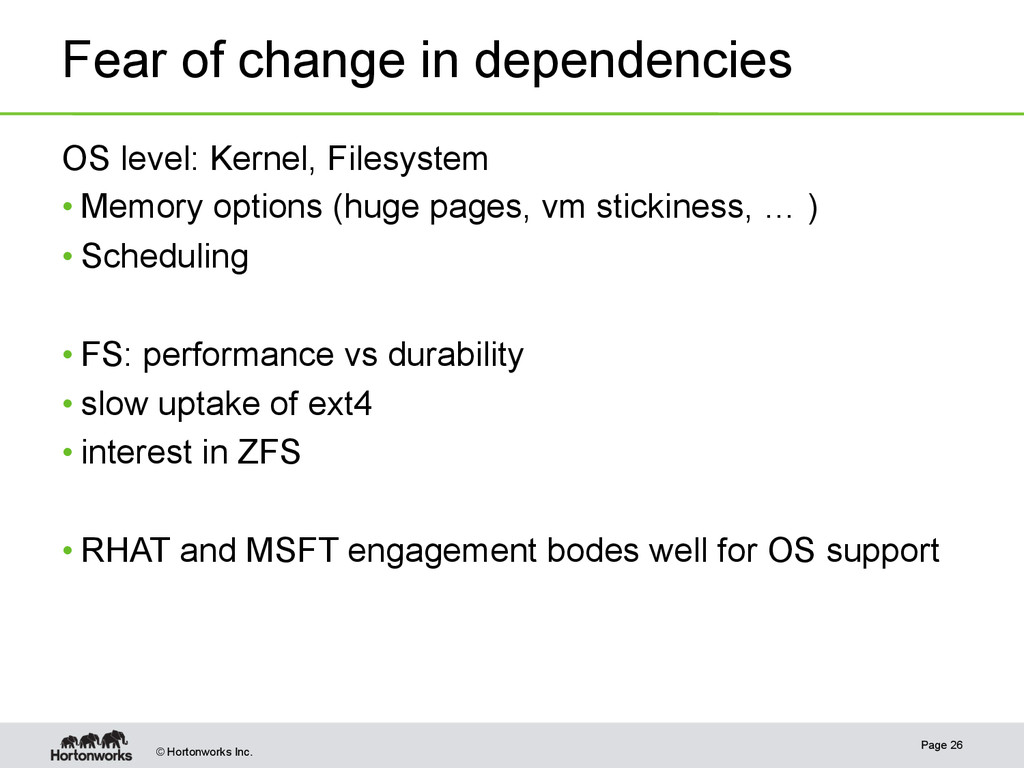
Kernel, Filesystem • Memory options (huge pages, vm stickiness, … ) • Scheduling • FS: performance vs durability • slow uptake of ext4 • interest in ZFS • RHAT and MSFT engagement bodes well for OS support Page 26
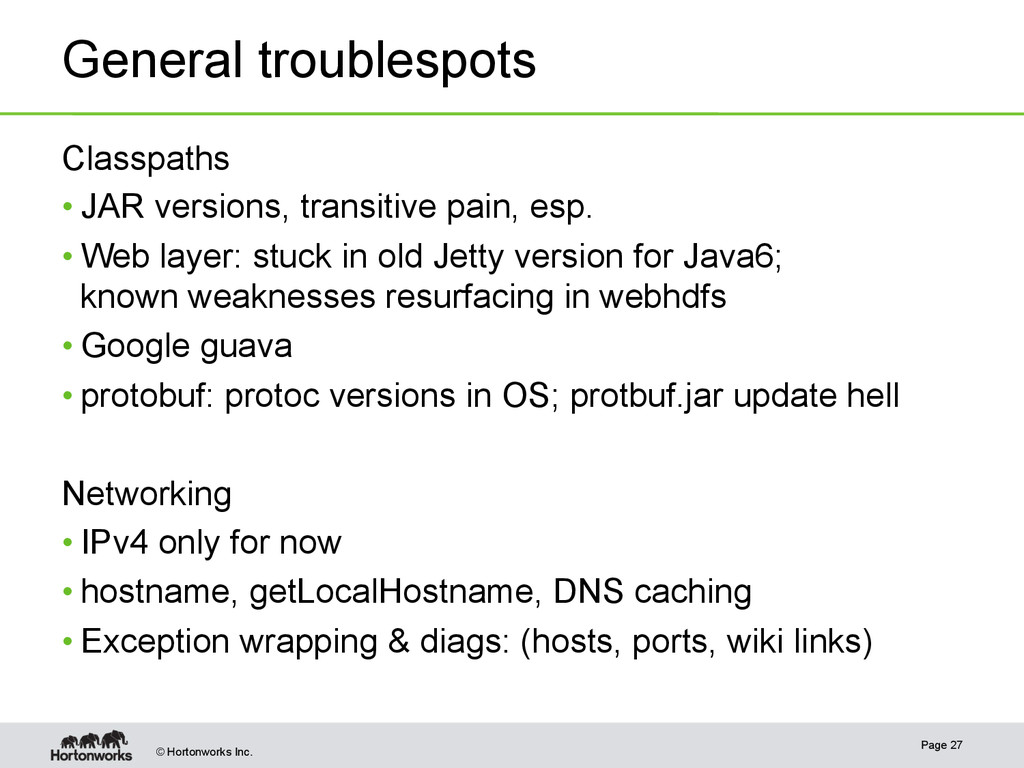
esp. • Web layer: stuck in old Jetty version for Java6; known weaknesses resurfacing in webhdfs • Google guava • protobuf: protoc versions in OS; protbuf.jar update hell Networking • IPv4 only for now • hostname, getLocalHostname, DNS caching • Exception wrapping & diags: (hosts, ports, wiki links) Page 27
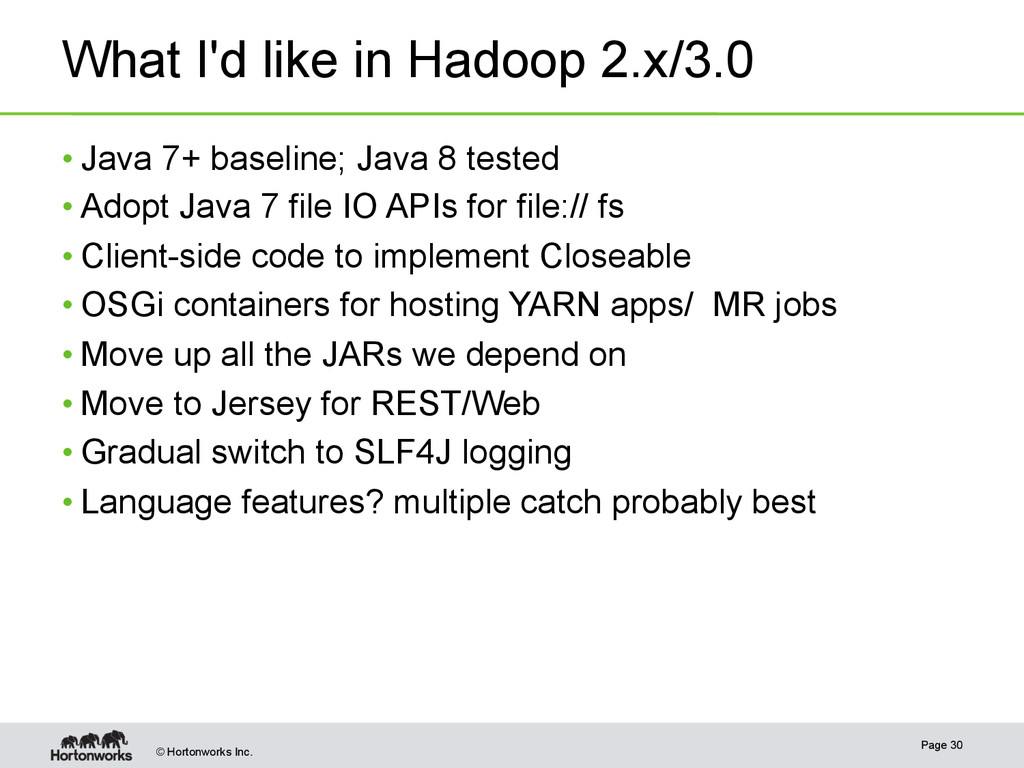
7+ baseline; Java 8 tested • Adopt Java 7 file IO APIs for file:// fs • Client-side code to implement Closeable • OSGi containers for hosting YARN apps/ MR jobs • Move up all the JARs we depend on • Move to Jersey for REST/Web • Gradual switch to SLF4J logging • Language features? multiple catch probably best Page 30
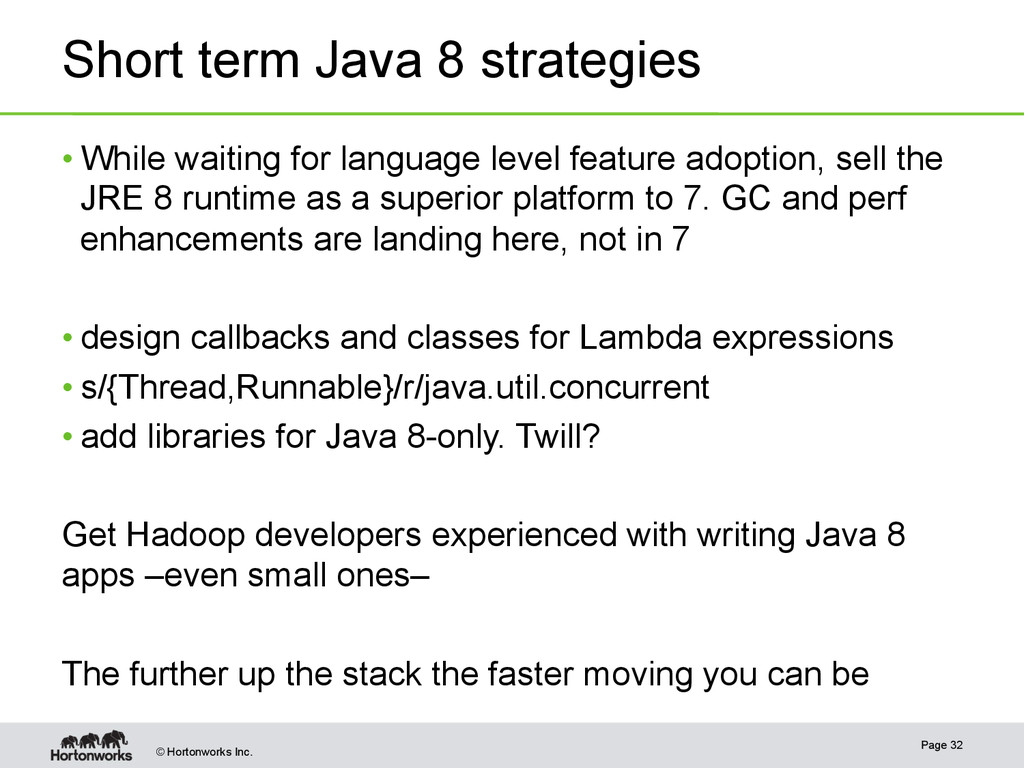
for language level feature adoption, sell the JRE 8 runtime as a superior platform to 7. GC and perf enhancements are landing here, not in 7 • design callbacks and classes for Lambda expressions • s/{Thread,Runnable}/r/java.util.concurrent • add libraries for Java 8-only. Twill? Get Hadoop developers experienced with writing Java 8 apps –even small ones– The further up the stack the faster moving you can be Page 32
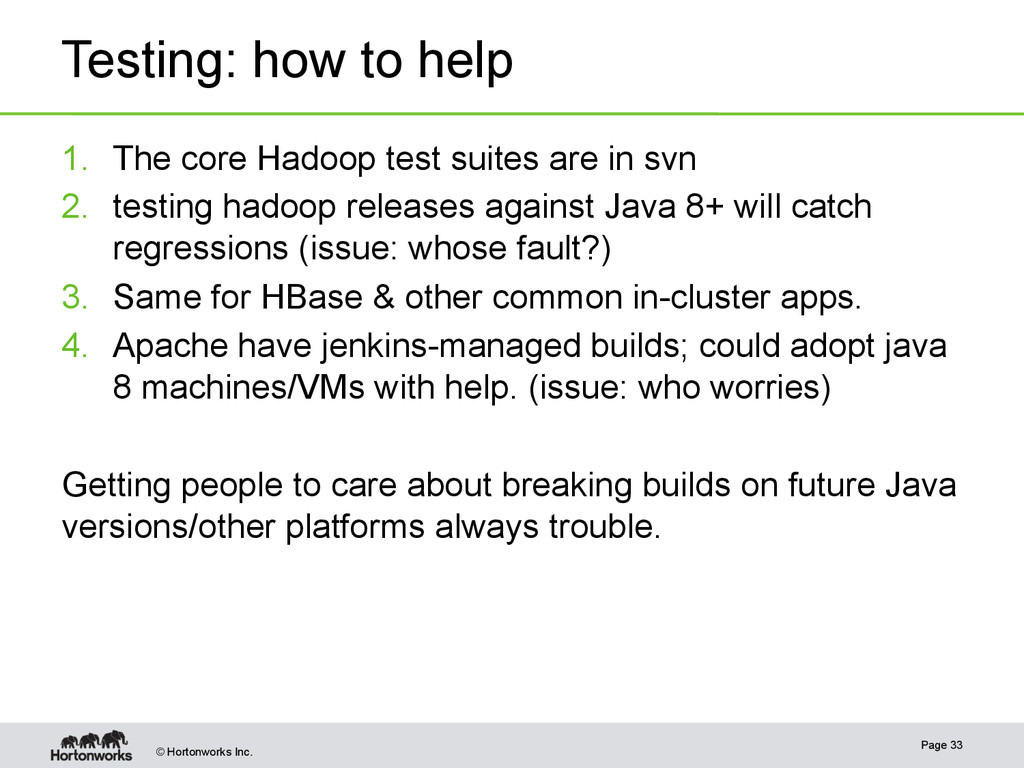
Hadoop test suites are in svn 2. testing hadoop releases against Java 8+ will catch regressions (issue: whose fault?) 3. Same for HBase & other common in-cluster apps. 4. Apache have jenkins-managed builds; could adopt java 8 machines/VMs with help. (issue: who worries) Getting people to care about breaking builds on future Java versions/other platforms always trouble. Page 33


 stevel
 shuta13
 greenmidori
 yamanoku
 pfn
pfn
 maimyyym
 yahonda
 kaminashi
 gogutan
 hiracky16
 rfdnxbro
 akitoshiga
 ueponx
 lemiorhan
 codingconduct
 427marketing
 honnibal
 csswizardry
 marcelosomers
 chriscoyier
 destraynor
 thirion
 katarinadahlin
 rabernat
 tammyeverts