Share
Embed
Resource Saturation Monitoring and Capacity Planning on GitLab.com
Presented at PromCon EU 2019, I present the dangers of resource saturation, and how you can utilise prometheus functionality to monitor, track and predict potential future resource saturation issues, up to two weeks in advance.
Andrew Newdigate
November 07, 2019
Transcript
38 slides
-
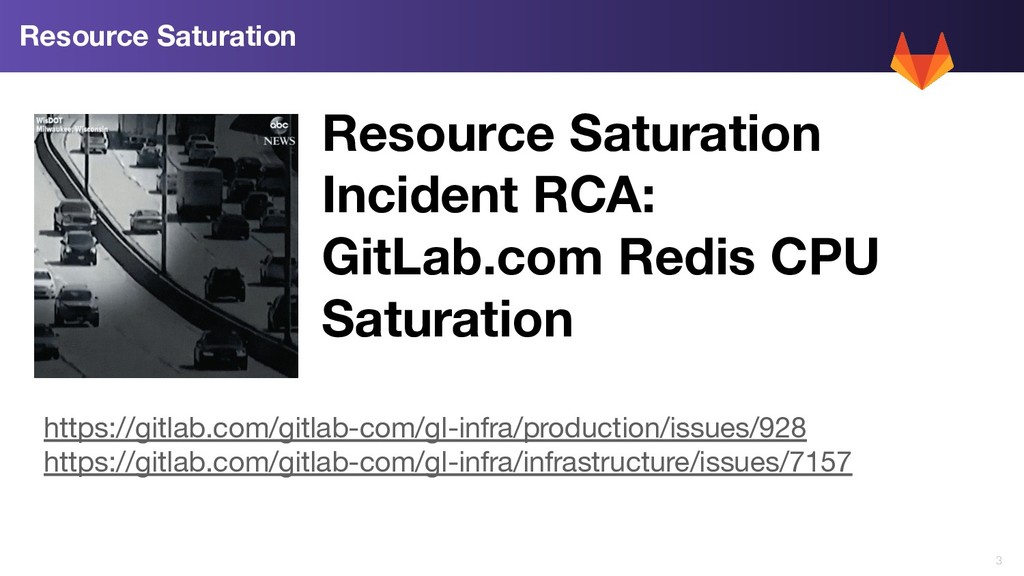
3 Resource Saturation in Software Systems Resource Saturation Incident RCA:
GitLab.com Redis CPU Saturation Resource Saturation https://gitlab.com/gitlab-com/gl-infra/production/issues/928 https://gitlab.com/gitlab-com/gl-infra/infrastructure/issues/7157 -
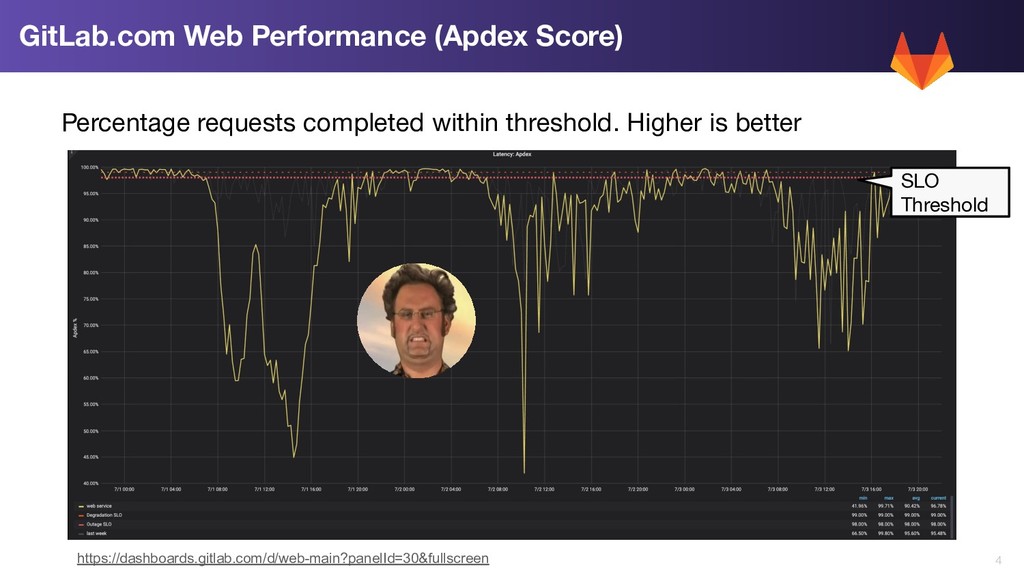
4 https://dashboards.gitlab.com/d/web-main?panelId=30&fullscreen Resource Saturation in Software Systems GitLab.com Web Performance
(Apdex Score) Percentage requests completed within threshold. Higher is better SLO Threshold -
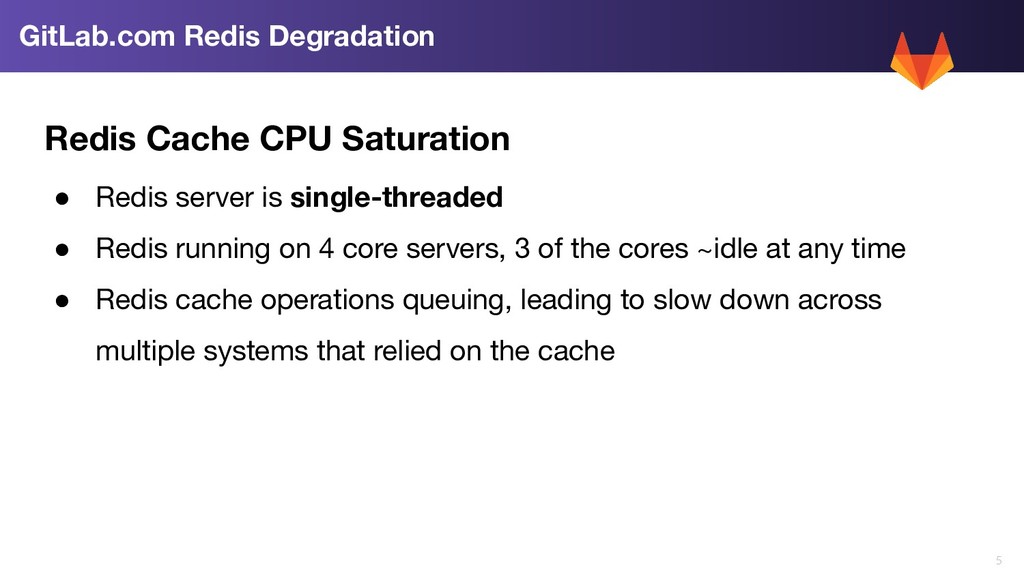
5 Resource Saturation in Software Systems Redis Cache CPU Saturation
• Redis server is single-threaded • Redis running on 4 core servers, 3 of the cores ~idle at any time • Redis cache operations queuing, leading to slow down across multiple systems that relied on the cache GitLab.com Redis Degradation -
6 Resource Saturation in Software Systems Cause? • No single
application change which obviously caused the problem • No recent infrastructure changes • No unusual user activity (eg, abuse, DDOS, etc) GitLab.com Redis Degradation -
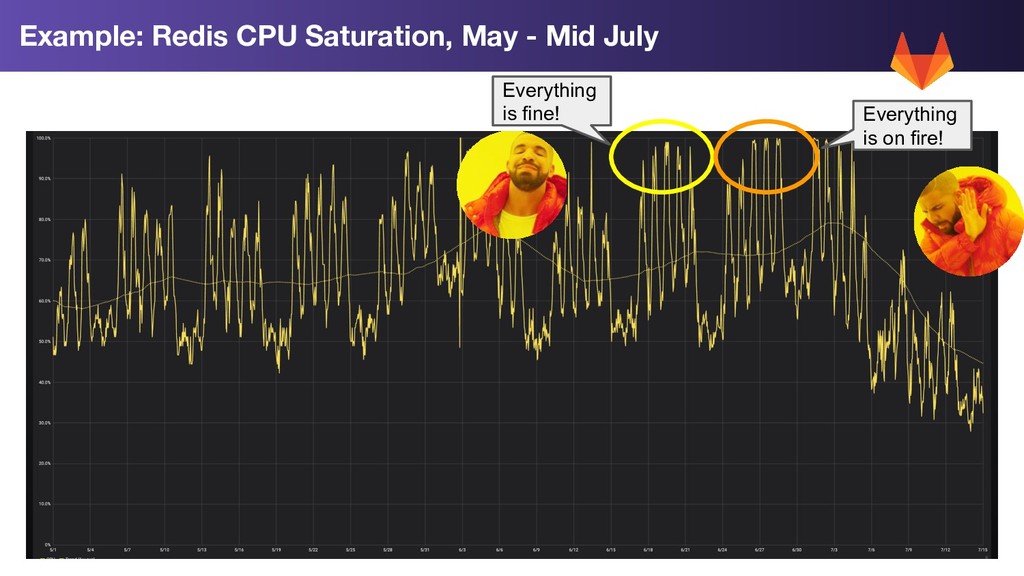
Example: Redis CPU Saturation, May - Mid July Everything is
on fire! Everything is fine! -
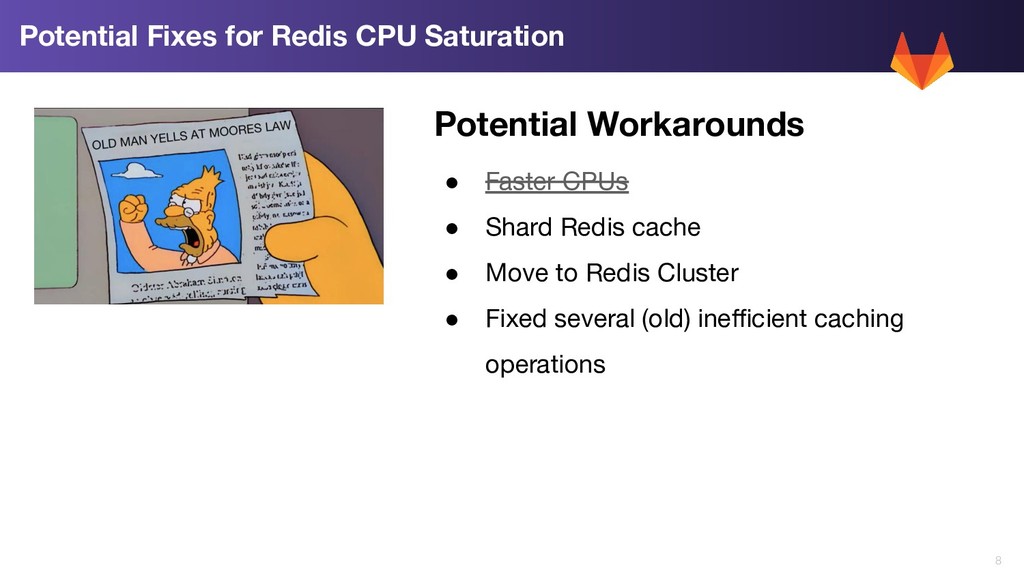
8 Resource Saturation in Software Systems Potential Workarounds • Faster
CPUs • Shard Redis cache • Move to Redis Cluster • Fixed several (old) inefficient caching operations Potential Fixes for Redis CPU Saturation -
Learnings 1. Symptom-based alerting only warned us once it was
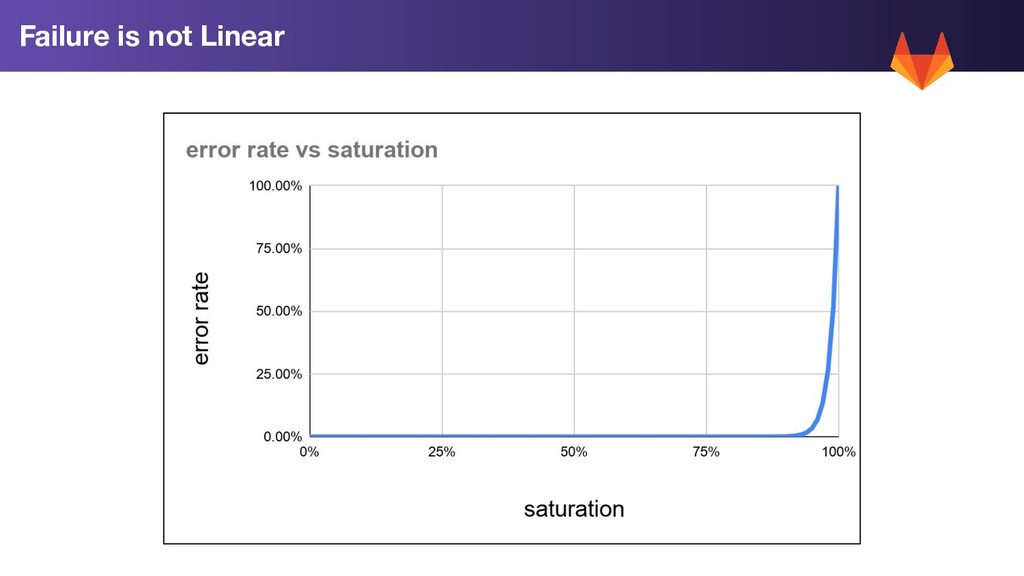
too late 2. Resolving saturation problems may require time 3. Forewarning of the trend towards saturation would have helped a lot We need better capacity planning. Can we use Prometheus for this? Takeaways -
Goals 1. Model saturation as a key metric for each
of our services 2. Model every potential saturation point in the application 3. Provide a forecast of resources that are most likely to breach their saturation limits in the next few weeks, giving us time to address these issues before they breach Capacity Planning Goals -
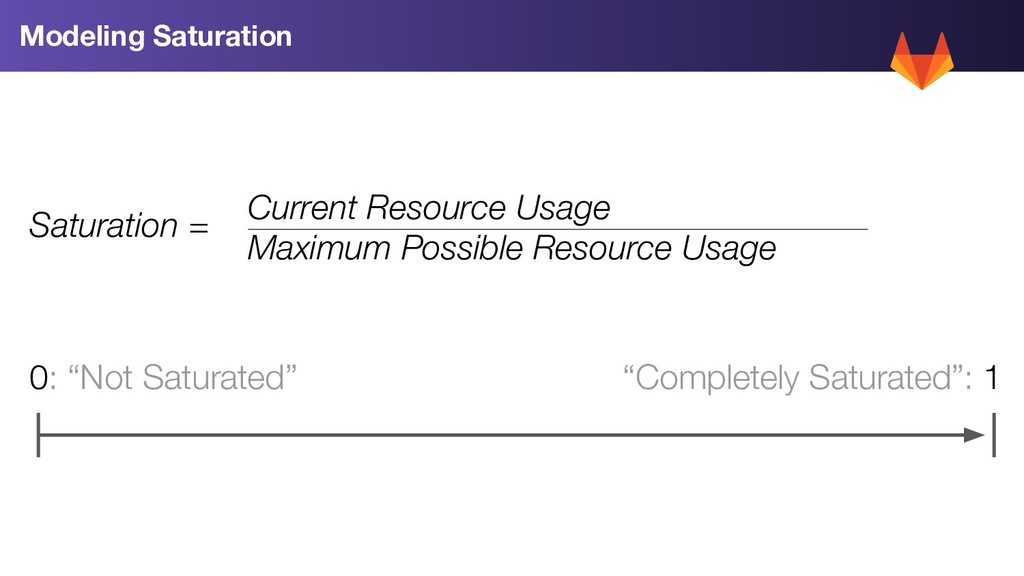
Saturation = Current Resource Usage Maximum Possible Resource Usage Modeling
Saturation 0: “Not Saturated” “Completely Saturated”: 1 -
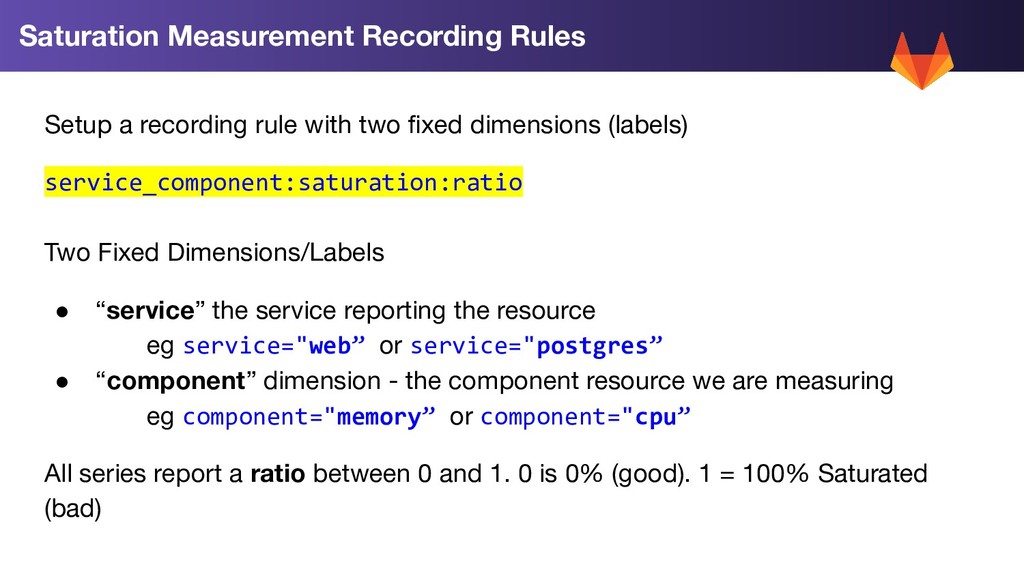
Setup a recording rule with two fixed dimensions (labels) service_component:saturation:ratio
Two Fixed Dimensions/Labels • “service” the service reporting the resource eg service="web” or service="postgres” • “component” dimension - the component resource we are measuring eg component="memory” or component="cpu” All series report a ratio between 0 and 1. 0 is 0% (good). 1 = 100% Saturated (bad) Saturation Measurement Recording Rules -
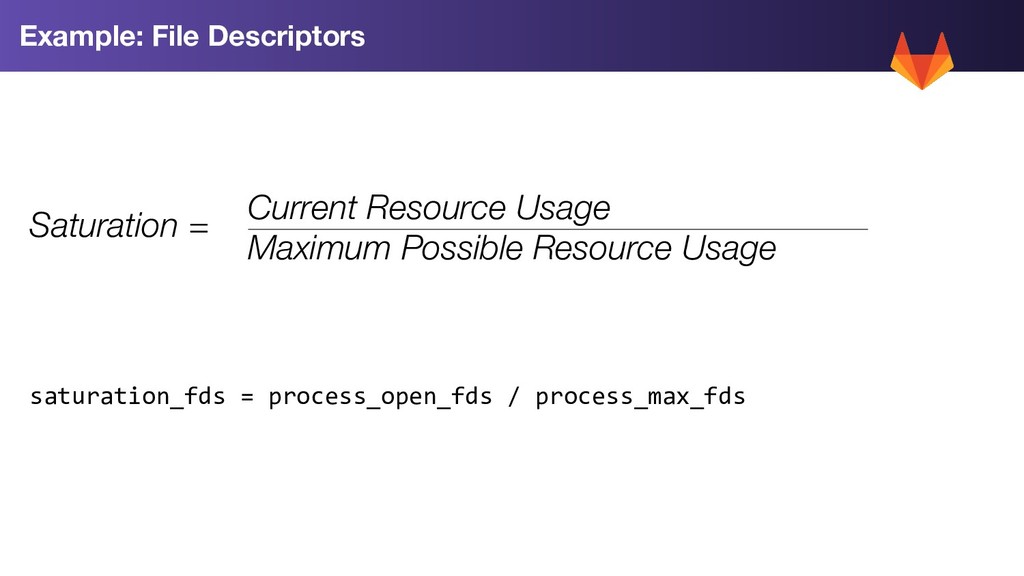
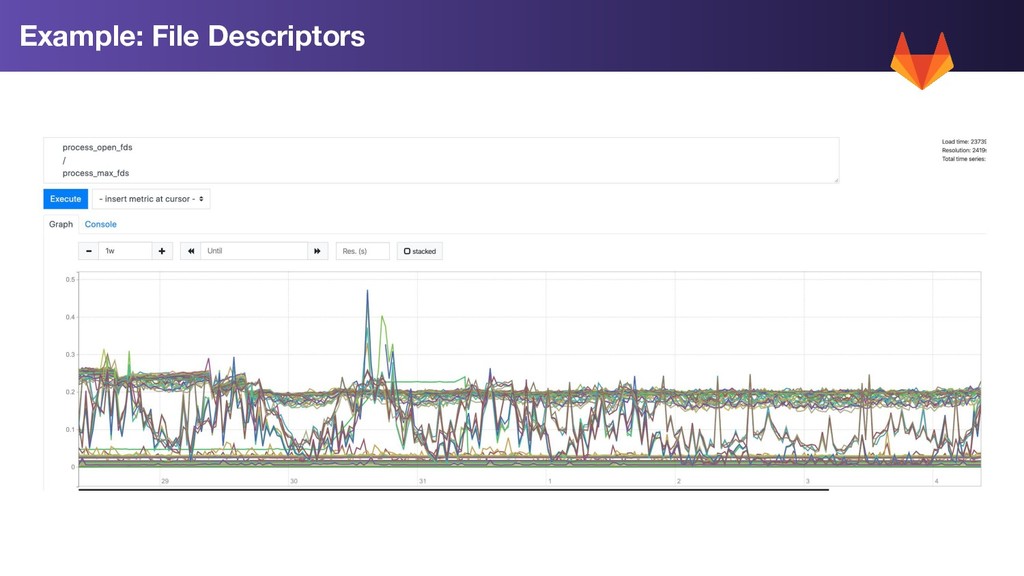
saturation_fds = process_open_fds / process_max_fds Example: File Descriptors Saturation =
Current Resource Usage Maximum Possible Resource Usage -
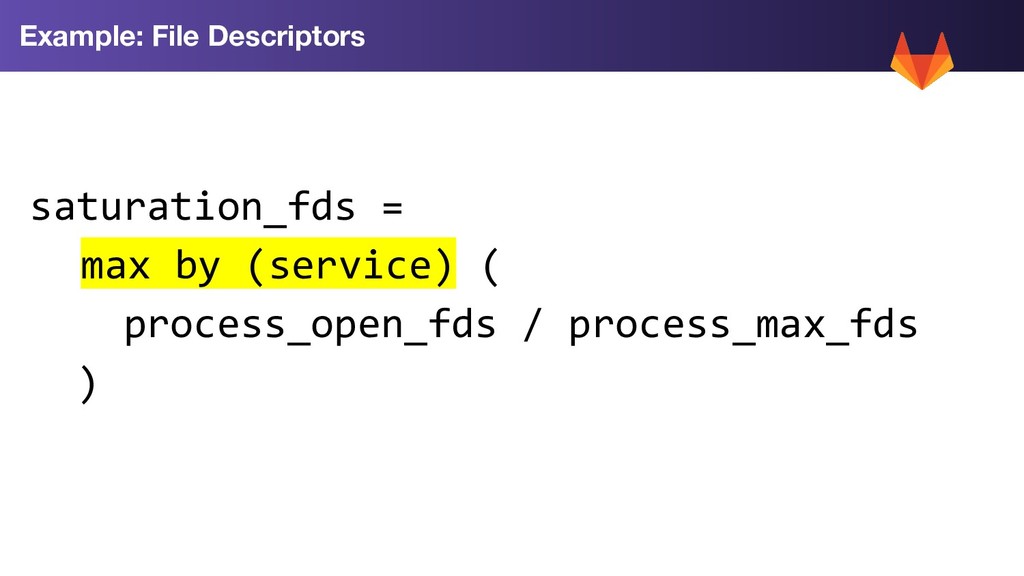
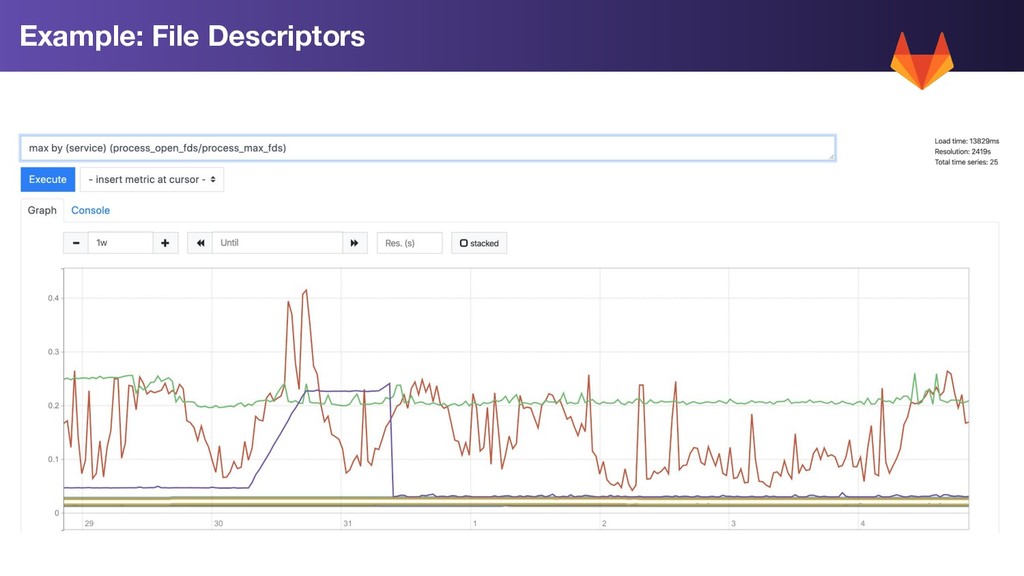
saturation_fds = max by (service) ( process_open_fds / process_max_fds )
Example: File Descriptors -
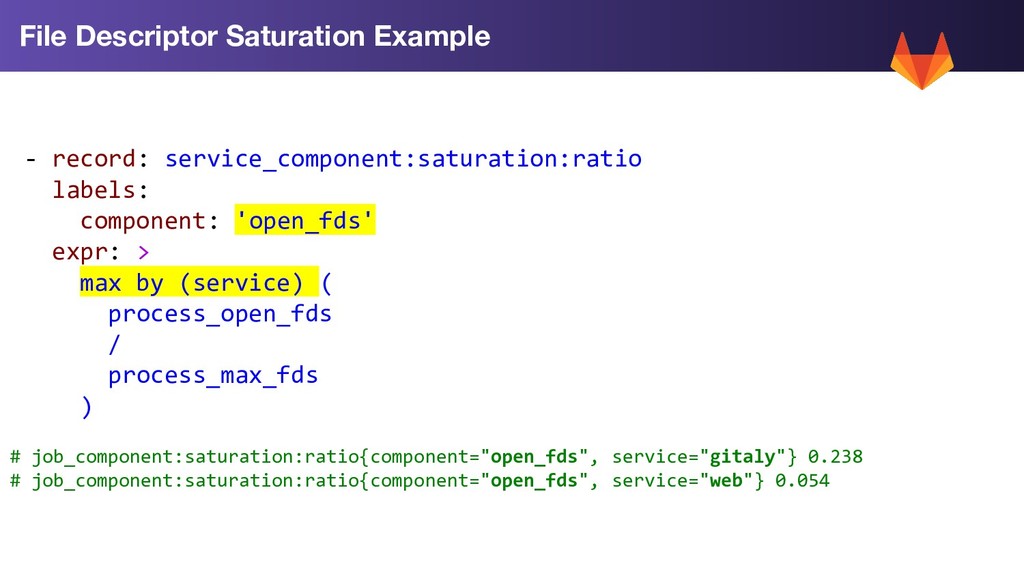
- record: service_component:saturation:ratio labels: component: 'open_fds' expr: > max by
(service) ( process_open_fds / process_max_fds ) # job_component:saturation:ratio{component="open_fds", service="gitaly"} 0.238 # job_component:saturation:ratio{component="open_fds", service="web"} 0.054 File Descriptor Saturation Example -
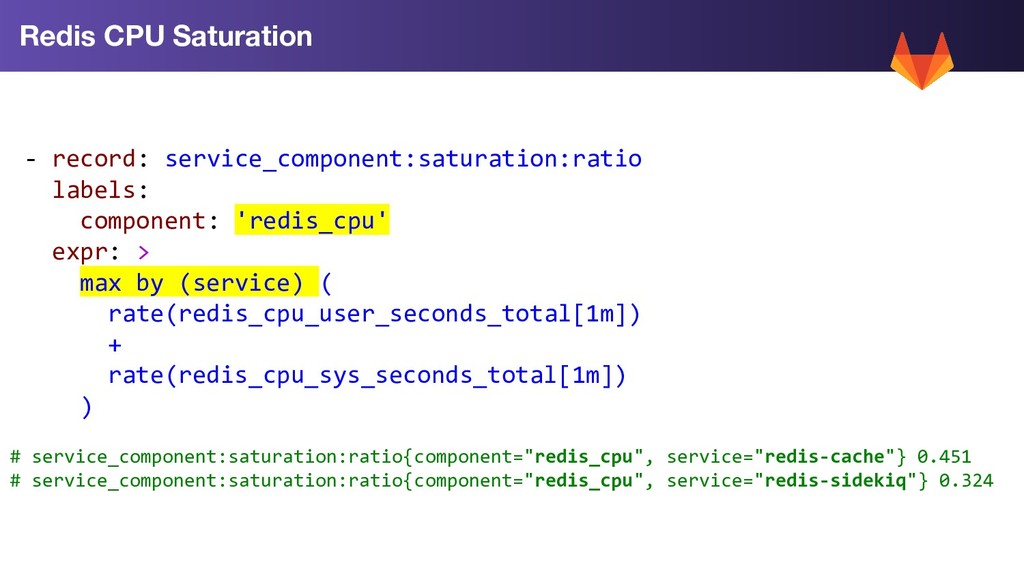
- record: service_component:saturation:ratio labels: component: 'redis_cpu' expr: > max by
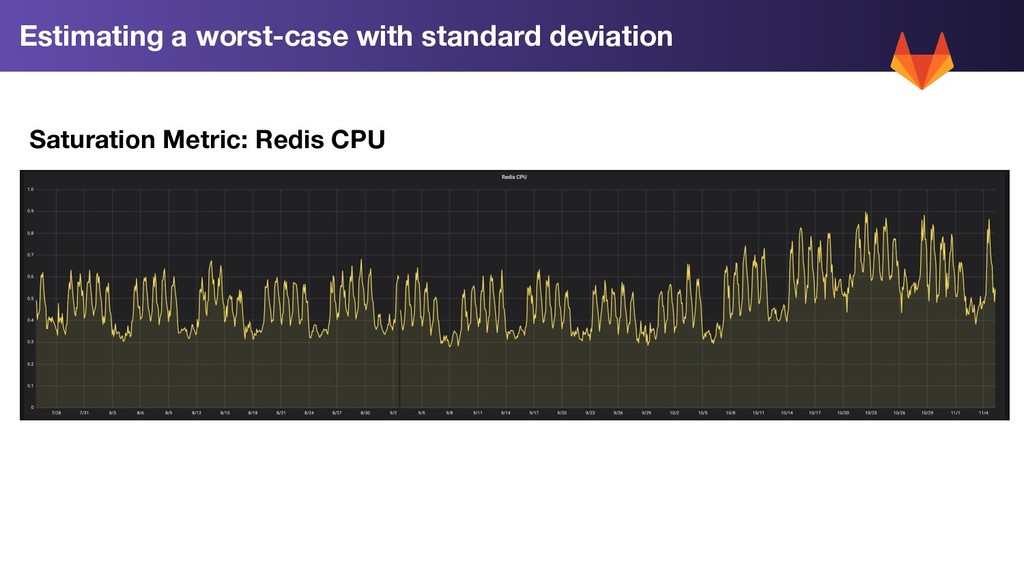
(service) ( rate(redis_cpu_user_seconds_total[1m]) + rate(redis_cpu_sys_seconds_total[1m]) ) # service_component:saturation:ratio{component="redis_cpu", service="redis-cache"} 0.451 # service_component:saturation:ratio{component="redis_cpu", service="redis-sidekiq"} 0.324 Redis CPU Saturation -
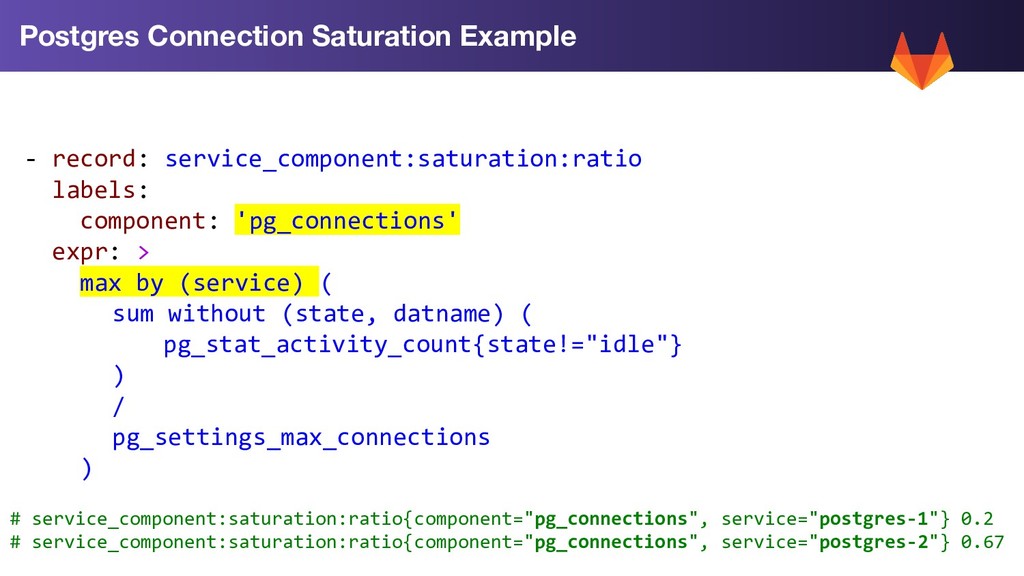
- record: service_component:saturation:ratio labels: component: 'pg_connections' expr: > max by
(service) ( sum without (state, datname) ( pg_stat_activity_count{state!="idle"} ) / pg_settings_max_connections ) # service_component:saturation:ratio{component="pg_connections", service="postgres-1"} 0.2 # service_component:saturation:ratio{component="pg_connections", service="postgres-2"} 0.67 Postgres Connection Saturation Example -
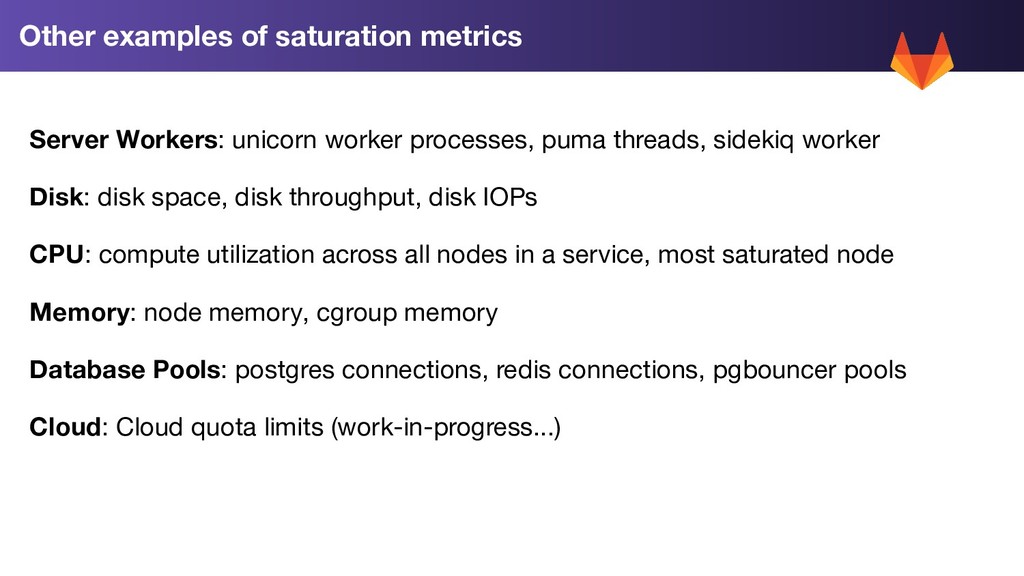
Server Workers: unicorn worker processes, puma threads, sidekiq worker Disk:
disk space, disk throughput, disk IOPs CPU: compute utilization across all nodes in a service, most saturated node Memory: node memory, cgroup memory Database Pools: postgres connections, redis connections, pgbouncer pools Cloud: Cloud quota limits (work-in-progress...) Other examples of saturation metrics -
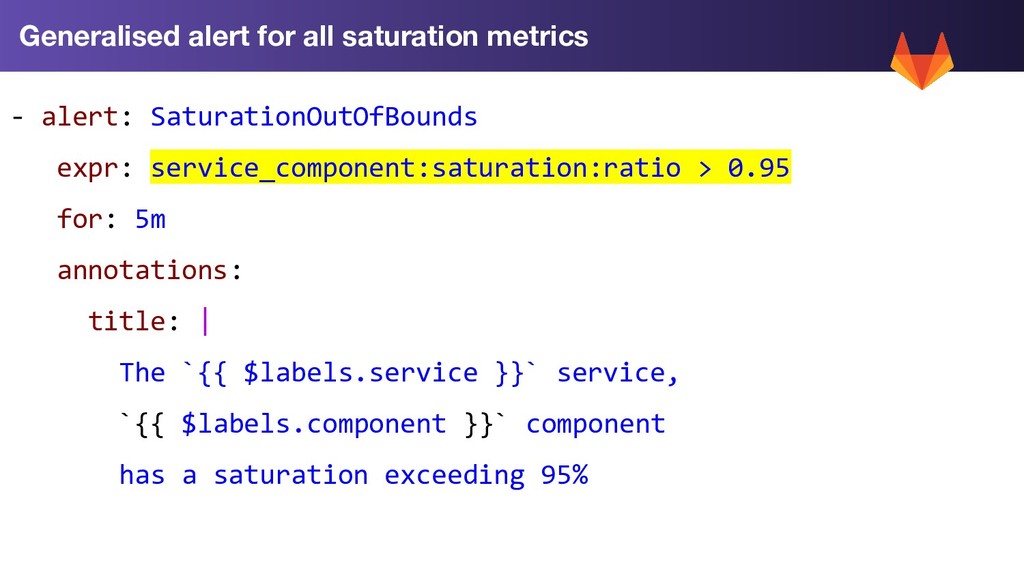
- alert: SaturationOutOfBounds expr: service_component:saturation:ratio > 0.95 for: 5m annotations:
title: | The `{{ $labels.service }}` service, `{{ $labels.component }}` component has a saturation exceeding 95% Generalised alert for all saturation metrics -
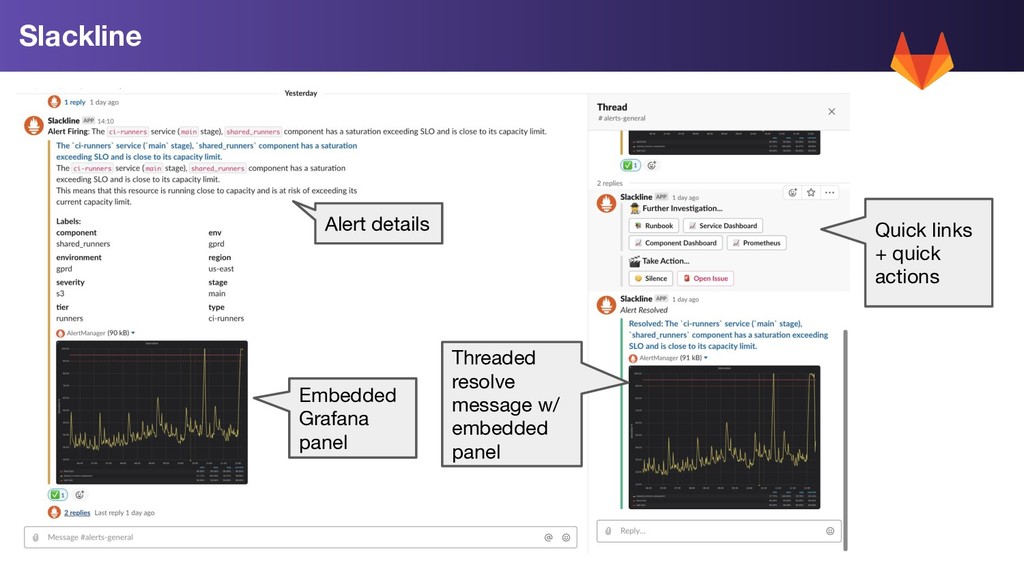
Slackline Alert details Embedded Grafana panel Threaded resolve message w/
embedded panel Quick links + quick actions -
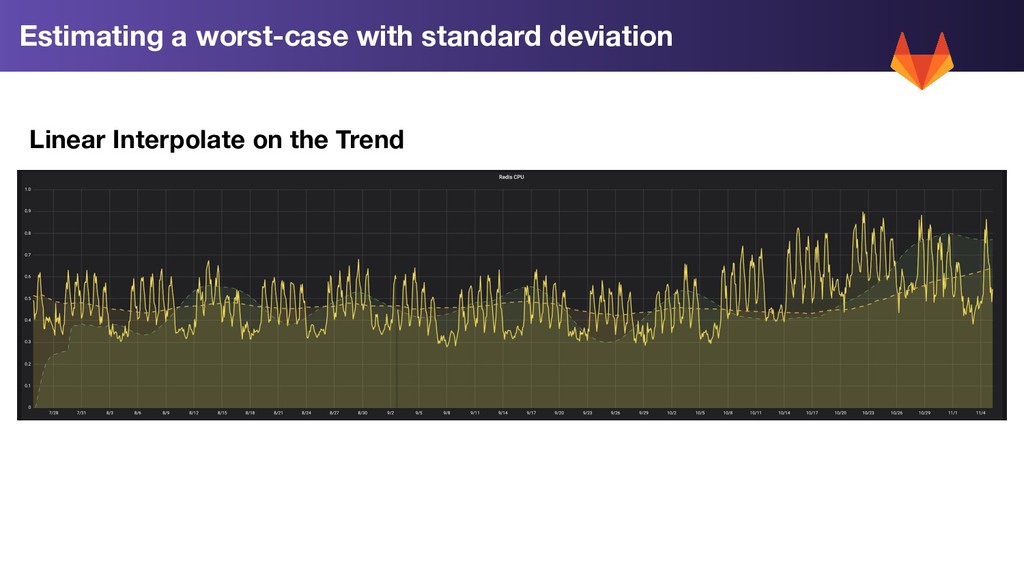
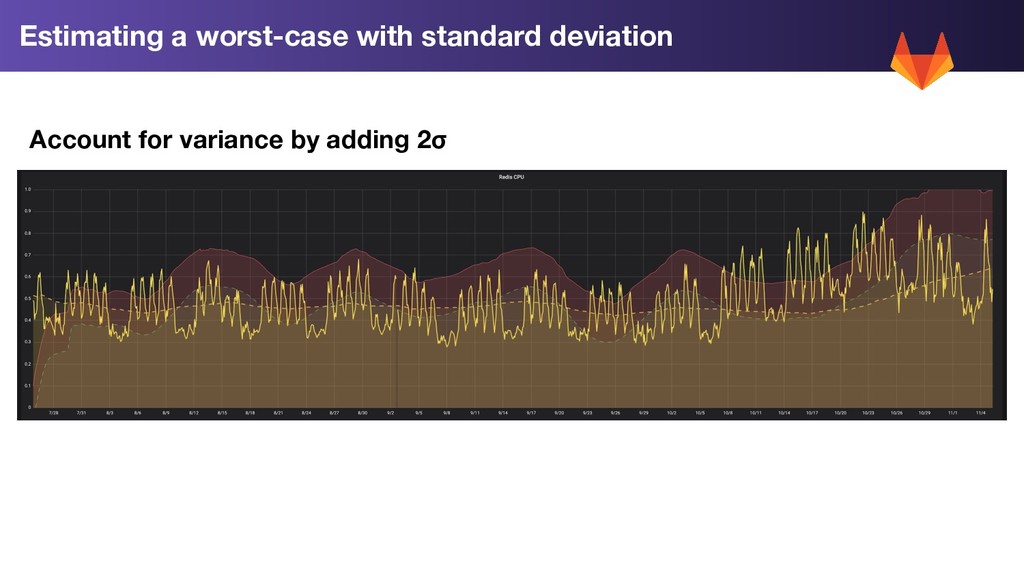
Estimating a worst-case with standard deviation Estimated Worst Case Prediction
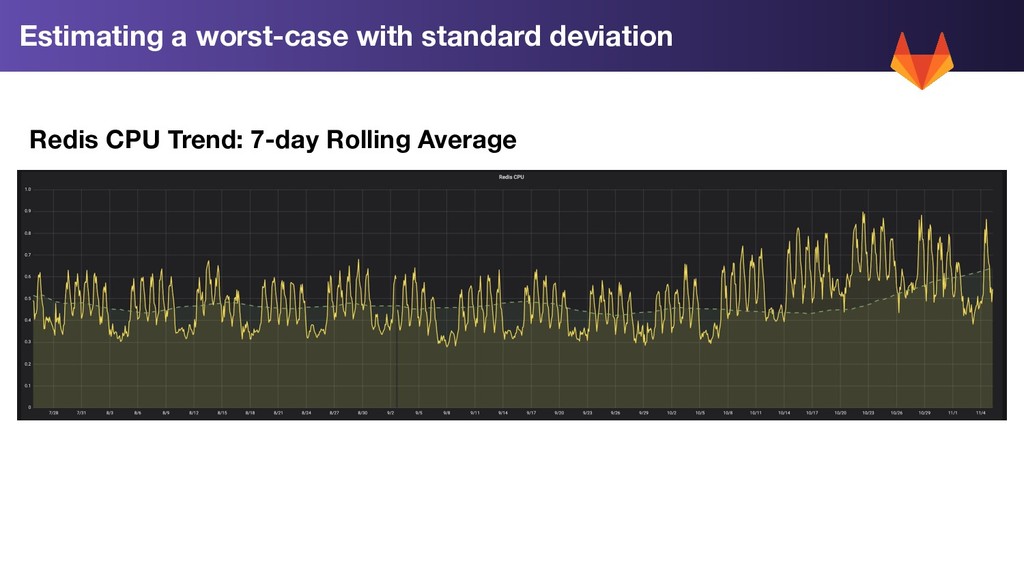
Calculation: 1. Trend Forecast: Use linear prediction on our rolling 7 day average to extend the trend forward by 2 weeks 2. Standard Deviation (σ): Calculate the standard deviation for each metric for the past week 3. Worst Case: 2w Trend Prediction + 2σ -
Worst-Case Predictions in PromQL # Average values for each component,
over a week - record: service_component:saturation:ratio:avg_over_time_1w expr: > avg_over_time(service_component:saturation:ratio[1w]) # Stddev for each resource saturation component, over a week - record: service_component:saturation:ratio:stddev_over_time_1w expr: > stddev_over_time(service_component:saturation:ratio[1w]) -
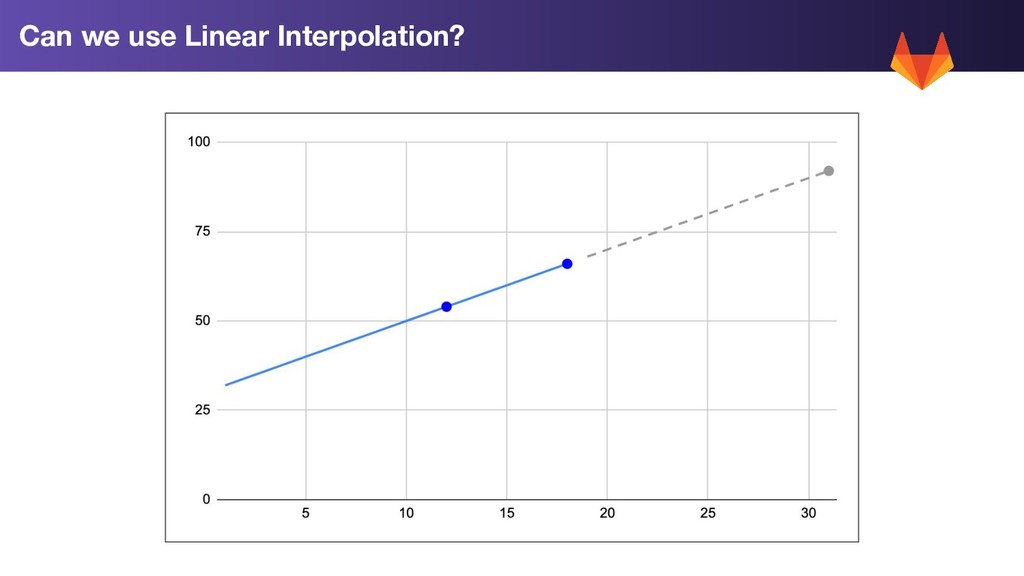
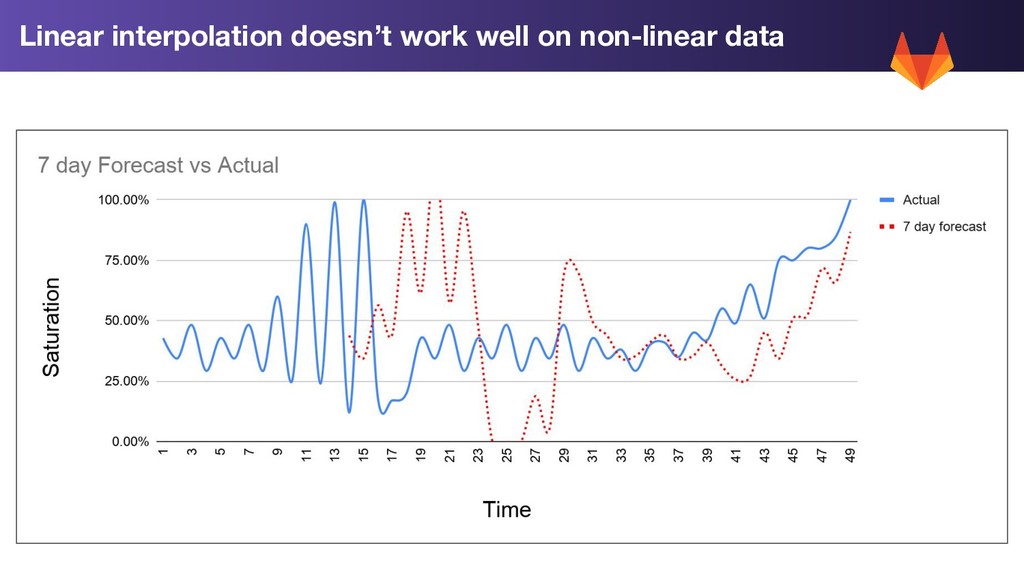
- record: service_component:saturation:ratio:predict_linear_2w expr: > predict_linear( service_component:saturation:ratio:avg_over_time_1w[1w], 86400 * 14
# 14 days, in seconds ) Worst-Case Predictions in PromQL -
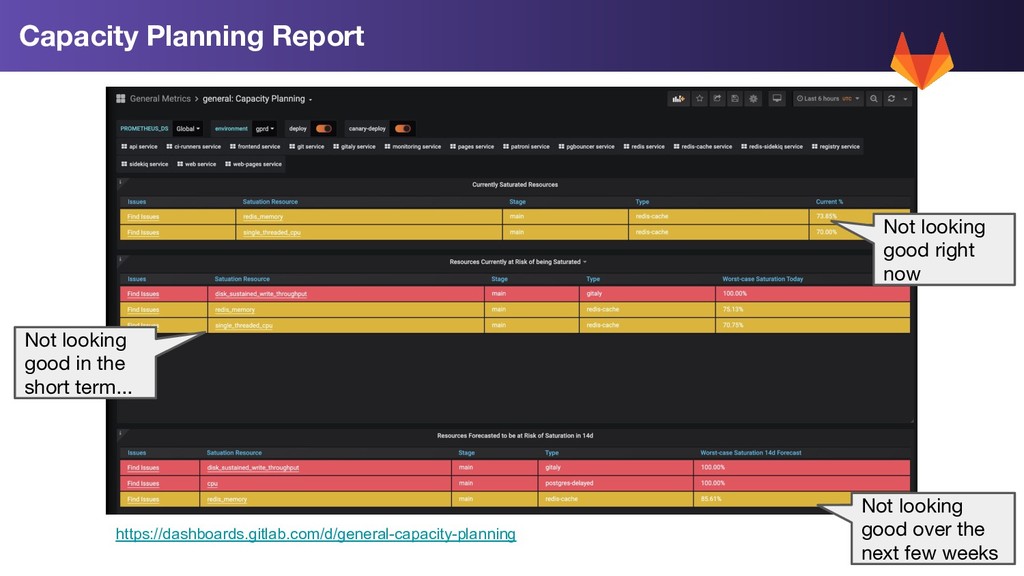
Capacity Planning Report https://dashboards.gitlab.com/d/general-capacity-planning Not looking good right now Not
looking good in the short term... Not looking good over the next few weeks -
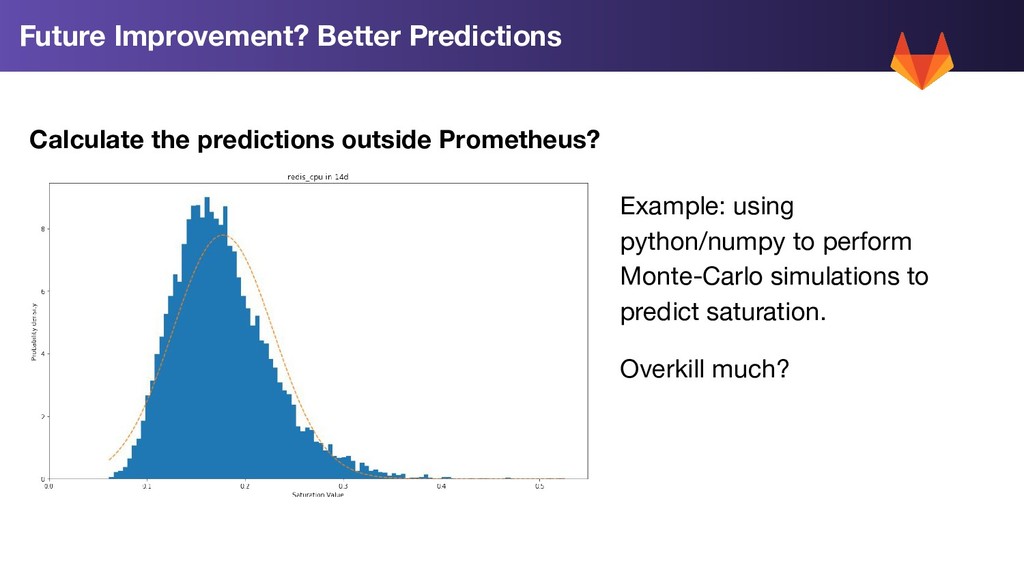
Future Improvement? Better Predictions Calculate the predictions outside Prometheus? Example:
using python/numpy to perform Monte-Carlo simulations to predict saturation. Overkill much? -
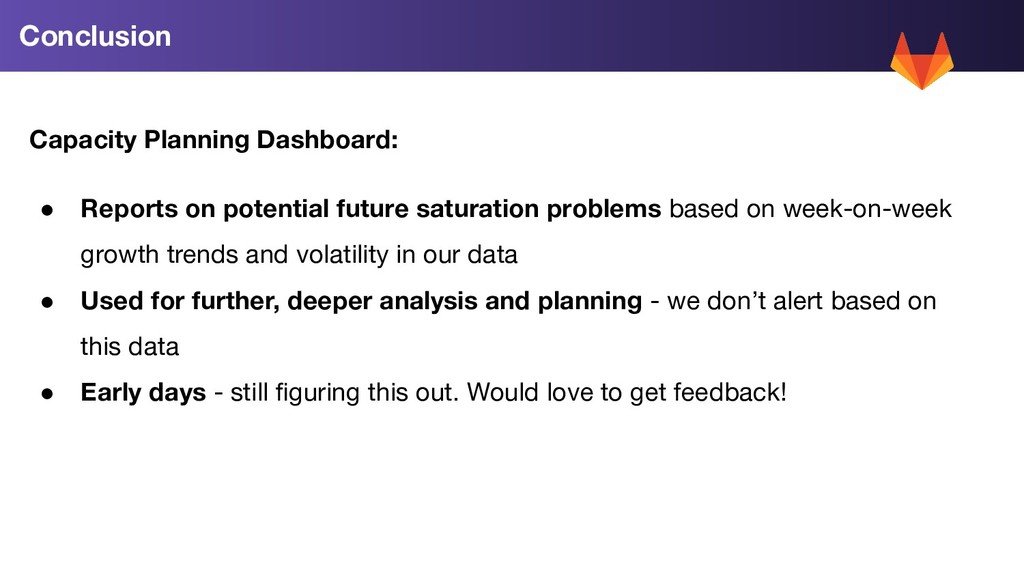
Conclusion Capacity Planning Dashboard: • Reports on potential future saturation
problems based on week-on-week growth trends and volatility in our data • Used for further, deeper analysis and planning - we don’t alert based on this data • Early days - still figuring this out. Would love to get feedback! -
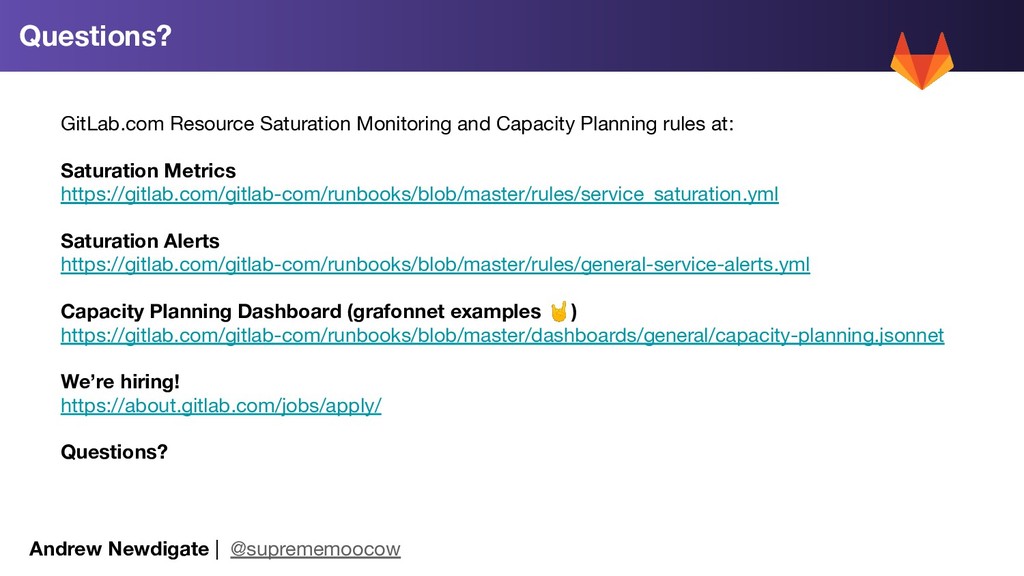
Questions? Andrew Newdigate | @suprememoocow GitLab.com Resource Saturation Monitoring and
Capacity Planning rules at: Saturation Metrics https://gitlab.com/gitlab-com/runbooks/blob/master/rules/service_saturation.yml Saturation Alerts https://gitlab.com/gitlab-com/runbooks/blob/master/rules/general-service-alerts.yml Capacity Planning Dashboard (grafonnet examples ) https://gitlab.com/gitlab-com/runbooks/blob/master/dashboards/general/capacity-planning.jsonnet We’re hiring! https://about.gitlab.com/jobs/apply/ Questions?