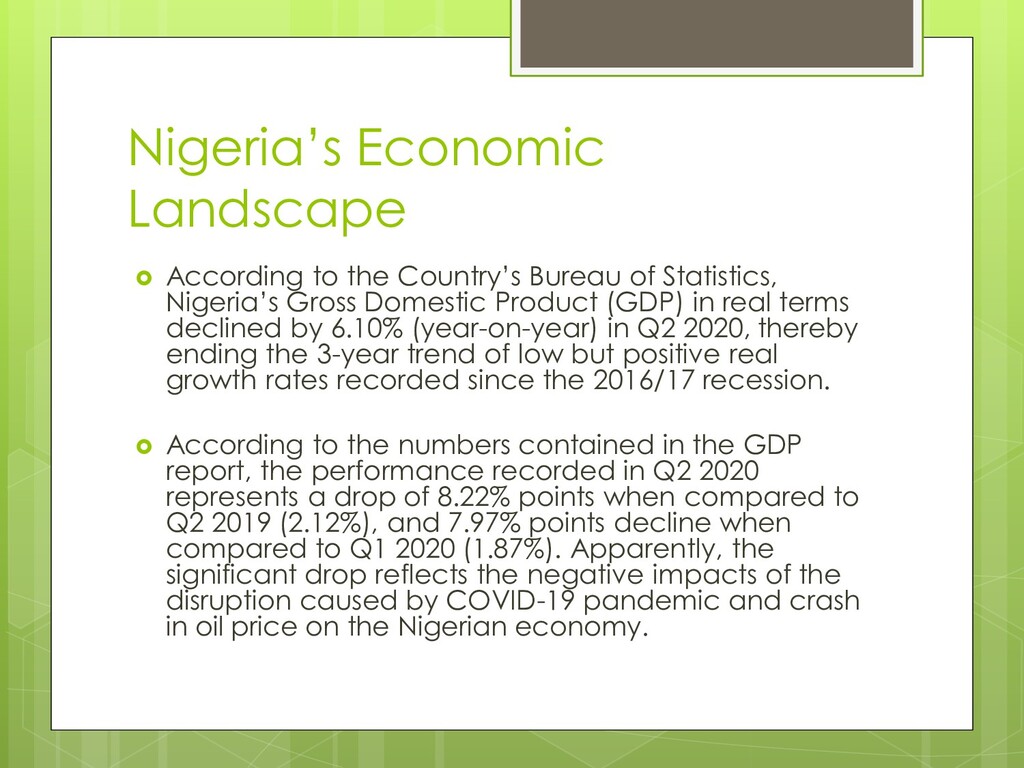
Statistics, Nigeria’s Gross Domestic Product (GDP) in real terms declined by 6.10% (year-on-year) in Q2 2020, thereby ending the 3-year trend of low but positive real growth rates recorded since the 2016/17 recession. According to the numbers contained in the GDP report, the performance recorded in Q2 2020 represents a drop of 8.22% points when compared to Q2 2019 (2.12%), and 7.97% points decline when compared to Q1 2020 (1.87%). Apparently, the significant drop reflects the negative impacts of the disruption caused by COVID-19 pandemic and crash in oil price on the Nigerian economy.
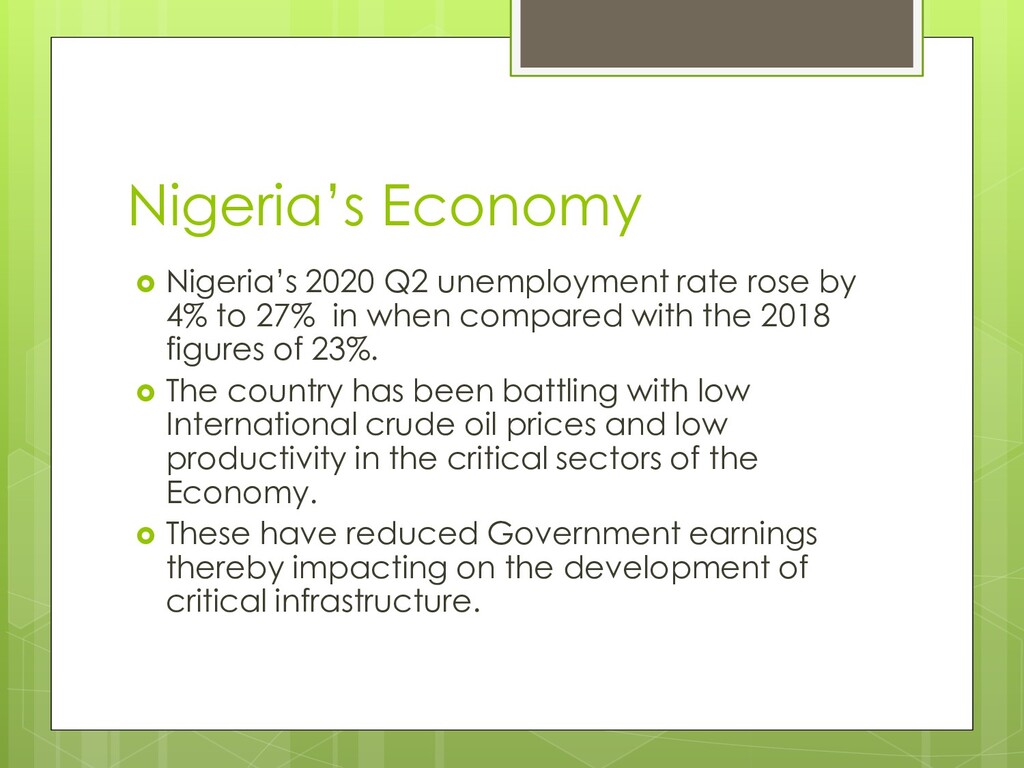
4% to 27% in when compared with the 2018 figures of 23%. The country has been battling with low International crude oil prices and low productivity in the critical sectors of the Economy. These have reduced Government earnings thereby impacting on the development of critical infrastructure.
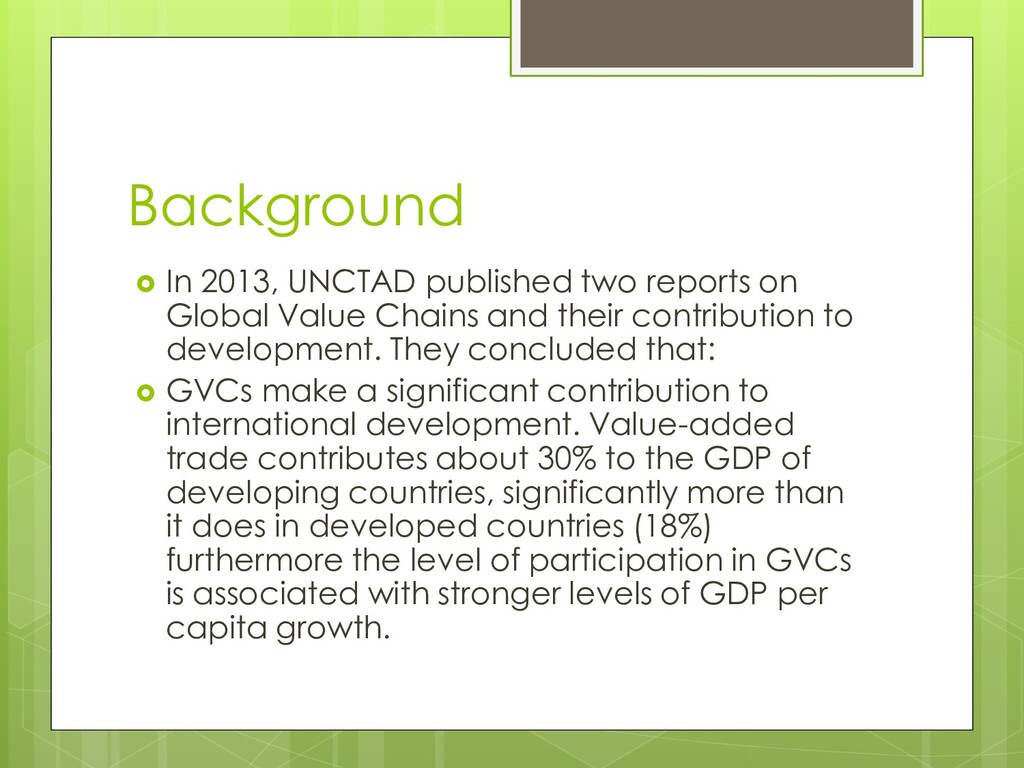
Value Chains and their contribution to development. They concluded that: GVCs make a significant contribution to international development. Value-added trade contributes about 30% to the GDP of developing countries, significantly more than it does in developed countries (18%) furthermore the level of participation in GVCs is associated with stronger levels of GDP per capita growth.
Nation’s economy, employment and income and create opportunities for development. They can also be an important mechanism for developing countries to enhance productive capacity, by increasing the rate of adoption of technology and through workforce skill development, thus building the foundations for long-term industrial upgrading.
national economic growth cannot be overstated. GVCs lead to employment generation, industrial development, technology and skills transfer GVC breaks the barrier of trade protectionism and promotes regional economic and trade integration
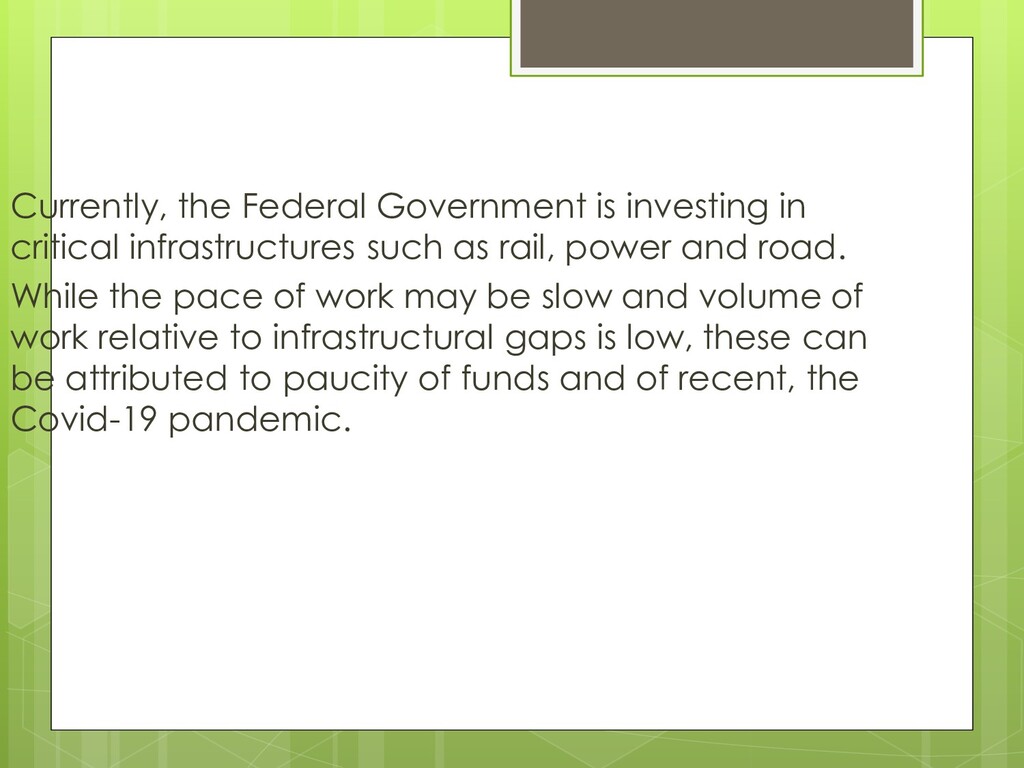
as rail, power and road. While the pace of work may be slow and volume of work relative to infrastructural gaps is low, these can be attributed to paucity of funds and of recent, the Covid-19 pandemic.
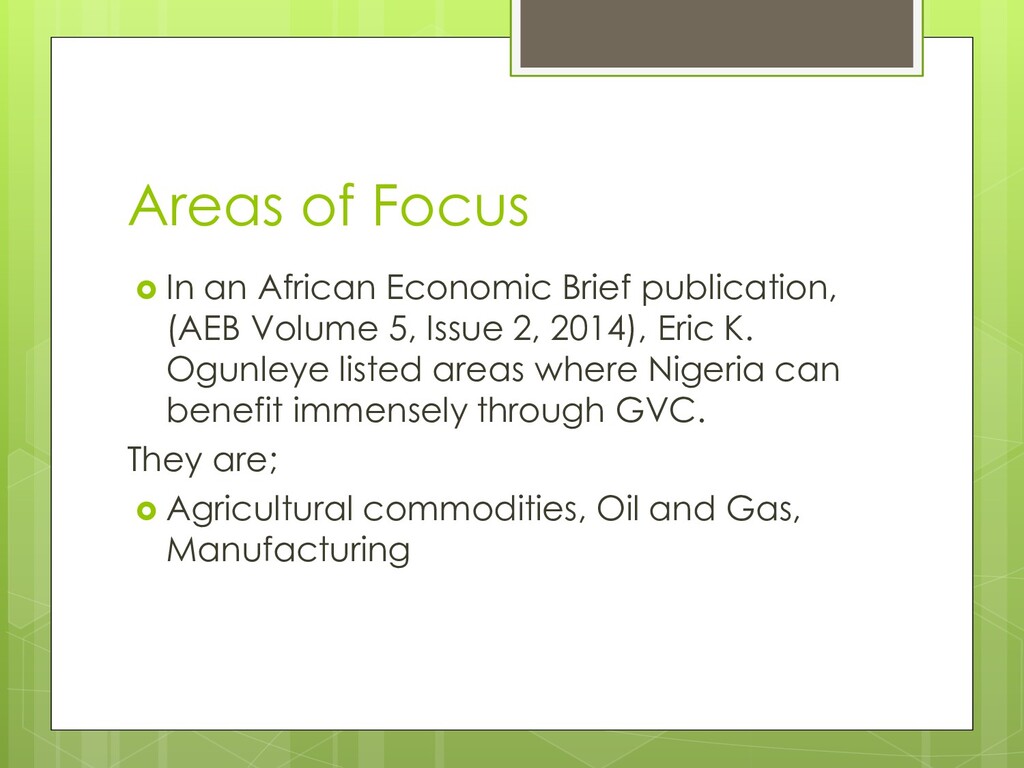
(AEB Volume 5, Issue 2, 2014), Eric K. Ogunleye listed areas where Nigeria can benefit immensely through GVC. They are; Agricultural commodities, Oil and Gas, Manufacturing
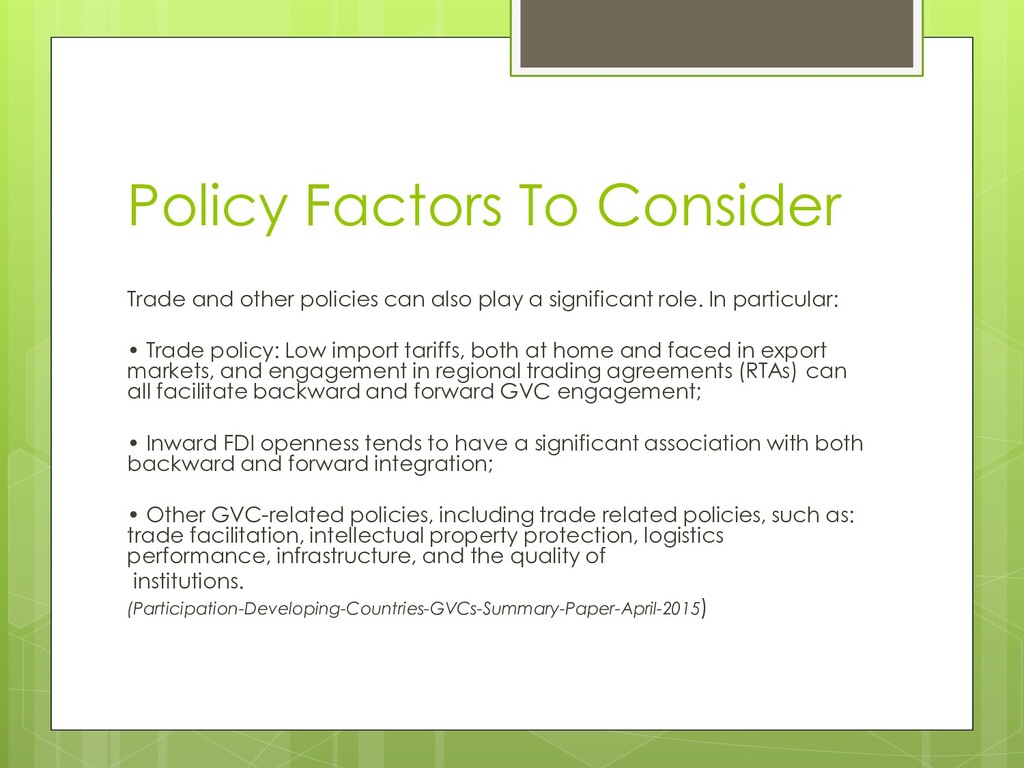
play a significant role. In particular: • Trade policy: Low import tariffs, both at home and faced in export markets, and engagement in regional trading agreements (RTAs) can all facilitate backward and forward GVC engagement; • Inward FDI openness tends to have a significant association with both backward and forward integration; • Other GVC-related policies, including trade related policies, such as: trade facilitation, intellectual property protection, logistics performance, infrastructure, and the quality of institutions. (Participation-Developing-Countries-GVCs-Summary-Paper-April-2015)


 3l4l5
 bvr7352
 yatabe
 tasusu
 pawan_pharm
 signer
 2720japanoke
 kentaroy47
 mutomasa
 hiola
 terasawat
 smashingmag
 katarinadahlin
 cassininazir
 helenjbeal
 soudai
 sarafernandez
 aemeredith
 productmarketing
 emna__ayadi
 eileencodes
 inesmontani