Upgrade to Pro
— share decks privately, control downloads, hide ads and more …
Speaker Deck
Sign up for free
Menu
Search
Features
All features
Private URLs
Password Protection
Custom URLS
Scheduled publishing
Remove Branding
Restrict embedding
Deck Collections
Notes
Features
All features
Private URLs
Password Protection
Custom URLS
Scheduled publishing
Remove Branding
Restrict embedding
Deck Collections
Notes
Explore
Featured decks
Featured speakers
Programming
Technology
Storyboards
Explore
Featured decks
Featured speakers
Programming
Technology
Storyboards
Pricing
Search
Sign in
Sign up for free
The 7 Deadly Sins of Microservices
Search
Tareq Abedrabbo
November 27, 2014
Technology
1.3k
7
Share
Embed
Copy iframe code
Copy JS code
Copy link
Start on current slide
The 7 Deadly Sins of Microservices
MuCon 2014
Tareq Abedrabbo
November 27, 2014
More Decks by Tareq Abedrabbo
See All by Tareq Abedrabbo
Not a SO(A) Trivial Question!
tareqabedrabbo
0
91
Designing APIs for Data Driven Systems
tareqabedrabbo
0
73
Things I wish I'd known before I started with Microservices
tareqabedrabbo
0
700
Building a Scalable Event Service with Cassandra: Design to Code
tareqabedrabbo
1
510
The Ubiquitous Graph
tareqabedrabbo
0
240
The 7 Deadly Sins of Microservices
tareqabedrabbo
0
660
Building a Scalable Event Service with Cassandra: Design to Code
tareqabedrabbo
0
120
Time Series and Events: Storage and Querying Strategies with Cassandra
tareqabedrabbo
0
360
Building a Scalable Event Service with Cassandra
tareqabedrabbo
1
150
Other Decks in Technology
See All in Technology
The Maintainer Container - remaining a saner maintainer
ennael
PRO
1
100
SDDの運用にめげずに向き合った話
sansantech
PRO
0
130
生成AIと進める探索的データ分析(2026.10.03 第122回Tokyo.R勉強会)
tatamiya
2
1.4k
契約書画像からの情報抽出に特化した視覚接地モデルを育てる話
sansantech
PRO
1
140
The seven pitfalls of AI (revised version)
ufried
0
260
Futexes the good, the bad, the ugly
ennael
PRO
0
120
Claude起点の仕様駆動開発
tanakaseiya
0
370
生成AIで高い生産性を求められて、 悩み、乗り越えた話
mot_techtalk
2
120
Snowflake Horizon Catalog と Apache Iceberg で作る オープンなデータ基盤
kitagawaz
0
440
全社共通データ基盤をつくる。ソニーのDatabricks活用とデータガバナンス設計の裏側
sony
0
410
DAMOS - The Smart Cruise Control for RAM
ennael
PRO
1
130
Kernel testing frameworks
ennael
PRO
0
110
Featured
See All Featured
A brief & incomplete history of UX Design for the World Wide Web: 1989–2019
jct
2
530
Reflections from 52 weeks, 52 projects
jeffersonlam
356
21k
Rails Girls Zürich Keynote
gr2m
96
14k
SERP Conf. Vienna - Web Accessibility: Optimizing for Inclusivity and SEO
sarafernandez
2
1.6k
The SEO Collaboration Effect
kristinabergwall1
1
590
The Success of Rails: Ensuring Growth for the Next 100 Years
eileencodes
47
8.4k
Navigating Team Friction
lara
192
16k
Producing Creativity
orderedlist
PRO
348
41k
Intergalactic Javascript Robots from Outer Space
tanoku
273
27k
Leadership Guide Workshop - DevTernity 2021
reverentgeek
1
380
Large-scale JavaScript Application Architecture
addyosmani
515
110k
Navigating the Design Leadership Dip - Product Design Week Design Leaders+ Conference 2024
apolaine
2
460
Transcript
The 7 Deadly Sins of Microservices Tareq Abedrabbo - MuCon
2014
About me CTO at OpenCredo Author, developer, open-source committer, with
a long term interest in service-based architecture
Disclaimer Any resemblance to existing projects, overrunning or axed, is
purely intentional!
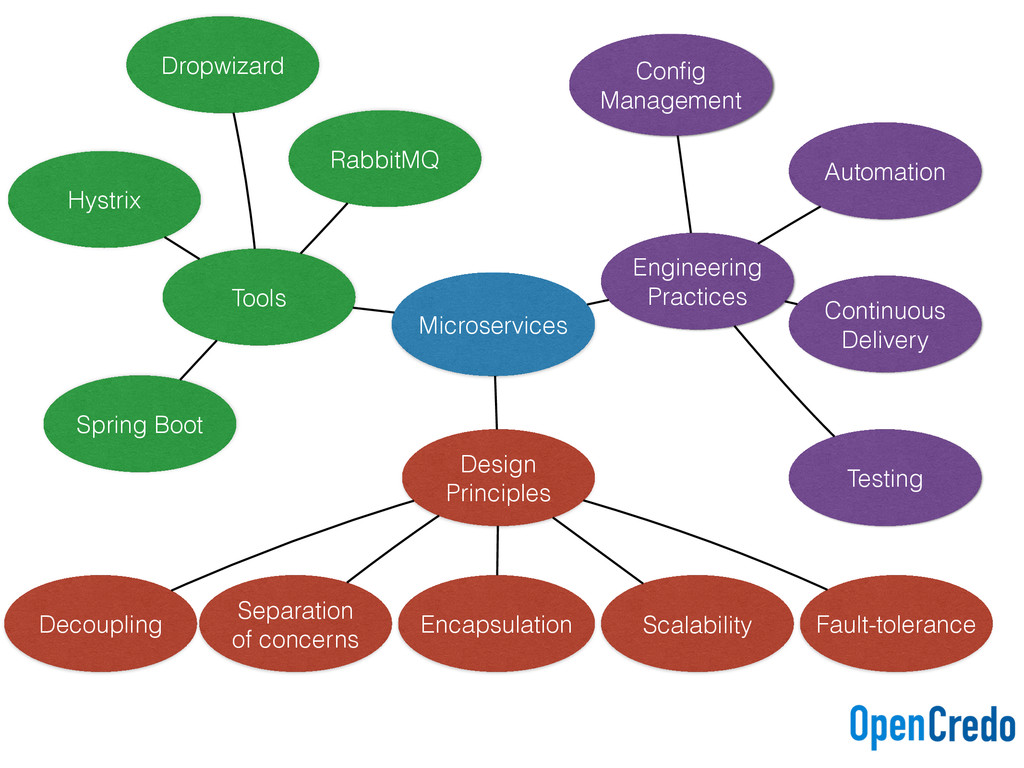
What are microservices?
Microservices Design Principles Tools Decoupling Separation of concerns Encapsulation Engineering
Practices Spring Boot RabbitMQ Hystrix Automation Scalability Fault-tolerance Continuous Delivery Testing Dropwizard Config Management
Why microservices anti-patterns?
1. The Enterprise-OSGI-Application-Service-Bus Building the wrong thing
There is no unique way to implement microservices
Don't build what you don't need - think about your
goals and your non-goals
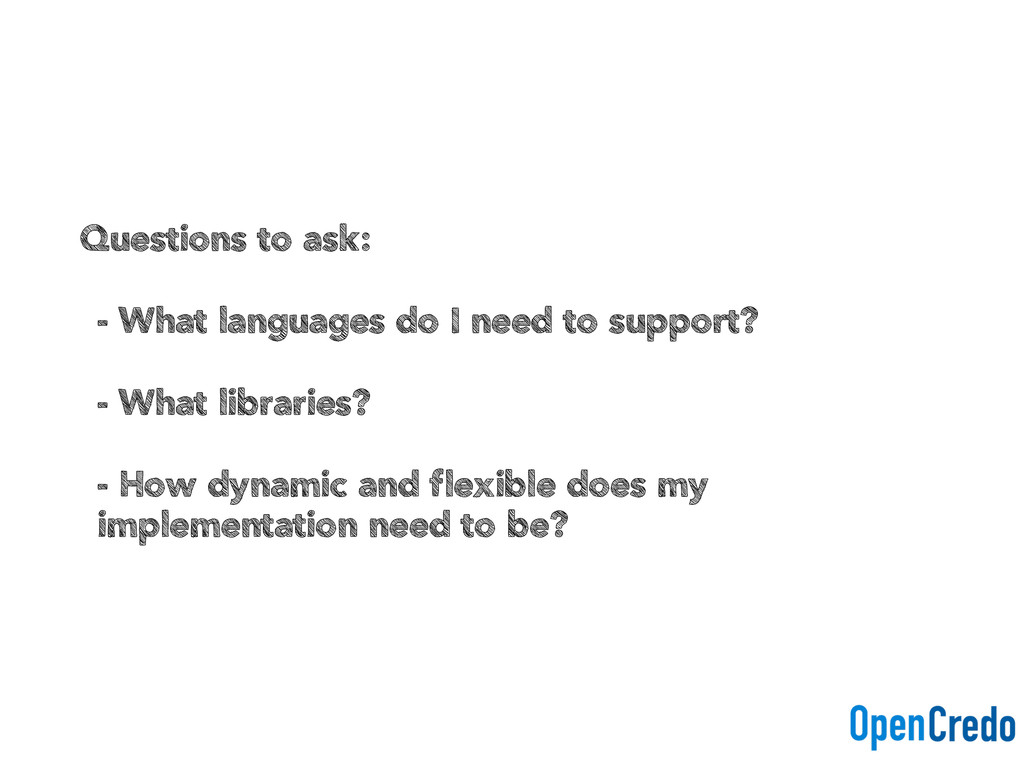
Questions to ask: - What languages do I need to
support? - What libraries? - How dynamic and flexible does my implementation need to be?
Communicate goals and non-goals. Keep it simple.
2. Porcine Cosmetics Failing to adopt a contract-first design approach
Why do we need service contracts?
Abstraction
Encapsulation
Composition
Always start by designing the contract of your service (CDD,
it is like TDD but for microservices!)
Seriously, we've known this for 10 years!
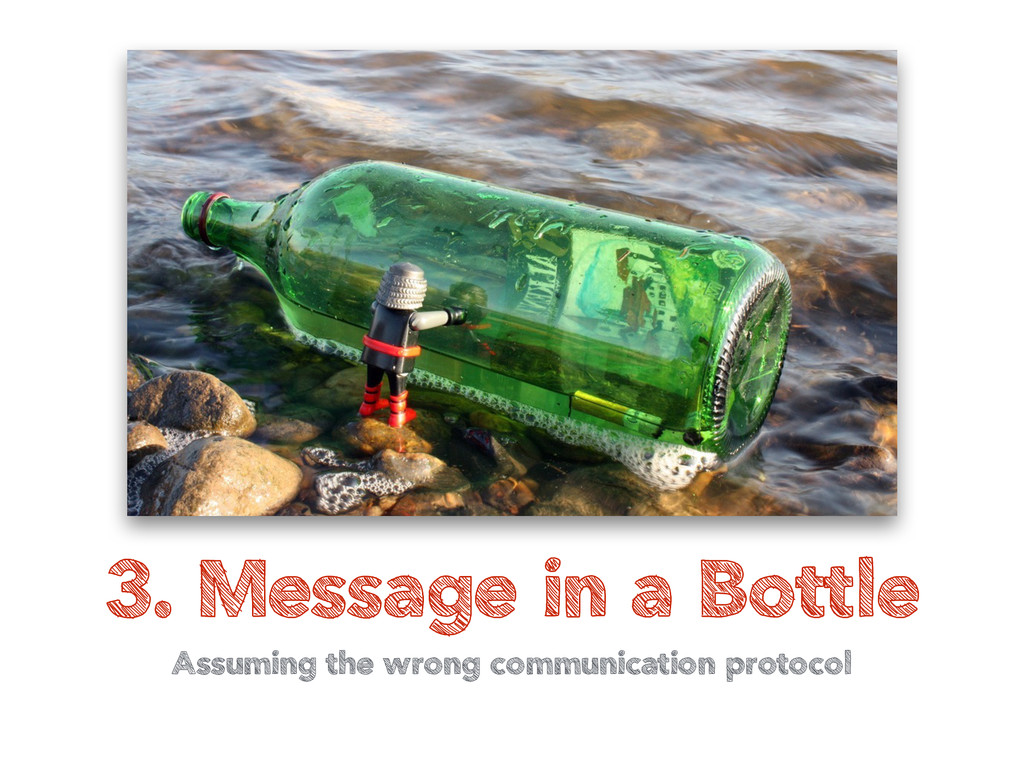
3. Message in a Bottle Assuming the wrong communication protocol
Typically, microservices use http or lightweight messaging to communicate. Messages
can be binary or human-readable
Don't enforce one particular communication pattern before understanding what you
really need
Do I need: - Simple request/response paradigm? - Message persistence?
- Reliability? - Asynchronous notification?
Distinguish between services: external vs internal core vs supporting
4. The Single Domain of Failure Introducing a shared domain
model
Designing a shared domain model is common in a monolithic
architecture (it is even a best practice!)
Things domain models are used for: - drive business logic
- map business entities to the database - manage input & output
The shared domain model fallacy: we are in full control
of the context and the boundaries of the application
A shared domain model breaks encapsulation and introduces coupling between
services
Shared dependency on volatile binary artefacts makes deployments really hard
Define the domain in terms of service interaction, not service
implementation
Resource-oriented design
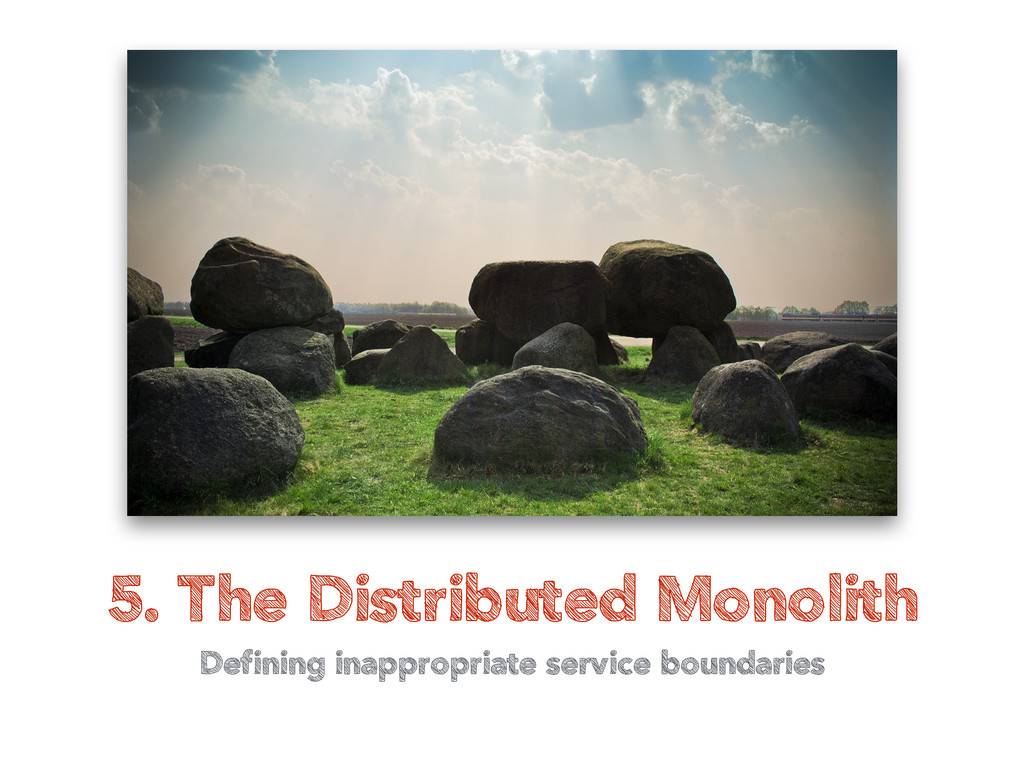
5. The Distributed Monolith Defining inappropriate service boundaries
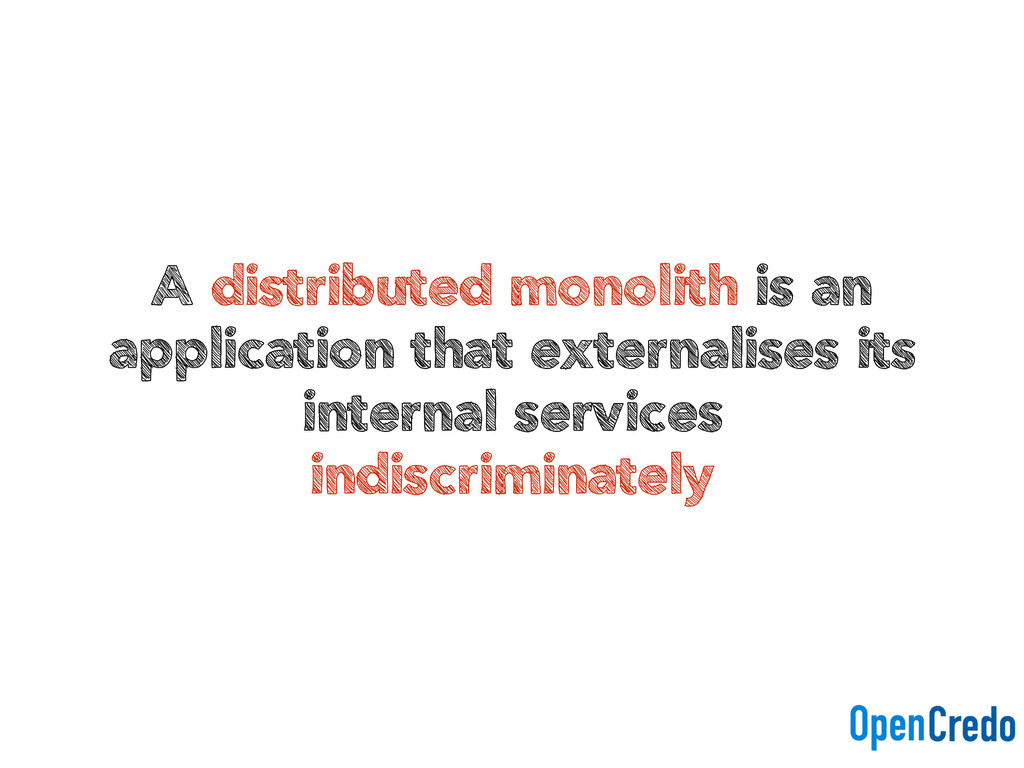
A distributed monolith is an application that externalises its internal
services indiscriminately
Internal application components don't always make good microservices
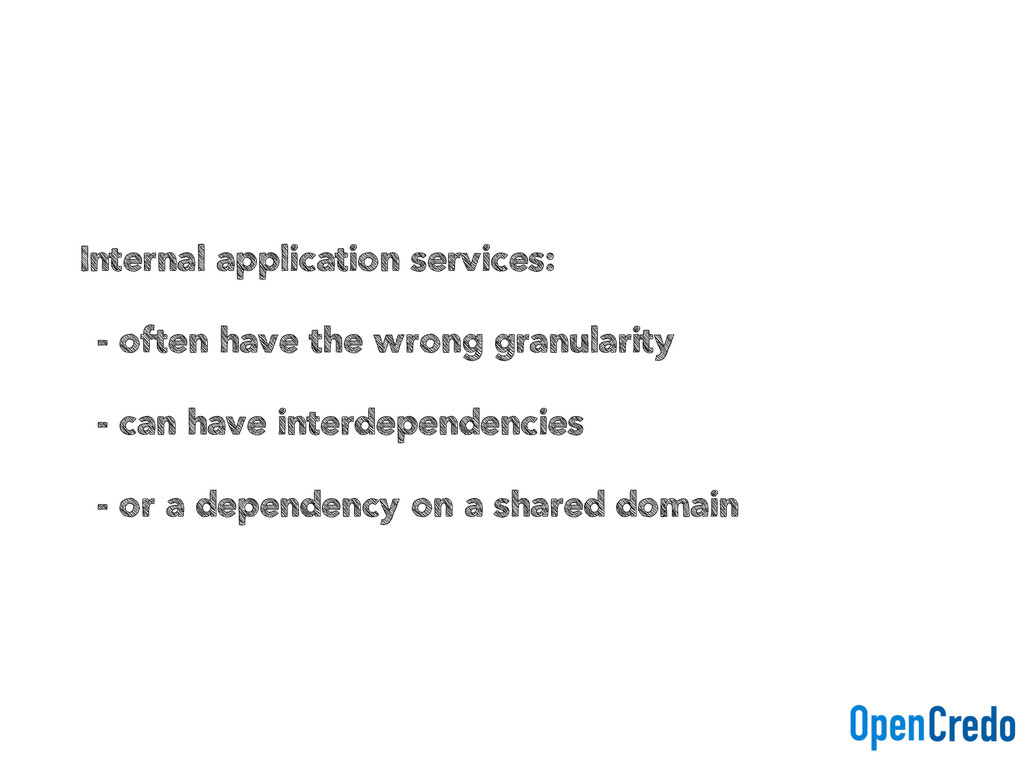
Internal application services: - often have the wrong granularity -
can have interdependencies - or a dependency on a shared domain
Microservices are not a remoting abstraction
Design services that have business meaning and clear boundaries
6. The Horseless Cart Neglecting Macro System Concerns
Microservices: micro vs macro (macro is often missed)
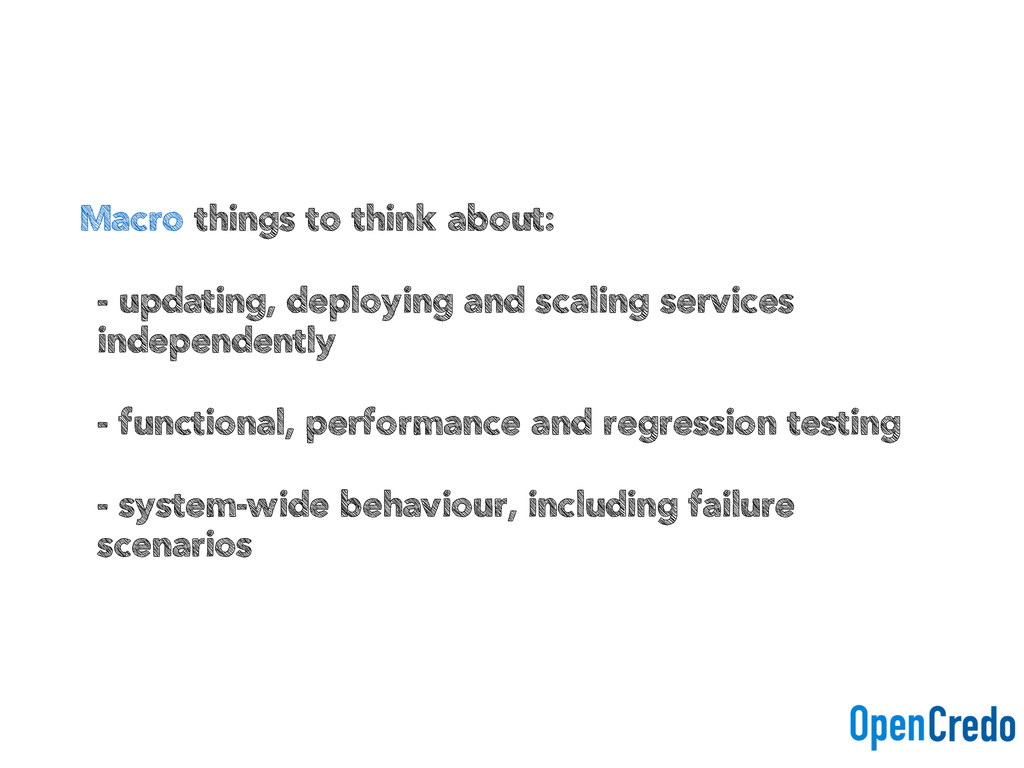
Macro things to think about: - updating, deploying and scaling
services independently - functional, performance and regression testing - system-wide behaviour, including failure scenarios
Design for a distributed system (runtime introspection, fault-tolerance, latency, failure,
etc...)
Introduce continuous delivery and automated testing form the very start
7. The Sausage Factory Disregarding the Human Factor
In microservices world, developers need to have good understanding of:
- Messaging - Scalability, fault-tolerance and resilience - Integration and remoting And potentially learn a few new technologies and tools
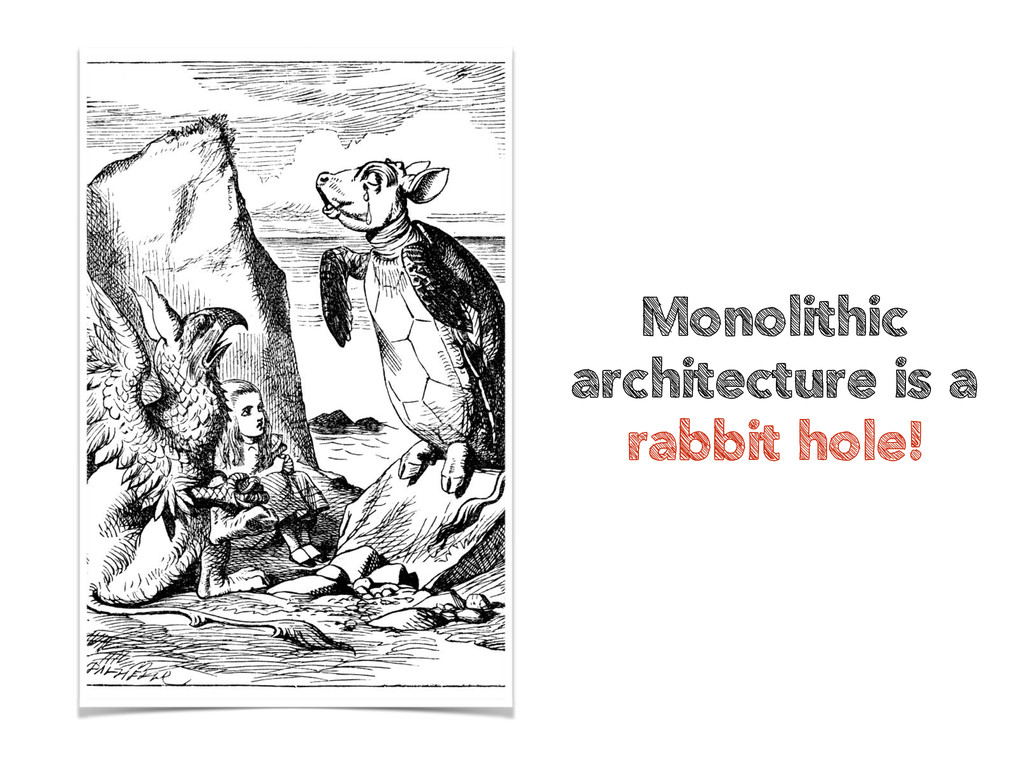
Monolithic architecture is a rabbit hole!
Microservices do not make up for the gaps in your
developers' skills
Invest in your developers
–Melvin Conway “organisations which design systems […] are constrained to
produce designs which are copies of the communication structures of these organisations.”
Corollary organisations that operate in silos cannot benefit from a
microservices architecture
Microservices do not fix broken organisations
Collaboration on a microservices project between: - devs and ops
- techies and business - and across teams
The essence of microservices is collaboration
In conclusion
Microservices: it feels a little bit like quantum mechanics!
Hopefully, we can now begin to have pragmatic answers to
questions such as: - How do I design a (micro)service? - How big or small should a service be? - Should a microservices be reusable?
Links Microservice anti-patterns: http://bit.ly/ microservices-antipatterns OpenCredo: http://www.opencredo.com/blog Twitter: @tareq_abedrabbo Personal
blog: http://www.terminalstate.net Thank you! Any questions?
Credits • https://unsplash.com/ • The horseless cart: https://www.flickr.com/photos/ ellesmerefnc/4249596803/ •
Message in a bottle: https://www.flickr.com/photos/ rpenalozan/5128413528


 tareqabedrabbo
 ennael
 sansantech
 tatamiya
 ufried
 tanakaseiya
 mot_techtalk
 kitagawaz
 sony
sony
 jct
jct
 jeffersonlam
 gr2m
gr2m
 sarafernandez
 kristinabergwall1
 eileencodes
 lara
lara
 orderedlist
 tanoku
 reverentgeek
 addyosmani
 apolaine











![–Melvin Conway “organisations which design systems […] are constrained to](https://files.speakerdeck.com/presentations/8359e060588101325c05628beb267690/slide_47.jpg)