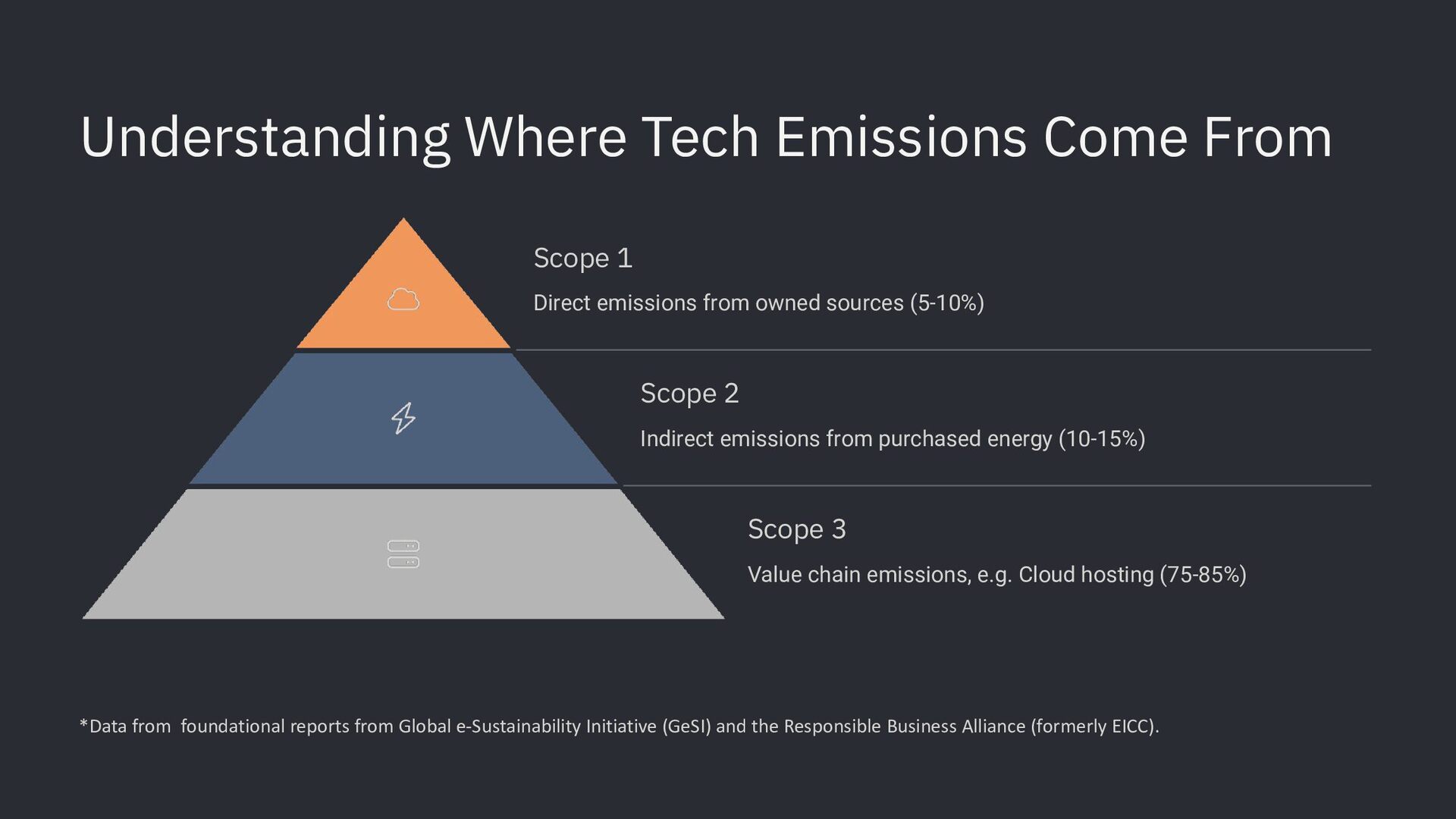
from owned sources (5-10%) Scope 2 Indirect emissions from purchased energy (10-15%) Scope 3 Value chain emissions, e.g. Cloud hosting (75-85%) *Data from foundational reports from Global e-Sustainability Initiative (GeSI) and the Responsible Business Alliance (formerly EICC).
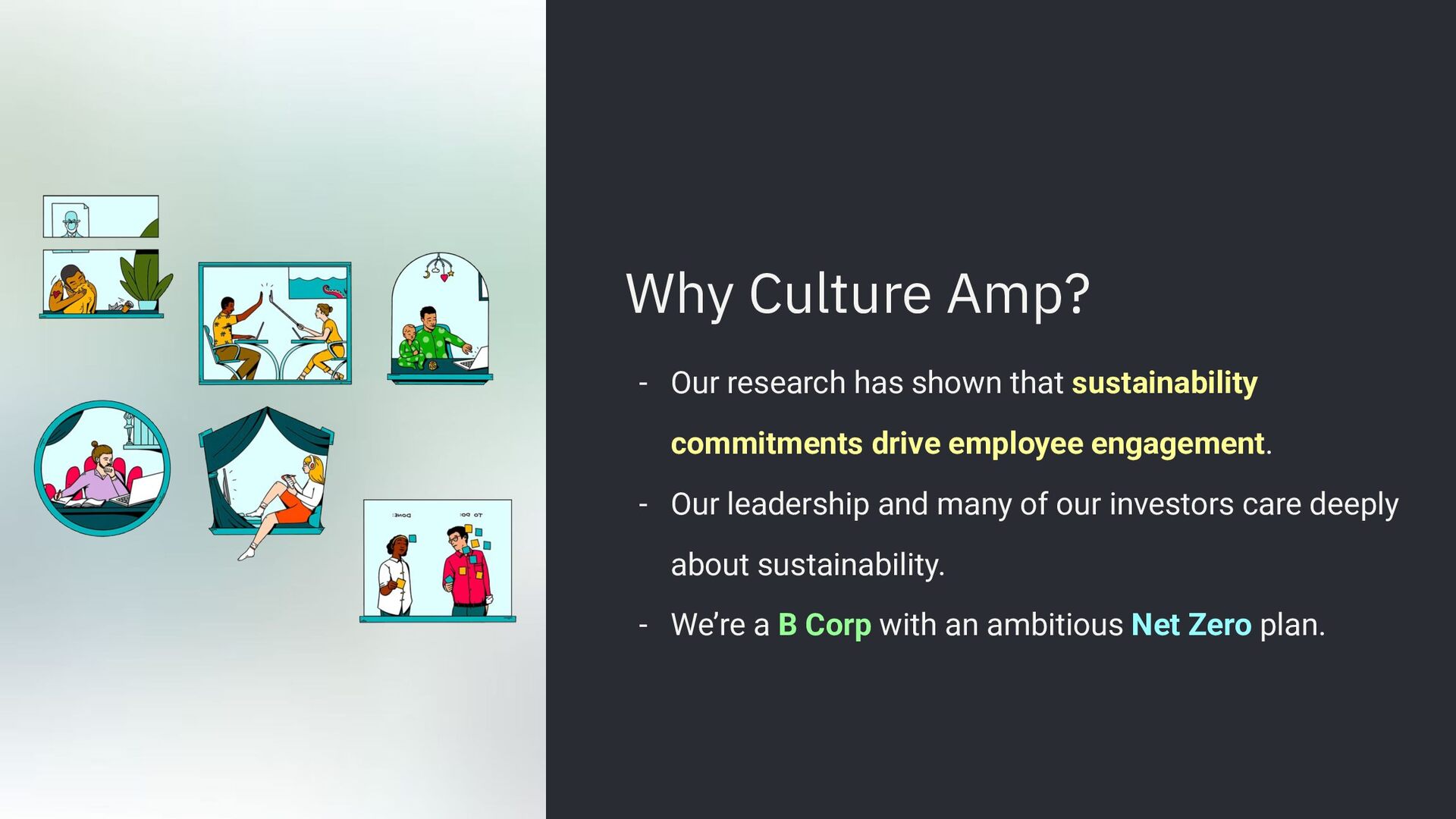
commitments drive employee engagement. - Our leadership and many of our investors care deeply about sustainability. - We’re a B Corp with an ambitious Net Zero plan.
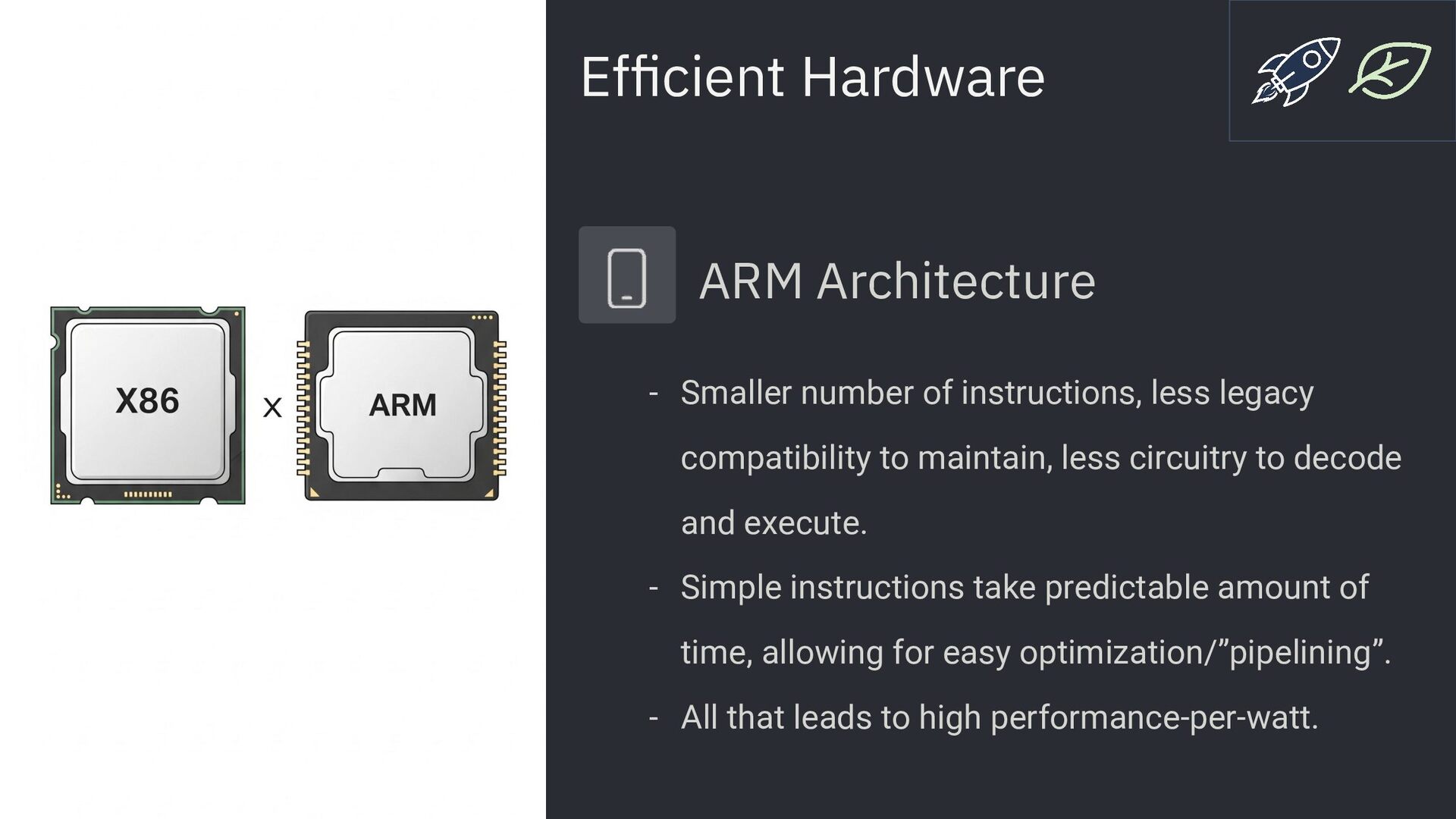
legacy compatibility to maintain, less circuitry to decode and execute. - Simple instructions take predictable amount of time, allowing for easy optimization/”pipelining”. - All that leads to high performance-per-watt.
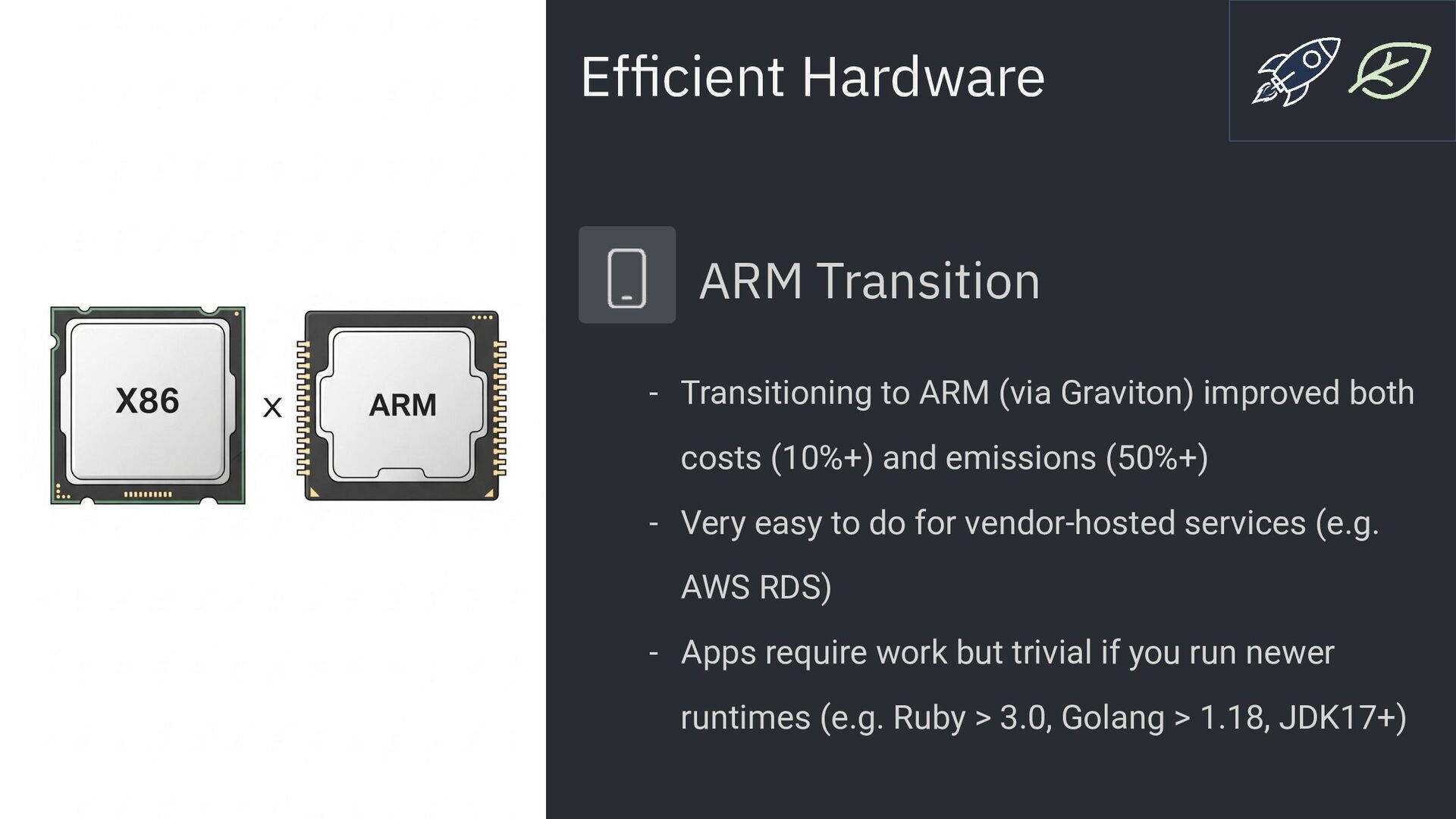
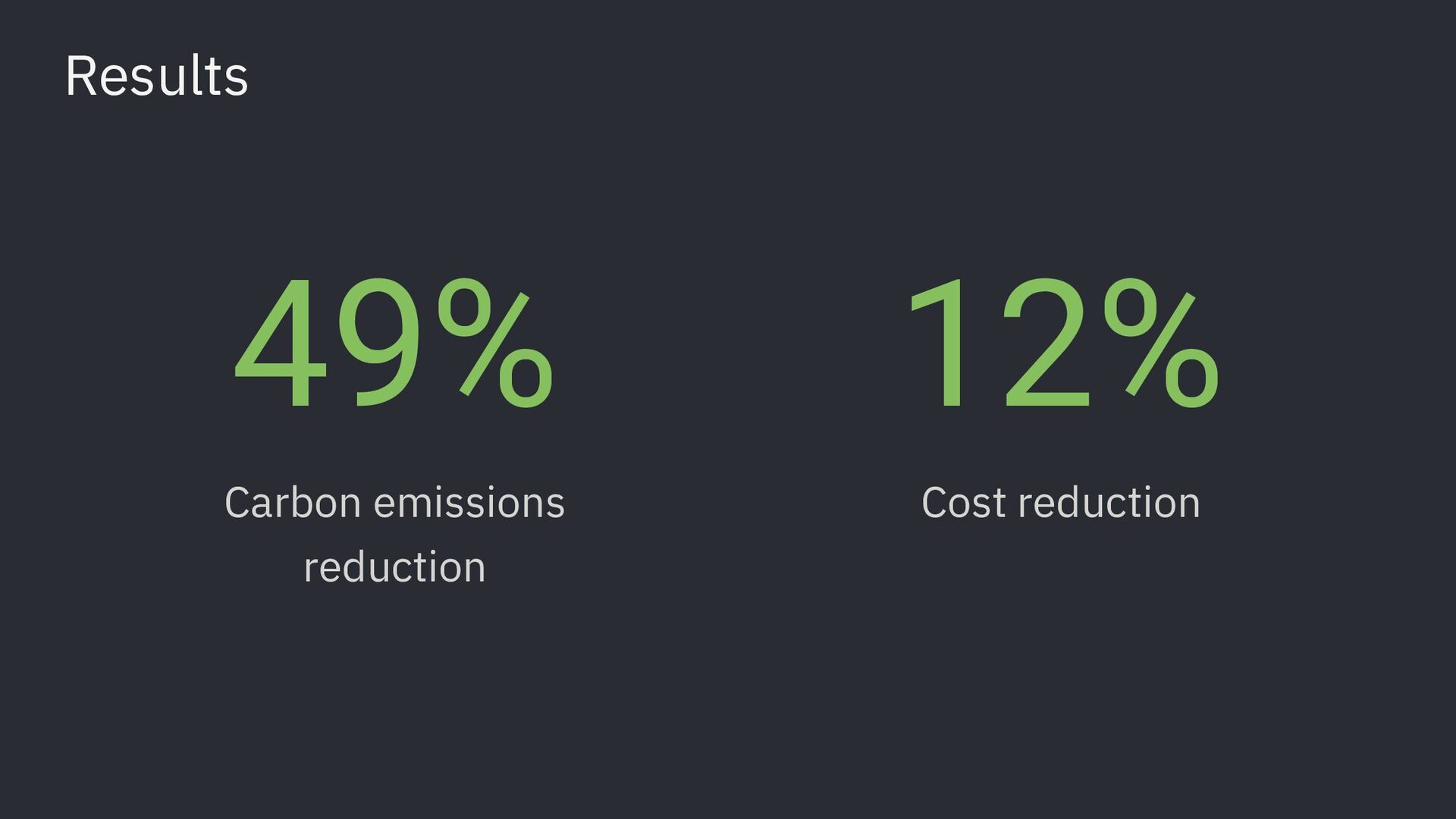
improved both costs (10%+) and emissions (50%+) - Very easy to do for vendor-hosted services (e.g. AWS RDS) - Apps require work but trivial if you run newer runtimes (e.g. Ruby > 3.0, Golang > 1.18, JDK17+)
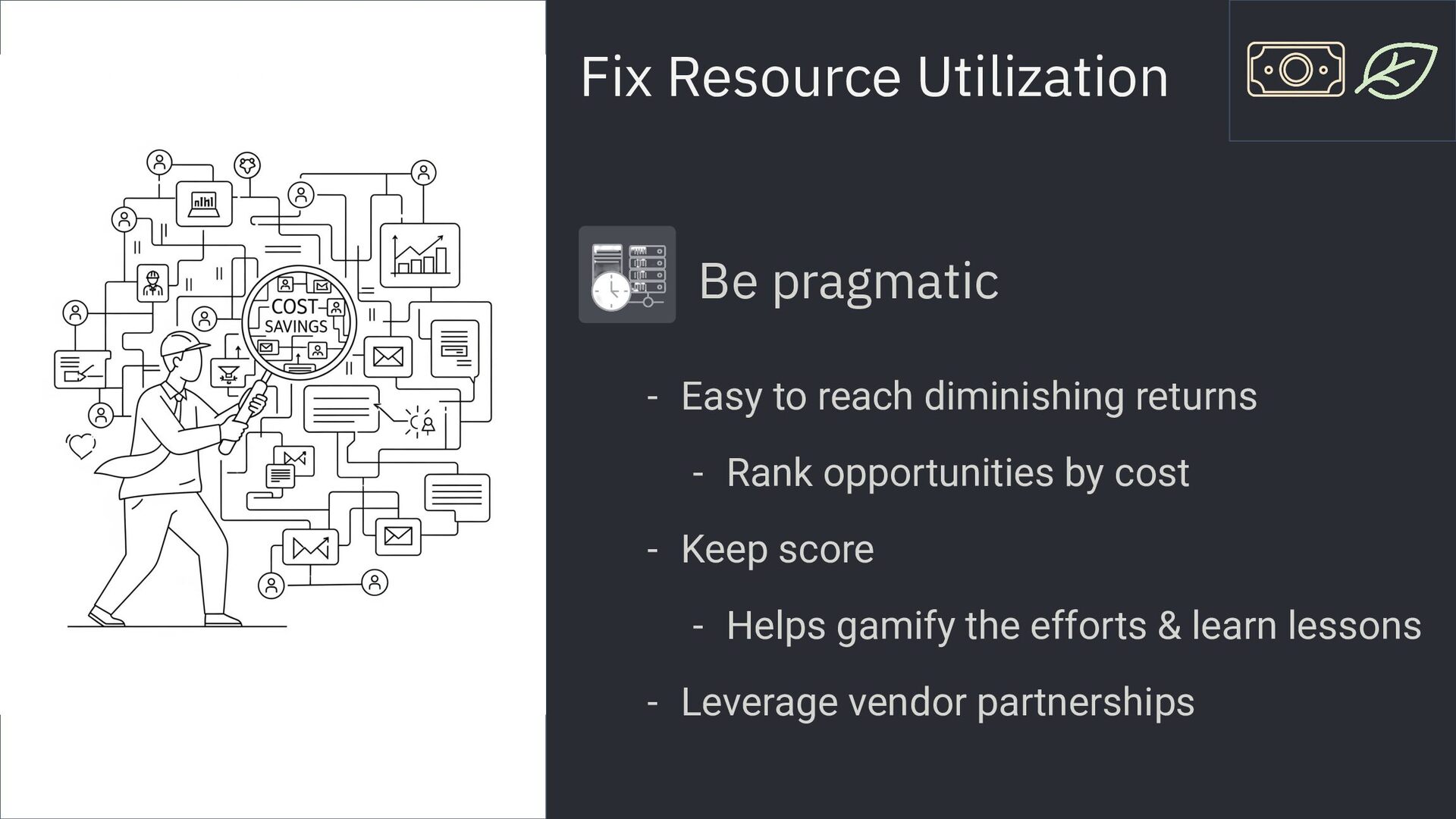
idle resources - Use cloud provider tooling Leverage instance marketplaces (AWS Spot) Deploy "Just In Time" Computing - Product metrics vs monitoring data - does your compute follow the active users? - Infrastructure inventory
of Scale Take advantage of just-in-time compute Leverage instance marketplaces (AWS Spot) Deploy "Just In Time" Computing optimized for you already, e.g.: - AWS ECS Fargate - GCP Cloud Run
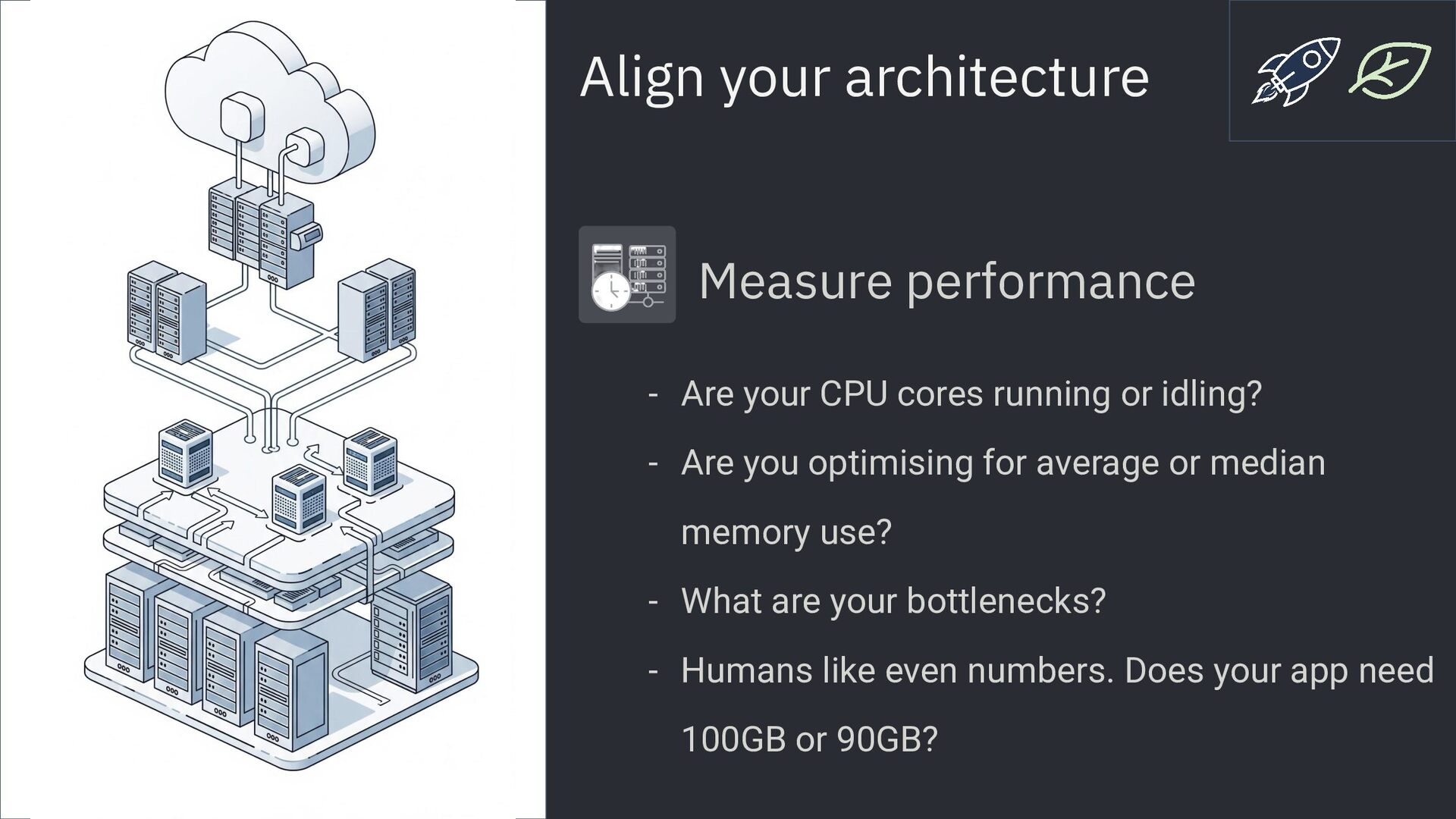
performance - Are your CPU cores running or idling? Leverage instance marketplaces (AWS Spot) Deploy "Just In Time" Computing - Are you optimising for average or median memory use? - What are your bottlenecks? - Humans like even numbers. Does your app need 100GB or 90GB?
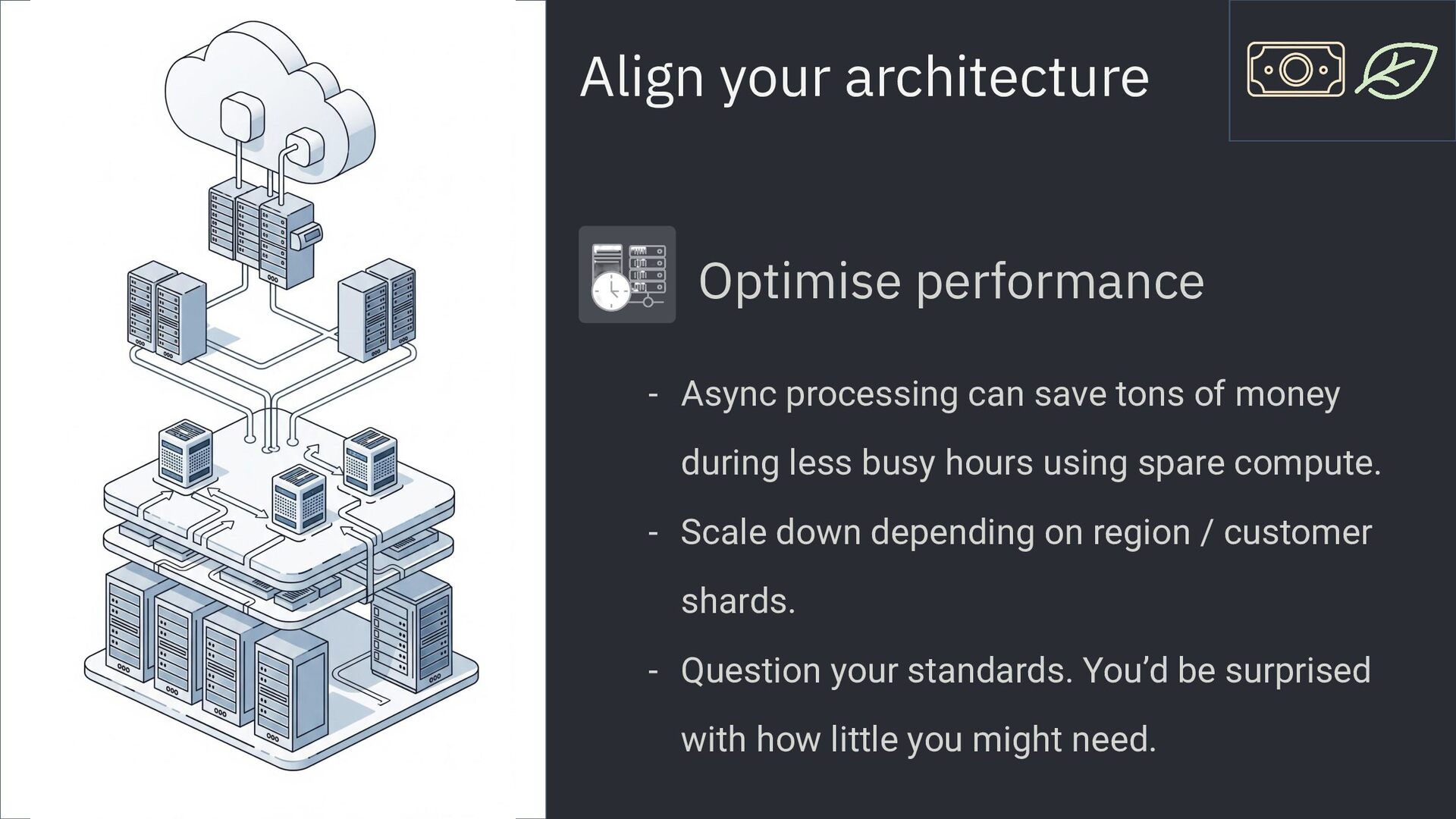
performance - Async processing can save tons of money Leverage instance marketplaces (AWS Spot) Deploy "Just In Time" Computing during less busy hours using spare compute. - Scale down depending on region / customer shards. - Question your standards. You’d be surprised with how little you might need.


 temikus
 akhino
 usanchuu
 koukihosaka
 nealle
 gogutan
 kzkhykw1991
 ivry_presentationmaterials
 sansantech
 carta_engineering
 grimoh
 kentapapa
 riyaamemiya
 csswizardry
 addyosmani
 wayneb77
 quramy
 carmenintech
 gr2m
gr2m
 reverentgeek
 ianozsvald
 danielanewman
 stephenakadiri
 pwiseman
 nikkihalliwell