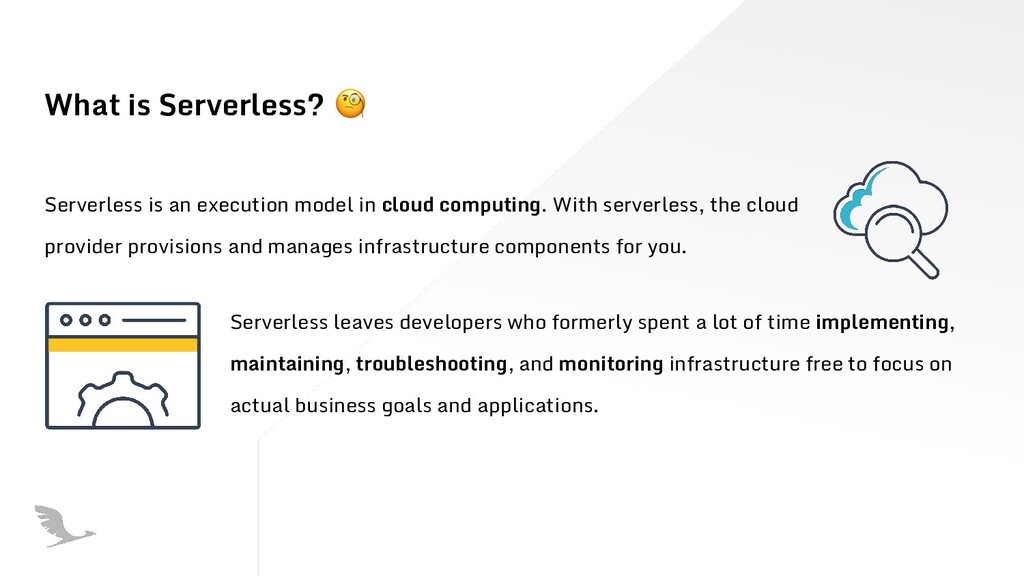
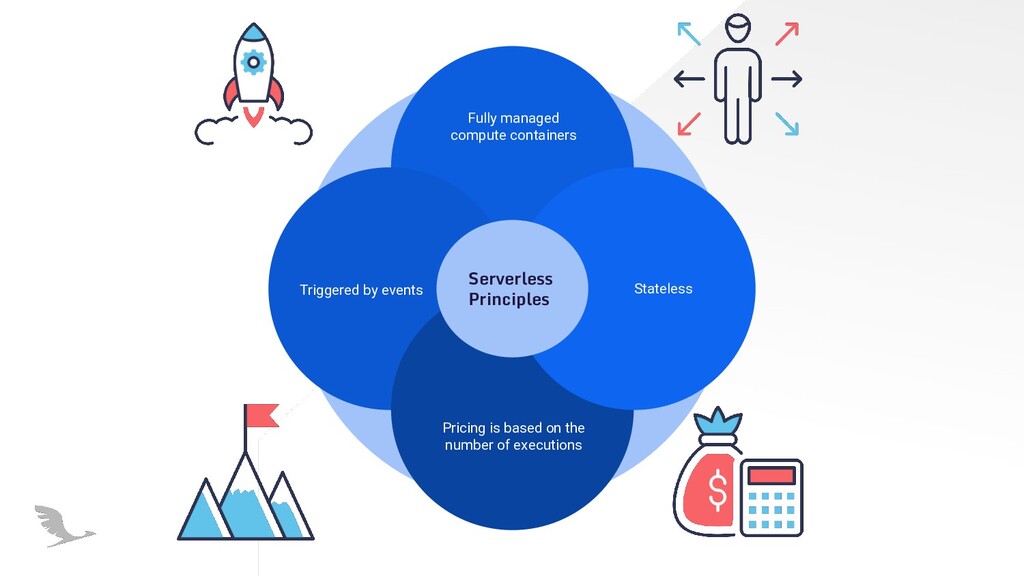
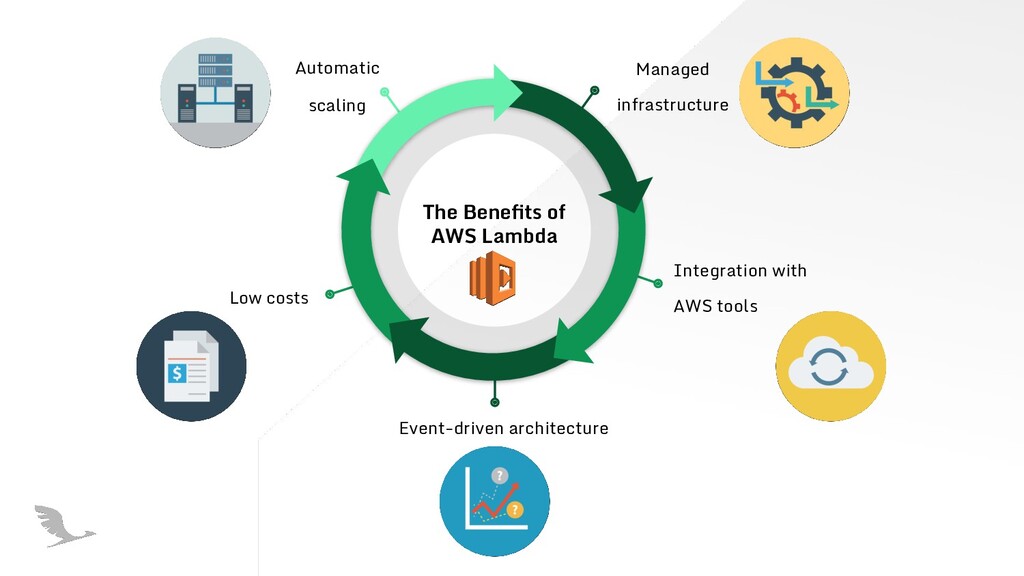
computing. With serverless, the cloud provider provisions and manages infrastructure components for you. Serverless leaves developers who formerly spent a lot of time implementing, maintaining, troubleshooting, and monitoring infrastructure free to focus on actual business goals and applications.
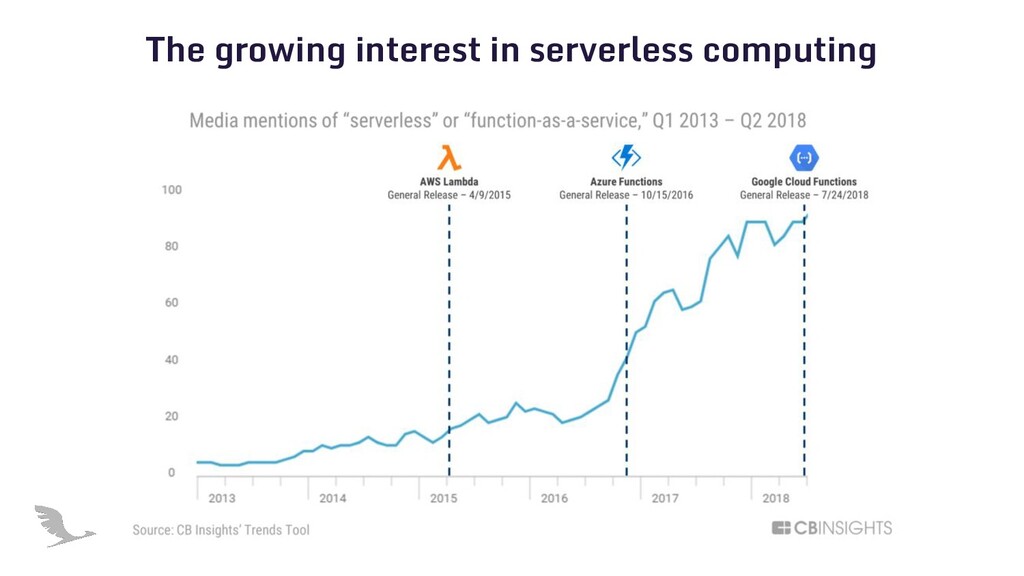
serverless, but now, over the past year-and-a-half, serverless has experienced an annual growth rate of 75 percent, making it the fastest-growing cloud service model.
almost entirely on AWS Lambda. By moving to serverless the company gained several major benefits: • First, their developer teams were freed up to focus on business logic. • Second, by reusing microservices they increased efficiency. For example, in binding a new product to an existing billing service, they managed to cut development time by 95 percent. • Third, the company leveraged the event-driven architecture to minimize wasted resources and operate at a much lower cost. Using serverless, they pay a mere $107 to serve 400,000 active users every month. Finally, the highly layered architecture allows the enterprise to more easily refactor code and accelerate the development lifecycle.
outdated on-premises infrastructure. One Black Friday, Lego experienced a system-wide catastrophic failure. Shaken up and looking to launch a global online shopping platform, the company decided to make the move to AWS. After getting familiar with S3, DynamoDB, and SQS, Lego decided to switch to serverless and started by migrating their e-commerce platform to AWS Lambda. By moving to serverless, Lego was able to instantly leverage the many AWS managed services without having to reinvent the wheel. Embracing an event-driven approach and using EventBridge to trigger and filter events, Lego could flexibly build highly scalable architectures. Finally, serverless encouraged Lego to create a decoupled and loosely coupled architecture, making testing and feature creation faster and easier.


 timakin
.jpg) yumnumm
yumnumm
 marcoroth
 tomokon
 findyinc
 nao_randd
 skydoves
 jame2408
 n_takehata
 yuta_onishi_97
 neuecc
 twada
twada
 aleyda
 addyosmani
 palkan
 skipperchong
 portentint
 thoeni
 shpigford
 jct
jct
 baasie
 mfonobong
 inesmontani