Upgrade to Pro — share decks privately, control downloads, hide ads and more …

Software archaeology - Learning from the landin...

Software archaeology - Learning from the landing on the moon!

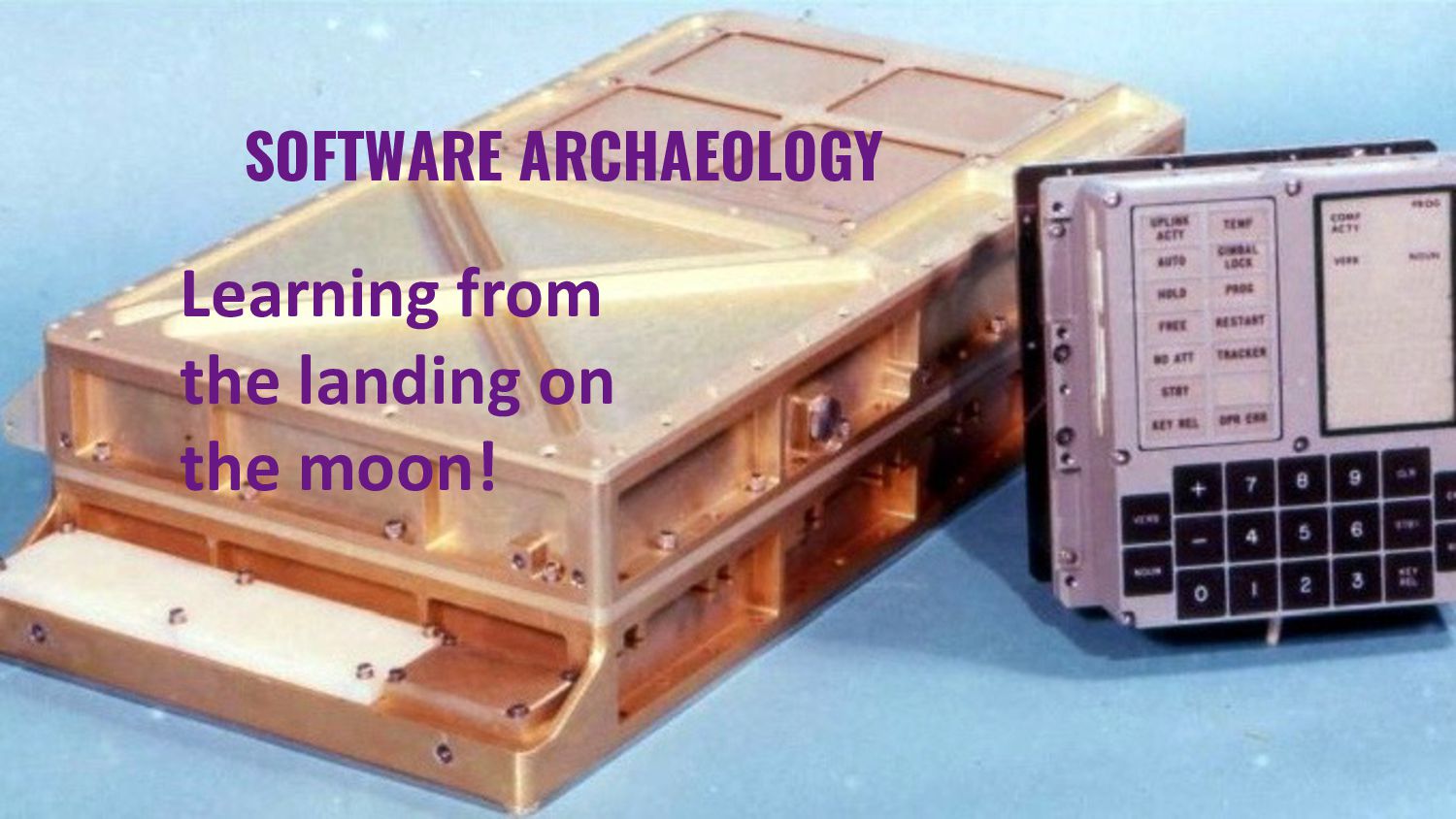
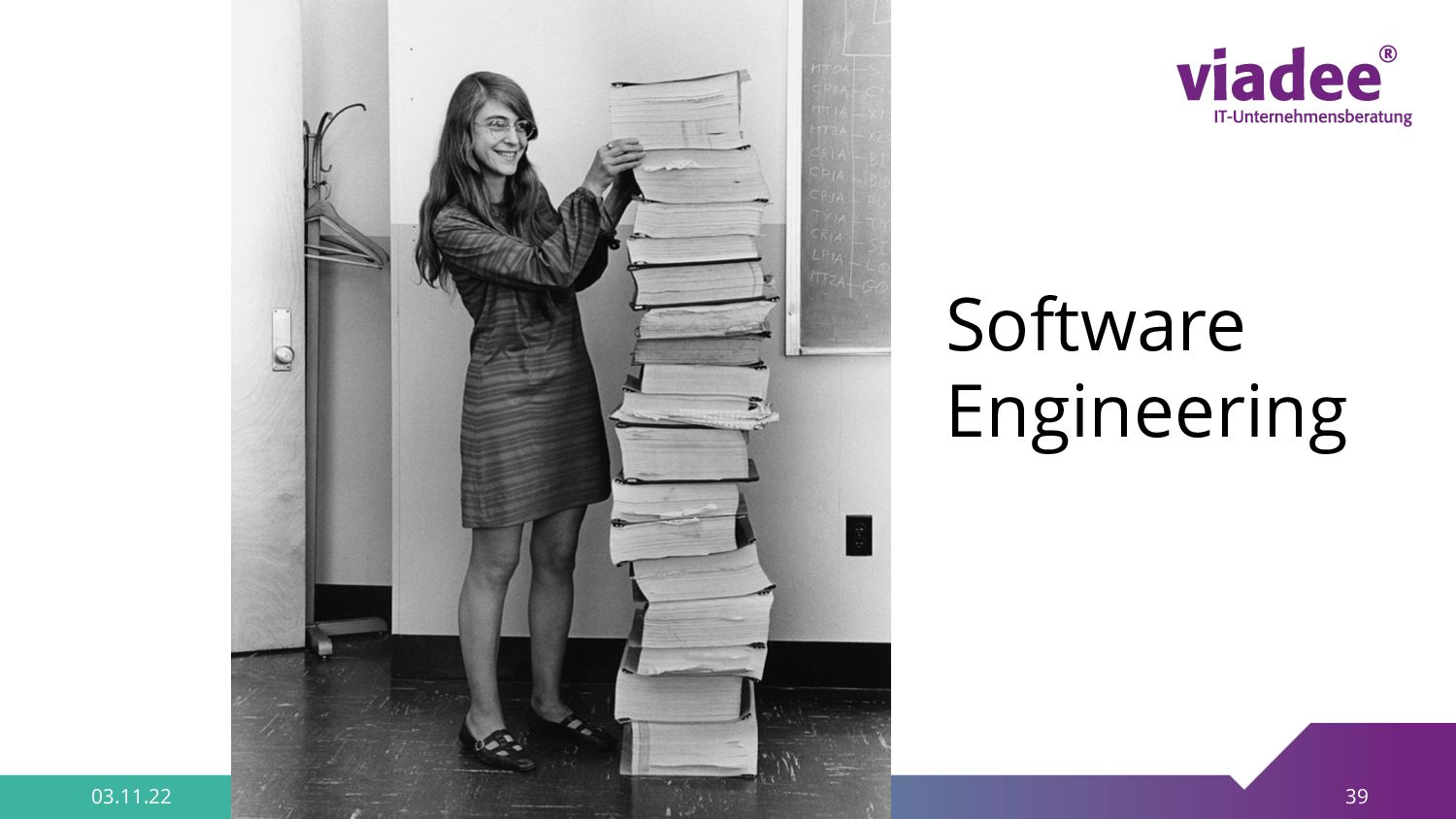
The landing on the moon was about 50 years ago and mankind plans again big space programs. IT played a major role at the first moon landing and many important fundaments of software engineering were established. The term itself was coined by Margaret Hamilton during the design of the Apollo Guidance Computer (AGC), the control software of the Apollo lunar lander.

I want to practice a bit of software archaeology in contrast to current technology hypes with a retrospection of the groundbreaking achievements of the AGC. Priority scheduling, multitasking and a realtime operating system were implemented for one of the first embedded systems. A virtual machine - a new concept as well - provided mathematical functions and abstracted from the hardware. One of the main success factors was the robustness of the software, which was characterized by excellent error handling and prevented human user errors - an important learning after Hamiltons daughter crashed the AGC while playing with it. This quality kicked in minutes before the landing and prevented the failure of the mission. Let us take a look back to the future!

Avatar for Tobias Voß

Tobias Voß

March 09, 2026
Tweet

More Decks by Tobias Voß

Other Decks in Technology

Transcript

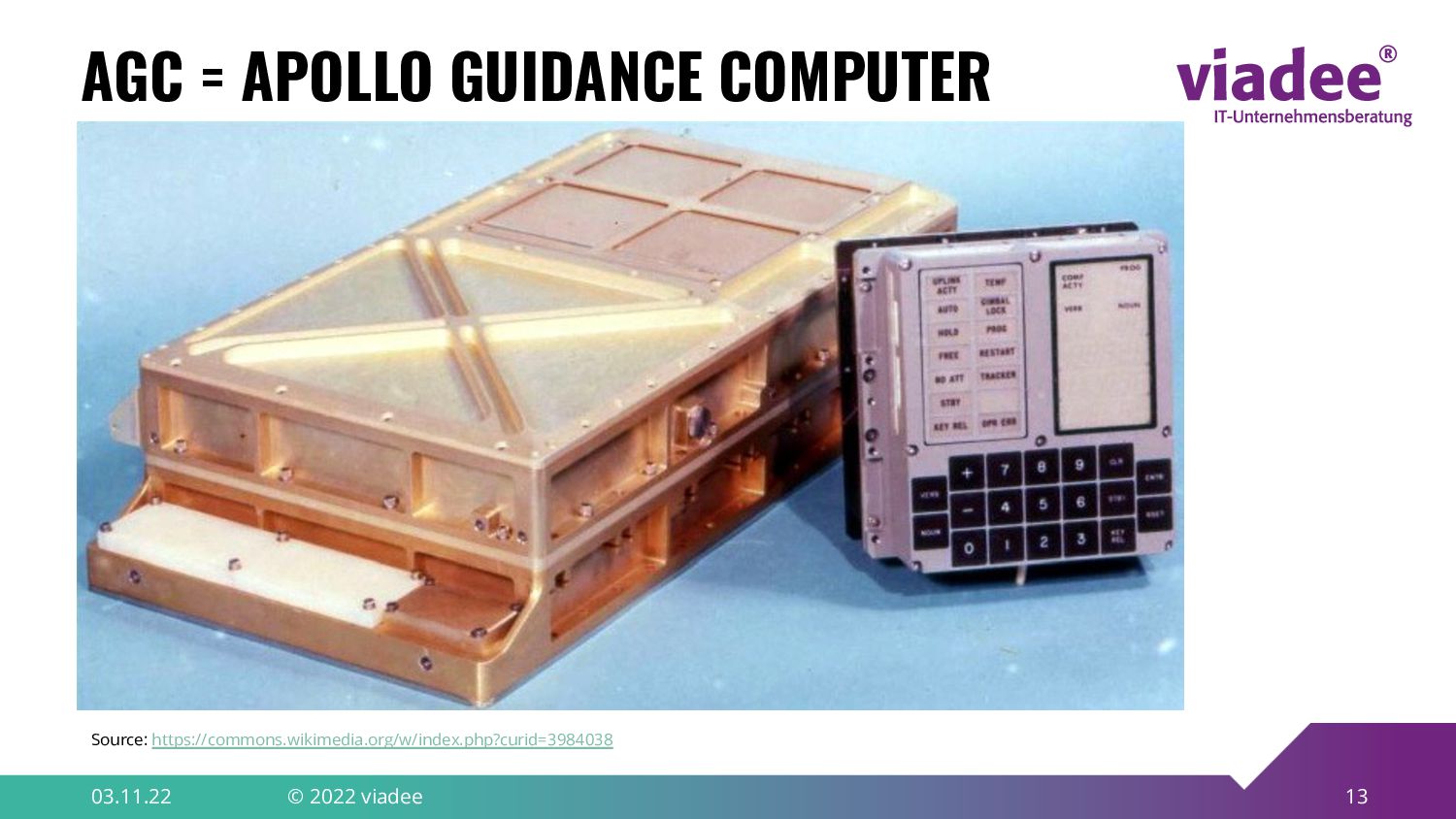
  1. SOFTWARE ARCHAEOLOGY Learning from the landing on the moon! Image:

    https://commons.wikimedia.org/w/index.php?curid=3984038
  2. © viadee „We choose to go to the Moon...We choose

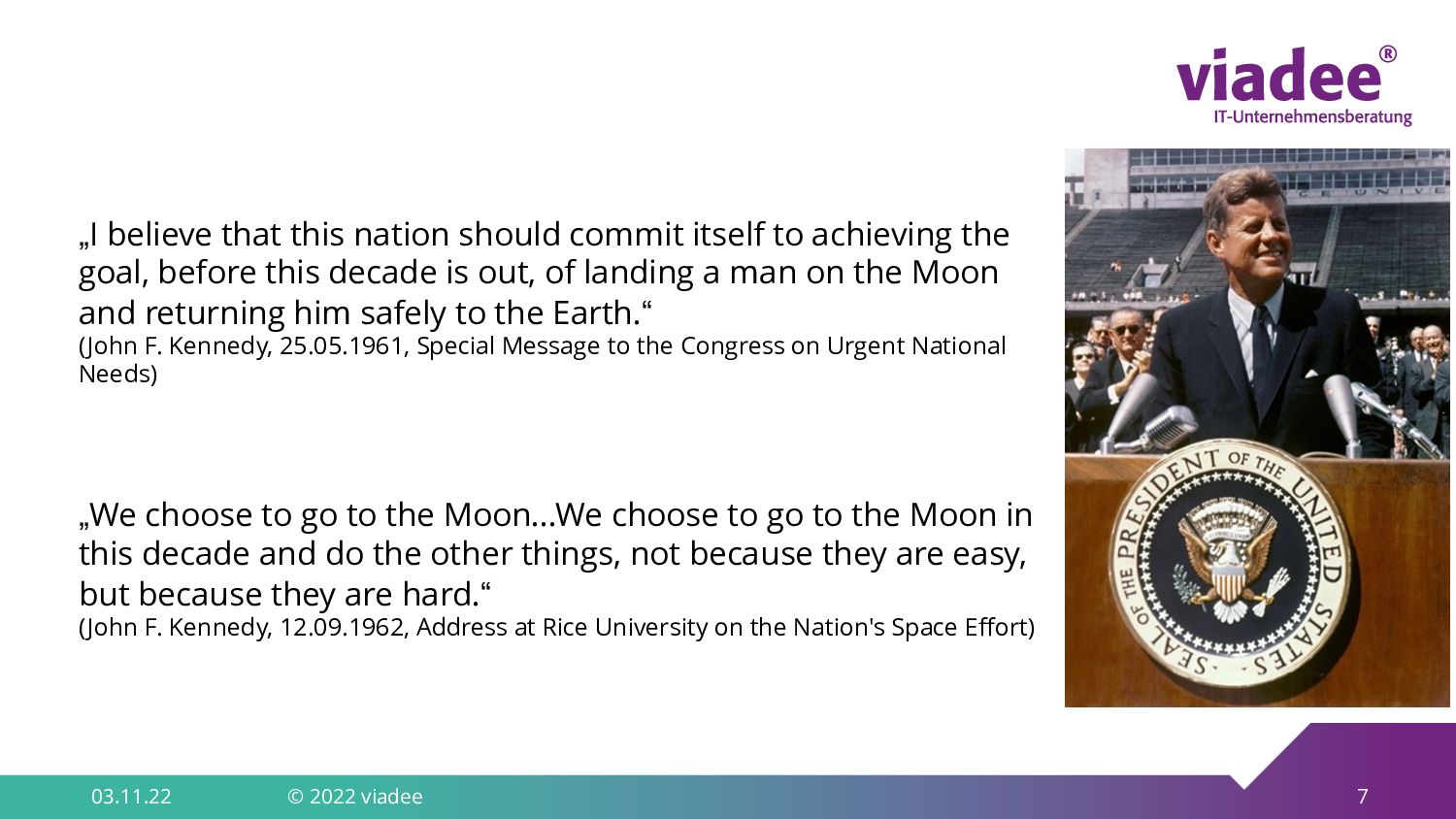
    to go to the Moon in this decade and do the other things, not because they are easy, but because they are hard.“ (John F. Kennedy, 12.09.1962, Address at Rice University on the Nation's Space Effort) „I believe that this nation should commit itself to achieving the goal, before this decade is out, of landing a man on the Moon and returning him safely to the Earth.“ (John F. Kennedy, 25.05.1961, Special Message to the Congress on Urgent National Needs)
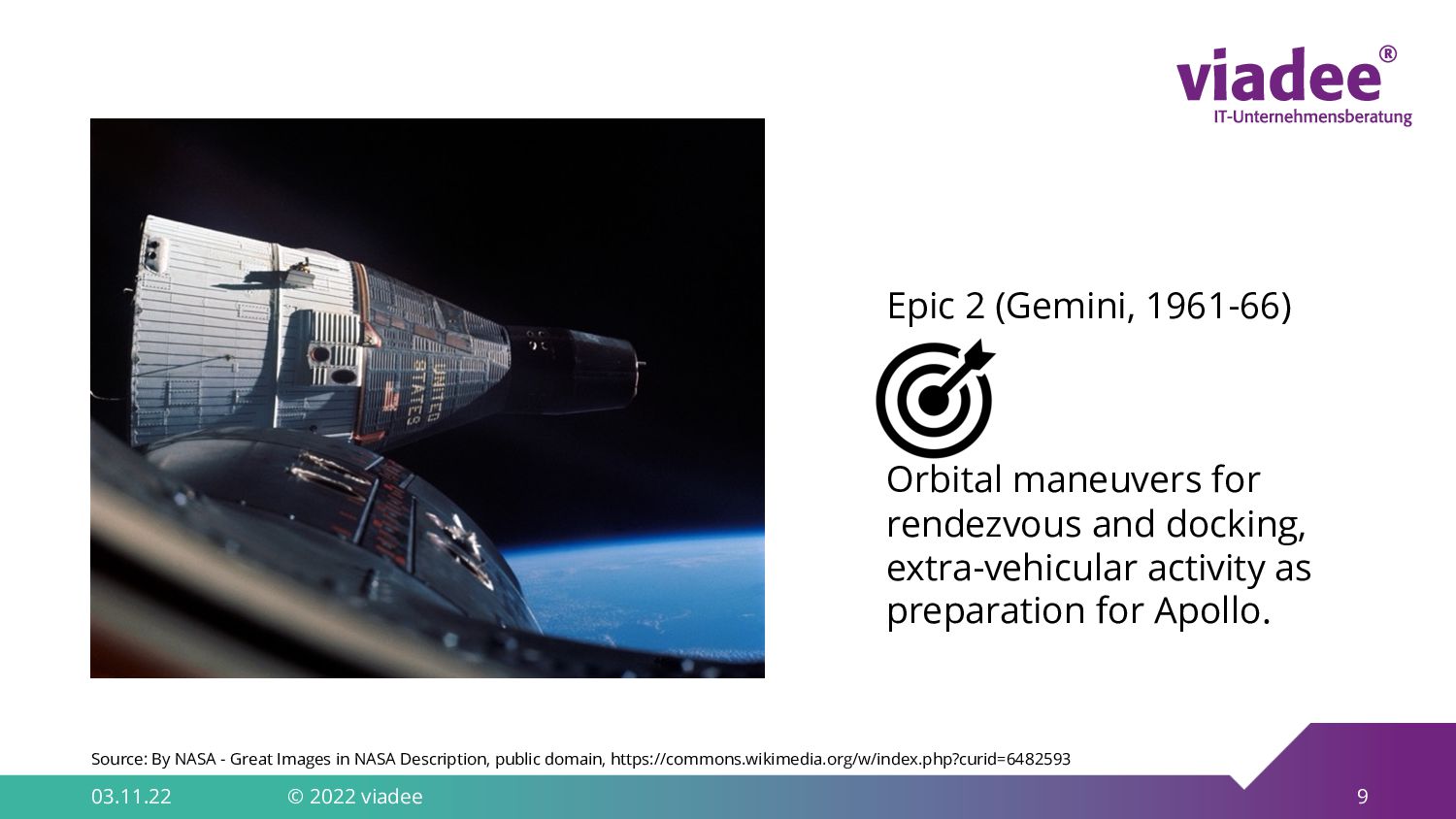
  3. © viadee Source: By NASA - Great Images in NASA

    Description, public domain, https://commons.wikimedia.org/w/index.php?curid=6482593 Epic 2 (Gemini, 1961-66) Orbital maneuvers for rendezvous and docking, extra-vehicular activity as preparation for Apollo.
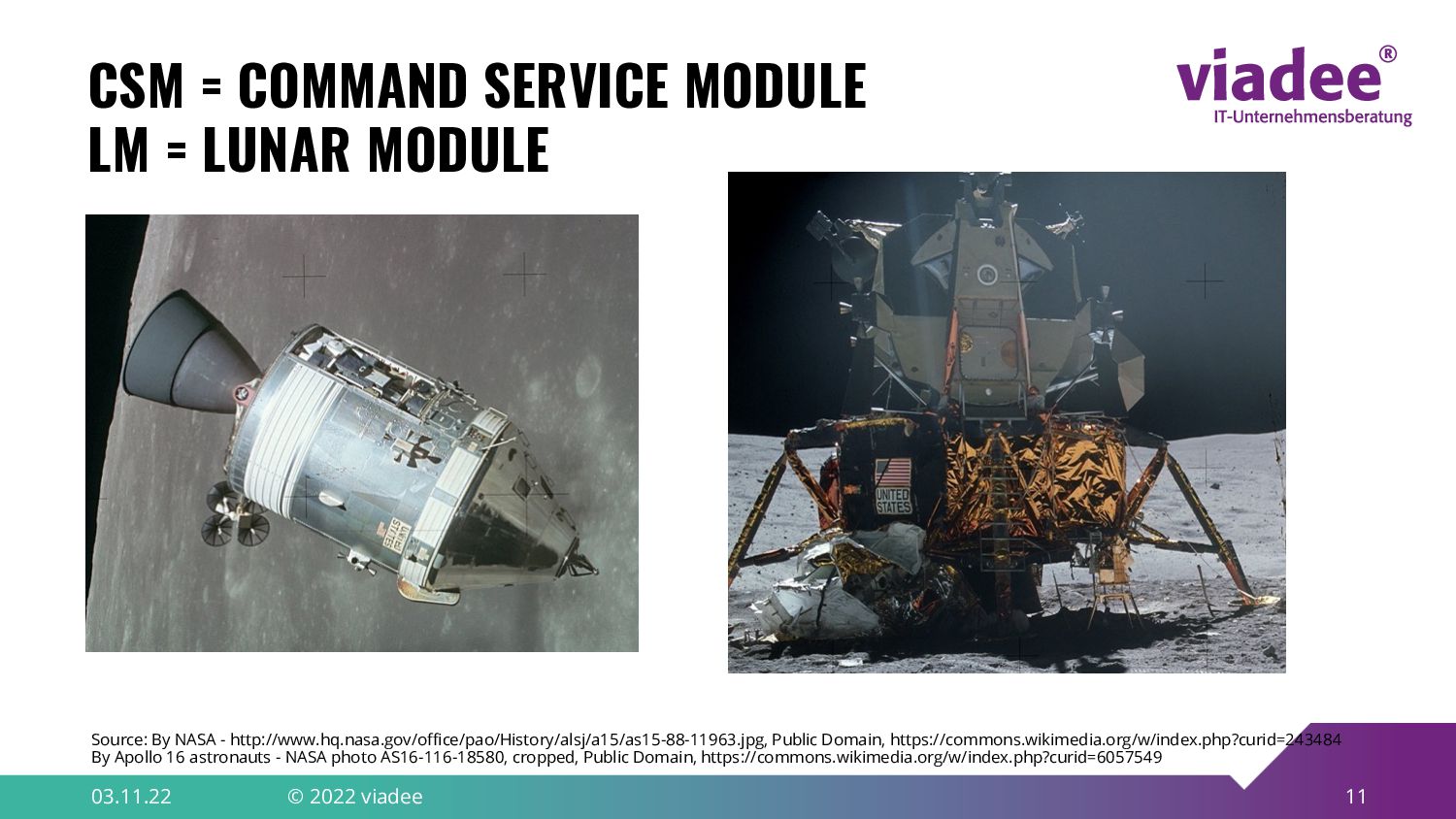
  4. © viadee CSM = Command Service Module LM = Lunar

    Module Source: By NASA - http://www.hq.nasa.gov/office/pao/History/alsj/a15/as15-88-11963.jpg, Public Domain, https://commons.wikimedia.org/w/index.php?curid=243484 By Apollo 16 astronauts - NASA photo AS16-116-18580, cropped, Public Domain, https://commons.wikimedia.org/w/index.php?curid=6057549
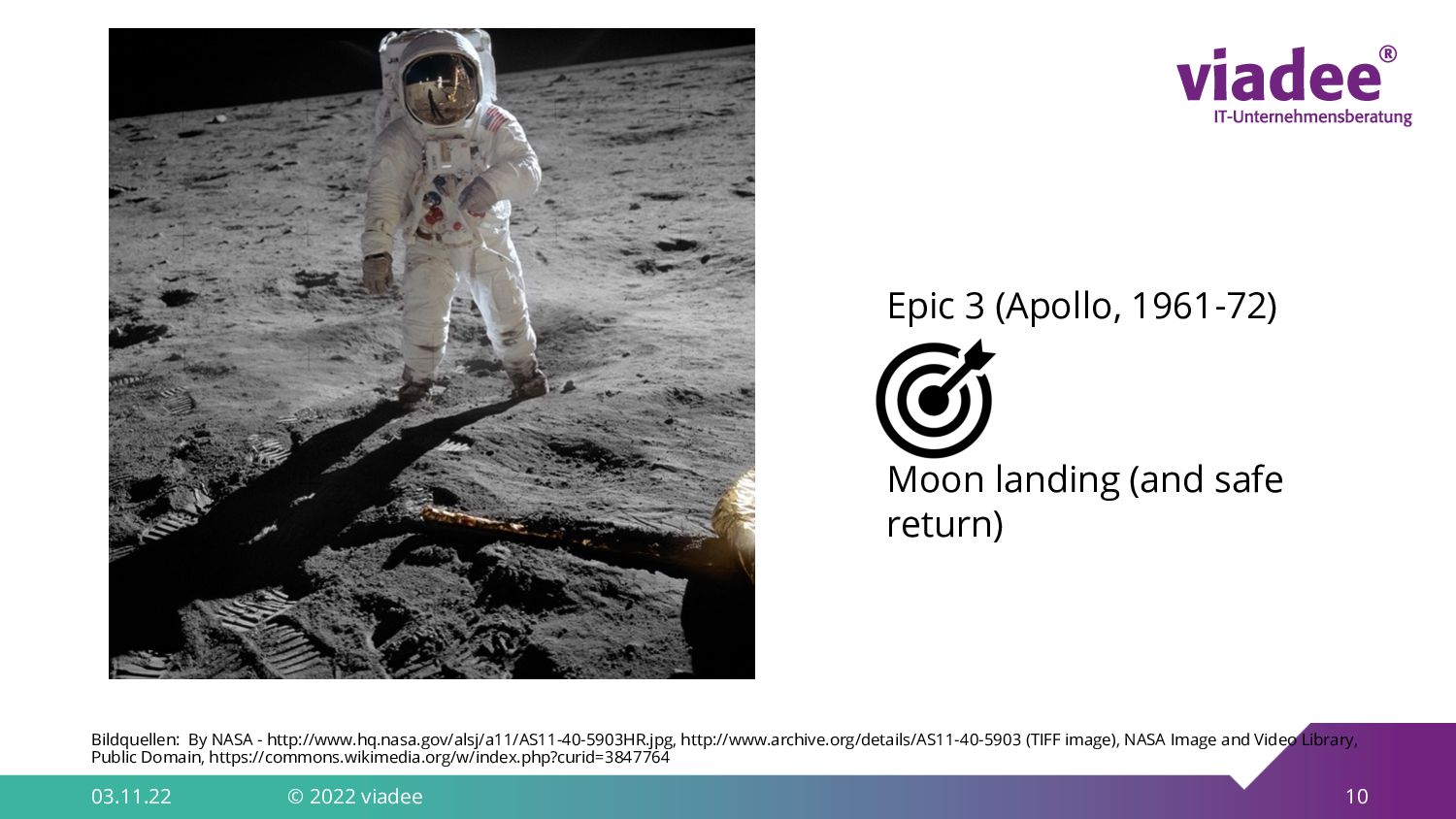
  5. © viadee Source: By NASA - http://www.hq.nasa.gov/alsj/a11/AS11-40-5903HR.jpg, http://www.archive.org/details/AS11-40-5903 (TIFF image),

    NASA Image and Video Library, Public Domain, https://commons.wikimedia.org/w/index.php?curid=3847764 Epic 3 (Apollo, 1961-72) Moon landing (and safe return)
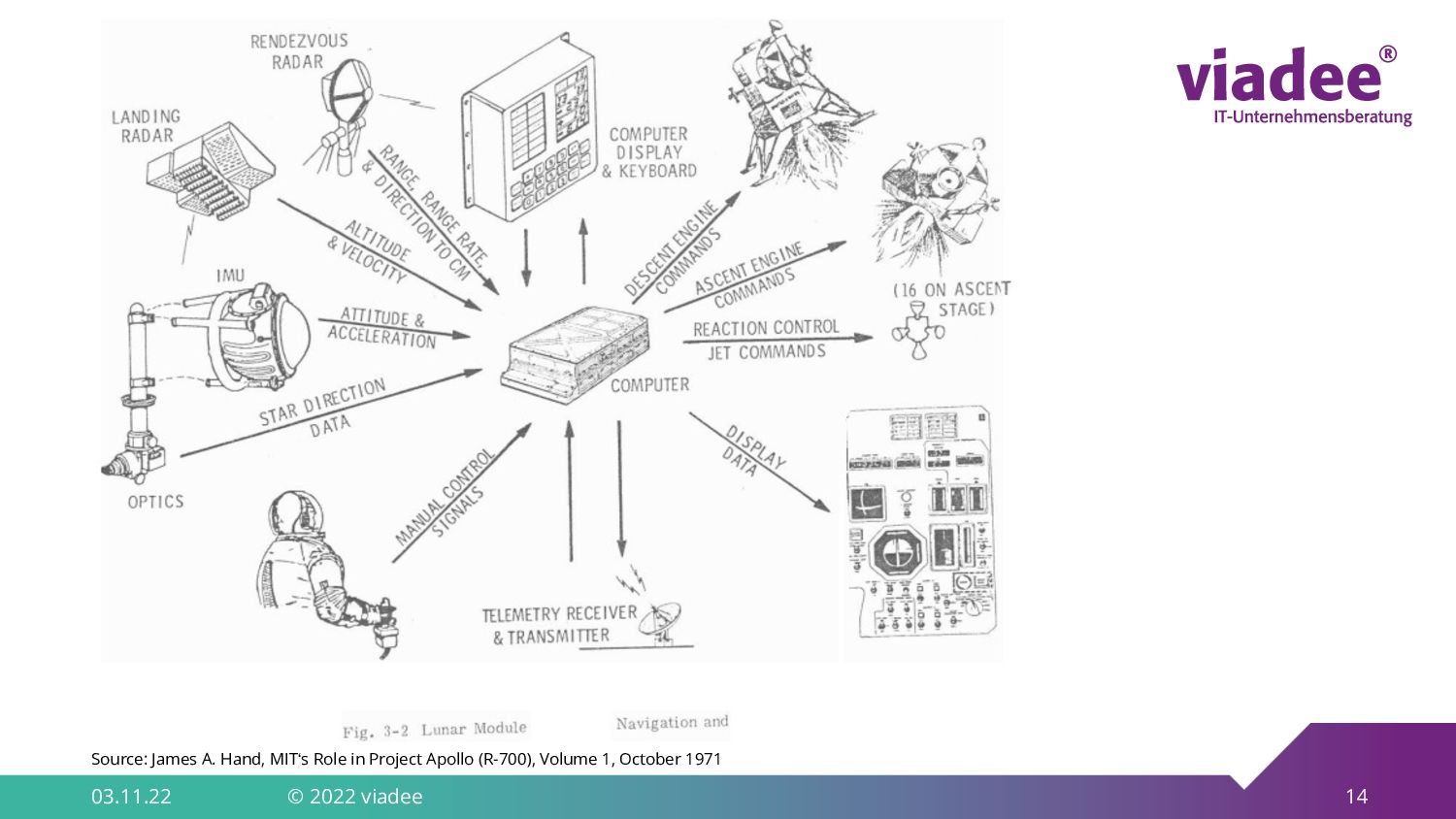
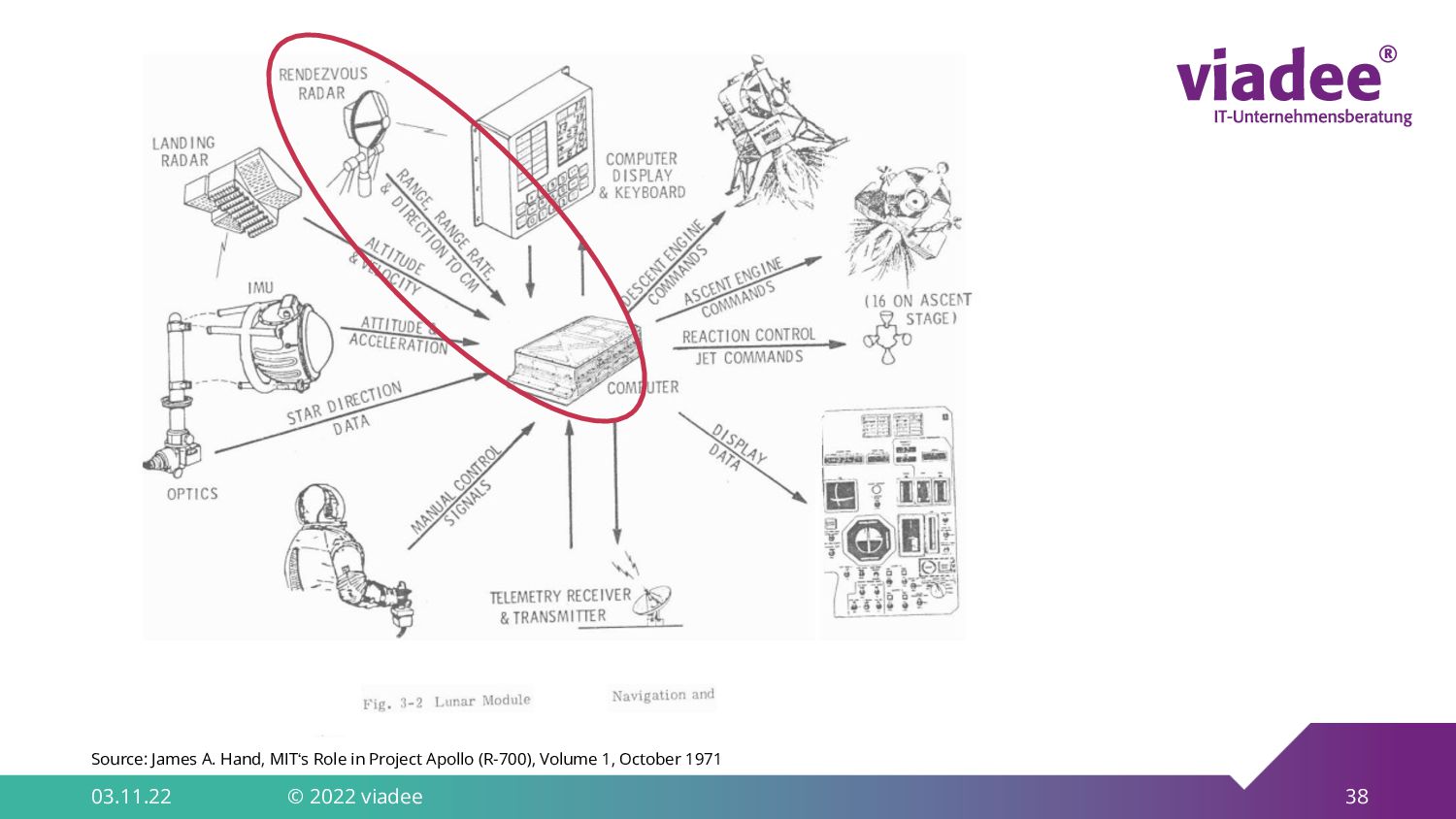
  6. © viadee Source: James A. Hand, MIT‘s Role in Project

    Apollo (R-700), Volume 1, October 1971
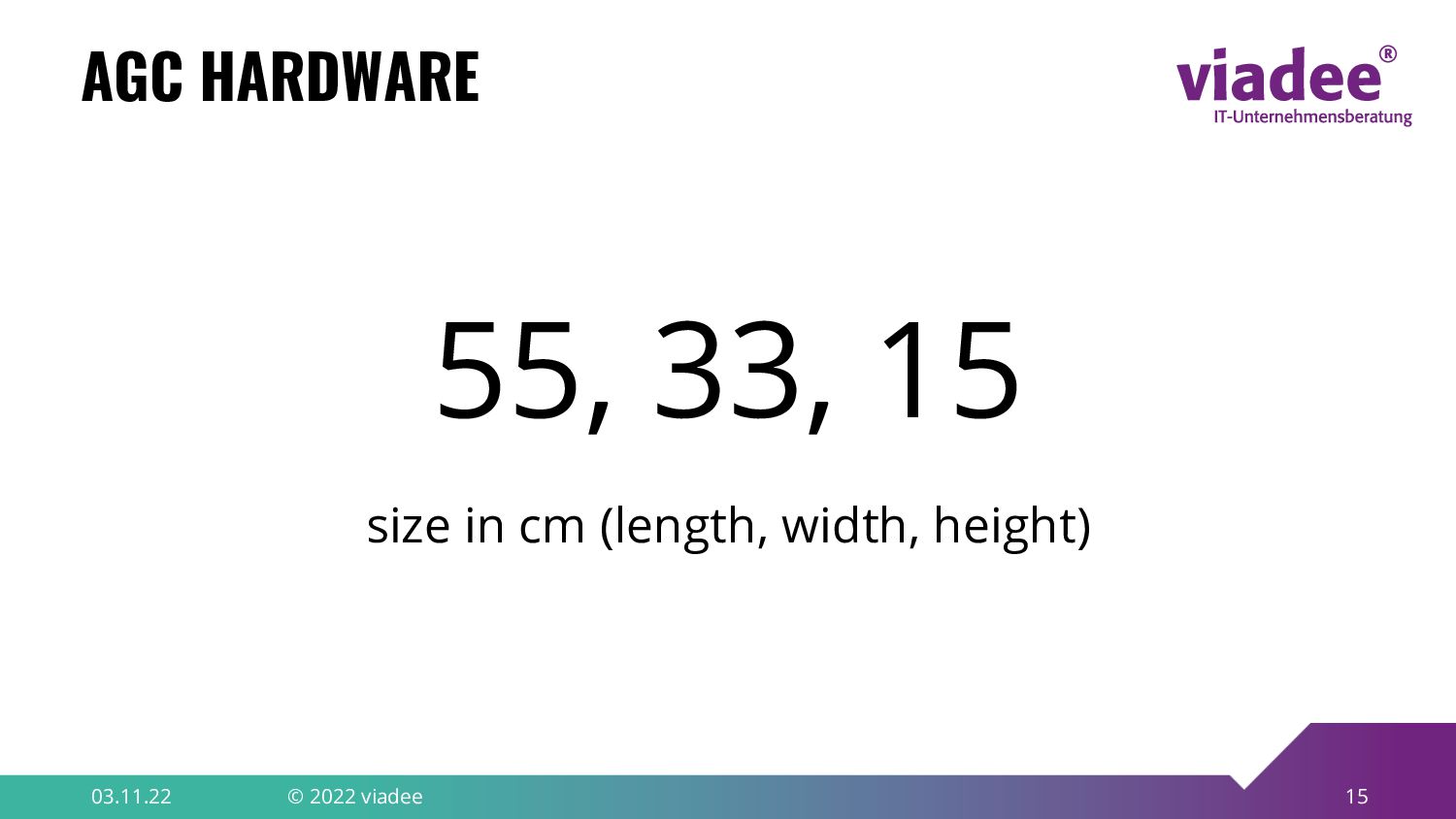
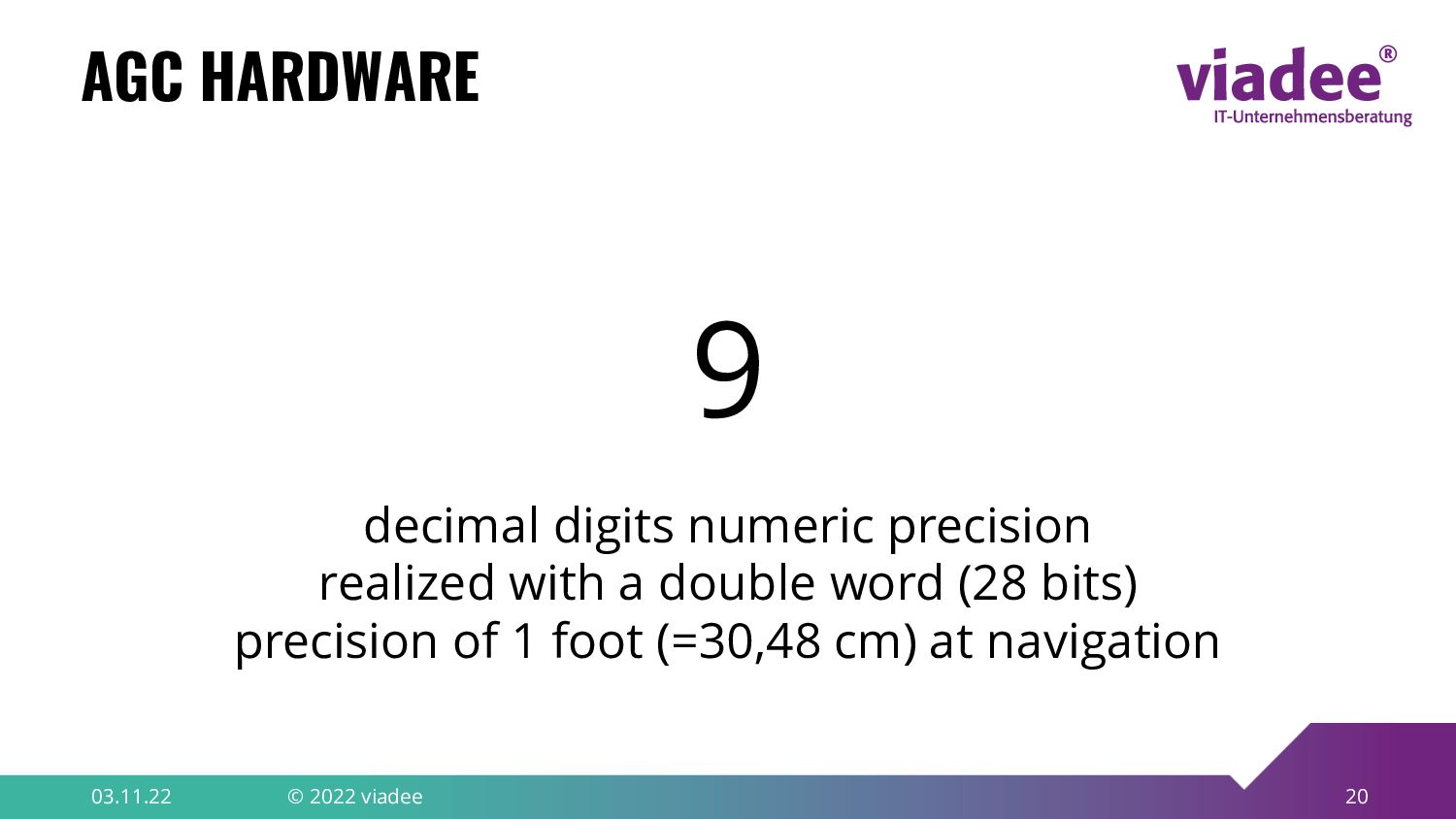
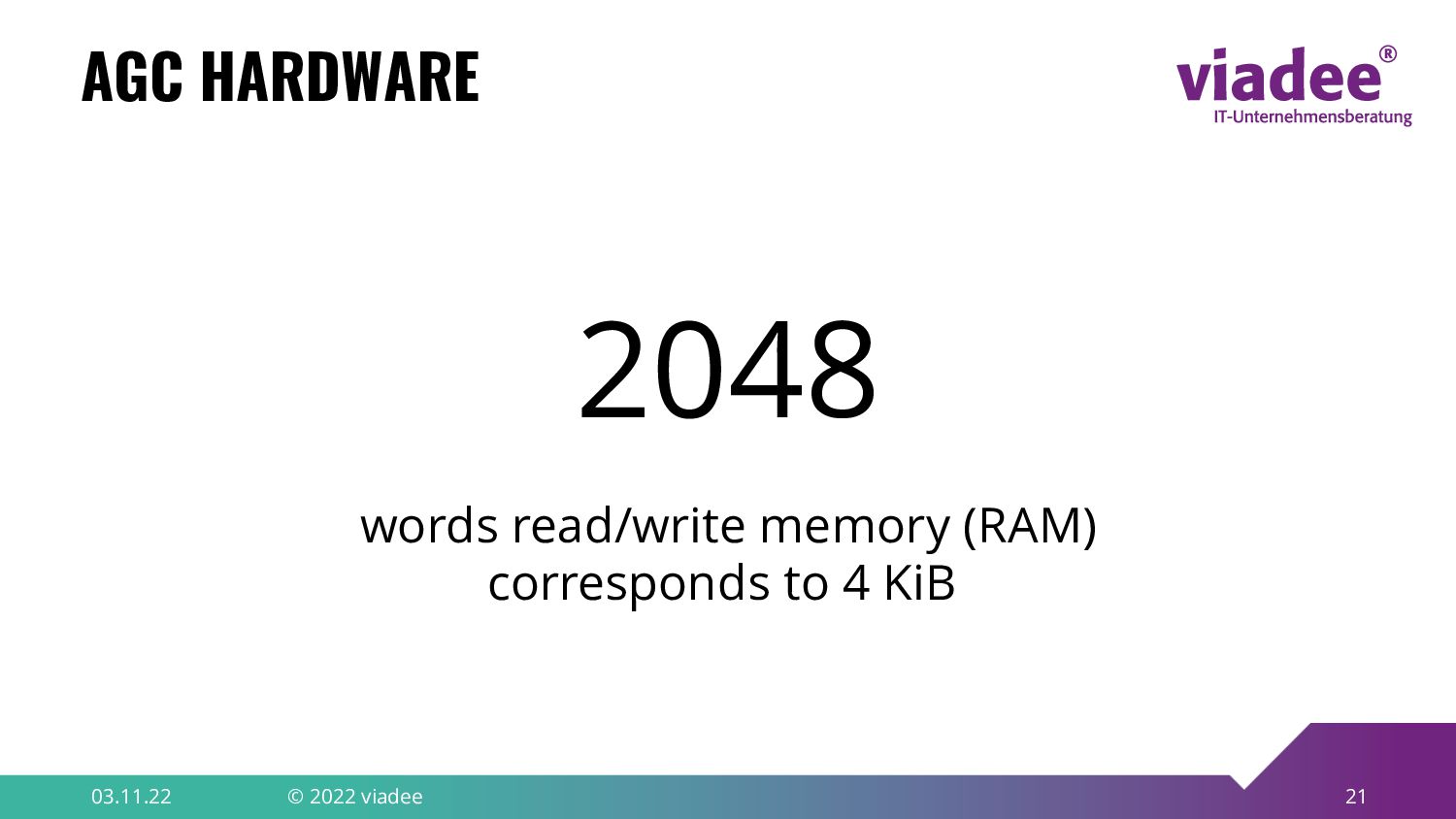
  7. © viadee AGC Hardware 9 decimal digits numeric precision realized

    with a double word (28 bits) precision of 1 foot (=30,48 cm) at navigation
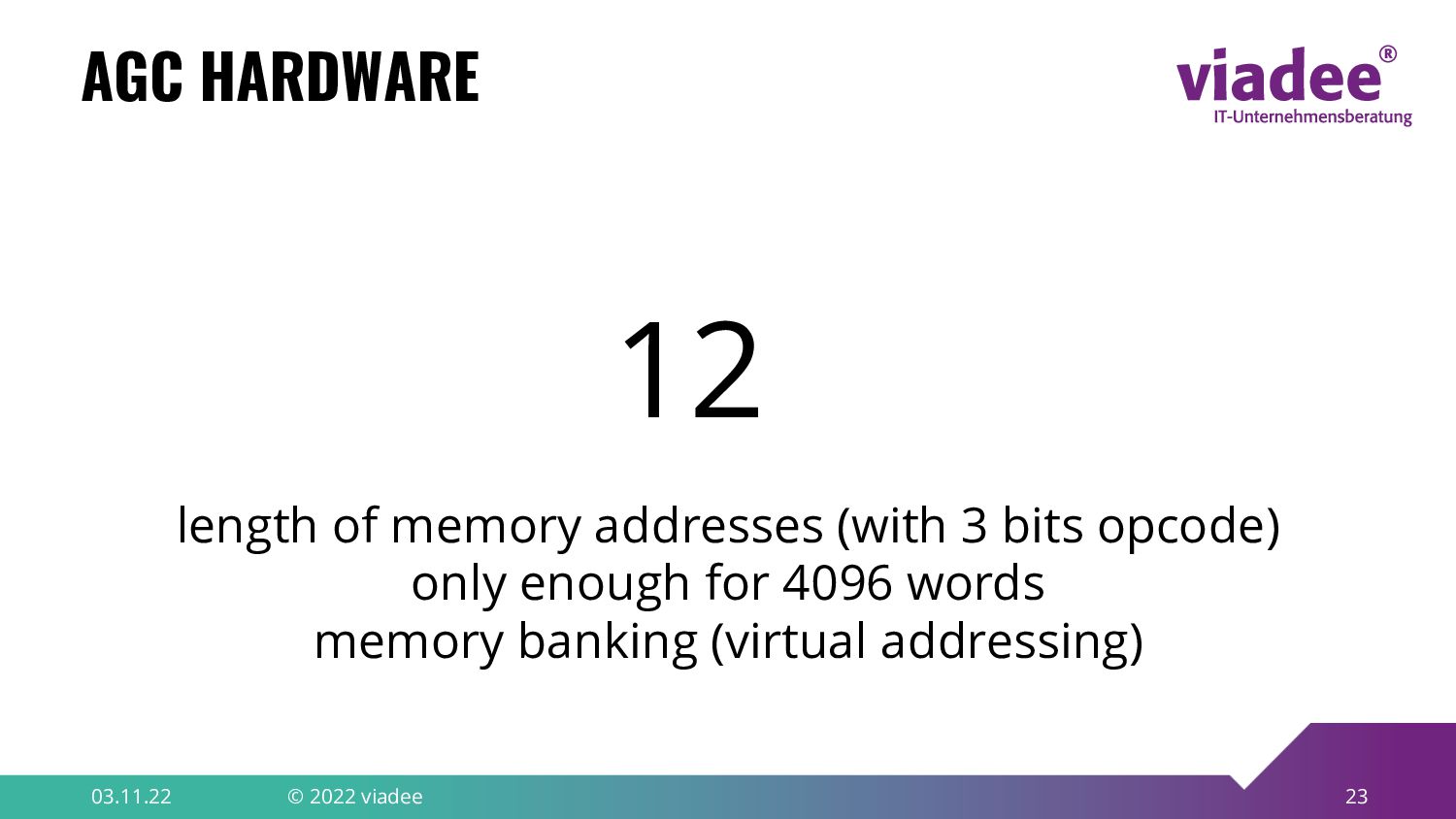
  8. © viadee AGC Hardware 12 length of memory addresses (with

    3 bits opcode) only enough for 4096 words memory banking (virtual addressing)
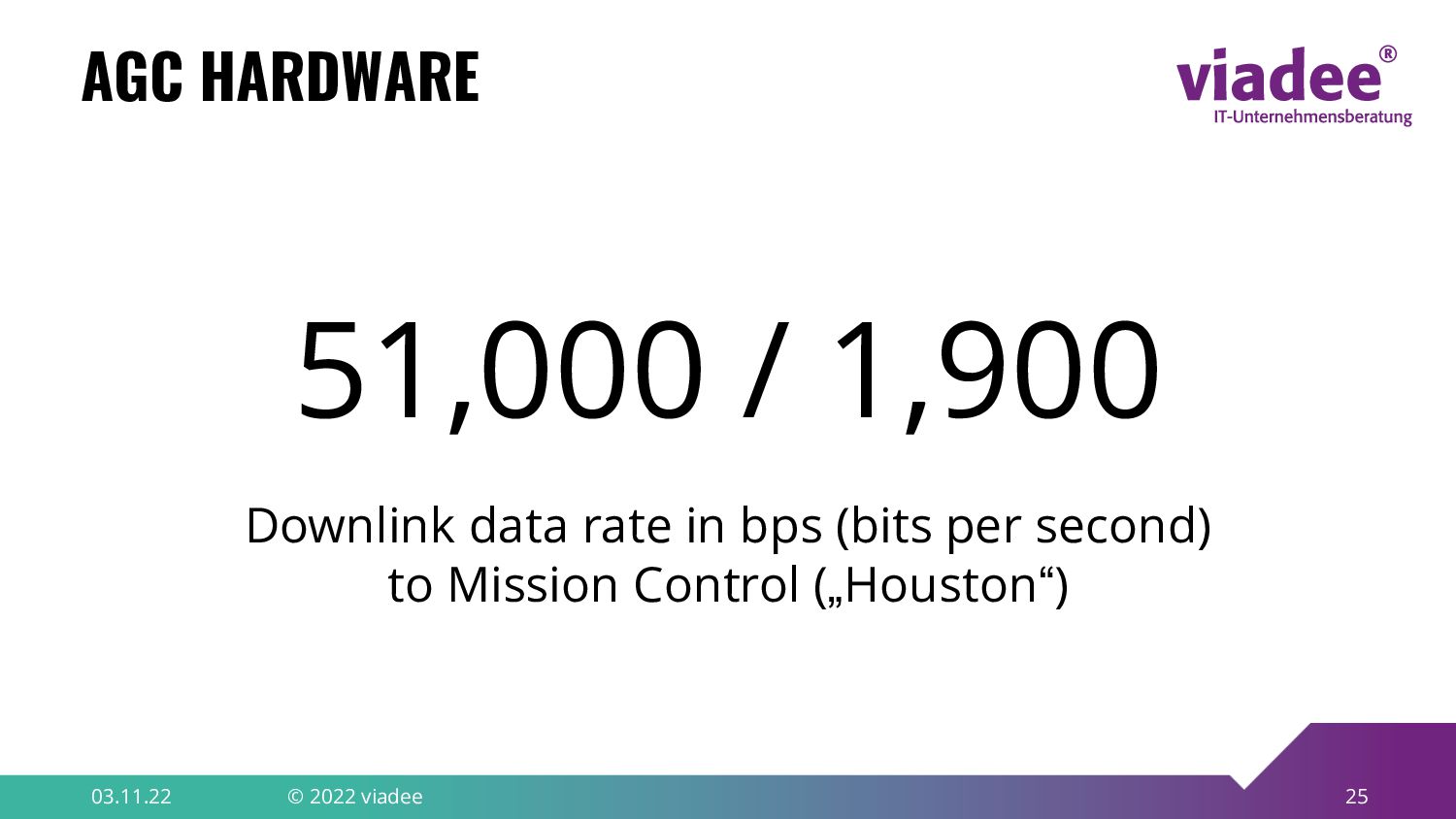
  9. © viadee AGC Hardware 51,000 / 1,900 Downlink data rate

    in bps (bits per second) to Mission Control („Houston“)
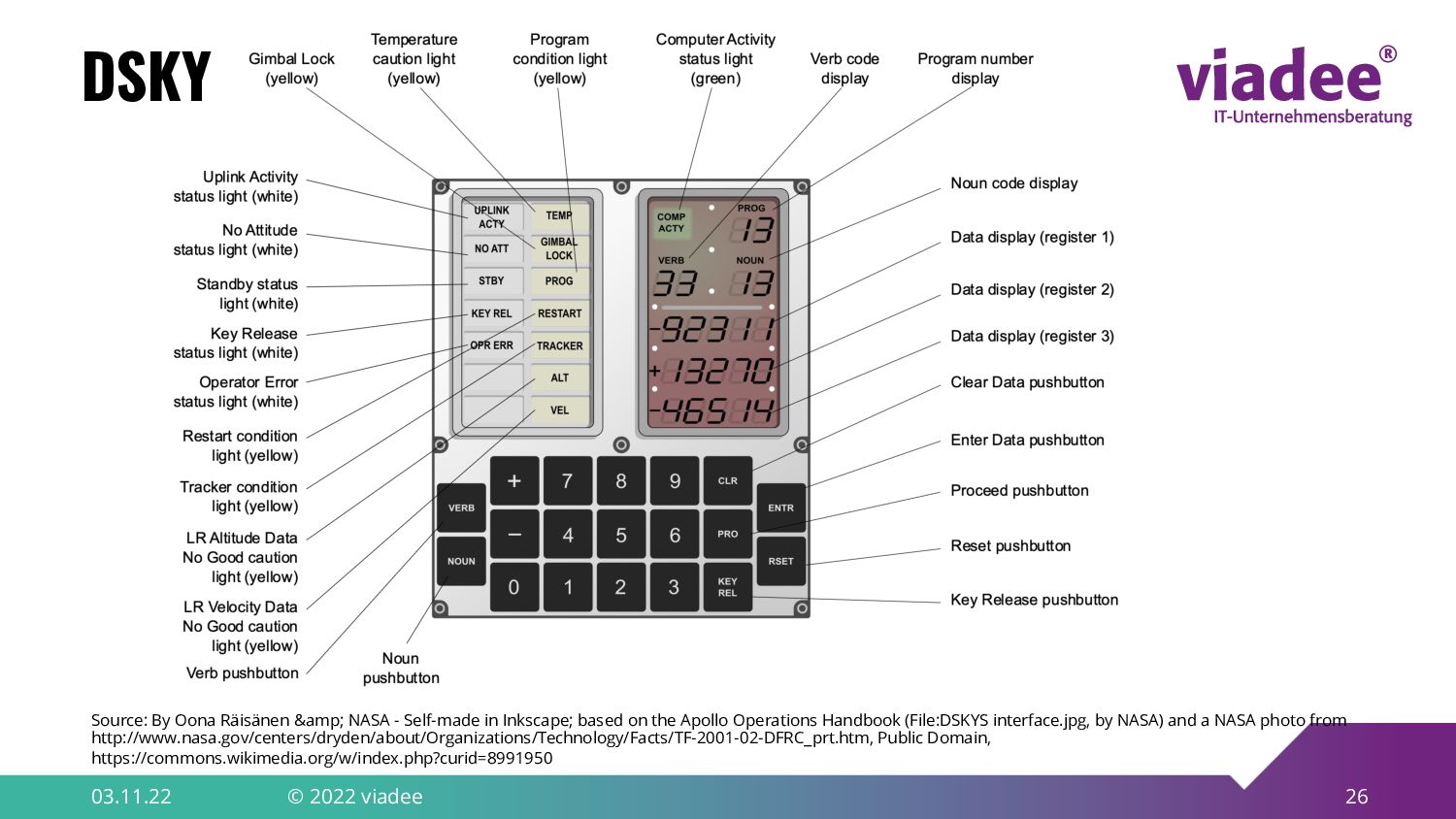
  10. © viadee DSKY Source: By Oona Räisänen & NASA -

    Self-made in Inkscape; based on the Apollo Operations Handbook (File:DSKYS interface.jpg, by NASA) and a NASA photo from http://www.nasa.gov/centers/dryden/about/Organizations/Technology/Facts/TF-2001-02-DFRC_prt.htm, Public Domain, https://commons.wikimedia.org/w/index.php?curid=8991950
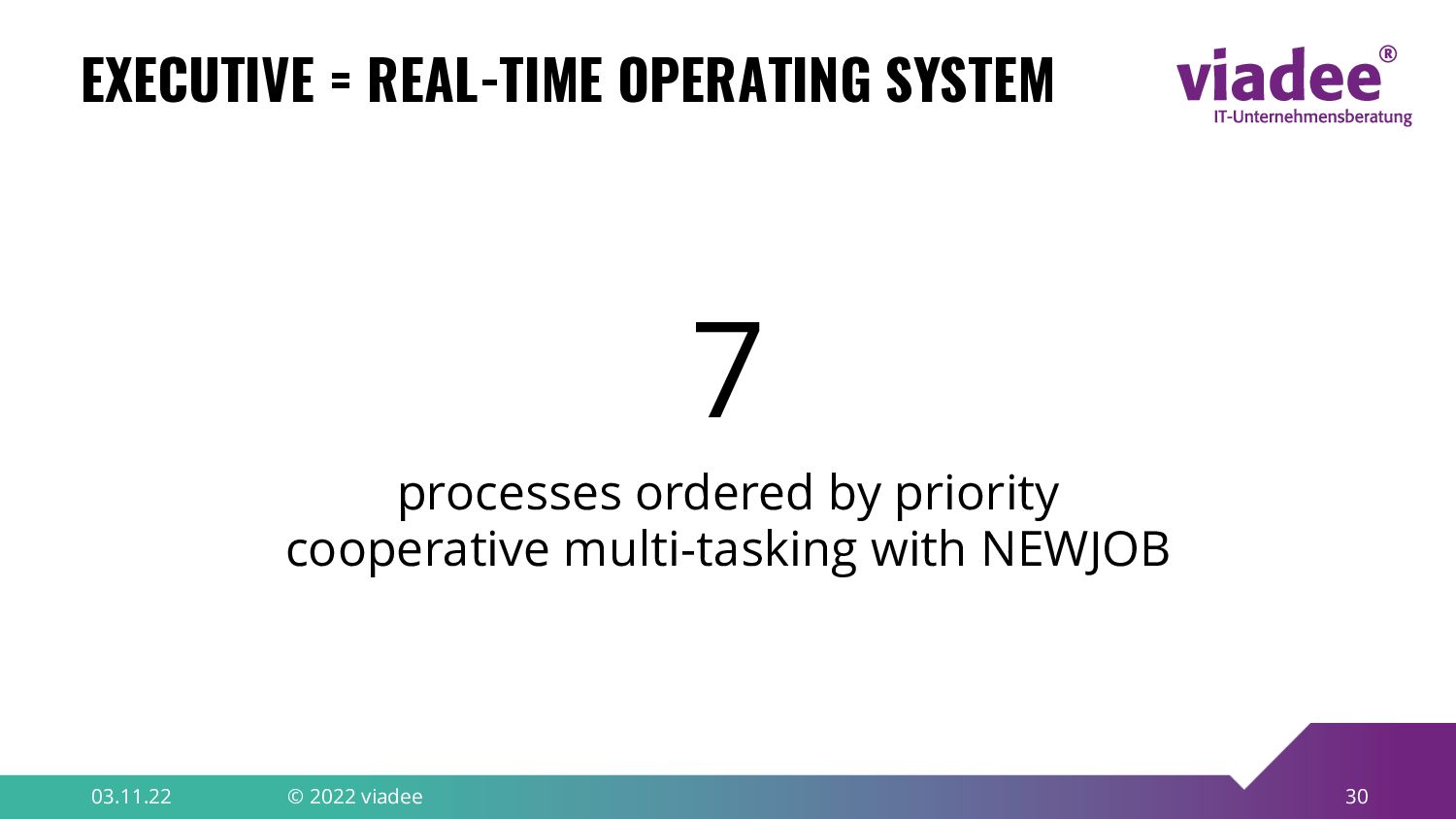
  11. © viadee Executive = real-time operating system 7 processes ordered

    by priority cooperative multi-tasking with NEWJOB
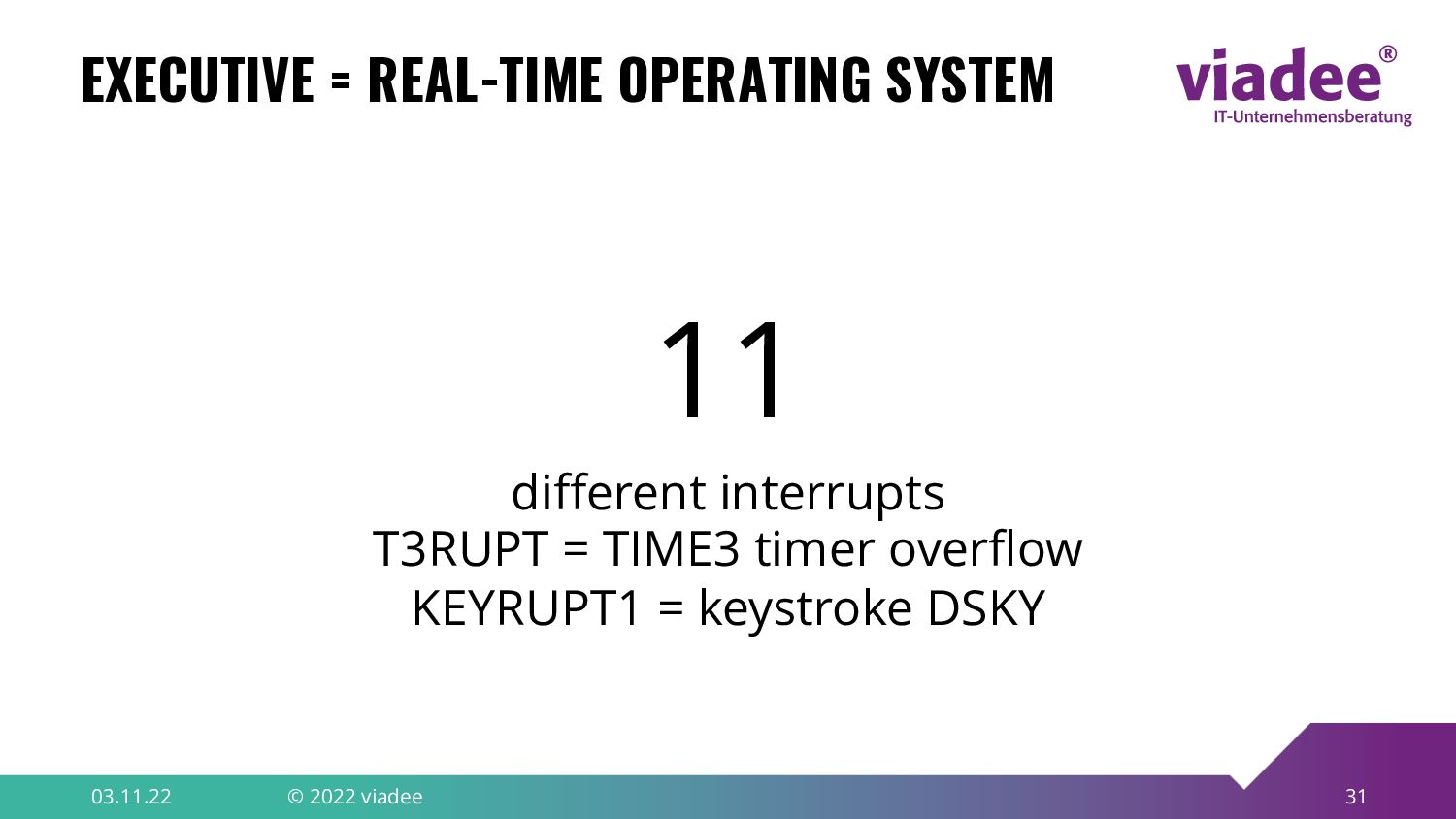
  12. © viadee Executive = real-time operating system 11 different interrupts

    T3RUPT = TIME3 timer overflow KEYRUPT1 = keystroke DSKY
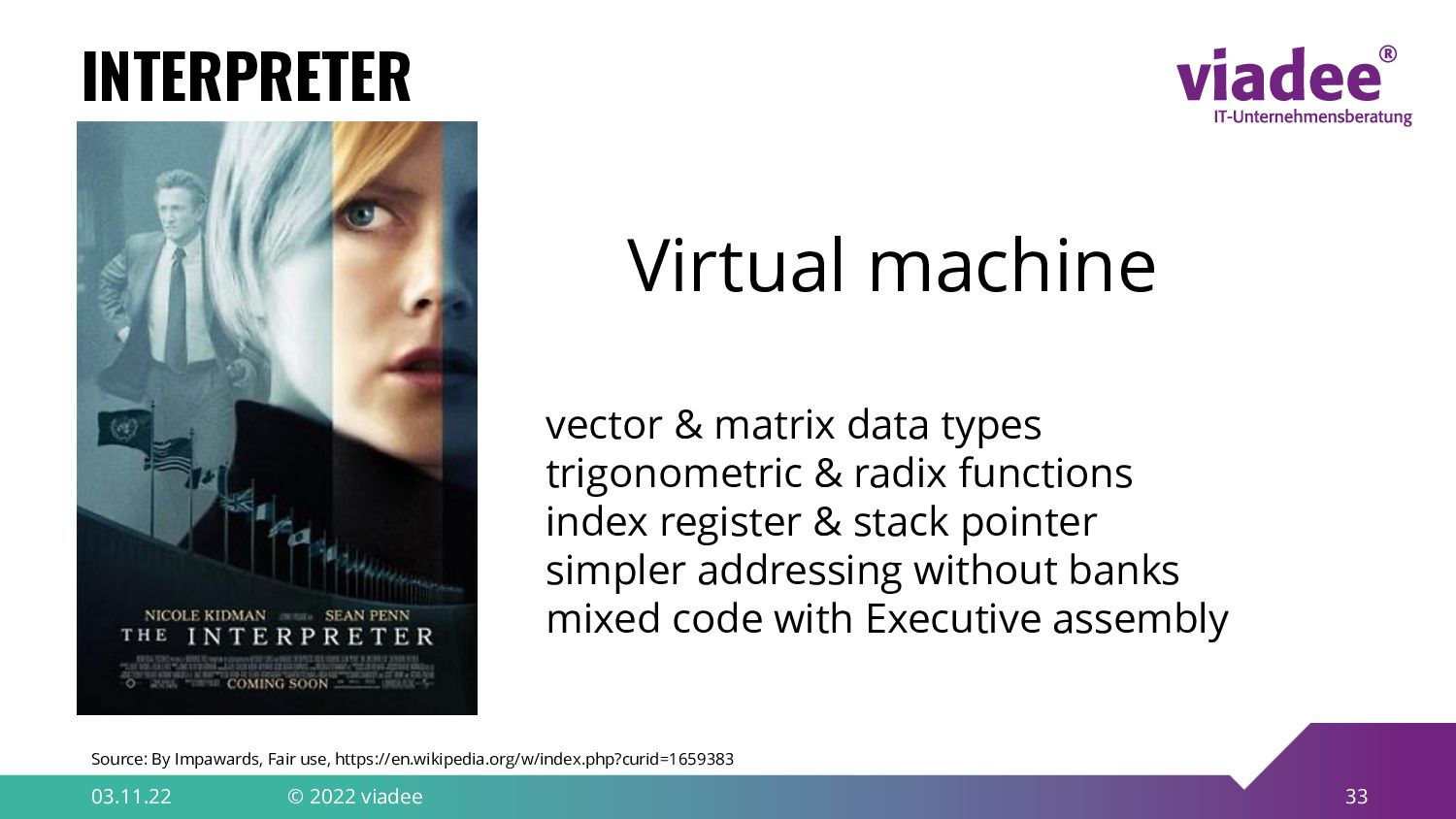
  13. © viadee Interpreter Source: ITU Pictures (CC BY 2.0, cut),

    https://flickr.com/photos/itupictures/8207252733 Virtual machine vector & matrix data types trigonometric & radix functions index register & stack pointer simpler addressing without banks mixed code with Executive assembly
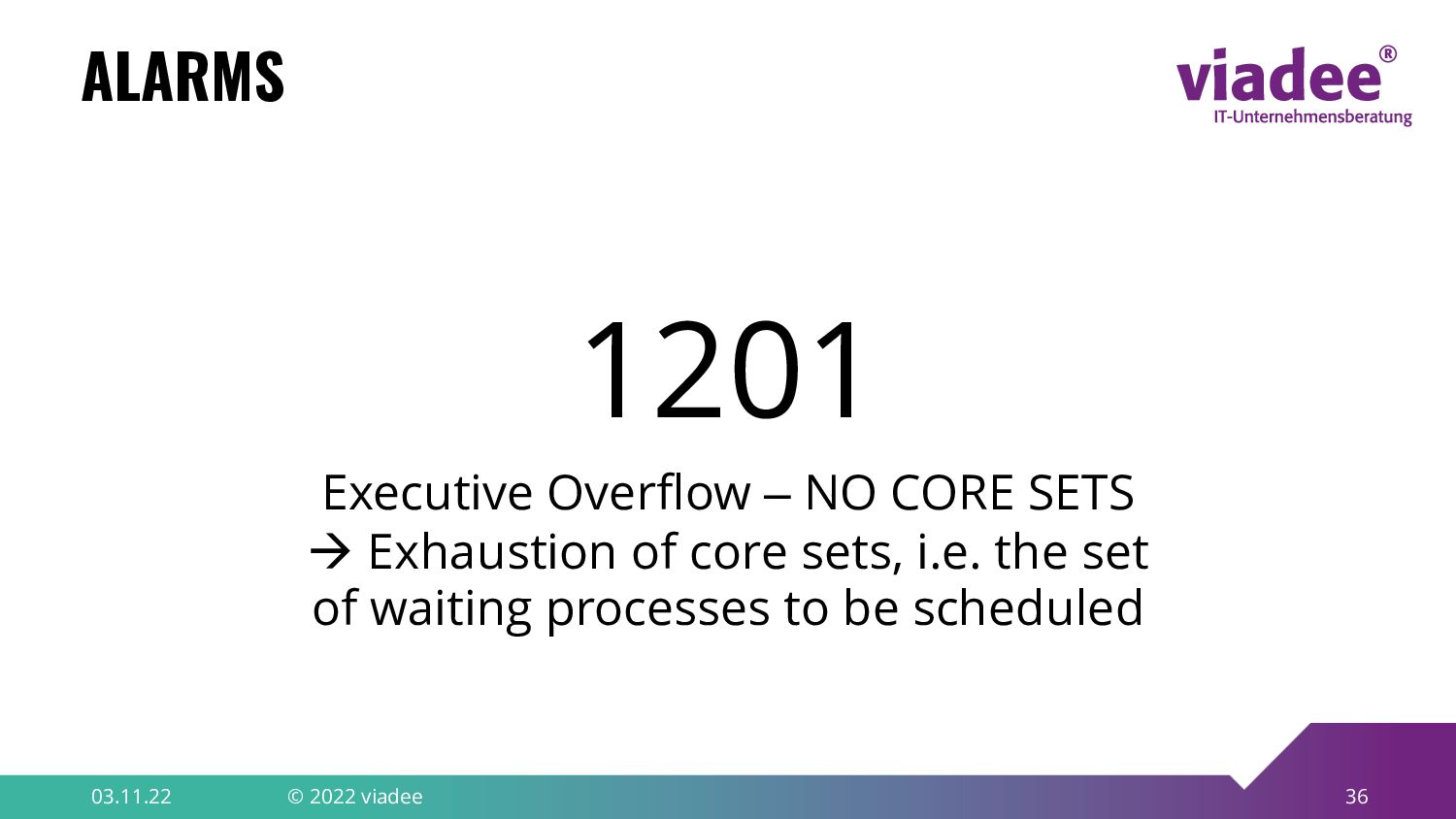
  14. © viadee Alarms 1201 Executive Overflow – NO CORE SETS

    à Exhaustion of core sets, i.e. the set of waiting processes to be scheduled
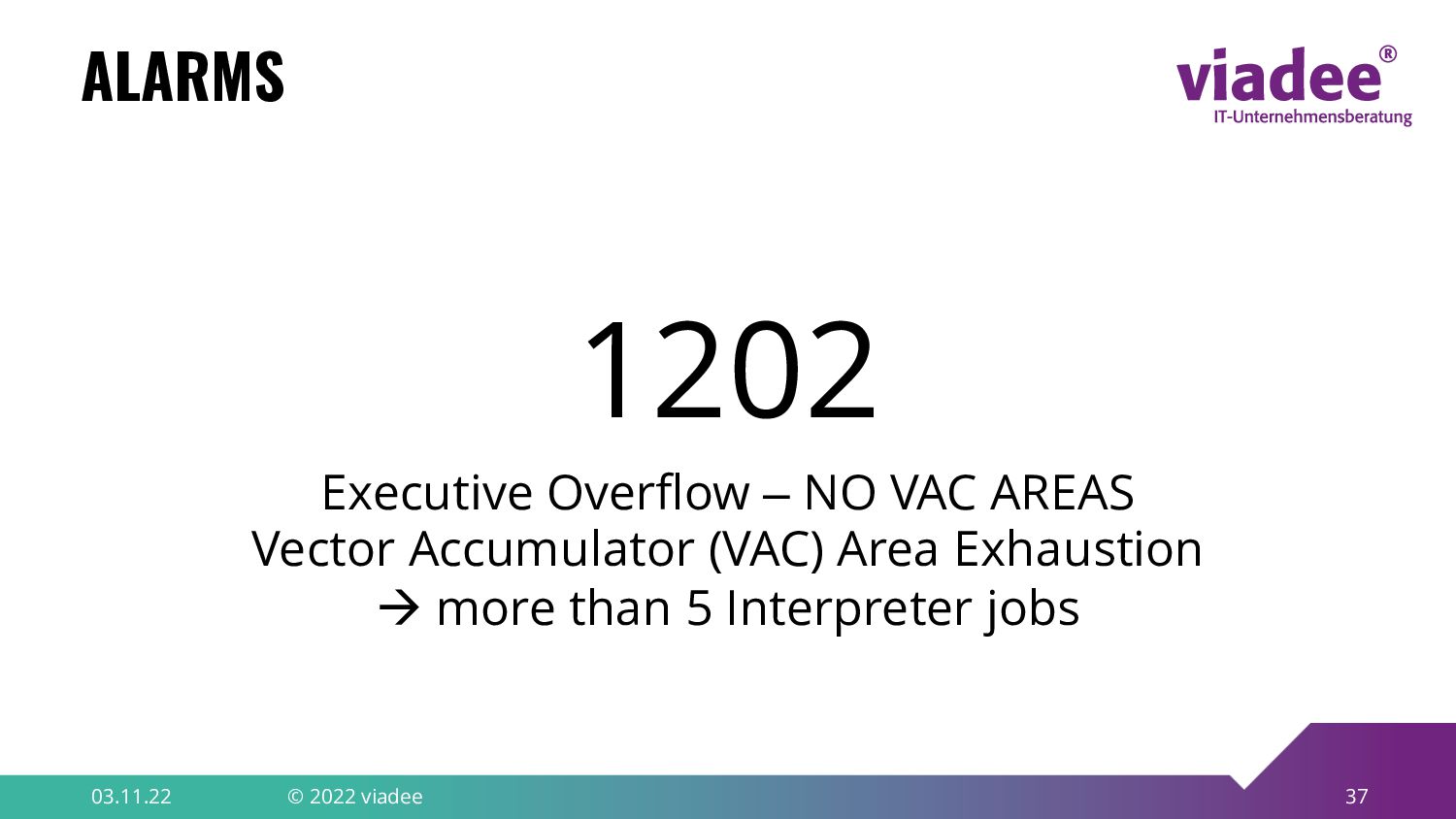
  15. © viadee Alarms 1202 Executive Overflow – NO VAC AREAS

    Vector Accumulator (VAC) Area Exhaustion à more than 5 Interpreter jobs
  16. © viadee Source: James A. Hand, MIT‘s Role in Project

    Apollo (R-700), Volume 1, October 1971
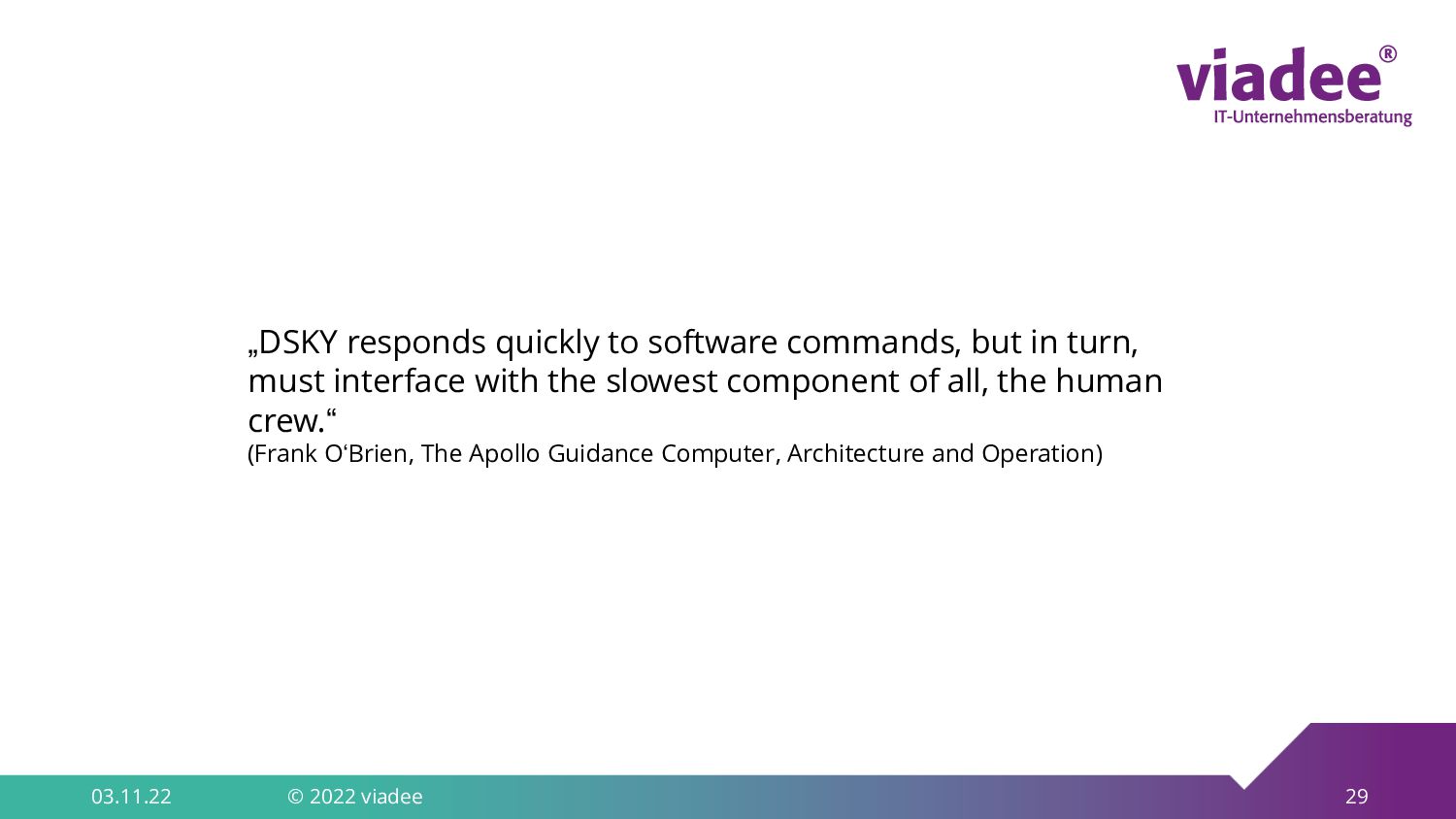
  17. © viadee „The computer (or rather the software in it)

    was smart enough to recognize that it was being asked to perform more tasks than it should be performing. It then sent out an alarm, which meant to the astronaut, 'I'm overloaded with more tasks than I should be doing at this time and I'm going to keep only the more important tasks'; i.e., the ones needed for landing ...“ (Letter from Margaret H. Hamilton, Director of Apollo Flight Computer Programming MIT Draper Laboratory, Cambridge, Massachusetts, titled "Computer Got Loaded", published in Datamation, March 1, 1971)
  18. © viadee DSKY Source: Von Oona Räisänen & NASA -

    Self-made in Inkscape; based on the Apollo Operations Handbook (File:DSKYS interface.jpg, by NASA) and a NASA photo from http://www.nasa.gov/centers/dryden/about/Organizations/Technology/Facts/TF-2001-02-DFRC_prt.htm, Public Domain, https://commons.wikimedia.org/w/index.php?curid=8991950 „Always take human errors into account when programming!“
  19. © viadee Digital Autopilot Source: „Armstrong and Aldrin during Apollo

    11 landing rehearsal“, Project Apollo Archive, Public domain, via Wikimedia Commons „At MET 102:43:08 (650 feet), after deciding that he could not stop short of the crater, Armstrong flipped the autopilot mode switch from AUTO to ATT HOLD to take manual control of the LM's attitude. He maneuvered to zero pitch to maintain horizontal velocity and skim over the rocky area.“ (http://klabs.org/history/apollo_11_alarms/eyles_ 2004/eyles_2004.htm)
  20. © viadee Methods / Principles stay Agile Planning Iterative Design

    Simulation Robust Fault-tolerant Vision Inspiration Competition is good for business
  21. © viadee Thank you for flying through rocket history! Tobias

    Voß Modernization Architect [email protected] +49 251 77777 175 linkedin.com/in/tobiaslvoss