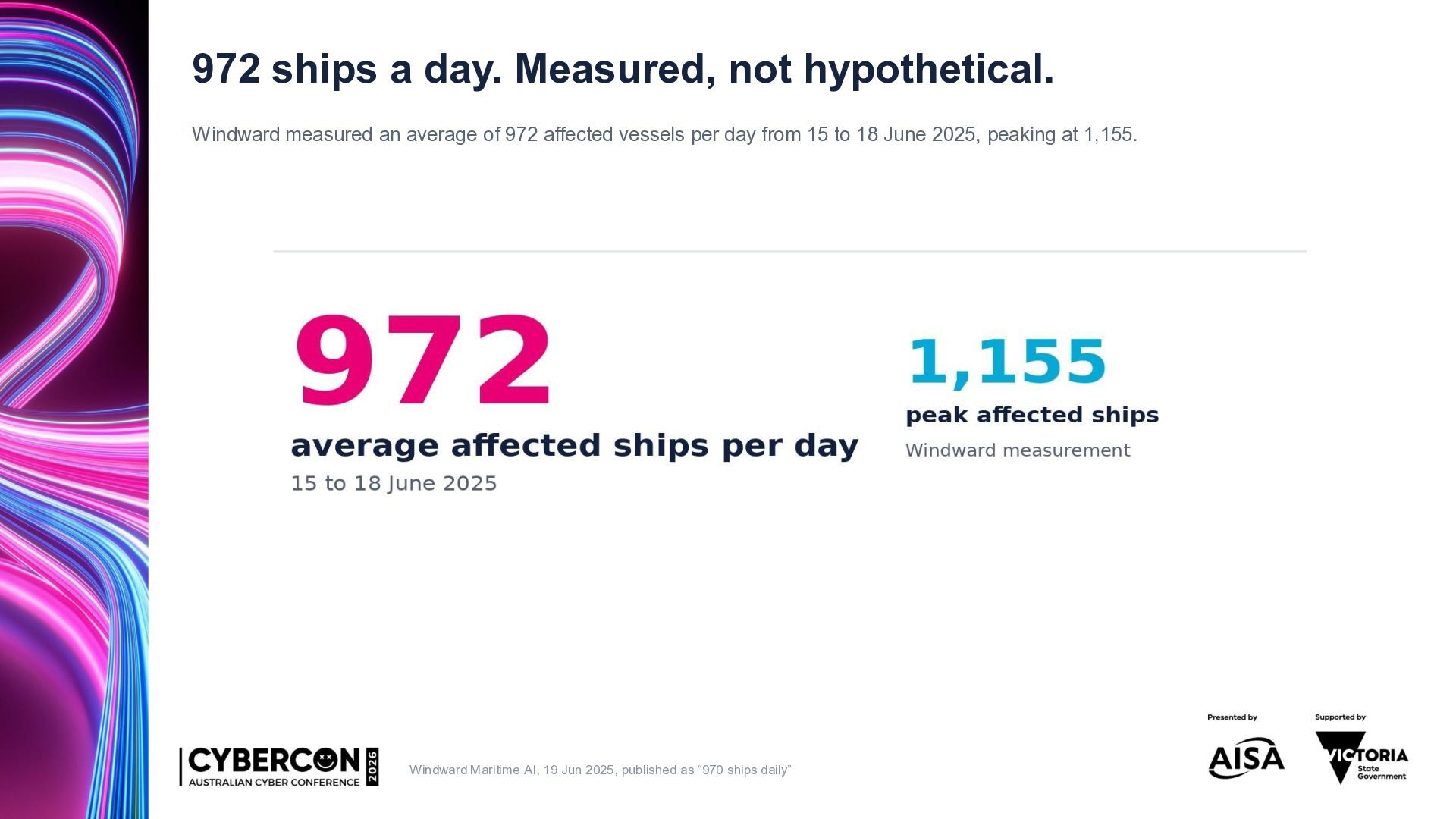
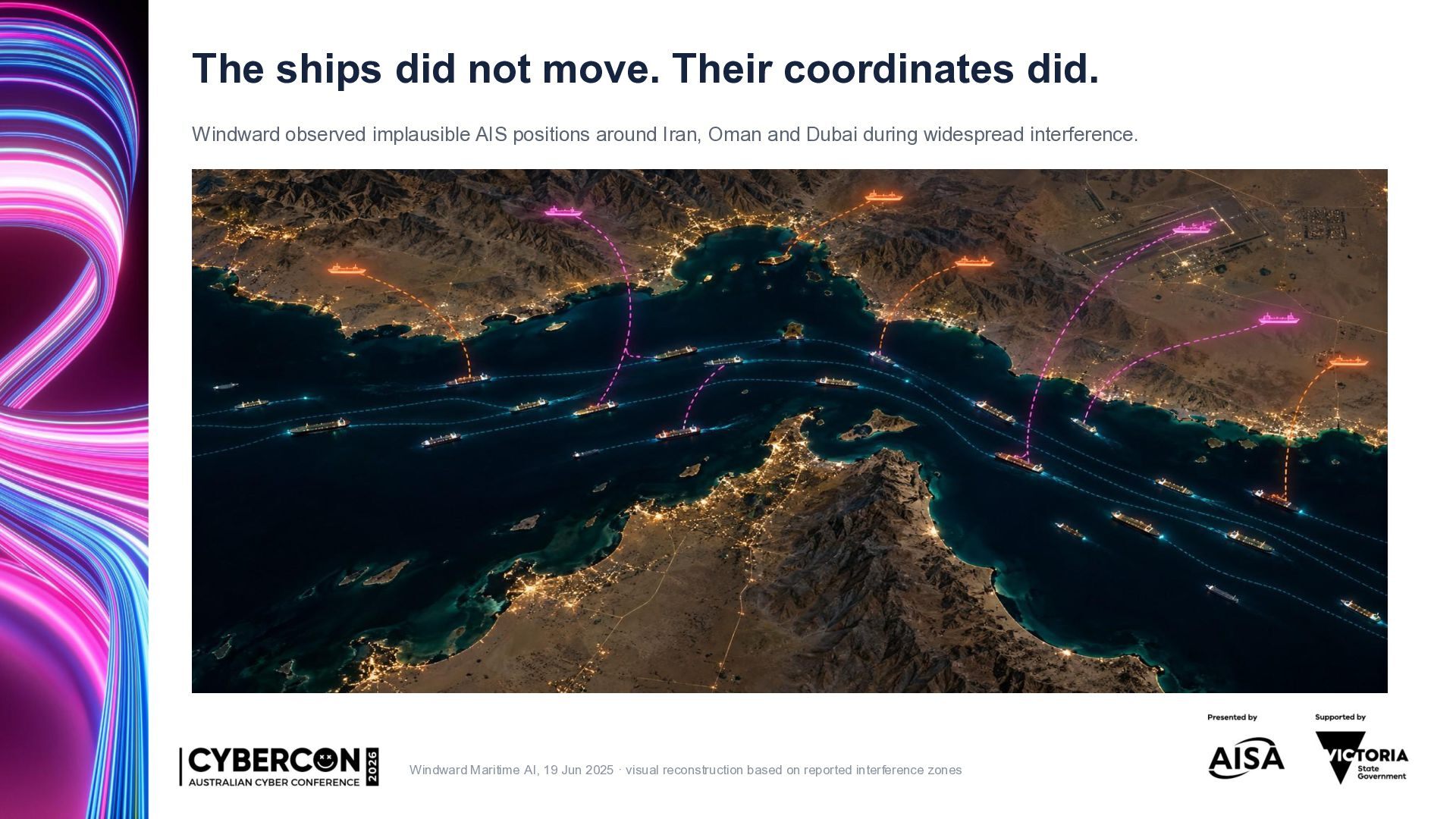
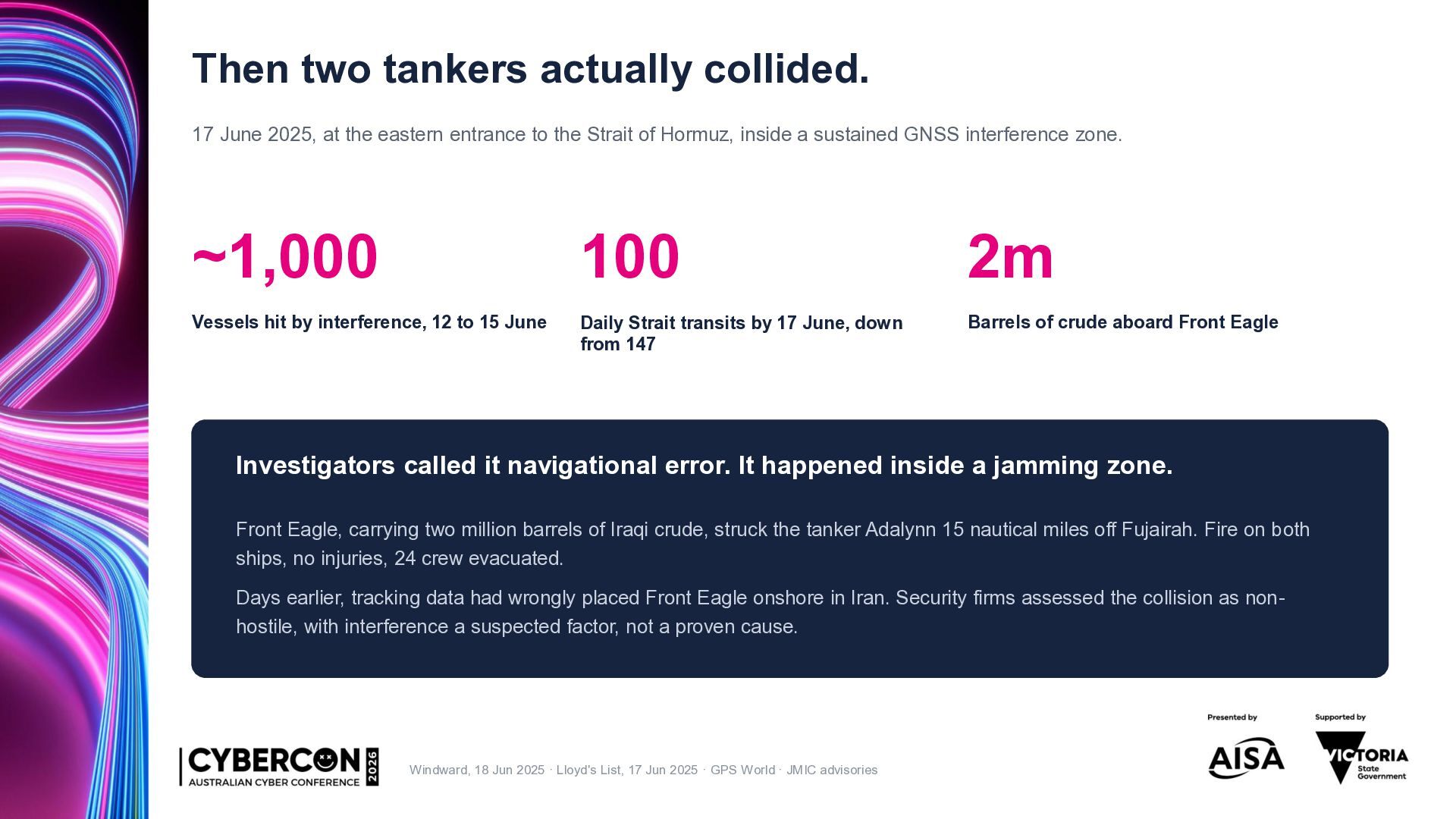
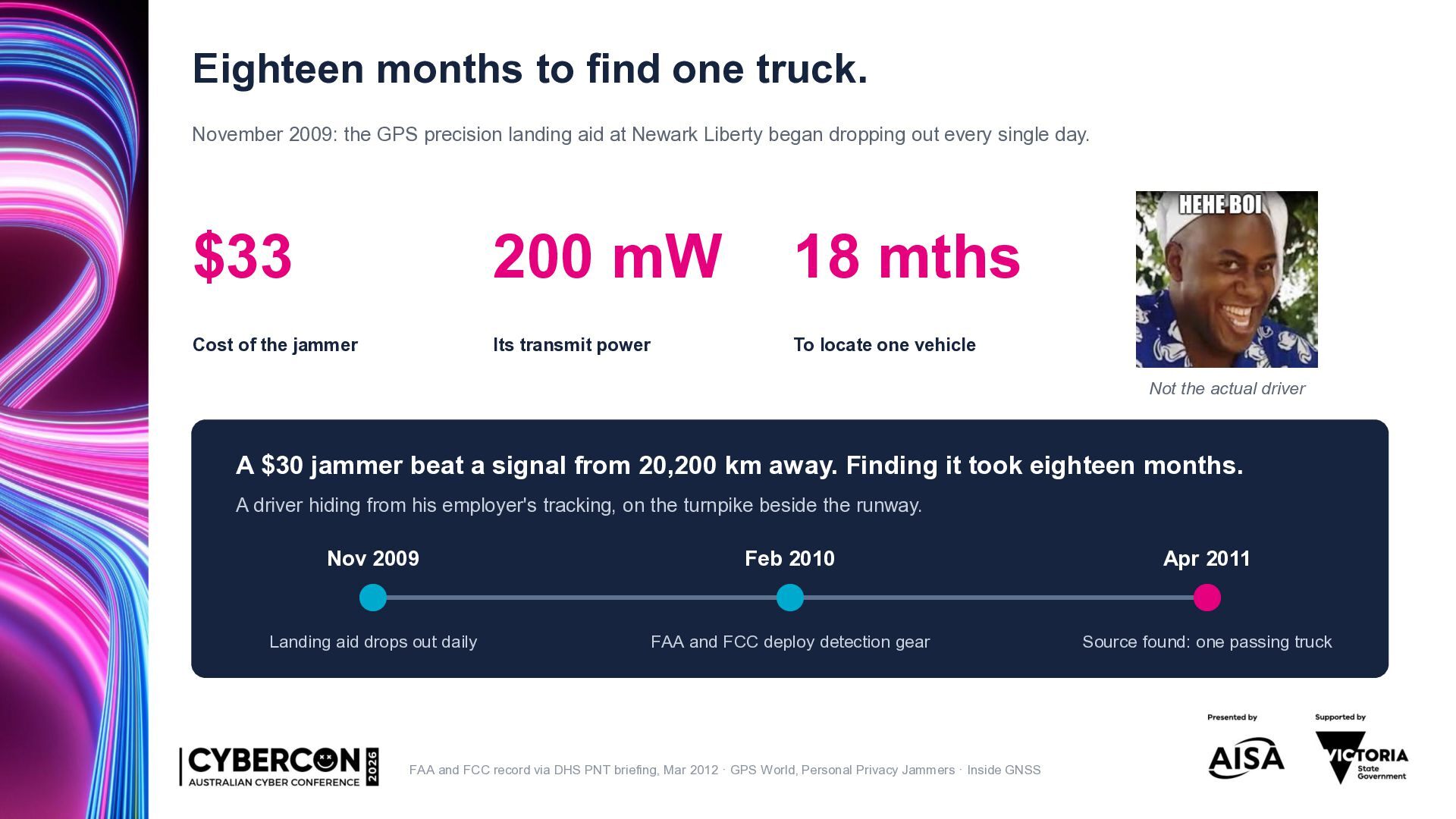
Within 24 hours of the first US-Israeli strikes on Iran in 2025, over 970 ships per day found their navigation systems reporting impossible positions - vessels appearing on land, at airports, inside nuclear power plants. Commercial shipping through the Strait of Hormuz, which carries roughly 20% of the world's oil and gas, ground to a near halt. A tanker collision followed. The tools behind this disruption are open-source, publicly documented, and available for under $500 AUD.
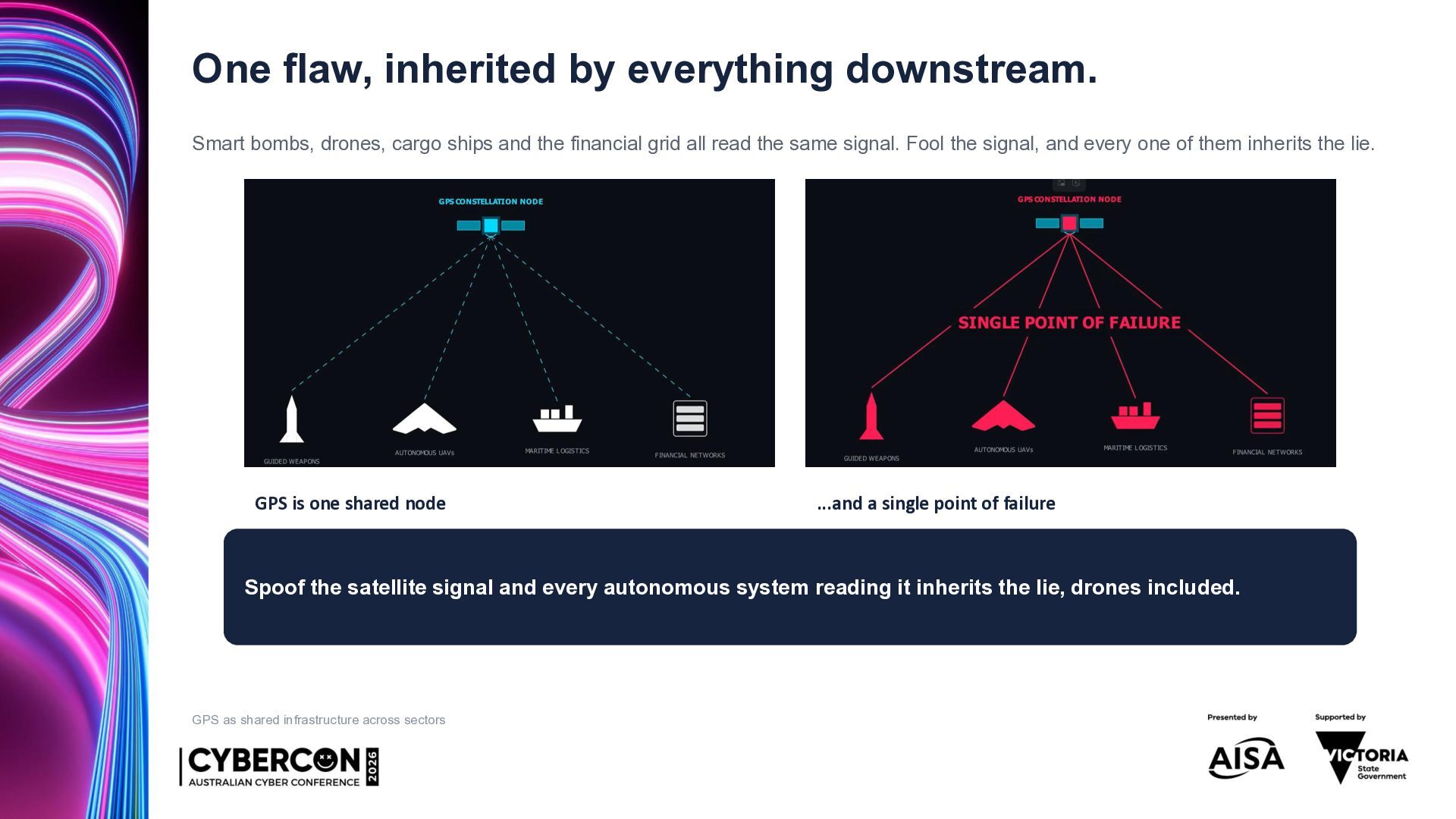
GPS spoofing - the transmission of counterfeit satellite navigation signals - has evolved from a university research curiosity into a routine weapon of state-level electronic warfare. Yet it remains almost entirely absent from mainstream cyber security conversations, despite directly threatening the critical infrastructure that Australian organisations in maritime, aviation, energy, and finance depend on every day.
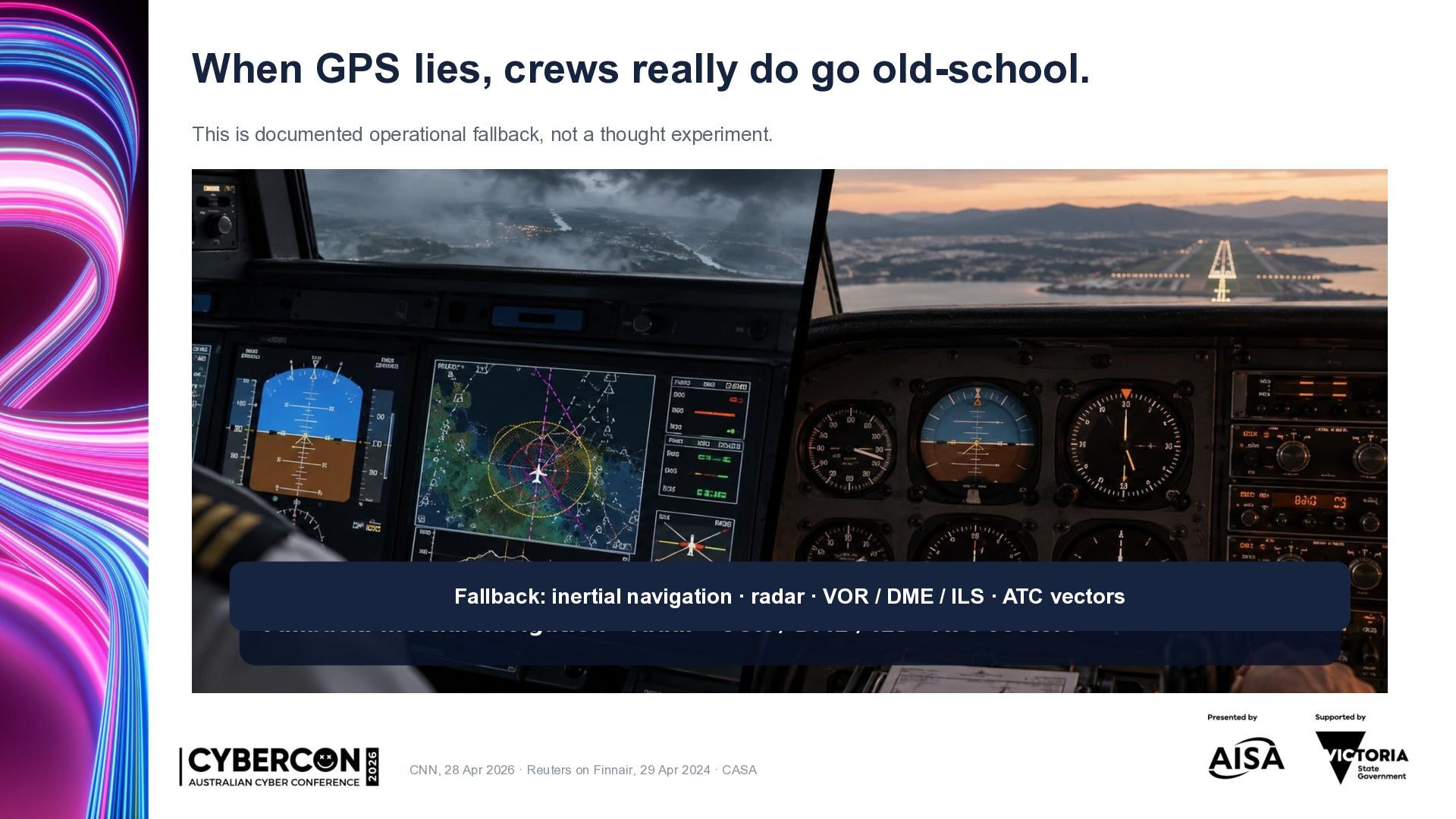
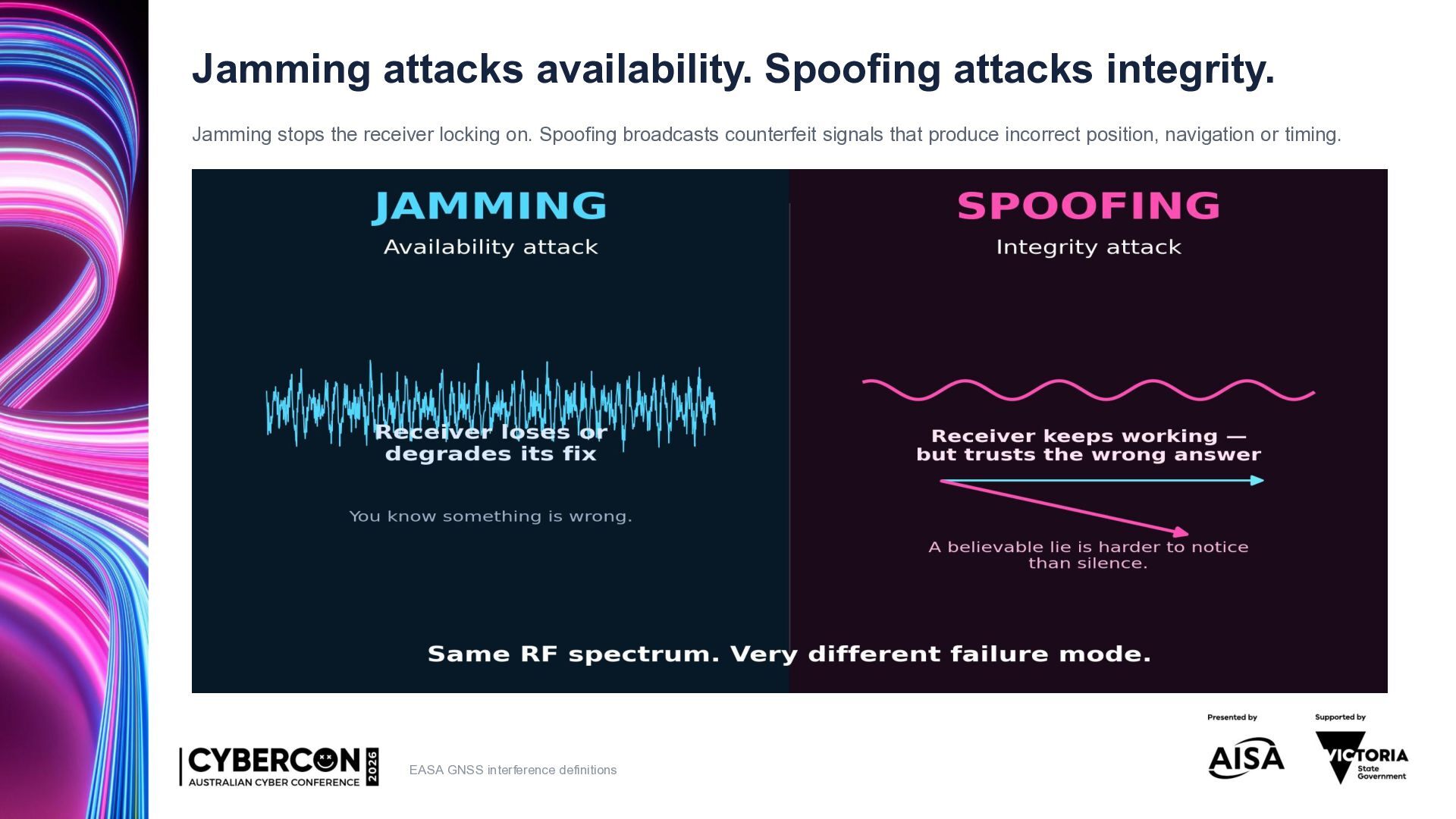
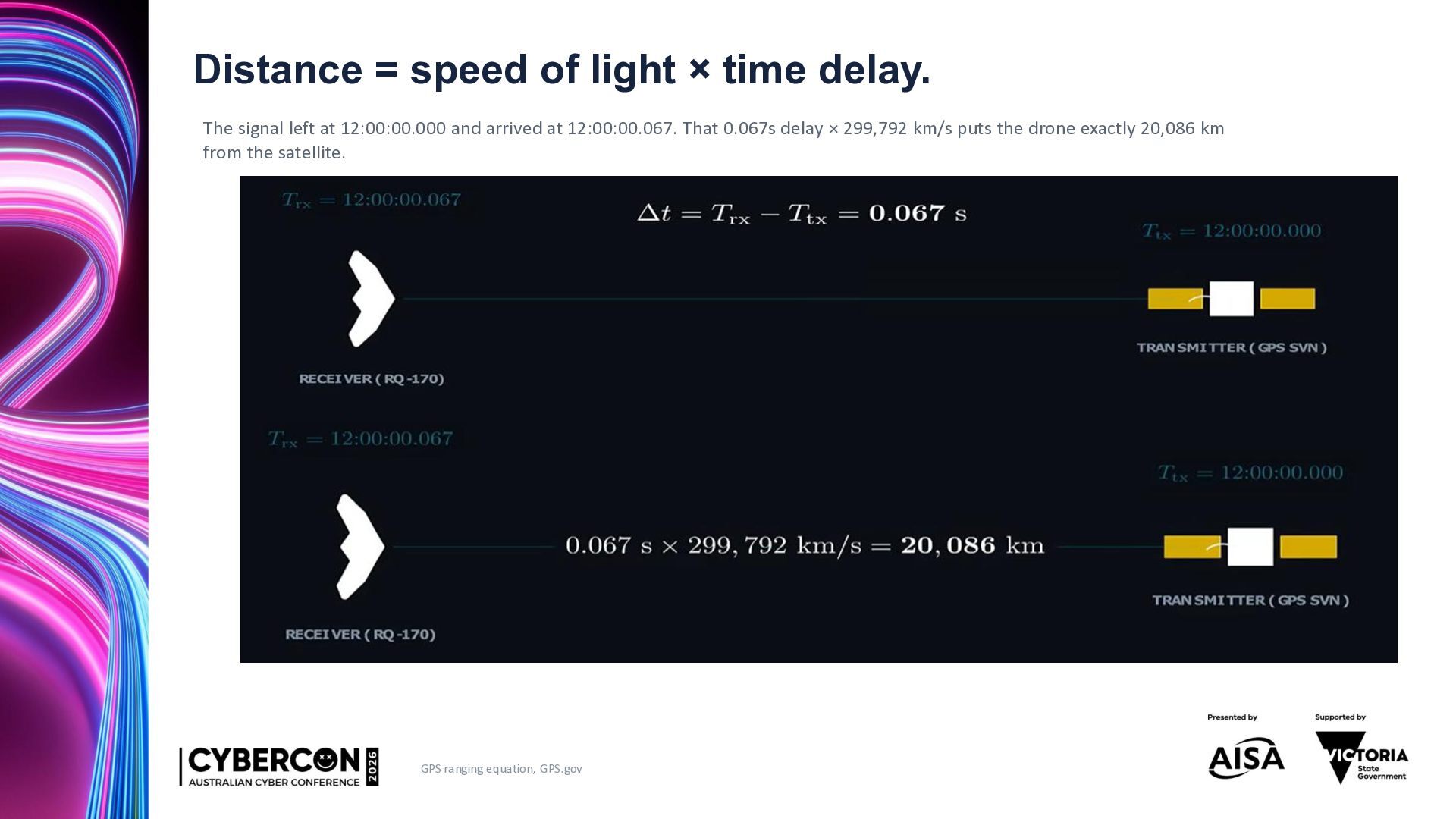
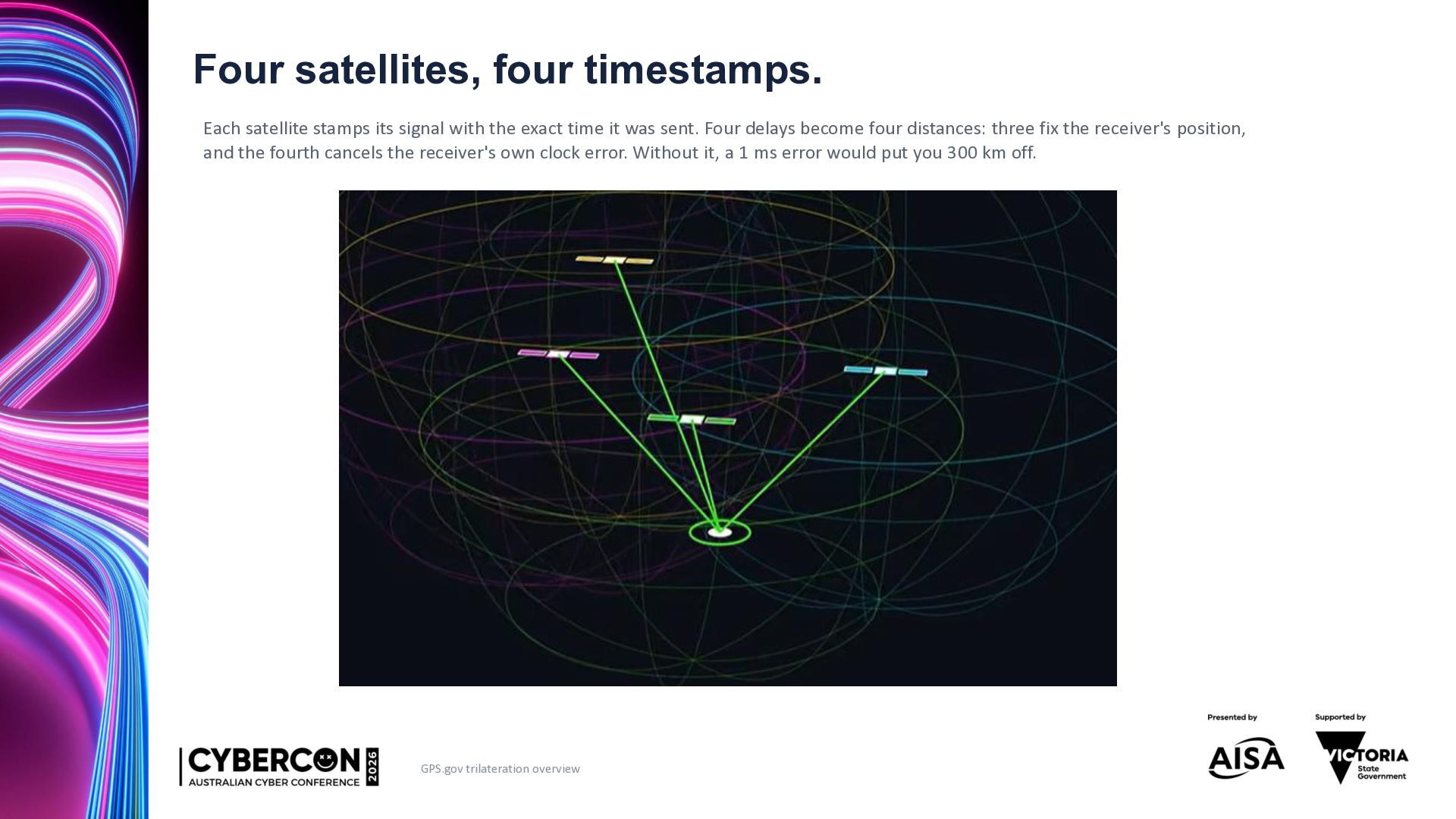
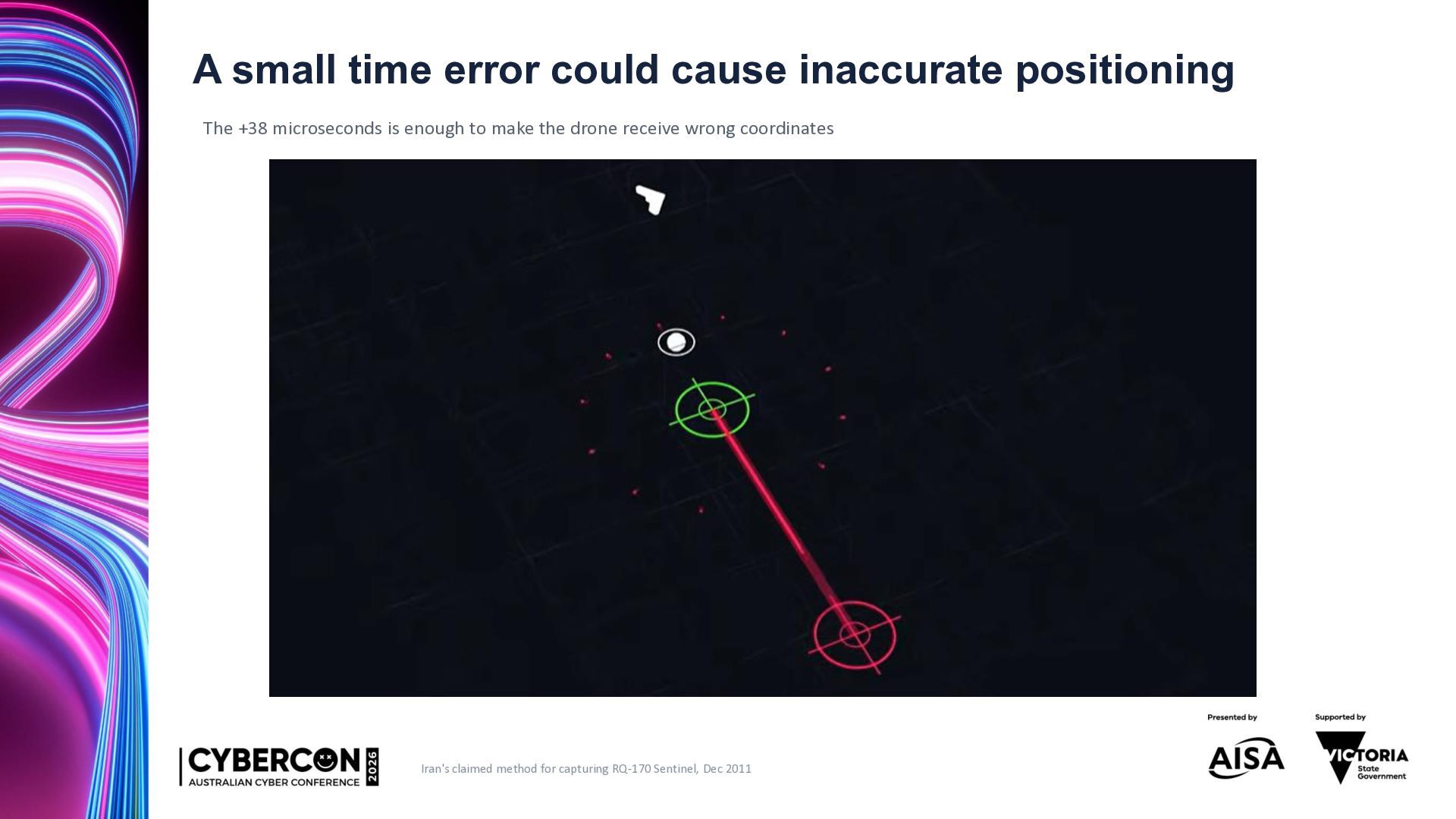
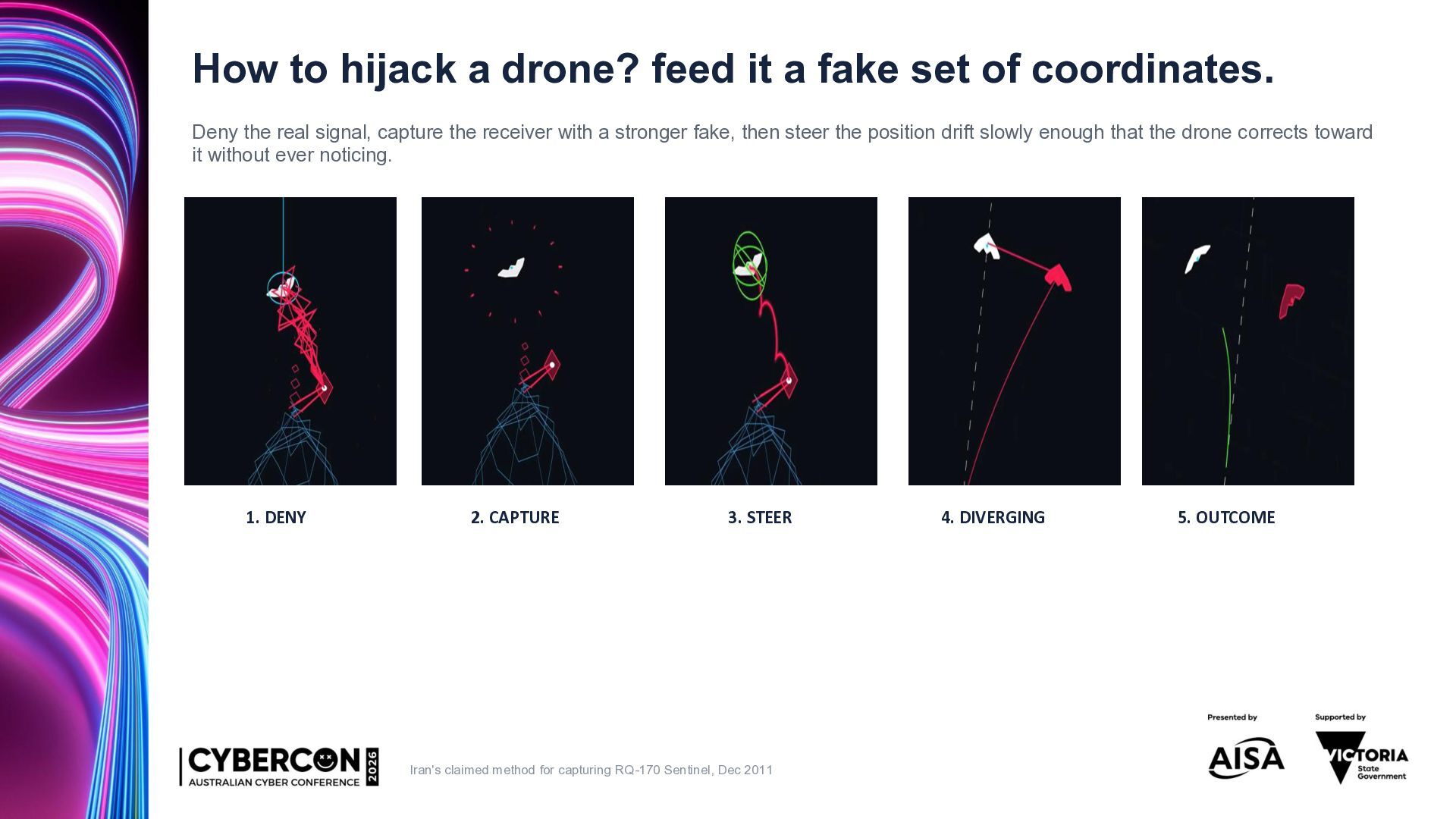
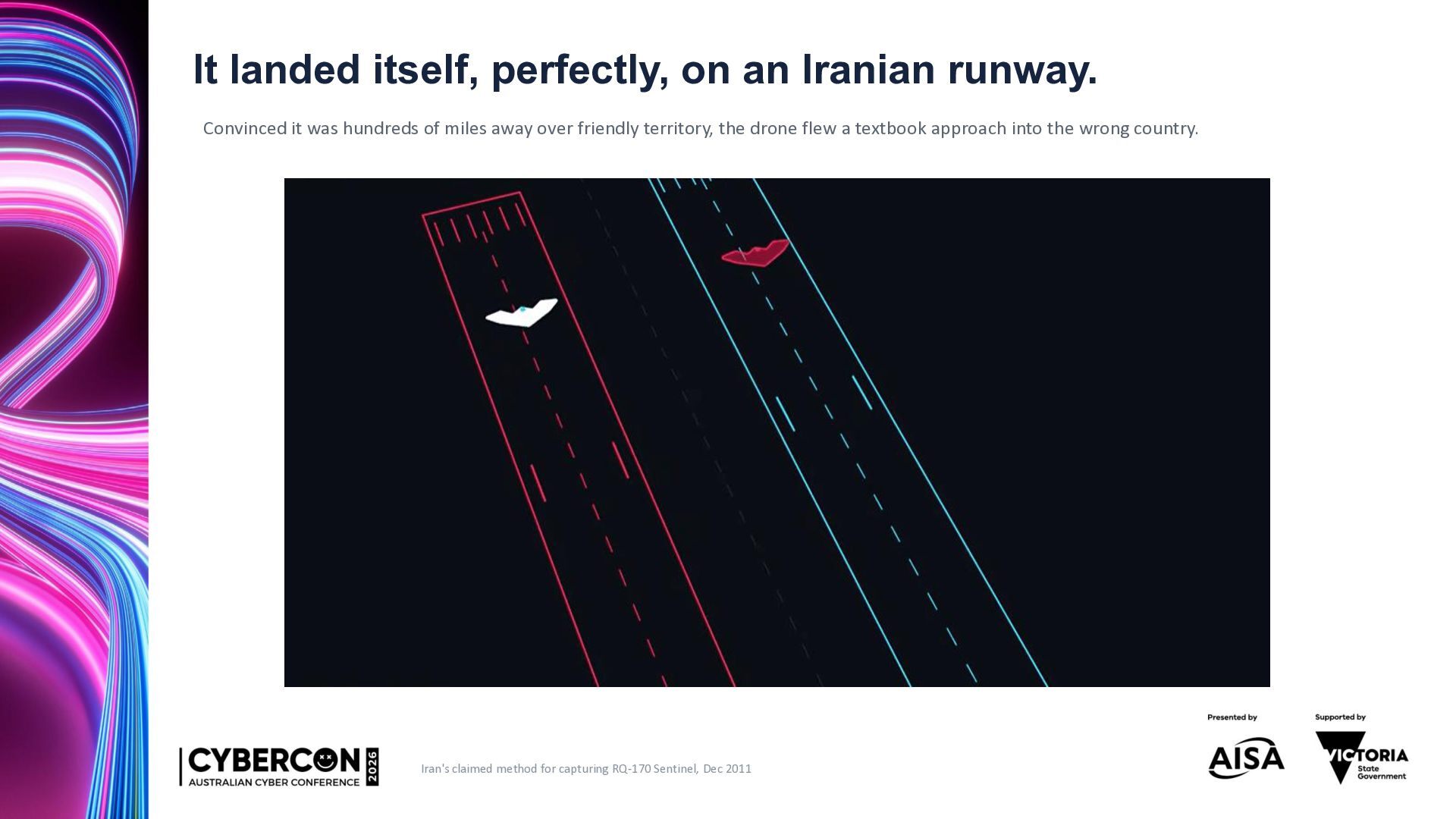
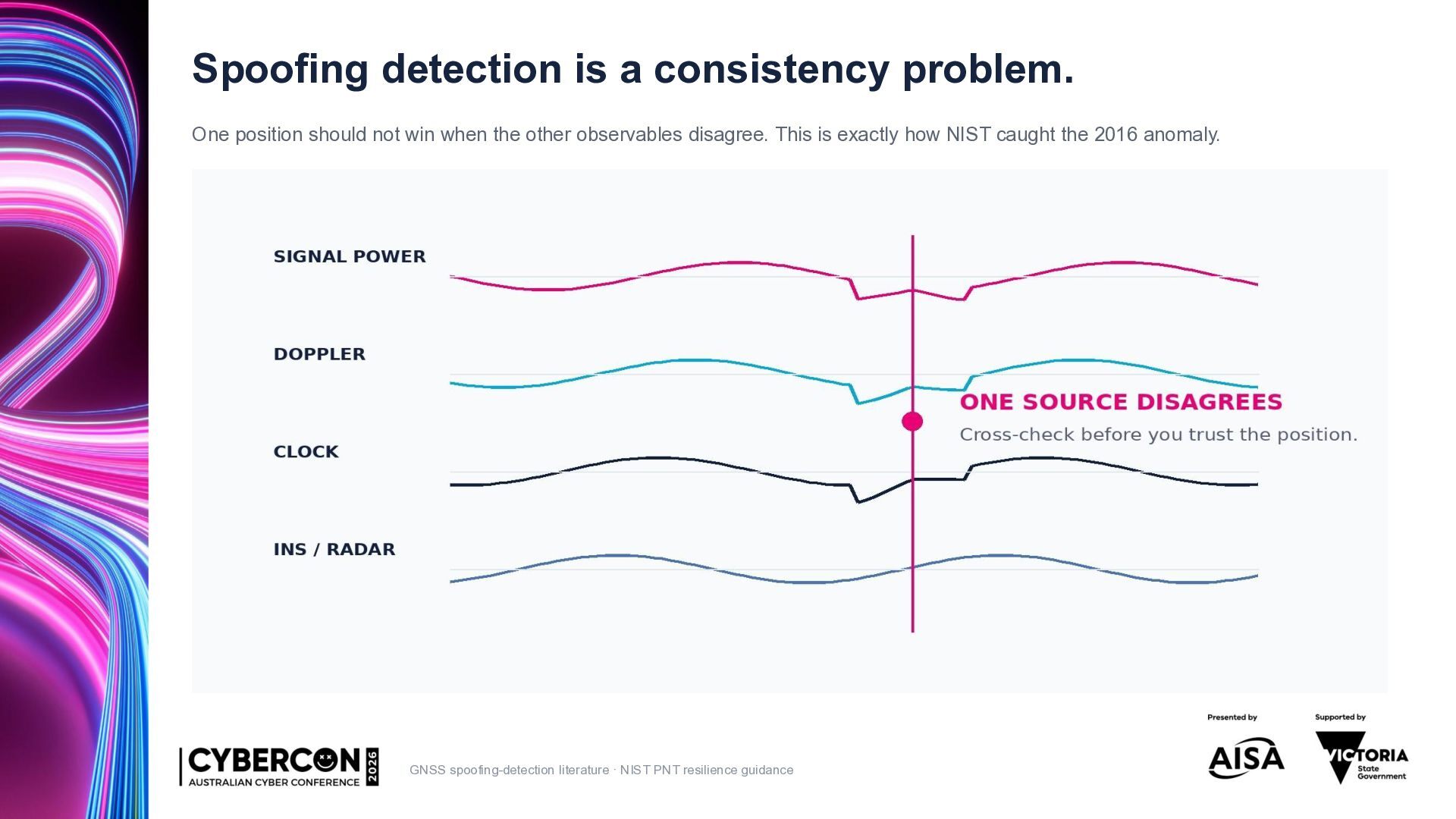
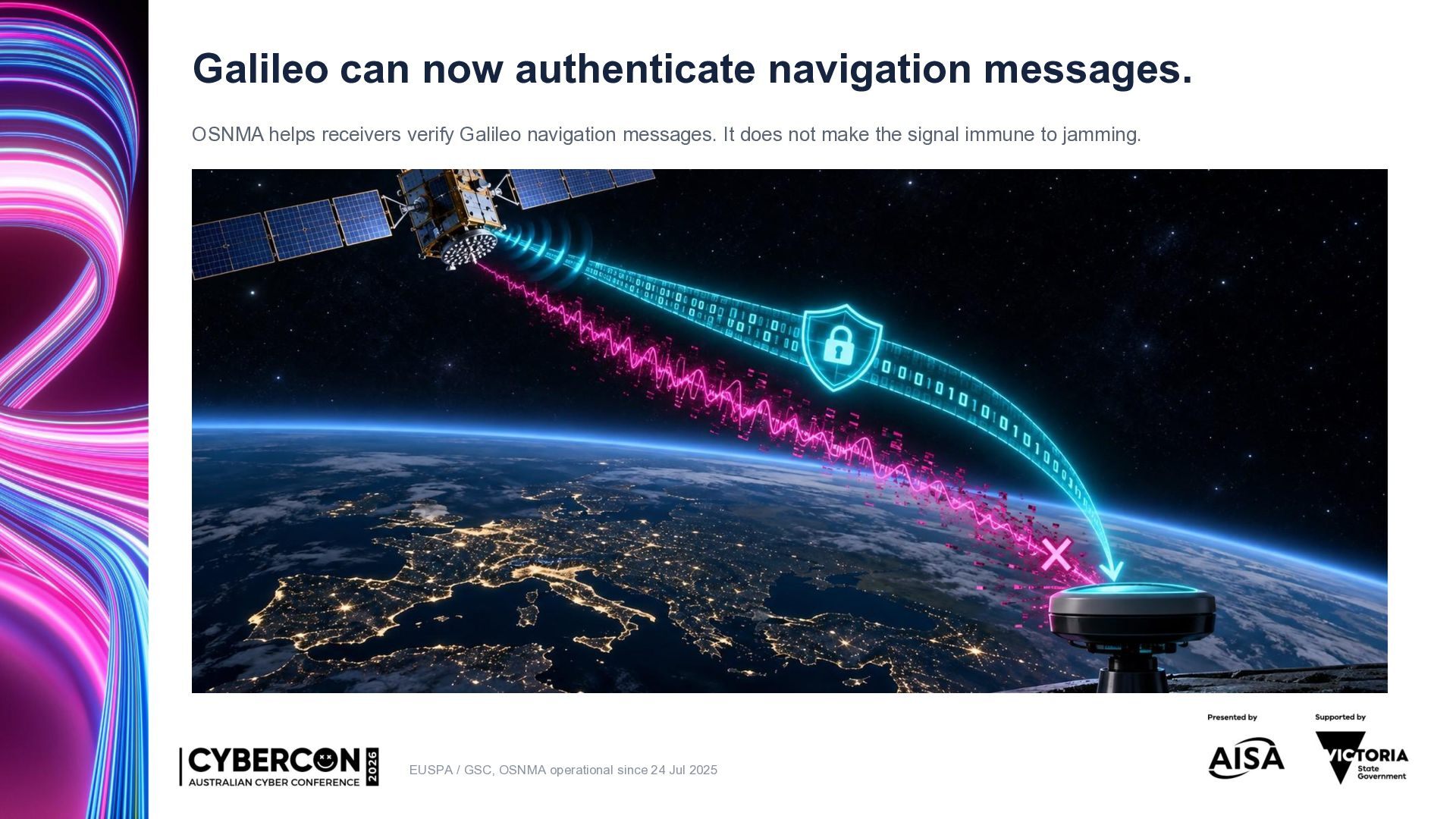
This session goes deep on how GPS spoofing actually works at the signal level: the RF physics, the open-source tooling, and how state actors scale a technique born in a lab into an operation disrupting hundreds of kilometres of critical shipping lanes. We walk through the full attack chain from jamming to signal takeover, examine real incidents from the Black Sea to the Strait of Hormuz, and break down what detection and defence actually look like in practice.
We then examine where Artificial Intelligence sits in this fight - on both sides. The weapons spoofing is designed to blind are AI-guided. The maritime intelligence platforms that detected and characterised the Hormuz campaign at scale are AI-powered. And the next generation of both attacks and defences will be driven by machine learning - from adaptive coherent spoofing that evades detection, to real-time anomaly detection running directly on receiver hardware.


 satai
 institutdelelevage
 yukiar
 mickey_0226
 rikkabotan7
 hotchpotch
 hisaokatsumi
 gurzu
 reverentgeek
 uxyall
 codingconduct
 techseoconnect
 deanohume
 aleyda
 leimatthew05
 jakevdp
 sergeychernyshev
 hatefulcrawdad
 marktimemedia