Share
Embed
ICAITD 2026 Oral Presentation
SSE: A Parameter-Efficient Training Recipe
for Static Retrieval Embeddings
Rikka Botan
October 13, 2026
Transcript
20 slides
-
SSE: A Parameter-Efficient Training Recipe for Static Retrieval Embeddings ICAITD
2026 @Tokyo Rikka Botan Independent Researcher, Japan -
Contents 1 Motivation for research 2 Key idea 3 Results
4 Discussions 5 Conclusion -
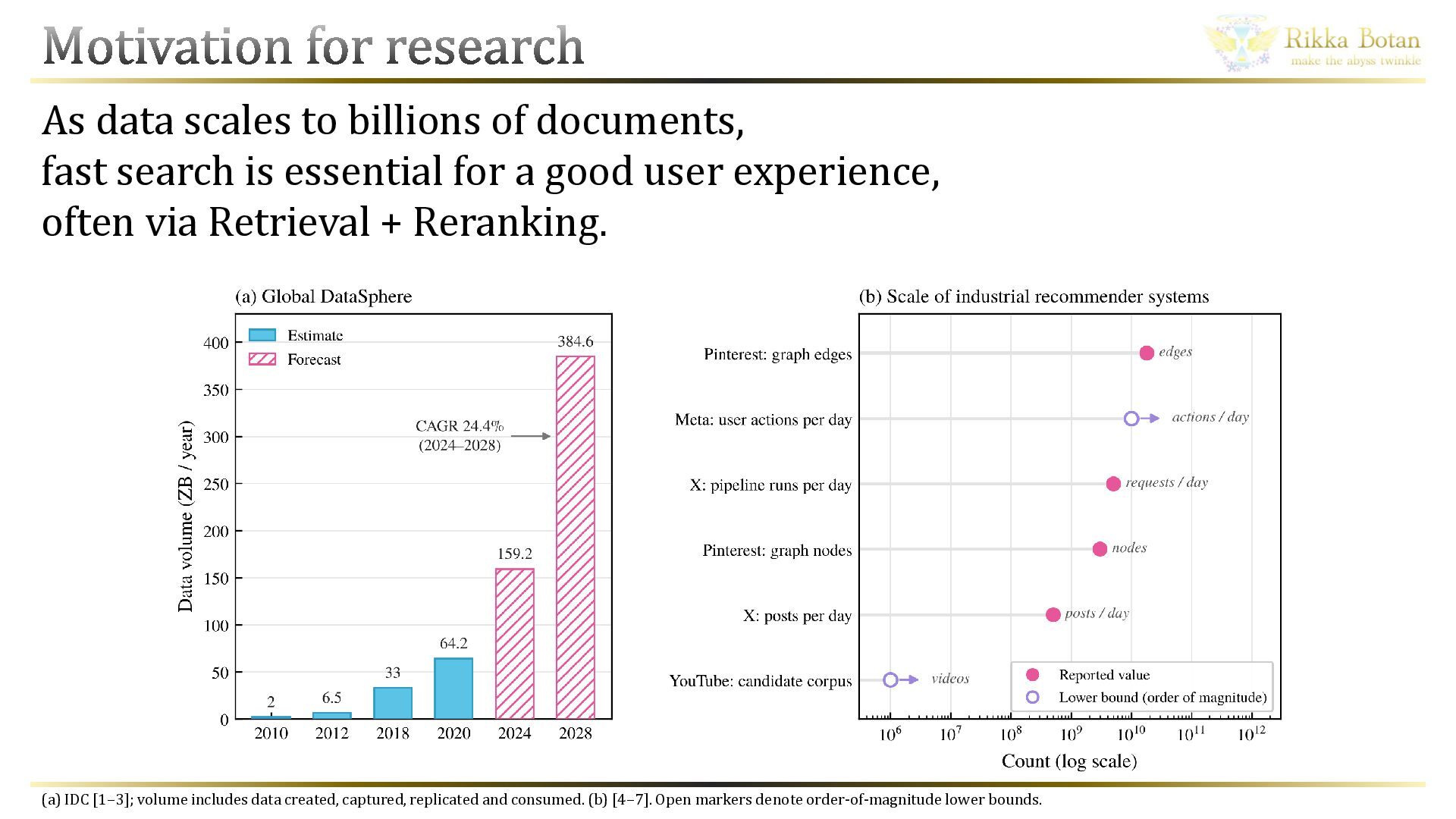
Motivation for research As data scales to billions of documents,
fast search is essential for a good user experience, often via Retrieval + Reranking. (a) IDC [1–3]; volume includes data created, captured, replicated and consumed. (b) [4–7]. Open markers denote order-of-magnitude lower bounds. -
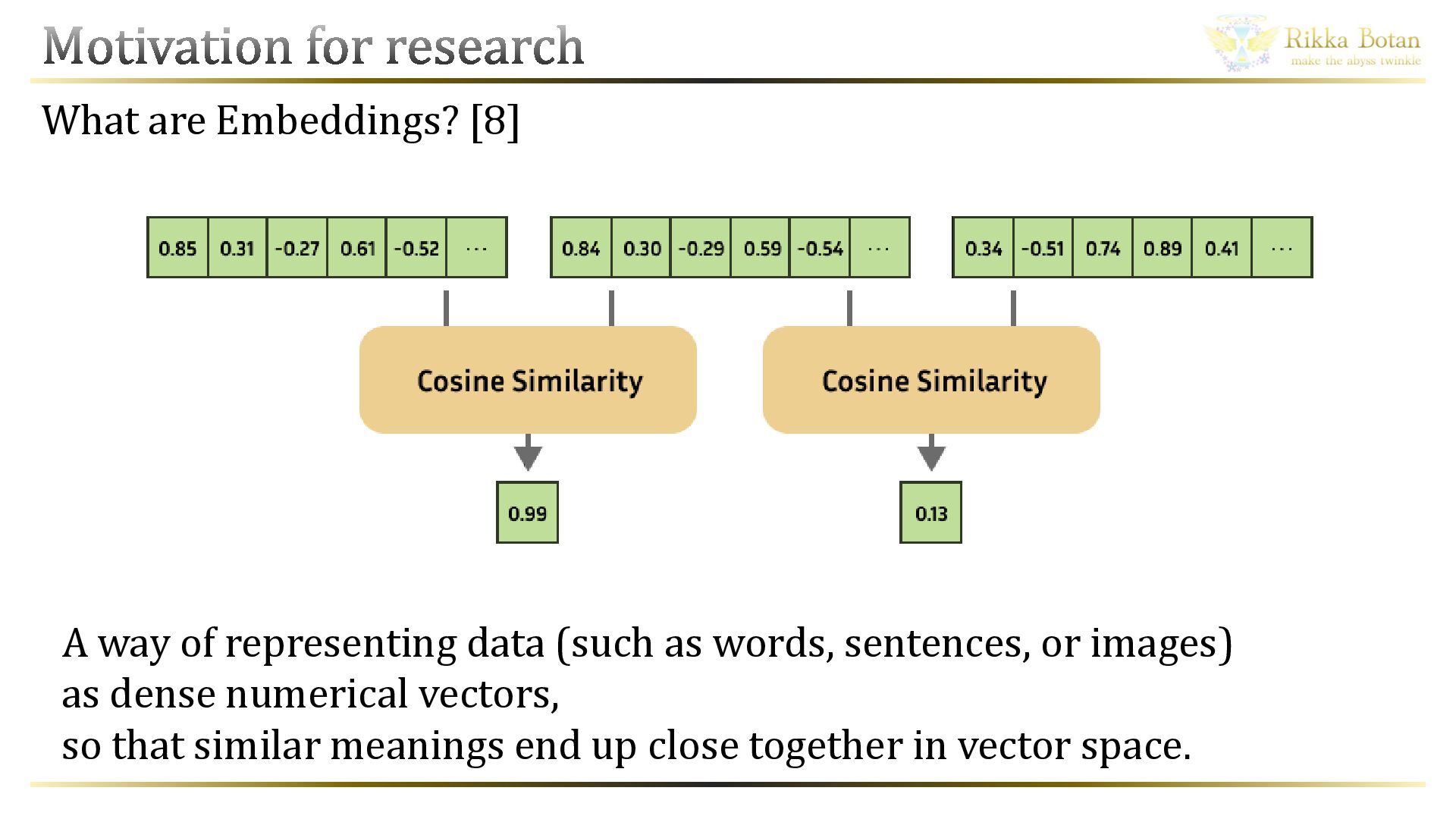
Motivation for research What are Embeddings? [8] A way of
representing data (such as words, sentences, or images) as dense numerical vectors, so that similar meanings end up close together in vector space. -
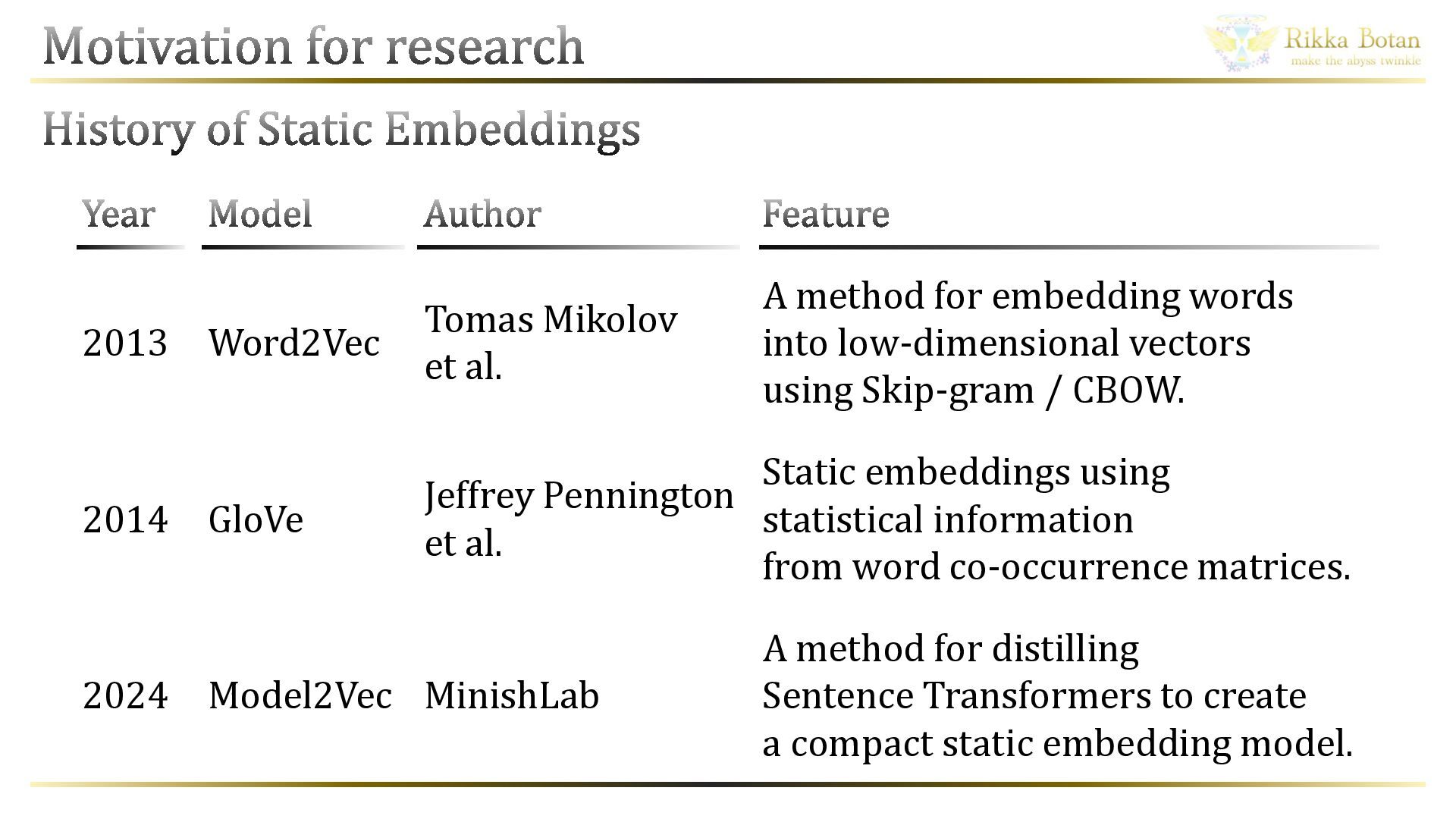
Motivation for research History of Static Embeddings Year Model Author
Feature 2013 Word2Vec Tomas Mikolov et al. A method for embedding words into low-dimensional vectors using Skip-gram / CBOW. 2014 GloVe Static embeddings using Jeffrey Pennington statistical information et al. from word co-occurrence matrices. 2024 Model2Vec MinishLab A method for distilling Sentence Transformers to create a compact static embedding model. -
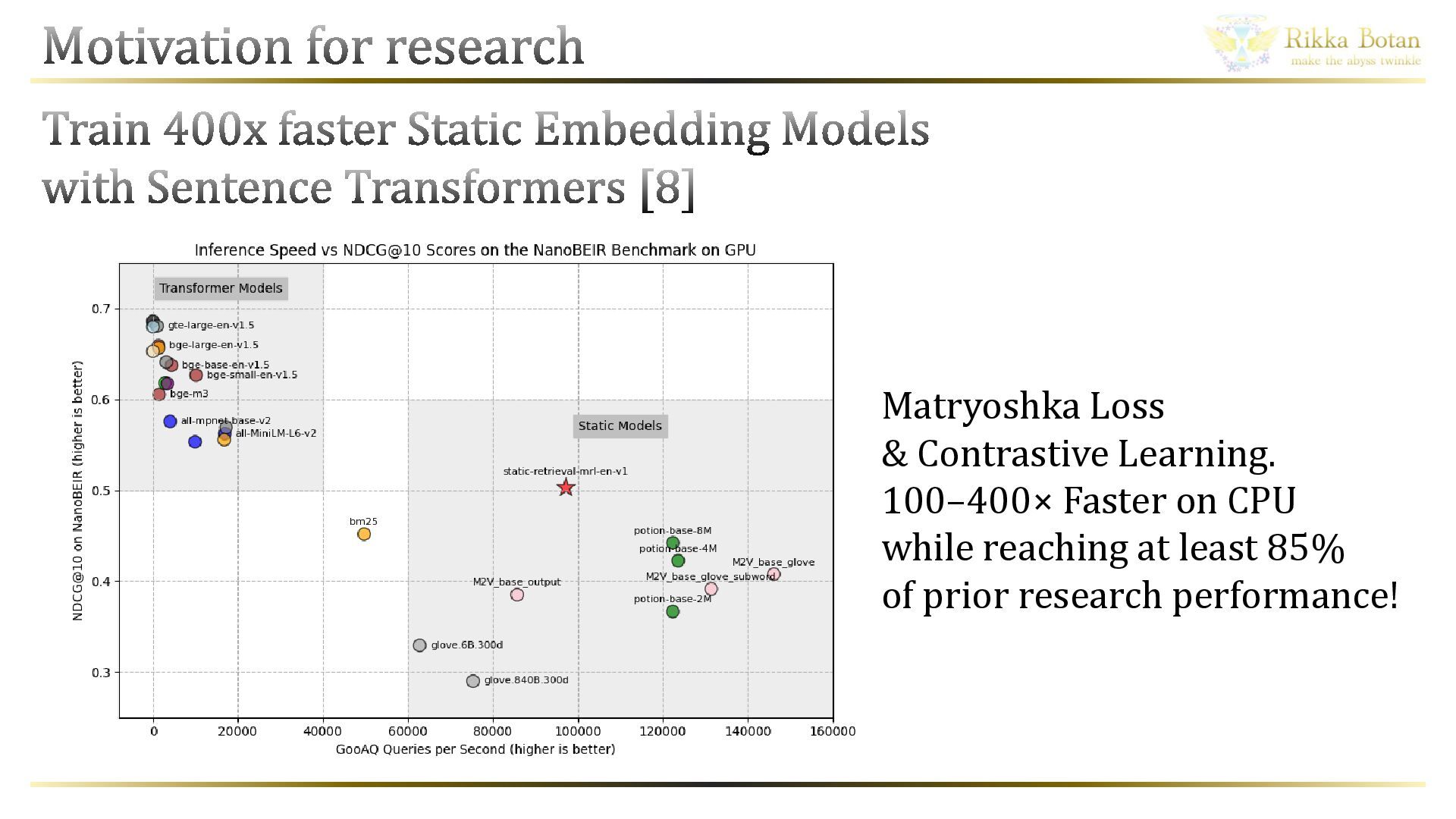
Motivation for research Train 400x faster Static Embedding Models with
Sentence Transformers [8] Matryoshka Loss & Contrastive Learning. 100–400× Faster on CPU while reaching at least 85% of prior research performance! -
Motivation for research Previous research has great results, but we
want it faster and more compact! -
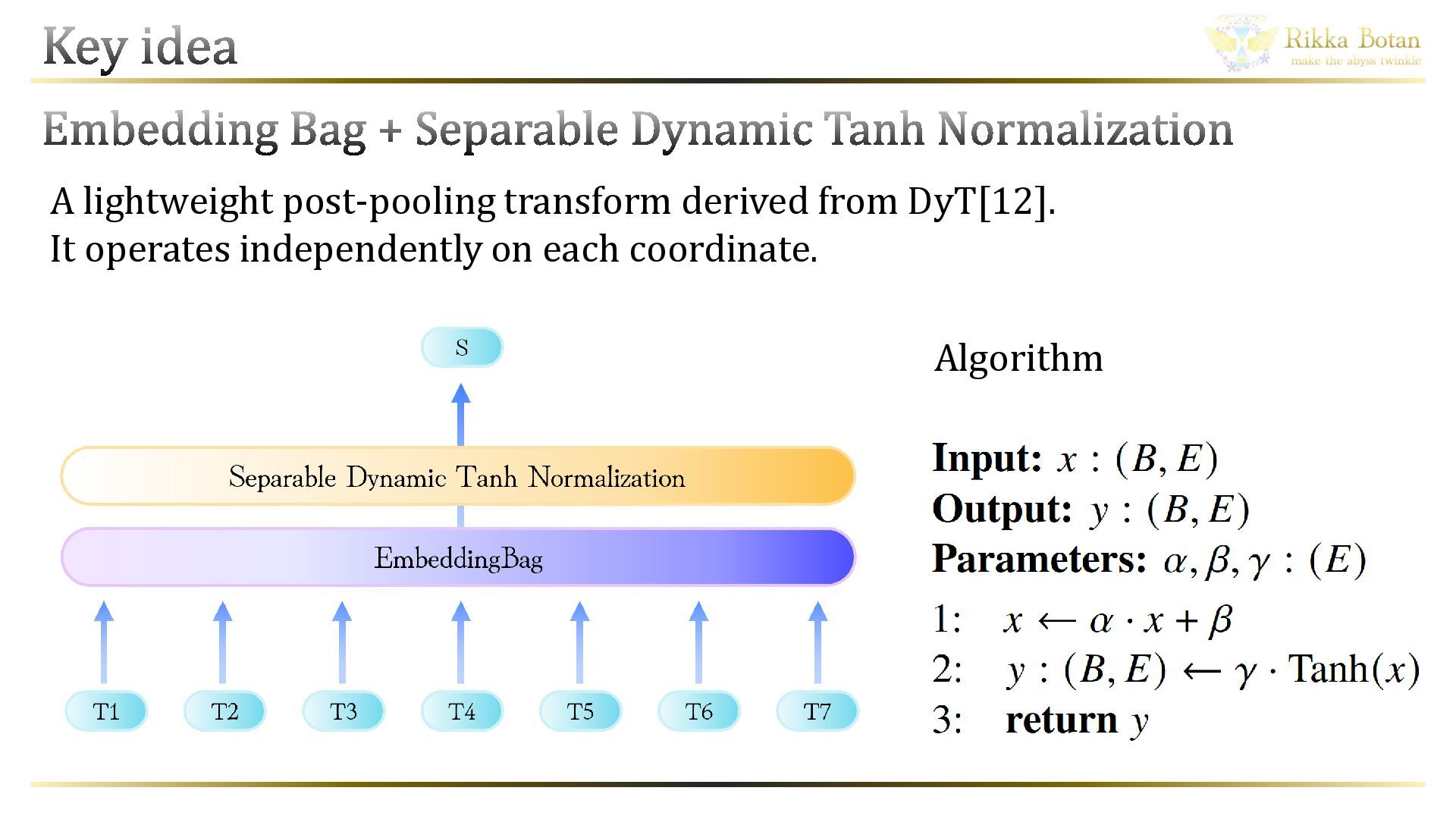
Key idea Embedding Bag + Separable Dynamic Tanh Normalization A
lightweight post-pooling transform derived from DyT[12]. It operates independently on each coordinate. Algorithm -
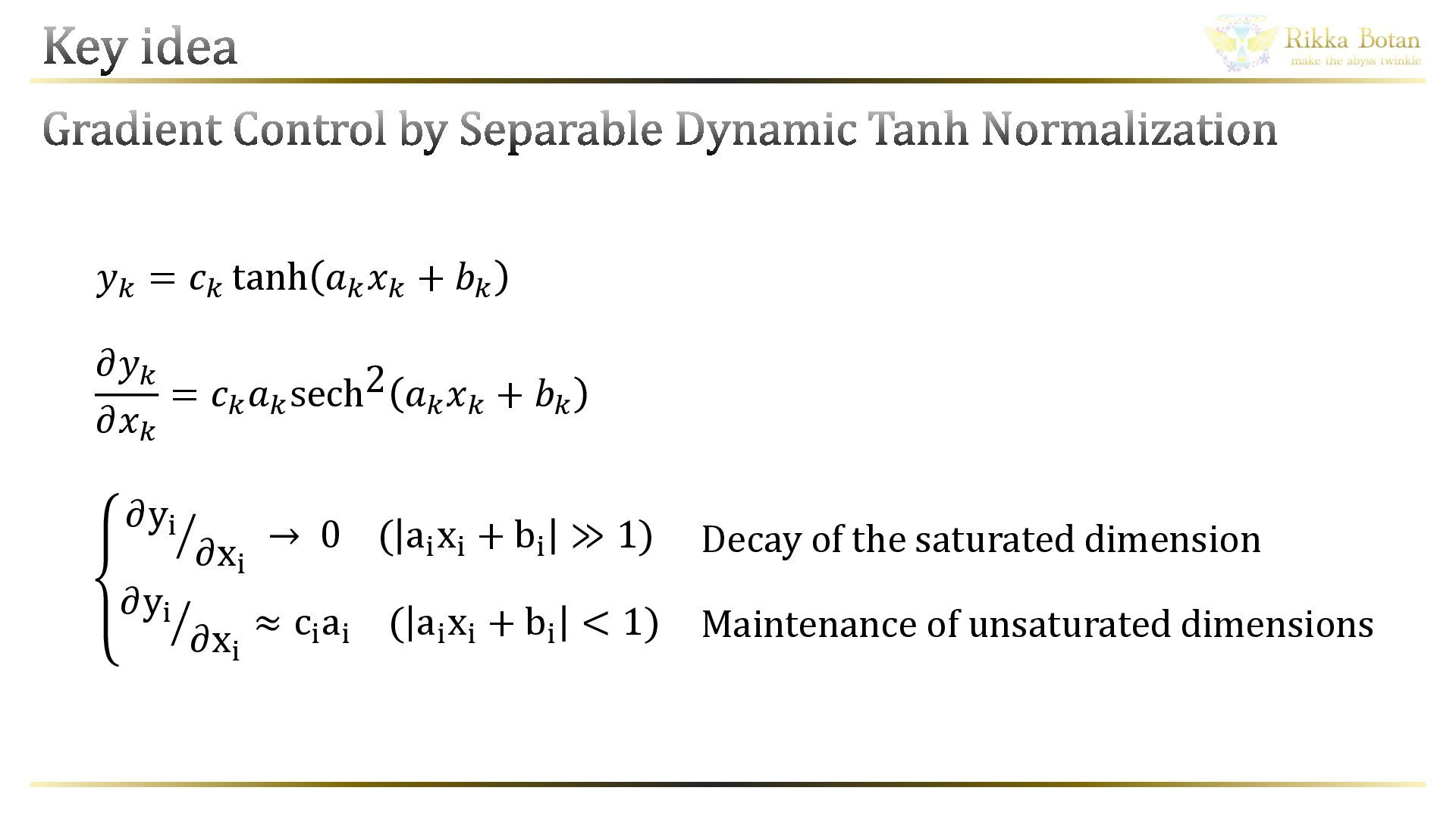
Key idea Gradient Control by Separable Dynamic Tanh Normalization 𝑦𝑘
= 𝑐𝑘 tanh 𝑎𝑘 𝑥𝑘 + 𝑏𝑘 𝜕𝑦𝑘 = 𝑐𝑘 𝑎𝑘 sech2 𝑎𝑘 𝑥𝑘 + 𝑏𝑘 𝜕𝑥𝑘 𝜕yi ൗ𝜕x → 0 ( ai xi + bi ≫ 1) i 𝜕yi ൗ𝜕x ≈ ci ai ( ai xi + bi < 1) i Decay of the saturated dimension Maintenance of unsaturated dimensions -
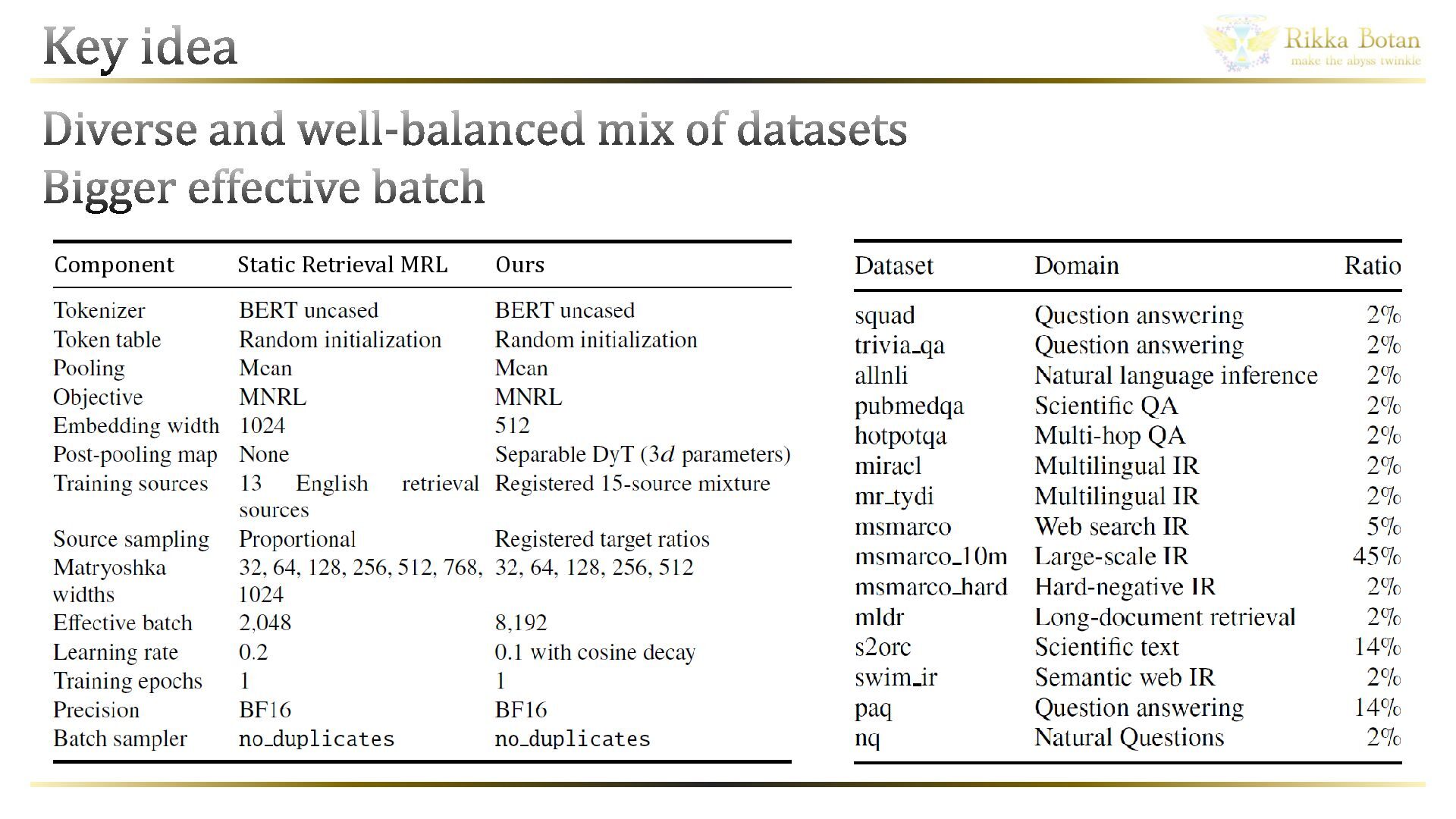
Key idea Diverse and well-balanced mix of datasets Bigger effective
batch Component Static Retrieval MRL Ours -
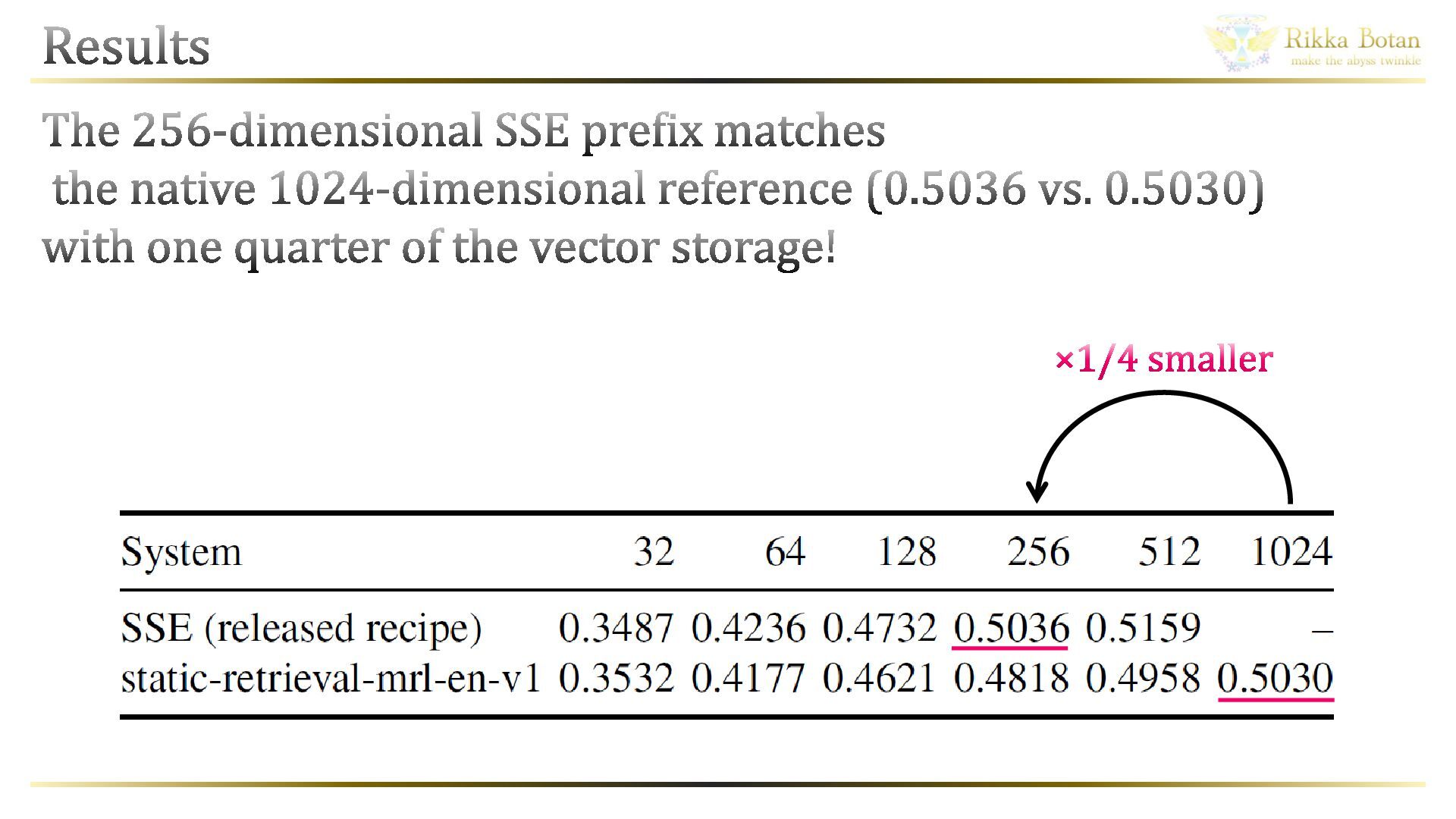
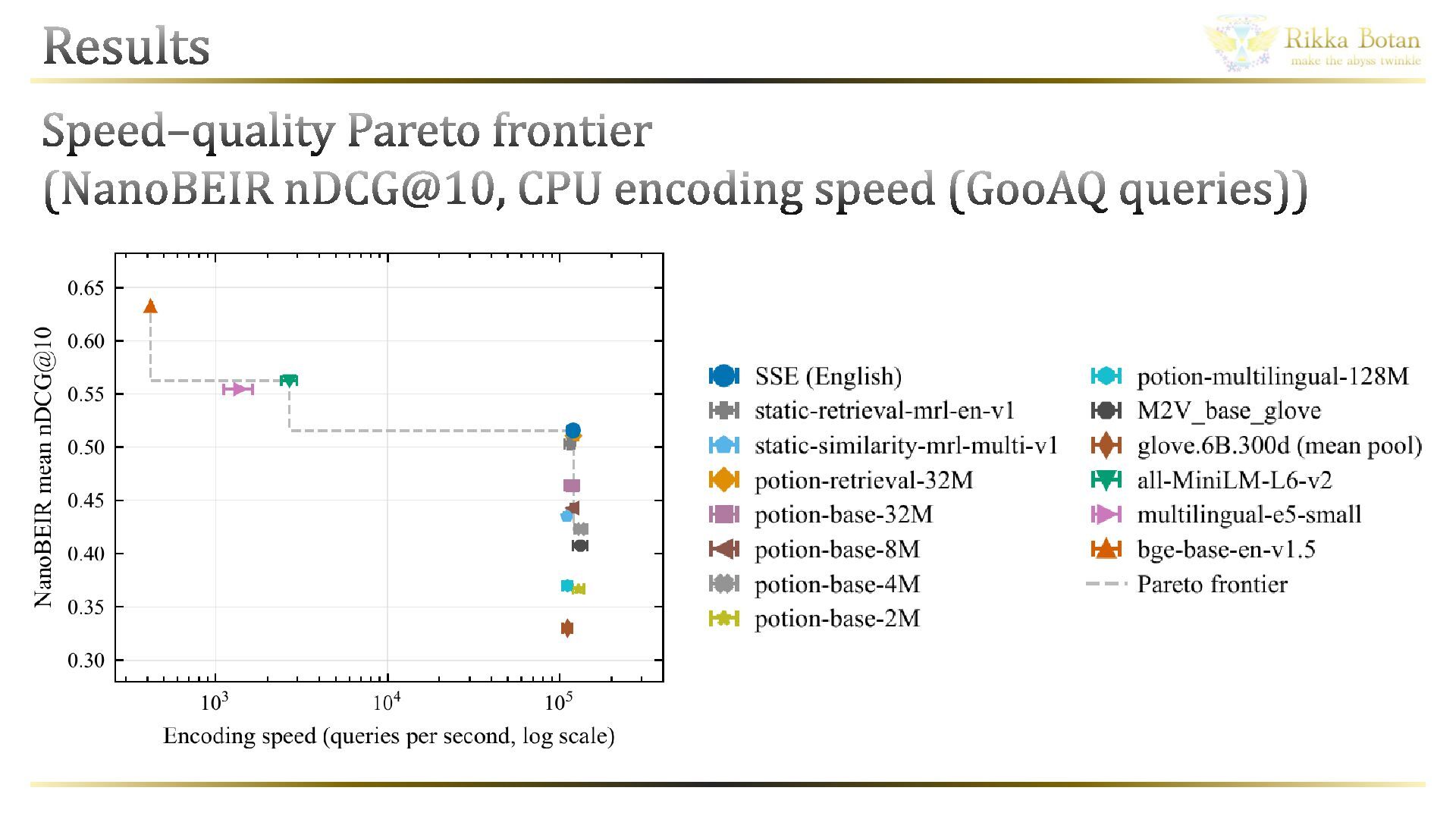
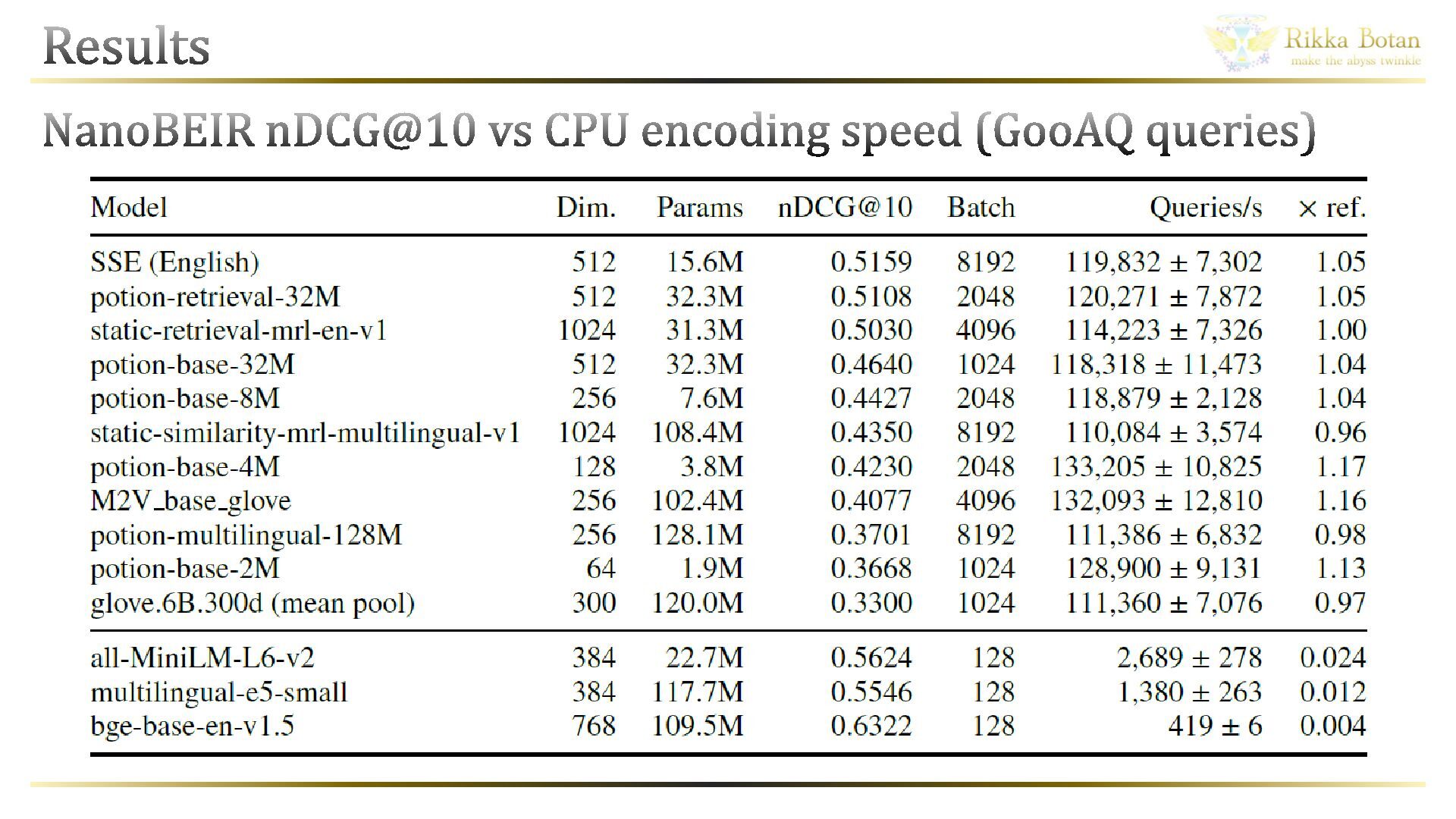
Results The 256-dimensional SSE prefix matches the native 1024-dimensional reference
(0.5036 vs. 0.5030) with one quarter of the vector storage! ×1/4 smaller -
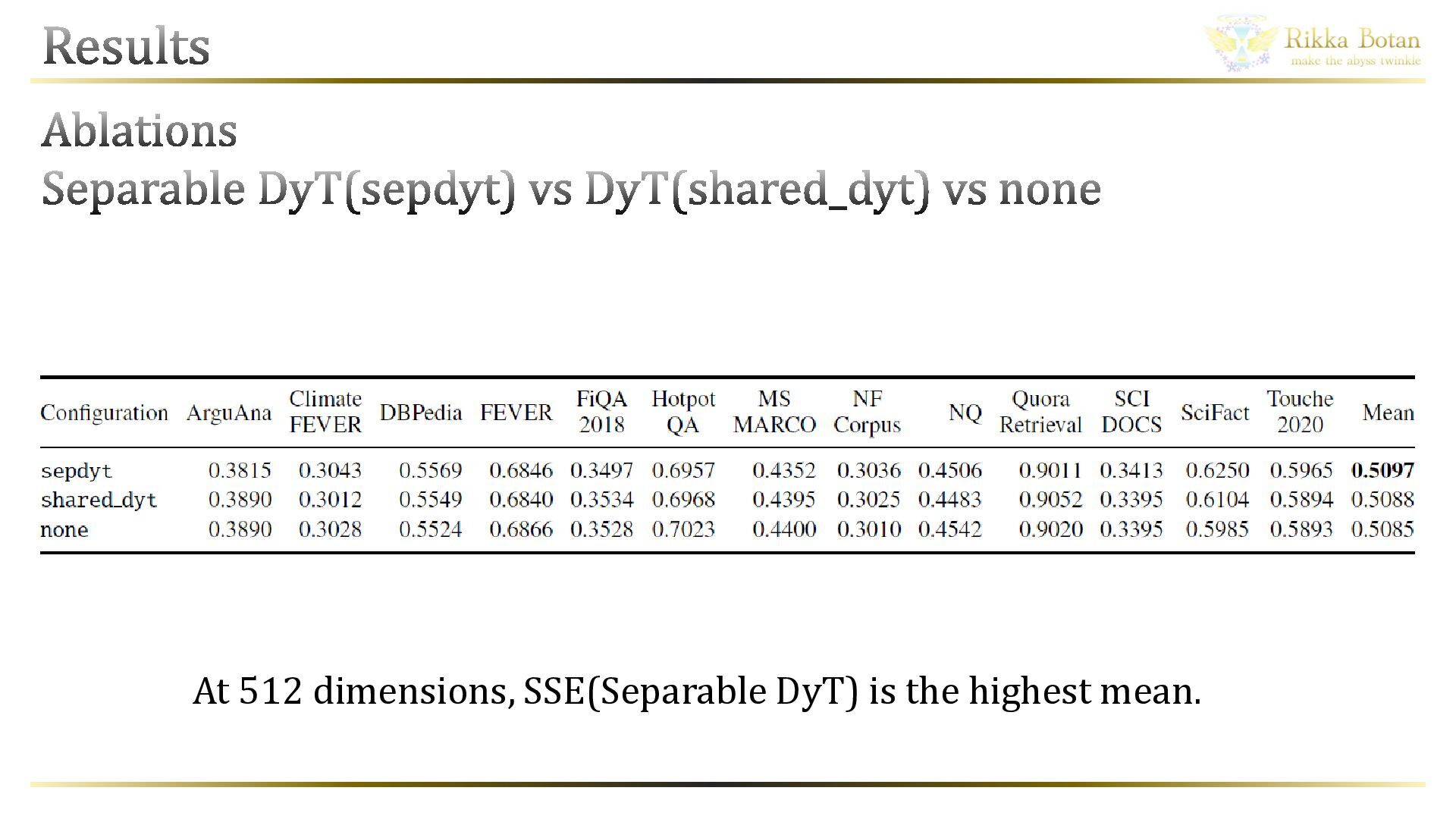
Results Ablations Separable DyT(sepdyt) vs DyT(shared_dyt) vs none At 512
dimensions, SSE(Separable DyT) is the highest mean. -
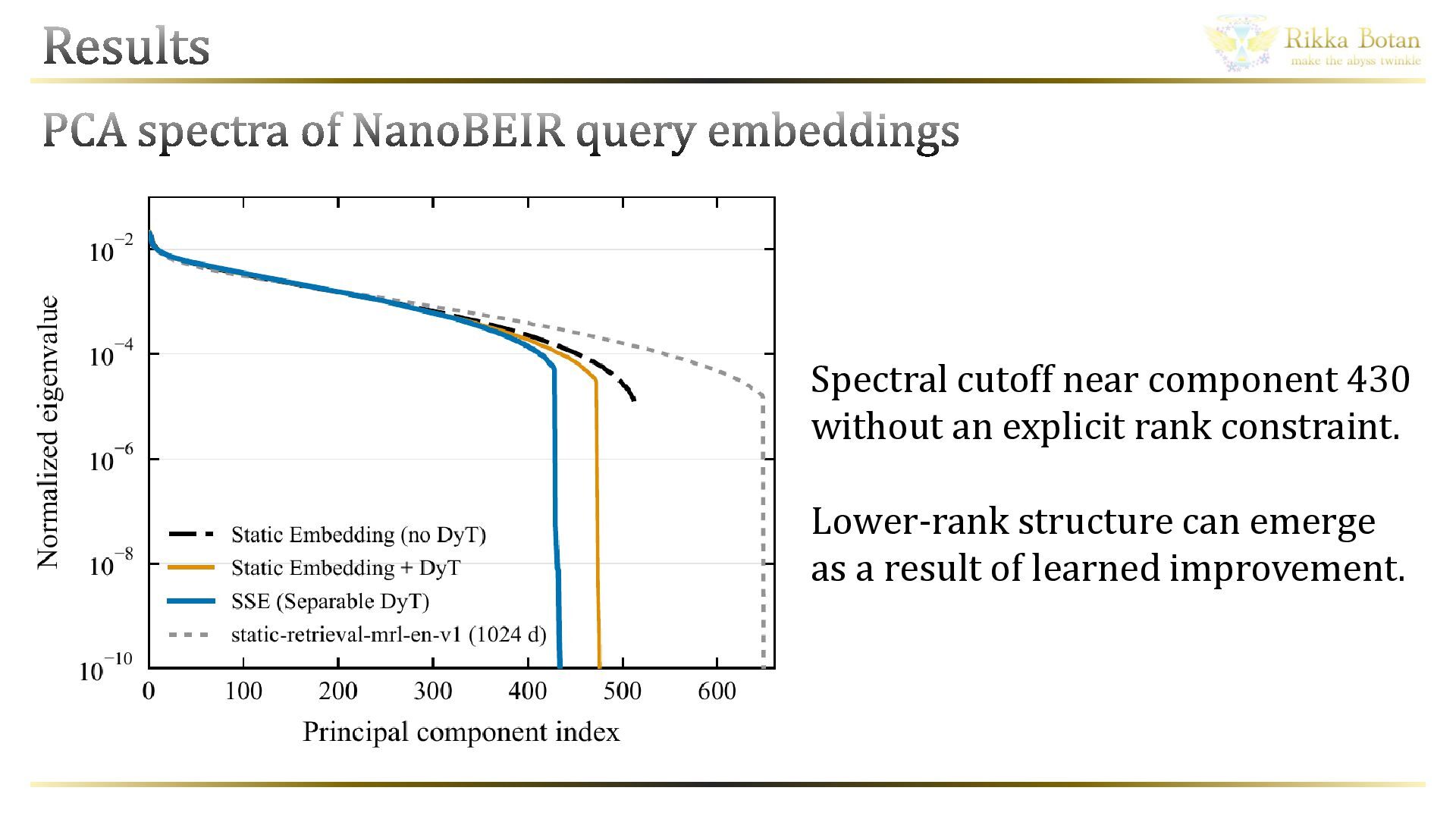
Results PCA spectra of NanoBEIR query embeddings Spectral cutoff near
component 430 without an explicit rank constraint. Lower-rank structure can emerge as a result of learned improvement. -
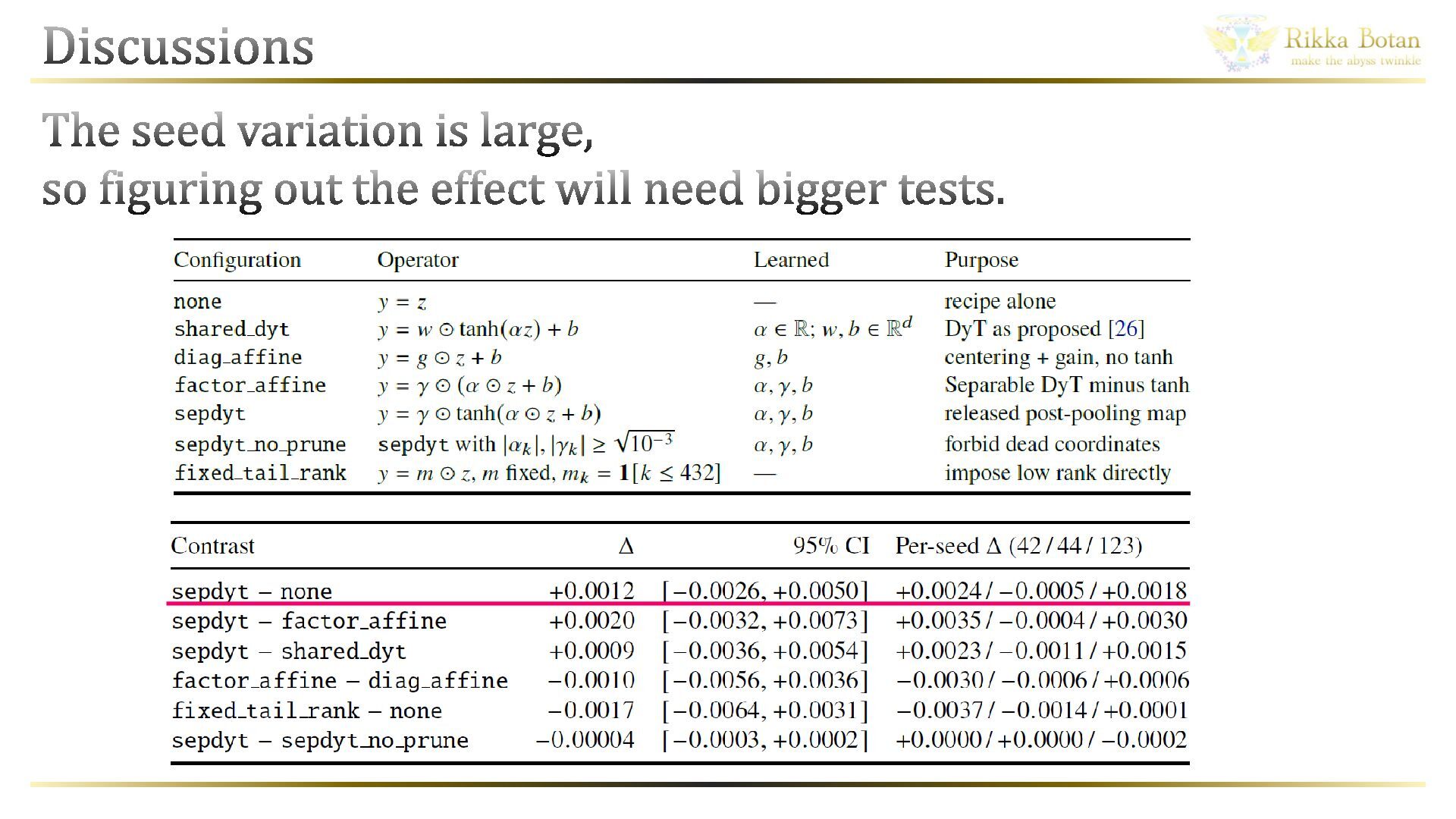
Discussions The seed variation is large, so figuring out the
effect will need bigger tests. -
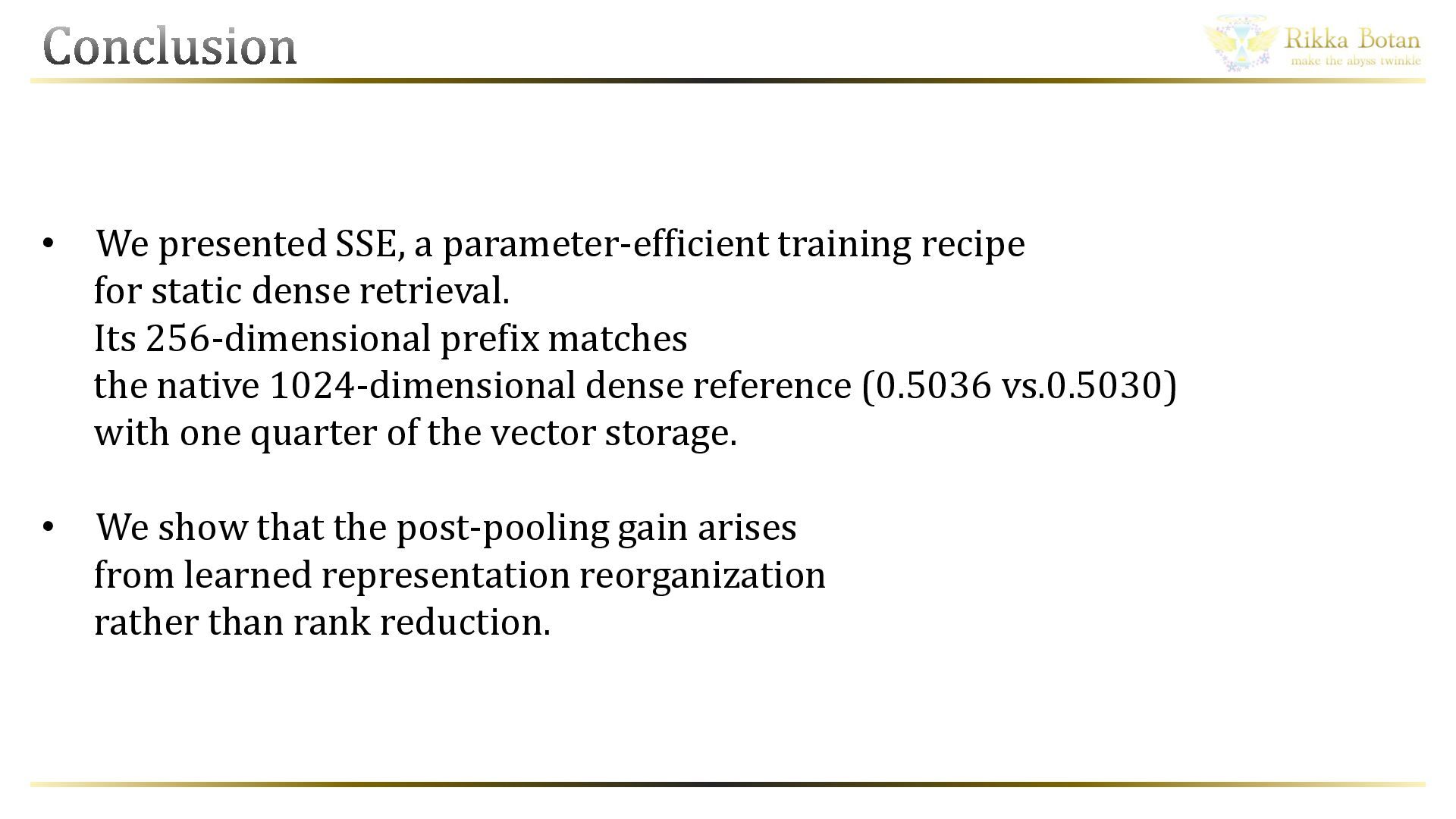
Conclusion • We presented SSE, a parameter-efficient training recipe for
static dense retrieval. Its 256-dimensional prefix matches the native 1024-dimensional dense reference (0.5036 vs.0.5030) with one quarter of the vector storage. • We show that the post-pooling gain arises from learned representation reorganization rather than rank reduction. -
References [1] D. Reinsel et al., "The Digitization of the
World," IDC #US44413318, 2018. [2] IDC, "Worldwide Global DataSphere Forecast, 2021–2025," #US46410421, 2021. [3] IDC, "Worldwide IDC Global DataSphere Forecast, 2024–2028," 2024. [4] P. Covington et al., "Deep Neural Networks for YouTube Recommendations," RecSys, 2016. [5] R. Ying et al., "Graph Convolutional Neural Networks for Web-Scale Recommender Systems," KDD, 2018. [6] Twitter Engineering, "Twitter's Recommendation Algorithm," blog, Mar. 2023. [7] J. Zhai et al., "Actions Speak Louder than Words," ICML, 2024. [8] Tom Aarsen, “Train 400x faster Static Embedding Models with Sentence Transformers”, HuggingFace blog, 2025. [9] Tomas Mikolov et al., “Efficient Estimation of Word Representations in Vector Space”, arXiv:1301.3781, 2013. [10] Jeffrey Pennington et al., “GloVe: Global Vectors for Word Representation”, Association for Computational Linguistics:D14-1162, 2014. [11] Thomas van Dongen, Stéphan Tulkens, “Model2Vec: Distill a Small Fast Model from any Sentence Transformer”, HuggingFace blog, 2024. [12] Jiachen Zhu, Xinlei Chen, Kaiming He, Yann LeCun and Zhuang Liu. Transformers without Normalization. arXiv:2503.10622, 2025.