Upgrade to Pro
— share decks privately, control downloads, hide ads and more …
Speaker Deck
Sign up for free
Menu
Search
Features
All features
Private URLs
Password Protection
Custom URLS
Scheduled publishing
Remove Branding
Restrict embedding
Deck Collections
Notes
Features
All features
Private URLs
Password Protection
Custom URLS
Scheduled publishing
Remove Branding
Restrict embedding
Deck Collections
Notes
Explore
Featured decks
Featured speakers
Programming
Technology
Storyboards
Explore
Featured decks
Featured speakers
Programming
Technology
Storyboards
Pricing
Search
Sign in
Sign up for free
TBD + update on FRATs WG activities
Search
Sponsored
·
Your Podcast. Everywhere. Effortlessly.
Share. Educate. Inspire. Entertain. You do you. We'll handle the rest.
→
transientskp
June 23, 2012
Science
130
0
Share
Embed
Copy iframe code
Copy JS code
Copy link
Start on current slide
TBD + update on FRATs WG activities
Sander ter Veen
LOFAR Transients Key Project Meeting, Meudon, December 2011
transientskp
June 23, 2012
More Decks by transientskp
See All by transientskp
Sourcefinding Strategy in MSSS, the first LOFAR survey
transientskp
0
220
A Modified Flagger for Transient Radio Signals
transientskp
0
230
Transient Detection and SQL
transientskp
0
260
The Trap: Now & Next
transientskp
0
190
Transients Database Performance
transientskp
0
240
Training the Trap
transientskp
1
220
AARTFAAC Status Update
transientskp
0
200
LOFAR + Gaia (+ X-ray) Transients
transientskp
0
290
Heterogeneous Telescope Networks
transientskp
0
220
Other Decks in Science
See All in Science
機械学習 - ニューラルネットワーク入門
trycycle
PRO
0
1.3k
データベース06: SQL (3/3) 副問い合わせ
trycycle
PRO
1
1.2k
データベース02: データベースの概念
trycycle
PRO
2
1.4k
バランスって大事だね
akasan
1
150
AlgorithAlgorihms for Decision Making
mickey_kubo
0
170
Kritische evaluatie van GenAI-output voor literatuuronderzoek
voginip
0
240
O(log n)-Approximation Algorithms for Bipartiteness Ratio
tasusu
0
240
20260410_SystemsThinking
takusamar
1
160
Van Dare naar Durf
voginip
0
310
データベース05: SQL(2/3) 結合質問
trycycle
PRO
0
1.3k
[TMLR 2026, Featured Certification] Double Bounded α-Divergence Optimization for Density Estimation
gkazunii
1
130
データベース10: 拡張実体関連モデル
trycycle
PRO
0
1.6k
Featured
See All Featured
Designing for Performance
lara
611
70k
New Earth Scene 8
popppiees
4
2.6k
Future Trends and Review - Lecture 12 - Web Technologies (1019888BNR)
signer
PRO
0
3.8k
Building Better People: How to give real-time feedback that sticks.
wjessup
370
20k
Agile Leadership in an Agile Organization
kimpetersen
PRO
0
260
The Hidden Cost of Media on the Web [PixelPalooza 2025]
tammyeverts
2
510
Breaking role norms: Why Content Design is so much more than writing copy - Taylor Woolridge
uxyall
1
430
Designing Dashboards & Data Visualisations in Web Apps
destraynor
232
55k
Six Lessons from altMBA
skipperchong
29
4.5k
Practical Orchestrator
shlominoach
192
12k
Side Projects
sachag
456
43k
Primal Persuasion: How to Engage the Brain for Learning That Lasts
tmiket
0
490
Transcript
Progress on the TBB front: FRATS and Cosmic Rays Sander ter Veen For the FRATS working group and the Cosmic Ray KSP
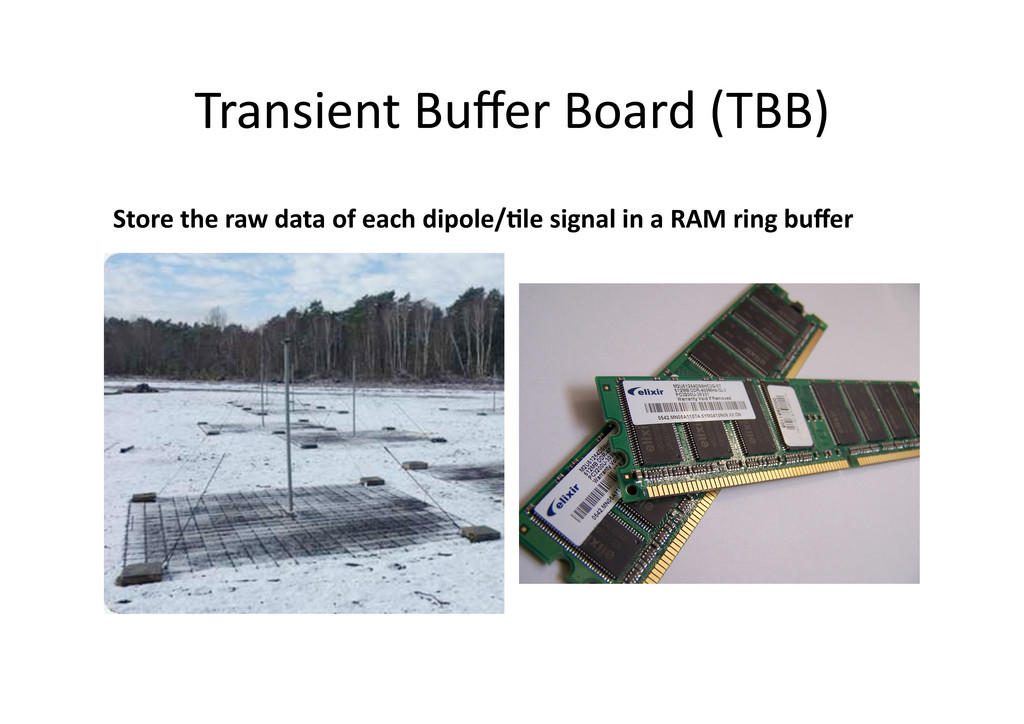
Transient Buffer Board (TBB) Store the raw data of each dipole/1le signal in a RAM ring buffer
Taking TBB data Step 1: Step 2: Select dipoles/staEons Select 5 μs – >1.3s of data
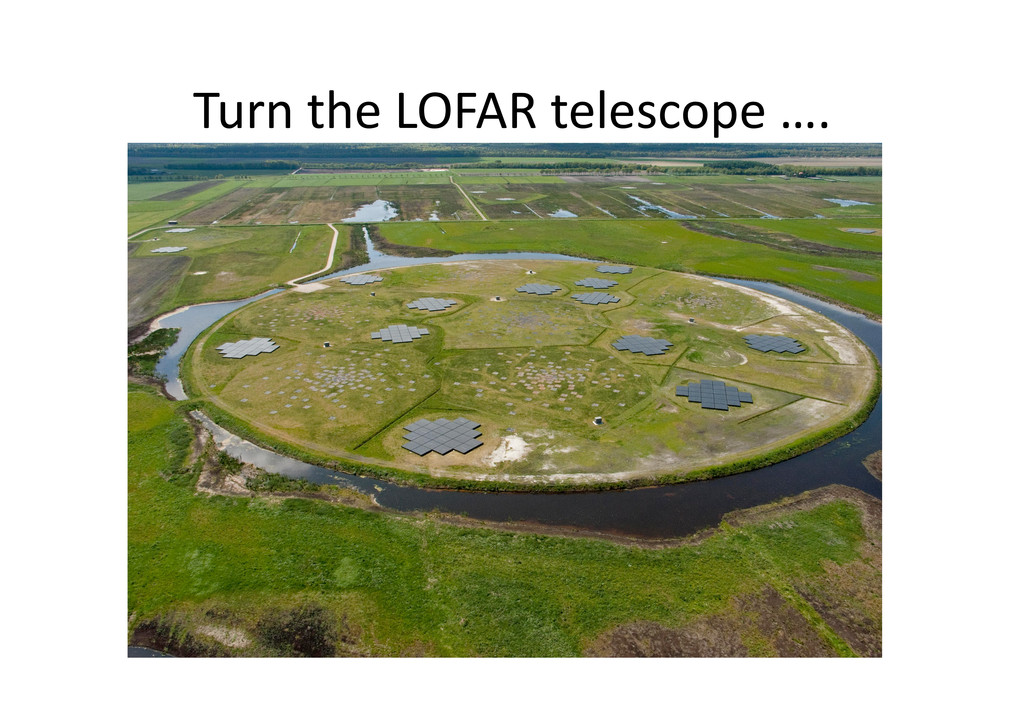
Turn the LOFAR telescope ….
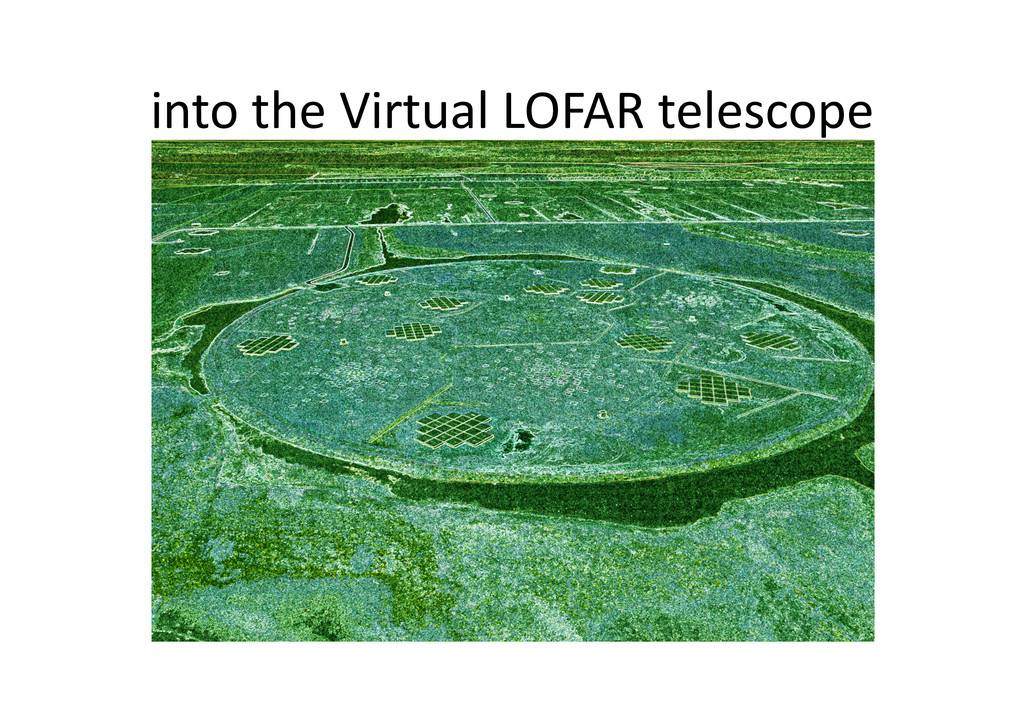
into the Virtual LOFAR telescope
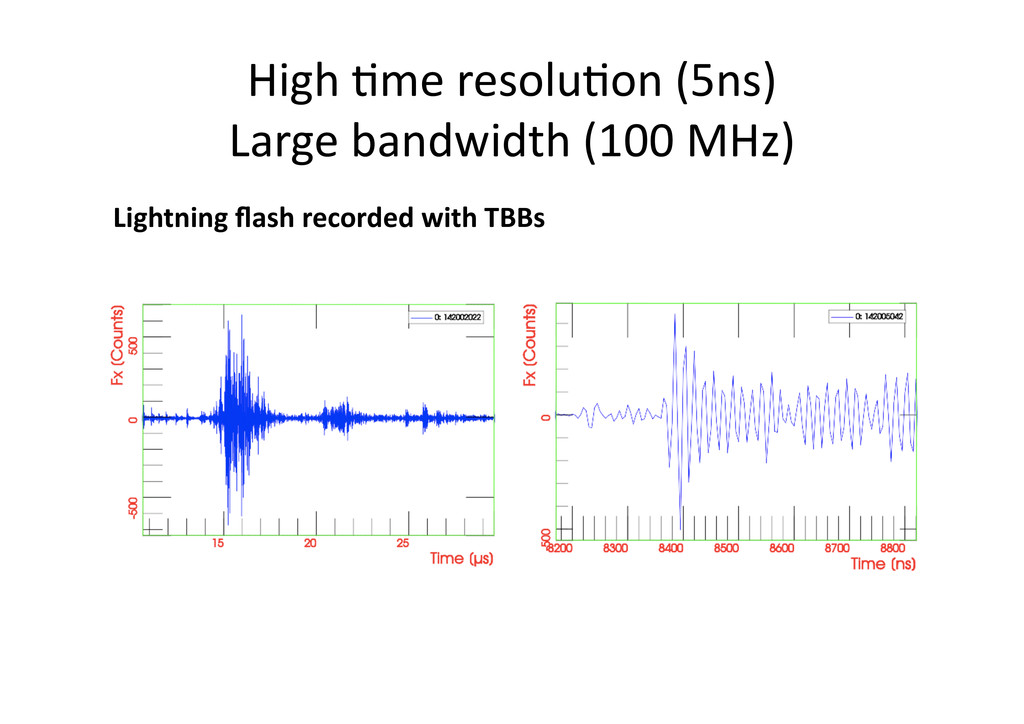
High Eme resoluEon (5ns) Large bandwidth (100 MHz) Lightning flash recorded with TBBs
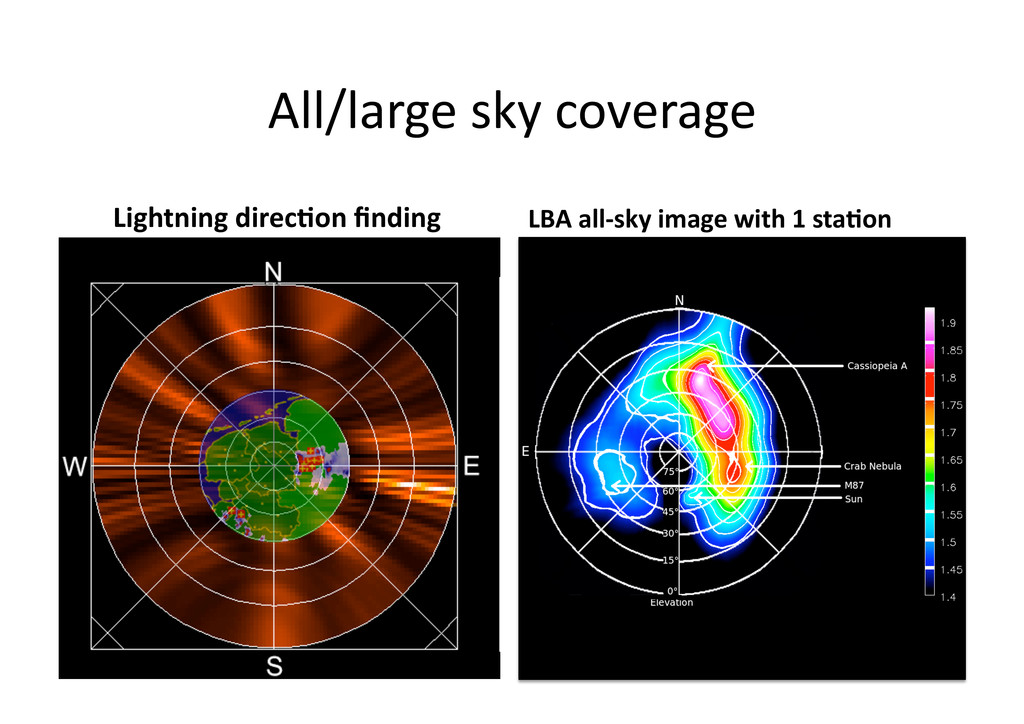
All/large sky coverage Lightning direc1on finding LBA all‐sky image with 1 sta1on
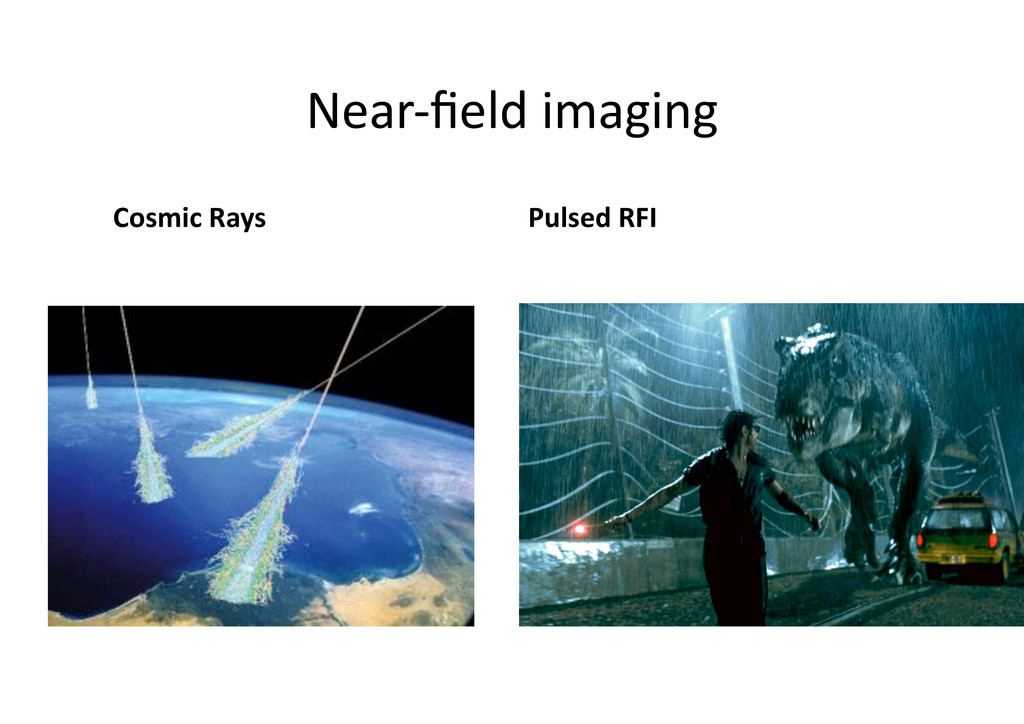
Near‐field imaging Cosmic Rays Pulsed RFI
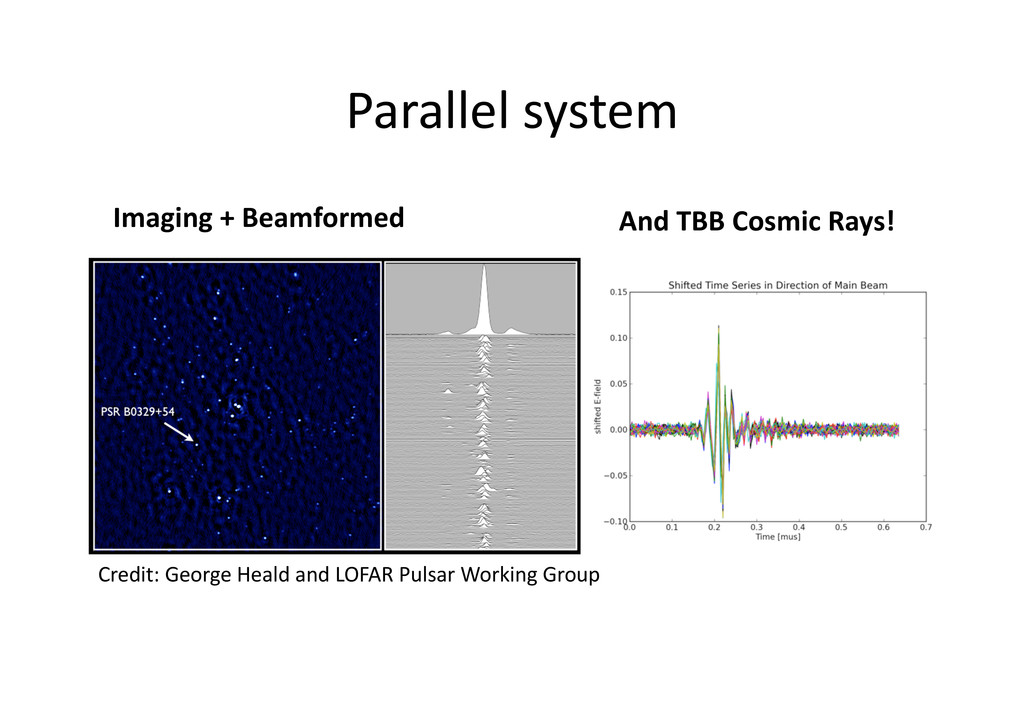
Parallel system Imaging + Beamformed And TBB Cosmic Rays! Credit: George Heald and LOFAR Pulsar Working Group
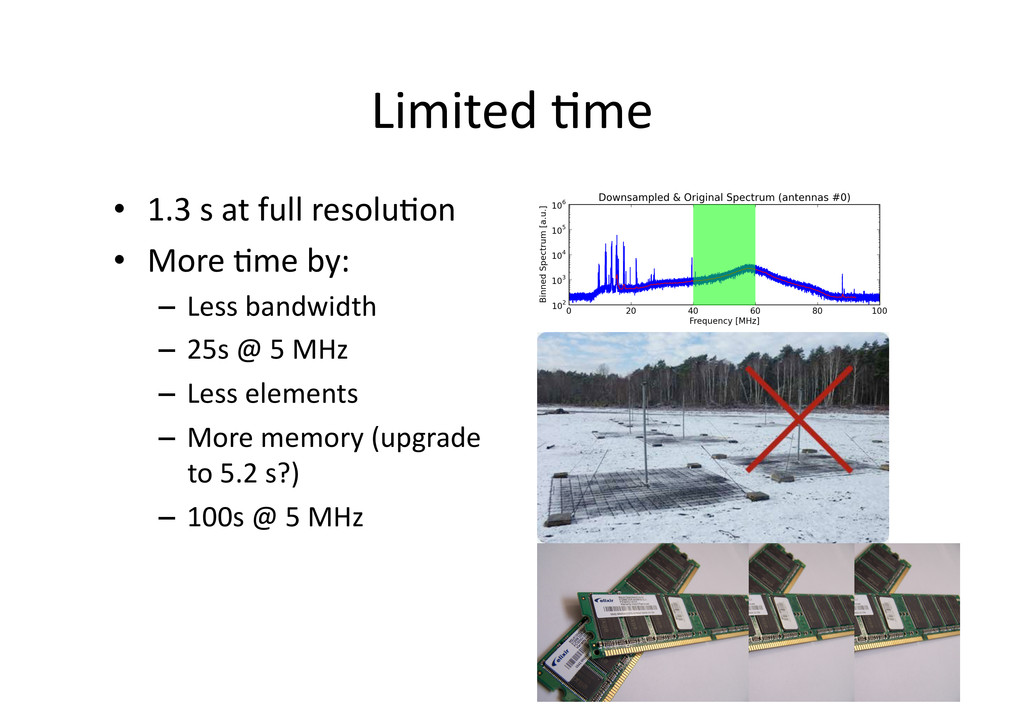
Limited Eme • 1.3 s at full resoluEon • More Eme by: – Less bandwidth – 25s @ 5 MHz – Less elements – More memory (upgrade to 5.2 s?)
– 100s @ 5 MHz
Obtaining TBB data • Current framework: Python scripts – Trigger handling program listens for triggers (UDP packages) – If a trigger is received check if dumping is allowed: • Is there an observaEon running? • Does the current project allow dumping?
• Does the current observaEon allow dumping? • Is dumping allowed on all observaEons at this Eme? – Is the current observaEon excluded? • Wanted: key that tells if dumping is allowed – Execute ssh commands at the staEon to tell them to dump data
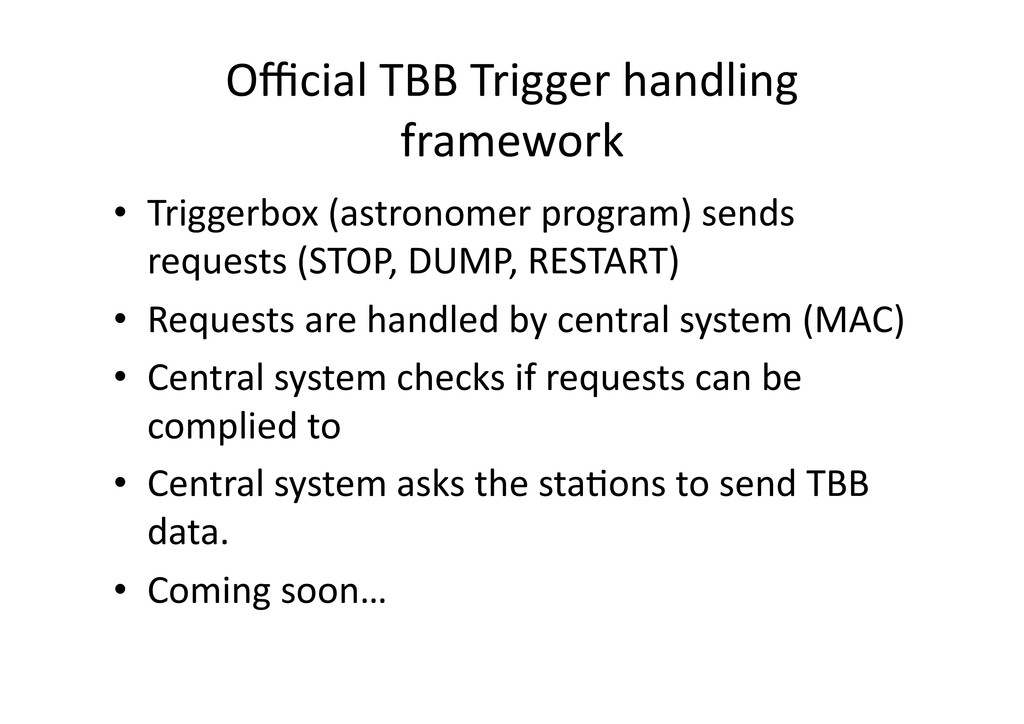
Official TBB Trigger handling framework • Triggerbox (astronomer program) sends requests (STOP, DUMP, RESTART) • Requests are handled by central system (MAC) • Central system checks if requests can be complied to
• Central system asks the staEons to send TBB data. • Coming soon…
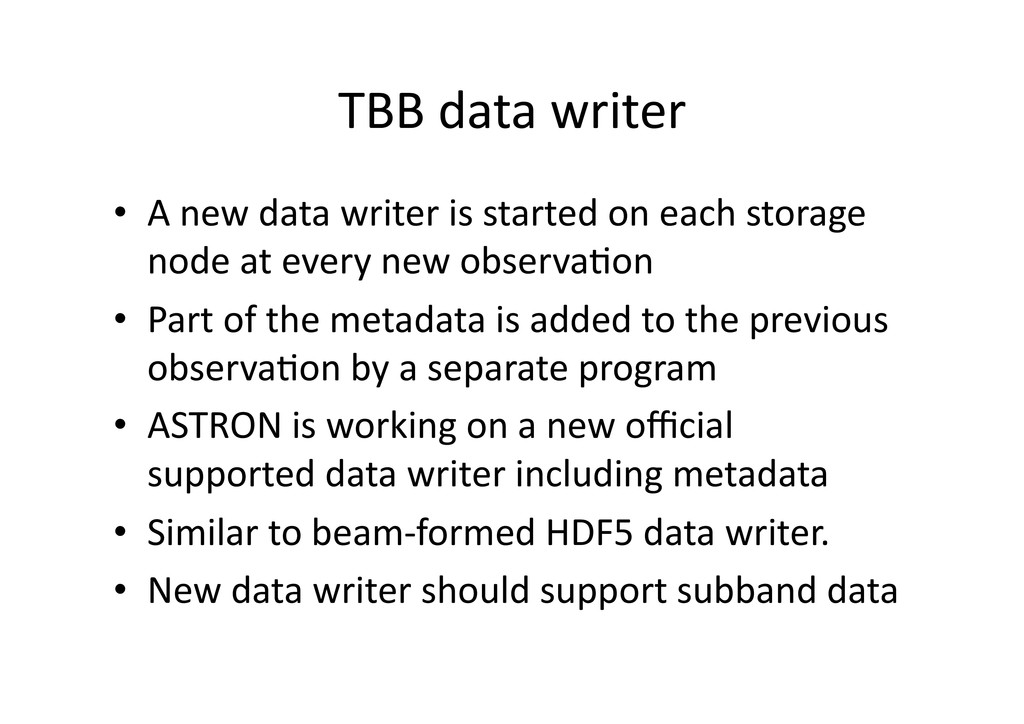
TBB data writer • A new data writer is started on each storage node at every new observaEon • Part of the metadata is added to the previous observaEon by a separate program • ASTRON is working on a new official supported data writer including metadata
• Similar to beam‐formed HDF5 data writer. • New data writer should support subband data
Science cases • Fast Radio Transients (FRATs) • Very High Energy Cosmic Rays (VHECR) • Ultra High Energy Cosmic Rays (NuMoon)
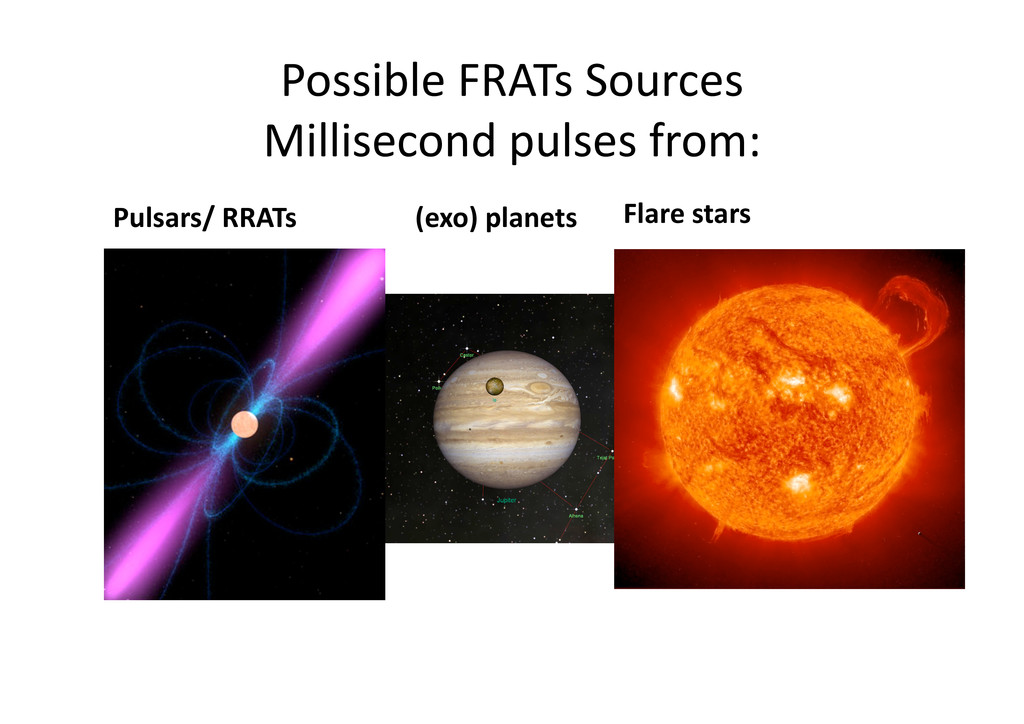
Possible FRATs Sources Millisecond pulses from: Pulsars/ RRATs (exo) planets Flare stars
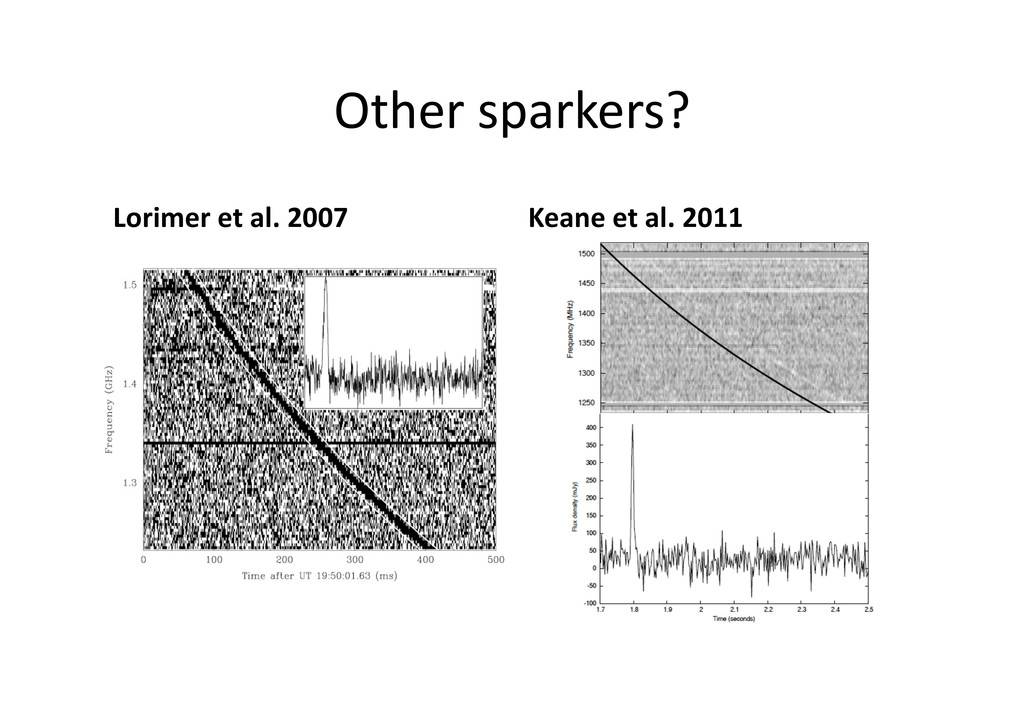
Other sparkers? Lorimer et al. 2007 Keane et al. 2011
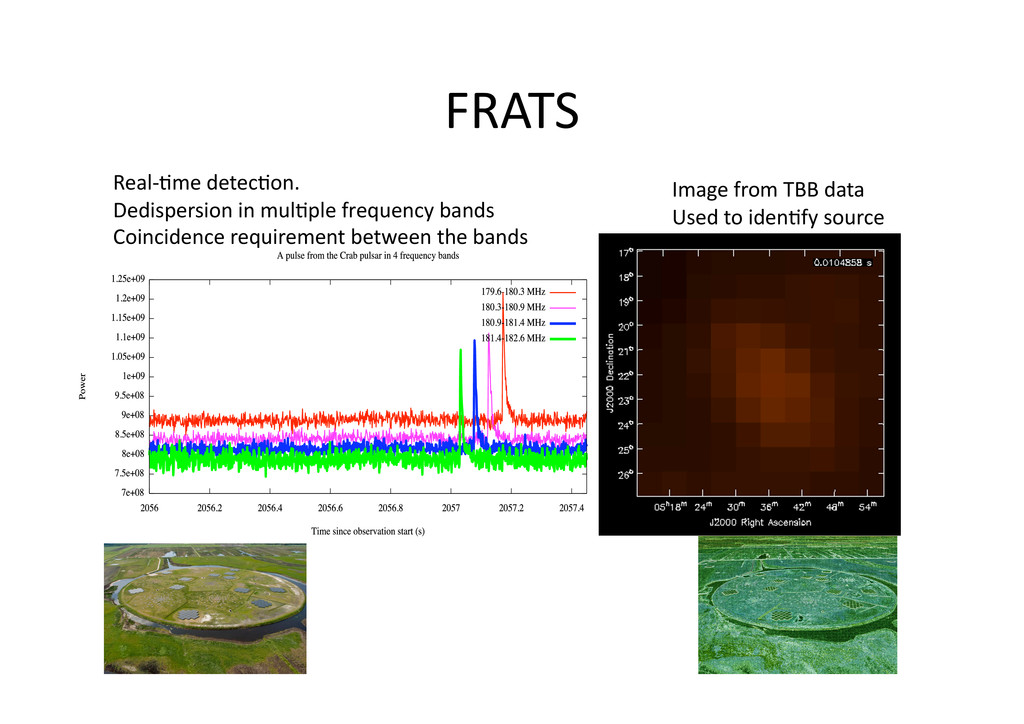
DetecEon • Rare events – Cover large area: • Incoherent beam – Cover long duraEon: • Parallel observaEons • Dispersed events: – MulEple DM trials
• Source idenEficaEon: – Use Transient Buffer Boards
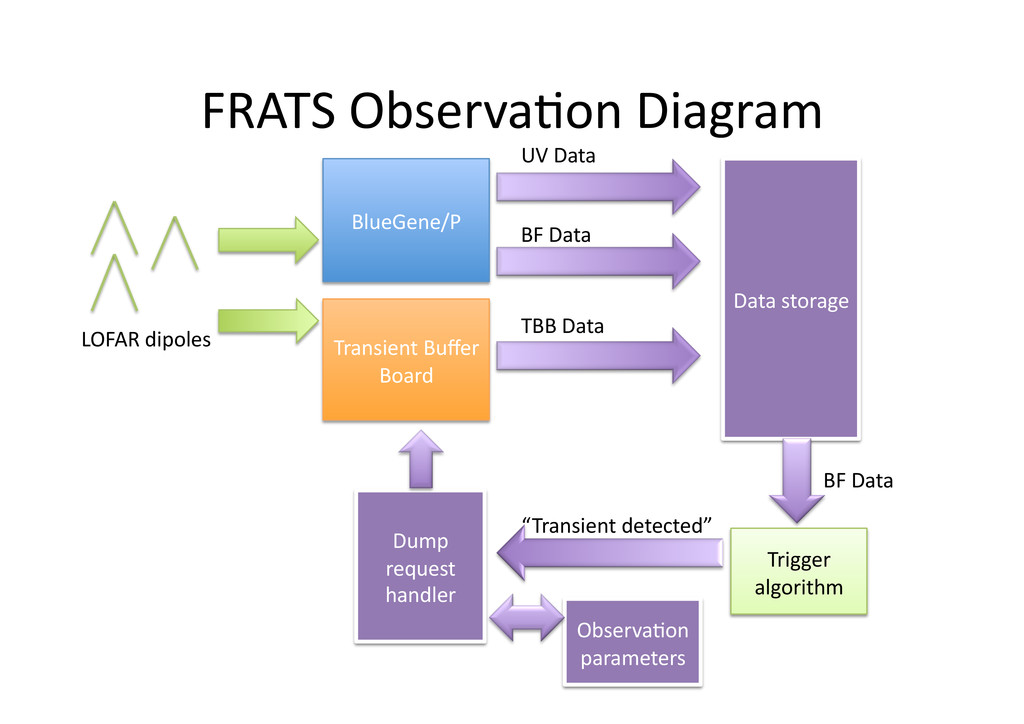
FRATS ObservaEon Diagram Transient Buffer Board Data storage LOFAR dipoles Trigger algorithm Dump request handler
“Transient detected” ObservaEon parameters BlueGene/P UV Data BF Data BF Data TBB Data
FRATS Real‐Eme detecEon. Dedispersion in mulEple frequency bands Coincidence requirement between the bands Image from TBB data Used to idenEfy source
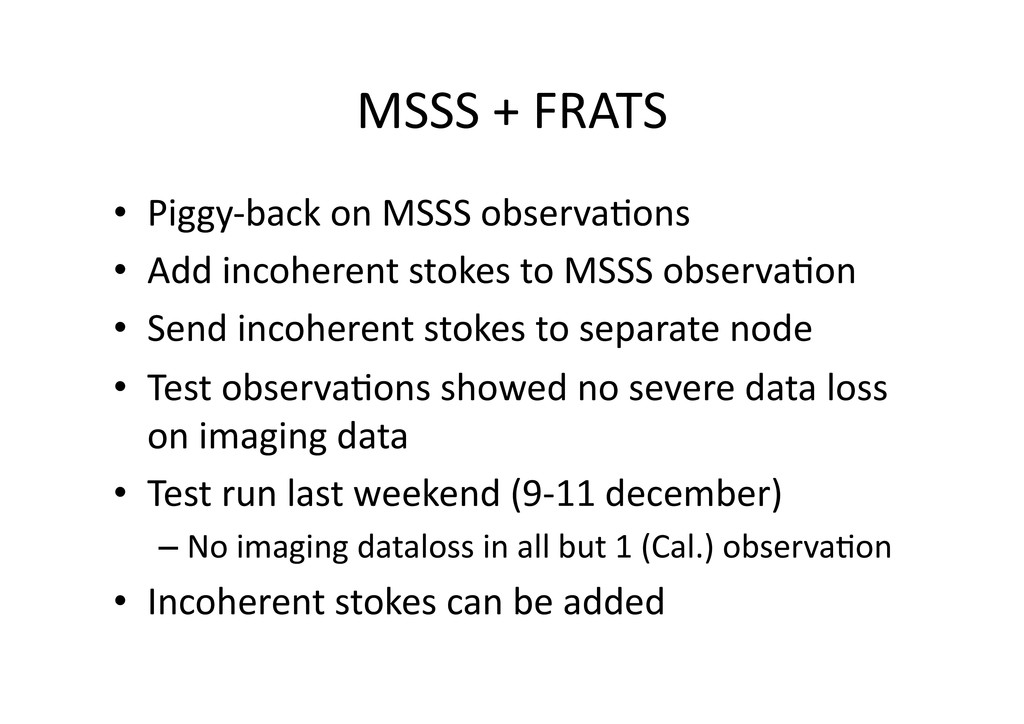
MSSS + FRATS • Piggy‐back on MSSS observaEons • Add incoherent stokes to MSSS observaEon • Send incoherent stokes to separate node • Test observaEons showed no severe data loss on imaging data
• Test run last weekend (9‐11 december) – No imaging dataloss in all but 1 (Cal.) observaEon • Incoherent stokes can be added
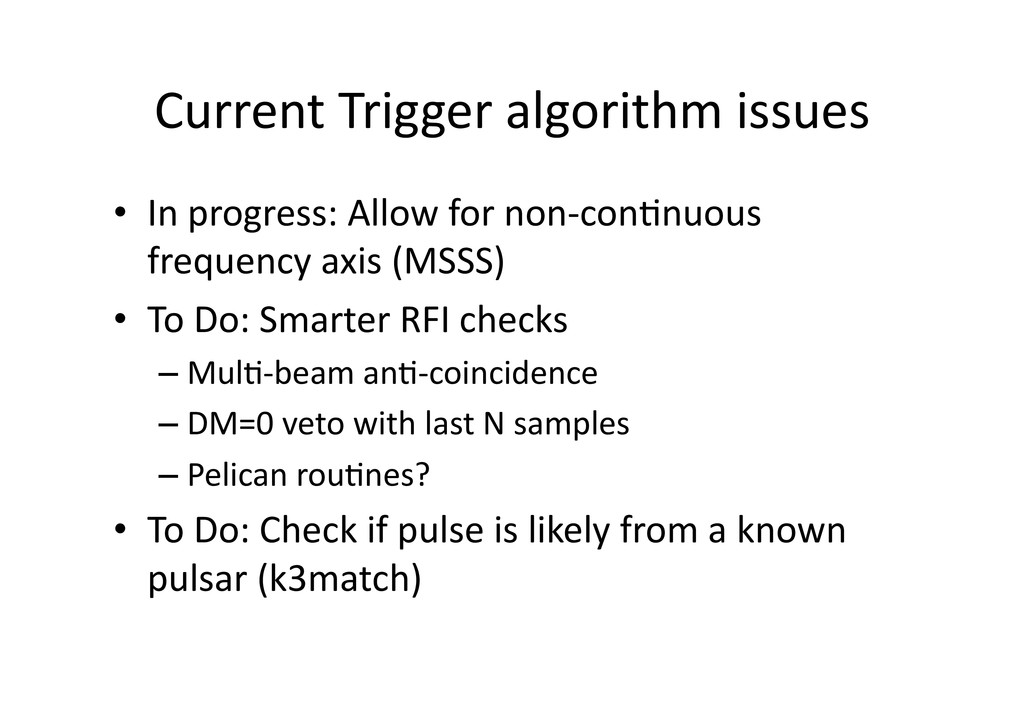
Current Trigger algorithm issues • In progress: Allow for non‐conEnuous frequency axis (MSSS) • To Do: Smarter RFI checks – MulE‐beam anE‐coincidence – DM=0 veto with last N samples – Pelican rouEnes? •
To Do: Check if pulse is likely from a known pulsar (k3match)
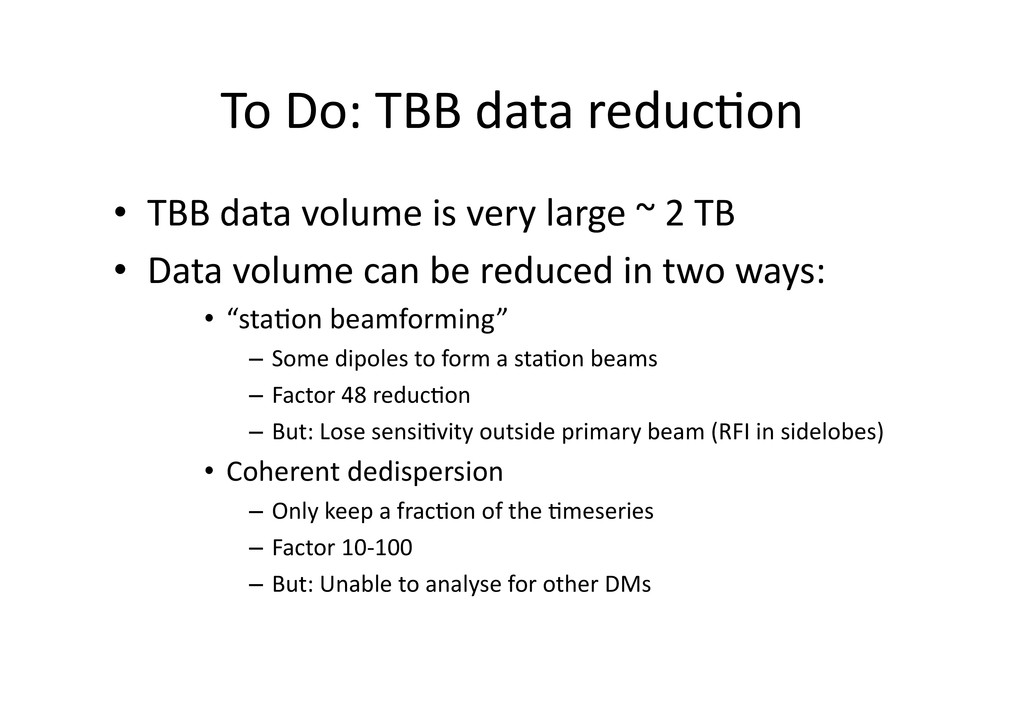
To Do: TBB data reducEon • TBB data volume is very large ~ 2 TB • Data volume can be reduced in two ways: • “staEon beamforming” – Some dipoles to form a staEon beams – Factor 48 reducEon – But: Lose sensiEvity outside primary beam (RFI in sidelobes)
• Coherent dedispersion – Only keep a fracEon of the Emeseries – Factor 10‐100 – But: Unable to analyse for other DMs
Cosmic Rays Very High Energy Cosmic Rays
Why study Cosmic Rays? • Most energeEc parEcles • Origin: AGN ? • To determine – Chemical composiEon – DirecEon – Energy
• Radio emission – complementary probe – 100% duty cycle
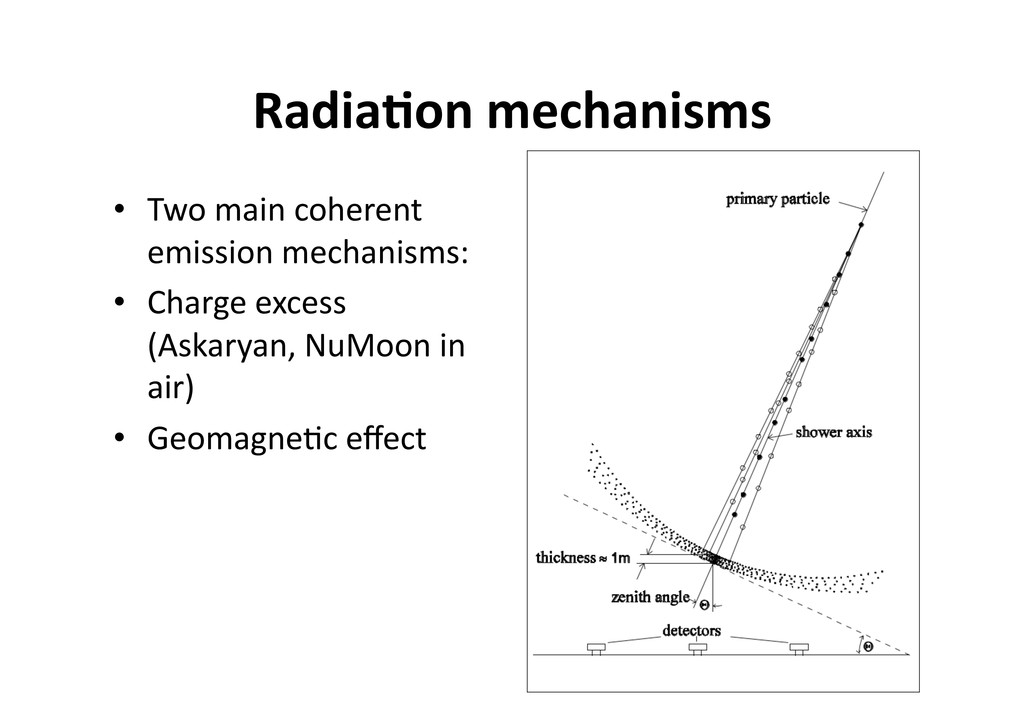
Radia1on mechanisms • Two main coherent emission mechanisms: • Charge excess (Askaryan, NuMoon in air) • GeomagneEc effect
Why CR + LOFAR • Dense instrumentaEon (polarizaEon!) • Probe electromagneEc field at many points • Pin down emission processes • Derive the properEes of air showers through radio emission
• Measure spectrum and composiEon of CR from 1017 ‐1019 eV (transiEon GalacEc to extragalacEc origin)
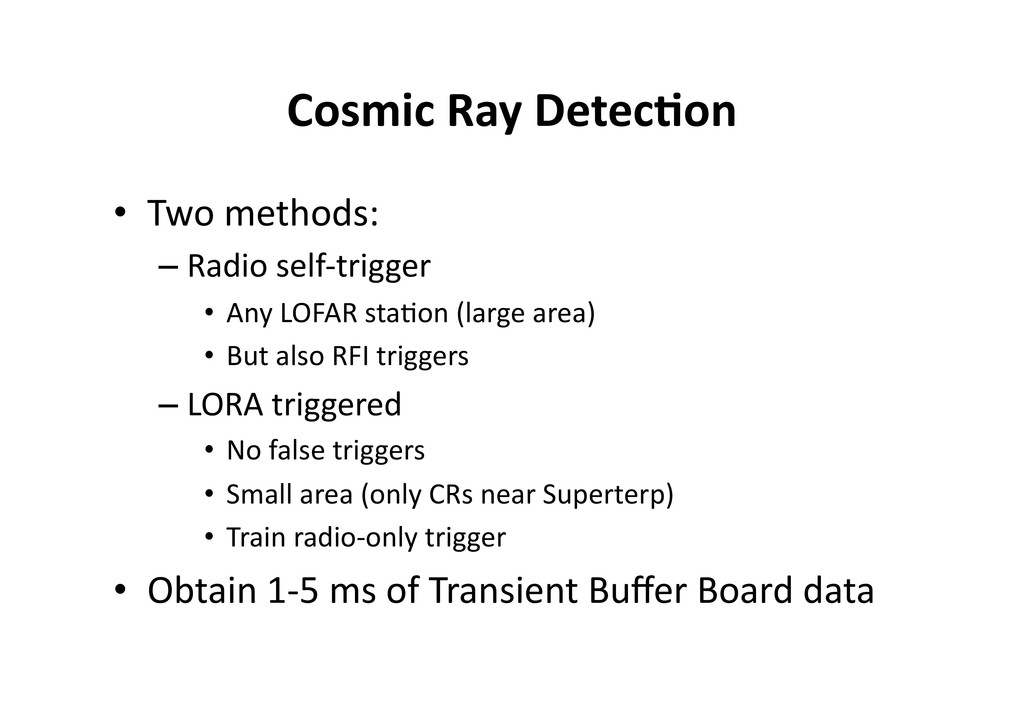
Cosmic Ray Detec1on • Two methods: – Radio self‐trigger • Any LOFAR staEon (large area) • But also RFI triggers – LORA triggered • No false triggers • Small area (only CRs near Superterp) • Train radio‐only trigger
• Obtain 1‐5 ms of Transient Buffer Board data
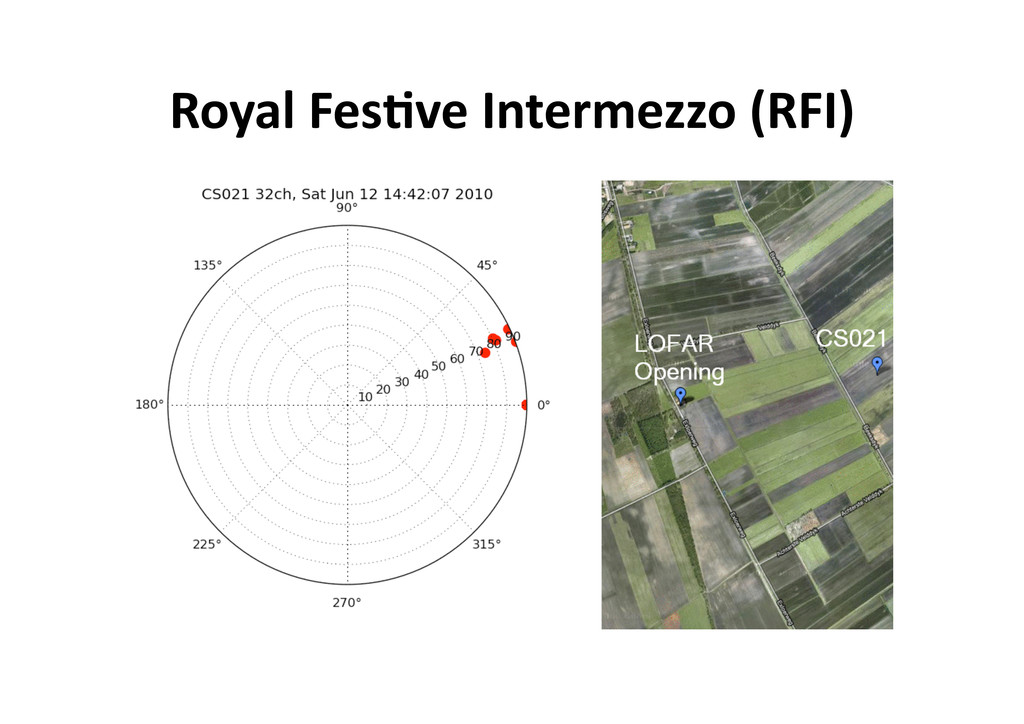
Royal Fes1ve Intermezzo (RFI)
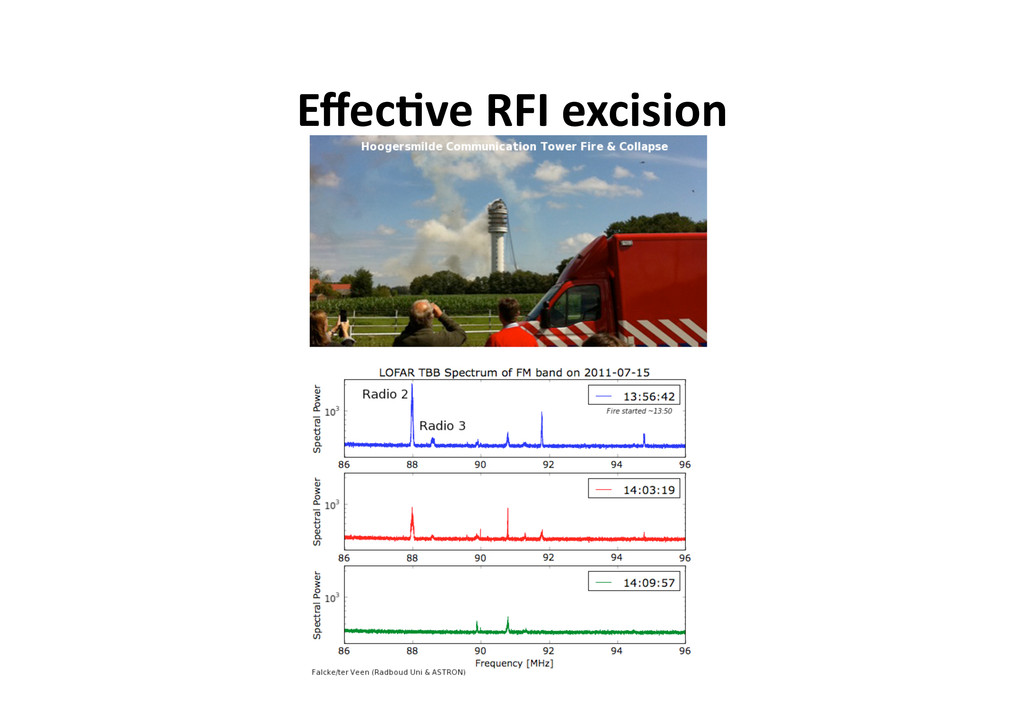
Effec1ve RFI excision
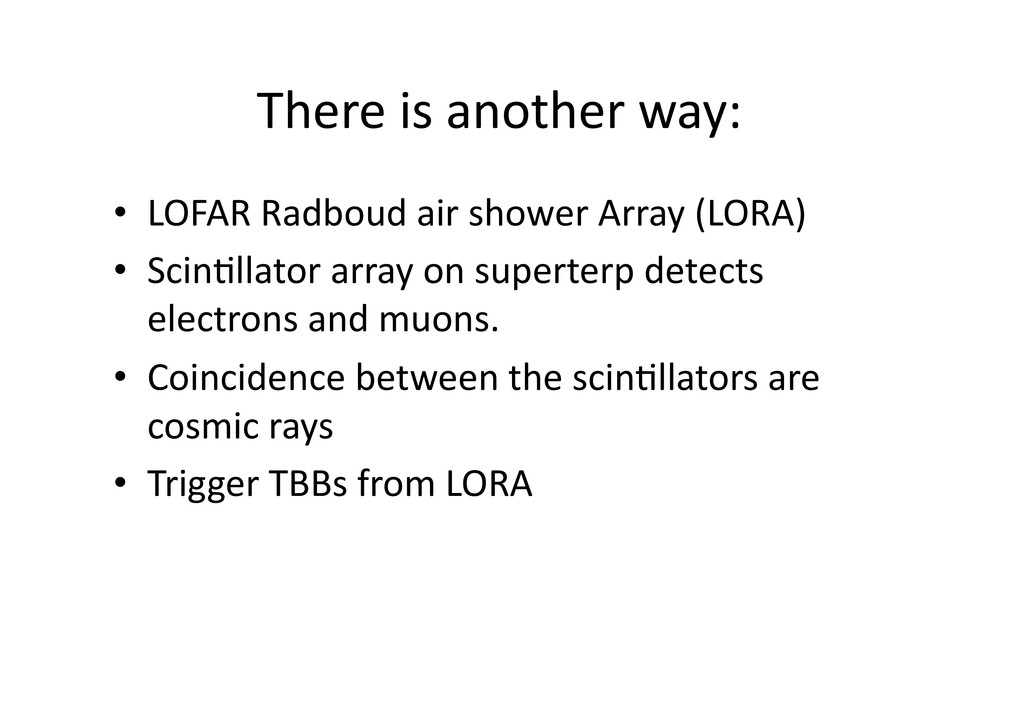
There is another way: • LOFAR Radboud air shower Array (LORA) • ScinEllator array on superterp detects electrons and muons. • Coincidence between the scinEllators are cosmic rays
• Trigger TBBs from LORA
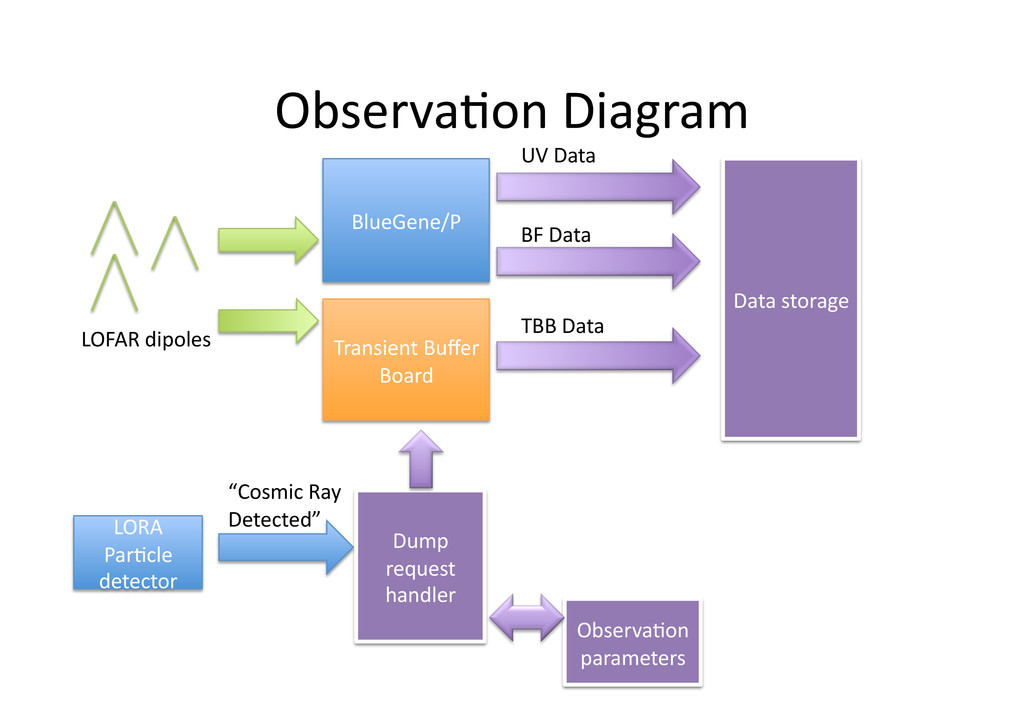
ObservaEon Diagram Transient Buffer Board Data storage LOFAR dipoles Dump request handler ObservaEon parameters
BlueGene/P UV Data BF Data TBB Data LORA ParEcle detector “Cosmic Ray Detected”
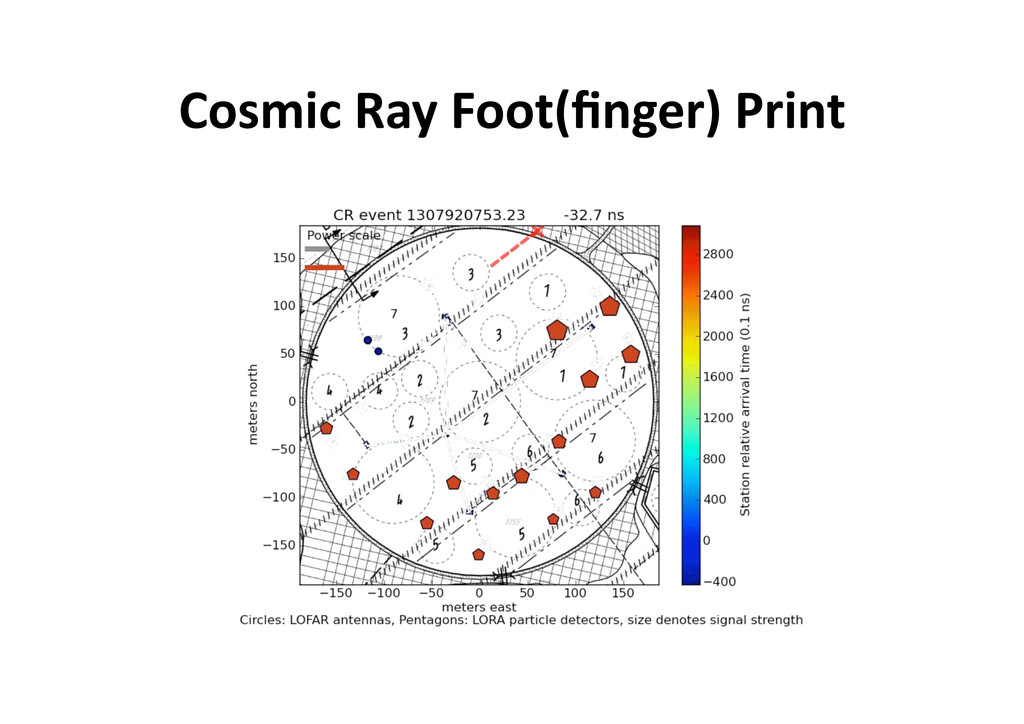
Cosmic Ray Foot(finger) Print
The Virtual LOFAR telescope: TBB data + pycrtools (LUS)
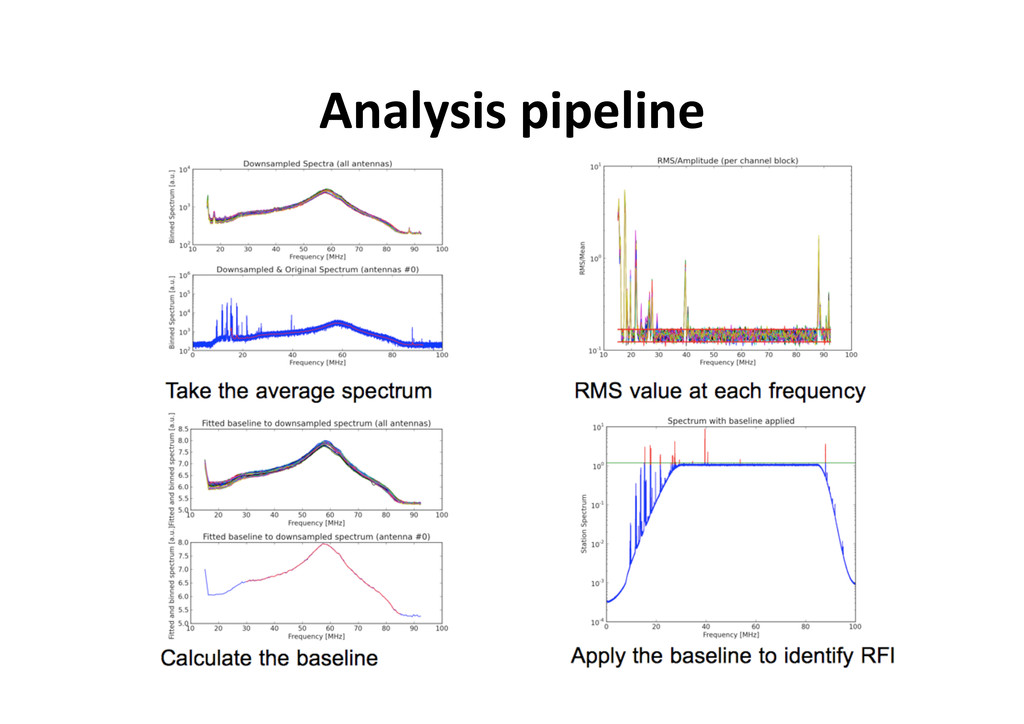
Analysis pipeline
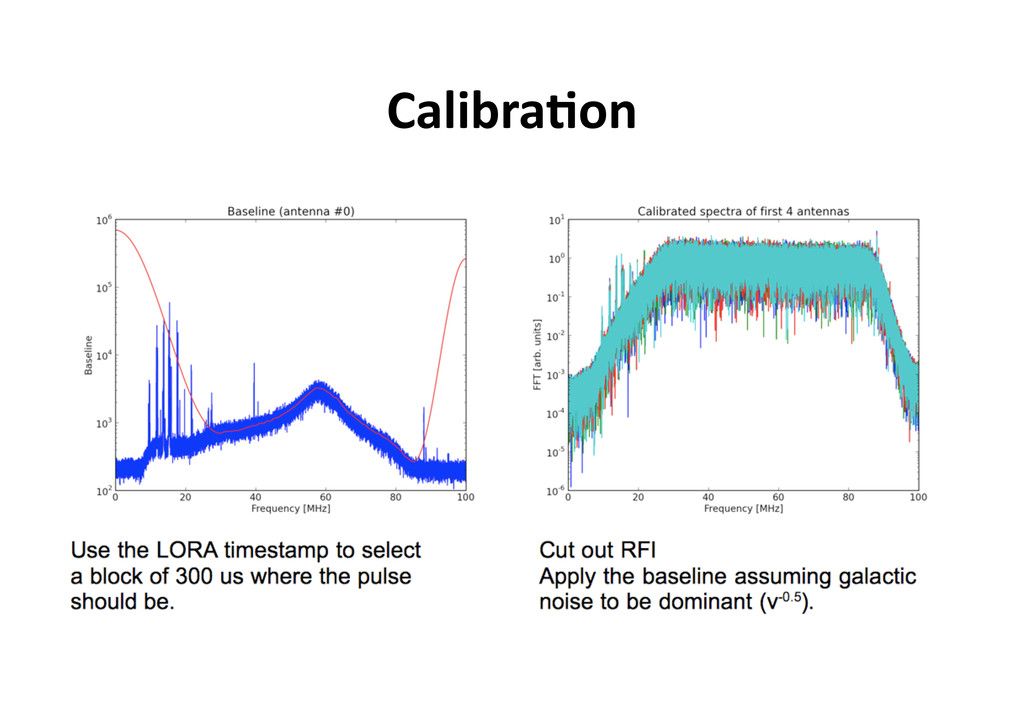
Calibra1on
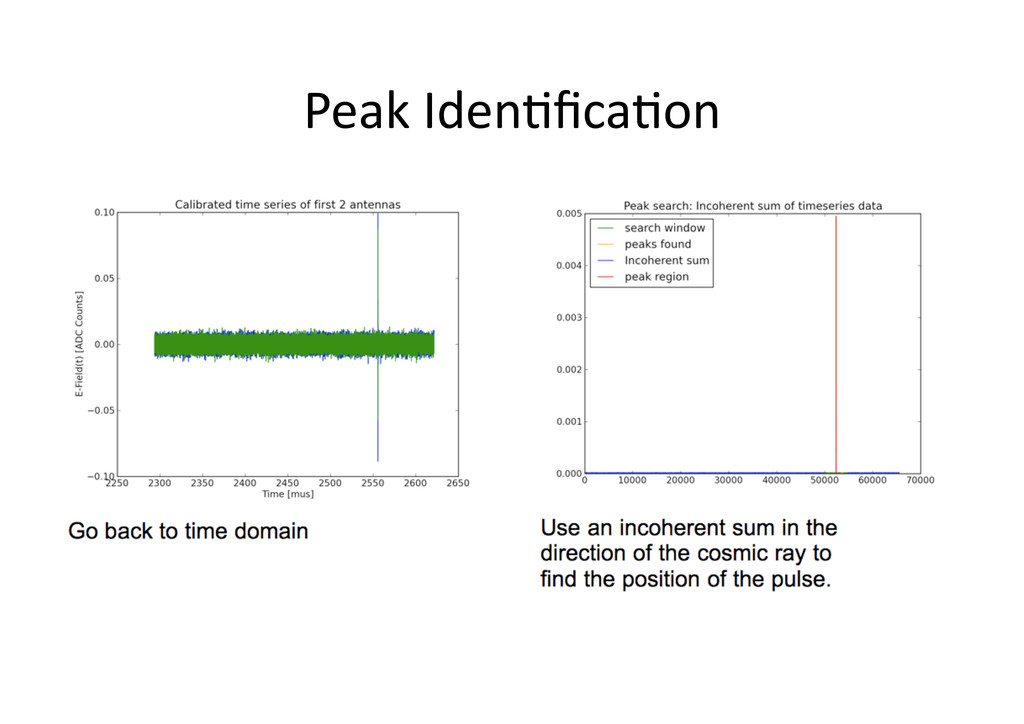
Peak IdenEficaEon
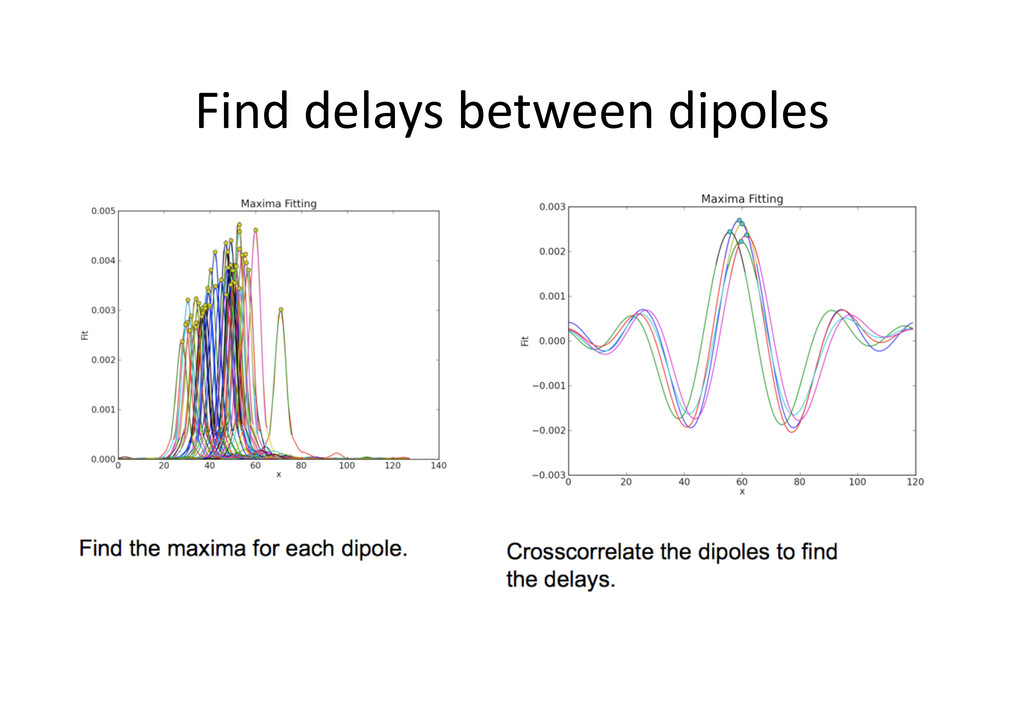
Find delays between dipoles
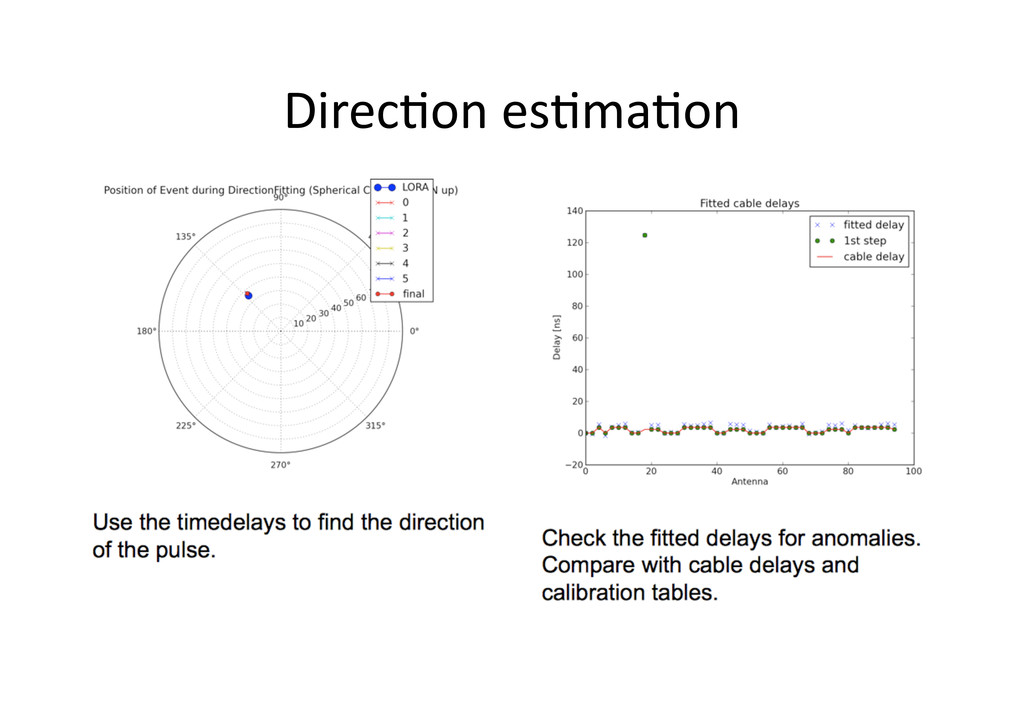
DirecEon esEmaEon
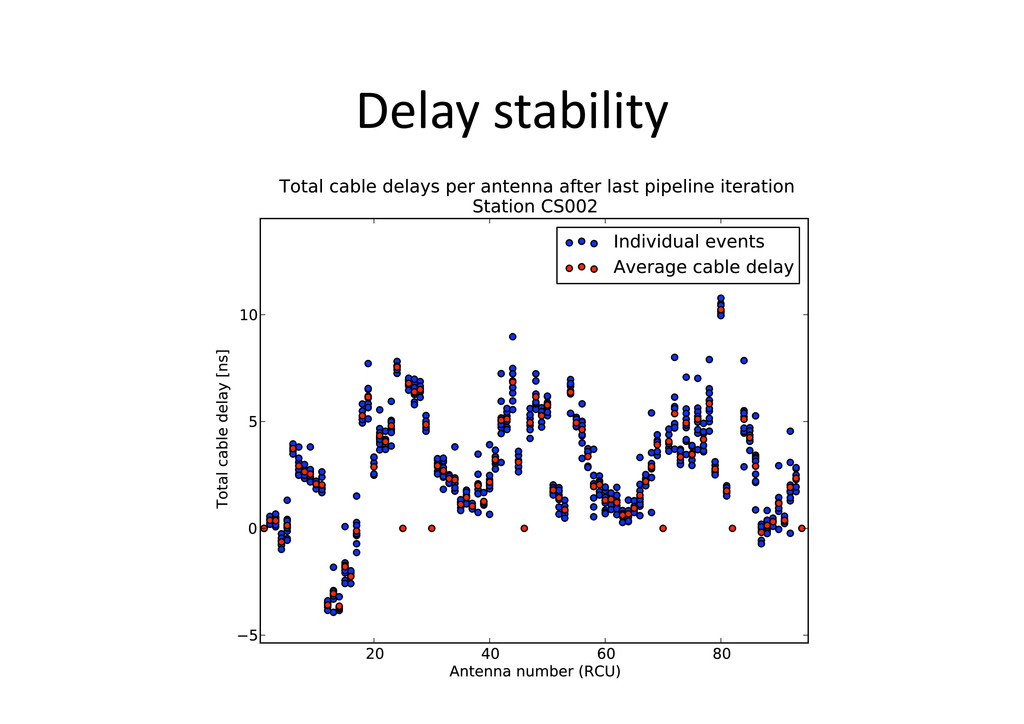
Delay stability
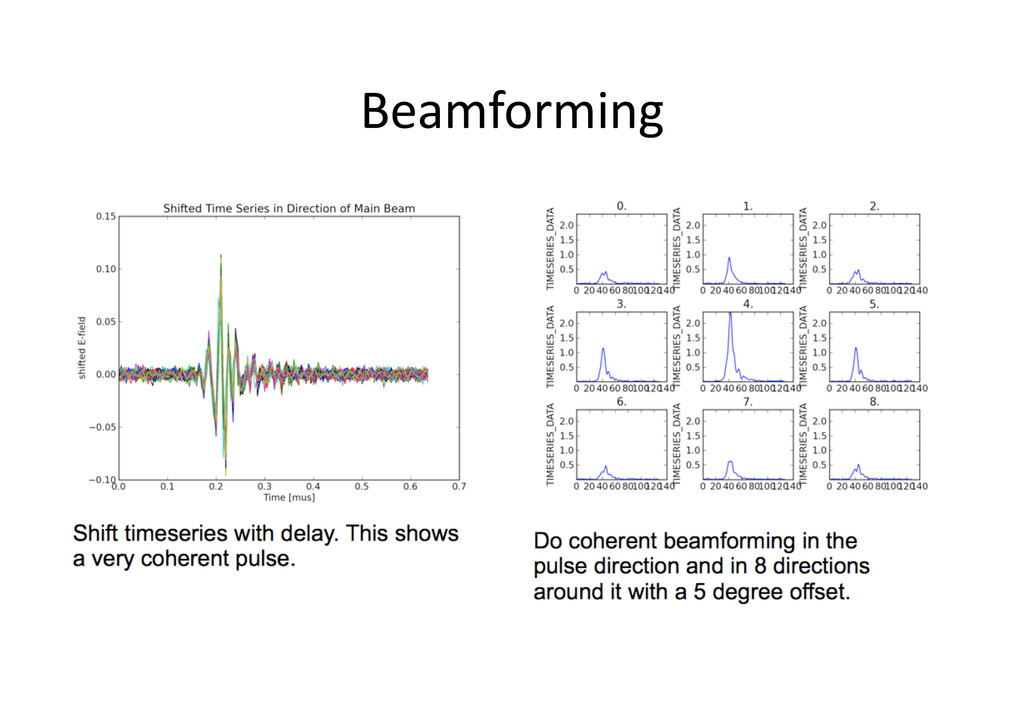
Beamforming
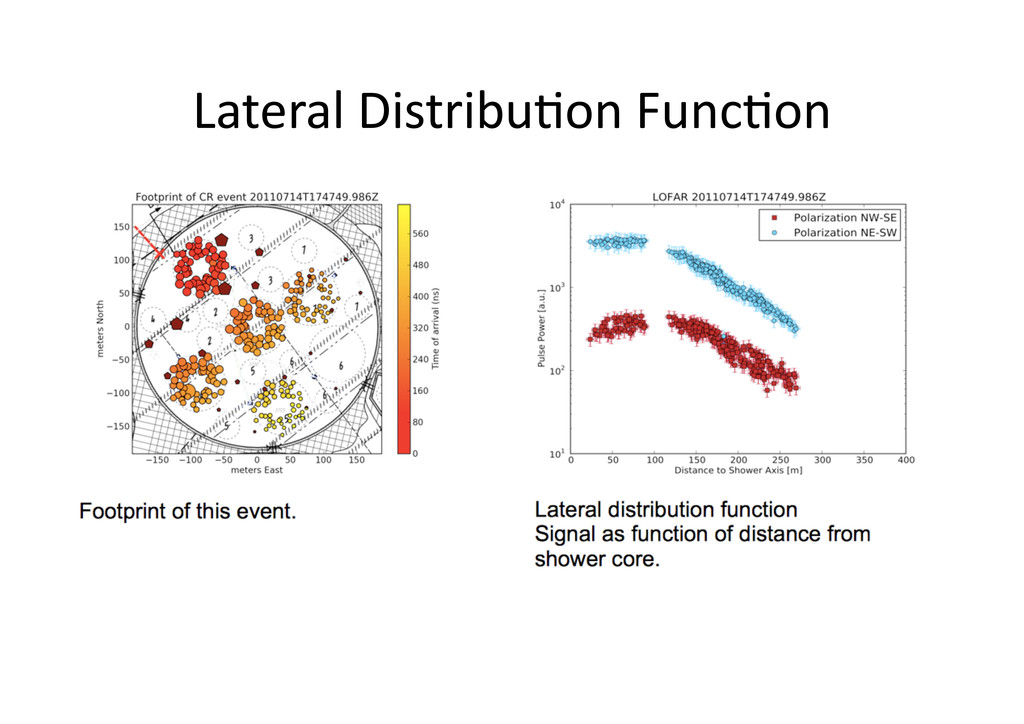
Lateral DistribuEon FuncEon
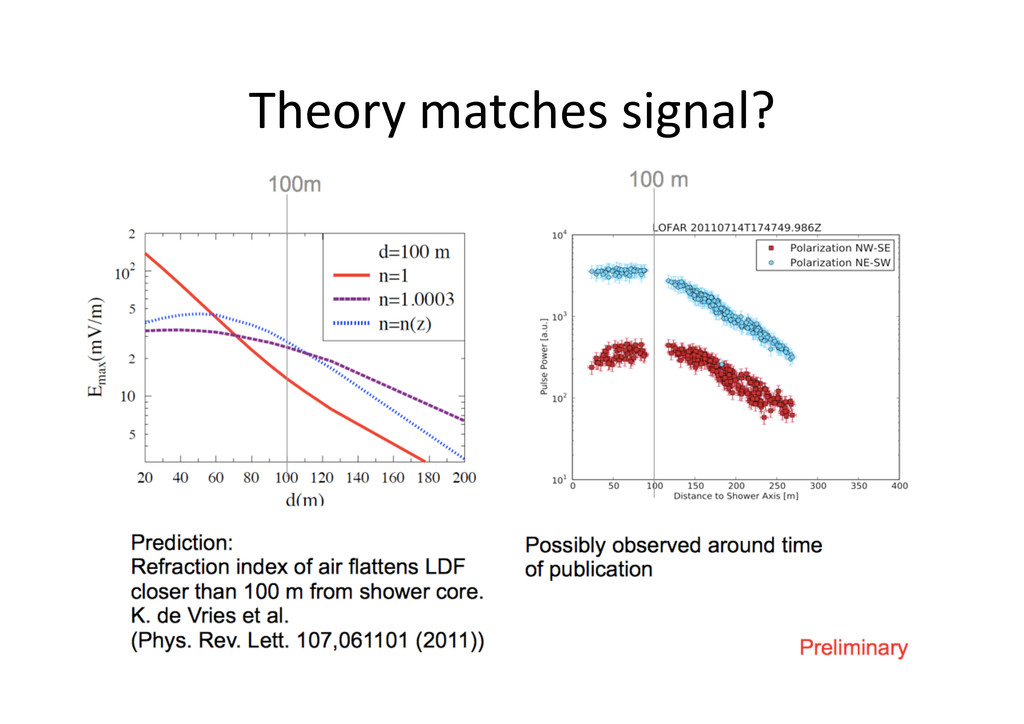
Theory matches signal?
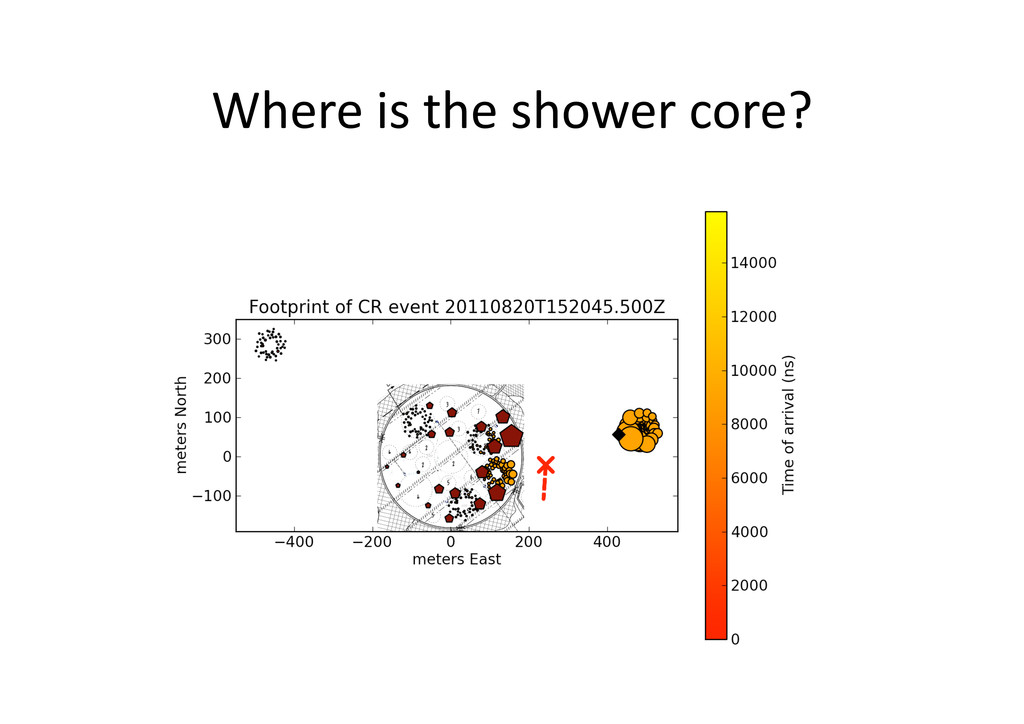
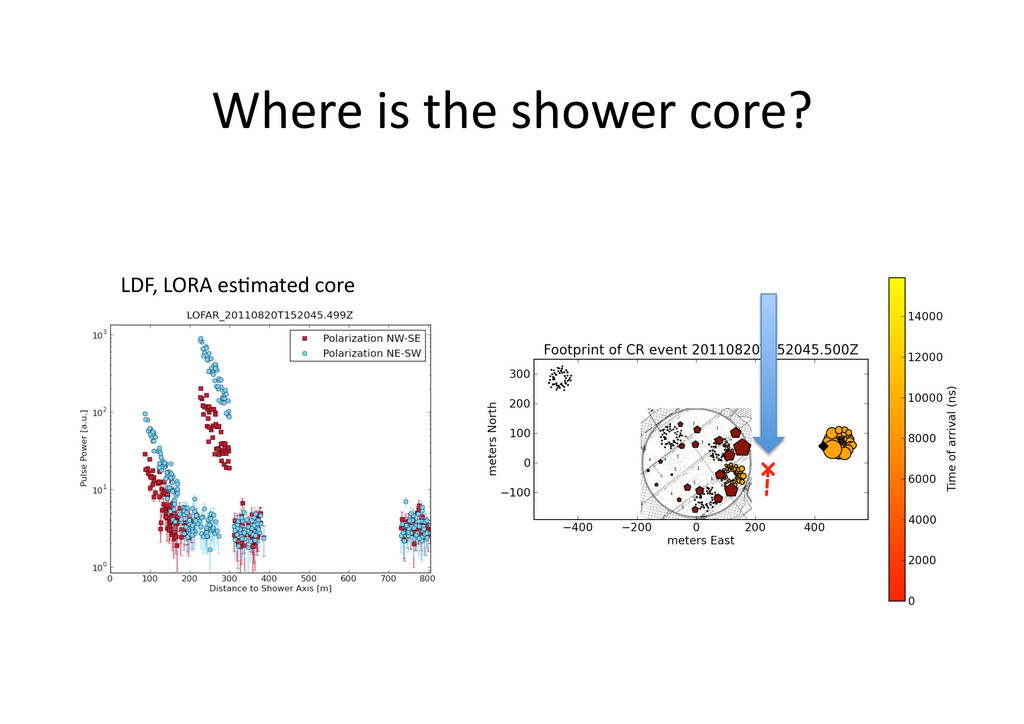
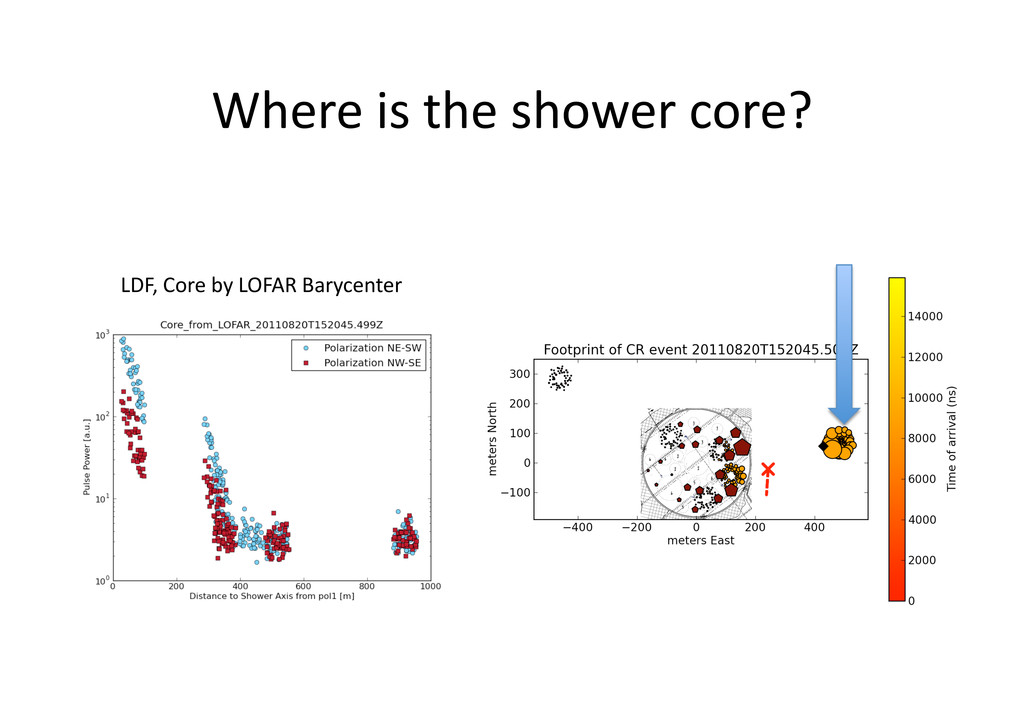
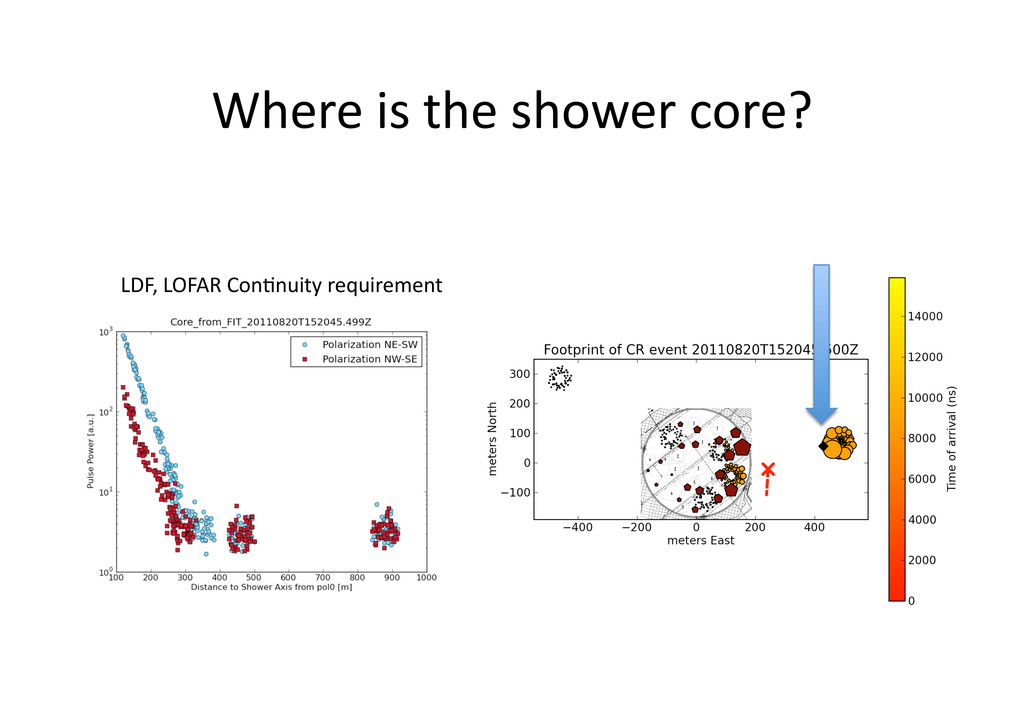
Where is the shower core?
Where is the shower core? LDF, LORA esEmated core
Where is the shower core? LDF, Core by LOFAR Barycenter
Where is the shower core? LDF, LOFAR ConEnuity requirement
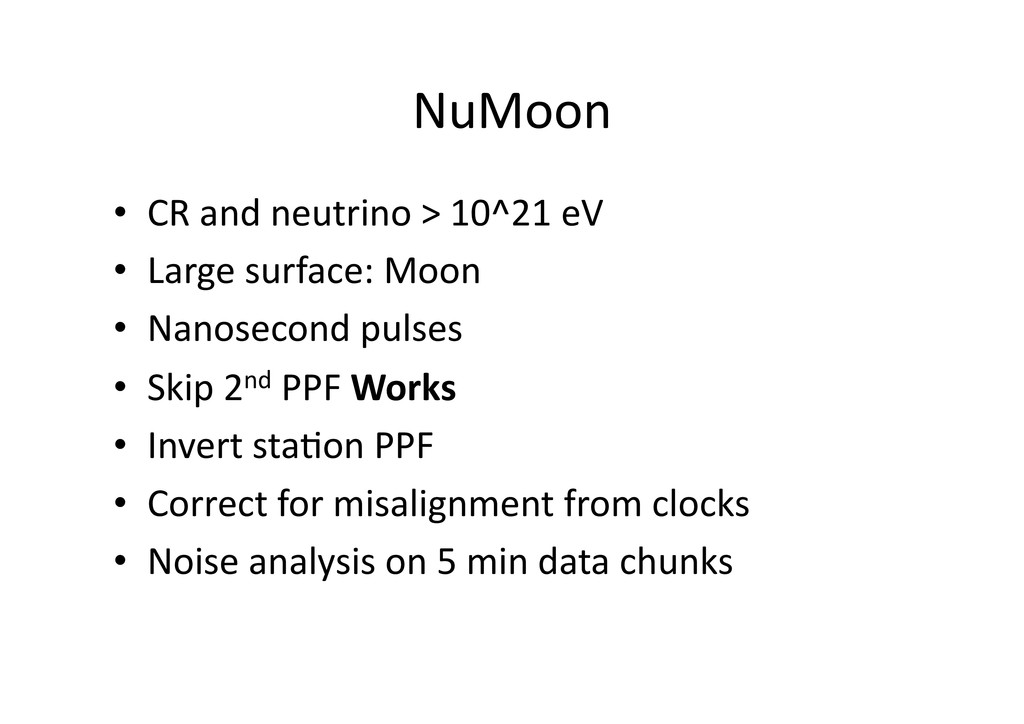
NuMoon • CR and neutrino > 10^21 eV • Large surface: Moon • Nanosecond pulses • Skip 2nd PPF Works •
Invert staEon PPF • Correct for misalignment from clocks • Noise analysis on 5 min data chunks
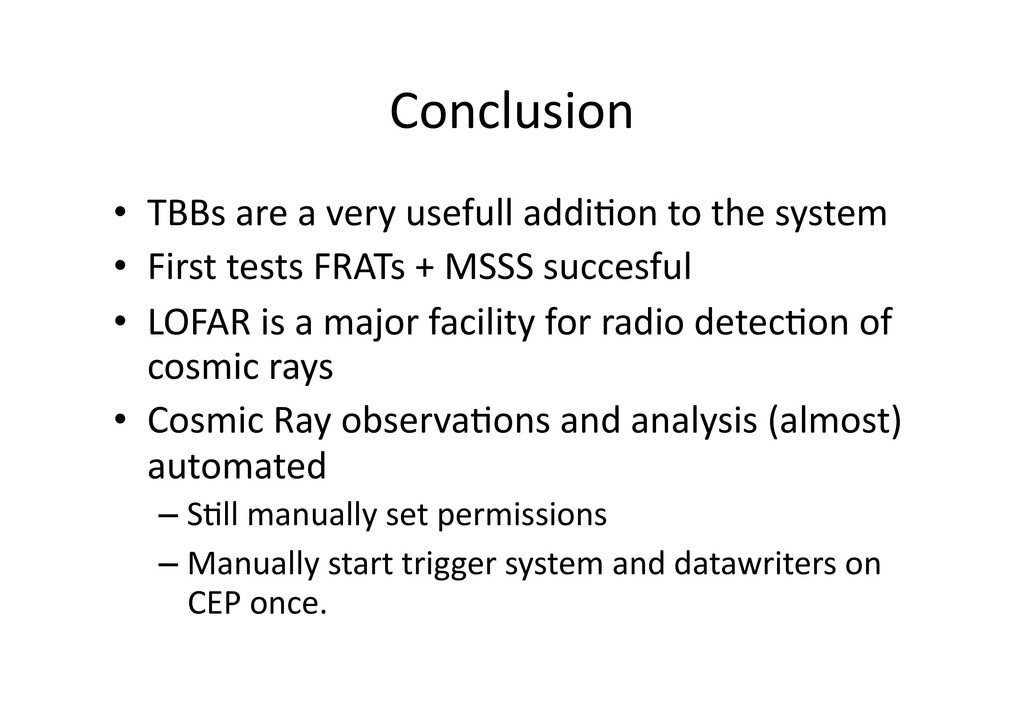
Conclusion • TBBs are a very usefull addiEon to the system • First tests FRATs + MSSS succesful • LOFAR is a major facility for radio detecEon of cosmic rays • Cosmic Ray observaEons and analysis (almost)
automated – SEll manually set permissions – Manually start trigger system and datawriters on CEP once.


 transientskp
 trycycle
 akasan
 mickey_kubo
 voginip
 tasusu
 takusamar
 gkazunii
 lara
lara
 popppiees
 signer
 wjessup
 kimpetersen
 tammyeverts
 uxyall
 destraynor
 skipperchong
 shlominoach
 sachag
 tmiket